For the past few years, Specialized seems to have followed a pretty clear line with the Tarmac: a single road bike to do everything fast, rather than a pure aero bike on one side and an ultralight climber on the other.
The Tarmac SL9 carries this logic forward. The American brand is not trying to break its formula, but to refine it with an even more systemic approach: weight, aerodynamics, efficiency, rider position, terrain, and fatigue all need to be considered together.
🚀 In short:
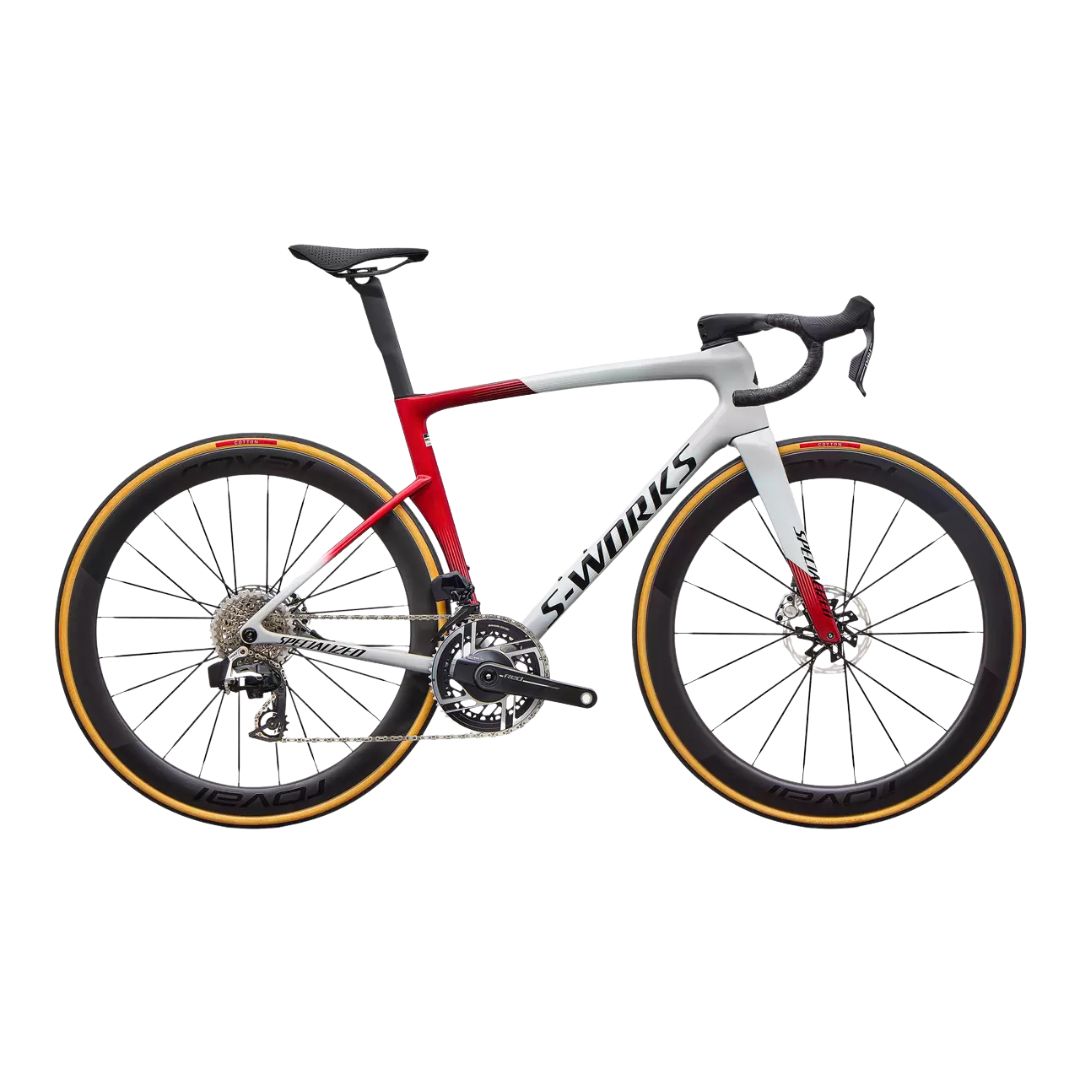
The Specialized S-Works Tarmac SL9 stays true to the Tarmac philosophy: a single road bike to climb, go fast, and sprint.
S-Works frame claimed at 687 g, with complete builds that can go down to 6.5 kg according to Specialized.
Claimed gain of 4 watts versus the SL8 at 45 km/h, measured with a pedaling mannequin in Specialized’s protocol.
The recipe continues to work at the highest level. The Tarmac is linked to very different rider profiles: sprints with Paul Magnier, the general classification ambitions of Remco Evenepoel, or Demi Vollering. That precisely sums up the positioning of the SL9: a single race bike capable of covering many scenarios.
The real topic for the SL9: "Time to Finish"
Specialized emphasizes one notion: Time to Finish. The idea is easy to grasp, even if the technical model is complex: the fastest bike is not necessarily the one that posts the best figure in the wind tunnel, nor the lightest frame on a scale.
For Specialized, the right indicator is the total time needed to complete a given course. This approach includes the rider, the bike, and the road: power, mass, aerodynamics of the complete system, rolling resistance, mechanical efficiency, gradient, wind, and surface roughness.
It is interesting because it brings some order back to the numbers war. An isolated aero gain is not worth much if it costs too much in weight, comfort, or fatigue. Conversely, a few grams saved are not enough if the bike becomes less efficient at high speed.
The limitation, of course, is that these simulations remain internal Specialized data. They provide a coherent read on development, but they do not replace an independent on-road test.
Aerodynamics designed with the rider, not just around the frame
Specialized highlights a testing method with a pedaling mannequin, developed to more faithfully reproduce the effect of a moving body on airflow. A road bike is never used without a rider, and rider position can matter more than some differences between frames.
The brand also says it worked on the wind angles most common in real conditions, prioritizing low yaw angles. According to Specialized, about 86% of riding situations fall within a range of approximately ±7°, which pushes toward prioritizing reduced frontal area and the interaction between the rider and the bike.
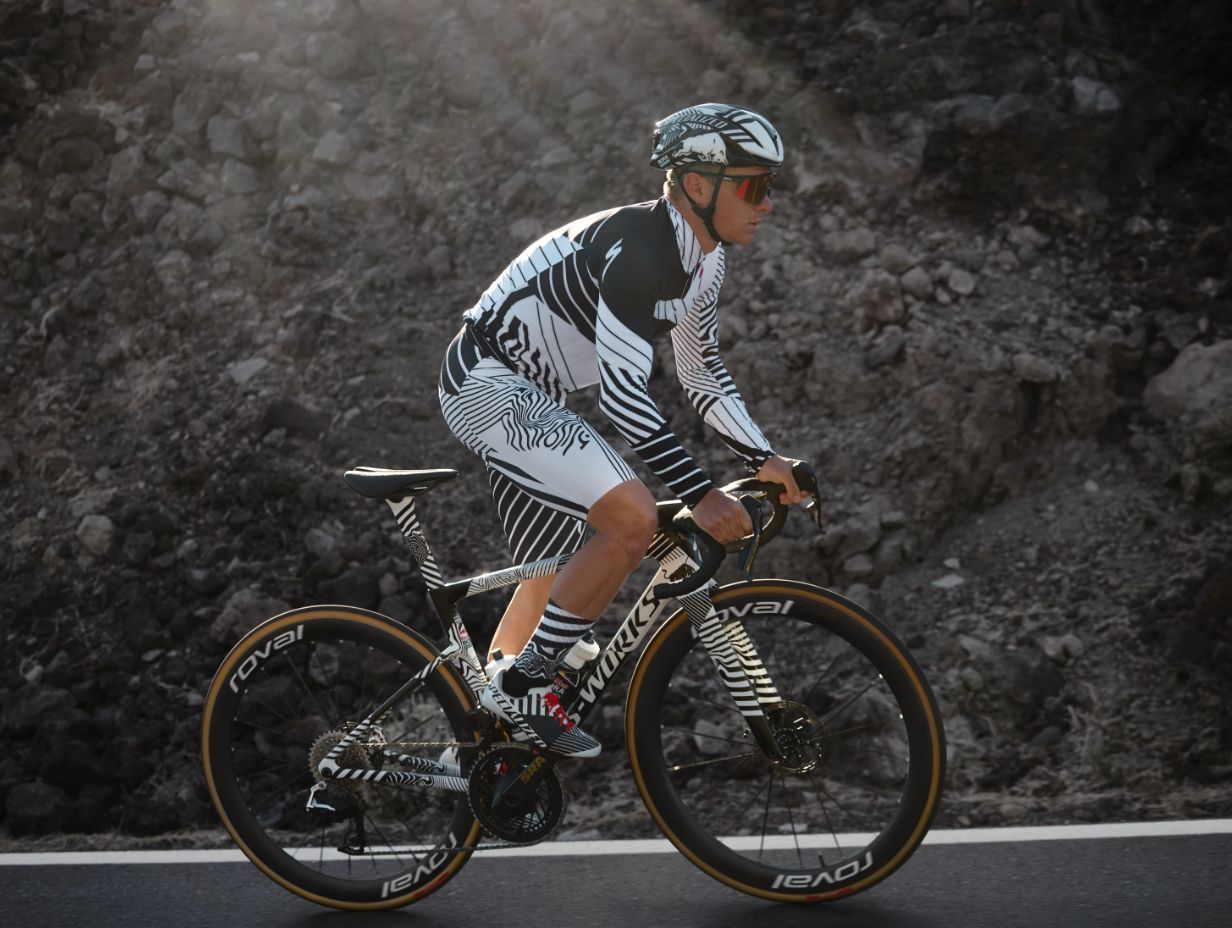
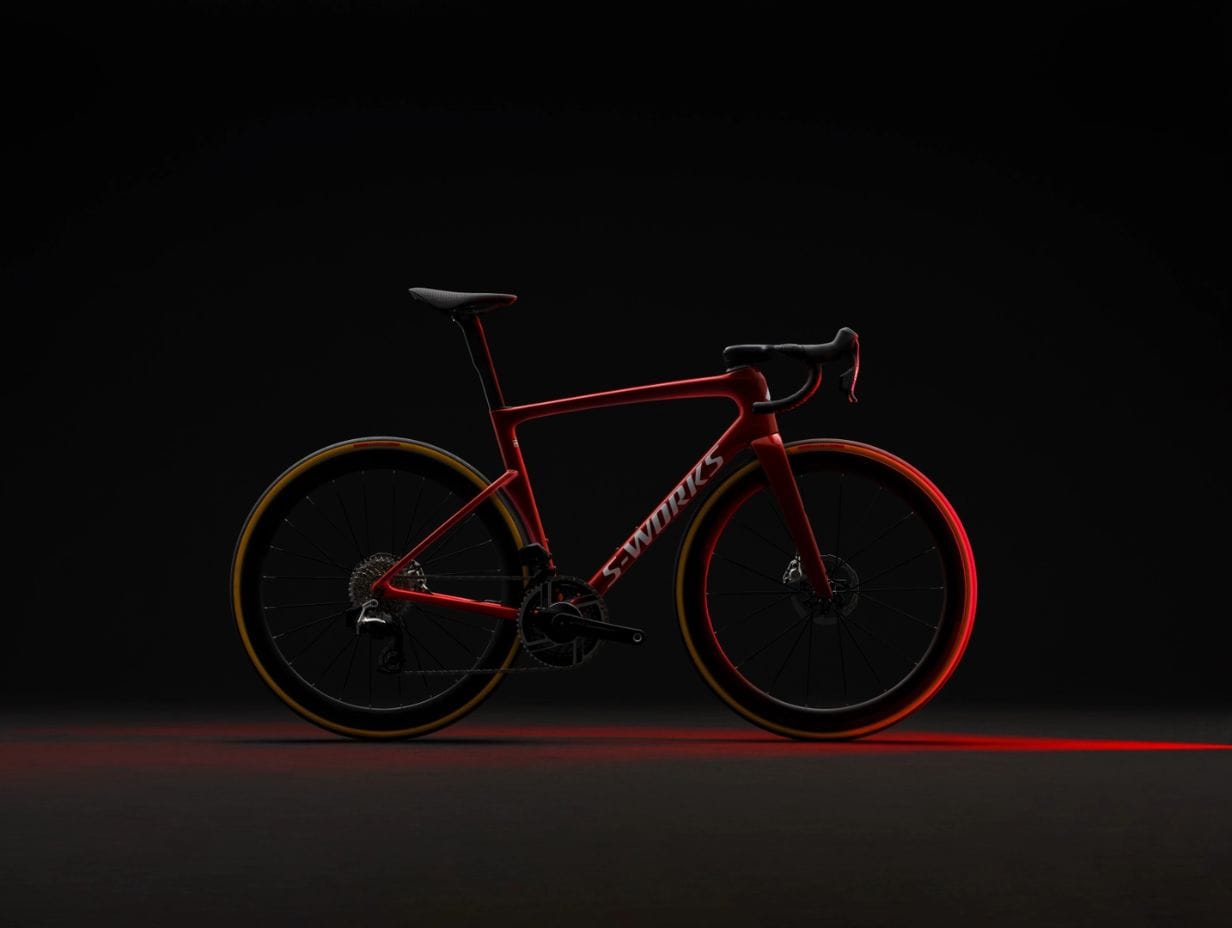
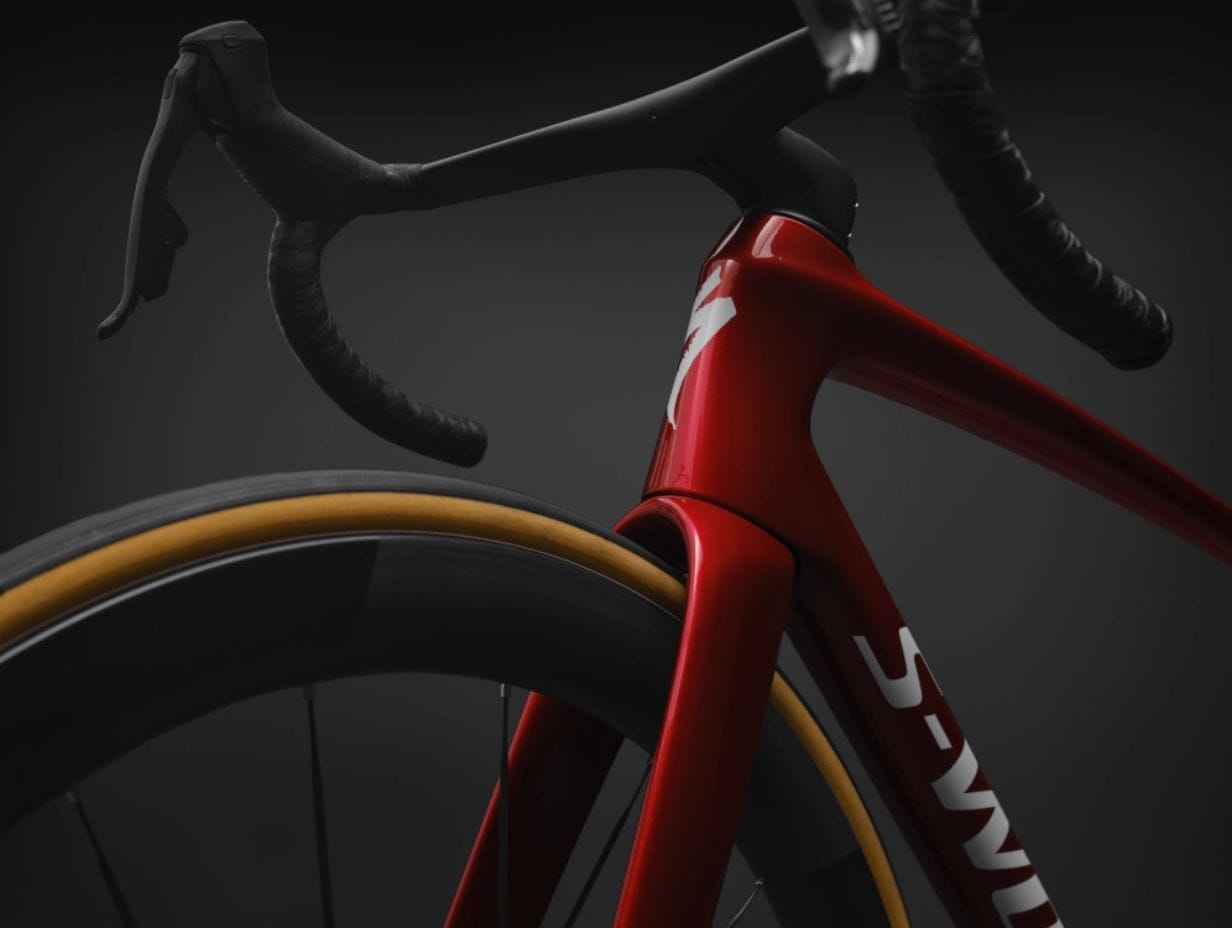
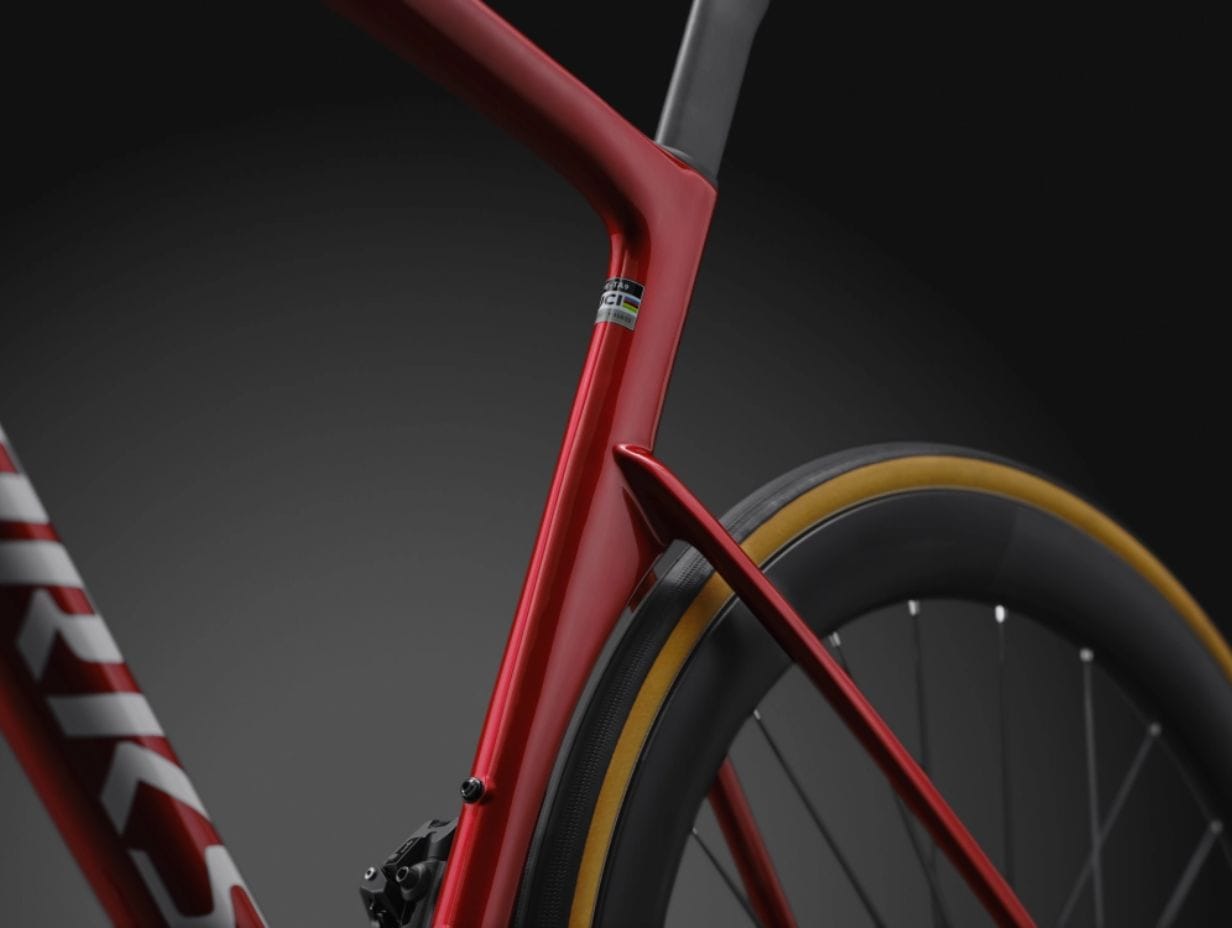
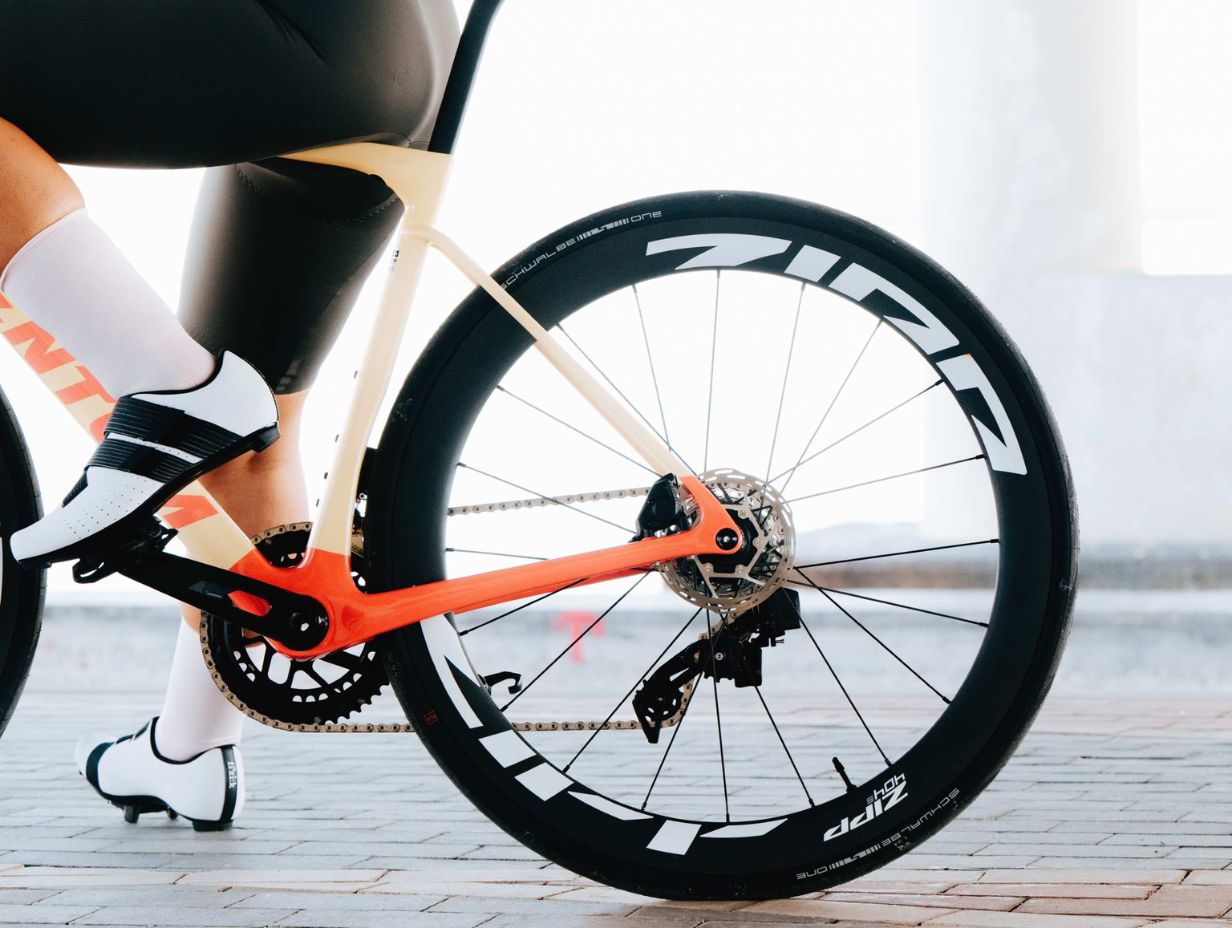
In practical terms, the SL9 gets several visible updates: a slimmer head tube, reworked tubes, a redesigned fork, an S-Works Rapide Post seatpost, and an element called Win Fin around the rear of the frame.
The head tube is said to be 4 mm narrower, with a claimed 10% reduction in frontal area. To achieve this, Specialized uses an offset steerer that lets the rear brake hose run along the side of the steerer. It is clever, but it also confirms that modern integration is becoming increasingly specific.
4 watts versus the SL8: a gain to read with caution
Specialized announces a 4-watt gain compared to the Tarmac SL8 at 45 km/h, in a configuration tested with its pedaling mannequin. It is a credible number within the magnitude of current race bikes, but it needs to be put into context.
At 45 km/h, these gains mainly concern racers, very strong rouleurs, or riders who spend a lot of time at high speed. For a rider who more often rides between 28 and 34 km/h, the gain likely still exists, but it mechanically becomes less decisive.
What is most interesting is therefore not just the raw figure. It is how Specialized tries to gain in aero without radically transforming the Tarmac.
687 grams for the S-Works frame
The S-Works Tarmac SL9 frame is claimed at 687 g. Specialized also mentions complete builds that can drop to 6.5 kg, depending on configuration.
This figure puts the SL9 in a fairly rare zone: aero road bikes that can stay very close to the low weights usually associated with climbers’ bikes. The brand attributes this result to Flow State Design, an approach already linked to the Aethos, where tube shapes are meant to carry more of the loads to limit the amount of carbon needed.
Again, this aligns with the Tarmac’s positioning: not to be the most extreme in a single box, but to stay very high across the board. A modern race bike must accelerate, climb, sprint, descend, and remain efficient after several hours. That is exactly what Specialized is trying to defend with this SL9.
A geometry that is still very race focused
The Tarmac SL9 remains a competition road bike. Sizes range from 44 to 61 cm, with a geometry designed for a low, efficient, and responsive position.
In size 56, Specialized lists a 565 mm stack, a 395 mm reach, 410 mm chainstays, and a 73.5° head angle. These are not endurance bike numbers. The SL9 is primarily for riders who accept an aggressive position, or who have the mobility and cockpit setup to make the most of it.
Specialized also says it has maintained the SL8’s stiffness and compliance targets. More aggressive tube profiles can sometimes degrade comfort or road feel. Here, the brand says it preserved the SL8’s balance while gaining aerodynamic performance.
Without on-road testing, we should remain cautious about the real feel. But the intention is clear: do not sacrifice the Tarmac’s behavior for a few watts gained in the lab.
The "Win Fin" and the detail that says a lot about the project
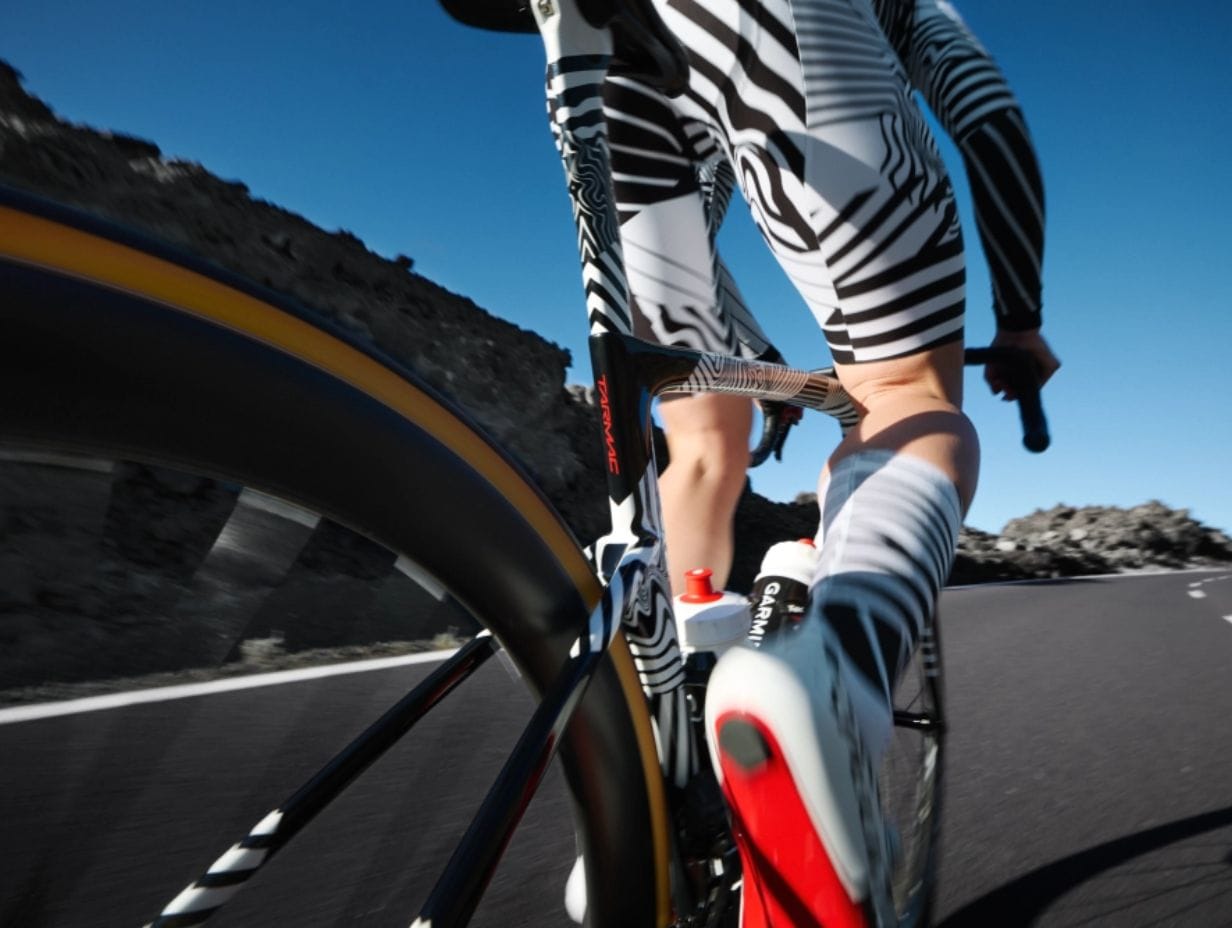
One of the most revealing choices on the SL9 concerns the rear of the bike. Specialized explains that riders in breakaways often ride with a single bottle, not two. This configuration changes the airflow around the seat tube and rear triangle.
The Win Fin was born from this logic: optimize the frame for a real race situation, not just for a standardized setup with two bottles. The claimed gain is modest, around 0.5 watt, but the detail is interesting.
It shows that the SL9 is not merely a cosmetic evolution of the SL8. Specialized is trying to capture micro race situations: fast breakaways, long rolling sections, fatigue, posture changes, real-world equipment setup.
Our take on the SL9
The Specialized Tarmac SL9 looks less like a rupture and more like a new step in an already well-mastered formula. The SL8 had already established the idea of a single road bike that is fast everywhere. The SL9 pushes this logic further with a very light frame and a finer reading of performance in racing.





Reviews
There are no reviews yet.