
For long bike rides, the choice of pack depends a lot on what you want to take with you.
Between minimalist models designed for a few hours in the saddle and packs capable of supporting a real adventure, the needs are obviously not the same.
With the Chase Adventure 8 Vest, CamelBak leans into capacity and versatility, with 8 litres of storage and a 2-litre Crux reservoir.
Strengths:
- Excellent stability on rough tracks
- Genuinely usable volume
- Reservoir easy to fill and clean
- Very neat finish and robust construction
Could be better
- Phone pocket not very comfortable against the chest
- Noticeably warm in high temperatures
The model is designed for long days on the bike, with a robust build and generous volume. Far from an ultralight pack, the Chase Adventure 8 Vest is closer to a hiking pack. Yet that impression changes quickly once you are riding.
A very polished first impression
Right out of the box, the Chase Adventure 8 Vest feels like a very well finished product. The pastel blue colour, almost turquoise on the model I received, is original and gives it real personality. CamelBak offers the same model in different colours.
The finish is excellent. The stitching is tidy, and so are the zips, with no overlooked detail.
Even the various straps are retained so none dangle loose. It is a small detail, but it adds to that impression of a well thought-out product.
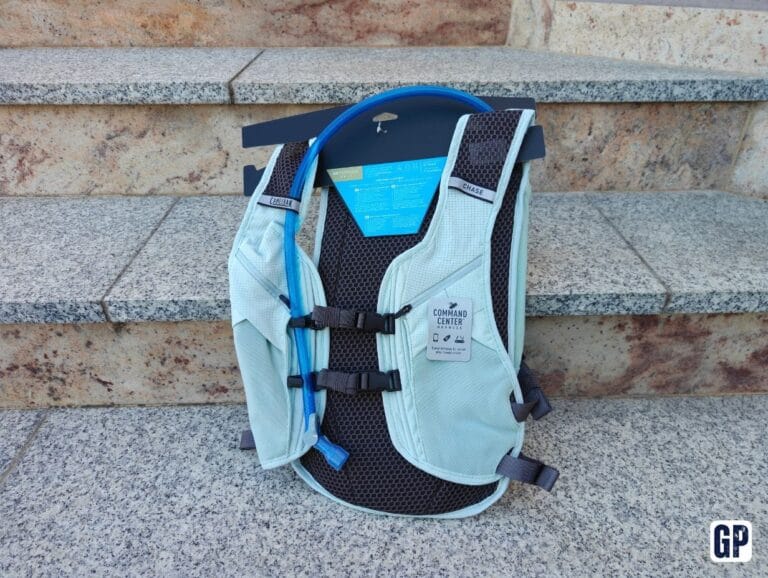
CamelBak also pays attention to presentation. The different compartments are identified directly via the labels supplied with the pack, which lets you quickly understand what they are for. No need to pull out your phone straight away to check the product page: you discover the pack’s layout quite naturally.
This first hands-on confirms one thing above all: the Chase Adventure 8 Vest is a tough pack. It is clearly not designed for racing or shaving a few dozen grams. Its DNA lies elsewhere.
Getting set up takes a little time
Your first contact with the pack requires a small step before heading out. You first need to adjust the straps at the back to position the pack correctly on your back, then sort out the two chest straps to get the right hold.
In my case, this initial setup took a good dozen minutes. Nothing complicated – the various straps are easy to handle – but it is not the kind of pack you pull from its packaging and ride off with immediately.
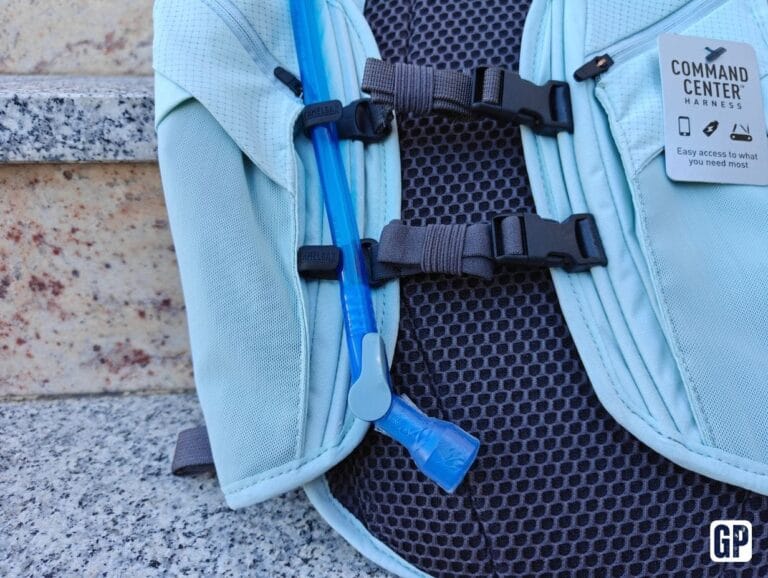
I had to find the right combination so it was properly balanced around the shoulder blades. Once that step was done, I hardly needed to touch it again. I only slightly tweaked the tension on one ride, as the pack tended to drift a little to the left.
The keepers designed to manage strap length also do their job very well: nothing hangs loose and everything stays tidy.
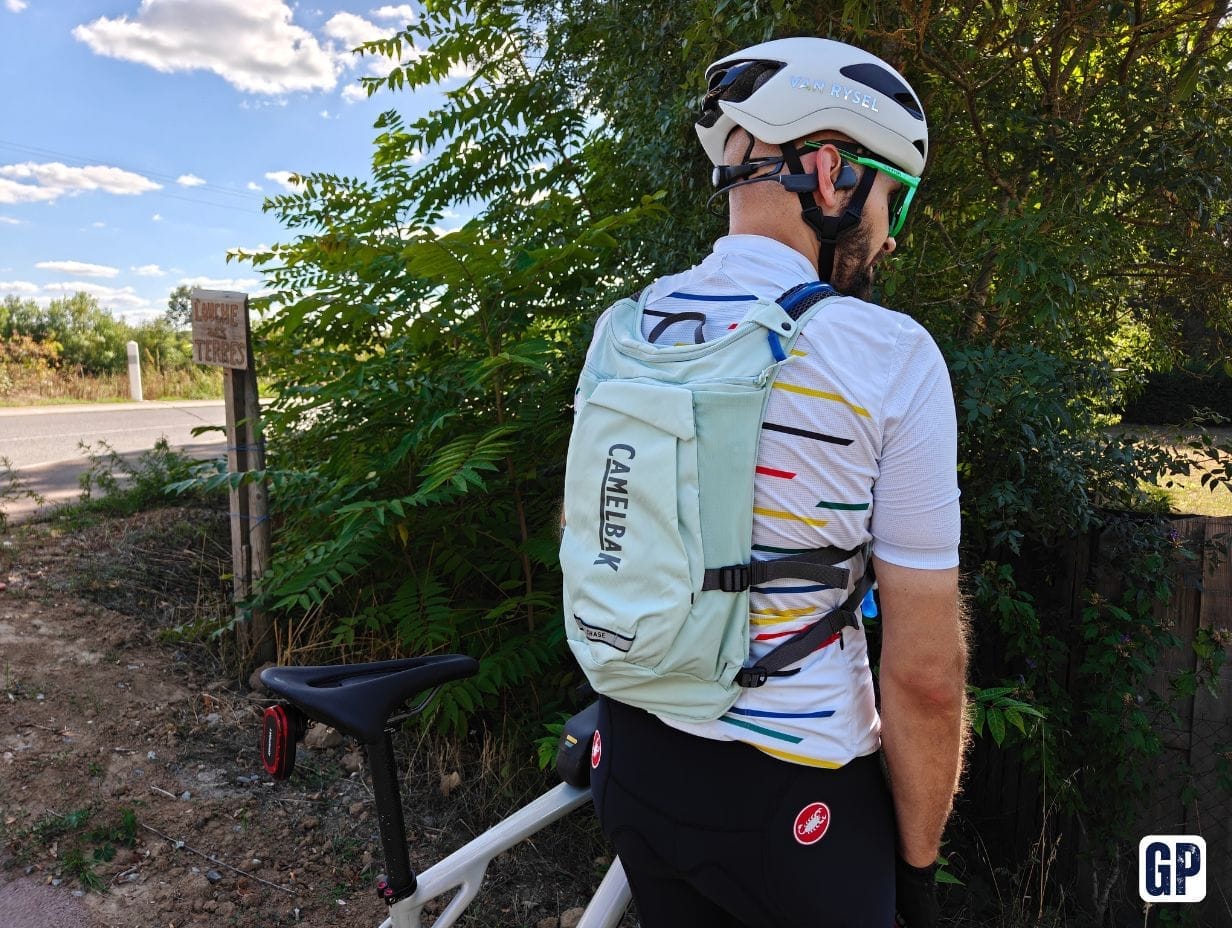
Once everything is in place, the contrast is quite striking: the pack’s substantial volume becomes much less noticeable on your back.
Particularly effective stability on rough tracks
On this point, the Chase Adventure 8 Vest really won me over. Once positioned correctly, the pack does not move, even on seriously rutted tracks.
I did not experience any bouncing or unwanted movement, even though I used it on terrain where poor stability would have been obvious very quickly.
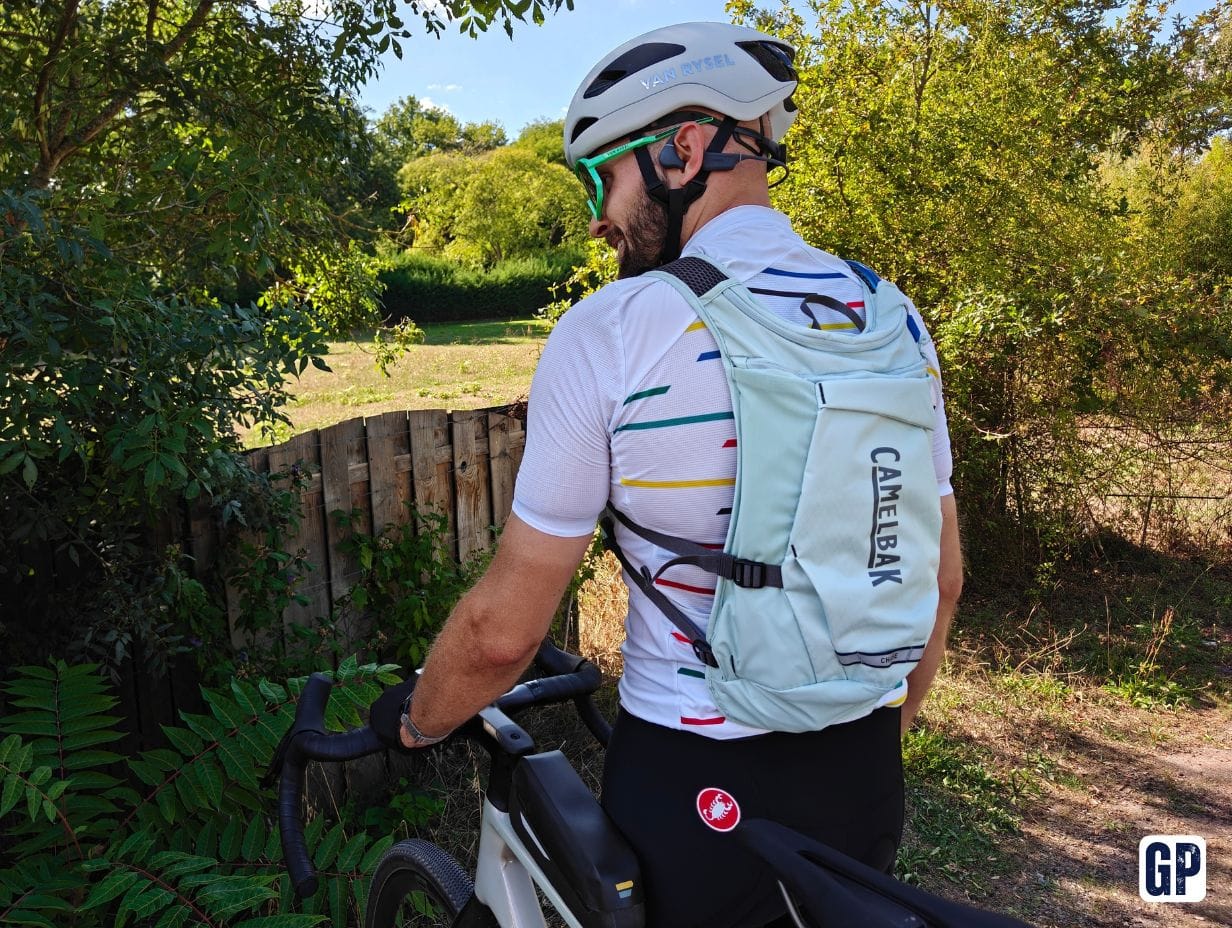
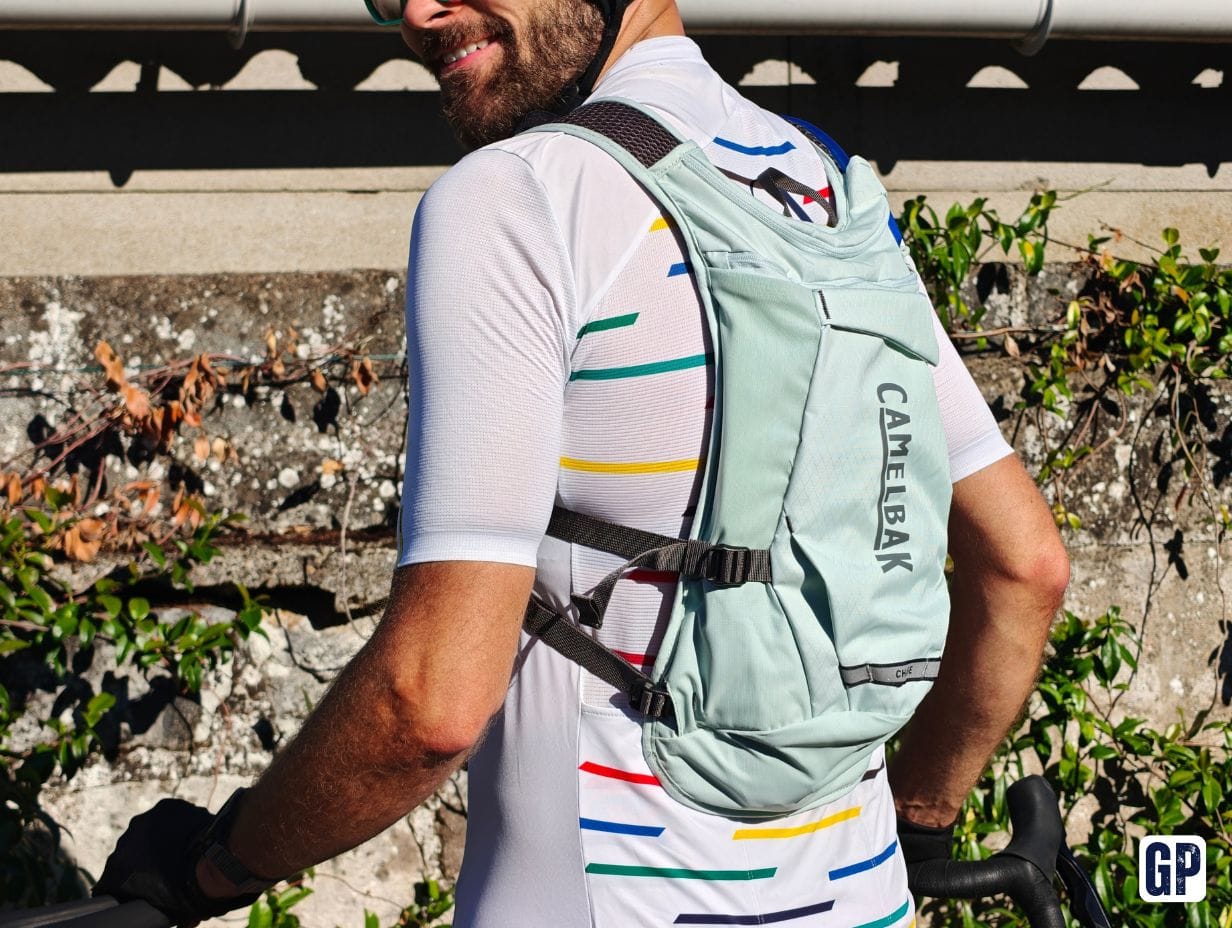
The two chest straps play a big part in this behaviour. The first is fairly firm and lets you press the pack snugly against the body.
The second is more elastic, which preserves more freedom of movement while stabilising the lower torso.
I also appreciated their width adjustment: they slide on a rail so they can be positioned precisely to suit your body shape. In this family of carried hydration solutions, stability often remains the real deciding factor, as we had already seen with the Velocio hydration vest.
The only thing I had to get used to was the sound of water in the reservoir when the terrain gets rougher. But the pack itself stays perfectly in place.
Comfort, even with a well loaded pack
It is probably one of the aspects that surprised me most. I almost never ride with a backpack, so I expected to feel it more. On the contrary, once in place, it quickly becomes discreet.
The load is well distributed and I did not notice any rubbing or particular discomfort on the back or chest. Even with the tools and kit I was carrying, it remained pleasant to wear.
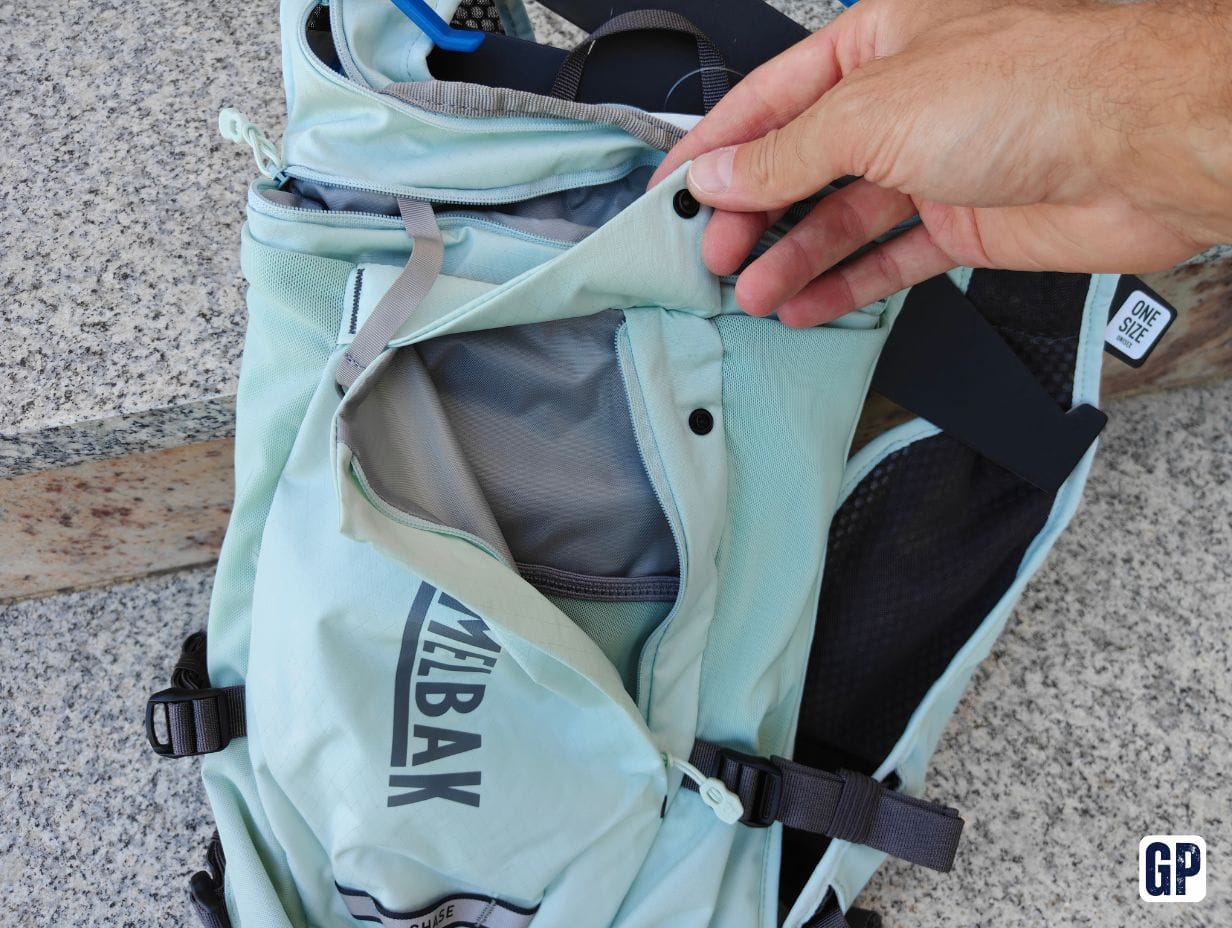
On a long ride, however, I did feel slight compression on the left shoulder at the end of the day. It is hard to call that a real fault of the pack: I am simply not used to riding with something on my back, and I probably also adapted my position as a result.
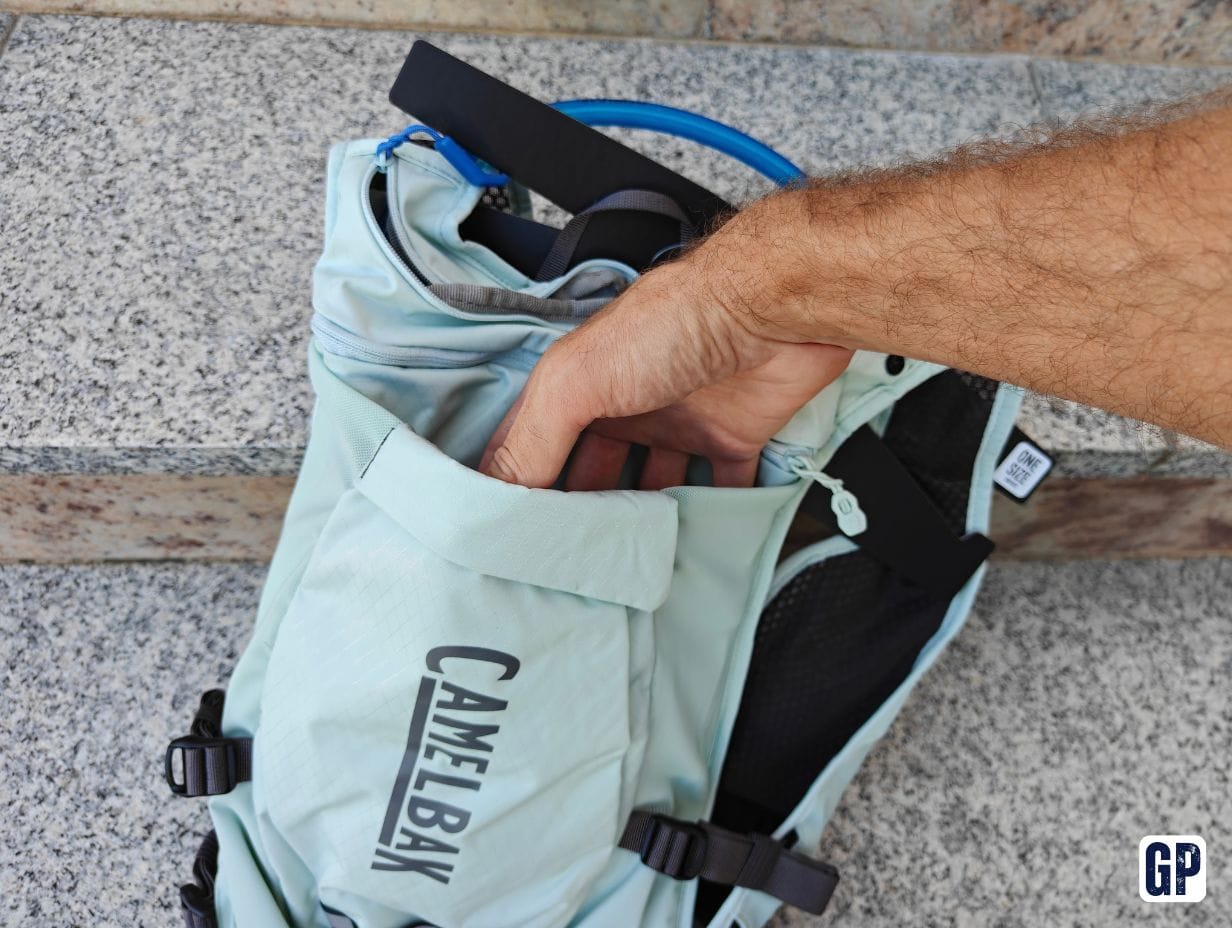
The chest pockets are also very practical for keeping regularly used items close to hand. Their slanted opening really makes it easy to access gels, fruit chews, small tools or keys.
I kept using my jersey pockets for the phone, mainly because I did not find the dedicated pocket comfortable enough with the phone against the chest. It does take my smartphone, but it gets quite tight and I do not like the compression created in that area. With a very large phone, I would be rather doubtful about this pocket’s capacity.
A pack that feels warm in summer
In the end, that is the main trade-off I noted on my summer rides.
I used the Chase Adventure 8 Vest in temperatures above 30 °C and did not notice any particular issue with sweat wicking. The mesh does its job properly and I did not feel I was sweating abnormally because of the pack.
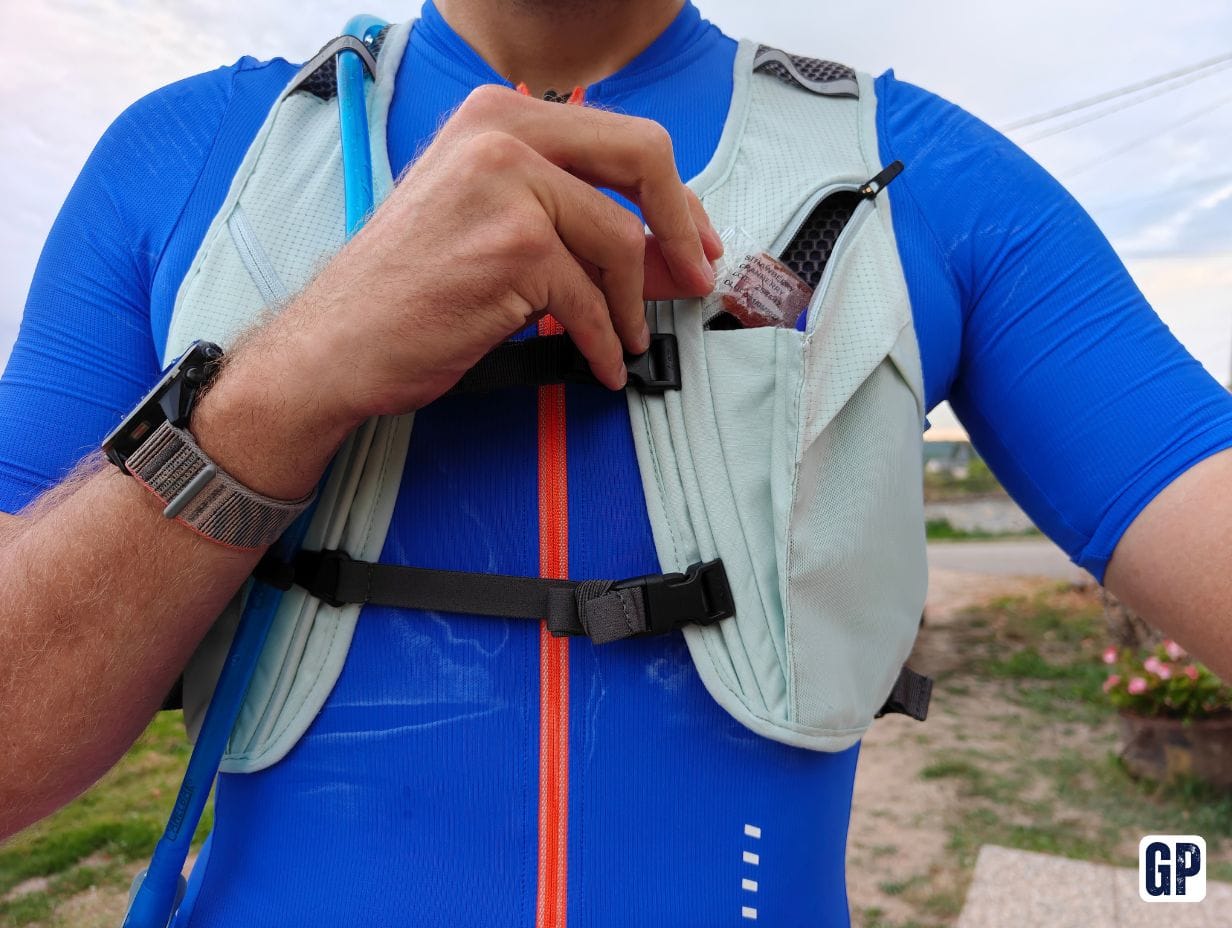
However, it runs warm. Its volume, its construction and the thickness of some materials simply give the sensation of wearing an extra layer.
I felt it mostly on the back, and to a lesser extent on the chest.
In autumn or spring, this characteristic should be far less of a concern.
8 litres to really carry kit
With its 8 litres, the Chase Adventure 8 Vest plays the volume card. And that volume is not artificial: the different compartments are genuinely usable and well distributed.
I did not use all 8 litres on my rides, which were long but not multi-day adventures. However, I deliberately used the pack for the commute to see what you can actually fit in. The answer is simple: a lot.
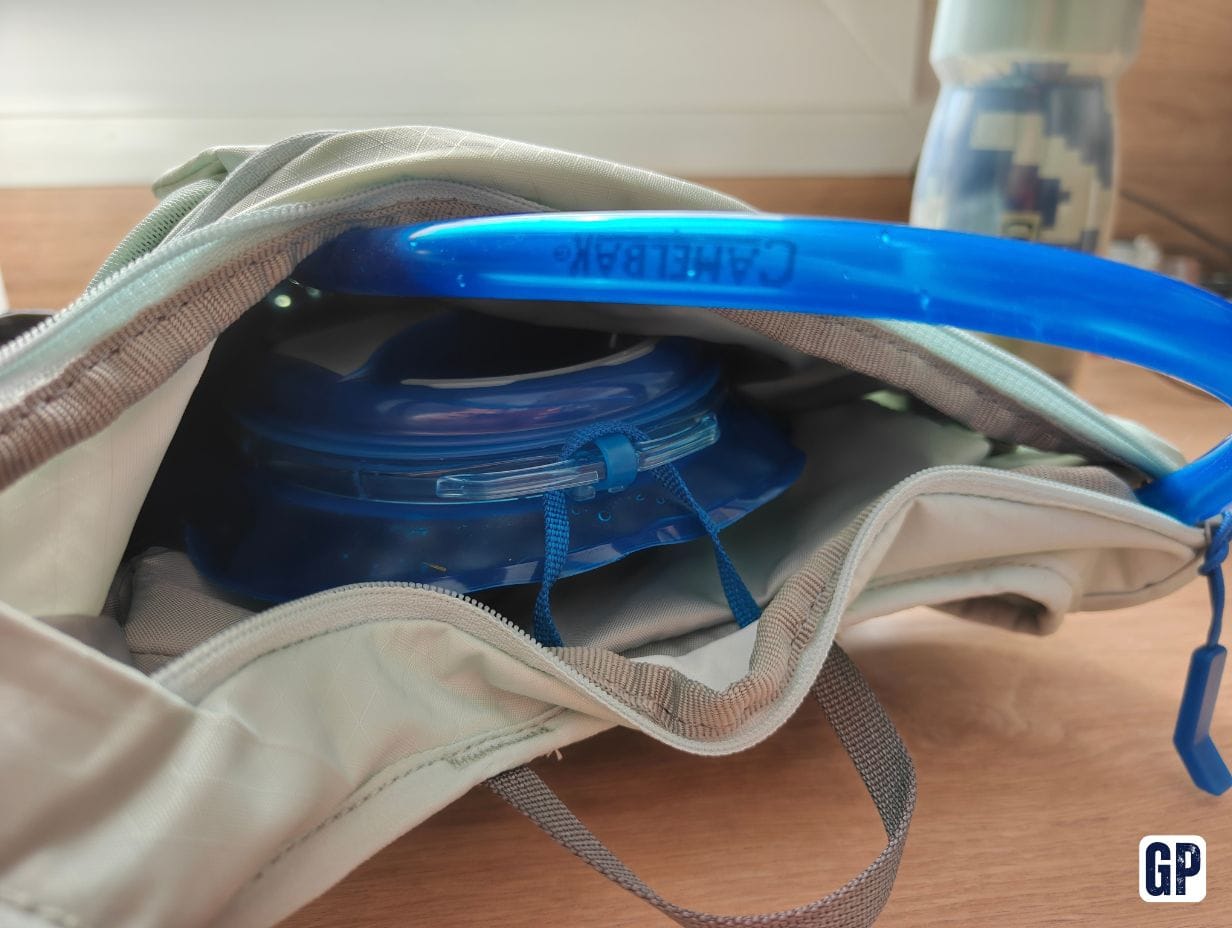
The different spaces seemed sensible and I did not find any pocket whose purpose I could not understand. Tools slot in easily, as do spare layers and extras. With the reservoir removed, the available volume becomes particularly generous.
So this is a pack that can genuinely move some of the kit you would otherwise tend to spread around the bike.
That said, I am not sure it would be my preferred solution for multi-day bikepacking: personally, I prefer to avoid having a pack on my back when I am away for a long time.
But for someone who likes this setup, the potential is certainly there.
A hydration reservoir that is very pleasant to use
The 2-litre Crux reservoir is particularly well suited to my use, as I drink a lot on the bike.
Two litres already offers a comfortable reserve and filling is very simple thanks to the large opening and the handle, which lets you hold the reservoir without spilling everywhere.
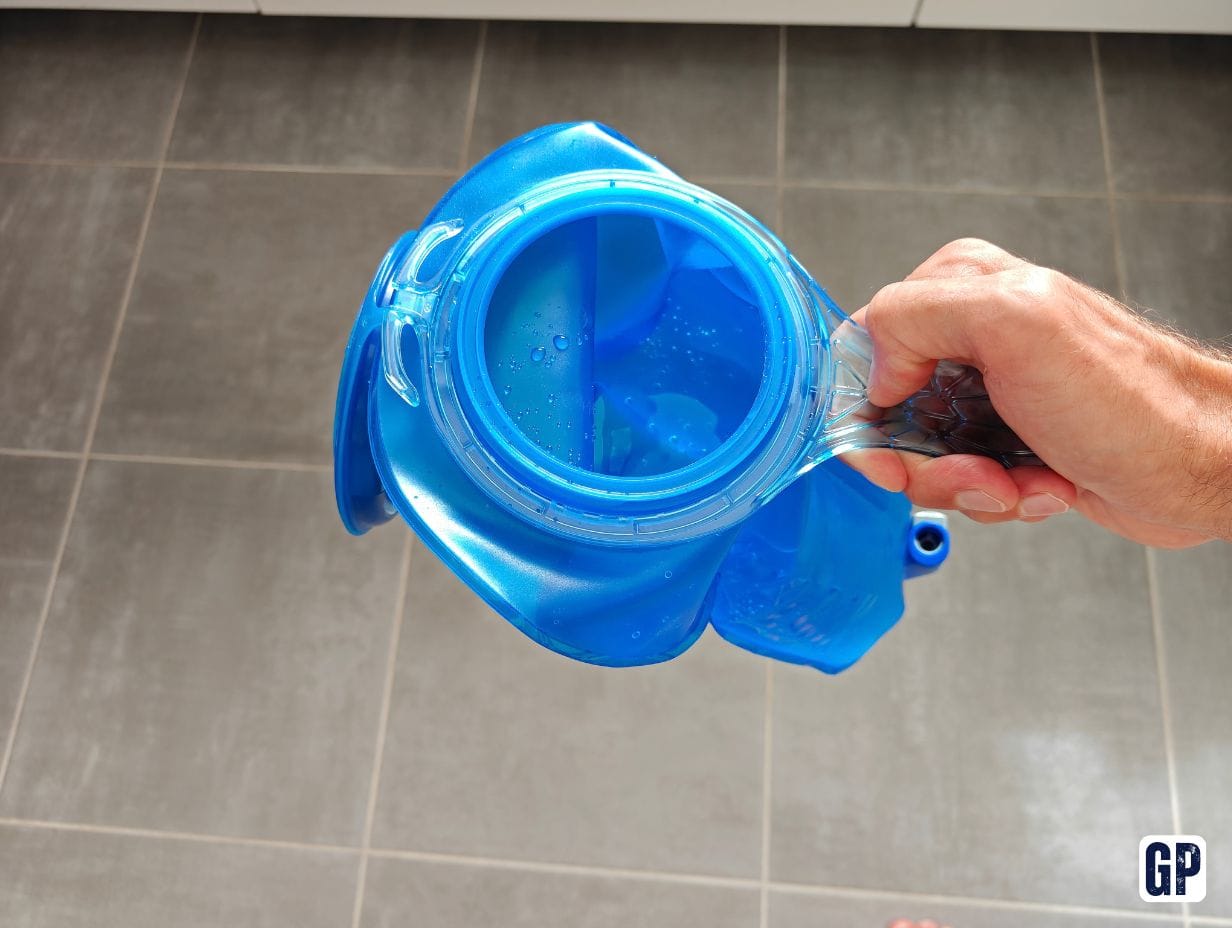
This large opening also makes maintenance easier, notably with a simple bottle brush. The hose can be detached from the reservoir to optimise cleaning.
Using it while riding also pleasantly surprised me.
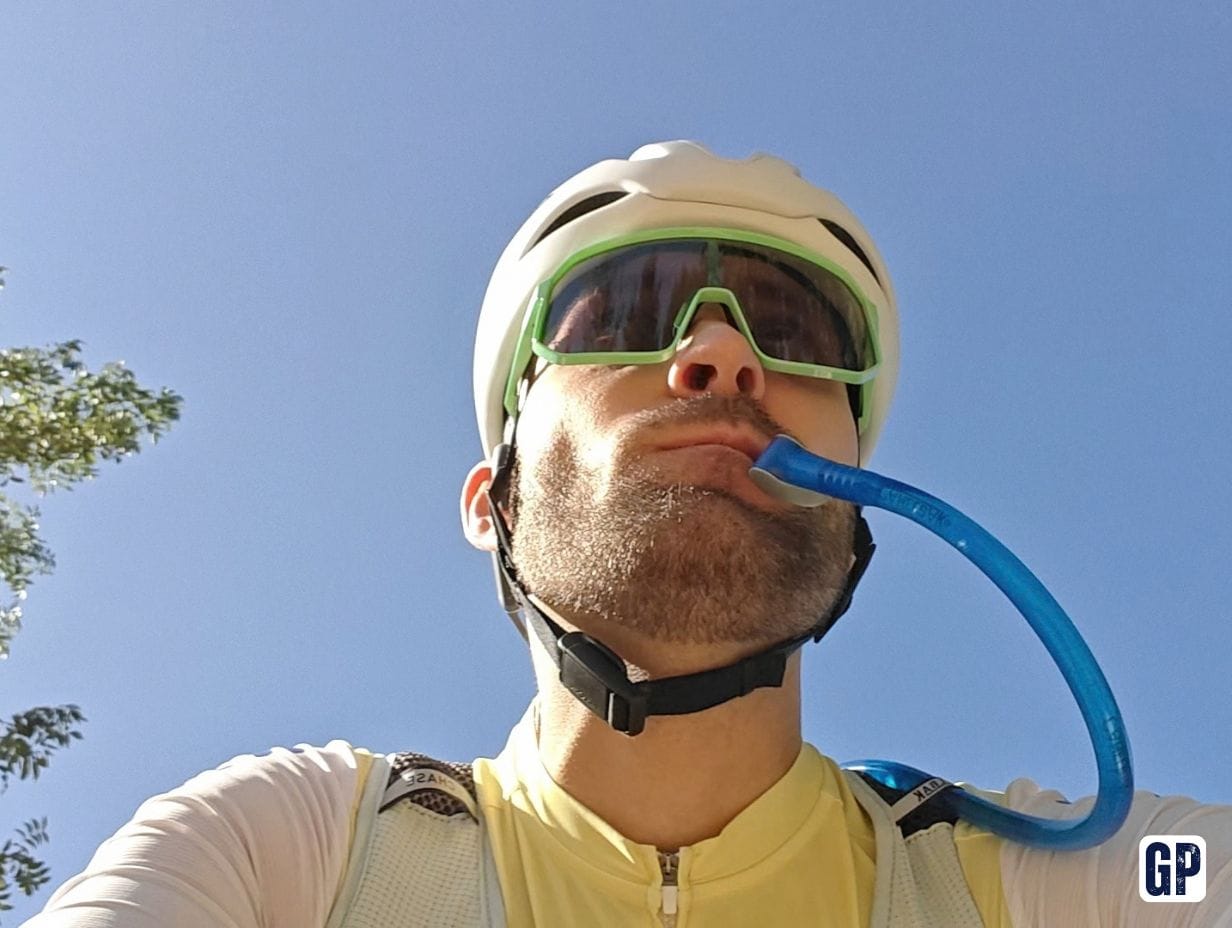
The hose is held by two clips and unclips easily for drinking. The flow rate is very decent and the bite valve can be angled to find a comfortable position. You just need to get the knack at first: you have to suck to bring the water through, which can feel less obvious on the first few uses.
Once that habit is formed, the system becomes very natural. I even found I was drinking more than with bottles, simply because water is constantly accessible and you remember to drink more readily.
I also left the valve open permanently and simply put the hose back into its two clips after drinking. The system then prevents water from flowing everywhere, which makes it particularly practical.
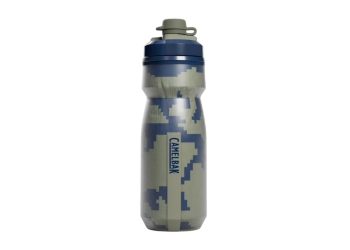
Two Podium Dirt Series Chill to complete the setup
I also used two CamelBak Podium Dirt Series Chill 620 ml with the pack. Again, it is hard to fault them.
They sit perfectly in the bottle cages, even on rough sections, and both handling them and putting them back in while riding are very easy.
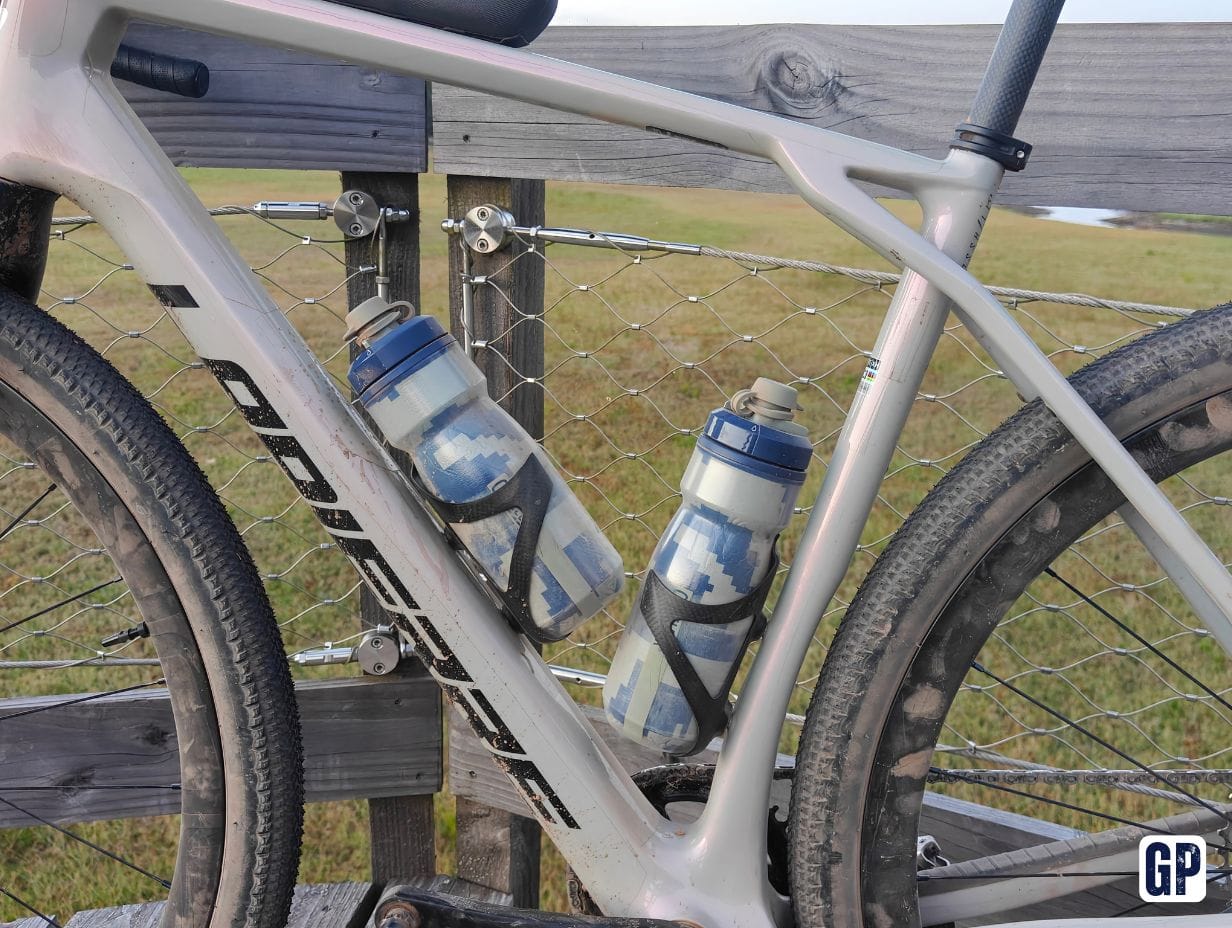
I particularly appreciated their valve: water stops immediately as soon as you stop squeezing the bottle. There is no need to close the bottles between uses either: once the pressure is released, water does not flow thanks to the integrated valve.
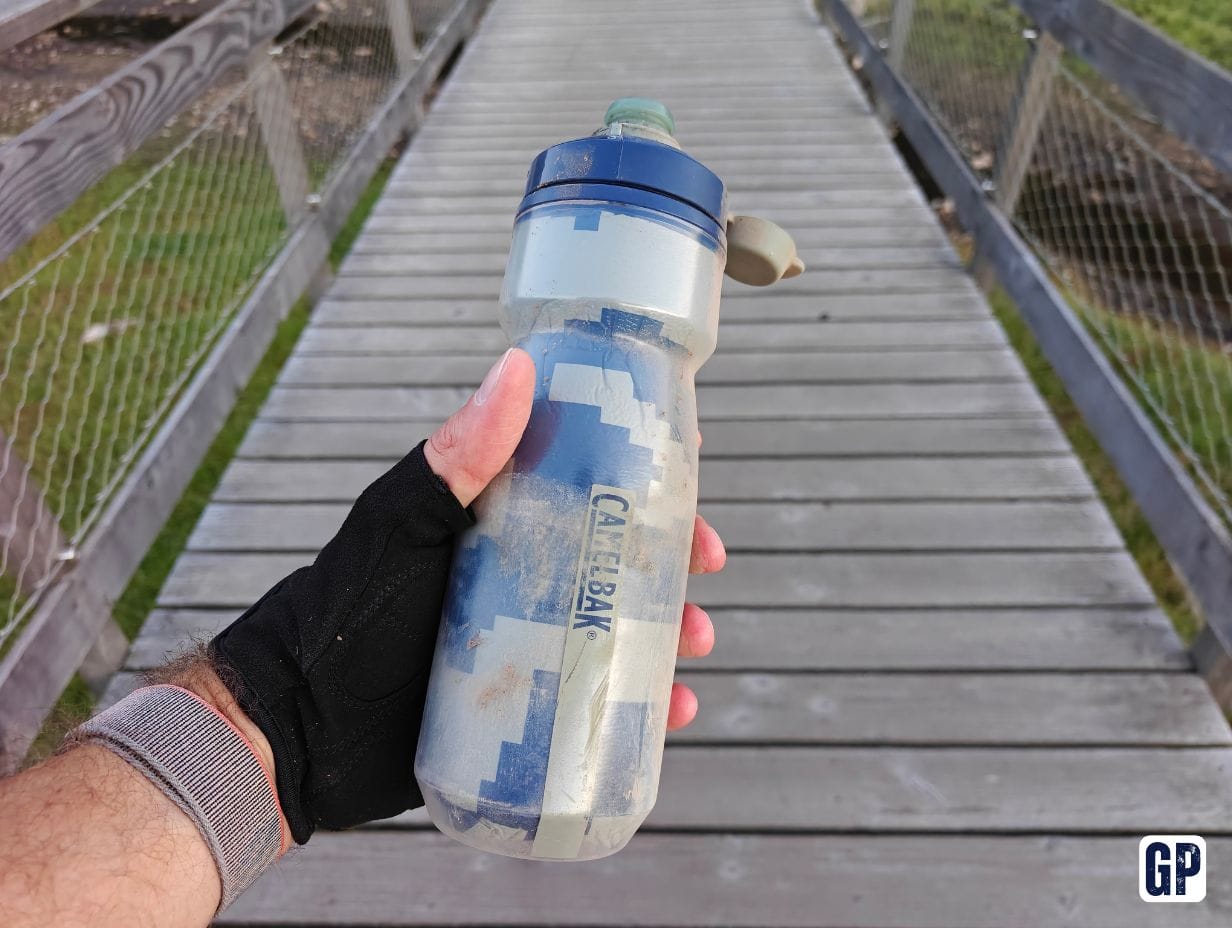
The flow is high but remains perfectly controllable, which lets you drink quickly without having to force it.
The insulated double-wall also slows the rise in water temperature, which is welcome when the mercury climbs.
The protective cap also limits splashes on the valve, even if it obviously cannot work miracles in the mud.
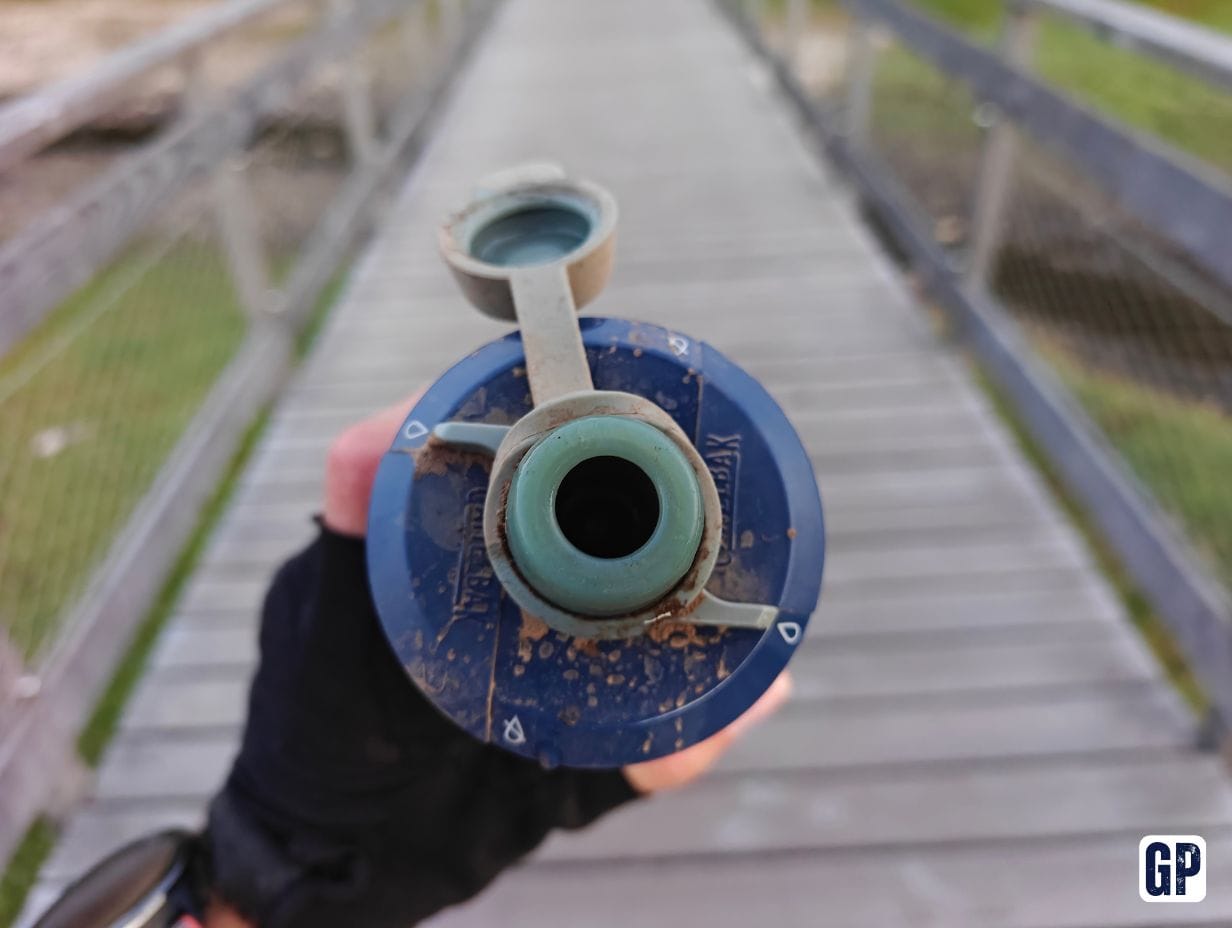
Finally, cleaning is particularly simple since the whole valve can be disassembled and the bottle is fully dishwasher safe.
The finish and the colour I received are impeccable too.
What I take away from the CamelBak Chase Adventure 8 Vest
For a big gravel ride, a multi-day ride or a raid, its layout makes perfect sense. The build is really robust and inspires confidence, without sacrificing comfort once you have found the right position.
You just have to accept its bulk and the extra warmth it can bring in the height of summer. And above all, you have to like riding with a pack on your back.
That is ultimately what surprised me most with this Chase Adventure 8 Vest. The first time I saw it, I thought it was huge. With its 8 litres and 2-litre reservoir, it does indeed look more like a small hiking pack than a minimalist cycling item.
And yet, once in place, you quickly forget about it. It is quite remarkable given its volume: you do not feel like you are riding with a huge pack full of water on your back.
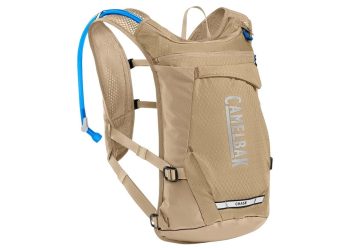
The Chase Adventure 8 Vest fully assumes its positioning. It is not a pack designed to save grams, but kit for those who want to set off with lots of gear, have a real water reserve and maintain good comfort over time.
Its finish, organisation and robustness above all make it a credible companion for rides where you prioritise autonomy and carrying capacity.