

A Chinese carbon wheel brand arriving with an aggressive price, carbon spokes, a 50 mm rim and a performance pitch – nothing especially new on paper.
When PHi got in touch, my first reaction was cautious. Yet another Asian brand trying to carve out a place in Europe with a strong spec sheet and a price that is hard to argue with. Part of that read still holds true – but not entirely.
Strengths:
- Reactive feel on accelerations and short climbs
- Very low weight for a 50 mm carbon wheelset
- Very strong spec-for-price ratio
Could be better
- Less sense of aerodynamic inertia than a top-tier benchmark
The difference with PHi lies mostly in how it is entering the market. The brand is not just looking to sell direct from Asia; it is also pushing a local distribution model, aiming to go through bike shops and retailers. And for this type of product, that shifts perception quite a bit.
A Chinese wheelset, but not quite the usual story
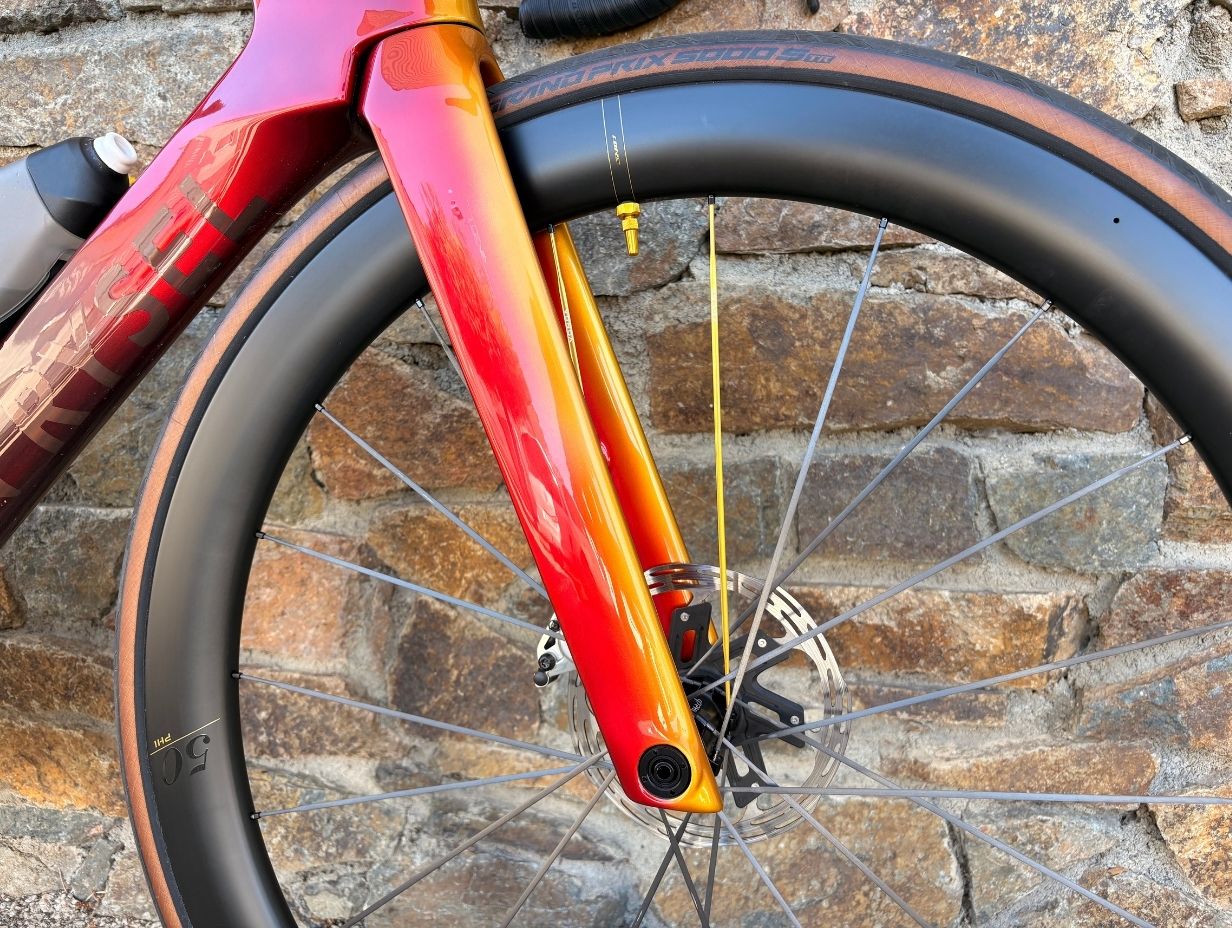
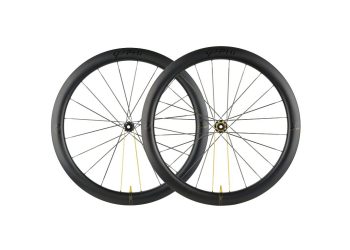
The model tested here is the PHi Road Wheel Core D50, a carbon road disc wheelset, tubeless-ready, with a 50 mm hooked rim. It sits as more of an entry point in the PHi range, even if its features are anything but bargain-basement.
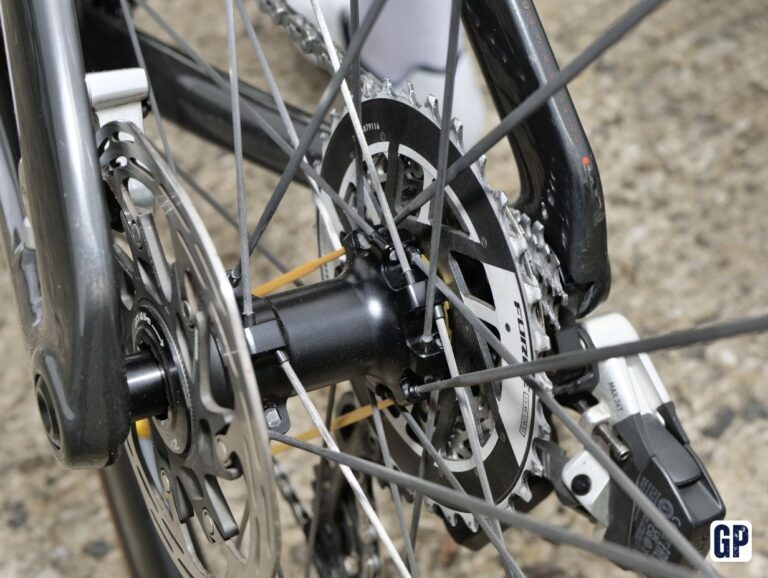
At €1,320, the pair lands with features you often see on far pricier wheels: VONOA ST320 carbon spokes, a 23 mm internal and 30 mm external rim width, a proprietary 36-tooth ratchet hub, Shimano HG or SRAM XDR compatibility, with tubeless valves and rim tape pre-installed. The pair is quoted at 1,277 g without valves or rim tape.

The claimed system weight limit is 120 kg bike + rider, and the rotors mount via Center Lock. Compatible tyres run from 28 to 45 mm, with a recommended range of 28 to 30 mm. So it is first and foremost a modern road wheelset, capable of venturing into clean all-road, but it is not a dedicated gravel wheel.
A really refined design, not merely discreet
Visually, PHi has done its homework. The Smoked Matte finish stays understated, the logos do not swallow the whole rim, the typeface is well chosen, and the two gold spokes add a distinctive touch without tipping into exuberance.
The gold hub also contributes to the wheelset’s identity. It is subjective, of course, but I find the whole rather classy. We are a long way from some overly busy carbon wheels where loud graphics try to make up for a lack of personality.
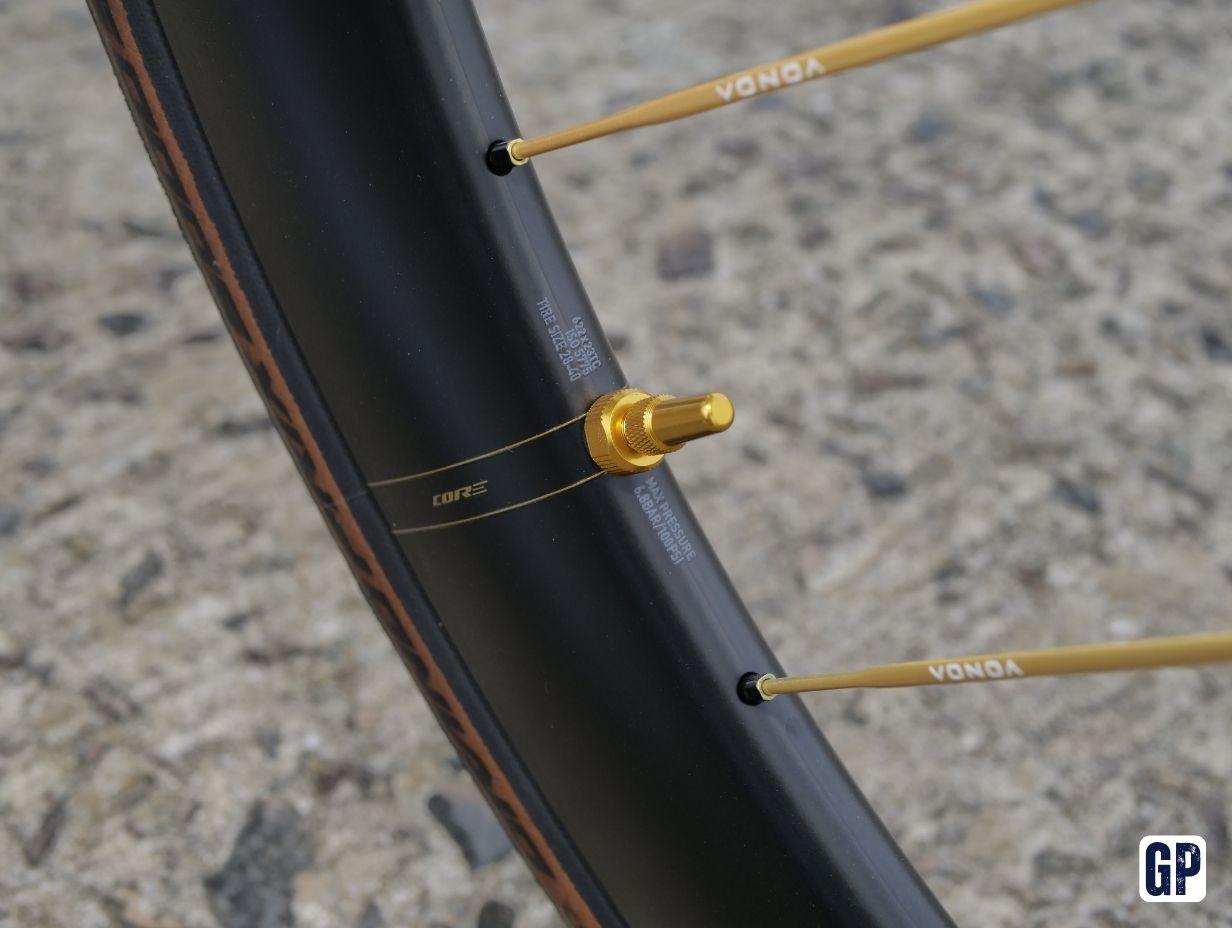
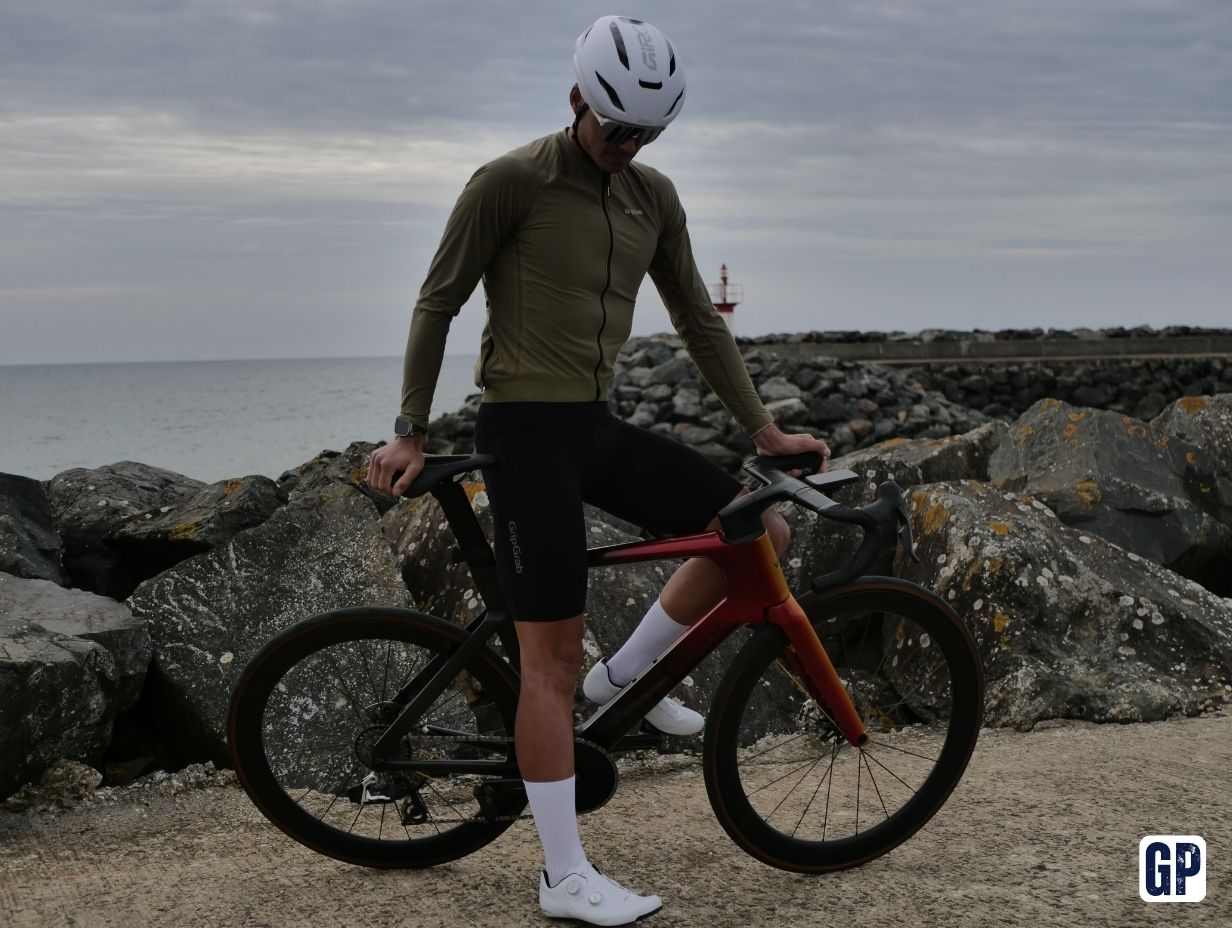
Here, the set has real presence on the bike without overpowering it. On my Van Rysel RCR-F, the look works very well: sporty, clean, a little different.
Why I fitted them instead of the Zipp 454 NSW
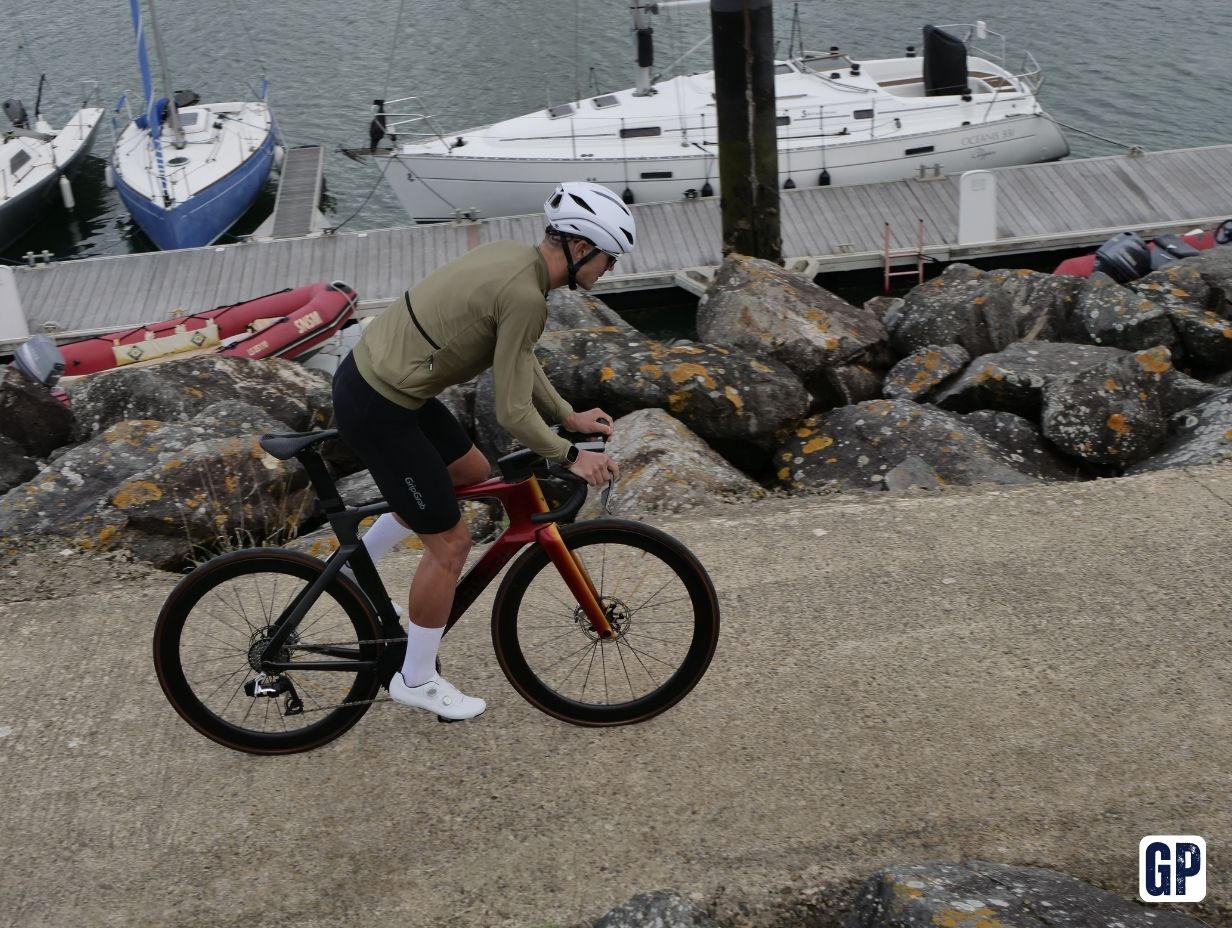
To understand this wheelset, I wanted a demanding point of comparison. So I mounted them on my Van Rysel RCR-F in place of my Zipp 454 NSW, one of today’s benchmarks in high-end aero road wheels.
The bet was deliberately bold. The two pairs do not play in the same category – neither in price nor in technical complexity. The Zipps have a very specific wavy rim, a variable depth from 53 to 58 mm and a very marked behaviour once up to speed. The PHi Core D50 are simpler in their approach: 50 mm, a light construction, carbon spokes, and a far more accessible price position.
I did not want to make an absolute comparison between the two. But it was interesting to see just how much a simple wheelset can change the character of a bike.
More snap, especially when it is time to accelerate
The most obvious change was responsiveness. On short starts, punchy kicks and short, sharp ramps, the RCR-F felt more lively.
I am not necessarily chasing grams at all costs, especially on an aero bike. But by swapping the Zipps for the PHi, I dropped close to 200 g from the build. That is not trivial, and you feel it most when the bike has to kick hard again after a lull.
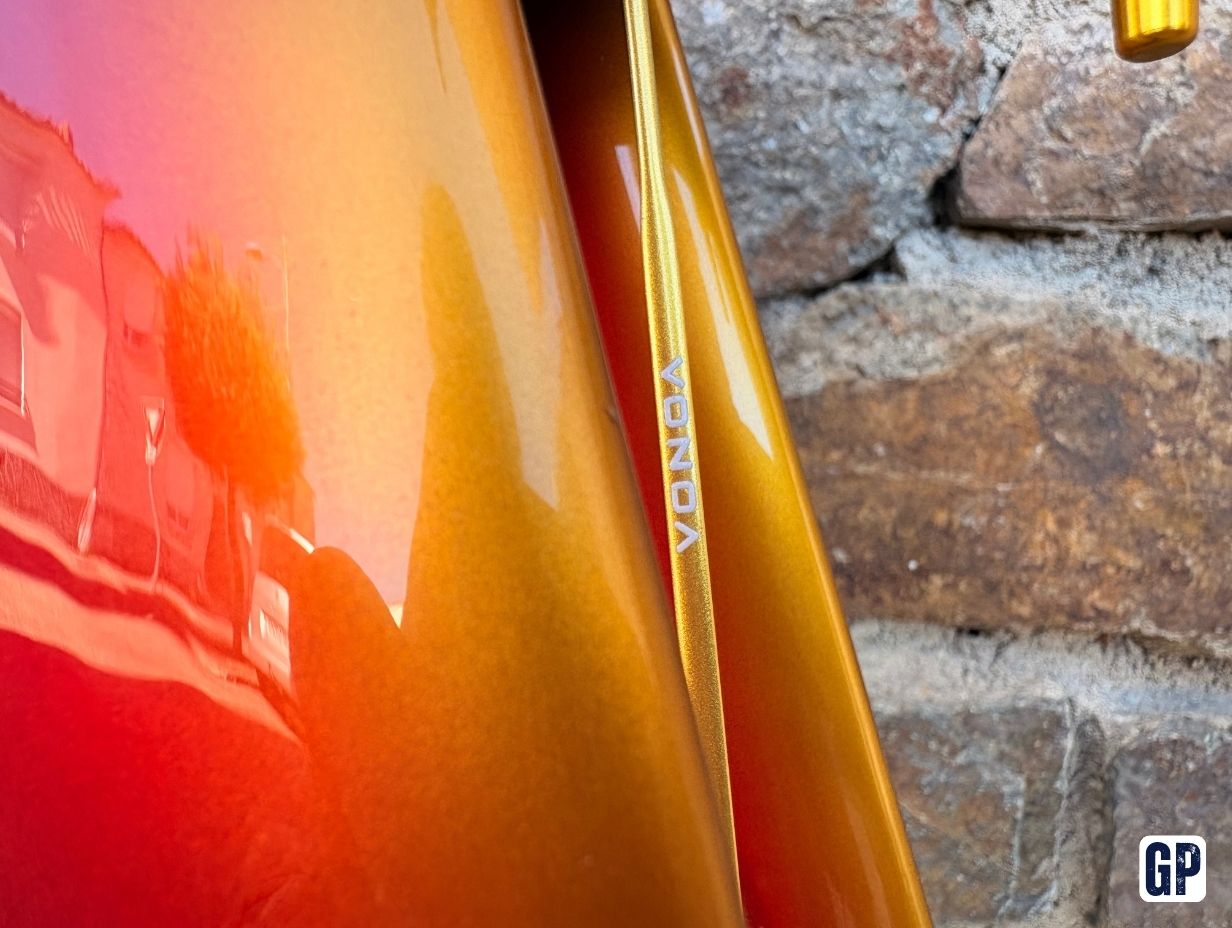
The Core D50 deliver a livelier, more direct feel. The bike seems to step up a notch in choppy efforts, whereas the Zipps favour continuity and a steadier cruising speed.
This is not a criticism of the Zipps – their strength lies elsewhere. But on my terrain, with frequent accelerations and short climbs, the PHi brought something very tangible.
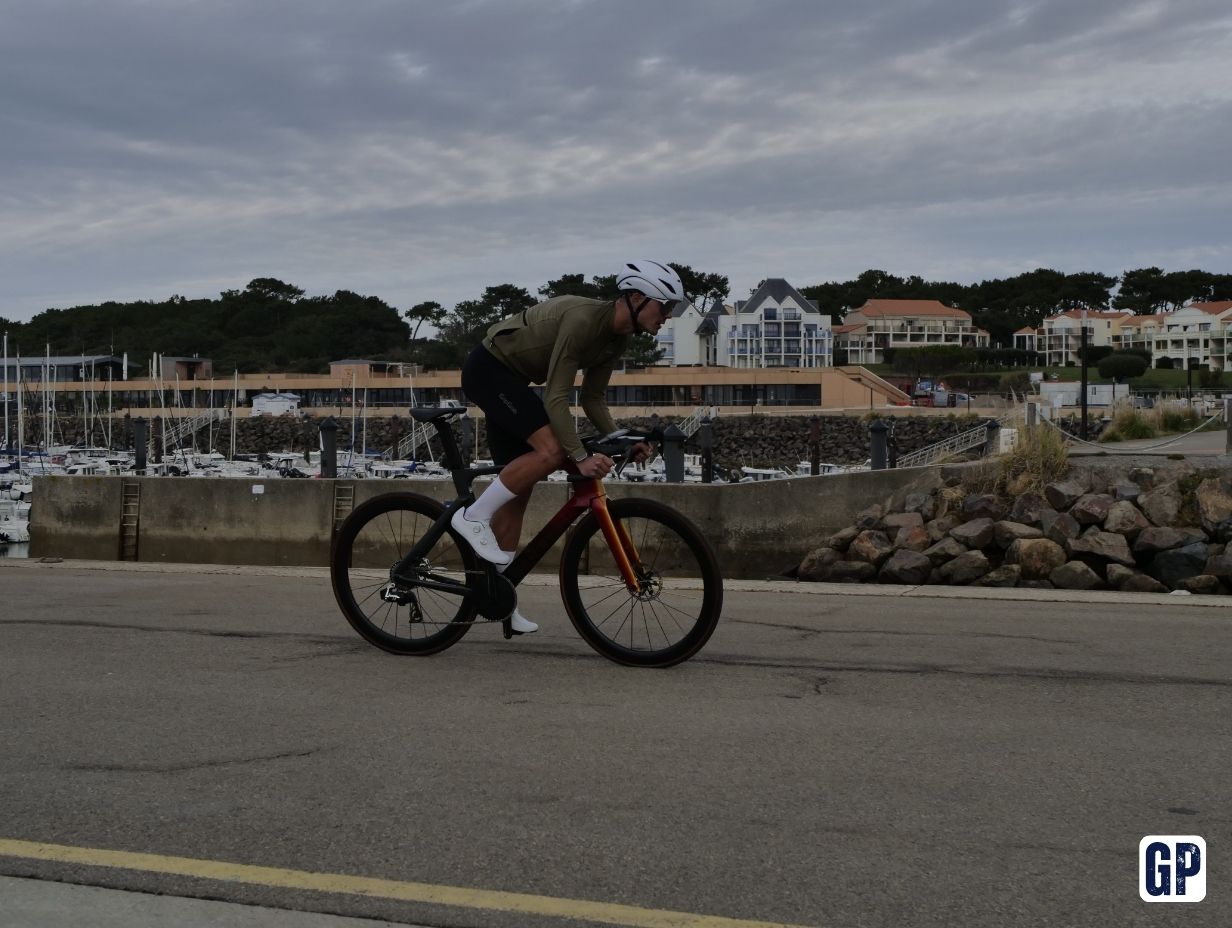
50 mm: aero enough, more stable in the wind
I ride in a region that is often windy, so crosswind stability is not a detail for me. The Zipp 454 NSW remain very well balanced given their height, but the PHi, with their slightly shallower rim, gave me a bit more serenity in certain gusts.
I had a small concern linked to the internal width being less generous than some very modern wheels. At 23 mm, you are still on a current platform for road, but not an extreme one. I feared a tyre that felt less planted, less stable. In practice, I did not run into that limit.
The wheel stays well behaved, the bike does not turn skittish in a bad way, and the handling remains composed enough to ride fast without feeling like you are steering an overly light front wheel.
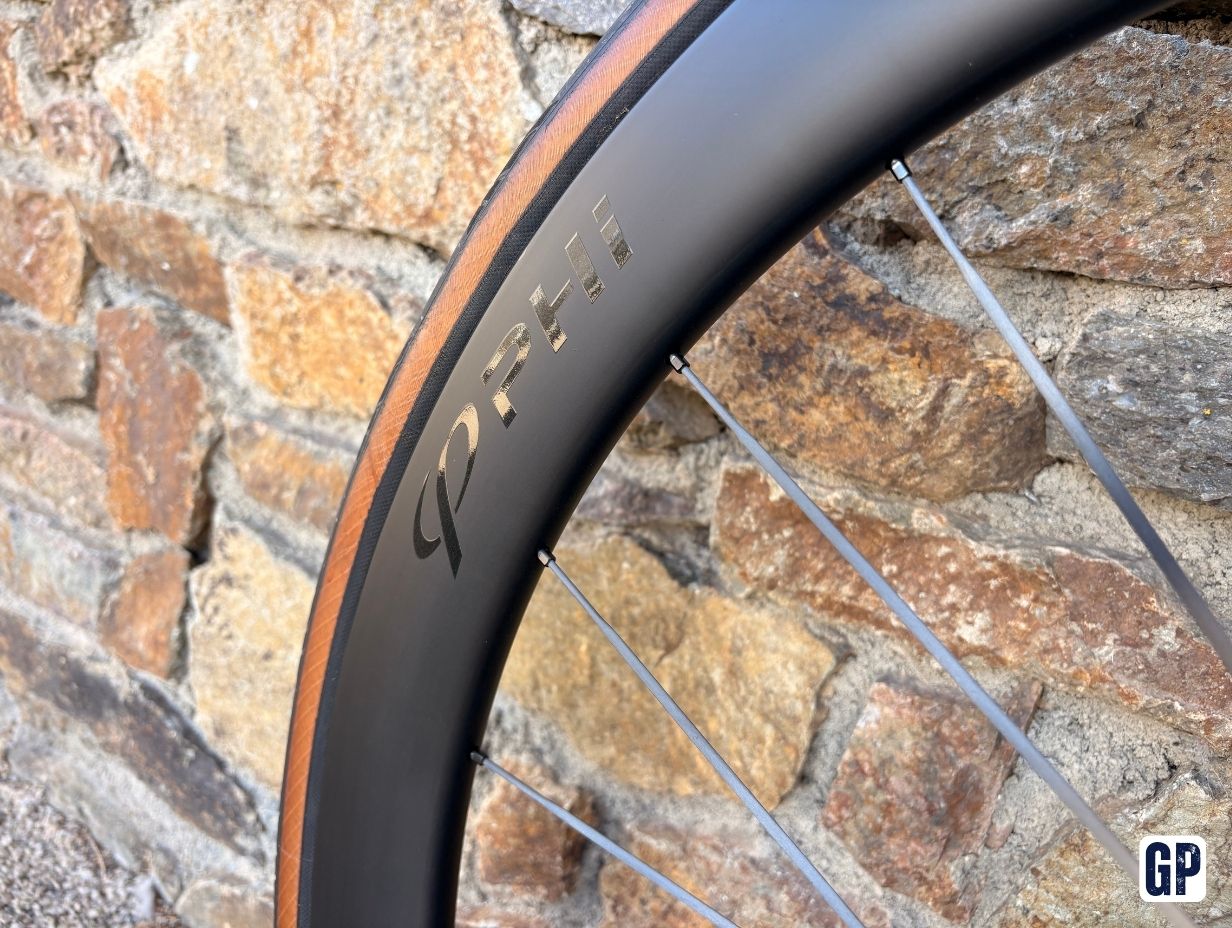
Once up to speed, the Core D50 respond very well. They simply do not deliver the same thrilling sense of aerodynamic inertia as the Zipp 454 NSW. With the latter, there is that little speed effect that settles in and makes you want to stay at high pace for a long time. The PHi are more reactive, less spectacular in that phase.
An aggressive spec sheet, but the market forgives very little now
The spec-for-price ratio is one of this pair’s big arguments. At €1,320, with a 50 mm carbon rim, VONOA carbon spokes, a very low weight and potentially local distribution, PHi arrives with a real proposition.
Local distribution matters. An Asian carbon wheelset at a good price, bought from far away with vague after-sales support, is not the same as a pair you might find at a bike shop, with a nearer point of contact. I cannot yet judge PHi’s after-sales quality over time, but this approach makes the product more credible for a rider who hesitates to order an exotic pair direct.
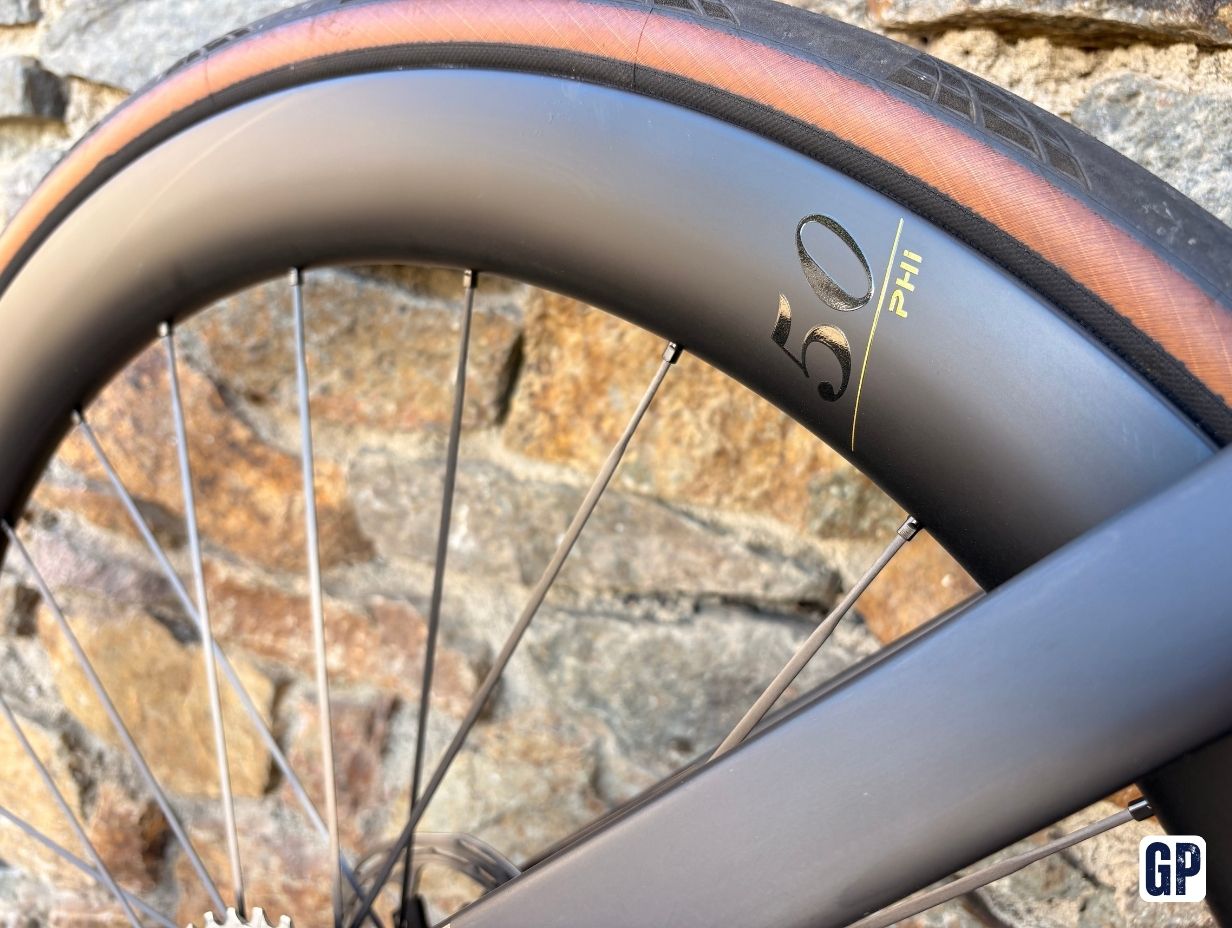
That said, the market has become brutal. Asian brands have multiplied, some already have a real reputation, and Western brands are also starting to make their carbon wheels more accessible. Against European players like Newmen, or well-established Chinese brands like Elite Wheels, PHi will have to stand out by more than a spec sheet.
Design can help. Finish too. But at this level of competition, the real tests will be reliability, parts availability and the seriousness of customer support.
Who is it for?
I see these PHi Core D50 as an interesting option for a road rider looking to upgrade a stock build without blowing the budget, with a light, fairly aero, but above all reactive pair.
They make sense on a sporty endurance bike, an aero bike you want to make a bit more lively, or a versatile build aimed at fast rides with short climbs, repeated accelerations and wind.
I would recommend them less to someone who primarily wants the feel of a very inert wheelset for riding long stretches at high speed on flat terrain. In that register, taller or more specialised wheels can offer a more distinctive character.
What I take away most is the balance. The Core D50 do not feel like they are chasing a single flattering number. They are light, tidy, sufficiently aero, stable, and lively enough to shift the bike in the right direction.
The only real question mark is longevity. I do not yet have enough distance to talk about after-sales or long-term ageing. If something changes in the coming months or years, this review will be updated. As it stands, it is hard to be disappointed: PHi arrives with a serious, well-executed wheelset that is more convincing than my initial scepticism would have suggested.