
After four years riding exclusively with Squirt Lube, switching to a chain oil felt almost counterintuitive to me. I had my habits, my reference points, and above all a drivetrain that generally stayed clean day-to-day.
Wax suited me for its easy upkeep: a quick wipe, a new application when the chain starts to dry out, and off you go. I also liked not having a greasy chain, with the risk of ending up with a black tattoo on my calf or socks.
Strengths:
- Particularly quiet drivetrain
- Quick day-to-day maintenance
- Little dirt build-up on a road bike
- No marks on legs or clothing
Could be better
- Application more demanding than wax
Before this test, I therefore had a fairly clear picture of oil lubricants: something greasier, that quickly blackens the drivetrain and attracts more dust and dirt. In return, I knew their staying power in the rain was generally better than that of a wax.
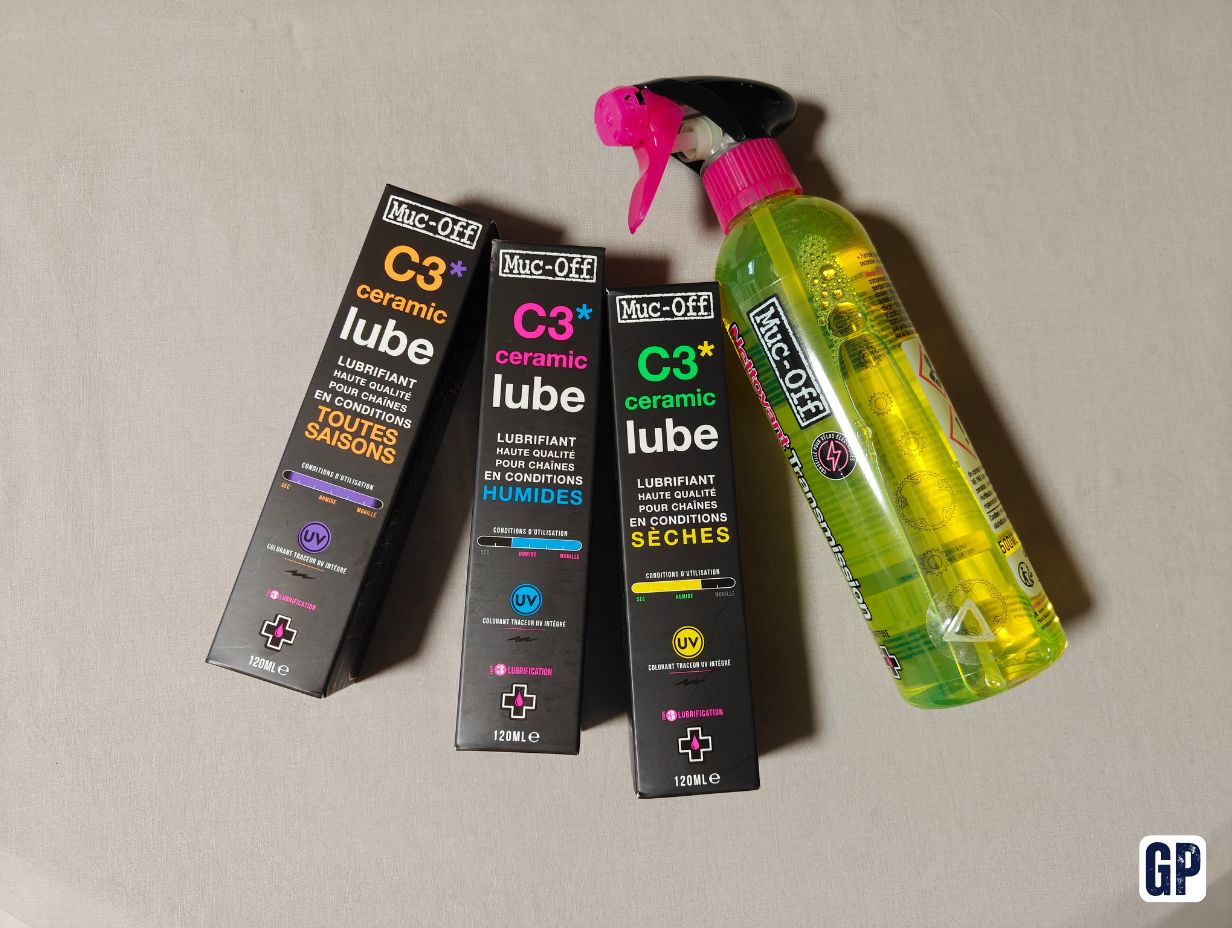
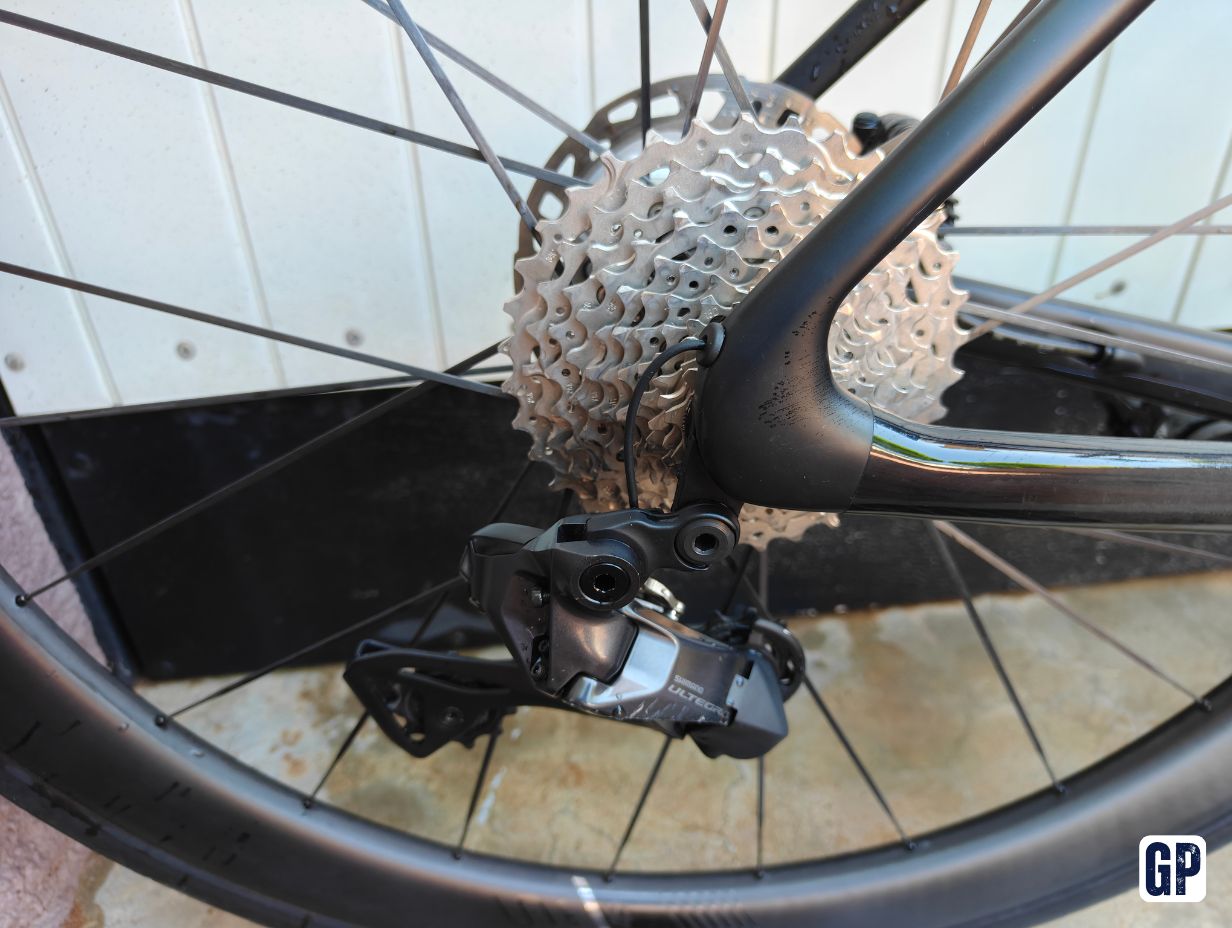
The chance to test three Muc-Off lubricants made me want to take the plunge. For this first experience, I used them exclusively on my road bike, equipped with a 12-speed Ultegra Di2 drivetrain, an 11-34 cassette and a 52-36 crankset.
The aim was simple: see what oil actually changes compared to wax, especially in terms of maintenance and cleanliness, and above all whether the experience could make me give up Squirt.
Resetting the drivetrain
Before starting, I had to get back to a clean drivetrain. It had a lot of wax deposits, especially in the cassette and on the jockey wheels, which I ended up removing to clean by hand.
For the cassette and chainrings, I used Muc-Off Bio Drivetrain Cleaner, left to act for one minute before brushing and rinsing. Two passes were needed to get rid of the Squirt residues.
For the chain, I preferred a true reset with a bath of Essence F solvent for around fifteen minutes, then a bath of acetone.
In total, the operation took me about 50 minutes, including cleaning and reassembly. A blast of compressed air, and the drivetrain was ready for the test.
Muc-Off Bio Dry Lube: the pleasant surprise of the test
To start, I chose Bio Dry Lube. As the test began at the very start of August, right in the middle of a heatwave, the conditions were ideal to begin with a lubricant intended for dry conditions.
Bio Dry Lube is a chain oil based on plant oils, biodegradable and PTFE-free, which Muc-Off positions for dry conditions.
Worth noting, though: despite its plant-wax-based formulation, Bio Dry Lube is still a liquid, oil-type lubricant, not a pure wax like Squirt.
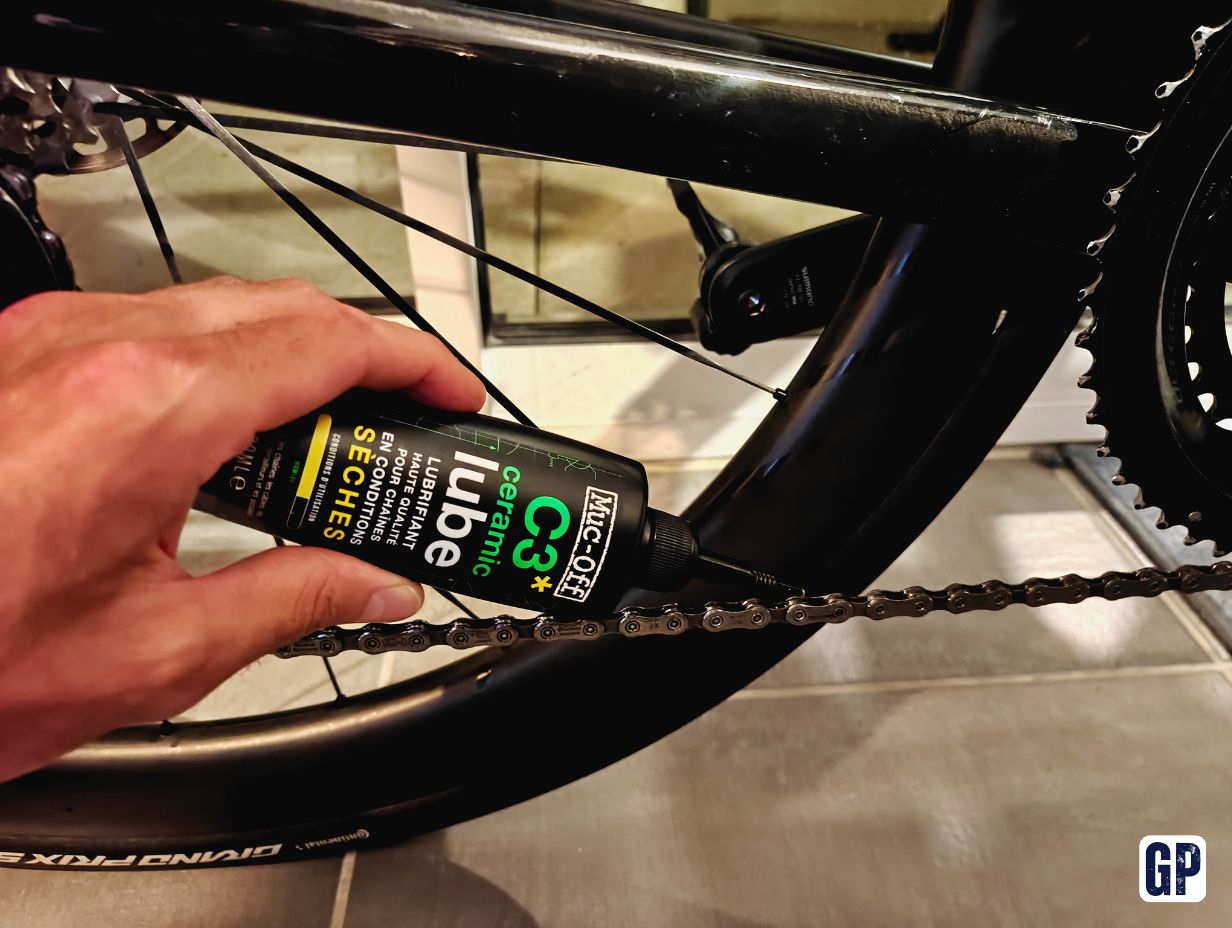
As is often the case with Muc-Off, the first thing you notice on opening the bottle is its fruity smell, which has become something of a brand signature. The product is greenish and fairly fluid.
Application demands a little more attention than with Squirt. With wax, I tended to spin the chain and apply the product without thinking too much. With an oil, it is better to take your time to put the right amount in the right place.
I therefore applied a drop to each roller, without excess, then wiped the outer plates of the chain.
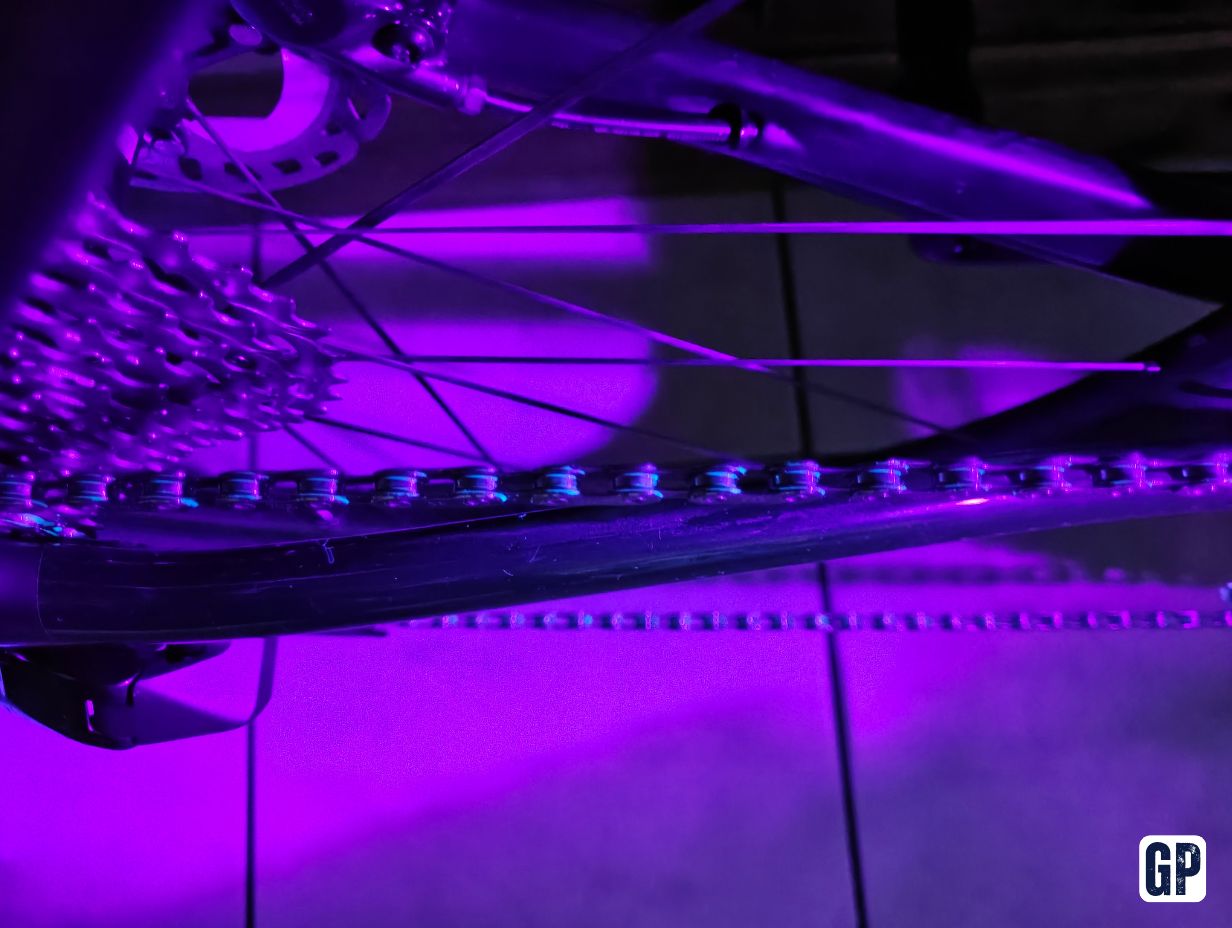
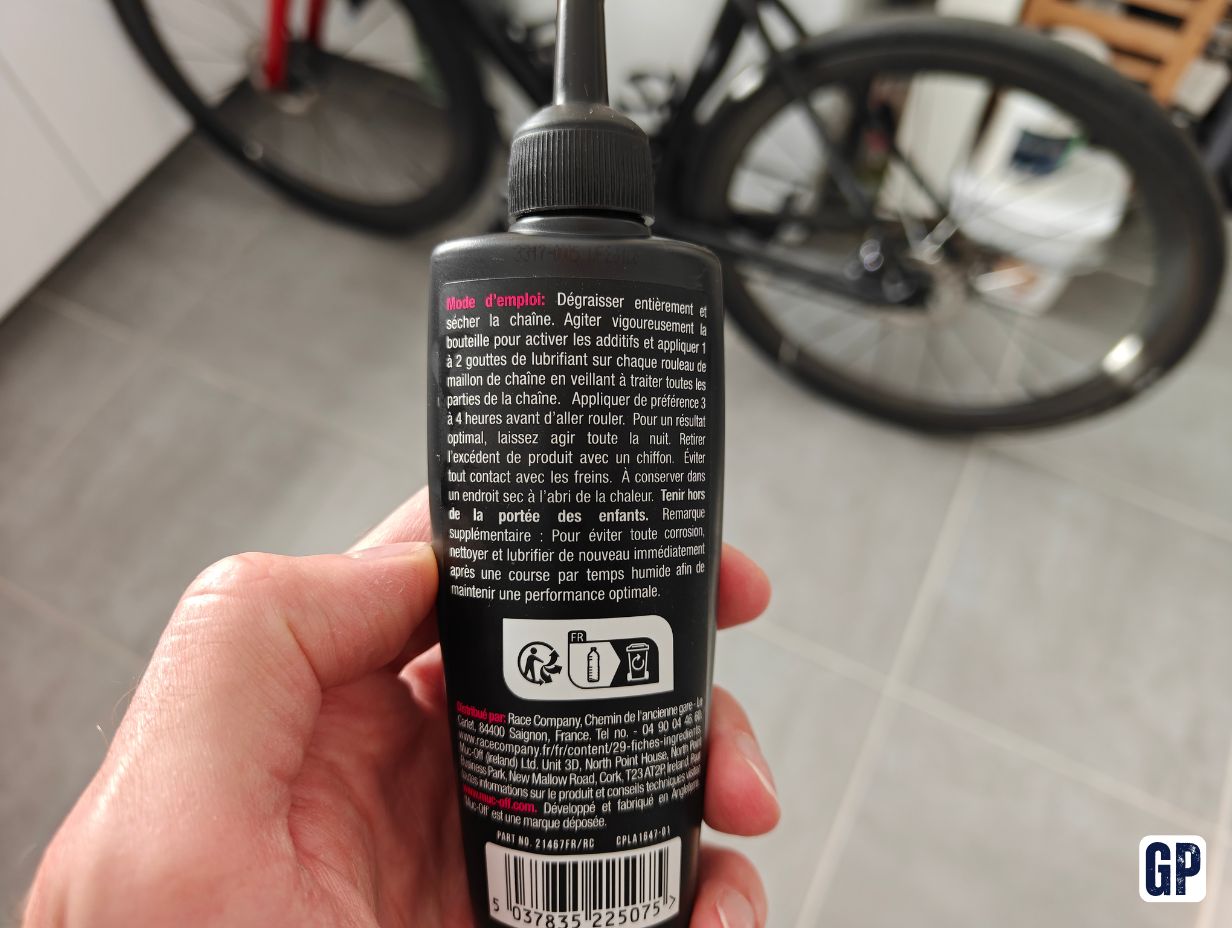
The dropper bottle helps a lot. Its long, very fine applicator lets you place a small drop precisely on the chain without getting it everywhere. Once you get the hang of it, the operation is still simple, even if it takes a bit more time than with Squirt.
I let the first application dry for more than twelve hours before heading out the next morning. Once dry, the result looked clean and the chain did not feel like it was coated in oil.
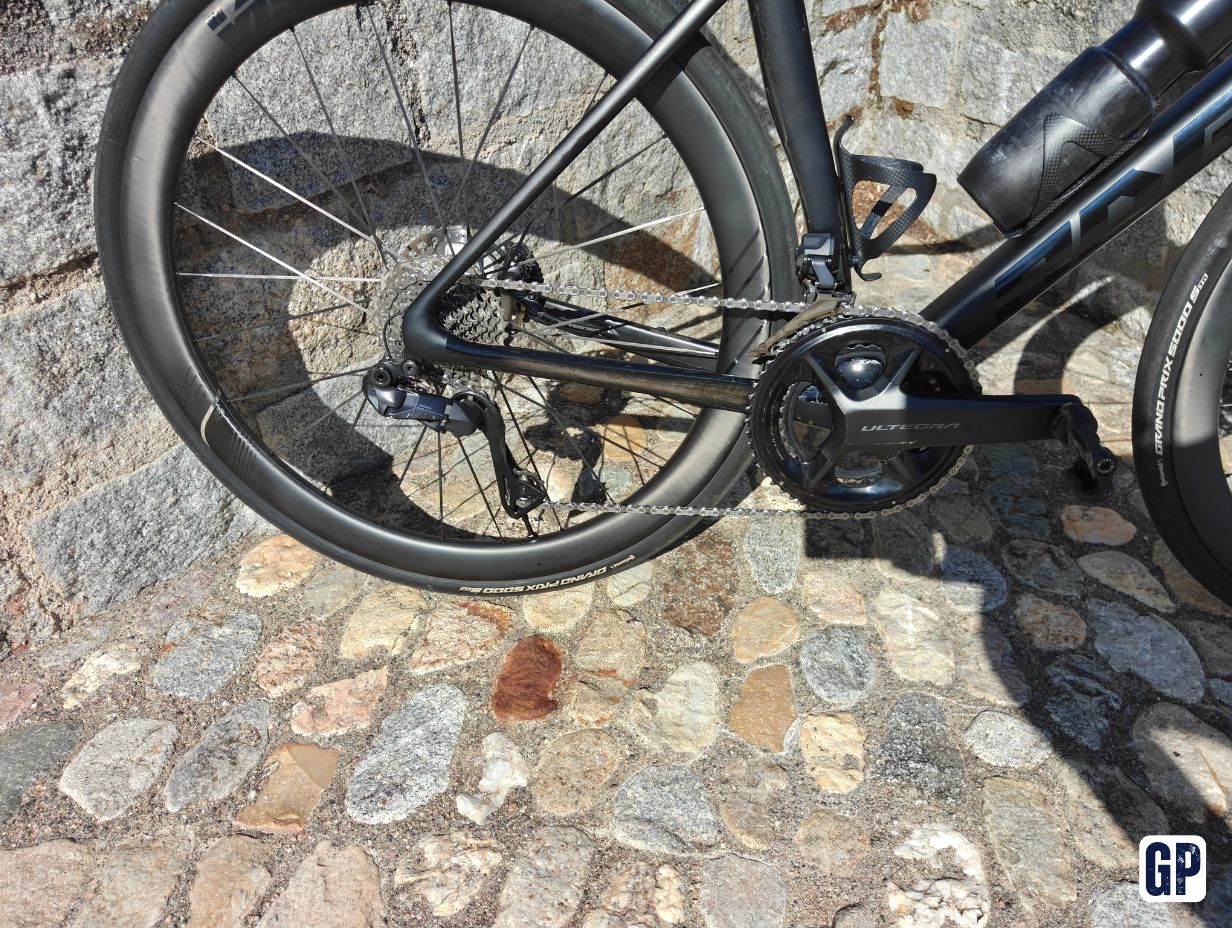
The first ride, about 60 km, took place in very hot weather. My first impression was quite clear: silence.
I found the drivetrain quieter than with Squirt, with a smoother feel and cleaner gear changes.
This is particularly noticeable on the big ring, which I have always found noisier. With Dry, I hear it far less.
This sensation does not fade quickly with the kilometres. The silence starts to diminish around 300 km, but the lubricant remains usable up to about 400 km in my case. Over roughly 2,000 km of testing, I therefore just wiped the chain and reapplied lubricant, without needing to do a deep clean again.
Dry also behaved very well in the intense heat. I rode several times with temperatures reaching 38 °C, without noticing any particular issues.
Above all, I feared finding a drivetrain quickly black and dirty after four years on wax. That ultimately was not the case: the chain does darken with the kilometres, but I did not find it attracted much more dirt than with Squirt.
The real difference shows when you touch it. After a derailment caused by a pothole, I had to get my hands into the drivetrain, and they were obviously much greasier than with wax. That is ultimately my main gripe with Dry.
Otherwise, no chain tattoos on legs or clothing, and the jockey wheels stay noticeably cleaner. A quick wipe is enough, whereas wax ended up forming real build-ups.
The only real limit appeared when an unexpected thunderstorm hit. After about 30 km in rain that was first light then continuous, the chain was almost dry and there was essentially no lubricant left. I therefore had to reapply it after the ride. On this point, Dry is very similar to Squirt and confirms that it is first and foremost intended for dry conditions.
Beyond that, my experience is very positive. The drivetrain stays quiet, smooth and day-to-day maintenance is quick. After these 2,000 km, I even prefer Muc-Off Dry to Squirt.
The UV function, present across the range of lubricants tested, lets you check the even spread of the lubricant. I found it useful for the first applications, but not really essential day-to-day since you need a UV torch to use it.
Muc-Off All Weather Lube: greasier, fussier about dosage
After Dry, I wanted to move to something more versatile. All Weather is a synthetic oil designed for variable conditions, with a hydrophobic formulation and intended for rides both on road and off-road.
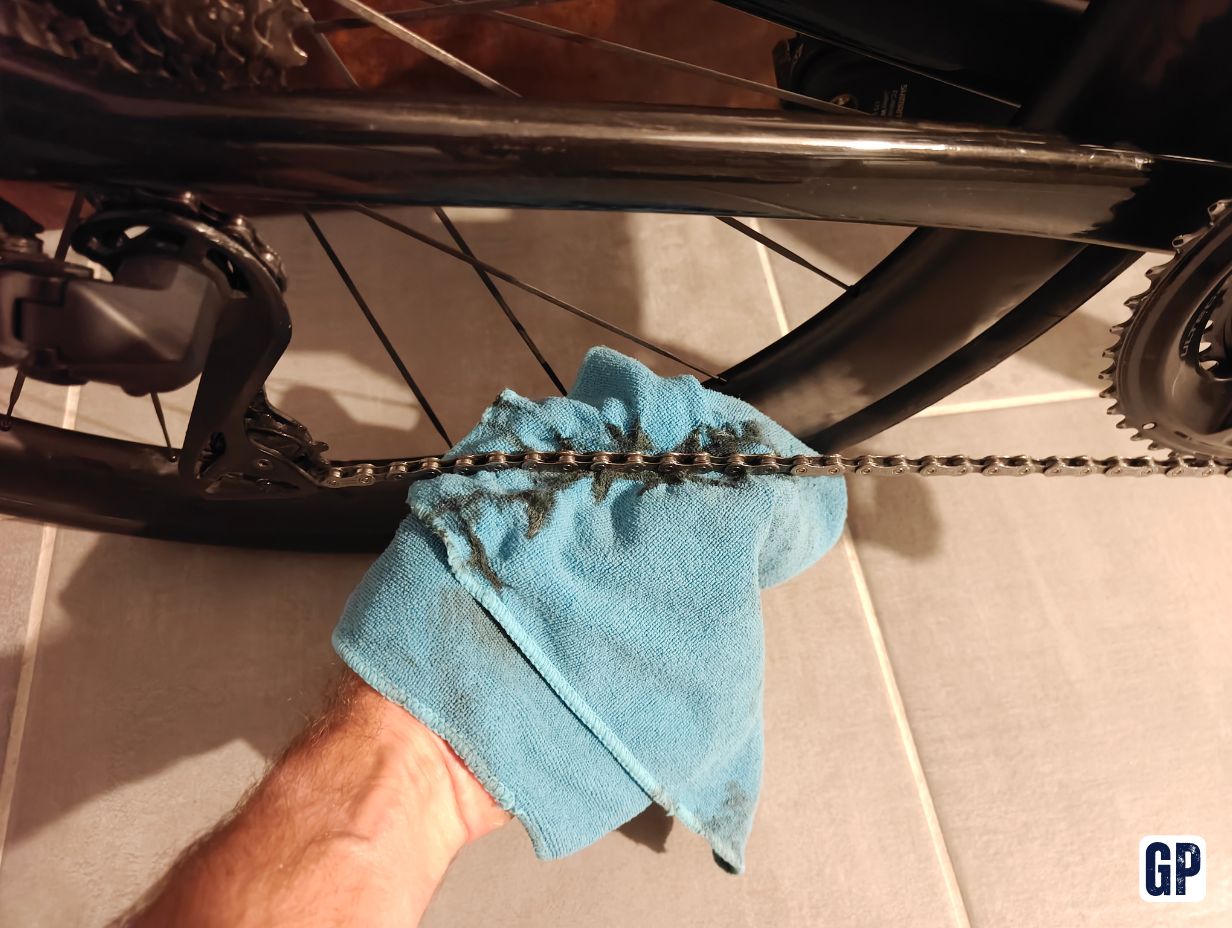
To test this new lubricant, I did not need to do a full reset of the drivetrain. A thorough wipe with an absorbent cloth over the chain, jockey wheels and cassette was enough to remove most of the Dry and start again with a clean base.
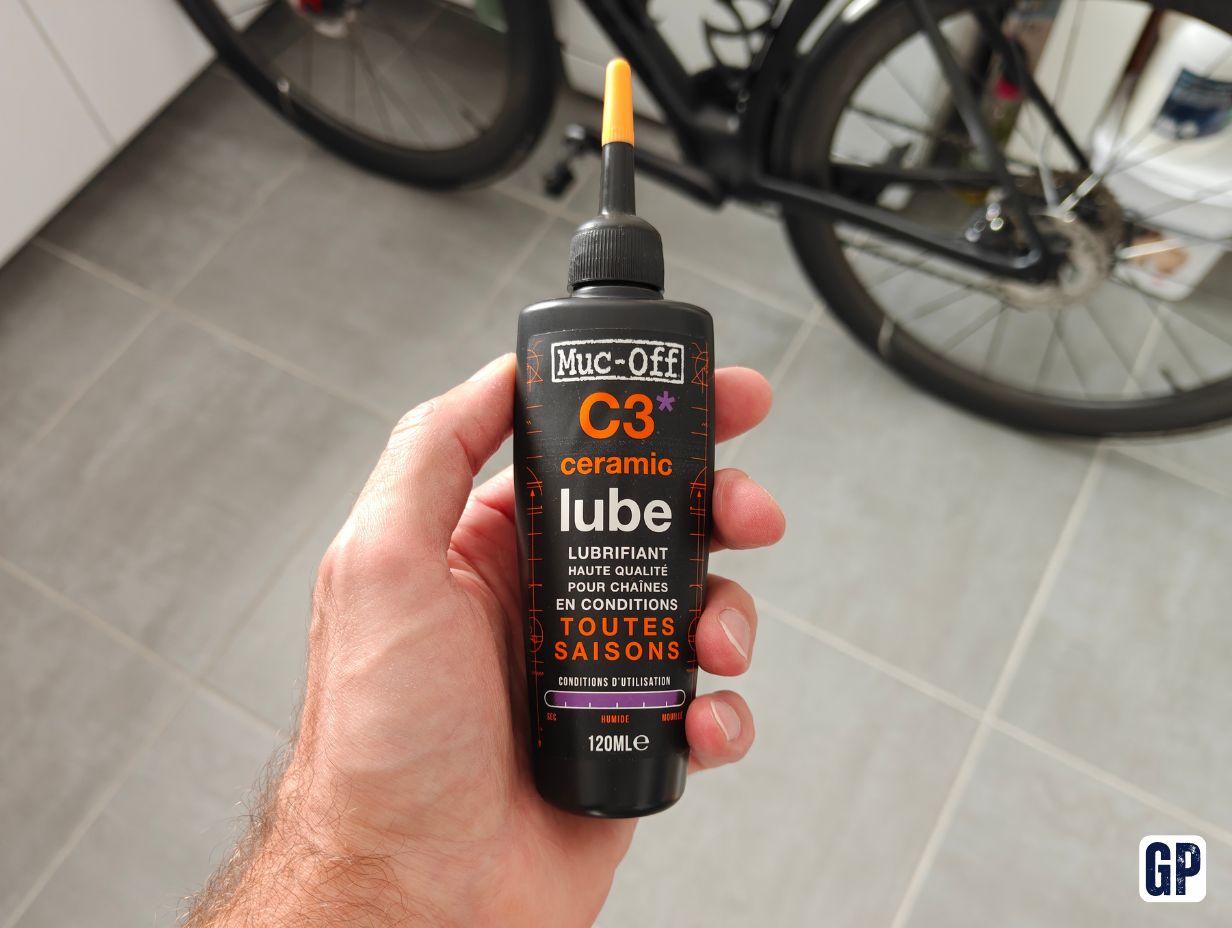
All Weather stands out from Dry for its texture. It is more fluid, greasier and feels wetter on application. I kept the same method, a drop on each roller, but this time you need to be particularly attentive to the amount applied. On my first application, I put on too much.
Result: a few splatters ended up dirtying the rear rim. Nothing dramatic, but it reminded me that with this type of lubricant, you really need to take the time to wipe off the excess before setting off.
After a night of drying, I did a first ride of about 60 km, again in strong heat. The drivetrain remains pleasant to use, with smooth gear changes, but the noise level is a little higher than with Dry. The difference is not huge, but after having ridden with the latter, you can hear it.
The chain also stays wetter. It darkens a little faster with the kilometres, but without my noticing more dirt build-up than with Dry. Even the cassette remains easy to maintain with a simple wipe, and the jockey wheels stay in a perfectly acceptable state. Nothing like the wax build-ups I was used to.
In driving rain, with the sand spray we know well on Loire roads, All Weather held up rather well. At the end of the ride, the lubricant was still present on the chain, without having been completely washed away.
I was pleasantly surprised by this result. Well dosed and properly wiped, All Weather is an interesting option for versatile use, including when conditions deteriorate.
The chain does, however, tend to darken more over the kilometres, even if the cassette and jockey wheels remain relatively clean and easy to maintain with a simple wipe.
Muc-Off Bio Wet Lube: its real home is the rain
For the third product, I moved on to Bio Wet Lube. Here Muc-Off uses a formulation based on plant oils, biodegradable, designed to stay in place in wet and muddy conditions.
As with All Weather, I did not need to do a complete clean before applying it. A thorough wipe with an absorbent cloth over the chain, jockey wheels and cassette was enough to remove most of the previous lubricant. In my view, this touch-up clean is sufficient as long as the drivetrain is maintained regularly.
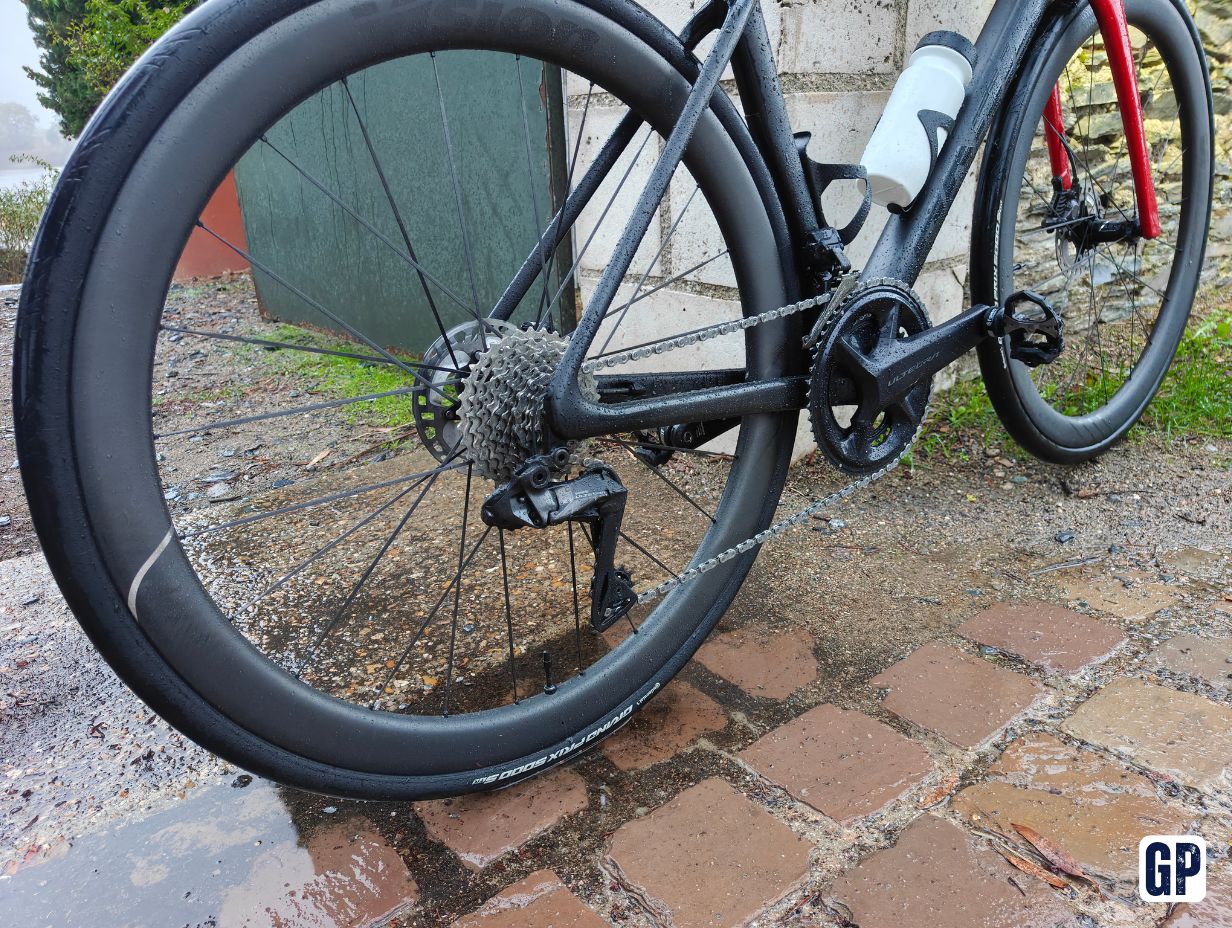
Wet is immediately recognisable by its pink colour and Muc-Off’s typical fruity smell. Its texture is a little greasier again, but slightly more viscous than that of All Weather.
Application remains simple, still a drop on each roller, but the dosage once again needs some precision. Having been a bit heavy-handed with All Weather, this time I took care to wipe off the excess and I did not notice any splatter. I then left the product to dry overnight.
In very hot, dry conditions, the drivetrain remained smooth and gear changes clean. The noise level is slightly higher than with Dry, without increasing over the kilometres. The chain stays nicely wet and lubricated, without especially significant dirt build-up on the drivetrain.
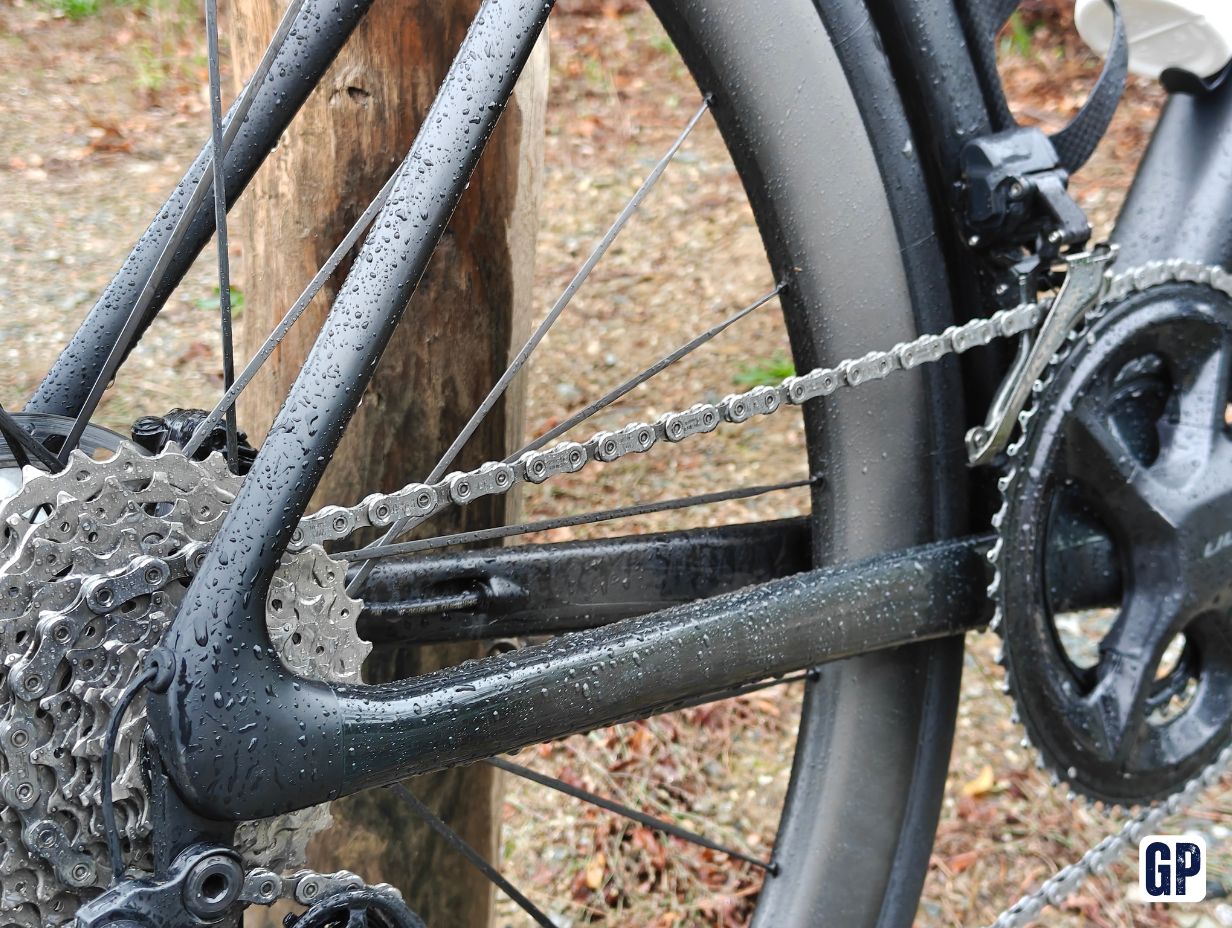
I was also able to confront it with much tougher conditions. In driving rain, accompanied by sand spray, Bio Wet Lube also maintained a good presence on the chain. At the end of the ride, there was still enough of it, despite the water and grime thrown up from the road.
I also found it tended to blacken the chain less than All Weather.
Wet therefore confirms its value in wet and degraded conditions, with very convincing rain resistance.
Bio Drivetrain Cleaner: effective, but not magic
To round off the test, Muc-Off also supplied its Bio Drivetrain Cleaner. It is a biodegradable degreaser intended for the whole drivetrain and stated as compatible with metal, plastic, rubber and seals.
The product left me with a good impression. The before and after directly shows the result on the drivetrain.
Faced with the accumulated wax deposits, two passes were necessary to get a well-degreased drivetrain. The product, however, reaches its limits when the wax has really built up. In the most loaded areas, especially the jockey wheels, mechanical action is still essential.
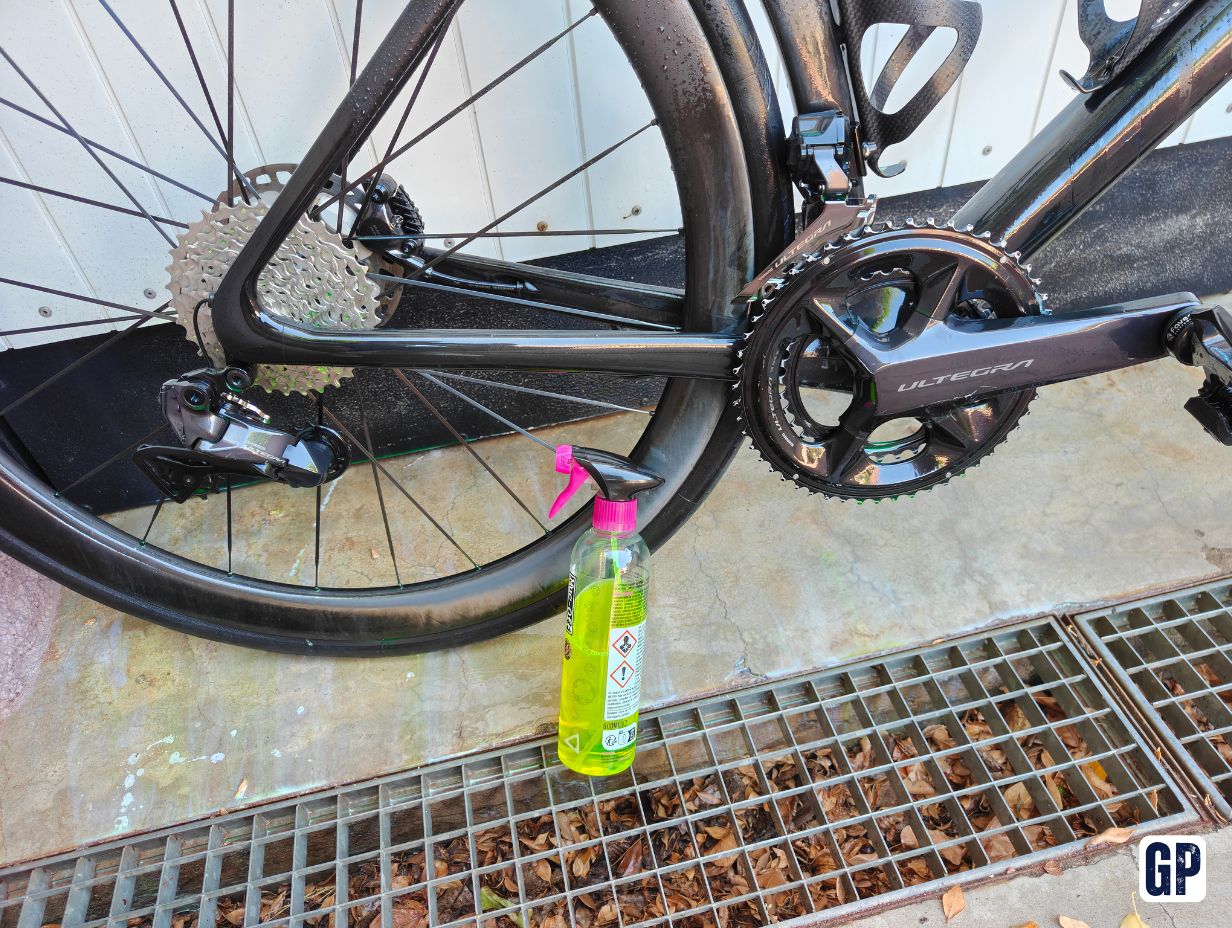
Once I switched to Muc-Off lubricants, I no longer needed to do a big clean. A regular, fairly thorough pass with an absorbent cloth keeps the drivetrain in good condition.
From the start of the test in August through to October, I therefore did not need to repeat heavy maintenance. I am quite diligent with touch-up cleaning and reapplying lubricant, but the time saving compared to my usual wax routine is real.
It is a product I could also use independently of the lubricants in the range.
After three months, wax or oil?
After this first experience, my view of oil lubricants has changed. Above all, I feared ending up with a greasy, dirty drivetrain that was a pain to maintain. That is not what happened.
You have to accept that oil is more present when you touch the chain, but I did not notice especially significant dirt build-up, and I never had a chain tattoo on my legs or clothes.
The main change lies elsewhere: oil requires more discipline in application. You need to take the time to put on the right amount and, above all, wipe the excess well. Squirt is far more forgiving on this point.
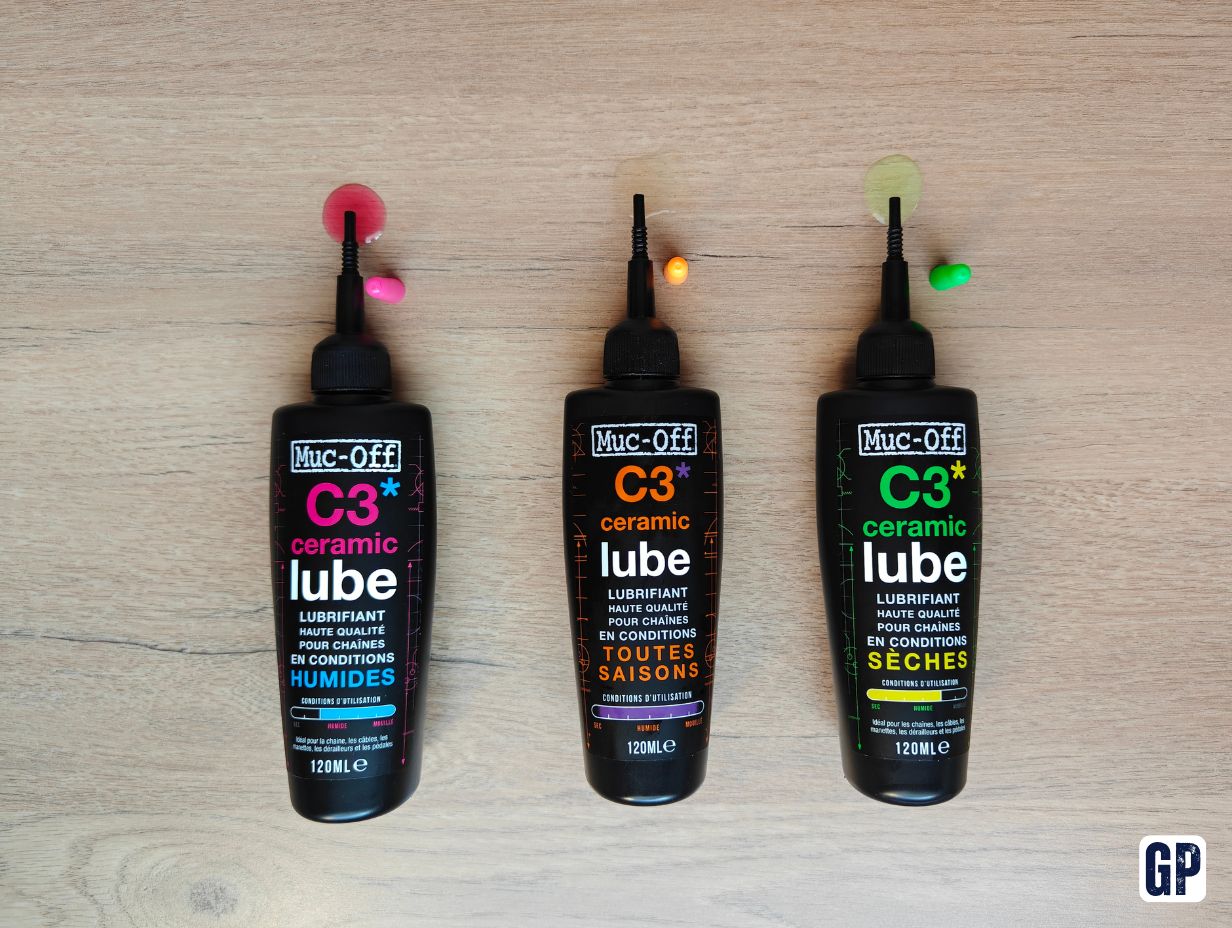
In return, I found day-to-day maintenance quicker and the drivetrain, with Dry in particular, particularly quiet. After more than 2,000 km with Bio Dry Lube, it is therefore my current favourite.
For road use in dry weather, I do not especially feel like going back to Squirt today.
In the end, I came to this test after four years on wax with a certain wariness towards oil. I am leaving with a drivetrain that is simpler to maintain, no marks on legs or clothing, and above all a clear preference for Dry on my road bike.
Switching from wax to oil does require a bit more care during application, but once that habit is in place, I no longer really feel like turning back.