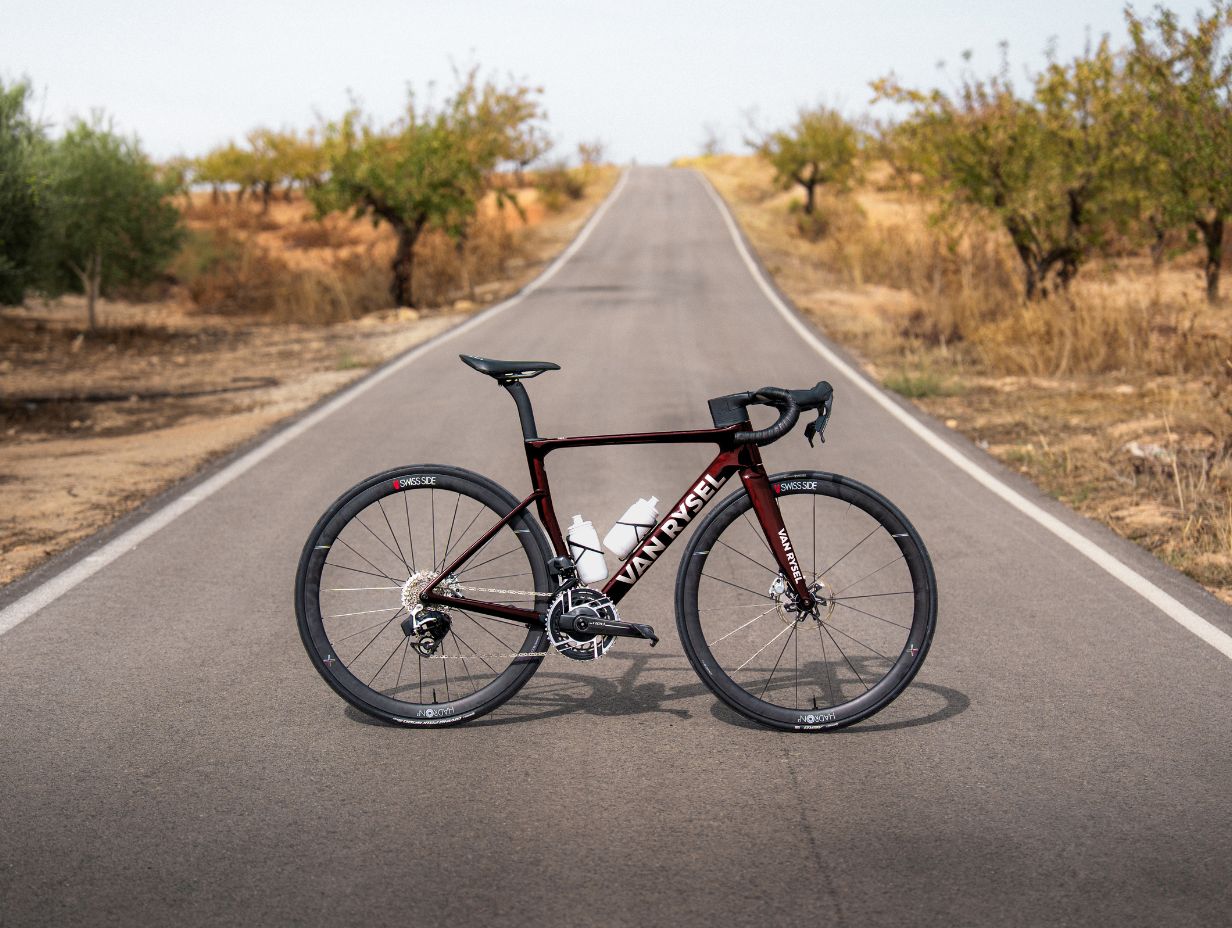
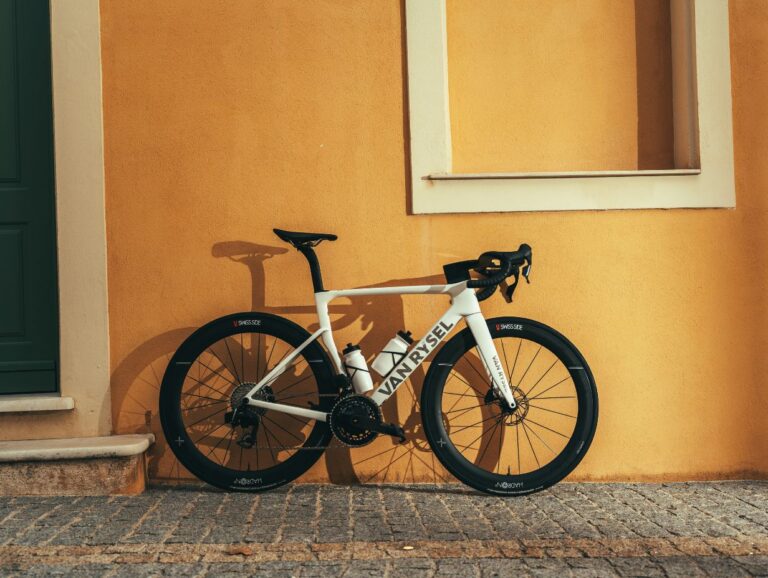
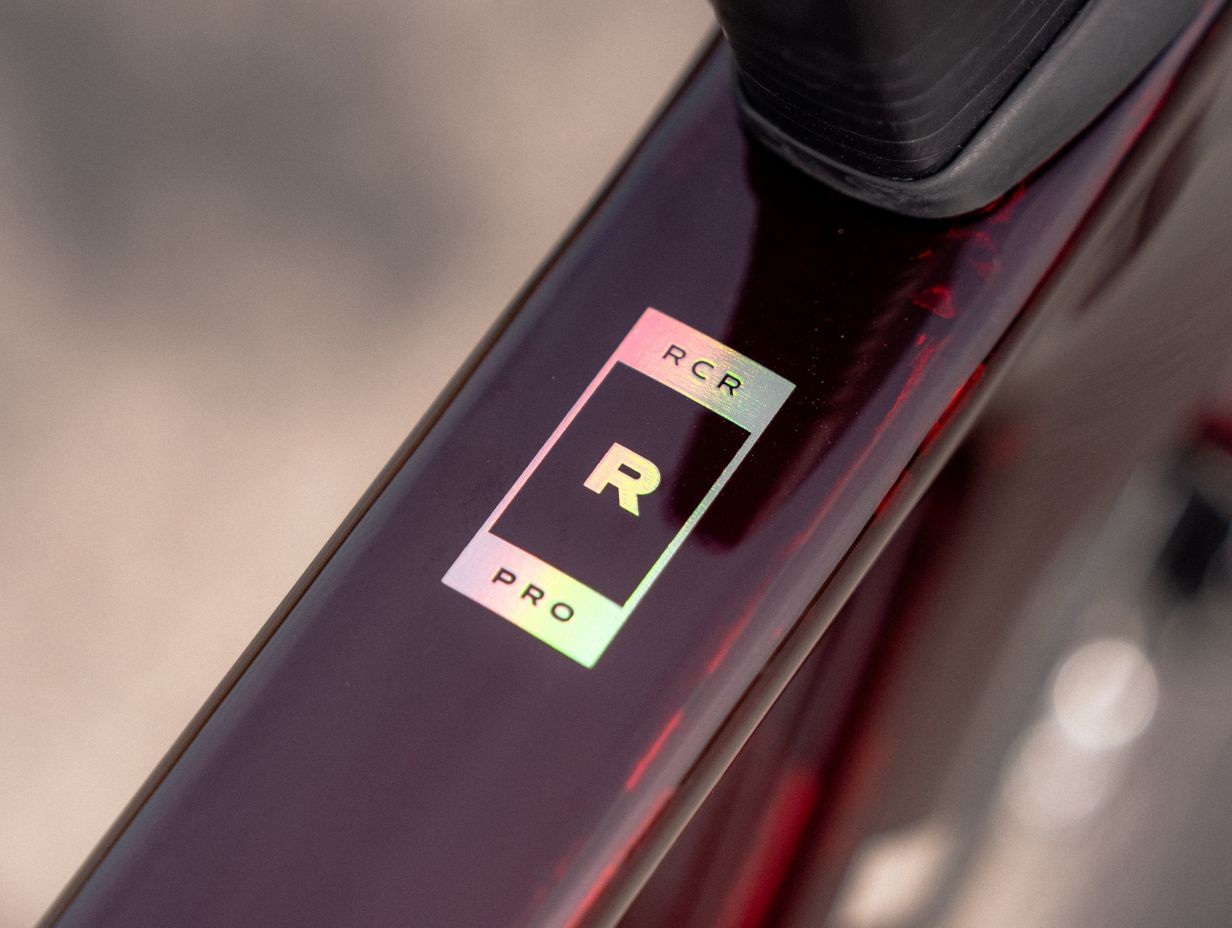
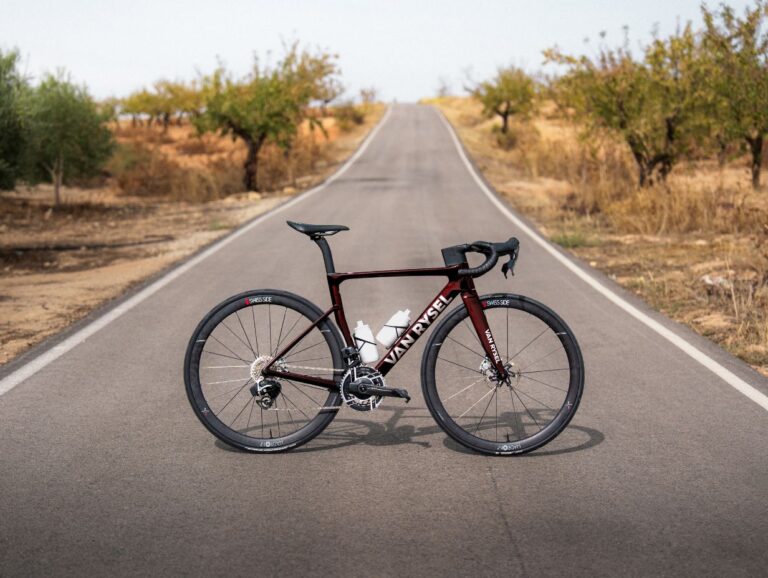
The Van Rysel RCR-R is no longer just the bike that was spotted, commented on, then awaited for months. Decathlon’s new road platform is now officially unveiled, with two versions: RCR-R PRO and RCR-R.
The idea is easy to grasp, but not so easy to pull off: create a race bike that can climb fast, stay quick on the flat and remain composed on descents. Not a pure aero bike. Not a simple climbing bike. A very current middle ground.
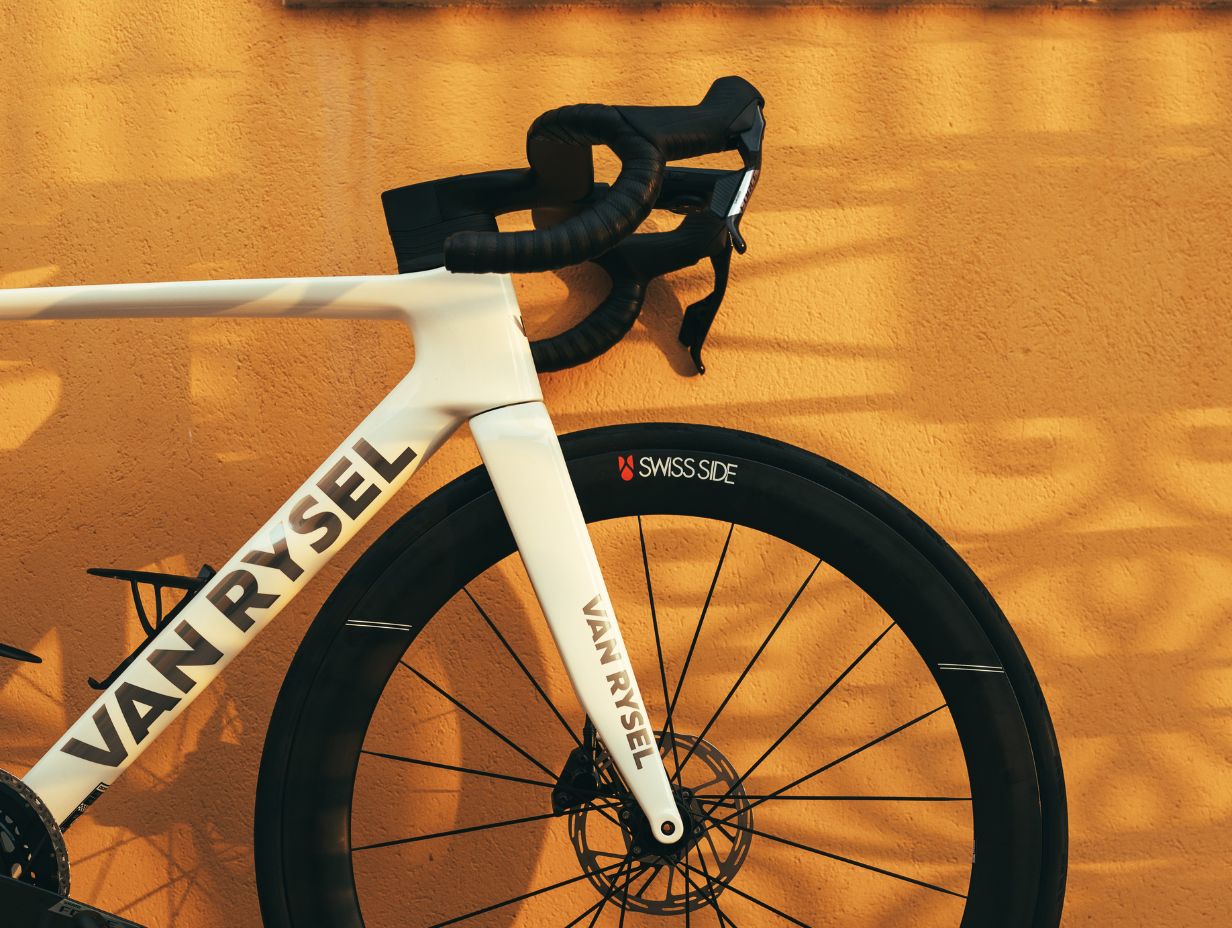
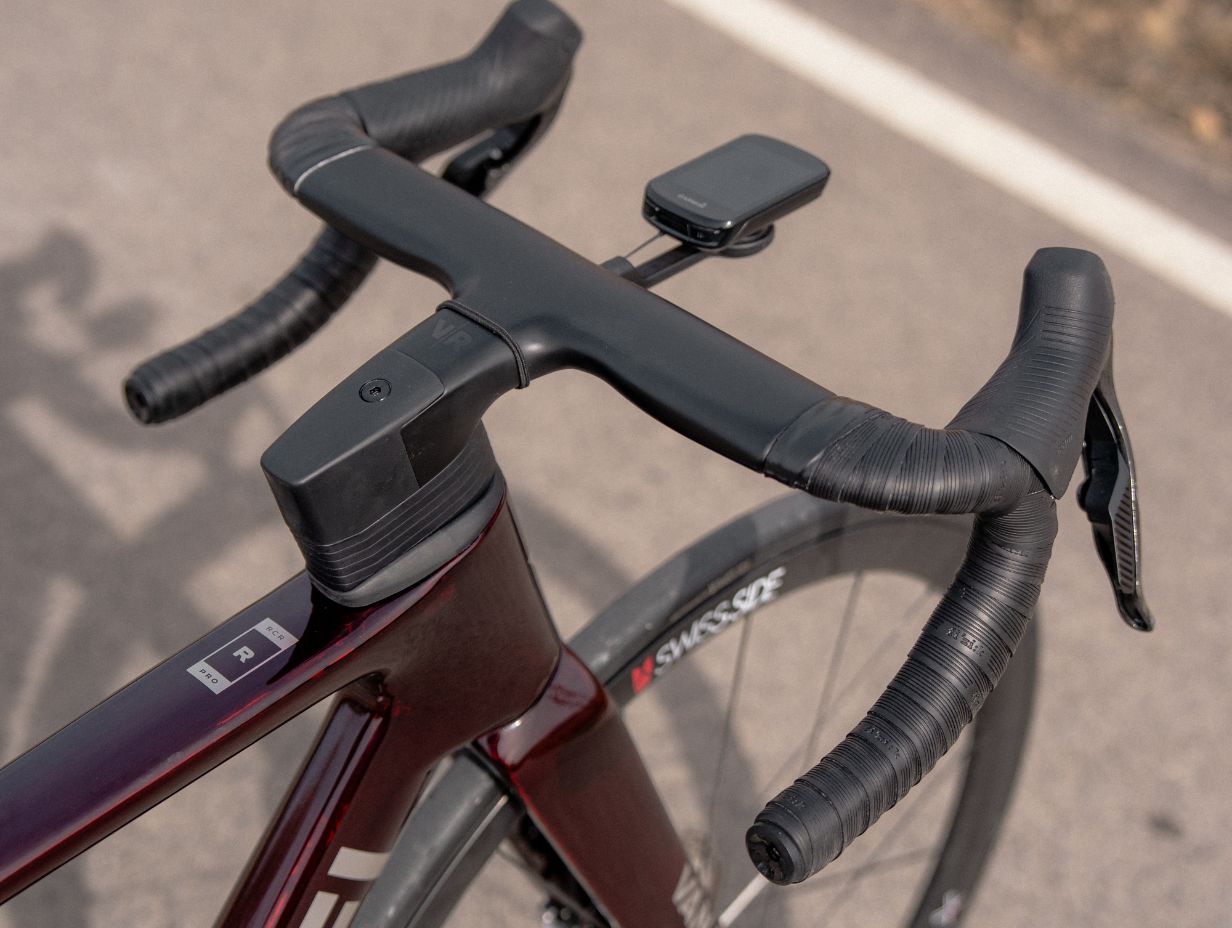
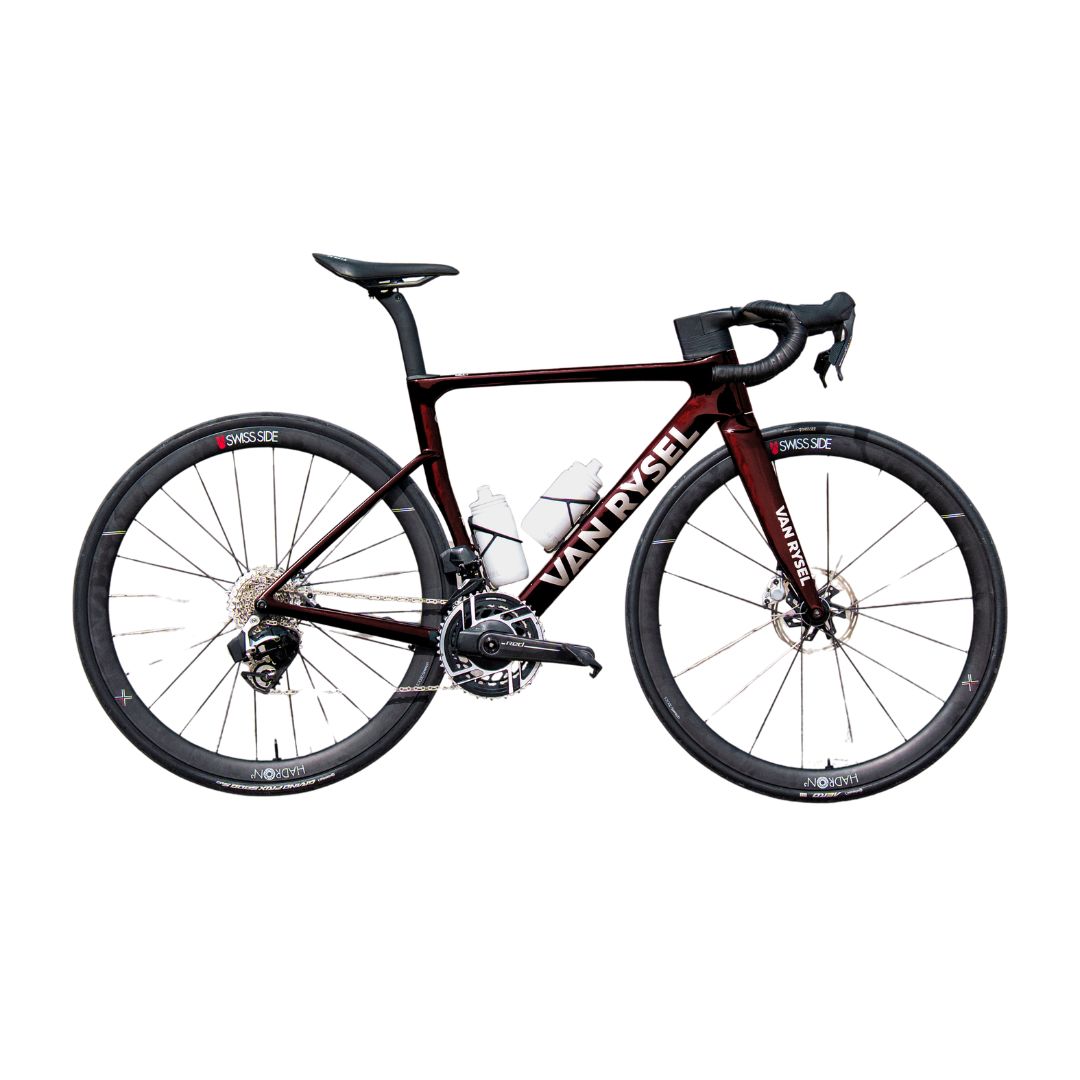
Visually, it won’t go unnoticed. The frame blends climber cues with aero-bike shaping, with a fairly substantial cockpit. You’ll have to like this style, but the colours – and above all the pricing – already give the launch serious appeal.
🚀 In brief:
New Van Rysel road platform offered as RCR-R PRO and RCR-R
Carbon frames at 705 g and 883 g in size M
Complete weights claimed from 6.6 kg for the PRO and 7.4 kg for the RCR
Two RCR-R models, one racing philosophy
Van Rysel offers this new platform in two carbon grades. The RCR-R PRO is the top-tier version, with a frame at 705 g ±5% in size M (manufacturer data) and a fork at 360 g ±5%.
The RCR-R uses the same overall design, but with a more accessible High Modulus carbon construction. Its frame comes in at 883 g ±5% in size M (manufacturer data), still paired with the same 360 g ±5% fork.
It’s an interesting choice, because it avoids reserving all of the geometry and the bike’s identity for the pro version. Both models share the same DNA: aerodynamic efficiency, low weight and sharp handling. The difference is mostly in the fibre, the builds and the final weight.
A bike built to move beyond the climber-versus-aero compromise
The RCR-R arrives at a time when many brands are looking to streamline their road ranges. The ultra-light climbing bike on one side, the very exclusive aero bike on the other: that split still exists, but it is becoming less clear.
Van Rysel is clearly pushing in that direction. After an RCR-F that was very speed-focused, the RCR-R targets a broader slice of modern racing: uphill accelerations, fast sections, technical descents, changes of pace.
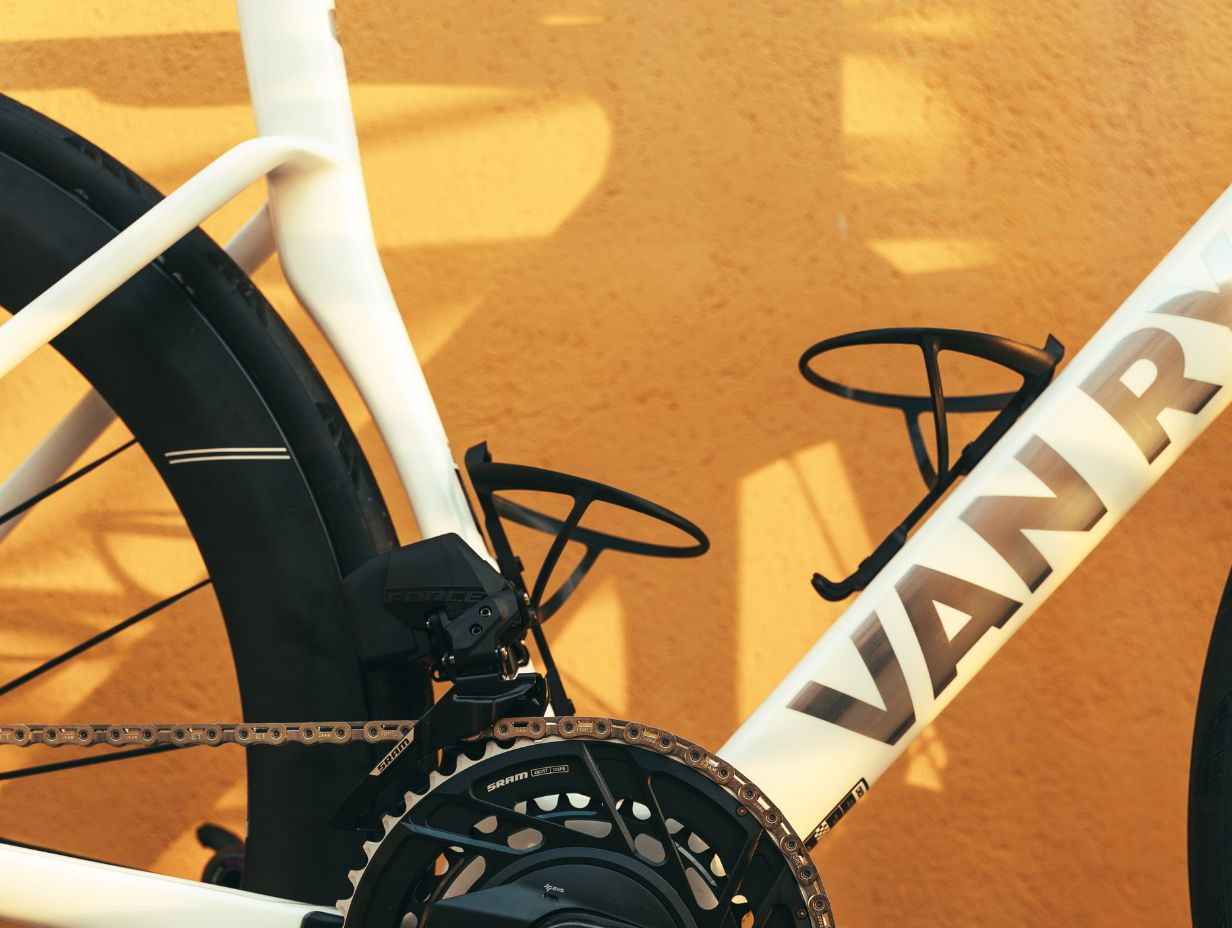
The aerodynamic work involved 13 CFD prototypes, five wind-tunnel prototypes and seven frame versions. The brand also claims a gain of up to 6.3 W at 45 km/h with a specifically developed aero bottle-and-cage system, compared with the previous generation. These bottles will be sold separately.
Very competitive weights, especially on the RCR-R PRO
The most eye-catching build is the RCR-R PRO with SRAM Red AXS: 6.6 kg in size M. The Shimano Dura-Ace Di2 build is quoted at 6.9 kg, while the Ultegra Di2 and SRAM Force AXS versions come in at 7.1 kg.
The standard RCR-R is also very well placed: 7.8 kg with Shimano 105 Di2, 7.4 kg with Ultegra Di2, 7.9 kg with SRAM Rival AXS and 7.5 kg with SRAM Force AXS, all in size M.
These figures of course don’t replace a real-world test. But they position the bike in a serious category, especially if prices remain contained against the usual WorldTour benchmarks.
Price - the real flashpoint of the launch
The RCR-R / RCR-R PRO range is announced between 3,299 € and 8,499 € in European RRP. That is a wide spread, but the message is fairly clear: Van Rysel wants to cover both the ambitious amateur and the rider looking at very high-end builds.
In a market where road bikes over 8,000 € have become commonplace, this positioning can hit hard. Not because the entry ticket suddenly becomes cheap – 3,299 € is still a lot of money – but because a modern race frame, an electronic groupset and a genuine WorldTour lineage at this price level become a very concrete argument.
This is probably where Van Rysel can make a dent. The brand no longer has only the image of strong spec for the money. It is now moving into trickier territory: credible performance, with bikes that are compared directly to the big historic brands.
The role of Decathlon CMA CGM in development
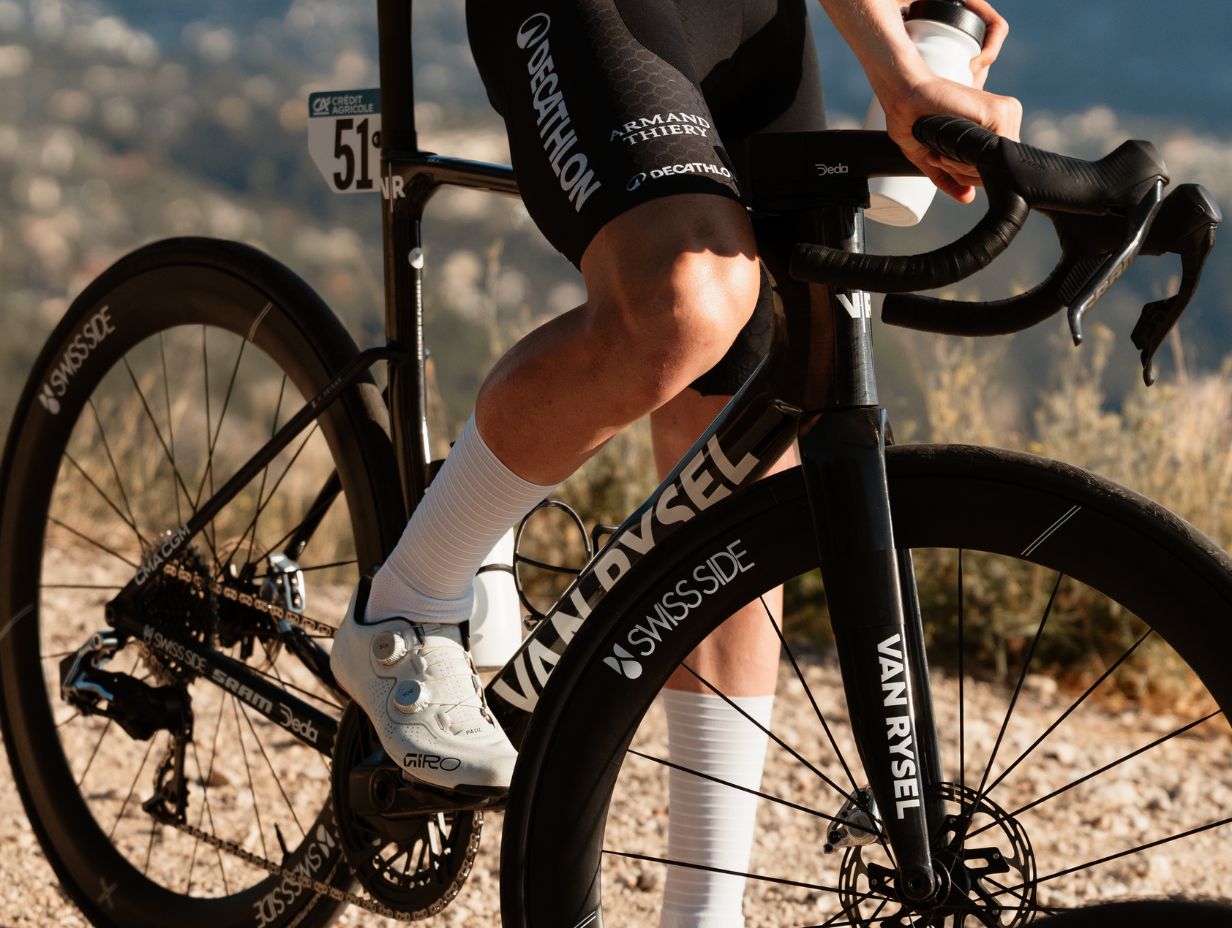
Development of the RCR-R was carried out with the Decathlon CMA CGM team. Paul Seixas, Nicolas Prodhomme and Matthew Riccitello rode the prototypes during training camps, notably in the Sierra Nevada, with work focused on climbing, accelerations, stability on descents and high-speed behaviour.
Caution is warranted: feedback from a professional rider does not tell you everything about a bike for the public. Expectations, set-up, wheels, tyres, position and handling skill change the perception of a frame enormously.
But this proximity to the WorldTour still gives a clear direction. The RCR-R is not conceived as a fast endurance bike or a comfortable all-rounder. It is a race bike, with a logic of efficiency, response and speed.
Availability planned for early 2027
The official presentation is taking place today at Rouleur Live, in London. Commercial availability is planned from 5 January 2027, depending on model and region.
We will still need to look at the full details at the commercial launch: exact components, wheels, sizes, full geometries, tyre compatibilities and actual availability. For now, Van Rysel is mainly sending a message: the RCR-R wants to be the bike that climbs without giving up on aero.
Our view
The RCR-R ticks a lot of important boxes: low weight, race development, two carbon grades, electronic builds, aggressive pricing for the segment. The proposition looks particularly strong on the mid-range builds, where Van Rysel can really shake up the market.
What remains is the design. The frame is striking, the cockpit makes a strong visual statement, and not everyone will buy into that very technical aesthetic. But perhaps that is also the sign that Van Rysel is no longer trying to be discreet.
What is most interesting, in the end, is not just that Decathlon is releasing a new light and aero bike. It is that this bike arrives with clear ambition, transparent pricing and a range capable of speaking both to racers and to very demanding sportive riders. At this stage, the RCR-R mostly looks like a strong signal sent to the market.



Reviews
There are no reviews yet.