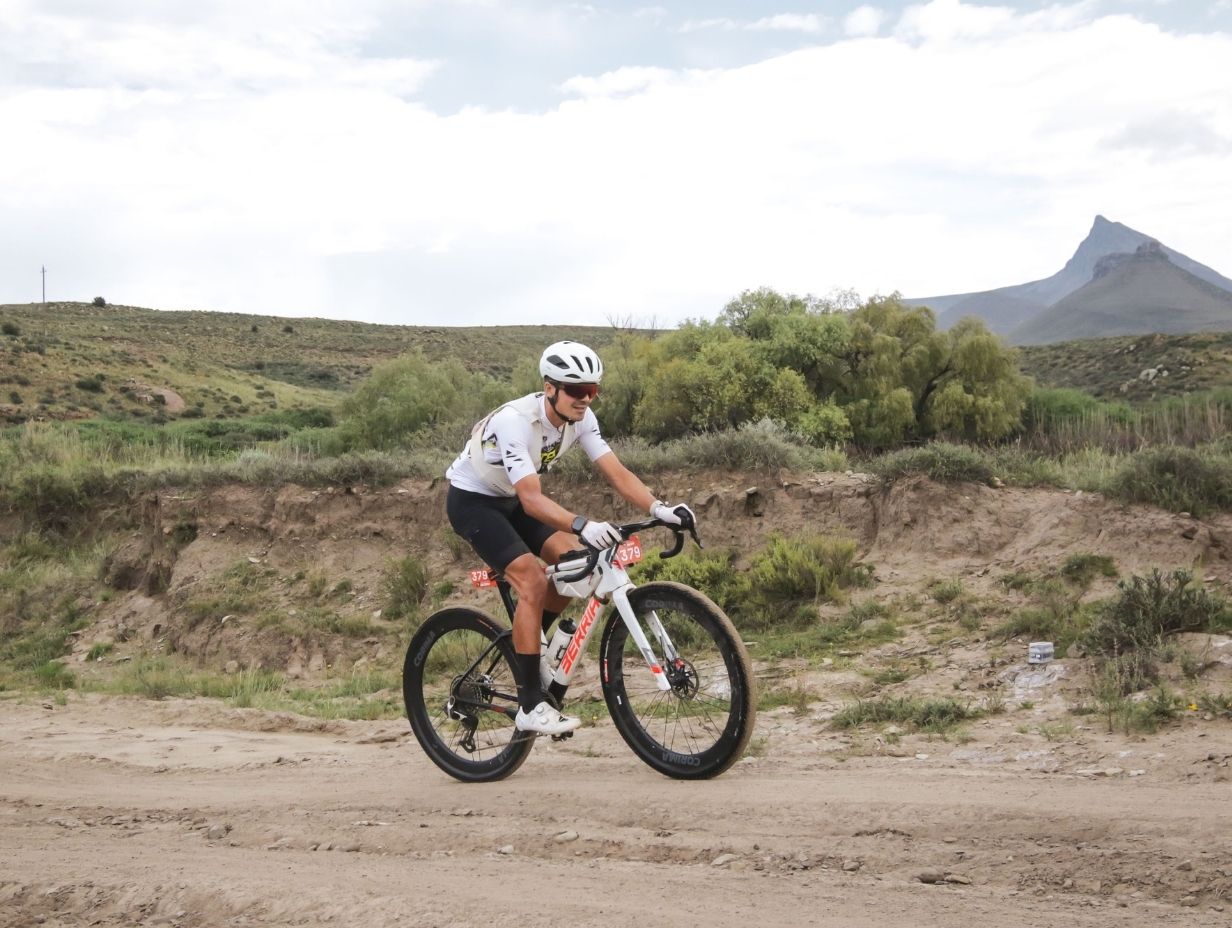

Testing a gravel bike over a few rides already lets you grasp its character. Putting it through seven stages, nearly 800 km, more than 8,000 m of elevation gain, in scenery that changes every day, is something else entirely.
The Berria Naii arrived in this rather unusual context: a month of riding before the start, then the Gravel Burn in South Africa. In other words, not a neat, controlled first ride, but a real test of wear, trust and limits.
Strengths:
- Fast, precise handling on varied terrain
- Convincing rear comfort over long distances
- Excellent finish and paintwork
Could be better
- Defective bottle-cage insert on the test sample
- No internal storage
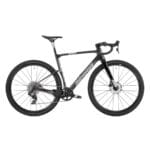
Released in 2025, this Spanish frame is part of the new generation of fast gravel bikes able to take big tyres. Berria officially quotes tyre clearance up to 50 mm, with sporty geometry, UDH compatibility, a carbon frame claimed at 950 g, a fork claimed at 420 g and a rear Softex technology intended to add flex.
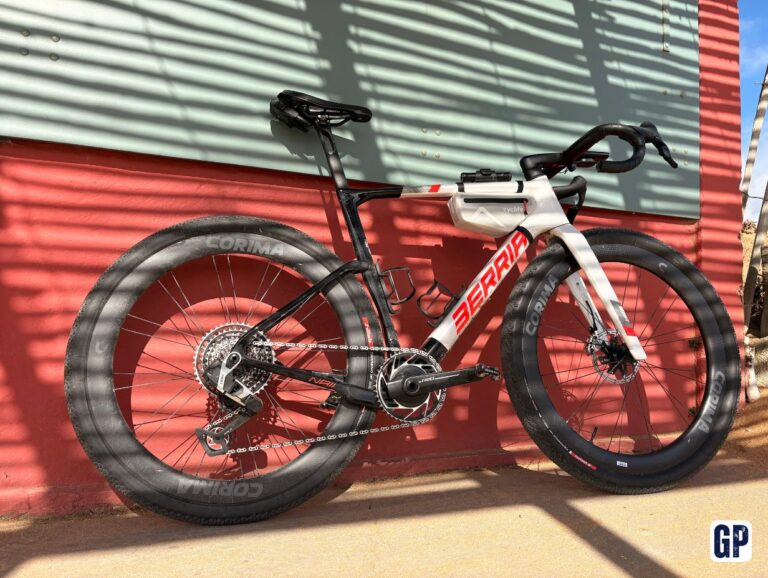
The bike we tested wasn’t exactly a catalogue build: it received a SRAM Red groupset and Corima 50G wheels, fitted as part of the partnership that accompanied the Gravel Burn. This matters, because the wheels inevitably influence the bike’s overall behaviour.
A bike that arrived with a fault, but a finish that scores points
I’ll say it straight away: on delivery, the bike had an issue. One of the bottle-cage inserts spun freely in the frame. It’s not dramatic – it can be fixed – but on a new bike, especially one positioned as performance-focused and high-end, it’s the kind of detail that irritates.
Which is a shame, because the rest gave a far more solid impression. The paintwork was very successful, with a colourway that immediately gives the bike an identity. Not yet another safe shade, not a nondescript grey. You recognise Berria’s touch, and visually the bike really has presence.

The frame is not a generic assembly. Berria highlights an in-house design, with a very substantial fork, a proprietary seatpost and its rear Softex system, claimed to deliver progressive flex at the rear triangle.
The finish is therefore generally flattering. But that small defective insert stays at the back of your mind, especially when you then head to an event where the equipment simply has to work, without drama.
Practical details not all perfectly sorted
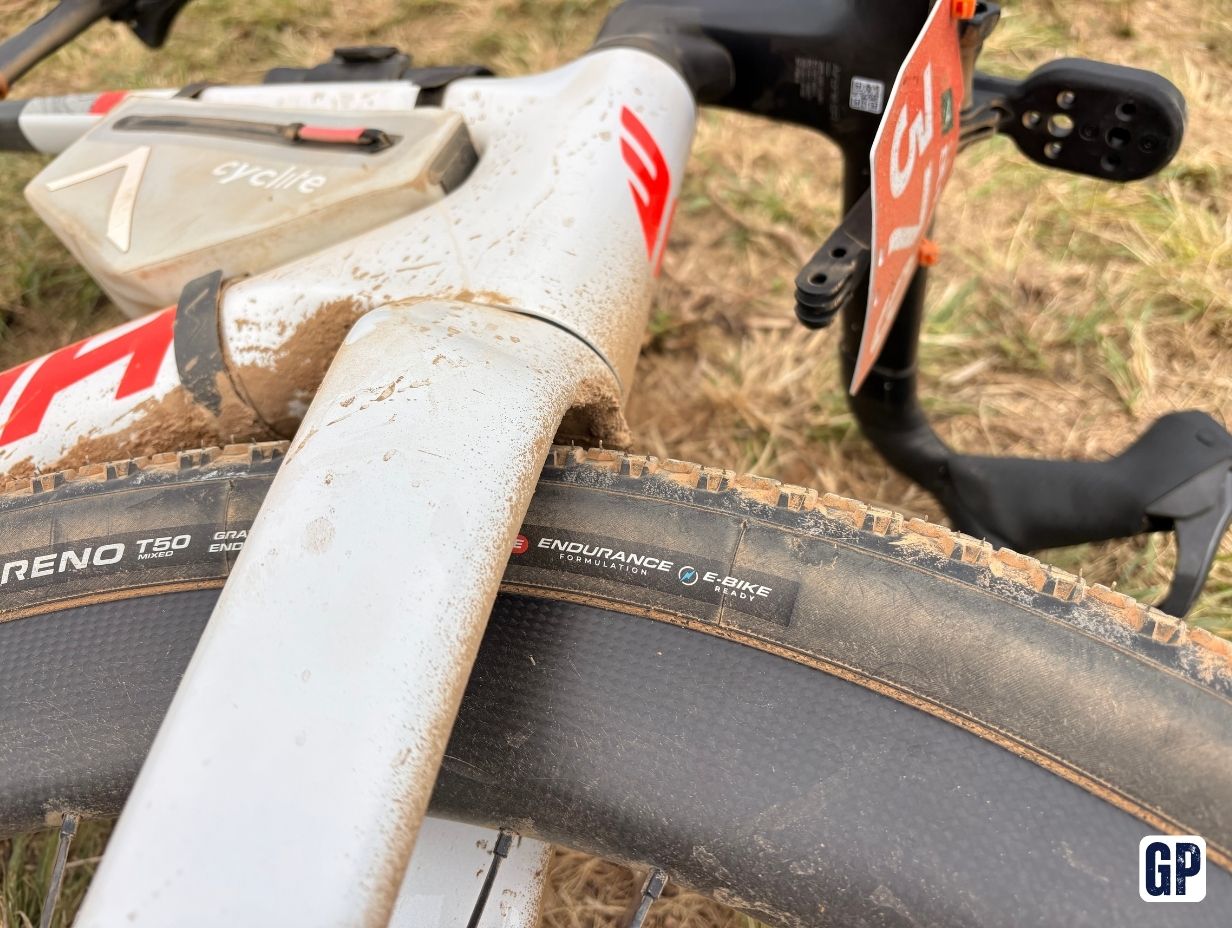
The Naii gets two mounts on the top tube to attach a small bag. A good idea, especially on a bike intended for fast long-distance riding. But these mounts are slightly recessed into the frame.
In principle, that’s not a problem. In practice, you need to pay attention to bolt length. With Cyclite’s removable bag system and the proprietary hardware supplied, it didn’t work: the bolt didn’t engage enough threads.
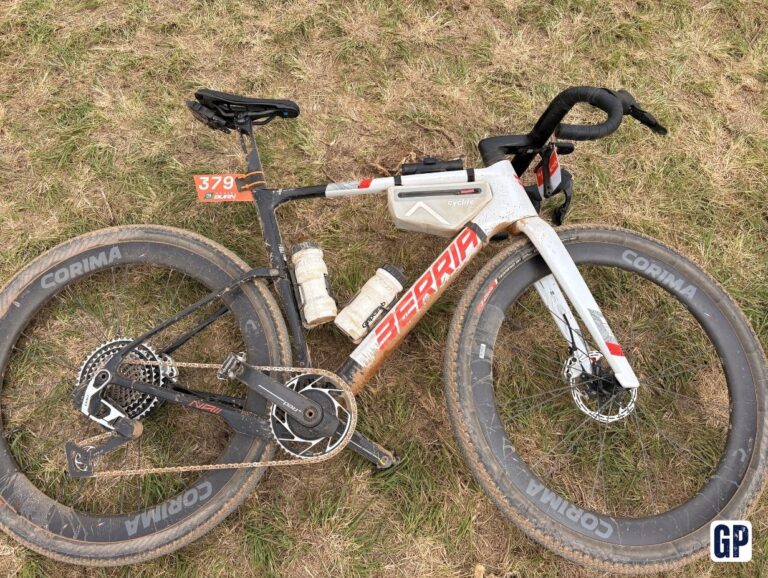
It’s not a deal-breaker, but it’s typically the kind of detail you discover during assembly, the day before a ride or a trip, and that can quickly become annoying. On a modern, fast bike with sculpted shapes, I expect these points to be more straightforward.
Another notable omission: there’s no internal storage. It’s not mandatory on a gravel race bike, but some rivals are starting to integrate it very well.
A very stiff front end, almost harsh if you choose the wrong tyres
Before leaving for South Africa, I rode the Berria for nearly a month on terrain I know well. The first sensation came quite quickly: the front of the bike is very stiff.
The cockpit offers little give, the fork is massive, and the whole setup transmits a lot of information. On smooth or fast terrain, this precision can be exhilarating. On rough ground, it forces you to think seriously about tyre choice.
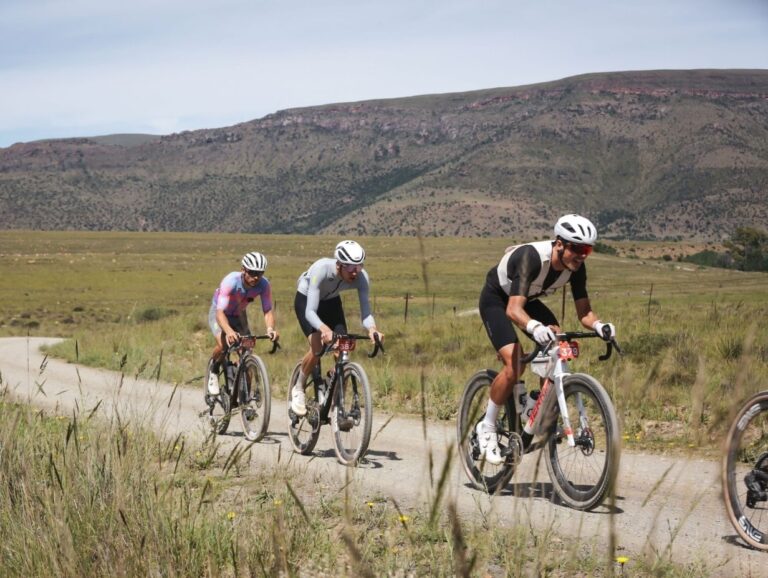
I started with 50 mm tyres, then moved to 55 mm up front, while keeping around 6 mm of clearance on each side of the tyre, in line with ISO guidance. Officially, Berria states 50 mm. In this specific setup, the frame therefore accepted slightly more.
And honestly, on this bike, it changes a lot. The extra volume calms the front, brings grip and keeps you from suffering every impact. The Scott Addict Gravel 2027 test pointed the same way: on 55 mm, a modern gravel bike can become much more stable and forgiving. On the Berria, it’s not a luxury, it’s almost a necessity if the terrain turns nasty.
At the rear, comfort is far more convincing
The back end of the Naii felt noticeably more pleasant. Do I precisely feel the Softex technology working, like a little suspension you can identify at every hit? No. I’m not going to pretend otherwise.
But the overall result is there: with the proprietary seatpost and the rear triangle, I didn’t feel like the bike was beating me up, even after several days. On a stage race, that’s a huge point.
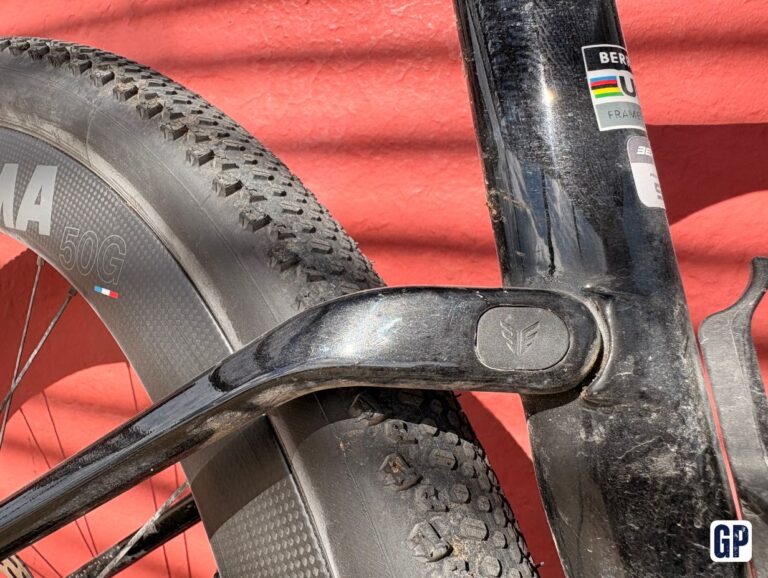
The bike filters enough to remain liveable for a long time, without giving the sensation of a soft or disconnected rear. It keeps that race side, but it doesn’t turn every battered track into a punishment.
I do have a question for the future: if the next generations of gravel race bikes accept 55 or 57 mm tyres even more readily, will this kind of mechanical solution remain as relevant? Berria claims a maintenance-free technology, but it still adds a design constraint. We’ll see whether the brand sticks with this path in future.
On the Gravel Burn, it mostly inspired confidence
The Gravel Burn is nothing like a showroom test. The terrain changes, the days stack up, the body gets tired, and the bike takes hits. That’s often where the fine words disappear.
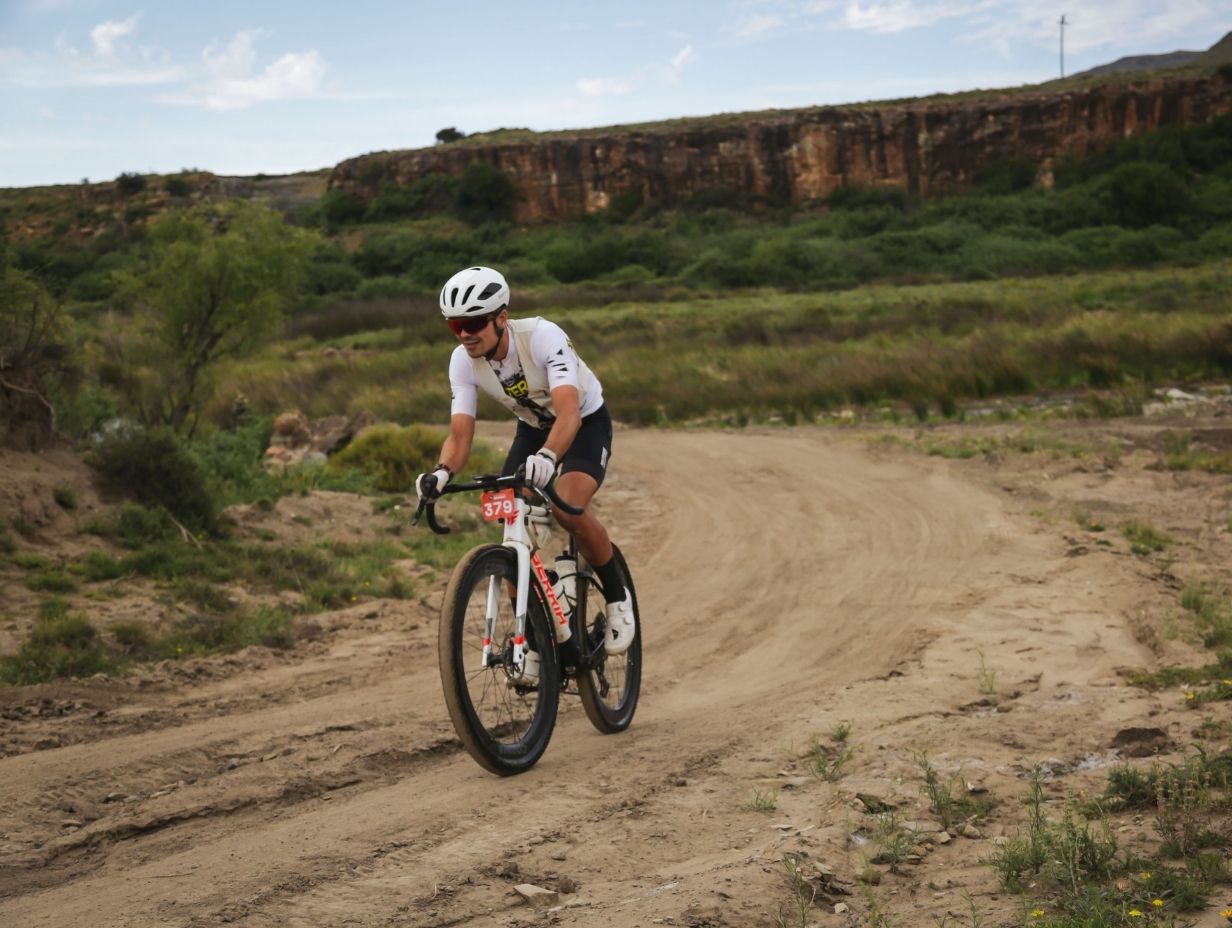
On this point, the Berria was reassuring. I never had the feeling of a fragile frame or one out of its depth with what I was asking of it. It soaked up impacts, fast descents, more technical sections and long days with a real sense of solidity.
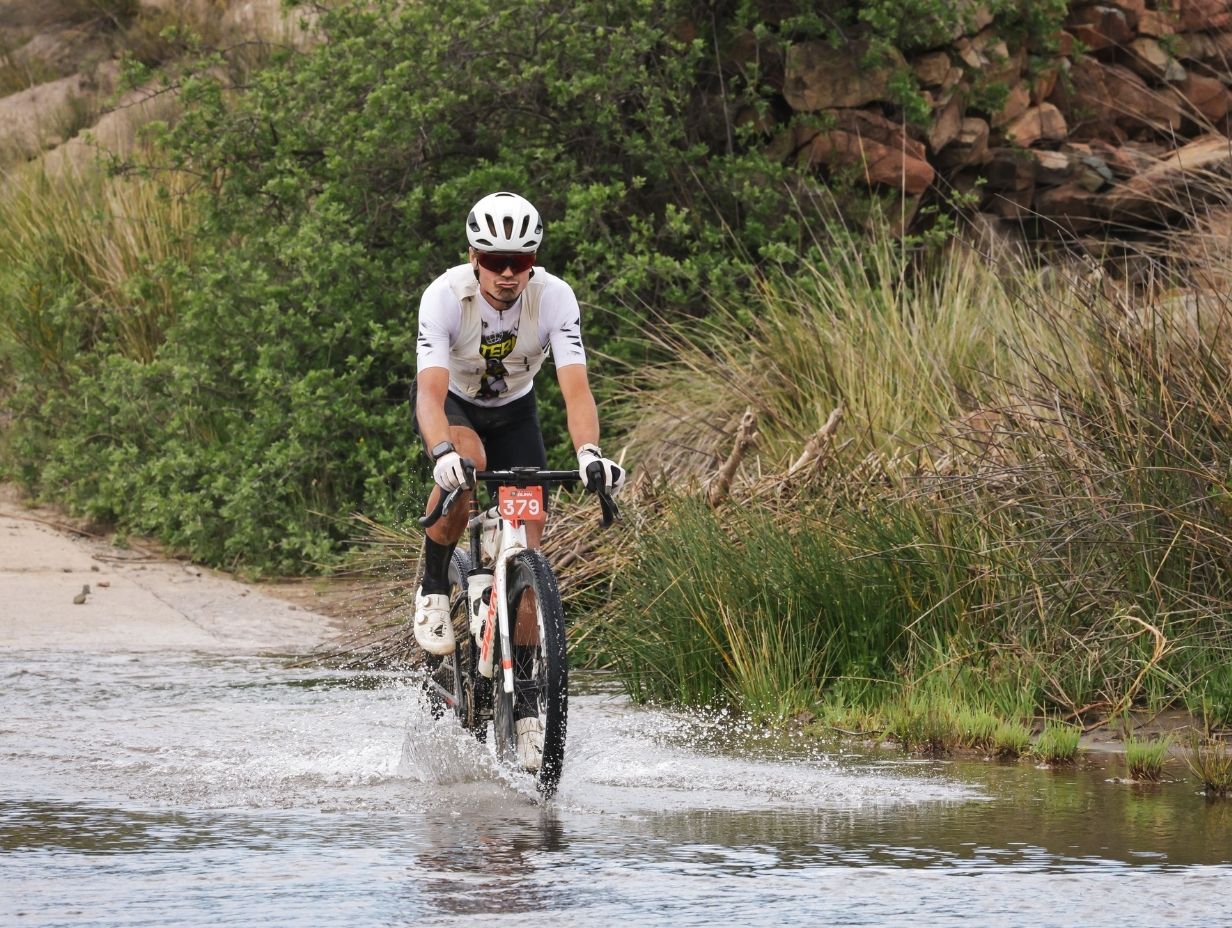
The front end remains agile. I could place the bike where I wanted, even when the surface got sketchy. It doesn’t feel like a long, sluggish gravel bike. It responds quickly, sometimes sharply, but with precision.
Climbing, despite a heavy tyre setup, especially with the 55 mm up front, behaviour remained sound. I even had that rather rare feeling of a bike that’s easy underneath me – not necessarily explosive because of the build, but never felt draggy.
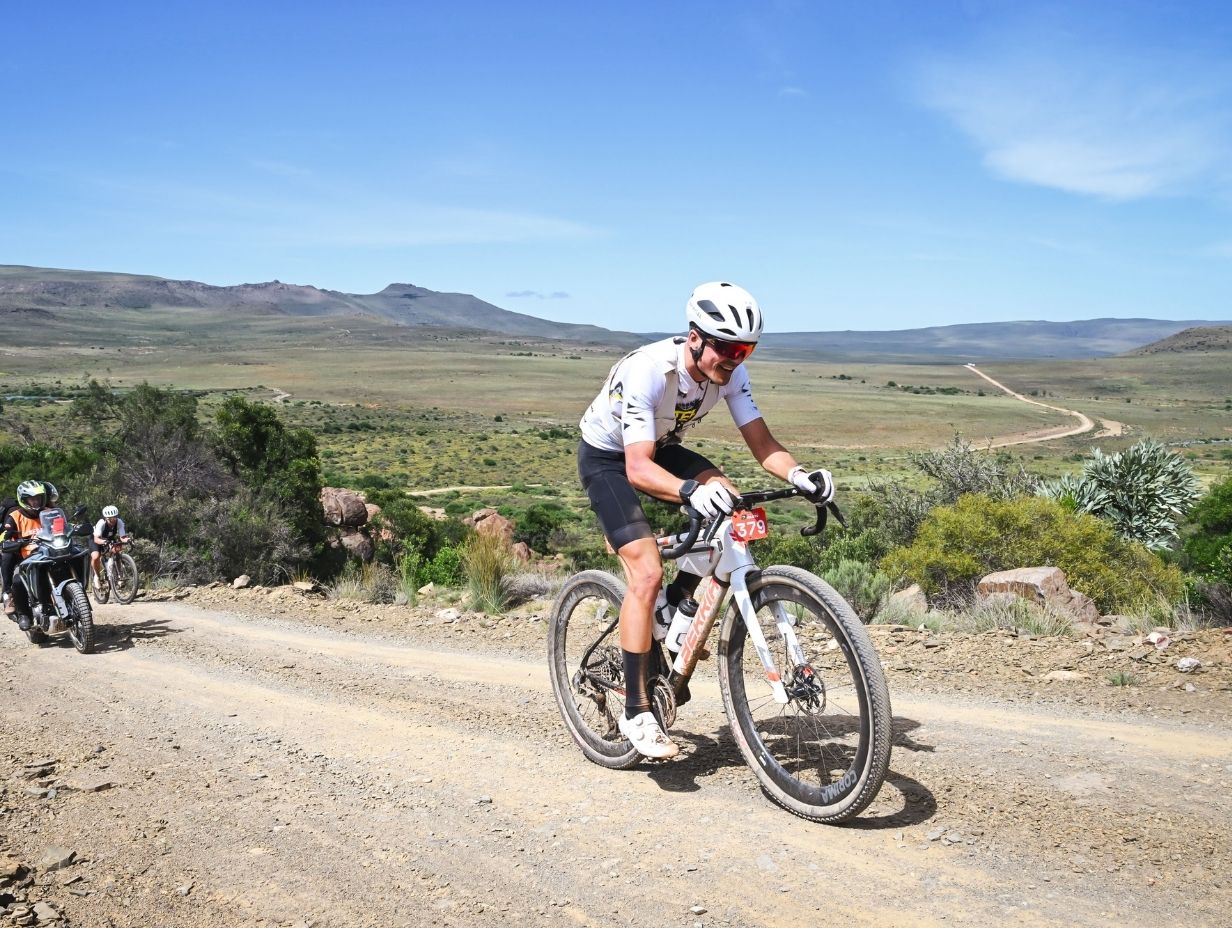
This is where the Naii shows its true brief: a gravel race bike capable of holding on when the course is far less tidy than a simple white road.
The build tested: high-performing, but not fully representative
The platform itself provides a very solid base. Lightweight frame, UDH compatibility, sporty geometry, generous tyre clearance, stiff cockpit – all the ingredients of a modern fast gravel bike are there.
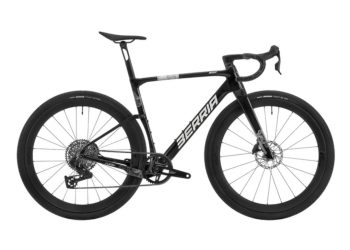
The Berria Naii range is structured around several builds, with SRAM and Shimano groups depending on version, and the brand also highlights its Iris customisation programme. With a price close to €9,000 in SRAM Red (Zipp 303 XPLR SW wheels), the positioning seems fair to me given the level of design and finish.
What I really liked, and what still needs fixing
The strongest point is the balance between precision, rear comfort and capacity to absorb punishment. The bike remains sporty, it encourages you to ride fast, but it didn’t feel too exclusive for a genuinely long, demanding event.
More debatable is the stiffness up front. Some will like that direct, almost razor-sharp feel. Personally, I think it demands big tyres to free the bike up. On 50 mm, it works. With 55 mm up front, I found the whole package more coherent on difficult terrain.
Who does the Berria Naii make sense for?
I see it for a rider who wants a fast, modern gravel bike, capable of going very quickly on rolling terrain, but who doesn’t want to be limited to 40 or 45 mm tyres. Someone targeting long races, rough courses, events where efficiency matters as much as the ability to absorb.
It’s not the most practical bike for ultra. Nor is it the softest up front. But when it’s set up with the right tyres, it becomes a very credible machine for riding hard for a long time.
After nearly 800 km of Gravel Burn, this is what stands out most: the Berria Naii didn’t just survive the test. It showed that a gravel race bike can remain fast, precise and serious, without fearing big tyres or truly hostile terrain.