
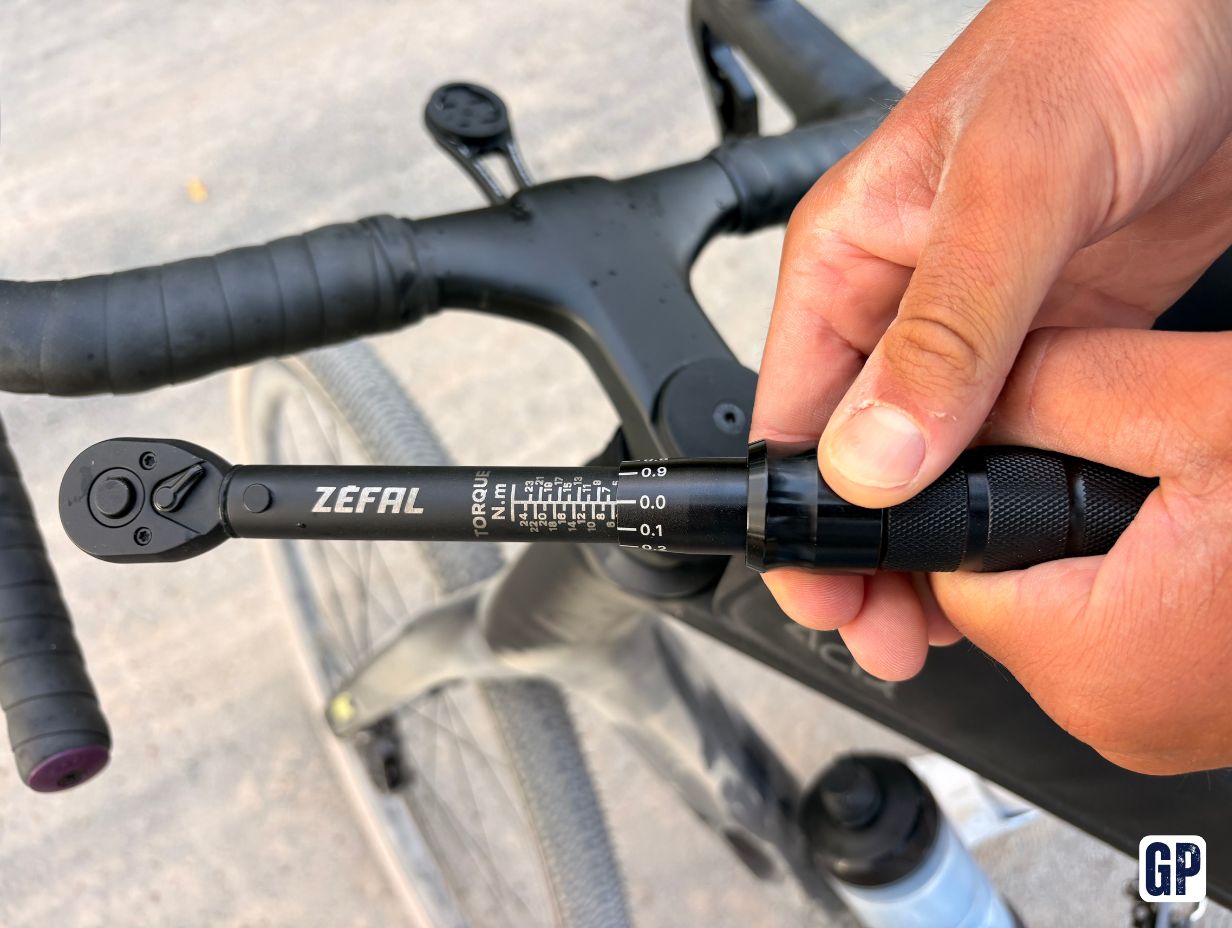

A torque wrench is not the most exciting tool to test. Until the day you tighten a carbon seatpost, a stem, a caliper, or a slightly pricey part with that little hesitation in your hand: am I really at the right torque?
I have been using the Zéfal Z Torque Wrench for several months, mostly at home for builds and routine adjustments. Not as an emergency tool slipped into the bottom of a saddlebag. Rather as a true workshop wrench – the one you reach for often and end up knowing well.
Strengths:
- Very versatile 2-24 Nm torque range
- 0.1 Nm increments that are genuinely practical
- Crisp, confidence-inspiring click in use
Could be better
- Switching between far-apart settings can be slow
Its main appeal fits in a single line: it covers 2 to 24 Nm, with 0.1 Nm adjustment. In the world of bike torque wrenches, that is not very common.
A 2-24 Nm range that often saves you from needing two wrenches
On many bike-focused wrenches, the useful range is fairly limited. That is fine for a stem, a seat clamp or cockpit work, but you quickly end up looking for a second wrench as soon as the required torque goes up a bit.
Here, the 2 to 24 Nm covers a large part of the usual fasteners on a modern bike. Not absolutely everything, of course: some workshop fasteners exceed this value. But for regular maintenance, accessories, carbon parts or frequent adjustments, this range makes the Zéfal very practical.
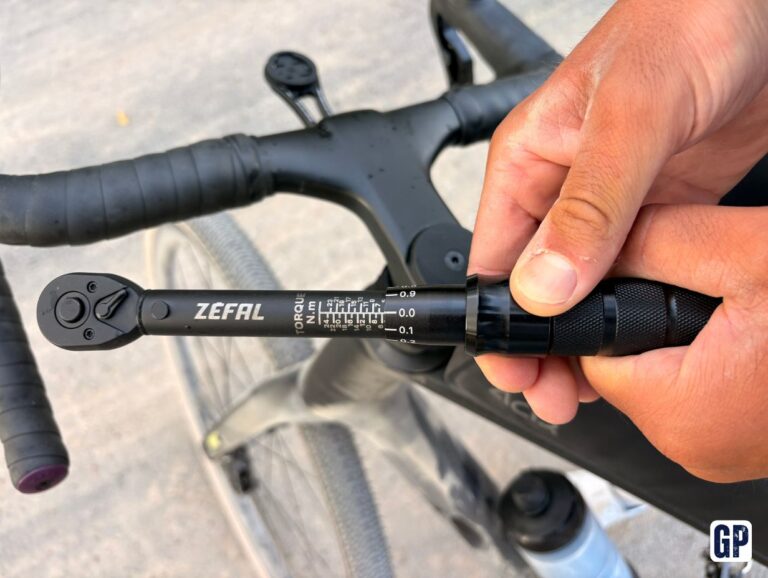
On my Specialized gravel bike, for example, the seatpost requires 6.2 Nm. With a wrench graduated only in big steps, you often end up rounding. Here, the tenth-step adjustment lets you hit the exact value specified.
The 0.1 Nm adjustment: precise, but not always quick
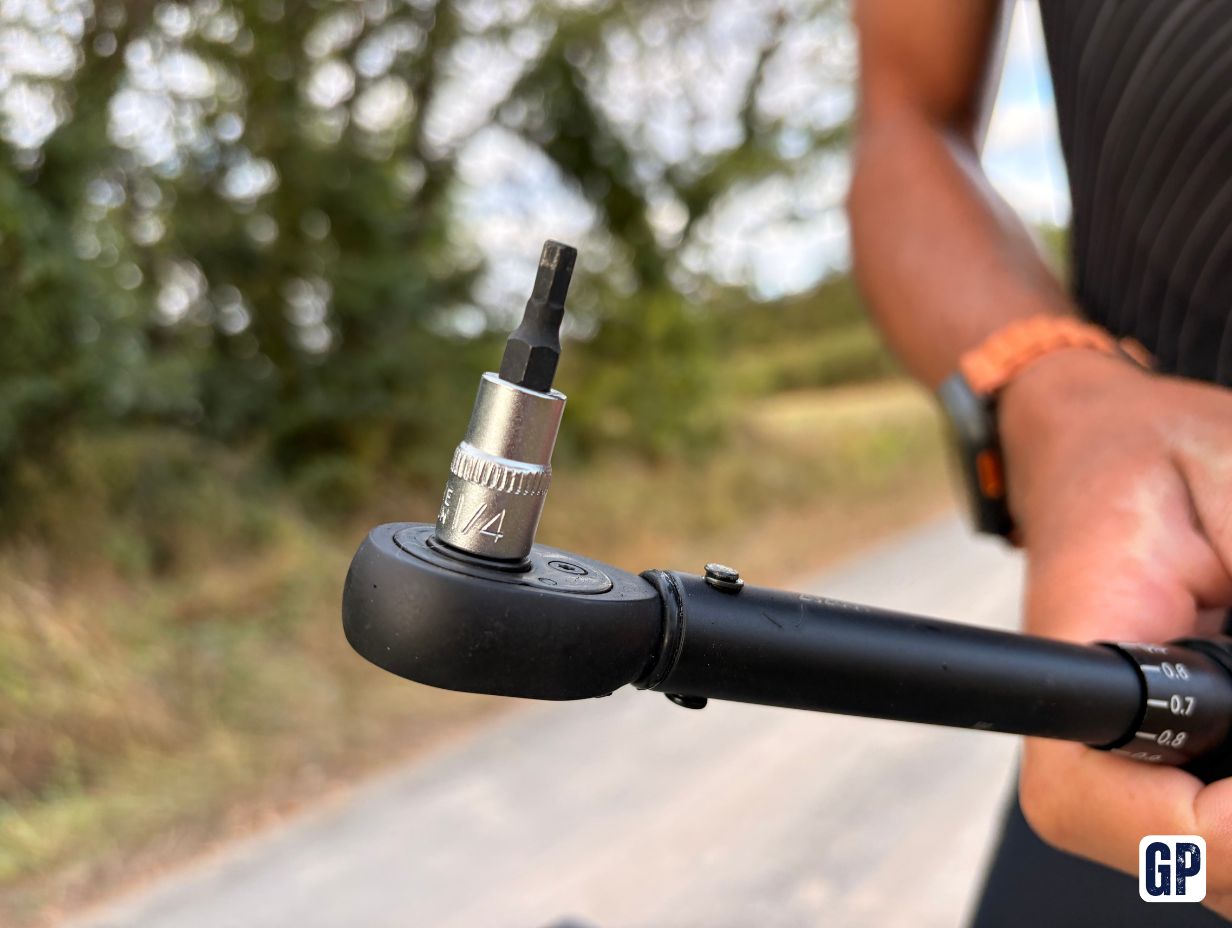
The Z Torque Wrench is set via the handle, with a locking collar to avoid changing the torque during use. Zéfal specifies adjustment in 0.1 Nm increments, with one full turn of the handle corresponding to 1 Nm.
In real use, it is pleasant. The scale is easy enough to read, the handle is nice to operate, and the lock inspires confidence. You do not get that floating adjustment feel you sometimes find on less serious tools.
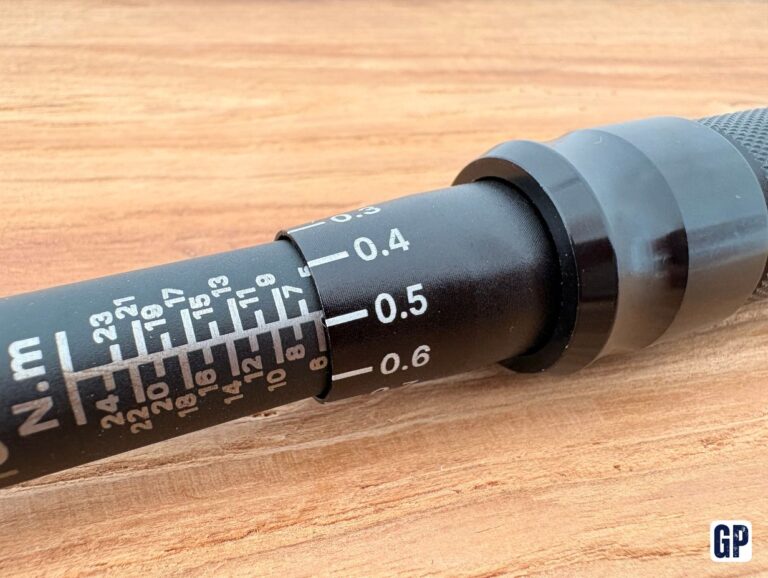
There is a trade-off: when you move from a very low torque to a much higher one, or the other way round, it takes a bit of time. Nothing dramatic, but with tenth-step precision, you have to turn. Sometimes for a few dozen seconds. And since it is recommended to return the wrench to its minimum value after each use, this little routine crops up often.
The case, the bits and brake-caliper access
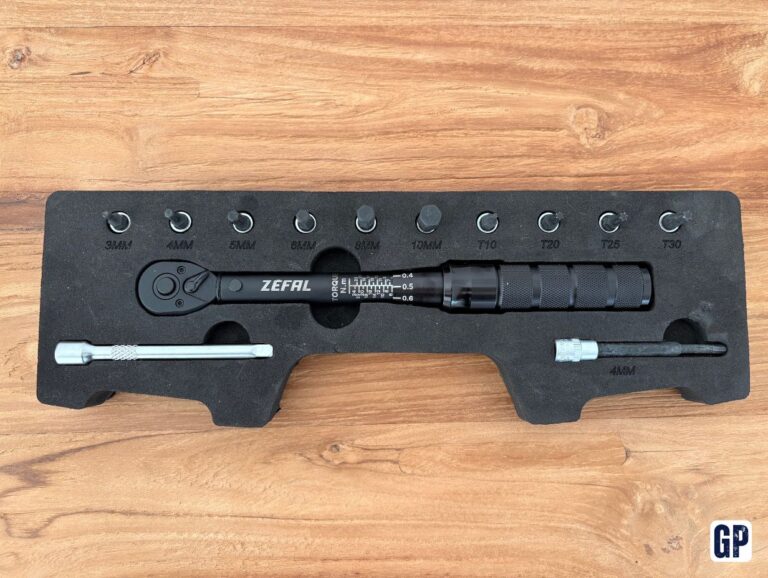
The wrench comes in a plastic case with a fairly complete assortment: hex bits 3, 4, 5, 6, 8 and 10 mm, Torx T10, T20, T25 and T30, an extension, plus a long 4 mm bit designed to reach certain disc brake calipers.
This last detail is well thought out. On a front Shimano caliper, access can quickly become awkward with a standard socket that bottoms out or forces an angle. The long bit lets you tighten more cleanly, without fighting the angle.
It is worth noting the limit: this specific bit concerns calipers that use a 4 mm hex interface. For SRAM calipers that use Torx, you will need the appropriate Torx bit with the extension. It works, but it is not the same level of integration as the long bit supplied for 4 mm.
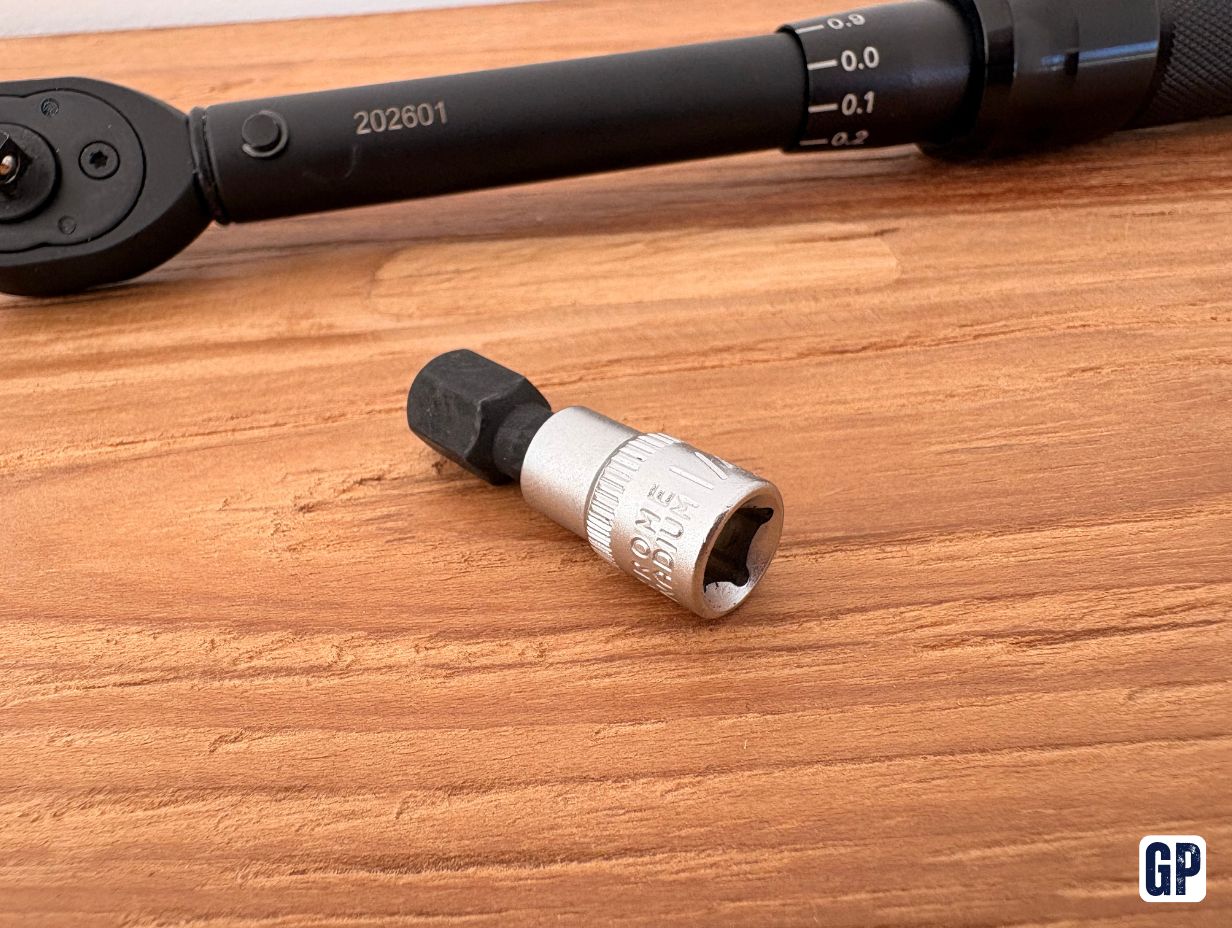
The 1/4’’ connector remains standard, which also lets you use other compatible bits if needed. That is important for a tool you will keep for a long time.
Accuracy: my home check, not a lab session
Zéfal states compliance with ISO 6789, verification at three key points across the torque range and an accuracy of ±3%. On a torque wrench, this is information that matters, especially when working on carbon or delicate parts.
As for me, I do not have a calibration bench, so I will not pretend. I simply compared the trigger point with two other torque wrenches I already own. Each time, the click arrived at what felt like the same tightening force.
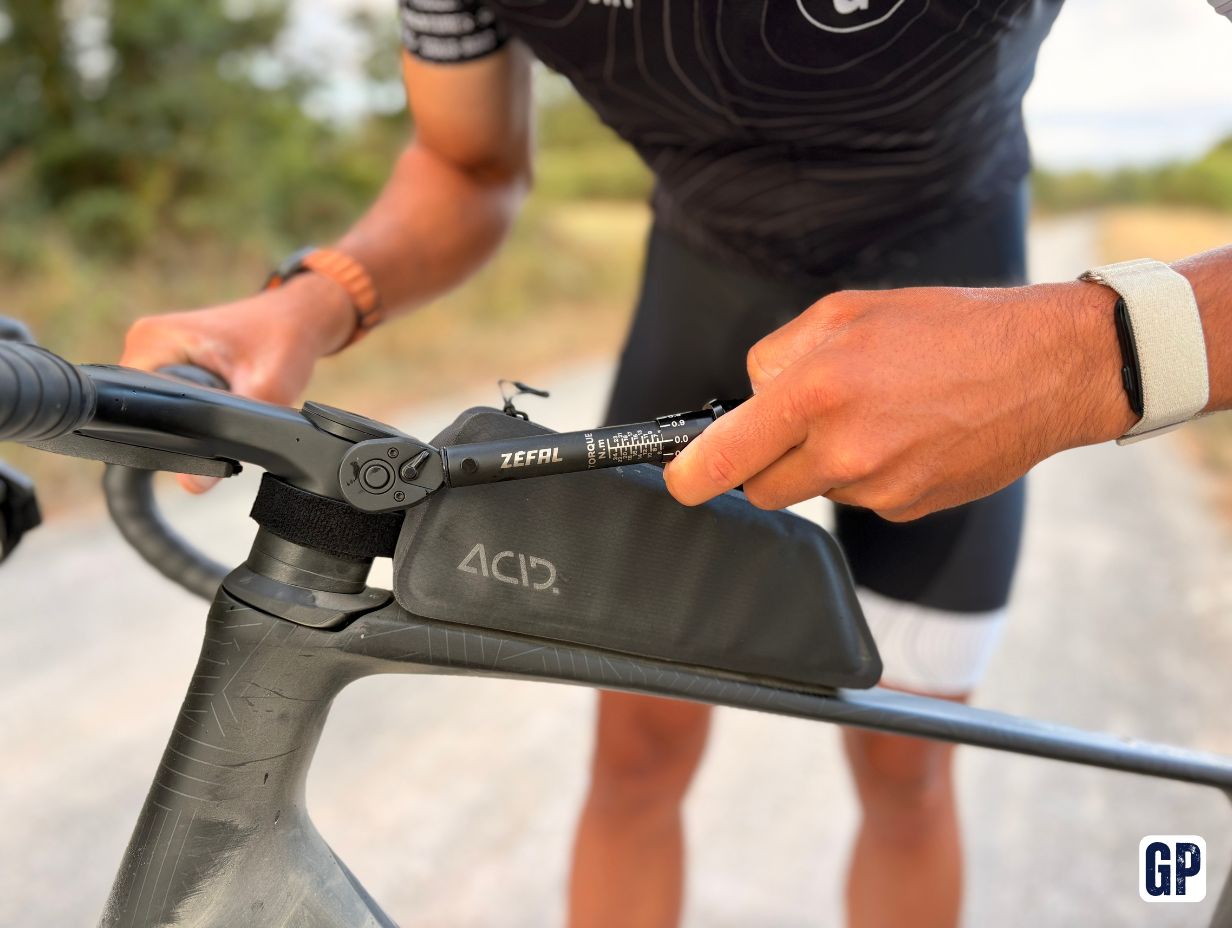
It is not scientific proof, but it is reassuring. The trigger is clear, perceptible, unambiguous. You hear and feel the moment to stop. That is exactly what I expect from a wrench of this type.
A tool for the workshop, not for travelling light
The Zéfal is not the wrench I take on the road. The case is handy for storing the bits neatly, the wrench feels serious, but the whole set is too bulky for my travel use.
At home, however, it is the one I use the most. Because it covers a wide range, because the adjustment is precise, and because I do not need to juggle between several tools for similar but not identical torque values.
One point is worth repeating: even though the wrench has a reversible ratchet, you should not use it to loosen. That is standard practice with a torque wrench, but it bears repeating. Loosen with a regular wrench, tighten to spec with the torque wrench.
Who is this Z Torque Wrench really for?
I mainly see it for cyclists who regularly tinker with their bikes themselves: cockpit set-up, installing components, swapping a seatpost, adjusting calipers, maintaining a well-equipped carbon or aluminium bike.
For very occasional use, it might be a bit too serious, almost too comprehensive. For travel, it is not compact enough. But for a home workshop, it ticks a lot of boxes without straying into gimmick territory.
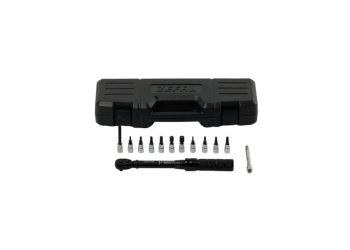
At 69,95 €, it sits in a fairly logical price zone for a bike torque wrench that is complete, precise and supplied with a proper set of bits. Zéfal sticks to what it often does well: a well-positioned product, not luxurious, but designed to last.
After several months, my feeling is simple: it is not the most spectacular tool in the workshop, but it has become one of those I reach for most naturally. And for a torque wrench, that is probably the best compliment.