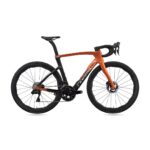
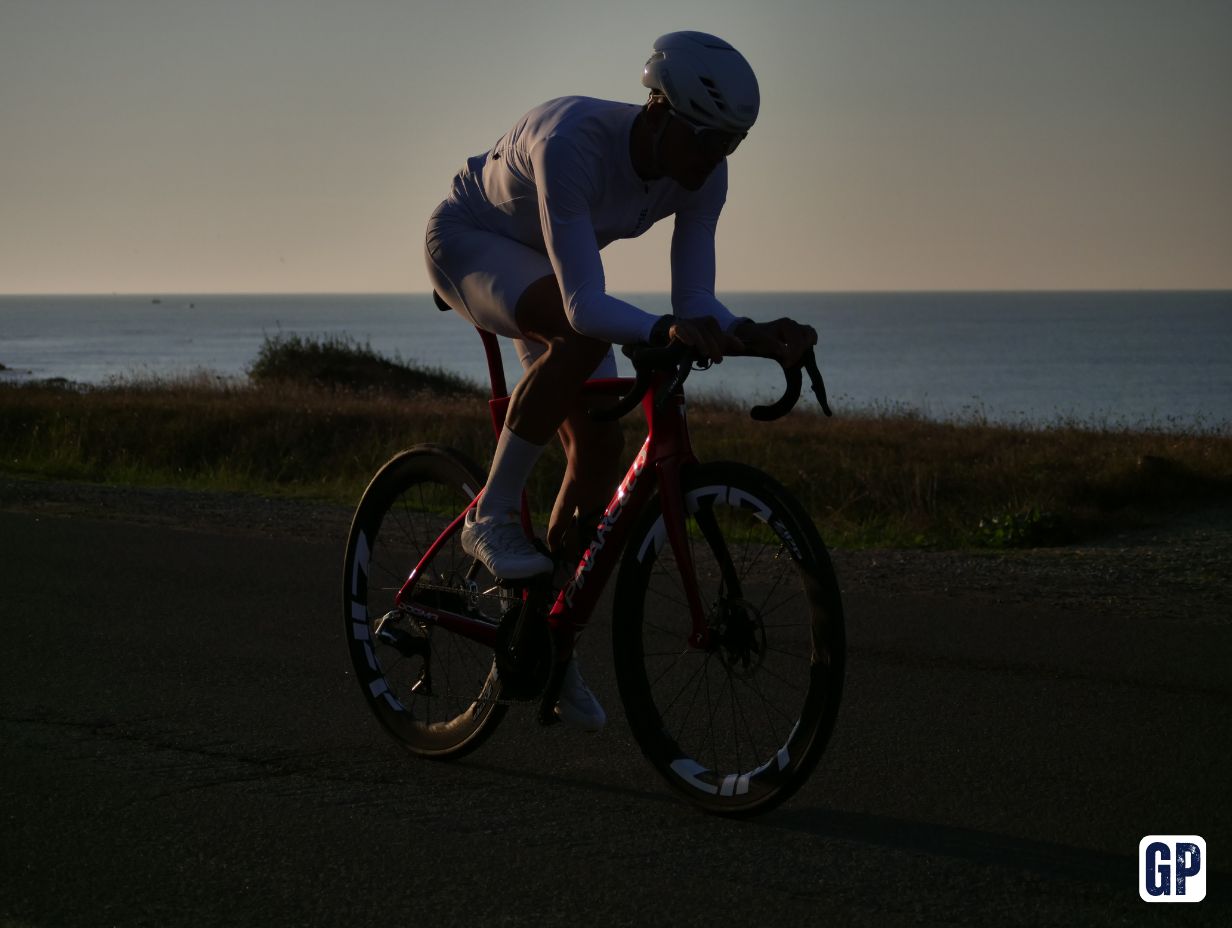

In five years, GravelPassion has had time to ride a lot of the big brands. Almost all of them, in fact. One still resisted: Pinarello.
So when the chance came up to test the Dogma F, the Italian brand’s road flagship, the one you see under the Ineos riders, I didn’t hesitate for long. But I’ll be honest: I didn’t expect to be this impressed.
Strengths:
- Exceptionally well-rounded performance
- Finish and hardware that match the premium positioning
- Strong, instantly recognisable visual identity
- Impressively low weight for a modern aero bike
Could be better
- Price that is very hard to justify rationally
- Most saddle that scuffs quite quickly
Not because I thought the bike would be bad. Today, a bike used in the WorldTour is unlikely to be a flop. Brands can no longer afford that kind of mistake. My doubt came from elsewhere: very premium bikes have often left me with one niggling detail I couldn’t ignore. So-so hardware. A flimsy cover. A cheap GPS mount. A cable rattle. In short, the kind of thing you struggle to forgive when the price flirts with the indecent.

And let’s be clear straight away: this review is not going to rationally justify a bike close to €16,000 in this build. I’m not even sure Pinarello is really trying to. The Dogma F belongs to that category of objects where image, history, rarity and ride character blend together. It doesn’t make the price any more reasonable. It just explains why it keeps selling.
The first surprise lies in the details
When it arrives, don’t expect an incredible ceremony. The packaging is sober, clean, well executed. There is a small box with the bike’s ID card, useful for online registration with the serial number. Pinarello is among the most copied brands in the world, so this point is not trivial.
But what I really cared about, even before riding, was the execution.
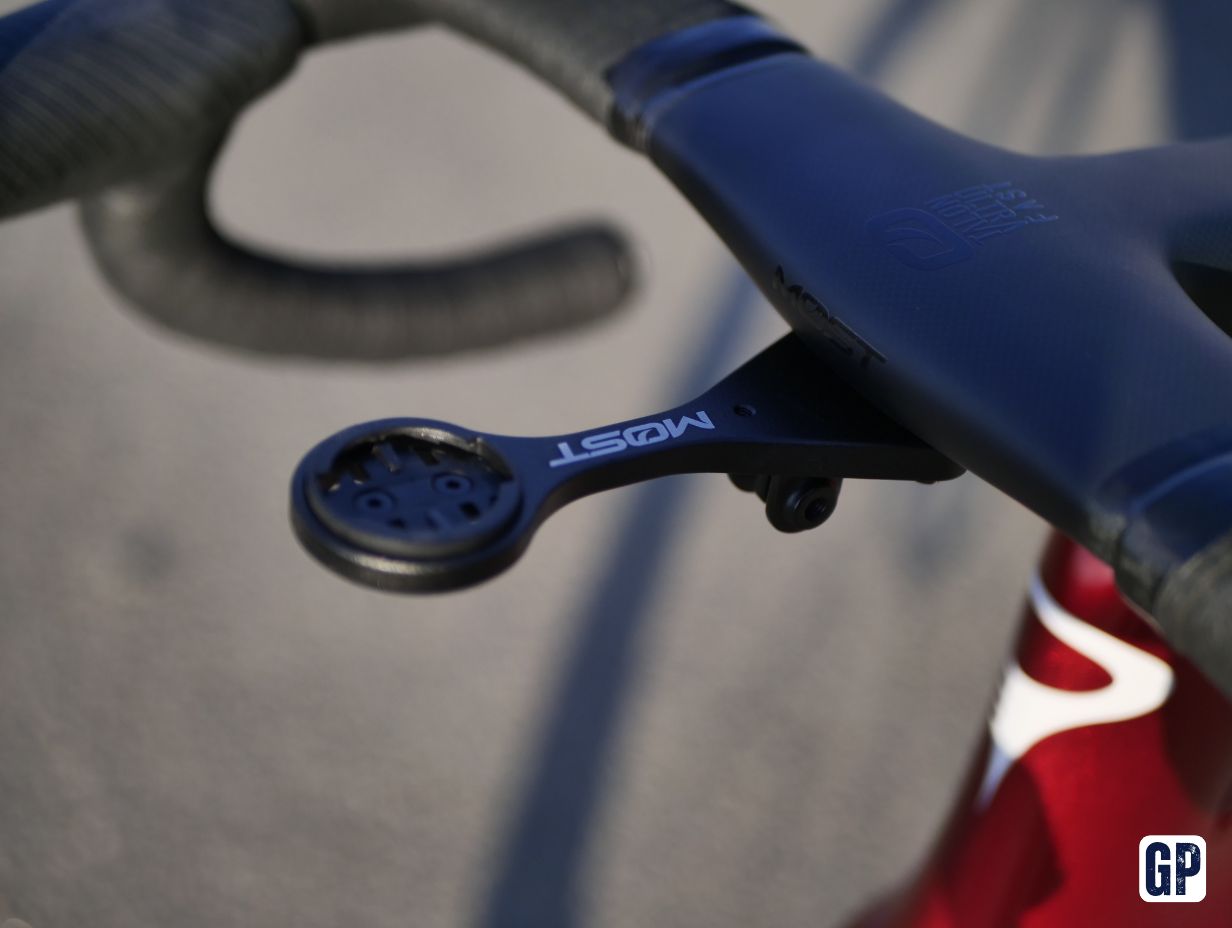
I like looking at bikes up close. Not to hunt for a flaw on principle, but because a bike at this price is also judged by what it conveys when you handle it, when you tighten a bolt, when you set a saddle height, when you fit a computer. On that front, the Dogma F calmed me right down.
The GPS mount is not chasing grams at all costs. It almost looks oversized compared with some ultralight mounts, but it inspires confidence. And frankly, having already broken this kind of part on bikes north of €10,000, I much prefer this.
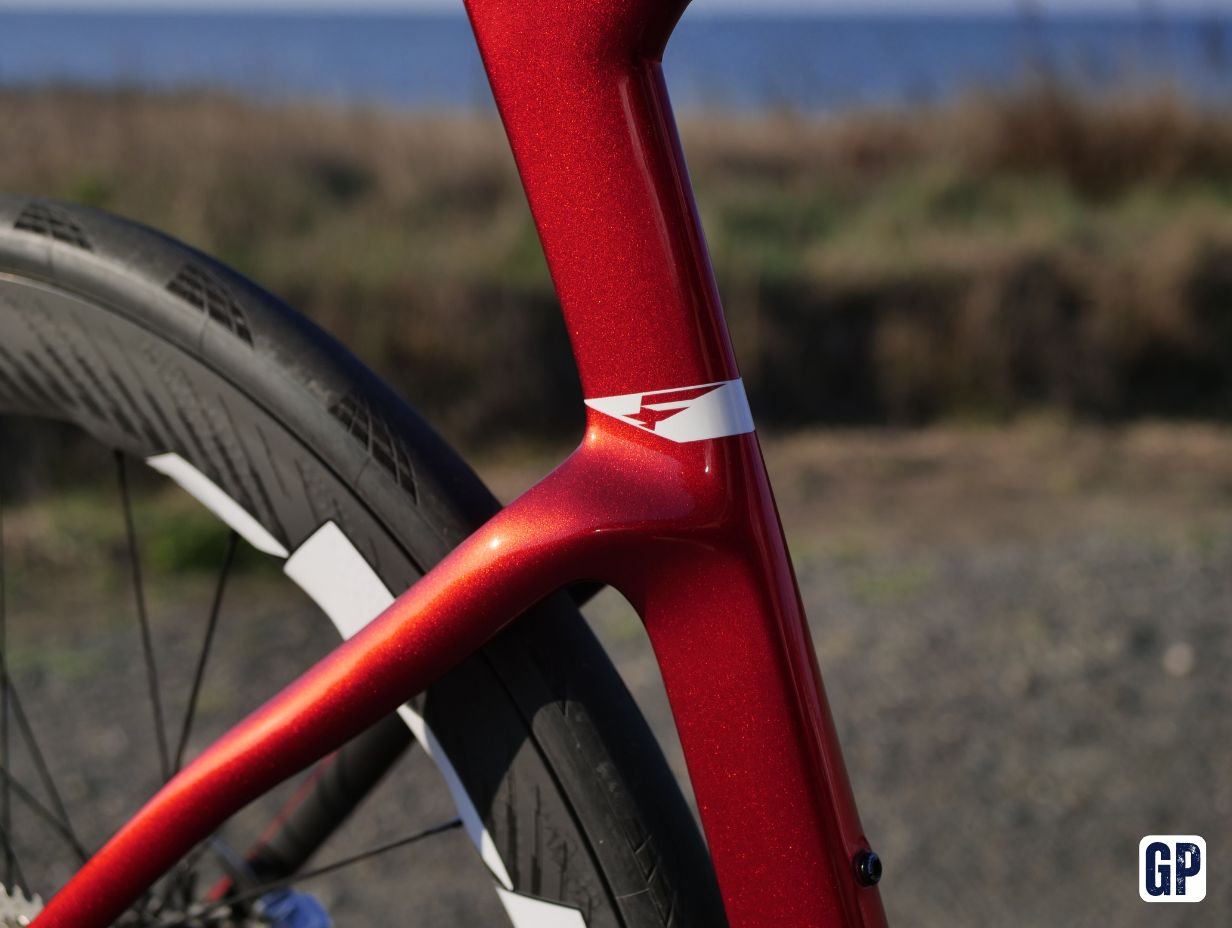
Same impression for the hardware, covers, clamps, finish. Pinarello hasn’t confused lightness with apparent fragility. The seatpost clamp is neat and effective, the overall finish is sober yet crisp, and the whole gives the feeling of a bike built to be ridden hard for a long time, not just to impress on a scale.
Light - more than I expected
Pinarello has not always had the image of a brand obsessed with featherweight builds. The Dogma F shifts that perception a bit.
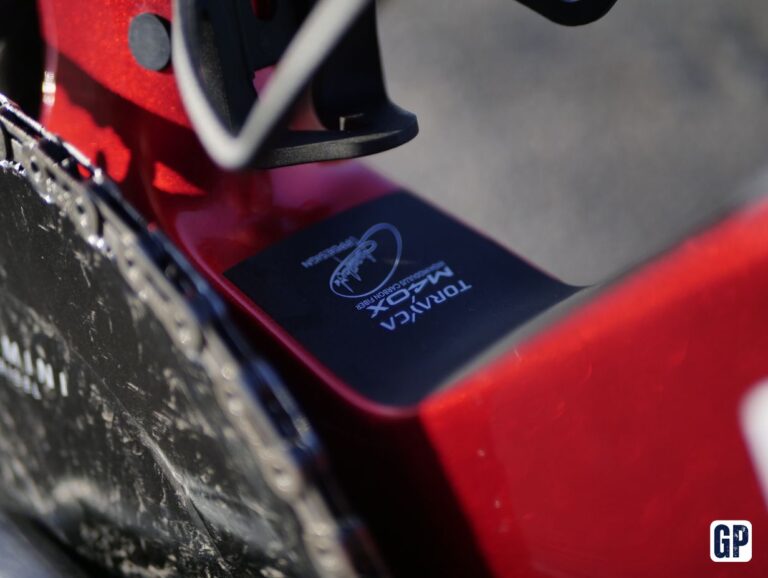
The spec sheet lists a TorayCa M40X carbon frame, eTiCR internal routing, Italian-threaded bottom bracket, revised Onda fork, integrated thru-axles and a Most Talon Ultra Fast cockpit. In the official SRAM Red eTap AXS build with a Princeton Peak 4550 wheelset, Pinarello quotes 6.63 kg in size 53, without pedals or bottles.
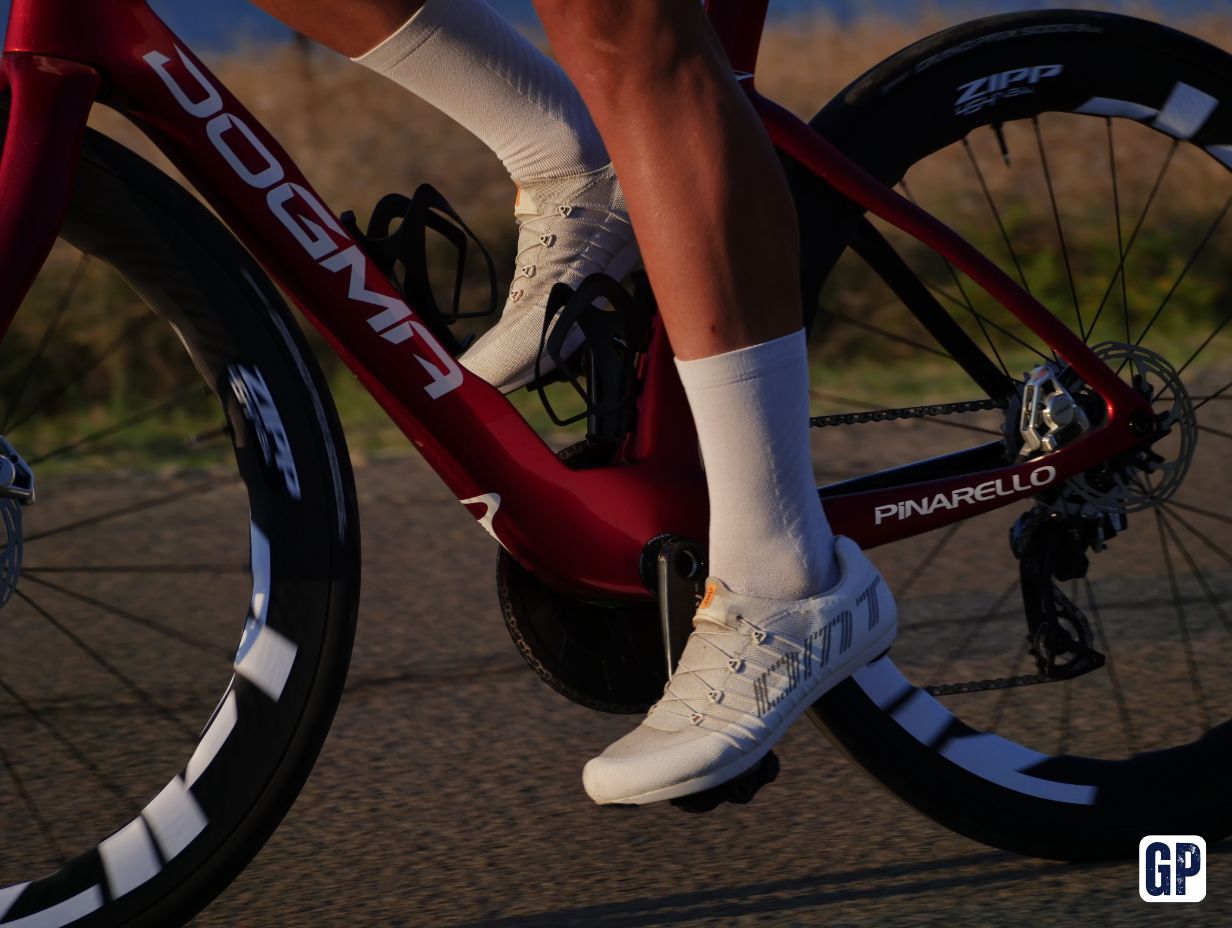
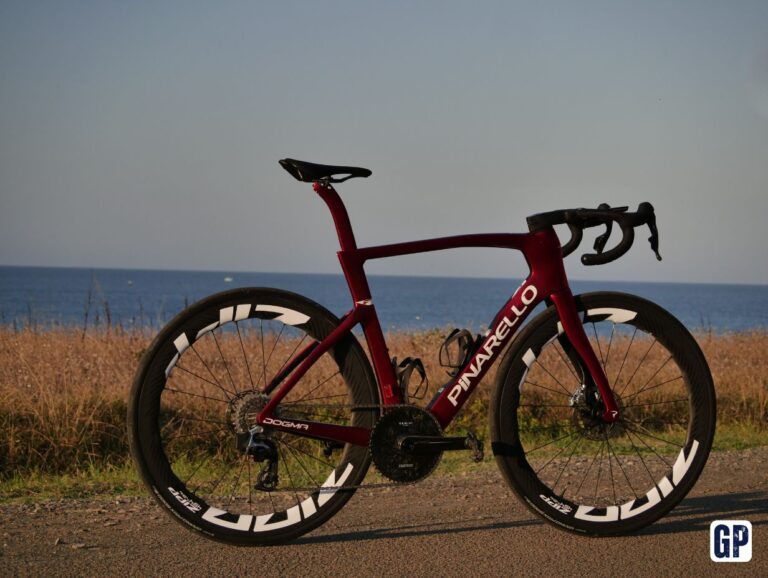
My bike was size 57.5 – a large size – built with SRAM Red and a Princeton Peak wheelset. On the scales, I get 6.9 kg. That’s not just light for a modern aero bike. It’s very light for a bike this well resolved in its details.
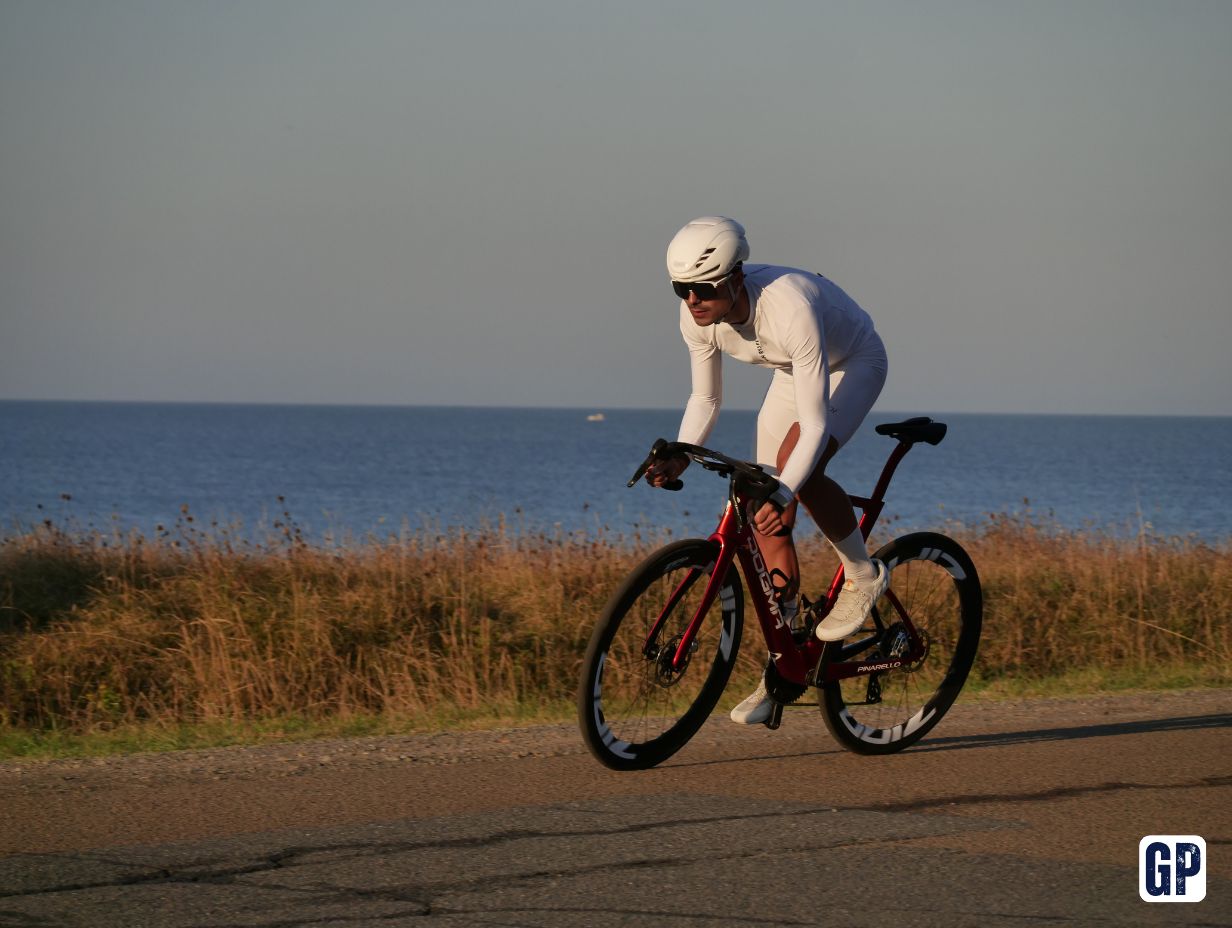
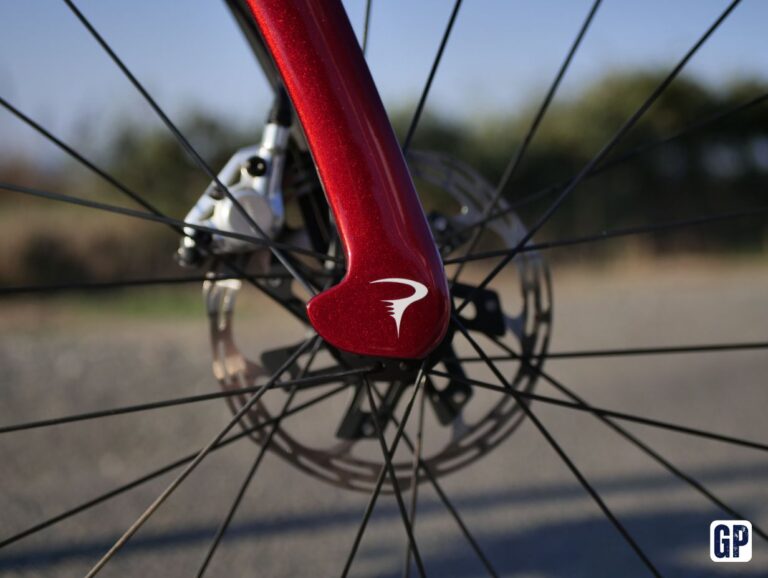
The frame dips under 800 g, and you find several choices already quite advanced for a chassis about to enter its third year on the market: a hefty but sculpted head tube, hidden thru-axle heads, a slimmed-down down tube, an Aero-Keel bottom bracket zone inspired by aero work, Pinarello’s typical head-tube beak reduced in volume, Onda fork with 47 mm offset.
You can always regret the absence of UDH, especially if you think about 1x builds or the recent evolution of standards. But you have to place the bike in its timeline: when this generation arrived, UDH hadn’t yet become as unavoidable on performance bikes. It’s a shortcoming today, not necessarily a mistake for its time.
The right size changes everything
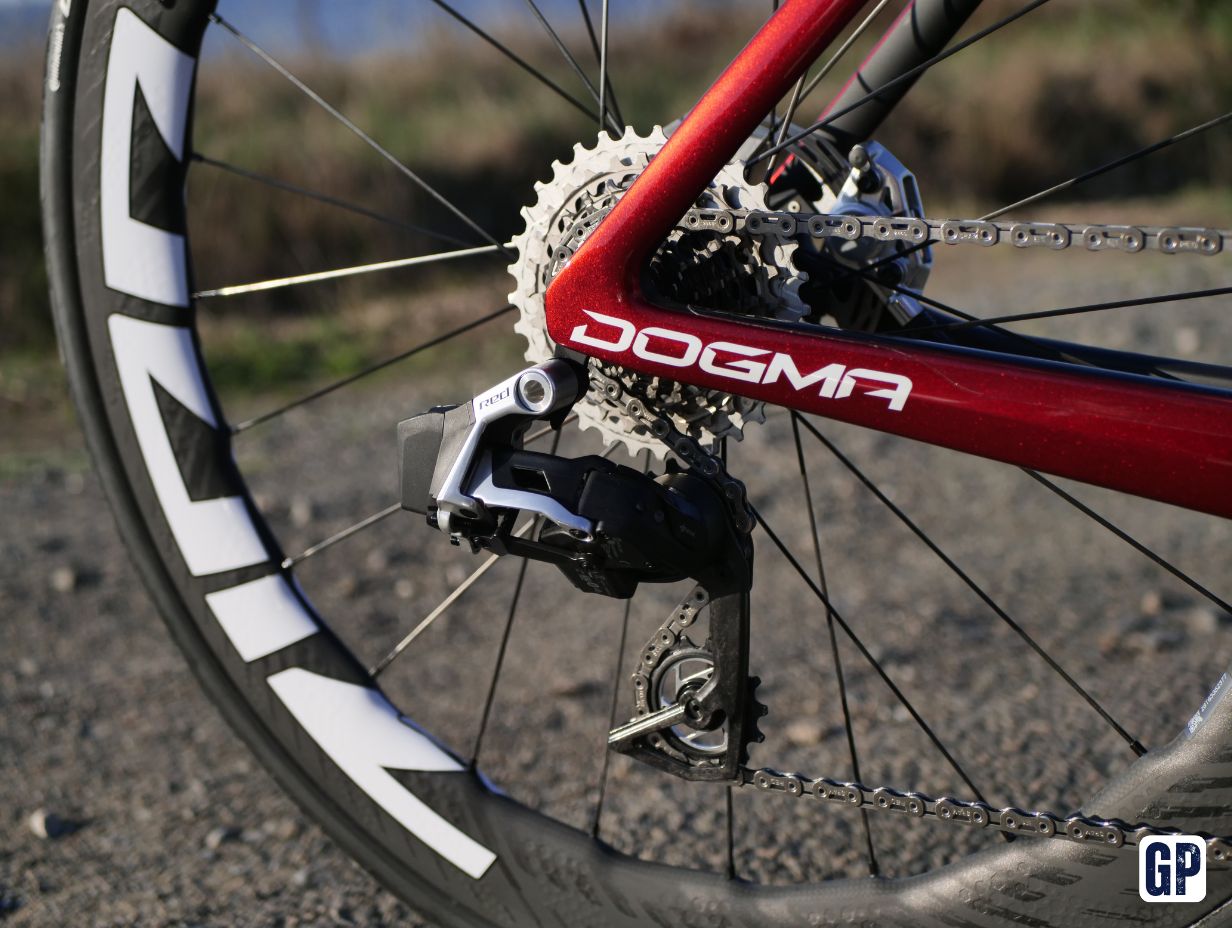
I chose a size 57.5. Not only for the numbers, though that was obviously central. I also wanted a clean build, with a steerer cut flush, because visually a Pinarello does not wear a stack of spacers well. It’s subjective, but on this bike, aesthetics are part of the point.
This size gives me the stack I know well, with a truly race position, but not absurd for my riding. The downside is a more modest seatpost extension, which doesn’t show off the painted post as much as on a smaller build. So be it. On a bike like this, I prefer to be perfectly fitted than chase a more flattering photo.
And indeed, I was immediately well set up.
The Most Talon Ultra Fast cockpit is very well finished. On the tops, your hands naturally find their place, the front end feels clean, firm, precise. However, in the drops, I find it a bit less modern than some recent setups. It remains quite slim, almost in the Italian style. If you like bars that fill the hand more, with more pronounced shapes in the drop, it may feel a bit dated.
It’s not a deal-breaking flaw. More a preference. I’m used to bars like the Deda fitted to my Van Rysel RCR-F, with small, very defined supports in the drop. Here, the hand is less braced. Climbers might like that, riders who spend a lot of time settled in the drops a bit less.
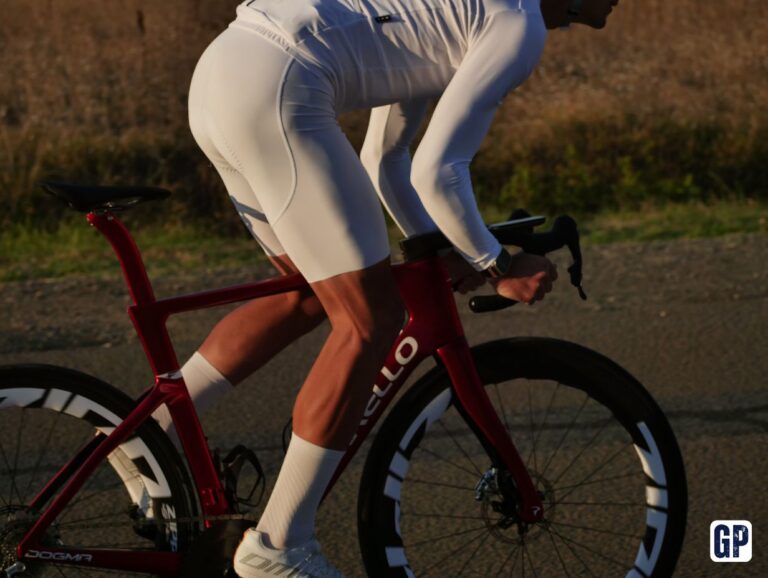
The Most Lynx Ultrafast Superflow saddle, 145 mm on this version, is well made. Small downside: it is already starting to show scuff marks that I don’t see as quickly on other saddles. Nothing dramatic, but on a build of this level, that kind of mark stands out.
That silence in use that changes the experience
I have ridden several thousand kilometres on this Dogma F. And interestingly, my first-ride impressions have hardly changed.
There are bikes you understand quickly. Even more so when you’ve tested a lot. It is not that the extra kilometres are useless – on the contrary, they validate intuitions, sometimes reveal a flaw, confirm a niggle. But some sensations arrive from the first pedal strokes.
The first one here is silence.
No parasitic noise. No cable pinging in the headset. No seatpost slipping. No discreet creak that ends up taking over your head after two hours. On a bike at this price, you could say that is normal. Yes. But precisely, not all of them do it this well.
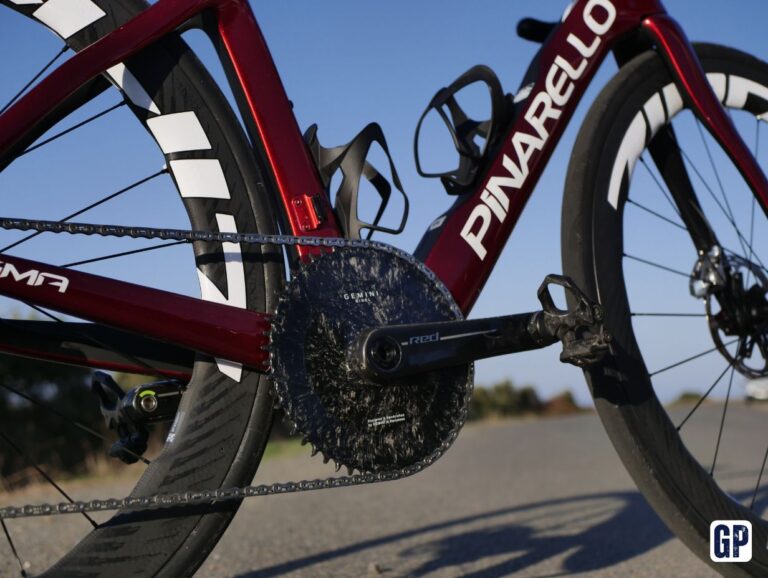
The SRAM Red eTap AXS groupset also brings that very clean feel, with crisp operation and a wireless setup that suits the bike’s concept.
Here, Red works with the expected smoothness. Nothing to report on braking either, with 160 mm rotors front and rear. On this bike, it’s mainly the frame-cockpit-wheelset package that sets the tone.
The Dogma F is strong because it has no weak spots
The initial terrain was perfect to gauge a modern road bike: fast, rolling hills, a few more technical sections, accelerations, descents where you have to place the bike, stretches where aero really matters.
And that’s where the Dogma F surprised me.
I didn’t find it only fast. I didn’t find it only light. I didn’t find it only agile. I found it excellent almost everywhere.
That is increasingly common with the very best recent road bikes, but it is still rare to have this level of balance. The Dogma F climbs very well, kicks hard out of corners, holds its line, places easily, makes you want to attack descents and doesn’t collapse when you push hard. It has that well-distributed stiffness so you don’t feel one area of the bike working against another.
It’s not the easiest bike I’ve ridden. Nor the most forgiving. It remains a racer’s bike, with real physical demands. But it doesn’t give that caricatured impression of a harsh machine reserved for WorldTour legs. The stiffness is there, never absurd.

I would place it in the spirit of a Cannondale SuperSix Evo or a very performance-oriented Specialized Tarmac, with perhaps a touch less immediate ease. But in pure versatility, it is among the best machines I have tested.
Beware the ultimate-bike fantasy
This may be the least comfortable passage to write, but it seems important.
Pinarello often attracts cyclists who want to treat themselves to an exceptional bike. Sometimes after years of riding, saving, dreaming in front of Tour bikes. And I totally get that. The Dogma F can be the purchase of a lifetime.
But you also have to be clear-eyed: if your fitness is average, it’s not necessarily the best choice in the Pinarello range.
Not because it would be impossible to ride. But because it asks you to like true race bikes. The real ones. Those that respond quickly, that kick back a lot, that don’t primarily try to cosset you. If you mostly ride for pleasure, long outings, imperfect roads and dynamic comfort, a Dogma X or an F Series will likely offer a more rational, more accessible experience while keeping the brand’s identity.
The F Series, in particular, strikes me as perhaps the most logical buy for many cyclists who want a performance Pinarello without tipping into the Dogma F’s price insanity. In SRAM Force or Shimano Ultegra, you still get expensive builds, of course, but much closer to what top-tier competitors offer.
The Dogma F does not try to be reasonable. It tries to be at the very top.
A design I thought I wouldn’t like
I’ve never been a big fan of Pinarello’s forms. The asymmetry, the very pronounced curves, that silhouette you recognise instantly – all of that kept me at arm’s length for a long time.
And then, after enough riding, something changes.
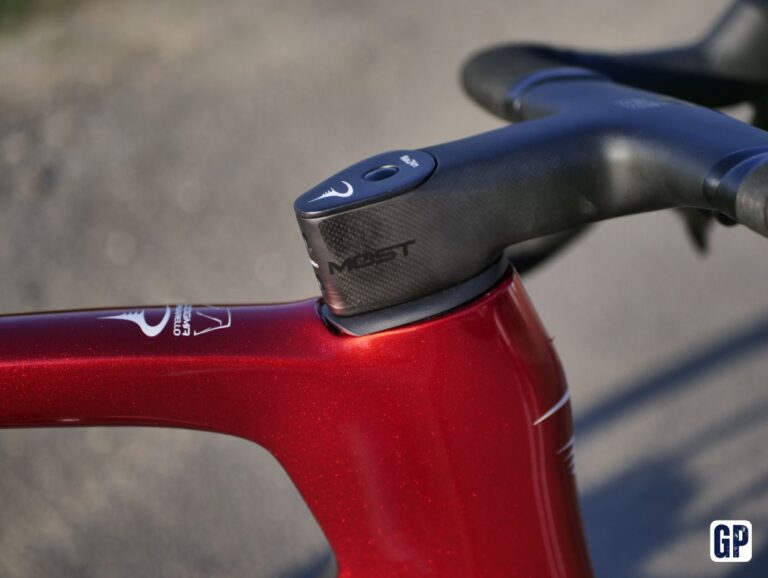
I wouldn’t say the Dogma F becomes discreet. It never will. But I do find it ultimately harmonious. In a market where many bikes end up looking alike, Pinarello keeps an almost brazen identity. Even without paint, you would recognise the frame among a hundred others.
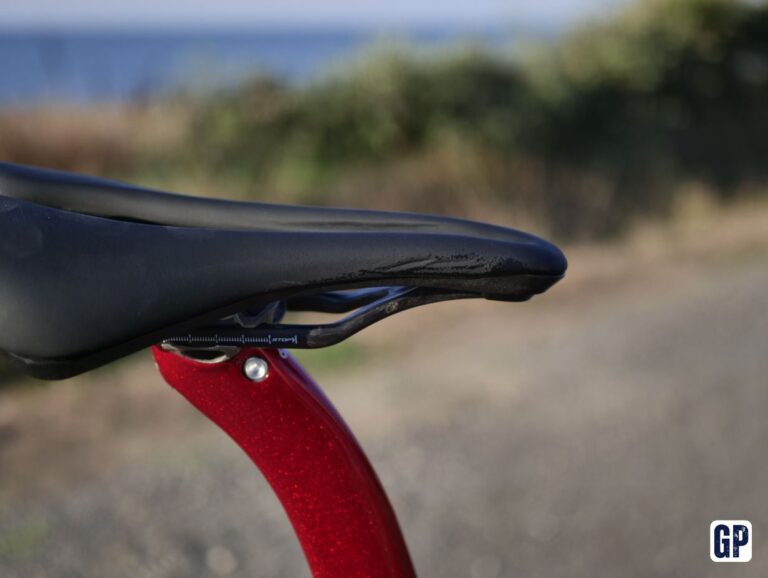
That’s not a secondary detail. At this price level, you’re not only buying a ride feel. You’re also buying an object. And the Dogma F has this rare quality: it fully embraces its design. You love it or you hate it, but it doesn’t try to please everyone.
The price is still impossible to justify - the bike much less so
I tried to find real flaws. Not token caveats, not lines to artificially balance the review. Real, bothersome flaws – the kind you keep in mind after several rides.
There are few.
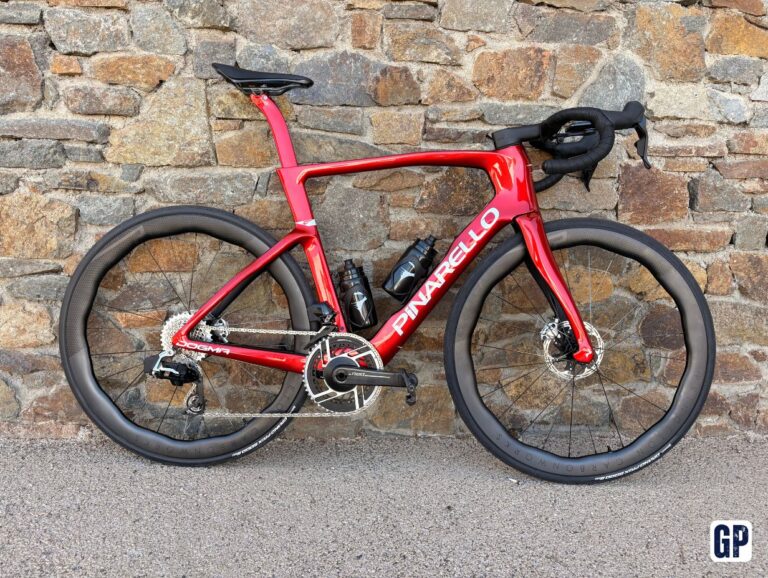
The bar could be more modern in the drops. The saddle marks faster than expected. The absence of UDH limits some future builds. The price is obviously outrageous for most cyclists. And the bike will remain too demanding for those who primarily seek comfort or ease.
Beyond that, though, it’s hard to catch it out. The Dogma F is light, precise, silent, stable, agile, fast, well finished. It made me want to ride every time I swung a leg over it. And that is no small thing, especially when you test a lot of bikes.
I better understand that phrase you sometimes hear: “once you’ve ridden a Pinarello, it’s hard to go back to something else”. I used to find it a bit glib. After several thousand kilometres with this Dogma F, it seems far less exaggerated.
The price does not become reasonable. The myth doesn’t explain everything. But the machine itself stands tall. Here, Pinarello masters a very rare recipe: a total race bike, without a real behavioural weak point.
And even though I thought I would keep my distance, this Dogma F reeled me in.