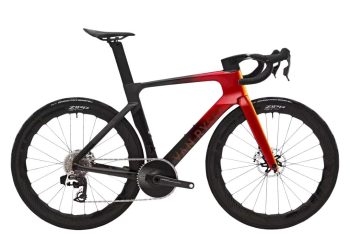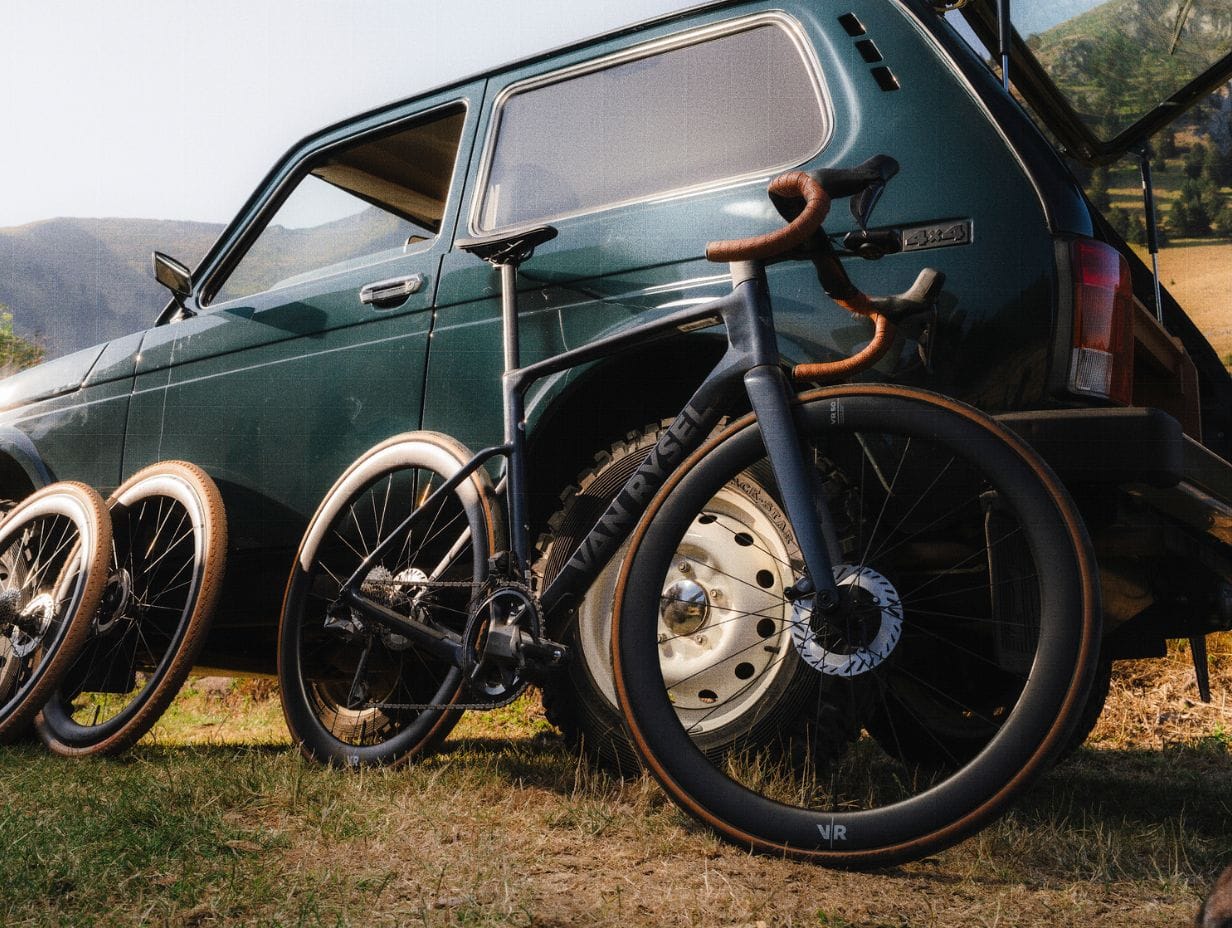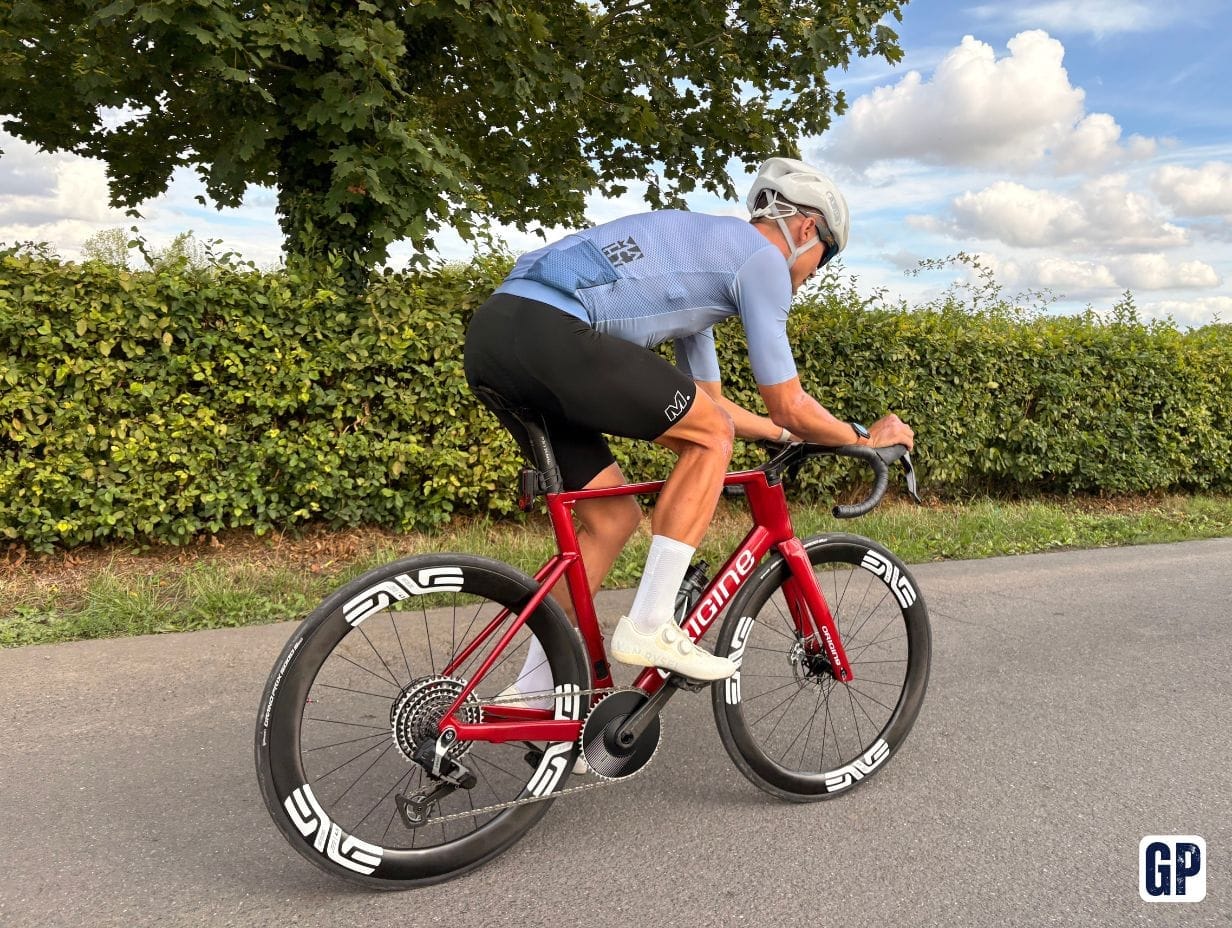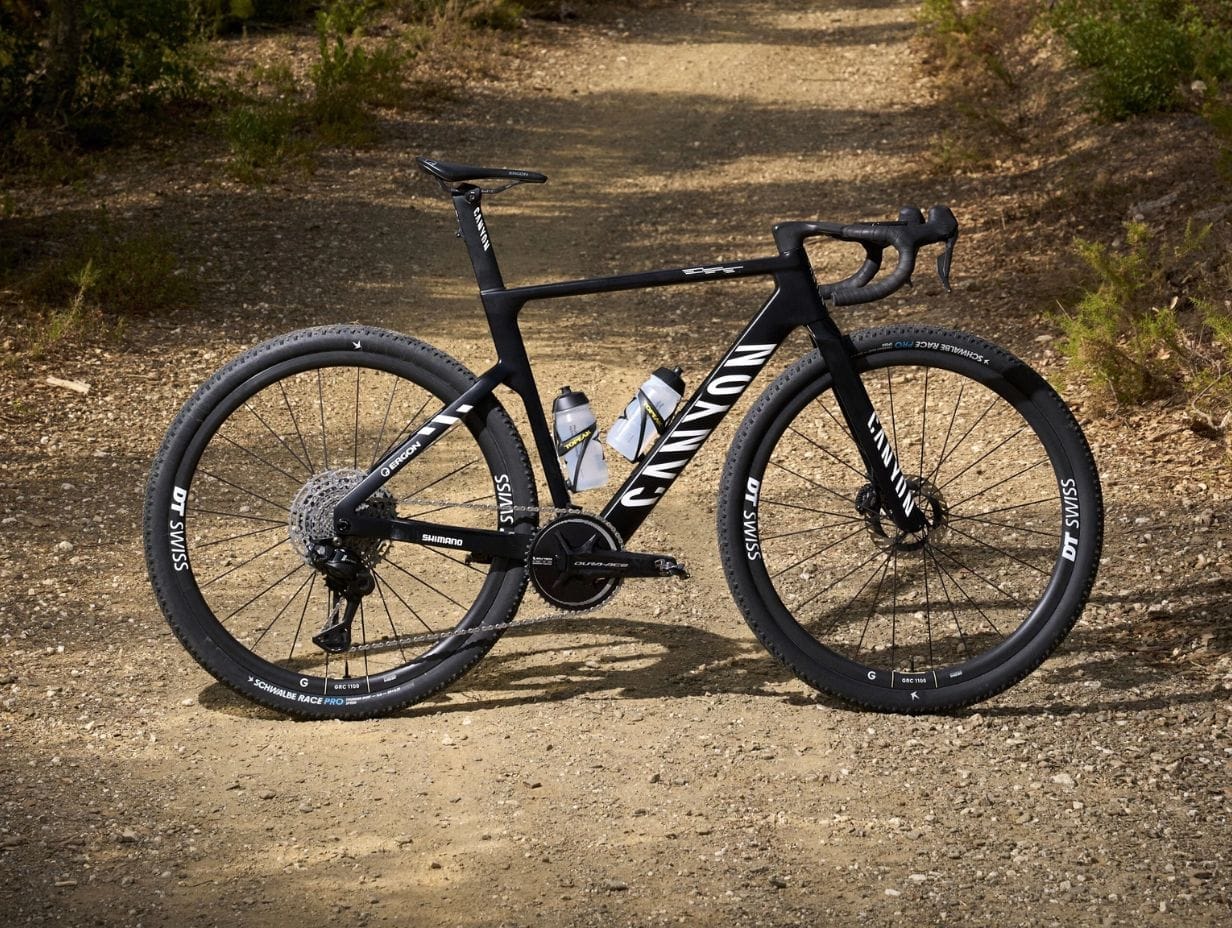
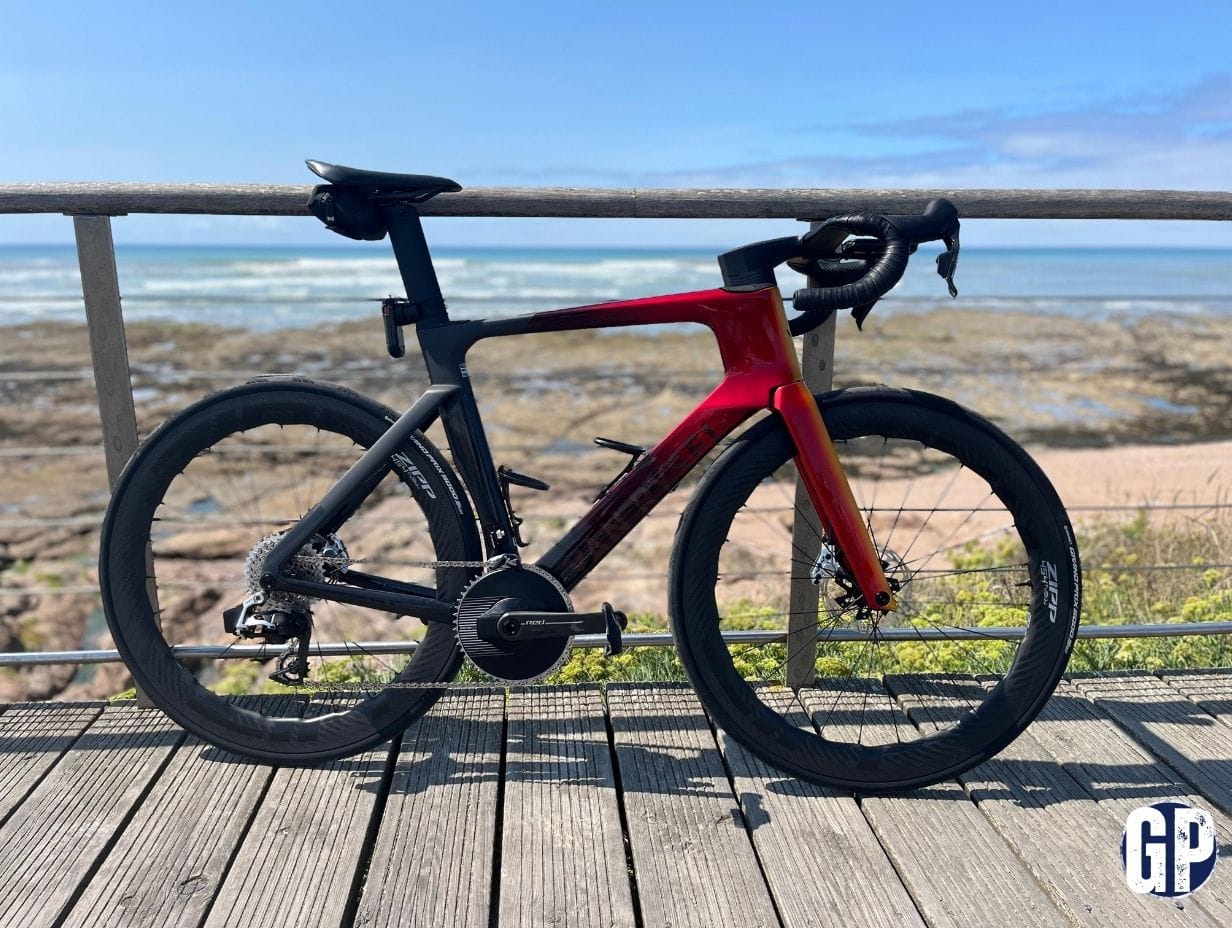

B’Twin has changed! For several years now, Decathlon has repositioned its Van Rysel road brand at the high end with models built for racing. The latest and likely most ambitious: the RCR-F PRO, here in its limited Inferno edition. An exclusive colourway, an uncompromising build, and a clear promise: to rival the market’s aero benchmarks such as the Ridley Noah Fast, Canyon Aeroad or Cervélo S5.
We tested this RCR-F Inferno in its single-chainring SRAM Red AXS setup – an atypical but deliberate choice. Verdict after several high-intensity rides. 👇
Highlights:
- Impeccable finish
- Stable, high-performing ride
- Aggressive price-to-performance ratio
To improve:
- Crank length questionable in size L
Spectacular design and flawless finish
First impression out of the box: Van Rysel no longer plays in the same league as the former mass-market brand. The packaging is perfect and the bike is very well protected in a relatively minimalist box. Assembly is a breeze – you only need to install the front wheel and the seatpost. No need to adjust the cockpit either, which is already perfectly set up. For peace of mind, I checked the various bolts and everything was spot on.
The Inferno paint catches the eye and changes with the light, between dark reflections and fiery highlights. The finish is clean, the integration is spot on, and the overall build oozes quality.

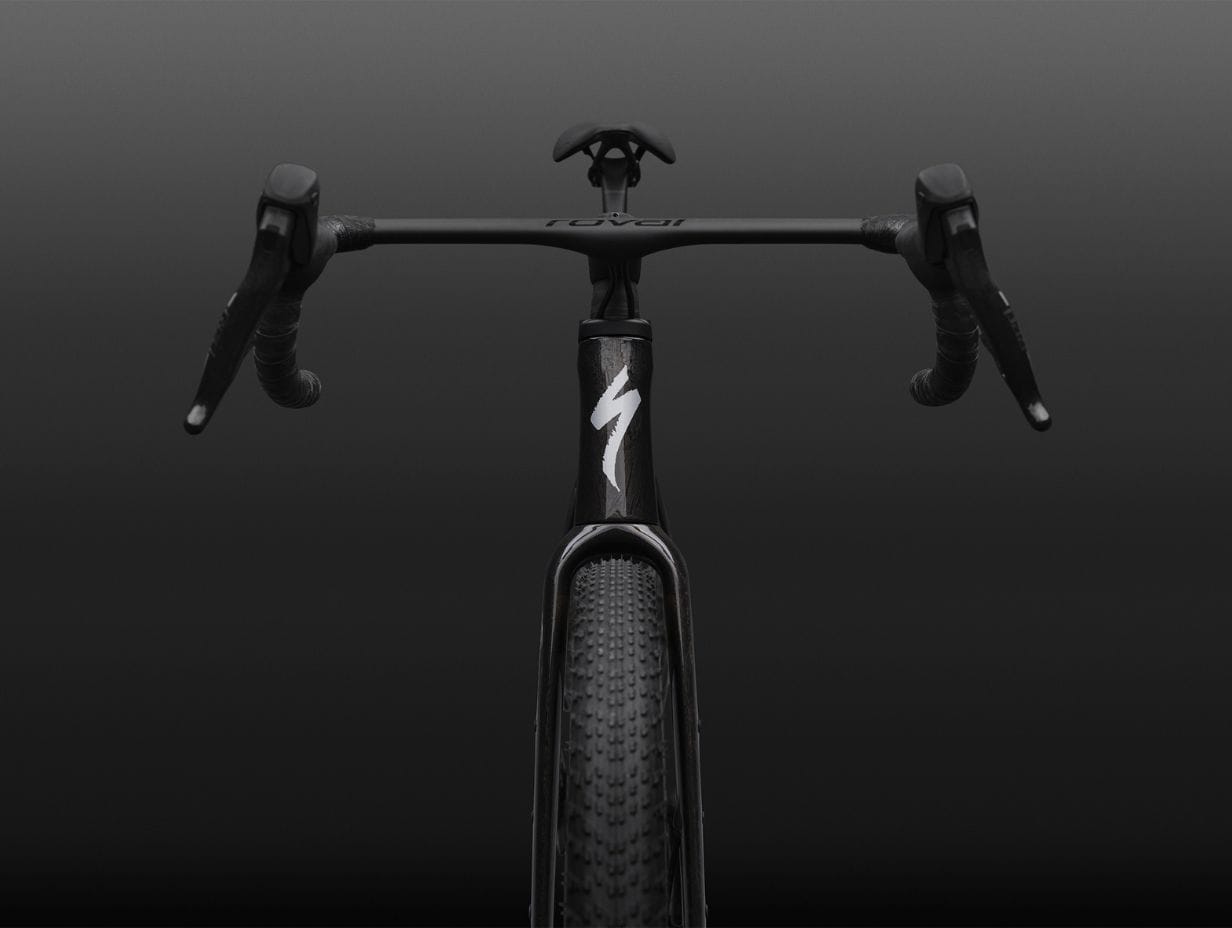
There is the integrated Deda x VR cockpit, developed in the wind tunnel with Swiss Side. A small practical detail that makes a difference: the “Ergo Drops” inserts in the bar, which add real comfort with hands in the drops. Aesthetically debatable, but devilishly effective.

On that topic, the finishing cover is not just clipped on but cleverly screwed in to keep it from moving over time. Well played, Van Rysel!

The RCR-F specific carbon seatpost is held with a fairly classic system. I did not notice any creaks or rattles like some owners encountered on the first models released a few months ago. Note the rigid finishing cover that does not move under load.

A competitive weight for a pure aero bike
At 7.3 kg (tubeless setup, size L), the RCR-F sits in the solid average of modern aerodynamic bikes. Granted, it is not a pure climber, but the weight-to-stiffness ratio lets you tackle rolling terrain without feeling like you are hauling an anvil.

Bottom bracket stiffness is pronounced without being “harsh” like a Specialized Venge or an older-generation BMC Timemachine could be. While aesthetically aero bikes resemble what we saw a few years ago, there is clearly a step up in ride behaviour compared with 2018-2020 machines.
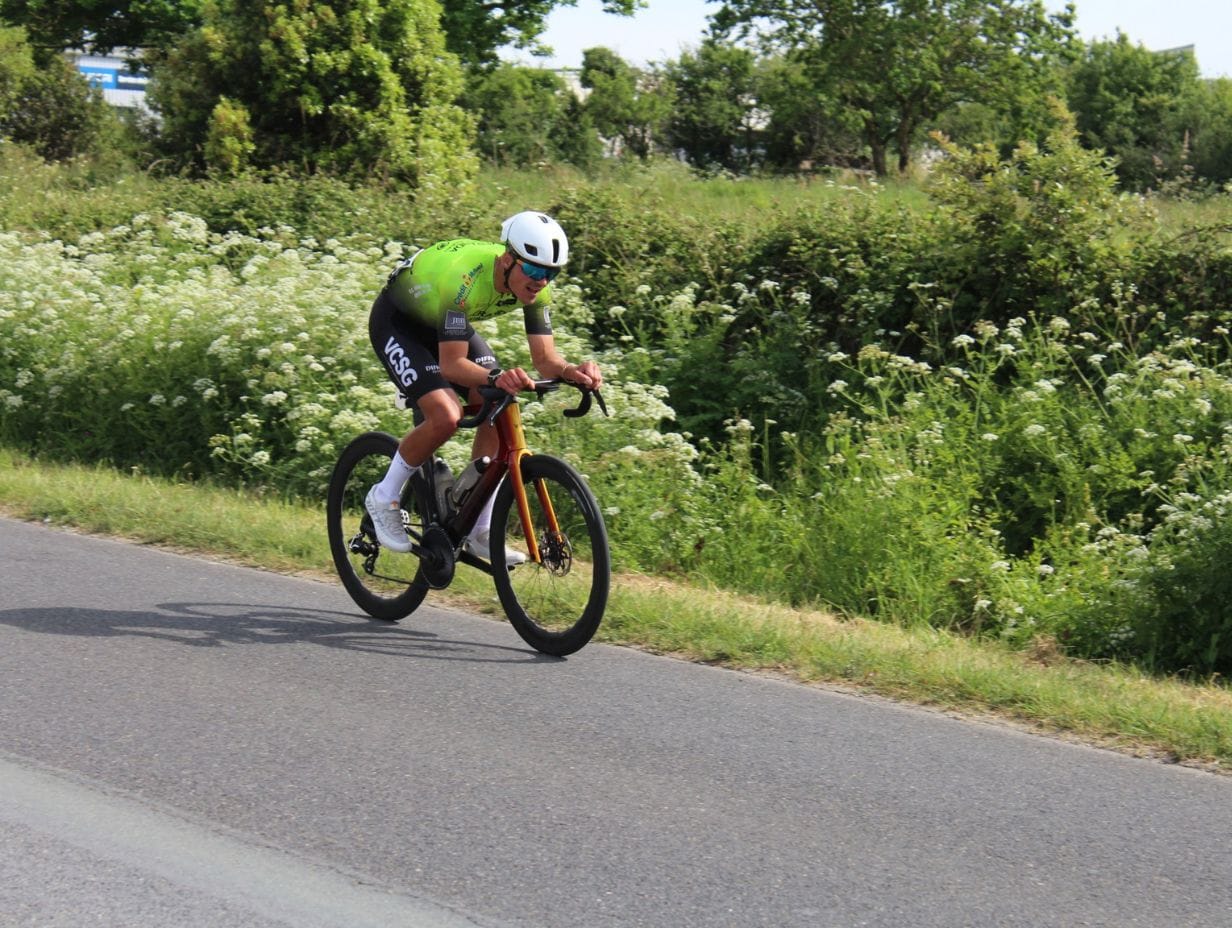
Compared with a Cube Litening or a Canyon Aeroad (the latest aero references I have ridden), you can feel a bit more firmness in the lower frame, but the front end is more forgiving and playful, which makes for enjoyable handling.

But be careful: with this lively front end, it also catches more wind. Riding mainly in a windy region with strong side gusts, I had to stay a bit more vigilant than on other aero bikes.

Fortunately, the Zipp 454 NSW wheels on this version bring excellent stability, notably thanks to the dual profile. Not the most explosive set off the line, but offering outstanding rolling quality once the bike is up to speed.

Low-speed accelerations are therefore relatively sluggish, while sharp attacks when you are already moving at a good clip are quite thrilling.
On-road behaviour: an accessible missile
As soon as you get the RCR-F rolling, the bike comes to life with impressive ease. The sensations are in line with the best aero bikes on the market. Hard to say whether it is faster than an S5 or an Aeroad, but the watts seem perfectly exploited and the high-speed surge is formidable.

It is not a “punitive” bike: as long as you have a minimum of fitness and a good cadence, you can fully enjoy its potential. At my level (FTP 349 watts for 74 kg), I never found it unmanageable, even though it is clearly not a Sunday-cruise bike.

Of course, if your average ride speed is below 30 km/h or you live in a mountainous area, it will be hard to take full advantage of this machine.

While its playground is obviously the flat, it is quite exhilarating on shallow false flats under 5%, especially the ones you hit with some speed, speed that the bike manages to carry, letting you keep motoring along.

In descents, the bike remains very manoeuvrable thanks to this rather surprising steering for an aero bike.
Of course on the steepest climbs where you want explosiveness and suppleness, this is not the RCR-F’s strong suit. That does not mean you cannot climb passes with it, far from it. But if you live in an area with plenty of climbs well over 8-10%, you will not get much enjoyment from this bike.

Comfort: decent for an aero
It is still a race bike. Comfort is not its strong point, but it is perfectly acceptable for the category. Tyre choice (here Continental GP5000 S TR in 28 mm, set up tubeless) and pressure will matter a lot.
On long rides, the fairly aggressive position meets WorldTour standards, without excess if you are used to modern frames. I have exactly the same stack as on my Cube Litening.

Except here, straight out of the box, the bike only comes with 2.5 cm of spacers, a plus in my opinion. That is a change from aero bikes shipped with 5, 6 or even 7 cm of spacers to compensate for too low a stack or to try to suit as many riders as possible!
No, this is a performance-oriented bike. If you are not ready for a relatively aggressive position, then do not consider riding this type of bike.

Special mention to the cockpit, pleasant even with hands on the tops, and offering several comfortable hand positions.
It is a pity, however, that Van Rysel did not think to design aero bottle cages and bottles to complete the package. A small detail I remedied with this well-made and affordable product.

Drivetrain: the single-ring choice
Our test version stands out with its 50-tooth SRAM Red AXS single chainring paired with a 10-36 cassette. An atypical choice on a World Tour road bike, but one that suits flat or rolling terrain.

In practice, it works very well as long as your rides do not exceed 1,200-1,500 m of elevation gain per 100 km. It is simple, efficient and decidedly elegant.
Of course, the double’s versatility remains unmatched if you regularly ride in the mountains. Personally, I have long been used to riding 1x, whether in gravel, on triathlon bikes or even on some road bikes. It is a personal choice and it will not suit everyone. I admit it.

That said, if you are going single-ring, I find the 50-tooth too small. Not in terms of maximum gearing, since a 50-10 is taller than a 54-11, but rather with the goal of keeping a clean chainline when cruising at 40 or 45 km/h.
In my view, a 52-tooth would be more appropriate, even if you obviously lose even more versatility.
I quickly added a 54-tooth ring, which let me keep a beautiful chainline and gain a real edge on slight downhill false flats in competition.
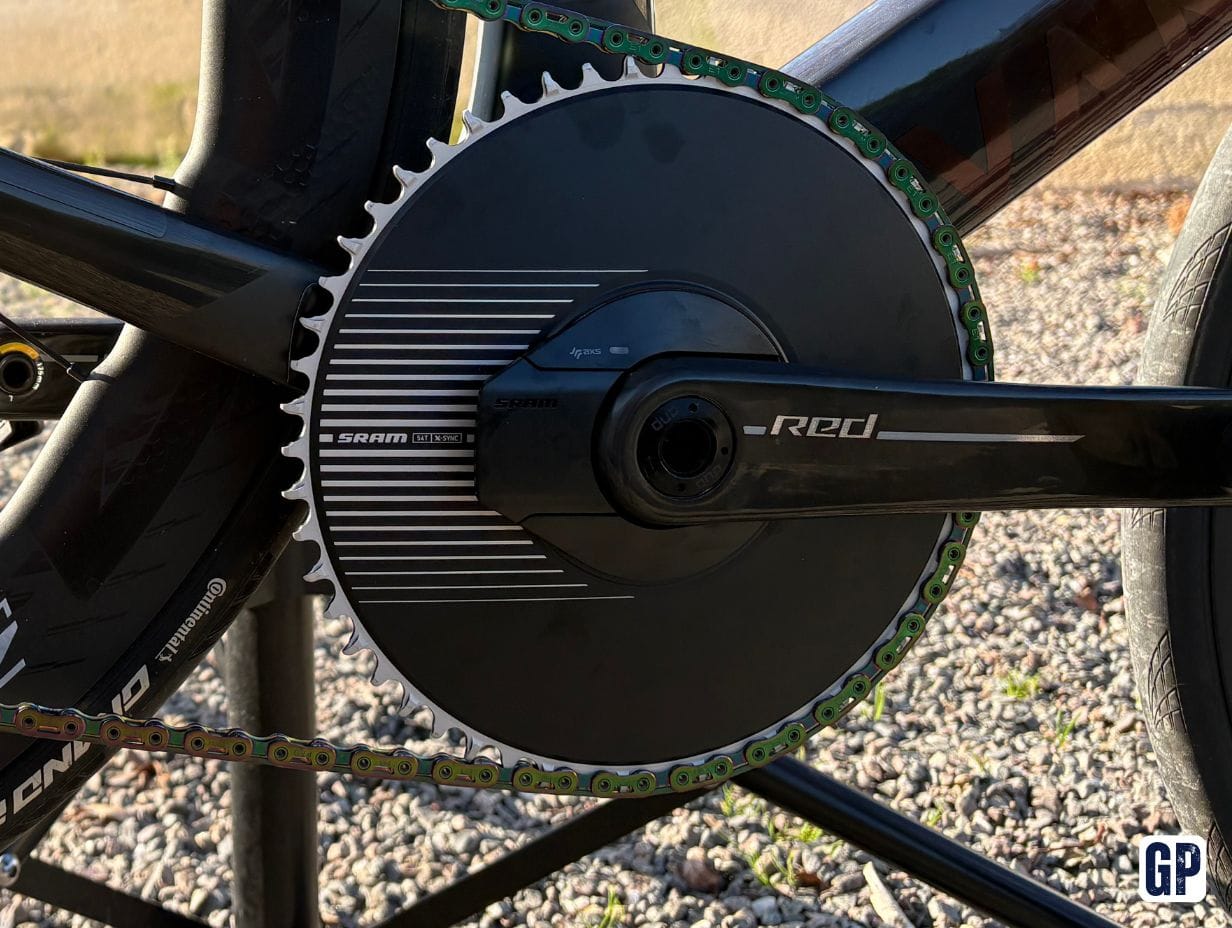
Paired with the 10-36 cassette, that is the ratio I recommend if you race on flat or barely rolling courses.

Hard not to mention SRAM’s misstep: the power meter is tied to the chainring!
As a result, if you want to change chainring, to alter your tooth count or simply because it is worn, you will have to replace the whole unit (power meter + chainring), at a cost close to 900 €.
Fortunately SRAM offers a replacement programme priced around 500 €. But I find that completely absurd.
Finally, you will notice that I added a chain catcher, even if chain drops seem quite rare with this SRAM drivetrain.

For the rest, nothing to fault on this SRAM groupset which has clearly, in my opinion, stepped up a level.
Braking still has its distinctive feel, but it performs far better than before, and the ergonomics have been beautifully reworked.
We now have the good fortune of two ultra high-end groupsets in SRAM RED and Shimano Dura-Ace that can really only be separated by personal feel and no longer by performance, so exceptional are both groups.

Wheels and components: top-tier
The RCR-F Inferno comes with Zipp 454 NSW tubeless: iconic, ultra high-performance wheels. Paired with GP5000 tyres, they form a combo that perfectly matches the bike’s DNA: ride fast, for long, without sacrificing comfort.

You might think this bike deserves even deeper wheels, but I ultimately believe this is the right compromise to keep good handling in strong winds and also some versatility on ramps over 6%.

The Fizik Argo Vento 00 saddle rounds out the build. A modern, short, performance-oriented choice that will suit most racers. I really liked the grippy cover that keeps you from sliding forward.
Who is this bike for?
The RCR-F PRO is clearly a bike for demanding riders: competitors, racers or speed lovers. It will give its full measure on flat or rolling courses, with few steep gradients but long fast sections.
It is not an “easy” bike in the sense that you have to ride it with rhythm, but it is not at all beyond a well-trained amateur.
Verdict
With the RCR-F PRO Inferno, Van Rysel confirms its entry into the big league. This bike has nothing left to envy in the benchmark aero models and even affords the luxury of offering an exclusive finish at a price more contained than the competition.
From 4500 € you get the same chassis as the professionals and a bike that is admittedly a touch heavy but ready to take on the most prestigious KOMs in your area.