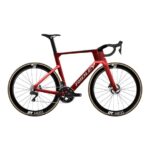


For several seasons now, Ridley has established itself as one of the major players in the aero bike segment. With the Noah Fast 3.0, the Belgian brand pushes this approach even further by developing a bike designed first and foremost for top-level racing.
Launched in 2025 and developed in collaboration with the Uno-X Mobility team, this model is among those machines engineered at the limits of UCI regulations. The goal is clear: maximize aerodynamic performance without totally sacrificing the versatility that has become essential in modern cycling.
Strengths:
- Impressive responsiveness and stiffness
- Surprisingly comfortable for an aero bike
- Excellent cockpit integration
- Tire clearance up to 34 mm
Could be better
- Narrow cockpit that will not suit everyone
- Poorly designed stock GPS mount
In this review, an important point needs clarifying. The bike tested comes straight from the professional environment: it is Jonas Abrahamsen’s bike. That entails some particular build choices, especially at the cockpit and certain components, which do not necessarily match a standard configuration. The analysis therefore focuses mainly on the frame’s behavior and the bike’s overall DNA.

On paper, there is little to fault. Clearance for tires up to 34 mm, a fully integrated cockpit, compatibility with the universal UDH hanger… The Noah Fast 3.0 ticks every box for a modern performance-oriented bike.
It remains to be seen whether those promises truly hold up on the road.
A radical yet coherent silhouette
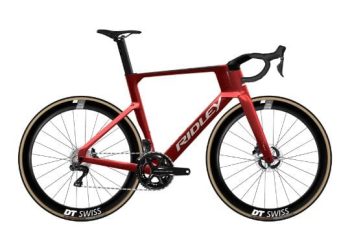
Ridley has clearly taken advantage of the new UCI rules allowing 8:1 tube profile ratios. In concrete terms, that results in very long, very voluminous sections at the fork, the down tube and the seatstays. Visually, the bike oozes aerodynamics.

The front end is particularly striking in photos. In reality, it ultimately appears less massive than some competitors, like the Van Rysel RCR-F we tested recently. The whole remains imposing, but rather well proportioned.
The cockpit’s integration directly into the head tube contributes greatly to this sense of harmony. Everything looks sculpted as a single piece.
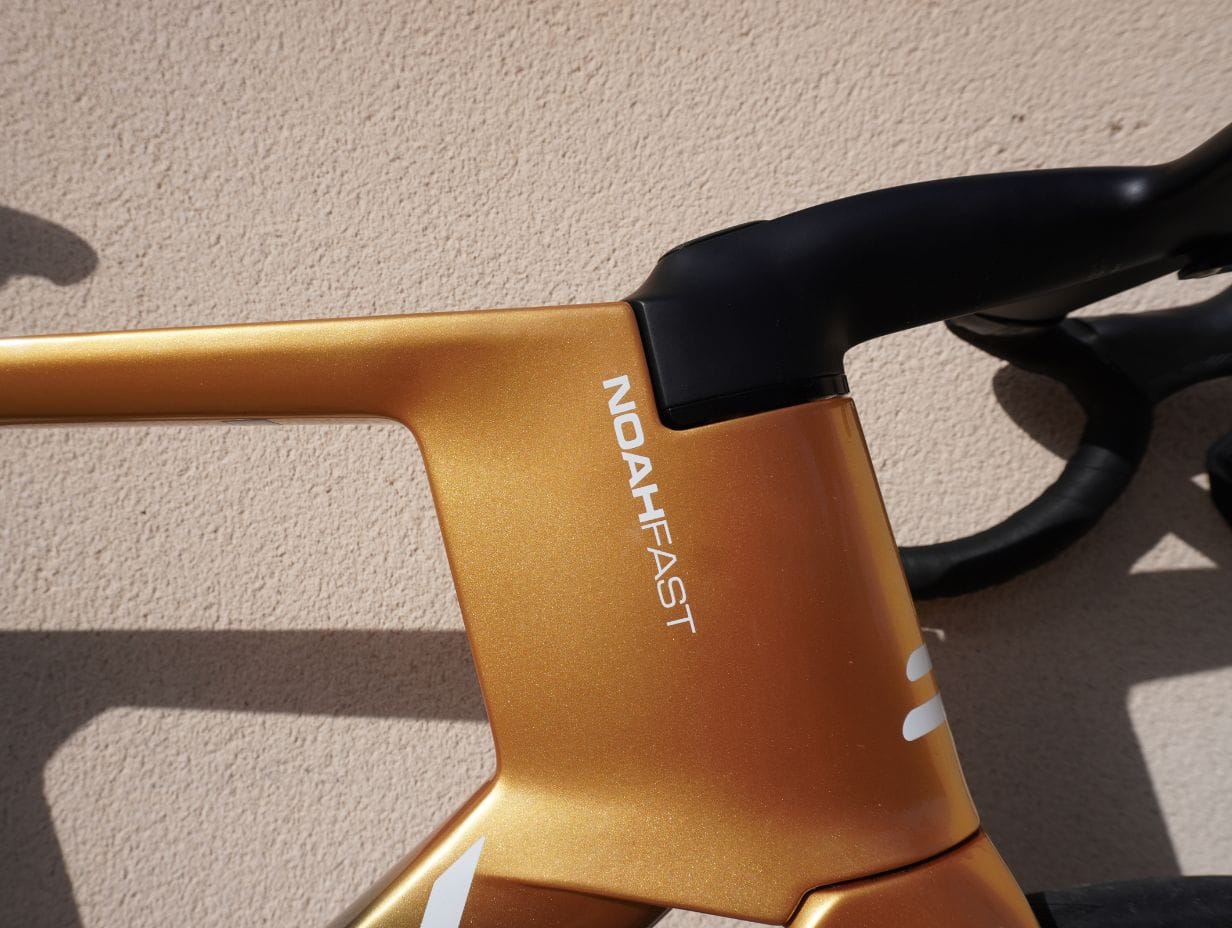
On the test bike’s colorway – a particularly deep golden yellow – the paint quality is outstanding, something Ridley generally does very well. The gray used on certain areas convinced me a bit less. On another version used by the Uno-X team, which includes more black, the whole looks more visually coherent and highlights the bike’s lines more.
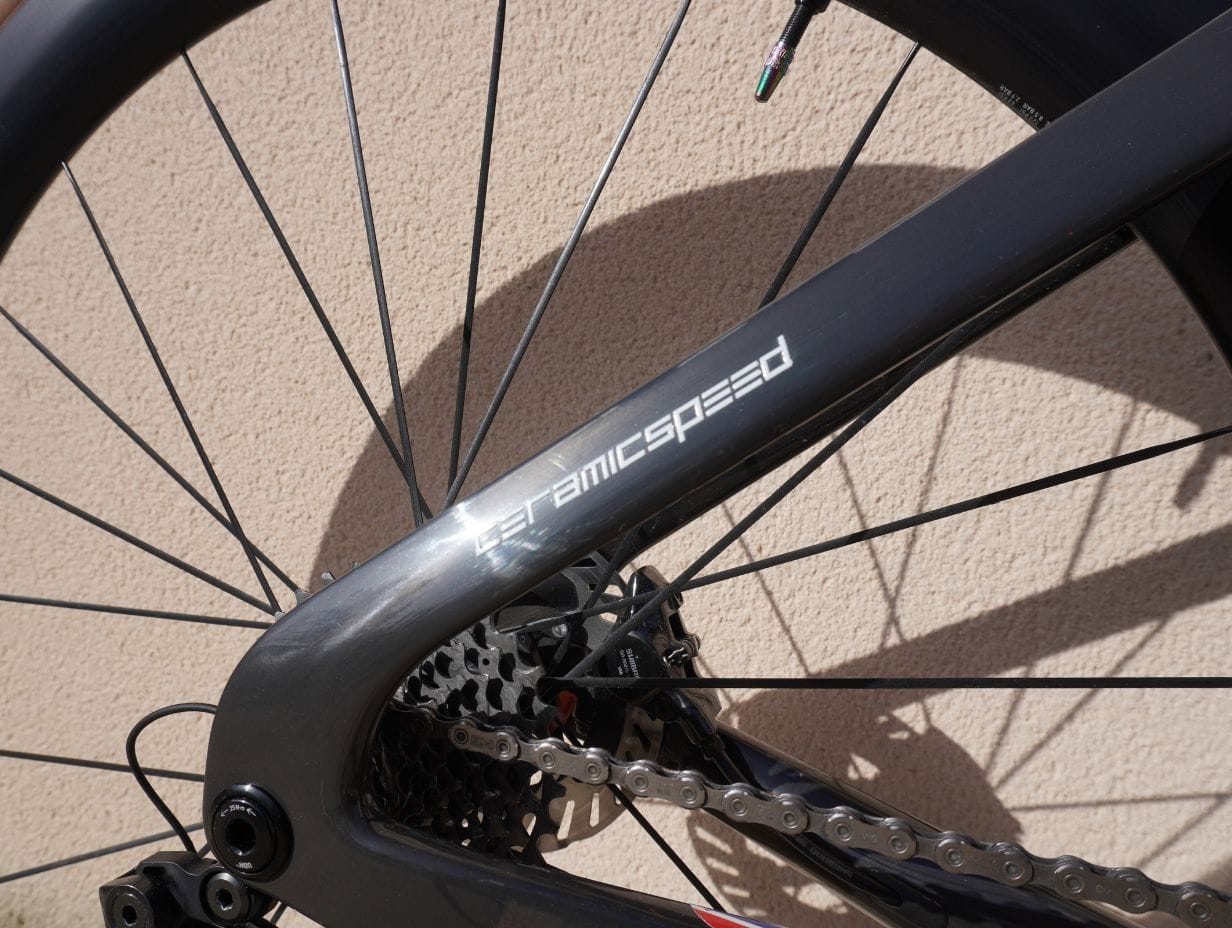
The overall style remains quite polarizing. Aero bikes never win unanimous approval, and this Noah Fast 3.0 is no exception. But if you like radical, performance-oriented machines, it has real presence.
A radical position... but surprisingly natural
The Nimbus Aero cockpit deserves special attention. On the test bike, the setup was extreme: 37 cm wide at the drops and only 26 cm at the tops, paired with a 130 mm stem.

It is very narrow. Clearly a configuration intended for professional use.
The stem has a positive angle to compensate for the frame’s very low stack. Despite that, the position remains aggressive, highly performance oriented.
And yet, this is probably one of the aero bikes on which I have felt the most naturally positioned.
I am about three centimeters taller than Jonas Abrahamsen, and the position proved perfectly usable for efforts under three hours. After several rides with this very narrow cockpit, I did not feel any particular pain.
Obviously, this position will not suit everyone. For riders who are less flexible or less accustomed to this kind of geometry, it will likely be necessary to tweak the setup with more spacers and a wider handlebar to regain a more forgiving position.

One detail is also worth mentioning: the Nimbus Aero cockpit is compatible with the new extension system Deda TT314, which clearly opens the door to use in triathlon or time trial.
However, not everything is perfect on the component side. The stock GPS mount is the cockpit’s weak point. It attaches with a single bolt and consists of two parts to manage the computer’s angle. In practice, this second part lacks stiffness and tends to slip.
By the way, the Uno-X Mobility team has already ditched this mount to use their own 3D-printed versions.
For my part, I cobbled together a solution with a Bontrager mount I had on hand. It works, but the setup is far from perfectly rigid and vibrations are very noticeable. We hope Ridley will quickly offer an improved version of this mount.
An aero bike... that rides almost like an all-rounder
Even before the first kilometers, I expected the typical behavior of a pure aero bike: a bike a bit heavy to get up to speed, sometimes slightly inert at low speed, but extremely fast once rolling.
The surprise was immediate.

From the very first pedal strokes, the Noah Fast 3.0 feels particularly reactive. The bottom bracket area is extremely stiff – really stiff – which can sometimes be felt at very low speed, but becomes a real asset as soon as you put power down.
The bike responds instantly. Accelerations are crisp and explosive.
To the point that I sometimes felt the snap of a WorldTour all-rounder, while retaining the aerodynamics of one of the fastest bikes in the peloton.

Once up to speed, aerodynamics obviously take over. The bike holds its speed easily and really gives that slicing-through-the-air sensation typical of the best aero bikes.
The front end is also extremely responsive. The very narrow cockpit further accentuates that feeling, especially out of the saddle where you naturally find yourself very far forward over the front of the bike. The result is a very playful, almost twitchy bike.
But the real surprise of the review concerns comfort.

Note: we are still talking about an aero bike used in the WorldTour. So do not expect the compliance of an endurance bike. But for a bike in this category, the Noah Fast does remarkably well.
I rode it exclusively with 28 mm tires, which suggests even more interesting behavior with wider sections. With clearance stated up to 34 mm, it is easy to imagine this bike on demanding courses like Paris-Roubaix.
It is a combination that rarely succeeds: a demanding bike that can still remain relatively comfortable.

Unlike some recent aero bikes that aim to become more accessible or versatile, the Noah Fast 3.0 fully embraces its performance orientation.
It is a bike designed for racers.
On climbs in particular, it demands fitness. Where some aero bikes can feel slightly more neutral or easier to push, this one requires the rider to be in shape.
But once that level of commitment is there, it becomes very rewarding and particularly effective.
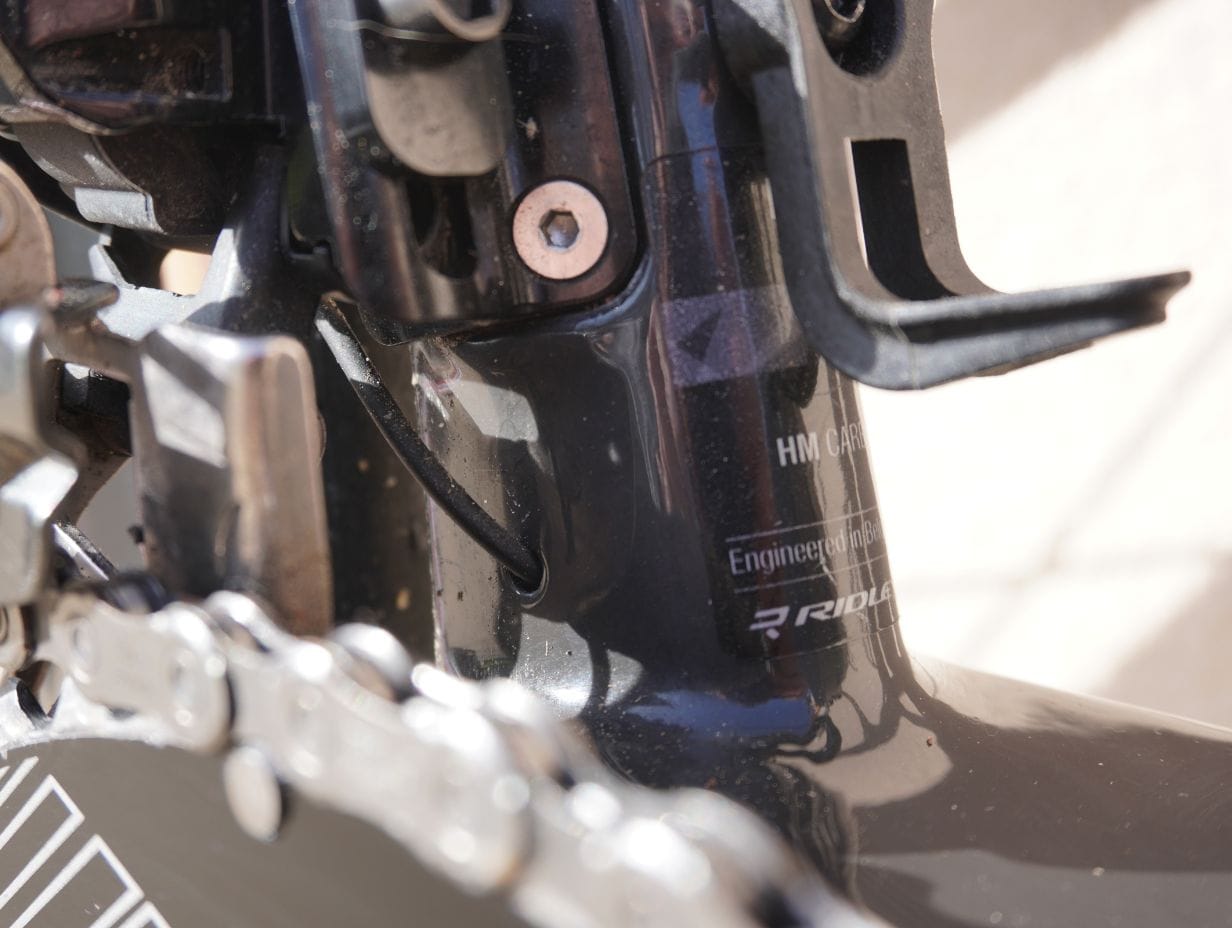
For riders looking for more versatility, the Ridley range offers a more accessible alternative with the Noah 3.0, while the Falcn remains one of the most interesting all-rounders in the catalog.
The Noah Fast 3.0, meanwhile, clearly takes an elite-focused approach.
A formidable machine... but not for everyone
With this Noah Fast 3.0, Ridley has created a bike clearly designed for competition.
It is not the lightest aero bike on the market. On our build, it weighs about 7.5 kg, which remains very respectable for this type of machine. Depending on the configuration, you can probably get it down around 7.2 to 7.3 kg.
But the real appeal of the Noah Fast is not there. This bike shines through its balance of stiffness, explosiveness and aerodynamic performance. A combination rarely mastered this well.
It remains demanding, however. If your riding boils down to easy spins or gran fondos ridden without a specific goal, there are probably more accessible aero bikes.
Conversely, for an elite racer, a triathlete or a rider who regularly trains at very high intensity, this Ridley can become a true weapon.
A spectacular bike, fearsomely efficient… but one that demands a rider to match.