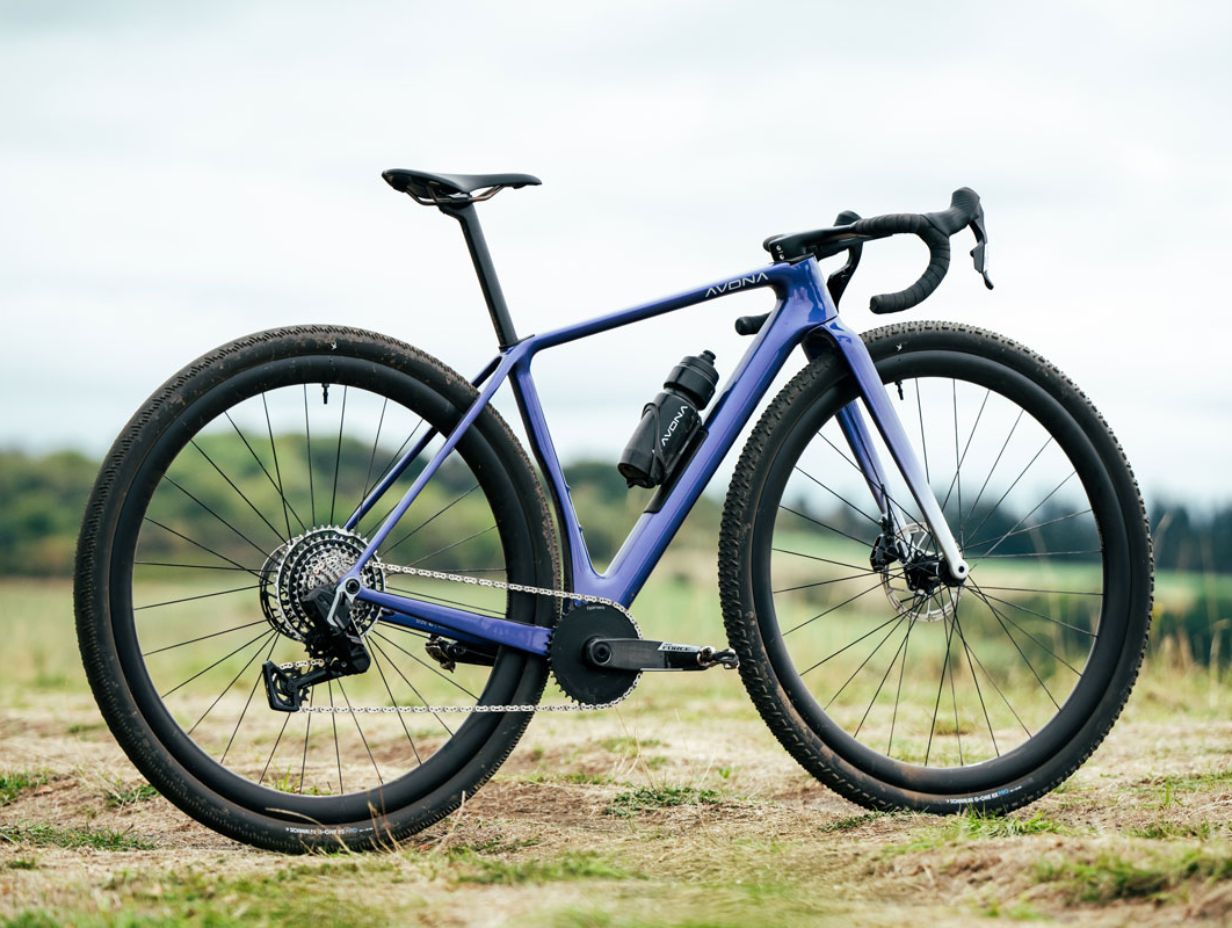
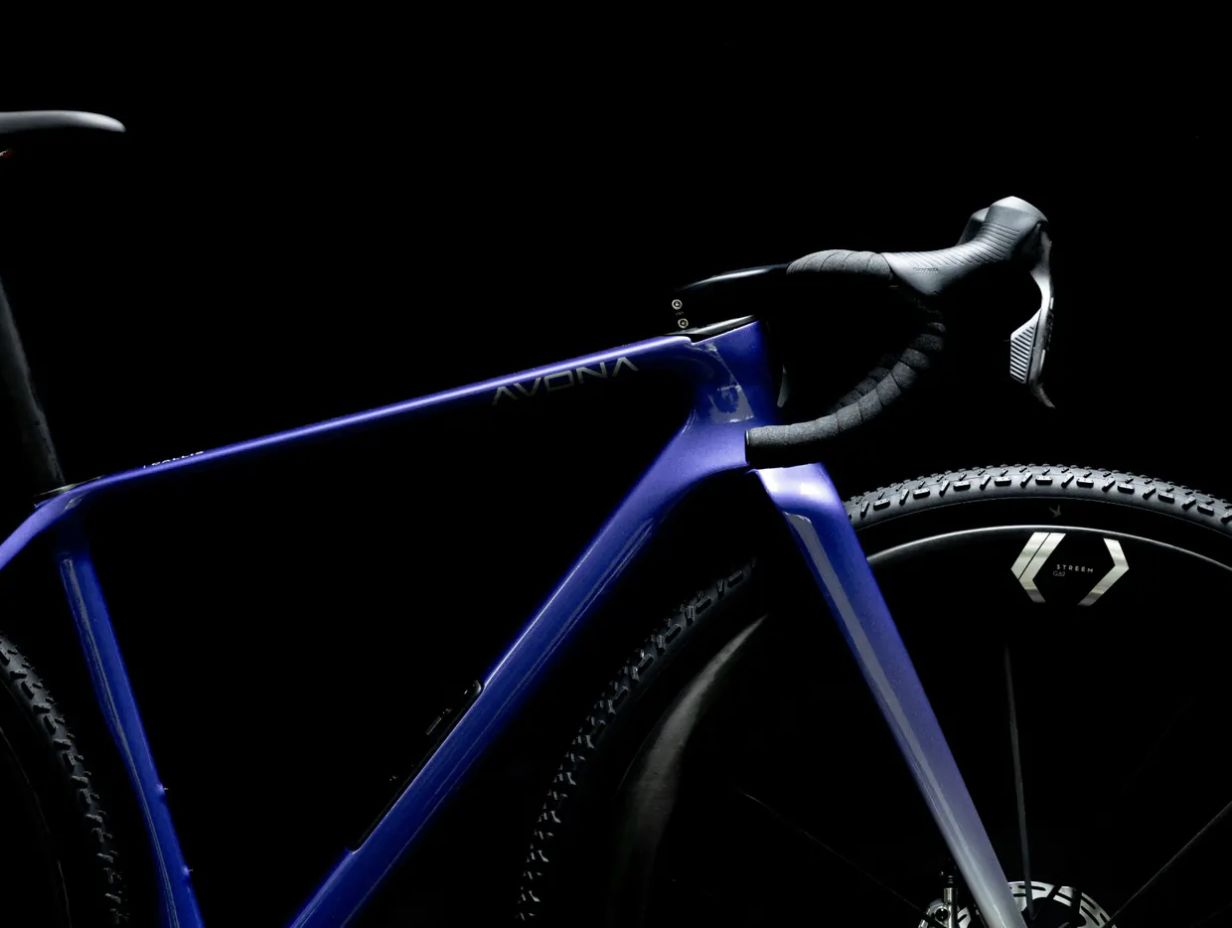
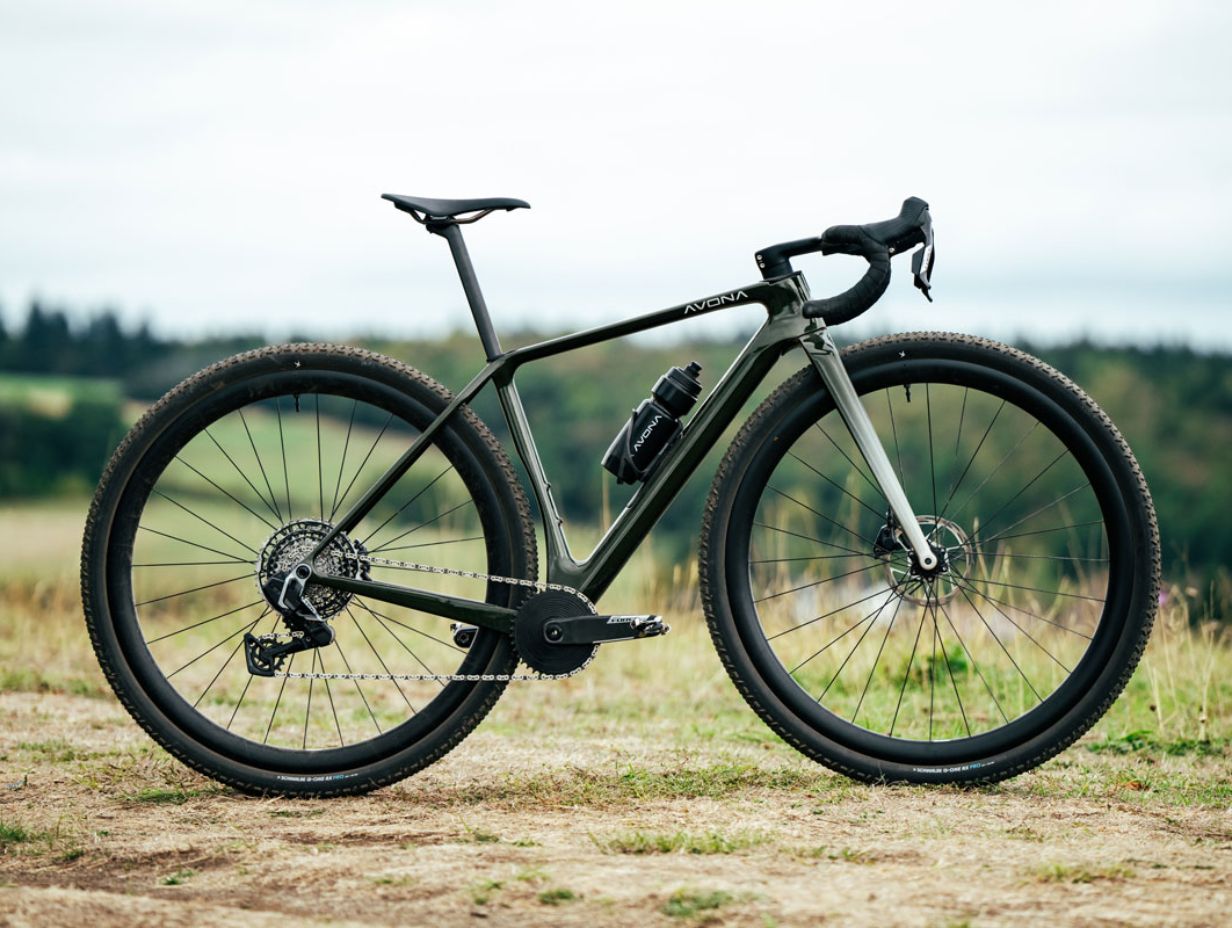
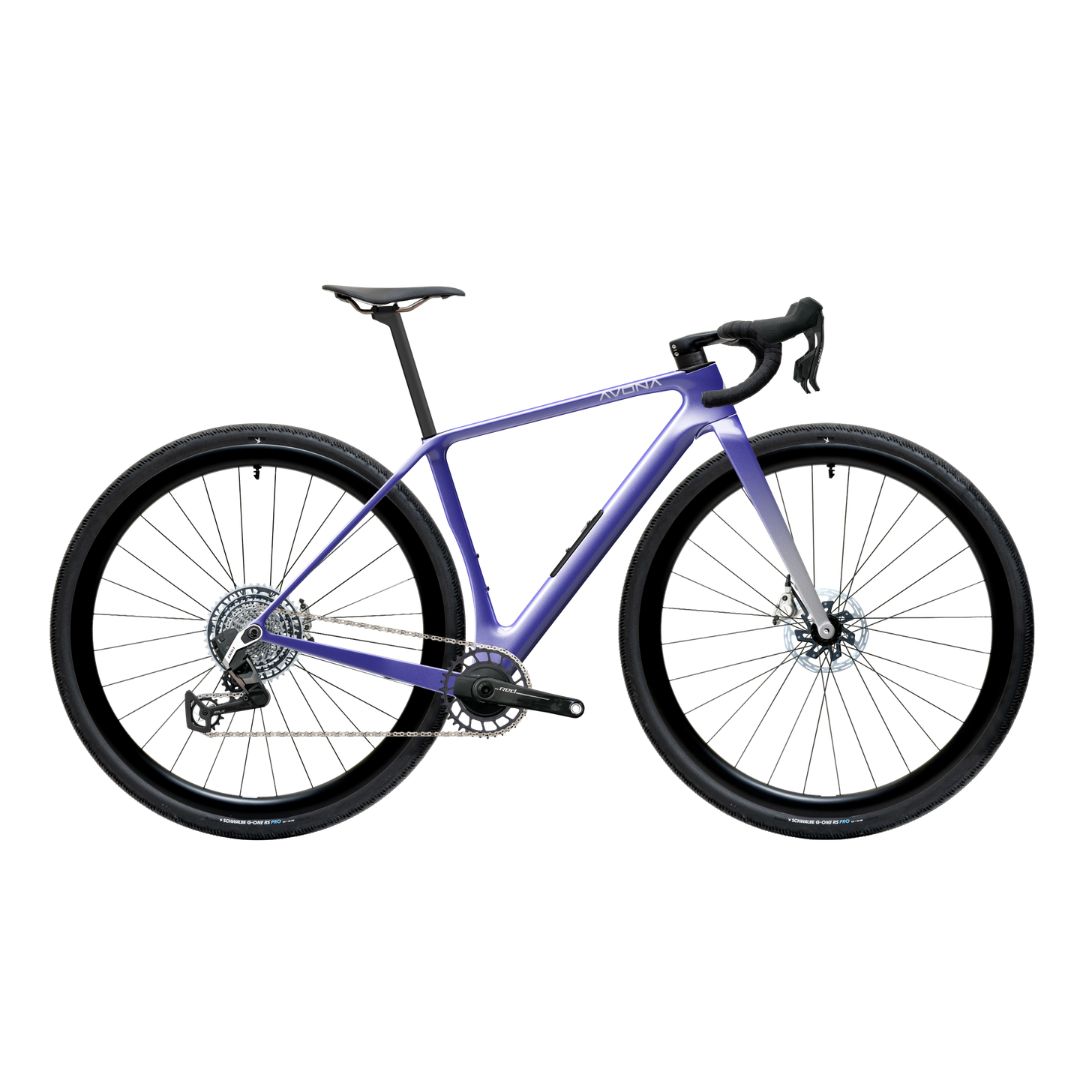
Avona is attempting a fairly rare move: releasing a production 32-inch gravel bike, not as a show-floor concept, but as a complete bike, specified, priced and designed to go fast.
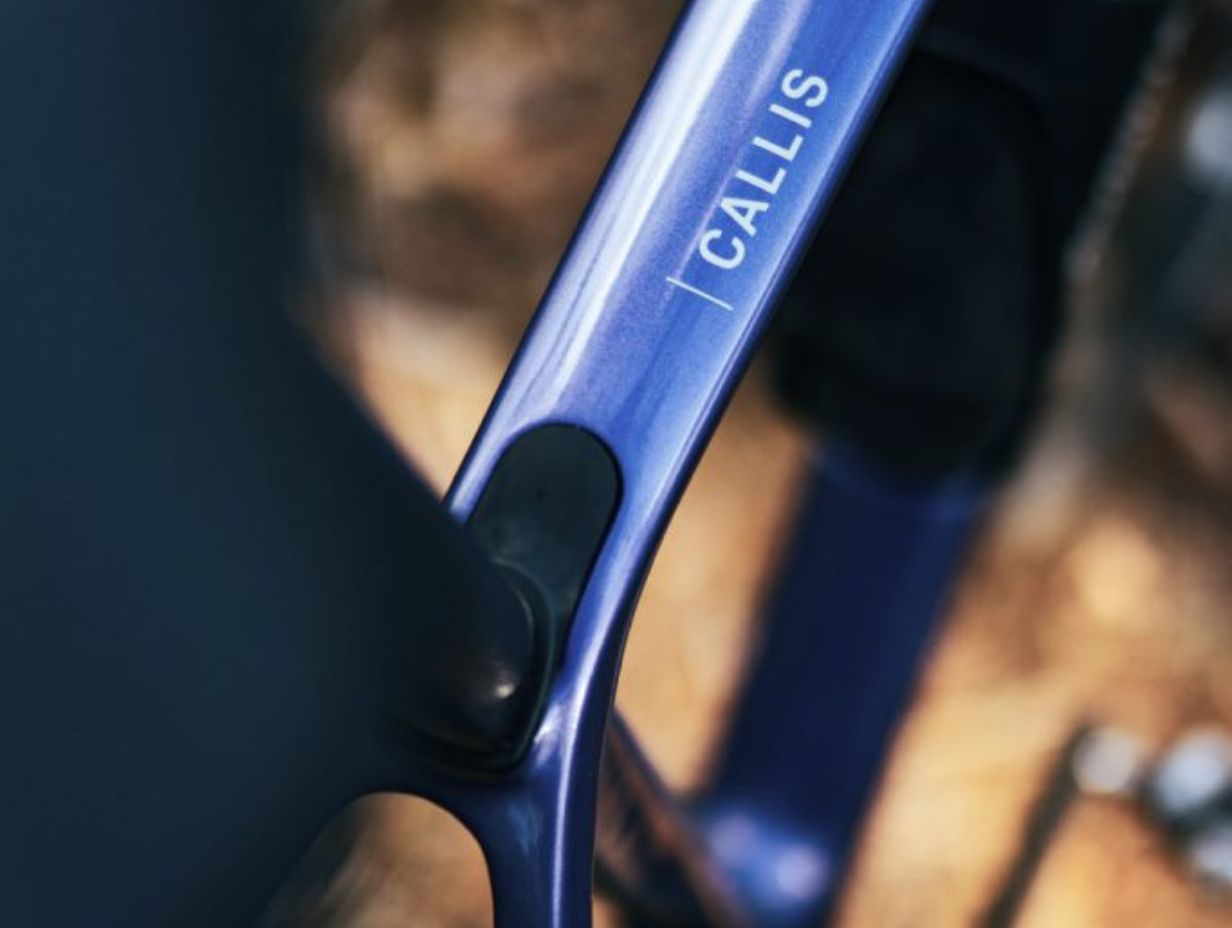
The model is called Callis 32. It takes the foundation of the modern performance gravel bike, but shifts the focus to a point still little explored in production: wheel diameter. The young brand puts forward a simple, almost blunt argument: on irregular terrain, a larger wheel can reduce losses linked to vibrations and surface deformation.
🚀 In brief:
Production 32-inch carbon gravel bike, focused on performance and efficiency
Avona claims up to 11.7 W saved at 35 km/h on bumpy gravel
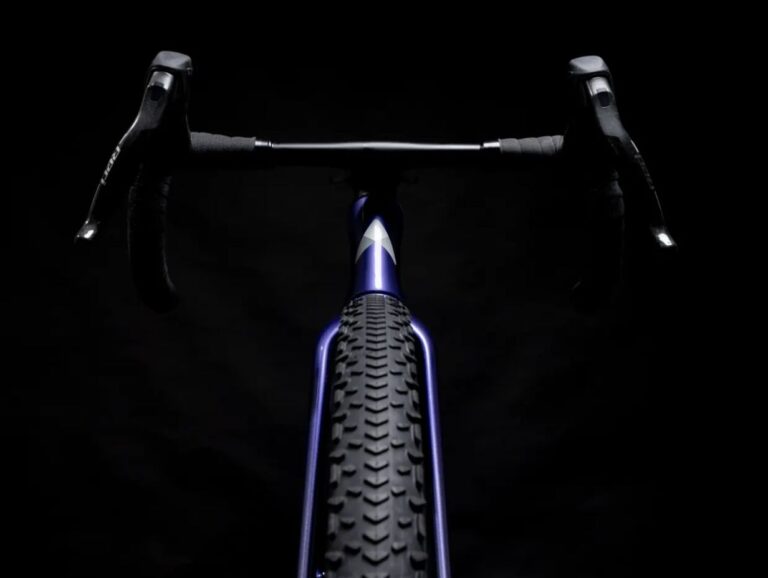
SRAM XPLR AXS 13-speed builds, Schwalbe G-One RS 50-686 tubeless tyres
This is not a throwaway claim. Avona says it measured, using the Virtual Elevation method, an 11.7 W gain at 35 km/h on a category 1 bumpy gravel track, for an 86 kg system. The brand even mentions a range of 8 to 16 W depending on terrain and tyres.
A 32-inch gravel bike, not just an upsized 700C
The real question with this kind of bike is not whether the number catches the eye. It does. The question is rather: does the design keep pace?
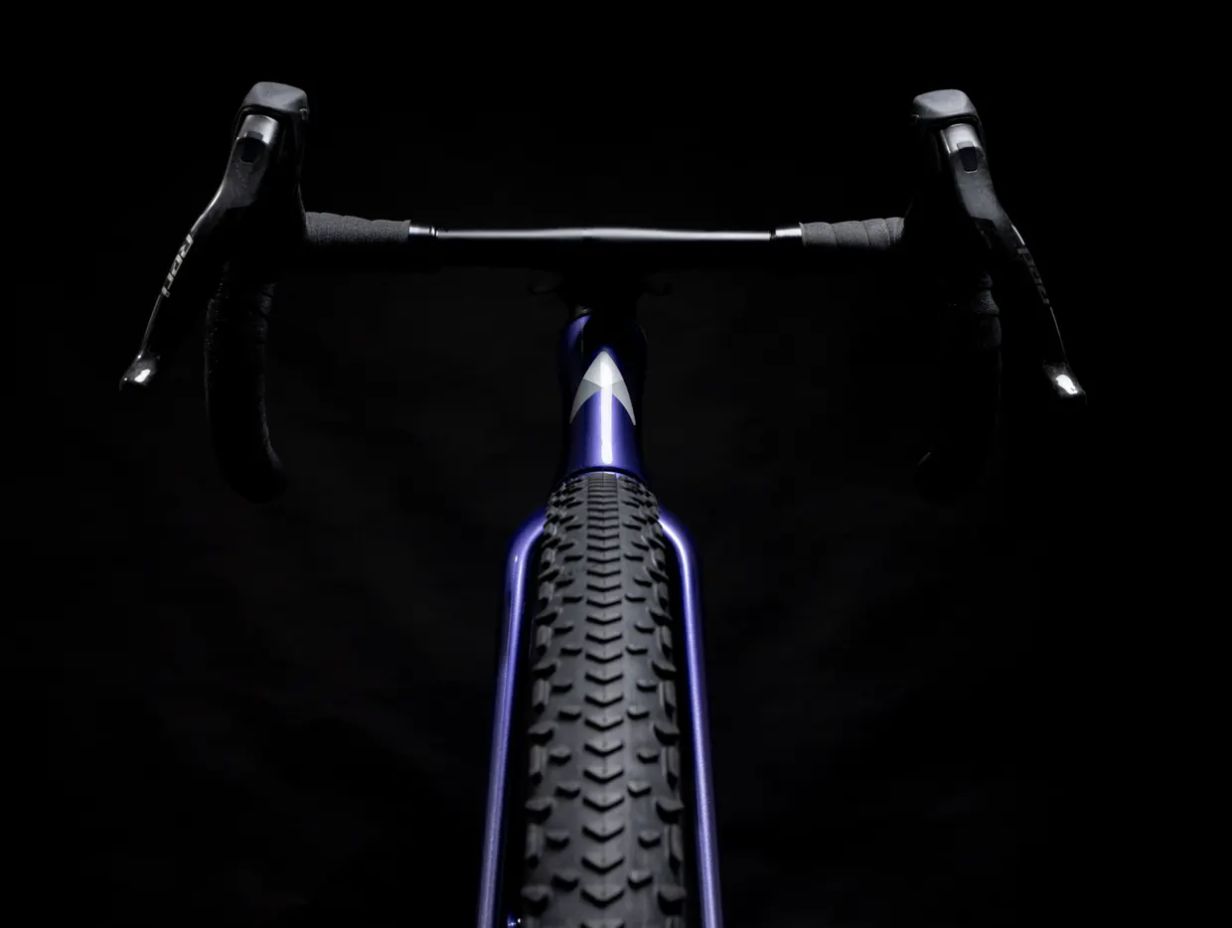
Avona built the Callis 32 around Schwalbe G-One RS tyres in 50-686, set up tubeless, with stated clearance up to 55 mm. The frame allows 6 mm of margin with 55 mm tyres, to be checked as always against the rim, the exact tyre model and muddy conditions.
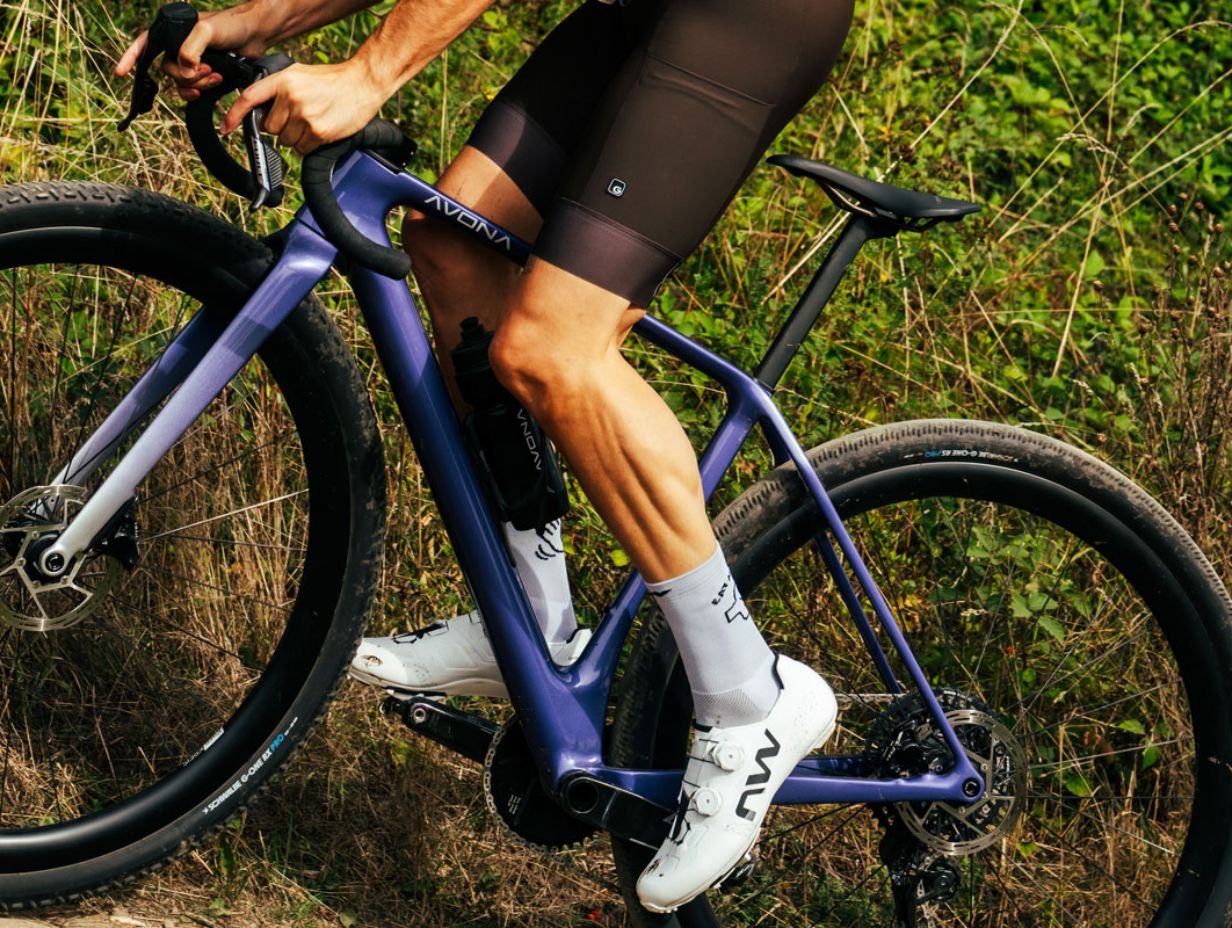
The 32-inch choice targets above all fast but imperfect surfaces: rolling gravel, farm tracks, packed paths, chattery sections where you lose a lot of energy as impacts travel up into the bike and body. It is not presented as a loaded adventure bike, but as a speed machine.
Why Avona is betting so much on wheel diameter
The brand’s technical argument rests on three sources of rolling resistance: the tyre’s internal losses, losses due to surface irregularities, and terrain deformation. The last two are where 32-inch makes the most sense.
A larger wheel approaches obstacles at a more favourable angle. Paired with a high-volume tyre and lower pressure, it can limit vertical accelerations, hence vibrations and some of the losses that drum tests do not really measure.
Avona does not just cite lab tests. The brand says it compared its configurations using a Virtual Elevation method, on an out-and-back course. This type of measurement remains sensitive to protocol, wind, position and repeatability. But it has one advantage: it aims to measure the bike outdoors, not just the tyre on a drum.
Avona’s Unbound 200 comparison should be read as an illustration, not a prediction. The brand indicates that the measured gap would represent around 463 m of elevation gain in energy equivalent over that distance. The number is striking, but it obviously depends on the actual surface, pace and equipment.
A light frame despite the unusual format
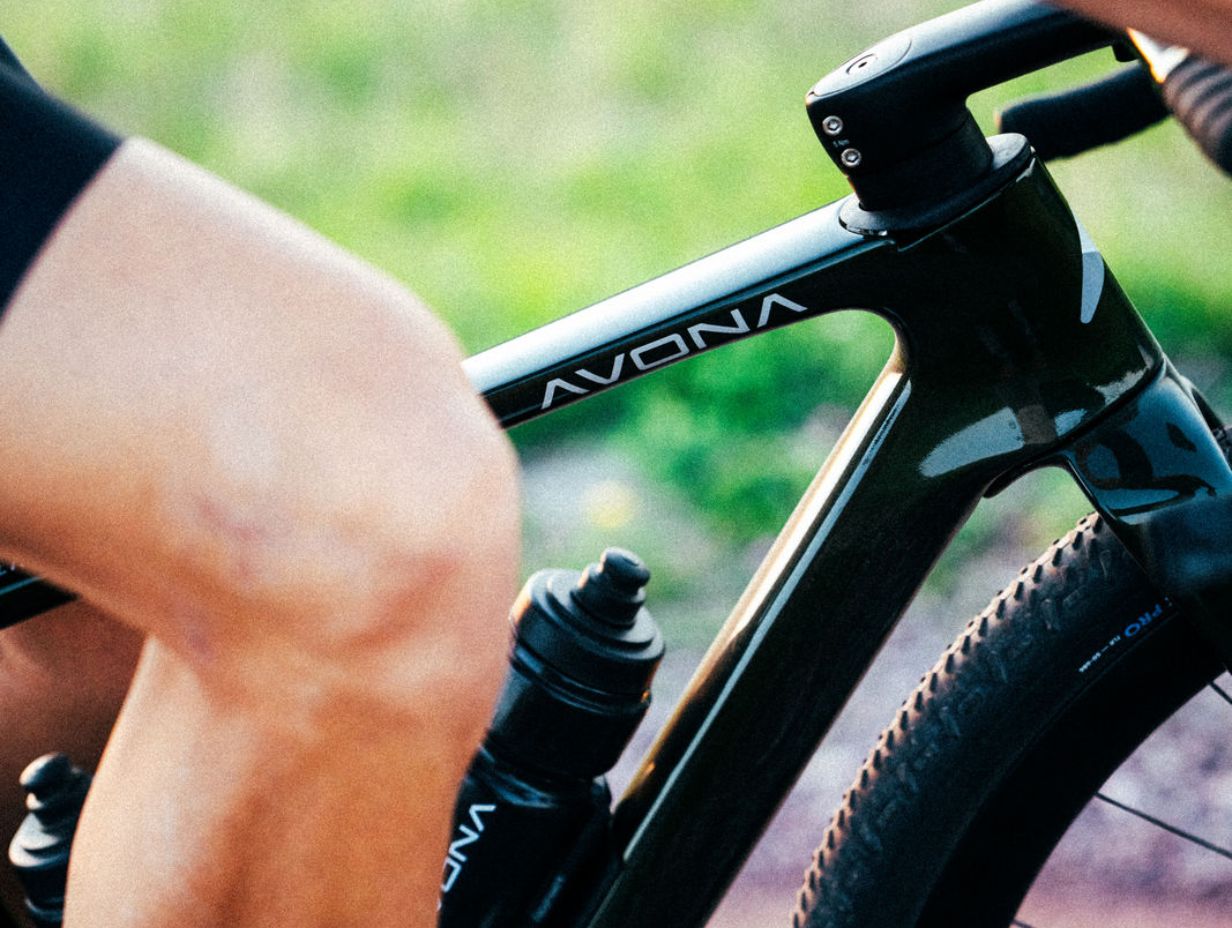
The Callis 32 quotes the frame at 898 g in size M painted, with a fork at 409 g painted. The complete bike is quoted from 7.78 kg, which places the project firmly in the performance camp, not in the realm of a heavy prototype propped up by an exotic argument.
The chosen standards are very clear-cut: Boost hubs at 12×148 mm rear and 12×110 mm front, UDH hanger, BSA 68 mm bottom bracket, flat-mount brakes with 160 mm rotors, with the option to go 180 mm via an adapter.
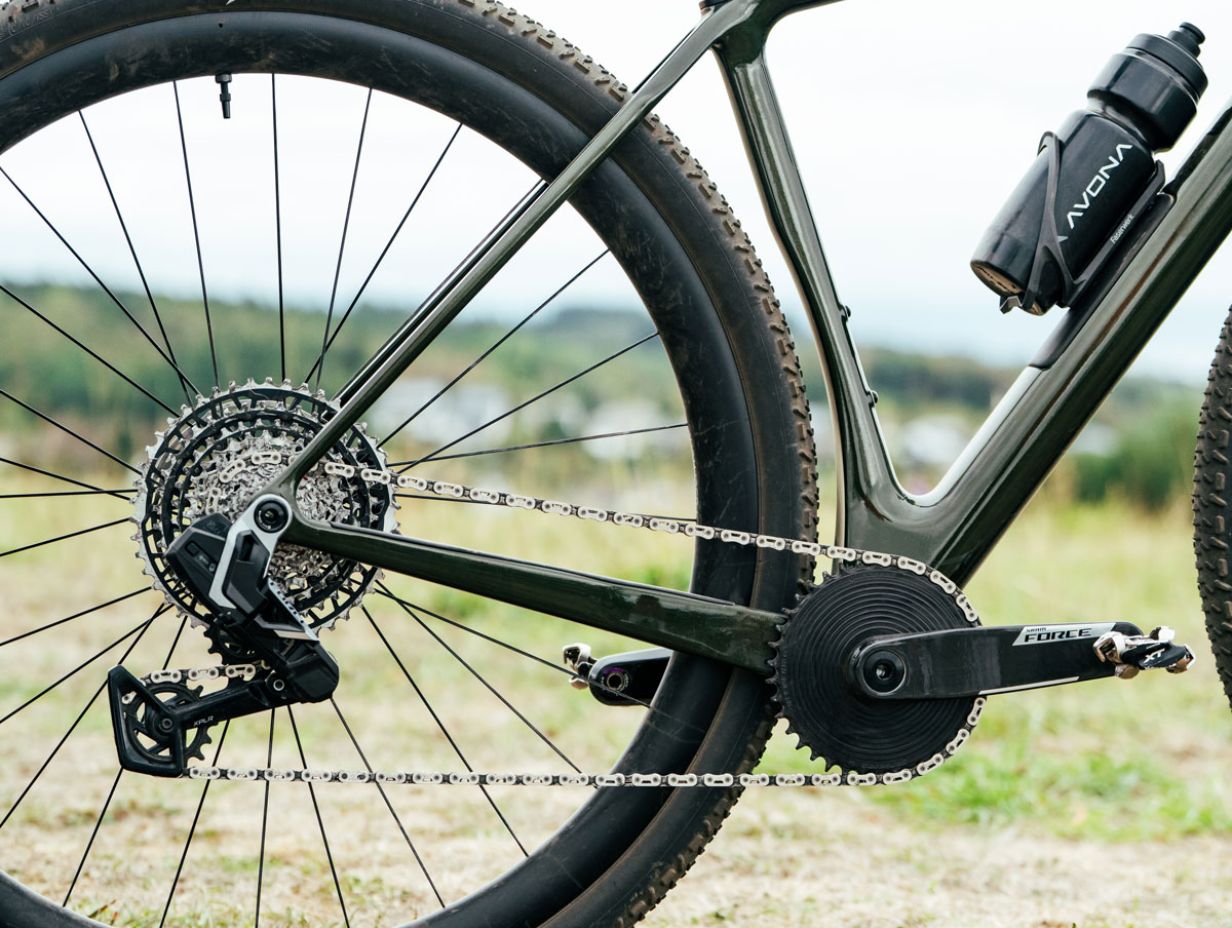
Avona also limits the frame to 1x only, with compatibility up to 50 teeth and a 50 mm chainline. It is coherent with fast gravel use, but it shuts the door on some more traditional builds.
High-spec builds right from the entry level
The range is built around three complete bikes and a frameset. The entry price for a complete bike is quoted at €5,799 with SRAM Rival XPLR AXS 13-speed. The Force XPLR AXS version goes to €6,599, while the Red XPLR AXS build reaches €8,999. The frameset is listed at €3,599.
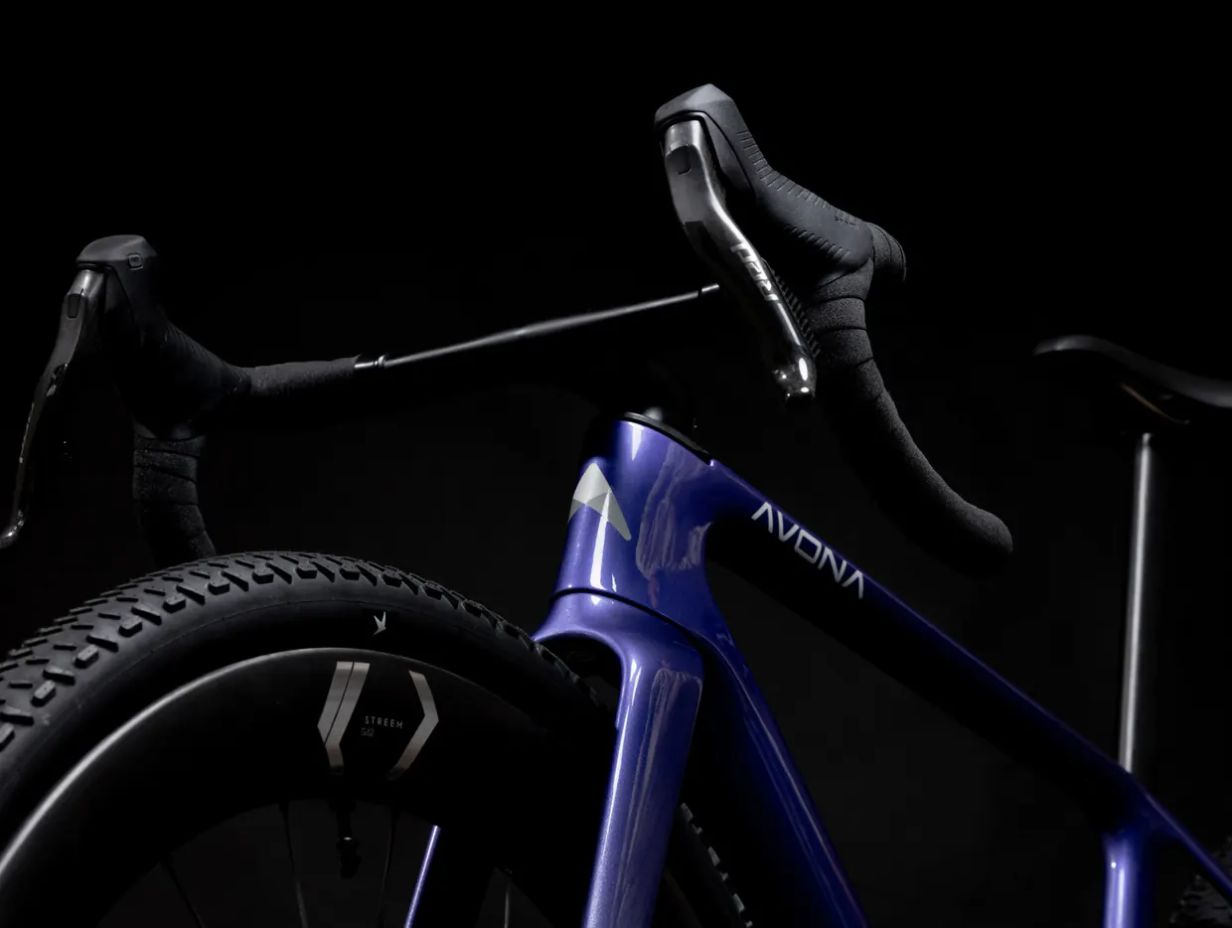
At these prices, Avona is not in the broadly affordable bracket. But the positioning remains fairly coherent given the project: specific carbon frame, Faserwerk Kornkreis 42 mm wheels, 32-inch tubeless tyres, CeramicSpeed UFO-treated chains, wireless electronic drivetrain and components chosen with an eye to efficiency.
One detail matters: the Callis 32 is only compatible with wireless drivetrains. No mechanical shifting. It is not an oversight, it is a design choice.
Geometry: three sizes and an adjustable position
The Callis 32 comes in M, L and XL. Avona states compatibility from 165 cm depending on position preferences, with a clear recommendation: get a bike fit, especially if you are aiming for a forward position.
The geometry blends stability with a focus on efficiency: 70° head angle, 440 mm chainstays, wheelbase from 1050 to 1078 mm depending on size, stack from 578 to 618 mm and reach from 391 to 405 mm. The bottom bracket drops significantly, with 112 mm of drop, which should help keep the centre of gravity low despite the large wheel diameter.
The Faserwerk Wuthocker Aero seatpost comes in three offsets: 0, 15 or 30 mm. Avona uses this variation to offer three effective positions, from a more classic perch to a more forward position. It is a smart approach, but it requires choosing well from the outset. On a bike this specific, fit is not a late-order detail.
What the Callis 32 also entails
The 32-inch format brings real technical interest, but it imposes a narrower ecosystem. Tyre choice will inevitably be more limited than with 700C. The wheels and Boost standards also make the bike less straightforward to customise with parts already in the workshop.
Another concrete point: the Callis 32 is not compatible with mudguards. That limitation is not dramatic for a race-focused gravel bike, but it does confirm its positioning. This is not the bike you buy to do everything all year round, wet commuting included.
The maximum system weight is set at 130 kg, bike, rider, equipment and luggage included. The integration of in-frame storage is welcome, especially as the space around a large main triangle and big wheels can quickly become an issue depending on sizes and bags.
Our view on this 32-inch gamble
The Callis 32 is interesting because it does not try to sell 32-inch as a visual gimmick. Avona builds a complete line of reasoning: efficiency on irregular terrain, high-volume tyres, careful aerodynamics, modern drivetrain, tubeless setup, adapted wheels.
There is, however, a fundamental caveat: this bike asks you to accept a still-young standard. For a rider who likes to change tyres often, reuse existing wheels, fit a mechanical groupset or install mudguards, the Callis 32 may feel closed off.
For a rider focused on fast gravel, racing, long rolling tracks and optimising efficiency, the project has something very serious about it. Not because 32-inch would automatically be superior everywhere. Rather because Avona had the courage to see its idea through, with a production product and an already structured range.
The most interesting thing now will be to see whether real-world riding confirms the numbers. The Callis 32 does not just ask to be looked at; it asks to be timed.





Reviews
There are no reviews yet.