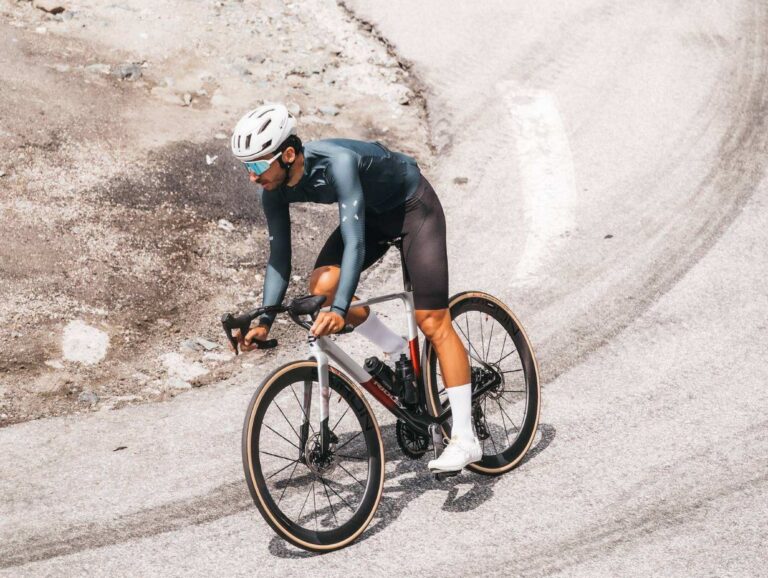
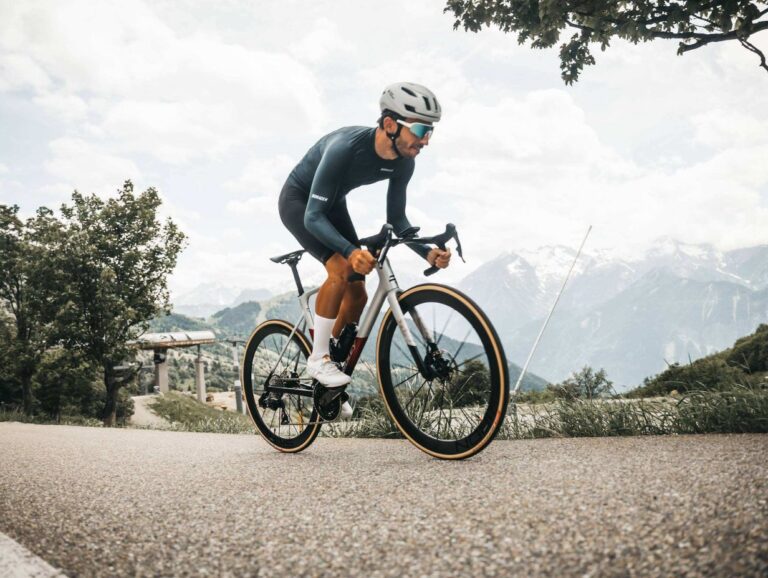
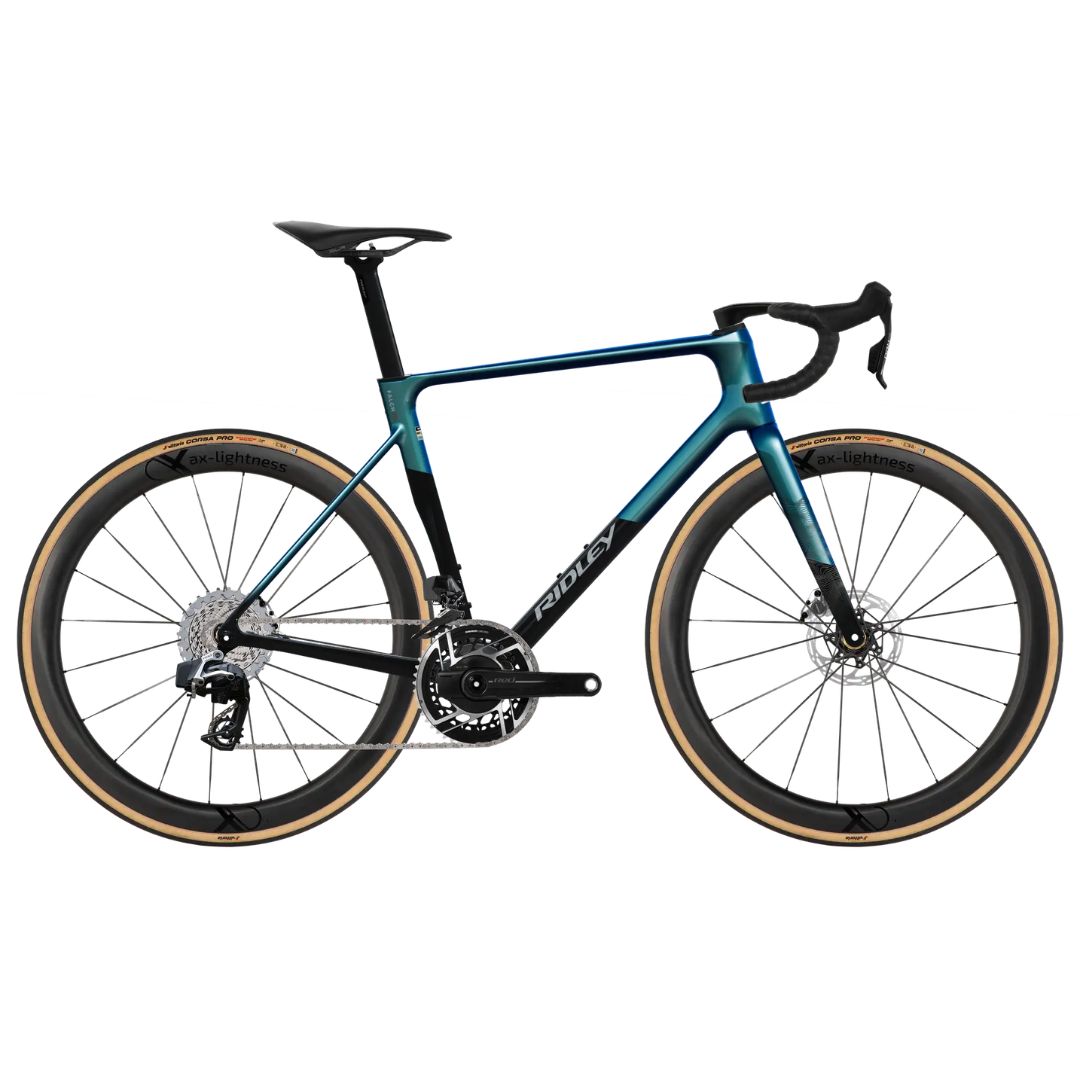
The Ridley FALCN RS enters a new generation, and the direction is clear: less weight, still chasing aero gains, and a modern geometry shaped by top-level feedback. The Belgian brand presents the FALCN RS 2.0 as its aero-to-weight bike – very light and a capable climber – without abandoning what defines Ridley’s recent road identity: speed-focused profiles, integration, and a real link to racing.
The number that immediately grabs attention is the frame: a quoted 705 g in size M. Ridley also claims a 12% reduction across frame, fork and seatpost compared with the first generation. Even the complete builds stay very low: 6.2 kg with SRAM Red AXS, 6.65 kg with SRAM Force AXS and 6.8 kg with Shimano Ultegra Di2.
🚀 In brief:
Frame quoted at 705 g in size M
Complete weights from 6.2 to 6.8 kg depending on build
Tyre clearance up to 35 mm
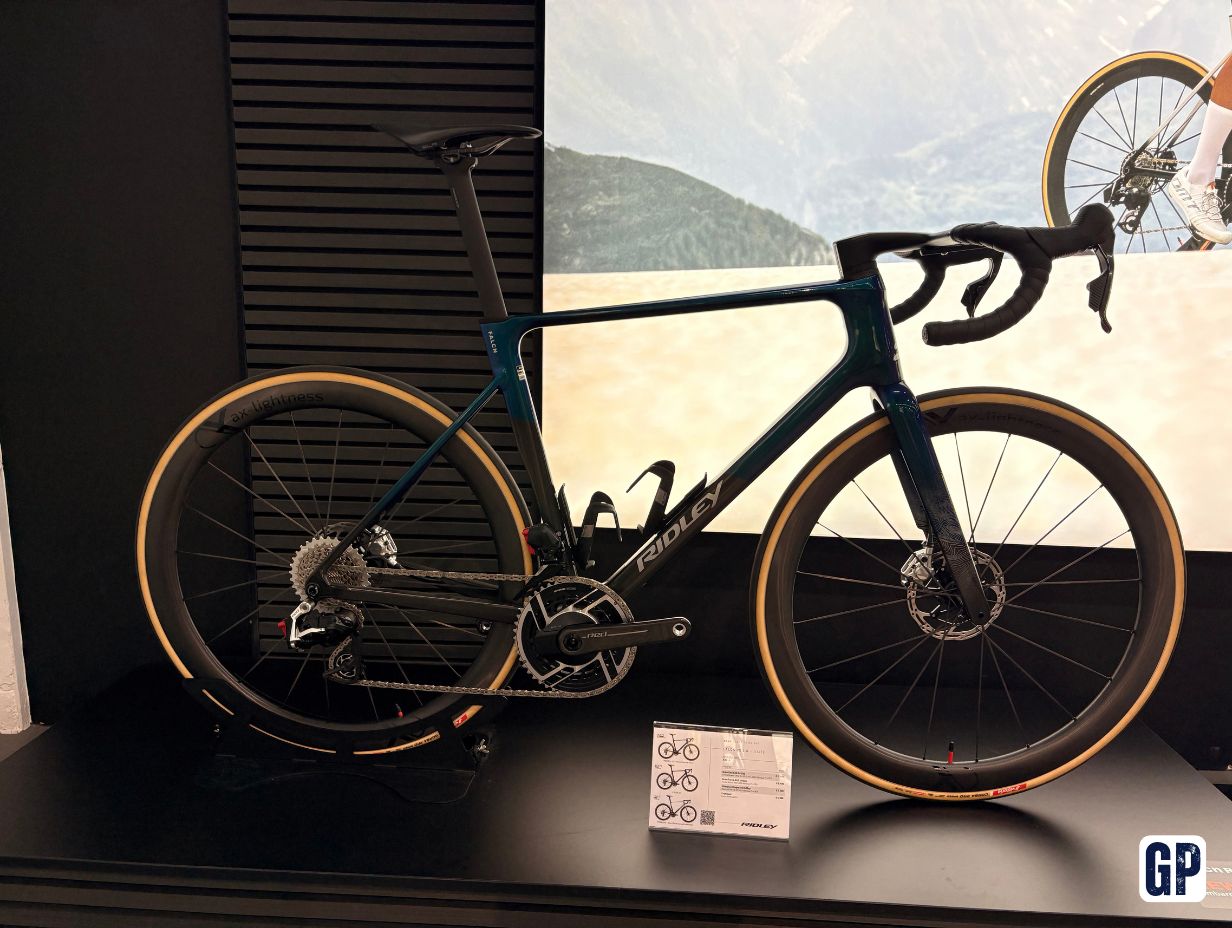
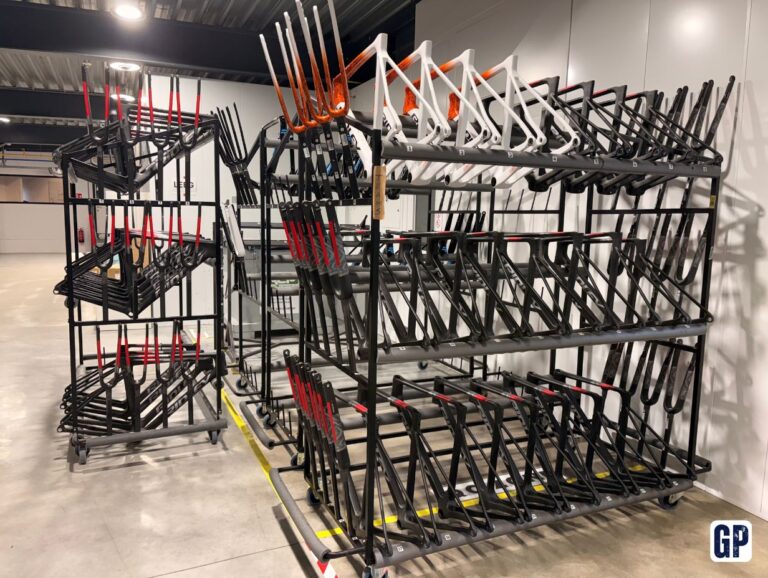
I saw this bike at Ridley. Not a ride test, but the first impression is strong: the bike looks very clean and taut, with a finish that sets the tone straight away. We’re far from a simple cosmetic update.
A genuinely lighter FALCN RS, not just a name change
Ridley insists on one point: this FALCN RS 2.0 is not a minor evolution of the first model. The frame has been redesigned, with extensive work on the carbon layup. The idea is not just to pick a lighter fibre, but to rethink overlap zones, wall thicknesses and volumes to remove material where it isn’t needed.
One example given by Ridley concerns the hollow rear brake mounts. The carbon remains where it is structural, but superfluous material is removed. It’s exactly the kind of detail you don’t always notice on a spec sheet, but which contributes to the end result when you’re trying to shave grams everywhere.
The most interesting part is that Ridley does not position this bike as a pure climber. Lateral stiffness is said to be at the level of a race aero bike, with the aim of keeping snappy accelerations and direct power transfer. In this respect, the FALCN RS 2.0 sits in the same family of ideas as the Ridley Noah Fast 3.0, but with a stronger focus on weight.
Aero stays in the equation
Ridley could have gone ultra-light by simplifying the tube shapes. It chose otherwise. The FALCN RS 2.0 keeps profiled tubes, with smoother transitions between the different parts of the frame. The stated goal: remove material without increasing aerodynamic drag.
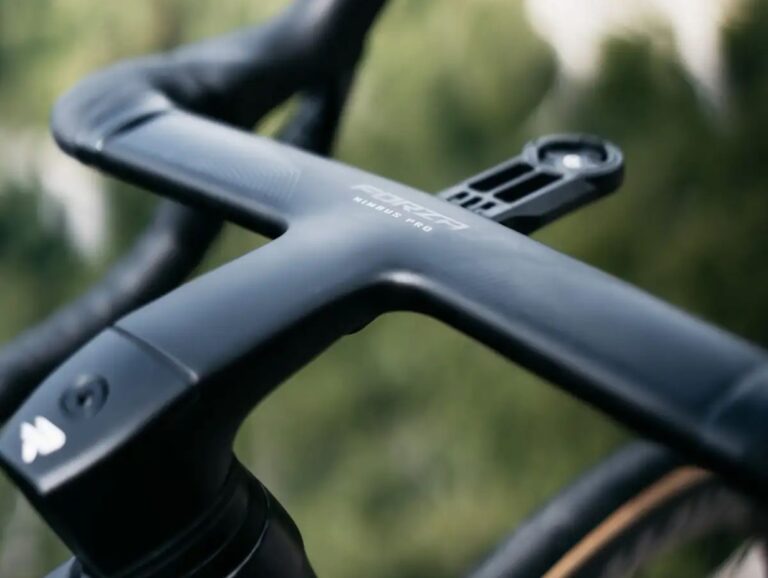
The seatpost has also been slimmed down, while keeping an aero shape. The Nimbus Pro cockpit should help you hold a more efficient position, and the Forza Skiron RSR wheelset was developed in the wind tunnel to balance speed, stiffness and low weight.
We should keep some perspective: Ridley does not communicate any wattage gains versus the previous generation here. So we know aero remains central to the design, but the real message of this generation is first and foremost weight reduction.
Very light wheels across the builds
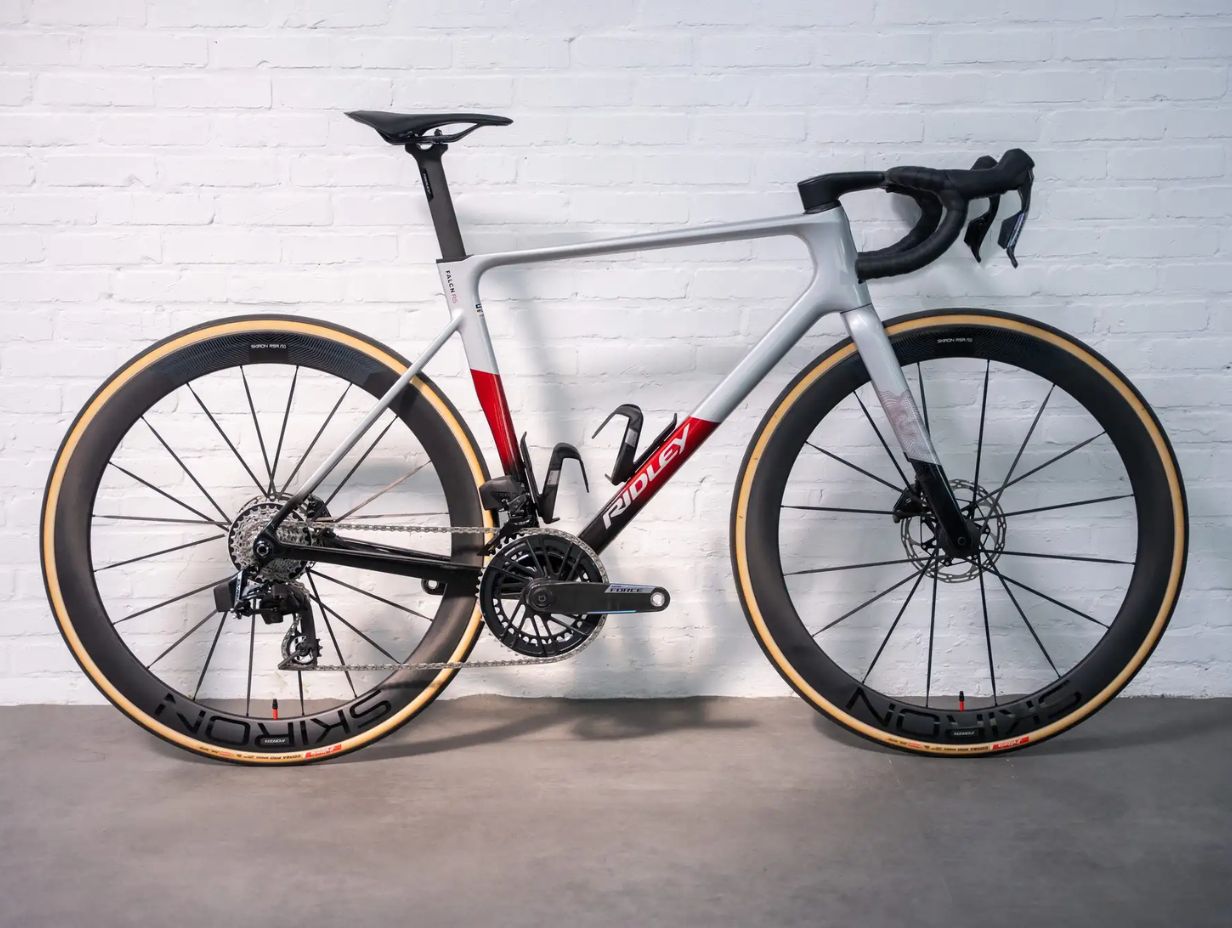
The announced builds confirm this direction. The SRAM Force AXS version gets Forza Skiron RSR wheels, with a 50 mm rim, 23 mm internal width, bonded carbon spokes, CeramicSpeed bearings and a quoted weight of 1,197 g for the pair.
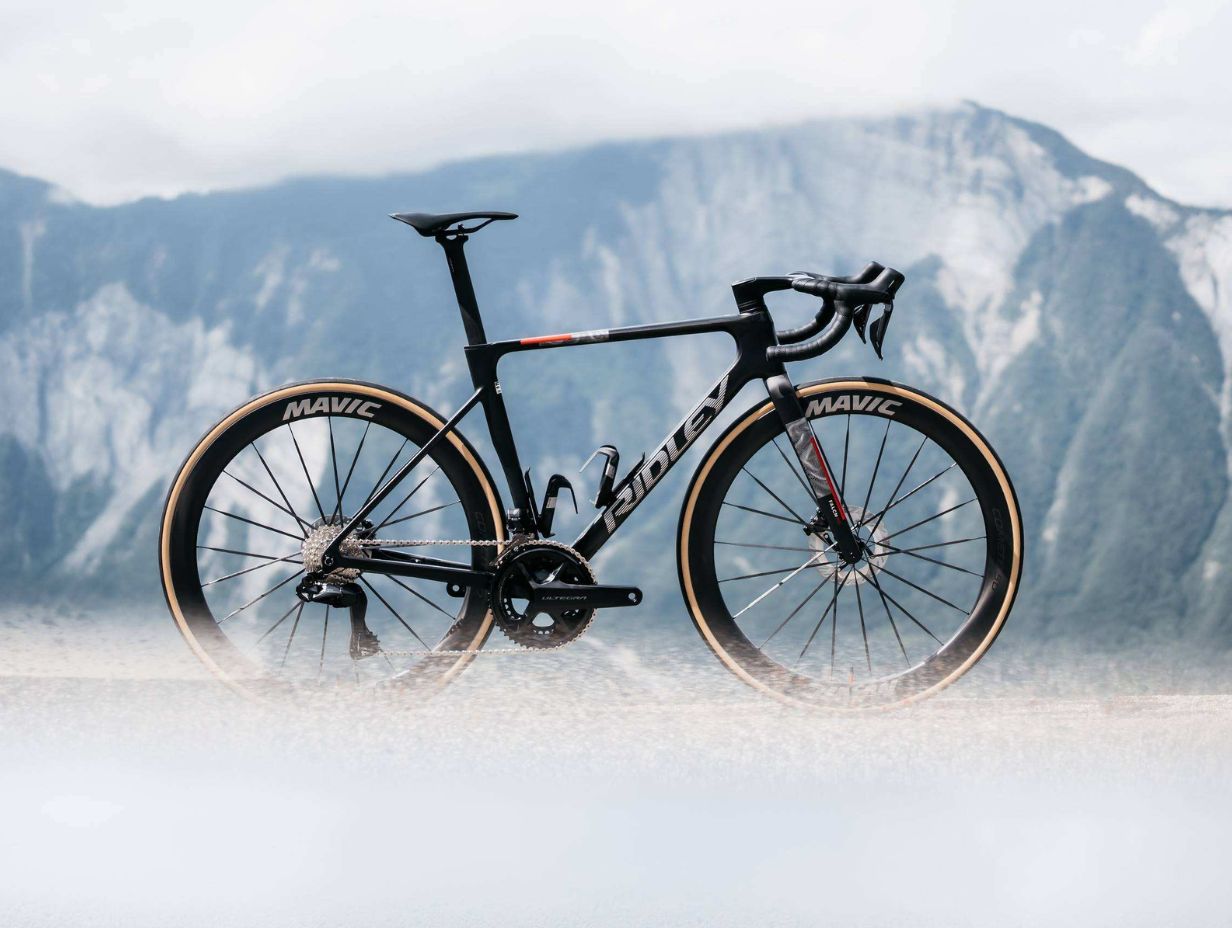
The Shimano Ultegra Di2 version moves to Mavic Comet 50, also with carbon spokes and CeramicSpeed bearings. The SRAM Red AXS version goes even further with AX Lightness Ultra SL: 45 mm deep, a quoted 950 g for the pair.
These choices also explain why the complete bikes come out so low. 6.65 kg for a SRAM Force AXS configuration isn’t just a flattering show-build figure. It’s a very impressive weight for a version that is not the most exclusive build in the range.
A more up-to-date geometry, inspired by the peloton
Ridley talks about a progressive geometry, developed with feedback from Uno-X riders and bike-fit studies carried out around the team. The brand starts from a simple observation: riders are increasingly adopting a forward position on the bike.
The FALCN RS 2.0 therefore uses a 76-degree seat tube angle across all sizes. This places the rider more over the bottom bracket, with a more centred position. Ridley pairs it with a longer reach, a higher stack and a more open hip angle.
This deserves attention. A very light, performance-focused bike can quickly become demanding if it imposes too radical a position. Here, Ridley is instead looking to combine efficiency with a posture you can hold over time. The bottom bracket is also slightly lower than on the previous FALCN RS, with the aim of bringing more stability at high speed.
Up to 35 mm tyres: performance road, but not restrictive
The quoted tyre clearance goes up to 35 mm. For such a light performance road bike, that’s important. It obviously doesn’t turn the FALCN RS 2.0 into an all-road bike, let alone gravel, but it opens the door to more comfortable and more versatile builds for rough roads, long rides or less-than-perfect conditions.
We see here a trend already visible on several modern bikes: no longer limiting performance to narrow tyres. Ridley keeps a race orientation, but leaves room to adapt the bike to real-world use, away from perfectly smooth tarmac.
The UDH standard goes in the same practical direction. It brings broader compatibility with current drivetrains, in 1x and 2x. The front derailleur mount is removable, which gives real flexibility for the build.
Already seen at the Tour with Uno-X
The FALCN RS 2.0 has already been ridden at the highest level before its official launch. Several Uno-X riders used it at the 2026 Tour de France, notably Torstein Træen when he wore the yellow jersey.
This link with Uno-X is not anecdotal in Ridley’s development. We’ve already seen it with its aero road bikes, and the logic continues here: a bike developed with the constraints of the peloton, then sold as a performance machine for riders who want a lively, fast and light bike.
Prices and versions of the Ridley FALCN RS 2.0
The Ridley FALCN RS 2.0 is announced in five sizes: XXS, XS, S, M and L. Like other Ridley Elite Series models, it can be personalised via the brand’s configurator.
Three suggested retail prices are given: €7,499 in Shimano Ultegra Di2, €8,499 in SRAM Force AXS and €12,499 in SRAM Red AXS.
The pricing places it, unsurprisingly, in the very high-end road segment. But the SRAM Force AXS version deserves a closer look: with a quoted 6.65 kg, Forza Skiron RSR wheels at 1,197 g and a full electronic groupset, it looks like the most compelling build for those weighing up weight, components and price.
Our view on this new FALCN RS
The FALCN RS 2.0 arrives at a time when road bikes are all chasing the same balance: being fast on the flat, very light uphill, stable downhill and compatible with wider tyres. Ridley does not claim to reinvent the category, but the quoted figures are serious.
The 705 g frame, complete builds under 6.8 kg and clearance up to 35 mm make for a clear proposition: a performance road bike for those who want efficiency everywhere, not only in the mountains.




Reviews
There are no reviews yet.