
A rear light doesn’t need to be spectacular to become indispensable. In town, on the road, for commuting or when a ride runs into the end of the day, the brief is simple: be visible, without adding unnecessary complexity to the bike.
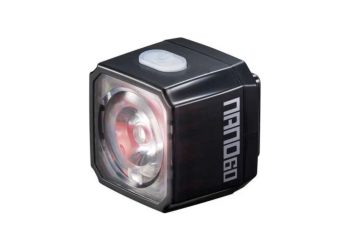
With the Nano60, Cateye offers a rechargeable, compact rear light with six lighting modes and a mount designed for different seatposts. The approach is straightforward: no radar, no brake light, no app – just the useful functions for regular use.
Strengths:
- Compact size and tidy finish
- Stable mount and quick removal of the light unit
- Remembers the last mode used
Could be better
- Battery life limited to 3 h 30 in High mode
- Only IPX4
After several uses on my road bike as well as my city bike, it’s the simplicity that stands out. The Nano60 doesn’t try to do too much, and that’s probably what makes it pleasant day-to-day.
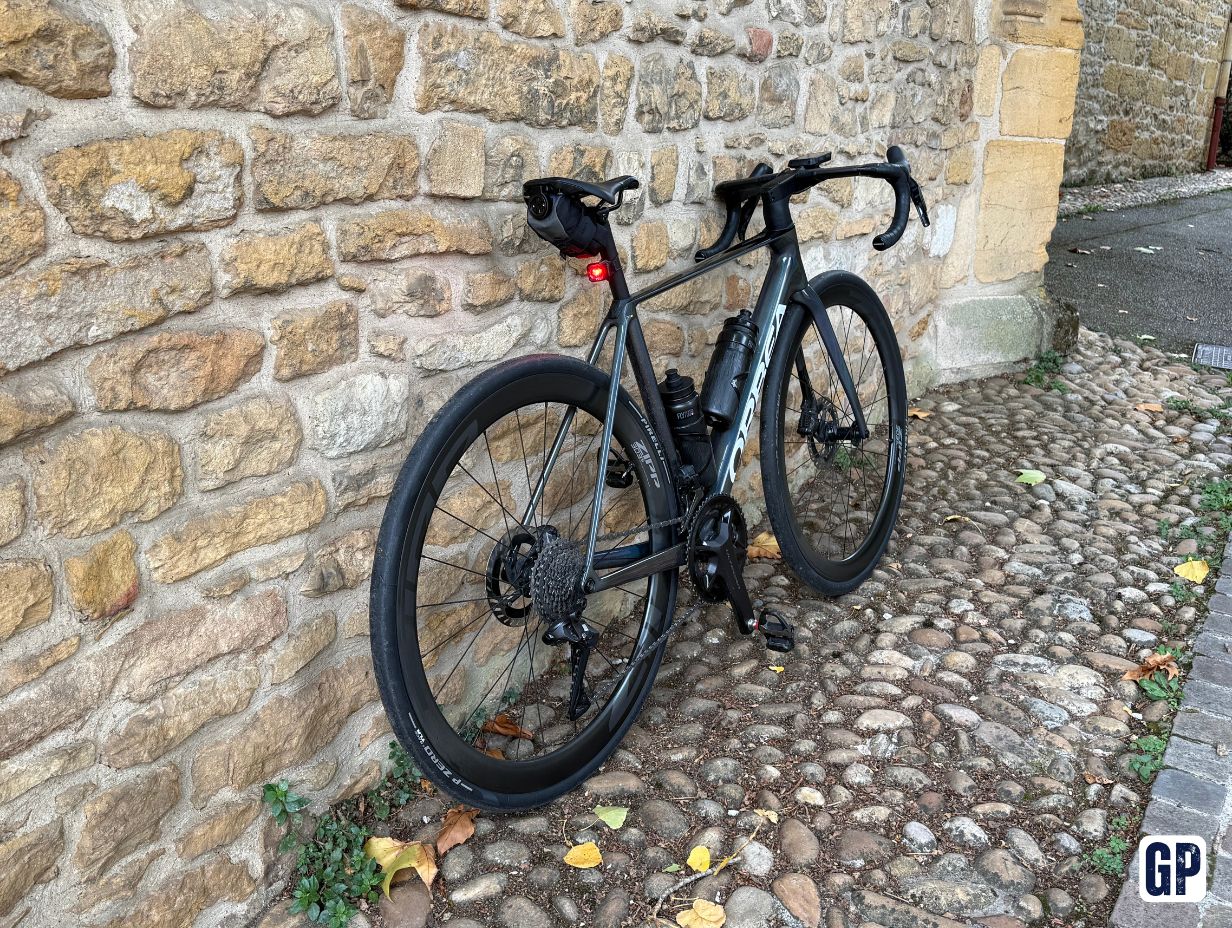
A simple mount, but genuinely practical
The packaging is understated, with the essentials: lighting modes, key features, general operation. Nothing very showy, but everything you need is there.
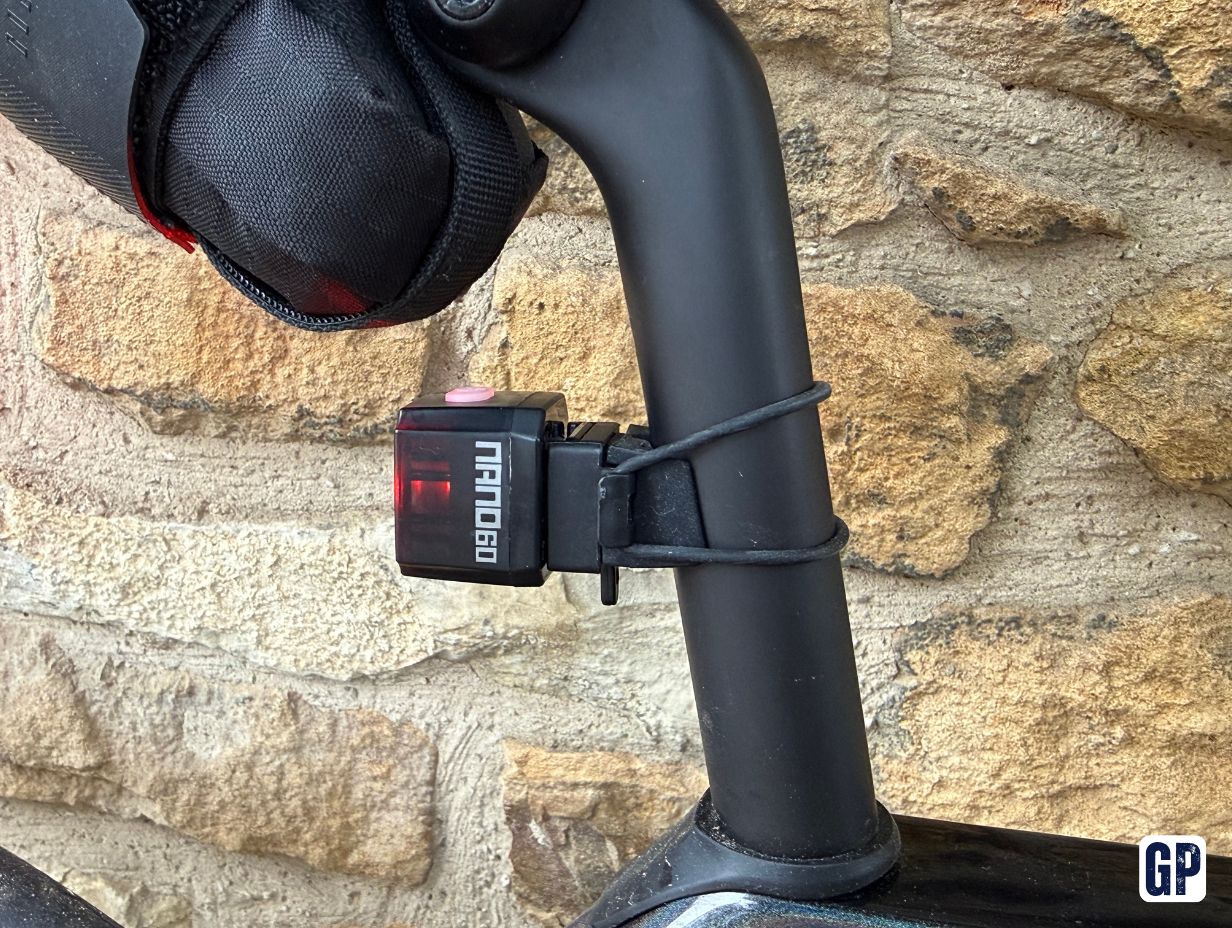
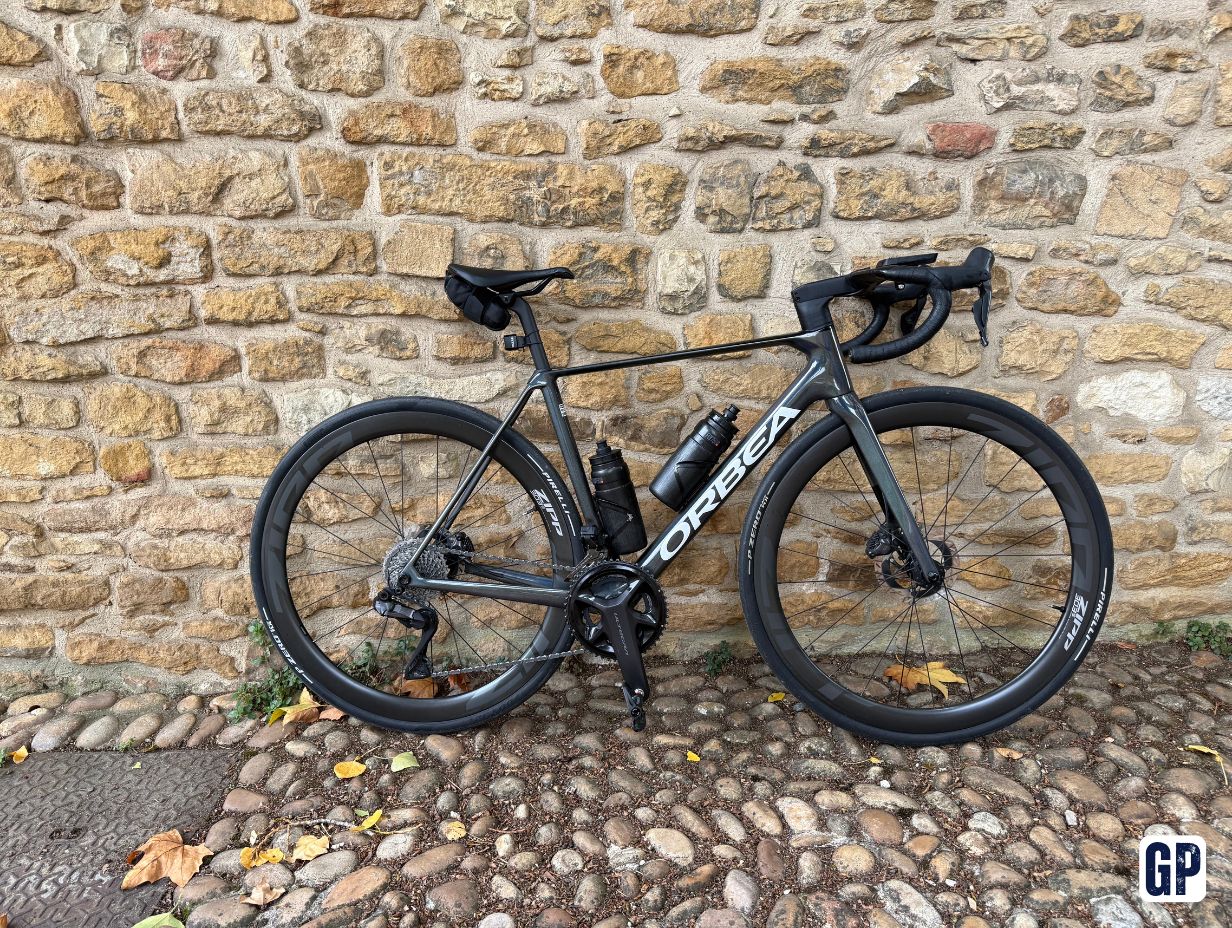
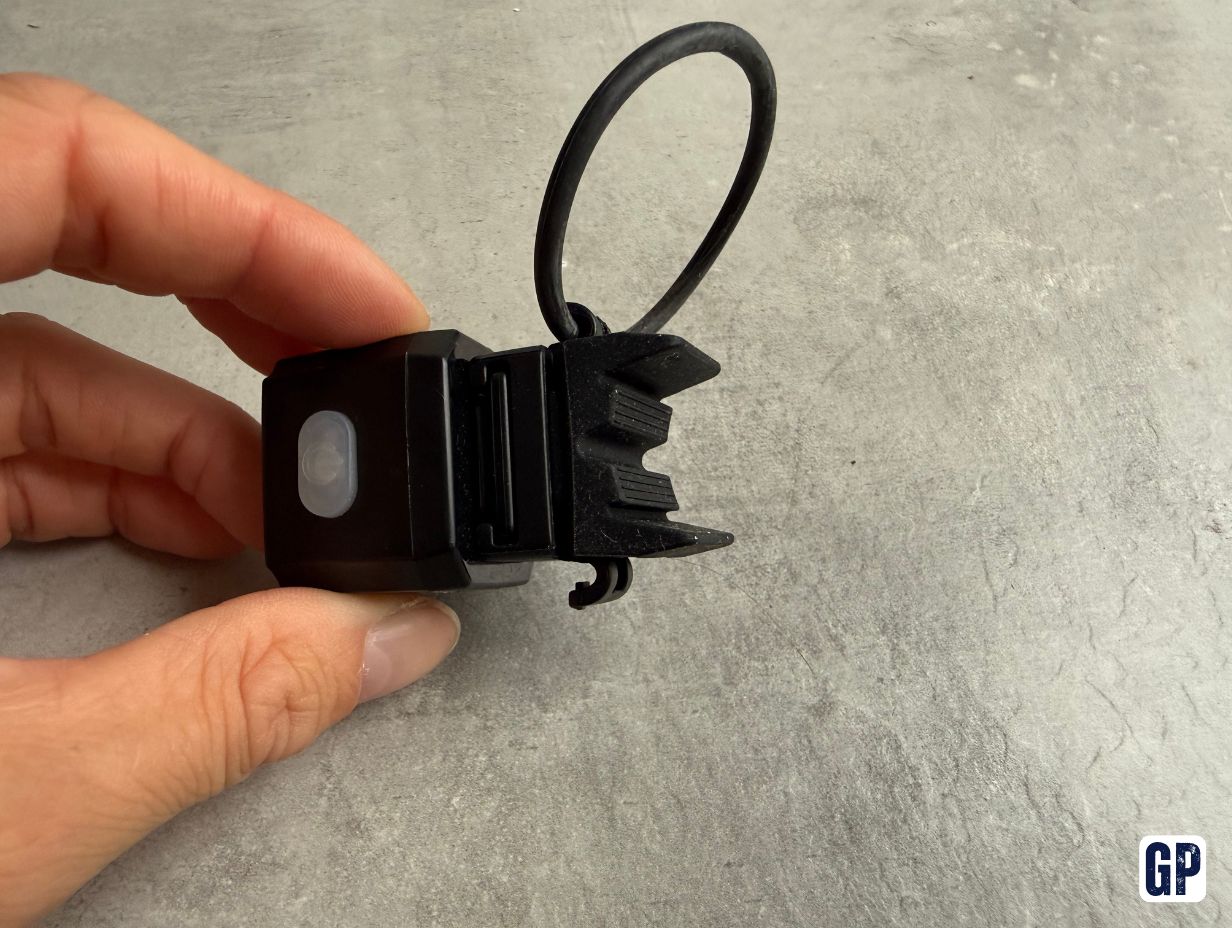
Cateye supplies two rubber straps of different sizes to adapt the mount to various seatpost shapes. I used the smaller one on a standard seatpost: retention is excellent and the light stays perfectly in place. The second, longer one, adapts to wider aero seatposts, with compatibility up to 130 mm outer circumference.
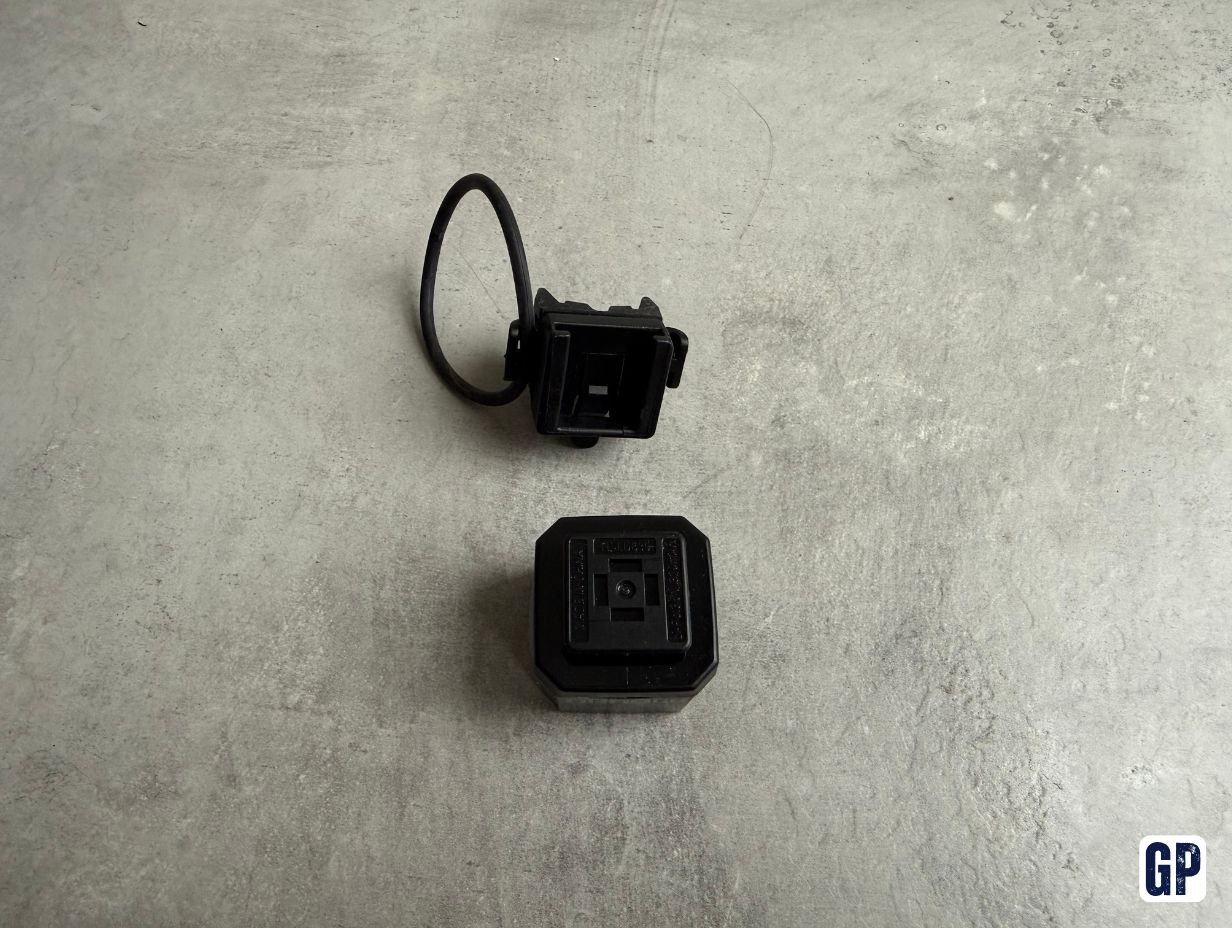
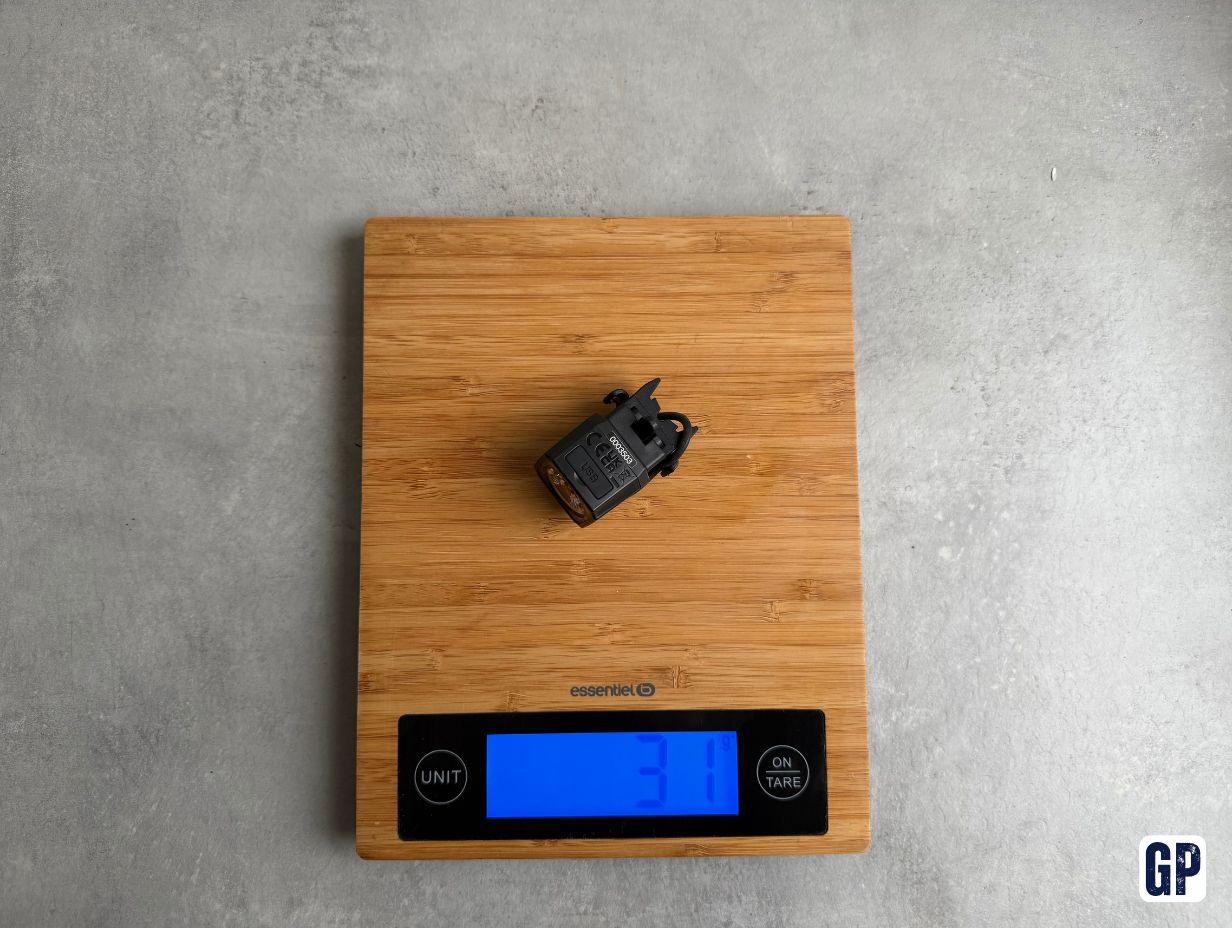
The light feels confidence-inspiring in the hand. The form factor is particularly compact, the finish is tidy, and the whole thing doesn’t feel like a fragile accessory. The Nano60 is made up of two parts: a mount that stays on the seatpost, and the light unit, which slides into it via the Snap System™.
Once engaged, the light holds firmly. I didn’t notice any unwanted movement or play. For a rear light you remove often, that’s important.
Remove the light without touching the mount
The Snap System™ has a very concrete benefit: it lets you remove only the light to recharge it, without taking the whole mount off. It’s also reassuring when you leave the bike outside.
On my city bike, I could remove the Nano60 in a few seconds and refit it before setting off again. No need to redo the angle, no strap to reposition, no mount ending up skewed after three attempts.
Charging is via USB-C. That’s no longer rare today, but it’s still welcome, especially compared to some competing models that are still equipped with older connectors depending on the version, like the Garmin Varia. You’ll just need your own cable, as it isn’t supplied.
Six modes, one button, zero complication
The Cateye Nano60 offers six modes: two steady modes, a classic flash, a group-ride mode and two daytime flash modes. This variety lets you choose lighting suited to the context, without turning every start into a setup session.
Operation is via a single button. It turns on, off and cycles through the modes. It’s simple, clear, and sufficient for this type of light.
I especially appreciated that it remembers the last mode used. When I switch the light off, it keeps that setting for the next start. As I often use the same modes, I don’t need to run through the whole sequence every ride.
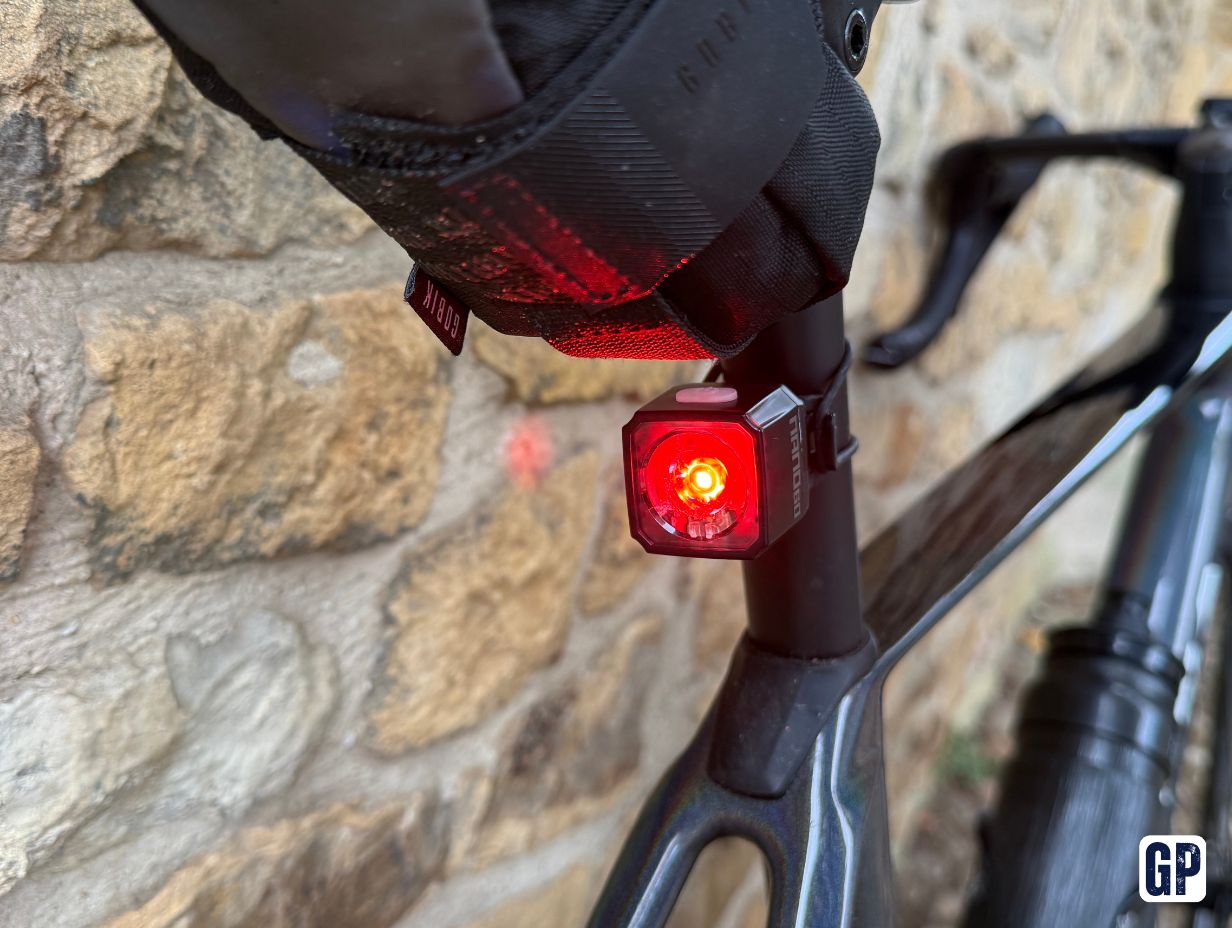
That detail matters more than it seems. With a rear light, good ergonomics are often the ones you forget about. You press, it lights up as expected, and you ride.
Daytime HyperFlash 2 does most of the work
In use, I mostly relied on two modes. Daytime HyperFlash 2, with a theoretical 20 h battery life, was my favourite for daytime rides. Its pronounced flashing clearly signals the bike’s presence, without requiring constant battery monitoring.
On foggy days, I favoured High, with a steady light. In that case, the theoretical battery life drops to 3 h 30. That’s enough for many trips and short rides, but you need to plan ahead before a long outing.
In both cases, the battery life felt suited to my use. I never found myself with a dead battery, and I didn’t need to constantly watch the charge level.
The Nano60 also has a low battery indicator. When recharging becomes necessary, you’re alerted. And if the battery gets too low, the light automatically switches to a flashing mode to preserve a minimum level of lighting. This automatic power-saving mode is a real safety feature.
Power specs you need to read mode by mode
The Nano60 peaks at 60 lumens, but only in HyperFlash 1. Its most powerful steady mode delivers 20 lumens. That’s an important nuance, because a maximum figure doesn’t say everything about real-world use.
For such a compact rear light, that output remains sensible. It’s built for visibility first, rather than chasing an ultra aggressive signal. In the same usage bracket, the Knog Plus Rear also offers 20 lumens at most. More powerful models exist, but they’re often bulkier, more expensive or more focused on active safety.
That’s where the Nano60 finds its balance. It doesn’t replace a rear radar, nor a very powerful light designed for long riding in difficult conditions. Instead, it addresses a simple need: a compact, visible rear light that’s easy to remove and easy to recharge.
At the more fully featured end, the Sigma Buster RL 150 adds, for example, a brake light, 150 lumens and up to 28 h of battery life. The Zéfal Supervision R150 also plays a more powerful card, with 150 lumens and a mount designed for round or aero seatposts. The Cateye isn’t targeting quite the same feature set, but it keeps the advantage of compactness and simplicity.
IPX4: enough for everyday use, not for everything
The Nano60 is IPX4 certified. It therefore resists water splashes, which suits everyday use on the bike: wet roads, spray, changeable weather, urban trips in light rain.
Don’t ask it to do more than that certification guarantees. IPX4 does not mean complete waterproofing under driving rain for several hours. For cyclists who really ride in all weathers, this point deserves consideration.
The Knog Plus Rear, with its IP66 rating, for example offers superior protection against water and dust. That’s not necessarily decisive for everyone, but if your rides regularly take place in sustained rain, the Nano60 is not the most reassuring option on that precise criterion.
Who the Cateye Nano60 is for
The Cateye Nano60 is a successful rear light because it stays true to its role. It makes you visible, it mounts well, it comes off quickly, it recharges via USB-C and it offers enough modes to adapt to common situations.
I particularly appreciated its compact format, its removable mount and the last-mode memory. These are simple details, but they’re the ones that make you actually use a light every day, rather than leaving it at the back of a drawer.
Its limits are just as clear. The most powerful steady mode remains at 20 lumens, battery life in High means planning ahead for long rides, and IPX4 won’t suit riders who regularly face long hours of rain.
For road, commuting or city use, with a priority on simplicity and compactness, the Nano60 ticks the right boxes. A small rear light that’s serious, practical, and well enough thought out to be forgotten.