
Chafing on the bike feels unfair: it can happen at any time, to anyone. The bike’s rolling, the legs are turning, the bib shorts felt right… then the rubbing takes over.
That is precisely why I use a chamois cream. Not as a magic fix, more as a protective layer between the skin, the chamois pad and the hours spent in the saddle. On everyday rides, it is comfort. On long distances, it can outright save a ride.
I used the Muc-Off women’s chamois cream for several months, on every ride, at a fairly steady rate: about five times a week.
Strengths:
- Very good protection against chafing
- Thick texture that stays put on the skin
- 100 ml tube that actually lasts well
- No staining or degradation observed on bib shorts
Could be better
- Controversial formula, not reassuring for regular use
- Noticeable fragrance that may bother sensitive skin
- No value size for the women's version
A thick texture, but easy to spread
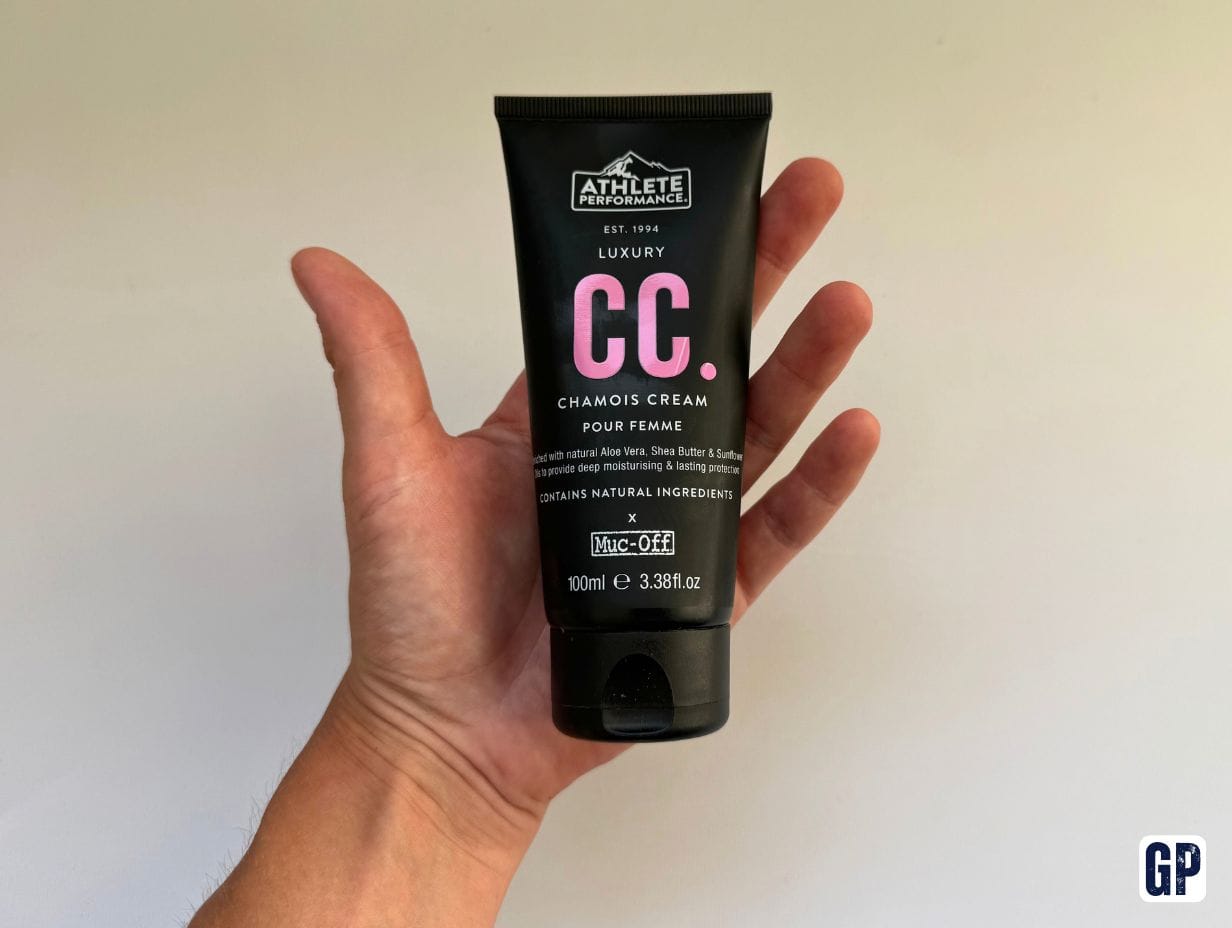
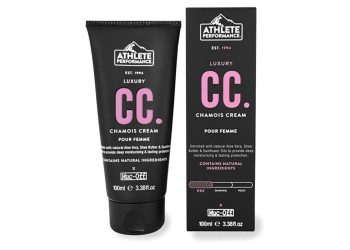
The Muc-Off women’s cream comes in a 100 ml tube. The texture is fairly thick at first, which can be surprising if you come from thinner creams. But it spreads well, without any clumping sensation.
I apply it generously, especially on areas where I know chafing appears quickly. The point of this texture is that it stays in place. After application, when I wash my hands, water alone does not really do the job – you need soap. That may seem trivial, but it speaks to its staying power. The cream grips the skin, and that is exactly what you want from this type of product.
It is scented. Not faintly neutral, not discreetly clinical: scented. Personally, I like the scent and it did not cause me any issues. But on intimate areas, that is not a trivial detail. For very sensitive skin, or people who react easily to fragrances, it is something to consider.
Skin, chamois, or both?
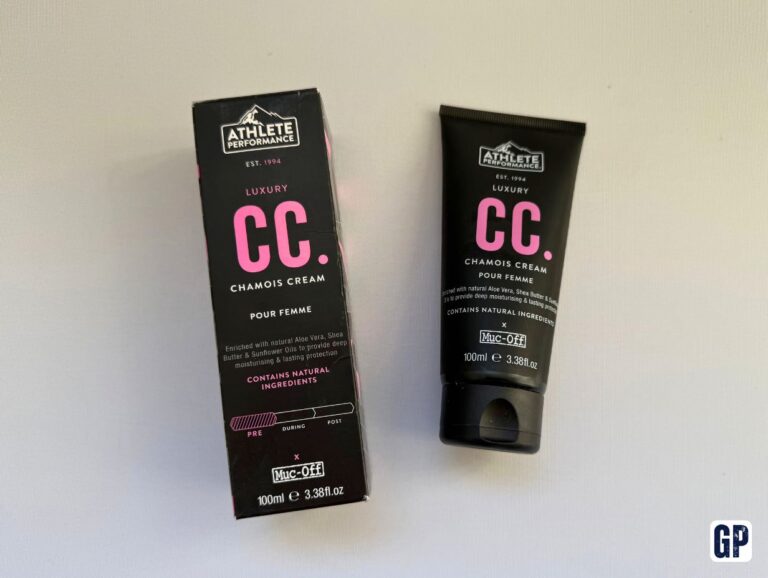
There are two schools with chamois creams: apply directly to the skin, or to the chamois pad in the bib shorts. Some people swear by one method or the other. For my day-to-day riding, I tend to apply it to the skin.
On big rides, I do both: skin and bib shorts. That is where I find the protection most effective, especially when sweating increases and chafing becomes more noticeable. Applying it to the pad also creates a more slippery area where the contact is repeated.
It is not necessarily needed for a short ride. But as soon as the duration increases, especially in the heat or with a well-used pair of bib shorts, this double application works better.
Really convincing protection against chafing
This is the central question of the test: does it really protect? For me, yes. And very well indeed.
I have always been quite sensitive at the contact points. With this cream, I had no particular irritation issues on my daily rides. It very effectively limits chafing, with a lasting, noticeably better sense of protection compared to more conventional creams.
I would not say it fixes everything. On a long ride, especially when it is hot and you sweat a lot, after around 100 km I sometimes feel like reapplying. That is not a failure of the product – it is just the reality on the road. A chamois cream helps, but it does not fully compensate for poor bib shorts, an ill-suited saddle or several hours of humidity and friction.
Good staying power
What I appreciate with this cream is that it does not disappear as soon as you get on the bike. The thick texture works in its favour. It remains present, it still glides after several hours, and it does not feel like it evaporates at the first hot spell.
That is also what makes it fairly economical in use. The 100 ml tube may seem small, especially if you ride a lot, but in my case it lasts at least six months with about five rides per week. You do need to apply enough, yes, but not compensate poor staying power with an excessive amount.
Muc-Off lists this cream at around €20, with prices often found between €14 and €20 depending on the shop. At that price, and given how long the tube lasts for me, the cost per ride remains reasonable.
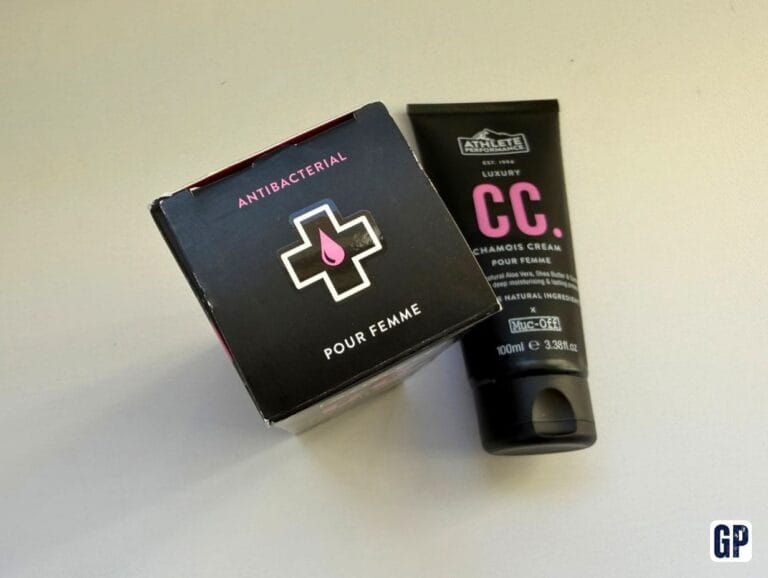
No impact observed on bib shorts
Positive point: I have not noticed any staining, discolouration or degradation of my bib shorts. Some creams can slightly mark chamois pads, especially on delicate shorts or light-coloured fabrics. Here, nothing to report. The cream washes out, does not leave problematic traces, and has not damaged my clothing.
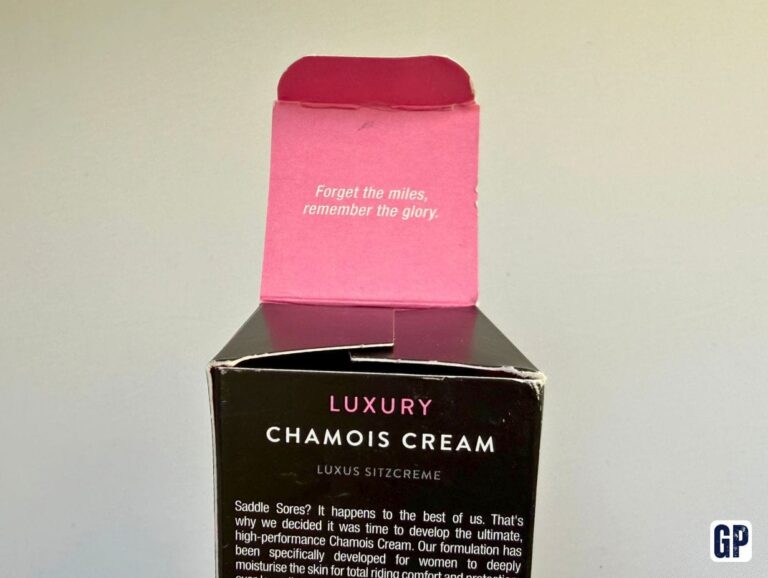
A formula that seriously raises questions
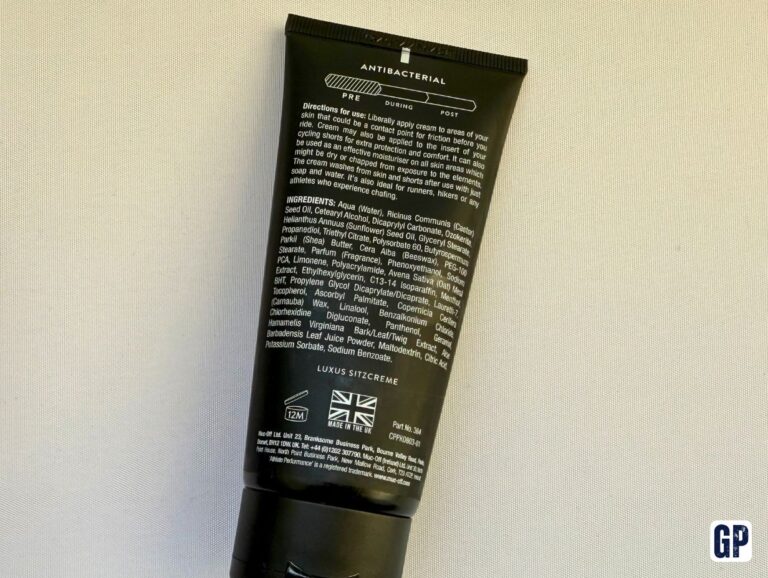
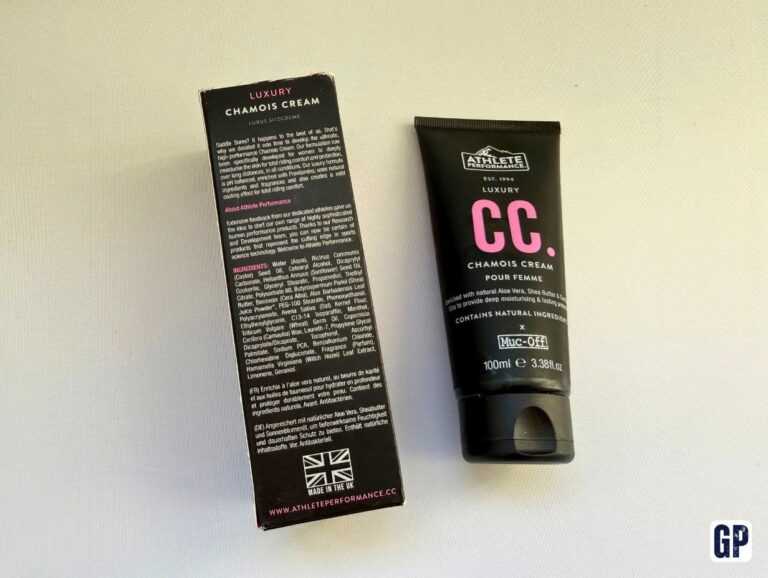
Unfortunately, this is the main downside of this cream. While I did not experience any particular skin reactions after several months of use, the analysis of its composition on the Yuka app is far less reassuring: it scores 0/100.
Chief among the concerns is the presence of BHT, a synthetic antioxidant that is controversial for its potential endocrine-disrupting effects and environmental impact. Some studies raise questions about its effects on the thyroid, reproduction or various organs, even if these results do not allow us to assert that use at the concentrations in this cream carries the same risks.
The formula also contains phenoxyethanol, a preservative whose use is regulated in cosmetics, as well as ozokerite, a mineral wax derived from petroleum. These ingredients are not necessarily dangerous at authorised concentrations, but their presence, in addition to the fragrance, raises questions about the formulation choices.

That is all the more regrettable because this cream is intended to be applied regularly to an intimate, particularly sensitive area. Even though I personally tolerated it very well, I would clearly have preferred a simpler formula, with fewer controversial ingredients.
And that is ultimately what leaves me quite torn: in the field, it is one of the most effective chamois creams I have used. But its composition is a real caveat, significant enough that I cannot recommend it without nuance.
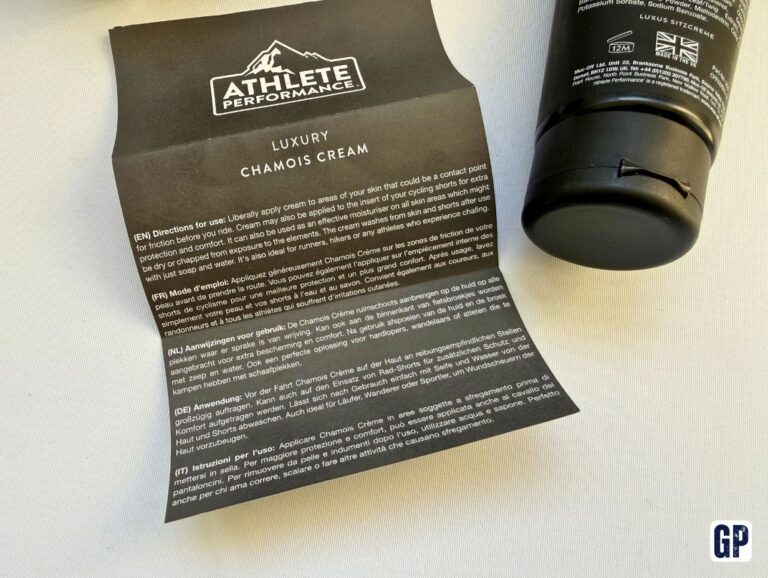
Another regret: the single 100 ml size
The size is practical, easy to store and clean to use. But there is a fairly frustrating limitation: the women’s version only exists in 100 ml, whereas the men’s Muc-Off cream also comes in a larger, better-value 250 ml size.
For a product you use regularly, that is a shame. Not only for the price per litre, but also for the gesture: fewer tubes, fewer repurchases, more consistency for those who ride a lot.
It is a range detail, but it says something. A cream designed for women should not necessarily be confined to the small size.
Who is it for, and with what caveats?
This Muc-Off women’s cream is aimed at cyclists prone to saddle irritation or who are looking for effective protection on long rides. For my use, it is quite simply the most effective cream I have tested so far.
It protects well, lasts a long time, did not irritate me and did not damage my bib shorts. Its value for money over time is also very attractive, despite the lack of a larger, more economical size.
But its composition seriously tarnishes this verdict. The presence of several controversial ingredients, notably BHT, raises questions I cannot ignore for a product intended to be applied regularly to such a sensitive area. Even if these potential risks do not mean the cream is dangerous at the concentrations used, I cannot recommend it with full confidence as it stands.
And that is ultimately quite frustrating: remarkable effectiveness in the field, but a formulation that stops me from recommending a product I would otherwise have gladly bought again.