
Power meter pedals are no longer a curiosity. Favero popularised the concept, Garmin has been on the scene for a long time, and riders moving from road to gravel now want to measure their watts without juggling standards, bikes and compromises.
CyclOptim steps in here with a fairly rare proposition: a French-made sensor spindle that can switch from a road platform to an SPD platform. I’ve followed the project for several years, with its promises, delays and development milestones. And this time, the pedals are actually on sale.
Strengths:
- Platform swap is genuinely quick
- Consistent power readings
- Made in France
Could be better
- Relatively short battery life
- No proprietary app yet
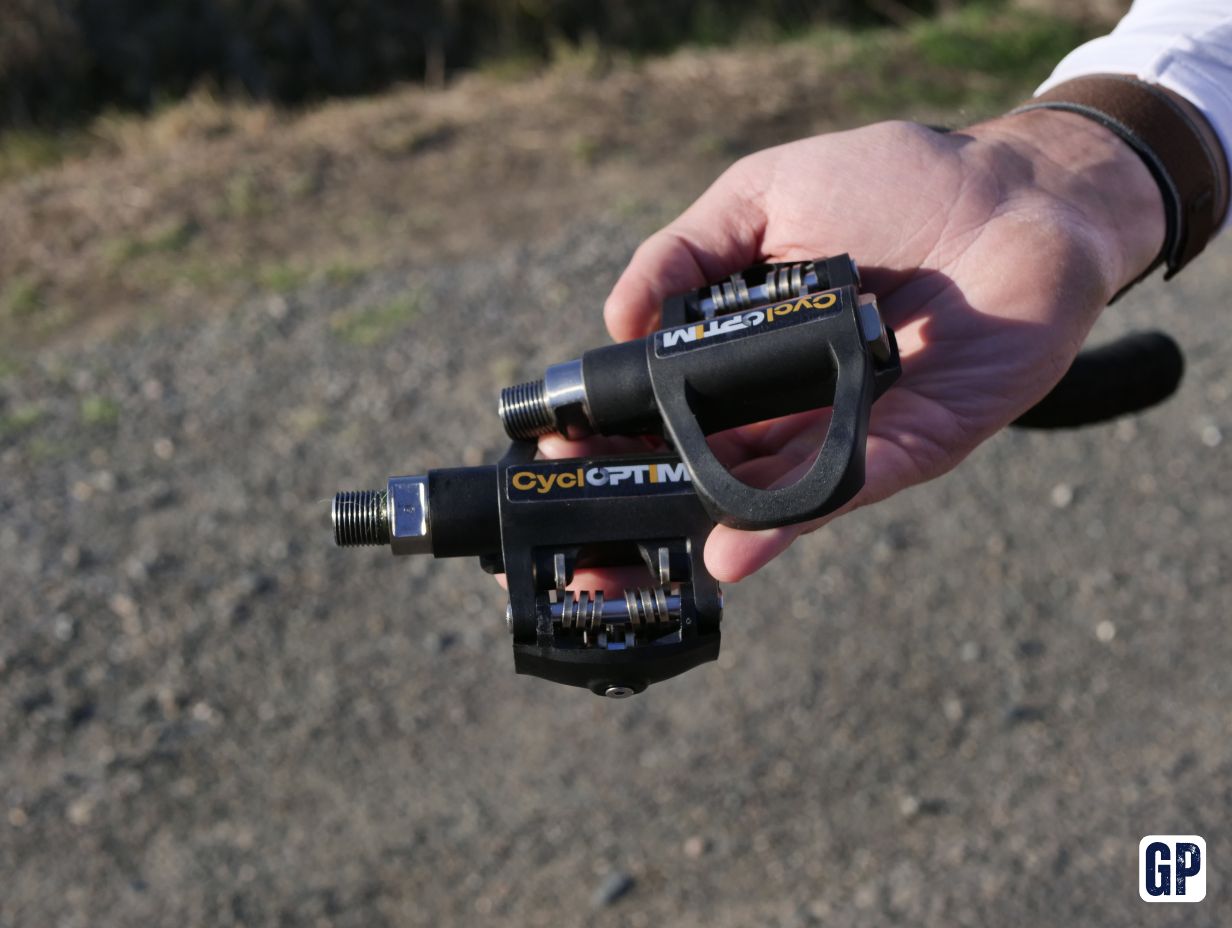
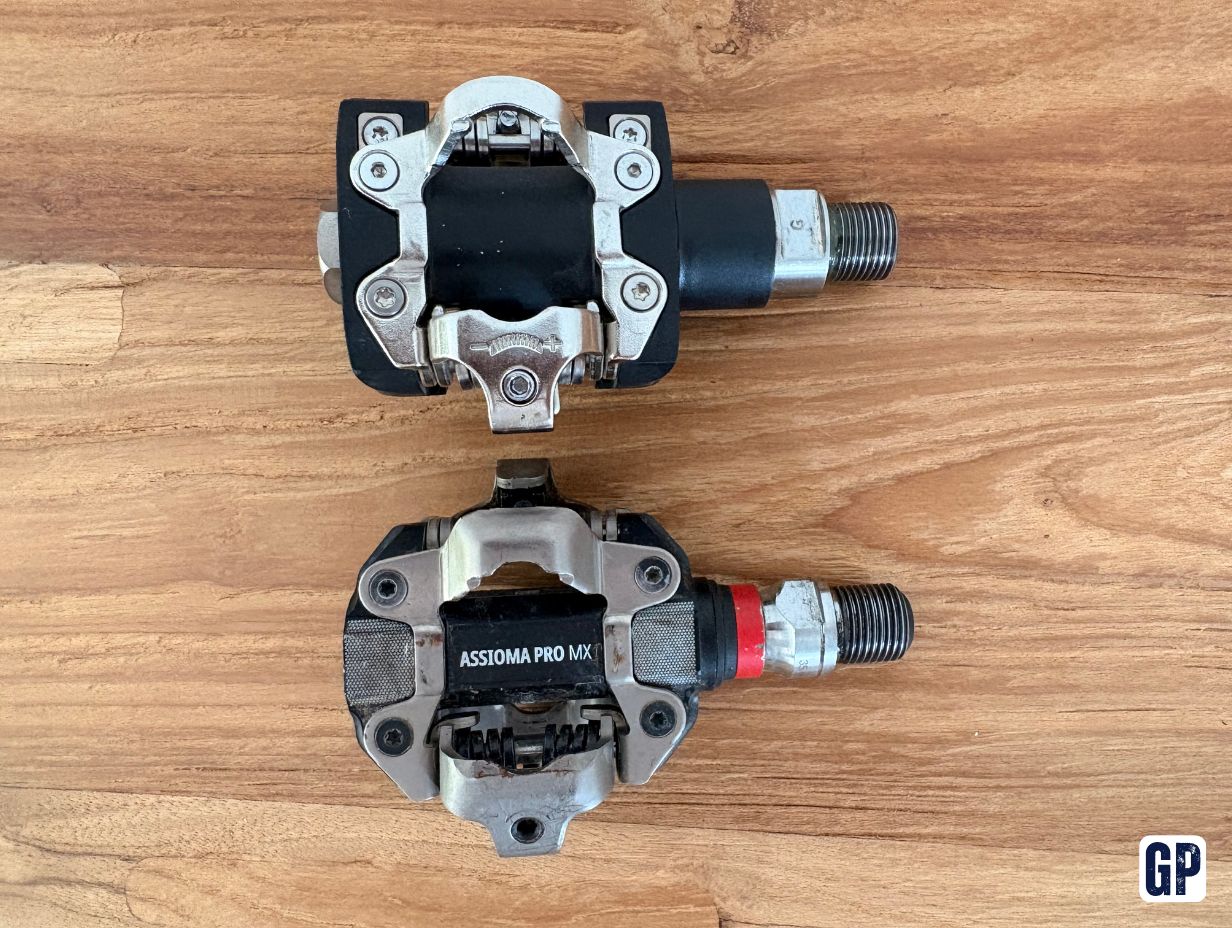
Simon, one of the co-founders, sent me a high-end test model: a Classic version with dual-sided measurement, delivered with both the road and MTB/gravel platforms. Inevitably, it’s hard not to think of the Favero Assioma Pro MX-2, which remain a very solid benchmark today.
A French product that is not just trying to copy Favero
CyclOptim didn’t simply reuse an existing recipe. The brand built its product around a clear idea: put the technology in the spindle, then make the platforms interchangeable.
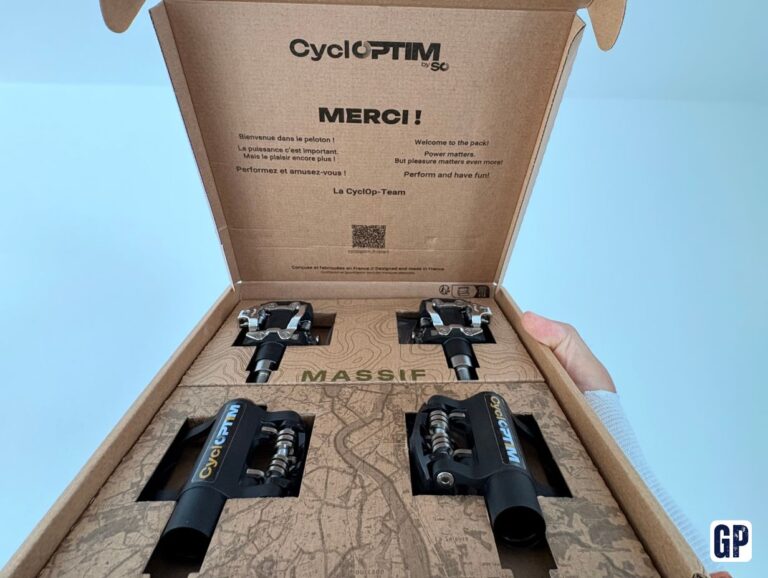
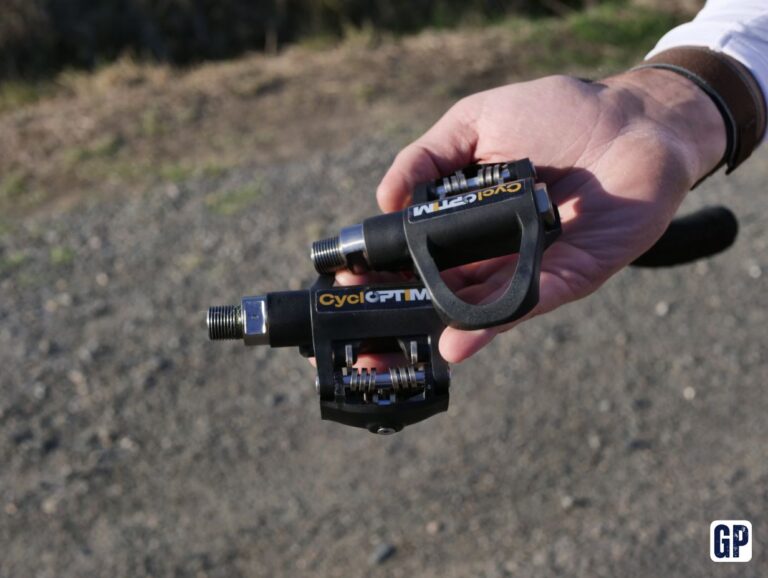
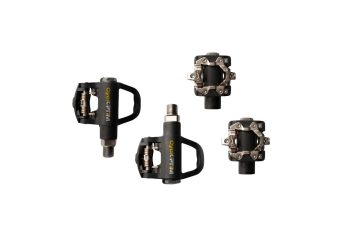
In the Combo Classic pack, you get two connected spindles and four platforms: a MACADAM road pair, compatible with KEO or SPD-SL depending on the chosen option, and a MASSIF pair to SPD standard for MTB, gravel or cyclocross. The announced price is 890 € for this pack.
The range also exists as separate versions: MACADAM for road from 430 €, MASSIF for off-road from 480 €, with Lite or Classic versions depending on whether you want single- or dual-sensor measurement. Here, the point of the test was mainly to check whether the Combo concept really stands up in real use.
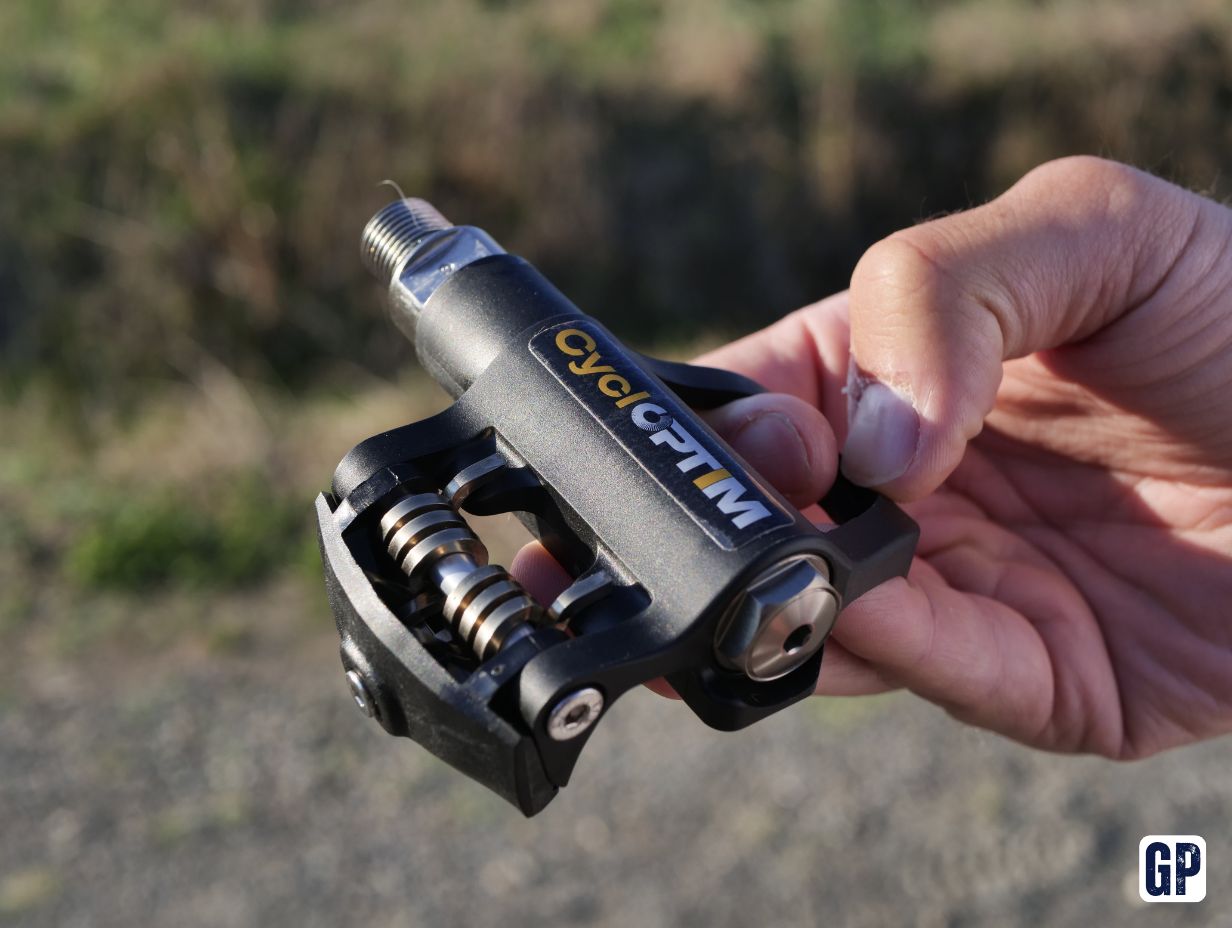
The packaging is tidy, with no frills. Nothing spectacular, but that’s not necessarily what you ask of this kind of product. I’d simply have liked a bit more visual identity on the pedals themselves. On the road version, the brand appears via a discreet sticker. On the SPD version, there’s almost nothing to quickly identify CyclOptim.
It’s a detail, yes. But on a product that wants to establish itself against already well-identified references, branding matters too.
Installation and connection: simple, but still dependent on the GPS head unit
Installation is done with a 15 mm open-ended spanner. Nothing tricky, but your multi-tool won’t help much here. Once the pedals are installed, pairing with the GPS head unit is quick over ANT+.
I didn’t encounter any particular difficulty connecting them. The key point is that the pedals currently communicate via ANT+. Bluetooth is promised in a future update, but it’s not yet available at the time of this test.
Another current limitation: CyclOptim does not yet offer a proprietary app. Calibration therefore goes through the GPS head unit. That’s not a blocker if you already use power meters, but the lack of an app is felt for updates, product follow-up or certain configuration tasks.
The brand told me the app is in development. That’s a good thing, but you have to judge the product in its current state: it works, it connects, it calibrates, but the software ecosystem isn’t yet at the level of the most established players.
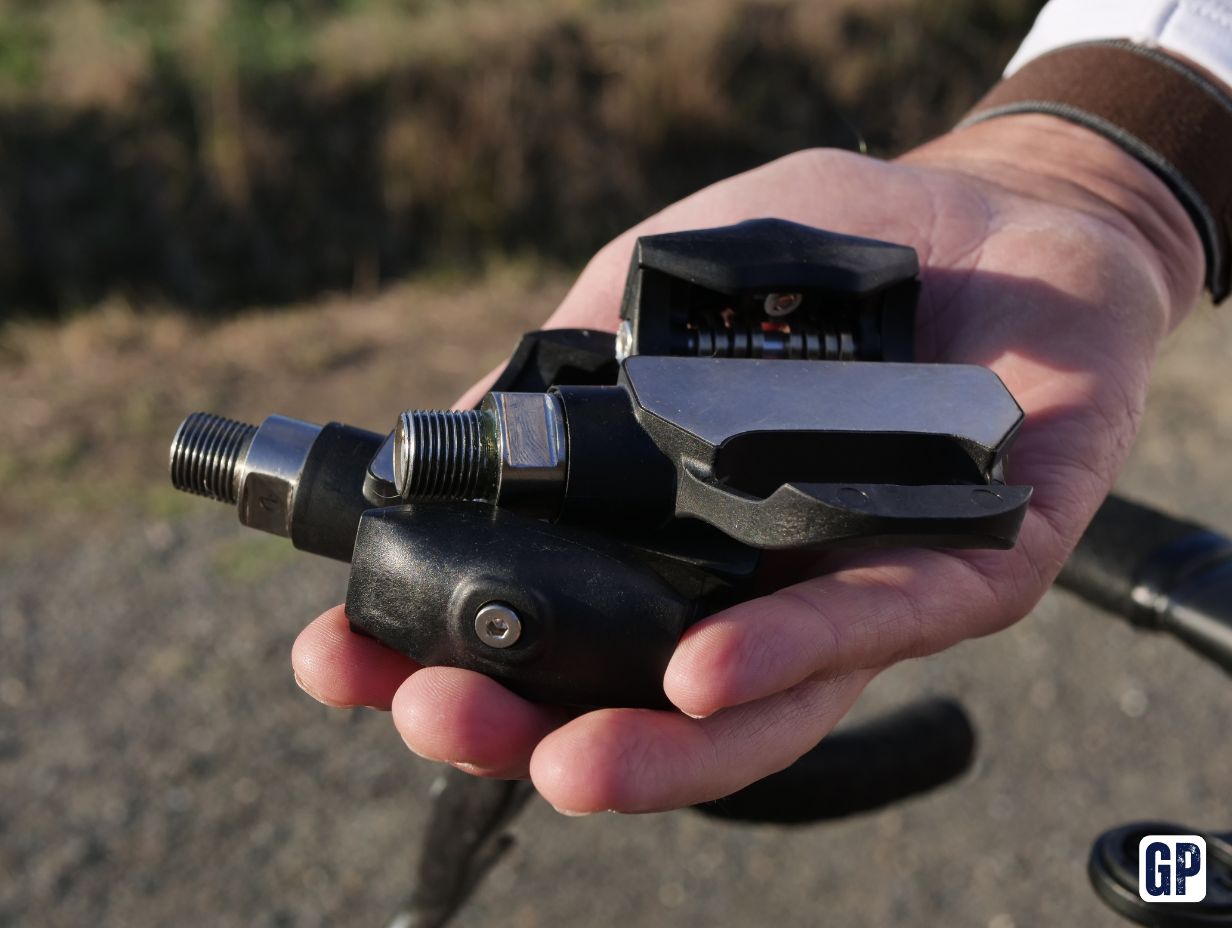
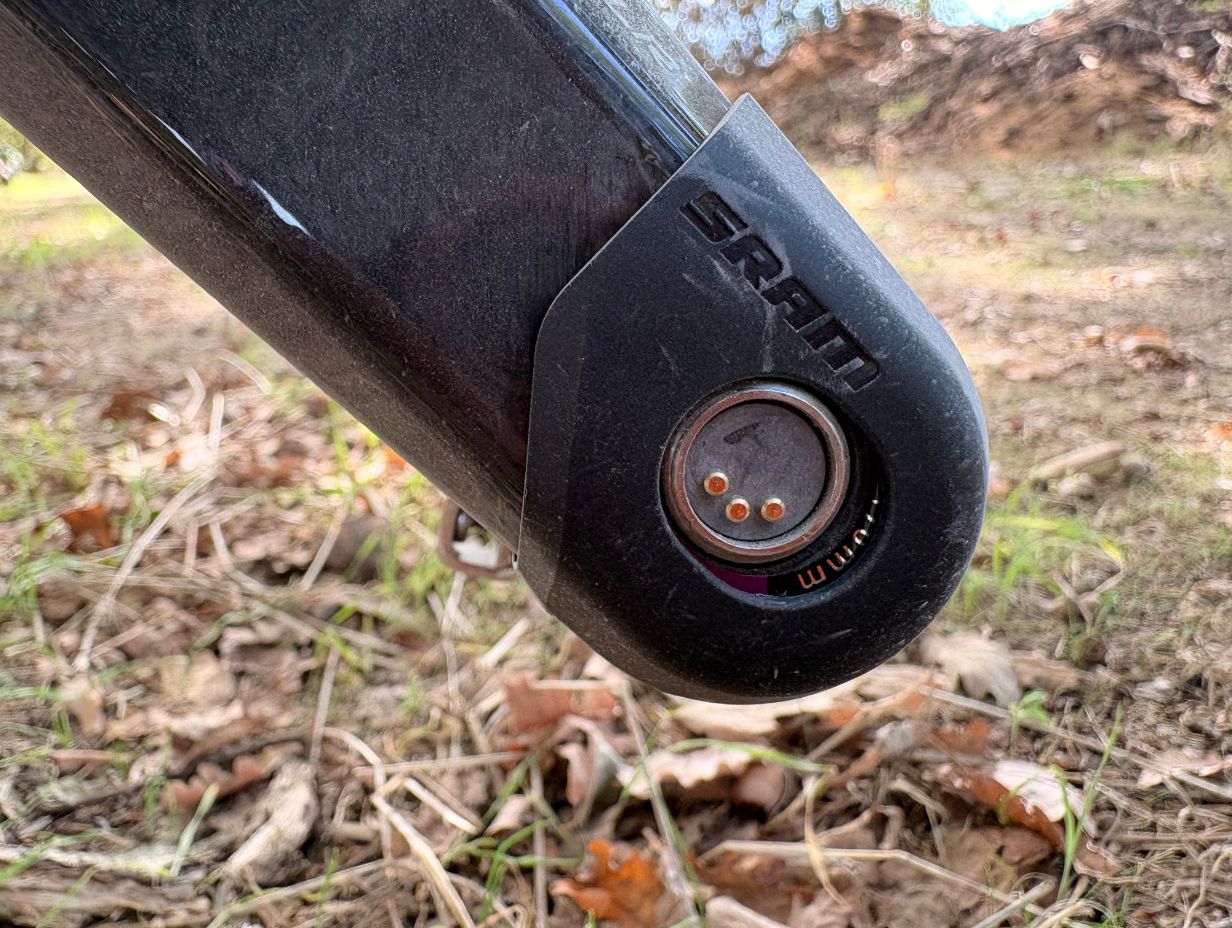
On charging, the magnetic pin system is convenient. The connector at the end of the spindle lets you charge without removing the pedals. A pity, however, that the supplied cable doesn’t let you charge both pedals at the same time. On a dual-sensor pair, a dual-headed cable would have made more sense.
In SPD, a real pedal before it’s a power meter
I started with the MASSIF configuration, so SPD, for gravel and off-road riding. This is often where power meter pedals have to convince the most. Because before talking watts, the pedal first has to do its job properly.
The first impression is good. The construction inspires confidence, clip-in is natural and you quickly find your habits if you already ride SPD pedals. Release is crisp, with no vague sensation.
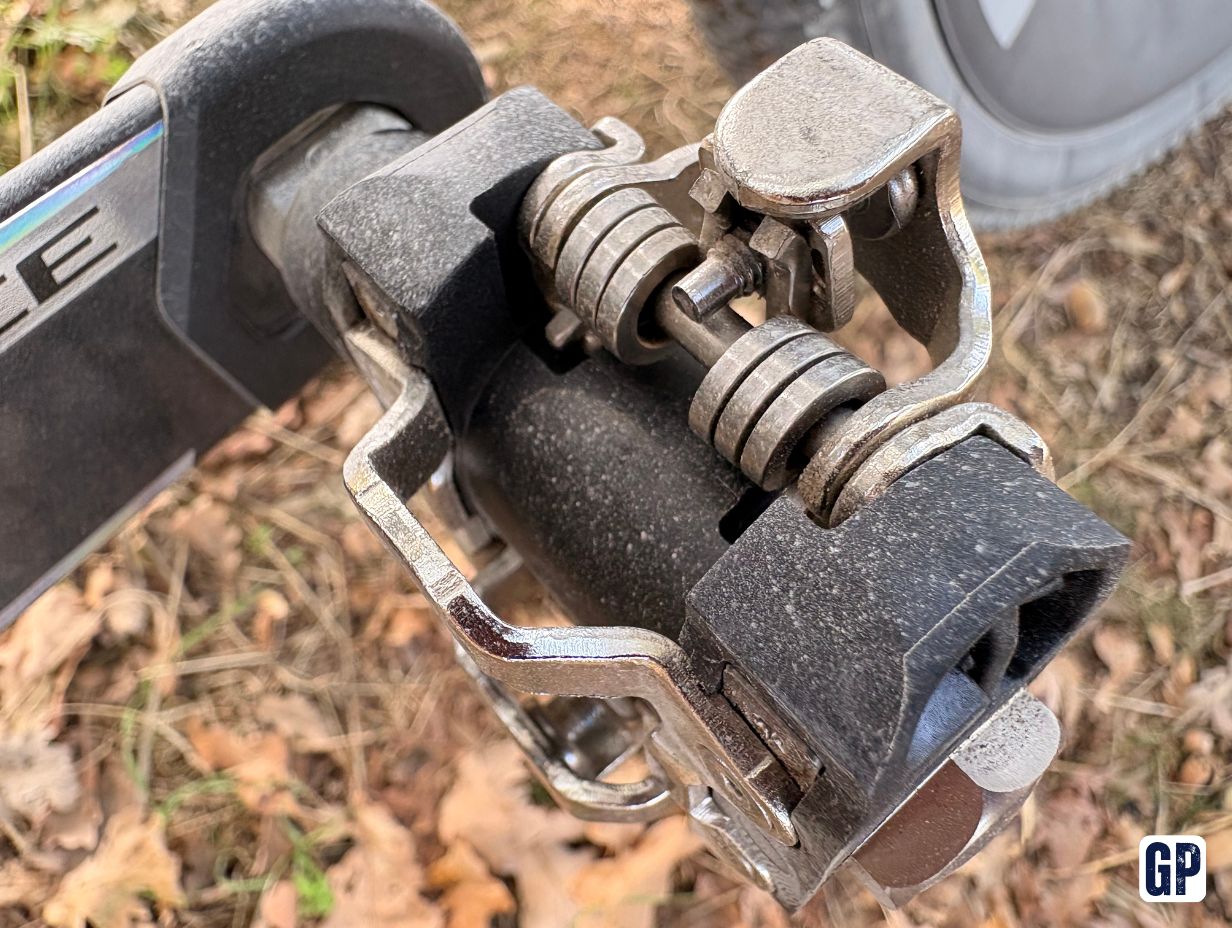
You simply need to take the time to set the tension on both sides. As on many double-sided SPD pedals, the adjustment has to be done properly to obtain a homogeneous feel on the right, on the left, and on each side of the pedal.
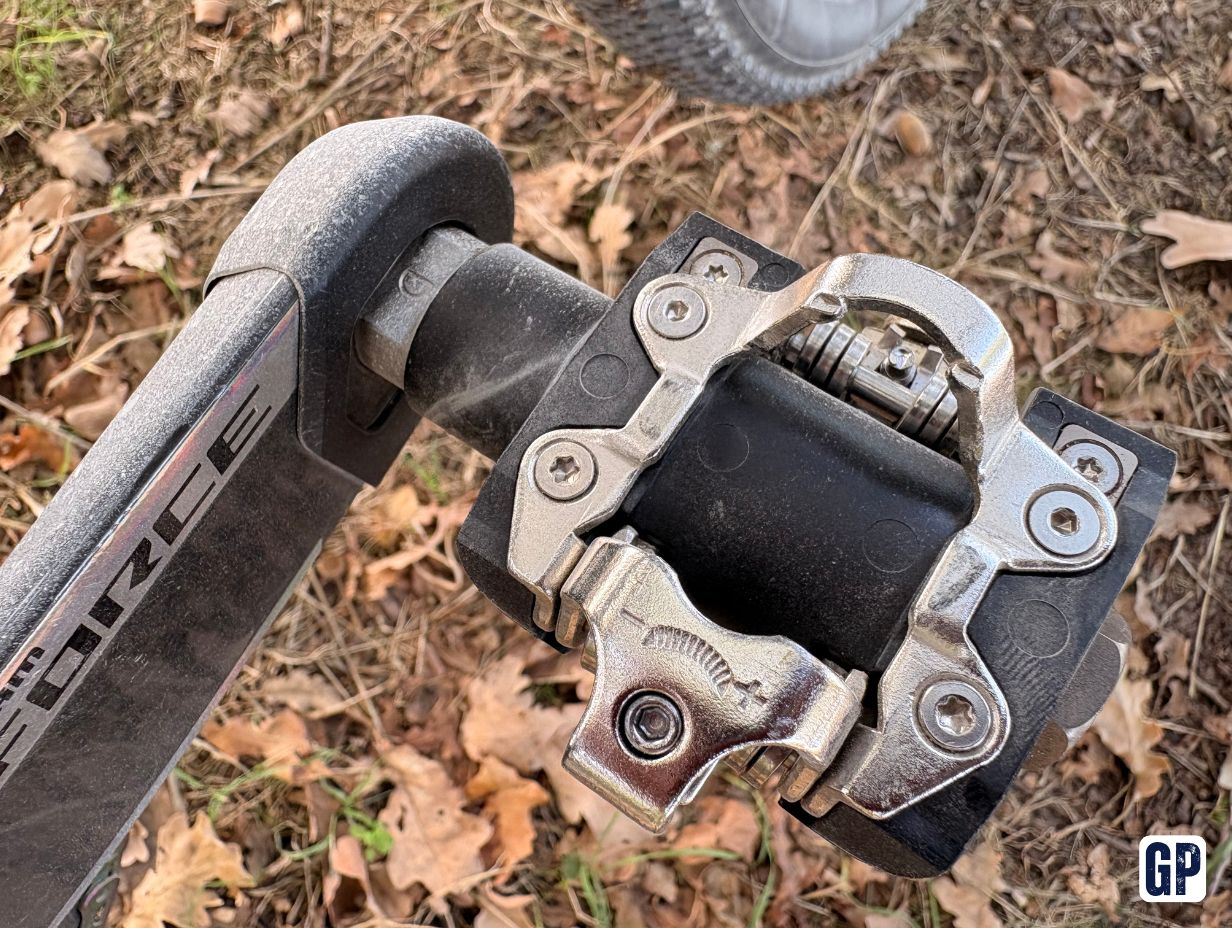
After a few tweaks, I didn’t need to relearn anything. And that’s probably the best compliment for this type of product: you quickly forget there’s a power meter in the spindle.
Over several hundred kilometres of gravel, I didn’t notice excessive wear. The build seems robust, and integrating the electronics in the spindle limits direct exposure to impacts. That was one of the historical flaws of the first generations of power meter pedals: too exposed, too fragile, not always reassuring off tarmac.
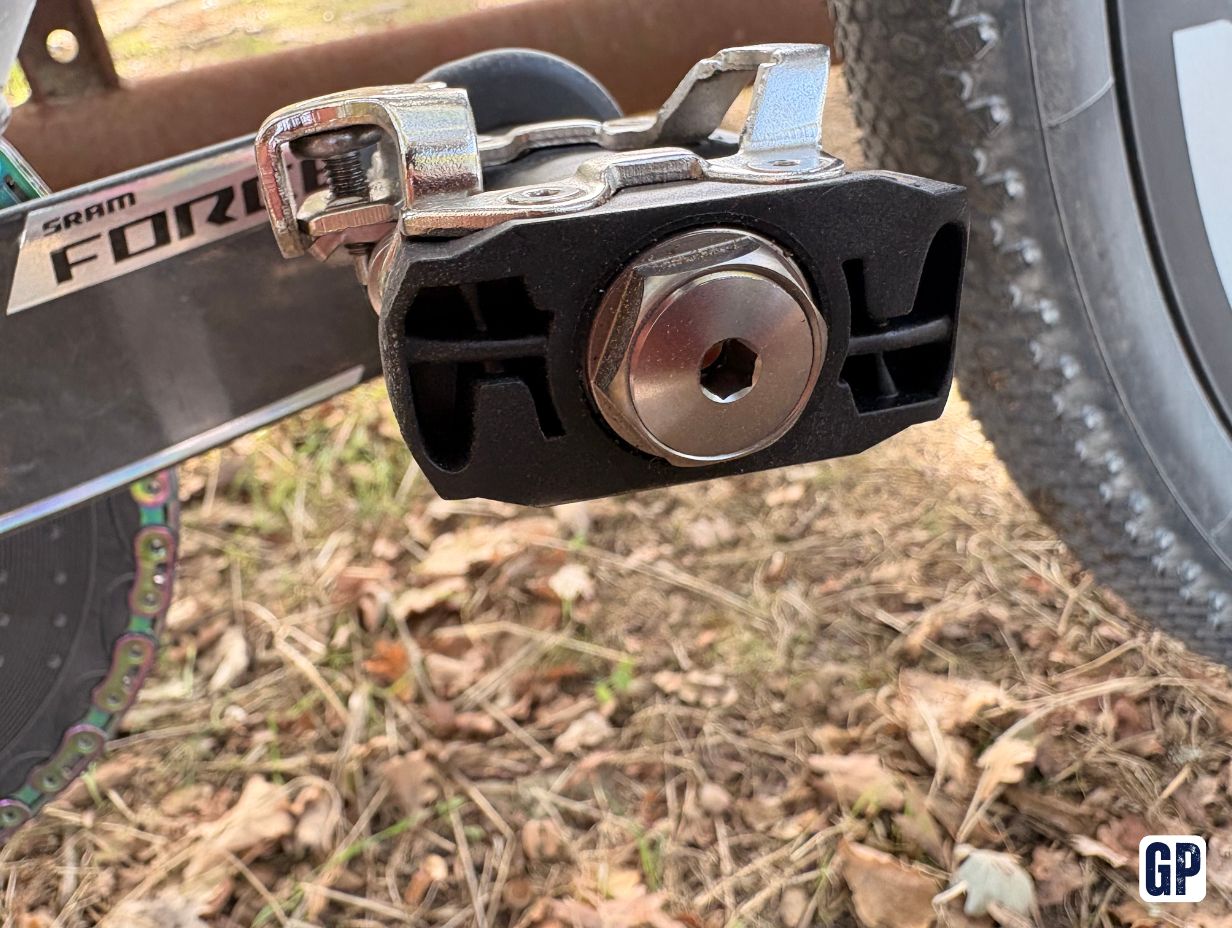
Here, CyclOptim makes the right technical choice. It doesn’t turn a pedal into an indestructible part, but the whole thing seems designed for real use, not just for a spec sheet.
The road/gravel swap is genuinely quick
This is CyclOptim’s strongest promise: change platform without changing the whole sensor. The brand claims a very fast operation. In practice, yes, it’s simple.
Switching from the SPD platform to the road platform takes a few minutes once you’ve got the knack. Above all, it’s possible to do it with the pedal still mounted on the bike. That point changes quite a lot.
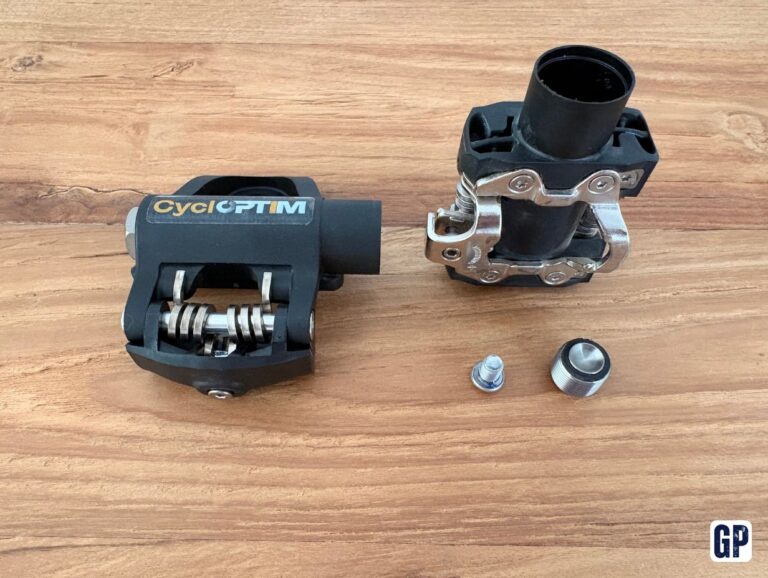
I’m not saying I’d do the operation every morning before heading out. But for a rider who owns a single versatile bike, or who regularly alternates between road tyres and gravel tyres, the benefit is real. You can ride in SPD on mixed rides, then switch back to a road platform when you want the support, shoes and sensations of the road.
On the road, support is good and there are no creaks
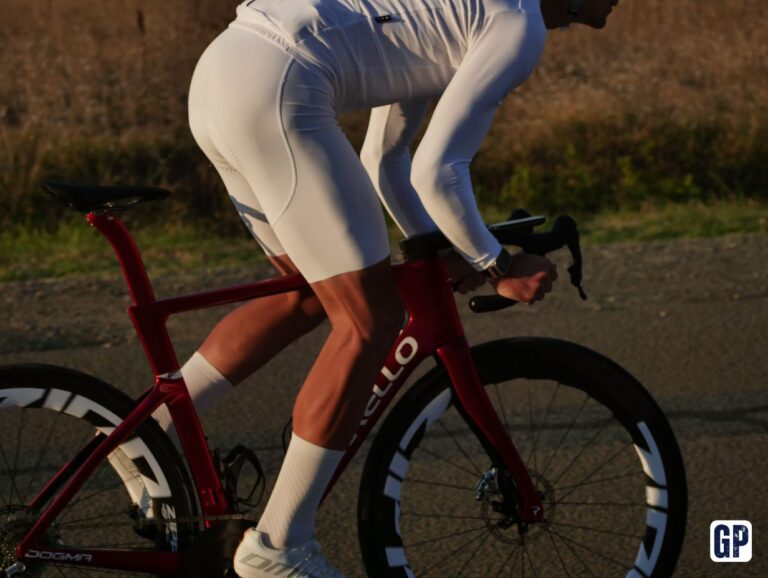
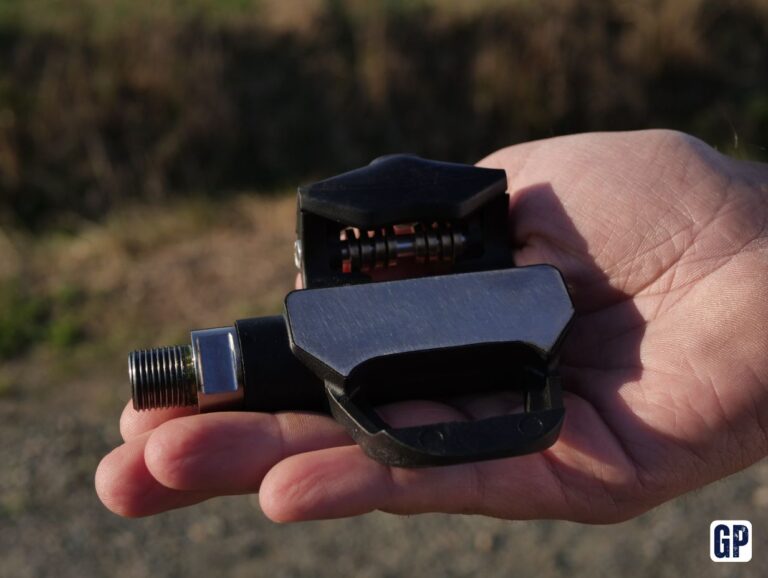
Once switched to MACADAM, the CyclOptim feel much more road-like. The support area is ample, clip-in falls naturally underfoot, and I didn’t have that awkward bedding-in phase you sometimes get with overly particular pedals.
I had a small concern about noises. Some road pedals can generate squeaks, notably depending on the cleats, wear or how clean the contact is. Here, nothing to report during the test. No suspicious creaking, no annoying squeal.
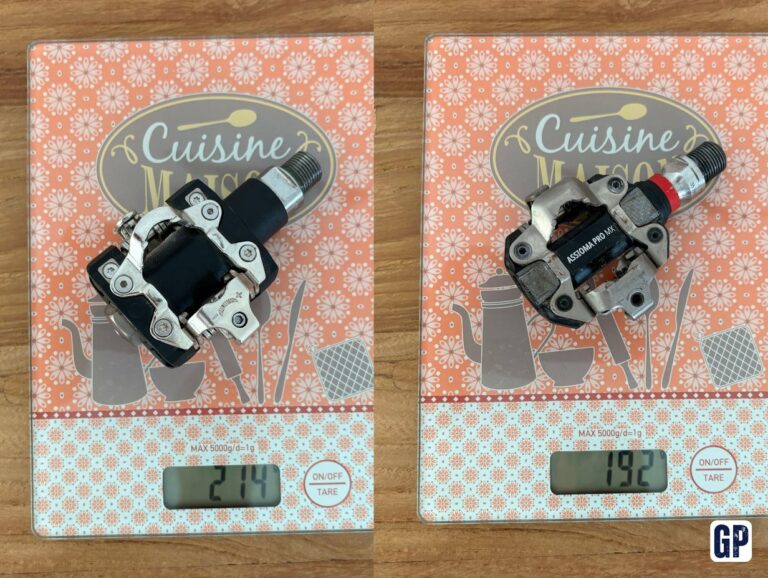
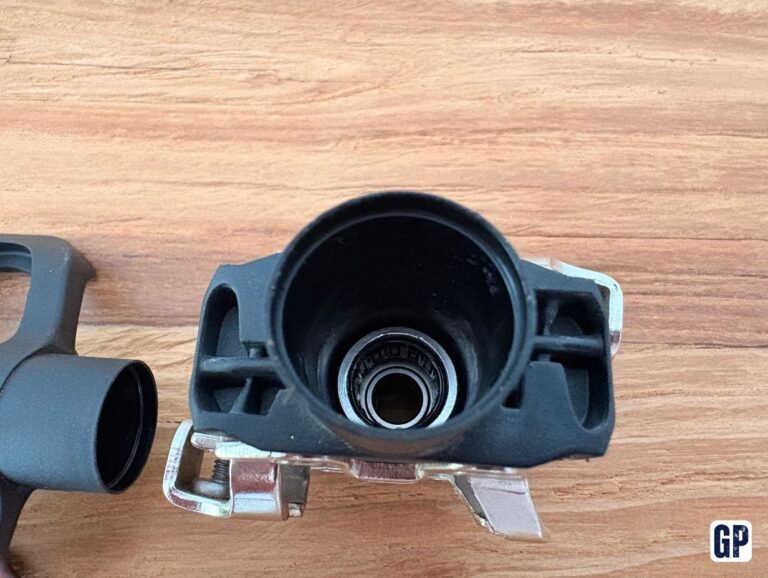
The weight is slightly higher than that of the best-known Italian competitor. That’s not insignificant for riders very attentive to the last gram, but it’s not what dominates in use either. This is explained in part by the fact that CyclOptim uses a larger, stiffer spindle and slightly heavier bearings to gain durability.
CyclOptim quotes a precision of ±1 %, IPX7 rating, a full charge in under 3 hours, and more than 1000 charge cycles before a slight loss of capacity. The battery is sealed in the spindle, so non-replaceable.
But one of the limits is right there: around 20 h of battery life… That’s too little on an accessory of this kind. In my case, that’s a charge roughly every 10 days, whereas with Favero I completely forget about it (160 h of battery life).
Power data: no visible drift during the test
I compared the data with a sensor already installed in the crankset. The aim wasn’t to produce a lab protocol, but to check the things that really matter to a rider: consistency of values, stability, power spikes, behaviour during efforts and the absence of obvious drift.
On this point, I didn’t see any outliers. Power spikes are captured properly, effort phases are consistent, and nothing external seemed to disturb the measurements.
The Classic version also brings left/right measurement, since each pedal contains its own sensor. It’s an interesting data point, provided you don’t over-interpret it. It mainly makes sense in tracking: evolution with fatigue, coming back from injury, position changes, or comparison over time.
The pedals also provide cadence and pedalling efficiency metrics. Here again, the main thing is to keep a practical eye. A power meter first helps you manage your effort better, not drown every ride in metrics you never look at again.
What CyclOptim still needs to improve
The product is already convincing, but it’s not yet fully mature around the pedal itself. The absence of a proprietary app is currently the most visible limitation. As long as everything goes through the GPS head unit, the experience remains functional, but less fluid than with the established players.
The charging cable and battery life would also benefit from evolving. A dual-headed cable to charge both pedals simultaneously would be more consistent with a dual-sensor pair.
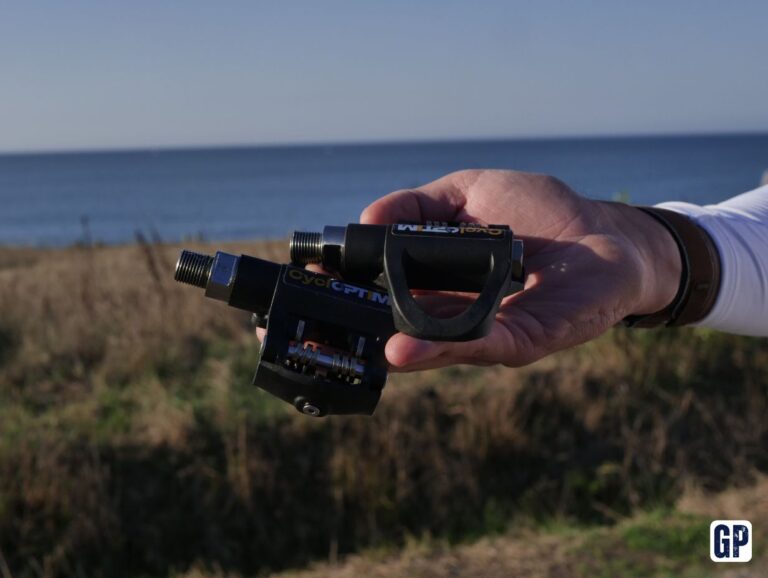
Branding could also be more assertive. CyclOptim has a real story, French manufacturing, a differentiating concept. On the product, this identity remains too discreet.
Against Favero, there’s still a bit of ecosystem maturity and brand recognition missing, and probably a few usability refinements. But the comparison is already interesting, and not purely flattering for the long-standing player.
Because CyclOptim brings something different: with French manufacturing and a design that doesn’t feel like a simple clone.
Who are these CyclOptim pedals for?
These pedals will appeal above all to riders who ride on several types of terrain and want to avoid buying two measurement systems. If you have a road bike and a gravel bike, or a single bike that you regularly transform depending on the ride, the Combo pack becomes relevant.
If you ride only on the road, a MACADAM pair may be enough. If you’re 100 % gravel or MTB, the MASSIF will make more sense. But the real interest of CyclOptim, in my eyes, lies in the Combo: that’s where the concept makes full sense.
You have to accept a few current limits: no proprietary app for now, Bluetooth announced for later, short battery life, discreet visual identity. In contrast, Favero remains a safe bet, more established, with a very polished product experience.
But CyclOptim succeeds on the essentials: offering a pedal that clips in well, measures cleanly, transforms quickly, and doesn’t feel like a prototype released late to market. The product exists, it works, and it brings a real French alternative to a market that needed shaking up.