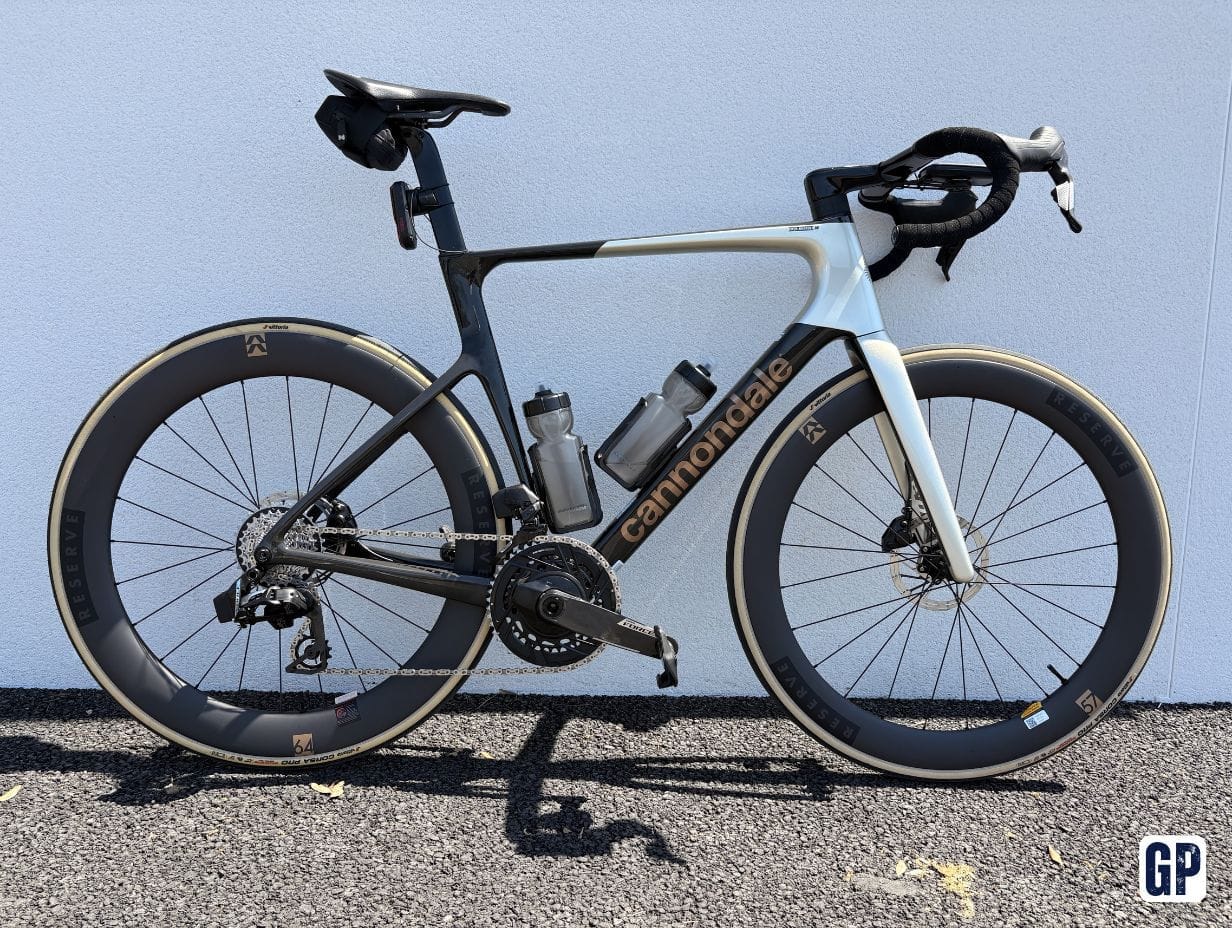

There are bikes that make you want to talk watts, stiffness, drag or carbon layup from the very first line.
And then there is this Cannondale SuperSix EVO, which starts with something much simpler: it is gorgeous.
Highlights:
- Top-tier finish and aesthetics
- Balanced handling
- Agile, precise front end
- Reserve TA wheels that match the build's aero focus very well
To improve:
- 48-tooth chainring too limiting for racing use
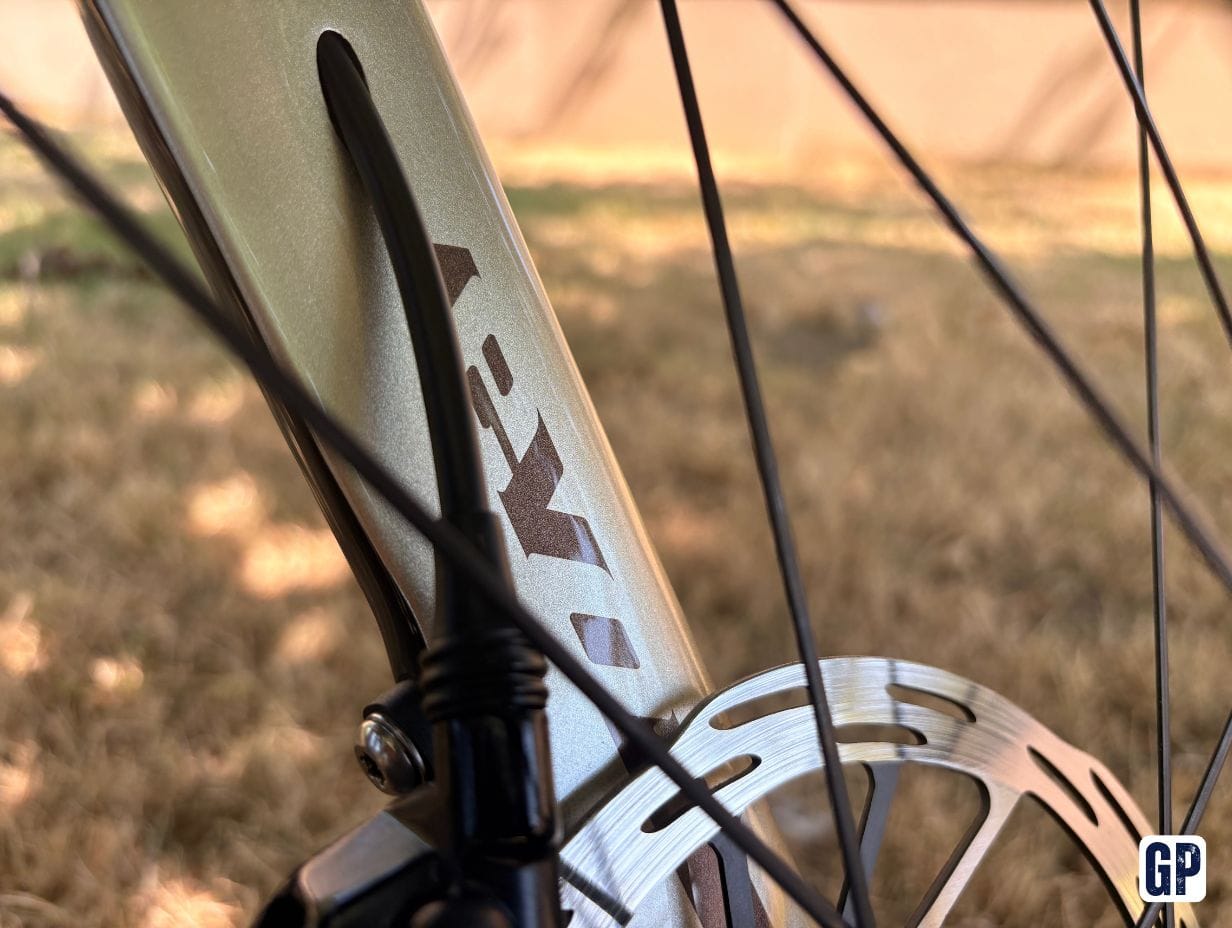
Sober, classy, very visually balanced, with a level of detailing rarely this well judged on a production bike. The carbon effect of the cockpit flowing onto the top tube, the wheel stickers matching the frame, the bronze Cannondale logo, the details inside the fork, the glossy seatpost… Nothing seems thrown in at random.
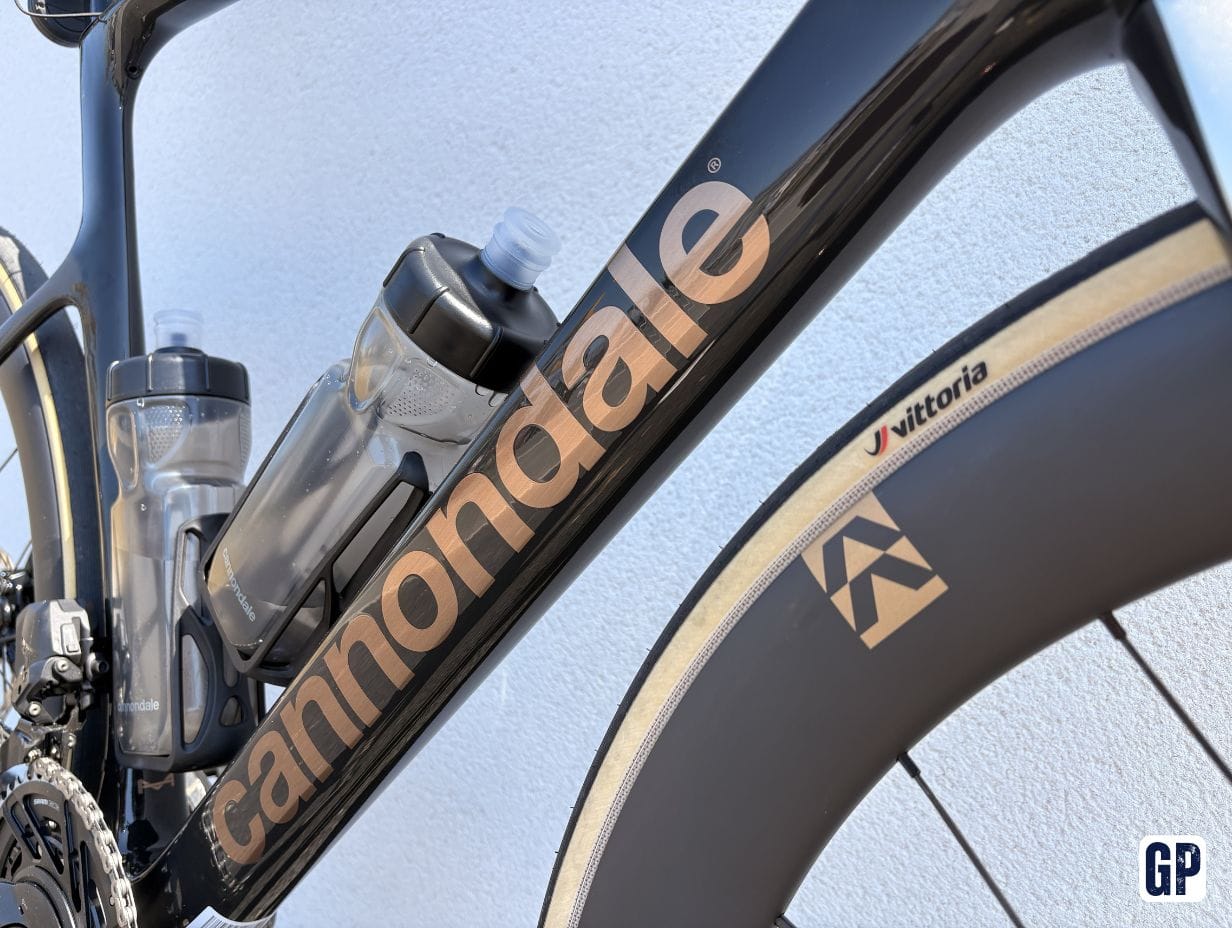
It had been a while since I’d seen a mass-market bike offer such finesse in the details. And the finish is on the same level. Not just tidy. Truly refined. For a brand as established as Cannondale, that isn’t necessarily a surprise. But on this SuperSix EVO, the execution deserves to be highlighted.
One frame, multiple options
Cannondale made a pretty clear choice with this SuperSix EVO: stop multiplying road platforms. We are looking at a single frame, in the same category of versatile race bikes you find today at Specialized with the Tarmac or at Trek with the Madone.
But Cannondale pushes the idea a little further. The frame stays the same, but the builds let you shift the bike’s focus quite noticeably.

Want a very light stock version? The SuperSix EVO 1 SL leans more that way, with shallower rims and a cockpit with a slimmer top section.
Want a more aero build? The model tested here is clearly the right candidate, with its Reserve TA wheels in 64/57 mm and its wider cockpit. In practice, this build is very coherent. Almost perfect, even, except for one detail: the chosen gearing – more on that below.
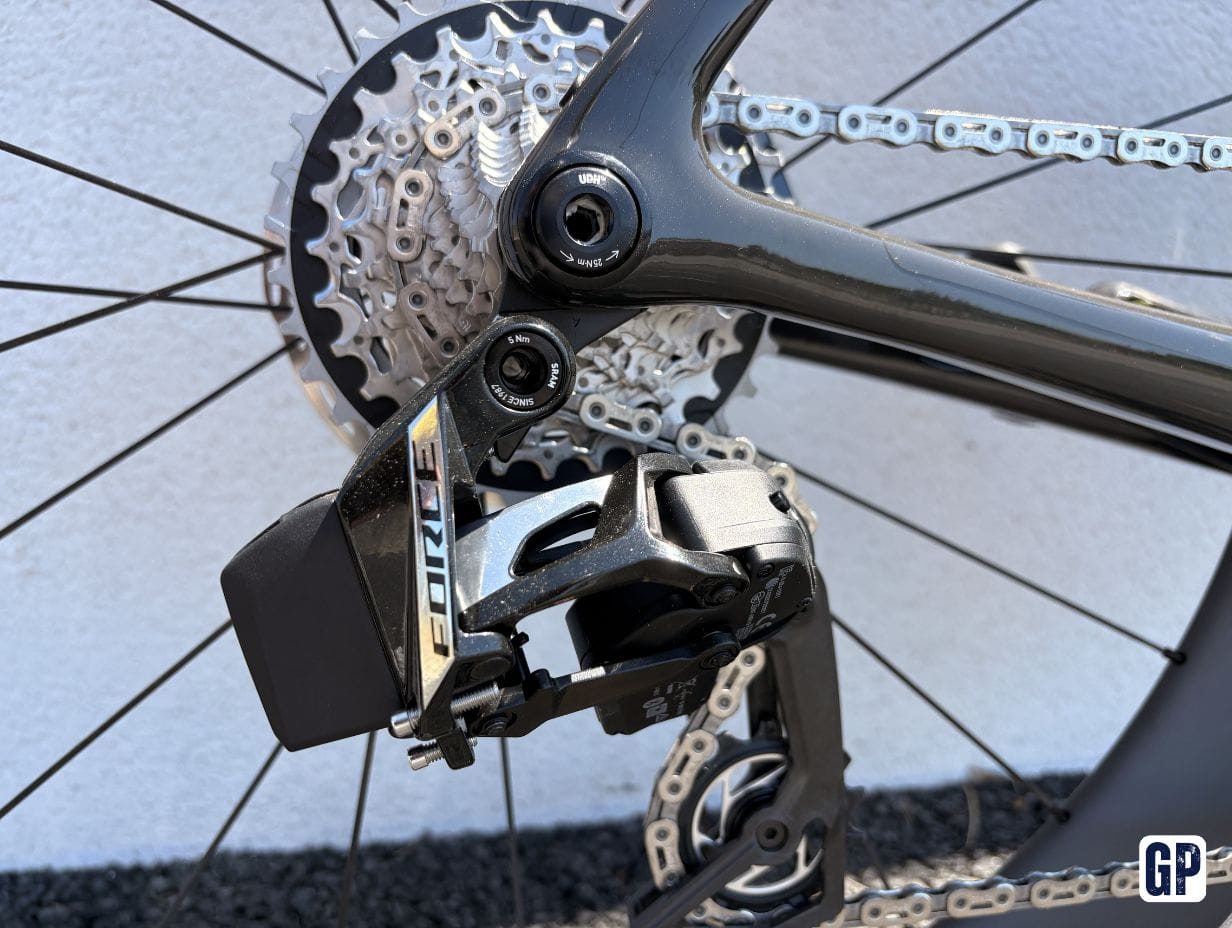
The only area that remains a bit blurry concerns the exact differences between the carbon fibers, especially between the LAB71 in Ultralight Series 0 Carbon and this Hi-MOD Carbon model. Cannondale states that stiffness does not vary between the three layups, with the difference mostly coming down to weight. But for the buyer, it is less straightforward than it could be.
Details that really matter
The devil often hides in the small parts, and Cannondale understands that well.
The supplied GPS mount, for example, is on the same level as the one already seen on the Cannondale Synapse: clean, stiff, well integrated, far from an accessory mount slapped on at the last minute. It is a detail, but on a bike at this level, this kind of detail matters.
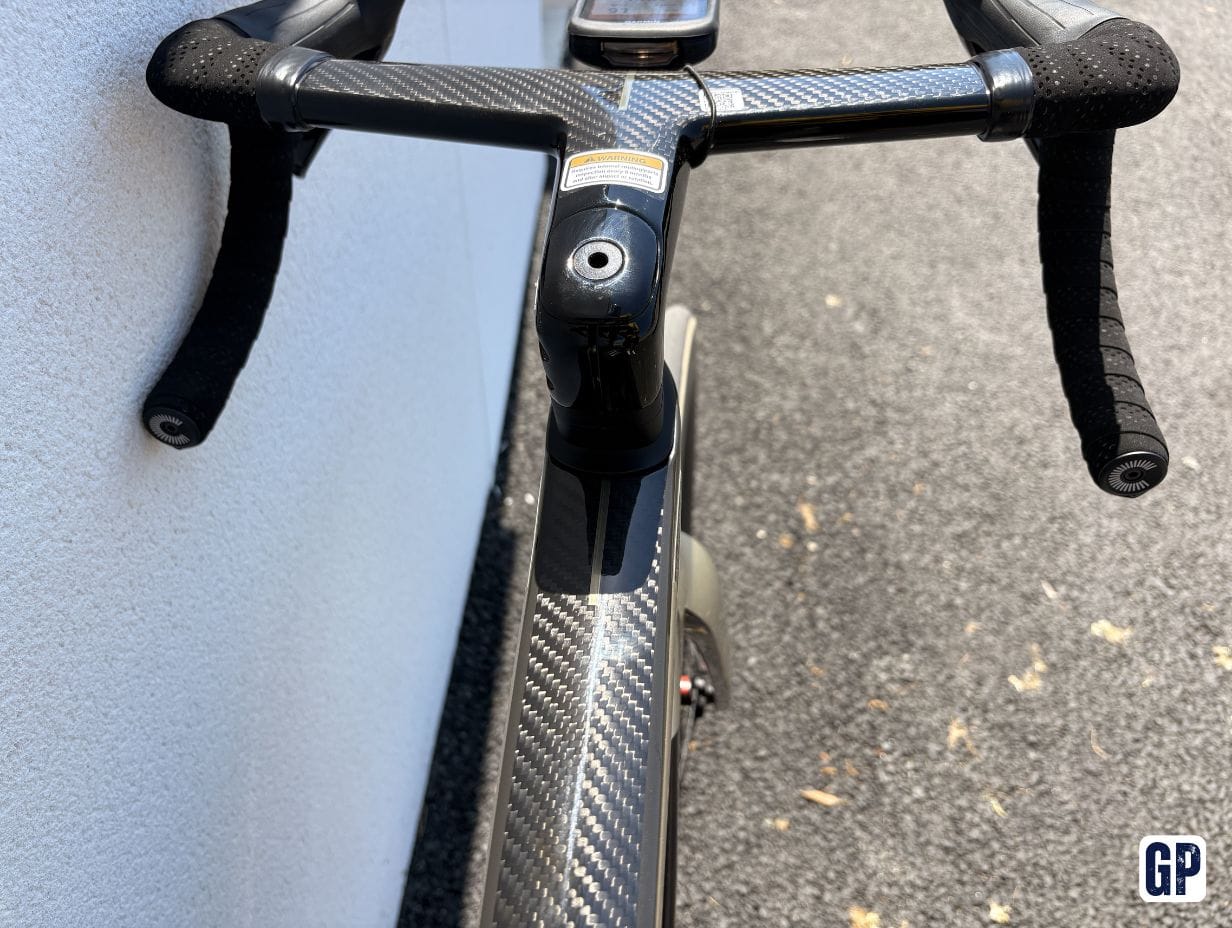
The Delta steerer remains specific to Cannondale, but there is nothing absurd about understanding or maintaining it. We are far from a deliberately opaque system. It is integrated, yes, but not needlessly complicated.
On the seatpost side, however, a small peculiarity: it is the first time I have had to cut a seatpost on a bike, because it would bottom out in the frame quite quickly. Nothing dramatic, but it is something to anticipate during the build, especially if you are between sizes or with a limited seatpost extension.
On the road: stiff where it needs to be, more lively at the rear
In the real world, this Cannondale SuperSix EVO delivers very balanced handling.
You quickly feel the stiffness, especially around the bottom bracket. The bike responds crisply when you press, without that sense of loss or vagueness that some versatile bikes can still show when they try to smooth everything out.

But the rear is not locked out. There is a slight flex, sufficiently noticeable to add comfort, even with the stock 29 mm tires. In 2026, that width is still coherent, but 30 mm would probably bring a bit more comfort for very similar performance.
The Vittoria Corsa Pro clearly contribute to rolling efficiency. They roll very well, deliver great feel, and the sidewalls match the bike perfectly. But their fragility remains, in my view, a real issue.
I punctured several times, and even if tubeless did its job with sealant, the tire was already quite marked after about 1000 km. A pity, because dynamically and aesthetically, the package works very well.
An agile front end, but a bike that remains demanding
The front of the SuperSix EVO is particularly interesting. It remains agile, precise, playful in corners and on descents. The bike places easily, makes you want to attack the bends, and never feels like a lumbering machine disguised as a versatile bike.
The relatively narrow bar with a pronounced drop naturally brings your upper body forward. You almost spontaneously adopt an aero position, without having to force the posture excessively.
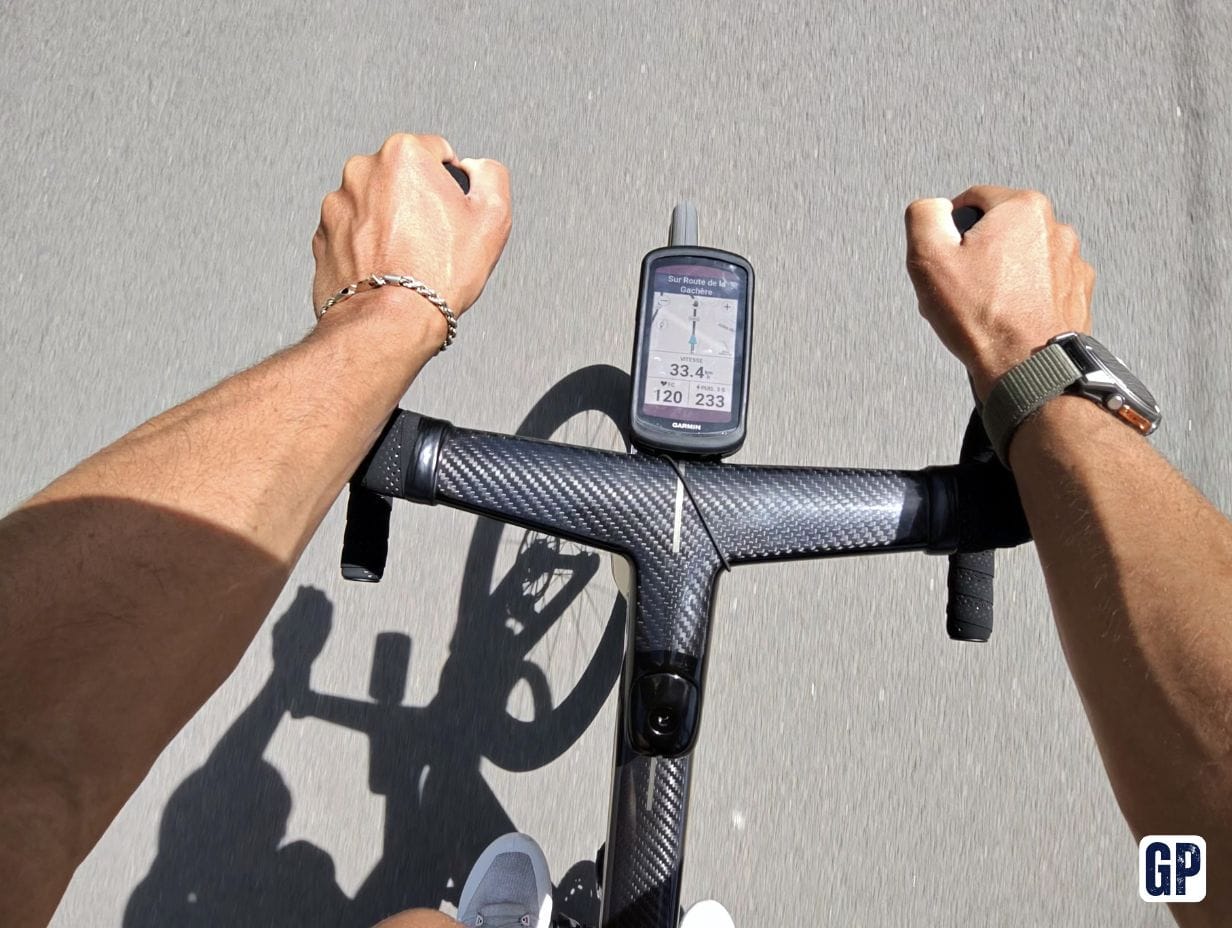
That is a real asset. But it is also what reminds you that this SuperSix EVO is still a racer’s bike. With this layup, this geometry and this build, it is not the easiest bike in the World Tour. It remains accessible for a trained rider, but it demands commitment to be fully exploited.
On the flat, the wheels clearly transform the bike
On the flat, this build really flies. The sensations are very close to the finest aero machines tested recently, and the wheels are a big part of that.
The Reserve TA in 64/57 mm give the bike real presence. There is that sensation of being planted, of carrying speed, of not having to kick again unnecessarily as soon as the road gets fast.
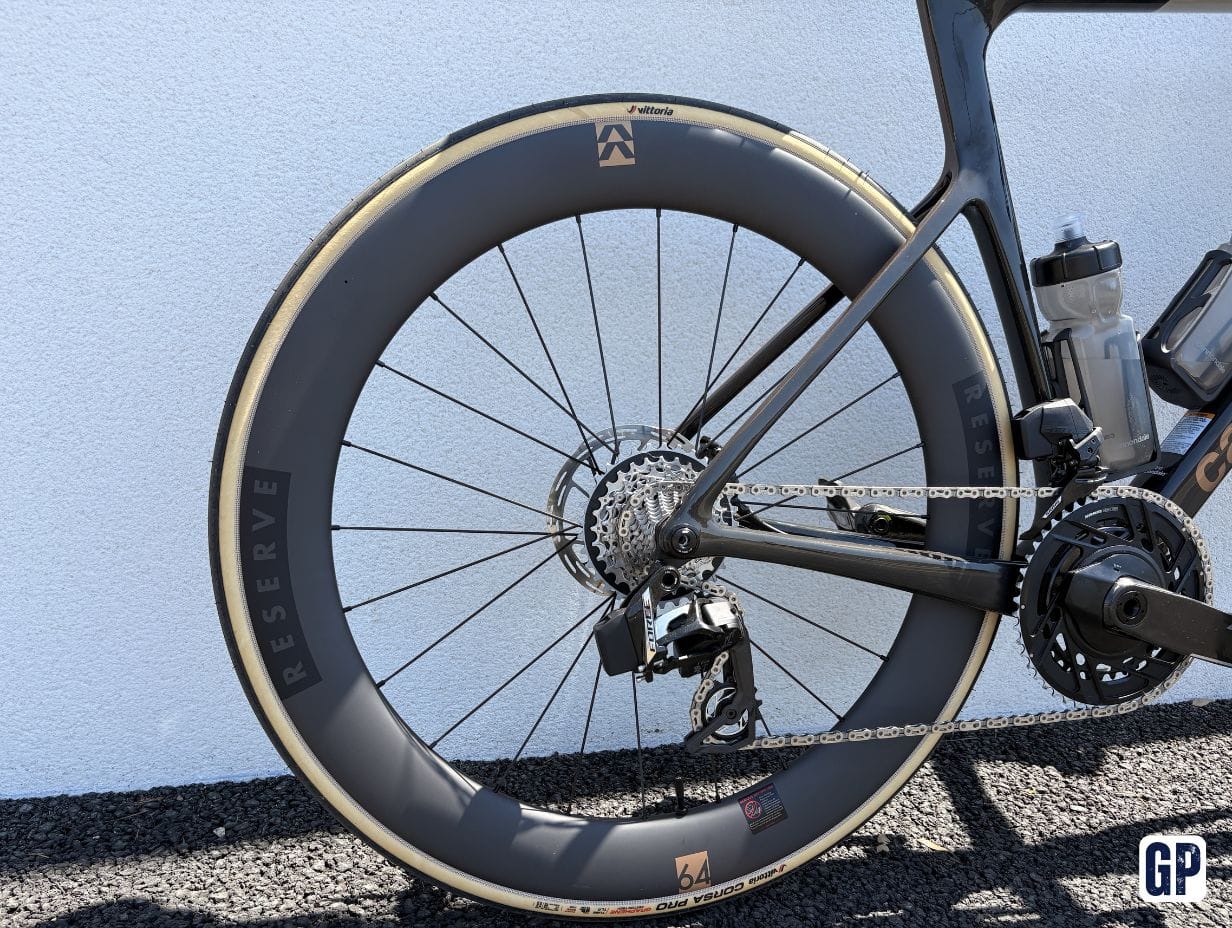
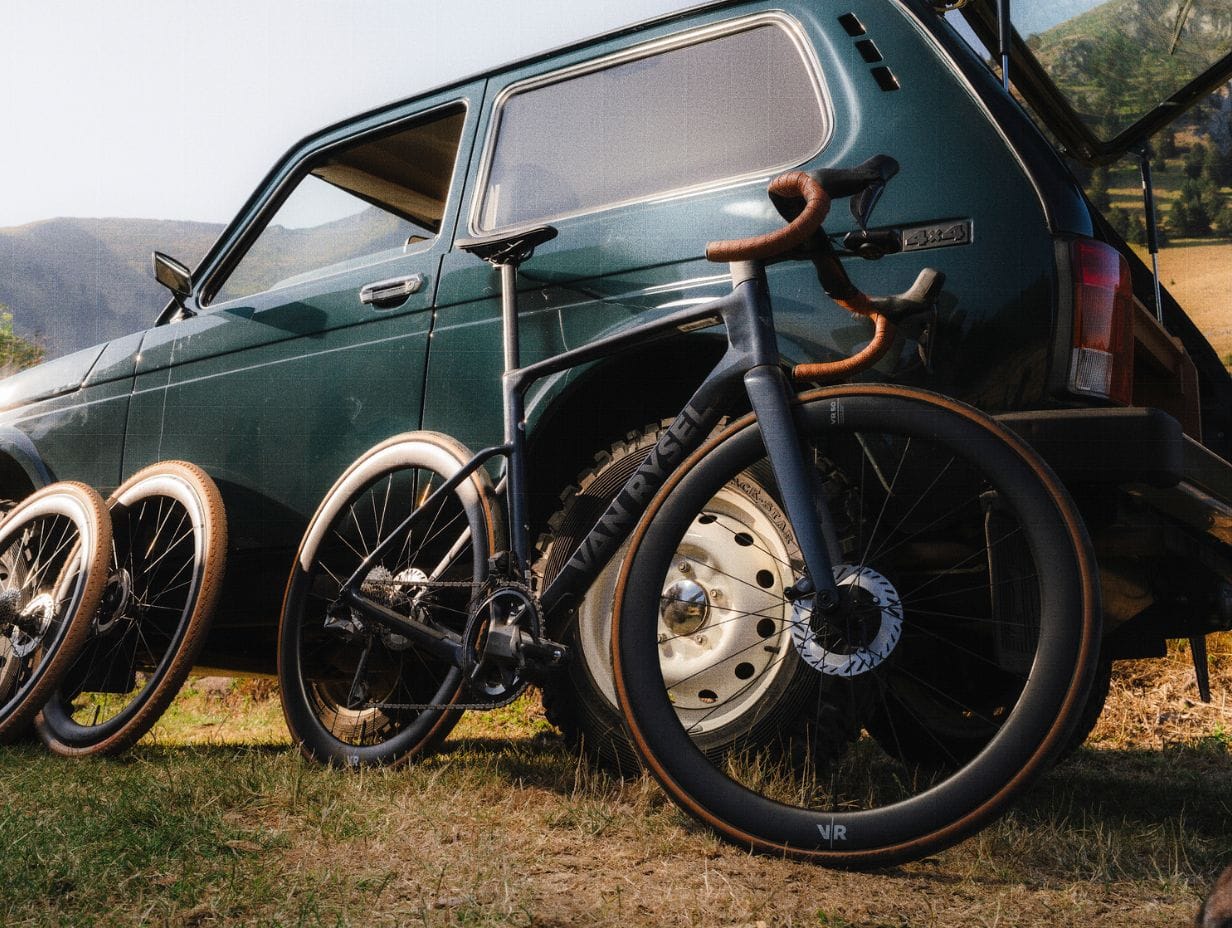
At this level, the SuperSix EVO gets quite close to more aero-focused bikes, like the Van Rysel RCR-F, while keeping a slightly more versatile identity in its overall behavior.
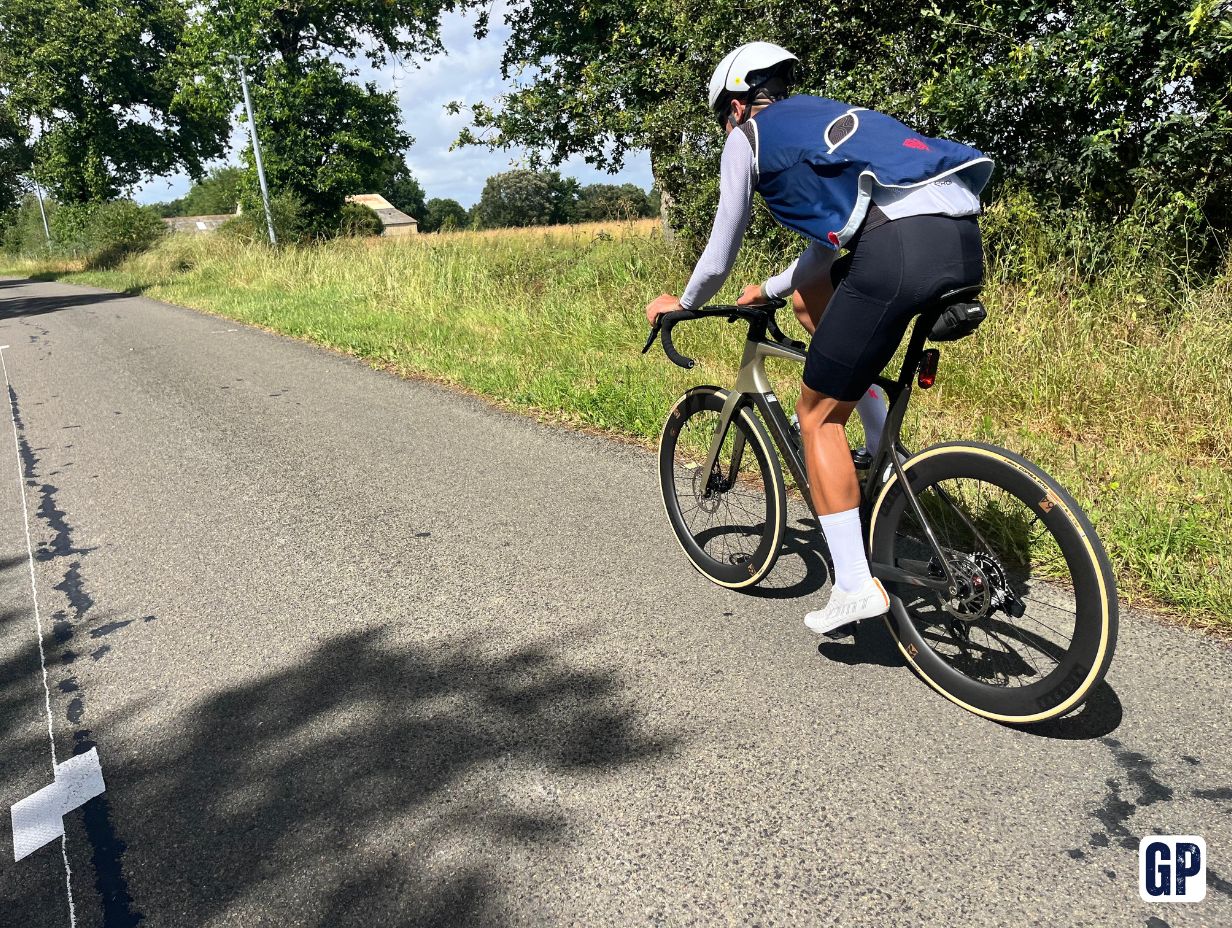
This is exactly where Cannondale pulls it off: offering a bike capable of feeling light in spirit, efficient on the flat, enjoyable on descents and lively enough on the gas. The promise of a bike that is fast everywhere is marketing in the wording, but here it rests on something tangible.
The big regret: a 48-tooth chainring too limited for this build
The main flaw of this build comes from the gearing.
On this SRAM Force version, finding only a 48-tooth chainring is hard to understand. Yes, with SRAM’s 10-tooth start, maximum gearing is still higher than a classic 52×11. But in practice, the chainline is not ideal, and top-end speed remains limited on a slight downhill false flat.
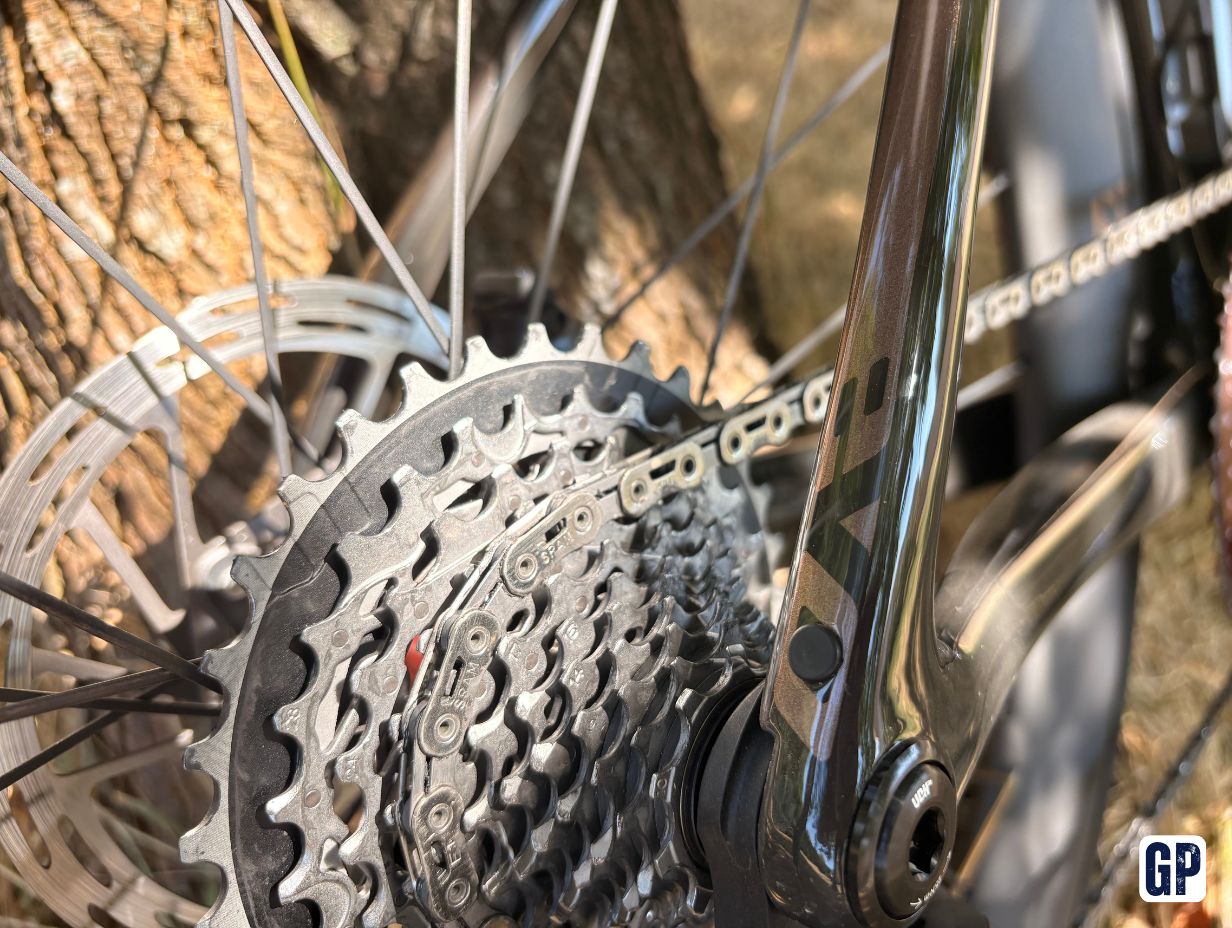
For fast sportives or quick riding, it can work. For competition, this 48-tooth will probably need to be changed.
The 50-tooth in Force seems to be the most logical choice. Beyond that, you have to move to a RED front derailleur, because the Force does not accept more. On this point, it is hard not to see a frustrating constraint: SRAM mechanically pushes the fastest riders toward the top tier.
It is not a structural flaw of the bike, but on such a speed-oriented build, Cannondale could have seen the logic through.
Equipment: premium, and almost perfect
The supplied aero bottles and bottle cages are a nice surprise. The integration is clean, the package contributes to the bike’s overall coherence, and it remains possible to use standard round bottles. That is important, because a system that is too closed quickly becomes annoying day to day.
One small gripe though: water can leak through the nozzle if it is not closed again. A detail, but the kind of detail you quickly forget when you use the Gravel Passion bottles 😜.
The Fizik Vento Antares R1 saddle is premium, well finished, and price-point coherent. But on this very aero-focused build, I find it a bit long. A Fizik Argo Vento 00 would probably suit the bike’s spirit better. Conversely, the Antares makes more sense on an SL build – lighter, more mountain oriented, less locked around the aero position.
The crank-based power meter is a very good thing. At this level of bike, it is almost indispensable. However, note that a specific tool, sold (too) expensively by SRAM, is required to change the chainrings.
A modern, coherent, almost impeccable SuperSix EVO
This Cannondale SuperSix EVO Hi-MOD mainly confirms one thing: Cannondale has its current road recipe very well in hand.
The bike is beautiful, very well finished, dynamic, fast, stable when needed, playful when the road twists, and comfortable enough not to become a caricature. It does not try to be the softest, the most accessible or the most forgiving. It seeks to be a true modern race bike, capable of going fast in many situations.
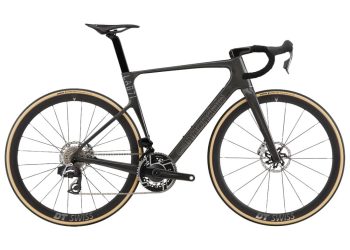
Its limits exist: the Vittoria Corsa Pro tires are high-performing but fragile, the 48-tooth is too tight for the build’s focus, and some equipment choices could be even better aligned with the aero spirit.
But the whole remains extremely solid. Cannondale here offers a very accomplished machine, with real coherence between aesthetics, integration, handling and performance.
A race bike with almost no flaws, and above all a bike that makes you want to ride fast.