
Dynamic Bike Care is best known for its maintenance products. With the Lyte 1200, Red Lyte 100 and Lyte Remote, the brand steps into a space where ergonomics matter as much as lumens.
I tested the set for two months, on road and gravel, with one idea in mind: to see whether these lights are just pretty and well finished, or genuinely practical to use day to day.
Strengths:
- Excellent front and rear mounts
- Front light button easy to reach with gloves
- Anti-glare lens orientation preserved in both mounting positions
- Rear light is compact, stable and genuinely easy to remove
Could be better
- Limited battery life in 1200-lumen mode
- Battery indicator too imprecise on both lights
Lyte 1200: compact, well finished and thoughtfully designed
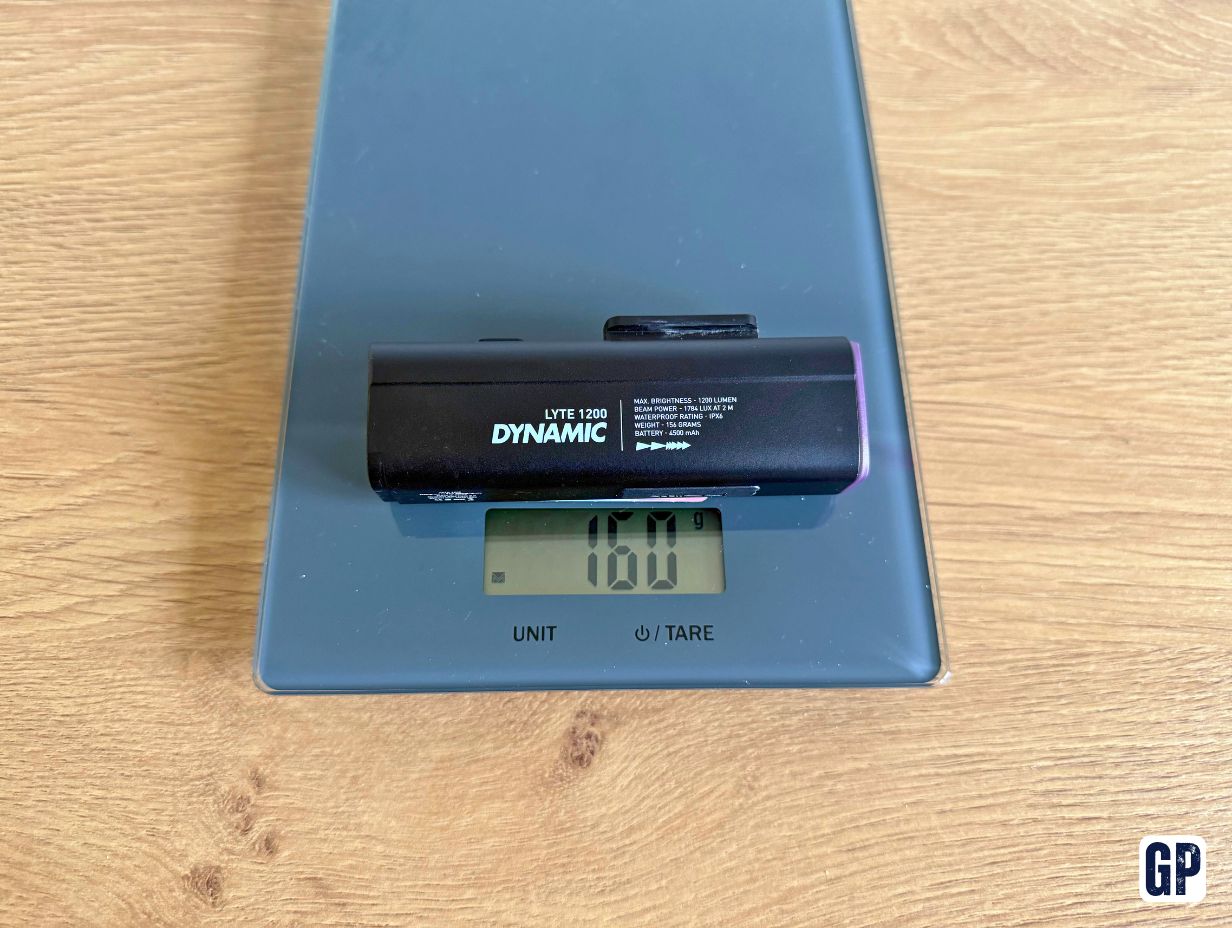
The Lyte 1200 is the most powerful front light in Dynamic’s range. It claims 1200 lumens, a 4500 mAh battery and IPX6 certification. I weighed it at 160 g, versus 156 g claimed. The difference is minimal, and the weight remains reasonable for a light of this output.
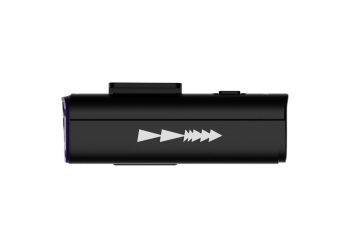
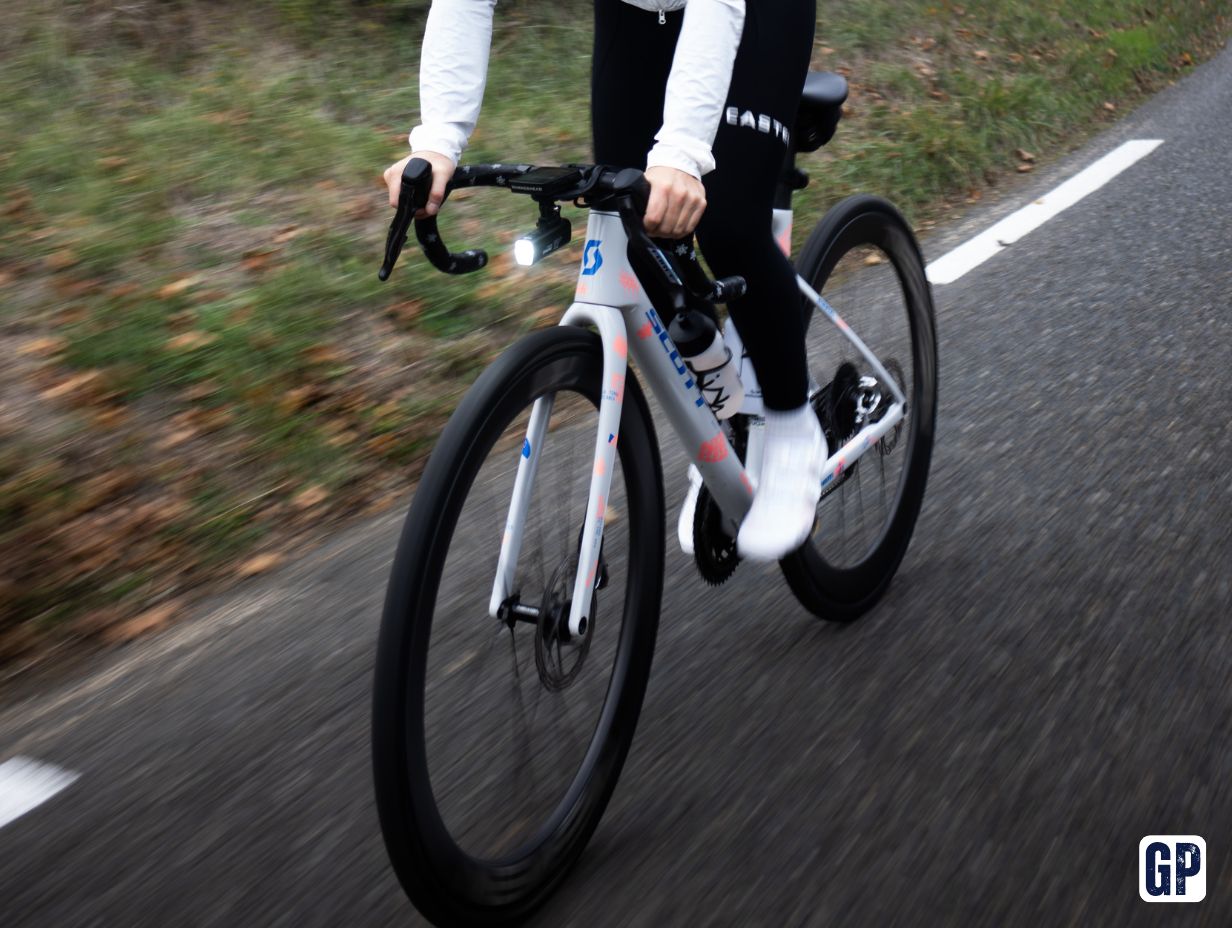
Visually, Dynamic keeps its identity: black body, purple rear, fairly discreet logos on the sides. The light does not look like a huge block under your head unit. It stays fairly compact and neat, and does not clutter the front of the bike.
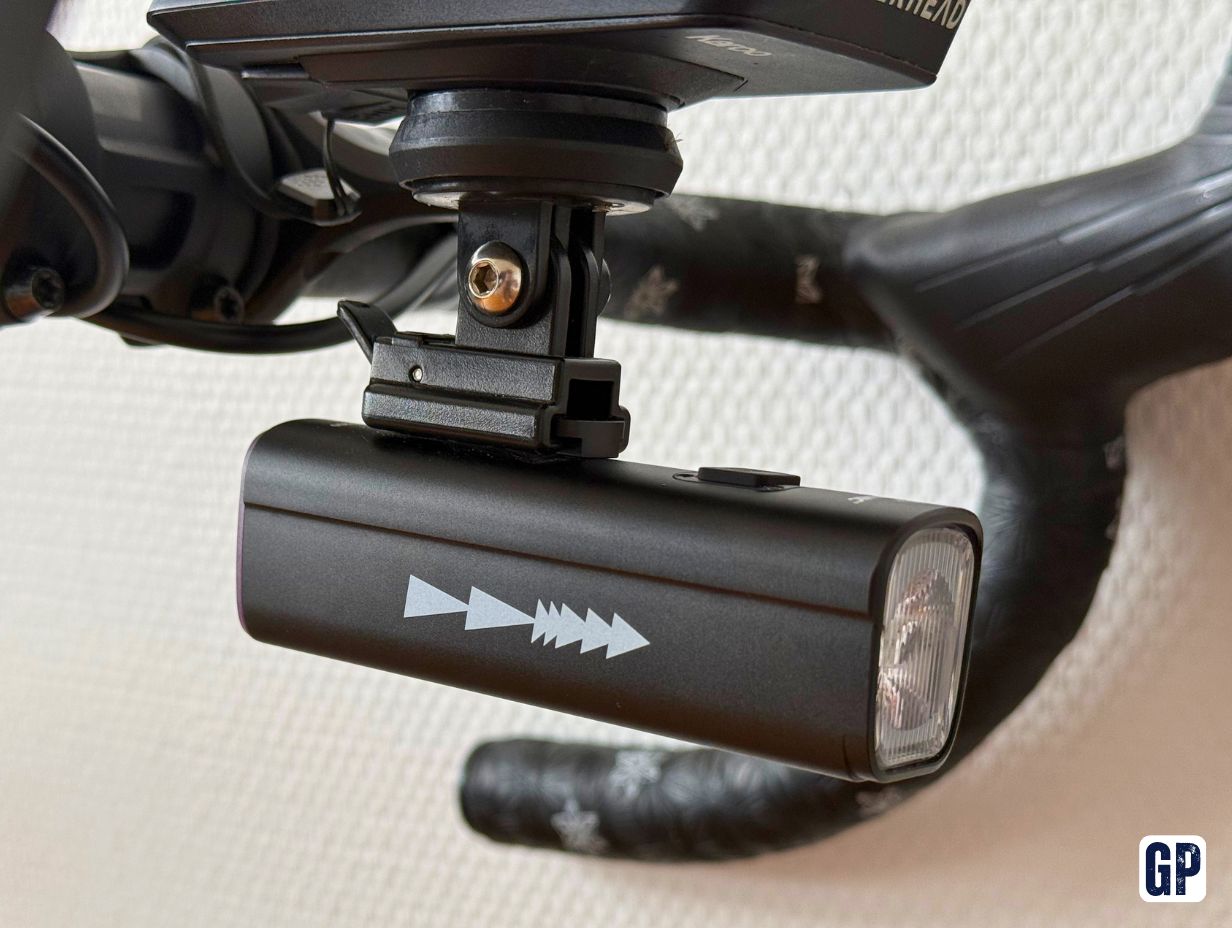
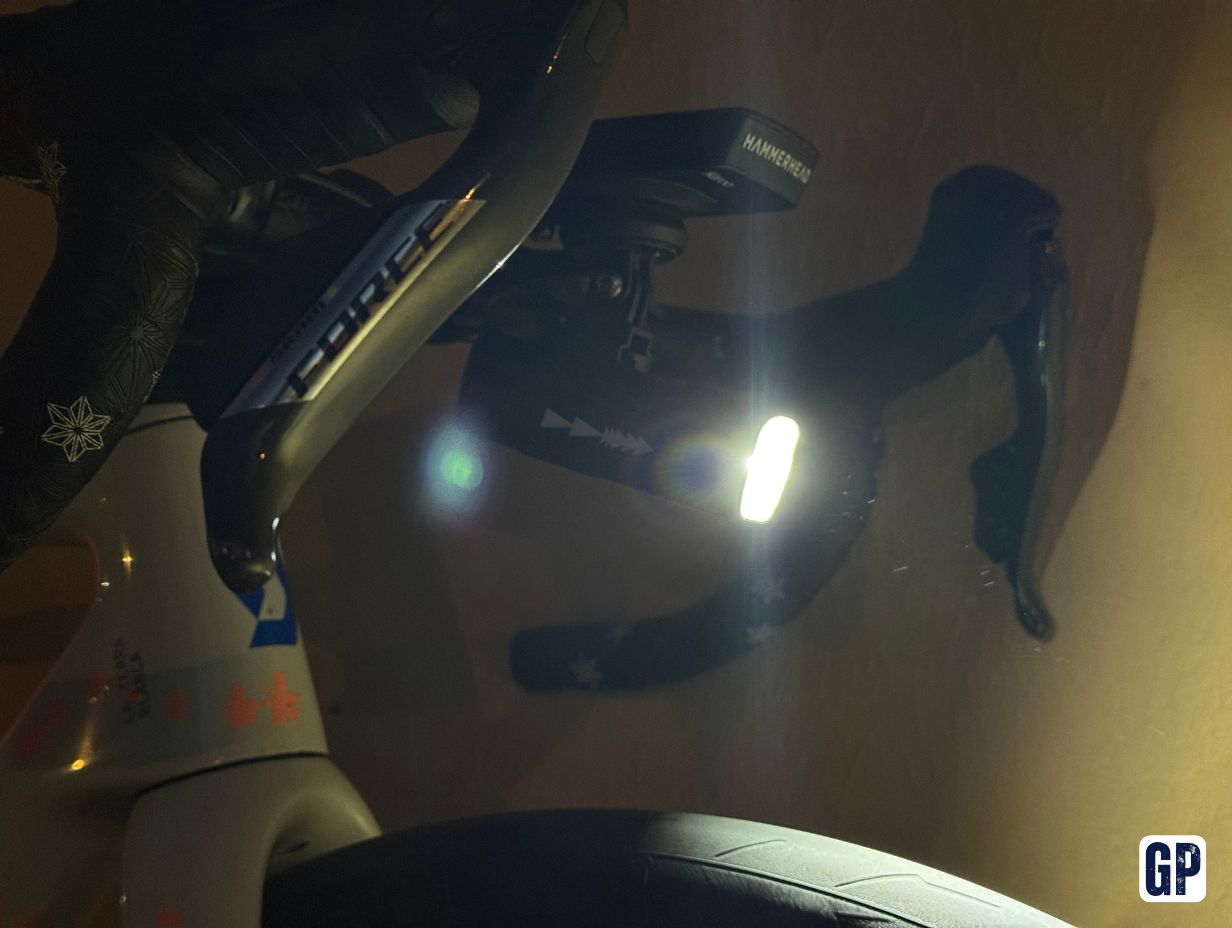
The most interesting detail is not aesthetic. The Lyte 1200 uses a lens designed to limit glare for oncoming road users. That alone is not rare. The real point is that Dynamic has provided two mounting positions so this lens remains the right way up whether the light is mounted under a GoPro-style mount or on top of the handlebar.
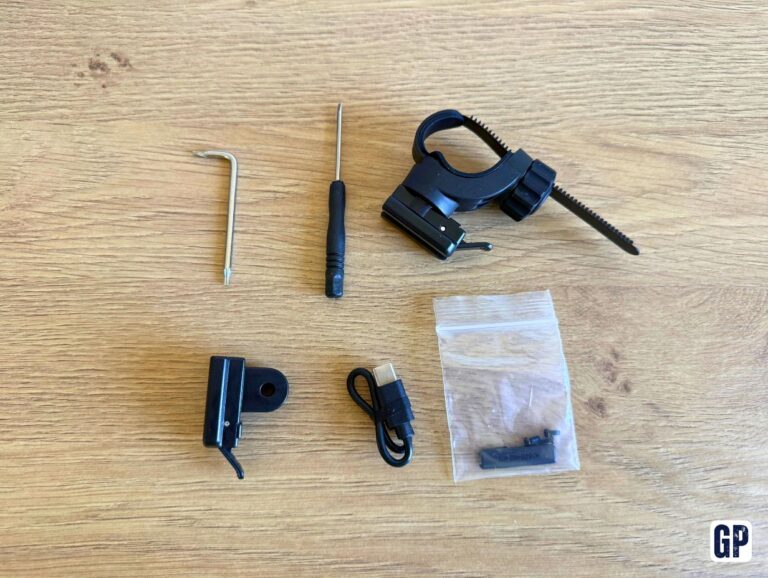
In practice, if you use a GoPro mount under the computer, the mount sits on top of the light. If you want to mount the light on a standard handlebar, you remove a small cover, unscrew the mounting piece and refit it under the light. You need the supplied tools, but it is not something you do every day.
It is a smart touch. Many lights become less coherent as soon as you change their orientation, with the anti-glare lens ending up inverted. Here, Dynamic avoids that compromise. The light stays with its button facing up, the beam oriented correctly, and the anti-glare function keeps its benefit.
In the box you get the light, a mount for a round handlebar, a GoPro-style mount, a USB-C to USB-C cable, the manual and two tools. One caveat: the supplied mount clearly targets round handlebars. On an aero cockpit, you will be better off with a GoPro-compatible mount.
A really well-executed front mount
The Lyte 1200’s locking system is one of the details I appreciated most. The light slides onto its mount, a click confirms it is locked, and to remove it you simply press a small lever before sliding it off. No need to force it, no sense of fragile parts, no unwanted play.
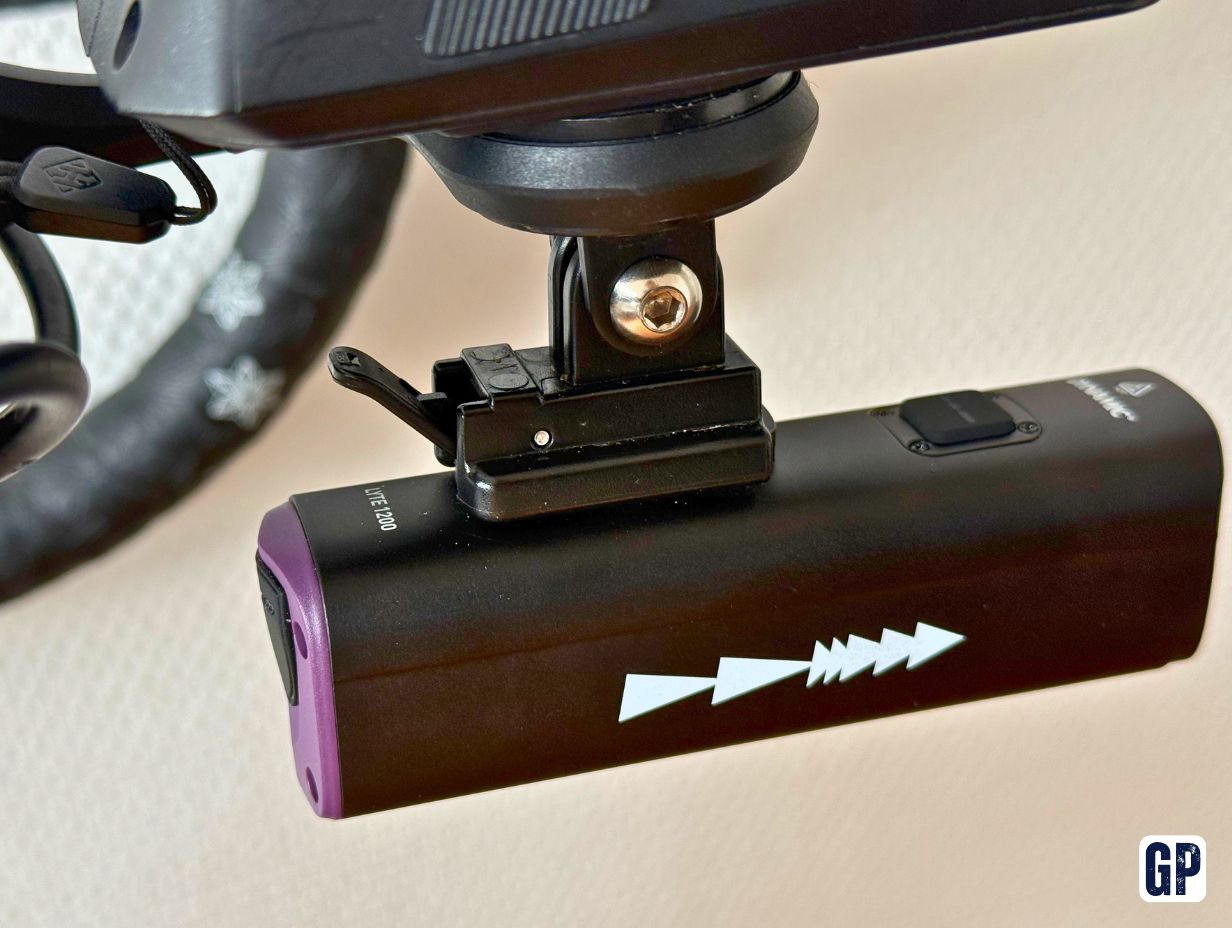
It may seem secondary, but this is exactly the kind of detail that changes daily use. When the mounting system requires too much force or does not inspire confidence, you end up not using the light.
On this point, the Dynamic did a better job than the Knog Blinder 900, whose test noted a practical GoPro mount but a light that tended to slide forward with vibrations. It also felt more reassuring than a quarter-turn mount as found on the Bookman Volume 800 and 1500.
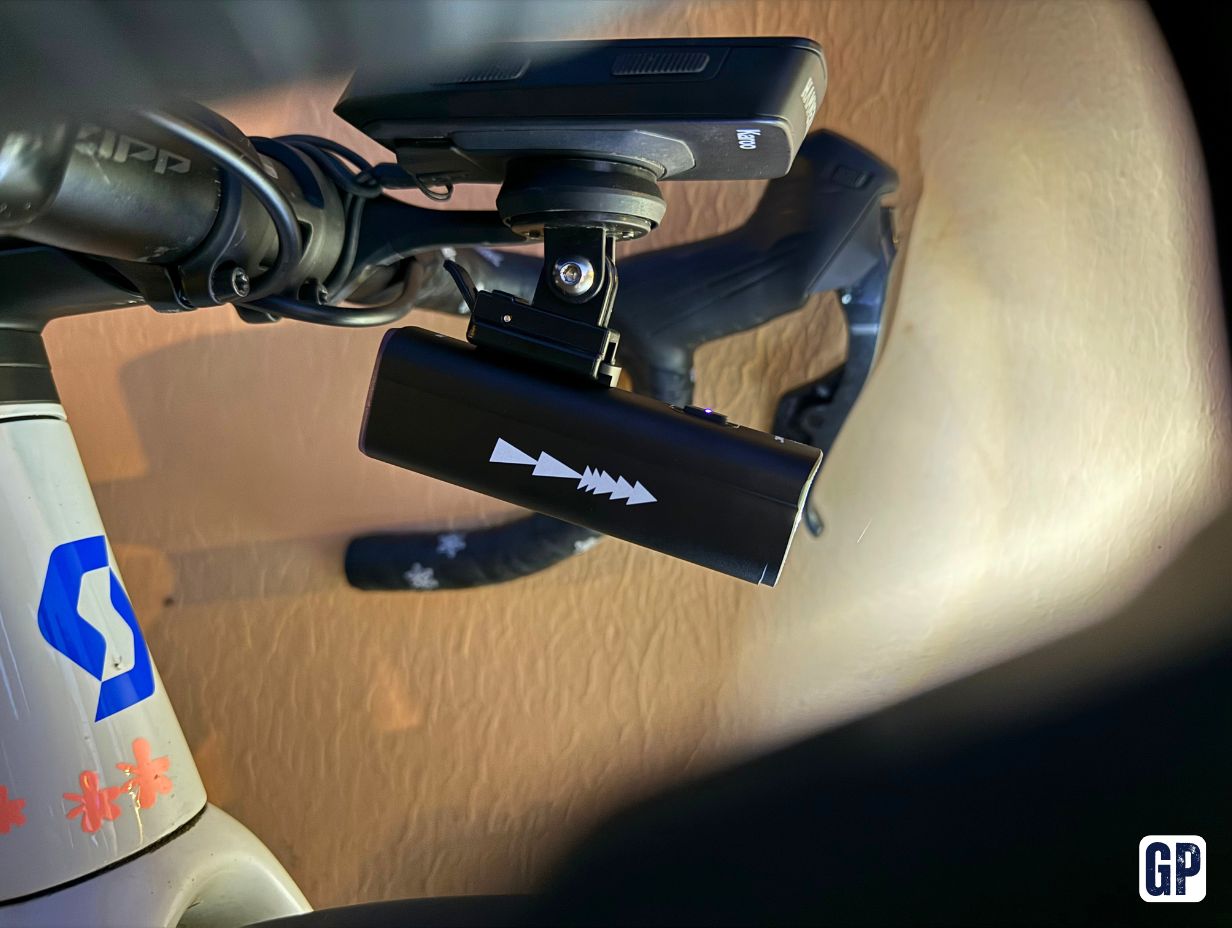
Here, Dynamic’s part is less flashy, but it inspires confidence. And for a light that can be mounted under the cockpit, that lack of doubt really matters.
Battery: good behaviour, but the indicator lets it down
The Lyte 1200’s ergonomic weak spot is the remaining battery indication. There is neither a percentage nor a multi-LED gauge. The button simply changes colour: purple between 61 and 100%, yellow-orange between 21 and 60%, flashing red between 1 and 20%.
In practice, it is too vague. Riding at 60% and at 22% is not the same, especially when you set off to ride at night. As soon as the indicator turns amber, you are inclined to recharge, because you do not really know what is left.
The light also offers a lock mode to avoid accidental activation during transport: hold the button for five seconds when the light is off to activate it, then five quick presses to disable it. I did not use it, but it is a useful feature if the light travels in a bag.
As for battery life, Dynamic claims 1 h 30 at 1200 lumens, with an additional 30 minutes in Breathe emergency mode when the battery is very low. In Medium Steady, at 600 lumens, the brand claims 3 h plus 1 h of emergency. In Low Steady, at 300 lumens, 6 h plus 1 h of emergency.
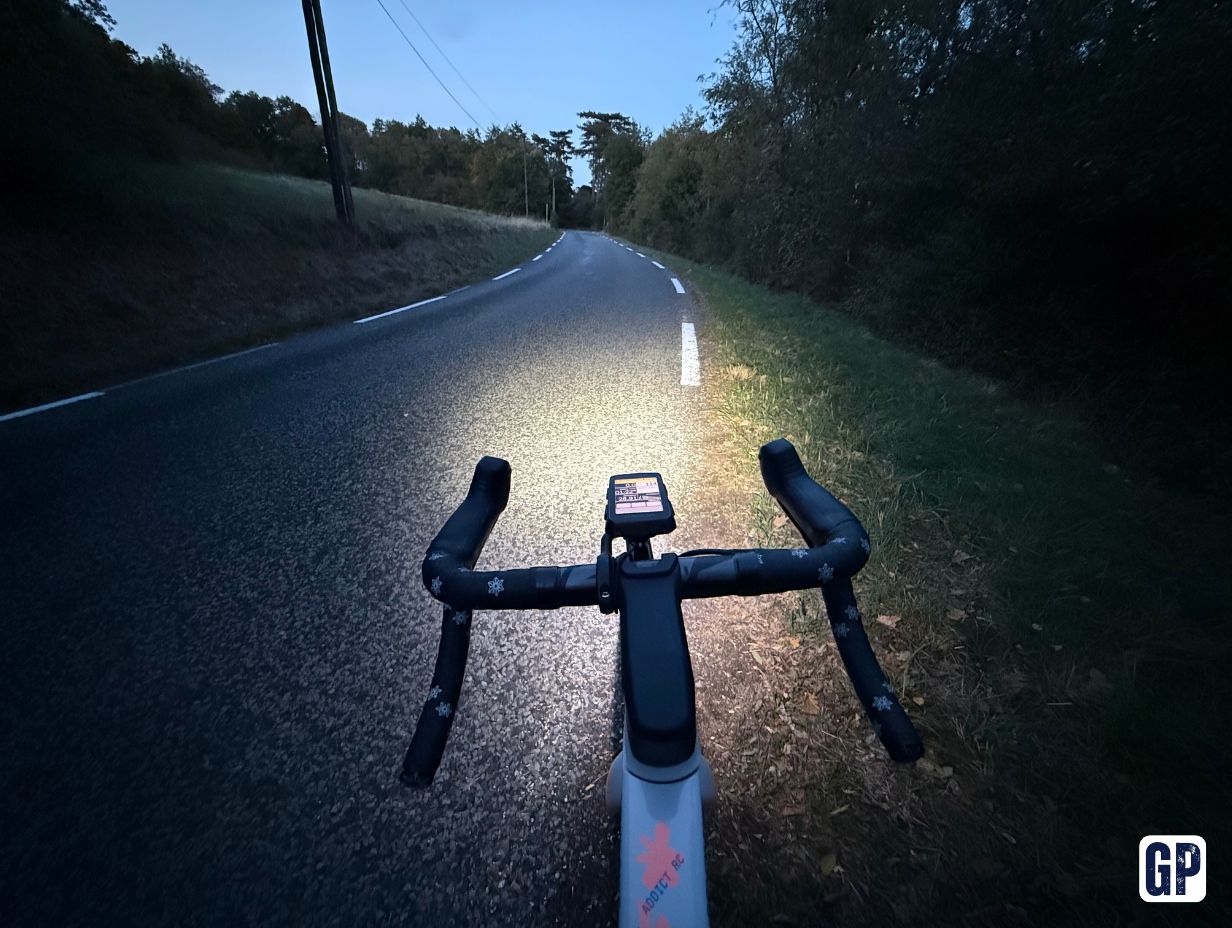
There is also a Day Flash mode at 600 lumens claimed at 20 h, with 4 extra hours of emergency, and a Breathe mode between 100 and 50 lumens claimed at 20 h. Personally, I do not use powerful front flashes: I find them aggressive, even dangerous for other road users. At night, the Breathe mode is much gentler. It mainly serves to be seen. It is not enough to properly light the road.
My tests took place in temperatures rather favourable to batteries, between 17 and 8 °C. In these conditions, I found battery life close to what is claimed. A full charge also takes about two hours.
On road and gravel: 1200 lumens are useful, but do not last long
In real use, I switched between modes a lot. When the sun was setting or on a cycle path, I often stayed in Low. When it was properly dark, I moved to Medium. And when I found myself alone on a dark road, High became much more comfortable.
The problem lies exactly there: at around 30 km/h, on the road or on a fast, rolling track, Medium sometimes felt a bit short. You want to see further, especially if the surface is rough or the road descends. The 1200-lumen mode fixes this, but with 1 h 30 of battery life, you have to pick your moments.
The Lyte 1200 can also serve as a power bank. I tried it quickly to power a GPS, and it works. But given its limited battery life, I see this more as a troubleshooting feature than a real argument for ultra-distance.
The button ergonomics partly make up for these limits. It protrudes enough from the shell to be easy to find by feel, even with gloves. And it remains illuminated (and therefore visible) while the light is in use. One click cycles from Low to Medium to High. Flash and Breathe modes sit in a sub-menu, which avoids scrolling through ten useless modes when you simply want to adjust the power.
It is simple, and exactly what I expect from a light used while riding.
Lyte Remote: useful, but not essential here
The tested pack also included the Lyte Remote Control. The remote works well, mounts easily on the handlebar or elsewhere, and lets you change mode without touching the light.
But on this set-up, I did not need it. The Lyte 1200’s button is already very accessible, and changing mode is easy. The remote would make more sense if the light were mounted far from your hand, for example on a fork eyelet or on a helmet.
The issue is that Dynamic does not provide a helmet mount with this light. In this specific case, the remote almost suggests a use that the ecosystem does not fully cover. It remains a good addition, but not an essential accessory for a classic under a computer mount or on-bar set-up.
Price and positioning of the Lyte 1200
The Lyte 1200 has an RRP of €89.99. At the time of the test, it was listed at €69.99. At full price, it is well positioned, notably cheaper than Knog Blinder models. At €69.99, it is even much more convincing.
Dynamic also offers less powerful versions, such as the Lyte 800 and Lyte 400. I have not tested them, so I remain cautious, but my choice would clearly be the 1200. It stays compact, not too heavy, well finished, and at least offers the power reserve you need when the night turns truly dark.
The 400 seems mainly geared towards visibility or lit urban use. The 800 can be a compromise, but for night-time descents, gravel or unlit roads, 1200 lumens will be essential, even if the battery life requires management.
Red Lyte 100: small rear light, big ergonomic success
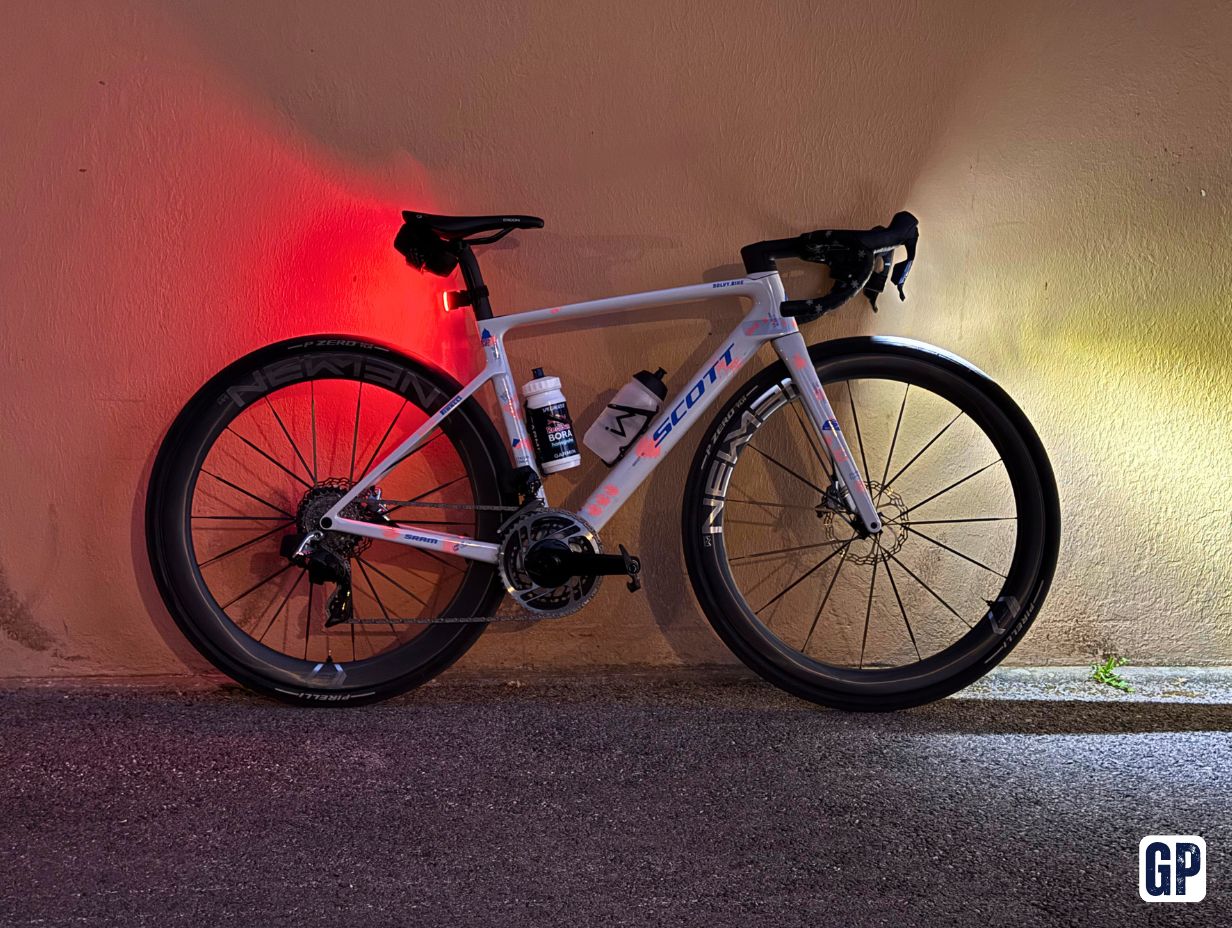
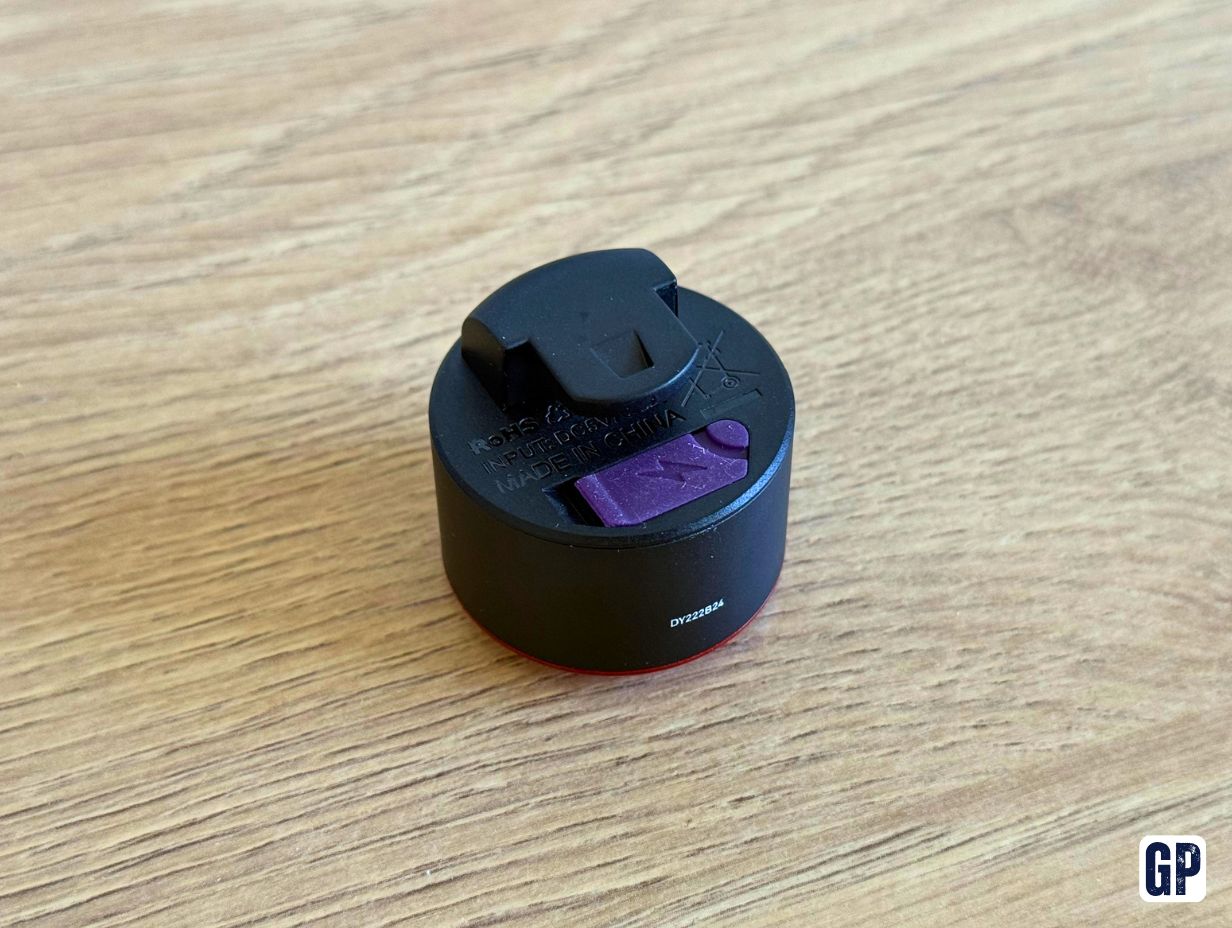
The Red Lyte 100 is Dynamic’s rear light. It claims 100 lumens, a 220° visibility angle, six lighting modes, IPX6 certification and a smart function that increases brightness during deceleration.
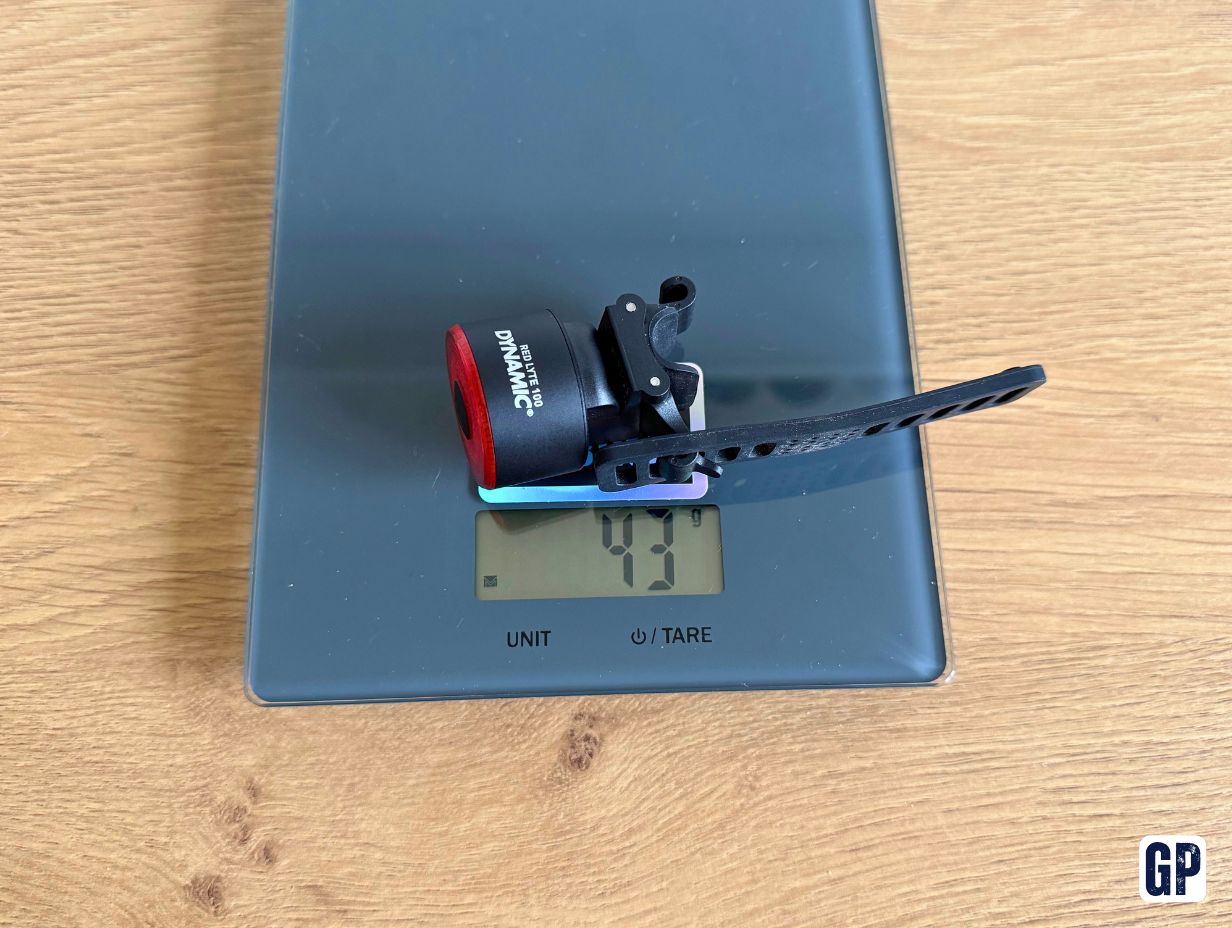
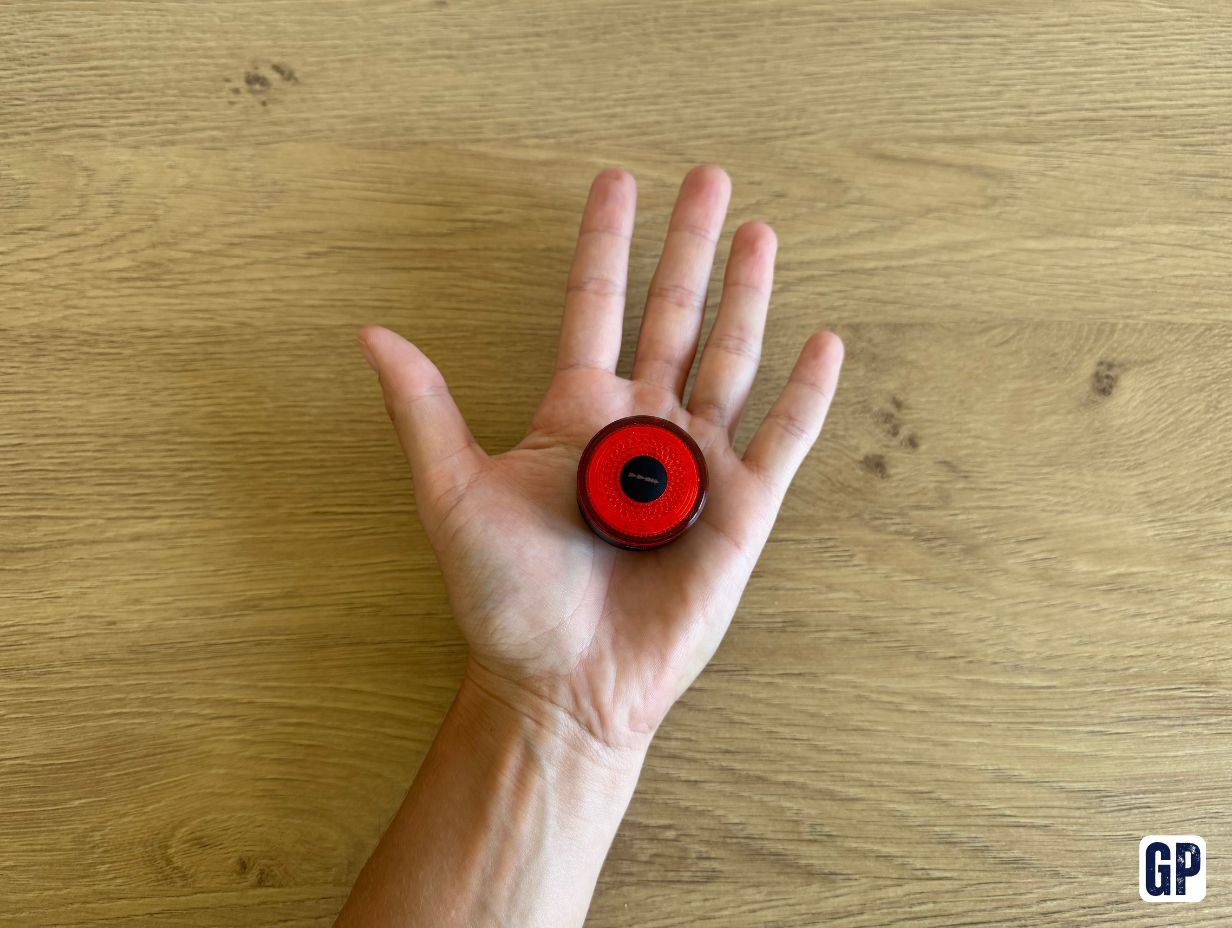
I weighed it at 26 g on its own, versus 24 g claimed. With its mount, the set comes to 43 g. It is compact, discreet, and small enough not to spoil the look of a seatpost, even on a tidy road bike.
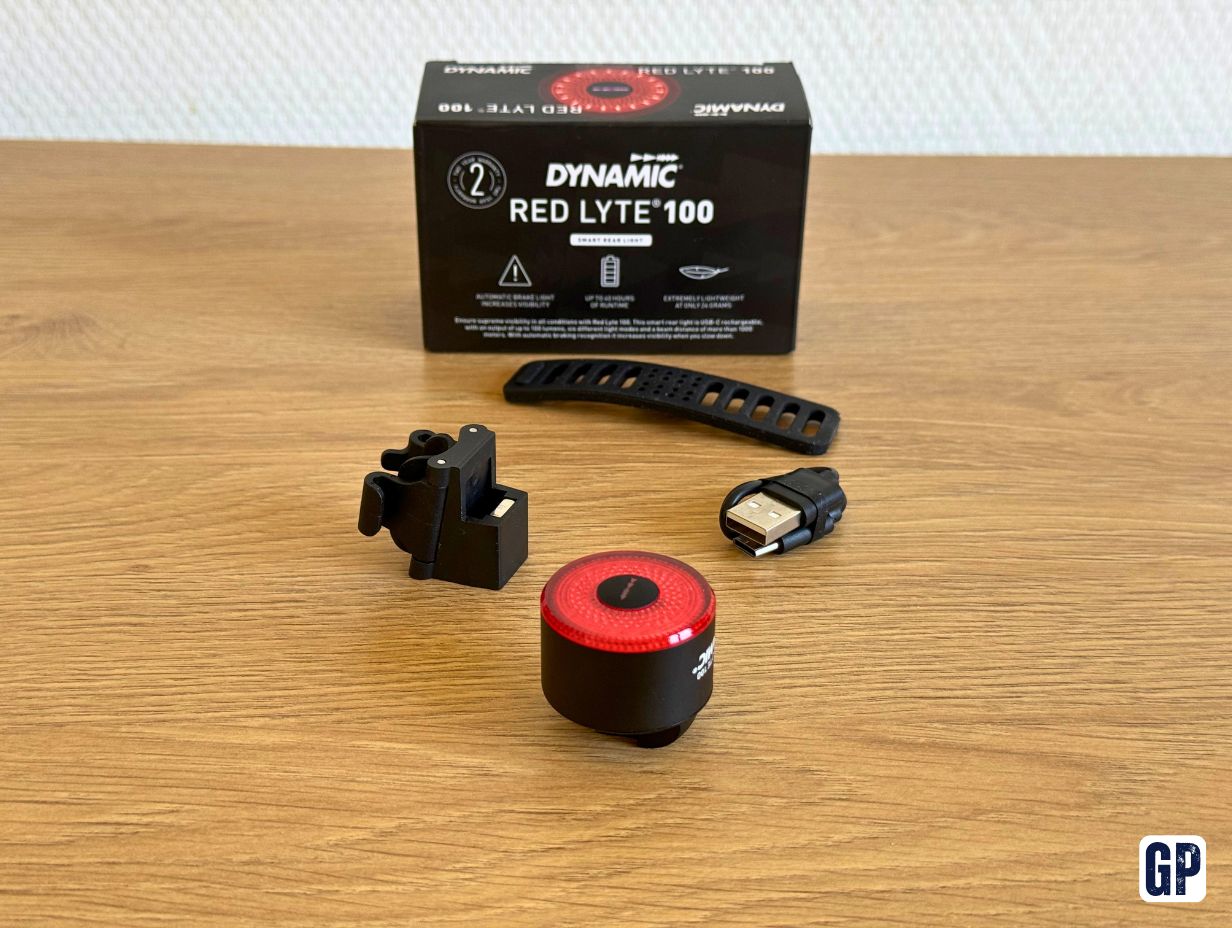
The mount is quite particular. Dynamic designed it to adapt to several seatpost shapes: round, flat, thinner at the rear, or fairly angular. Functionally, it works very well, even on my square-back seatpost, and it is stable.
It must be said the whole setup remains minimalist. And most importantly, it holds very well.
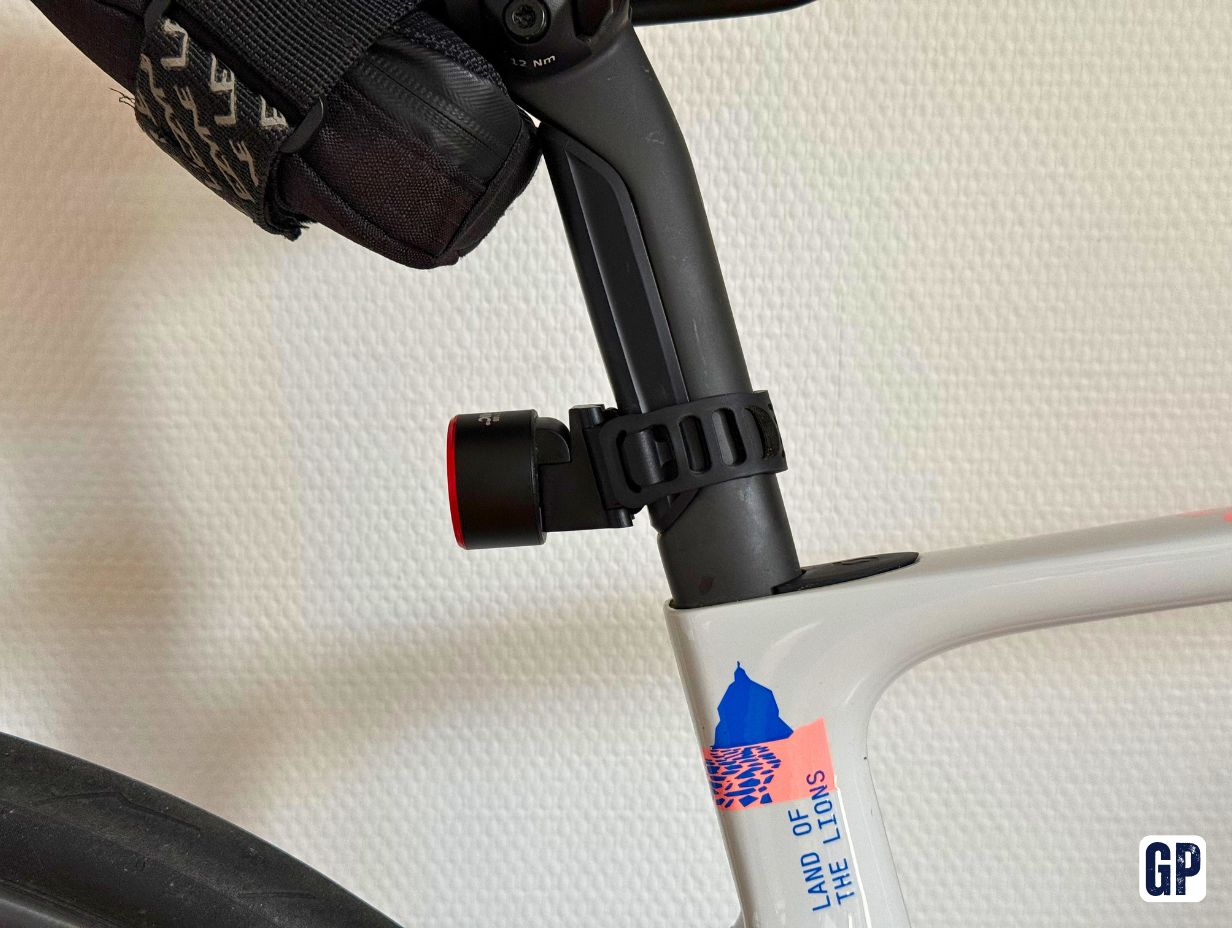
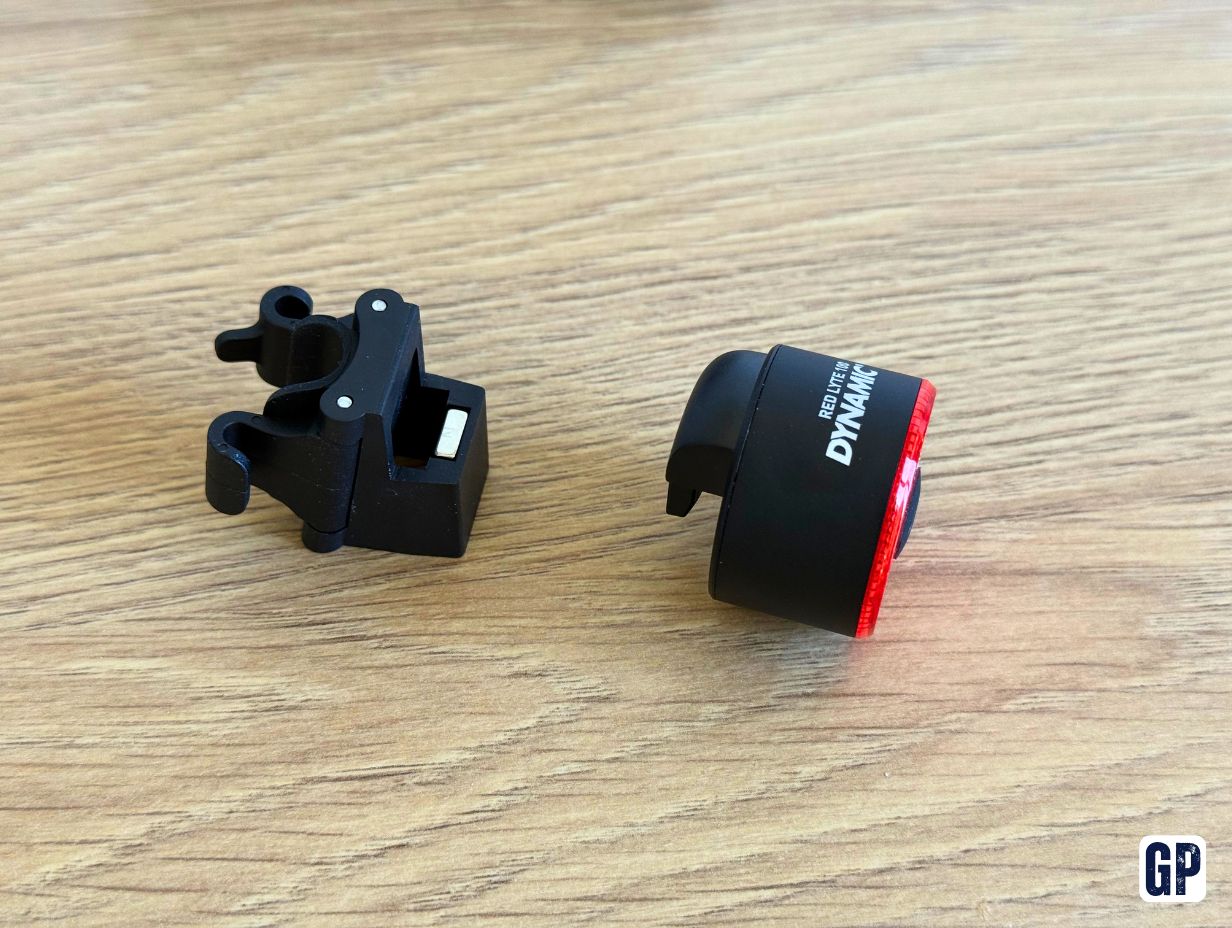
The real strong point is the magnetic system. The light settles onto its mount with a very natural motion, it centres well, and to remove it you simply lift it off. It is almost trivial, but it is extremely satisfying in daily use.
Often, small magnetic lights are very light, not very powerful or a bit fragile. More serious rear lights tend to use more robust mounts that are less pleasant to handle. Here, Dynamic manages to combine both: a compact light, a stable mount, and really simple removal.
I rode with it on road and gravel. The light does not move. The magnet does not feel like a fragile compromise. Even when the bike vibrates, it stays put and well aligned.
The brake mode works really well
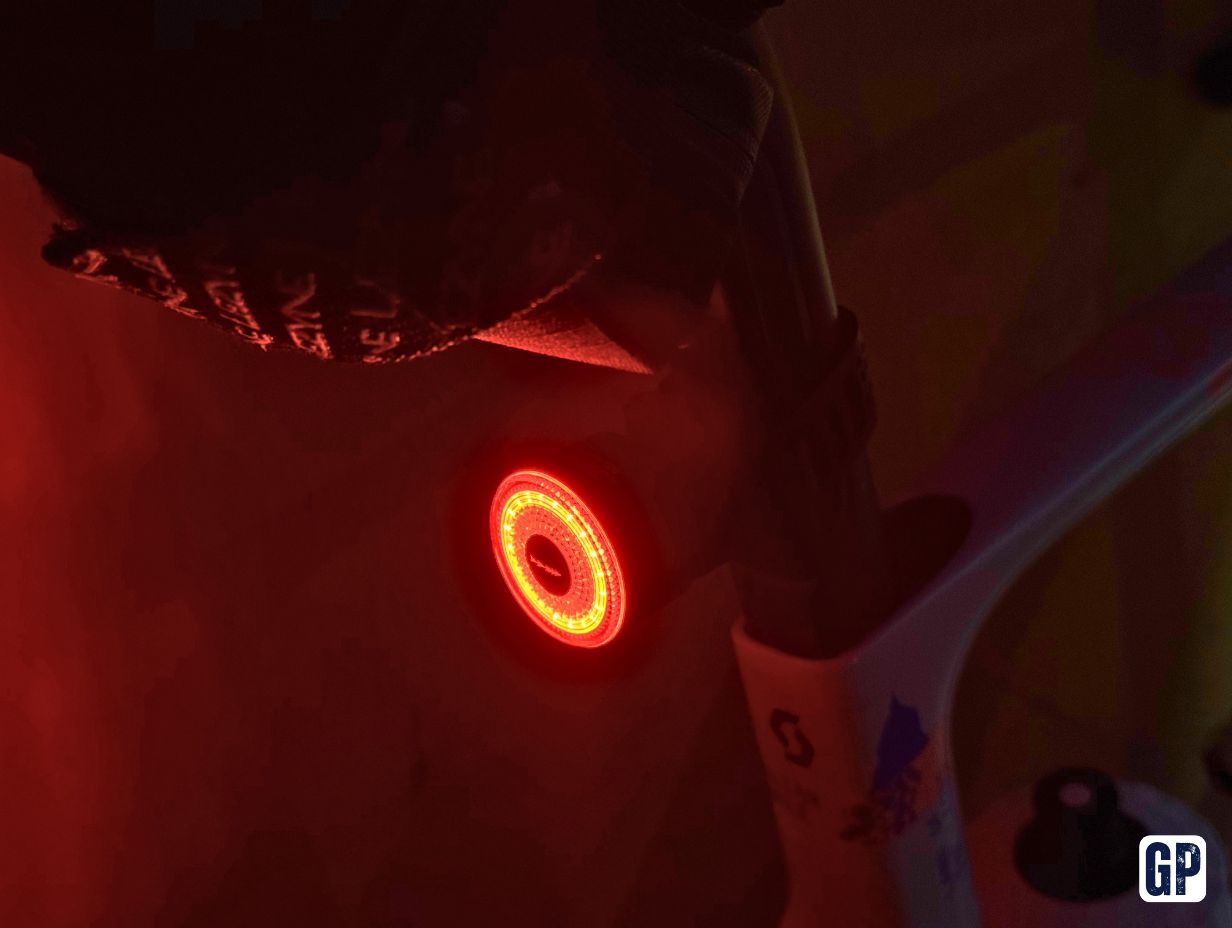
The Red Lyte 100 includes a smart mode that increases intensity when the light detects deceleration or braking. And it works very well. When you brake or stop pedalling, the light temporarily switches to a more visible intensity and to a steady mode.
You can disable this function with a peloton mode, which avoids dazzling others when riding in a group. It is a good idea.
Another useful function is auto sleep after two minutes without movement. I like this delay. It prevents the light from turning off at every traffic light or very short stop. For a coffee break, it goes to sleep, then turns back on as soon as the bike moves again.
Battery life: good, but the smart mode uses more power
Dynamic claims up to 40 h in Eco Flash. That is mainly the mode I used, because I prefer a flashing but non-aggressive rear light, especially not to dazzle drivers unnecessarily.
My feeling is that the real battery life in this mode is slightly lower than the claimed 40 h when the smart mode remains active. That is not illogical: at each deceleration, the light goes brighter, which inevitably uses more power.
The battery indicator follows the same logic as on the front light: purple between 61 and 100%, yellow-orange between 21 and 60%, flashing red between 1 and 20%. Again, I find this too approximate. As soon as the light turned amber, I tended to want to recharge it just in case.
Unlike the Lyte 1200, there is no Breathe-type emergency mode when the battery is very low. That is not surprising for a rear light, but it is worth keeping in mind.
I am also a bit sceptical about the claimed 220° visibility. From the side, I did not find it as visible as that figure might suggest. It remains effective from the rear, but it is not the light that gave me the best impression in terms of side visibility.
In the box, Dynamic provides the universal seatpost mount, the silicone strap and a very short USB to USB-C cable. It is included, but it is really tiny. Charging did not pose any particular problem for me, and I used the light in the rain without issues.
Price of the Red Lyte 100 and value of the bundle
The Red Lyte 100 has an RRP of €39.99, and it was listed at €29.99 at the time of the test. At €39.99, it already makes sense. At €29.99, it becomes genuinely appealing, especially thanks to its magnetic mount, stability and brake mode.
Dynamic also offers bundles. The Lyte 1200 plus Red Lyte 100 bundle was listed at €129.98, shown at €99.98 at the time of the test. The bundle with the Lyte 1200, the Red Lyte 100 and the remote was listed at €149.97, shown at €115.97 at the time of the test.
In my view, the bundle without the remote is the most logical for most uses. The remote works, but the front light is already very easy to operate without it.
Two very polished lights, but not for everything
What Dynamic does best here is the user experience. The mounts are solid, removal is simple, the buttons are accessible, the lights are attractive without being flashy. You can tell the usage details have been taken seriously.
The Lyte 1200 is a very good light for road riding, commuting seriously, extending a ride at dusk or tackling genuinely dark sections occasionally. On night-time gravel or fast road rides in the dark, it reaches its limit: the 1200-lumen mode is the one I want to use, but its battery life is too short to be your only light on a long ride.
The Red Lyte 100 convinced me more, without reservations. The battery indicator remains a little vague, but the magnet, the stability, the compact format and the brake mode make it a very pleasant rear light to live with.
Dynamic is not delivering the most enduring lights on the market here. But the brand has understood something important: a good light is not just a spec sheet. It is also a piece you remove, refit, adjust and want to recharge easily. And on that point, these Lytes are frankly successful.