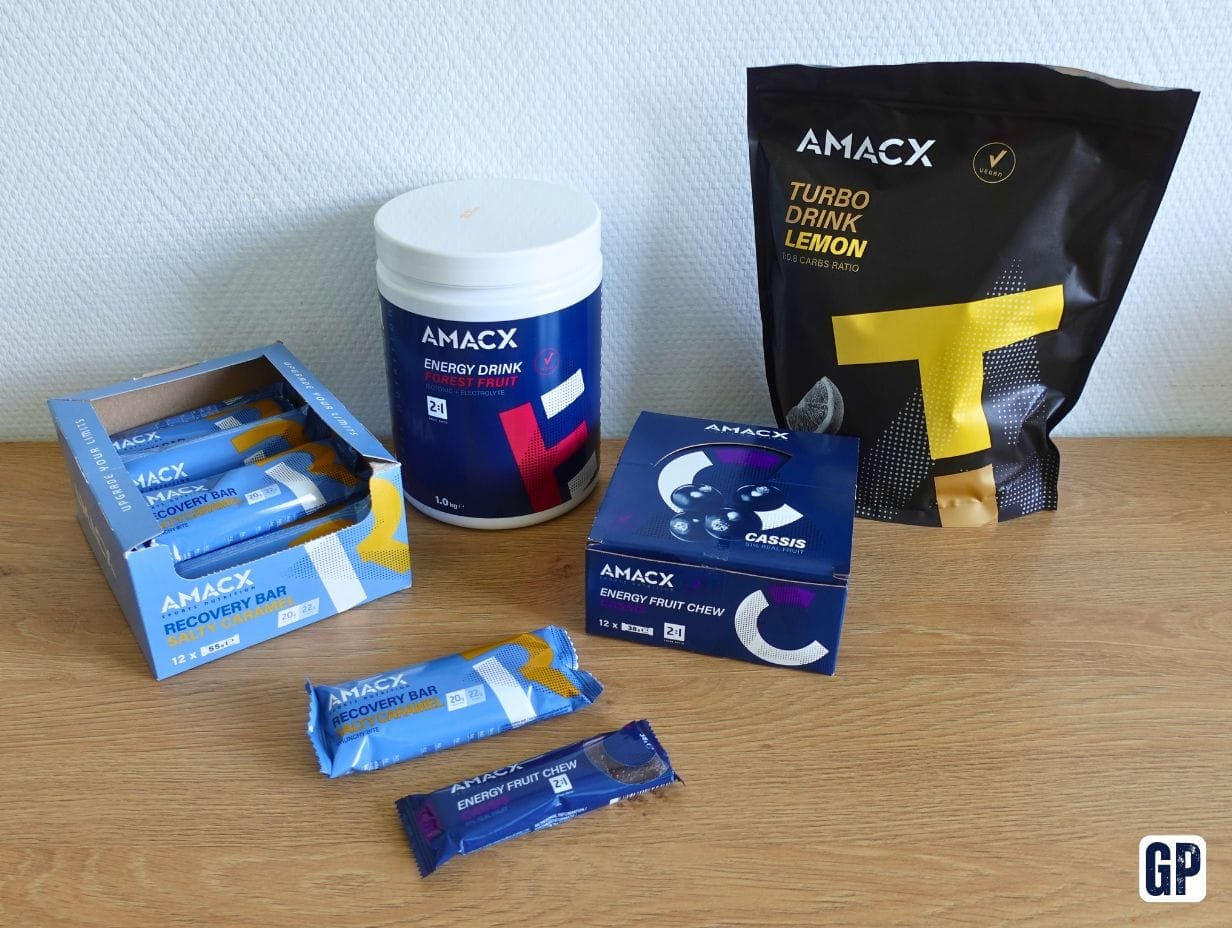

I used Amacx nutrition for several months, across regular training rides, harder sessions and in race conditions. The idea wasn’t to try four products once, but to see how they perform over the long term when you’re riding regularly.
The range tested covers four fairly classic needs: an isotonic energy drink, a more concentrated drink for harder efforts, an energy fruit chew and a recovery bar. It’s straightforward – and that’s a good start.
What stood out most here was the ease of use. The powders mix cleanly, the dosing is clear, and the products agree with my stomach. In the end, the real issue comes later: the price.
Strengths:
- Very good digestibility
- Drinks that are easy to dose and mix without lumps
- Energy Fruit Chew very easy to eat while riding
- Short ingredient lists
Could be better
- High price
- Recovery bar composition
Amacx sits in that family of brands that structures nutrition around grams of carbohydrates per hour, glucose/fructose ratios and a fairly performance-oriented approach to food. On that ground, comparison with our MNSTRY nutrition review or our Maurten nutrition review comes quite naturally: it’s no longer just about taking “something sweet”, but about building a strategy.
Four products tested, different use cases
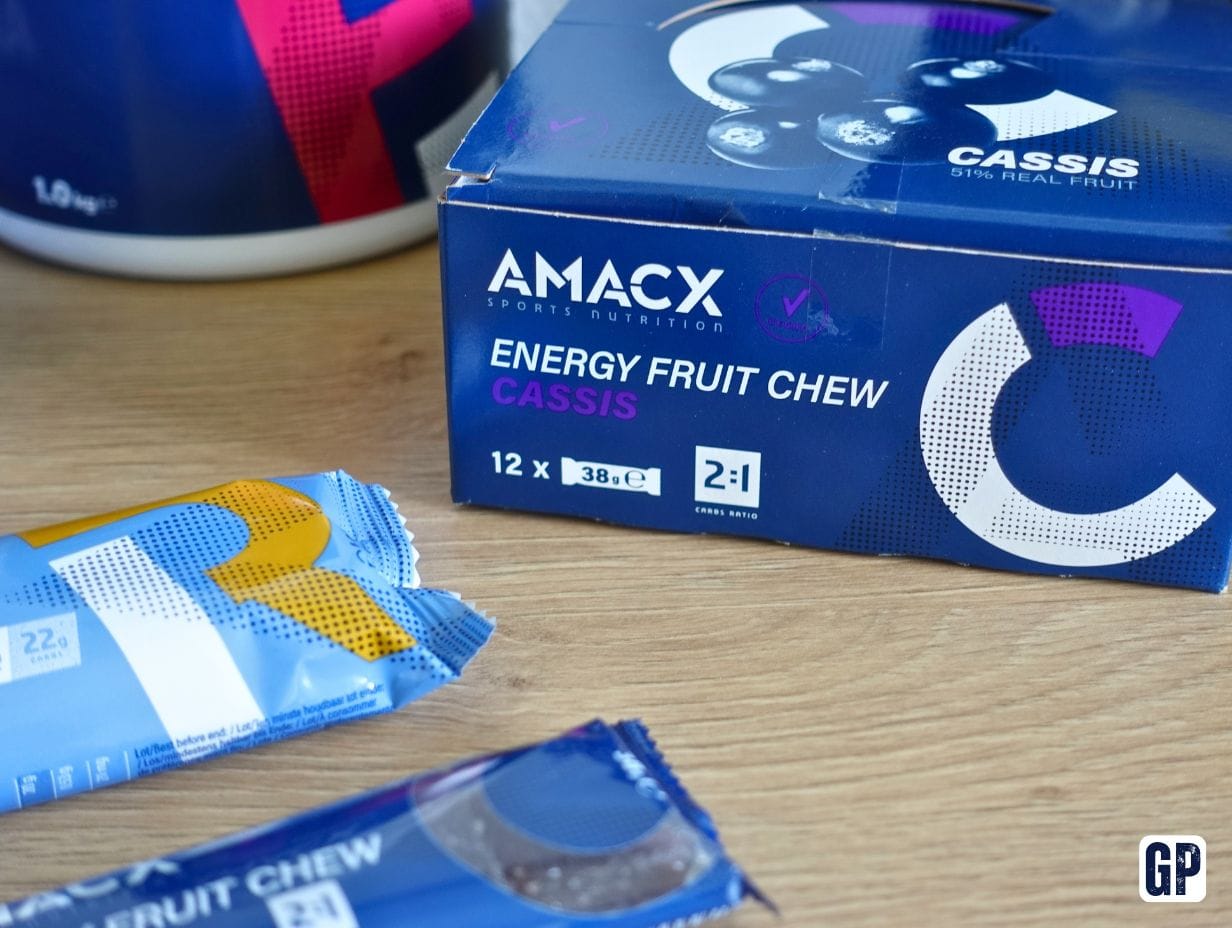
I tested four products: the Energy Drink and Turbo Drink beverages, as well as the Energy Fruit Chew and Recovery bars.
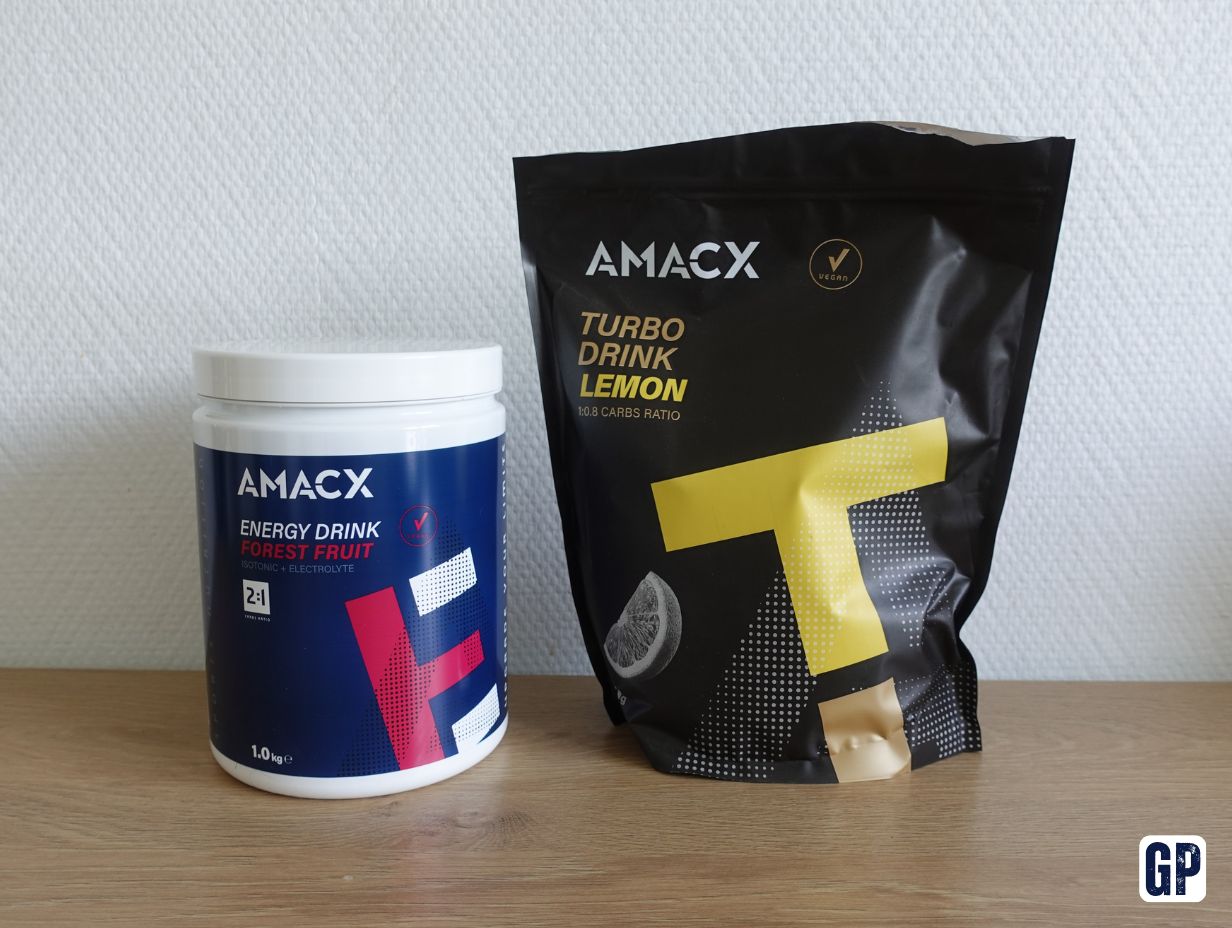
In my use, the two drinks did not play the same role. Energy Drink mostly accompanied me in training, on long or regular rides, providing 30 g of carbohydrates per bottle. Turbo Drink, which can be concentrated more, found its place more in races or intensity sessions.
The two bars complete the system: Fruit Chew during effort, Recovery Bar afterwards. Nothing exotic in the promise, but formats that can really change how easy it is to stick to your nutrition plan.
Amacx Energy Drink: the training drink you hardly notice
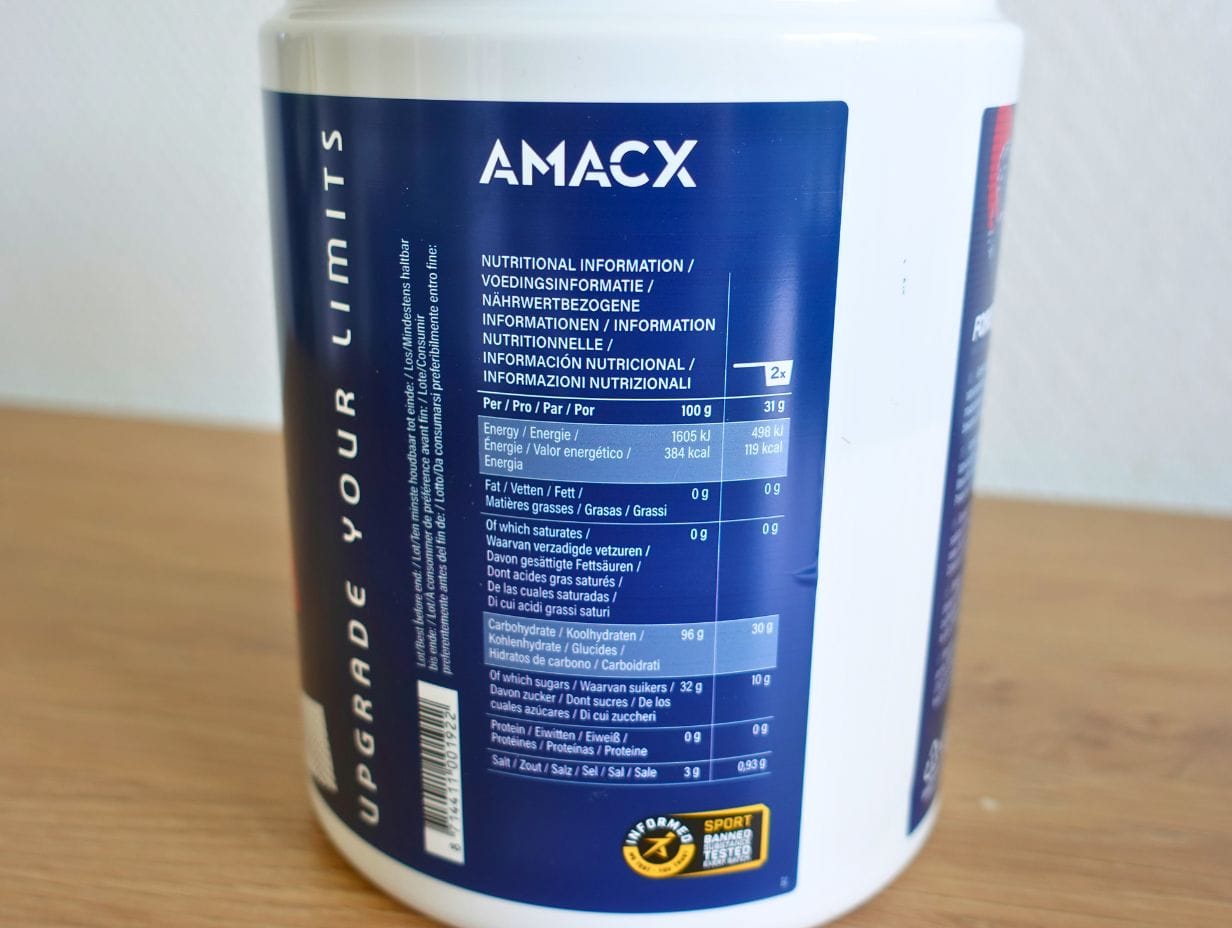
Amacx Energy Drink is an isotonic drink with a 2:1 glucose/fructose ratio. One serving provides 30 g of carbohydrates, with 372 mg of sodium stated for that amount. The recommended mix is simple: two level scoops in 500 ml of water, then 20 seconds of shaking.
I tested the Forest Fruit flavour in a 1 kg tub. And this packaging detail matters more than it seems. When you’re used to soft pouches that don’t reseal well, with powder that stops them closing properly and gets all over your hands when you scoop, the rigid plastic tub might seem anecdotal but it’s frankly very pleasant to use.
The measuring scoop is supplied, the process is clear, and the mix comes together very well. I had no lumps, no sediment at the bottom of the bottle, and none of that poorly dissolved drink sensation you sometimes get with certain powders.
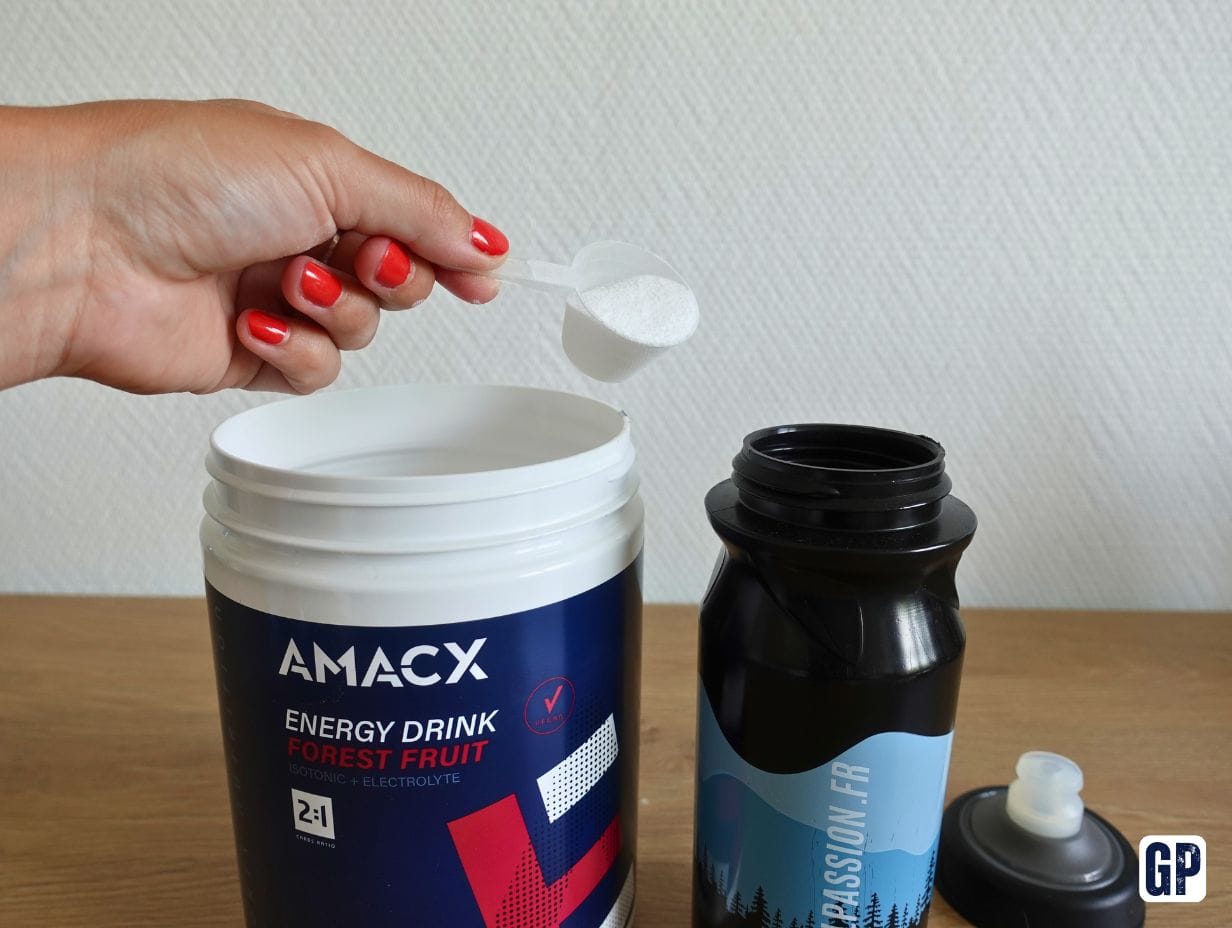
The forest fruit taste is light, pleasant, and not too strong. For a drink you might sip regularly in training, that matters. A flavour that’s too pronounced quickly becomes annoying after two hours, especially when it’s hot or the intensity rises.
Digestion-wise, I had no issues. No heaviness, no particular discomfort, no flavour overload.
The composition remains short: maltodextrin, fructose, electrolytes, flavouring, acidity regulator. For a sports drink, that’s very good. The approximately 1 kg tub makes around 32 bottles, for a cost close to €1 per bottle. It’s not cheap, but it’s fairly in line with the market for this type of product.
Turbo Drink Lemon: more concentrated, more race-oriented
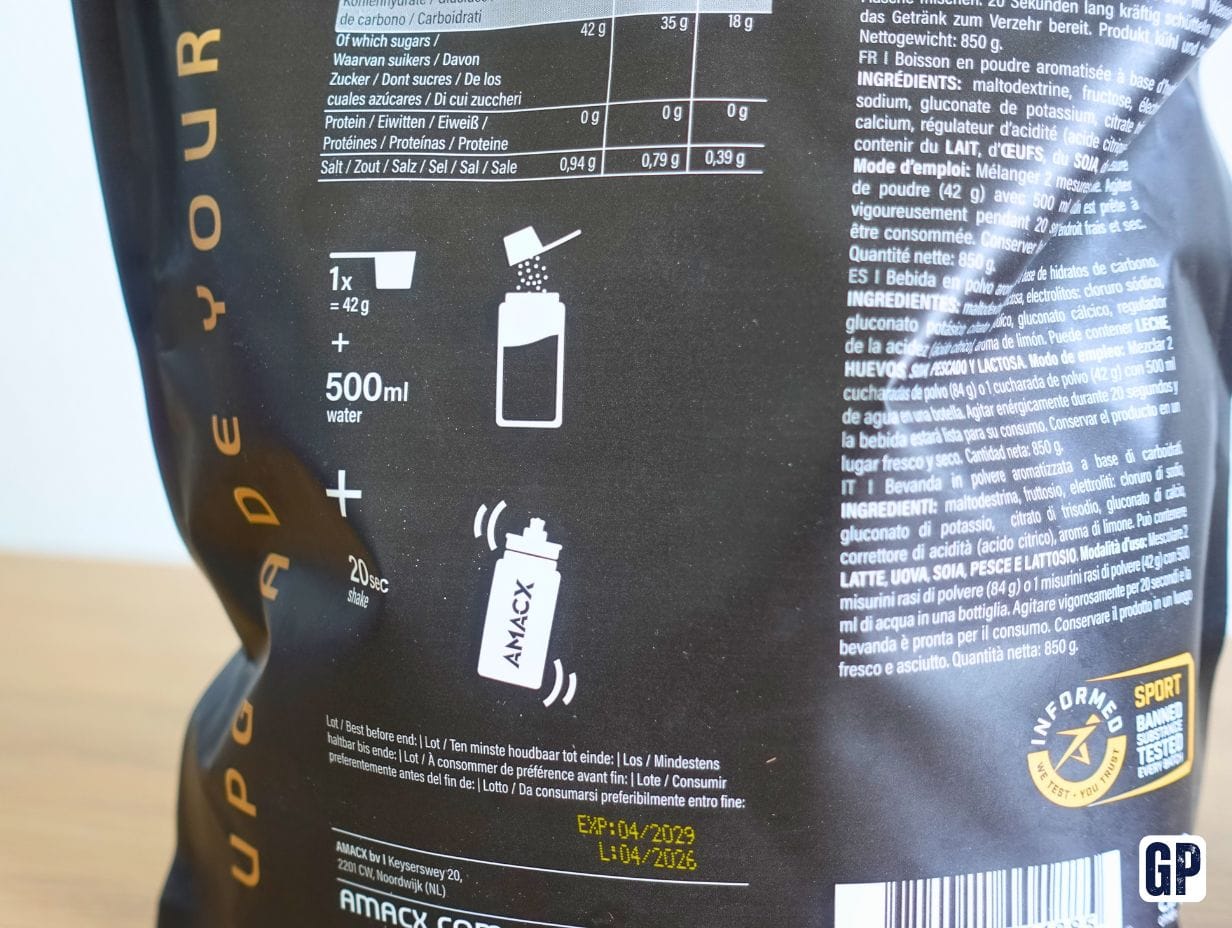
Turbo Drink is the other drink in this test, but it doesn’t play exactly the same role. Here, Amacx uses a 1:0.8 glucose/fructose ratio, and the approach is built around more heavily loaded bottles: 40 g, 60 g or 80 g of carbohydrates depending on the desired mix.
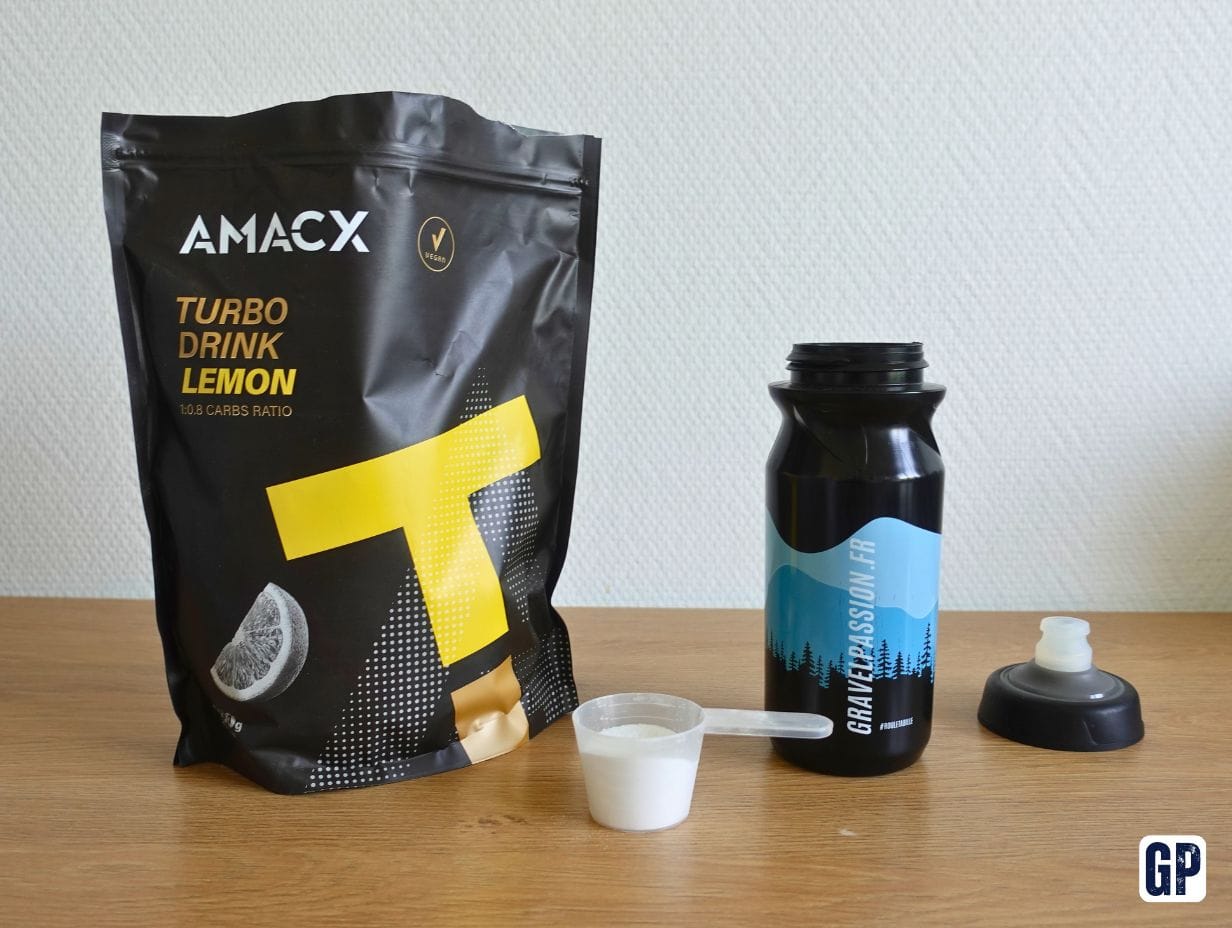
I tested the 850 g pouch, sold for €34.95. The principle is quite practical: one scoop for 40 g of carbohydrates, one and a half scoops for 60 g, two scoops for 80 g. In short, you can tailor your bottle to the session, the duration of the effort, or your preference between liquid and solid fueling.
Here too, the mix is very good. No lumps, no powder left at the bottom, no need to shake for ages. It’s a small thing, but when you’re preparing several bottles before a race or a big ride, this reliability really simplifies things.
The lemon flavour is quite pronounced. Stronger than Energy Drink, but without being unpleasant in my use. Amacx also offers an unflavoured version, which can be interesting for those who quickly tire of flavours or prefer a very discreet drink.
I mostly used it in competition or for more intensive sessions. In these contexts, I appreciated being able to increase carbohydrates without necessarily adding a bar or gel. When the effort becomes too demanding to chew properly, drinking your carbs often remains simpler.
On digestion, same verdict as for Energy Drink: nothing negative to report in my case. That’s probably the most reassuring point of this Amacx range. It lets you increase intake without feeling like you’re taking a risk with each bottle.
Energy Fruit Chew Blackcurrant: a true race-ready fruit paste
The Energy Fruit Chew Blackcurrant is a 38 g bar that provides 30 g of carbohydrates, with a 2:1 glucose/fructose ratio. It contains 51% fruit pulp, and the ingredient list remains relatively short for this type of product.
In practice, it’s a fruit paste. But a fruit paste well designed for cycling.
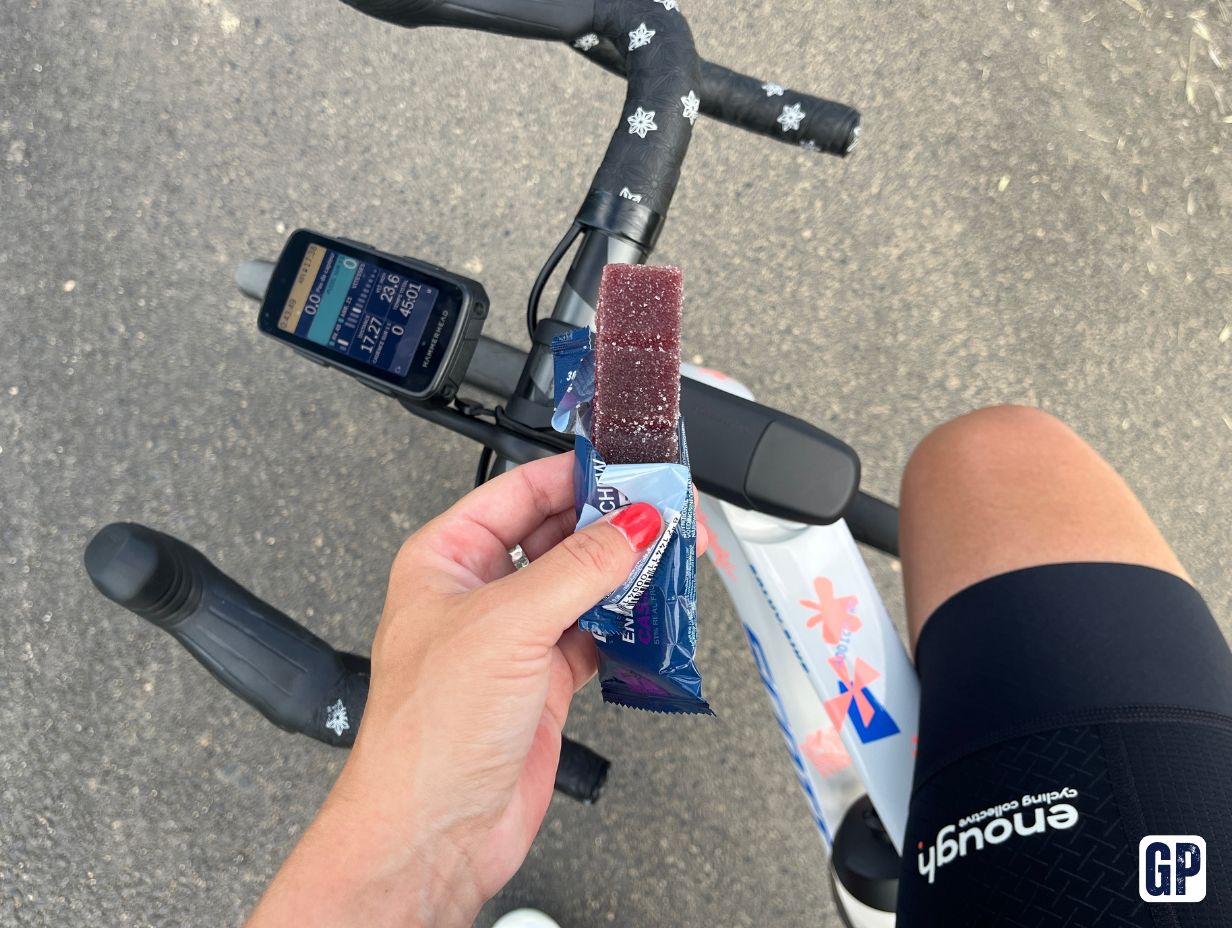
The bar is slightly pre-scored, which means you don’t necessarily have to eat it all at once. It doesn’t stick in the mouth, doesn’t stick to the wrapper, and remains usable even after rattling around in a pocket for several rides. This is exactly the kind of detail that makes the difference between a theoretically practical product and one you actually go back to.
I found them very easy to eat: these bars chew quickly, and in a race I found them just as easy to eat and swallow as a gel.
It’s not exactly the same action, of course, but this isn’t a dry bar that demands water and patience.
The blackcurrant taste is good, quite bold, with that fruit paste character that differs from very sweet gels or more cereal-type bars. To vary textures on a long ride, it’s pleasant.
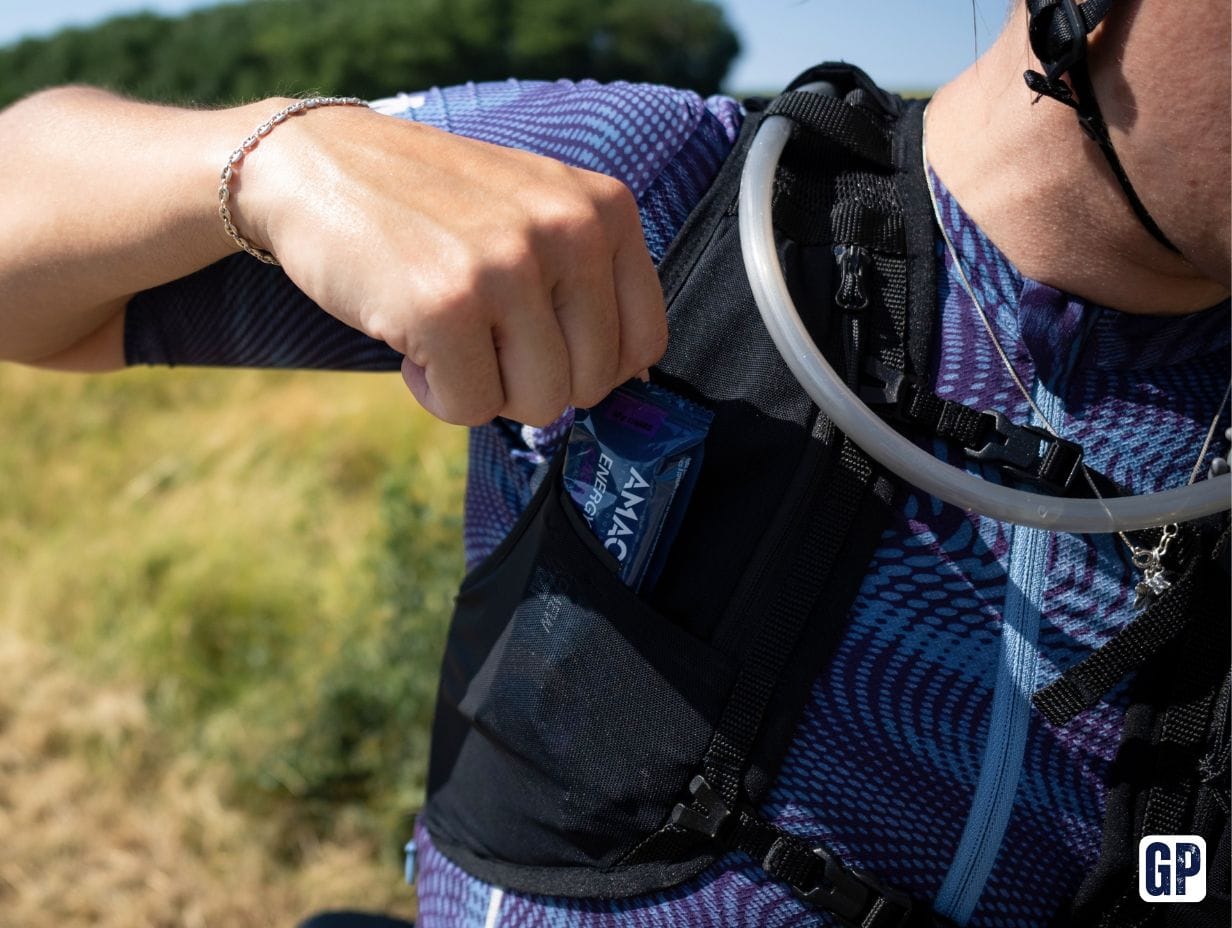
The drawback lies less in the product itself than in its price. At €31.95 for 12 bars, that’s over €2.66 per bar (for 30 g of carbohydrates). For an energy fruit paste, even if it’s well executed, this places Amacx at the top end of the market.
Recovery Bar Salty Caramel: practical, filling, but more processed
The Recovery Bar is for after exercise. Each bar provides 20 g of protein and 22 g of carbohydrates. Amacx recommends taking it within 45 minutes of the session.
This is the least “simple” product in the selection in terms of composition. The ingredient list is longer, with flavourings, a raising agent and a stabiliser in particular. That’s not surprising for a coated protein bar, but it moves away from the clarity of the other references tested.
The salted caramel flavour is good. The bar is filling, too. At 55 g, with a fairly dense texture, you can tell you’re eating something. Personally, I liked this format after exercise, instead of a protein shaker. It’s easier to carry, nicer to vary, and it avoids always repeating the same ritual.
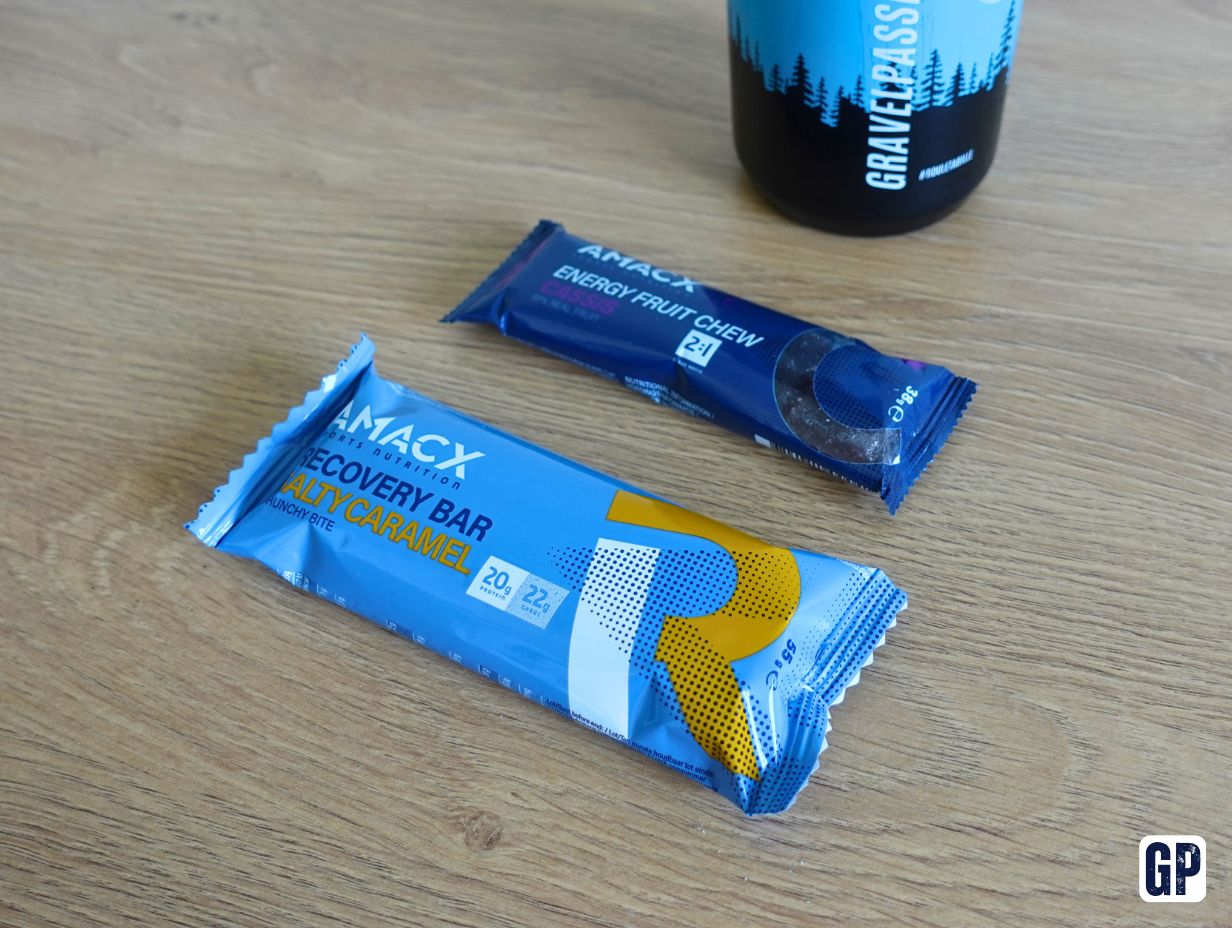
The limitation is the texture. It’s a little dry, with that slightly powdery feel common to protein bars. I’ve tested drier, notably on similar Decathlon products, but it’s still there.
No digestive issues for me. The bar does the job, it satisfies hunger, it delivers protein and carbohydrates in a simple format. But at €34.95 for 12 bars, that’s over €2.90 per bar, which makes regular use a pricey habit.
This is perhaps the Amacx product I’d most readily reserve for heavy training blocks, travel or moments when I want a simple solution, rather than for every training session.
A range that is very reassuring on digestion
The common thread of this test is digestibility. Across the four products, I had no nasty surprises. The drinks go down well, even when intake increases. The Fruit Chews are easy to eat. The Recovery Bar, despite its denser texture, didn’t cause a problem.
This is a real strength, because sports nutrition can look excellent on the label yet be unusable as soon as intensity rises. Here, Amacx inspires confidence.
In that logic, the range sits closer to performance-oriented nutrition systems than to more food-based approaches, like those found in some products such as COOKNRUN. It’s not better or worse. It’s another choice: more calibrated, more performance-focused, more based on grams of carbohydrates.
I also appreciated the clarity of use. Energy Drink for training, Turbo Drink to load more, Fruit Chew to eat quickly, Recovery Bar for afterwards. You quickly understand where to place each product.
My verdict after several months
Amacx offers an effective range that’s simple to use and reassuring on digestion. The drinks stand out as the most convincing products, complemented by Energy Fruit Chew that work very well on the bike. The Recovery Bar sits further back, with a drier texture and a less compelling positioning.
In the end, Amacx is most convincing with its drinks and fruit pastes, particularly relevant for key sessions and races. For everyday use, the biggest barrier is the budget.