
The Cube Litening AERO C:68X SLT has everything an intimidating bike suggests: an aero frame, very deep wheels, a massive cockpit, a high-end build and a true race-machine silhouette.
Before starting this review, I had a concern: as a small rider (albeit a racer), would I really be able to handle, rather than just suffer on, a WorldTour bike?
After several rides, the answer is quite clear. This Litening is not just fast. It is exhilarating. Stiff without being harsh, and much easier to live with than its image suggests.
Strengths:
- Impressive efficiency on the flat
- Very noticeable stiffness without marked discomfort
- Genuinely coherent high-end build
- Spec-to-price ratio hard to ignore
Could be better
- Limited availability in France
The Litening AERO in Cube's range: the pure race bike
At Cube, the Litening AERO is the brand’s aerodynamic race bike. It is the model designed for speed, racing, hard pulls on the front, and long fast sections where every watt counts.
Don’t confuse it with the Cube Agree C:62, which is more endurance focused. The Litening AERO is more radical in its intention – less versatile in its design and more single-minded in the pursuit of performance.
Within Cube’s road range, it also sits alongside the Litening AIR, which is more focused on weight and climbing. Here, the goal is different: go fast, hold speed, and save watts whenever the terrain allows.
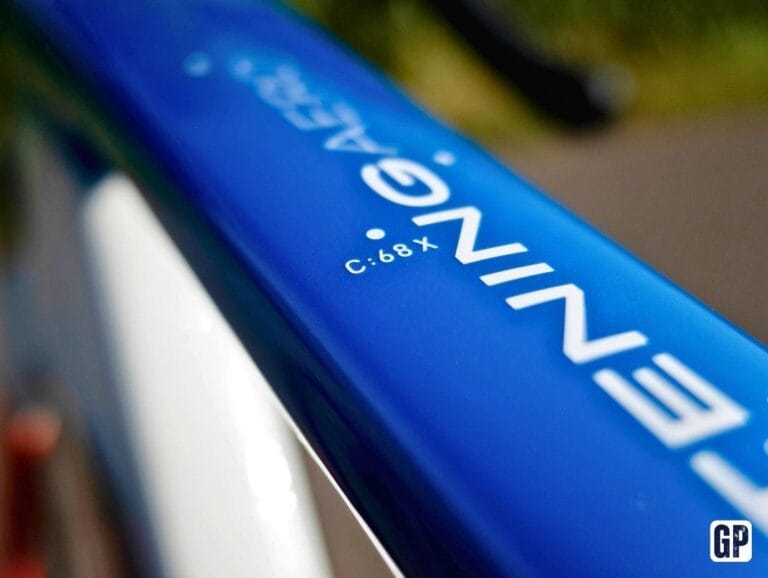
A lighter, faster frame
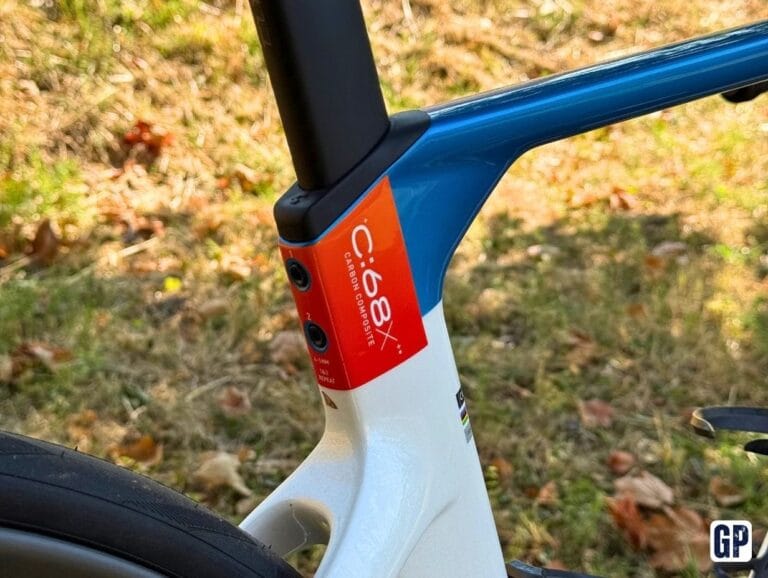
This new generation uses C:68X carbon, Cube’s top-tier construction. The brand claims around 150 g less for the frame and fork set compared with the previous generation, plus an aerodynamic gain of up to 6 watts.
Those numbers don’t tell the whole story, but they set the tone. Cube did not just try to draw a spectacular bike. The Litening AERO is UCI compliant, developed with CFD and in the wind tunnel, with full integration and a revised aero seatpost.
Visually, I find it interesting because it avoids two extremes. It does not have the very straight, almost brutal look of a Canyon Aeroad. Nor does it have the very organic forms you see from Cervélo. It sits between the two: racy, taut, but not rigidly locked in.
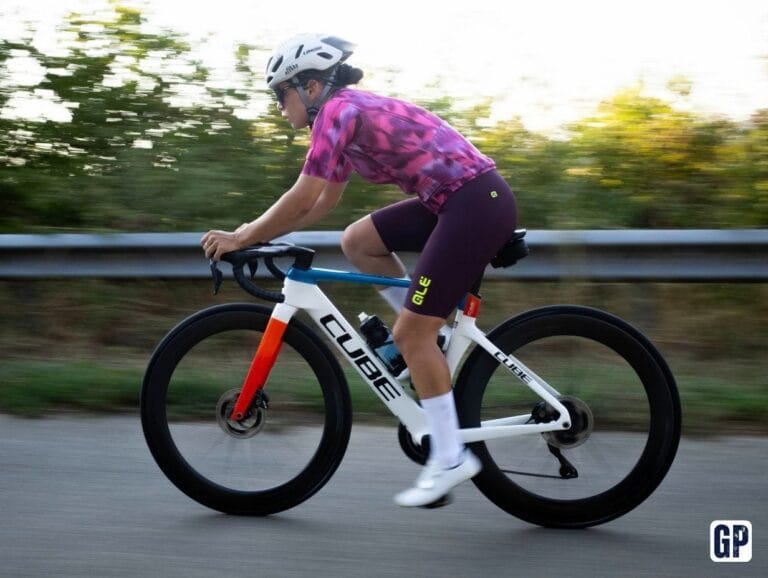
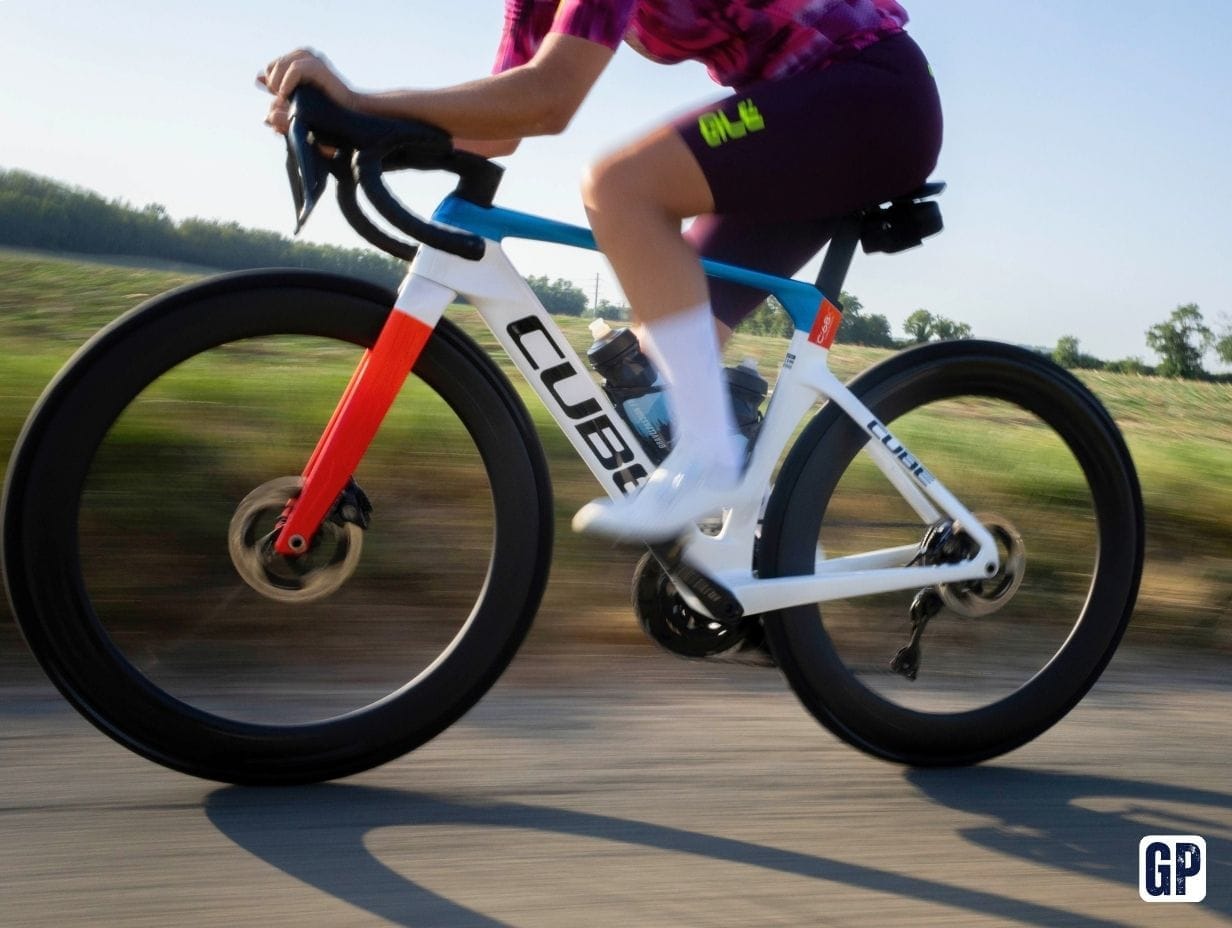
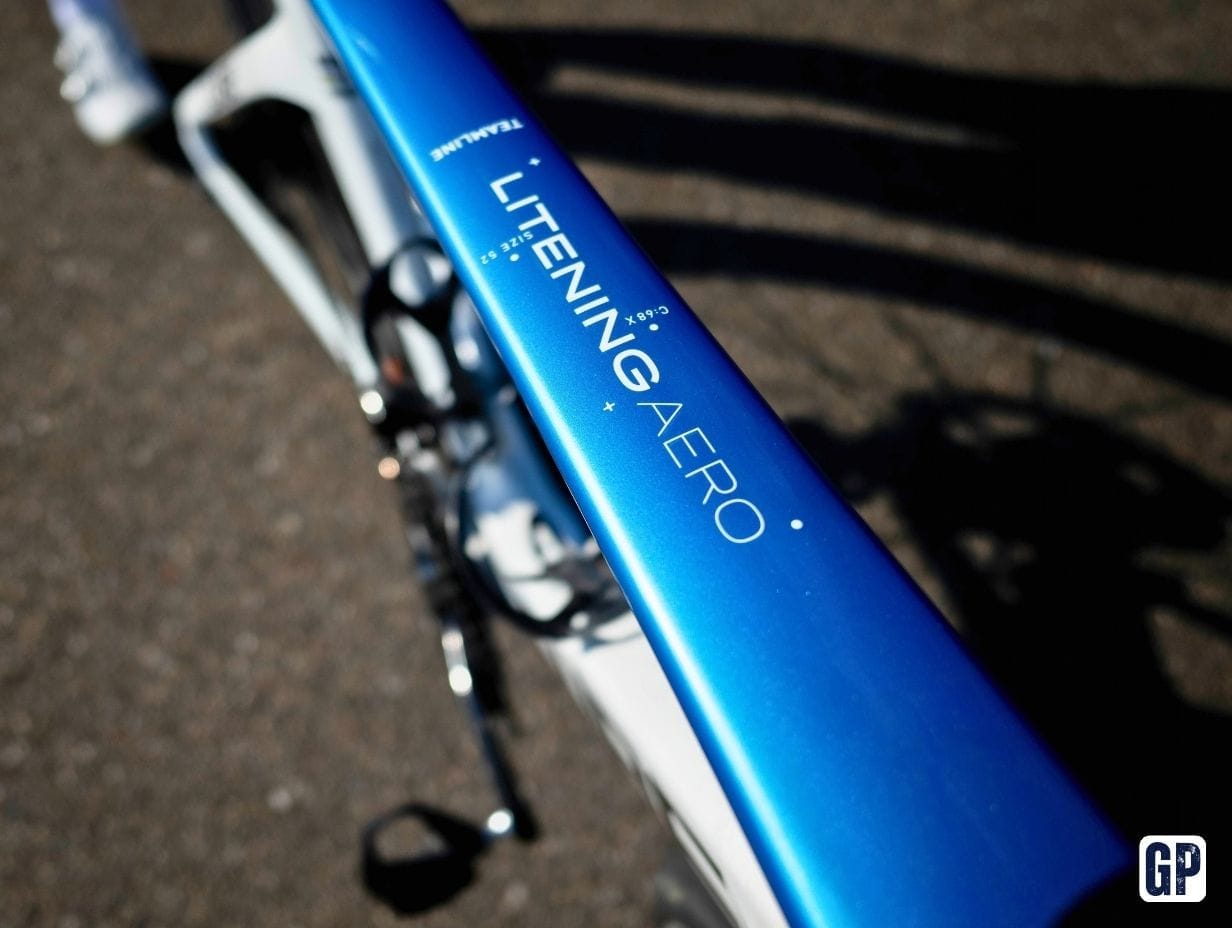
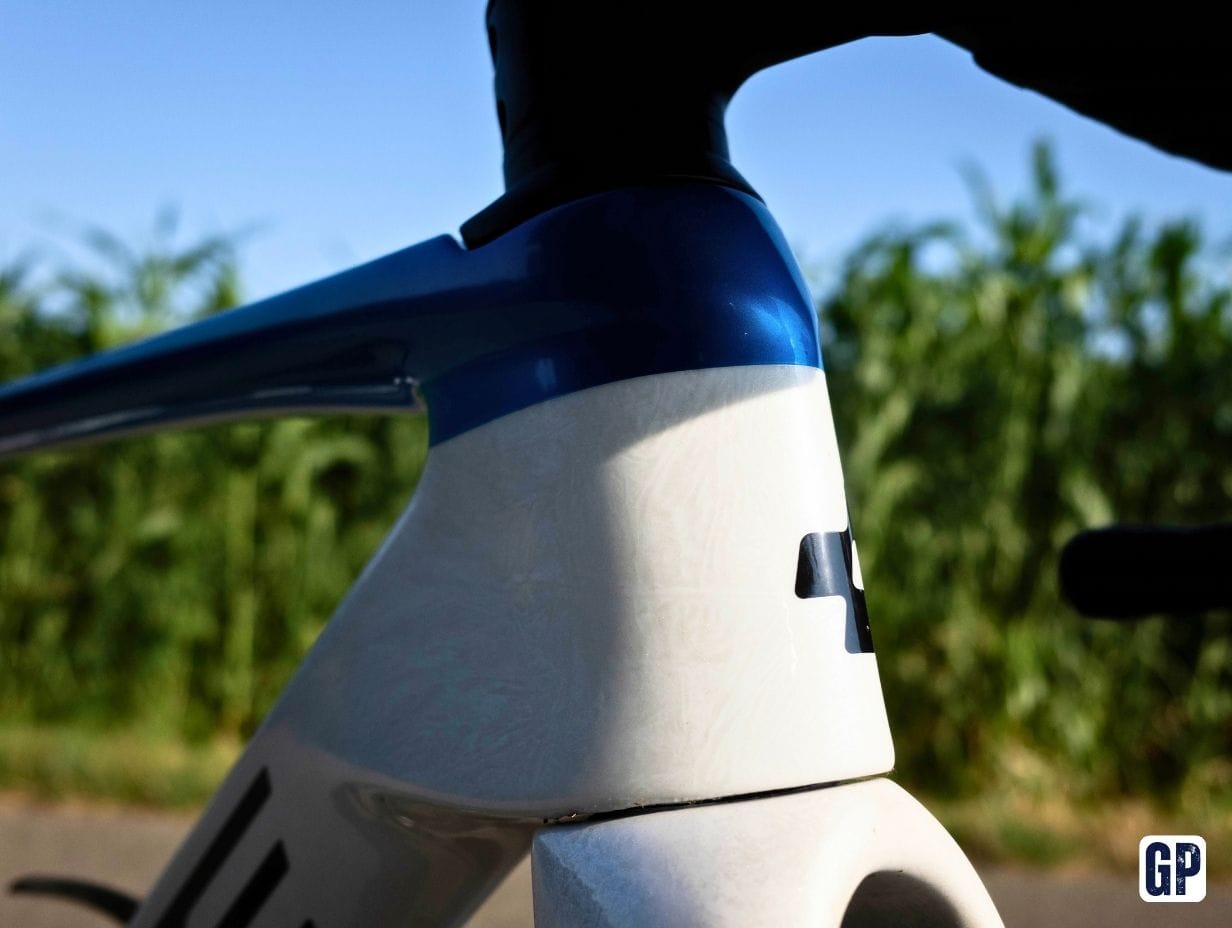
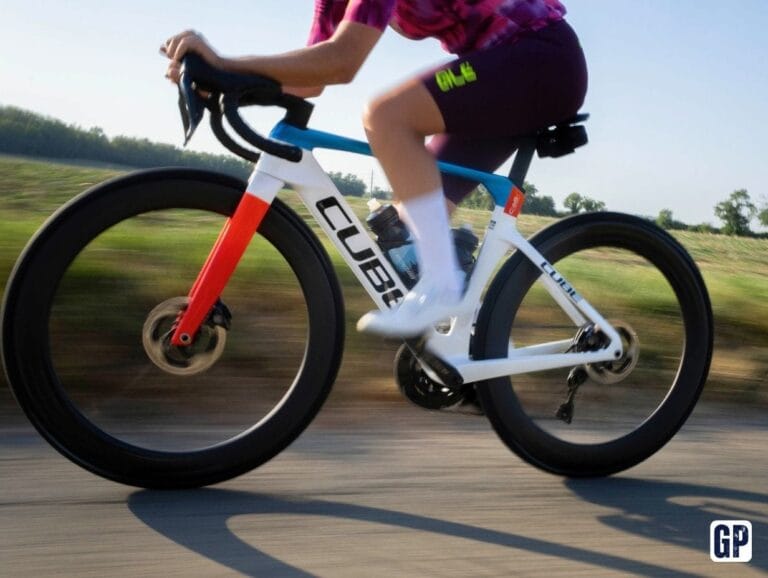
The test bike was the Team Edition finish, pearly textured white, with an orange fade on the fork and blue areas that give it real presence. In the tested configuration, the Cube Litening weighed in at 7.1 kg (no accessories).
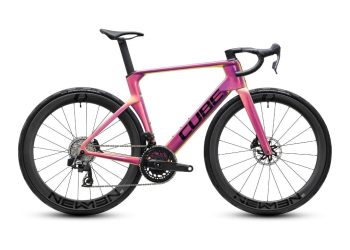
Cube also offers other very attractive colourways depending on the version. It is worth highlighting, because the German brand was long associated more with spec-to-price balance than with truly striking paint. In recent seasons, that is less true, as we already noted in our piece on the Cube 2026 models.
IC Aero Max cockpit: bulky yet surprisingly pleasant
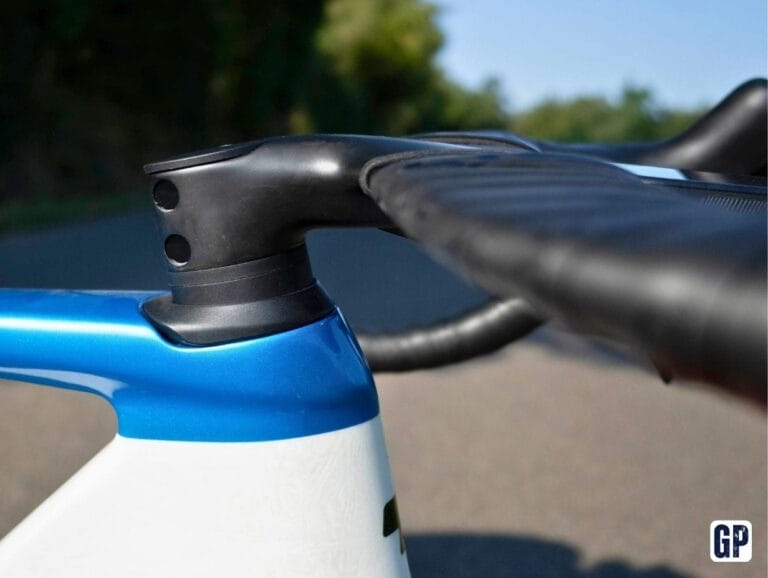
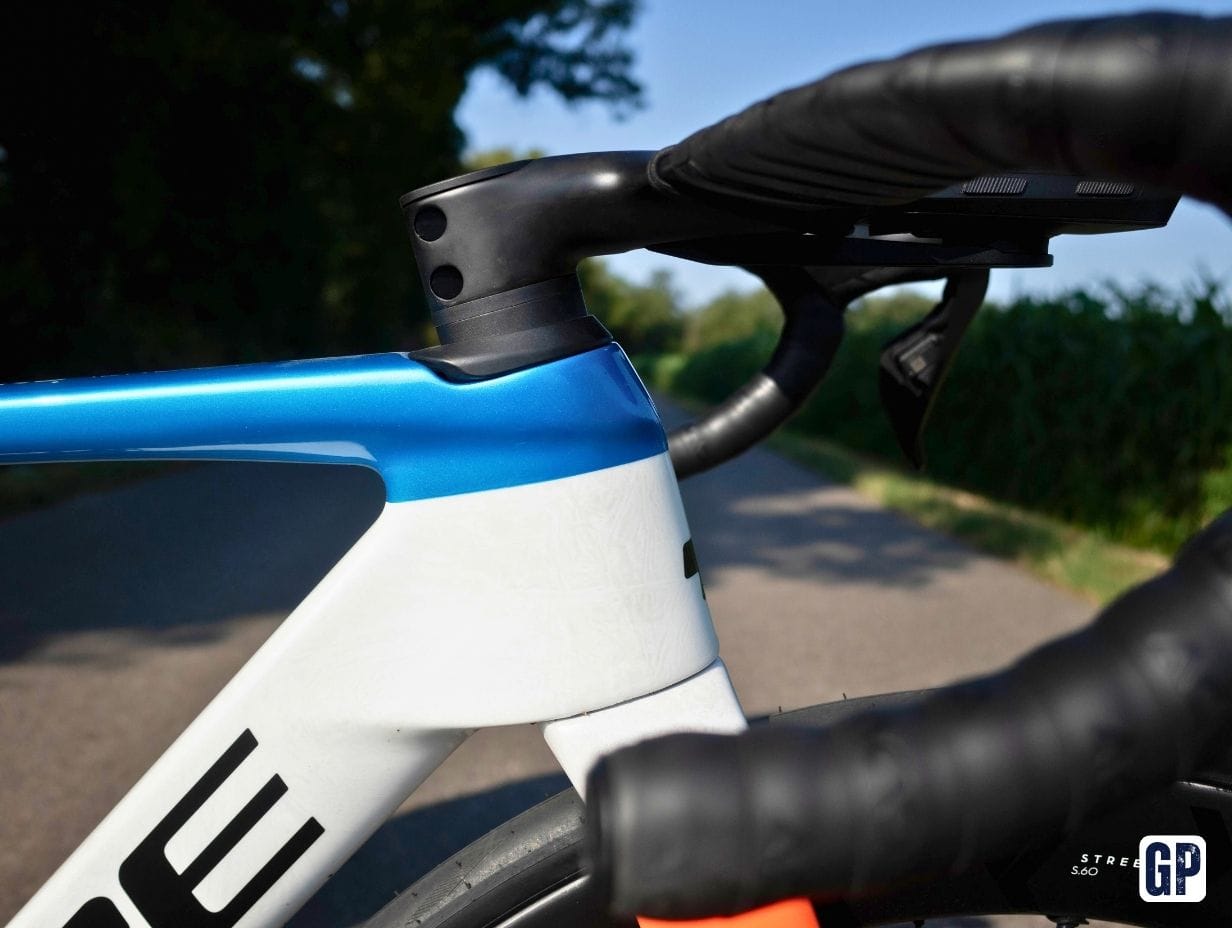
The front end is probably one of the bike’s most visible parts. The CUBE IC Aero Max cockpit is wide and thick. The first impression is almost disconcerting – it certainly gets noticed!
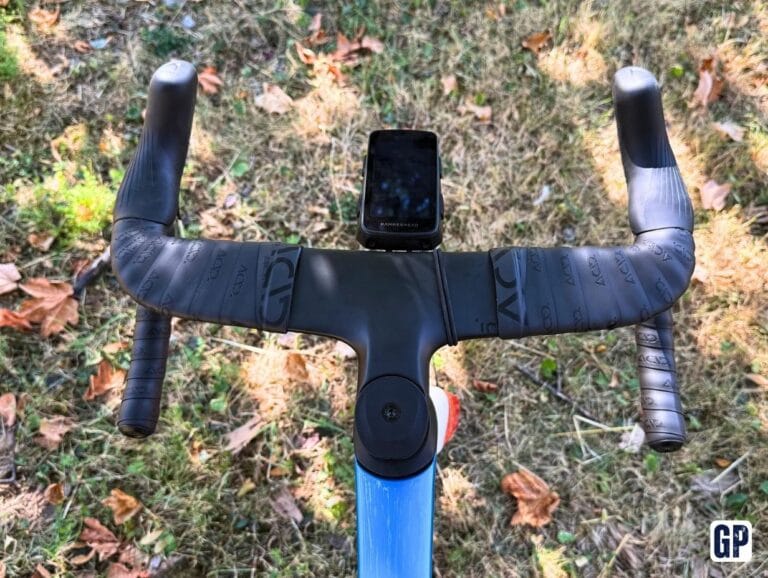
In use, though, I found it very pleasant, even with small hands. The flat section is wide, and so stable that I caught myself several times climbing out of the saddle with both hands resting on the tops.
Cube also specifies that the frame is compatible with all Cube one-piece cockpits. That is reassuring if you want to adjust your position or replace the cockpit later without being locked into an overly specific solution.
Size 52, saddle height and short cranks: details that matter
I rode the Litening AERO in size 52. Practical point: I was able to get my proper saddle height without cutting the seatpost. For many cyclists, that will be anecdotal. For those with shorter legs, it is anything but.
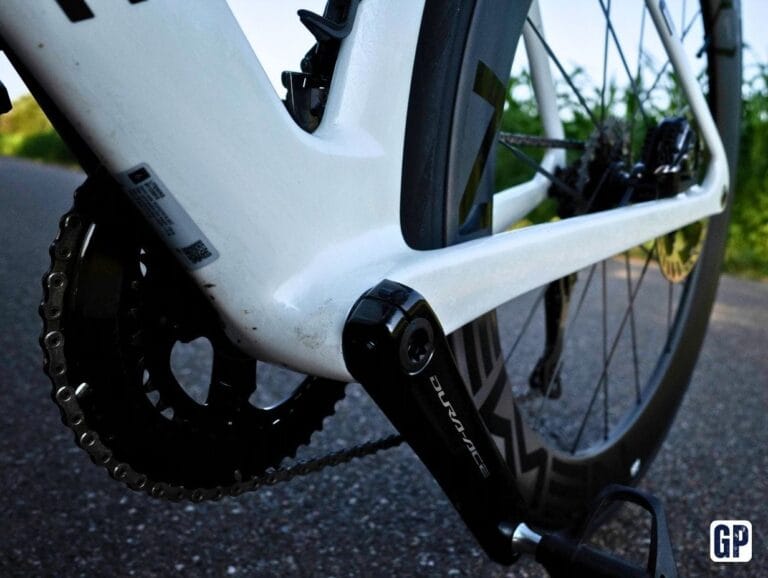
In this size, the bike comes with 165 mm cranks. It is a sensible, modern choice. On a bike in this category, this contributes to a more natural position for smaller riders, without systematically imposing crank lengths that are too long.
The Litening keeps a PressFit bottom bracket, but Cube uses a model with thread-together cups, paired with ceramic bearings. In practice, the two parts of the bottom bracket screw into each other rather than being simply pressed independently into the frame. This construction helps keep the two bearings better aligned and limits some classic PressFit issues linked to frame tolerances.
Newmen Streem Sprint VONOA wheels: the build changes everything
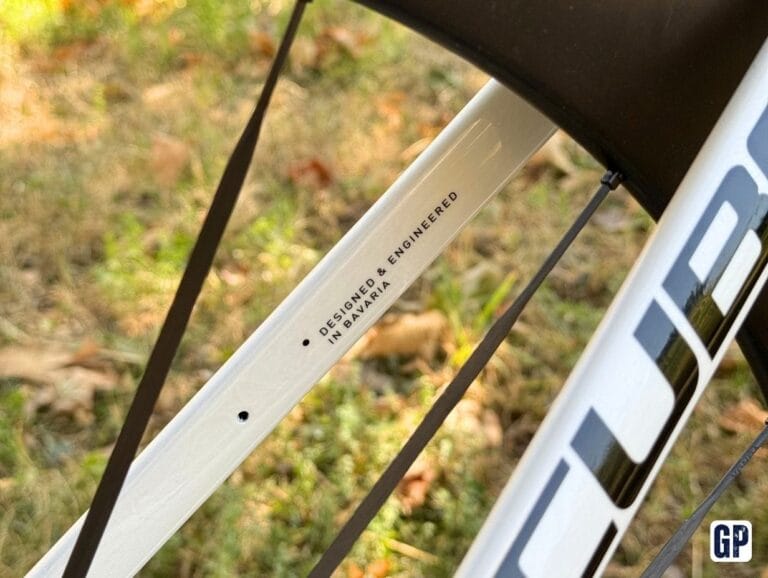
The tested SLT version gets Newmen Streem S.60/66 VONOA Carbon wheels: 60 mm at the front, 66 mm at the rear, with VONOA carbon spokes. It is a very high-end build, and you feel it immediately in the bike’s identity.
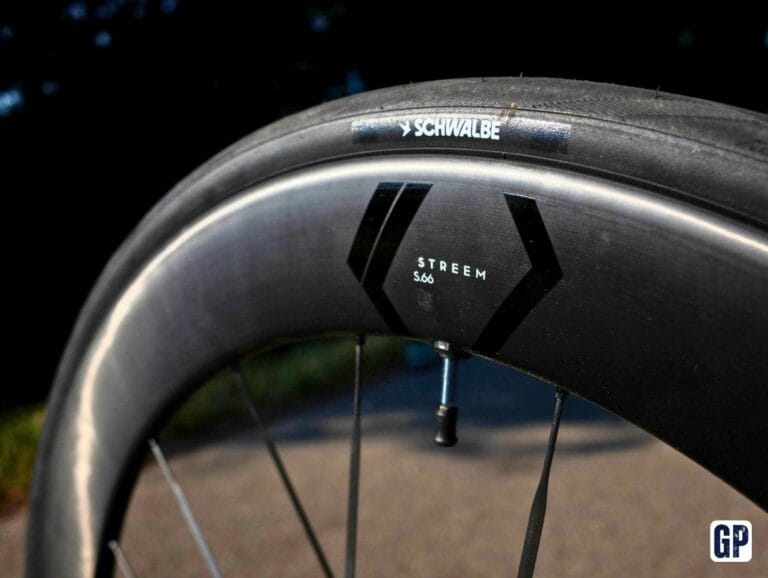
You get that very present, almost intimidating carbon sound, coming from both the wheels and the frame. It is not just noise: it contributes to the sensation of stiffness, speed, a very taut bike underfoot.
Cube is not just fitting a decent wheelset to round out the build. The supplied Newmen set sits at the very top of the brand’s range, with a wide rim and carbon spokes. It is one of the points that makes the Litening particularly strong against the competition.
Schwalbe Pro One Aero tyres in 28 mm, but clearance up to 34 mm
The tested bike was fitted with Schwalbe Pro One Aero in 28 mm, tubeless ready, but used here with inner tubes. Personally, I usually ride 32 mm tubeless on the road, so I expected to feel a clear difference in comfort.
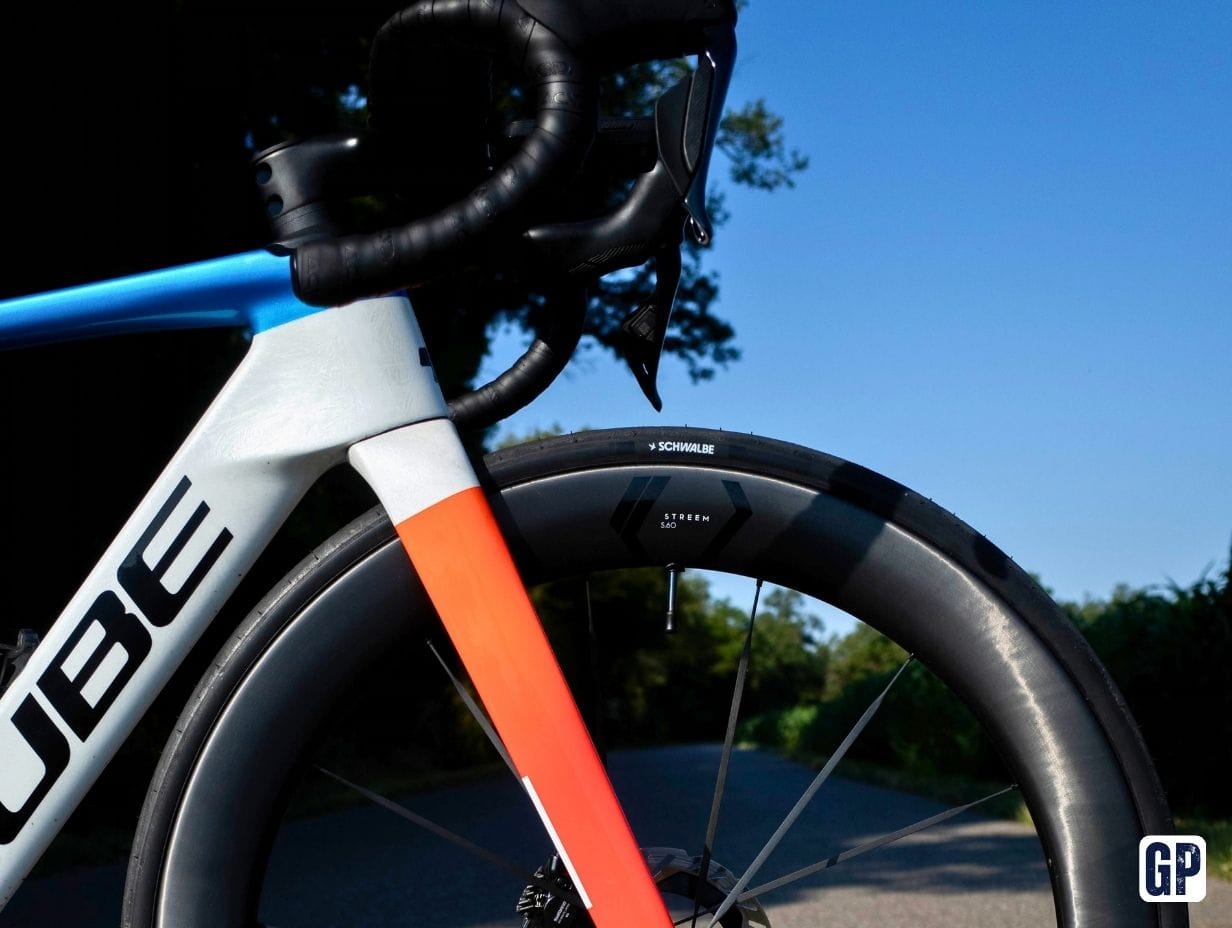
In reality, I did not find the setup uncomfortable at all. The tyres felt very reassuring, with grip and a good sense of support.
The frame officially accepts tyres up to 34 mm. For an aero bike, that is a lot. Riding 32 or 34 mm on this type of machine will not appeal to everyone, but this margin is a smart move.
It opens the door to use on rough roads, cobbles, fast long-distance rides, or simply following the current trend toward wider road tyres. The frame has headroom, and it is also a way not to age too quickly.
On the flat: the sensation of speed is immediate
It is on the flat that the Litening AERO gives its most obvious answer. The bike flies. It holds speed with an addictive ease, and the frame, cockpit and deep wheels combine so it feels like a rocket.
I rode segments I know very well. On some, I set my best times with almost 30 watts less than usual, even though I usually ride very good bikes already.
Of course, a ride never boils down to a single number. Wind, day form, lines, everything matters. But when sensations and data tell the same story and repeat, it is hard to ignore.
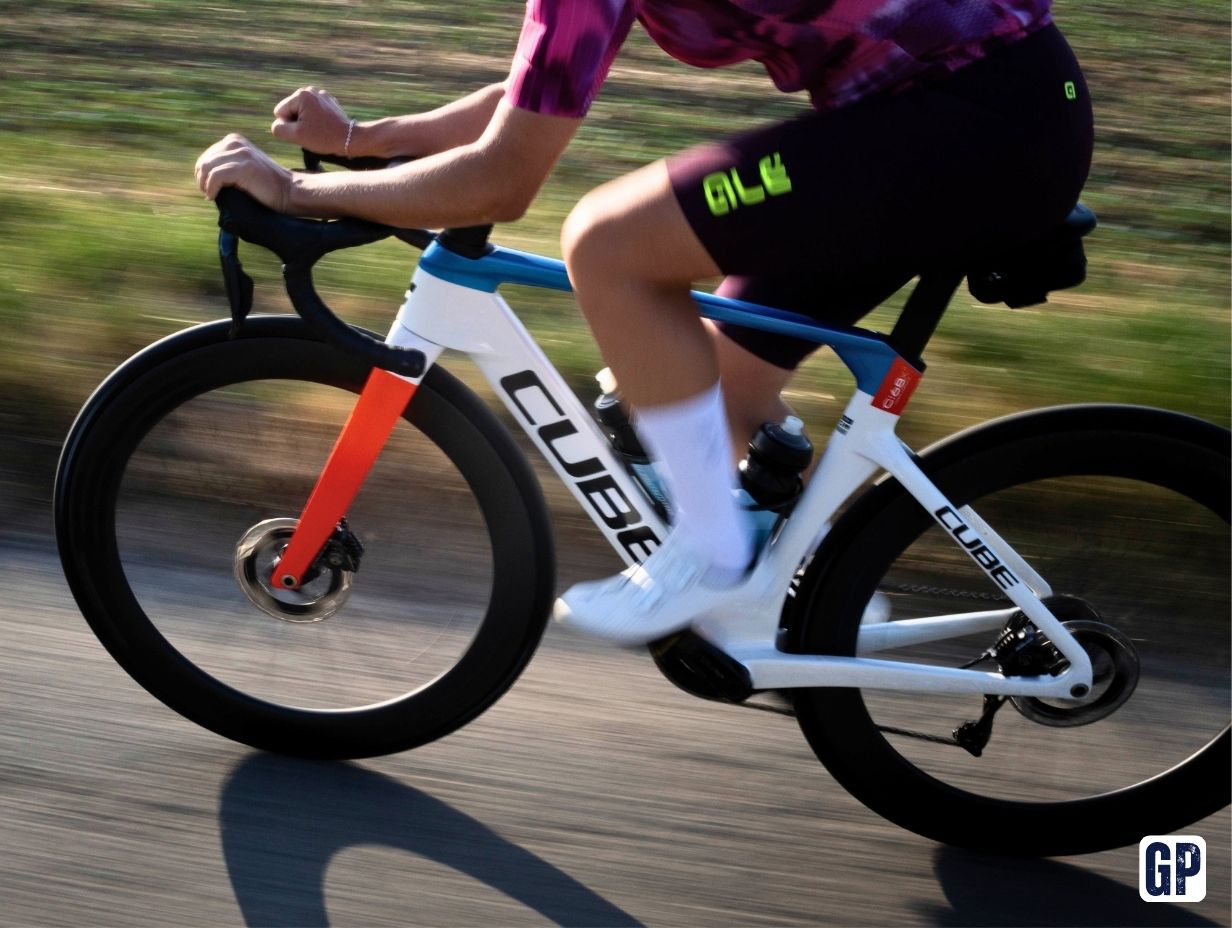
The Litening gives that rare feeling: you sense the gain without needing to convince yourself. As soon as the speed rises, the bike becomes more logical, more natural. It asks to be launched (without that being difficult), then it maintains the pace.
Plenty of stiffness, but never punitive
What surprised me most is how pleasant the bike stays despite its stiffness. I expected a very rigid machine, almost hard work to ride. That is not what I felt.
The frame does not feel like it twists. When you push, it goes. The response is crisp, firm in a good way, but not jarring.
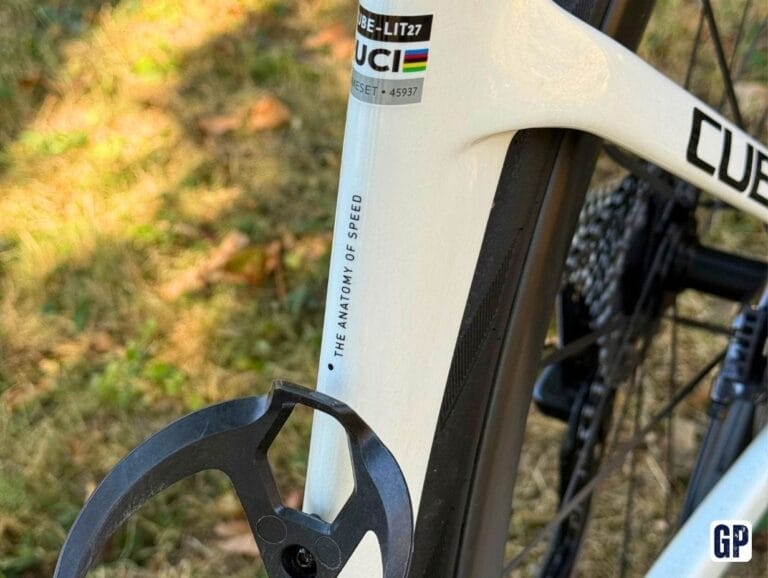
On climbs, I thought I would be disadvantaged by the bike’s aero character and the very deep wheels. In the end, I didn’t struggle. I even set climbing PRs, on a bike that weighs broadly the same as what I usually ride.
The comparison with my Scott Addict RC is interesting. The Scott is more climb oriented, with a slight frame flex that gives a bit of rebound when you get out of the saddle. The Cube does not play that card. It remains totally stiff and direct.
And yet, I did not feel penalised. That may be where the Litening is most surprising: it is very aero, but not limited to the flat.
On the descent: like on rails
On descents, the Litening keeps that very composed character. The wide cockpit, deep wheels and frame stiffness deliver a bike that sits firmly on its line.
I felt confident, setting personal best speeds in my usual descents almost without realising (even though I am more used to the grip of my 32 mm tubeless tyres).
The bike does not have the instability you might fear with such a profiled machine. The Newmen wheels paired with Schwalbe Pro One Aero tyres work perfectly well. The bike feels like it is on rails. Everything is precise and smooth.
Drivetrain, power meter and bottom bracket: a no-compromise build
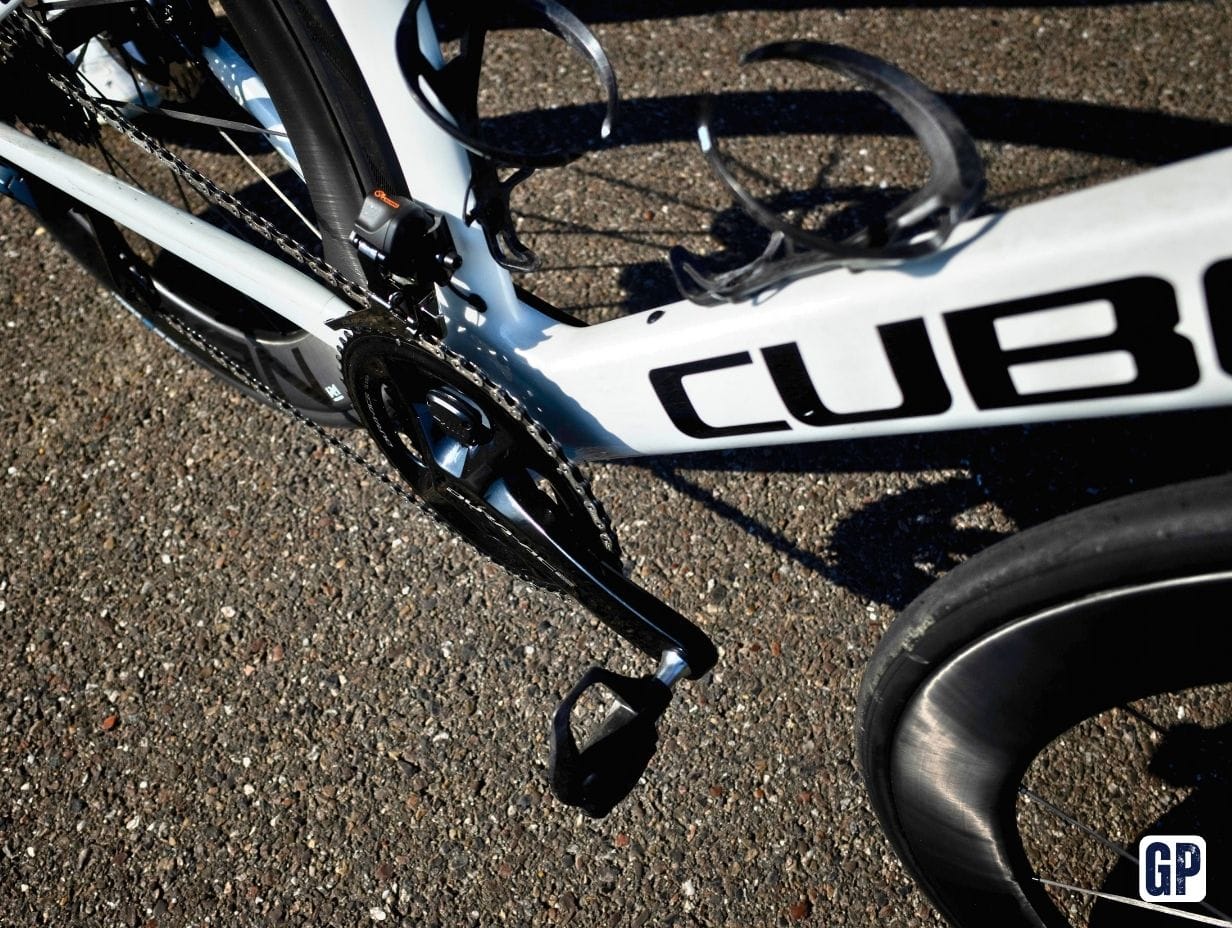
The SLT version is listed at 7 599 € with a Shimano Dura-Ace Di2 groupset, a 4iiii dual-sided power meter and a ceramic bottom bracket.
The drivetrain combines a 52/36 chainset with an 11-34 cassette, a fairly logical choice for a bike of this type: enough gearing to ride fast on the flat without completely sacrificing versatility.
On big climbs, I never felt penalised. The Litening remains lively, responds well when you push and is not particularly punishing on steep gradients. With 36×34, you already have a low enough gear for the vast majority of ascents.
For an even more race-focused approach, Cube also offers the Orbit version, equipped with SRAM Red and a single 50-tooth chainring plus a 13-speed 10-46 cassette. A build that can make sense especially for racers mainly on rolling courses. This version also sheds a little more weight and stands out with a distinctive colourway.
Pricing that is hard to ignore
At around 7 600 €, the Litening AERO C:68X SLT remains an expensive bike. No point pretending otherwise. But its positioning becomes far more interesting as soon as you look at the complete build.
Here, Cube combines its highest grade carbon, the Dura-Ace Di2 groupset, a dual-sided power meter, an integrated cockpit, a ceramic bottom bracket and Newmen Streem S.60/66 VONOA wheels with carbon spokes. This is not a bike whose price is kept in check by skimping on the finishing kit.
The comparison with Canyon is telling (since Canyon has long been one of the brands historically very competitive on price). At a similar price, the Aeroad CF SLX remains on Canyon’s intermediate fibre and DT Swiss ARC 1400 wheels. The Cube’s Newmen wheels sit higher in their own range, notably thanks to the VONOA carbon spokes.
But to truly compare like for like at an equivalent equipment level, you should look instead at the Aeroad CFR Di2: Canyon’s top-tier carbon, Dura-Ace Di2 and matching-level kit. That one sits around 9 000 €, versus 7 599 € for the Litening AERO SLT.
Cube therefore hits particularly hard with this Litening: for 7 599 €, you get access to a WorldTour-level aero bike, with the brand’s top-end carbon construction and a build that does not try to save money on the finishing kit.
The Litening AERO C:68X Race is even more telling. At 5 249 €, it keeps the high-end C:68X frame, switches to Shimano Ultegra Di2, adds a 4iiii dual-sided power meter and Newmen Streem Allround 49/54 wheels.
Against a Canyon Aeroad CF SLX 8 Di2 at 5 999 €, also in Ultegra Di2 but with a single-sided power meter and DT Swiss ARC 1600 wheels, the Cube scores points. The wheels, the price difference, the dual-sided meter and the high-grade carbon fibre make the proposition very strong.
SRAM or Shimano build, with no extra cost
The positioning is perhaps even more interesting on the SRAM versions. Usually, SRAM builds lead to a noticeable price increase versus their Shimano equivalents. Here, Cube does not pass on that difference: the Litening AERO C:68X SLX with SRAM Red is listed at 7 599 €, exactly the same price as our SLT in Dura-Ace Di2.
That is rare enough to highlight, especially with a build that keeps the C:68X frame and the high-end Newmen wheels with carbon spokes. Cube thus manages to leave you the drivetrain choice without making SRAM Red a financially penalising option.
More surprising still, the Orbit version, also in SRAM Red but with a 13-speed single-chainring setup, drops to 7 299 €. The absence of a front derailleur obviously explains part of the gap, but Cube could easily have priced this very current build at the same level. It did not, which further reinforces the range’s pricing consistency.
Against other aero bikes: less visible but just as serious
The Litening AERO is still less present in the collective imagination than some rivals. Canyon Aeroad, Specialized Tarmac SL9, Cervélo S5, Trek Madone: these names come up more often as soon as we talk about aero race bikes.
Cube sometimes suffers from a more rational, less status-led image. Yet this Litening is anything but a second-tier bike. It is used at the highest level, it ticks the expected technical boxes, and above all it delivers real sensations of speed.
We already covered the previous Litening Aero C:68X SLT, which remained very convincing several seasons after launch. This new generation pushes things further: lighter frame, increased tyre clearance, revised cockpit, modern integration and an even more ambitious build.
What I take away
The Cube Litening AERO C:68X SLT really surprised me with its ability to be extremely performant without becoming inaccessible or too exclusive in use. Even with the deep wheels on this SLT version, I never felt penalised when the road tilted up.
It remains stiff, very direct and with virtually no flex, but without that “plank-like” feel that some aero bikes can have and that makes them hard work. For those who want slightly less radical behaviour, the Race version with its shallower Newmen wheels could be interesting. Over very long distances, this stiffness could eventually become tiring. But on rides up to 150 km, I found the Litening particularly enjoyable and far more versatile than its profile suggests.
And above all, its pricing would not be so interesting if the bike were not good. Cube could simply offer a bike cheaper than its competitors. In reality, the Litening AERO C:68X SLT is a bike that sits alongside the market’s most prestigious and expensive references.
In the end, the only real problem with the Litening AERO is getting hold of one. Between lead times, pre-orders and limited stock, even though the bike is particularly convincing, the hardest part will remain managing to get your hands on it.