

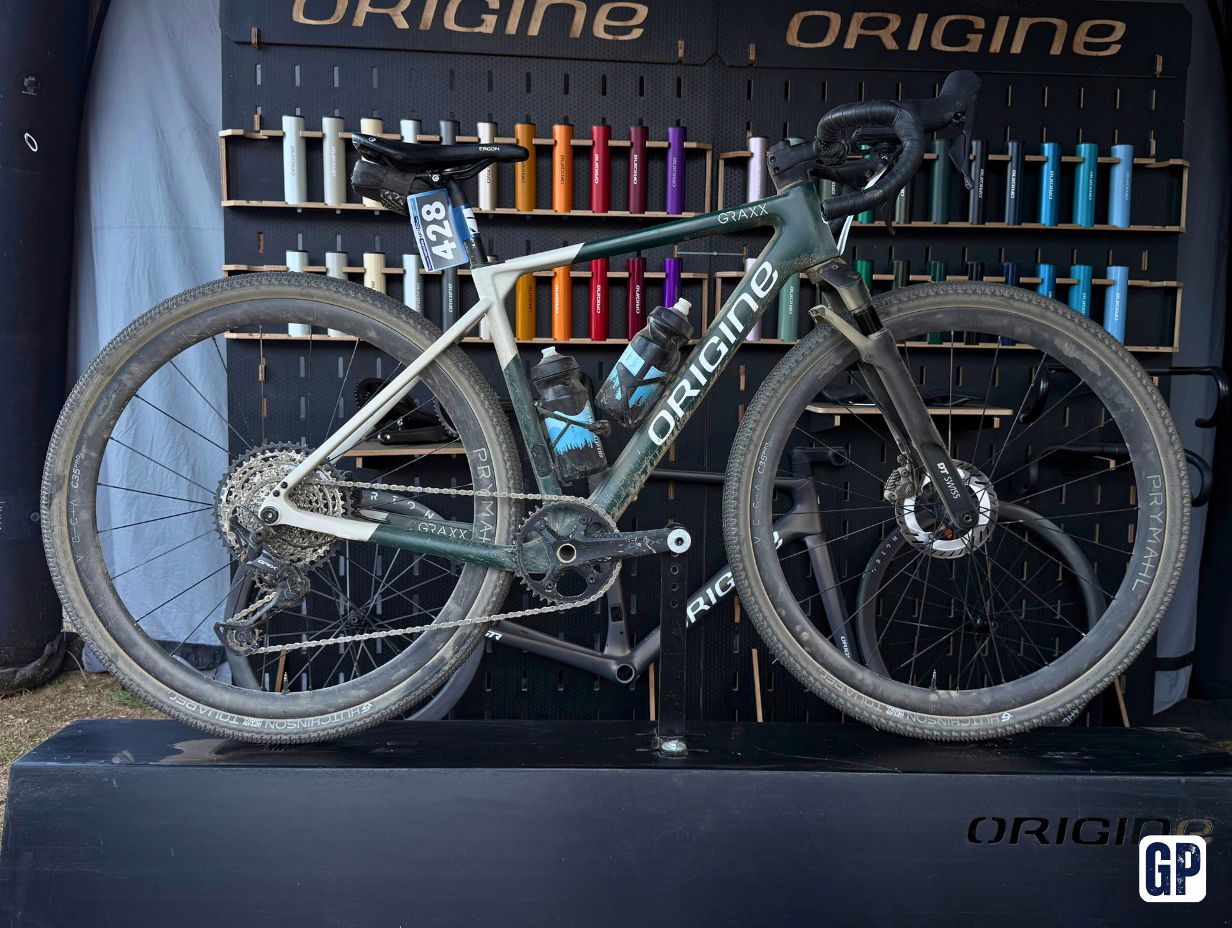
What better way to test kit than a gravel race? 110 km, 1,400 m of climbing, an Origine Graxx I didn’t know, fast descents with ruts, rocks across the track, a few tricky bends. Not MTB. Not smooth gravel either. The kind of route where you quickly wonder whether a gravel fork with 40 mm of travel can really make a difference.
With the DT Swiss F 132 ONE, the answer is yes. But not everywhere, not all the time, and certainly not without trade-offs.
A gravel fork designed for frequent use
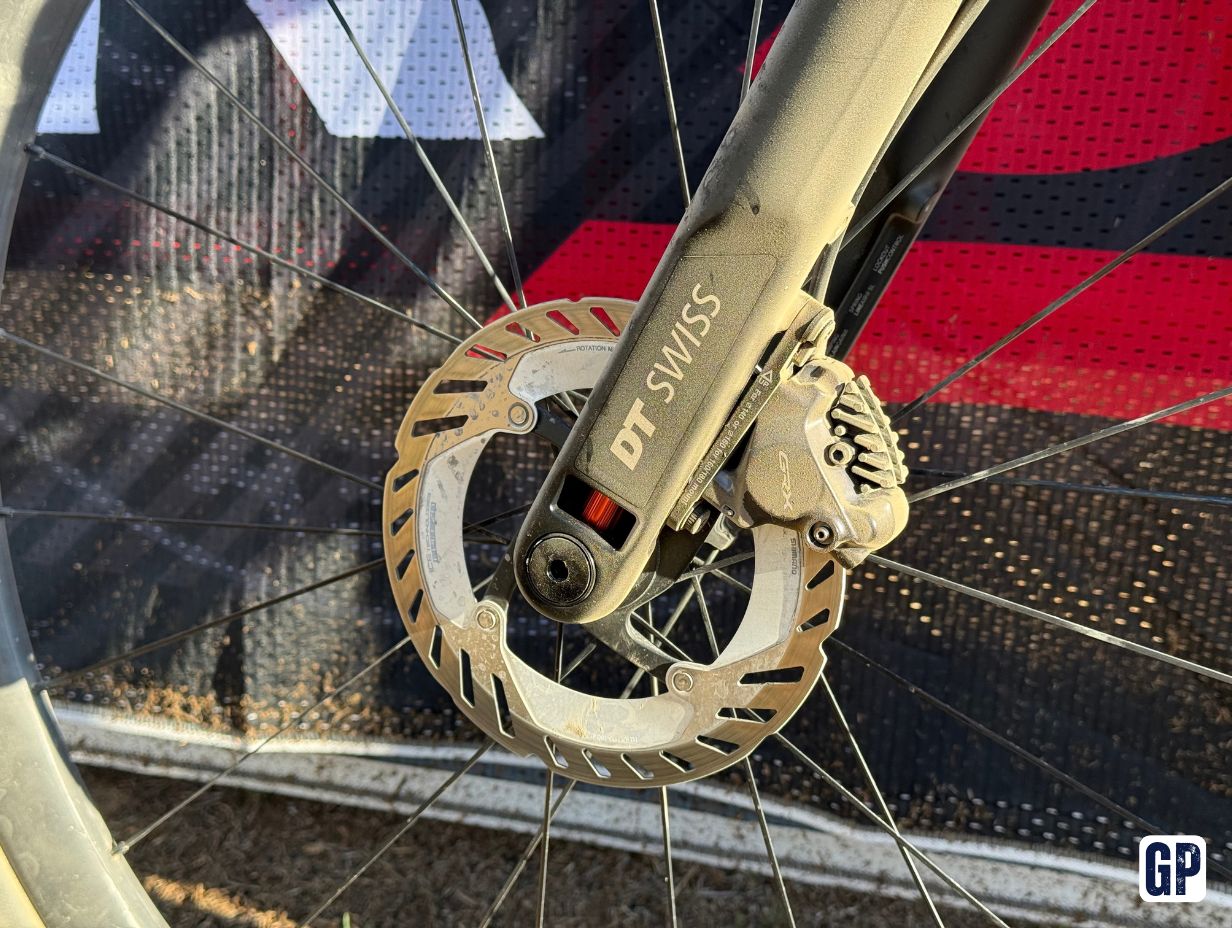
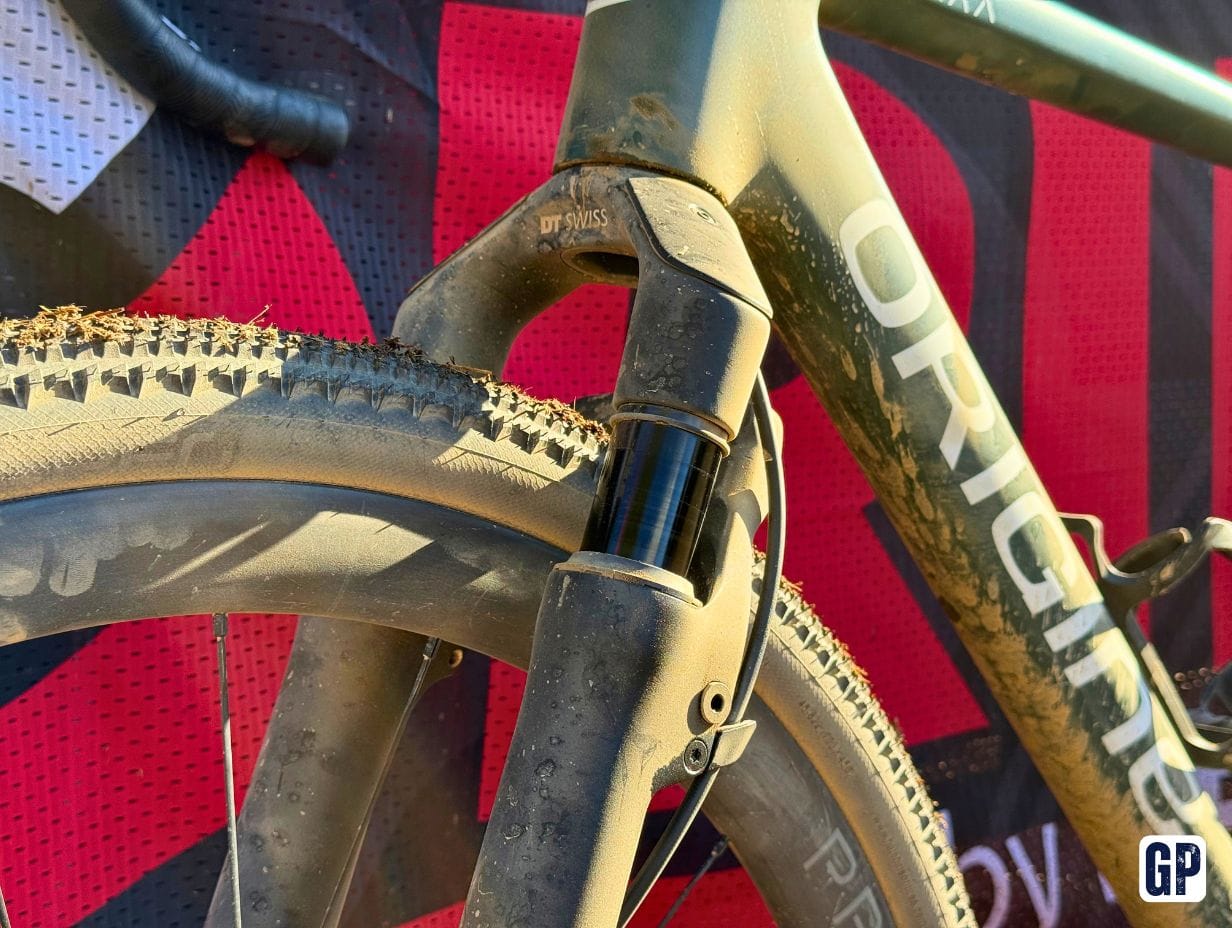
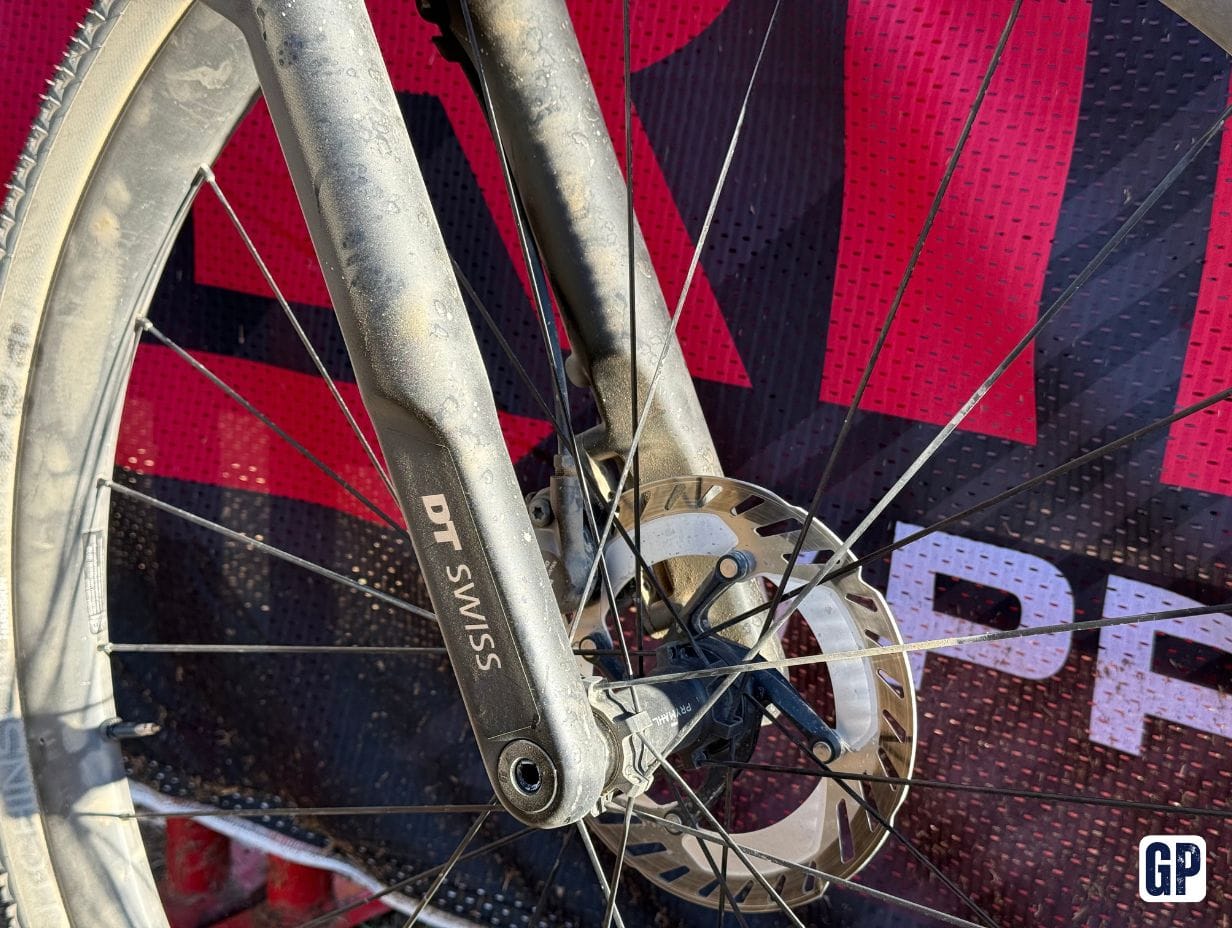
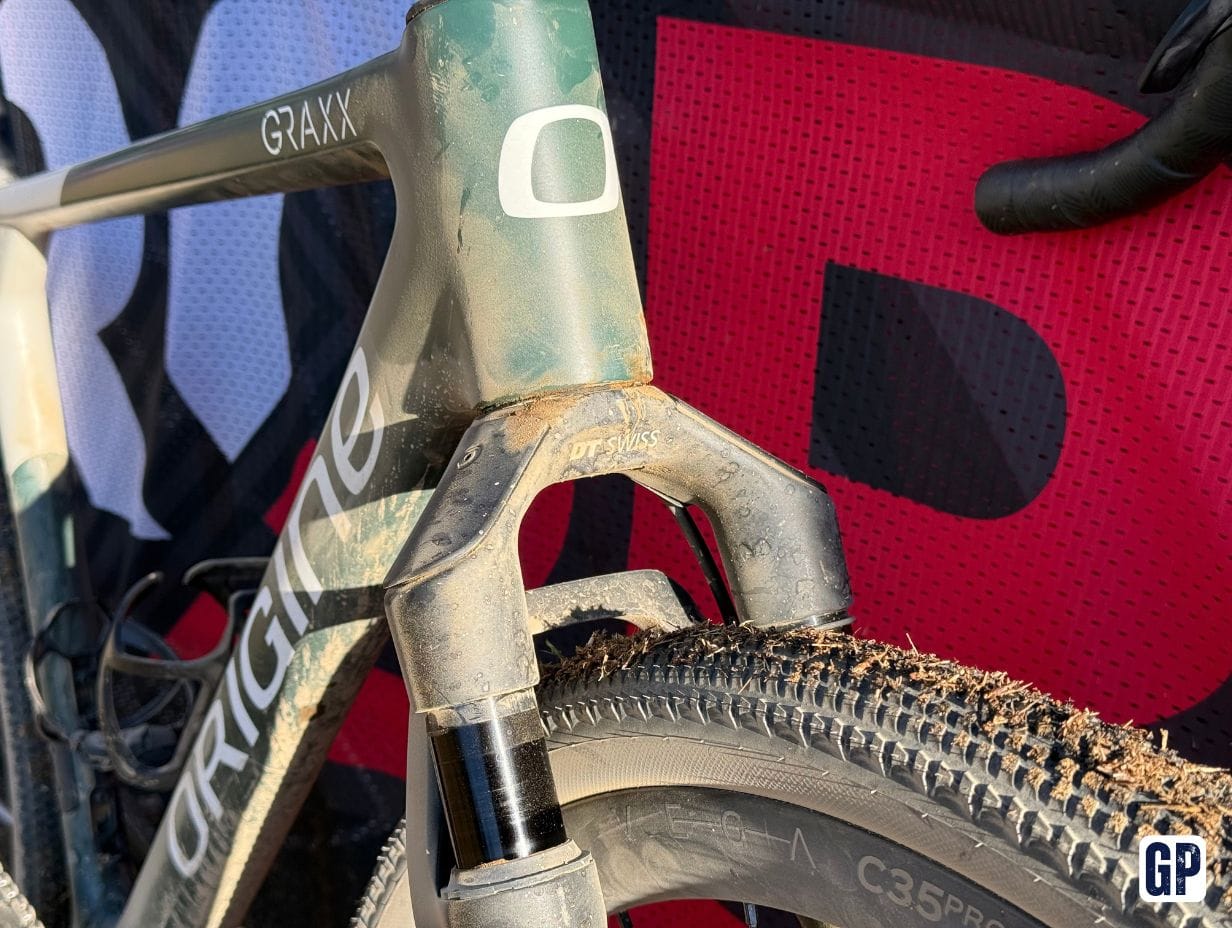
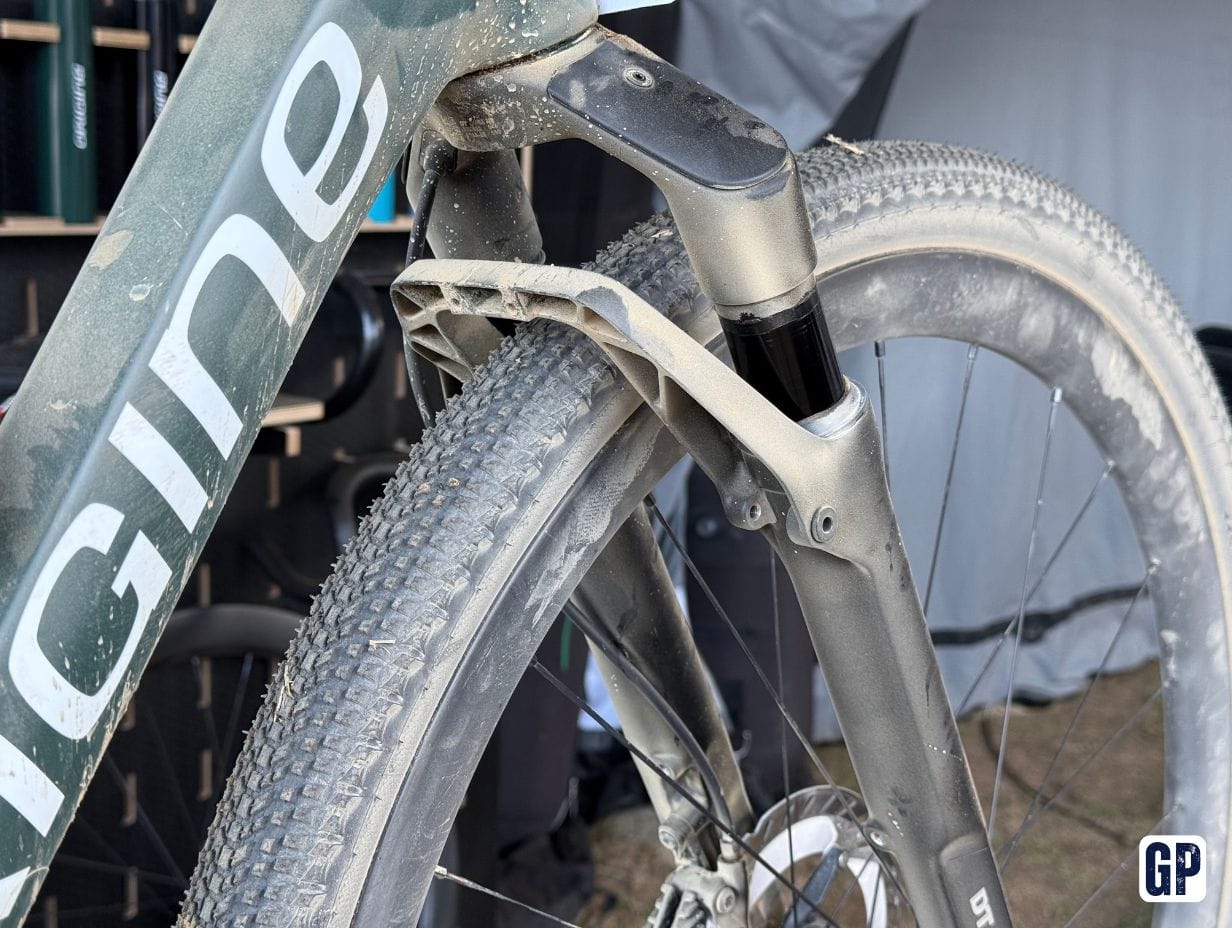
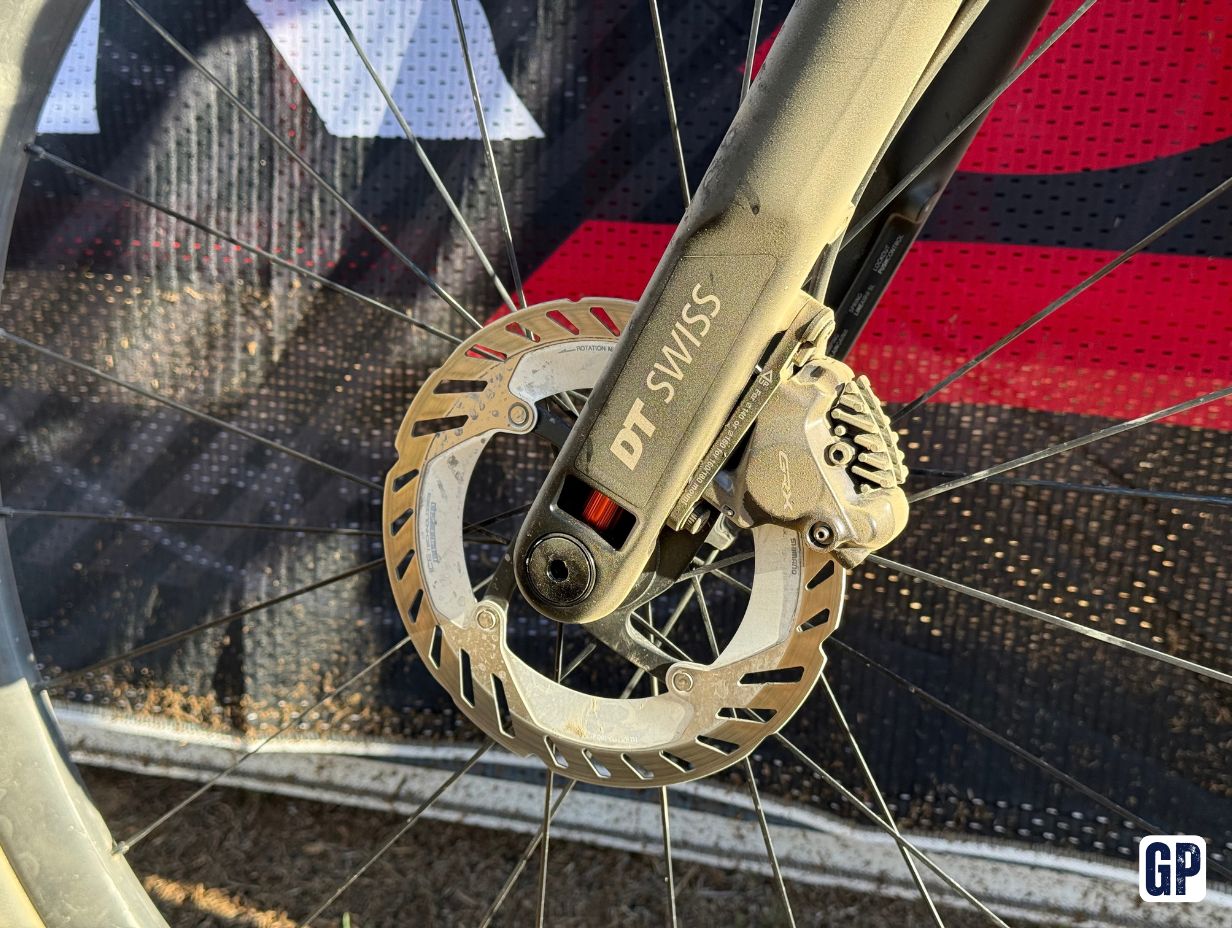
The DT Swiss F 132 ONE is a suspension fork dedicated to gravel, with 40 mm of travel, a Lineair SL suspension and a lockout system called “Pushcontrol”. It accepts tyres up to 50 mm wide, is available with several offset options from DT Swiss, and weighs 1,340 g.
You’ll find it on certain builds such as the Canyon Grail Rift and the Origine Graxx, and for a few months now this fork has also been available aftermarket.
The real success: the lever under the left hood
The biggest strength of this fork isn’t the travel. It’s the control.
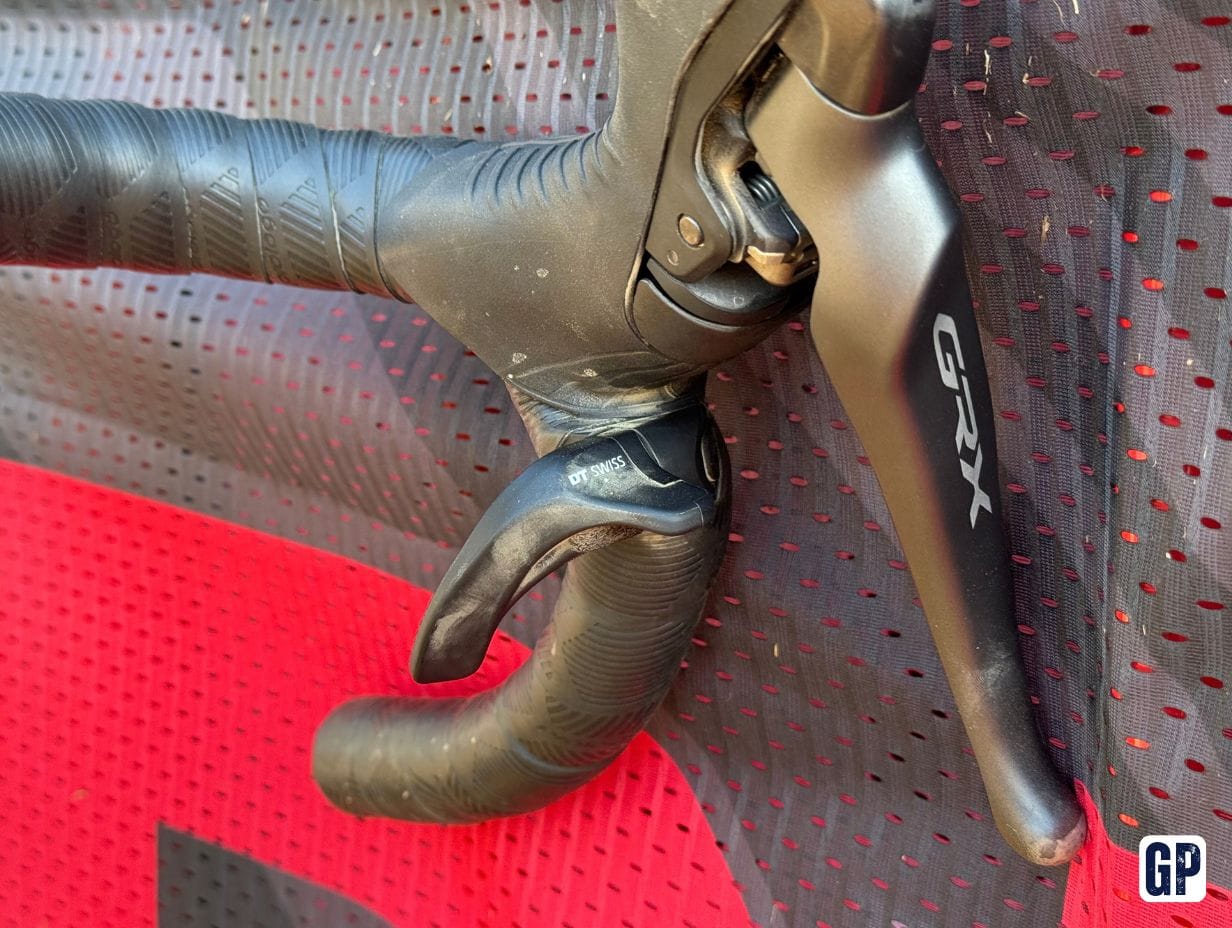
DT Swiss puts the lockout lever under the left brake hood. A single flick is enough to open or lock the fork. And above all, that action remains natural whether you’re riding on the tops or in the drops.
During the race, I used it constantly. Rolling climb? Fork locked. Acceleration? Fork locked. Rough descent? Fork open. Fast but irregular section? Open as well.
The ergonomics are really good. I didn’t need to hunt for the control, nor change my position to reach it. On a gravel fork, this detail changes everything: if the lockout is poorly placed, you end up not using it. Here it’s the opposite. The fork becomes an active riding adjustment, almost like a gear choice or a hand position.
The small miss: knowing whether it’s open or closed
Activating and deactivating it so often, I sometimes lost track.
On some descents, I no longer knew whether I’d remembered to unlock the fork. So I pressed again. Not a big deal, but in a race, with people around, unknown terrain and changing pace, that uncertainty exists.
I would have liked some status feedback somewhere. A small notification on the head unit, or a more obvious indicator. Not to make it a connected gadget. Just to avoid that moment when you wonder, in the wrong place: is it open or not?
On rough descents, confidence comes quickly
The Sea Otter Girona course had a lot of elevation early on, then rolling sections. The descents weren’t necessarily very technical at low speed, but they became genuinely demanding when you came in hot: ruts, rocks lying across, patchy support, corners where the bike’s front end had to hold its line.
I’d set off with tyres a bit harder than on my own 100% rigid gravel bike. Deliberately, to keep a small margin and adjust later if needed, without taking out a pump. But it’s not ideal for maximising comfort or grip on this kind of terrain.

And yet, as soon as the fork was open, the bike stayed very predictable. The front tracked the surface better, bumps came through less harshly to the arms, and above all I had that feeling of being able to keep speed without tensing up.
I’m not the most relaxed on descents, even less so in a race with a bike I’m discovering and terrain I don’t know. Here, I rode much more relaxed and confident than usual. The F 132 ONE brings a real mental margin, not just comfort.
40 mm: enough for challenging gravel
The 40 mm of travel felt more than sufficient for this use. We’re not trying to turn the bike into an MTB, nor to erase the terrain completely. The fork filters, supports, adds grip, but you can still feel what’s happening under the wheel.
That’s probably what makes the package interesting in gravel. Too much travel would push the bike towards something else. Here, the behaviour stays close to a gravel bike, with extra ability to keep contact on broken-up sections.
After this race, my view is simple: on rough terrain with long descents, it isn’t a gimmick.
The weight, impossible to forget
The limitation is just as clear: weight.
I couldn’t weigh the complete bike, so I’m not going to invent a number. But the whole set-up wasn’t light, and the fork inevitably plays its part. At 1,340 g, the F 132 ONE is still heavier than a typical rigid gravel fork.
At this Sea Otter, with lots of climbing and long rolling sections, it wasn’t the most logical set-up for performance. I gained confidence and speed in some descents. But on the climbs, the extra weight cost me.
That’s where the choice becomes truly personal. If the goal is a lively, light gravel bike that’s efficient on rolling courses, a front suspension holds little interest. If the terrain is rough, if the descents stack up, if vibration fatigue becomes a real issue, the balance shifts.
Set-up: pressure and rebound, without excessive complexity
The fork is set up like a classic air suspension, with pressure adjusted using a shock pump. Rebound is adjusted via a dial at the bottom of the fork.
The key point here is that the fork felt easy to integrate in a race: open when the terrain requires it, locked when you need to accelerate or climb cleanly.
The Pushcontrol system does a lot for this ease of use. A gravel suspension only makes sense if it doesn’t demand constant mental load. Here, the action is natural enough to repeat without thinking about it.
Who does the DT Swiss F 132 ONE really make sense for?
I wouldn’t choose it for very rolling gravel races, nor for a build focused on pure efficiency. It adds weight, and even with a good lockout, you’re still carrying that mass on the climbs.
By contrast, for mountain gravel, rough routes, fast descents, long distances where arm and upper-body fatigue starts to matter, it becomes highly relevant.
It will also suit riders who want to keep a gravel bike, with a road handlebar and dynamic position, but who sometimes lack confidence when the terrain degrades. That’s exactly where I found it most convincing: not in outright performance, but in the confidence it brings (which ends up saving time and energy).
My verdict after 110 km of racing with this fork
The DT Swiss F 132 ONE doesn’t make a gravel bike lighter, nor simpler. It also doesn’t turn every ride into a suspended playground.
But in this test, it gave me something very concrete: grip, comfort and above all confidence. On fast, rough descents, I was glad to have it.
This is a fork to choose for the terrain, not for the spec sheet. If your rides are often smooth, fast tracks, it will be too much. If your descents quickly fill with stones, ruts and vibrations, it can genuinely change the way you ride, and the enjoyment that goes with it.