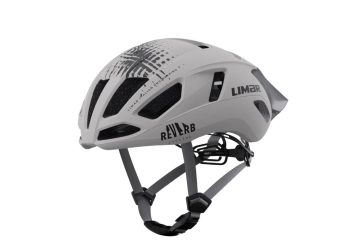

The Limar Air Atlas UAP Reverb lands with a fairly compelling promise: an aero helmet built for fast road riding, yet pitched as compatible with the gravel ethos. In this special Reverb edition, it leans into its graphics with a distinctive colourway and a very pronounced matte finish.
I tested this Reverb version, which shares the same technical platform as the standard Air Atlas UAP. The price is higher and the styling more distinctive, but the fundamentals are the same: a light, aero, well-ventilated helmet with a removable rear piece and a Fidlock magnetic buckle.
Strengths:
- Low weight and a clean silhouette
- Convincing ventilation for an aero helmet
- Well-integrated removable UAP rear piece
- Comfort with no pressure points
Could be better
- Glasses unstable in the vents
- Reverb matte finish prone to marks
- No Mips
A visually successful Reverb edition
The Reverb version is not a different helmet. It is an aesthetic variation of the Air Atlas UAP, inspired by the gravel world and a bolder graphic identity. The base remains identical: Air Fit adjustment system, magnetic buckle, washable pads and UAP architecture.

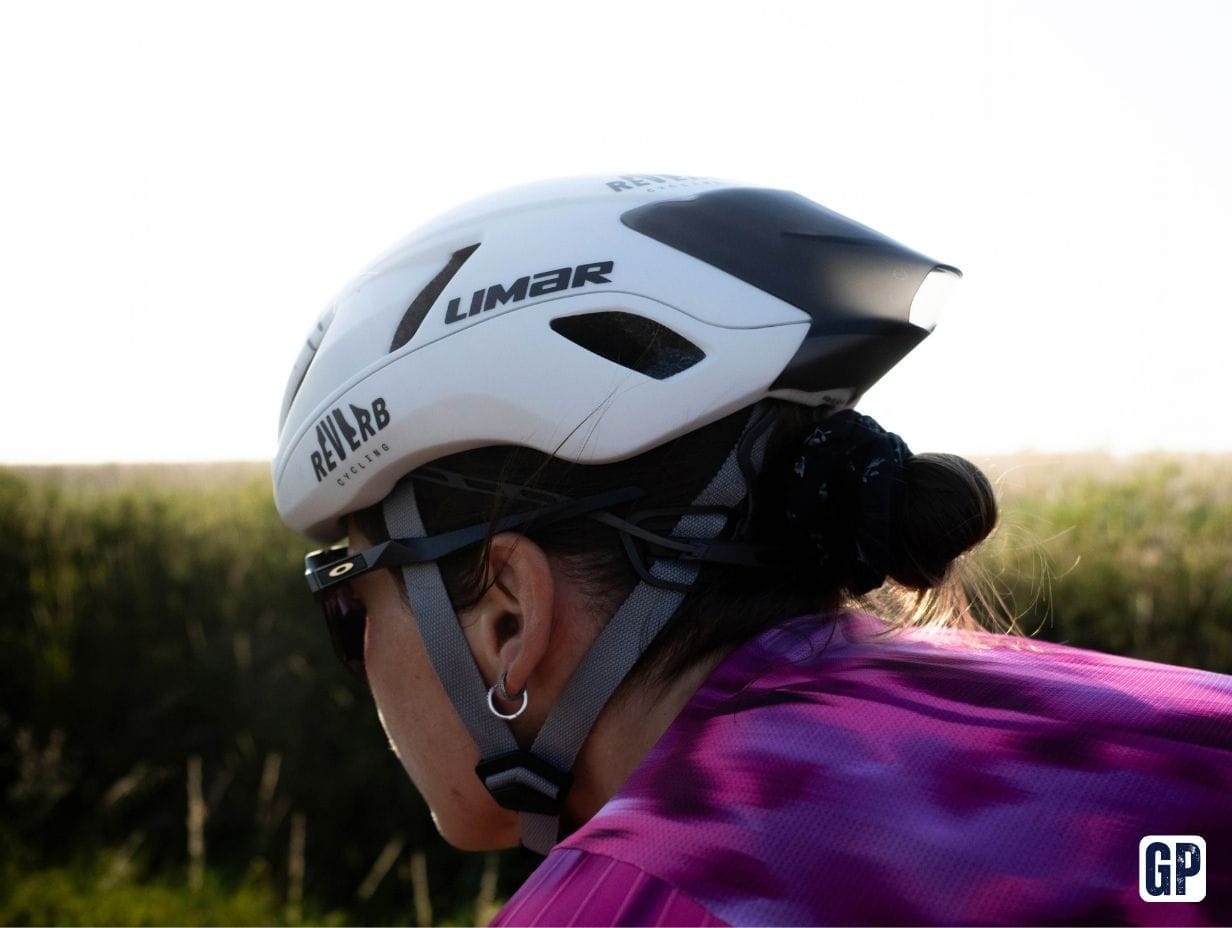
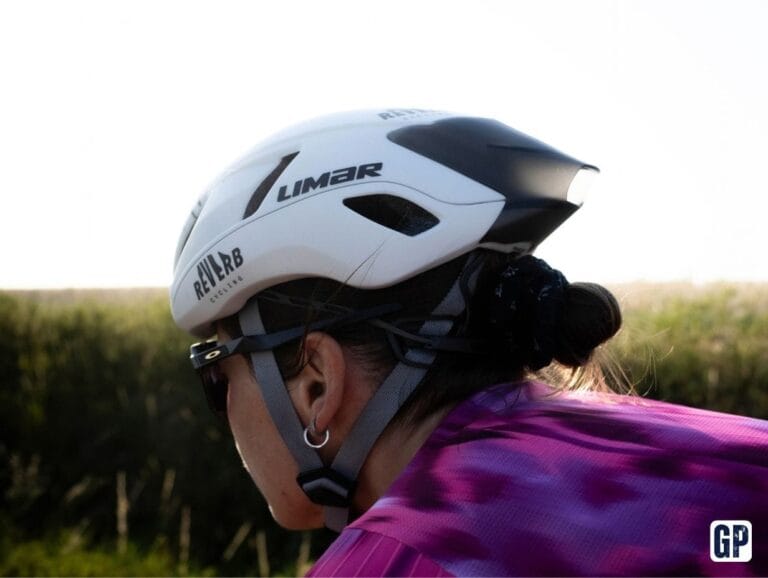
The colourway tested is not really white. It is more of a light matte grey, visually quite soft. It looks good, less clinical than a glossy white, and it pairs well with the grey straps.
The helmet also exists in a classic version, cheaper, with White Glossy, Black Glossy, Metallic Gray Glossy and Metallic Blue Glossy colourways. The Reverb mainly stands out for its graphics and its slightly more exclusive positioning.
This extra identity comes at a price: Limar lists the Air Atlas UAP at 269,95 € and the Reverb version at 289,95 € on its site. So we are already in a high price zone, without tipping into the extremes of the most expensive road helmets on the market.

The rear piece really changes the silhouette
The most interesting detail on this helmet is the removable rear piece. It extends the helmet’s profile, channels the outgoing air and gives the whole a more aero look.
Visually, it works well. With the piece fitted, the helmet takes on a sleeker, more technical, racier line. Without it, it still looks well designed. It does not look incomplete as soon as you remove the rear element, and that matters: the helmet remains coherent in both configurations.
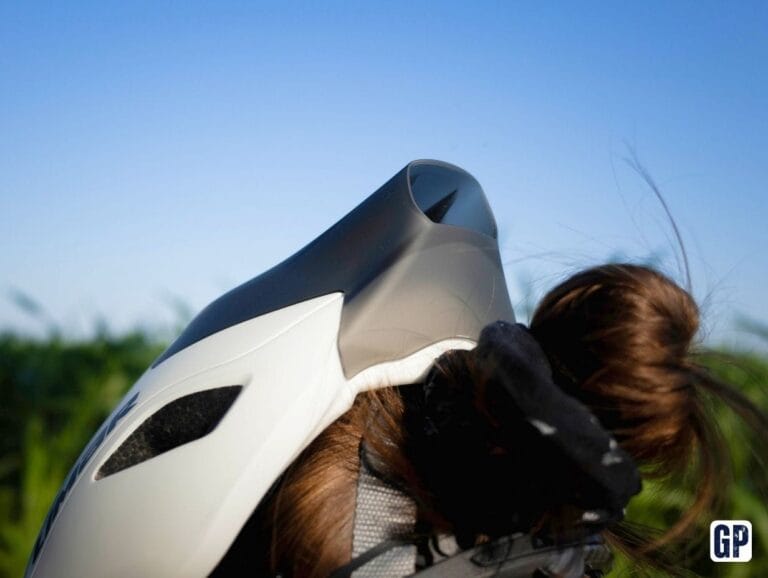
I obviously cannot measure the real aerodynamic gain. Limar cites wind-tunnel work and more stable airflow at high speed, but in the real world what you notice most is the sense of a well-profiled helmet without excess bulk.
This modularity also adds a small practical benefit: you can choose a more aero or a simpler look depending on your preference. It is not essential, but it is a well-integrated idea.
A matte finish that is beautiful but fragile day to day
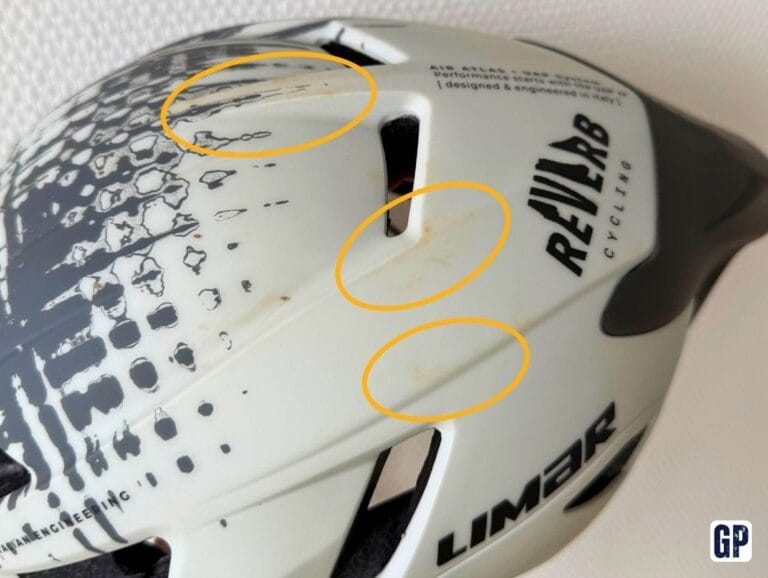
This is the point that frustrated me most on this Reverb version. The only time I transported the helmet without the supplied pouch, it picked up marks that no longer come off when cleaned. I had never encountered this with other helmets, which I regularly transported without a pouch. Here, a single trip was enough to mark the matte finish.
On a glossy finish, this kind of small mark often comes off with a soft cloth. Here, the matte surface grabs more. And on a helmet at almost 290 €, it shows quickly.
It is not a structural problem, of course. The helmet remains perfectly usable. But for an object so visually considered, and sold partly on its graphic identity, aesthetic fragility matters. Especially if the helmet is often carried in a bag, left in a car or handled between rides.
Wide straps, Fidlock buckle: between perceived quality and visual heaviness
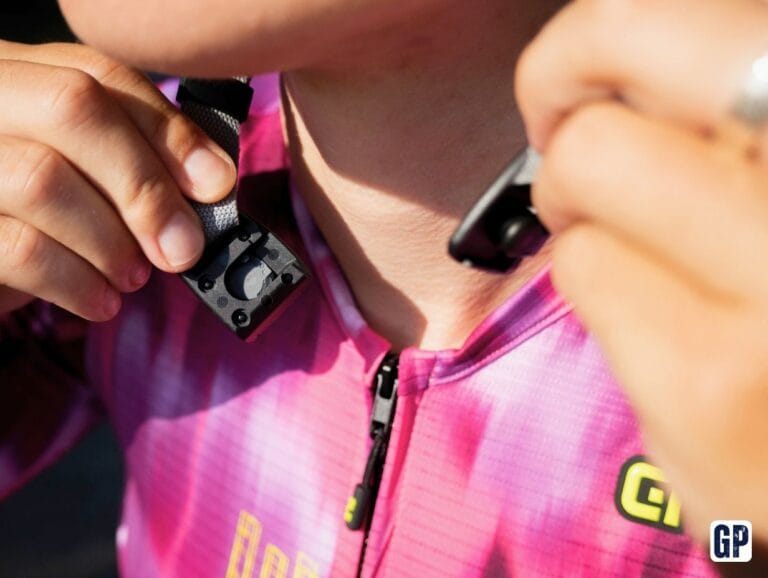
Limar equips the Air Atlas UAP with a Fidlock magnetic buckle. It is practical, it closes easily, and it gives a real sense of quality. Many cyclists appreciate this kind of closure, especially with gloves or when you want to handle the helmet quickly.
Personally, it is not my favourite. I find the buckle a bit heavy, a bit bulky. I prefer finer, more discreet closures, especially on a road/gravel helmet that is meant to look elegant on the face.
I get the same feeling with the straps. They are grey, so they match the Reverb colourway well, but they are quite wide. On a small face, they take up a lot of space and give a bulkier look than the helmet itself suggests.
It is a shame, because the helmet itself has lovely lines. The overall finish is solid, and the shape is well executed, but the straps slightly break that finesse.
A comfortable helmet with no pressure points
Once on the head, the Air Atlas UAP scores points. I never felt any specific pressure points.
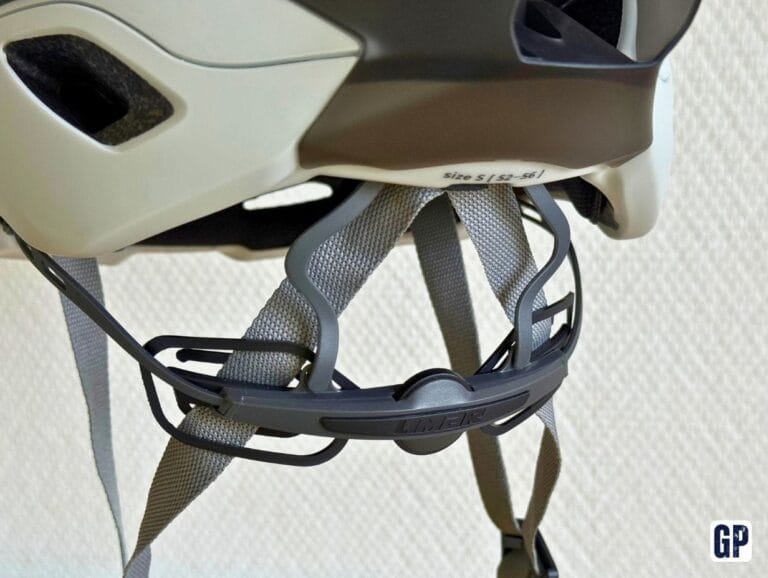
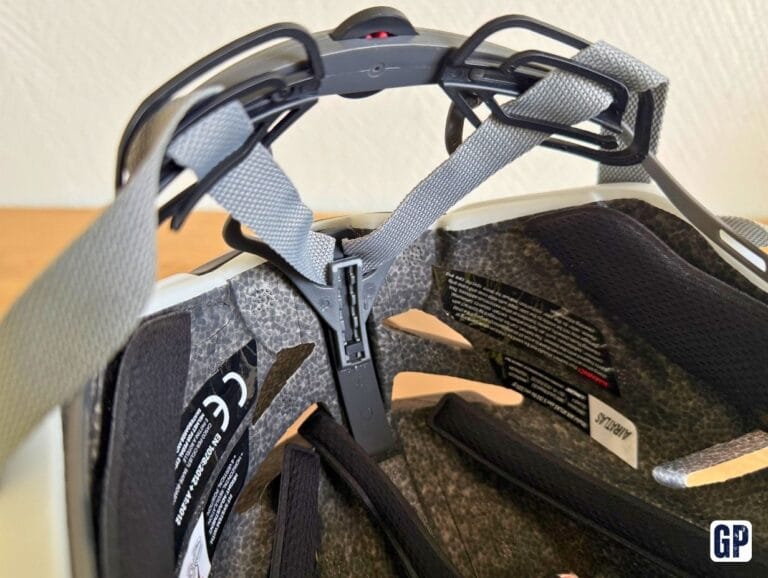
The Air Fit system allows several adjustments, notably for the height of the rear dial, the straps and the positioning around the ears. It is comprehensive enough to find a proper position.
Retention is good, the dial is easy to adjust, and the helmet does not sit too high on the head. That is an important detail: some helmets can quickly create a mushroom effect. Here, the height remains contained.
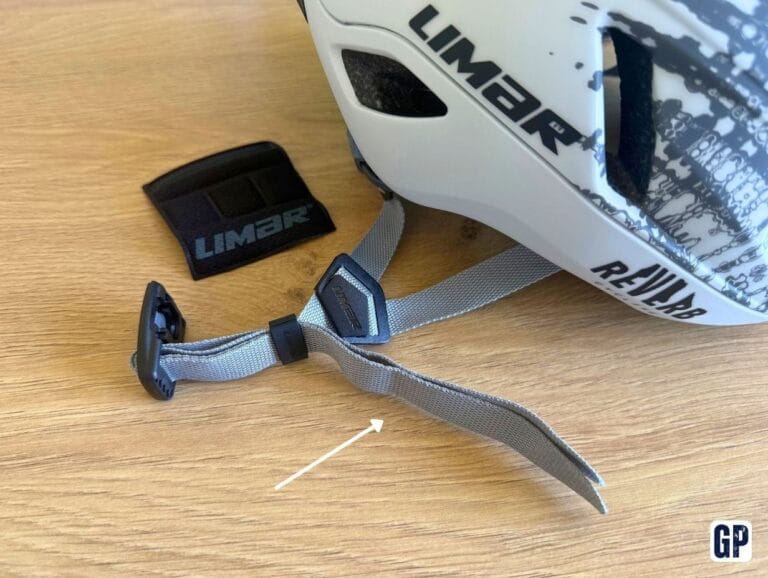
For my face, in size S, the strap felt too long out of the box. Nothing dramatic: it can be trimmed cleanly, then secured by slightly heating the end to prevent fraying. But from the factory, this one is rather (too) long.
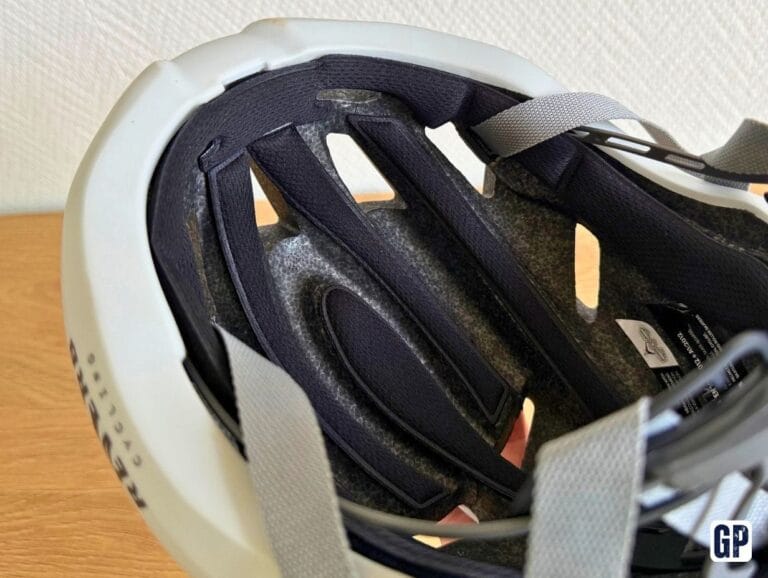
Limar does not supply spare pads with the helmet, but they are easily available on the brand’s website at a still reasonable price: around 19 € for this model.
Chin pad: good intention, not necessarily good execution
Limar adds a small foam pad on the strap under the chin. The idea is good: improve comfort and avoid the neck’s direct contact with the strap.
In my case, I removed it. It added even more volume under the face, with a large black section visible on the side of the cheek. On a small face, the effect quickly becomes disproportionate.
This detail sums up the helmet quite well: there is a real intent to refine the user experience, but some choices would benefit from being subtler. The magnetic buckle, the wide straps, the chin pad… separately, they are small, relevant elements. Together, they sometimes give a bulkier feel than necessary.
For other morphologies, or on a size L helmet, this may be less of an issue. But if you like discreet straps and visually slim helmets, it is a point to look at closely before buying.

Ventilation: better than expected for an aero helmet
The Air Atlas UAP has 7 main vents, 4 air intakes, 6 rear exhausts and 6 internal channels. The numbers do not tell the whole story, but they give an idea of the intent: Limar did not make a closed helmet in the name of aero.
In the real world, I felt more airflow than with my S-Works Evade 3. The comparison is not a scientific protocol, but it is interesting in actual use: the Air Atlas UAP breathes well for such a performance-oriented helmet.
It remains in the aero-helmet family, so do not expect the very open feel of an ultra-vented mountain helmet. But it does not give that stifling feeling that some profiled models can still cause.
This is probably one of its best balances: a fast silhouette, a reasonable weight, and ventilation that is not sacrificed.
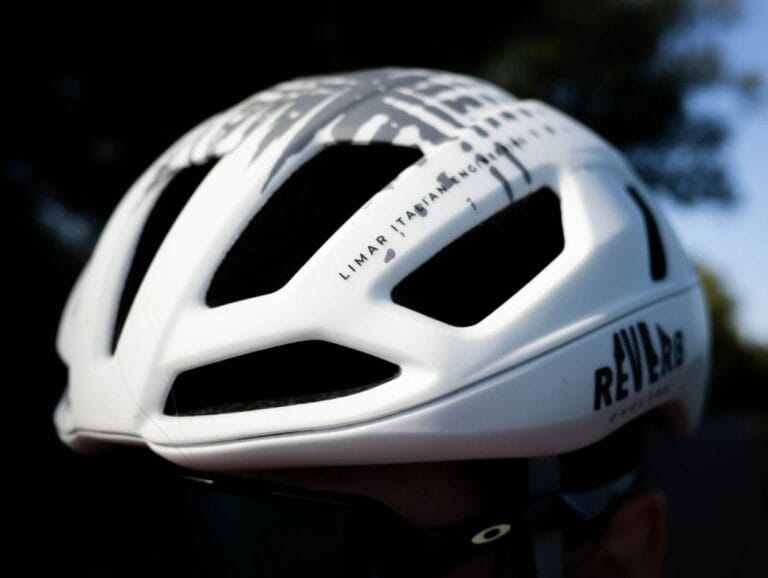
A generally compact shape, despite a slightly wide look head-on
In profile, the Limar looks great. The worked rear, the UAP piece and the overall line give something quite fluid. The helmet does not have that vertical bulk you sometimes see on certain aero models.
Head-on, the effect is a bit wider. On my rather small face, it shows. It is not bulky enough to be annoying, but it is not the slimmest helmet on the market either.
The shell is well drawn, the profile is coherent, the height remains proportionate. It is more around the face that the look loses a little finesse.

It is quite a personal take, but on a high-end helmet, visual ergonomics matter as much as the spec sheet. And proportions are never neutral.
The real issue in use: glasses do not stay put
This is the most annoying point of this review. Glasses do not sit securely in the helmet’s vents. I tried several pairs, and the finding was the same: it lacks retention.
On smooth tarmac, you can sometimes get away with it. But as soon as vibrations arrive, the glasses move, then end up falling quite quickly. For a helmet offered in a gravel-leaning edition, that is a real shame.
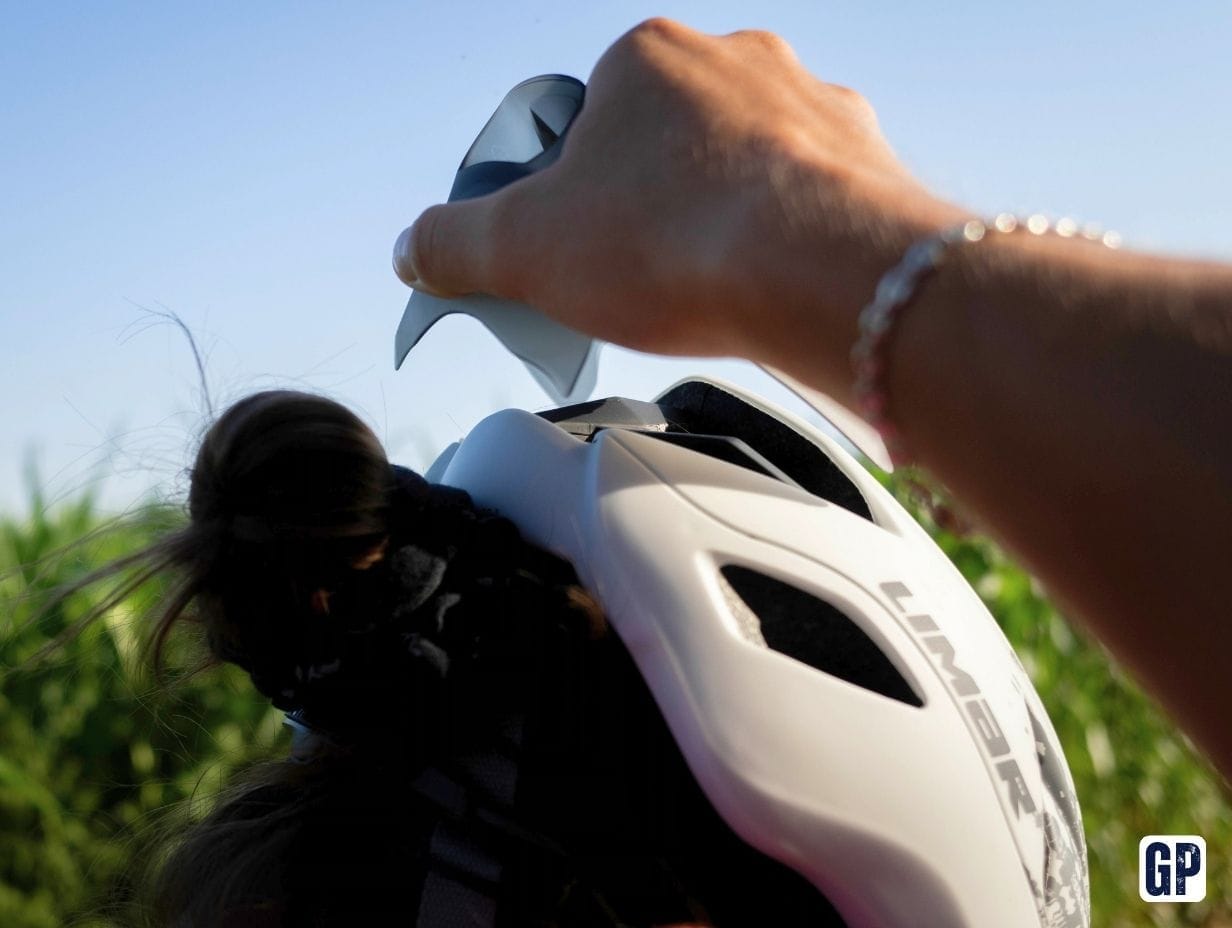
It is not a cosmetic detail. It is a real user-experience issue. The helmet can be comfortable, well ventilated and good-looking; if the glasses move as soon as the terrain vibrates, it misses something very concrete.
Fast road or gravel: it mostly chooses performance
Limar categorises the Air Atlas UAP for high-performance road and gravel use. In practice, I see it first as a modern road/aero helmet that can go onto gravel terrain, but is not conceived as a gravel helmet that is practical in every detail.
The brand claims 255 g in size S, 275 g in M and 315 g in L. For my part, I measured 275 g on my size S sample, which is 20 g more than the stated weight.
Ventilation and comfort help it go beyond a simple aero helmet. It can handle long rides, mixed routes, fast days when you do not want a helmet that feels too closed on your head.
The main functional flaw remains glasses retention. They do not hold securely enough when placed on the helmet, which is a pity on an otherwise well-rounded model. It is not a deal-breaker, but it is probably the point most worth fixing in a future update.
Ambitious pricing
At 269,95 € for the standard Air Atlas UAP and 289,95 € for the Reverb version, Limar sits in a space where the competition is strong. It is not an outlier: high-end aero helmets easily exceed 250 €, and some reach around 320 to 330 €.

But at this level, every detail counts. The absence of Mips technology may deter some buyers, especially when other models on the market include it at similar or lower prices.
In this family, you can also look at the Abus GameChanger 2.0, another very polished aero helmet, or the Trek Ballista Mips, more single-minded in its performance focus.
The Limar’s strengths are its rear modularity, convincing ventilation and this clearly identifiable Reverb edition. But it does not dominate the segment. It offers something different, with some successful choices and a few less convincing details.
Who is this Limar Air Atlas UAP Reverb for?
This helmet will mainly appeal to cyclists who want an aero, light, well-ventilated model with a strong aesthetic and a real visual difference compared with more classic helmets. The Reverb version adds an interesting identity, less expected than a glossy white or black.
I would recommend it more for fast road use, cyclosportives, hard rides or smooth gravel. If you often store your glasses in the helmet, the lack of retention is too present to ignore.
The Limar Air Atlas UAP Reverb is a beautiful helmet, pleasant to wear and technically solid. But it would have benefited from slimmer straps and truly secure glasses retention to fully justify its high-end positioning.