
A tubeless sealant is not the most spectacular product to talk about. When it works perfectly, it disappears. No puncture, no leak, no hassle at the roadside. So there is almost nothing to say.
That is also what makes this review interesting. For years I have mostly used No Flats Joe’s day to day, mainly for its effectiveness / volume / price balance. A safe bet: simple, not very glamorous, but hard to fault.
Strengths:
- No visible punctures over more than 3,000 km
- Very good longevity
- Latex-free formula compatible with CO2 cartridges
- Low odour and easy to clean
Could be better
- Recommended amount slightly higher than some sealants
When Effetto Mariposa sent me its range, I was curious without being especially convinced in advance. The wax had already surprised me in a good way. It remained to be seen whether their Végétalex sealant could do more than tick a ‘natural’ box on the label.
I also got a pretty interesting signal even before riding with it: after sharing it in an Instagram story, the feedback was very polarised. Some told me they would never use it again. Others swear by it. It is rarely trivial when a product triggers that kind of reaction.
So I wanted to understand. Not just whether it seals, but why it can appeal so much to some riders and annoy others.
Végétalex, a latex-free, plastic-free sealant
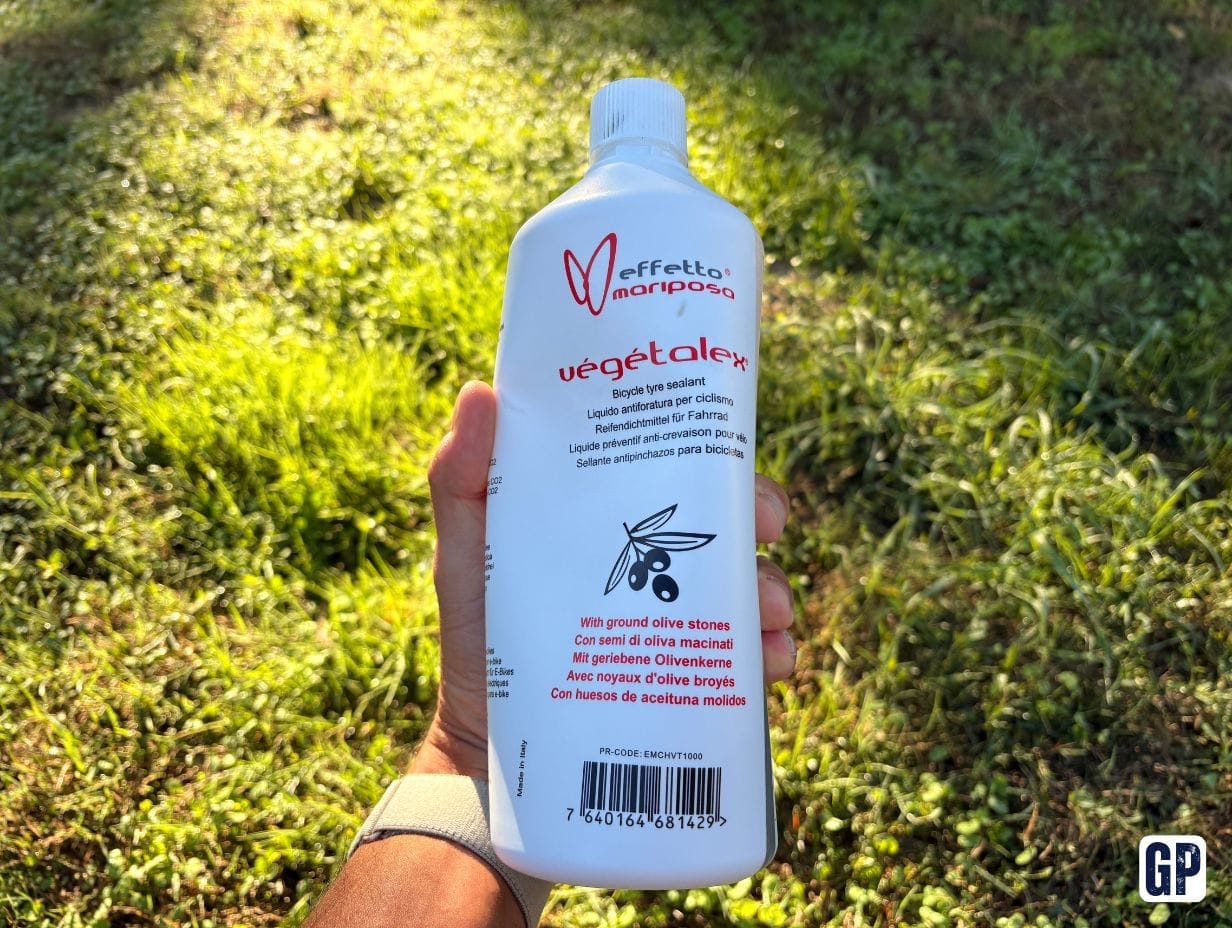
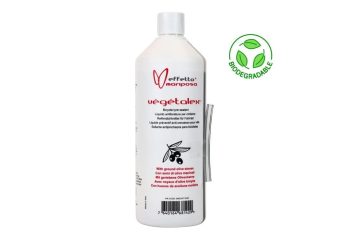
Végétalex is not a classic latex-based tubeless sealant. Effetto Mariposa states a biodegradable, plastic-free, ammonia-free formula with no rubber particles or aramid fibres. Sealing relies on plant-based particles and fibres, notably finely ground olive pits and cellulose, bound by xanthan gum.
Put like that, it quickly sounds like a spec sheet. But in use, it changes two important things.
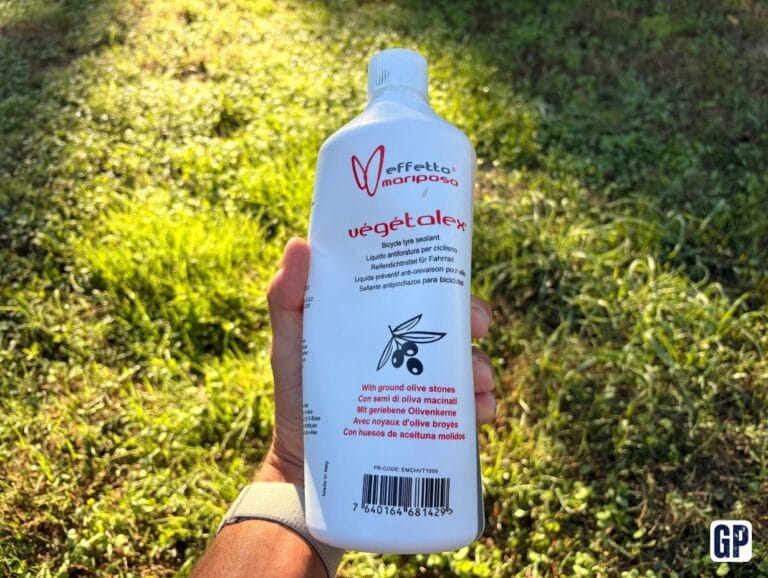
First, the product does not have that chemical or very synthetic odour you sometimes get with certain sealants. Out of the bottle, it is pretty neutral. For a product you handle regularly in the workshop, especially when testing lots of tyres, that detail matters more than you might think.
Second, its texture is particular: fairly thick, almost gel-like. You really must shake the bottle before injecting. This is not a marketing nicety added for show: if the mix is not homogeneous, you miss part of the product’s benefit.
The brand also states compatibility with tubeless, tubulars and inner tubes, including butyl, latex and TPU. On my side, I used it tubeless, on road and gravel set-ups.
Set-up: nothing complicated, but a method to follow
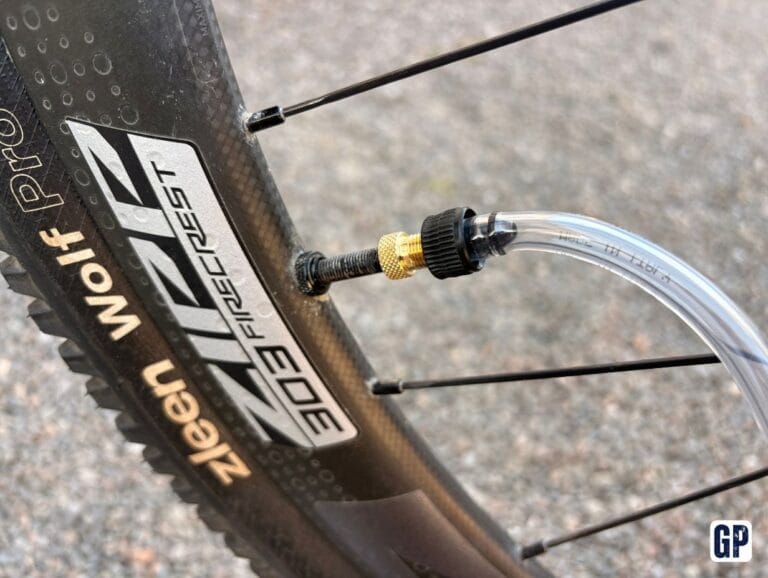
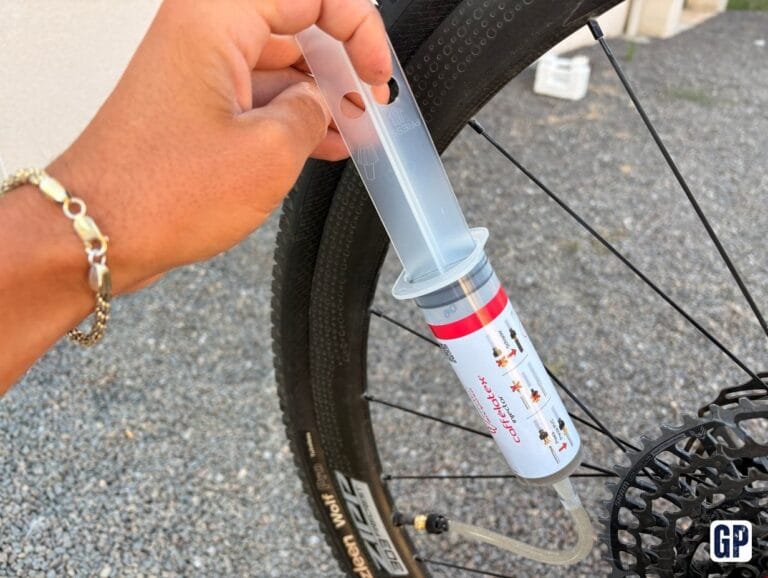
The bottle comes with a small flexible tube, handy for injecting the liquid through the valve. Nothing revolutionary, but it avoids getting it everywhere and makes the job cleaner, especially if you are working on several wheels in a row.
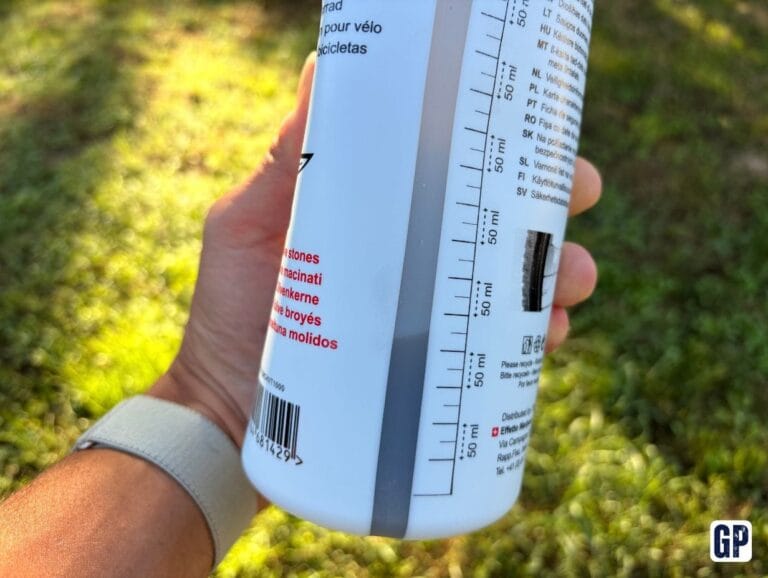
I followed the amounts recommended by the brand. One thing to keep in mind: Effetto Mariposa advises using about 20% more product than its Caffélatex. For a more demanding ride on rocky or thorny terrain, the brand even suggests adding 30 ml to the usual amount.
So it is not necessarily the sealant you choose purely to optimise cost per millilitre. At €14.95 for a 250 ml bottle, and with a dose slightly higher than some competitors, you should see it more as a low-maintenance, cleaner, more durable sealant with a less aggressive formulation.
For the set-up itself, I kept my usual routine: tyre seated, valve core removed if needed, sealant injected, then wheel shaken and spun to spread the product across the whole casing. On a gravel set-up, I always take a bit of time to work the liquid into the sidewalls. Sidewall punctures are not rare as soon as the terrain gets rough.
If you are starting out with this kind of set-up, our guide to road and gravel tubeless set-up is a solid base to avoid the classic mistakes: poorly applied rim tape, loose valve, too little sealant, or a tyre not properly seated.
More than 3,000 km with no visible puncture
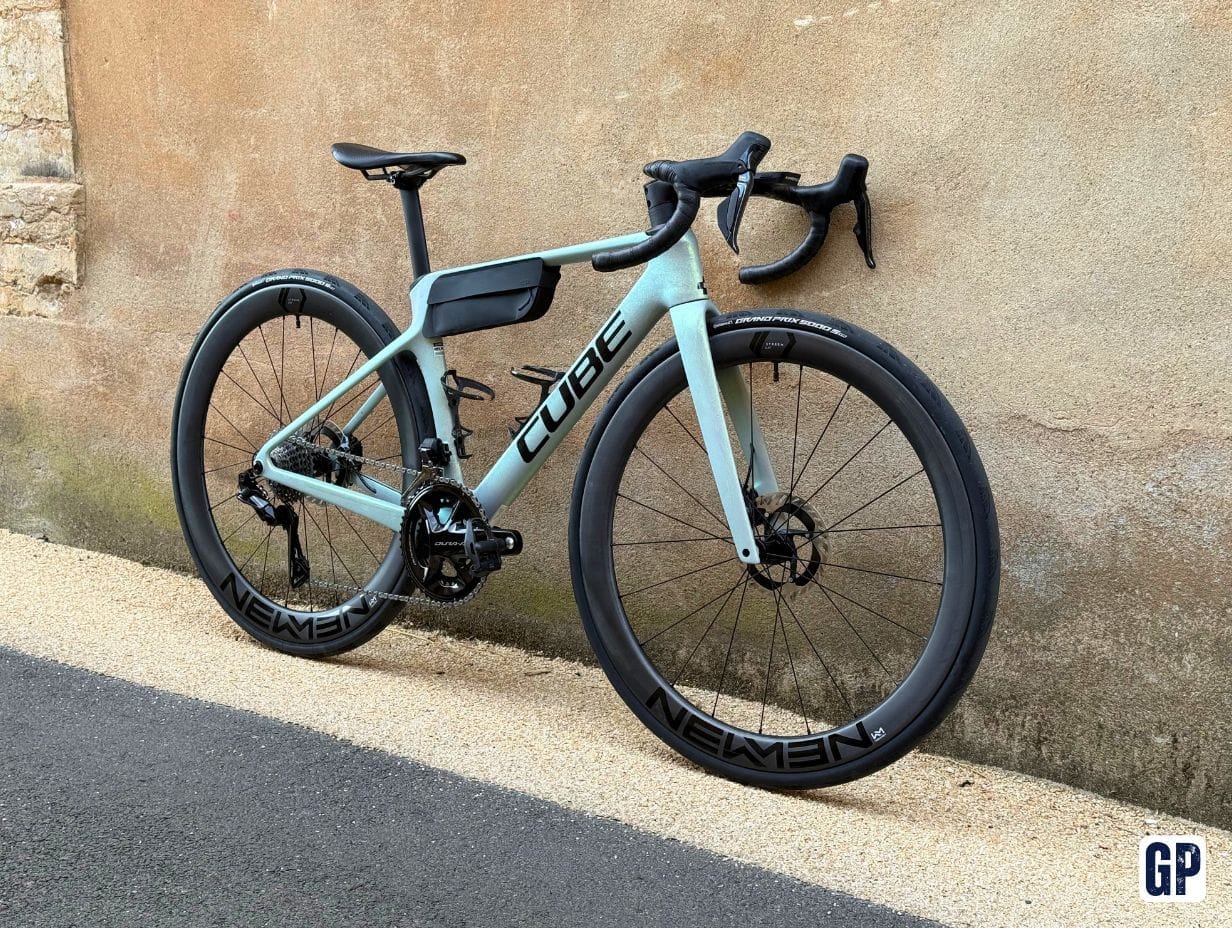
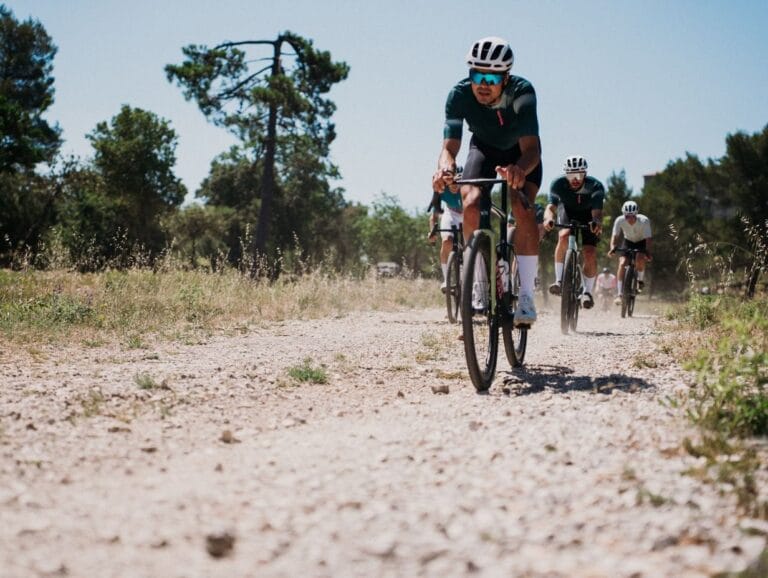
I rode more than 3,000 km with Végétalex, on different wheelsets and different tyres. Road, gravel, successive set-ups, removals and reinstalls. This was not a fixed test on a single bike left alone for three months in a corner.
The result is quite simple: I did not get a single puncture.
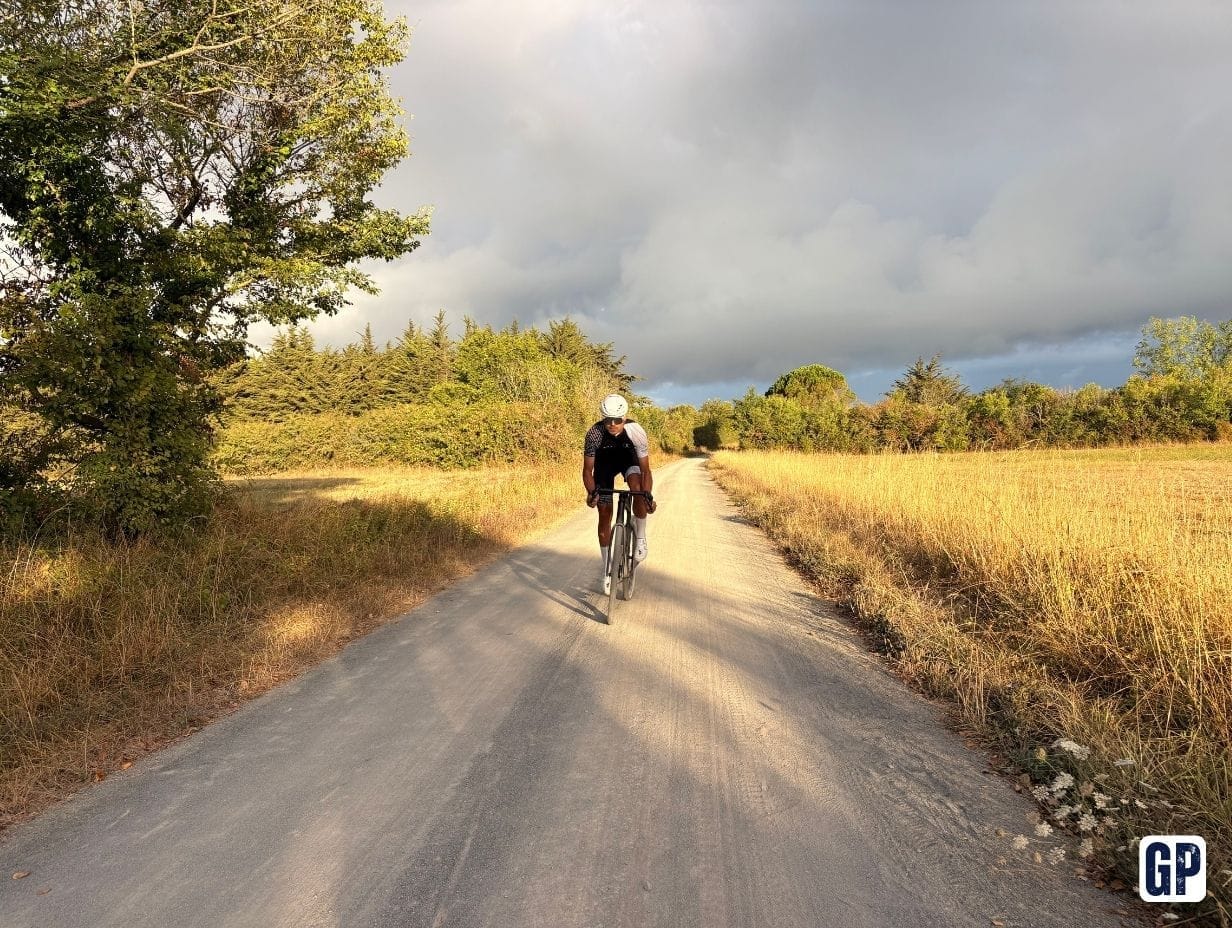
Obviously, that does not mean no perforation ever occurred. With a good tubeless sealant, part of the work happens silently. You get home, put the bike away, and sometimes only see a small dried trace several days later. But during this period, I had no troublesome pressure loss, no sidewall leaks, no cut I could not manage.
This matters because I handled my set-ups a lot in recent months. When you regularly test tyres and wheels, the sealant does not have an easy life: it gets transferred, exposed to air, spread across different casings… Végétalex remained clean to work with, and above all it did not show rapid drying after three months.
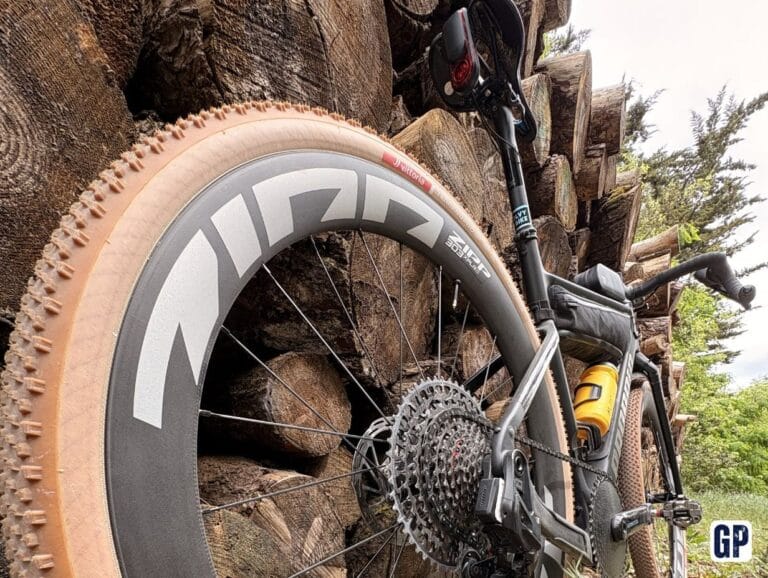
The brand states an active duration of more than six months in most tyres, with a minimum of three months in the worst conditions, notably with porous tyres, a low amount of liquid and hot weather. My experience does not allow me to validate a full season. However, after three months of real use and many set-ups, I did not get the impression of a product that becomes useless too quickly.
Why some love it and others hate it
The answer probably lies in how it seals.
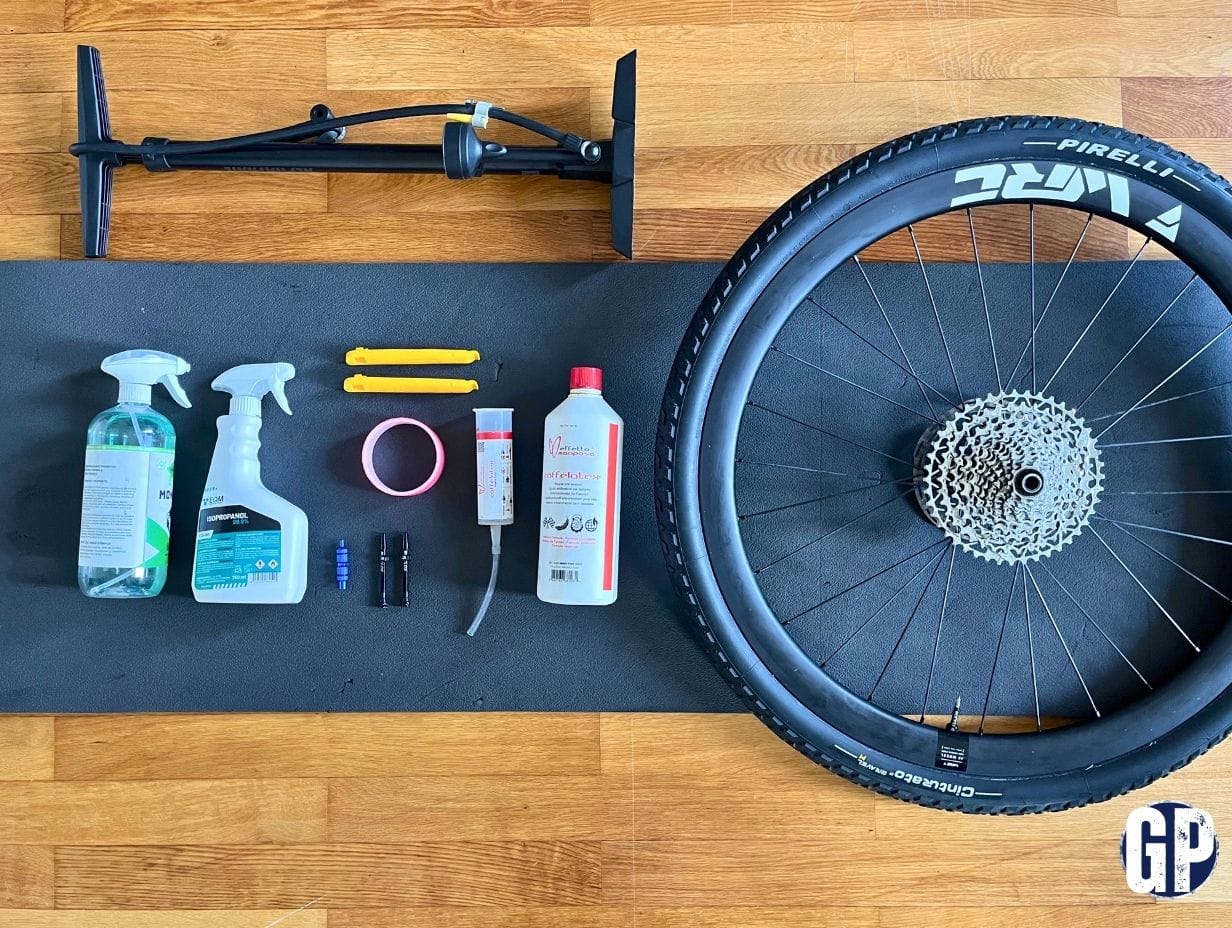
A latex sealant solidifies quickly as it comes out of the hole. Végétalex works differently: plant fibres and particles mechanically plug the perforation, then xanthan gum finishes the seal. This process can be slower. The brand even explains that a slight weeping of liquid may continue after a repaired puncture, without necessarily causing a loss of pressure.
And that is where the opposing opinions make more sense.
If you come from a latex sealant that leaves a dry, neat, almost immediate trace, this behaviour can be worrying. Seeing liquid come out gives the impression it is not working, even if pressure holds. For some riders, especially on the road at higher pressures, that feeling of doubt can be enough to lose confidence.
As for me, I did not encounter that problematic case. But it has to be said: I also did not have a large open gash mid-ride to judge the reaction in the worst scenario. My test mainly confirms the discretion, longevity, compatibility with different tyres, and the ability to prevent small everyday punctures.
CO2 compatibility is a real advantage
Végétalex contains no latex, and it is compatible with the use of CO2 cartridges. This is not a minor detail.
On the road, many riders still carry one or two cartridges rather than a mini-pump. In gravel too, CO2 remains common, particularly in races or on long rides where you want to reinflate quickly after a repair. With some sealants, using CO2 can degrade the sealant’s effectiveness or accelerate its ageing.
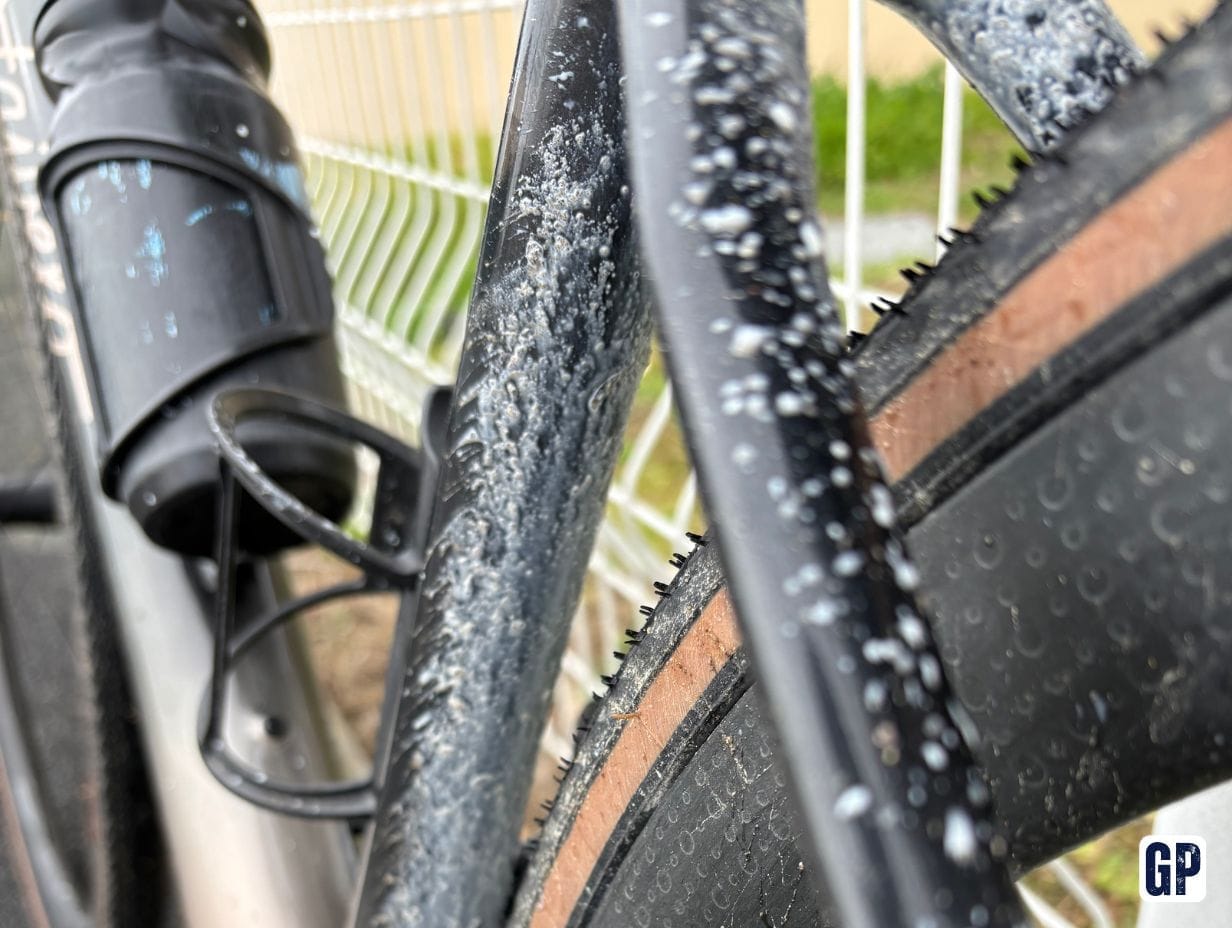
Here, Effetto Mariposa states the product is not damaged by CO2 because it contains no latex. Practically speaking, this compatibility removes a constraint.
Another plus: cleaning. Because the product does not rely on rapid-curing polymers or pigments, it comes off fairly easily with soapy water and a brush, even once it has started to dry. When you often remove tyres, that is welcome.
What I would watch before making it my only sealant
I endorse Végétalex, but I would not put it exactly in the same box as the most classic latex sealants.
Its natural formula, lack of bad odour, CO2 compatibility and good performance after three months are real arguments. The product was transparent in my use, and for a tubeless sealant, that is almost the best compliment possible.
But you have to accept two things. First, the price and the recommended amounts place it less in a ‘cheap in bulk’ logic than my usual No Flats Joe’s. Second, the way it seals can be surprising, notably if you encounter persistent weeping after a puncture. That is not necessarily a failure, but you need to know it before judging the product too quickly.
I would also keep a reservation about big cuts. The brand states repair up to 5 mm, but my test did not create a large open gash requiring that limit to be checked in real conditions. For very aggressive terrain, I would keep riding with a tubeless plug in my pocket. Natural sealant or not, that is just common sense.
My verdict on this sealant
Végétalex makes the most sense for riders who want a cleaner, longer-lasting, latex-free, easy-to-live-with sealant, without sacrificing effectiveness on small punctures. I find it particularly interesting for regular road and gravel use, with modern tubeless tyres, and for those who handle their bikes without wanting to fight a strong odour or sticky residue.
It will also appeal to riders sensitive to the composition of the products they use. The biodegradable, plastic-free angle is not just marketing gloss here: it corresponds to a real difference in formulation.
If your absolute priority remains price per litre, or if you want a visually very rapid latex-style seal, there are more classic alternatives. But after more than 3,000 km, several set-ups and no puncture experienced on the road or trails, I can recommend it without hesitation.
A good sealant is a product you forget exists. This one was easy to forget, and that is precisely why it deserves its place.