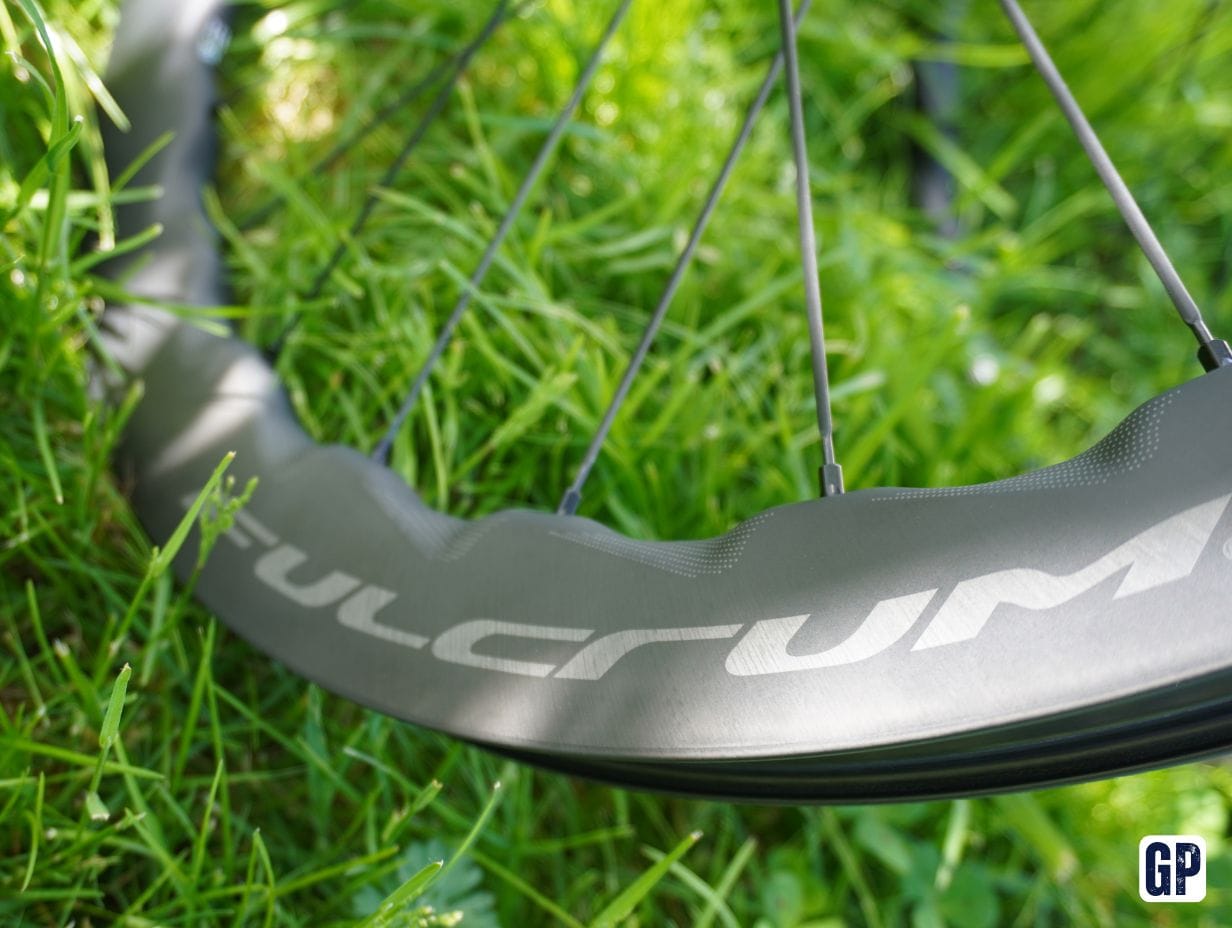

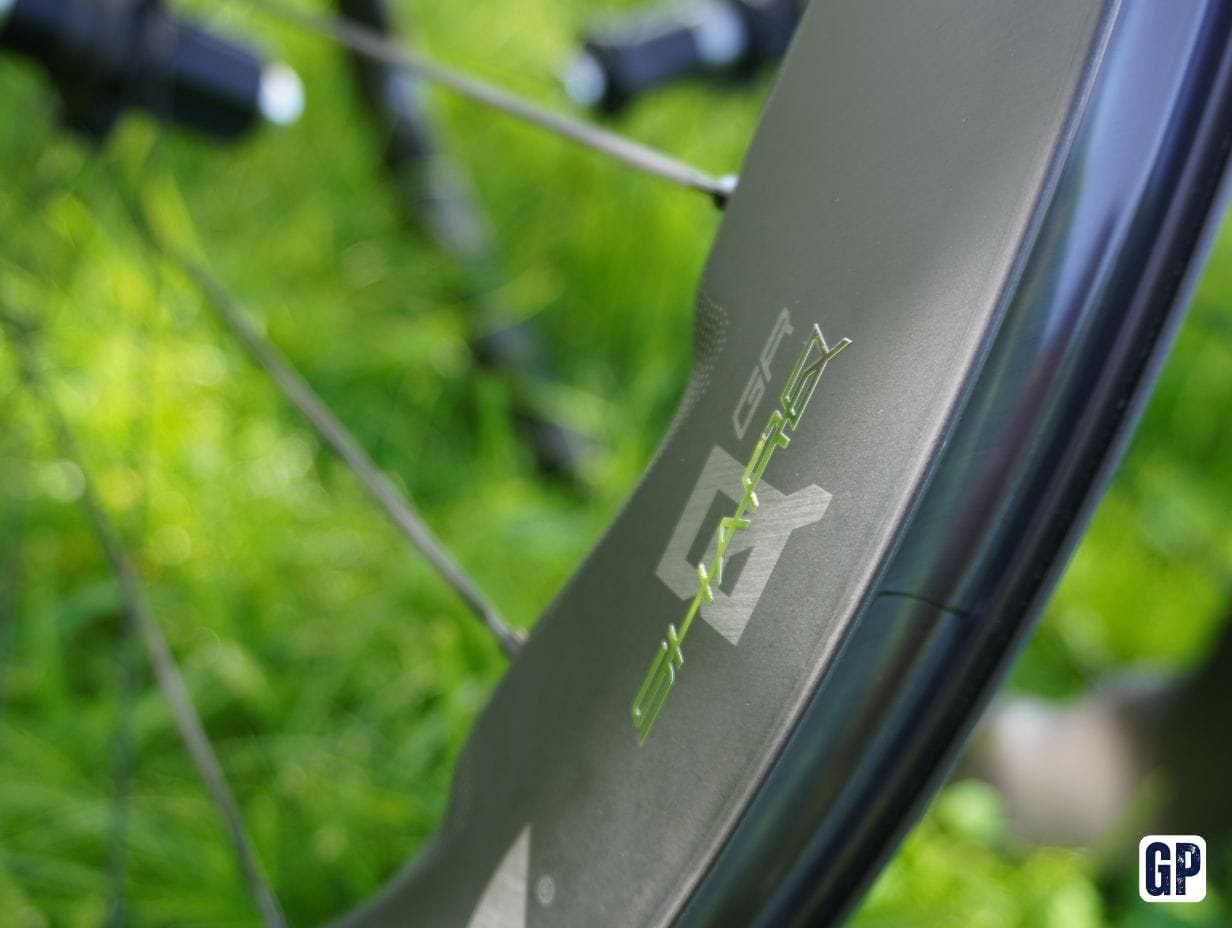
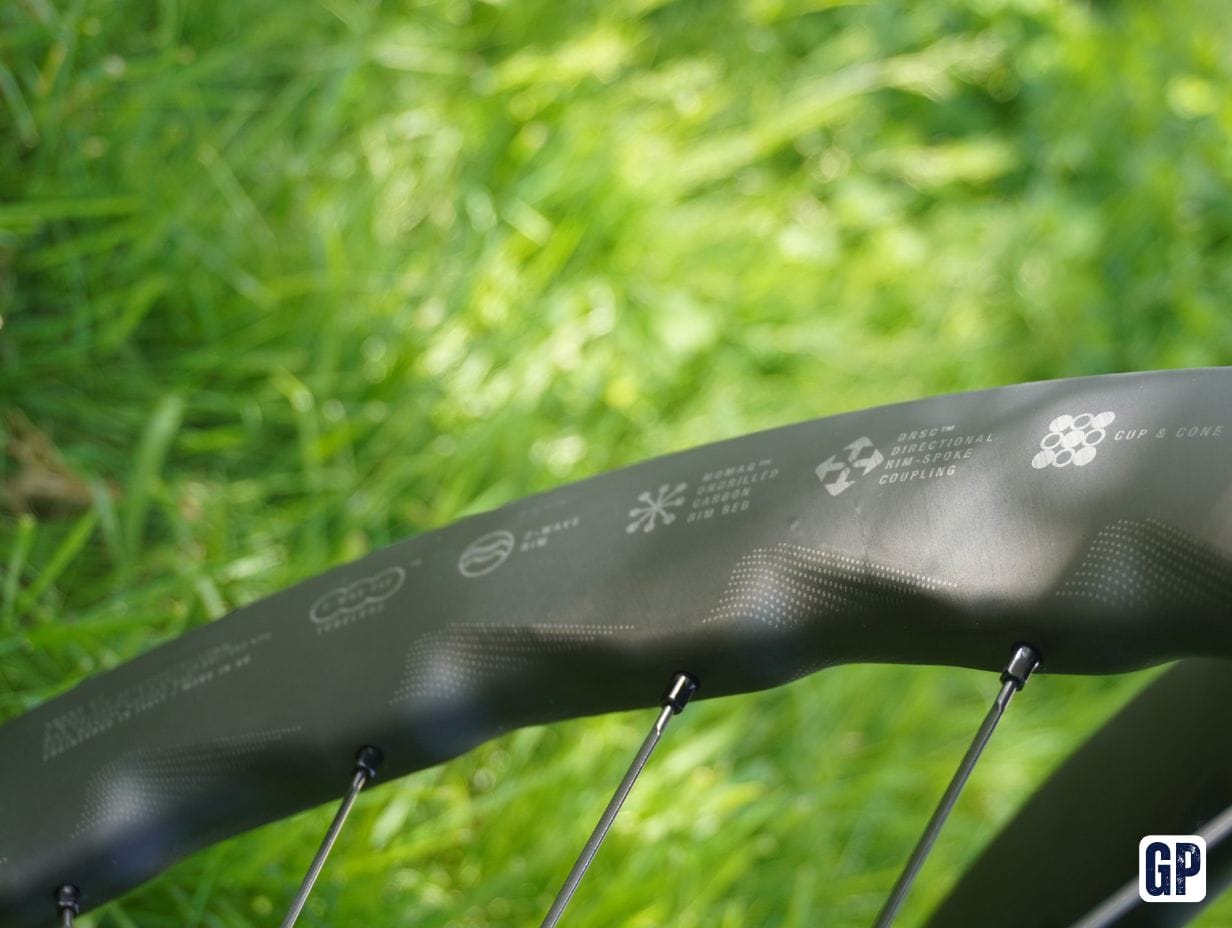
The Fulcrum Sharq GR land with a clear proposition: a performance-oriented carbon gravel wheelset, but not one designed only for narrow tyres. The rim offers a 30 mm internal width, a mini-hook, a differentiated 47/52 mm depth, and a 2-Wave shape said to better manage airflow at different angles.
On paper, Fulcrum is targeting a very specific terrain: fast gravel, high-volume tyres, routes where you want to maintain speed without completely sacrificing control. A segment that’s getting increasingly competitive, as you can see in our guide to the best carbon gravel wheels.
Strengths:
- Stable, confidence-inspiring handling despite the deep profile
- Very good build quality
- Undrilled rim bed, practical and high quality for tubeless
- 30 mm internal width consistent with modern gravel tyres
Could be better
- High price relative to the weight and technical choices
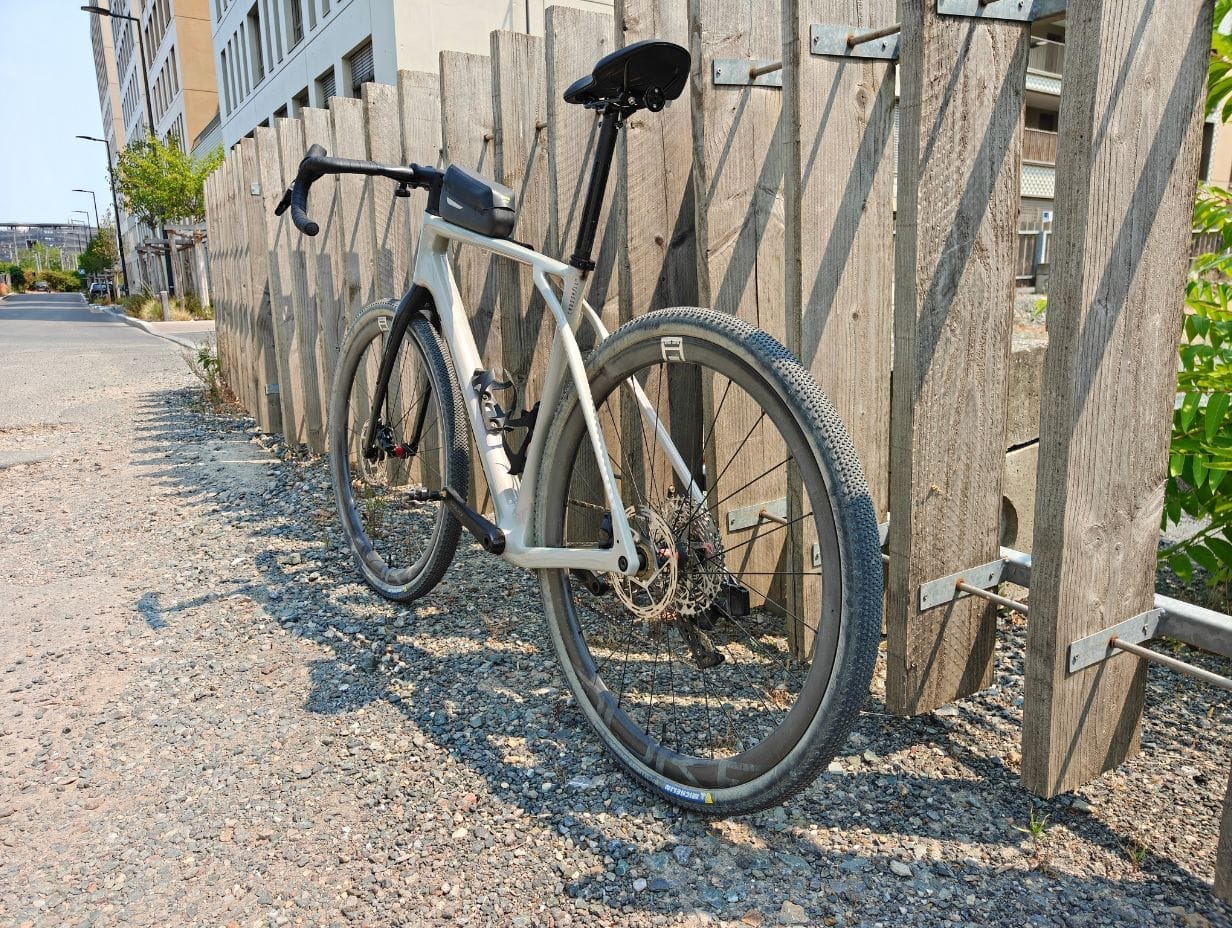
I rode these Sharq GR for several weeks on my benchmark bike, the Propain Terrel CF. It’s the bike I use to test every set of gravel wheels I receive, which helps keep a fairly stable comparison baseline.

30 mm internal, mini-hook, and wide tyres: Fulcrum’s deliberate choice
The most striking aspect of this wheelset isn’t just rim height. It’s above all its volume. With 30 mm internal width, the Sharq GR clearly follows the trend of modern gravel wheels, designed to better support wide tyres and run at low pressures.
Fulcrum states optimised compatibility with 47 to 50 mm tyres, while noting that some 45 mm models are approved via a compatibility list. In my case, I fitted Vittoria Terreno T50 in 45 mm. Interesting detail: once installed, they measured only 44 mm with callipers.
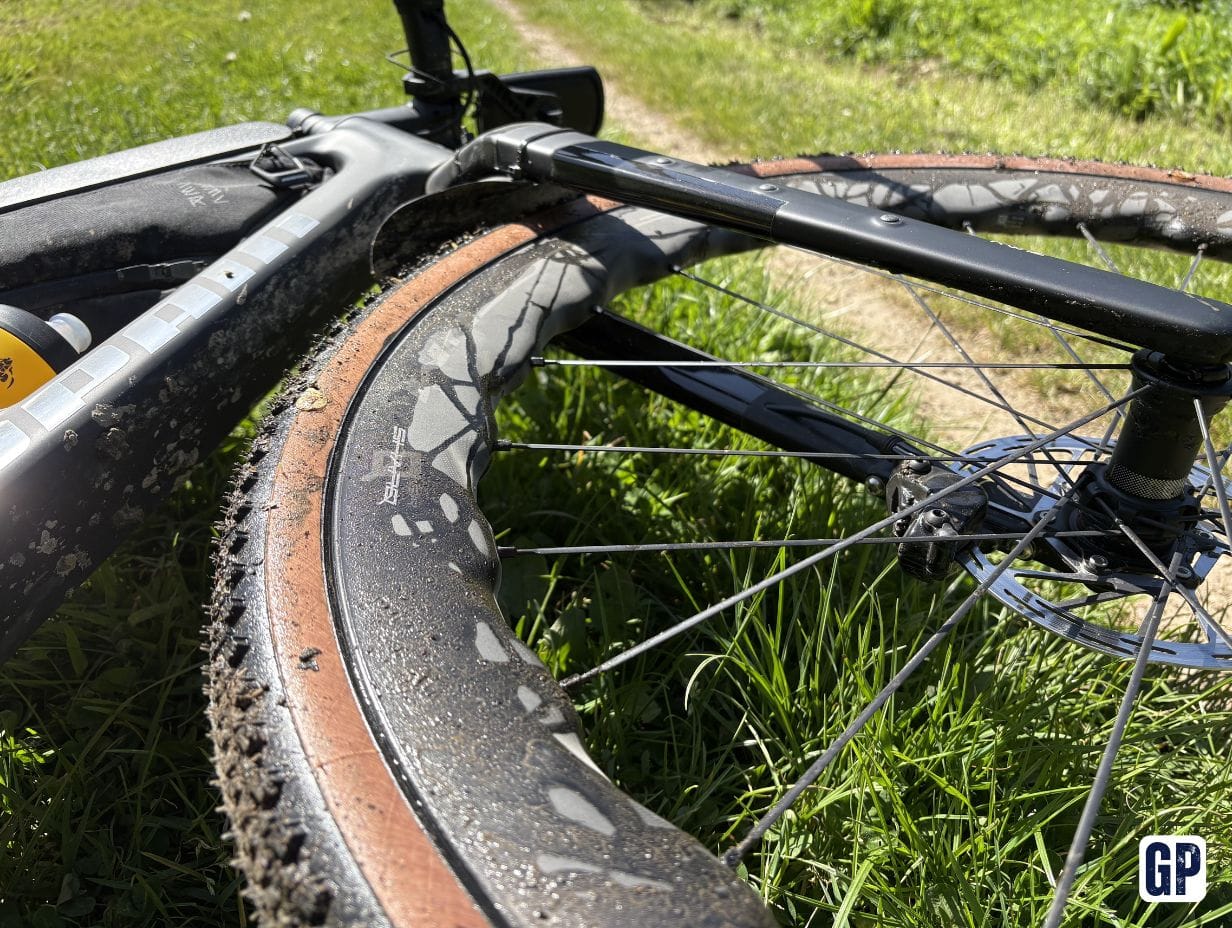
This is worth highlighting. The wheelset accepts certain 45 mm tyres, but its natural sweet spot is more around 47 mm and up. If you mostly ride 40 to 42 mm tyres, this rim is probably not the most sensible match. To better understand the balance between rim width, tyre size, and use case, our guide on how to choose your gravel wheels remains a good starting point.
A truly high-end finish
In terms of perceived quality, this wheelset is hard to fault. The finish is very clean, the rim design is original without slipping into visual gimmickry, and the whole package immediately gives the impression of a serious product.
The undrilled rim bed is also a real advantage. No need for tubeless tape: it’s cleaner, more reliable over time, and nicer to set up.
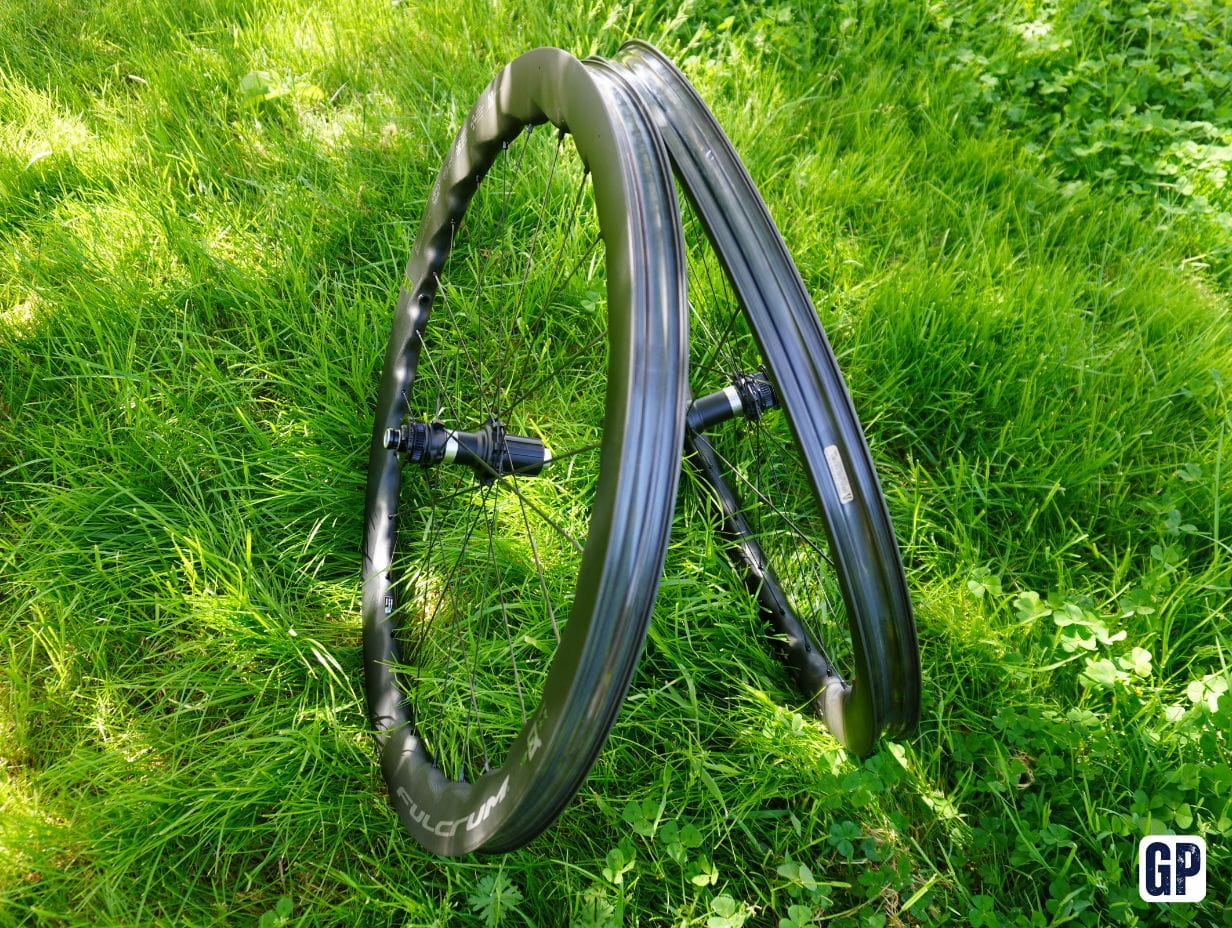
The hubs use cup-and-cone bearings, in the Fulcrum/Campagnolo tradition. Their reputation hardly needs making, and you also get that very discreet signature sound. Like some Campagnolo wheels, the Fulcrum Sharq GR are particularly quiet when coasting.
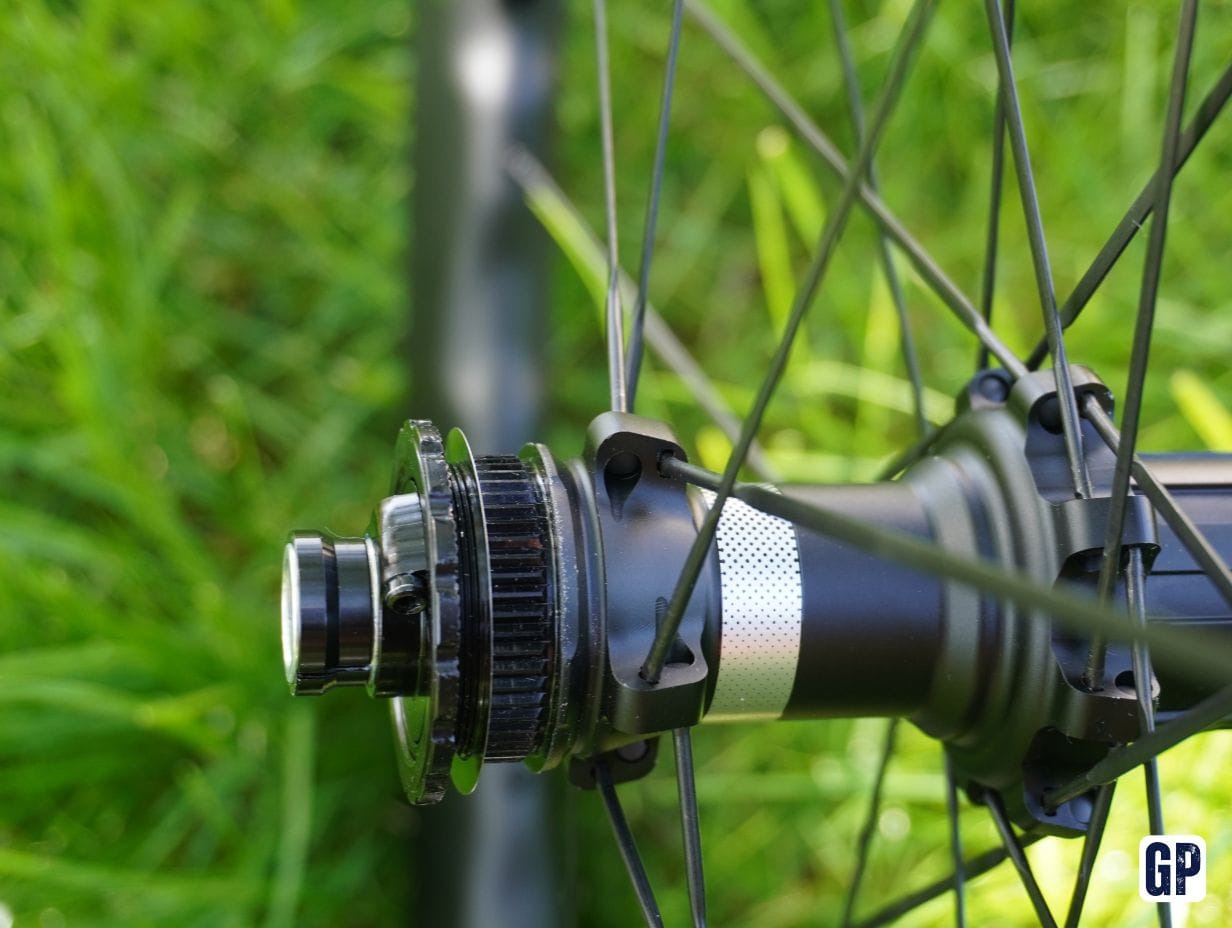
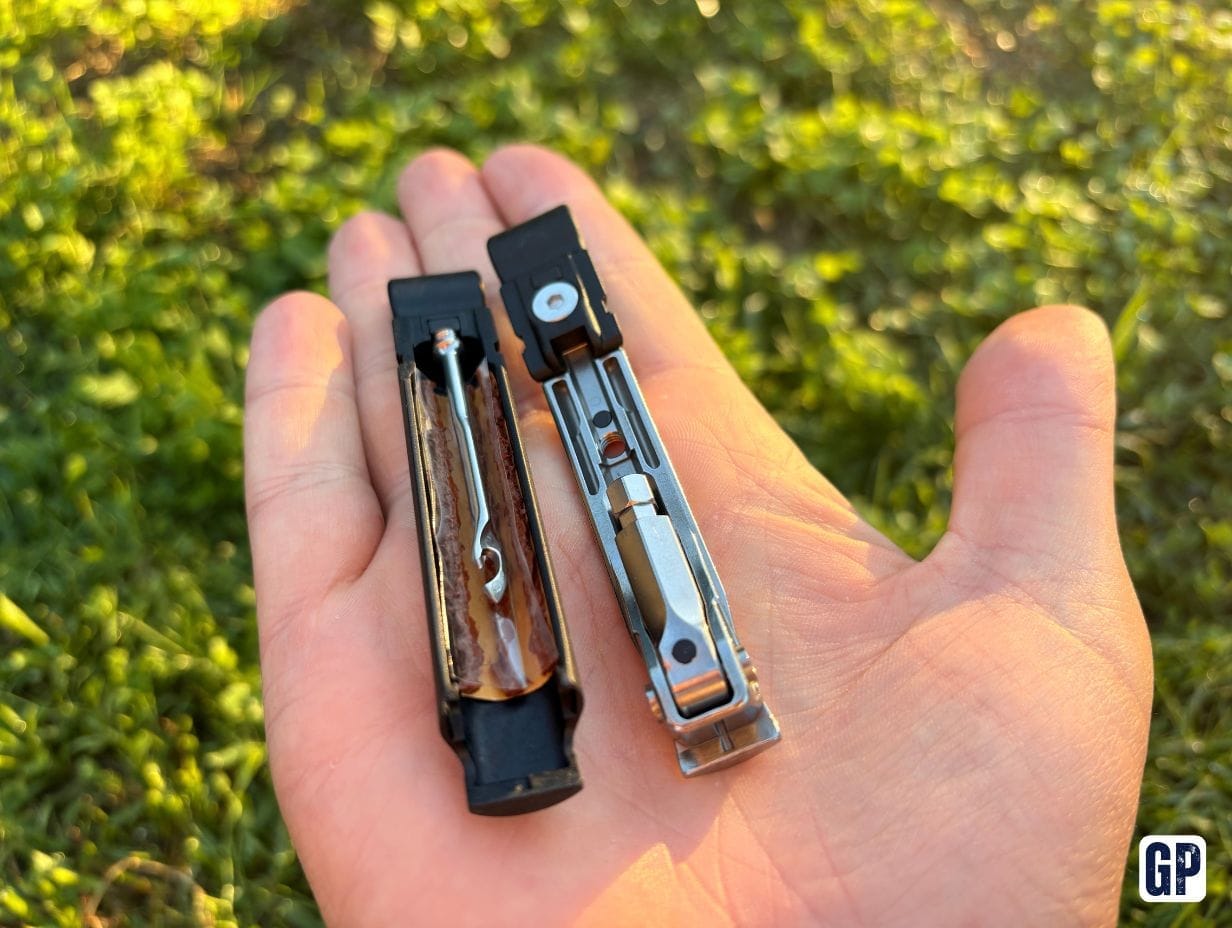
Fulcrum offers several freehub bodies: XDR, HG, N3W, and Microspline. That makes sense for a high-end wheelset that can be mounted on many current gravel set-ups.
Changing the body is relatively straightforward, but it isn’t the fastest system you’ll find today. You have to unscrew the two small end caps on each side to access the freehub body. Nothing insurmountable, but it’s not as simple as a Zipp or DT Swiss type of system.
In the field: stable, reassuring, less wind-sensitive than expected
This is probably the best point of these Sharq GR: they quickly inspire confidence. Despite a tall rim height and a visually aggressive profile, I didn’t notice excessive crosswind buffeting.
They even felt less sensitive than the Zipp 303 XPLR S in certain conditions, even though rim height is similar. That matters because deep gravel wheels can sometimes become tiring as soon as crosswinds pick up on exposed sections.
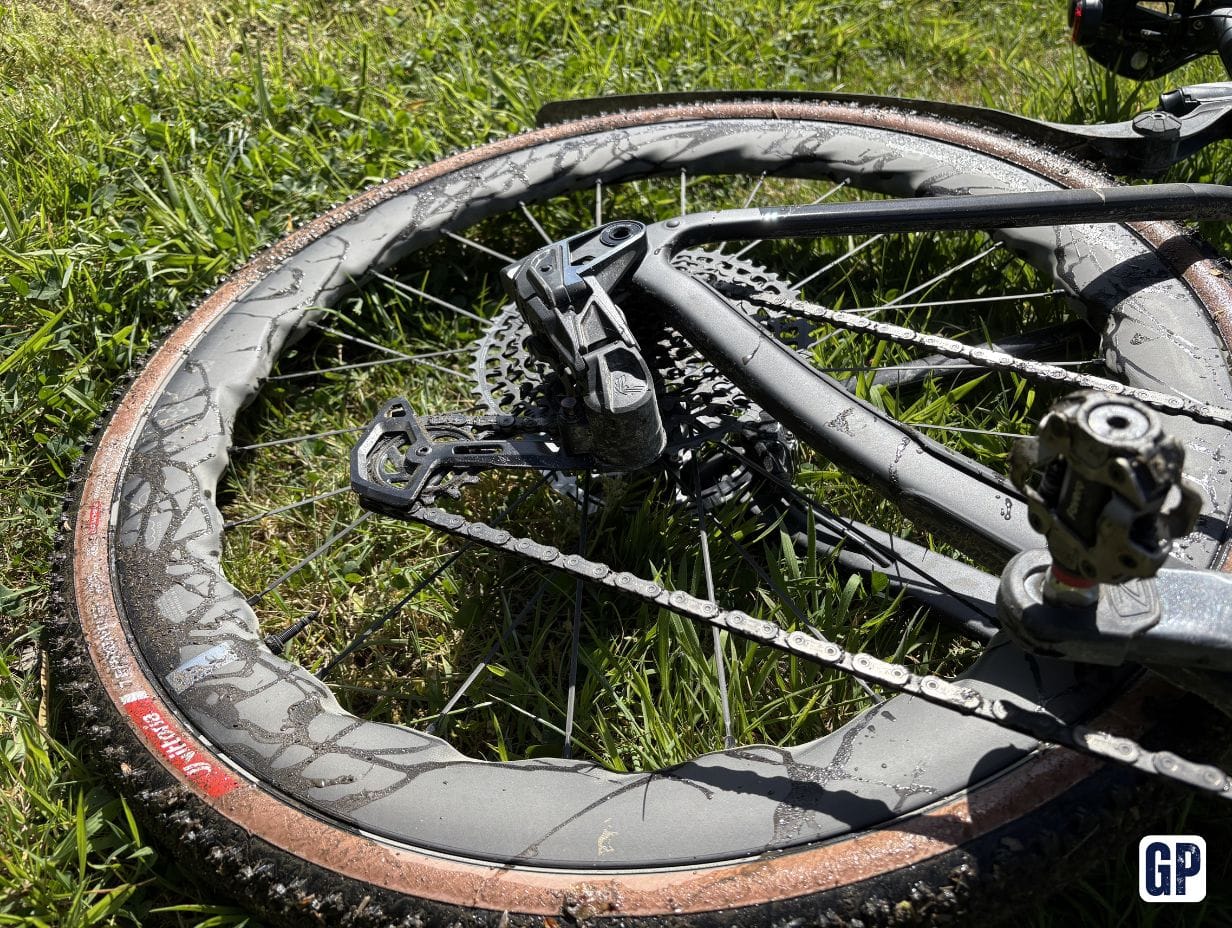
Here, the wheelset remains composed. It doesn’t feel like it needs constant babysitting. You can ride fast, hold lean angles, cruise through rougher stretches, and maintain good overall stability.
More versatile than its looks suggest
With its waves sculpted into the rim and its 47/52 mm height, you might expect a very race-focused, somewhat exclusive wheelset. In practice, I found it more versatile than expected.
It doesn’t completely erase its deep profile: you can tell you’re riding a performance wheelset, with some inertia and a real presence on the bike. But it doesn’t lock you into ultra-fast gravel only. It can handle varied spirited rides, as long as you keep tyre choice consistent.
This is also where the 30 mm internal width makes sense. With an appropriate tyre size, the wheelset lets you drop pressure and keep comfort and grip. It’s not only trying to be fast on smooth gravel; it retains a genuinely gravel-minded approach.

1,550 g: sensible, but no longer exceptional
Fulcrum claims 1,550 g for the pair. Given the internal width, rim height, and overall construction, the weight makes sense. You can’t call it heavy for a tall, wide carbon gravel wheelset.
But at this level, that figure is no longer exceptional. The market moves fast, and some competitors do better, sometimes with more ambitious technical choices.
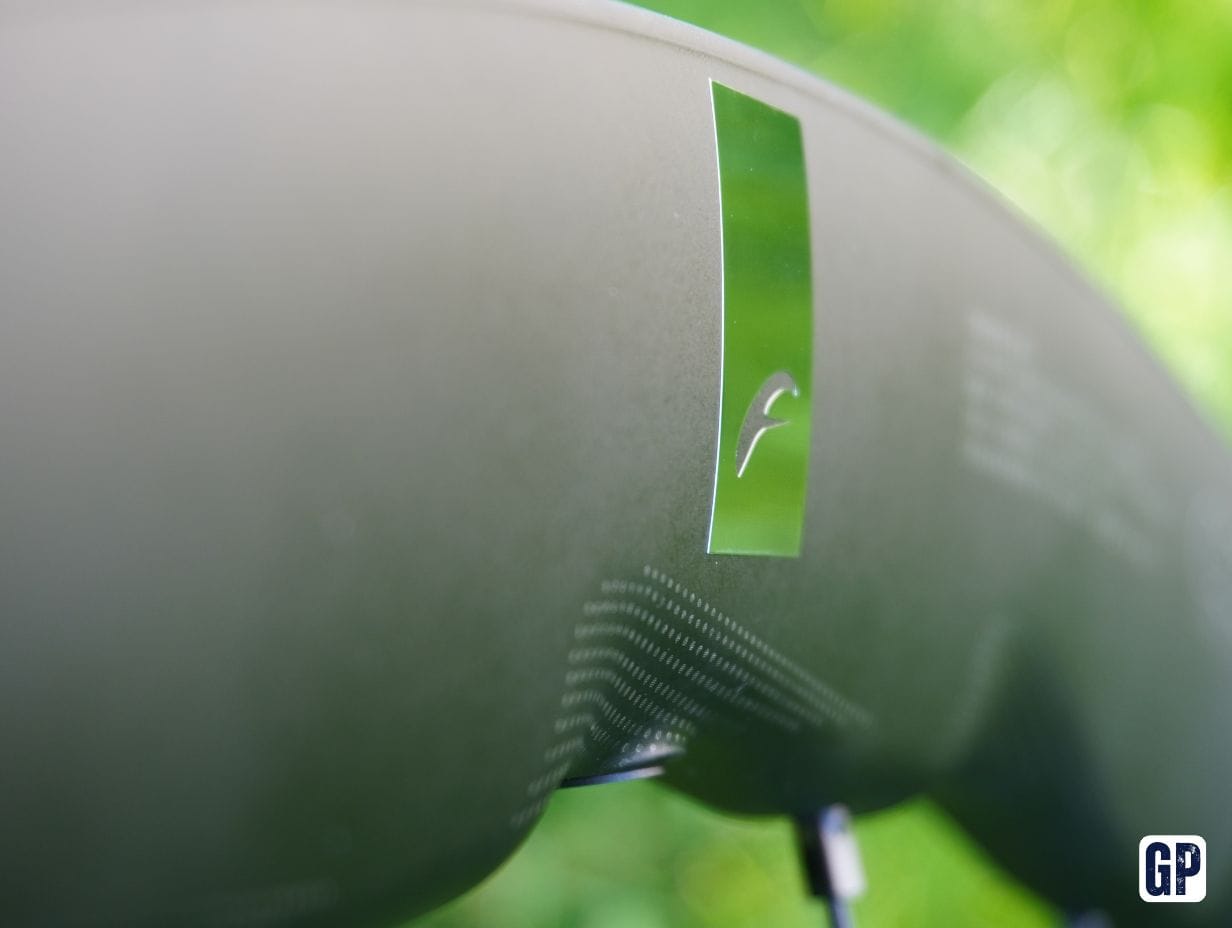
The spokes, for example, are bladed stainless steel. They’re neat, sensible, and probably reassuring for maintenance, but that choice raises questions at nearly €2,000. At a similar or higher price, some brands opt for carbon spokes or a notably lower weight. The Prymahl Vega C45X we tested recently are more expensive, but they’re about 300 g lighter and use carbon spokes.
The real issue: pricing
The Sharq GR are very nicely made wheels. They’re well finished, pleasant to ride, stable, original, and technically coherent. The problem mainly lies in their price positioning.
At €1,990, you’re entering a zone where competition gets tough. Without even looking at Chinese brands, there are now more aggressive European or widely distributed alternatives. The Corima 50G, for example, are about €400 cheaper.
The Fulcrum Soniq GR also seem better positioned on paper, with a price roughly €500 lower for a similar weight, even though I haven’t been able to compare the two sets in the field.

This is what makes the analysis a bit frustrating. In use, the Fulcrum Sharq GR make you want to ride. But the spec sheet alone doesn’t quite justify the price gap versus some rivals.
Who do the Fulcrum Sharq GR make sense for?
These wheels are primarily for riders looking for a high-end carbon gravel set that’s stable, well finished, quiet, compatible with wide tyres, and capable of giving a bike real character.
They will particularly suit those riding 47 mm tyres or wider, on fast, mixed routes that are sometimes windy, and who want a reassuring wheelset despite a deep profile.

On the other hand, if your absolute priority is the best weight-to-price ratio, or if you want the most aggressive spec sheet on the market, the Sharq GR are not the most obvious choice. They appeal more through their coherence, finish, and handling than through their spec-to-price ratio.
A very fine pair, but not the best deal right now
I enjoyed riding the Fulcrum Sharq GR. Their stability, build quality, tapeless tubeless set-up, and original profile make them a very successful pair in use.
But the carbon gravel wheel market has evolved a lot. At nearly €2,000, a pair today has to offer either standout weight, truly differentiating technology, or a very solid price-to-performance ratio. The Sharq GR tick many boxes, but not all of them.
It’s a very beautiful wheelset, capable of elevating a performance-oriented gravel bike. But it isn’t, today, the best spec-to-price ratio in the segment.