
I had been wanting to move from an aluminium gravel bike to a carbon frame. But I was not looking for a bike that would get too close to a mountain bike: I wanted to keep some road efficiency, a sufficiently dynamic feel and gain in comfort.
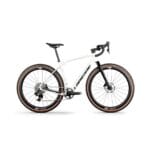
With that in mind, I took a close look at the Lapierre Crosshill CF 6.0 AXS 2025. Its positioning quickly appealed to me: a versatile gravel bike, more long-distance oriented, but without an excessively off-road focused geometry.
Its carbon frame, multiple bikepacking mounts, mudguard compatibility and the semi-integrated cockpit also matched what I was after.
I ended up ordering the bike from my local Lapierre dealer for €3,100, in size L.
After several thousand kilometres, including around 1,000 km of bikepacking, several days in the Lot and a north-to-south crossing of the Vosges, the Crosshill mainly confirmed one thing: it is a bike I always enjoy riding.
Strengths:
- Comfortable, accessible position
- Excellent compliance
- Stable, confidence-inspiring handling
- Excellent finish and paintwork
Could be better
- Bottom bracket stiffness could be better
- SRAM DUB bottom bracket lacks durability
- Tyre clearance limited to 45 mm
A very positive first impression
Taking delivery of the Crosshill brought no unpleasant surprises.
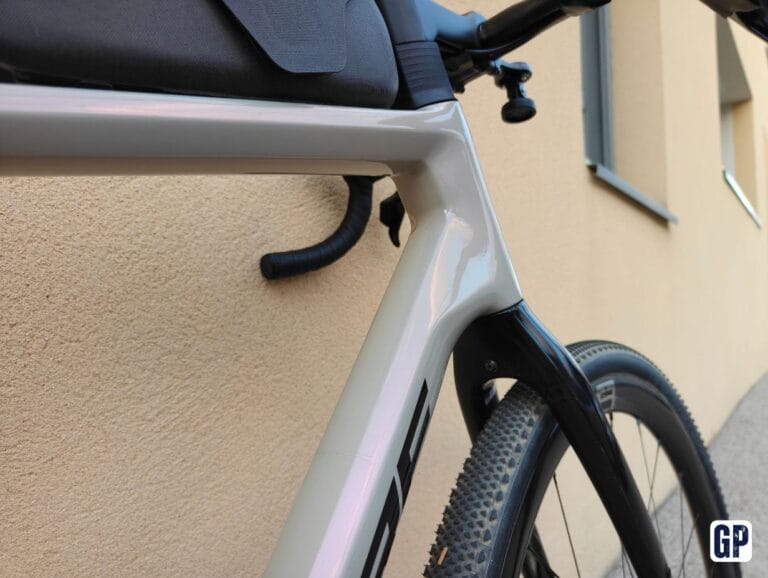
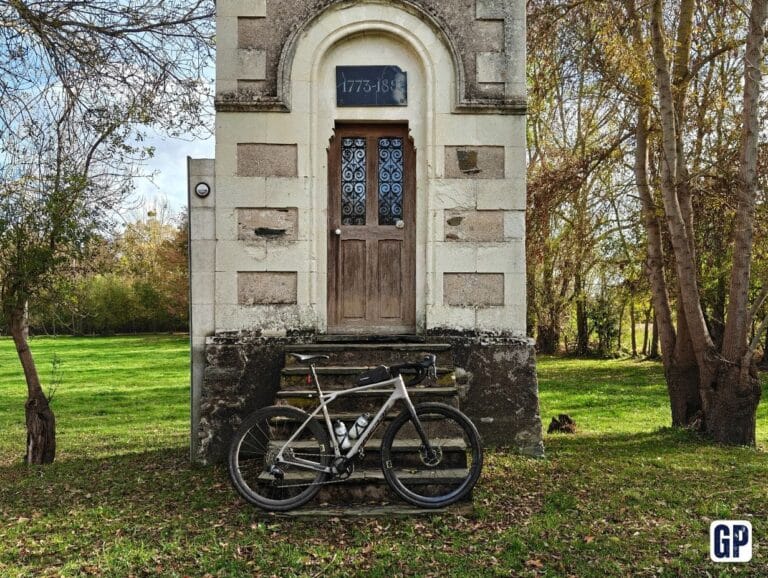
The pearlescent paint, which shifts slightly towards pink in direct sunlight before returning to greyer tones depending on the light, immediately won me over. The finish is tidy and the whole bike gives a real impression of quality at first glance.
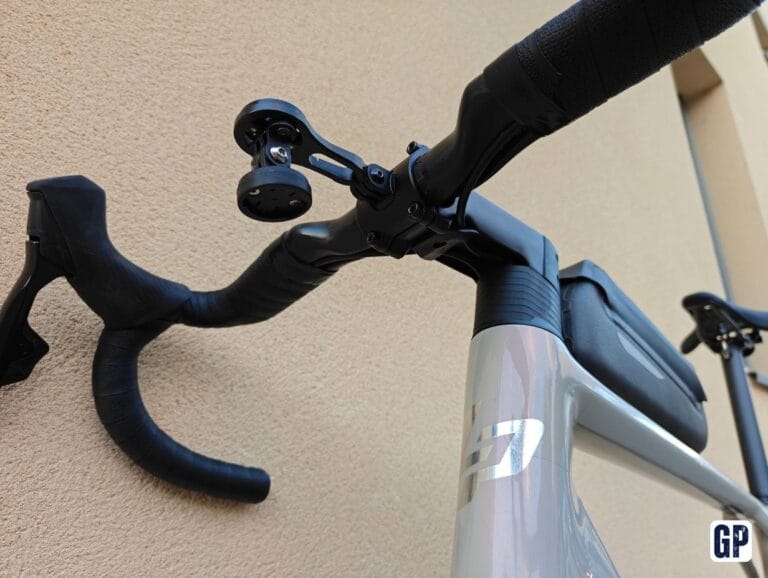
The interface between the stem, spacers and cockpit components is clean. Semi-integration delivers a discreet, well-resolved finish while remaining less constraining than full integration.
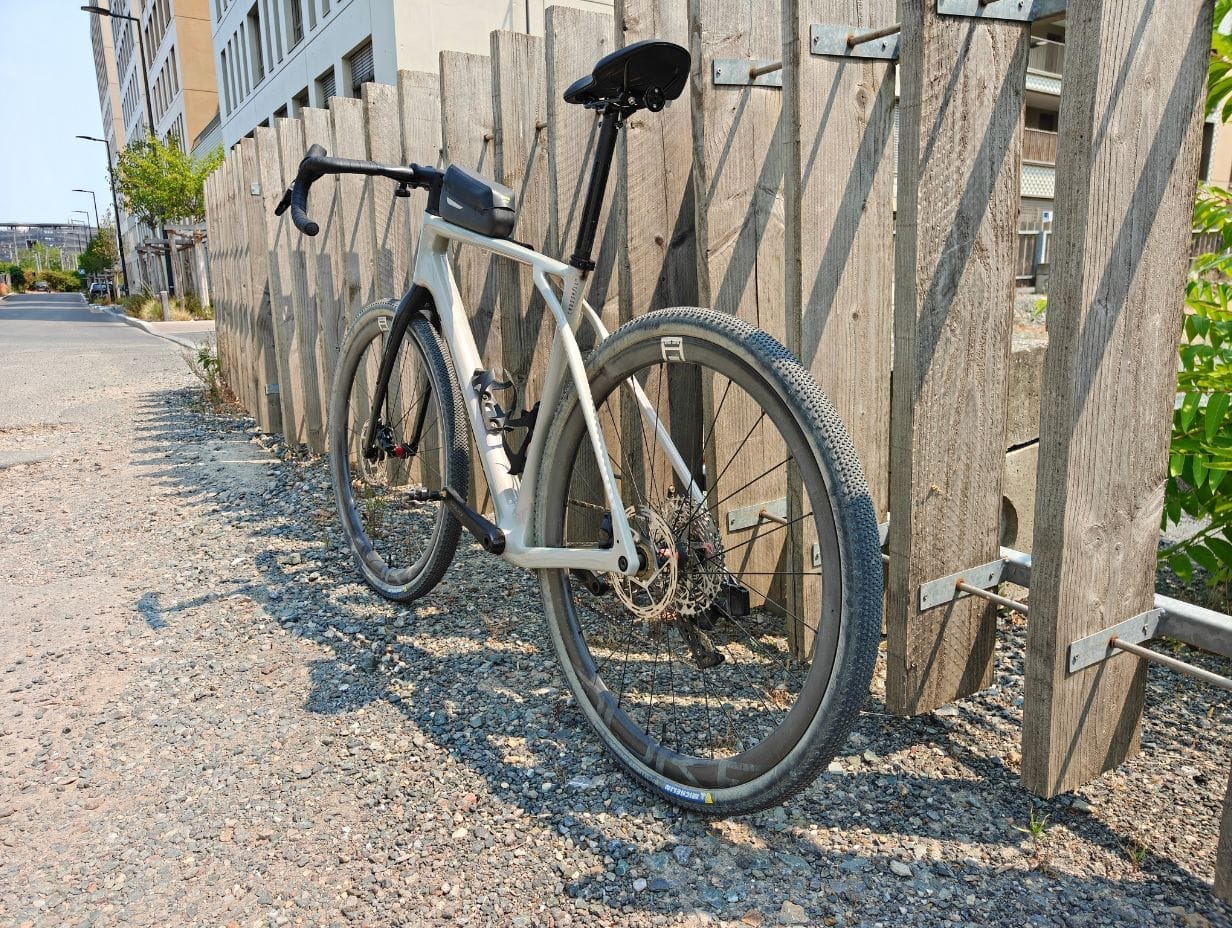
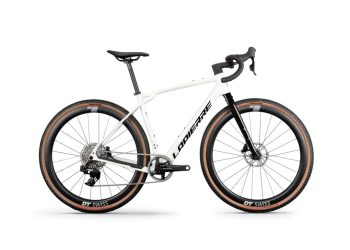
The Crosshill CF 6.0 AXS 2025 comes with a SRAM Rival XPLR AXS 1×12 groupset, a pair of DT Swiss GR1600 Spline wheels, WTB Raddler TCS Light 700 × 44C tyres and a 150 mm Fizik Terra Argo X7 saddle.
The DT Swiss wheels are a serious starting point for a bike in this range. I already knew them well, having used them for a long time on my former Sunn Venture S1. They offer a reliable, versatile package that fits the Crosshill’s brief perfectly.
On the practical side, Lapierre provides several mounting points, notably on the fork and top tube, as well as mounts for mudguards. There is, however, no mount under the down tube.
A position that quickly inspires confidence
That was probably one of the first things that won me over.
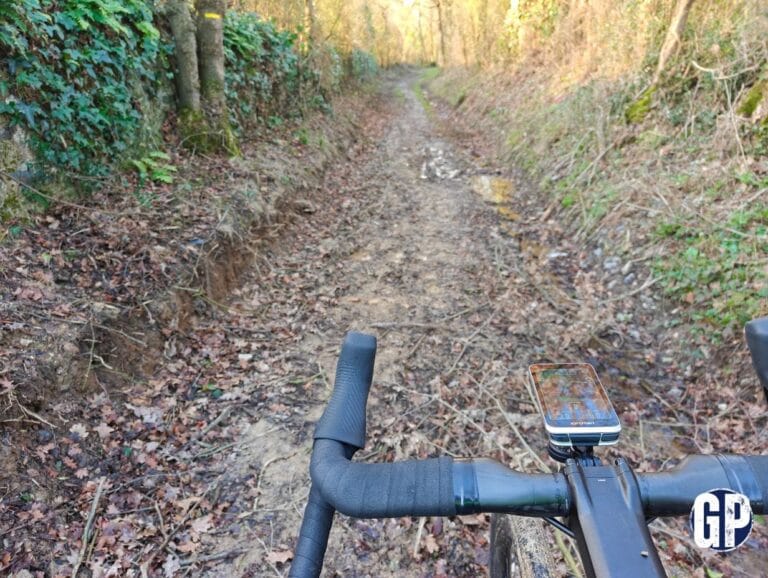
The Crosshill naturally offers a comfortable position, with a fairly high front end. The spacer stack is also relatively substantial on this version.
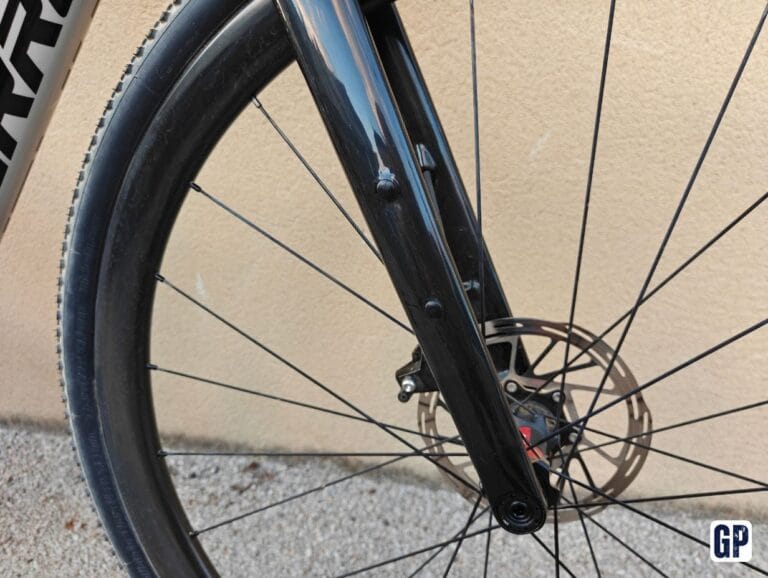
This choice is not only about providing a very comfortable position: it is also explained by the platform’s design, which is also offered with a front suspension fork. The latter requires a different front-end height, and Lapierre has kept an architecture that maintains coherent geometry across the various Crosshill versions.
On this rigid-fork version, that results in a cockpit that is naturally quite high.
Personally, I did not need to change the spacer height. I simply rolled the hoods down to stretch out a little on the bike. That gave me a slightly more dynamic position while keeping the Crosshill’s excellent overall comfort.
I quickly felt at home on the bike and, aside from that tweak, did not need to change my position much.
After several rides, then several consecutive days of bikepacking, this position always felt natural. Compared to my much more performance-oriented road bike, the Crosshill is more forgiving. That is exactly what I was looking for.
Comfort as the true backbone
The Crosshill CF uses a seatstay design that contributes to the bike’s compliance. On the trail, the result is noticeable, even if the effect remains fairly subtle.
You do not necessarily feel a dramatic response at every imperfection, but rather an ability to soak up the kilometres without vibrations becoming tiring.
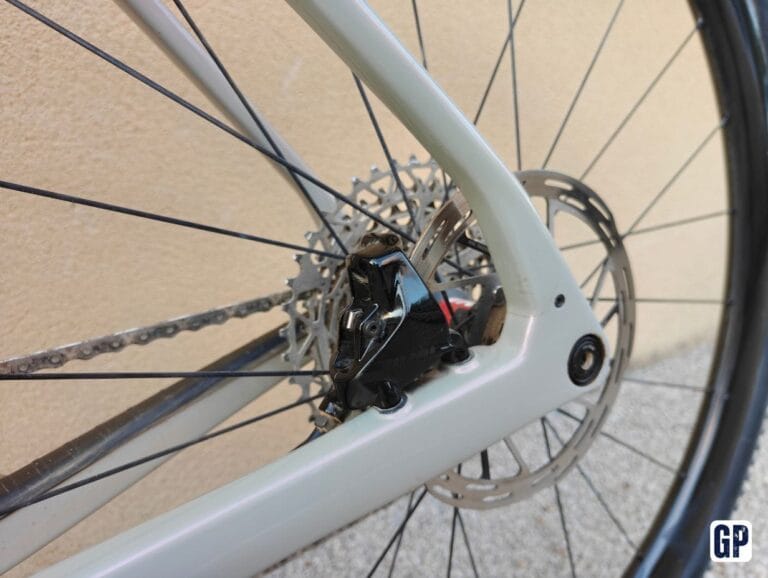
The ‘disconnected’ seatstays also play a role here. Their flex is perceptible through the behaviour of the seat tube, with a light but real movement that accompanies irregularities in the terrain. This extra give contributes to the bike’s overall compliance without creating an unpleasant, floaty feel.
On farm tracks, in ruts or when the surface gets irregular, the bike damps vibrations well and keeps a composed demeanour. Running tubeless obviously reinforces this.
On very rough descents, you still need to keep expectations in check: the Crosshill is a rigid bike with no suspension and cannot, of course, rival a mountain bike.
Overall comfort is immediately noticeable compared with my former Sunn Venture S1 aluminium bike.
There is a trade-off to this focus, though. The bottom bracket feels slightly lacking in stiffness to me. The difference is most noticeable on off-road climbs when the terrain gets rough, especially compared with my road bike, which is much stiffer in that area.
But that behaviour remains consistent with the Crosshill’s positioning: this is not a pure gravel race bike.
On fast-rolling tracks, it finds its rhythm
It is probably on packed, smooth gravel tracks that I have had the most fun with the Crosshill.
Over rolling transitions, the bike quickly picks up speed and gives a pleasantly effortless sensation. It remains stable without feeling sluggish.
On rolling terrain, it also remains engaging. I notably rode it in the Lot, with off-road climbs sometimes reaching 15%, over several consecutive days.
The 40 × 44 gearing shows its limits there, but I managed to get through most of those sections without particular difficulty.
On the road, efficiency remains fully in line with the bike’s positioning. Of course, the feel varies with the wheels and tyres fitted, but the Crosshill offers a sufficiently versatile base to adapt to very different uses.
I also completed a full crossing of the Vosges entirely on tarmac with Michelin Pro5 in 32C. On mountain pass descents and, more generally, on fast tarmac, the Crosshill felt particularly reassuring.
Its gravel geometry obviously plays a part, but the behaviour remains very composed as speed rises.
When the terrain gets rougher, its brief becomes clearer
The Crosshill is not designed for the most demanding gravel sections.
When trails get particularly rough, it logically shows the limits of its remit. On flat or moderately rough ground, however, I do not have much to criticise.
It remains predictable, stable and easy to ride.
The main point that now feels a little less in tune with how gravel is evolving concerns tyre clearance. The Crosshill is rated as compatible with tyres up to 45 mm.
At a time when 50 mm tyres are increasingly common on some modern gravel bikes, I would have appreciated a bit more room. For a bike whose comfort is one of its main arguments, that option would have made sense.
You also need to factor in the rear seatstay design when choosing a frame bag. Depending on its shape and dimensions, the available space can become a constraint.
In my case, my bag clears by a millimetre and I have had no issues on my rides.
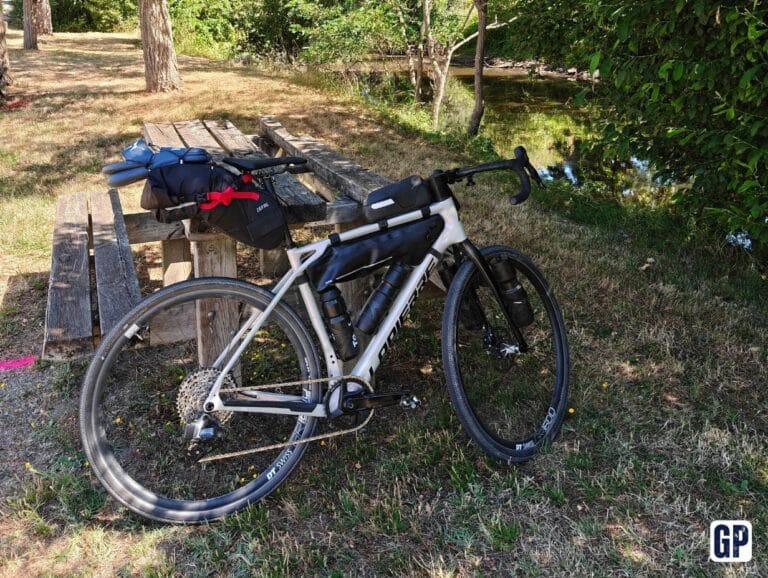
I would also have appreciated in-frame storage. This kind of solution is becoming more common on modern gravel bikes and would be particularly relevant on such a versatile bike aimed at long rides and bikepacking.
SRAM Rival AXS: straightforward, but not perfect
The SRAM Rival XPLR AXS 1×12 has been broadly satisfying.
The bike is fitted with a 40-tooth chainring paired with a SRAM XPLR 12-speed 11-44 cassette.
For this bike, a single chainring suits me perfectly. The cassette’s spacing remains versatile and the top-end gearing is also sufficient for long road sections.
Even on my road setup during the Vosges crossing, I never felt the need for a double chainring.
However, the SRAM Rival brakes of this generation lack power and especially bite in my opinion, particularly on descents.
That is probably the main criticism I would make of the stock equipment.
💡 Note: the new SRAM Rival AXS E1 generation does seem to have corrected this, with noticeably improved braking.
A drivetrain I eventually made more reliable
The Crosshill has also seen a few changes over the kilometres.
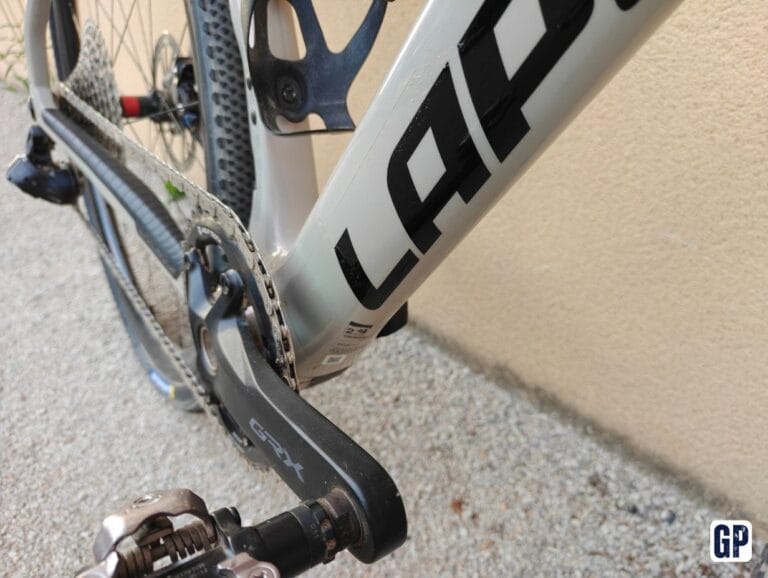
After about 2,300 km, the stock SRAM DUB 28.99 mm bottom bracket started creaking.
That ultimately pushed me to rethink this part of the drivetrain to make the bike more reliable in the long term.
I installed a Shimano Ultegra PressFit bottom bracket, paired with a Shimano GRX crankset with 170 mm cranks and a Wolf Tooth chainring compatible with SRAM Flattop chains and the Drop-Stop B profile.
Despite my initial questions about the chainline, the setup works perfectly.
The drivetrain is just slightly less silent on the largest 44-tooth sprocket, but nothing worrying. After several thousand kilometres, I have not encountered any other particular issues.
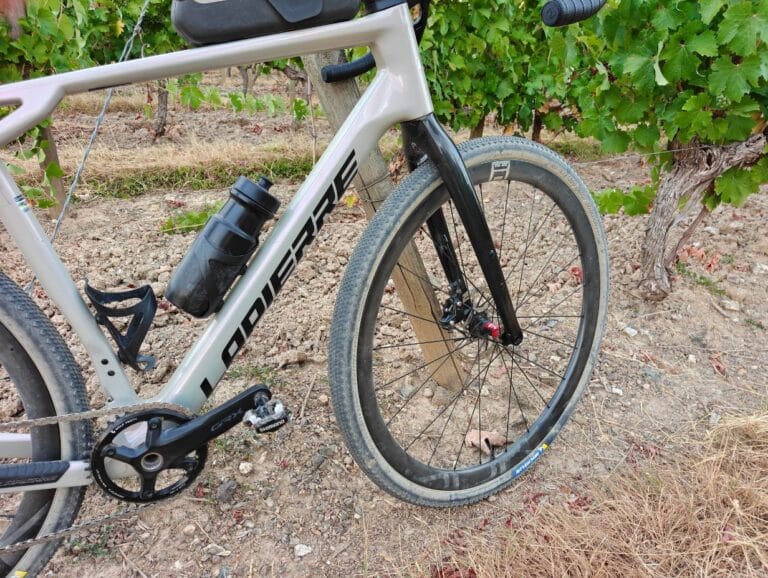
This build may not please purists, but it let me keep the advantages of the SRAM groupset while replacing the component that had caused me trouble.
Updates to suit my riding better
Over time, I have updated the Crosshill to fit my riding better.
The main change concerns the wheels. The stock DT Swiss GR1600 Spline are a good aluminium wheelset, versatile and perfectly suited to the bike’s brief.
Nevertheless, I opted for a carbon Duke Baccara RX36 SLR2 wheelset, built on DT Swiss 240 EXP hubs.
The goal was not to fix a flaw in the original wheels, but rather to make the bike lighter and more responsive.
On that front, the difference is tangible: it snaps into accelerations more eagerly and becomes a bit more dynamic when you want to raise the pace.
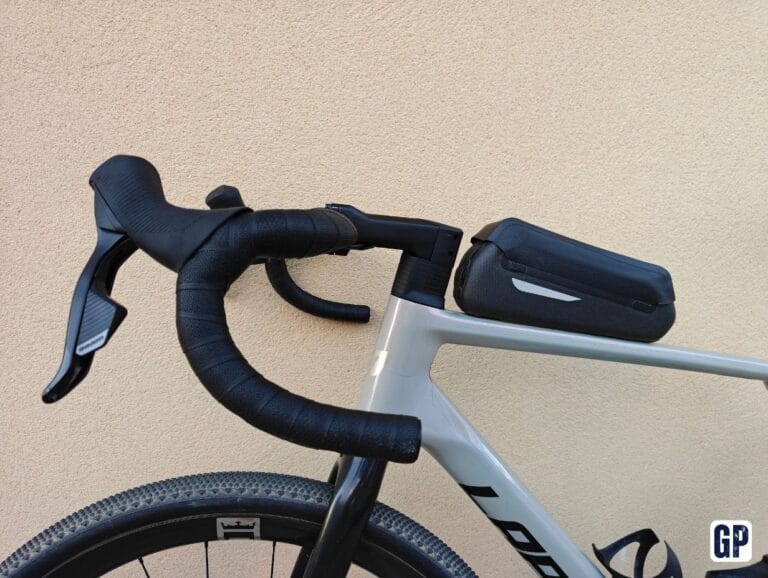
Switching to a Cervélo carbon handlebar, taken from another bike and chosen for its dimensions and flare very close to the original aluminium model, also contributes to the bike’s overall evolution.
The extra compliance from carbon is noticeable and fits perfectly with the Crosshill’s philosophy.
Finally, the stock aluminium seatpost has made way for a Woodman carbon model, which I am also very happy with.
These updates do not fundamentally change the Crosshill’s identity. They mostly accentuate some of its qualities and tailor it even more to my preferences.
A bike that makes you want to head back out
After so many kilometres, that is probably what I like most about the Crosshill.
I still find it just as comfortable and, above all, very sure-footed. It is a bike I have fun on, without constantly trying to find its limits.
It has accompanied me for around 1,000 km of bikepacking, on long days in the Lot and on a full crossing of the Vosges.
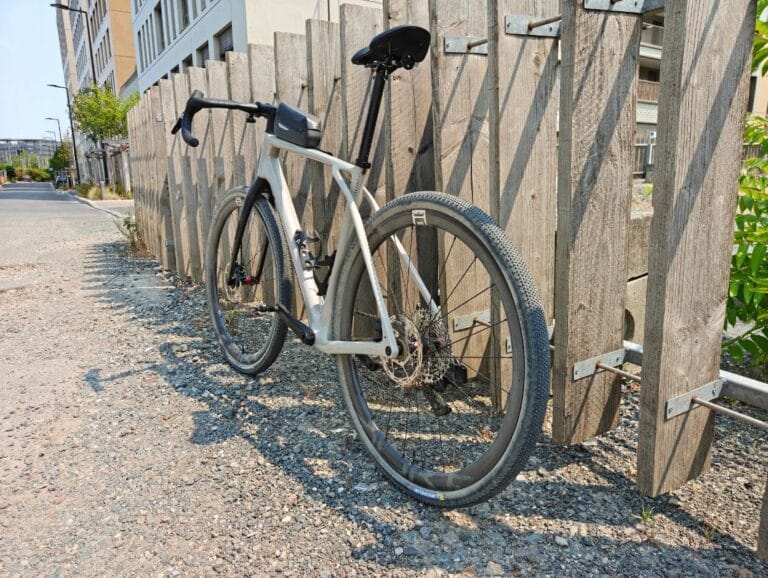
In all these situations, it has kept the same general behaviour: stable, comfortable and lively enough to never become boring.
And then there is its aesthetics.
I still find the paintwork as successful as on day one. It regularly turns heads when I am out riding.
I have had no particular issues with ageing either. I simply applied ClearProtect to the frame to effectively protect exposed areas.
A gravel bike for long days
The Lapierre Crosshill CF 6.0 AXS is not a gravel bike designed to chase maximum stiffness or pure performance.
And that is not what I ask of it.
What I appreciate is its balance. The position is easy to live with, the comfort lets you stack up hours in the saddle, and the behaviour remains lively enough to be enjoyable on fast-rolling tracks as well as on the road.
It also manages to feel reassuring on descents without becoming sluggish, and it remains predictable when the terrain deteriorates.
Its main limits today are the tyre clearance limited to 45 mm, a bottom bracket stiffness that is slightly lacking when you push hard on the pedals and, on my unit, the reliability of the stock SRAM DUB bottom bracket, which needed replacing after about 2,300 km.
The lack of in-frame storage is also a minor regret given the bike’s versatility and long-distance focus.
Otherwise, the Crosshill matches exactly what I was looking for when moving to carbon: a versatile, comfortable gravel bike that still has enough character to make you want to accelerate.
For sporty gravel without seeking a pure race bike, for travel or long-distance bikepacking, it is a bike I would choose again without hesitation.
And after several thousand kilometres, that is probably the best indicator I can give: if I had to head out tomorrow for a big ride, the Crosshill would still be coming along.