
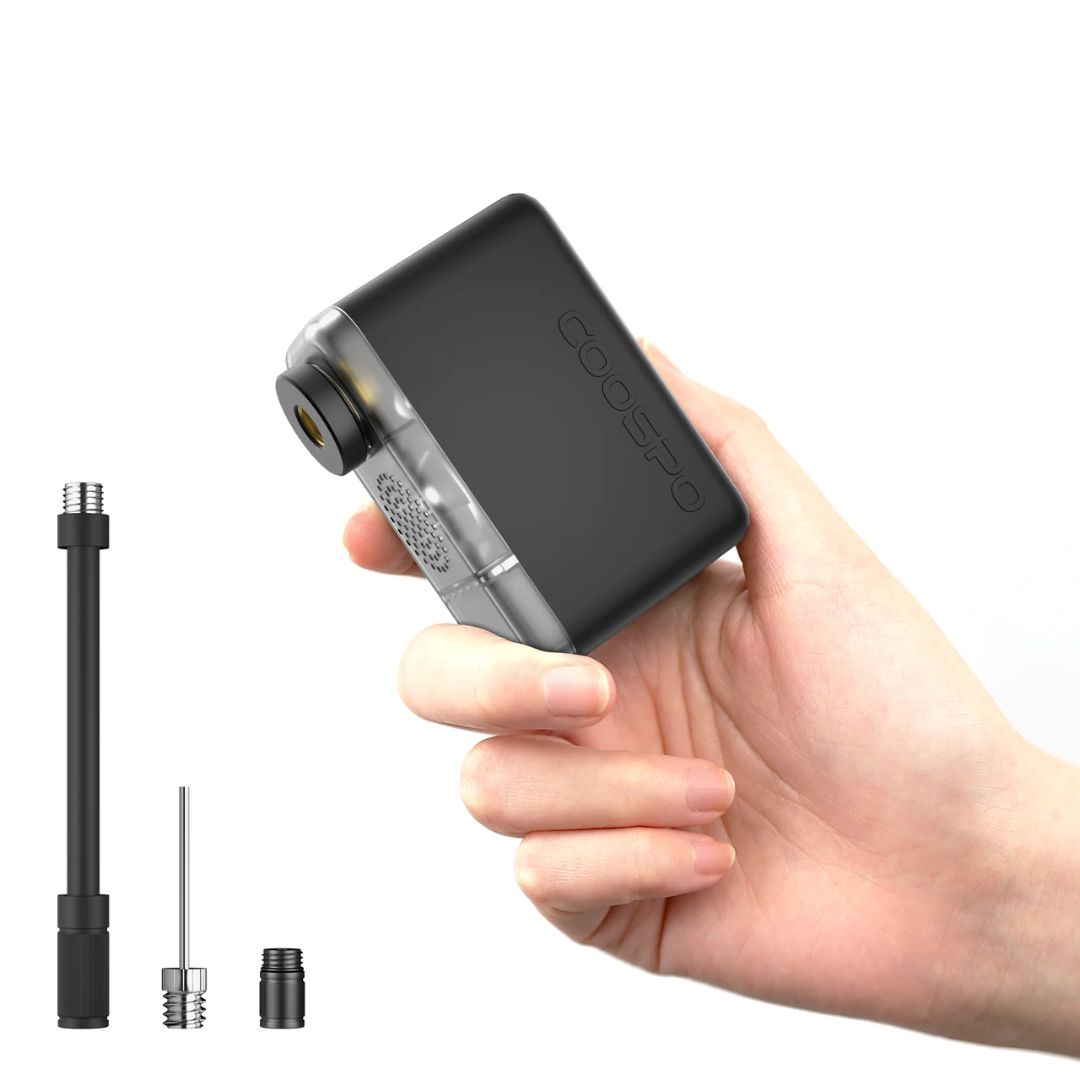
Pocket electric compressors are becoming increasingly common in the road and gravel world. The Coospo X1 follows this trend with an ultra-compact form factor at a claimed 127 g, a pressure readout in PSI/bar, and USB-C charging. The aim: replace (or complement) a manual mini pump on rides with faster inflation and less effort.
On paper, the stated numbers (0 to 110 PSI in 90 s on a 700 x 23C) clearly target road, where the required pressures are higher. In gravel, lower pressures should logically be reached faster, but the main interest lies elsewhere: precisely dialling in pressure after a repair (inner tube) or topping up a tubeless tyre that has lost a few PSI/bar.
This type of mini electric pump can also make sense for light bikepacking or long rides, provided you accept reliance on the battery (and therefore on recharging).
Coospo highlights a full charge in 40 minutes via USB-C, and a battery life of up to 4 full inflations (road reference 700 x 23C from 0 to 110 PSI). In practice, these figures depend heavily on tyre volume, target pressure, and usage conditions (temperature, frequency of use, etc.).
The manufacturer emphasises better heat management, to the point of stating that “no silicone sleeve is required” and that the device remains “safe to the touch.” On the user side, one report nonetheless mentions that the valve can get hot during direct inflation on a road tube (Presta), and that you should hold the valve head (or the extension) firmly to avoid leaks.
Another reported point: the battery indicator does not always match the visuals (display of “3 dots” instead of “4” in one review). This kind of detail doesn’t call the operation into question, but it can affect how clearly the remaining battery life is read.
The Coospo X1 neatly illustrates how the puncture kit is evolving: moving from a manual mini pump (reliable, unlimited, but slow) to a pocket compressor that’s fast and precise, at the cost of battery dependence. At ~50 €, it sits in a very competitive space where the difference is less about the maximum pressure claim and more about tangible details: quality of the valve interface (leaks), heat management, reliability of the charge indicator, and how well real-world performance aligns with the stated figures. For gravel and road, we mainly see it as a handy complement (setting pressure to a specific number after a repair), rather than a wholesale replacement for a simple mechanical solution when heading far and for a long time.
Retrouvez toutes les caractéristiques ainsi que les détails techniques de ce produit.
Reviews
There are no reviews yet.