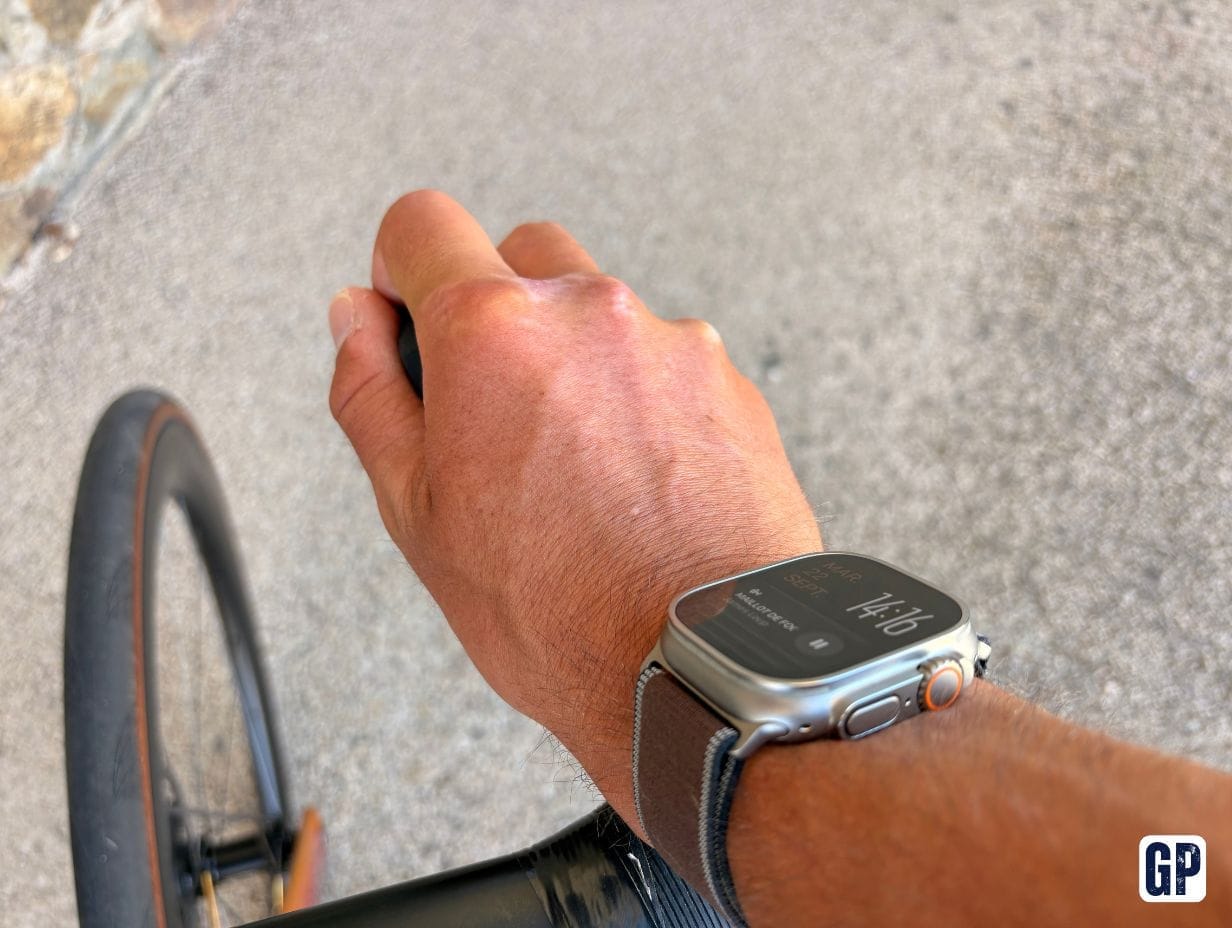

The Apple Watch Ultra 4 isn’t trying to break the mould. Put an Ultra 3 and an Ultra 4 side by side and you really have to know the product to spot a visible difference. Same size, same overall design, same wrist presence. Apple has kept the formula.
That’s not necessarily a problem. The Ultra case had already found its identity: substantial without being absurd, highly legible, solid, almost a fully fledged sports watch within the Apple ecosystem. But anyone hoping for a new design, a round watch or something spectacular will be left wanting.
The more tangible good news is that the accessories remain compatible. Straps, habits, charger, daily routine – the move from an Ultra 3 is frictionless. Very Apple, in the best sense.
Strengths:
- Significantly better day-to-day battery life
- Superb display and an extremely fluid interface
- New heart-rate sensor and a more credible readiness score
Could be better
- GPS battery life still lags the outdoor benchmarks
I wore this Ultra 4 for several weeks after wearing an Ultra 3 every day. The goal wasn’t to rehash a dressed-up spec sheet, but to answer a simple question: is Apple now credible for serious sports use, or is it still mostly an excellent smartwatch with some sports features?
The answer is no longer as clear-cut as it used to be.
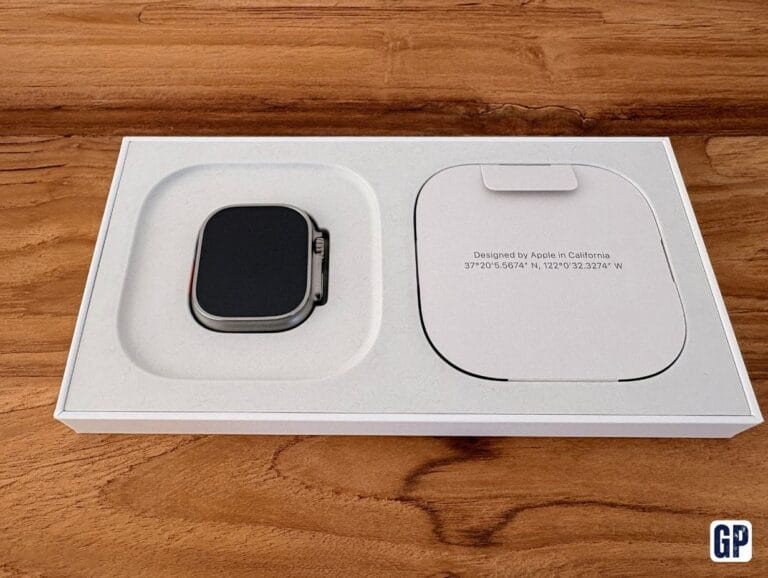
A bigger internal evolution than it looks
Externally, almost nothing changes. Inside, it gets more interesting. Apple introduces a new S11 chip, a revised heart-rate sensor, much more frequent background heart-rate readings, richer HRV tracking and a readiness score.
This last point matters. Until now, Apple provided lots of data, but assembled it less effectively than a Garmin, a Whoop or an Oura. With this readiness score, rated from 0 to 10 and fuelled by sleep, baseline vitals, training load and recent activity, Apple is starting to speak a language more familiar to athletes.
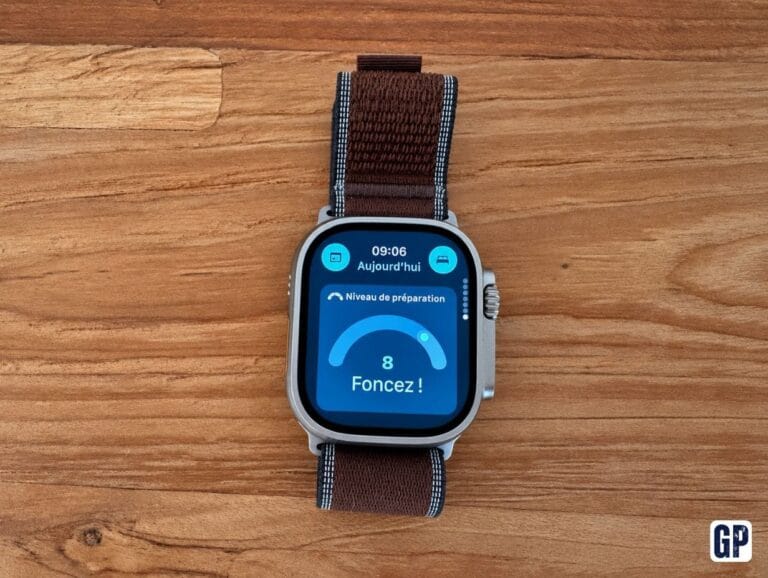
You still need to give it a bit of time. The system needs several nights of data before it becomes useful, especially for HRV trends. And as often with recovery metrics, you shouldn’t take everything at face value. A score is an indicator, not a coach.
But the intent is good. Apple is no longer just about closing rings. It’s now trying to say whether your body is ready to handle a real session.
Battery life is up, and it changes more than expected
The improvement I felt quickest was battery life. Apple claims more than two days, around 50 hours in typical use. In my case, I comfortably get two days, and can push towards three by stretching things.
Yes, Garmin users will smile. I would have smiled a few months ago too. A fēnix is still far ahead on pure battery life, especially for long GPS outings, expeditions or prolonged outdoor use.
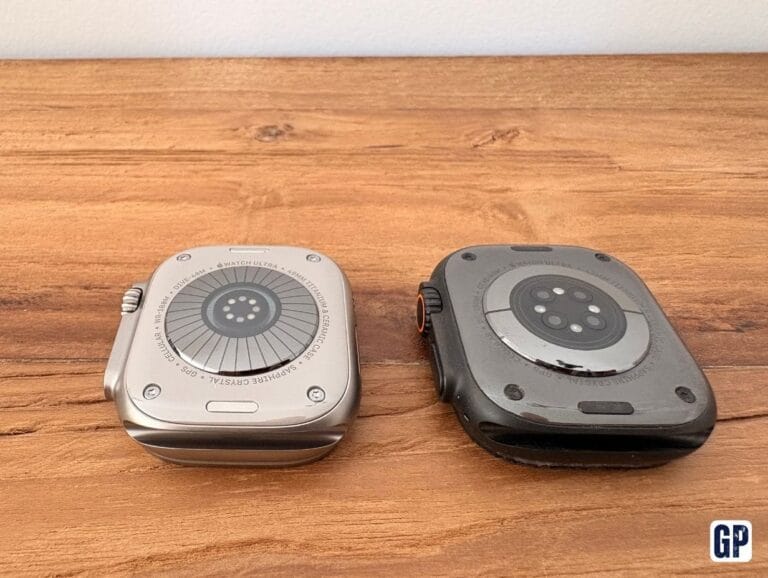
But Apple’s charging experience changes the perception. You drop the watch on its puck during the shower, get dressed, and you recover a big chunk of the day in a few minutes. It’s not the same philosophy as a Garmin you forget about for a week. It’s more frequent, but also more transparent.
I’d already detailed this shift in our comparison between Apple Watch Ultra and Garmin Fenix. With this Ultra 4, the battery-life limitation doesn’t disappear, but it becomes less bothersome day to day.
For cycling, you need to distinguish two things. On a regular ride, with a GPS computer on the handlebar, the watch doesn’t need to be the main tool. It tracks health, notifications, activity and recovery. In that role, the battery life is more than sufficient.
For a very long ride where the watch becomes the primary GPS recorder, the new Extended and Max Extended Mode options give you more leeway. Apple quotes up to 45 hours in the maximum extended GPS mode, without completely cutting GPS data or recorded heart rate. There are still trade-offs with the display, alerts, intervals and advanced functions. It’s not magic.
In sport, Apple is catching up fast but Garmin remains more complete
This is the crux. The Apple Watch Ultra 4 is becoming a credible sports watch for many athletes. Running, cycling, strength training, hiking, swimming – the profiles are there, the data too, and the integration with the iPhone remains very clean.
But Apple keeps a more generalist approach. In cycling, for example, the logic remains broad: outdoor cycling, whereas Garmin, Coros or Suunto slice usage more between road, gravel, MTB, e-bike, turbo trainer and custom profiles. It’s not a blocker for everyone, but it does say something about the philosophy.
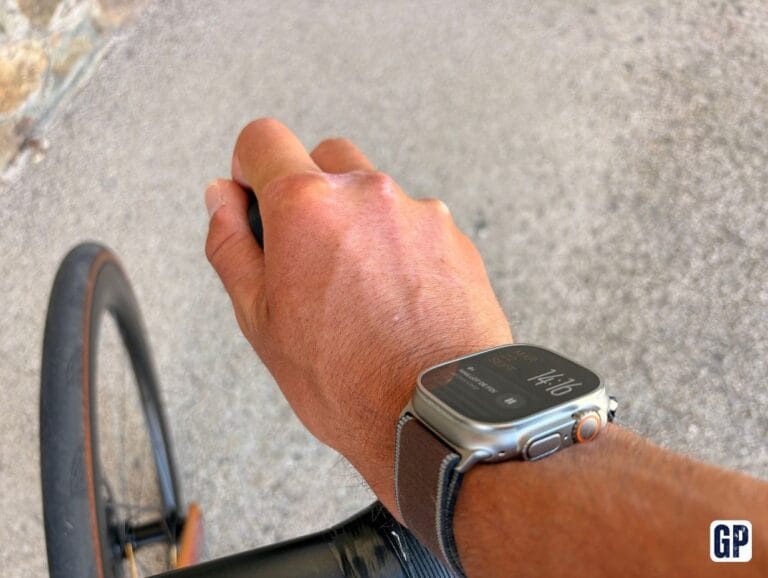
Same story with mapping. The Apple Watch Ultra 4’s display is superb, the square format really helps when reading a map, and Apple Maps works well within its remit. But for advanced sports use, with GPX tracks, outdoor navigation, complex routes and long battery life, Garmin keeps a clear lead.
The Garmin fēnix 9 goes further down the tool-watch approach: mapping, profiles, navigation, training metrics, physical buttons, solar or connected variants depending on version. It has also become very expensive and sometimes more complex than before. So the match is no longer simply a foregone conclusion for Garmin.
The heart-rate sensor is better, but you need to stay realistic
Apple puts a lot of emphasis on its new optical sensor. Revised electrode surface, new photodiodes, a new LED matrix, background heart-rate every 5 seconds, HRV measured much more regularly – technically, it’s a real update.
Day to day, it’s mainly reassuring for trend consistency. The watch gives more data points, populates the health views better, and feeds the readiness score more seriously. For an athlete tracking form without wanting to live in charts, it’s a useful step forward.
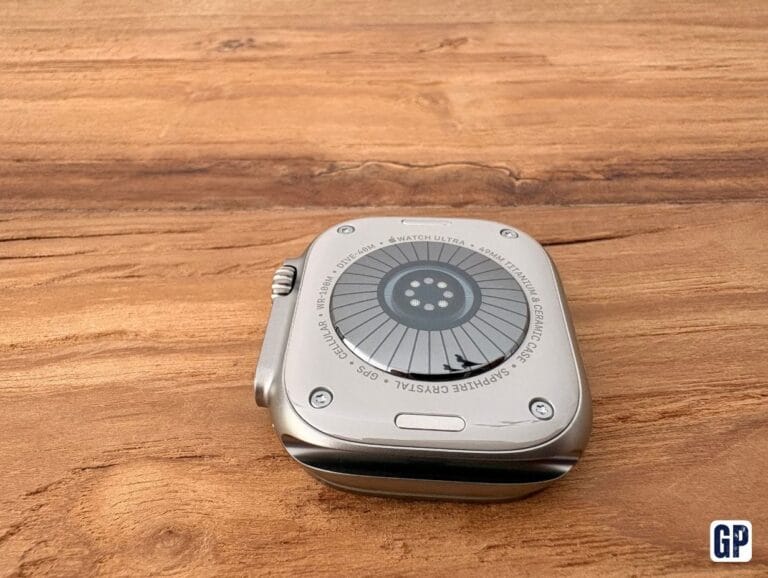
In training, you need to keep the right perspective. Apple claims a very precise sensor, and overall I find it very good too. But an optical sensor is still an optical sensor. On hard intervals with rapid changes, in the cold, with vibrations or poor wrist placement, a chest strap remains more reliable.
The interesting point is that Apple seems to prefer not to display certain data if the sensor confidence is not sufficient, rather than output a dubious value at all costs. The idea makes sense. But it can also smooth or mask some very short phases. For most uses, it doesn’t change much. For athletes obsessed with instant precision, it’s worth knowing.
The real strength is phone-free living
If the Apple Watch Ultra 4 scores points, it’s not only because it’s getting better at sport. It’s because it remains far ahead as a smartwatch.
Go for a run without a smartphone, reply to a WhatsApp message, answer a call, pay, listen to music, see a useful notification, all that without tinkering: the experience is impressively fluid. And that’s where going back becomes difficult.
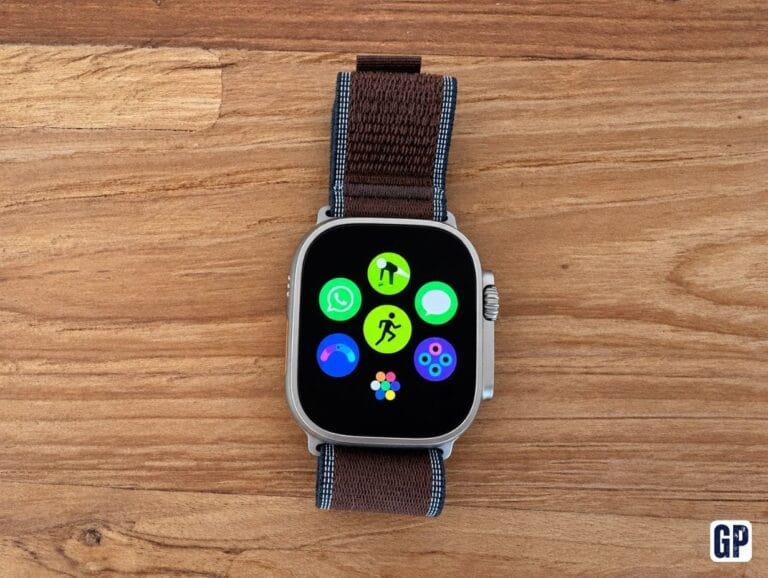
Garmin can make progress on connectivity, add LTE, satellite, safety features or better-handled notifications. But Apple’s integration retains a particular simplicity, especially if you already live with an iPhone, AirPods, Apple Pay and everyday apps.
That’s probably the real choice to make before buying. If you want a training watch first and foremost, Garmin still makes more sense. If you want a very sporty smartwatch, the Apple Watch Ultra 4 is getting harder and harder to dismiss.
The square format is not a flaw
I was worried I wouldn’t get used to it. Fifteen years or so with round watches inevitably build habits. And then, quite quickly, the square format ends up making sense.
For reading text, replying to a message, viewing a photo, navigating an interface or looking at a map, it’s actually more practical. Many still expect a round Apple Watch. Personally, I now think this format is part of its strength.
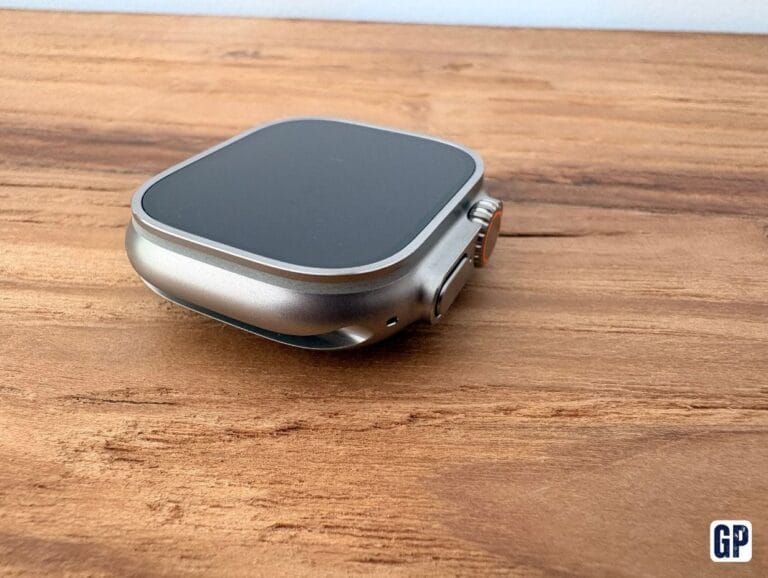
The display remains one of the watch’s big strengths: legible, bright, responsive, pleasant in almost all conditions. It sounds obvious, but when you interact with your watch often, that display quality matters a lot.
The new bands also bring a bit of freshness. The hook-and-loop band tested here almost looks like leather from a distance, pairing well with the case. It’s not a product revolution, but it’s the kind of detail that makes the watch easier to wear outside sport.
Who is the Apple Watch Ultra 4 really for?
If you have an Ultra 3, the interest depends on how sensitive you are to battery life, the new heart-rate sensor and the readiness score. The update is real, but not essential for everyone. The design doesn’t change, the overall feel remains close, and the basic experience is very similar.
If you’re coming from a regular Apple Watch, the Ultra 4 is much more convincing: better battery life, a larger display, a more robust case, more serious sporting credentials, an Action button, more enduring GPS modes. There, the jump is clear.
If you’re coming from Garmin, the switch takes more thought. You’ll gain a smartwatch that’s incomparably more fluid. You’ll lose long-term battery life, integrated sports mapping, physical buttons better suited to tough conditions, and an even deeper level of analysis.
The best situation, in the end, is perhaps that of many cyclists: a serious GPS computer on the bike, and an Apple Watch Ultra 4 on the wrist for everything else. In that setup, the watch doesn’t need to replace a Garmin Edge or a fēnix. It complements the ecosystem, tracks health, supports supplementary sessions and makes everyday life simpler.
That’s where it plays to its strengths. Not by perfectly copying Garmin, but by offering something else. A connected sports watch, increasingly credible, still imperfect for the most demanding athletes, but frankly hard to leave once you get used to its fluidity.