
Two years after the fēnix 8, Garmin updates its most iconic outdoor watch. The fēnix 9 lands with a broad line-up, brighter displays, revamped mapping, even more advanced training features and, above all, several versions you need to tell apart before you look at the price.
Because the question here isn’t just whether the fēnix 9 is comprehensive. It is. The real point is understanding which fēnix 9 suits which use, between the standard version, the Pro AMOLED, the Pro Solar and the variants with or without inReach connectivity.
🚀 In brief:
New generation announced two years after the fēnix 8
Three families to distinguish: fēnix 9, fēnix 9 Pro and fēnix 9 Pro Solar
Pricing from €999.99, depending on version
Garmin says orders open from 28 August, with a list price of €999.99 for the 43 mm fēnix 9, and €1,299.99 for the 51 mm fēnix 9 Pro with the inReach option. We’re still firmly in the high-end bracket, without an extra price surge versus the previous generation.
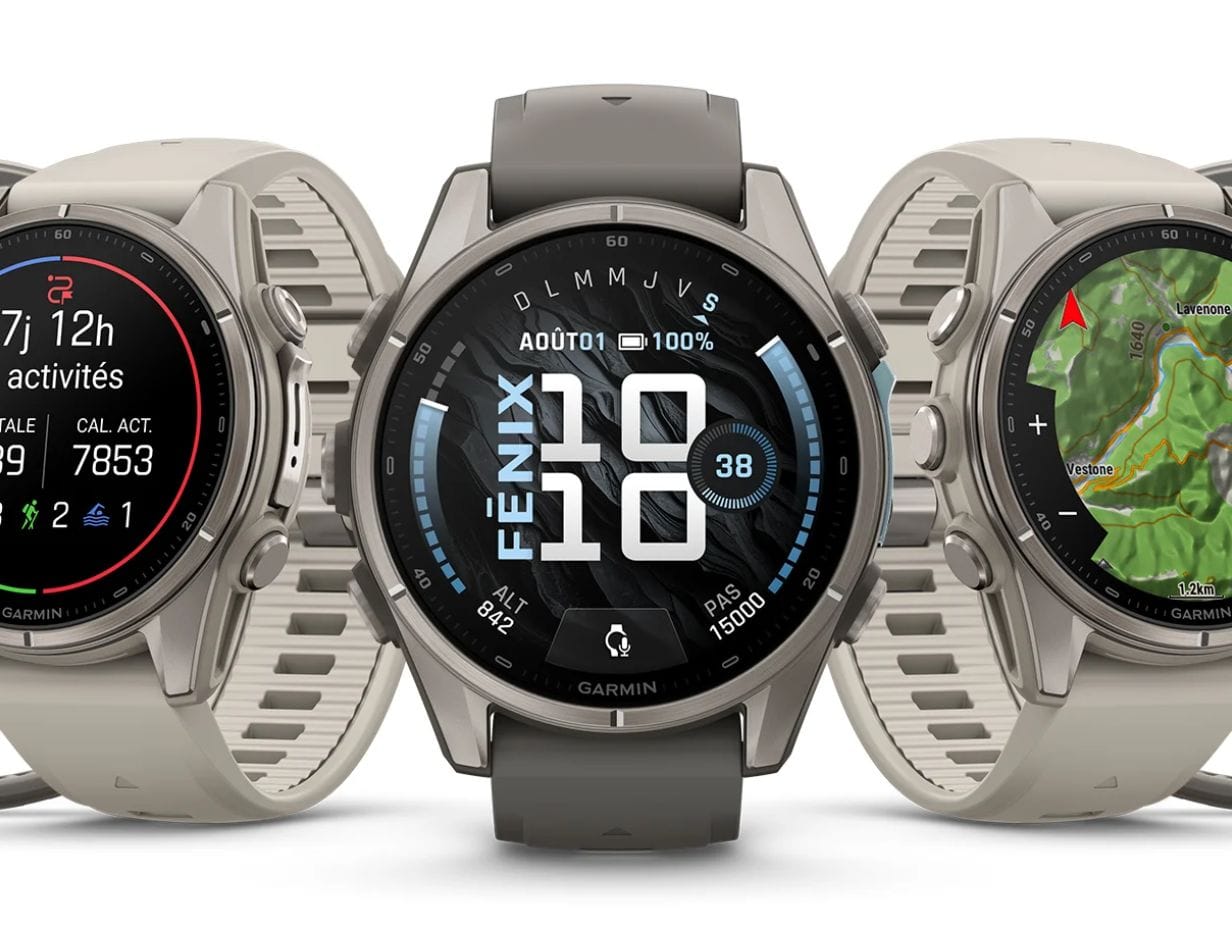
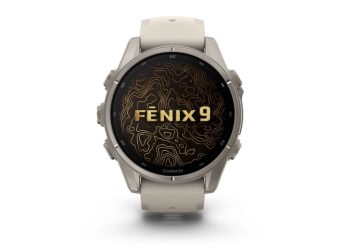
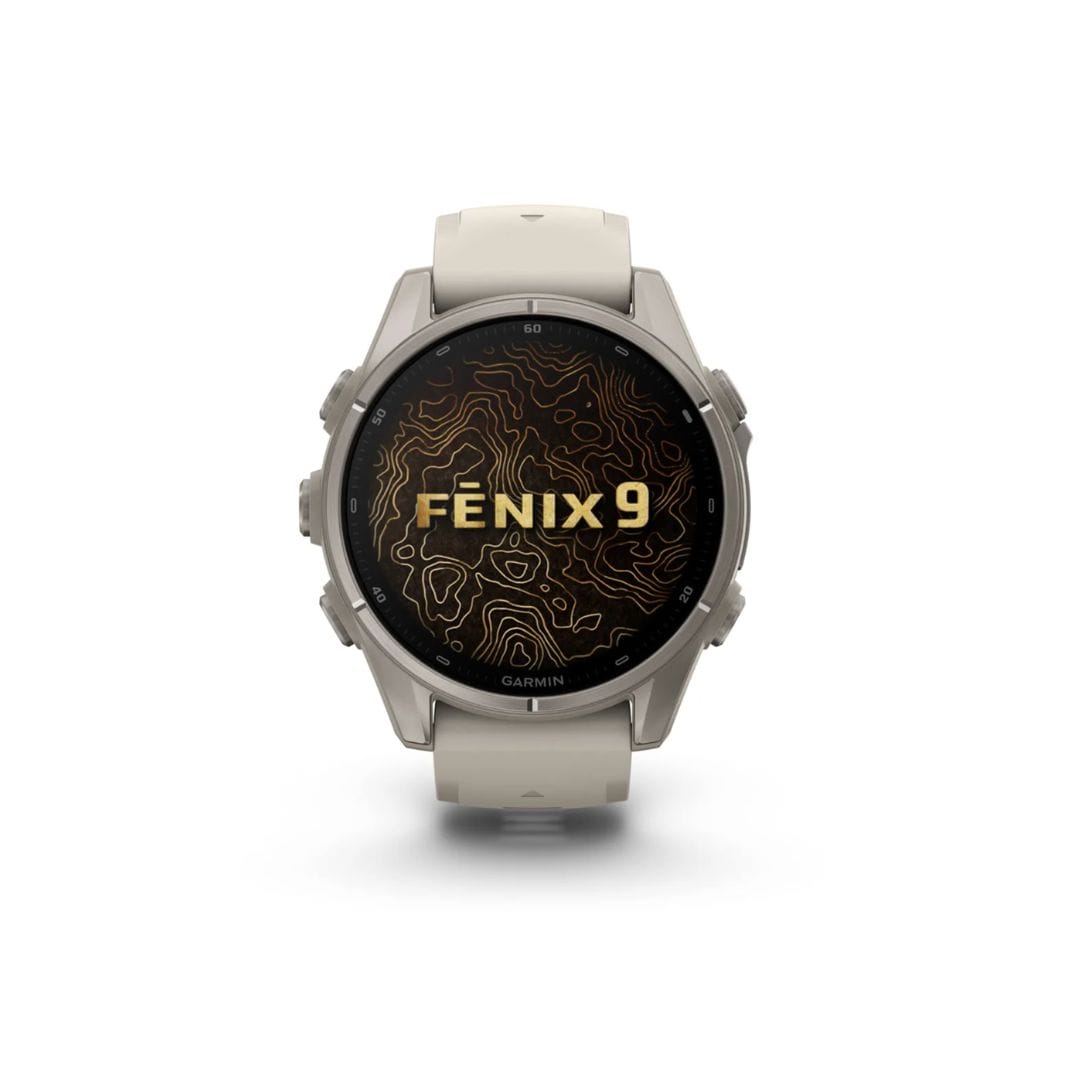
The baseline fēnix 9 is anything but a cut-price entry model. In the 43 mm configuration supplied by Garmin, it gets a 1.3 inch AMOLED display, a titanium bezel, sapphire glass, an LED torch, a microphone, a speaker and 10 ATM water resistance.
The case measures 43 x 43 x 13.8 mm, at 61 g with strap and 44 g for the case only. Garmin presents it as a watch designed for smaller wrists, which makes sense: not all fēnix models are easy to wear every day, especially if you sleep with it to capture sleep and HRV data.
As for battery life, this version claims up to 10 days in smartwatch mode, 18 hours in standard activity mode, 15 hours at maximum accuracy and 7 hours in activity with music. It isn’t the most enduring in the range, but it’s already enough for many athletes who alternate cycling, running, strength work, hiking or indoor trainer sessions.
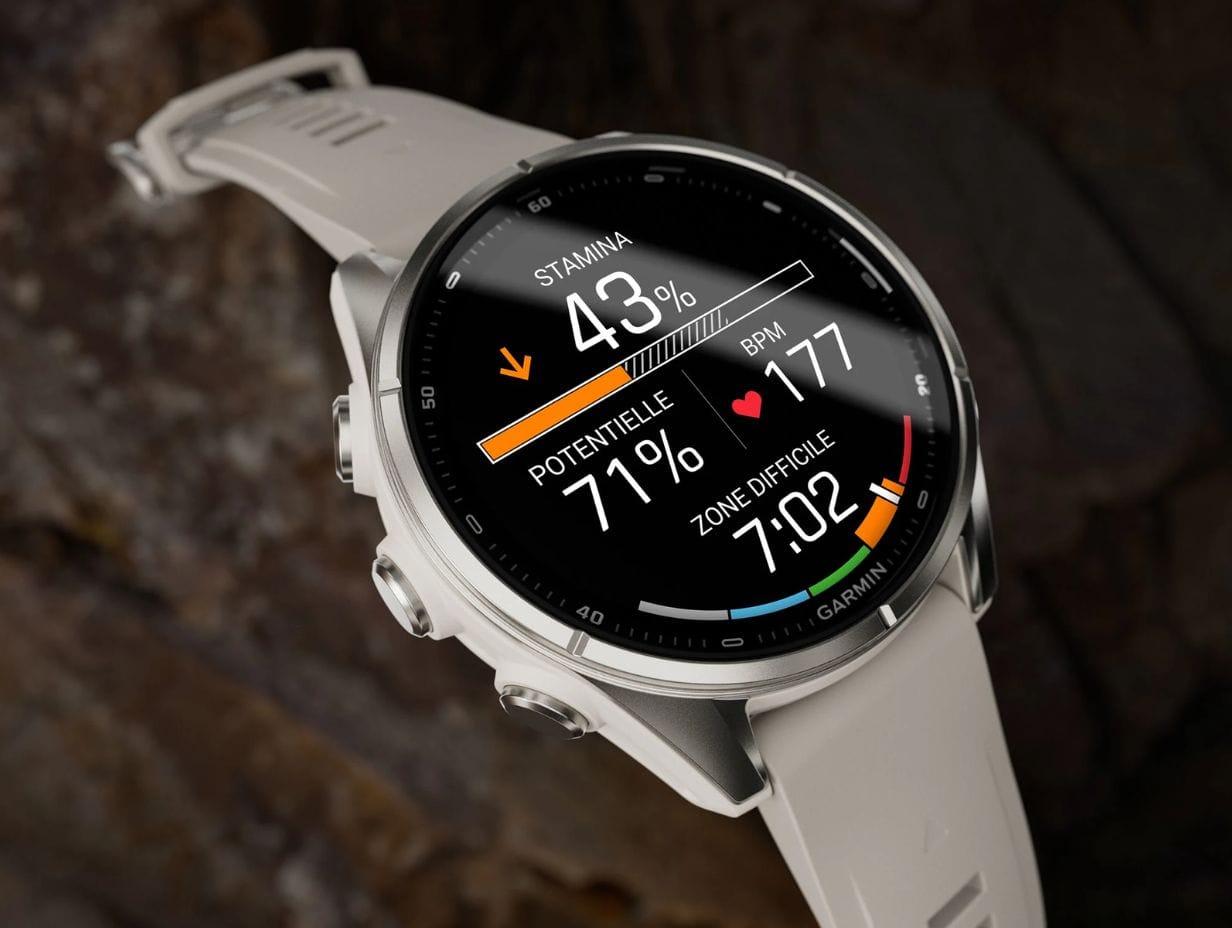
This fēnix 9 also keeps 64 GB of memory, built-in mapping, multi-band GPS, SatIQ, Garmin Pay, phone-free music and the road cycling, gravel, MTB, cyclocross, indoor trainer and e-bike profiles.
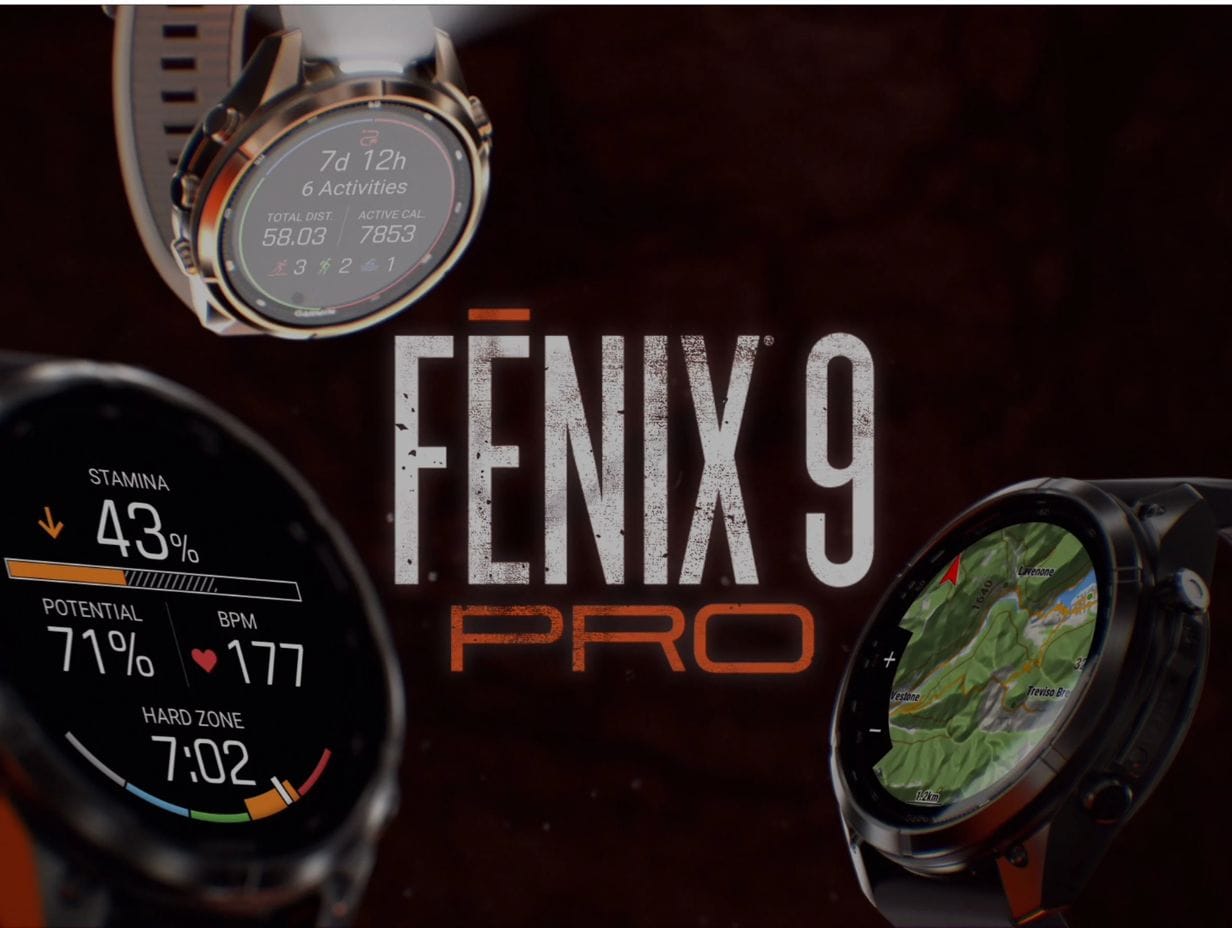
The fēnix 9 Pro steps things up on the hardware side. Garmin highlights a more robust titanium case, a more assertive fit for larger wrists on the 51 mm version, and above all the largest display ever fitted to a fēnix.
On the fēnix 9 Pro 51 mm AMOLED, the display increases to 1.5 inch, with a resolution of 466 x 466 pixels and brightness quoted up to 3,000 nits. This is probably one of the most visible day-to-day changes: map navigation, reading data fields, a quick glance at a route or a message in bright sunlight.
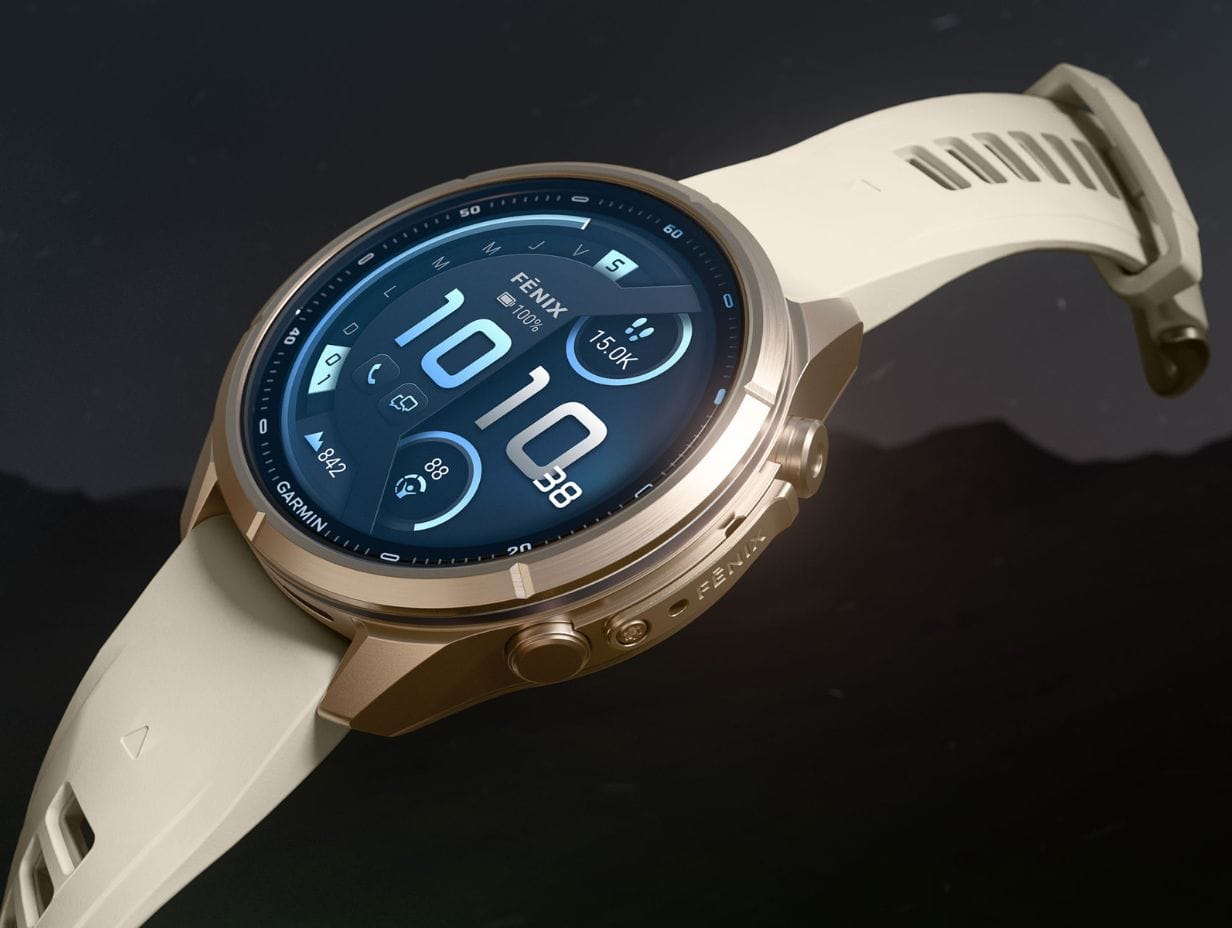
The downside is the bulk. The 51 mm version measures 51 x 51 x 15.8 mm and weighs 99 g with strap. For purely sporting use, that weight remains acceptable for an adventure watch. For sleeping with it on or wearing it all day, you’ll need to like big watches.
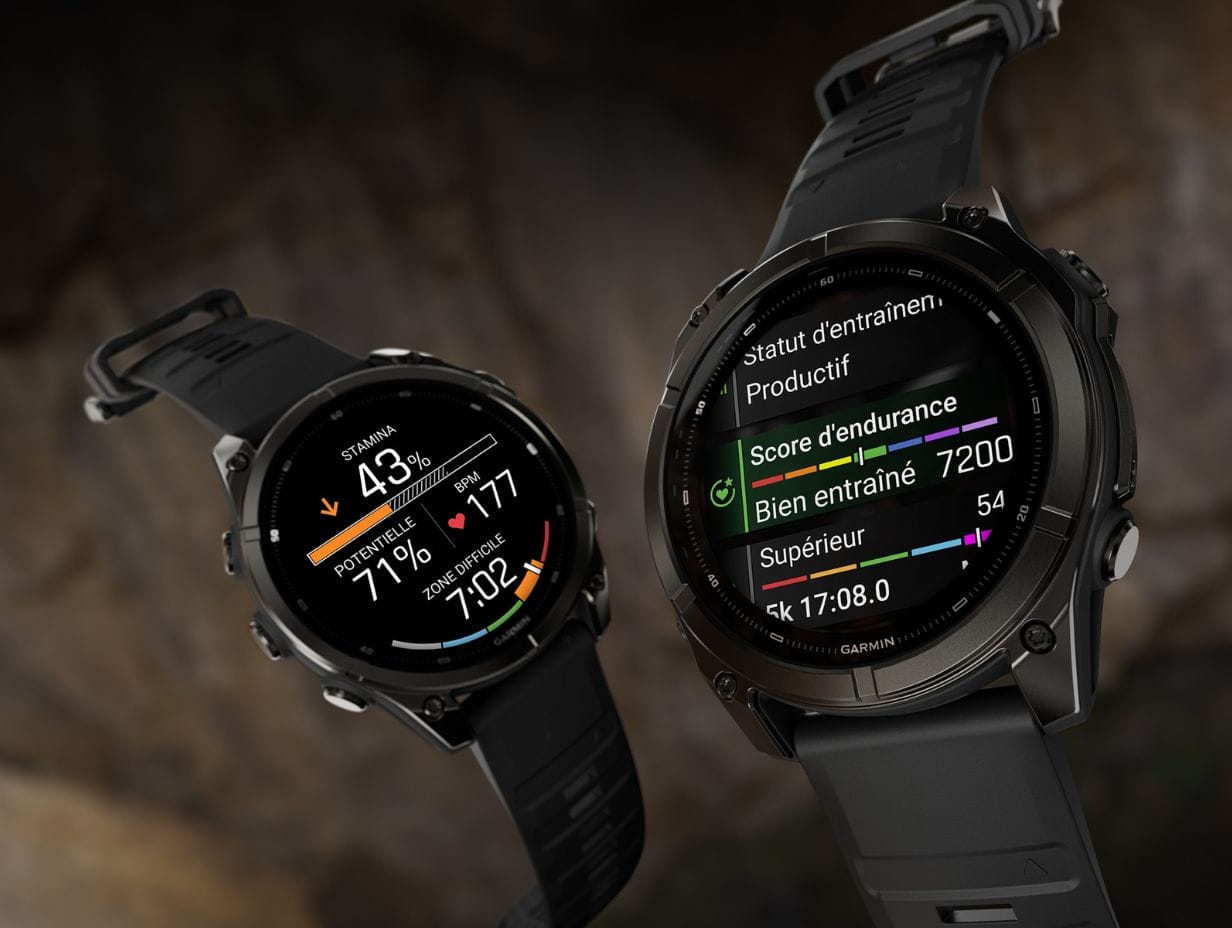
Battery life also moves up a tier: up to 31 days in smartwatch mode, 56 hours in standard activity, 45 hours at maximum accuracy, 22 hours with music and up to 151 hours in max battery mode. For long hikes, ultras, raids or bikepacking trips, this is where the 51 mm Pro has the edge.
If you’re coming from an older generation, our review of the Garmin fēnix 8 AMOLED provides a good point of comparison: Garmin isn’t starting from scratch, but refining an already very solid base.
This is the point not to miss. The fēnix 9 range isn’t just a single watch offered in different sizes. Garmin distinguishes the fēnix 9, the fēnix 9 Pro and the fēnix 9 Pro Solar.
The standard fēnix 9 bets on AMOLED, sapphire glass and a more compact format. The fēnix 9 Pro adds a titanium case and can be chosen in an AMOLED version or a Solar version. The Pro Solar prioritises the solar glass to extend battery life, a choice that will speak more to outdoor users who spend a long time away from a socket than to those who absolutely want the most flattering look of an AMOLED display.
| Taille | Version | Solaire | inReach | Prix | Référence |
|---|---|---|---|---|---|
| 43 mm | fēnix 9 | Non | Non | 999,99 € | 010-04761-01 |
| 43 mm | Pro | Non | Non | 1 099,99 € | 010-04335-86 |
| 47 mm | fēnix 9 | Non | Non | 999,99 € | 010-04762-01 |
| 47 mm | Pro | Non | Non | 1 099,99 € | 010-04336-26 |
| 47 mm | Pro | Non | Oui | 1 199,99 € | 010-04336-21 |
| 47 mm | Pro Solar | Oui | Non | 1 099,99 € | 010-04338-06 |
| 47 mm | Pro Solar | Oui | Oui | 1 199,99 € | 010-04338-01 |
| 51 mm | fēnix 9 | Non | Non | 1 099,99 € | 010-04763-01 |
| 51 mm | Pro | Non | Non | 1 199,99 € | 010-04337-26 |
| 51 mm | Pro | Non | Oui | 1 299,99 € | 010-04337-21 |
| 51 mm | Pro Solar | Oui | Non | 1 199,99 € | 010-04339-06 |
| 51 mm | Pro Solar | Oui | Oui | 1 299,99 € | 010-04339-01 |
Another important distinction: the Pro models are available with or without inReach connectivity depending on the configurations. Garmin describes this connectivity as a combination of LTE and satellite enabling two-way messaging, voice calls, LiveTrack and interactive SOS messages.
It’s powerful, but it remains a very Garmin approach. Some would have preferred a simpler opening towards standard 4G or 5G plans, as you see more in the smartwatch world. Garmin continues to protect its inReach ecosystem. For a remote adventurer, that’s defensible. For a sport-focused user who just wants a watch that’s truly phone-independent, the choice is less obvious.
Garmin always stacks a lot of features, but some are genuinely useful for cyclists and endurance athletes.
The fēnix 9 offers more than 100 activity profiles, daily training suggestions for running and cycling, Garmin Cycling Coach, Training Status, Training Readiness, Endurance Score, Hill Score, Training Load, Training Effect, customisable alerts and improved Stamina metrics.
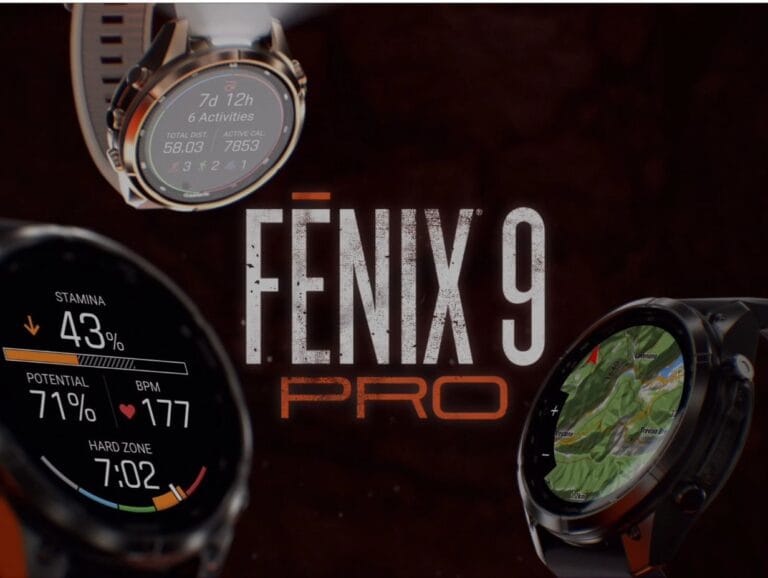
For cycling, the watch remains compatible with ANT+ power meters, speed and cadence sensors, Varia radars and lights, indoor trainers, Strava segments, Power Guide and advanced Cycling Dynamics. The gravel profile is present, alongside road cycling, MTB, cyclocross and indoor cycling.
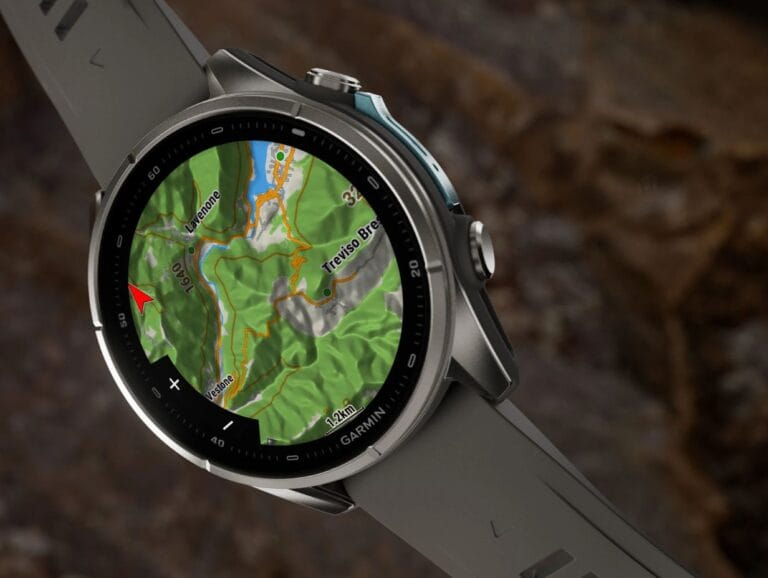
Garmin emphasises smoother, more intuitive multi-continent TopoActive maps. It’s not the kind of promise that makes you dream on a product sheet, but in the field, map legibility and recalculation speed really change the experience.
The fēnix 9 includes dynamic round-trip routes: you choose a distance, the watch suggests a loop that brings you back to the starting point, and recalculates if you deviate from the original track. The NextFork function also displays the name and distance to the next junction. For trail, hiking or a gravel ride without wanting to take out the phone, these are details that matter.
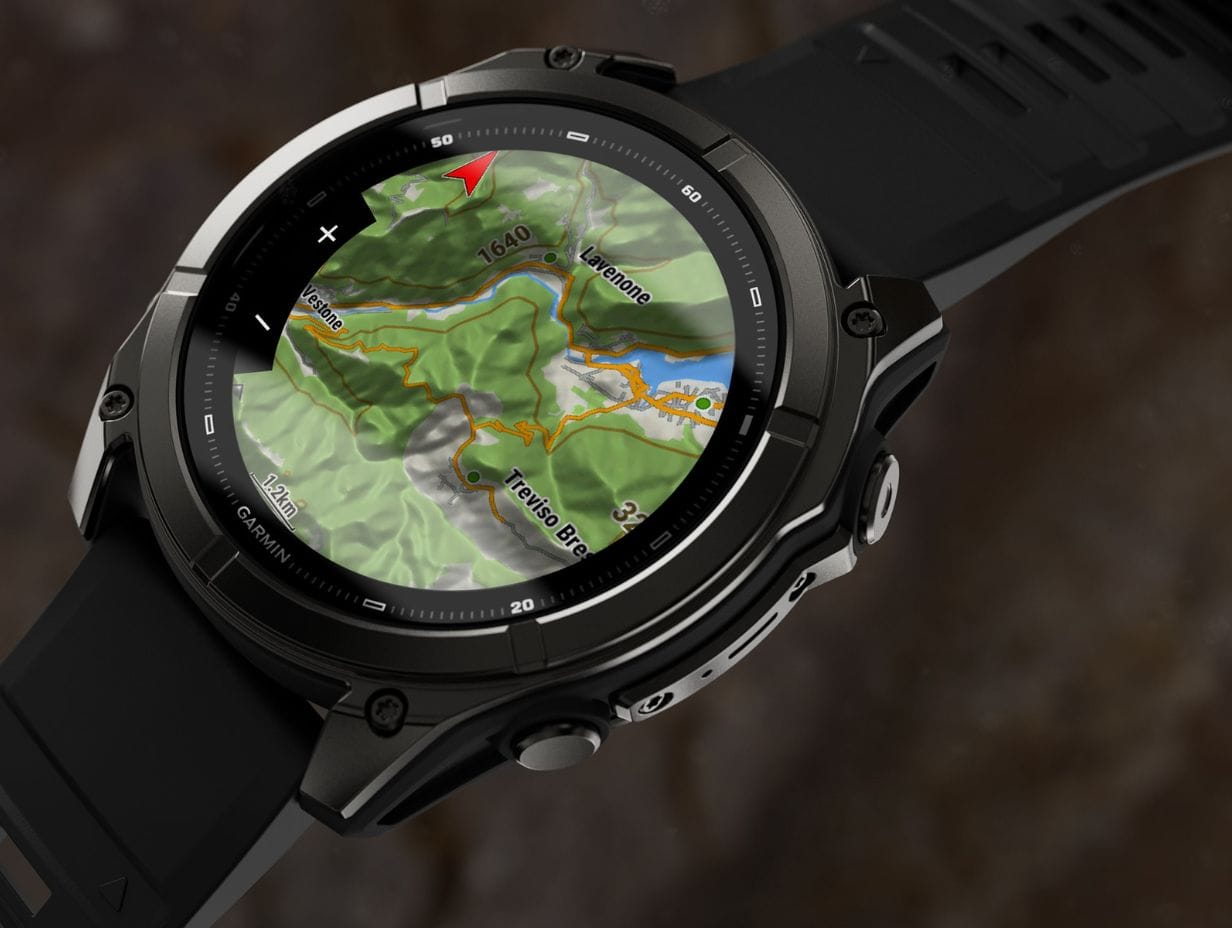
Garmin adds Outdoor Maps+, Garmin trails via subscription depending on the region, ski maps, golf courses and detailed navigation from Garmin Connect or third-party platforms. As is often the case with Garmin, the whole package is very dense. Sometimes too much. But in the context of an outdoor watch, that density at least has a logic.
The fēnix 9 no longer targets only the athlete who wants to record sessions. It wants to stay on the wrist all day.
You get the Morning Report, the Evening Report, HRV Status, advanced sleep tracking, Sleep Coach, Body Battery, stress, hydration, skin temperature, jet lag guidance and ECG depending on regional availability. Garmin also specifies that some tracking features, such as the pulse oximeter, are not diagnostic medical devices. A useful clarification, because these data are interesting, but do not replace medical advice.
The watch also covers recreational diving down to 40 m, with single-gas mode, apnoea, nitrox support, the Bühlmann ZHL-16c model and synchronisation with Garmin Dive. Again, the fēnix goes well beyond the bike-run-hike remit.
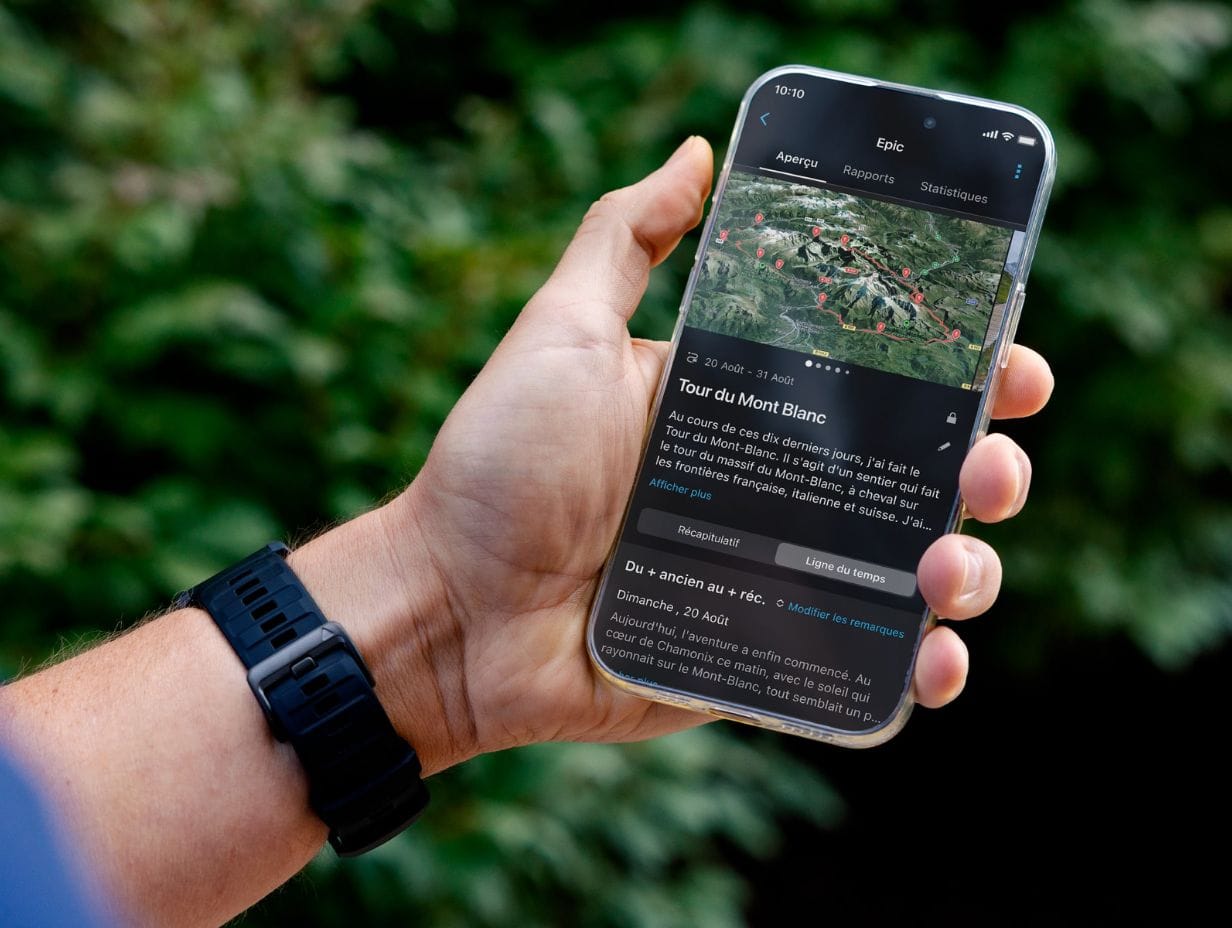
For everyday use, the microphone and speaker enable on-wrist calls when the watch is paired to a smartphone, voice commands, voice notes and certain replies via a compatible smartphone. WhatsApp compatibility goes via Connect IQ and requires the paired phone. So it isn’t yet a totally standalone smartwatch in all versions.
This point echoes a broader debate we already raised in our comparison Apple Watch Ultra or Garmin fēnix: Garmin still leads in endurance, battery life and the outdoors, but Apple keeps a head start in the pure connected experience.
The fēnix 9 looks less like a rupture and more like a very serious consolidation. Garmin isn’t trying to reinvent its outdoor watch. The brand pushes the important levers: display, battery life, mapping, training features, robustness, choice of sizes and connectivity.
The strength lies in its ability to cover a lot of disciplines without getting completely lost: cycling, gravel, running, trail, triathlon, hiking, skiing, swimming, diving, strength training. For a multisport athlete who wants a single reliable tool on the wrist, it’s hard to find anything more complete today.
The limitation is also quite clear: the range is getting expensive and complex. You need to choose the size, the display, the battery life, whether or not you want inReach, the type of strap, the acceptable weight on the wrist. At this price point, picking the wrong version would be a shame.
The fēnix 9 mainly confirms one thing: Garmin remains the benchmark for the outdoor sports watch. Not because it does everything better than everyone else, but because it still concentrates what many endurance athletes really look for: battery life, mapping, data, robustness and continuity within the ecosystem.
| Model | Garmin Fenix 9 010-04337-21, Garmin Fenix 9 010-04761-01 |
|---|

The latest news from the past 7 days, delivered straight to your inbox.



Reviews
There are no reviews yet.