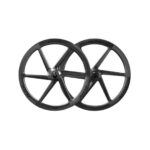
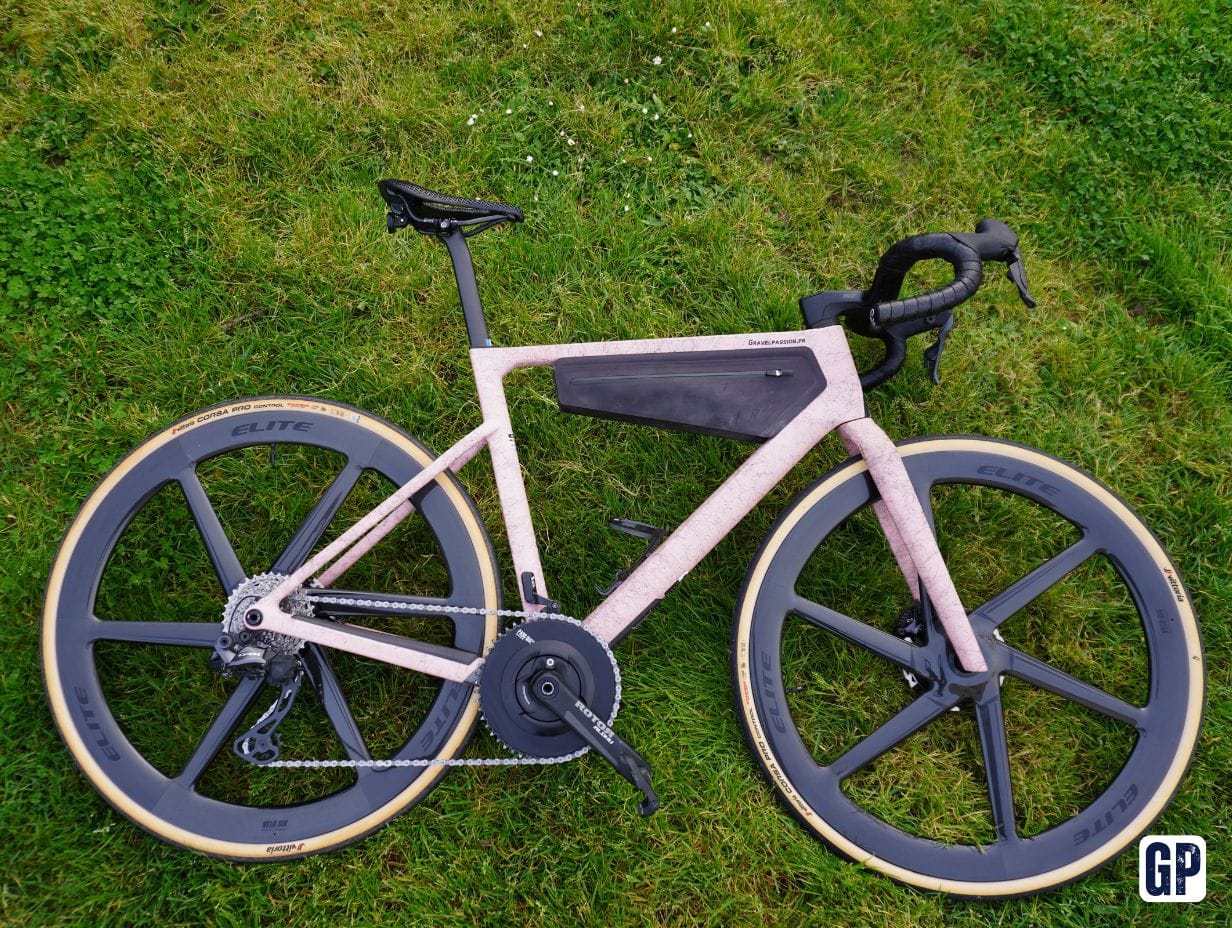
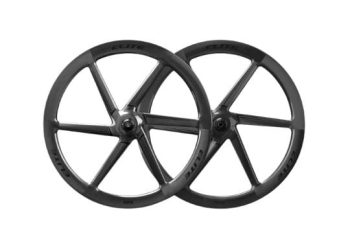
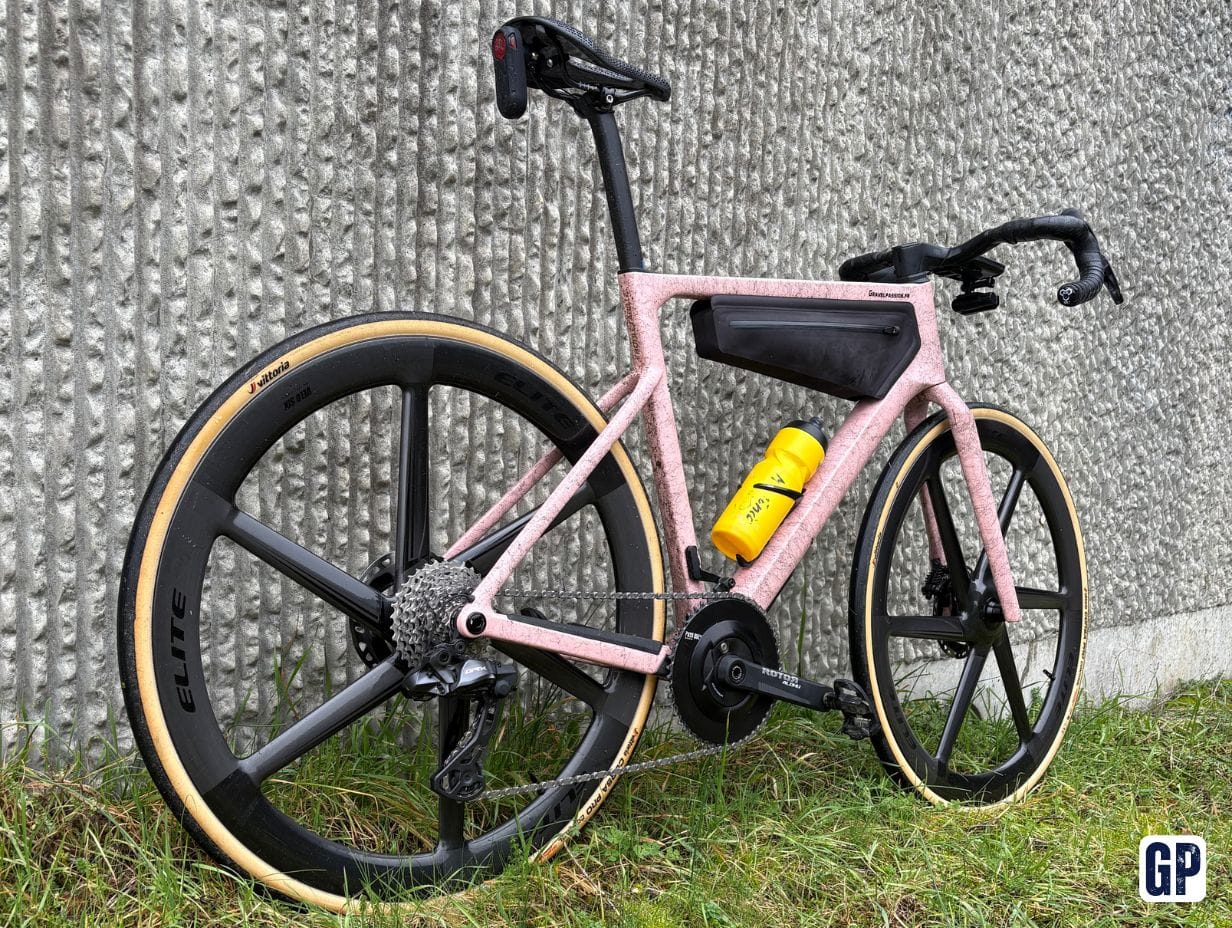
I’ll be blunt from the start: these are not the best carbon wheels on the market. The real question lies elsewhere. If you truly love this style and you buy these wheels for their very distinctive look, are they still a good set of wheels for serious riding?
The Velo Six II are the six-spoke model offered by the Chinese brand Elitewheels, which you probably know if you regularly follow GravelPassion. I’ve already tested several pairs from them (Drive G45 and G36) and I’ve often been surprised by the performance-to-price ratio.
This time, the playing field is different.
An almost sculptural object
The first thing that literally blew me away on arrival was the finish quality.
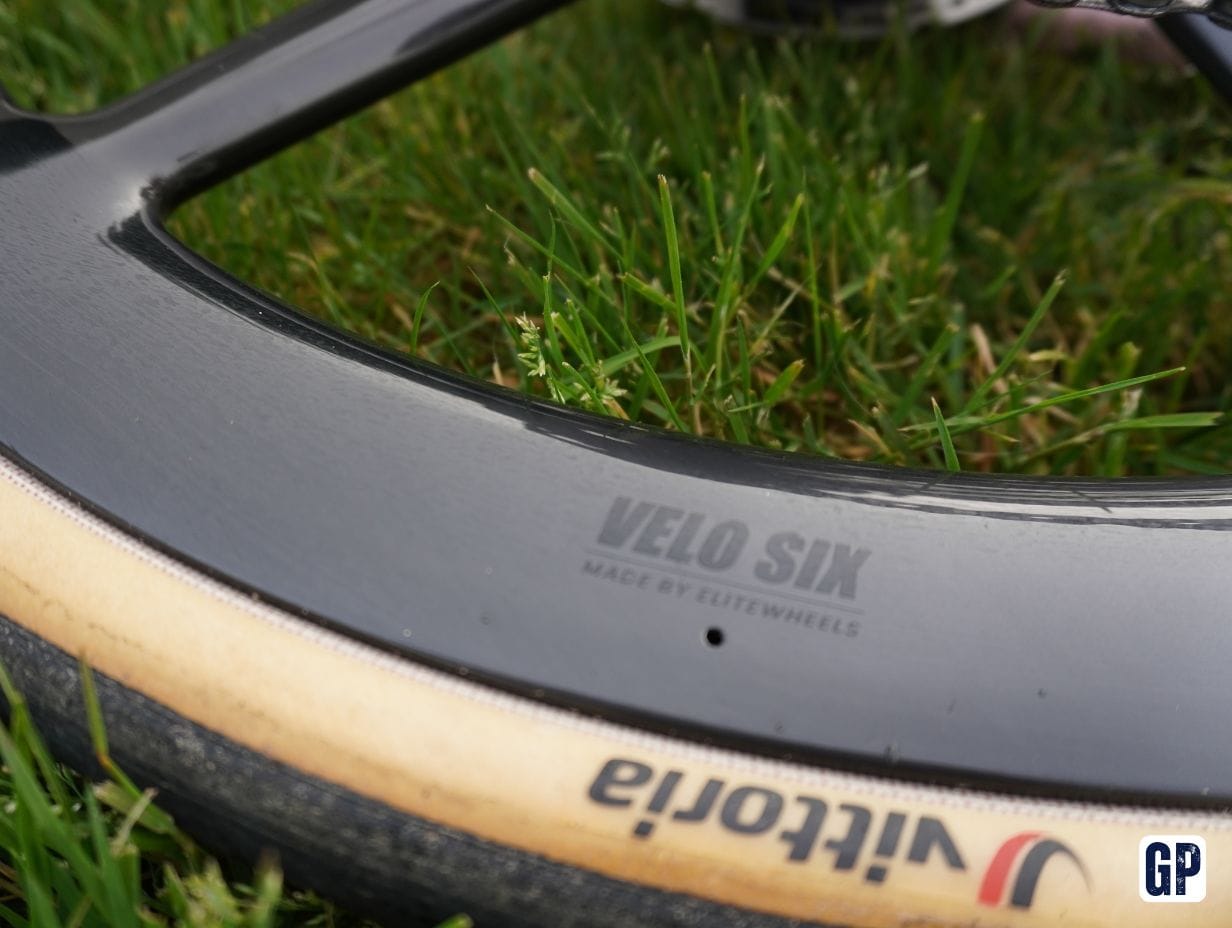
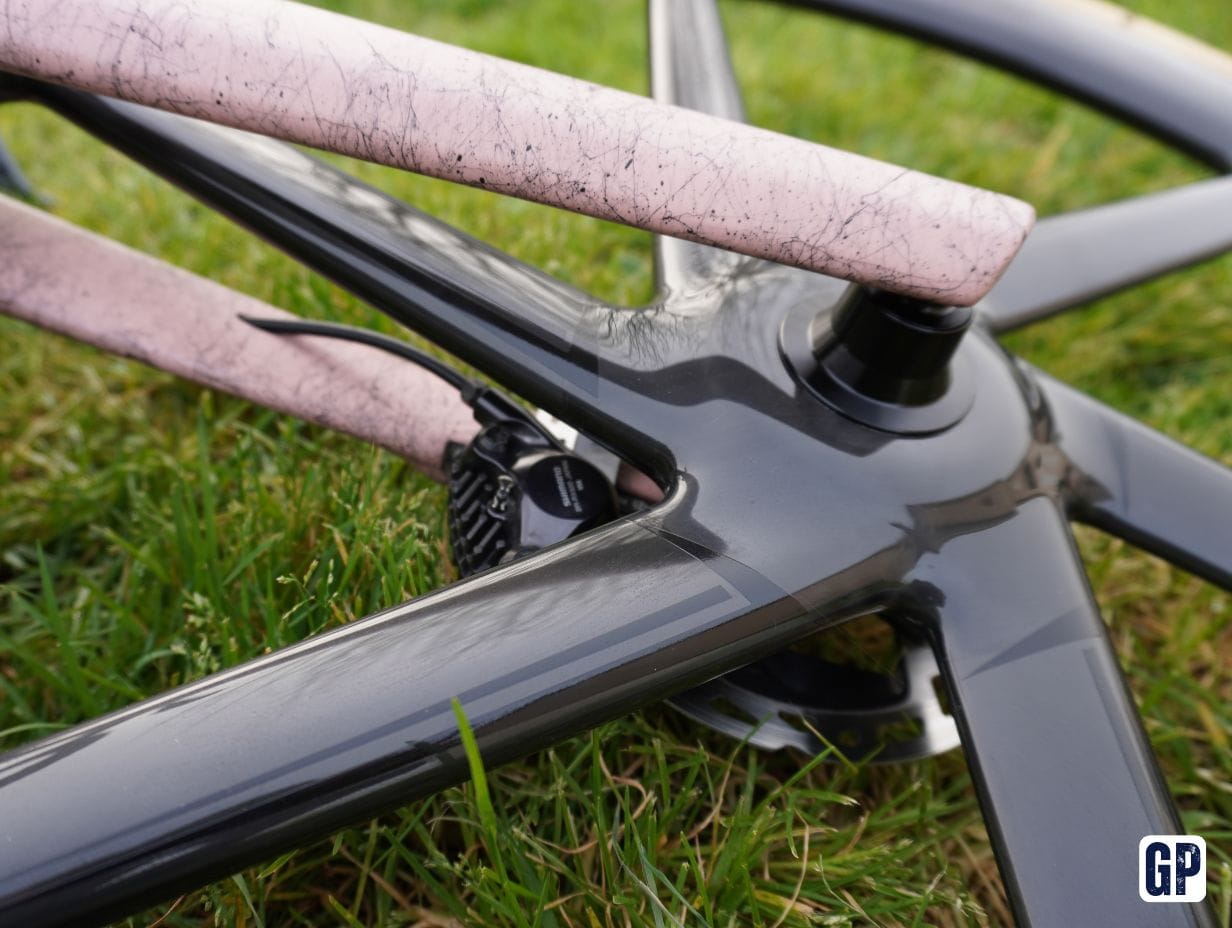
The carbon work is genuinely impressive. Elite Wheels uses a finish called Glossy Raw Carbon here, which simply consists of applying a clear coat over raw carbon. The result: you can see the carbon layup right under the surface.
And honestly, in hand, it’s a handsome piece of kit.
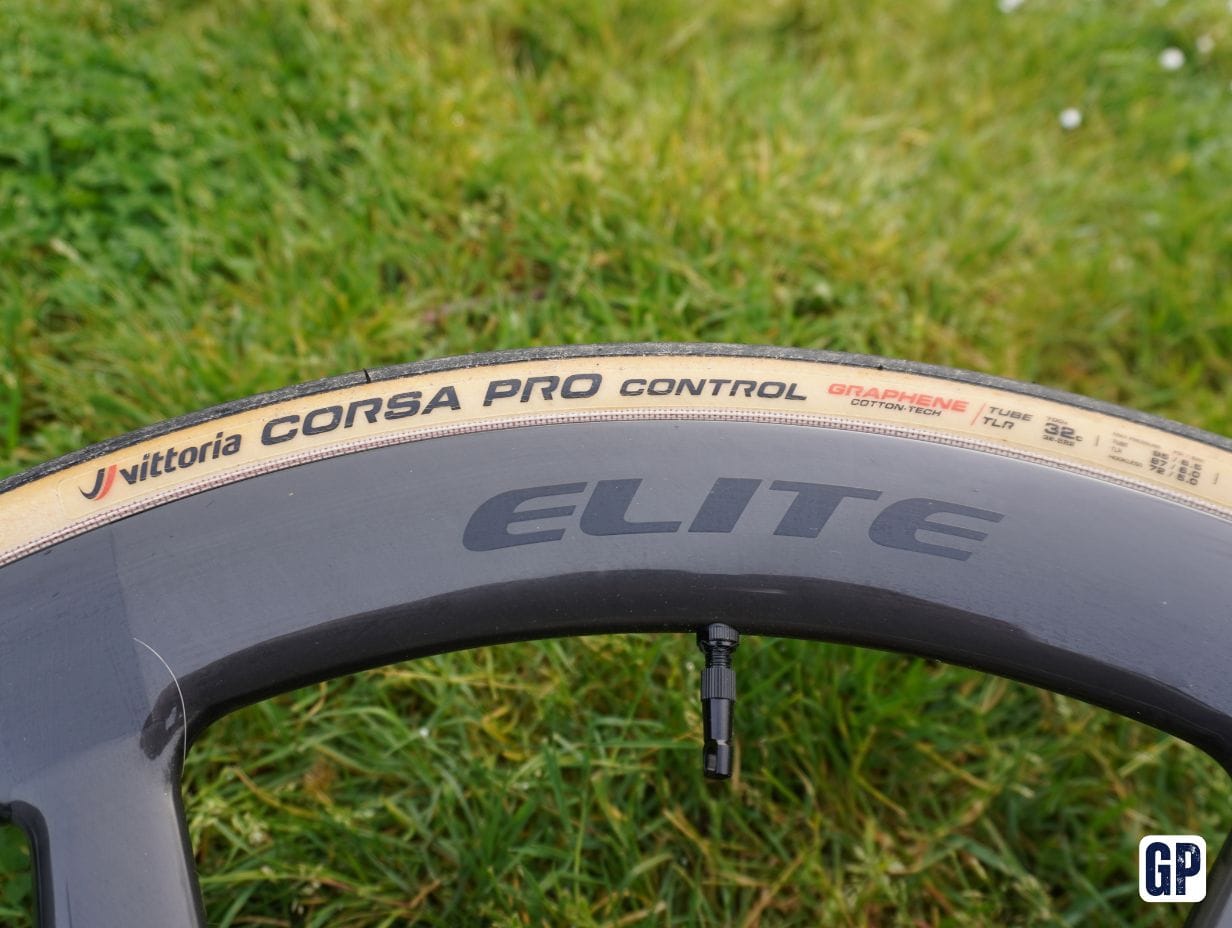
Unlike many modern wheels, there’s no rim tape at all. You can see the internal carbon structure directly. This isn’t just aesthetic – it also simplifies the tubeless setup.
The rim has a 50 mm depth, which is a sensible profile for fast road, triathlon or time trial use. It’s clearly a product designed to hold speed rather than to climb.
As for dimensions, internal width is 21 mm and external is 28 mm.
This internal width is fairly standard, but it doesn’t let you fully exploit very wide tyres as seen on some modern wheels.
Personally, I ran 32 mm tyres, which works very well. But you’re at the upper limit if you want to keep handling consistent.
At the centre is a proprietary Elite Wheels hub, machined from 7075 aluminium, with a 50-tooth ratchet delivering a 7.2° engagement angle. The wheels also use S&S ceramic bearings, said to reduce friction.
On paper, it’s very solid.
Easy to set up, but with character
Tubeless setup is simple and quick.
Valves are included, it seals quickly, and the tyres seat and pop into place fairly easily. Nothing particular to report on that front.
However, there’s one detail that can clearly divide opinions: the freehub noise.
If you like quiet bikes, you can almost stop reading here.
The hub is loud. Very loud, in fact. The video I shot exaggerates it a bit, but in reality the noise is still very present.
Personally, I think it fits the exuberant spirit of these wheels quite well. But I completely understand that some riders will hate it.
It’s exactly the kind of detail you want to know before buying.
Wheels that love speed
With six carbon spokes, I was expecting massive lateral stiffness.
And in the end… not that much.
These wheels are stiff, yes, but less impressive than some modern carbon-spoked wheels. For example, I found the Elite Drive stiffer laterally.
Weight isn’t their strong suit either. The pair is claimed at 1605 g, which is reasonable for a six-spoke wheelset, but it’s a long way from today’s top-end road wheels.
On the road, their behaviour is quite distinctive.
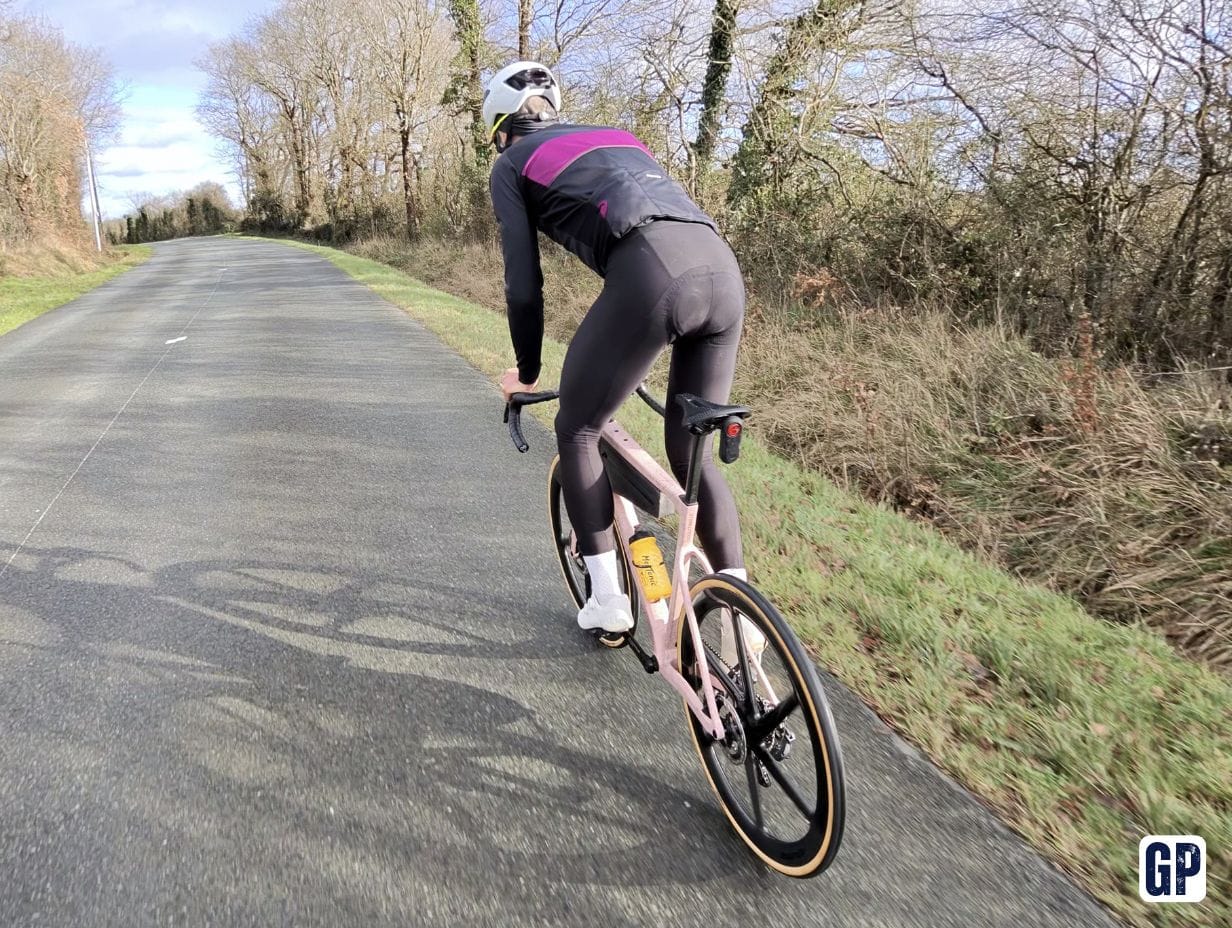
At low speed, on climbs, during accelerations, or when riding under 30 km/h, they clearly require more inertia than conventional wheels.
Once up to speed, though, it’s another story.
At 35, 40 or even 45 km/h, they really start to show their value. The wheel holds speed easily, and the aerodynamic effect becomes noticeable.
This is precisely why I think these wheels are far more relevant for triathlon or time trial than for all-round road use.
Another important point: crosswind sensitivity.
It’s more pronounced than on some modern, wind-tunnel-optimised wheels. The spokes obviously play a role, but I also think the relatively narrow internal width (21 mm) limits aerodynamic stability with wider tyres.
It’s not dangerous, but you clearly feel it in some gusts.
A choice driven more by looks than reason
If your goal is to have the best carbon wheelset possible, you’ll find better.
Even at Elitewheels.
Some of their carbon-spoked wheels are more:
- stiff,
- light,
- responsive,
- versatile.
The Velo Six II don’t really aim to beat those models on pure performance.
They play a different game.
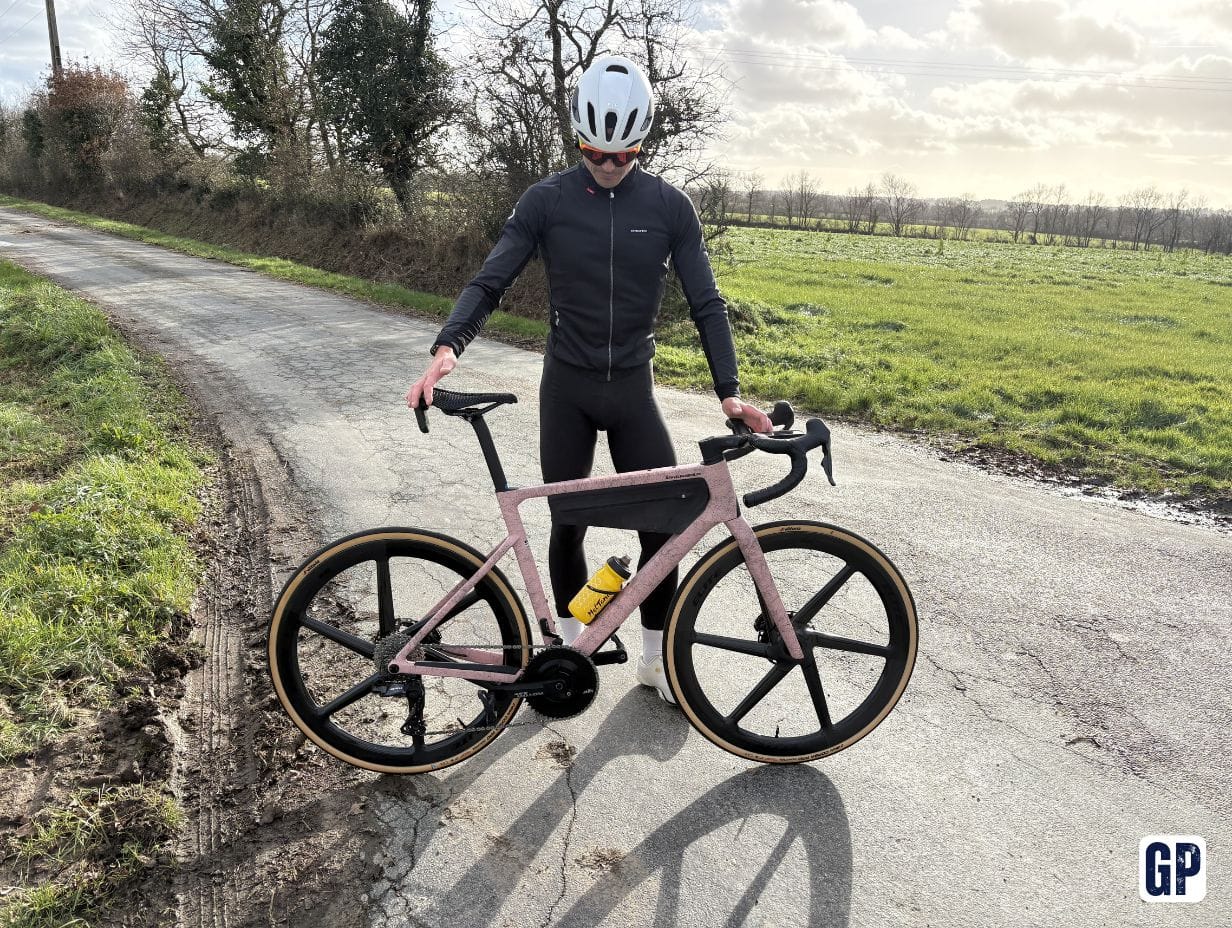
They offer a very distinctive look, especially on this Rose Backroad FF, behaviour that favours cruising speed, and a relatively contained price for this kind of one-piece construction.
And in this niche of six-spoke road wheels, the offering is still fairly limited.