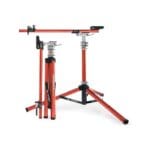
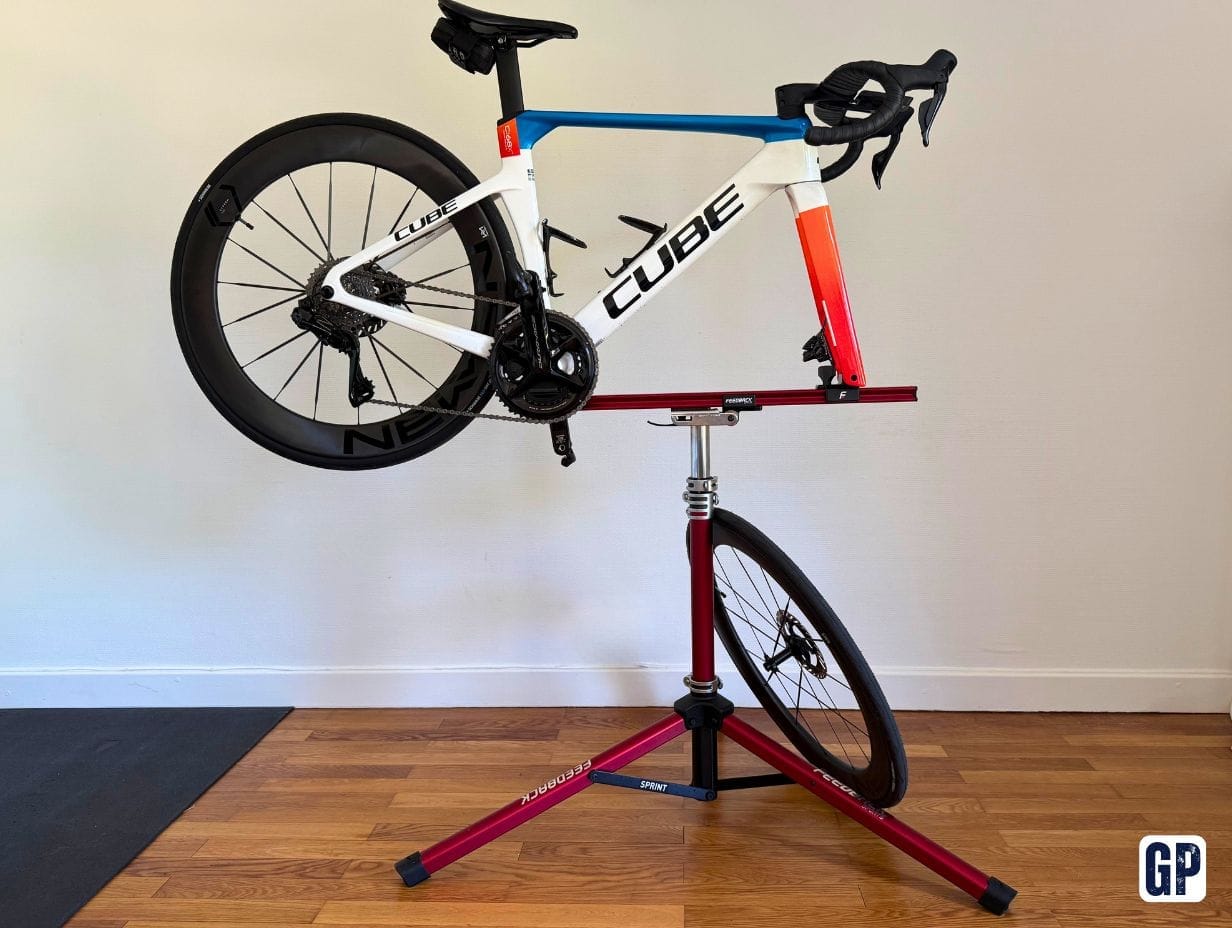

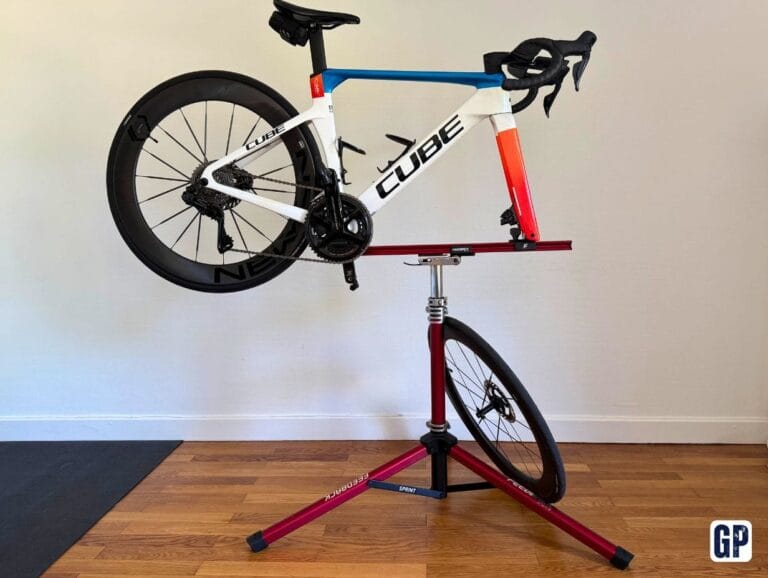
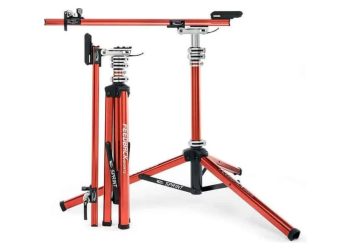
I’ve been using the Feedback Sports Sprint workstand for several months now. It’s not a conventional workstand with a clamp on the seatpost, but a support like those used by WorldTour teams, where the bike is held by the front axle once the wheel is removed.
This changes a lot: the bike is at a good working height, more stable, and above all it can rotate freely through 360 degrees. For washing your bike or doing quick maintenance, it’s really pleasant. For everything? No. And that’s where this stand becomes interesting to analyse.
Strengths:
- Compact when folded
- More stable hold than a standard stand
- Very smooth 360-degree rotation
- Good build quality and finish
Could be better
- Ergonomics (deployment, latch, tool tray...)
- Top rail that retains water when washing
- Not universal for bike maintenance
A workstand designed as a pro tool
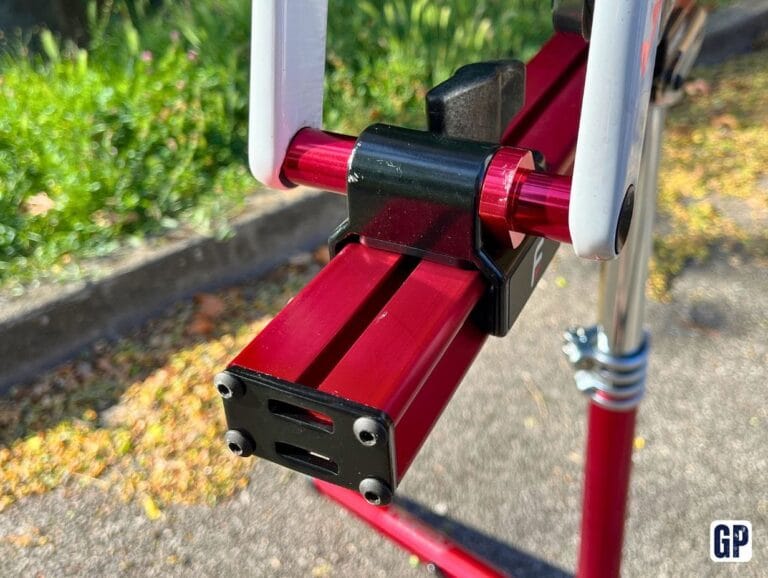
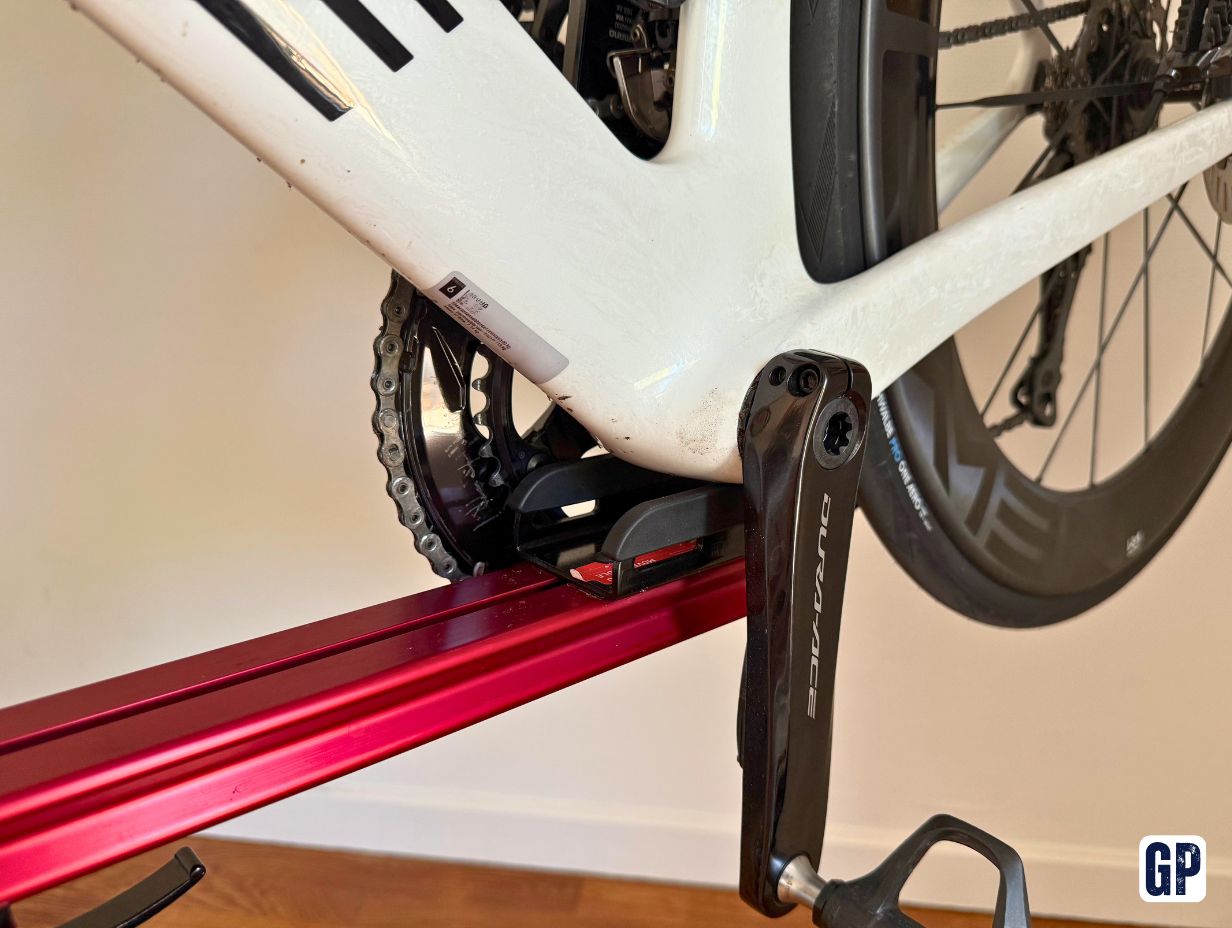
The Sprint belongs to that family of stands you often see around pro team trucks: the bike rests at the bottom bracket on a rubberised pad, while the fork is fixed via the front axle.
You therefore need to remove the front wheel to install the bike. That isn’t a drawback in itself; it’s just a different way of using a stand that I personally prefer, since the bike’s stability is greatly improved.
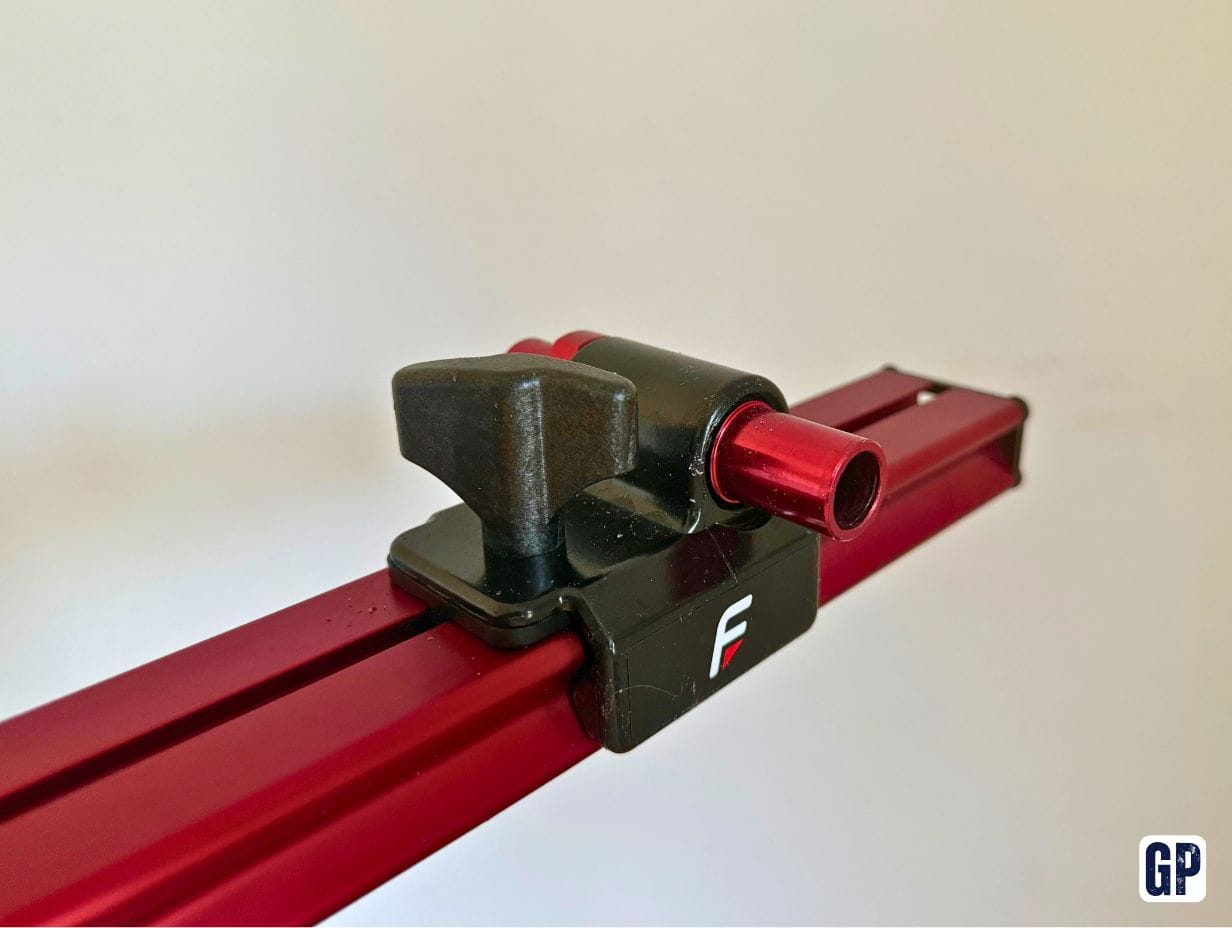
Feedback Sports states broad compatibility: quick-release (9×100, 130 and 135 mm), thru-axles (12×100, 142 and 148 mm as well as 15×100 and 110 mm). The adapters are supplied for the main standards, which avoids turning the first use into a hunt for a missing part.
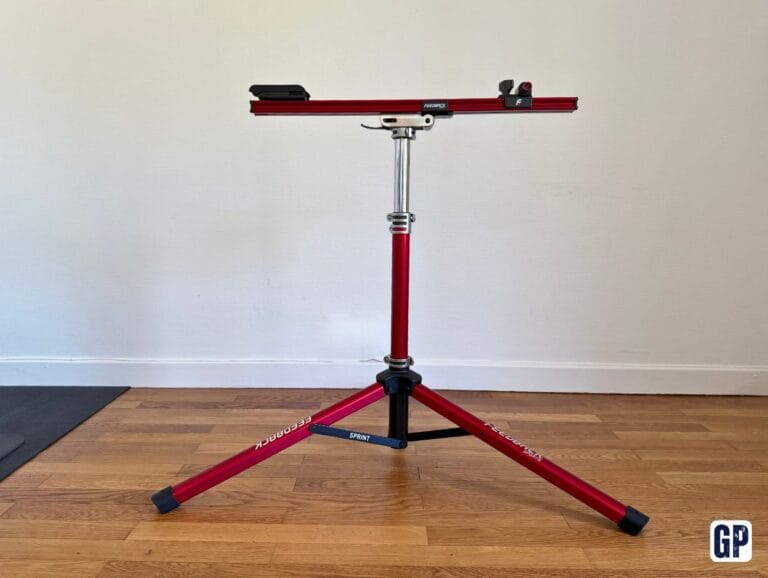
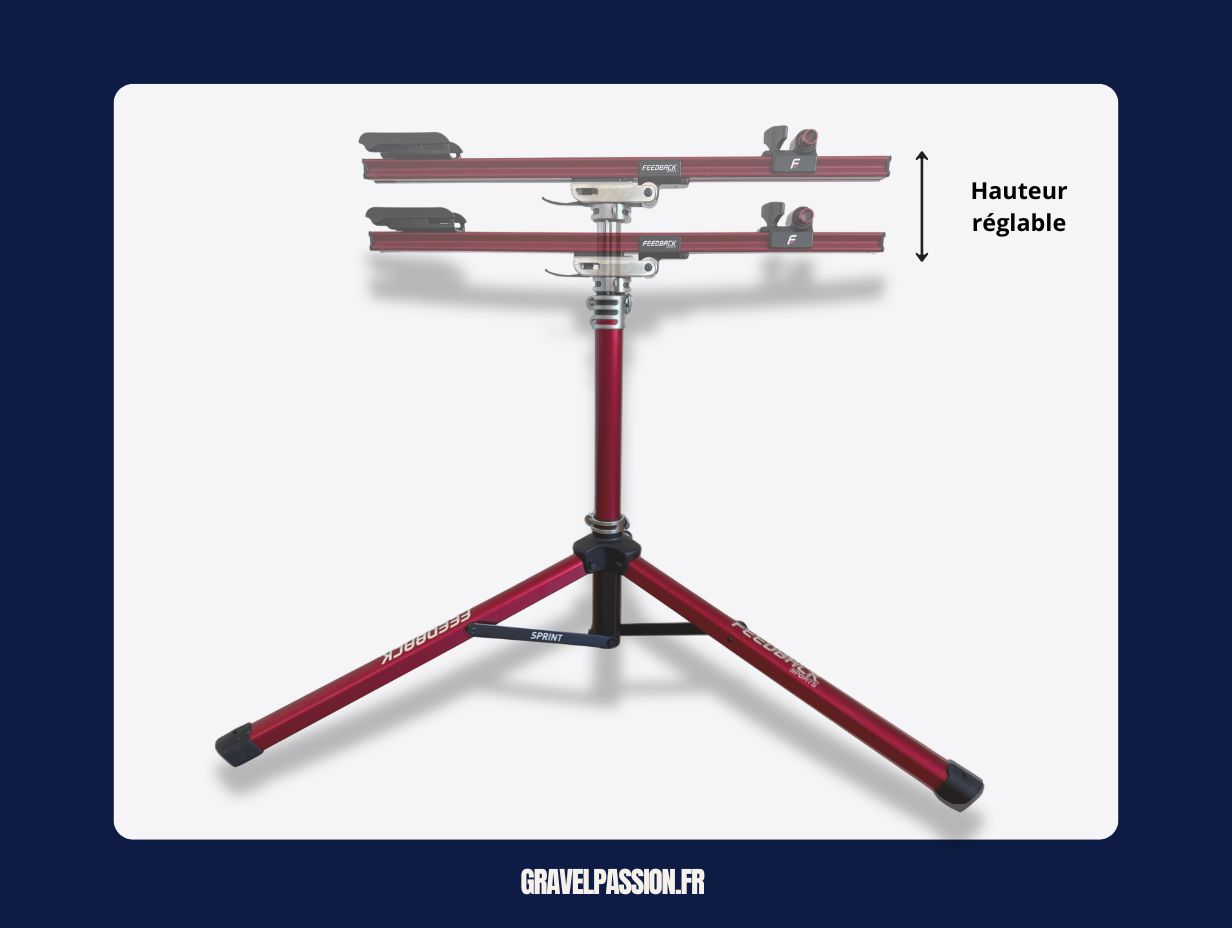
The part that holds the bike slides along the top rail. This is what lets you adjust the position to the frame size, so the bottom bracket sits properly on the pad and the bike is well balanced.
Compact, solid, with a very tidy finish
The Sprint weighs 5.4 kg. It’s not ultra light, but that weight also contributes to its stability once the bike is installed.
Open, its footprint is 120 x 120 cm, yet still less than a classic clamp-style tripod. Cyclists living in small spaces will appreciate it 😊
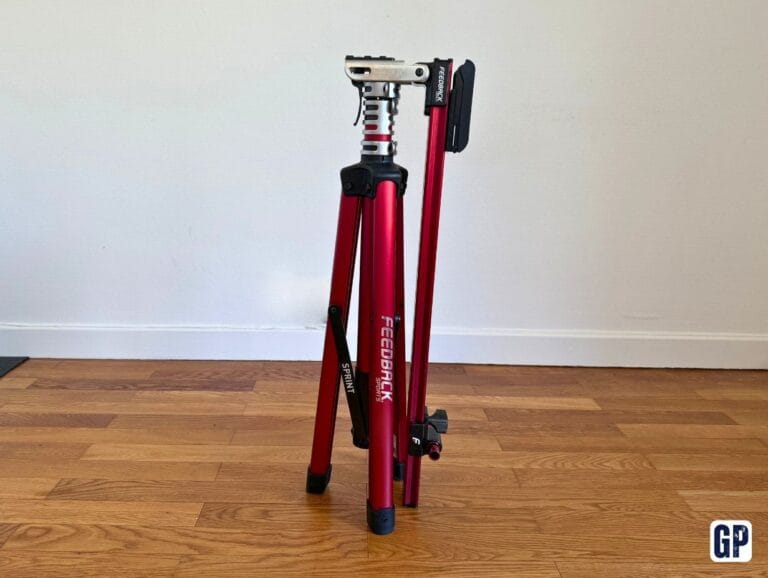
Folded, it becomes noticeably more compact than a standard tripod at 76 cm tall, and about 20 cm wide.
Its anodised aluminium construction makes a good impression and seems durable. After several bike washes, I haven’t noticed any rust or worrying ageing. The rubber foot caps are also a real plus: they grip well, don’t mark the floor and feel less DIY than some entry-level stands.
Deploying it doesn't feel very natural
The Sprint folds easily. There’s a piece designed to place your hand on and bring the tripod legs in smoothly. In that direction, the movement is clear.
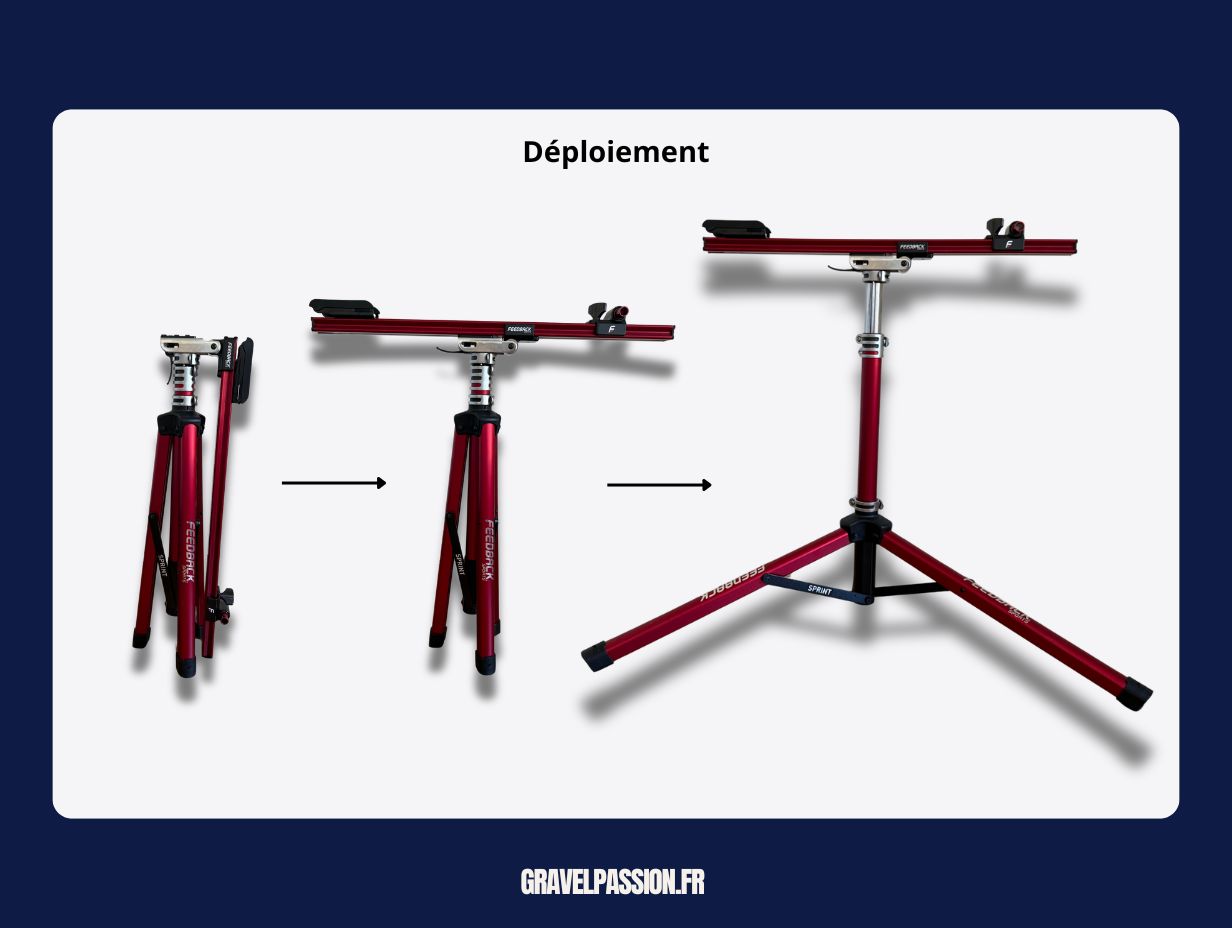
In the other direction, it’s less obvious. At first I really felt as if I’d forgotten to loosen something. The tripod was simply stiff to open. Over time, it has loosened up a little, fortunately.
It’s missing a proper grip, a handle, something that lets you splay the legs easily without forcing. It’s not a deal-breaker, but at this price point, deployment ergonomics should be more intuitive.
Another small constraint: fully folded, the stand doesn’t stand upright very well. You have to leave it slightly open so it rests properly on its three points. For storage it’s not dramatic, but it makes day-to-day use a little less seamless.
A storage bag, unfortunately optional
Feedback Sports offers a carry bag, priced at €50. Technically it’s an accessory. But for home users, in practice it feels more like a missing piece.
Indeed, the Sprint has no dedicated carry handle. You end up grabbing it at the top, or however you can, sometimes with the risk of pinching your fingers. The horizontal moving section doesn’t lock along the stand once folded. It moves, knocks against the folded legs, and it can hit the floor when you put it down.
I actually damaged one end of this moving section quite quickly while handling the stand…
At €390 for the stand, I would have liked the bag to be included as standard. Not to travel with, but to store it neatly and carry it down to the garage without wrestling with the moving part.
The rail latch: the real ergonomic weak point
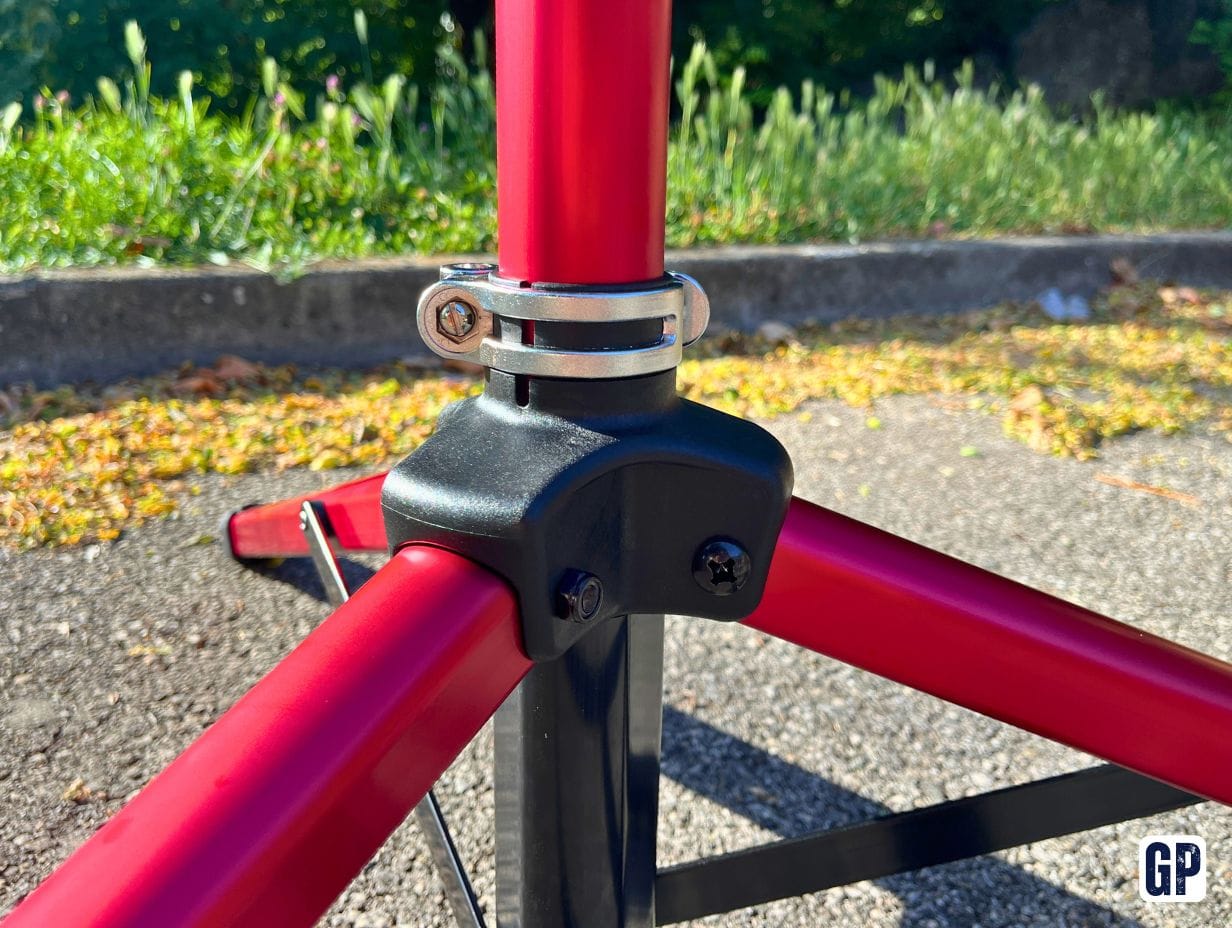
To put the Sprint in working position, you raise the horizontal section and lock it with a small screw head that slides into the rail, then close a latch.
The first time, it isn’t intuitive. Not really complicated, but not obvious either. You have to figure out where to press, how to centre the piece, then how to lock it. And sometimes, depending on the stand’s position, this little latch comes up against a clamping collar. You then have to rotate the assembly to regain access.
This is the step I found most bothersome with this product. The Sprint gives an impression of seriousness, precision, a professional tool. And in the middle of all that, this latch isn’t ergonomic enough for an operation you repeat with every use.
A better-shaped handle, or more obvious guidance, would change the experience a lot.
A practical top rail, but not ideal for washing
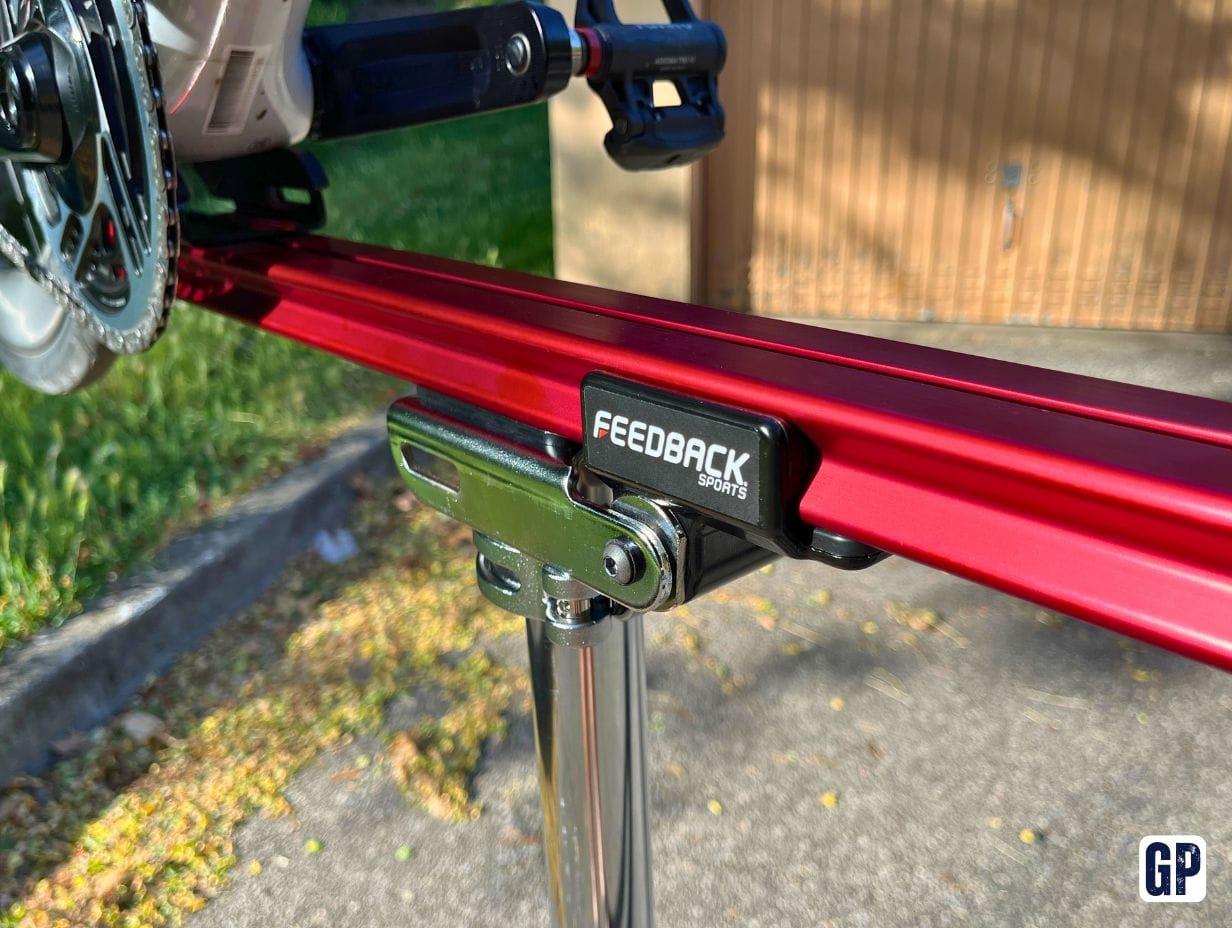
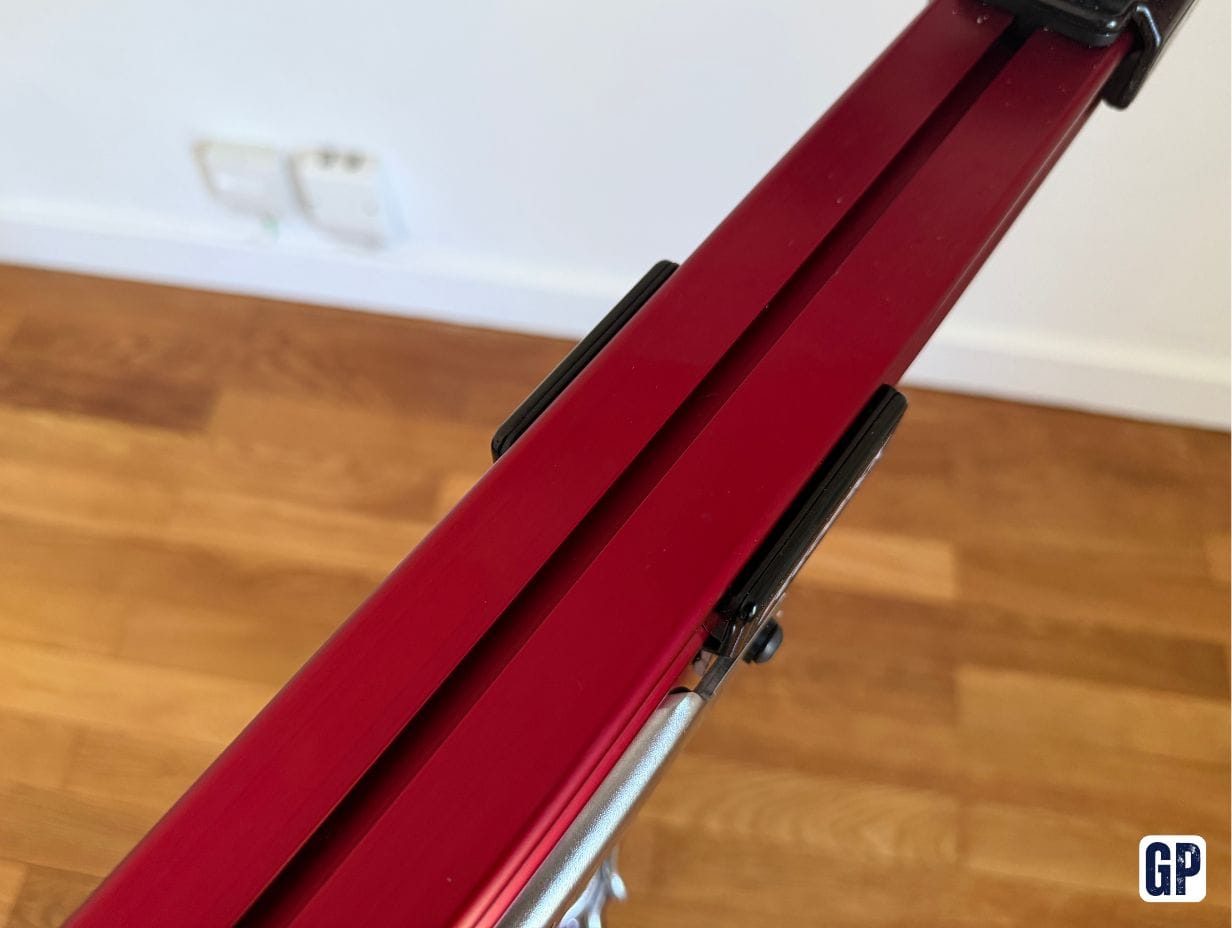
The top rail is hollow. That’s relevant for sliding the support and adjusting the bike’s position. But for a stand also intended for washing, this shape creates a very simple problem: water accumulates inside.
After a wash, you have to try to wipe the inside of the rail. It’s not very accessible, it holds moisture and dirt ends up lodging there. I didn’t observe any corrosion during my test, but the use isn’t as clean as it could be.
A rail of a different shape, or less open, would probably have avoided this accumulation. It’s a design remark rather than pure performance, but on a product designed to be regularly wet, it seems important.
For washing a bike, the Sprint really changes the routine
Washing is where the Feedback Sports Sprint convinced me the most.
The benefit is immediate: you can reach hidden areas more easily, you work at height, you rotate the bike without moving around it. The 360-degree rotation is smooth and makes cleaning genuinely more efficient.
You can keep the rear wheel to clean the drivetrain while spinning it, or remove both wheels and use a chain keeper to work more cleanly. For degreasing, rinsing, checking, wiping, the bike is well presented and you tire less.
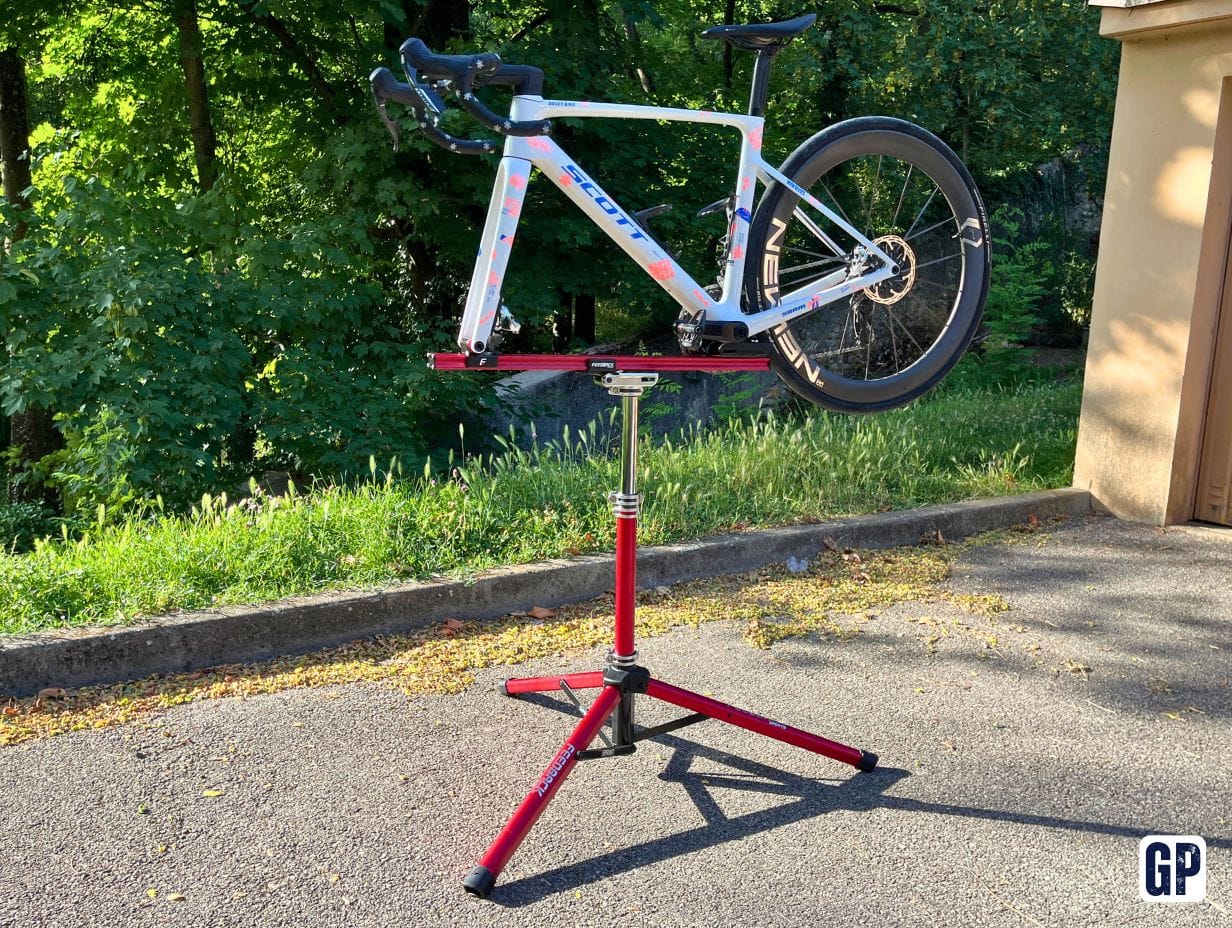
That’s where the Sprint makes its format most compelling. It doesn’t make washing any more glamorous, but it makes it a lot less of a chore.
In routine maintenance, it's very pleasant
To adjust a handlebar, tweak the hoods, swap a stem or do a bleed, holding the bike by the fork is interesting. The bike stays properly in place, it doesn’t tip like on some clamp stands, and you keep a comfortable, adjustable working height.
It does miss a tool tray. Once you start working, you quickly need to put down a key, a bolt, a bit, a cloth. On this stand, nothing is provided. Yet there would be space on the top rail, under the bike’s down tube.
This isn’t a minor detail if you come from a standard stand with a tray. You get used to having everything to hand. Here, you have to plan a table, a workbench or put tools on the floor…
A few limitations for maintenance
The Sprint doesn’t let you do everything. That’s important to say, because its very professional format could suggest it totally replaces a classic stand.
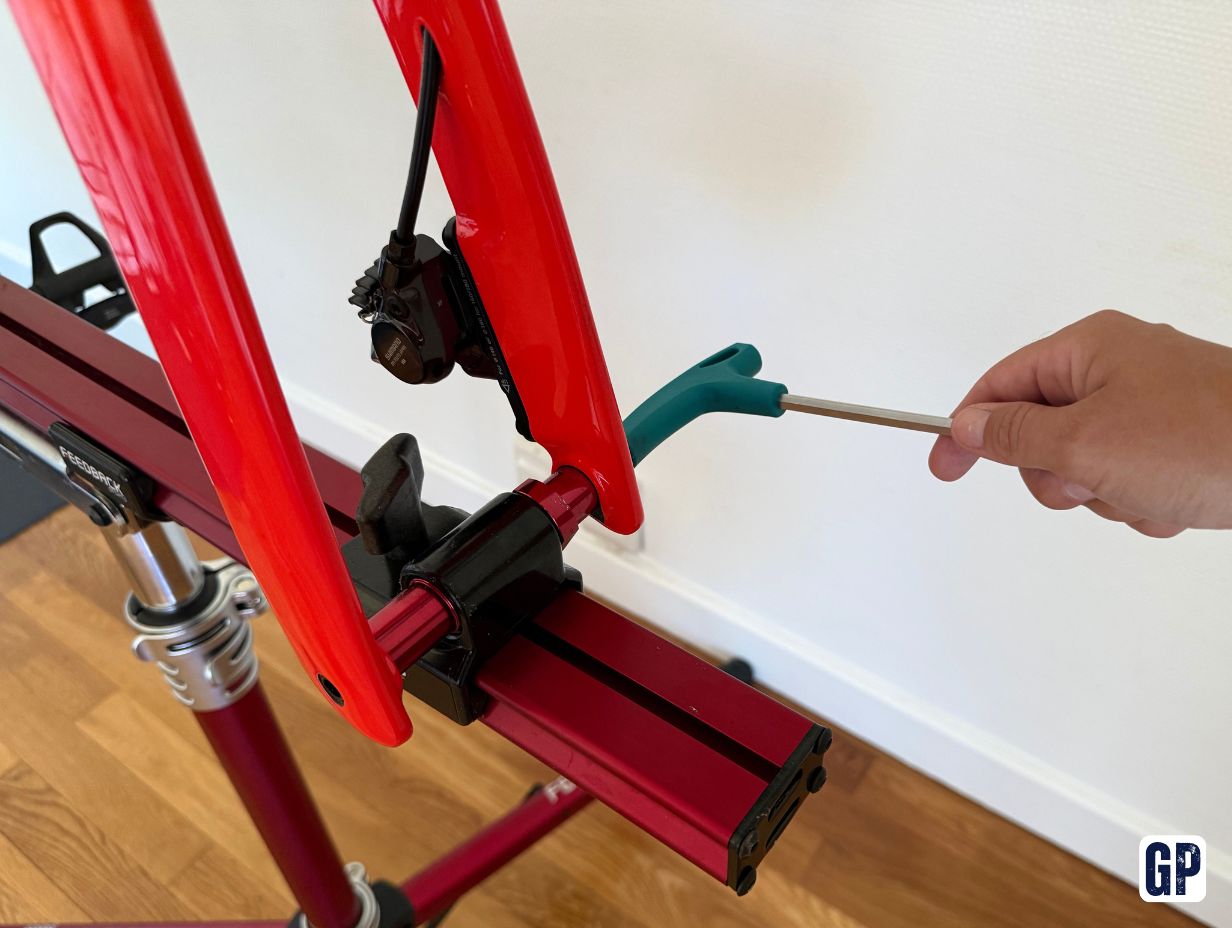
For working on the front brake, the fork-mounted setup becomes a limitation. For example, with the tool I use to push the pistons back, access is obstructed by the holding system. Same for adjusting a front caliper: if the front wheel isn’t in place and can’t spin, it’s impossible to check rotor alignment properly.
I also wanted to check for play at the bottom bracket. Again, this stand wasn’t the ideal tool. There’s too much movement in the whole assembly, so the stand moves before you can feel the play you’re looking for on the bike.
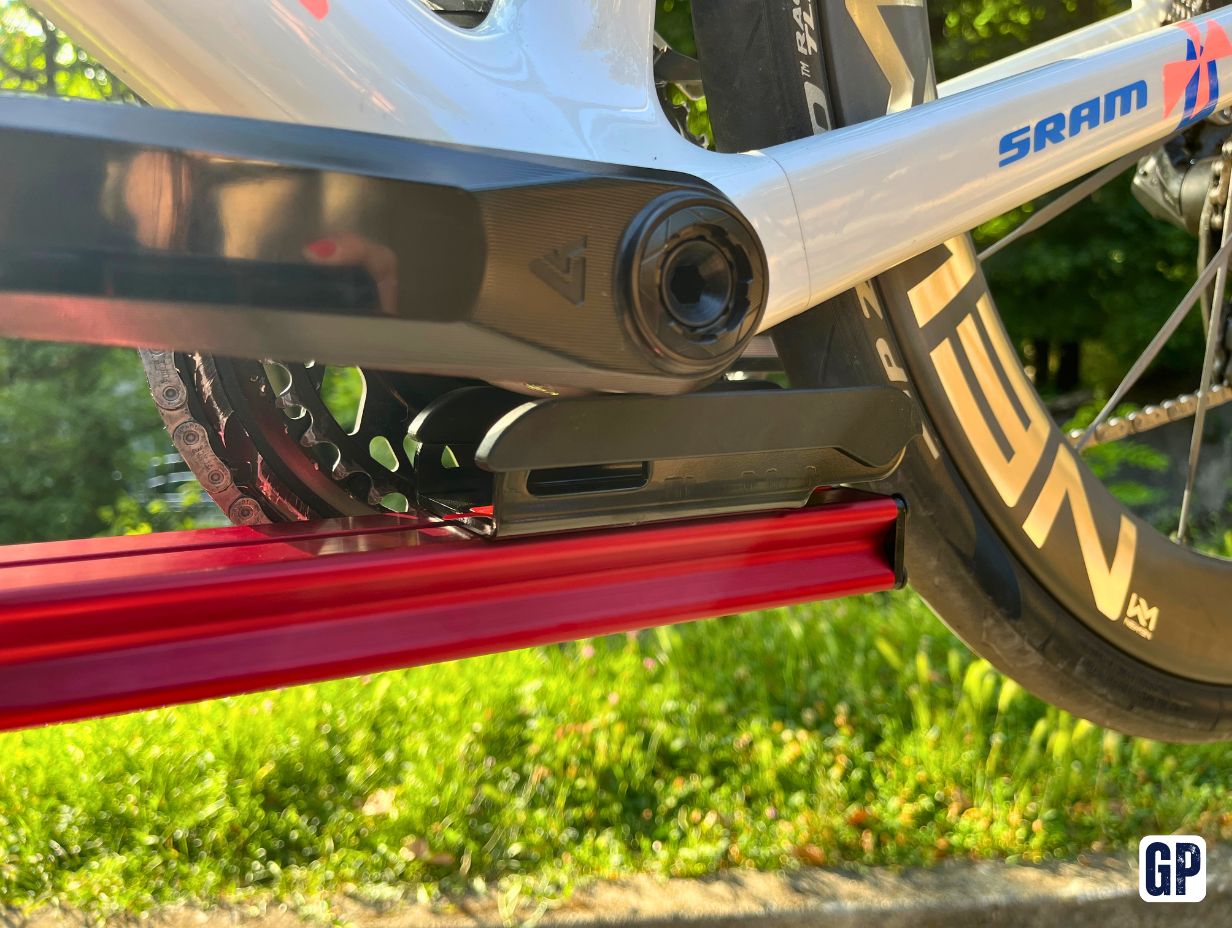
It’s not that the Sprint is unstable. On the contrary, to hold a bike, wash it and rotate it, it inspires confidence. But for diagnosing potential play, the way the bike is fixed lacks a bit of support.
The Sprint has almost replaced my conventional workstand
Since I’ve been using this type of stand, my classic clamp workstand (which holds the bike by the seatpost) hardly gets used. I keep it only for a few very specific jobs on the front brake that I can’t do with the Sprint (aligning the caliper, working on the rotor or pushing the pistons back).
The Sprint has the edge if you wash your bikes often, or if you want a more compact, more stable platform for common maintenance and adjustments.
The price is justified, but not without reservations
At €390, the Feedback Sports Sprint is an expensive stand. It sits around the average among stands of this type, but it remains clearly more costly than a standard clamp workstand.
The overall quality, compactness, the included adapters, smooth rotation and stability when washing are genuine positives.
But at this price, some omissions weigh against it. The bag sold separately, the lack of a handle, the imperfect latch, the rail that retains water and the lack of a tool tray are all small irritations. Taken separately, none is a deal-breaker. Together, they remind you that the Sprint could be even better with a few fairly simple ergonomic choices.
Who is the Feedback Sports Sprint really for?
I’d especially recommend it to people who wash their bikes often, do some of their own maintenance and are frustrated by the lack of stability of a standard stand. For a road bike, gravel bike, cyclocross or MTB, the format makes a lot of sense.
Feedback Sports states an ideal use up to 18 kg (with a maximum capacity of 38.5 kg), which covers many non-electric bikes and some e-bikes.
The Sprint has genuinely changed my habits. I wash my bikes more easily, I work more cleanly, and I understand why this format is appreciated in a racing environment. But it’s not a magic stand. It’s an excellent washing and quick-maintenance support, with ergonomics that could still be improved for a €390 product.