
Galfer is far from an unknown name. It already has a solid reputation in motorbikes and MTB – two arenas where braking is judged quickly: power, heat resistance, noise, consistency. In road and gravel cycling, its name comes up more and more often whenever you’re looking for better braking or to save weight on your bike.
I fitted the Galfer Wave rotors with a very specific expectation: to solve a vibration issue on my carbon wheels, without losing braking quality. And if possible, gain a bit more bite in the process.
Strengths:
- Immediate elimination of vibrations in the tested setup
- More bite without a harsh feel
- Very light rotors
- Simple, quick bedding-in with organic pads
Could be better
- One rotor arrived warped during the test
- Loud in the rain
Starting point: an annoying resonance with my carbon wheels
Before this setup, I was using SRAM semi-floating rotors on my carbon wheels. When I used the front brake, the bike started to vibrate. Not just a faint noise: a real resonance, very noticeable through the cockpit.
This can happen with very stiff carbon wheels, especially when the bike itself transmits a lot of vibration. We actually mentioned it in the Newmen Streem Allround VONOA review, where the combination of stiff wheels, a stiff bike, and semi-floating rotors can be an issue.
Quick mechanical note: what is a semi-floating rotor? 💡
A semi-floating rotor consists of two parts:
- the steel braking track (on which the pads rub when braking)
- and the central “spider” in aluminium (the part that sits on the hub).
These two parts are assembled while allowing a slight freedom of movement to the braking track. This construction lets the track expand under the heat generated by braking without transmitting all the stresses to the spider – and therefore helps to limit thermal deformation of the rotor.
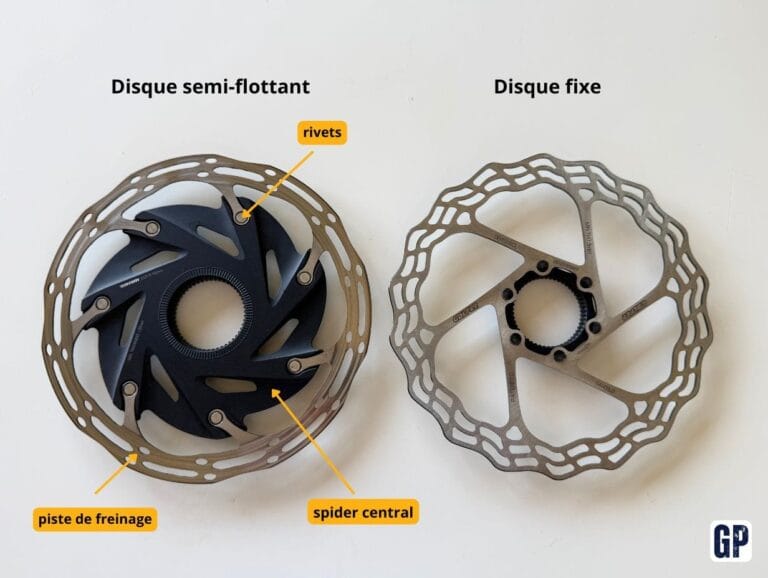
The Galfer rotors tested here are fixed rotors. That means there is no interface between the braking track and a separate central spider, and no freedom is left to the braking track to mitigate expansion.
That may seem less sophisticated than a semi-floating rotor, but in my case, that was precisely the point.
Unboxing: simple, clean, but one rotor arrived warped
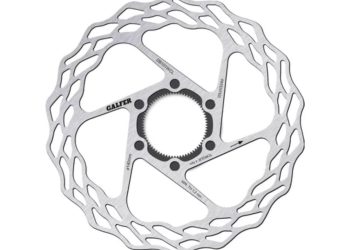
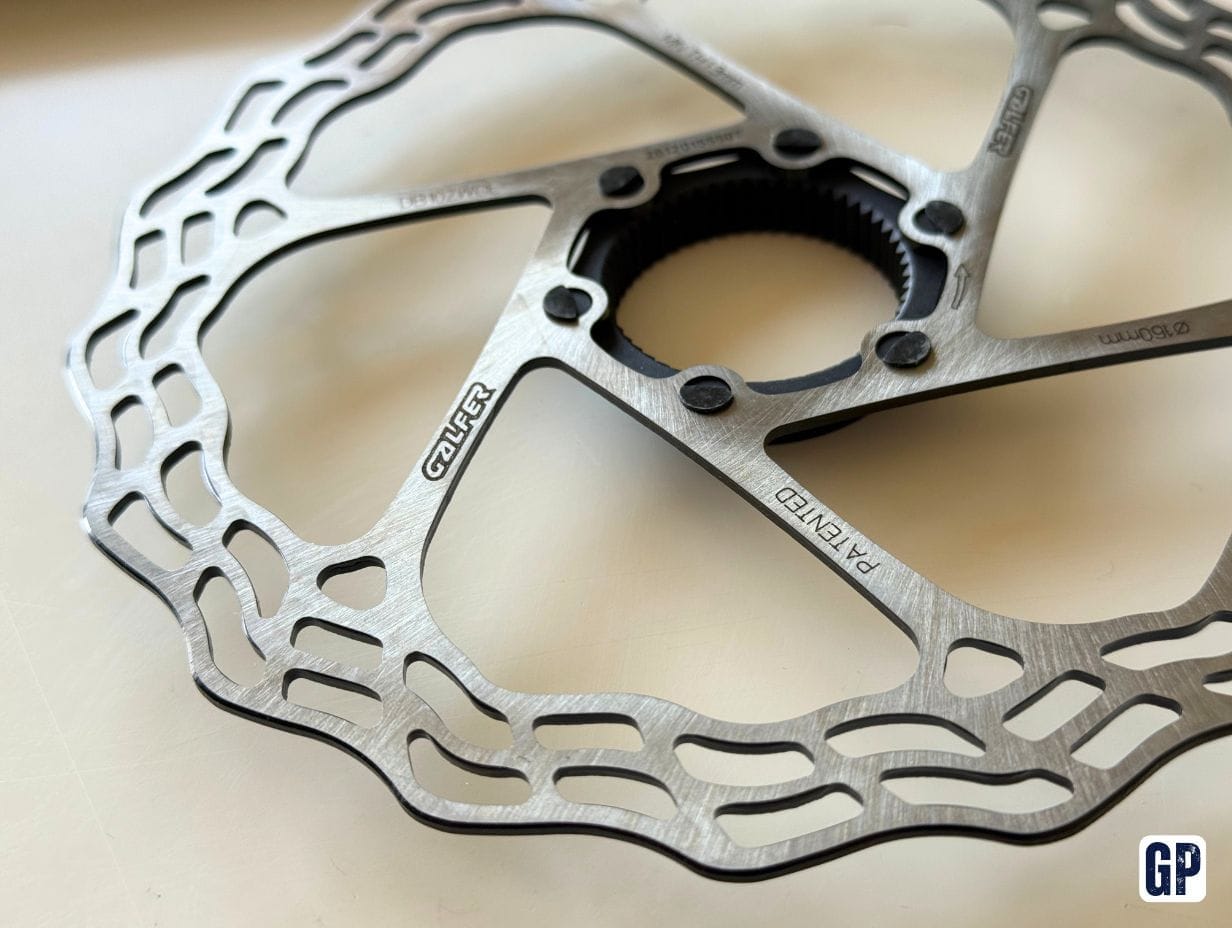
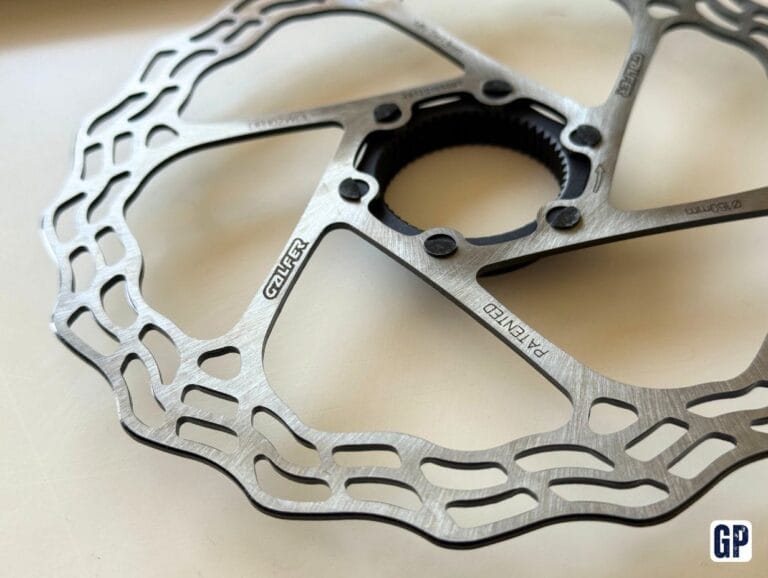
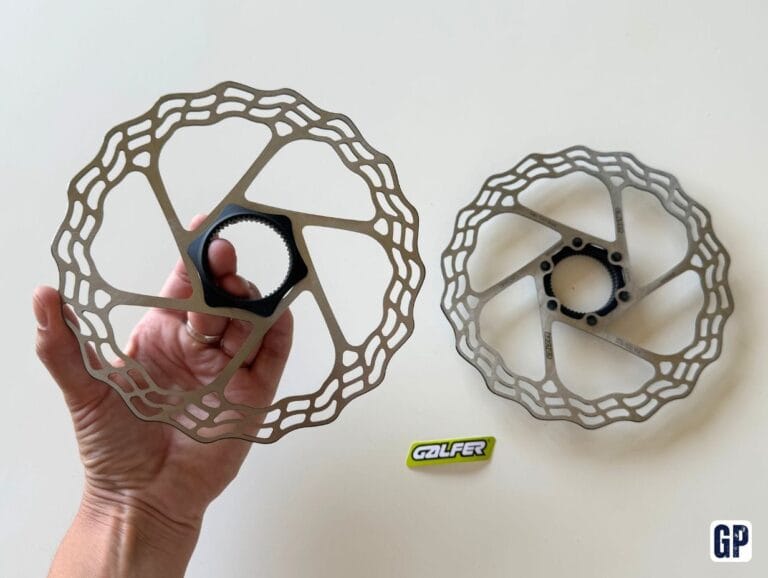
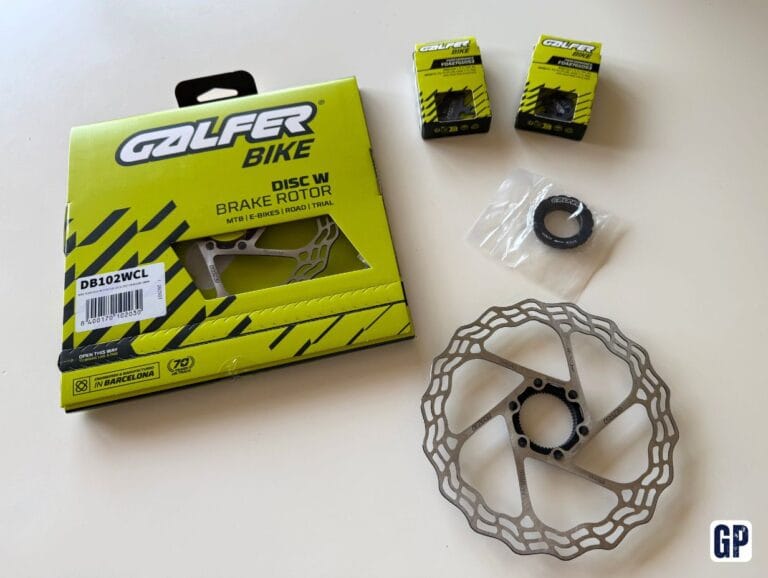
The rotors arrive in a cardboard package, with a Galfer lockring and a small sticker. Nothing spectacular, but the whole thing feels solid. The Wave design is instantly recognisable: you spot a Galfer rotor on a bike straight away.
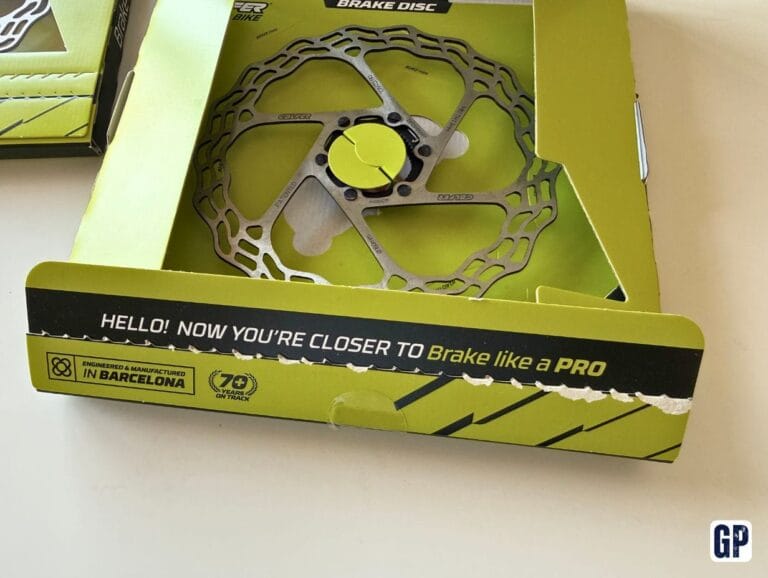
The downside came even before the first brake application: one of the two rotors I received was slightly warped. It’s a shame, because it’s not just a poor first impression. Several user reports also mention Galfer rotors that arrive warped or become warped fairly easily.
In my case, the rotor could be trued, but it’s a limitation to keep in mind. When you buy a rotor, you expect something ready to fit cleanly, not a bit of work with spanners before the first ride.
Center-Lock installation: watch the supplied lockring
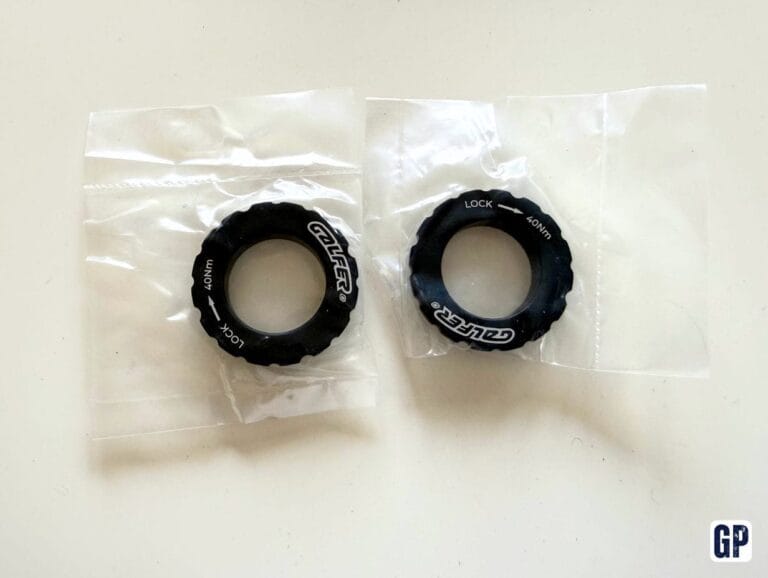
The rotors tested use the so-called “Center-Lock” interface, but they also exist in 6-bolt. Galfer also supplies an external lockring, which is not always the case when you buy a rotor.
Be aware, the external lockring doesn’t tighten with the same tool as an internal lockring (cassette-type tool). You need a dedicated tool.
I didn’t have the external lockring tool, so I replaced the Galfer lockrings with internal ones.
Changing a rotor is not just bolting on a new part
When you change rotors, you need to start clean. For this review I deliberately kept my usual organic pads, to better isolate the sensations coming from the rotor and not mix things up with a compound change.
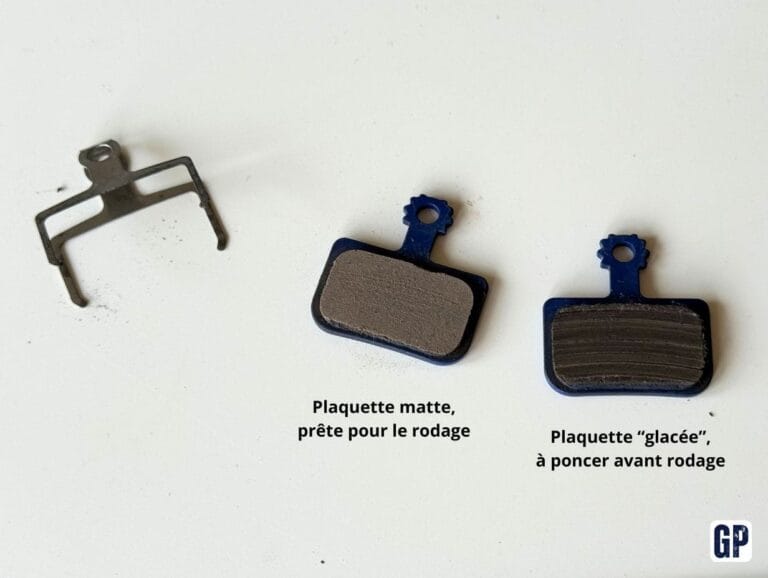
Before bedding in the new rotors, it’s best to lightly sand the pads. Not to make them like new, of course, but to break any glazed surface and promote a clean contact with the new braking track.
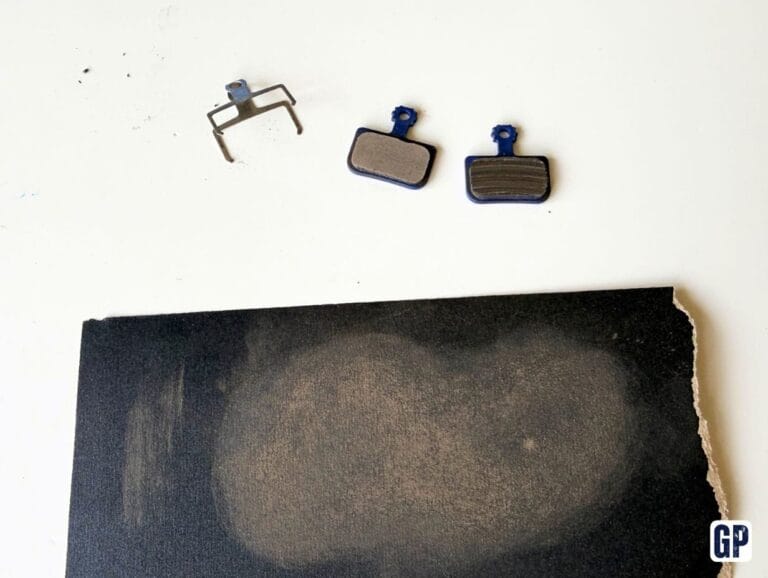
The method I use is simple: suitable abrasive paper, pad laid perfectly flat, and figure-of-eight movements. That avoids sanding at an angle (which can happen quickly when you only do back-and-forths or circles).
As soon as the compound surface is matt, that’s enough. Then clean with isopropyl alcohol (or disc-brake cleaner), dry with a perfectly clean cloth, then reassemble.
By the way, to go further on pad wear and condition, our guide on when to change your disc-brake pads remains a good starting point.
Bedding-in simpler than expected
Bedding-in went well. Even better than I expected. Compared with my previous SRAM rotors, I found this phase quicker. Braking came quite naturally, without a long vague period where you wonder if the pads are really biting.
I can’t say precisely what it’s down to. Surface, rotor pattern, the steel used, compatibility with my organic pads… probably a mix of several things. But in use, getting them to bed in was simpler.
The real change: the vibrations disappeared immediately
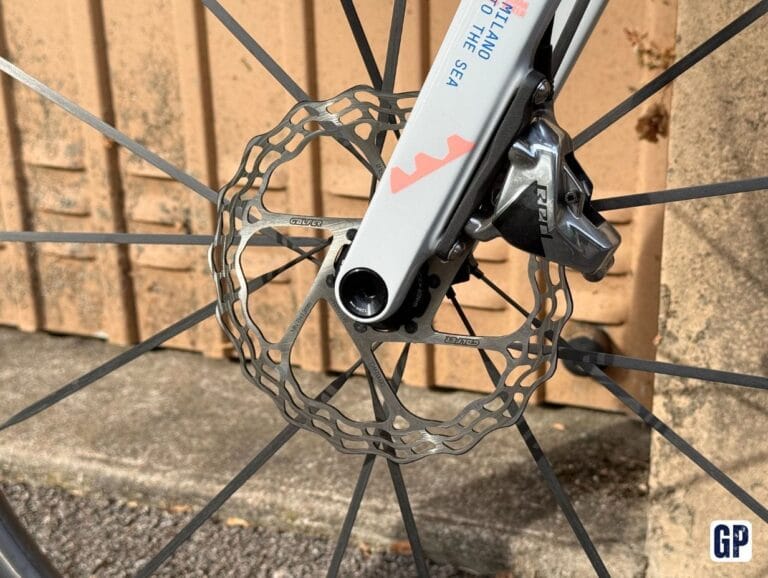
This is the clearest point of the review. From the first lever pulls, the resonance from the front brake disappeared. No more parasitic vibration in the bike, no more of that unpleasant feeling of the whole setup starting to resonate just when you want to control your speed.
Switching to a fixed rotor solved my problem. Instantly. And that’s probably the strongest argument for these Galfer rotors in a setup like mine: stiff carbon wheels, carbon spokes, a bike that transmits a lot of vibration.
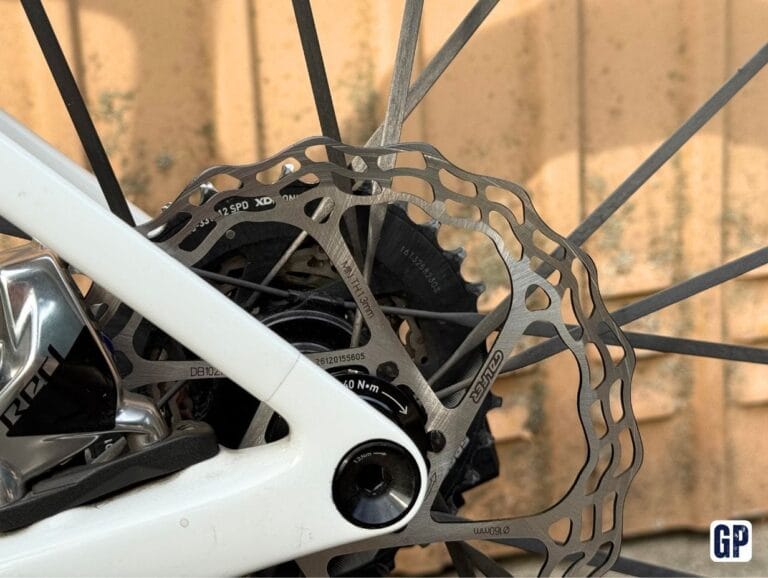
I’d be cautious before making it a universal rule. Not all brake noises come from floating rotors, and not all vibrations are solved with a fixed rotor. But if your issue looks like this one, the change can really transform the bike.
Braking: more bite, without becoming harsh
The feel at the lever is quite interesting. I wouldn’t say the braking becomes more immediate in the sense of a drier or more violent initial bite. It’s not that. I felt more bite instead, with a brake that grabs better and needs less insistence to slow hard.
With organic pads, the choice remains quite balanced: good feel, low noise in the dry, progressive braking. That was exactly the setup I wanted to test, because it keeps the system pleasant day to day.
In the dry, the brakes stayed silent. That’s a real plus, especially after a rotor change where some setups can be annoying for the first few kilometres.
In the rain, it’s a different story. The Galfers get noisy, and noisier than my SRAM rotors in the same conditions. Nothing abnormal for disc brakes in the wet, but the noise level stood out to me. If you ride often in the rain, factor it in.
On descents, no perceptible fade
I had read fairly cautious feedback on the Galfers, notably about a supposed tendency to warp when they heat up on long descents. That was a point I wanted to watch.
I ride mountain-pass descents every week. Not interminable 20 km Alpine drops, but enough to stress the brakes repeatedly. In these conditions, I didn’t experience any loss of performance.
If anything, the opposite compared with my previous SRAM setup. With the SRAMs, I sometimes felt the braking became less effective when the rotors heated up. With the Galfers, I didn’t feel this drop. Braking remained consistent on my usual routes.
I can’t conclude for very demanding high-mountain use, with long descents, a heavy rider and repeated heavy braking. But on my terrain, heat build-up wasn’t an issue.
Weight and price: a real advantage versus SRAM and Shimano
The Galfer Wave Center-Lock rotor in 160 mm is quoted at around 98 g. That’s light. By way of comparison, for the same rotor size, a SRAM Paceline Center-Lock is around 150 g, a SRAM CenterLine X Center-Lock around 119 g, and a Shimano Dura-Ace RT-CL900 Center-Lock around 114 g.
Not everyone chooses a rotor solely to save a few grams or add a bit of style. But when braking improves, vibrations disappear and weight drops, the case becomes stronger.
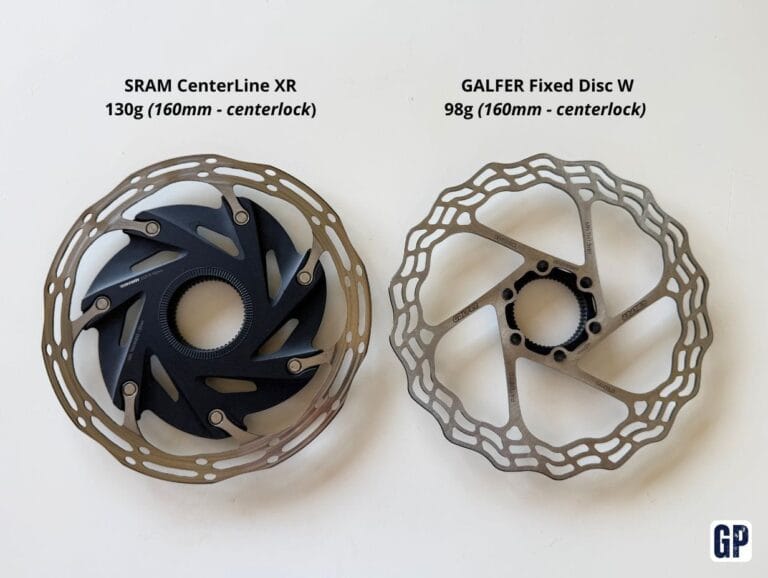
Price-wise, we’re around 45 € per rotor. That’s broadly in the same zone as a SRAM CenterLine X Center-Lock, a little cheaper than a Shimano Dura-Ace, and a little more than a Shimano Ultegra. The positioning is therefore fairly logical: not cheap, but in line with the competition.
Design counts too, even on a technical part
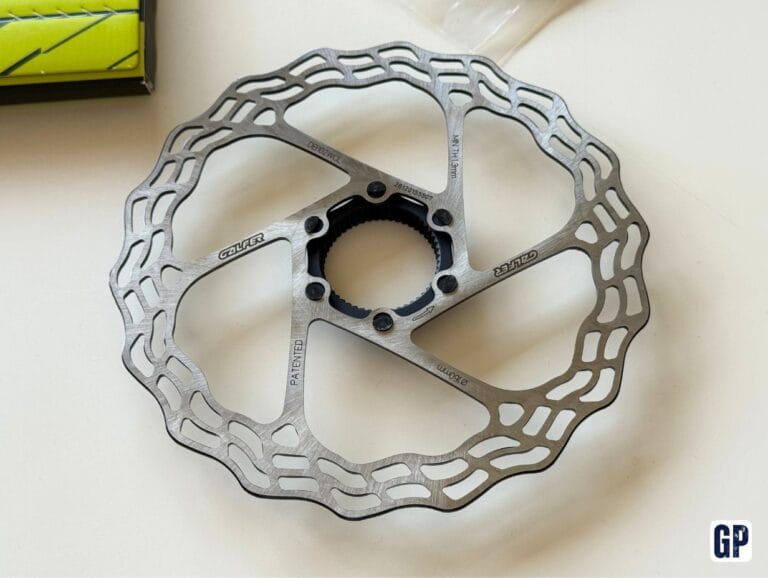
A brake rotor remains a functional part, but its pattern really changes the look of a bike. The Galfer Wave have a strong visual identity, which stands out from more restrained rotors.
I find that interesting because road and gravel bikes are often very codified visually. A pair of rotors can give a small signature to the build, without tipping into gratuitous accessorising.
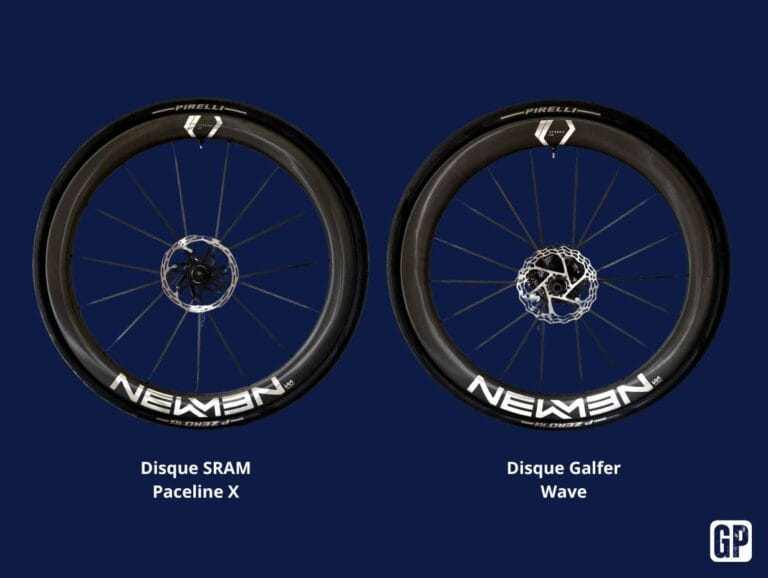
Not everyone will like it. The pattern is visible, assertive, less discreet than a classic Shimano or SRAM rotor. On a very pared-back bike, it can even draw the eye a bit too much. But if technical aesthetics speak to you, the Galfers clearly have something.
The limitations to keep in mind
The first point is delivery. Receiving a warped rotor is never trivial. Even if truing is possible, not everyone has the tool, the habit or the desire to correct a brand-new part.
The second is noise in the rain. In the dry, nothing to report. In the wet, I found the noise level high, more so than on my previous SRAM rotors. Not necessarily a deal-breaker, but a real limitation in use.
Who do these Galfer rotors really make sense for?
I would recommend them mainly to riders who are looking to eliminate a resonance linked to semi-floating rotors on very stiff carbon wheels, or who want more bite without moving to a too-aggressive setup. In my case, the gain was immediate and very tangible.
They also make sense for a build where weight matters, without resorting to exotic parts. At 98 g for the 160 mm rotor, and around 45 €, the compromise is attractive.
On the other hand, if you ride often in the rain, if you want a flawless product straight out of the box, and you have no tool to true a warped rotor, you’ll need to be more cautious.
My take on the Galfer rotors
The Galfer rotors solved exactly the problem I had fitted them for: I no longer have any resonance when braking on my very stiff carbon wheels. Braking also gains bite, the weight is very good, and bedding-in was easier than expected.
Not everything is perfect. One rotor arrived warped and there’s pronounced noise in the rain… that matters, especially on a part as sensitive as a brake.
But once fitted, bedded-in and properly aligned, these rotors give a real impression of control. Not spectacular. Just crisper, and more reassuring. And sometimes, that’s exactly what you expect from a good rotor.