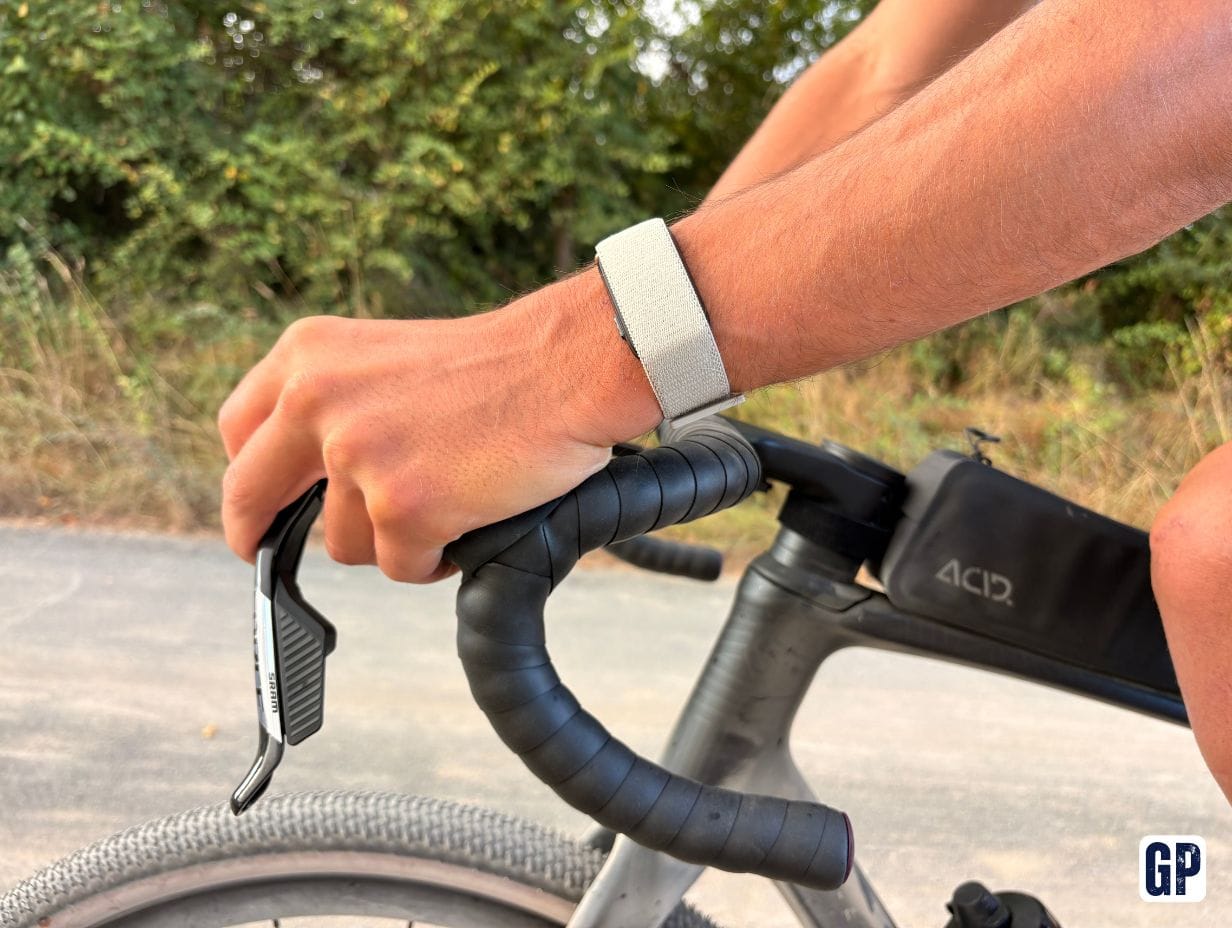

Garmin had a pretty obvious window of opportunity with the Cirqa. Many cyclists already ride with a handlebar-mounted computer, sometimes a Garmin watch for running or walking, but they don’t necessarily want to wear a Fenix or a Forerunner 24/7.
The concept is simple: a screenless, discreet band that collects health and activity data in the background, with no mandatory subscription, and that stays within Garmin Connect. On paper, it’s exactly the product Garmin needed to release to answer Whoop, Fitbit, Amazfit or Polar.
And that’s exactly why this review is frustrating. Because the idea is good. The hardware is serious. The ecosystem is powerful. But the user experience still too often feels like a product launched before being properly stable.
Strengths:
- No mandatory subscription
- Easily swappable band
- Compelling form factor for those who don't want to sleep with a watch
Could be better
- Very limited sports features
- Real-world battery life a bit short
- UX still confusing
A Garmin backdrop that changes how you see the product
I’ve been using Garmin products for nearly fifteen years, and a tracker from the brand has been on my wrist daily for more than ten. Ten years of data – sleep, heart rate, training load, Body Battery, HRV: at that level, switching ecosystems is no longer a trivial decision.
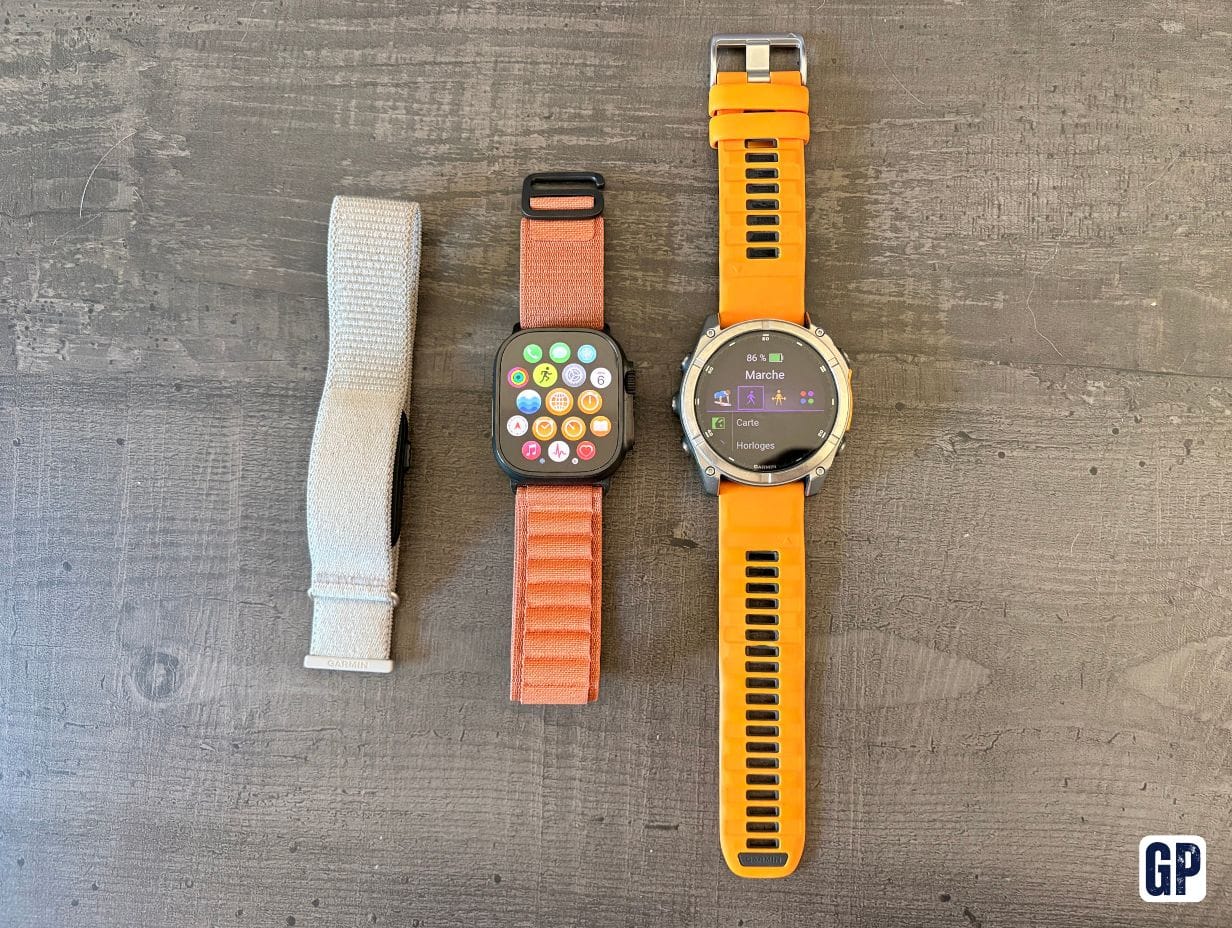
For a long time, Garmin felt like the obvious choice. The products were expensive, but they delivered on the promise: battery life, toughness, sports metrics, depth of analysis. A Garmin Fenix 8 is still a very comprehensive tool today for anyone who wants a high-end sports watch.
But the market has moved. Smartwatches have become more sporty, while sports watches haven’t always become nicer to use day-to-day. And Garmin still carries this recurring flaw: a sometimes heavy UX, stacked menus, powerful features poorly presented, and that feeling that you have to wait through several updates before the experience really feels polished.
The Cirqa therefore arrives with a particular expectation. Not just that of a new product. Rather, a maturity test for Garmin on a format where the app becomes central.
A coherent promise for cyclists
We had already introduced the Garmin CIRQA Smart Band as a potentially interesting product for cyclists. And that was no accident.
In gravel as on the road, many ride with a Garmin Edge. So there isn’t necessarily a need for a second interface on the wrist during the activity. The real topic is continuous tracking instead: sleep, resting heart rate, HRV, stress, Body Battery, Training Readiness, recovery.
At a stated 199.99 €, with no mandatory subscription, the Cirqa has a fairly honest positioning for Garmin. It doesn’t include GPS: to record an activity, it uses the phone’s GPS via Garmin Connect. It can also broadcast heart rate over ANT+ and Bluetooth Smart, notably to a head unit or a third-party app.
It’s a fairly clear proposition: not to replace a sports watch, but to fill the data gaps when you don’t want to wear a watch.
Unremarkable unboxing, reassuring hardware
The packaging doesn’t say much. Garmin stays Garmin: clean, functional, with little emotion. It’s not in the unboxing that the Cirqa scores points.
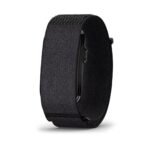
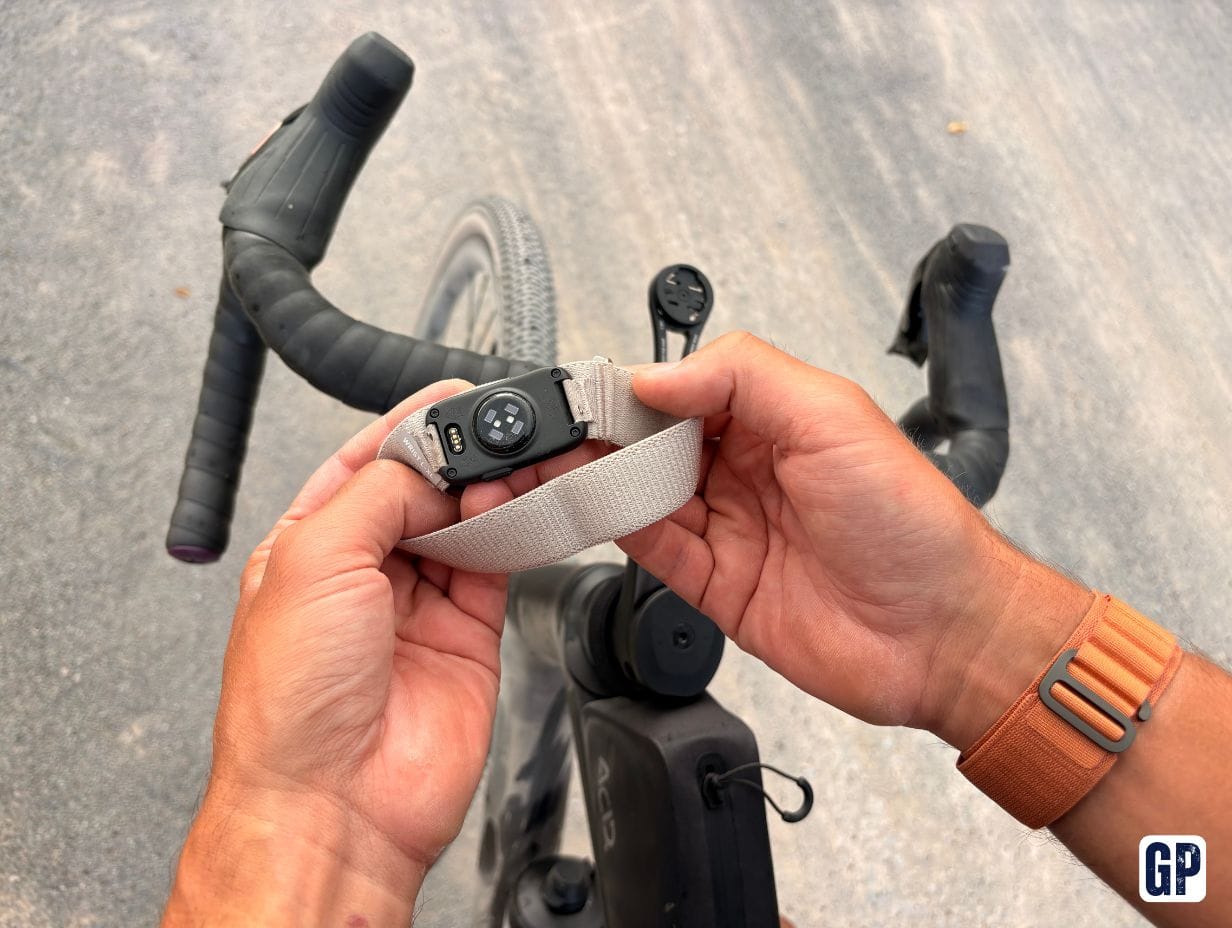
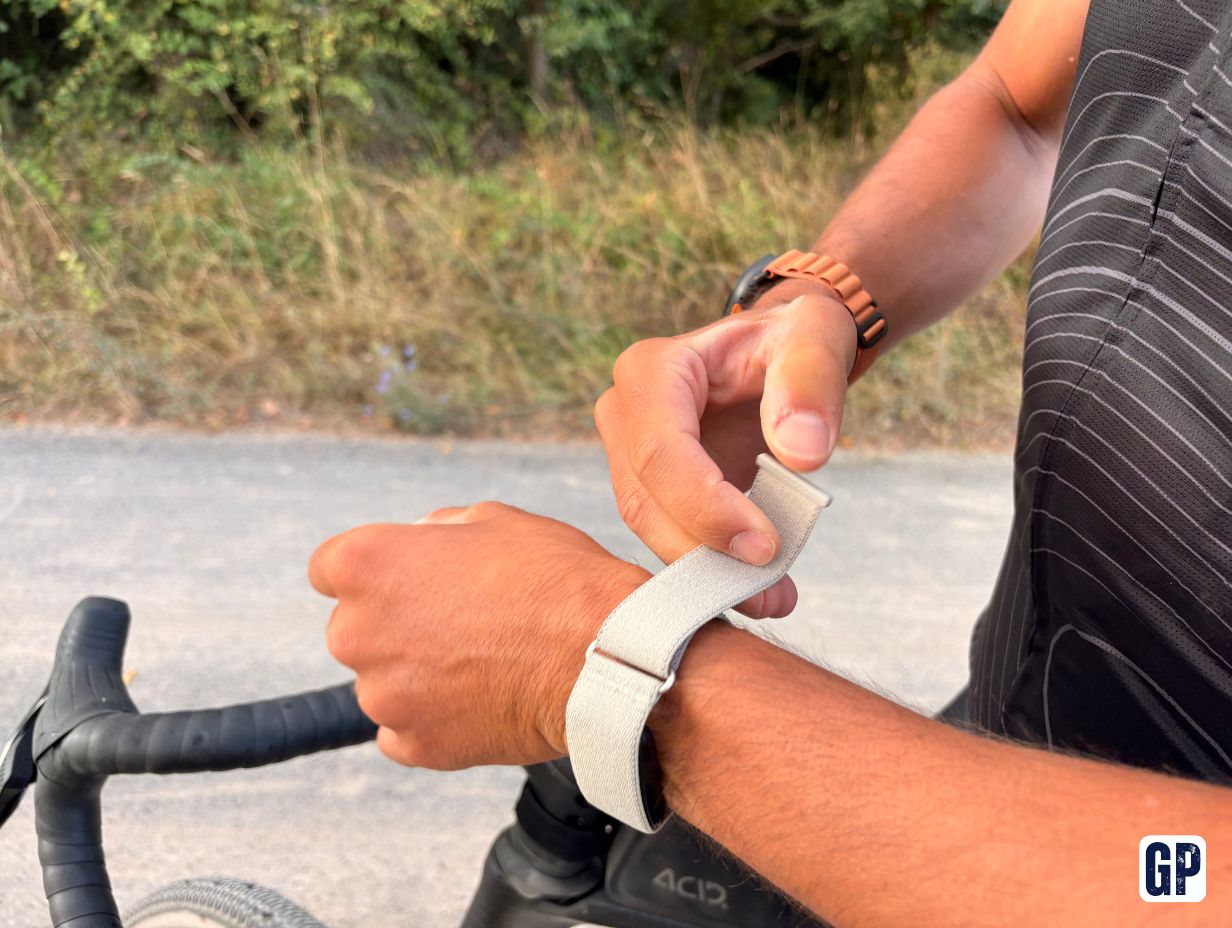
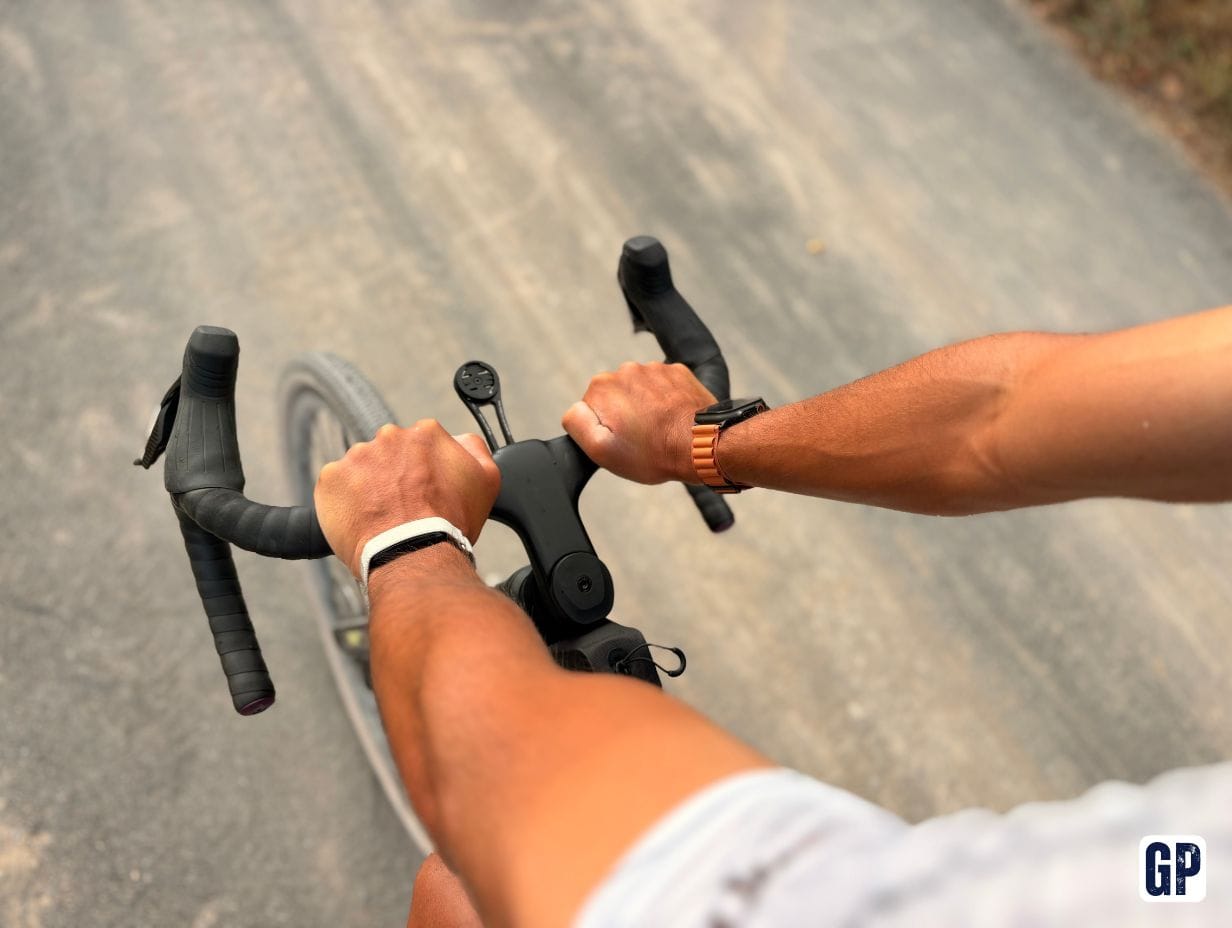
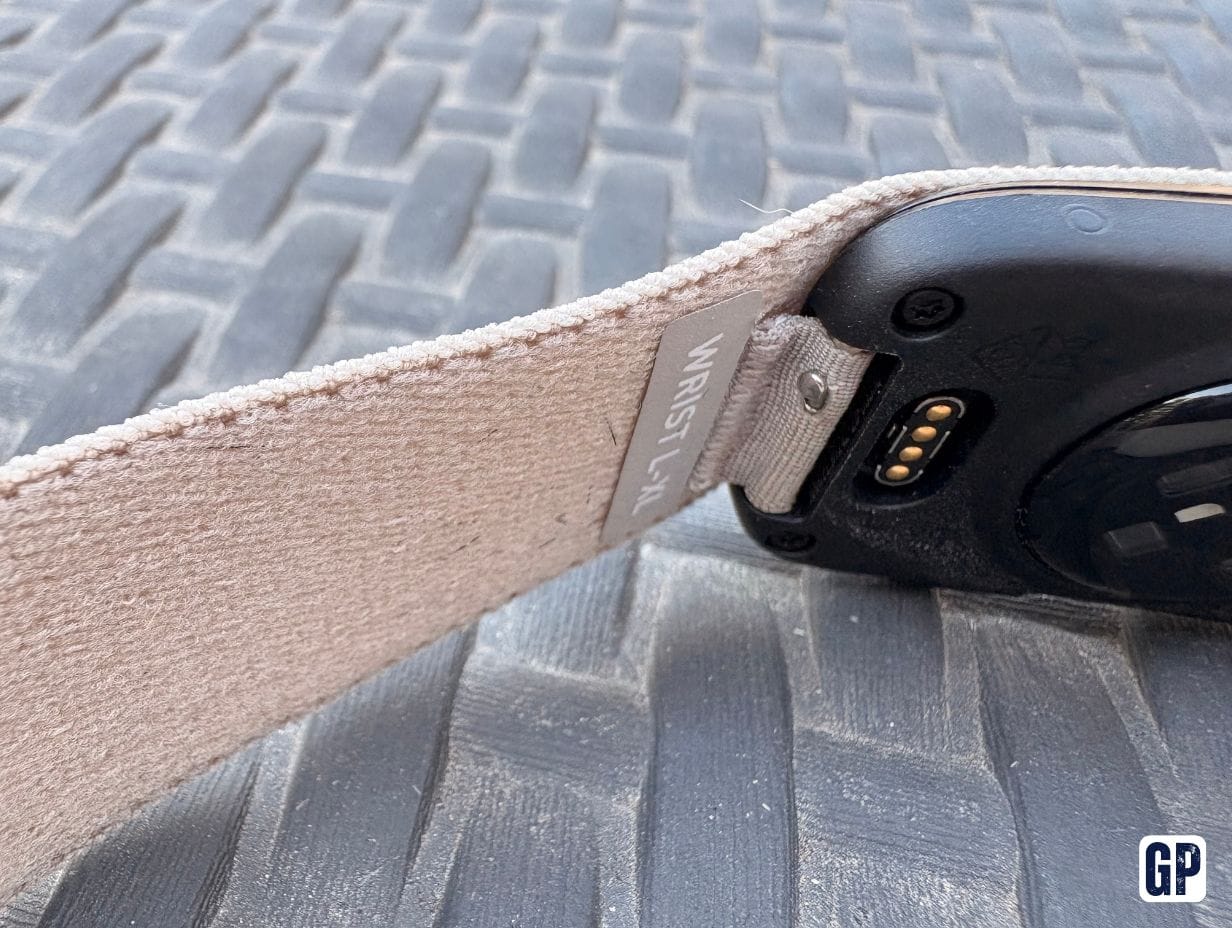
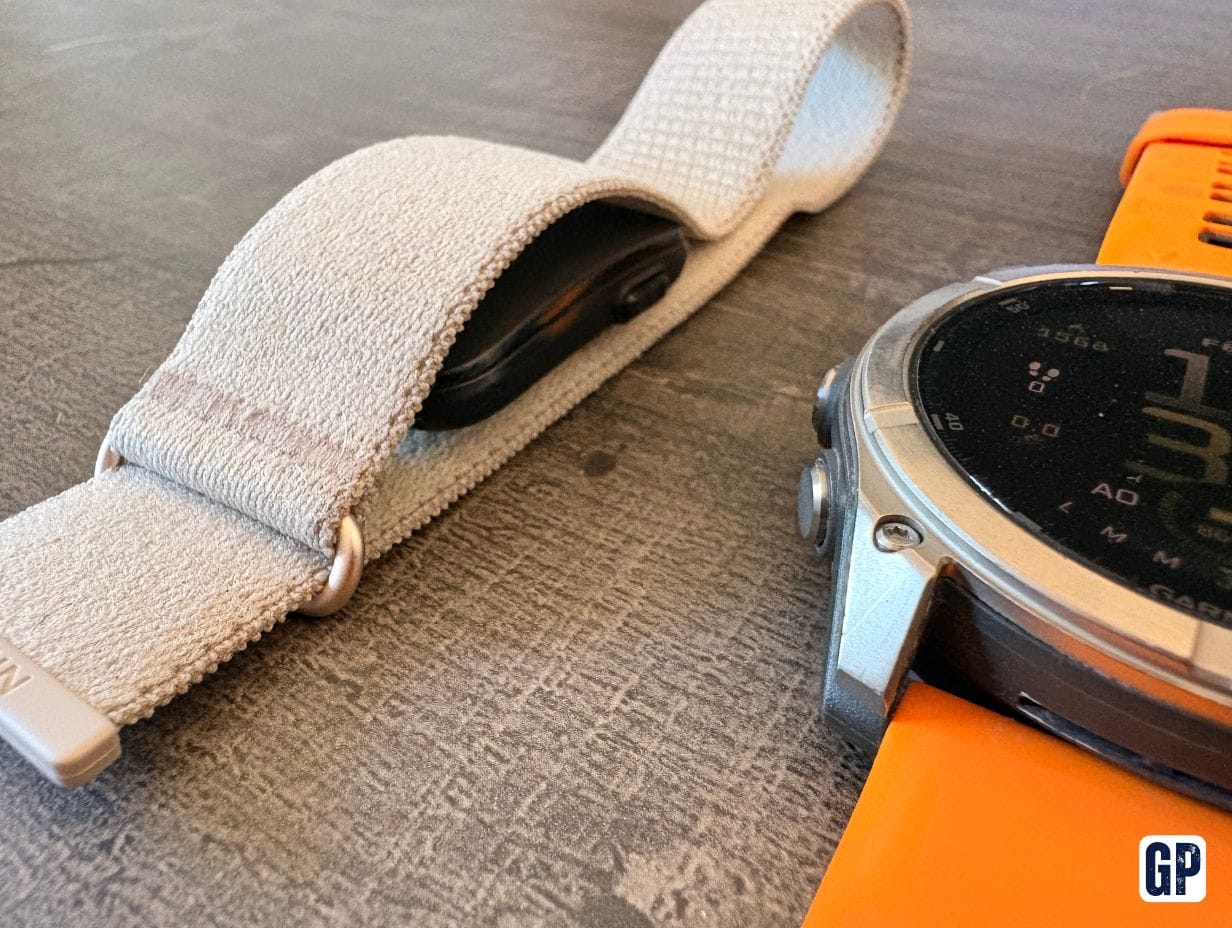
The product itself inspires more confidence. The band feels relatively high quality, easy to adjust, and the sensor module detaches so you can swap bands. The form factor remains visible on the wrist, but it’s what you’d expect from a screenless band with an optical sensor, a battery and a physical button.
Garmin uses an Elevate Gen4 optical sensor here, not the Gen5 from the latest watches. That notably means no ECG. However, for daily tracking, sleep and baseline heart rate, the sensor does the job as long as you stay within the Garmin ecosystem and compare trends over time.
The physical button is a good idea. It lets you start an activity, manage alarms or enable heart-rate broadcasting. On a screenless product, this little point of contact matters. It prevents everything from depending on the smartphone.
The charging detail that reveals the concept's limit
The Cirqa charges via Garmin’s proprietary connector, placed under the sensor module. In practice, that means taking the band off your wrist to charge it.
Taken in isolation, it’s not dramatic. But for a tracker designed to almost never leave your wrist, it’s a real usability detail. Garmin claims up to 10 days of battery life. In our use, with one sports activity per day, we were closer to 6 days. Usually I find Garmin’s stated battery estimates fairly reliable, but here the gap between the spec sheet and real-world use remains significant nonetheless.
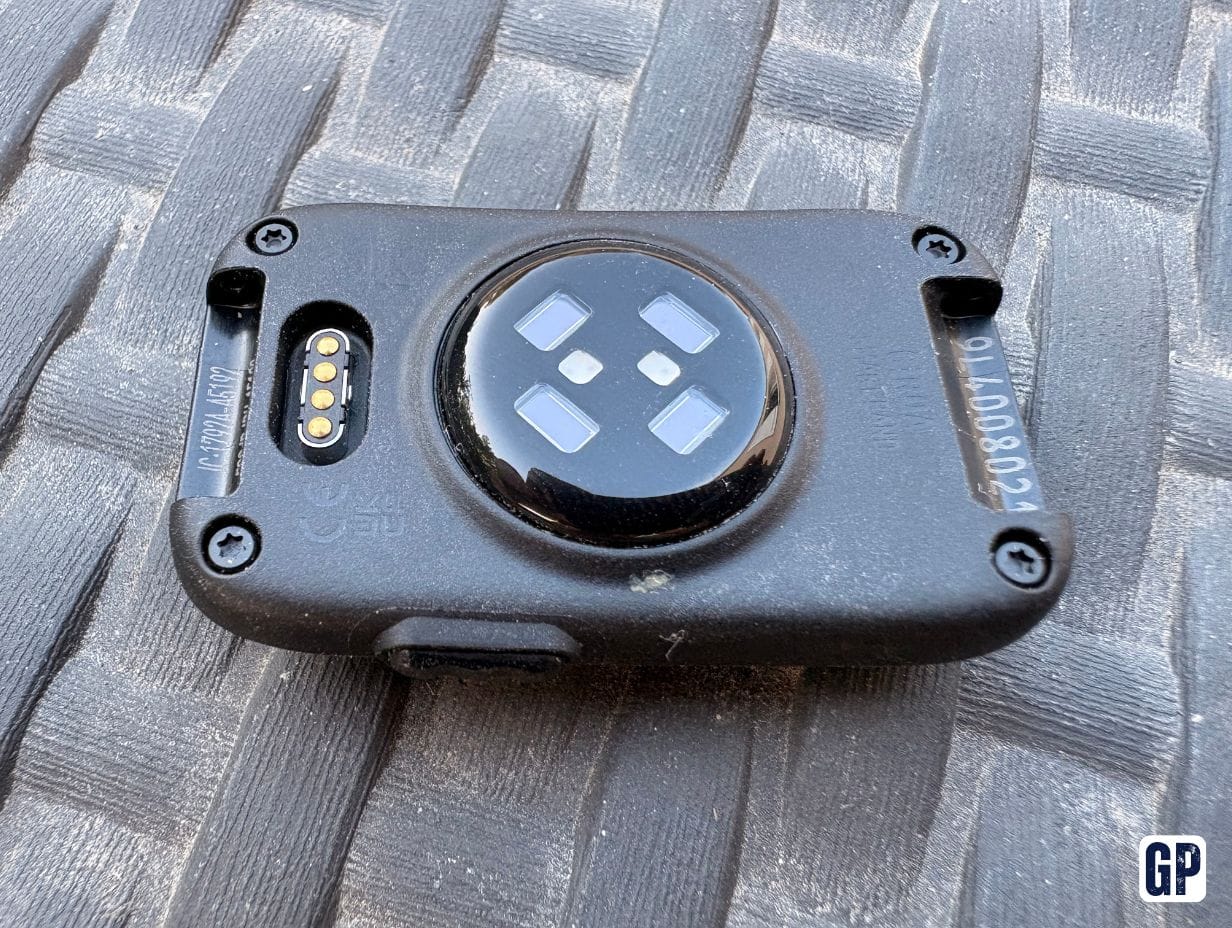
An hour of charging per week isn’t much. But it’s a data gap – precisely on a product whose value rests on continuity. Whoop pushed the concept further with a charger that clips onto the band while worn. Garmin, here, stays more conventional.
It’s not a deal-breaking flaw. It’s more of a hint: Garmin made a good Garmin tracker, but not yet the most polished screenless tracker from an experience standpoint.
Simple setup, but Garmin Connect remains the true centre of the product
Pairing is simple. Everything goes through Garmin Connect, with fairly basic settings. If you’re already coming from a Garmin watch, the environment is familiar. If you’re new to the ecosystem, the app can quickly feel dense.
The button can be configured to start a type of activity. In my case, I set it to start a walk. One press, the activity starts on the phone, using the smartphone’s GPS.
The idea is good. In practice, the result was a bit less convincing.
The GPS tracks obtained look fairly clean visually, but the recorded distances proved very erratic. On several outings, the gap compared with a Garmin Fenix reached 20 to 30 percent extra distance. The most likely hypothesis: the activity starts before the phone’s GPS is properly stabilized.
For a band without built-in GPS, this point is central. If the band depends on the phone, the transition between pressing the button, GPS lock and start of recording has to be flawless. Here, it’s not yet the case. Of course, it will depend on your smartphone model, but in my case, with an iPhone 16, it happened several times.
Auto activity detection: useful, but quickly annoying
Auto activity detection works fairly well in principle. The Cirqa identifies quite quickly that an activity took place and can create a session in Garmin Connect.
But after a week, I disabled this feature in my use. The reason is simple: it adds more noise than comfort as soon as you’re already using another Garmin device.
First issue: the activity type isn’t always correctly recognized. Several times, the Cirqa detected walking when it was actually a bike trip. That’s not absurd for a detection algorithm, but it’s annoying when the goal is precisely to automate.
Second issue, more problematic for cyclists: duplicates. A bike ride recorded with a Garmin Edge 1040 Solar should, in theory, be enough for Garmin Connect to understand that an activity already exists. In my case, the Cirqa still generated duplicate activities.
Technically, the devices are in the same ecosystem, connected to the same phone, with data flowing to the same place. You can imagine that certain sync conditions, heart-rate broadcast settings or device priority improve the situation. But for the user, the finding is simpler: this kind of friction shouldn’t exist in the Garmin ecosystem in 2026.
During an activity, the phone screen isn't enough
When an activity is started from the band’s button or from Garmin Connect, the app displays the essentials: heart rate, duration, distance, average speed.
It’s little. Too little, in fact, for a product that depends entirely on the smartphone as soon as you want to track an activity without a watch. In our use, it was impossible to view the route in real time as you would naturally expect from a GPS activity started from an app.
Manual pause is possible from the phone, but there’s no configurable auto-pause. For walking, running or even utility cycling, that’s a very concrete limitation. You stop at a light, you chat, you step into a bakery – the activity keeps running.
Sleep, heart rate and daily data: the most solid ground
For daily tracking, the Cirqa is more reassuring. Heart rate, sleep, stress, Body Battery, HRV: you find the usual Garmin metrics, with a meaningful sense of continuity for those who already use Garmin Connect.
The sensor isn’t the brand’s newest, but for baseline tracking it didn’t show any major bad surprises. And above all, it lets you keep a homogeneous data history if your references are already Garmin. I did, however, see a few false positives regarding bedtime. Lying in bed but not asleep, the Cirqa then detected the start of the night unlike my Apple Watch.
Fortunately, you can manually edit bedtime directly in Garmin Connect.
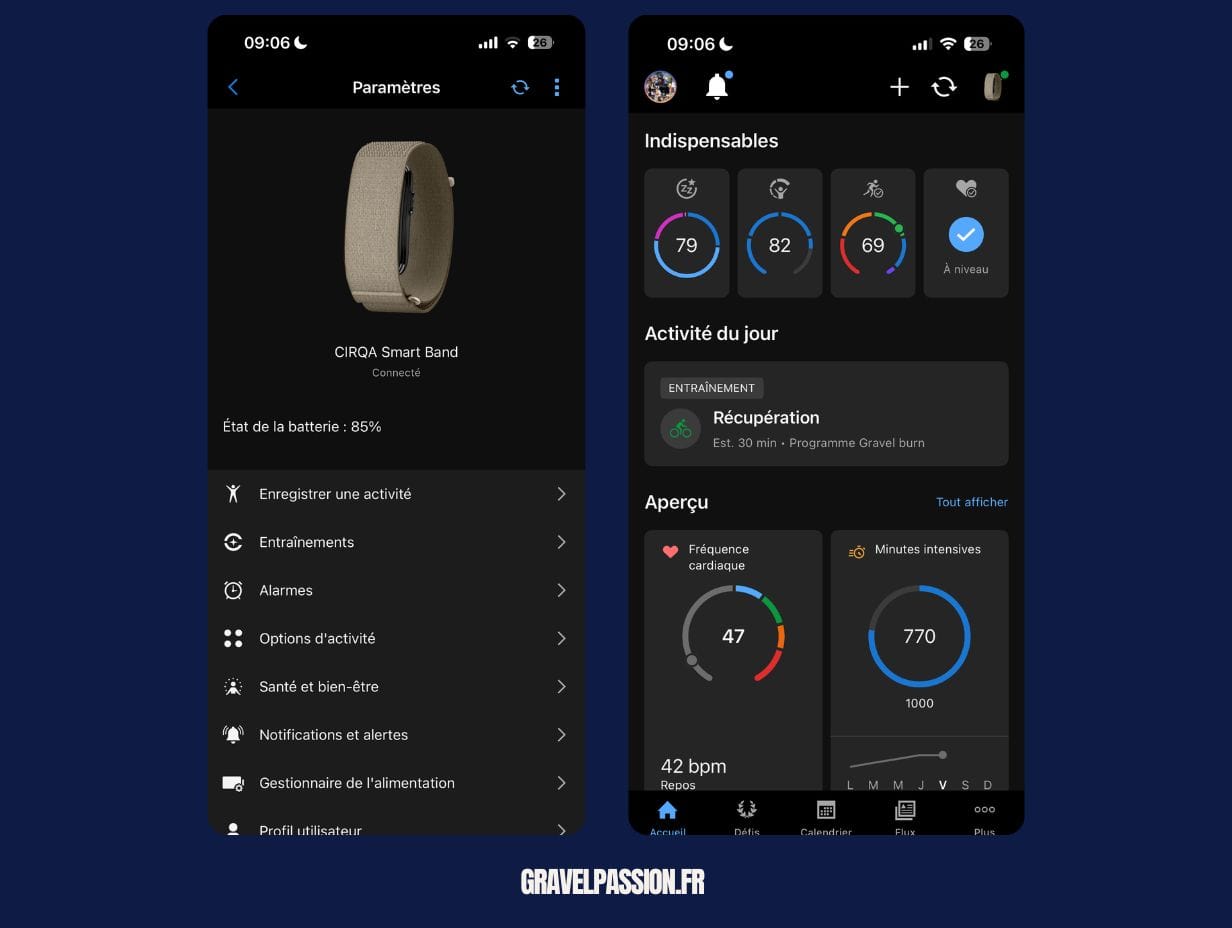
The Cirqa isn’t trying to replace a Fenix for a structured workout, a trail run, a gravel ride or a session with power and sensors. It’s more about keeping the thread between two real activities.
It’s also an interesting product for people who don’t like sleeping with a watch. A big Fenix on the wrist at night – even if some get used to it very well – isn’t neutral. The Cirqa is more discreet, less intrusive, and keeps the useful data for when you wake up.
The Cirqa isn't a cheaper Garmin watch
That’s an important distinction. At a relatively similar price, some Garmin or competing watches offer a screen, a built-in GPS chip, more control during activities, sometimes better real-world battery life, and more direct interaction.
The Cirqa shouldn’t be read as a budget alternative to a watch. It’s less complete, by design. Its value lies elsewhere: it lets you stay in Garmin Connect without wearing a Garmin watch all the time.
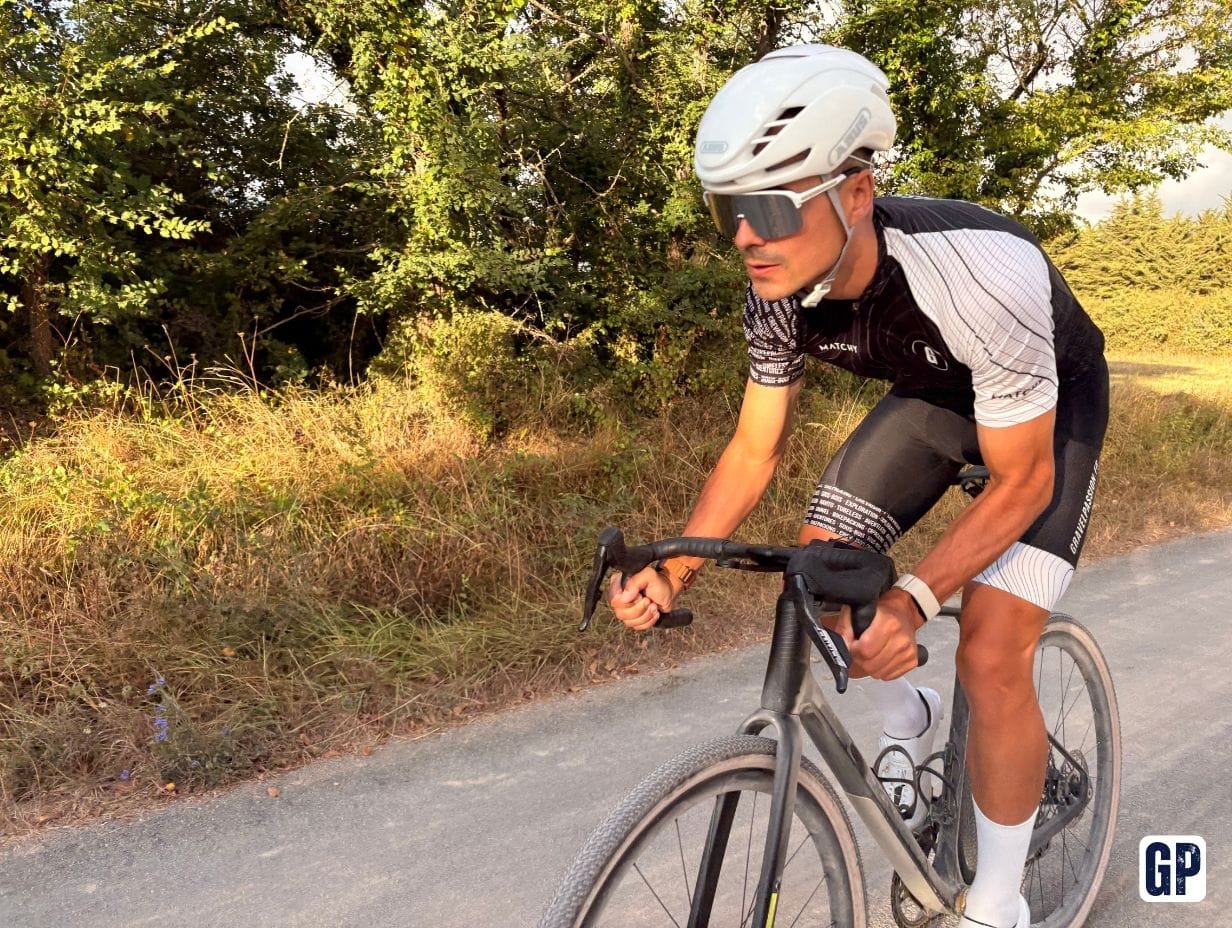
For a cyclist already equipped with a head unit, that’s relevant. The head unit records the ride, possibly with a heart-rate strap or the Cirqa broadcasting heart rate, while the band handles the rest of the day and night tracking.
For someone who mostly walks, runs or rides without a head unit or a watch, the Cirqa is more debatable. The phone’s GPS, the lack of a screen, the lack of auto-pause and the limits of live display make the experience less reliable than a true sports watch.
Best use: equipped cyclist, no desire for a watch
The most logical profile ends up being quite specific: a Garmin user who already has a bike computer, wants continuous sleep and heart-rate tracking, but doesn’t want to wear a sports watch all day.
That might be to put an Apple Watch back on the wrist, wear a mechanical watch, or simply avoid sleeping with a Fenix. In that case, the Cirqa addresses a real need.
It will also suit people who are relatively inactive in the sporting sense, who mostly want health/sleep tracking in Garmin Connect, without a screen on the wrist and without a mandatory subscription.
Conversely, for someone who wants to properly record their activities without another device, the Cirqa still isn’t convincing enough. It depends too much on the phone, too much on Garmin Connect, and not enough on a smooth experience.
My take on the Garmin Cirqa
The Garmin Cirqa is an almost obvious product, but not yet fully polished. The hardware is good, the no-subscription positioning is welcome, and Garmin Connect integration carries real weight for already-equipped cyclists.
But the first weeks of use also reveal Garmin’s classic limits: imperfect UX, powerful features but poorly exposed, behaviours that aren’t always logical between devices of the same brand, and that beta-software feeling that still sticks too often to new products. Not to mention a battery life I find a bit disappointing.
The most frustrating part is that the Cirqa doesn’t need to become a screenless Fenix. It just needs to be flawless on a few points: continuous tracking, clean duplicate handling, reliable connected GPS, more useful activity display, transparent charging,…
Today, it makes you want to believe, but not yet to recommend it widely. The Cirqa is a good Garmin complement for a very specific use – not the universal band that buries sports watches.