
On paper, the VeloVox ticks a lot of boxes: an open-ear audio system, an intercom function capable of connecting up to 30 people, and integration with Shimano (Di2 and certain e-bike systems). The idea is simple: communicate in a group without shouting, keep some background audio if you want it, while staying alert to what’s happening around you.
Strengths:
- Sensible open-ear approach
- Very effective intercom
- Battery life
- Price
To improve:
- Compatibility varies by helmet
- Visually quite noticeable
The VeloVox is a Lazer product developed with Cardo, with integration announced with Shimano (Di2 and certain e-bike systems). The ambition is clear: make group communication smoother (without shouting into the wind) while keeping an ear on your surroundings (traffic, teammates, and road/trail noise).

A smart idea, not especially discreet
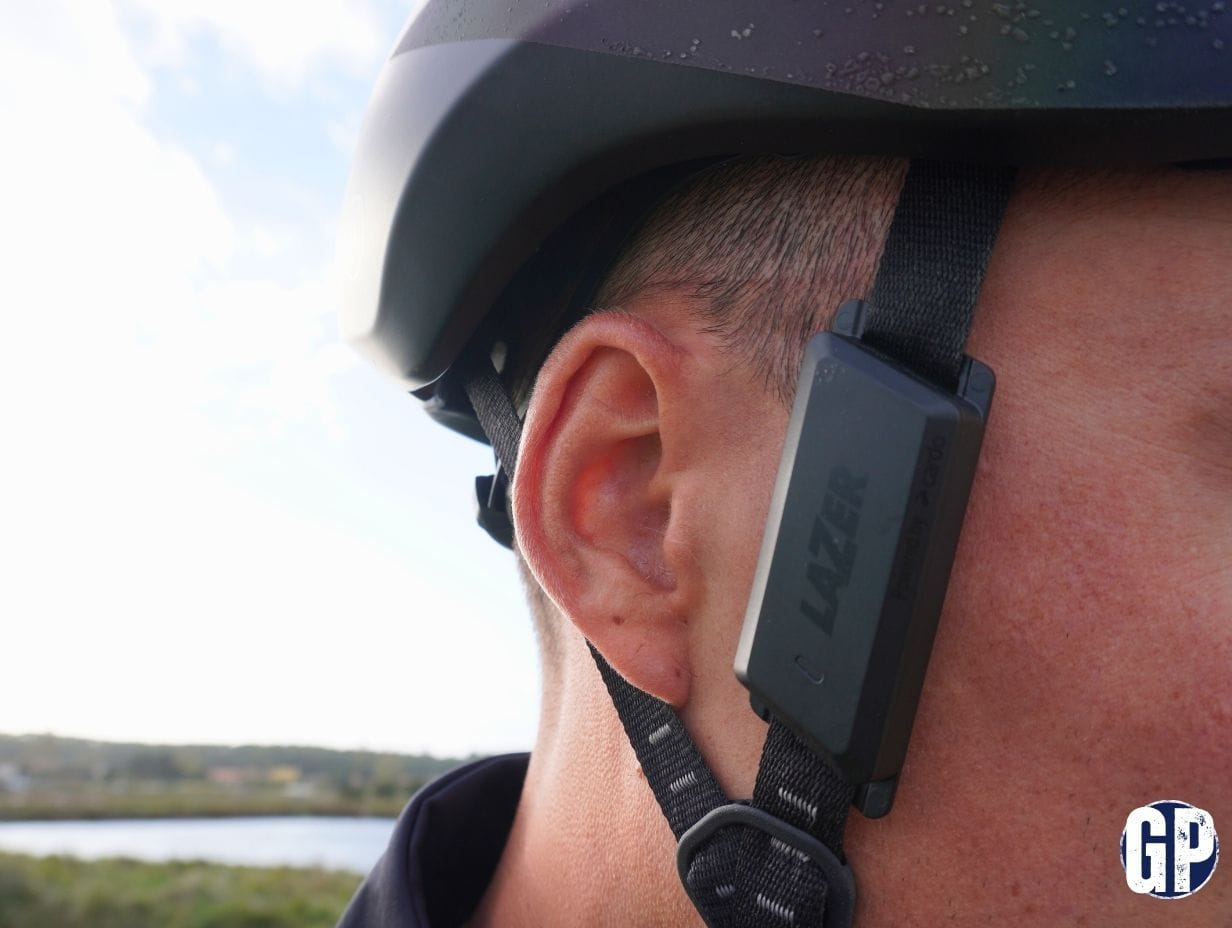
The system consists of two modules (left/right) that attach directly to the helmet straps at the buckles. Each module is rated at 19 g and, in use, that feels right: it’s light – you don’t feel like you’ve hung a brick off your helmet.
Where it gets tricky is the look. From the front, you’re quickly into the “full-on pro look” zone: it’s noticeable, it reads very much as an accessory, and aerodynamics are a write-off (not the aim here, but it’s worth acknowledging).

There’s one point to state clearly: it doesn’t work with all straps. Depending on the shape of the buckles, the width, stiffness and routing of the strap (and sometimes the type of adjustment), mounting can be a pain, or downright incompatible. With this kind of product, that detail matters: if your helmet isn’t “friends” with the system, the experience starts badly. This is for example the case with my Van Rysel RCR helmet and its non-adjustable straps.

The stated IP54 rating is broadly consistent with cycling use: dust, spray, light rain.
Simple and quick to get started
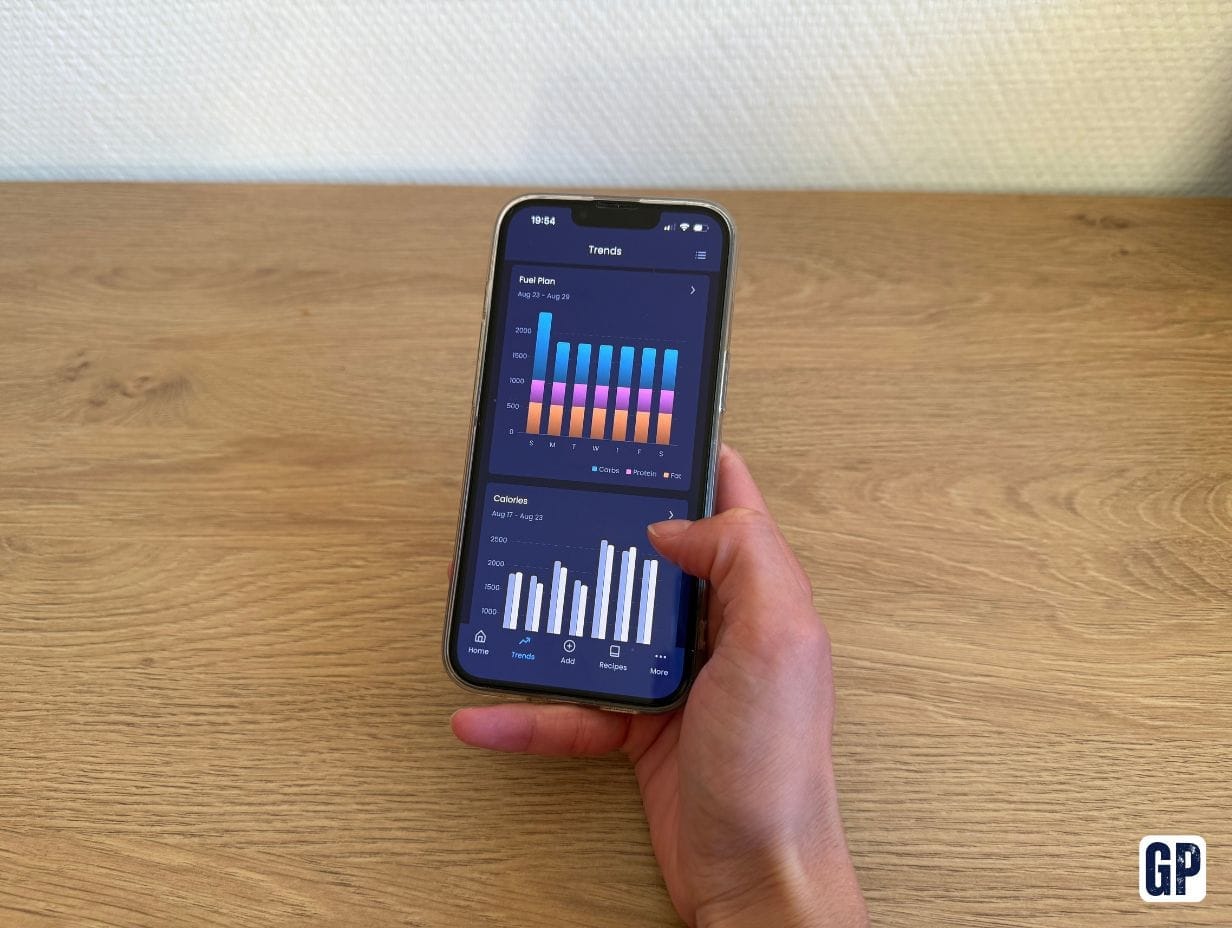
Setup is quick when strap/helmet compatibility is good: attach it, pair via Bluetooth, and control it through the Cardo Connect app. On first pairing, you’ll often need to run an update.
The controls are deliberately basic:
- left: communication (intercom, mic…)
- right: music and calls.

Open-ear: the key strength
What stands out most is the open-ear approach. You keep awareness of traffic, bike noises, and the wider environment, while still having audio. It suits road and gravel riding, where vigilance remains the priority.
It won’t replace an immersive solution, and that’s not the goal. Here, audio is an accompaniment, not a bubble.

The performance is good for what it’s meant to do: intelligible voice, music/podcasts in the background, and wind management that’s generally effective. At high speed, the wind inevitably makes itself heard (fair enough), and the bass is necessarily more discreet than with in-ears. Volume remains lower than on the Oakley Meta glasses, currently the market reference.
Another point inherent to open-ear: sound can be heard by people nearby. Solo, it’s not an issue; in a group or when stopped, it can matter.
Intercom: this is where the VeloVox has real practical value
In a duo, the intercom is frankly convincing: you speak normally, you hear each other well, and communication stays clean in many conditions. And for a group ride, the promise is clear: less shouting, fewer lost bits of info, more coordination (potholes, slowing, changes of direction…).
The flip side – and you have to accept it – is that it runs via the smartphone and the mobile network (so data on plus decent coverage). In a dead zone, the function inevitably loses its appeal.

What the VeloVox brings... and what could overshadow it
Compared with open-ear/bone-conduction solutions, the difference mainly comes from the intercom ecosystem (Cardo) and the well-thought-out Shimano integration.
But there’s an important contextual element today: the boom in smart cycling glasses is changing the game.
If tomorrow audio + control + possibly display/navigation all end up in glasses, a helmet-strap module could seem less obvious, even if the idea still makes sense.
Put another way: the VeloVox arrives with a coherent proposition… but in a market where future “connected” uses haven’t yet stabilised. It’s becoming hard to predict massive success.

My take on the VeloVox
The VeloVox is mainly for riders who often go out in a group and want cleaner, more natural communication without losing touch with the environment. For a club, structured rides, or even a duo that trains regularly, the appeal is real.
For those who primarily want a discreet, ultra-integrated system, or who are already looking toward future smart-glasses-type solutions, the VeloVox can feel more “transitional”. All the more so as its compatibility also depends on very concrete details (straps/buckles).
As for price, €160 is pretty fair given the functions (audio + intercom + modules + app). But despite that sensible price, I don’t foresee a commercial tidal wave. The product is pertinent, but it lands at a time when the connected-cycling ecosystem is moving fast, and where other formats could capture the use case.