Nank Runner Diver2 Pro review: is bone conduction right for cycling?
Written with ❤️ by
Arnaud H.
of July 27, 2026 and updated
4 weeks ago
Listening to music while cycling remains a divisive topic. Earbuds isolate you from your surroundings, traditional headphones rarely work with a bike helmet and, above all, many riders don’t want to give up hearing what’s around them.
I preferred to ride with nothing rather than feel cut off from my environment. Yet the idea of adding a musical backdrop to long rides appealed to me.
All that remained was to find a solution that could balance listening pleasure and safety.
Balanced sound reproduction, with no unwanted vibrations
Could be improved
Phone calls are barely usable
Closed position a bit less comfortable
When Nank offered us the chance to test the Runner Diver2 Pro, I was already considering taking the plunge into bone conduction. So I agreed without hesitation.
Bone conduction delivers music via vibrations transmitted through the facial bones, while leaving the ears completely free. In spirit, it follows the same open-ear approach as other audio solutions, like the Lazer VeloVox, even if the integration and use are not the same.
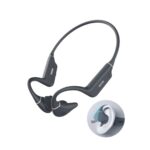
The Runner Diver2 Pro features Bluetooth 5.4, an IP69 rating that notably allows use while swimming, 32 GB of internal storage to listen without a smartphone, and a claimed battery life of 10 hours.
After several weeks of use on the road as well as on gravel tracks, it was time to see how that promise held up in the real world.
What about the law?
Since 2015, French regulations have prohibited the use of earbuds, headphones, and headsets while operating a vehicle, bicycle included. The fine is €135. Article R412-6-1 of the Highway Code.
But what about “open-ear” devices like this Nank headset?
The law does not mention them explicitly. In theory, any device “likely to emit sound worn at the ear” may be covered.
In practice, these technologies leave the ear uncovered and allow you to hear the external environment. They therefore sit in a legal grey area, rarely sanctioned to date.
Internationally, the situation varies: some countries ban any audio device, others allow it as long as the rider remains attentive (for example Germany, or the United States depending on the state).
A well-finished, multisport-minded product
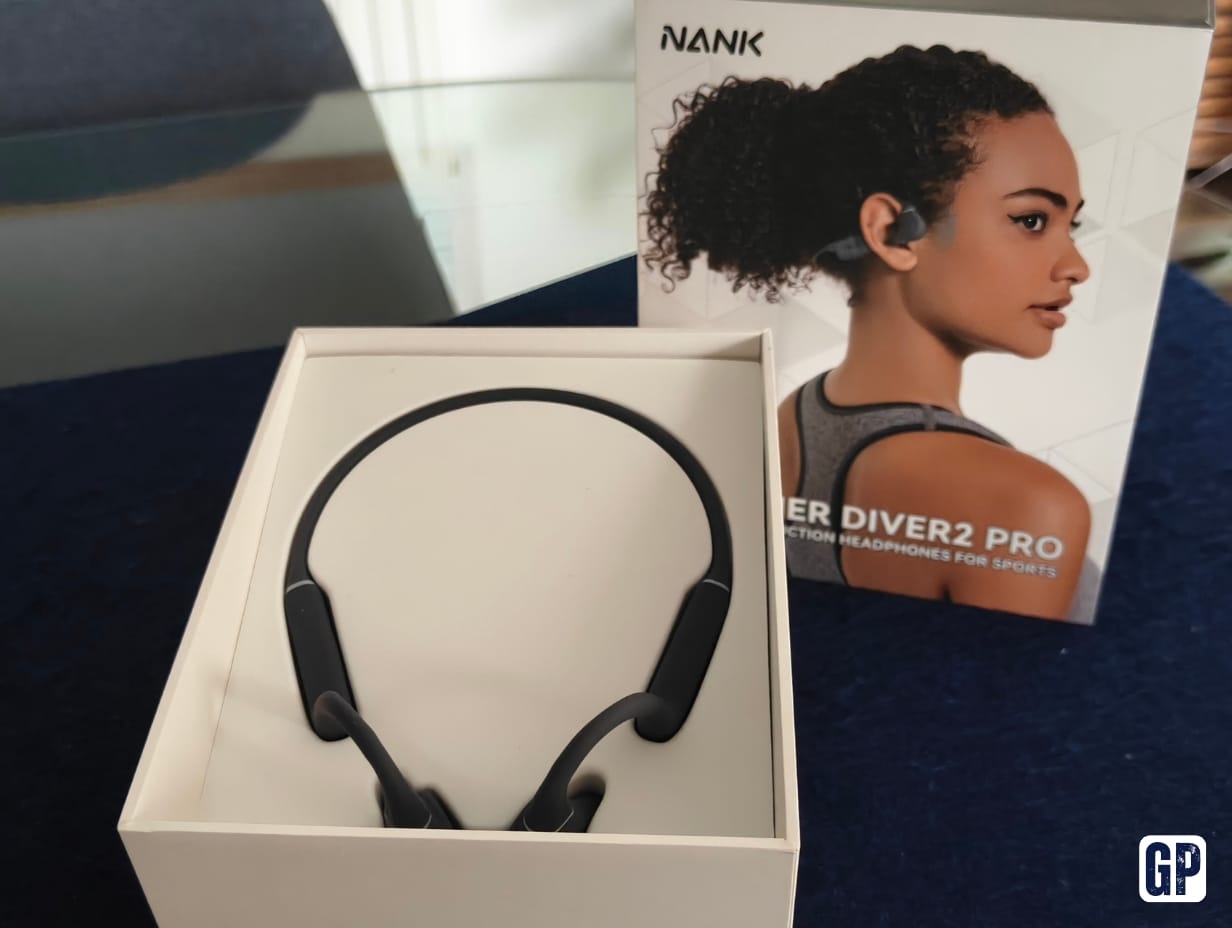
Right out of the box, the Runner Diver2 Pro makes a good impression.
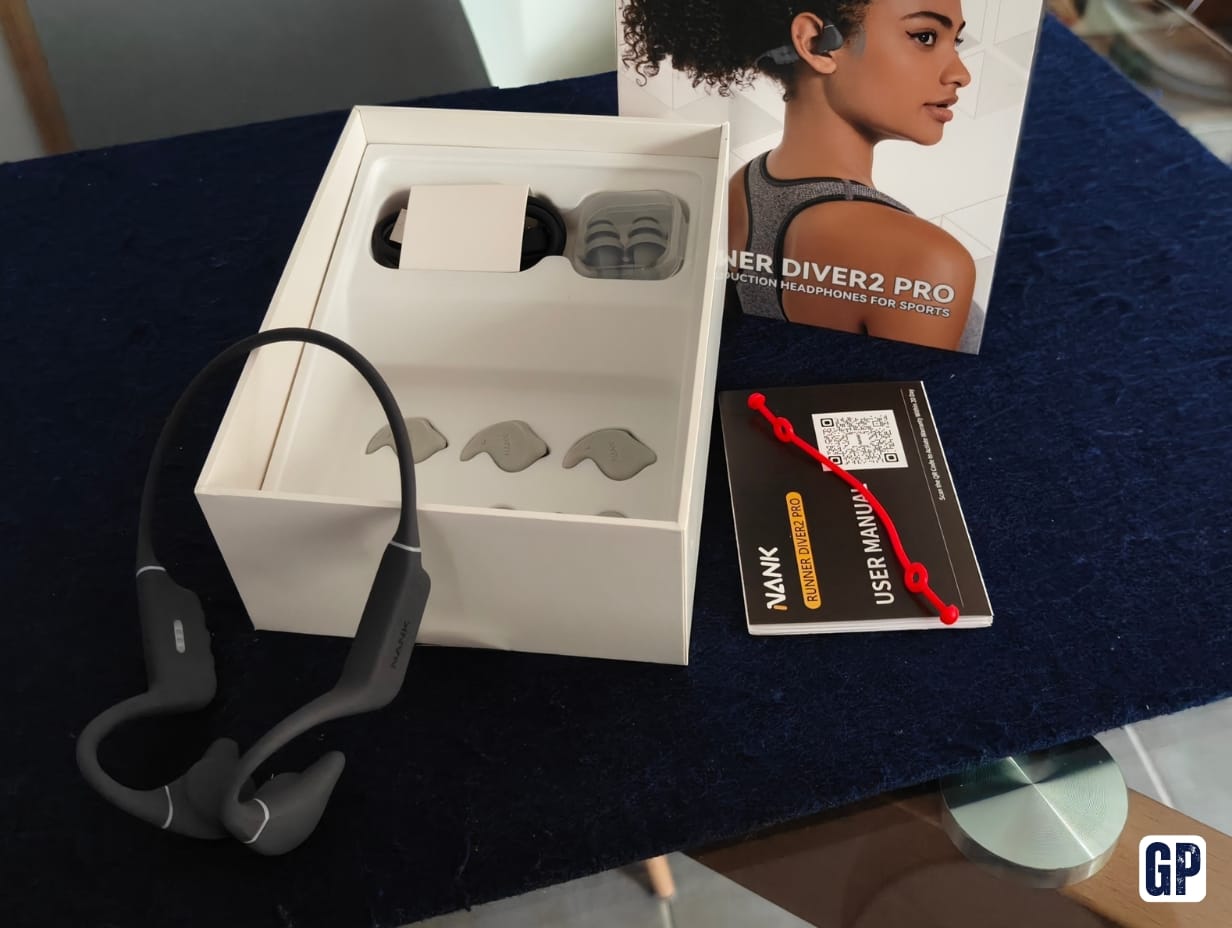
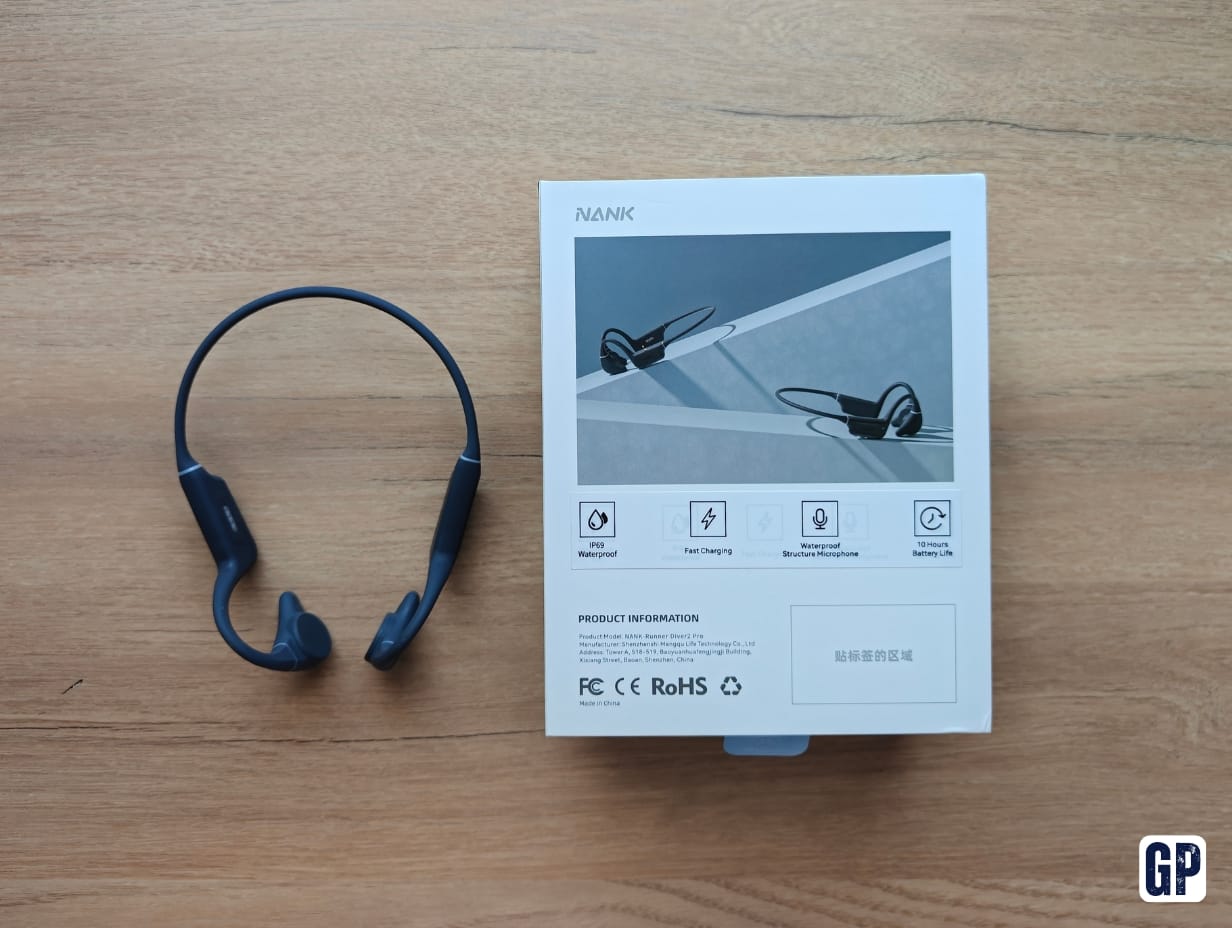
The packaging is neat and the bundle generous: magnetic charging cable, user manual, earplugs for swimming, silicone adjustment strap, and “Sound Quality Enhancers” tips designed to optimise sound depending on use.
The materials are well chosen and the build is solid.
You can tell Nank did not design this headset solely for cycling, but to suit multisport use.
The magnetic charging system reinforces that impression. The cable snaps into place almost by itself thanks to the magnets – a simple, practical solution that is likely more durable than a standard connector exposed to rain, dust, or sweat.
This multisport focus also shows in its features. The 32 GB of internal storage makes perfect sense for swimming, where Bluetooth becomes unusable underwater.
Tracks are easily transferred from a computer via the charging cable, which also serves as a data cable. The headset supports major audio formats, including MP3, M4A, WAV, APE, and FLAC.
On the bike, however, I never used the supplied earplugs: their role is to boost immersion, whereas I was after the opposite – keeping my perception of the environment as natural as possible.
A headset you quickly forget
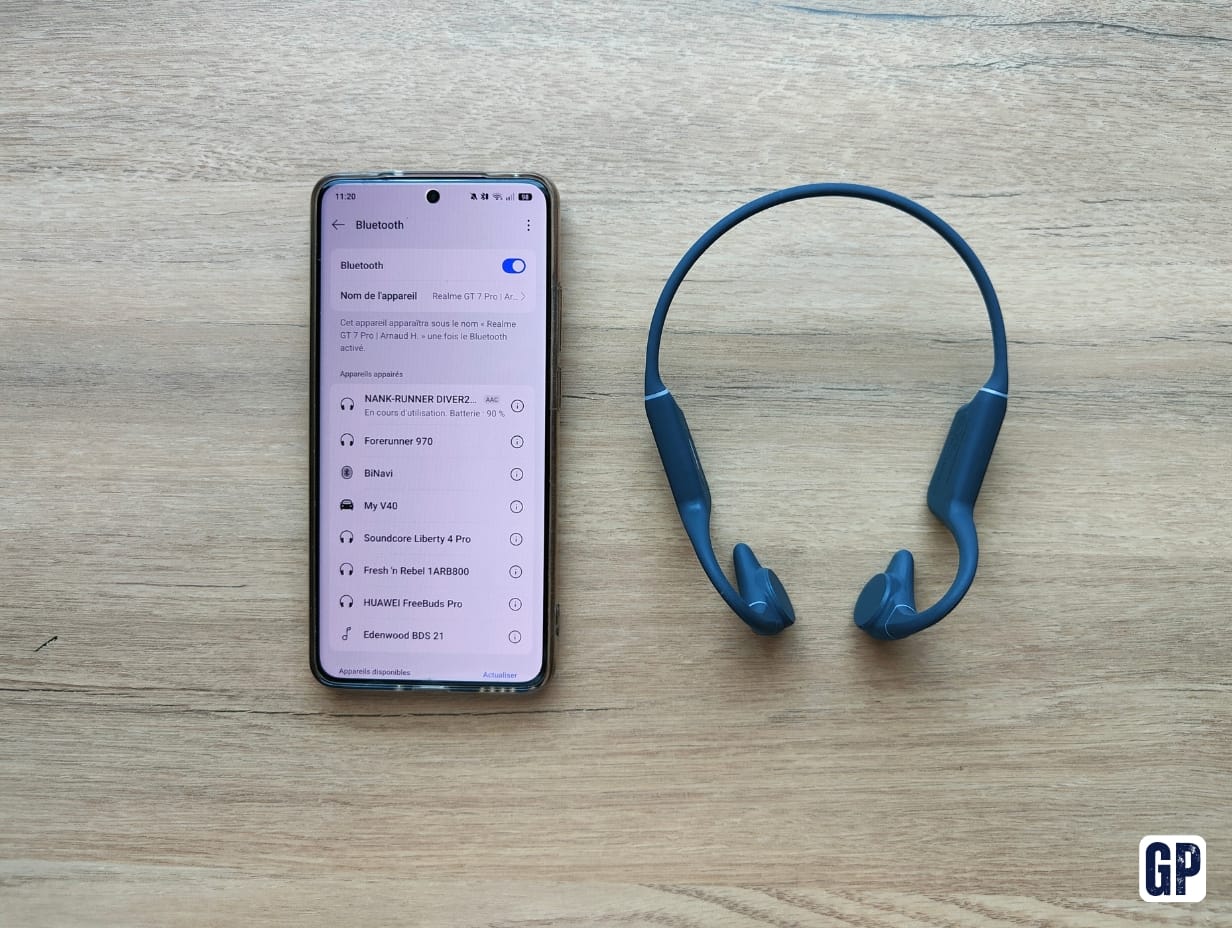
Setup is instant. Bluetooth multipoint pairing takes a few seconds and, throughout the test period, I experienced neither dropouts nor instability.
I must admit I was sceptical during my first few minutes of use.
Indoors, my first reaction was simple: “The sound will never be loud enough.”
That impression vanished within the first few kilometres. Once outside, volume becomes more than sufficient to fully enjoy your music.
In fact, I conducted almost all my tests with the volume set to maximum to push the headset to its limits and gauge its battery life in the most demanding conditions.
Beyond sheer volume, it was the sound quality that surprised me. Highs stay smooth without ever turning harsh, mids bring a nice warmth to voices and instruments, and the bass is present without trying to do too much.
From rock to electronic, from pop to RnB, all the way to organ music and major classical works, the Runner Diver2 Pro acquitted itself admirably.
Another pleasant surprise: even at high volume, I never felt the unpleasant vibrations at the temples that some bone conduction headsets can produce.
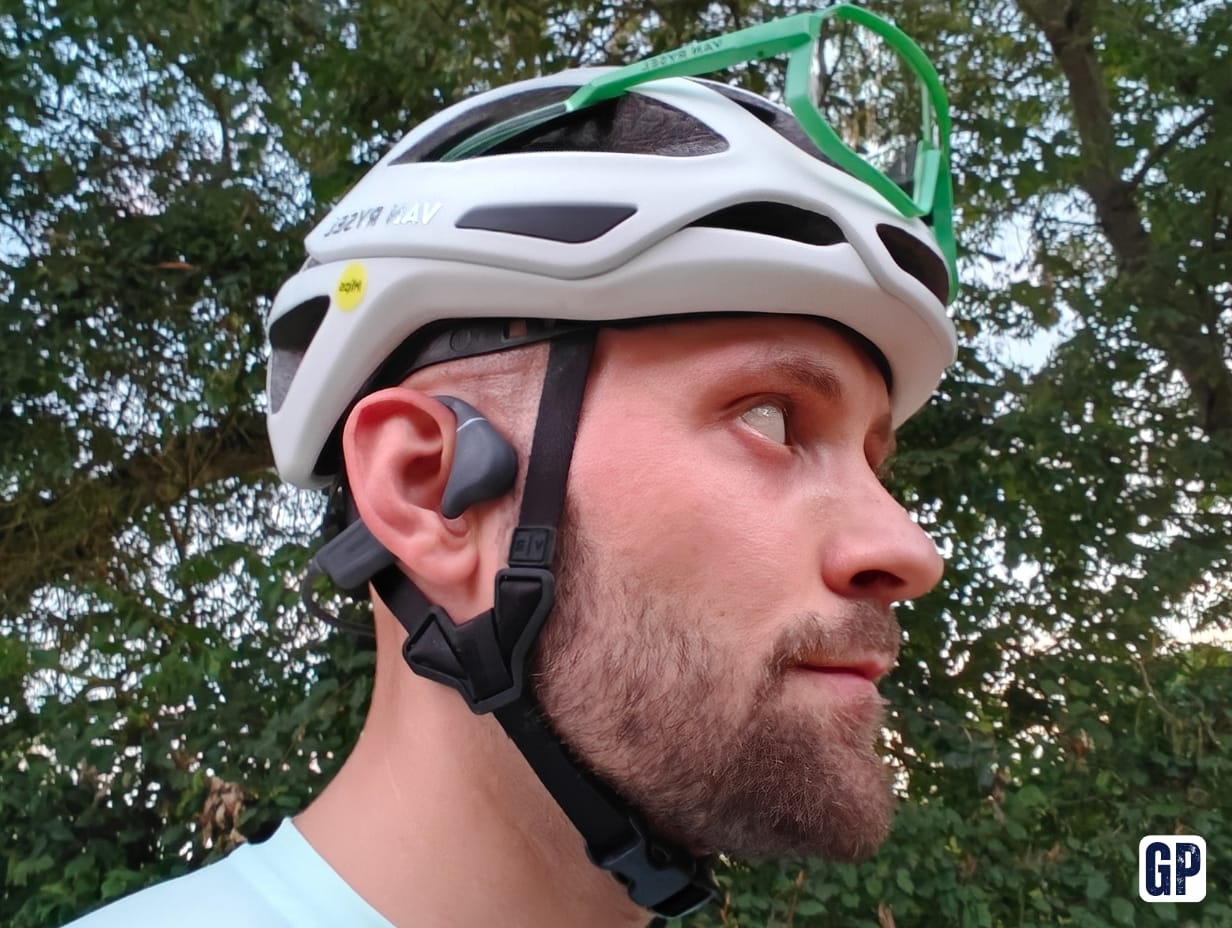
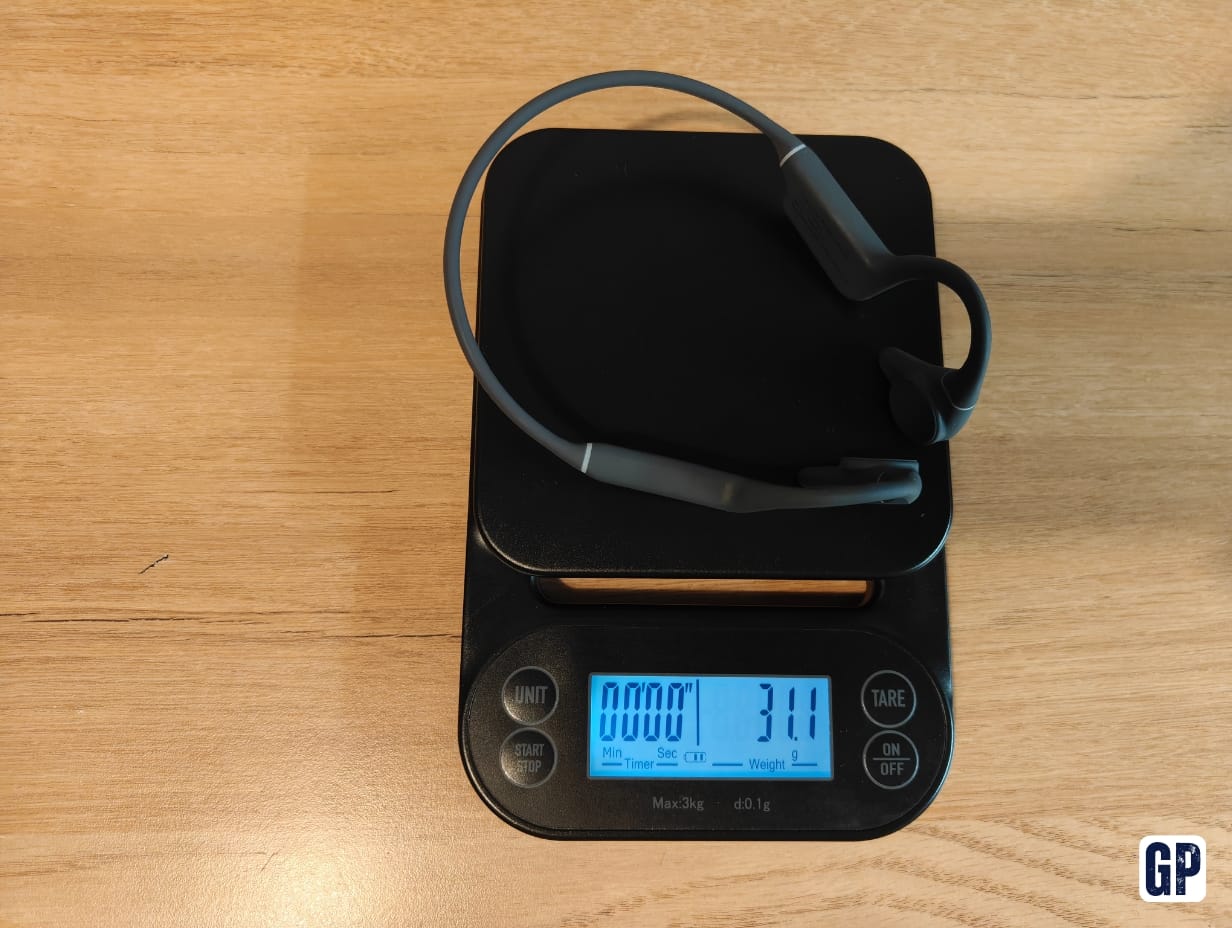
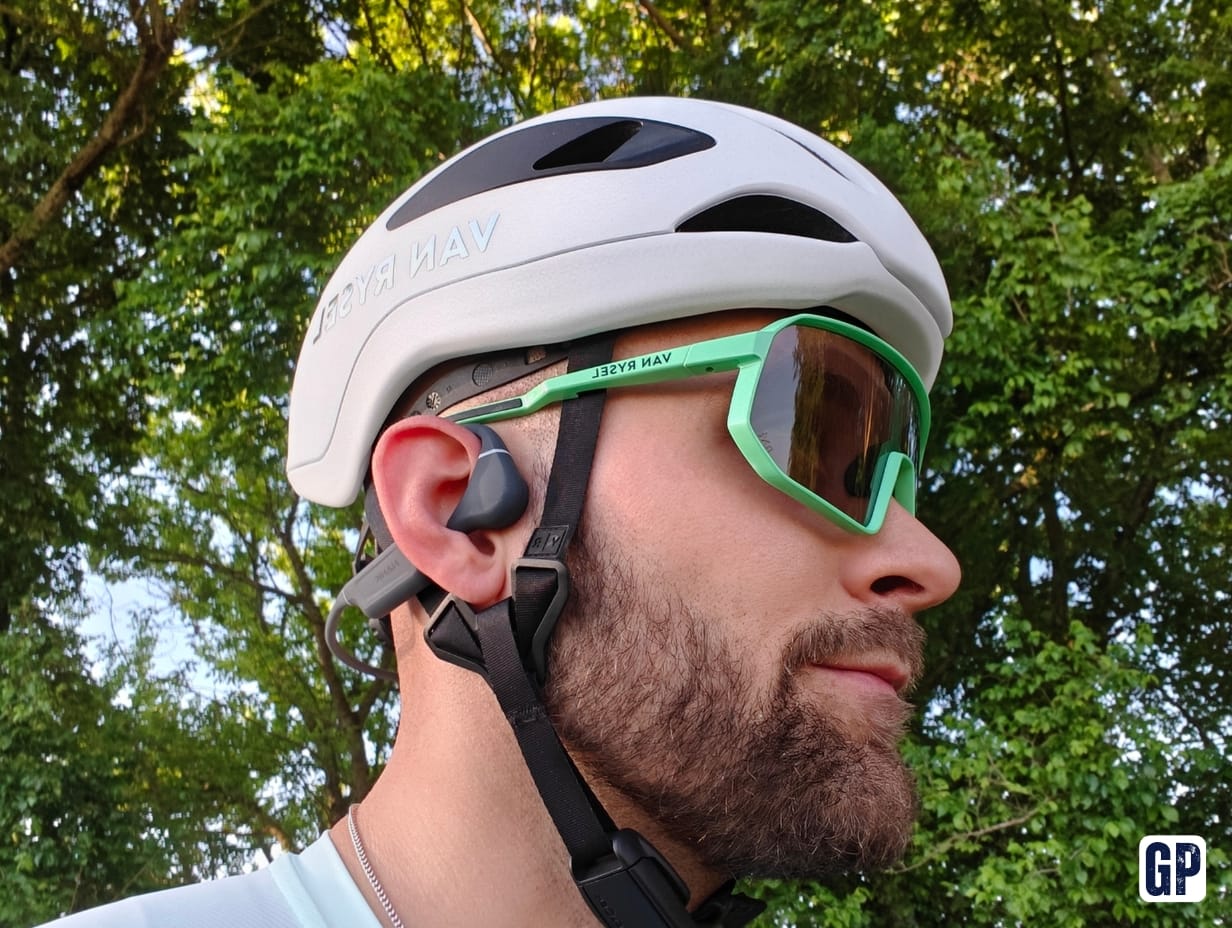
At just 31 grams, you quickly forget you’re wearing the Runner Diver2 Pro.
Once properly positioned, the headset does not move. I never had to readjust it, even after very rough gravel sections.
Nank also offers a system that lets you switch between an open and a closed position for the transducers.
In the closed position, the sound gains presence and the bass gains depth. In return, the transducers put more pressure on the tragus.
On long rides, I mostly used the open position. The rendering is slightly less immersive, but comfort is better and awareness of the environment even more natural.
As for controls, Nank opted for simplicity. The three physical buttons are easy to find by feel while riding.
The centre button handles power as well as play and pause, while the two volume buttons also let you skip tracks with a long press.
Other combinations give access to additional functions, such as switching between Bluetooth and MP3 modes or shuffling the internal storage.
Overall, it’s intuitive and I had no difficulty operating the headset during this test.
That said, their small size makes me think the controls could be a bit less practical with bulky winter gloves – a point to confirm when temperatures drop.
In the field: an experience that accompanies the ride
Once on the bike, the Runner Diver2 Pro reveals its true value. My main concern was safety: I feared it would end up cutting me off from my environment.
At no point did I feel isolated. Cars remain audible, as do other cyclists, pedestrians, and road noise.
I like to ride while staying tuned to my surroundings and was afraid of losing part of those sensations. That concern quickly faded: the music accompanies the ride without ever taking over.
Its behaviour in the wind is another interesting point.
The faster you go, the more aerodynamic noise takes over and the music moves to the background. I found that behaviour reassuring.
Over the weeks, I found myself rediscovering the pleasure of music on certain rides. I still enjoy riding in silence, but on long endurance outings or on days when motivation is low, a few tracks are enough to change the mood.
The Runner Diver2 Pro is not limited to music: podcasts and voice guidance should also benefit.
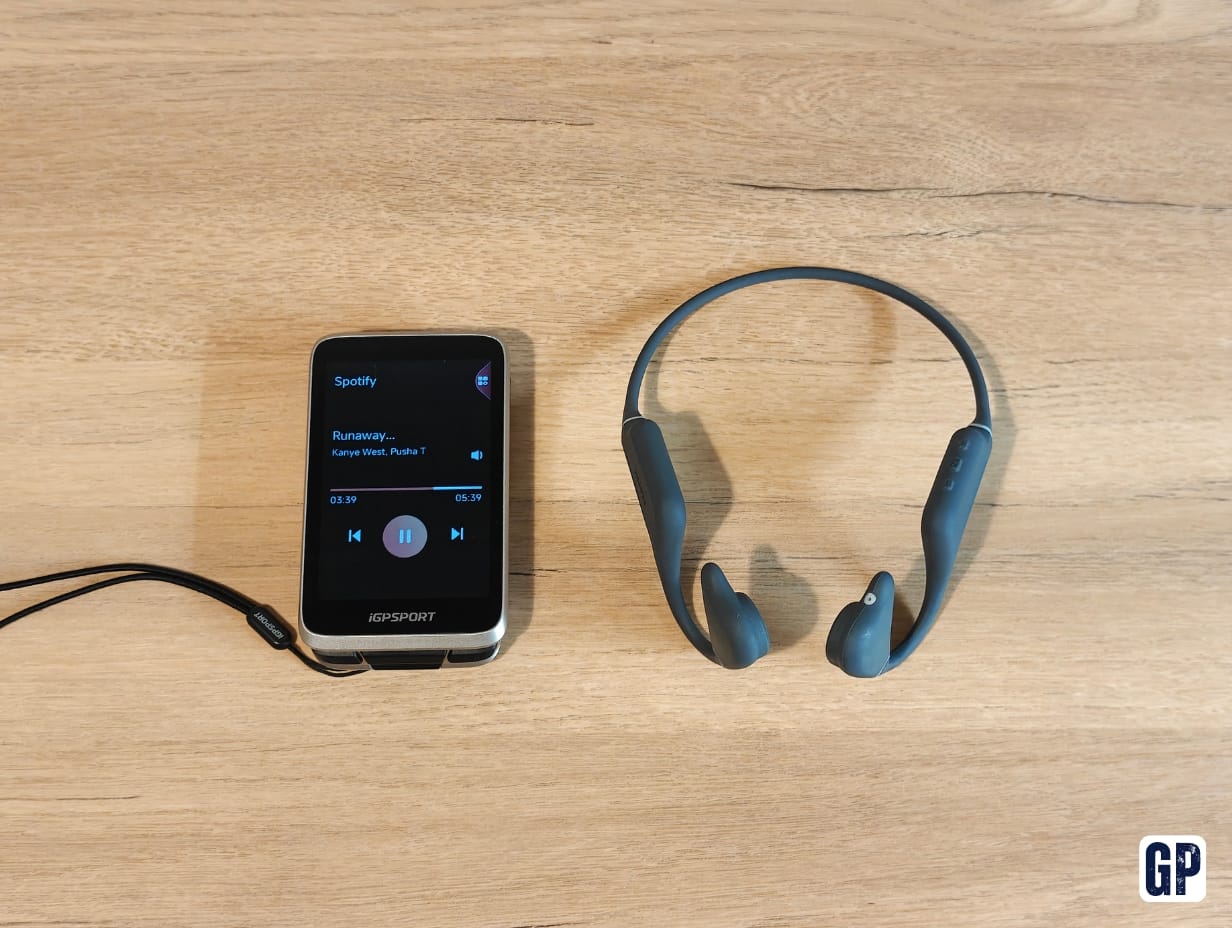
Once connected to my iGPSPORT BiNavi head unit, I controlled playback directly from its interface.
I also set the programmable button on my Shimano Di2 shifter to skip to the next track. In practice, I almost never needed to touch the headset.
As the rides go by, the Runner Diver2 Pro stops being just a headset. It becomes a true riding companion: discreet, practical, and well enough integrated to be forgotten until the moment you decide to trigger a track, a GPS prompt, or a podcast.
Two downsides
No product is perfect, and the Runner Diver2 Pro is no exception.
The main weak point concerns calls on the bike. When stationary or in a quiet environment, the microphone does its job properly.
However, as soon as speed increases, wind quickly takes over.
Despite several attempts during this test, my callers could hear almost nothing but turbulence. For on-bike use, this function is therefore barely usable.
Battery life also deserves some nuance. Nank claims up to 10 hours of listening, but that naturally depends on usage conditions.
By deliberately pushing the headset to its limits, connected via Bluetooth with the volume set to maximum for almost the entire test, I averaged 7 h 50 before complete shutdown.
Even if that result is a little disappointing, it remains consistent with this type of use and is more than sufficient for most rides.
Finally, as mentioned above, the system that switches between open and closed positions is an excellent idea. However, I preferred to ride in the open position, as the closed position proved a bit less comfortable on long rides.
The Runner Diver2 Pro clearly changed my mind about bone conduction. I feared an unconvincing headset that might cut me off from my surroundings. In the end, I discovered quite the opposite.
Despite slightly underwhelming battery life at maximum volume and calls that are barely usable on the bike, the overall verdict is positive.
A gravel and road cycling enthusiast, Arnaud loves climbing and taking on multi-day sporting challenges. A keen bikepacker, he maintains and upgrades his bikes himself to get the best out of them. He’s also interested in cycling data to better understand and optimise his rides.


 What about the law?
 The law does not mention them explicitly. In theory, any device “likely to emit sound worn at the ear” may be covered.
 Internationally, the situation varies: some countries ban any audio device, others allow it as long as the rider remains attentive (for example Germany, or the United States depending on the state).