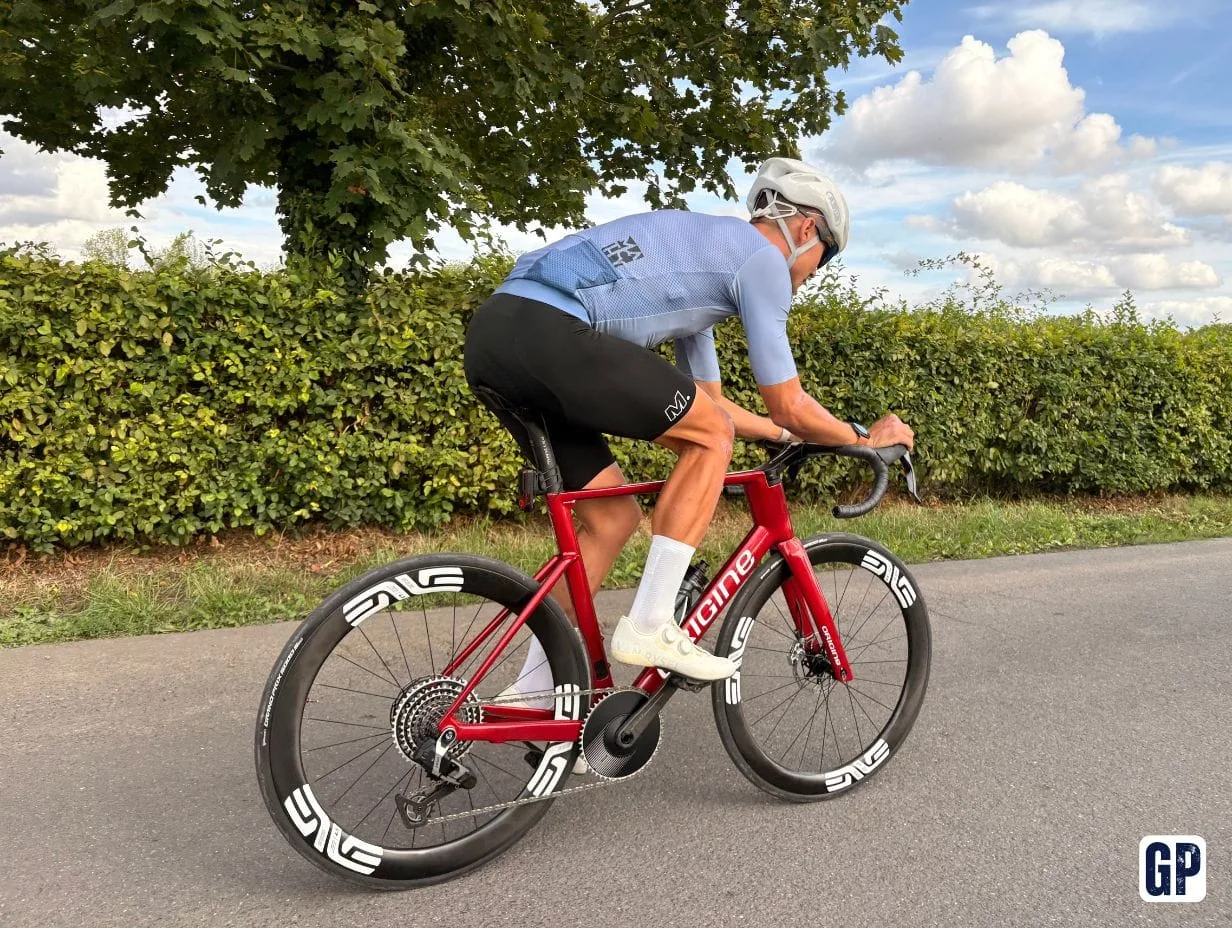

The Fraxion X didn’t arrive as just another bike in the Origine range. When I rode this frame around Rouvigny, at the brand’s HQ, it had barely turned a wheel outside the inner circle. To my knowledge, apart from Victor Papon, rider with the professional team Nice Métropole, no one had really had time on it yet.
Let me be clear from the start: this is not a long-term test. I couldn’t take it over a mountain pass, judge it on a long alpine descent, or see how it behaves after several weeks with my own setup. It was a first ride. But with a high-end road bike, some signals come through quickly.
Strengths:
- Precise, lively front end
- Very natural-feeling integrated cockpit
- Interesting weight-to-aero ratio
Could be better
- Di2 battery access not very convenient
What made this first outing interesting wasn’t only riding the bike. It was also understanding how Origine arrived here, talking with Hugo on the marketing side and with the product teams. The Fraxion X isn’t a simple update of the Fraxion GTR. At the outset, the project could have looked like a fairly logical evolution, almost a “Fraxion 2”. Then the brand changed tack.
A truly new bike, not a lightly modernised Fraxion
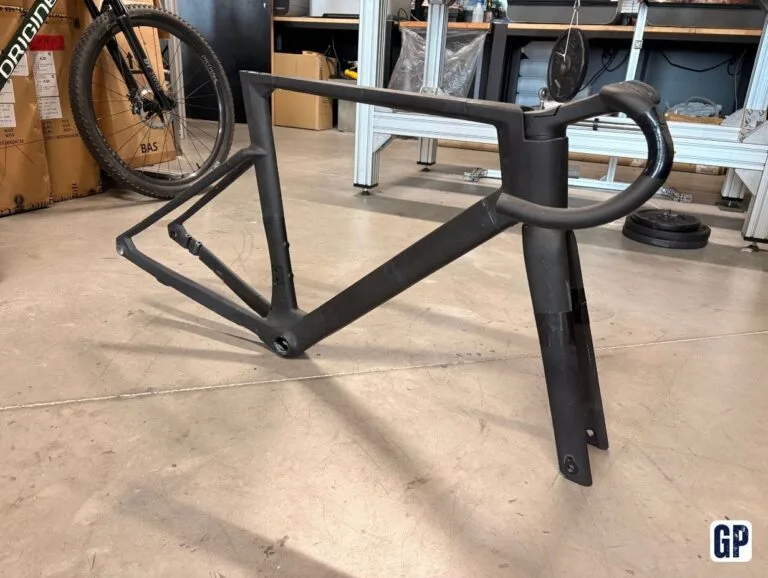
Origine presents the Fraxion X as its fastest road bike, with a very performance-driven approach: aero optimisation, increased stiffness, a proprietary cockpit, a lighter frame despite deeper tubes. The figures announced by the brand speak for themselves: 15 watts saved at 40 km/h, stiffness up by 11% at the head tube and 16% at the bottom bracket, a bare frame at 875 g, and tyre clearance up to 32 mm.
They’re manufacturer numbers. They set a direction rather than absolute on-road truth. But they do tell the story well: Origine isn’t trying to make a comfort-endurance bike disguised as a fast machine. The Fraxion X targets the trained rider, the racer, the sportive rider who wants an efficient bike everywhere, with a genuine priority given to speed.
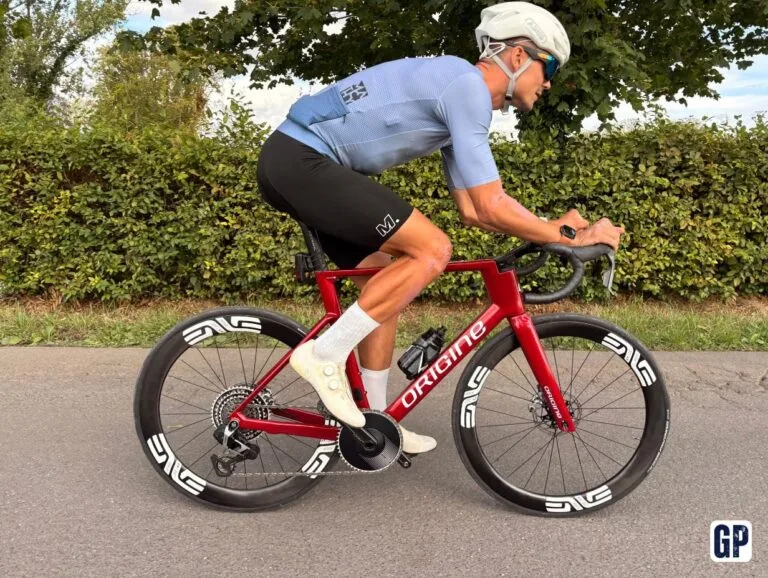
This is quite interesting within the Origine catalogue, because the brand has often cultivated a very recognisable DNA: high-performing bikes, but rarely caricatured. On the Fraxion X, I felt something different. This may be the Origine where I recognise the brand’s usual DNA the least, at first glance. And from the conversations on site, that’s no accident.
A beefier silhouette, especially up front
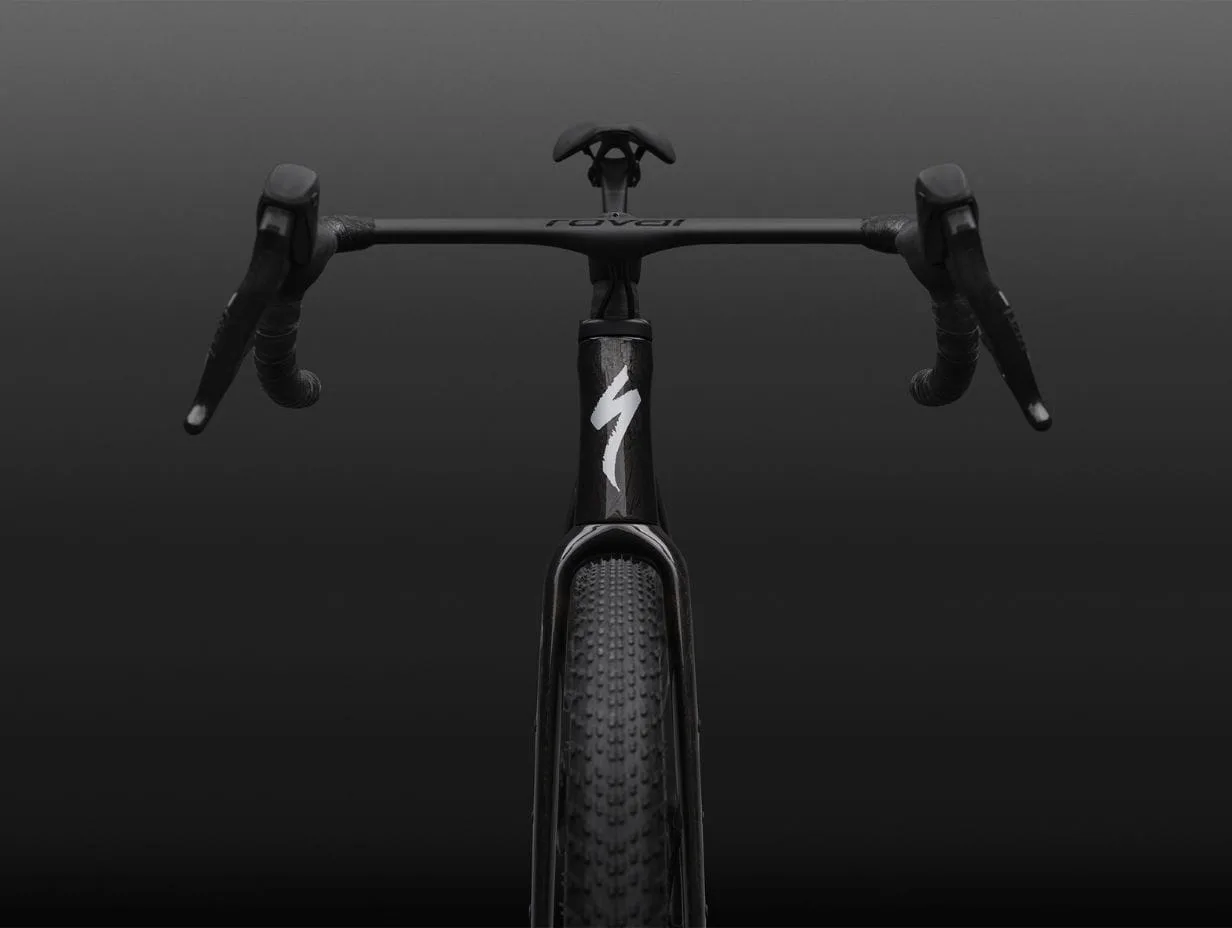
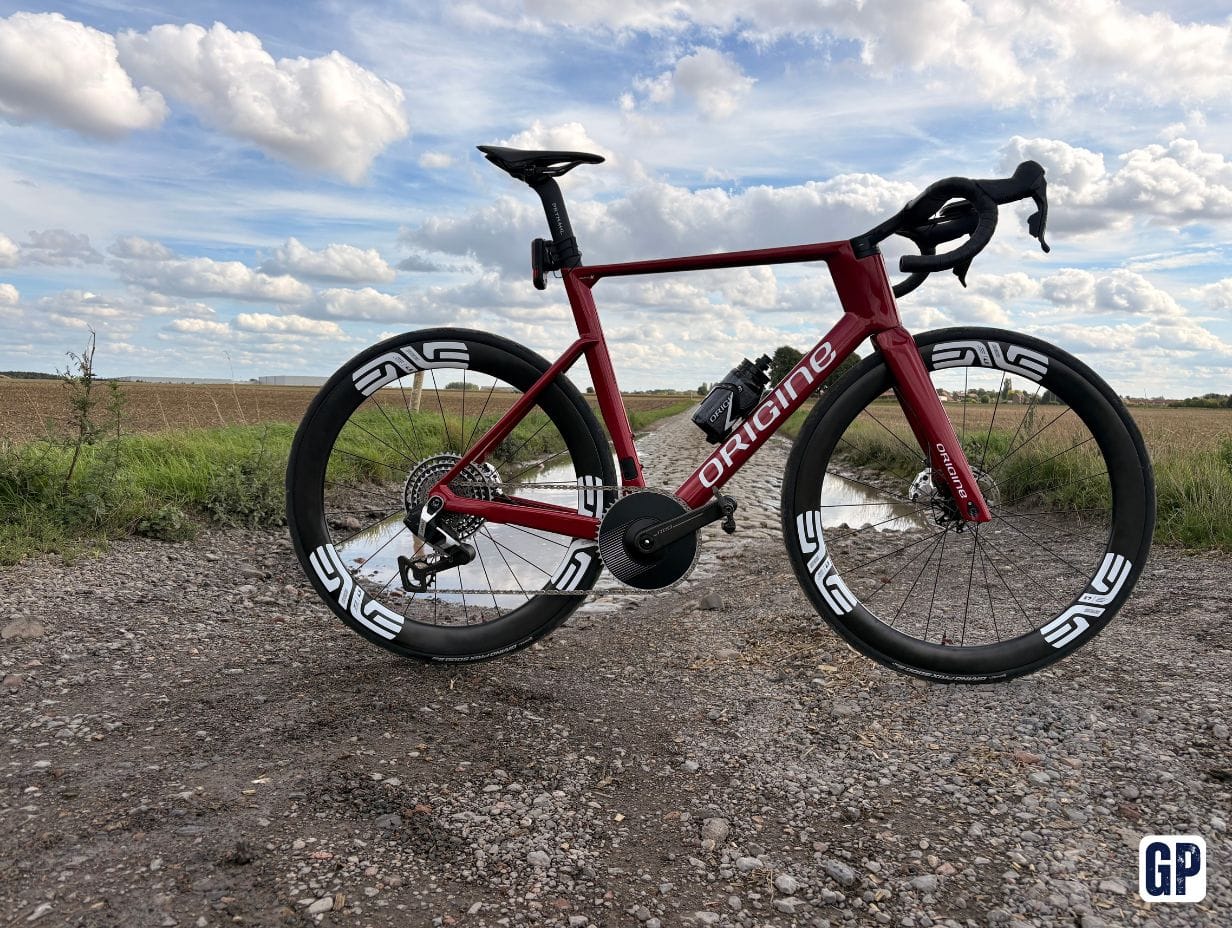
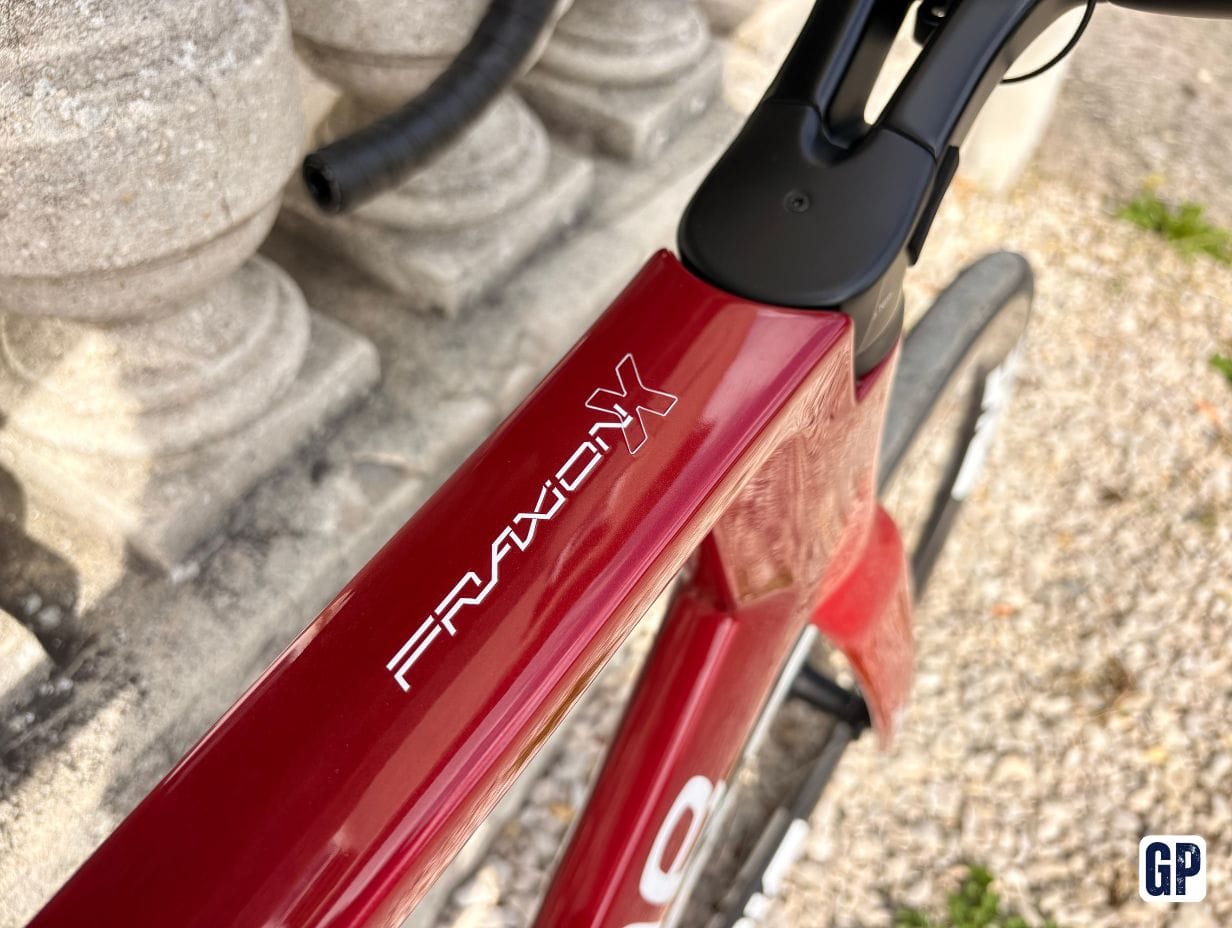
Visually, the Fraxion X marks a break. The head tube is huge for an Origine – the most imposing the brand has ever designed. The fork also gives this impression of a much more “modern aero” bike than the Axxome or the previous Fraxion.
In photos, the effect can look fairly restrained. In person, the bike’s front has real presence. The head tube, its continuity with the cockpit, and the deeper fork create a very compact, very purposeful whole. The kind of detail you don’t just notice at a standstill: from the first metres, the front of the bike feels taut, precise and solid.
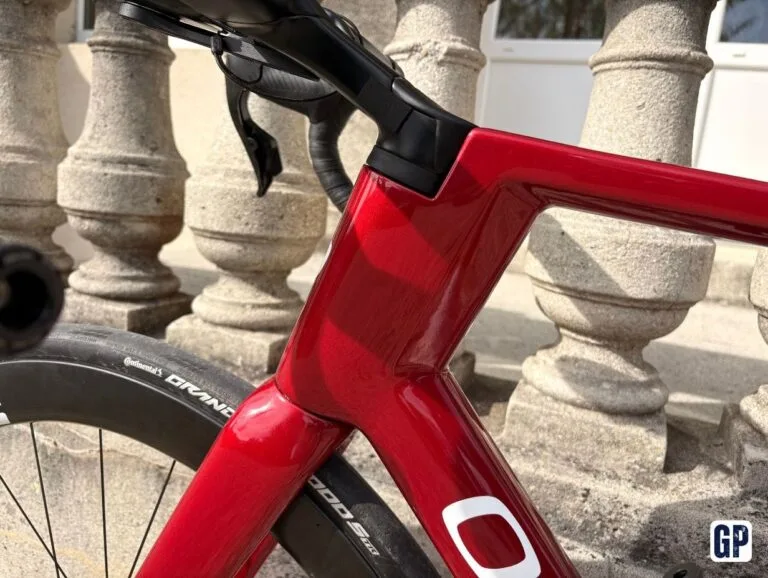
The seatstays also have a distinctive shape, with a flattened section near the seat tube before returning to a rounder profile. Origine mentions work on vertical compliance and force transfer. On a short first ride, I remain cautious about the exact contribution of each tube to the feel. But the bike doesn’t come across as an aero frame that’s overly harsh and locked down.
The AeroFlow cockpit: intimidating in theory, very natural when riding
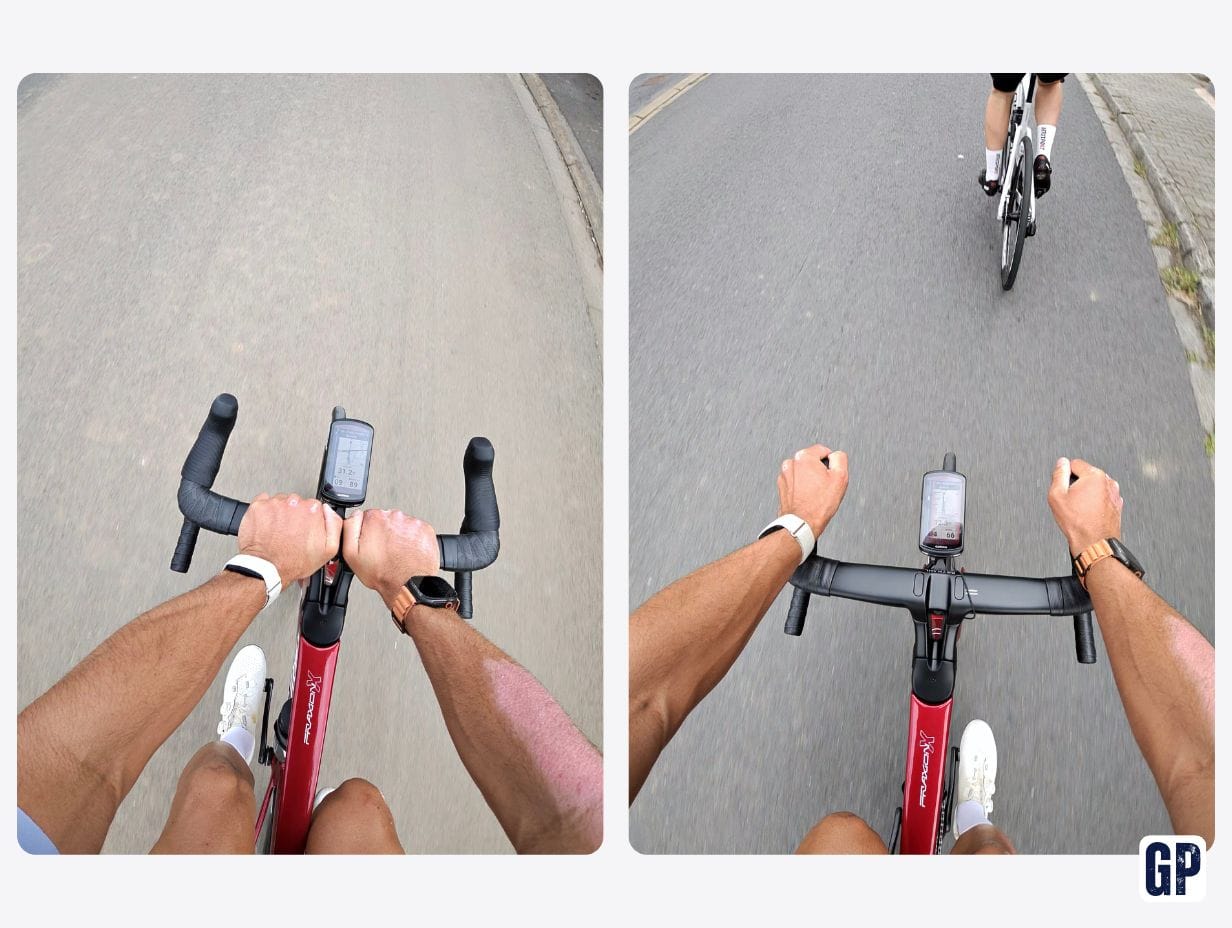
The cockpit is probably one of the most visible elements of the Fraxion X. Origine has developed an integrated Prymahl cockpit, called AeroFlow, available in 45 combinations: widths of 380, 400 or 420 mm, lengths from 80 to 120 mm, and three rise levels.
That matters, because a proprietary cockpit can quickly become a trap. Beautiful, stiff, integrated – but too restrictive if the rider can’t find exactly the right position. Here, Origine has clearly tried to avoid that pitfall.
I had a minor concern before getting on. Not about the concept, but about the ergonomics: width, reach, hand positions, support on the tops, transition to the hoods. In reality, I found my bearings straight away. The grip is natural, the contact points fall nicely to hand, and the bike doesn’t have that slightly artificial feel you sometimes get from over-sculpted cockpits.
Aesthetically, I’m a little more reserved from the top view. The two-piece cockpit doesn’t fully speak to me. I’d have liked lines that are perhaps sharper, more taut in places. That’s very personal, and it doesn’t change anything in use.
UDH, Di2 and maintenance: the detail you don’t see on the spec sheet
The Fraxion X adopts a modern design, with UDH compatibility. That’s good news, especially as SRAM is strongly pushing its direct-mount transmissions and road and gravel standards are increasingly crossing over.
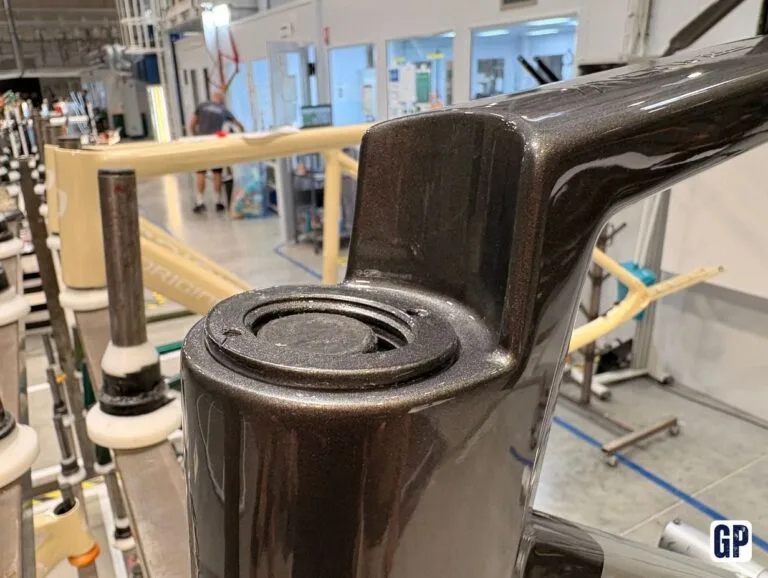
But this compatibility has a consequence that I found worth highlighting. With UDH, Origine has to move the Di2 wire entry point on the chainstay. As a result, on a Shimano electronic build, the insertion ends up quite far along the stay, with a look that’s potentially less discreet than a wireless SRAM build.
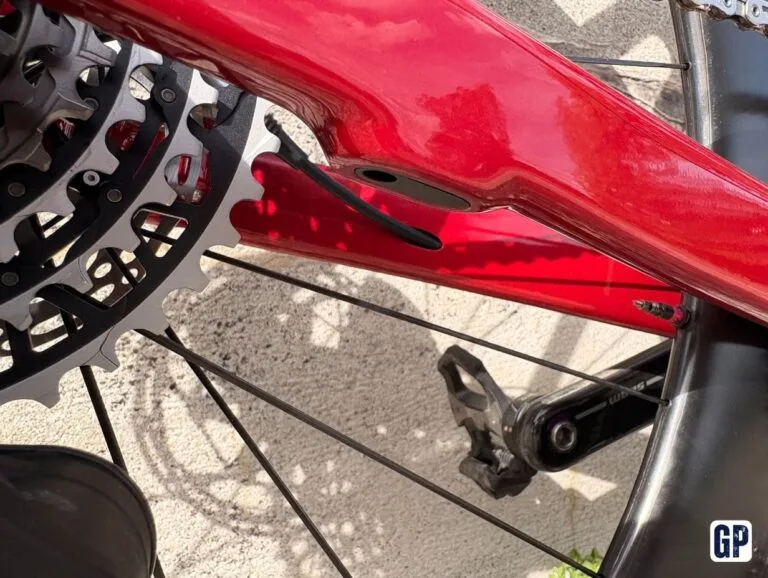
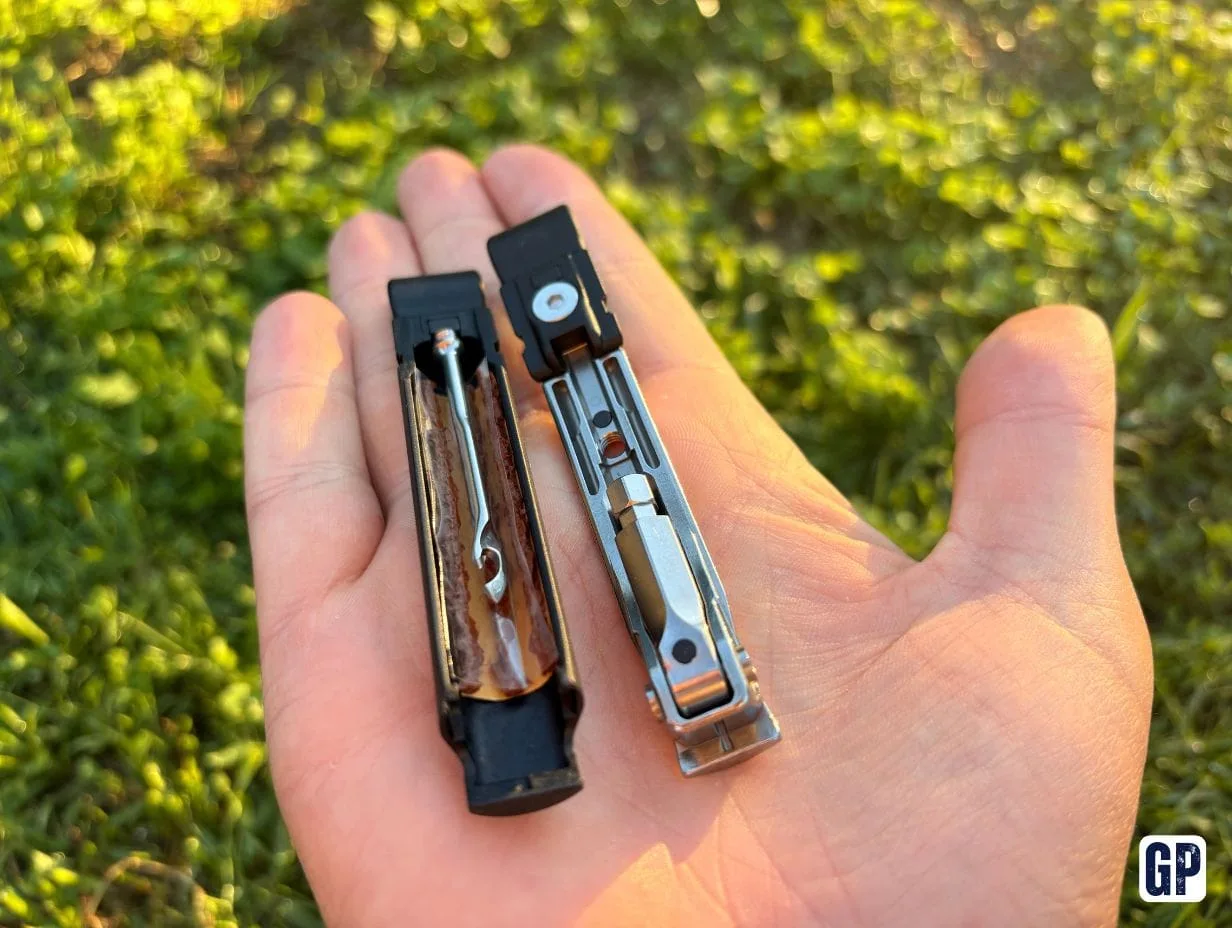
Another detail: the Di2 battery is housed in the down tube. This choice frees up the seatpost, which can then be slimmer, more aerodynamic and more favourable to vertical comfort. But if you have an issue with the battery, you’ll need to remove the bottom bracket to access it.
It’s not dramatic. Shimano Di2 groupsets are reliable, and many riders will never encounter this problem. But it’s exactly the kind of point I want to emphasise more in our reviews. A good bike isn’t only a fast bike. It’s also a bike that doesn’t needlessly complicate maintenance.
The SRAM XPLR 1x suits this road bike surprisingly well
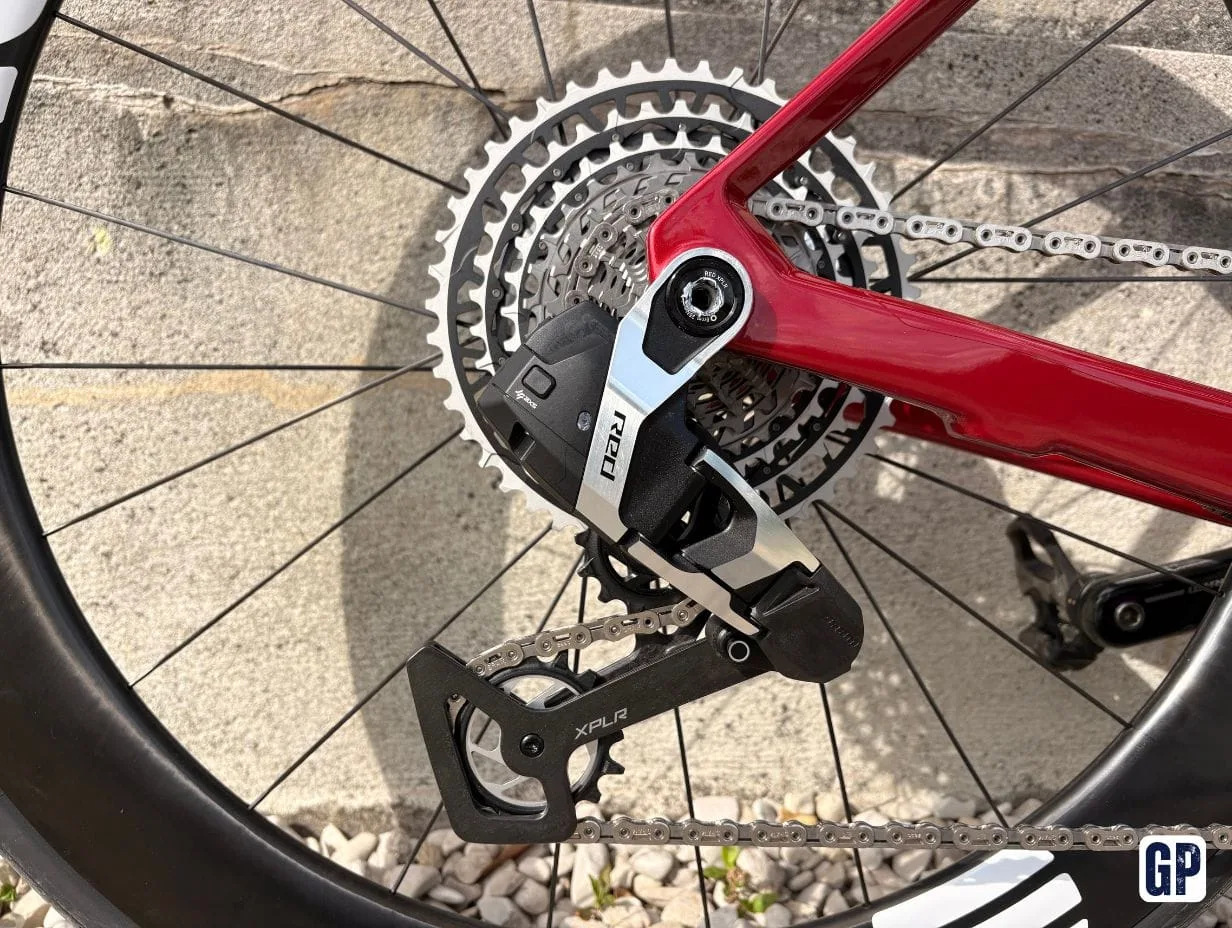
The test bike was set up 1x, with a 13-speed SRAM XPLR groupset, a 10-46 cassette and a 50-tooth chainring. Yes, we’re talking about an aero-performance road bike with a derailleur and cassette bearing gravel DNA. And yet, the combination works very well.
If you read GravelPassion regularly, you know my fondness for 1x, including on the road. This setup showcases the Fraxion X very well. The range is wide, the spacing remains very tidy up to the penultimate sprocket, and the 50t ring here offers useful versatility for riding fast without getting boxed into an overly specific setup.
Obviously, chainring choice will depend on the terrain and the rider’s level. A 50t won’t suit everyone. But in this configuration, the bike kept that direct, simple, almost instinctive character. No unnecessary thinking. You press, it goes.
It’s also a good reminder: the Fraxion X can be configured very differently via the Origine configurator. Conventional double, a more radical 1x, more or less demanding wheels, a tailored cockpit. It’s one of the brand’s long-standing strengths, which we’d already seen in our test of the Origine Graxx GTR in race build, even if the playground here is nothing alike.
Demanding ENVE wheels, not necessarily the most obvious choice for everyone
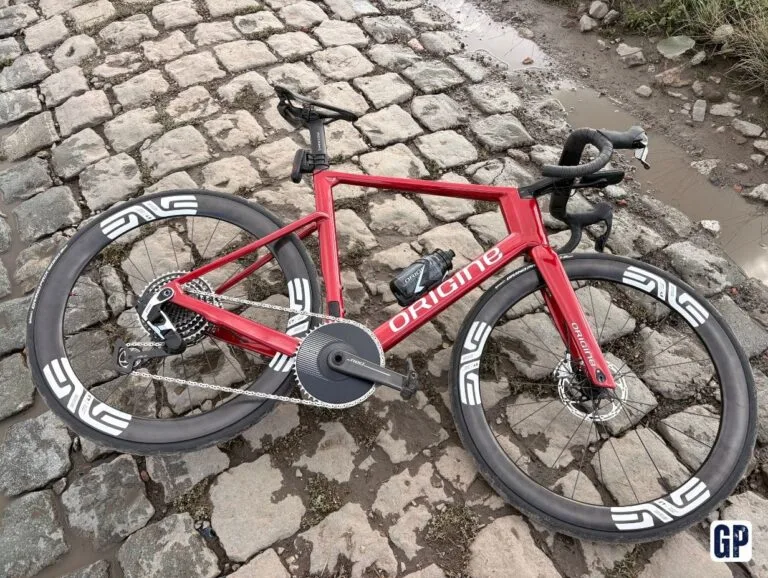
The build I tried ran an ENVE 4.5 wheelset, with 28 mm tyres measuring 30 mm, set up with inner tubes. That detail matters. A very stiff wheelset, combined with inner tubes, will inevitably firm up the overall behaviour.
I felt it, especially on the cobbles. I got shaken about. Part of it clearly comes from my lack of practice on that kind of sector, but the build wasn’t trying to round off the edges either.
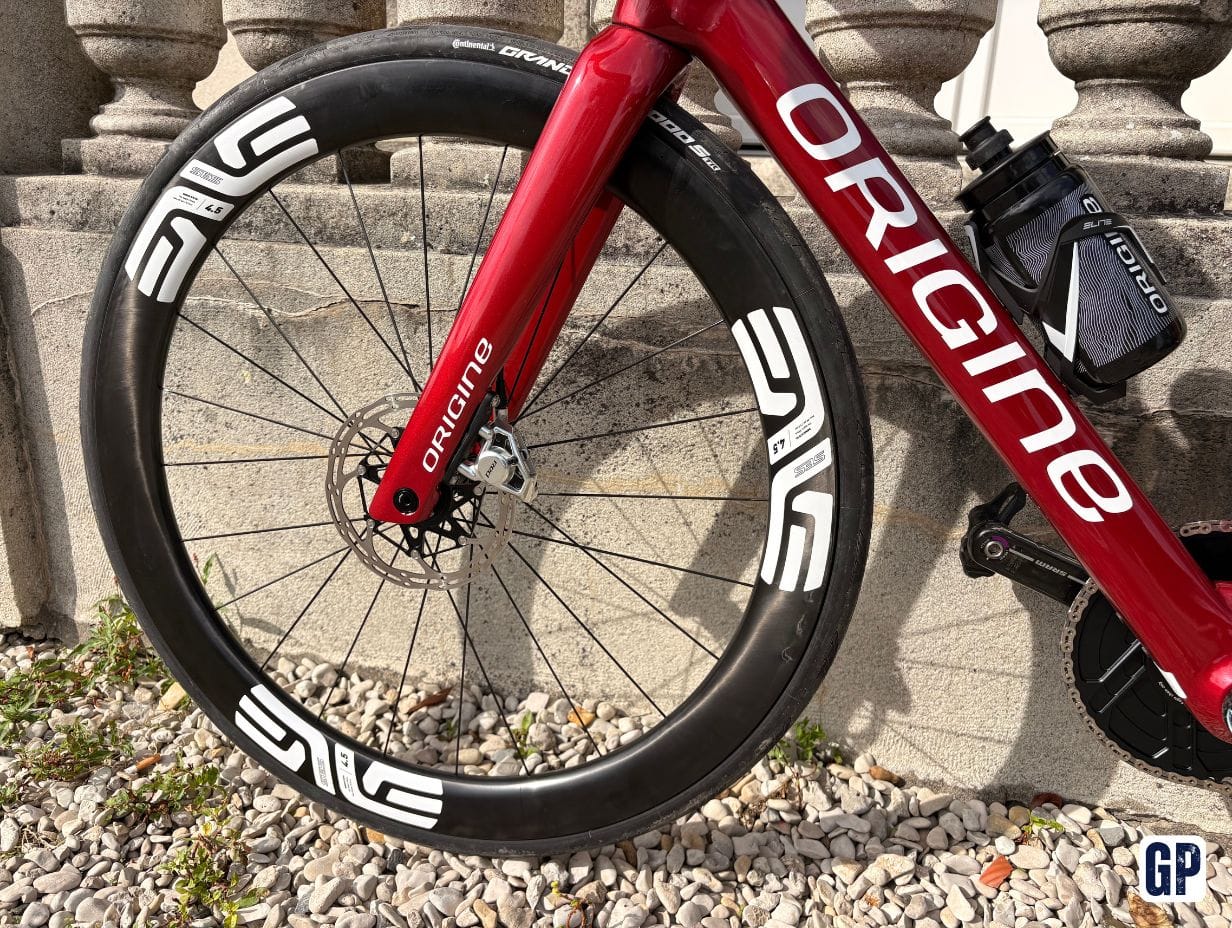
For a racer, or someone who wants to maximise overall stiffness, these wheels can make a lot of sense. For the majority of riders, I think a slightly more forgiving wheelset – for example from Prymahl in a more accessible configuration – would probably match the bike better. The Fraxion X doesn’t need to be stiffened at all costs to deliver speed.
Better comfort than expected, but it isn’t a cobbled-classics bike
Origine doesn’t sell the Fraxion X as a classics bike. And it shouldn’t wear that label. Its clearance up to 32 mm opens it to broken roads, demanding sportives, even the odd cobbled sector with the right setup. But its heart remains road performance.
Despite the fairly firm build, I found the comfort rather good. Not plush, not filtering in the endurance sense of the term, but sufficiently controlled not to reduce the bike to a straight-line machine. The dropped seatstays, the specific seatpost and the option to run wider than 28 mm probably help here.
The point that interested me most isn’t pure comfort. It’s how the bike sets into corners, leans, dives through fast descents – the lines where you need an effective, lively front. There, the Fraxion X gives a real sense of precision.
Again, I didn’t have a long alpine descent to push it to its limits. But around Rouvigny, on direction changes and fast sections, the bike made me want to push on. That’s not trivial.
Core, Lite, RR: Origine pushes customisation right into the carbon
The Fraxion X will come with several fibre grades. The Core version aims to be more accessible in behaviour, with a bit more forgiveness. The Lite version would save 150 g on the frameset and yield a more reactive bike. Finally, the RR variant adds a more thorough gram hunt: ceramic bearings, titanium bolts, lighter axles, specific expander and seat clamp.
In its highest-end configuration, Origine claims a bike that can dip to 6.60 kg with SRAM Red and DT Swiss ARC 1100 wheels. That’s light for a modern aero bike. Very light, even.
The RR version will equip teams sponsored by Origine in 2027, with UCI approval. It’s also a way for the brand to establish itself in a more competitive, more visible territory, where it may have been less expected than with its versatile bikes or more accessible platforms.
A bike for trained riders, not a universal machine
The Fraxion X doesn’t try to speak to everyone. And that’s healthy. It targets riders who go fast, who like to accelerate, who want an aero bike without turning it into an anvil, and who already have a sufficiently committed position to run an integrated cockpit.
With the right setup, it can be very versatile: sportives, races, fast outings, long paced days, rolling terrain. But it demands a minimum of legs and intent. It’s not the bike I’d prioritise for someone who’s seeking above all comfort, mechanical simplicity or an upright position.
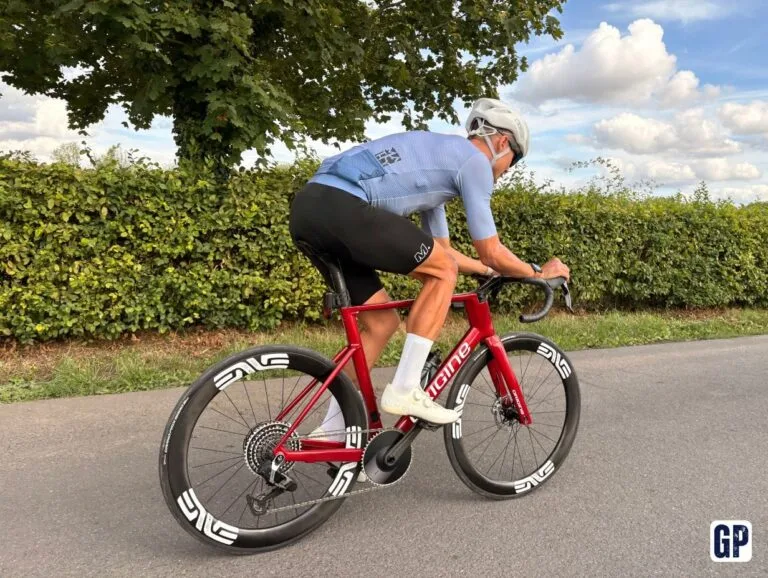
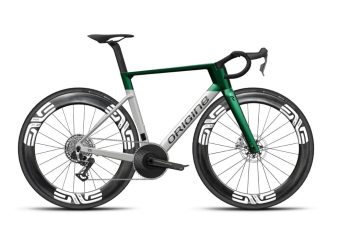
Origine’s strength is that the configurator lets you avoid the caricatured bike. A Core version, less radical wheels, 30 or 32 mm tyres, a well-chosen cockpit: the Fraxion X can become more approachable than it appears. Conversely, in Lite or RR with deep wheels and a race-oriented drivetrain, it can clearly become a weapon.
What this first ride already tells us
I finished this first ride with a fairly clear impression: Origine has taken a risk. Not an absurd industrial risk, but a real positioning risk. The Fraxion X doesn’t look like a simple continuation of the range. It goes after a sharper, more competitive, more exposed segment as well.
And that’s precisely what makes it interesting.
I can’t yet deliver a definitive verdict. It’ll need to be ridden longer, with several builds, on fast descents, on climbs, on poor surfaces, and ideally in a truly personal setup. But even from this first ride, the Fraxion X sends strong signals: a precise front end, a real sense of efficiency, successful cockpit ergonomics and a more radical personality than the usual bikes from Origine.
It may not be the most obvious Origine bike to understand. That’s probably what makes me want to really test it.