
Sunscreen is one of those things we know matters, yet sometimes rush through right before heading out to ride. Too greasy, too sticky, too long to apply, awkward to slip into a pocket… and you end up postponing it, forgetting it, or going without.
That is exactly where Pelotan gets interesting. The brand is not just offering yet another sunscreen, but protection designed for athletes: quick application, light texture, sweat and water resistance, portable formats.
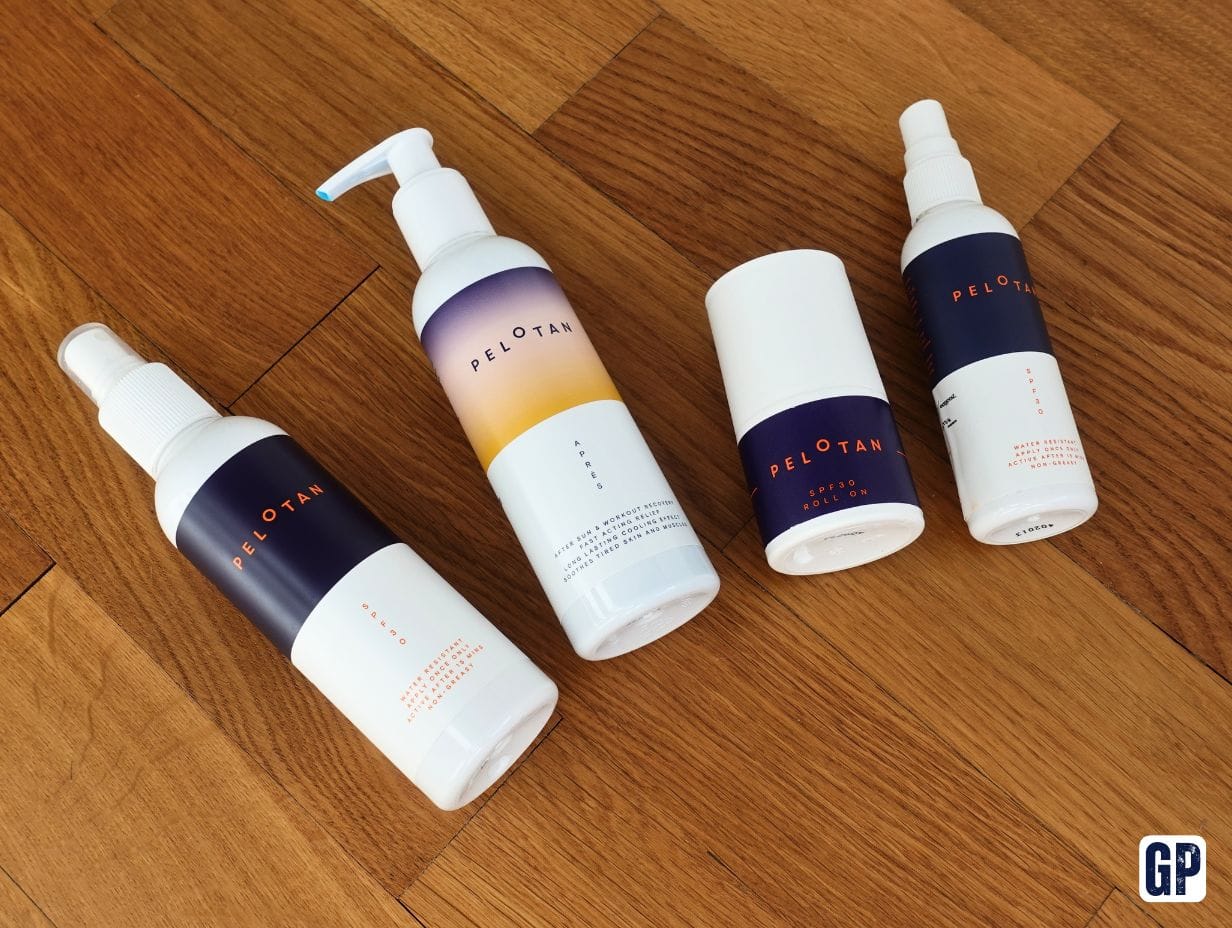
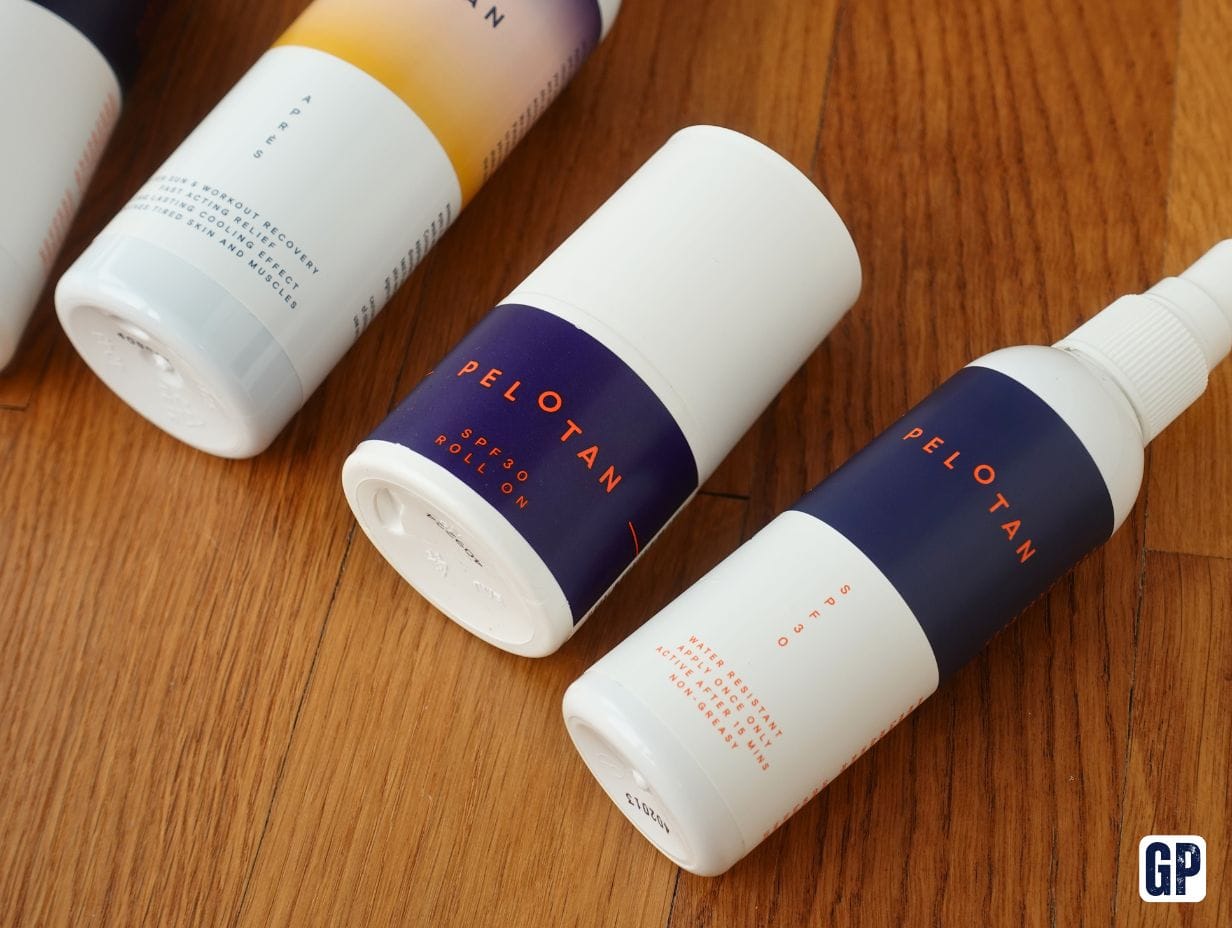
I used Pelotan products for several months, with three options on hand: the SPF30 spray, the SPF30 roll-on, and the Pelotan Après after-sun gel.
Highlights:
- Non-greasy texture and very quick to apply
- Clean application with no sticky skin feel
- Bike-friendly formats
- Good staying power on long rides
Could be improved
- Contains alcohol that can dry out the skin
- After-sun stings too much on already sensitized skin
Pelotan aims its message at athletes. The brand promotes a sunscreen developed for outdoor sports, with one central promise: to stay protected for a long time without greasy skin feel or discomfort during effort.
It also claims a strong presence in professional sport, with users from cycling, triathlon, running and mountain sports. Pelotan is notably the official partner of UAE Team Emirates, and the brand also cites Grand Tour riders among its references.
That does not automatically make it a good product for us everyday cyclists. But it does define the brief well: a sunscreen designed for long exposure, sweat, tight jerseys and jersey pockets.
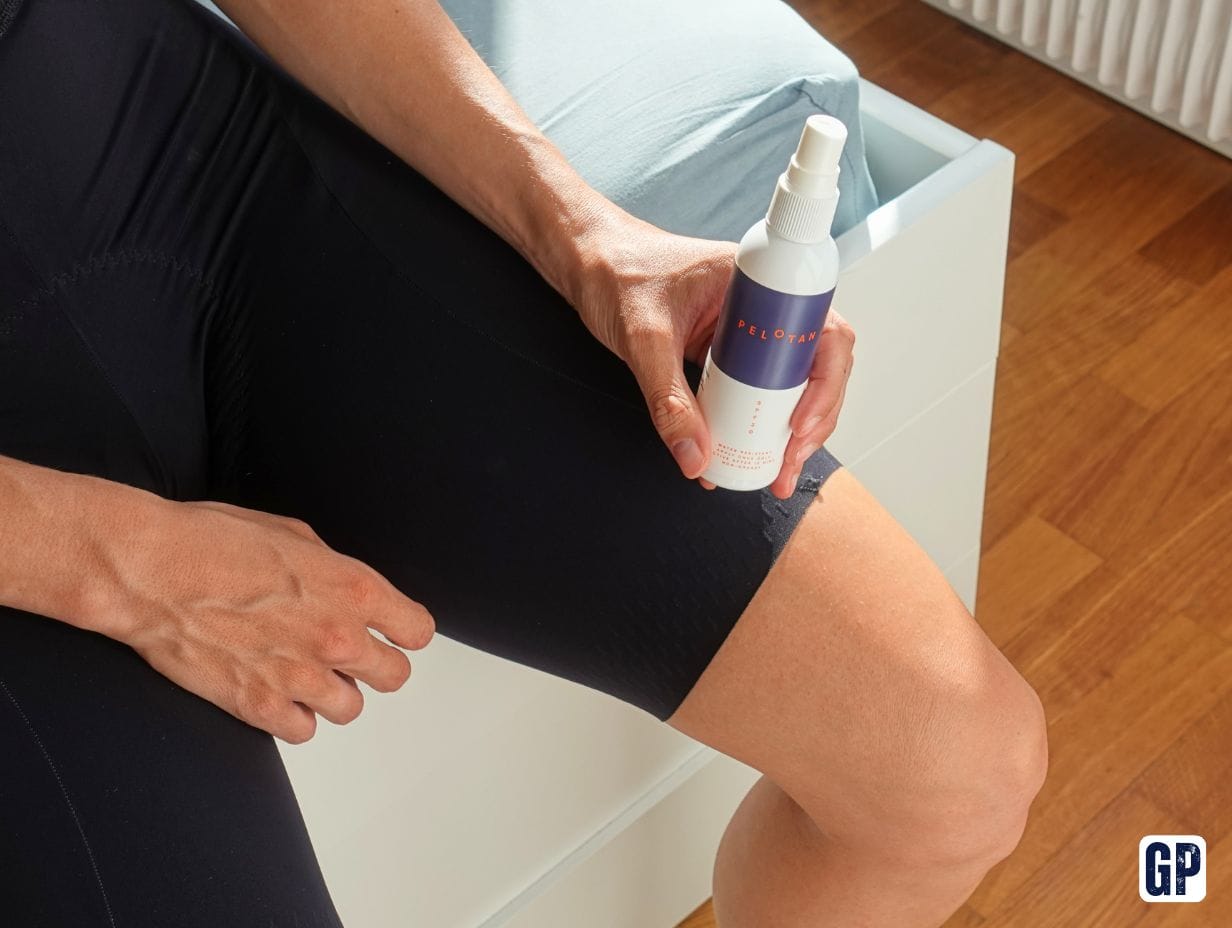
Pelotan SPF30 spray: fast, clean, very pleasant on the skin
The spray is the most versatile format in the range. I had two sizes: 200 ml and 100 ml. The 200 ml is handy for an application at home before heading out. The 100 ml becomes much more interesting for a long ride, a cycling weekend or bikepacking.
The sprays use a manual pump rather than an aerosol. That is always welcome: the environmental impact is lower, and the liquid can easily be decanted into another small container if needed.
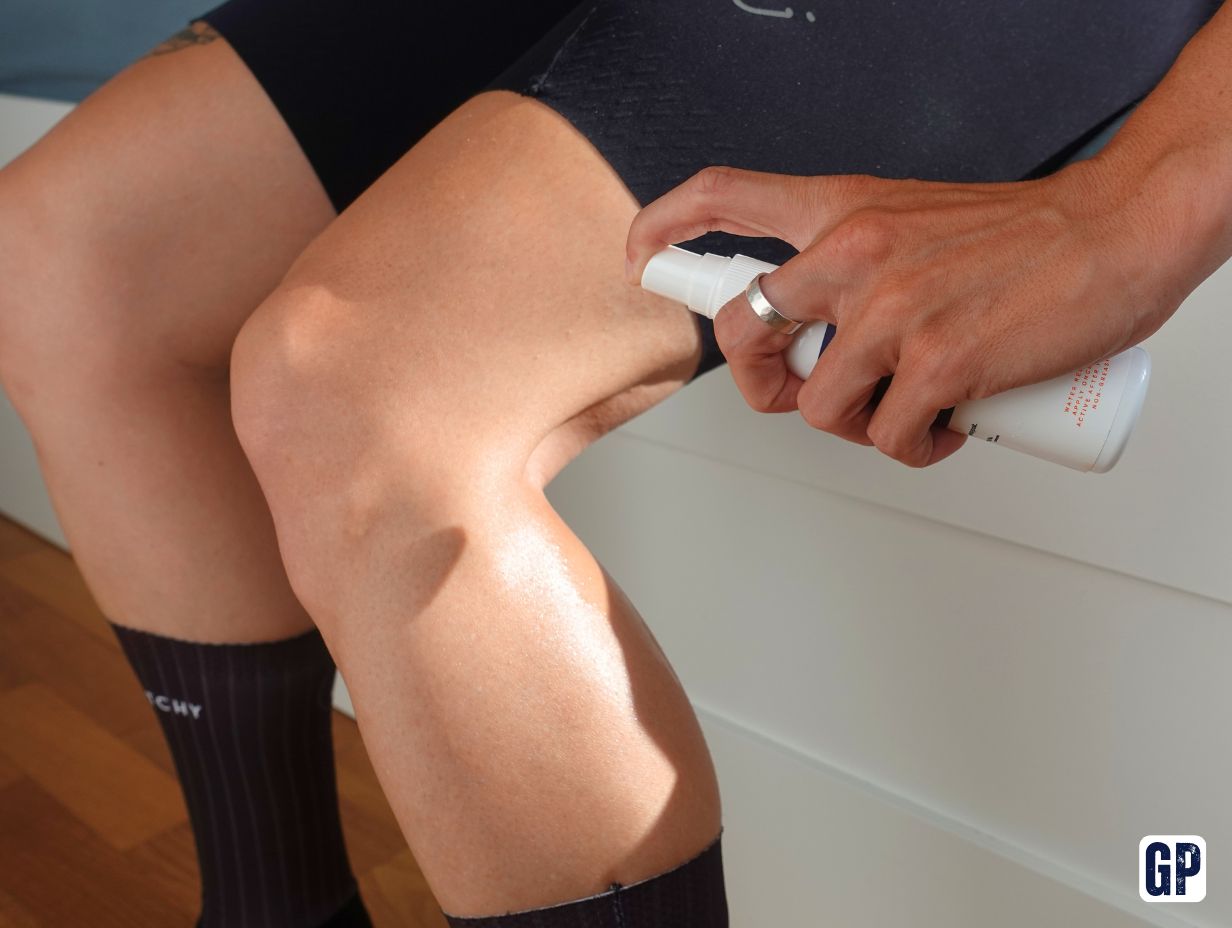
On application, the first thing you notice is the smell. Pelotan sunscreen smells like coconut with a very summery, rather pleasant scent. But the real strength lies elsewhere: the texture absorbs very quickly.
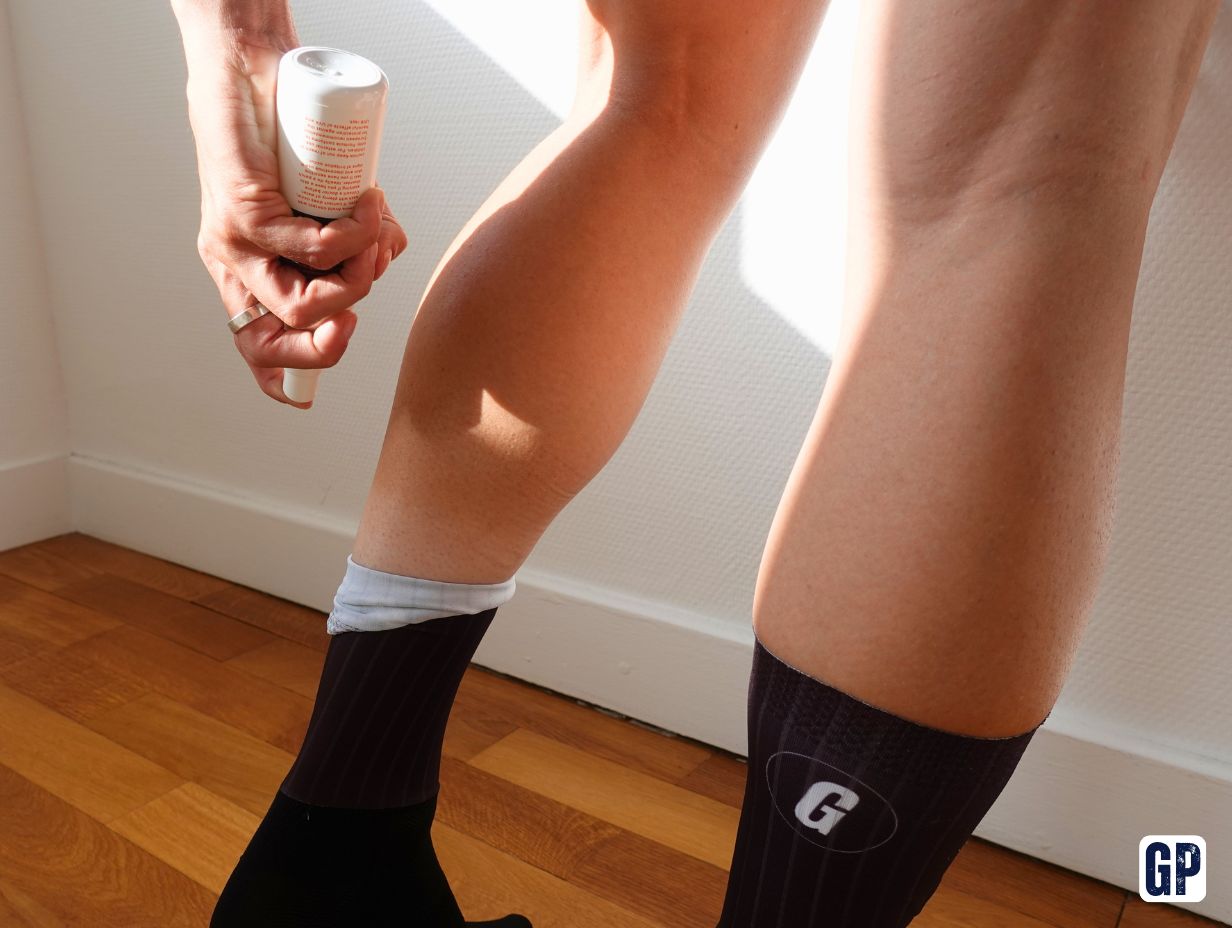
You spray, spread it, and your skin does not stay greasy. No sticky film that makes you want to wait before putting your jersey on. No extra shine either, nor skin that seems to sweat more in the first few kilometers.
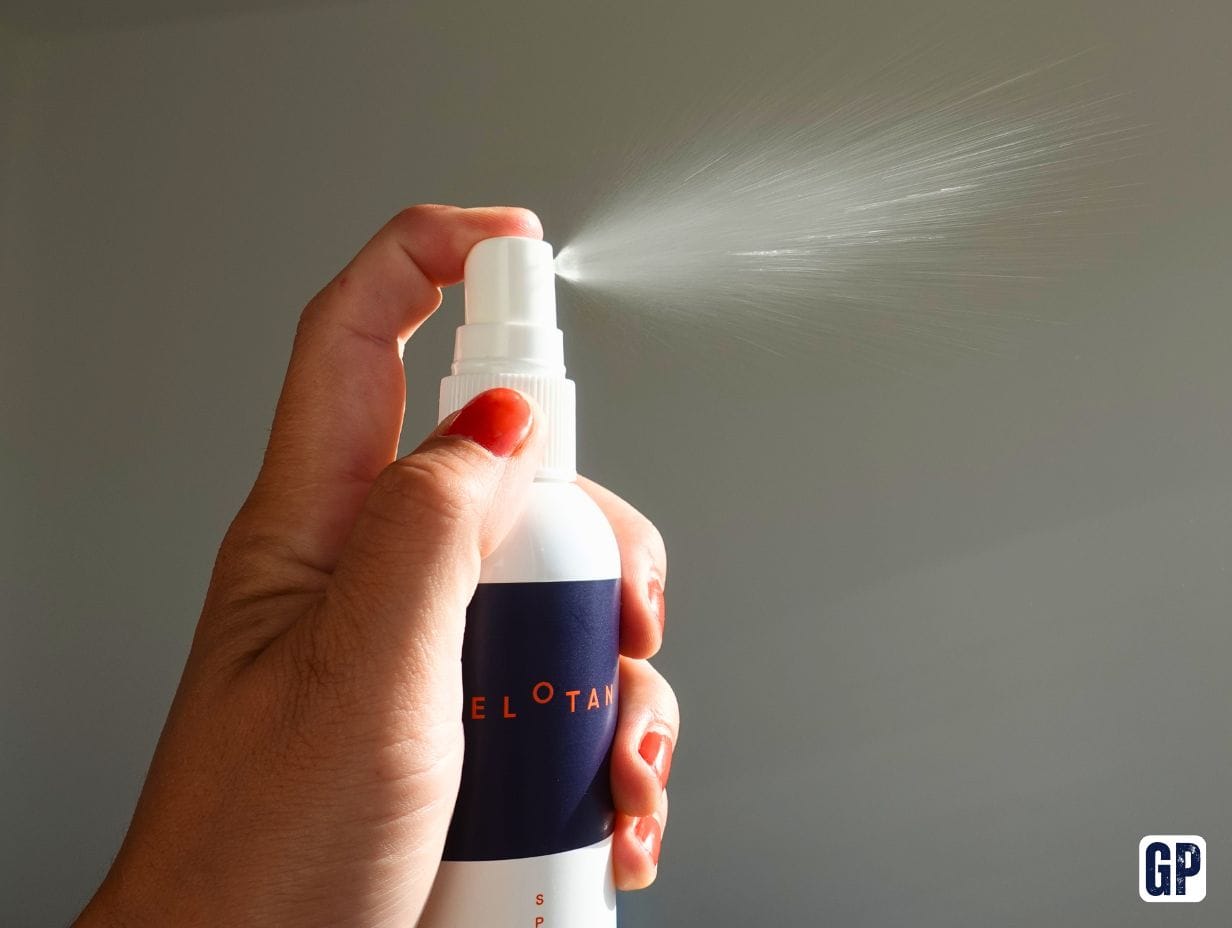
This is where Pelotan succeeds at something important: the product makes protection feel less of a chore. And when a protection product becomes less of a hassle, you use it more readily.
For me, that is very concrete. Before, I sometimes skipped sunscreen because I knew it would feel sticky and I would have that shiny feel on my skin. With Pelotan, application became much more of a reflex. So I protected myself more often.
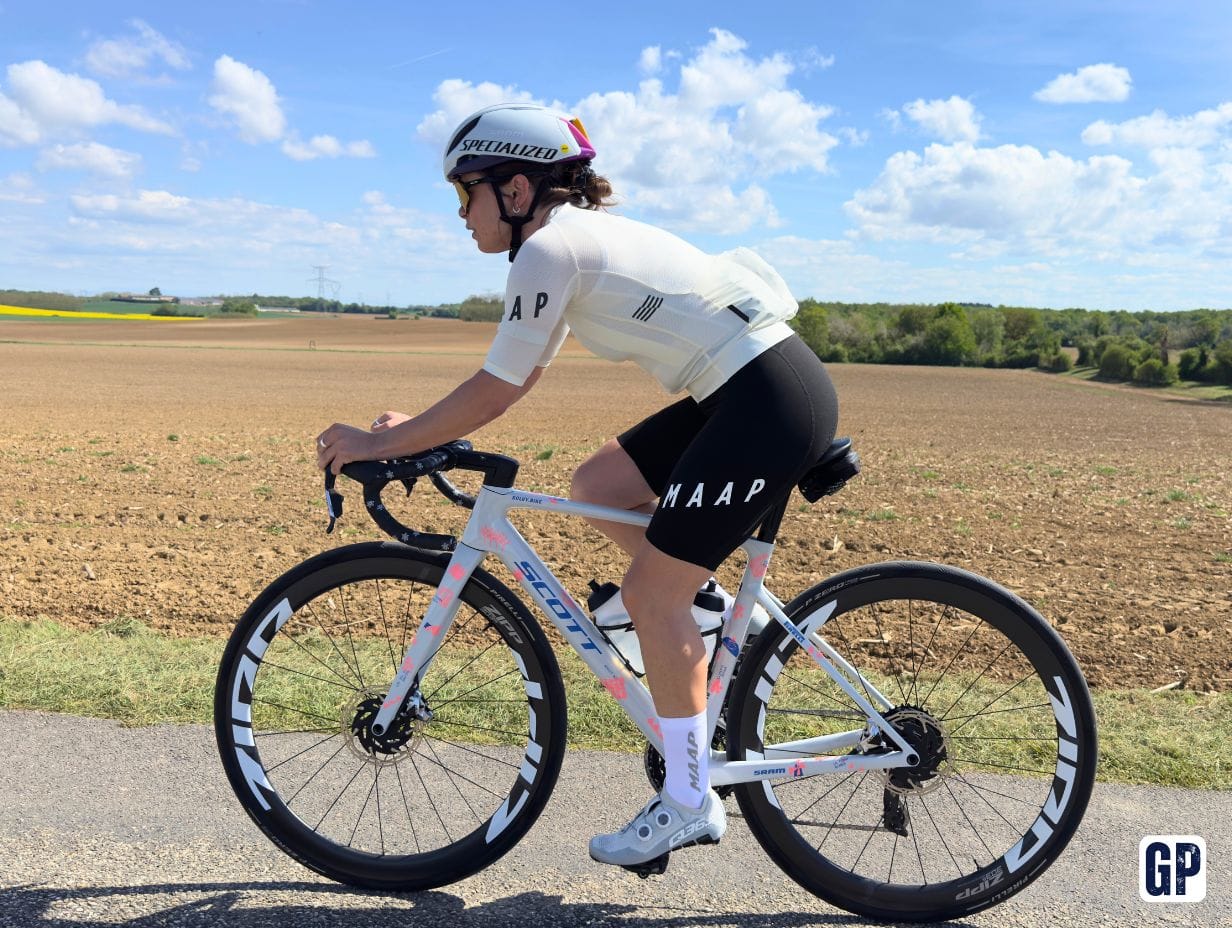
Although I usually prefer SPF50, I never got sunburned on a ride where I had protected myself with Pelotan. I also noticed I tanned less than when I rode without protection, a sign the barrier was doing its job in my use.
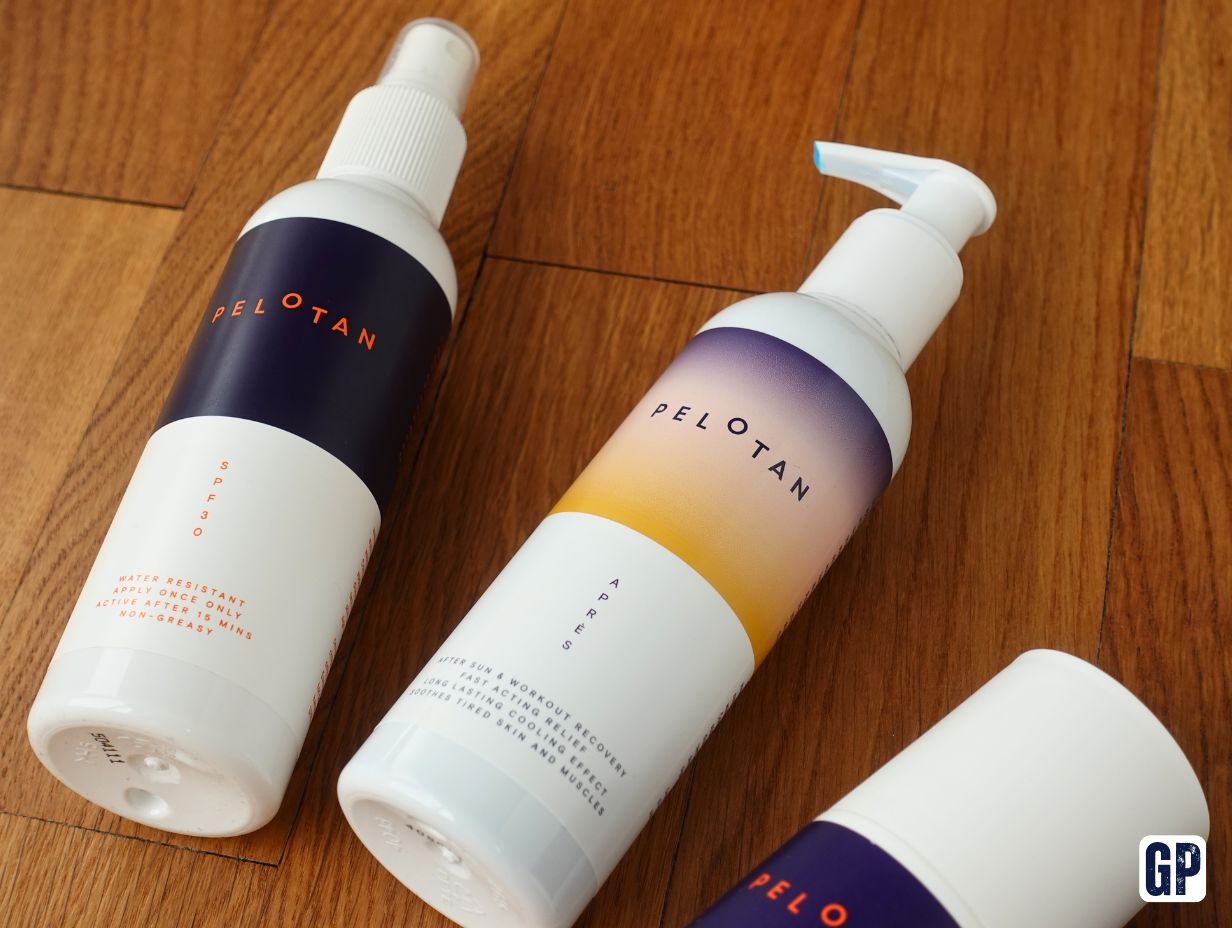
The 100 ml format: the most practical for cycling
The 200 ml spray is great for applying at home, but if you want to take protection with you on the go, the 100 ml format is the most balanced.
It is generous enough not to feel like a miniature product, while still being easy to slip into a bag or a large jersey pocket. For a long ride, a day touring, or a summer event, it is the format I would pick first.
It joins that category of protection products you actually bring along. On this topic, our review of Chamois Butt’r creams already showed how much small details in texture and application change real-world use.
Pelotan SPF30 roll-on: compact, clean, very practical on the ride
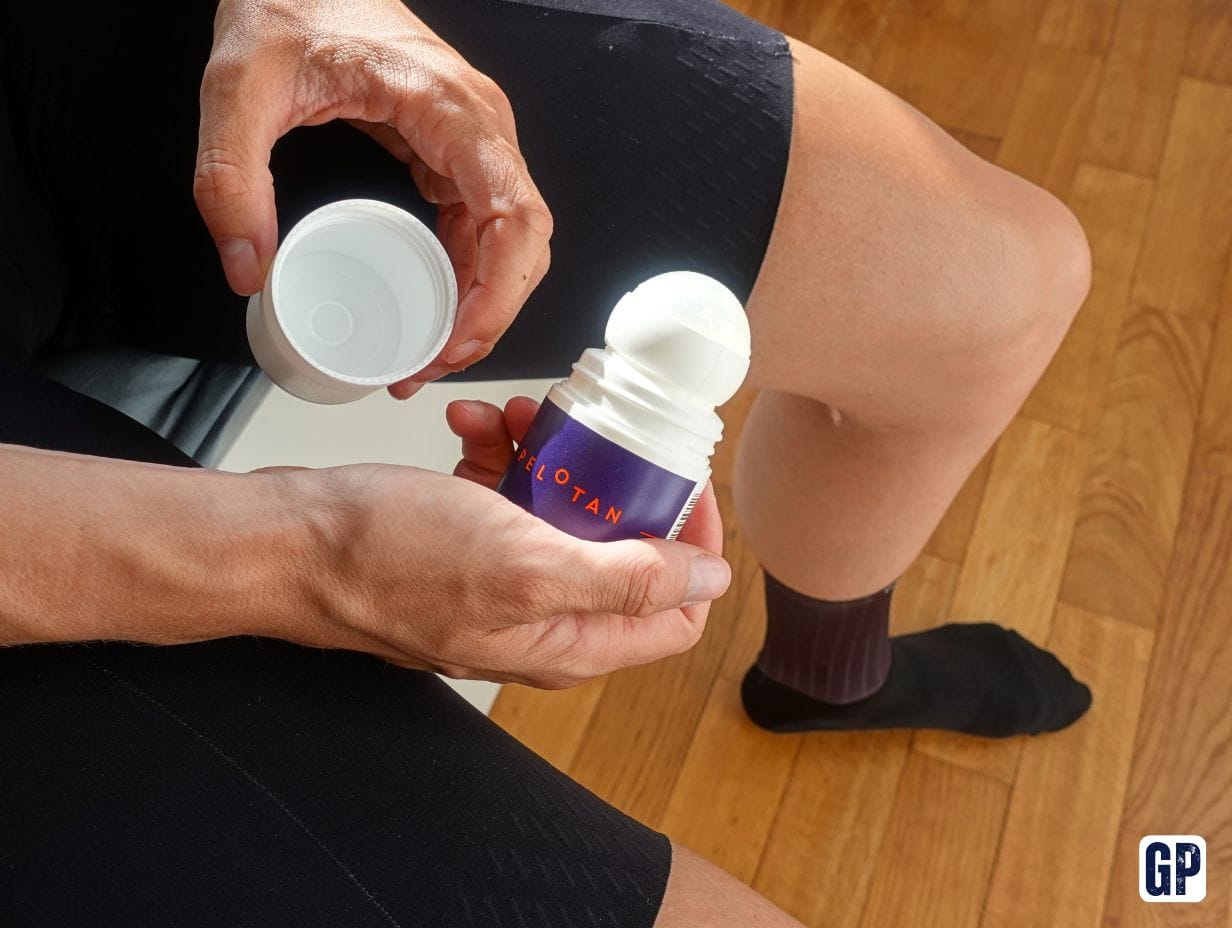
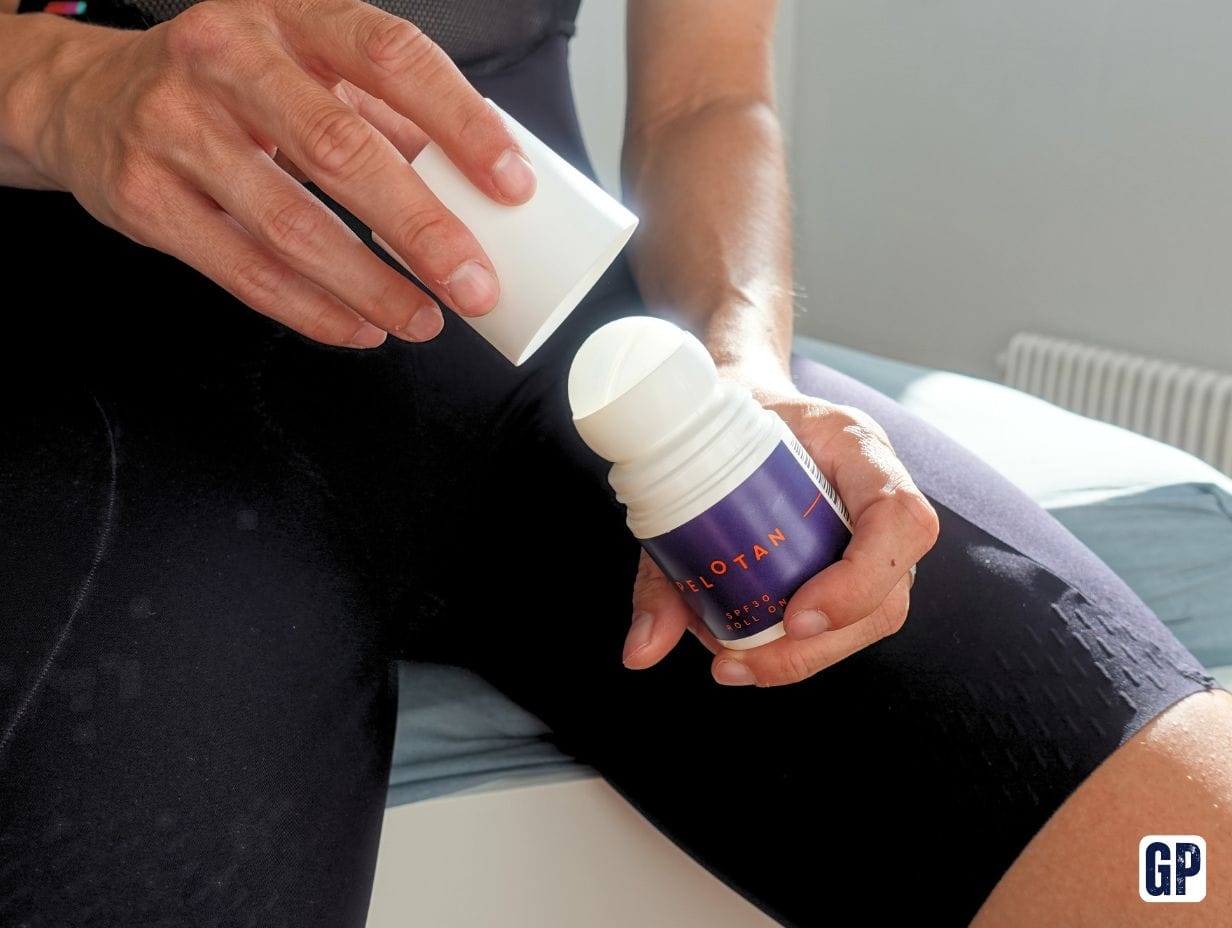
The roll-on is the most compact format in the range at 50 ml. It is wider than a small tube but shorter, and fits very easily in a bag.
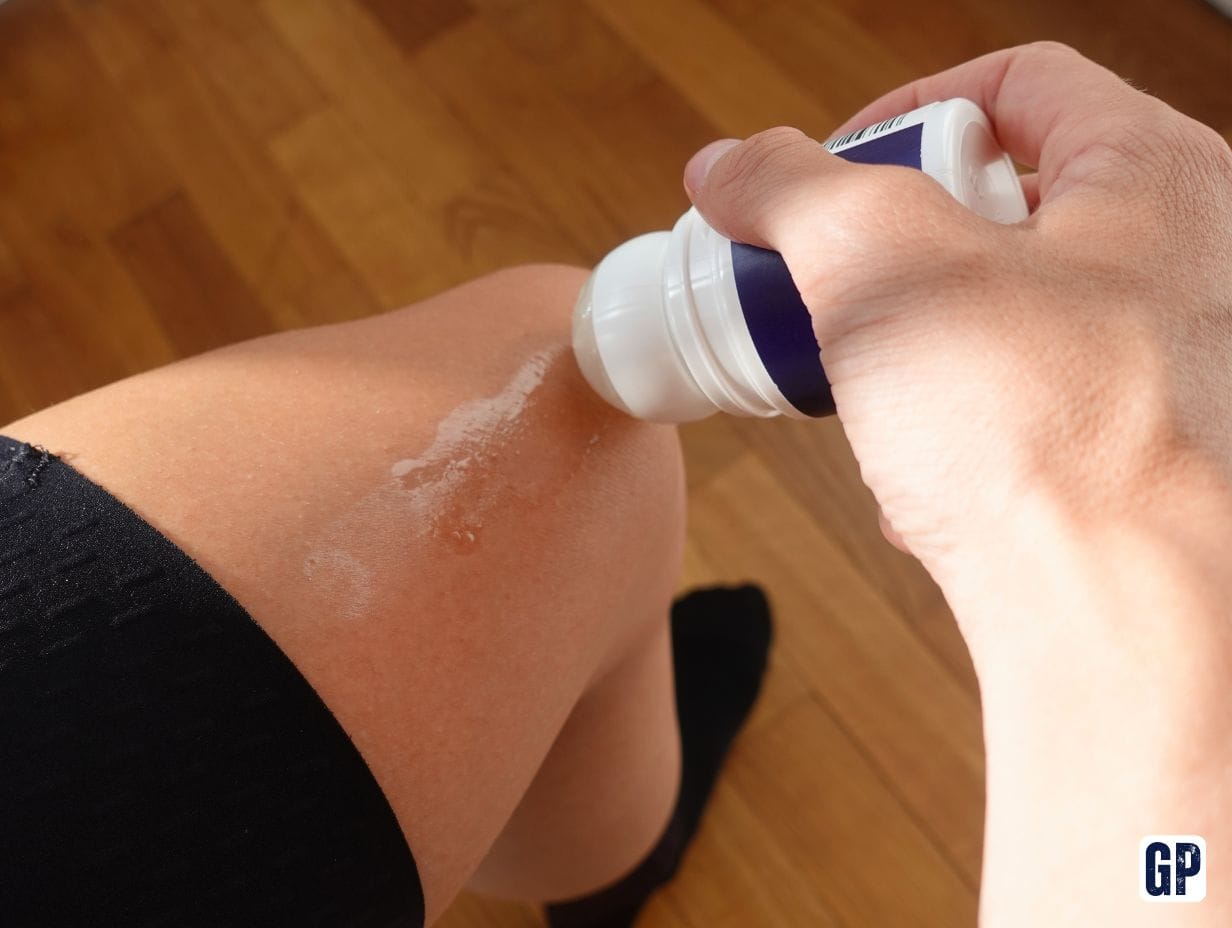
Its benefit is obvious: you roll it on, spread it quickly, and you are done. There is less risk of getting it everywhere, and still that absence of greasiness that makes application pleasant.
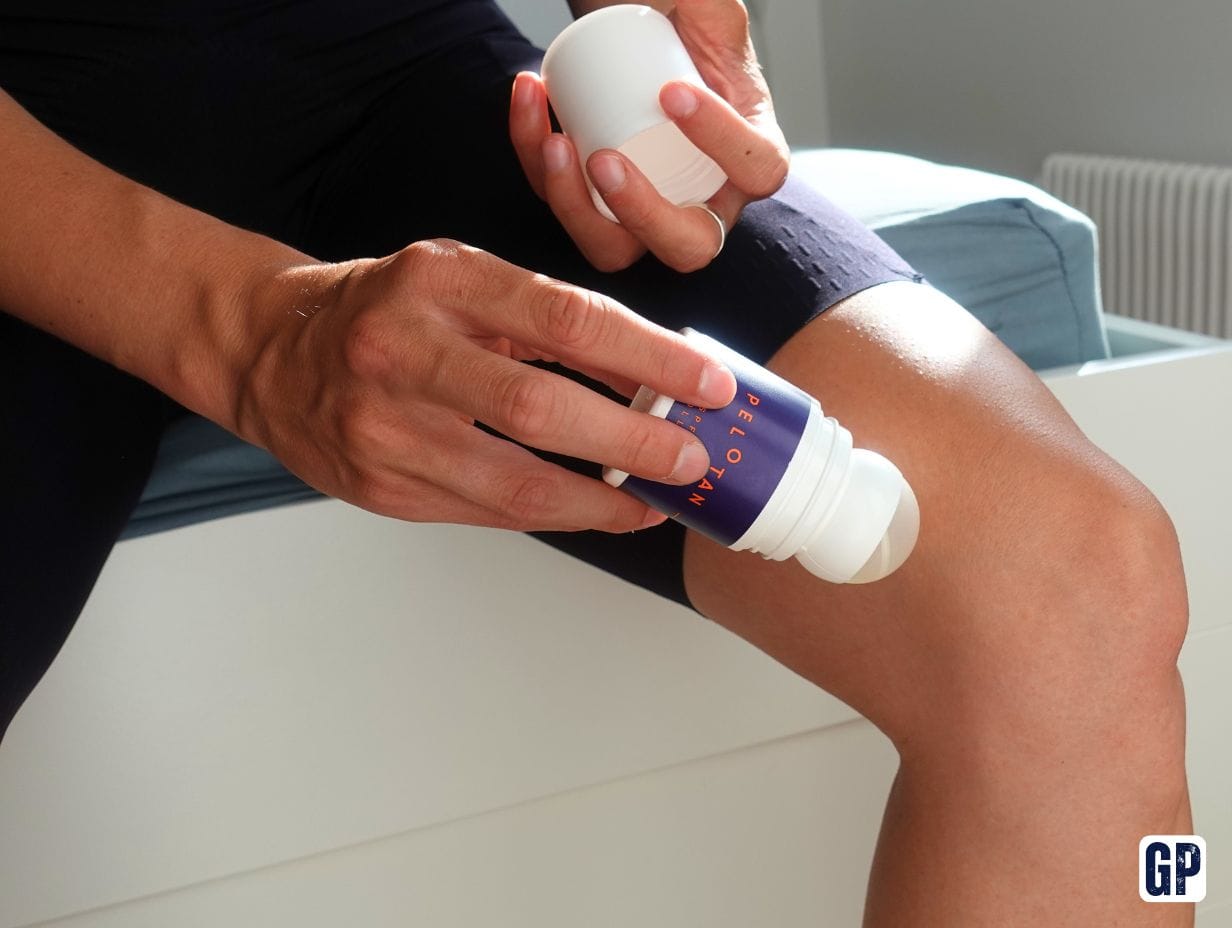
For reapplying to arms, legs or the nape mid-ride, it is probably the smartest format. No need to pull out a big bottle, no need to find water to wash your hands afterward.
The roll-on keeps the same coconut scent and the same behavior on the skin as the spray. For cycling, it is a very coherent format, especially if you often ride in summer or head out for exposed days.
SPF30: less impressive than SPF50, but not that far off
Pelotan can be surprising if, like me, your reflex is to look for SPF50. Yet the raw gap between the two ratings is smaller than we often imagine.
According to data cited by the brand, SPF30 blocks about 97% of UVB rays (notably responsible for sunburn), and SPF50 about 98%. SPF is therefore not a linear scale where SPF50 would be twice as protective as SPF25. This spray also protects against UVA (responsible for premature skin aging).
That does not mean you should trivialize exposure. Skin type, altitude, time of day, ride duration, sweat and covered areas change a lot of things. Pelotan recommends applying the product to clean, dry skin 15 minutes before going out, then reapplying if needed.
The brand states up to 8 hours of protection with proper application. I personally tested it up to 6 hours of exposure, without any sunburn.
But it is better to stay cautious: on a very long day under strong sun, it is wiser to reapply before the 8 hours claimed. The roll-on then really makes sense.
Convincing effectiveness, including off the bike
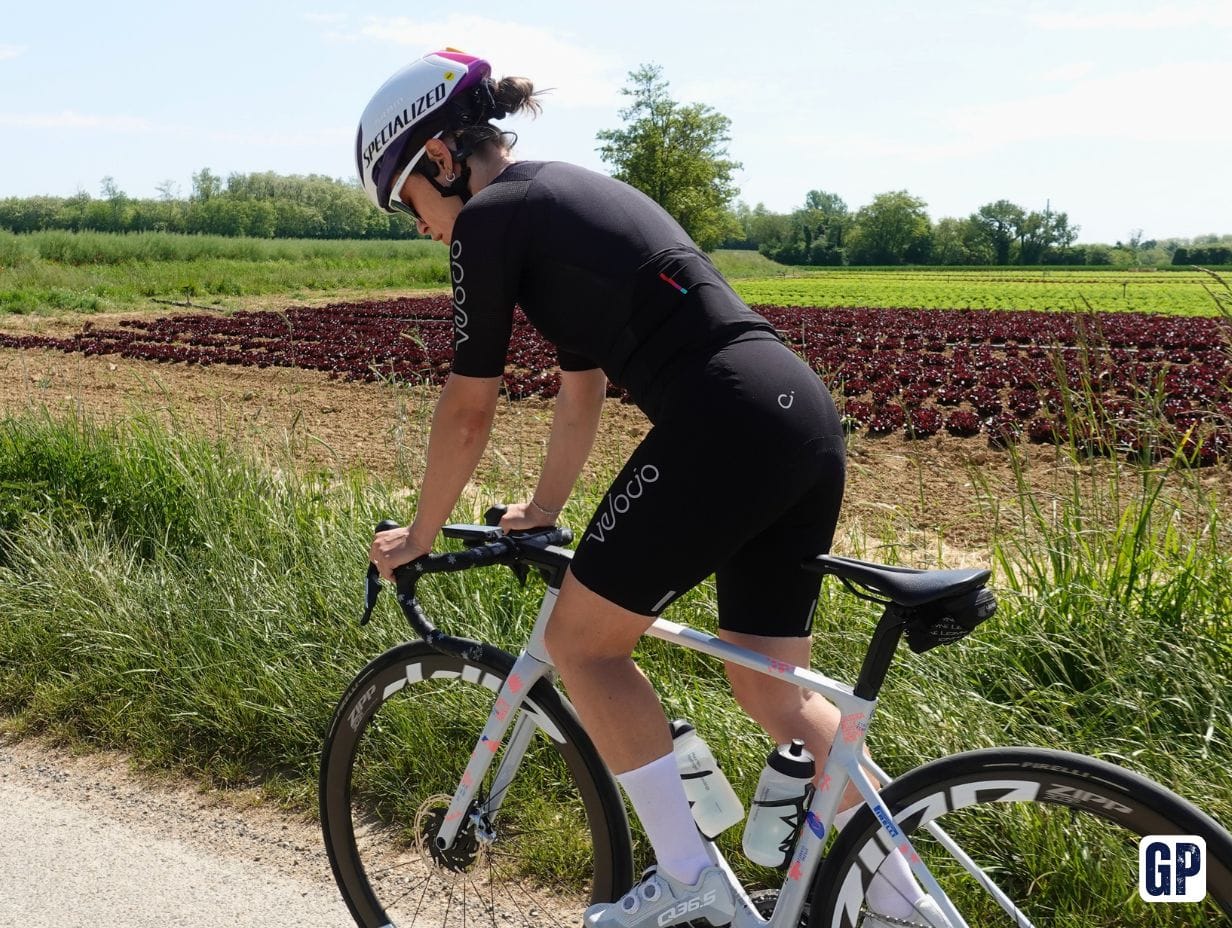
During my tests, Pelotan worked well on the bike, but also in other exposure situations. I used it while swimming, and the protection remained convincing in my use.
The brand claims a water and sweat resistant formula, which proved very convincing. But again, common sense applies: after swimming, rubbing or a very long day, reapplying remains the best approach.
The real win: reducing usage friction
What I appreciated most with Pelotan is not just the protection. It is how the product removes the small frictions that stop you from protecting yourself properly.
A good sports product is not judged only by its spec sheet. It is also judged by its ability to fit into a routine without creating hassle. Here, the spray and the roll-on are fast, clean, straightforward, easy to carry and pleasant to use.
The packaging is modern, clear, fairly understated. The formats are well thought out for outdoor use: a large bottle for application before departure, an intermediate size for travel, a roll-on for a pocket or bag.
It is a very simple but important takeaway: if the product is easy to apply, you protect yourself more. And in my case, that is exactly what happened.
The limitation: alcohol dries the skin
The Pelotan SPF30 formula contains denatured alcohol. That likely contributes to the quick dry-down and the absence of a greasy film on the skin.
But there is a flip side. Over several months of use, I noticed the skin on my arms and legs became drier in the areas where I applied the product regularly.
That is not a deal breaker for me with sunscreen, because the usability benefit – namely the quick evaporation without greasy feel – remains very clear. But you should know it, especially if you already have dry or sensitive skin. In that case, a proper hydration routine after rides becomes important.
Another point intrigued me: Pelotan indicates that an average adult needs 30 to 40 ml of product per application to ensure sufficient coverage. The note lacks precision, especially about the areas concerned. For the whole body, that can make sense. But applied strictly to targeted cycling use, it would drain a 50 ml roll-on very quickly…
In my use, I never applied 30 to 40 ml, yet I was well protected on the exposed areas. This guidance would deserve clarification from the brand.
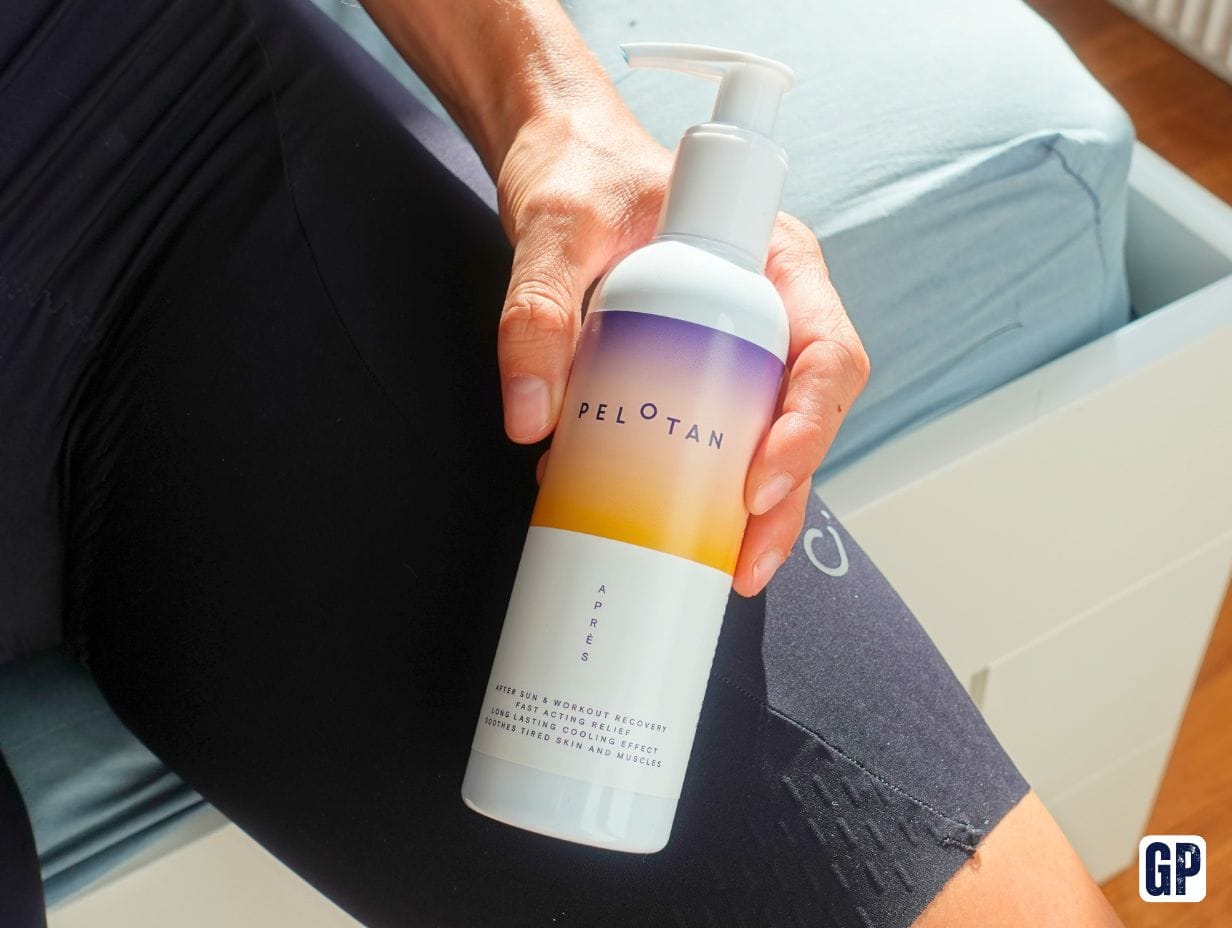
Pelotan Après: cool at first, but too irritating
The third product tested is Pelotan Après, a gel presented as an after-sun and post-workout recovery product. The formula notably contains aloe vera, menthol and denatured alcohol.
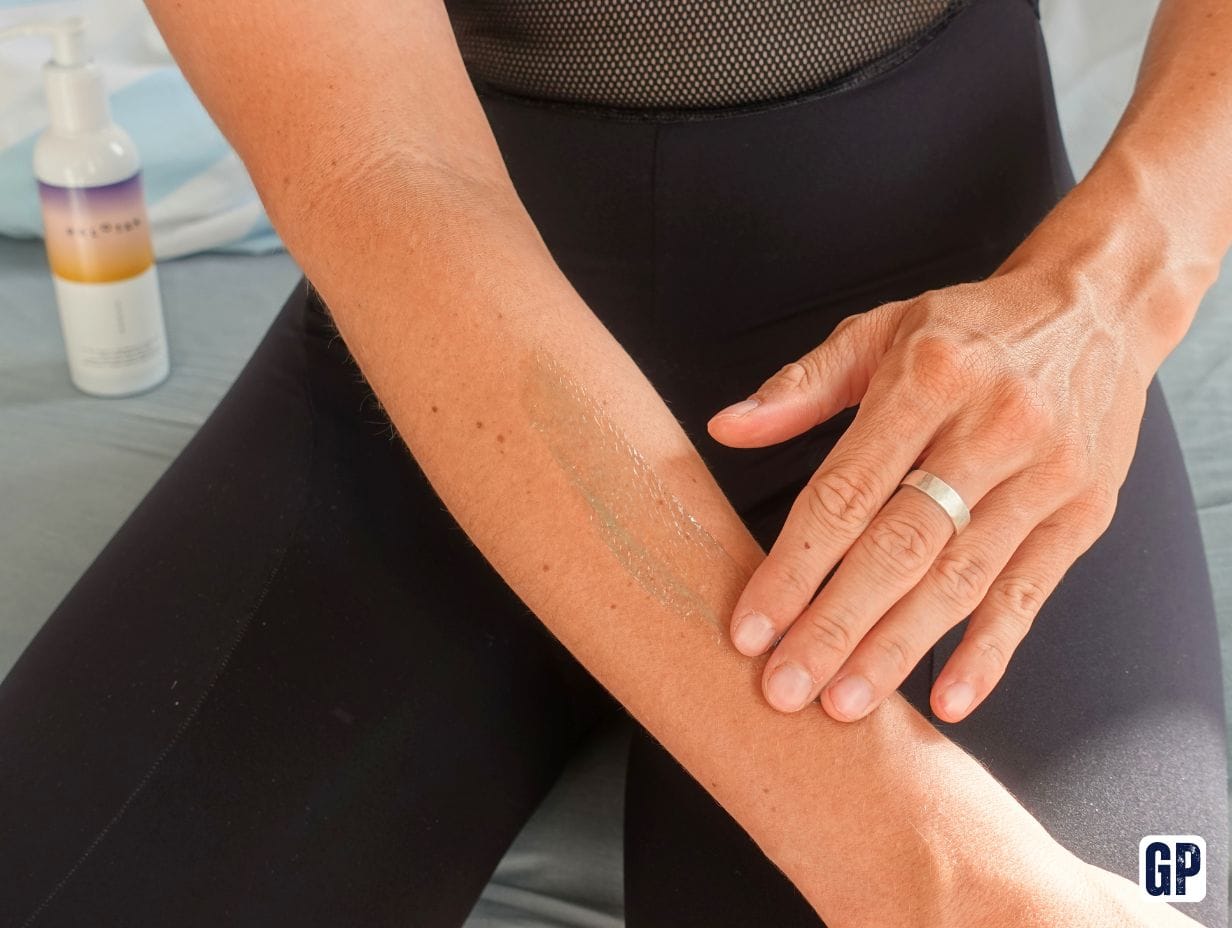
On application, the cooling effect is immediate. The menthol clearly does its job, and the scent remains pleasant. On paper, the idea is interesting: soothe the skin after exposure and provide a cooling sensation after effort.
But in my case, the product did not suit me. After a day in the sun, my skin is already drier and sometimes a little irritated. With Pelotan Après, I felt stinging that was too strong. The cooling effect turned into a feeling of discomfort.
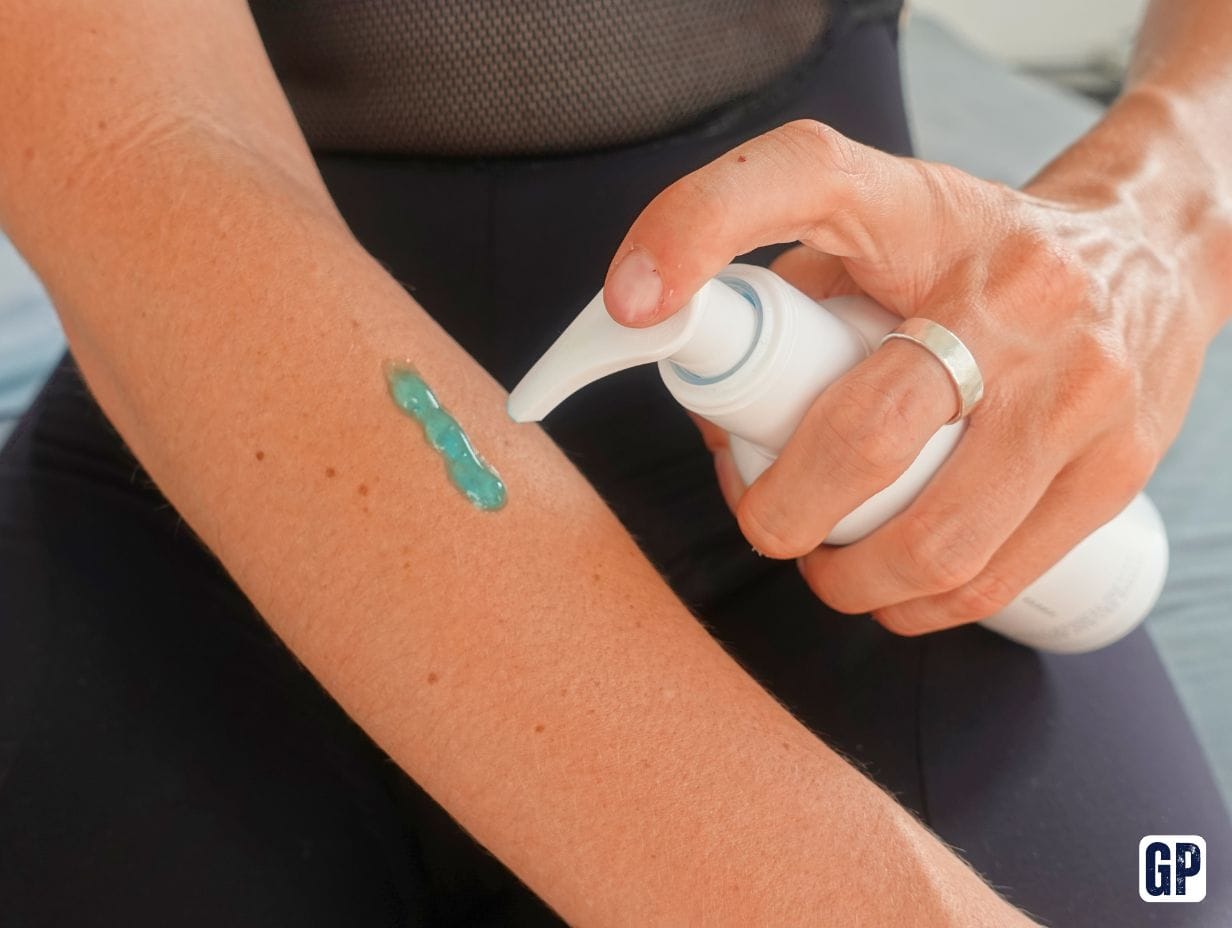
It is the only product in the range that did not convince me. I understand the athletic intent, with a fresh, light formula, but for an after-sun I expect something softer, more enveloping, less aggressive on skin that has already been stressed.
Where Pelotan sunscreens use alcohol in the service of real usability, the after-sun felt less balanced. It may suit certain skin types, but on mine, the stinging took over.
What stands out after several months
Pelotan convinced me on the essentials: application is quick, the texture is very pleasant, the skin does not feel sticky, and protection was effective in my conditions of use.
The 100 ml spray and the roll-on are the two most interesting formats if you want to be able to bring protection with you regularly on the bike. The 200 ml format will be ideal if you do shorter rides and leave your sunscreen at home.
The main limitation comes from the alcohol-based formula, which can dry out the skin.
For the sunscreens, I accept it because the usability gain is real.
For the after-sun, however, I was not convinced: too much stinging, not enough softness.
Pelotan therefore does a very good job with its sports sunscreen. And that is already a lot, because a good sunscreen is not just the one that promises a lot on the label – it is the one you actually apply before heading out to ride.