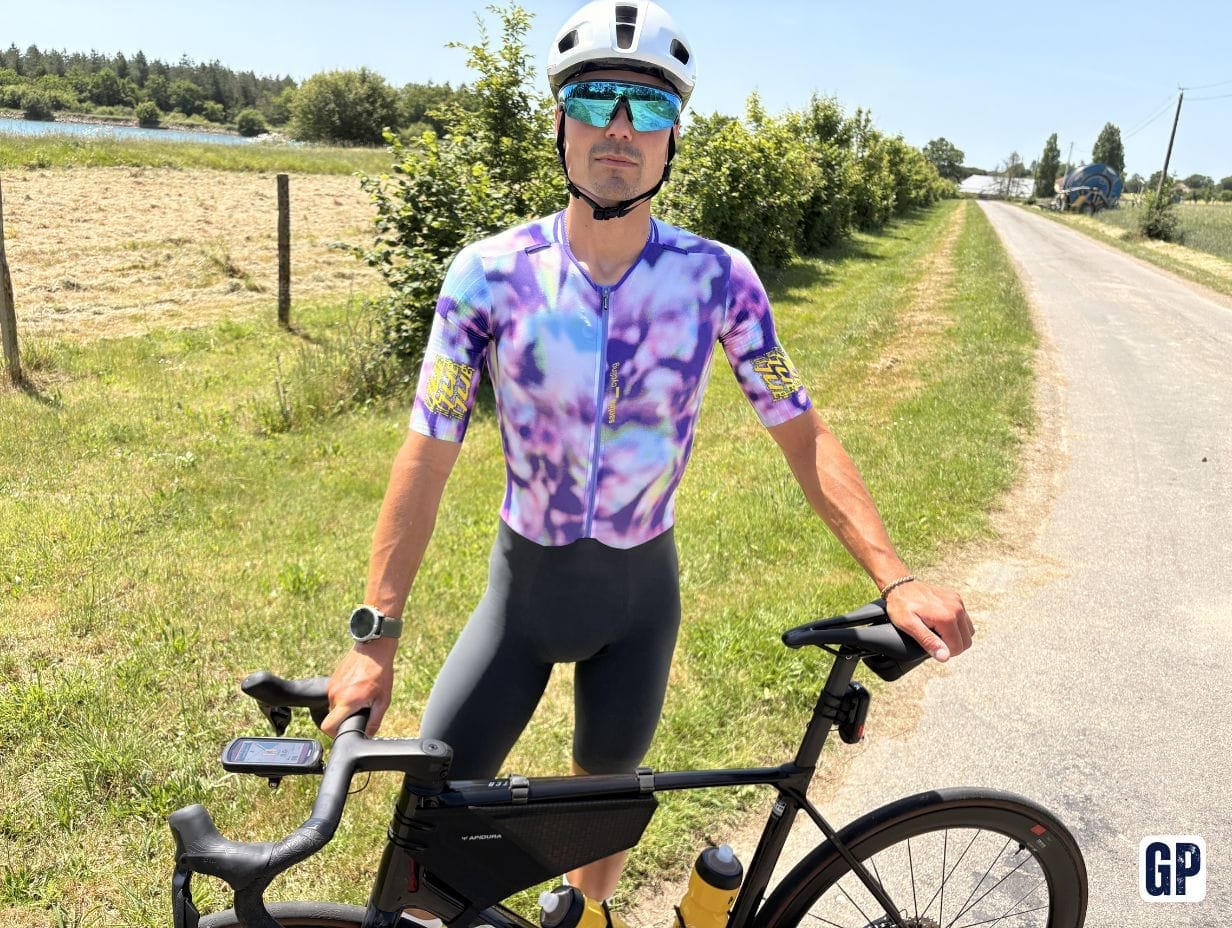

The Santini MADSS Gravel lands in a very interesting space: aero gravel skinsuits designed to ride fast, for a long time, and carry more water without adding a vest.
Let’s not pretend: this skinsuit looks like a direct response to the Castelli Unlimited Speed Suit. Same overall logic, same performance promise, same idea of a hydration pocket integrated high on the back.
Highlights:
- Excellent comfort from the bottom half, very thin with a second-skin feel
- Discreet C3 insert yet suitable for long distances
- High, stable rear pockets that sit flush
To improve
- Top is narrow at the shoulders
- Hydration hose routing still too minimalistic
The difference shows quickly: Santini offers a more accessible approach here, a little less radical on certain details, but frankly very coherent in practice.
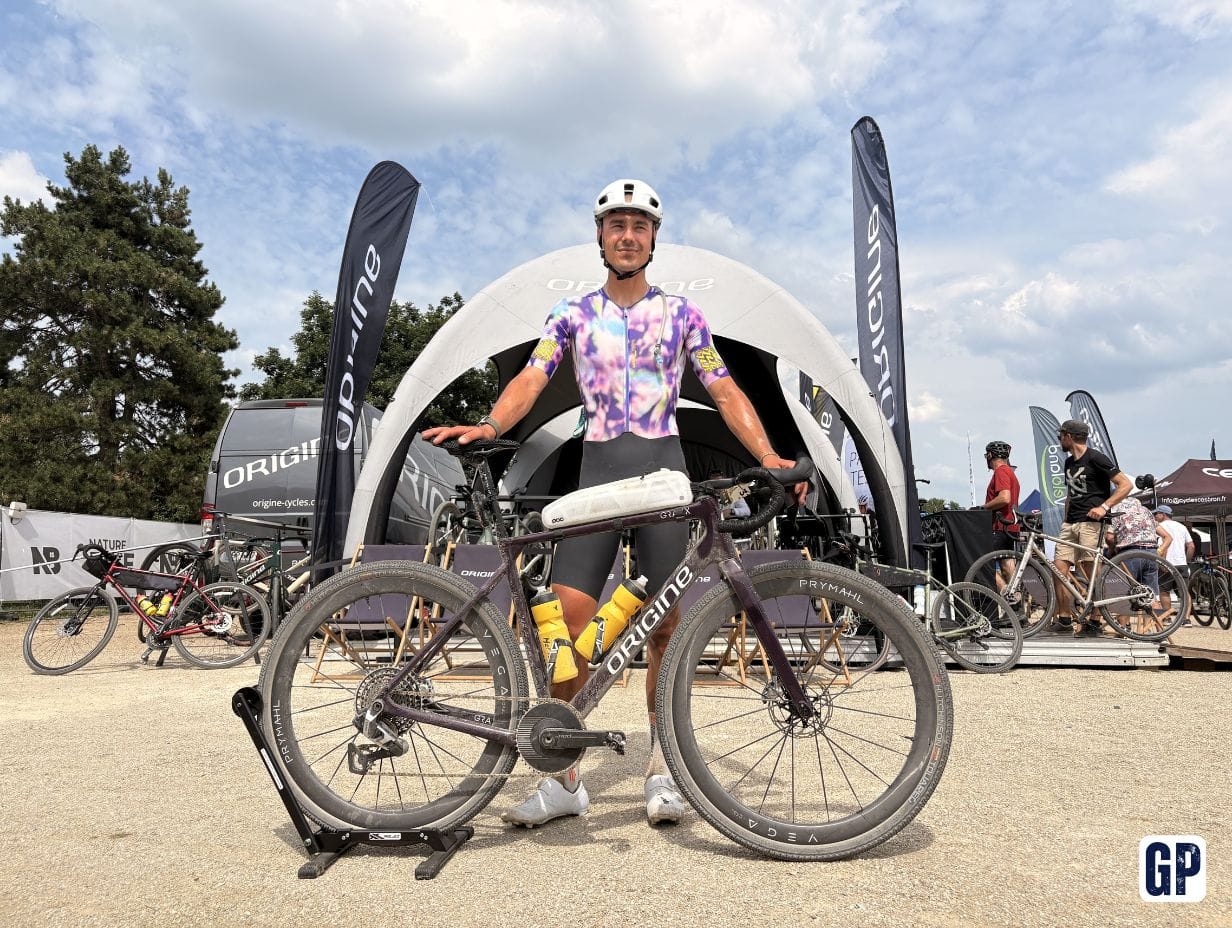
A skinsuit that oozes quality right out of the box
First key point: the Santini MADSS Gravel does not feel like an opportunistic product. The finishing is neat, the fabrics serious, the cut highly refined. At this stage, there is no obvious false note when unboxing.
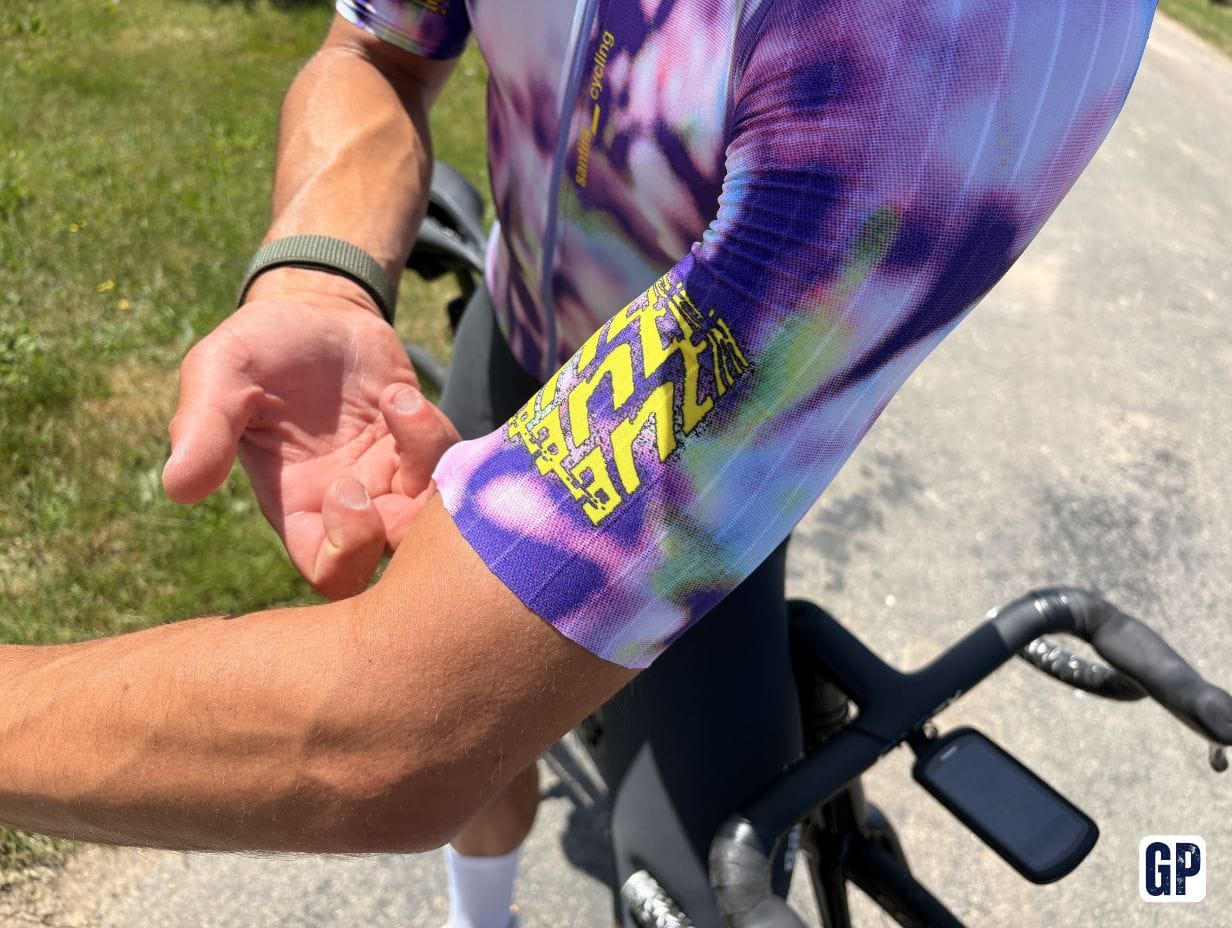
The top is made from a stretch microfibre, with ribbed sleeves claimed to be developed to optimize aerodynamics. The collar is low, the fit very tight, and the whole aims to get close to a road performance outfit adapted to gravel.
Very thin, very comfortable bottom half you almost forget
The real, very good surprise comes from the bottom. Santini uses a compact warp knit fabric with medium compression, long legs, raw-cut hem and internal silicone grippers.
Beyond the spec sheet, it’s the feel that stands out: the bottom is very thin, with a second-skin feel, giving the impression of having almost nothing on the thighs. Support is good, the length sufficient, and the suit stays put.
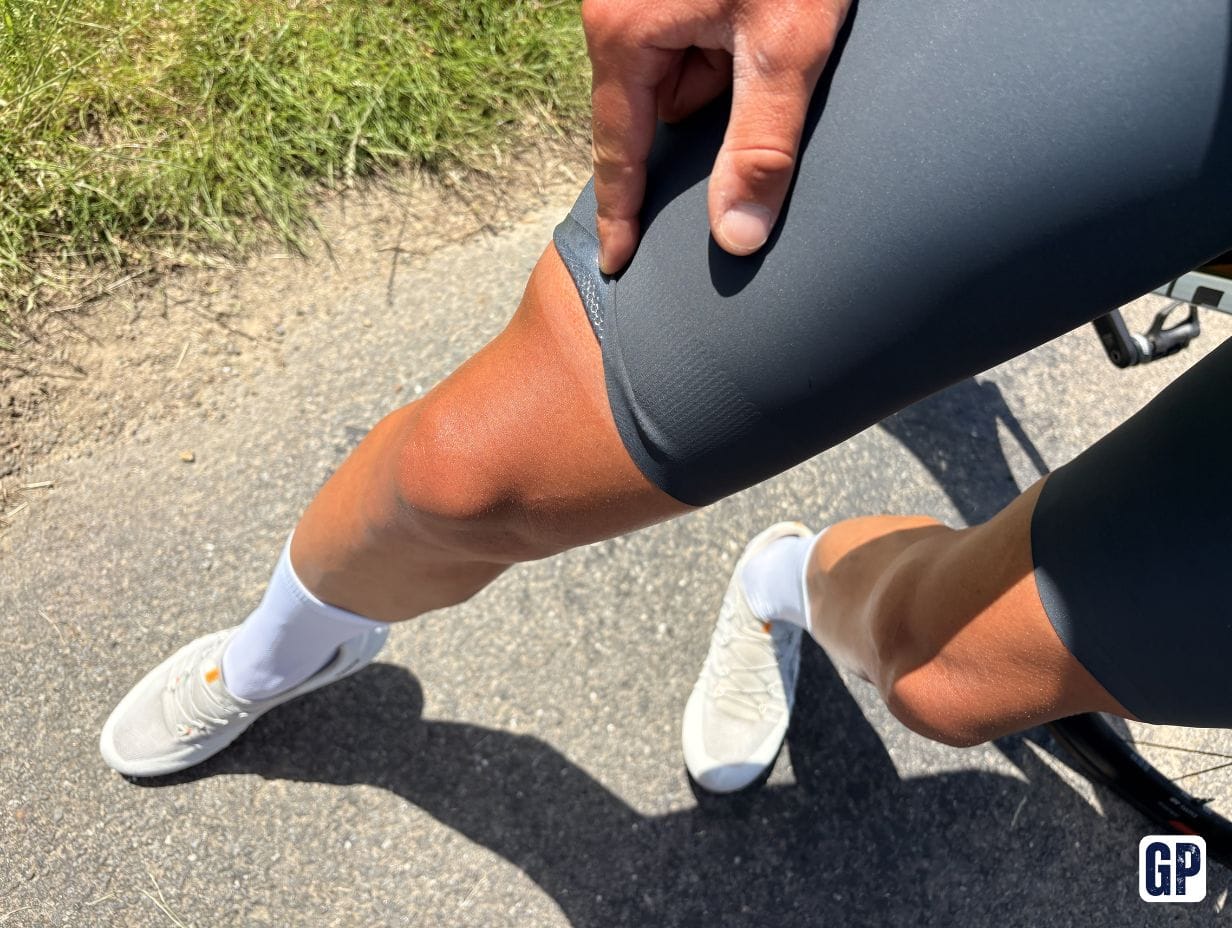
In my case, size M was a perfect match for the bottom. No excess fabric, no noticeable discomfort on the thighs, and a feel very close to modern race bib shorts.
A discreet C3 insert, but suitable for long distances
The C3 insert is also quite particular. It is thinner than what you find on many long-distance bib shorts, almost invisible, with a vibe reminiscent of some triathlon skinsuits.
Said like that, you might fear a lack of comfort. In practice, that’s not the case. I notably used it on several 200 km events, and the insert remained appropriate for this type of effort.
It doesn’t give that very plush feel some seek, but it integrates very well into the suit. That’s probably its strength: it does not disrupt the cut, doesn’t create unnecessary bulk, and remains protective enough for long rides.
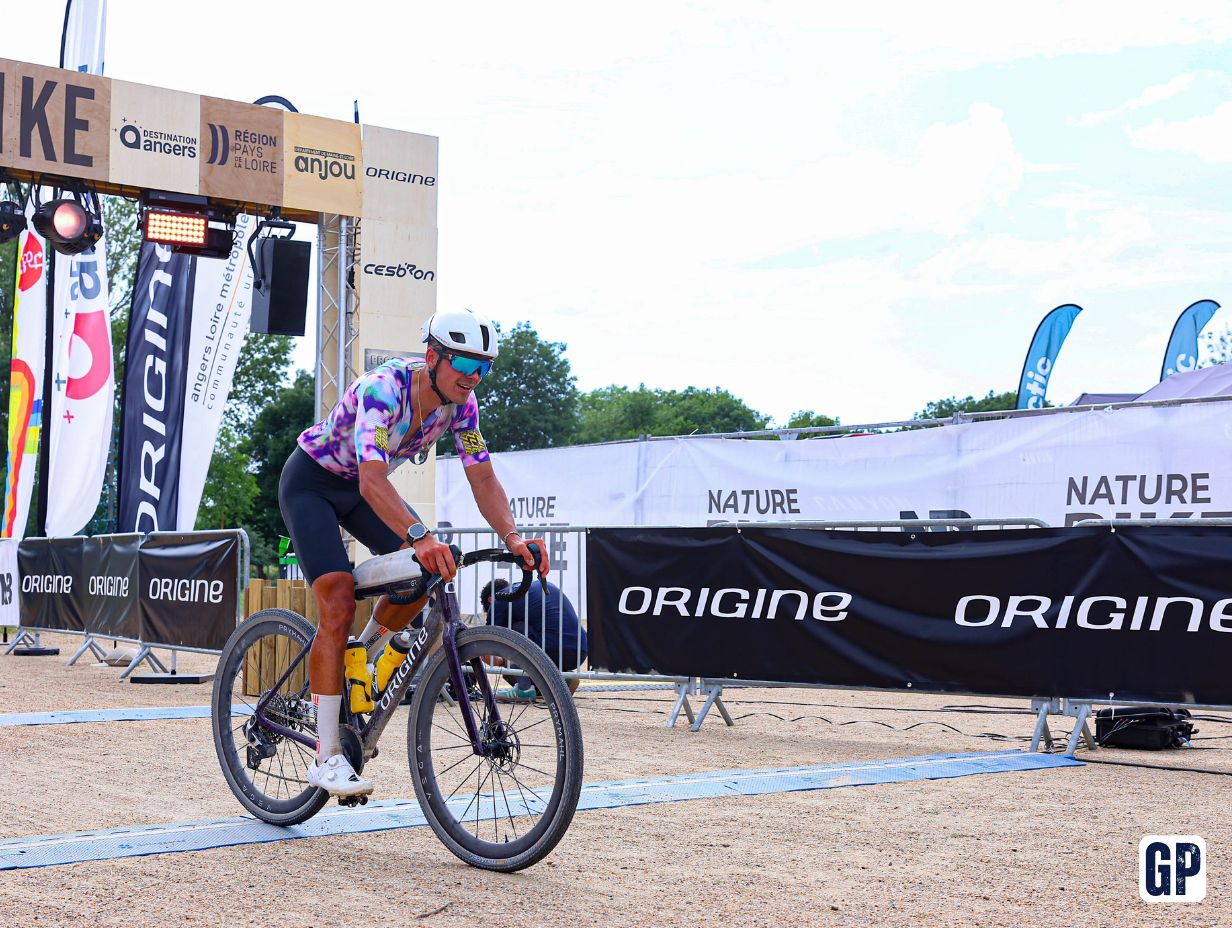
A very fitted cut, excellent if your body shape matches
That’s often the real issue with skinsuits: the product can be well designed, but your body has to match the cut.
In my case, the bottom in M was perfect. However, the top was too narrow at the shoulders. Not to the point of making the suit unusable, but enough to feel it, especially with a loaded hydration bladder in the back.
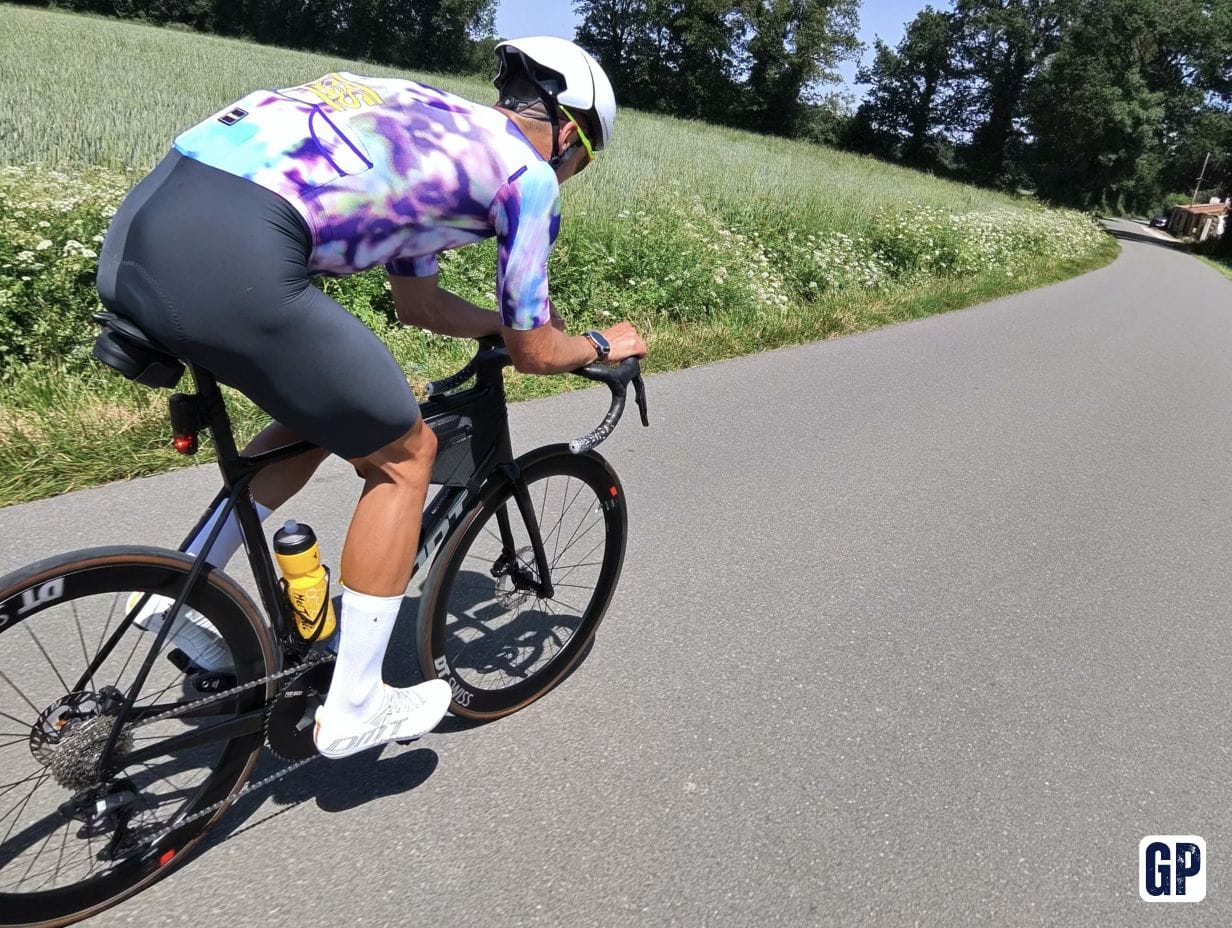
And that’s where you find the classic limitation of this kind of garment: you can’t mix sizes. A size L would likely have given me too much room at the thighs, whereas I only needed a few millimeters at the shoulders.
It’s not necessarily a flaw. The Santini MADSS is truly sized fit, with a cut designed for very well-trained cyclists, even elite profiles. But if you have pronounced shoulders or a less standard body shape, you’ll need to be cautious.
A useful hydration pocket, but minimalist integration
Santini states a high back pocket compatible with hydration bladders up to 2 liters. I was able to slide in a 1.5-liter Hydrapak bladder, which is already very interesting in gravel racing.
Space is, however, more limited than on the Castelli. For 1.5 liters, it works. For more, I’d be more cautious, especially if the suit is already tight on the upper body.
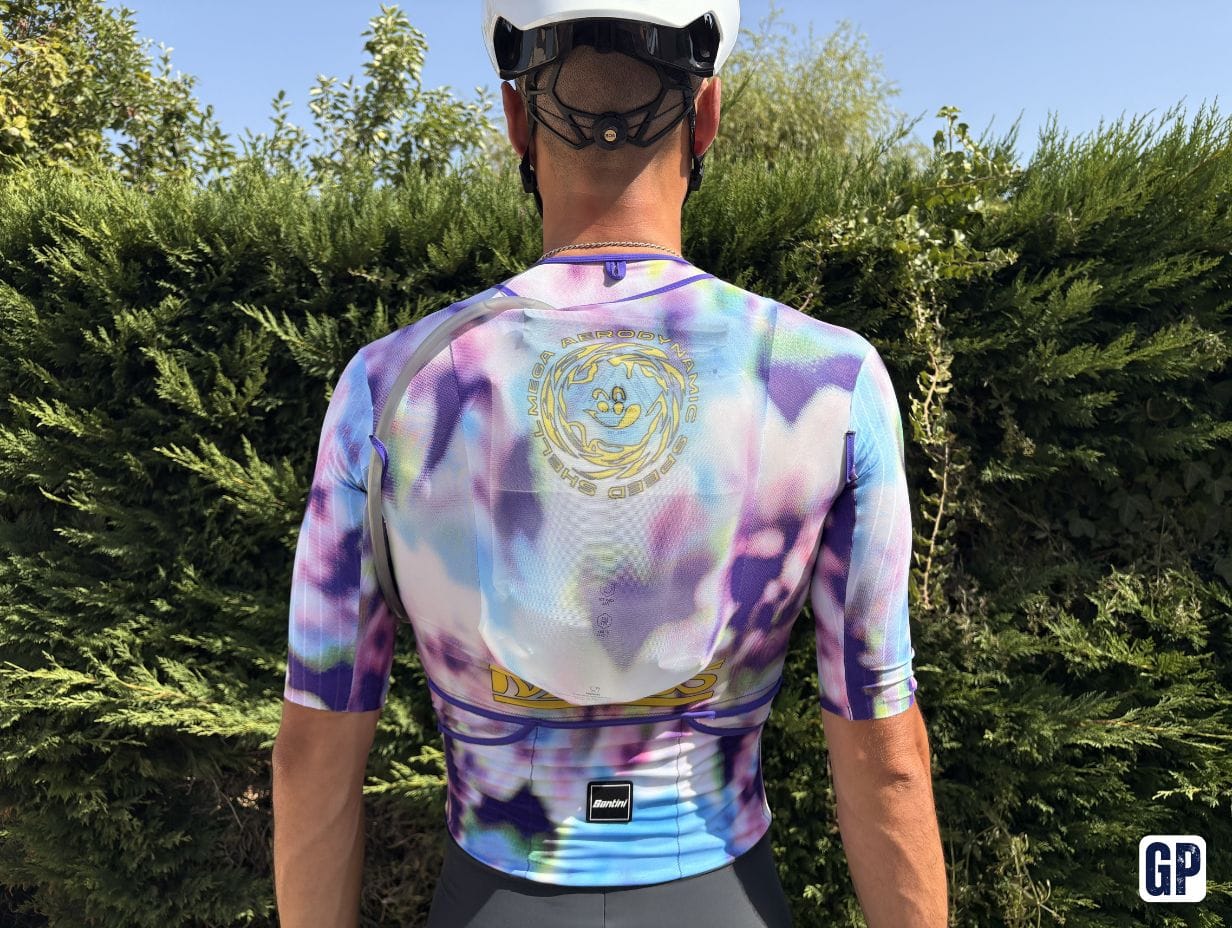
There are indeed loops at the shoulders to route the hose, as well as a possible rear attachment point with a carabiner. But as often with this kind of solution, the routing remains fairly basic. There’s no truly dedicated system to keep the hose perfectly in place up to your mouth.
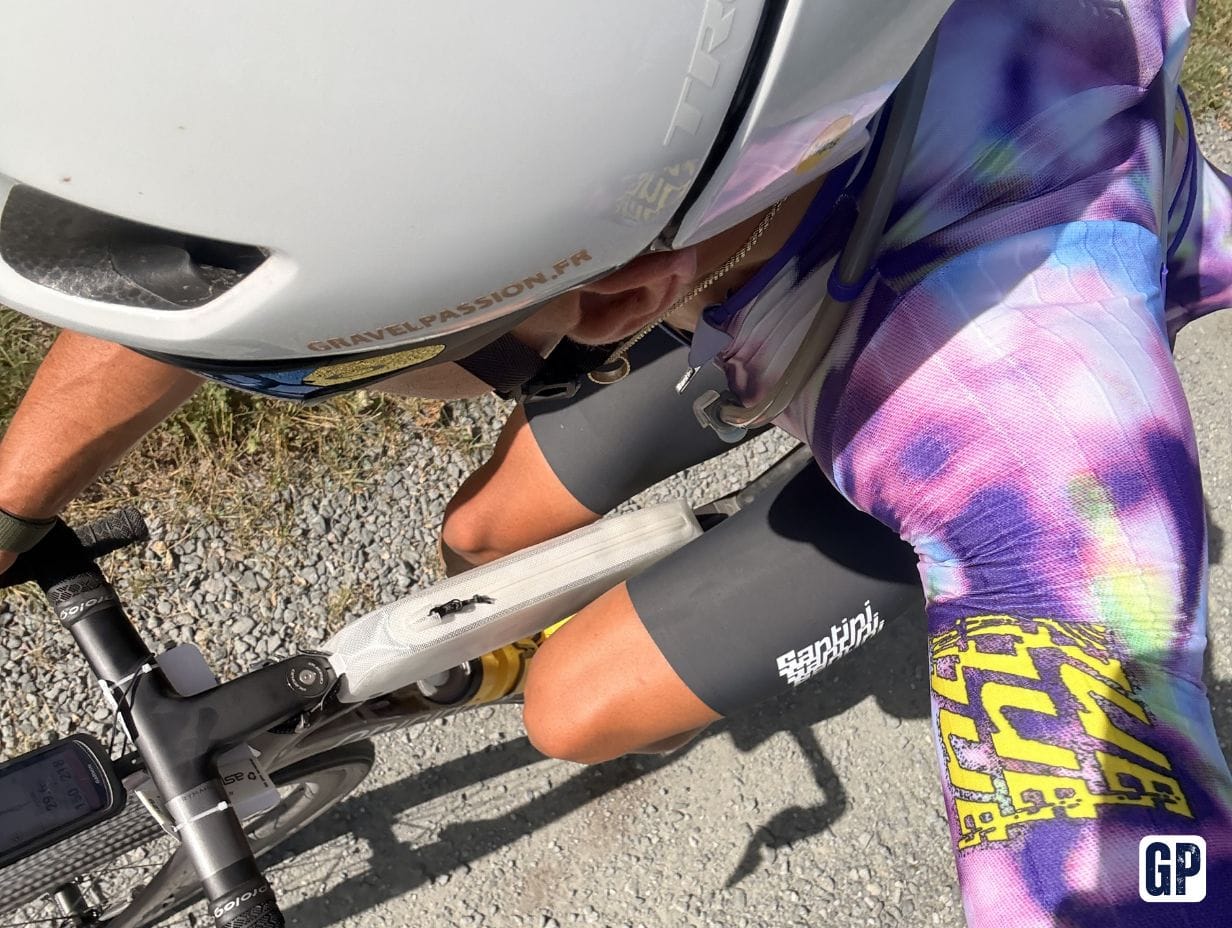
In my case, the magnet on my Hydrapak bladder let me secure the hose under the suit. With this setup, use was really tidy in gravel racing.
This also highlights the concept’s limit: the suit works very well if your hydration bladder is compatible with this kind of mounting. Without a magnetic solution or an external trick, the hose can demand a bit more attention. It’s a point you also find on other integrated hydration systems, like the veloToze HydroVest, where the idea is good but depends a lot on execution.
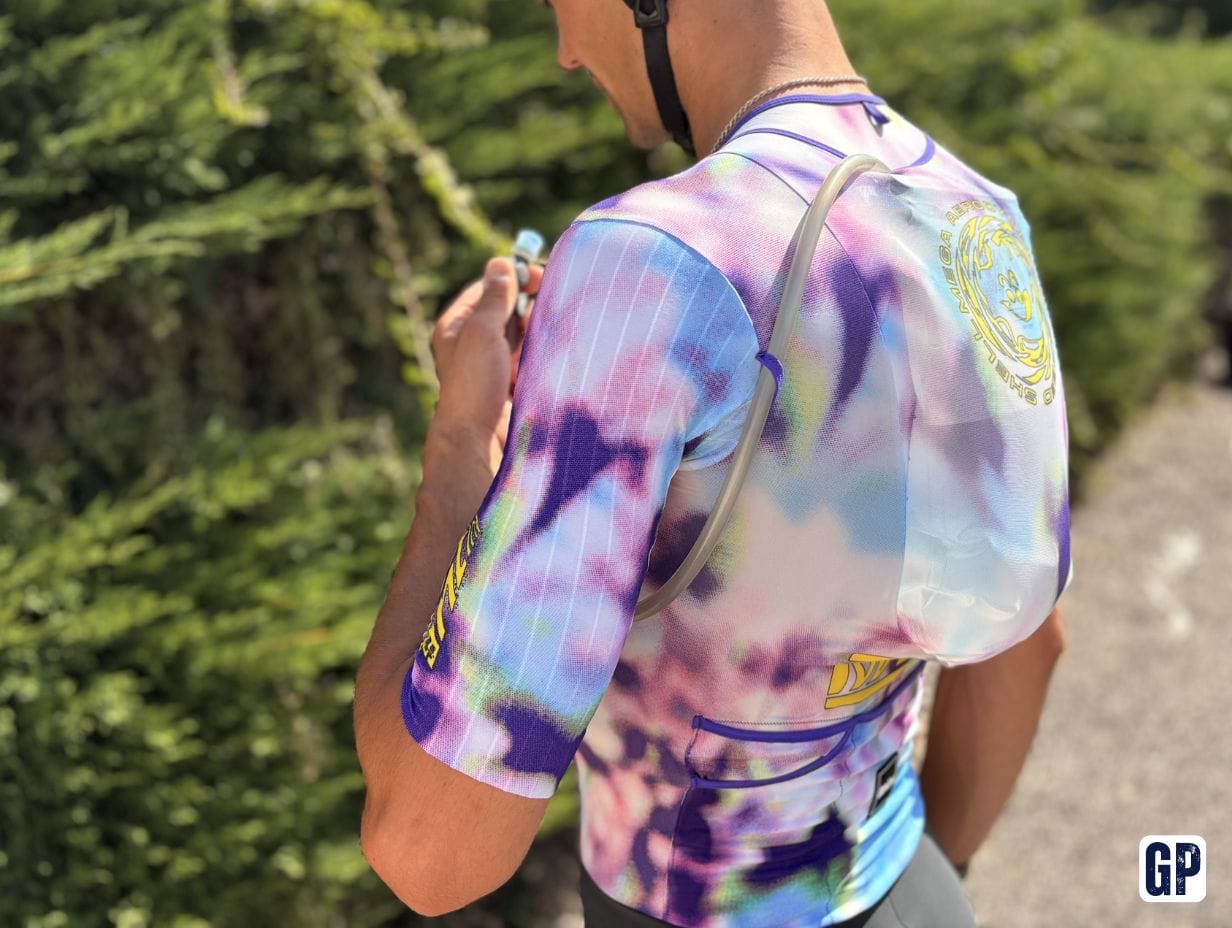
With 1.5 liters on your back, the shoulders work harder
Once the bladder is filled, the weight is logically felt in the upper back. This isn’t specific to Santini: as soon as you carry 1.5 liters of water in a garment, you add a non-negligible mass.
In my case, with a size already tight at the shoulders, this extra load increased pressure on the upper body. It wasn’t disastrous, especially since the weight tends to decrease over the hours.
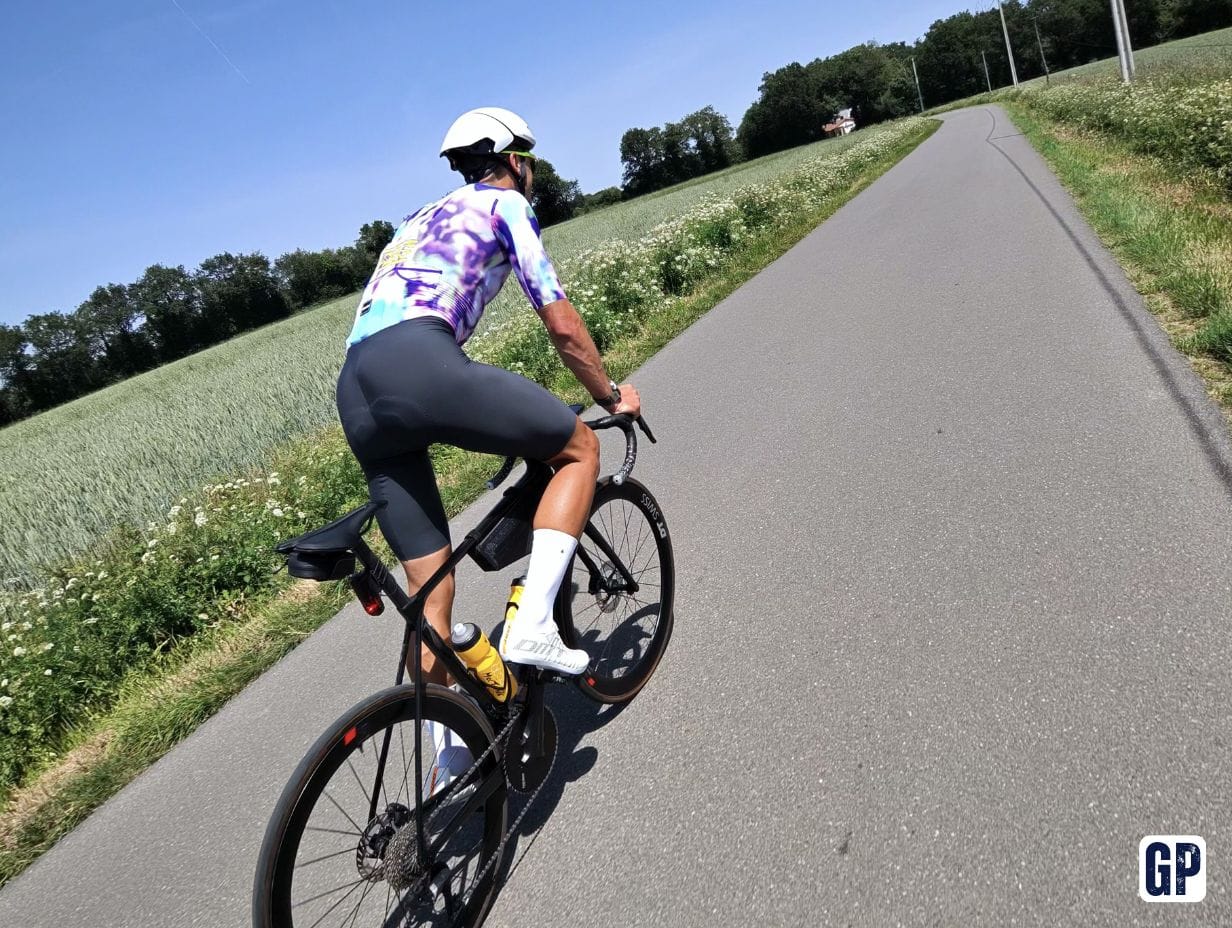
On a body shape that perfectly matches the cut, the feeling will probably be better. But that’s precisely why trying it on or sizing choice should be taken seriously.
High, stable rear pockets, but no zipped pocket
At the back, Santini claims five pockets. In practice, they are high, sit flat and are secure enough to ride with a phone without feeling it will pop out at the first rough trail.
That’s a real plus. The pockets feel high quality, with serious hold, which is essential on a suit intended for fast gravel.
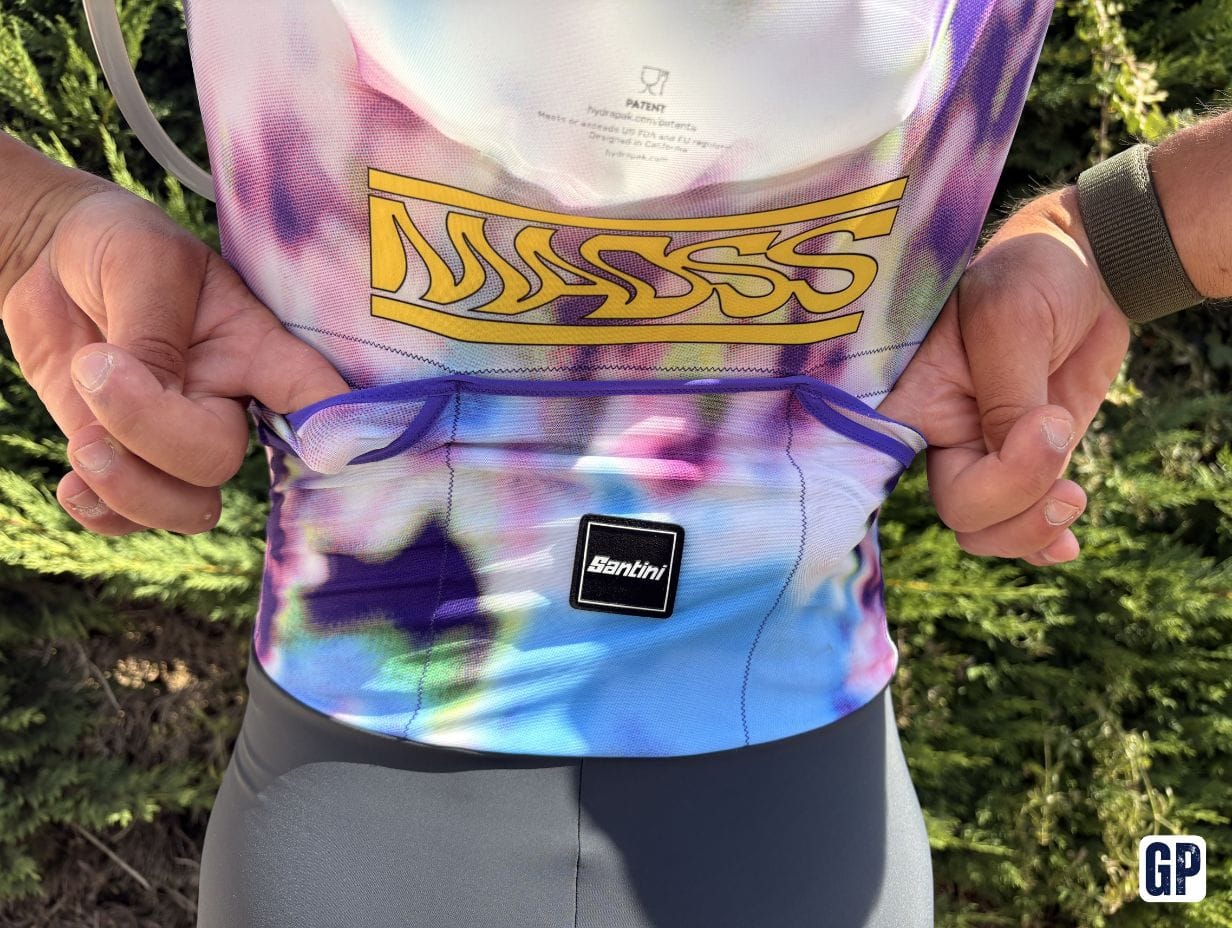
The downside is the absence of a zipped pocket. On a long-distance outfit, I like to have at least one truly secure space for a key, a card or a small item I don’t want to lose. Here, that’s not the case.
Unlike the Castelli, there are also no pockets on the tops of the thighs. Not strictly essential, but in a gravel race these pockets can be handy for quick access to a gel or a bar.
A zipper that deserves a true lock
The low collar gives a very clean and fairly aerodynamic line. Aesthetically, I also find the integration of the top more successful than on the Castelli, which goes more for a fake-jersey effect.
Here, you truly have an integrated piece. It’s less modular for breaks, but more visually coherent and, to my eyes, more elegant.
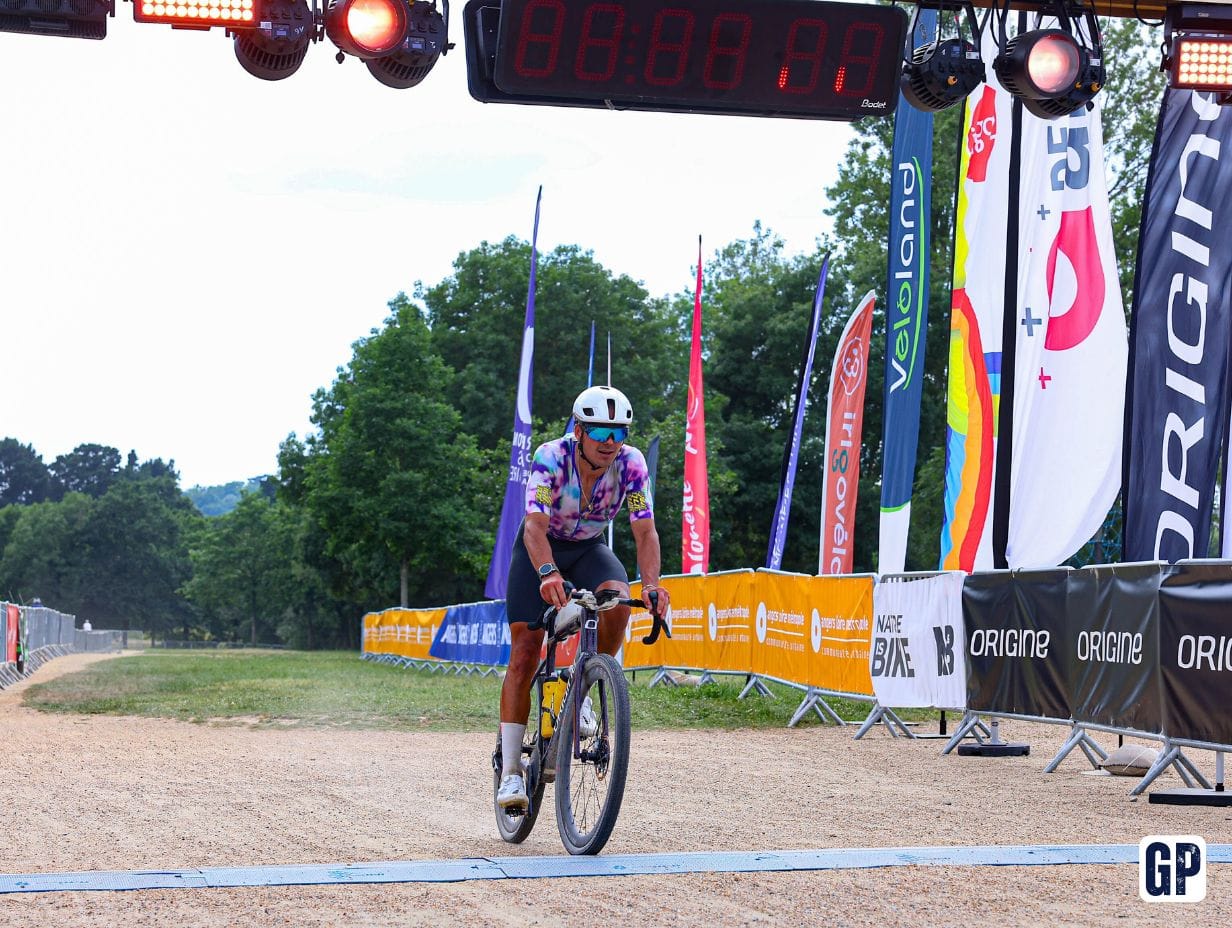
However, the closure lacks, in my opinion, a true locking mechanism. With the very tight fit in my case, the zipper did open on me during hard efforts.
Reassuring durability after several uses
I’ve worn this suit a lot, and for now the durability seems promising. The fabric shows no sign of premature wear, doesn’t get visibly damaged, and holds its shape well.
That’s important, because this kind of product only makes sense if it withstands washes, long rides, race pins, rubbing and repeated handling.
Santini recommends washing at 30 °C, without fabric softener, no tumble-drying, with the garment turned inside out. I used dedicated laundry bags to protect it well during washes. Nothing unusual for a technical textile, but on such a tight suit, care plays a big role in lifespan.
My verdict on this skinsuit
This suit is aimed at cyclists who ride fast, who take part in gravel events, or who want to optimize their outfit for long distances without multiplying layers and accessories.
It will be particularly relevant for lean, well-trained riders with a body shape compatible with a very tight cut. On this point, let’s be honest: this is not a forgiving suit.
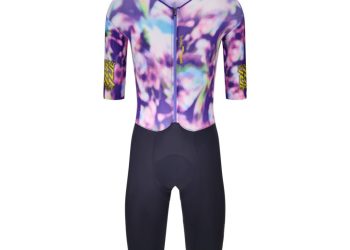
But when the sizing matches, the product works. The bottom is excellent, the insert goes the distance, the rear pockets are serious, and the hydration pocket lets you add a water reserve without adding a pack or vest.
At this level of finish and with this more accessible positioning, it’s a very credible proposition for fast gravel.