
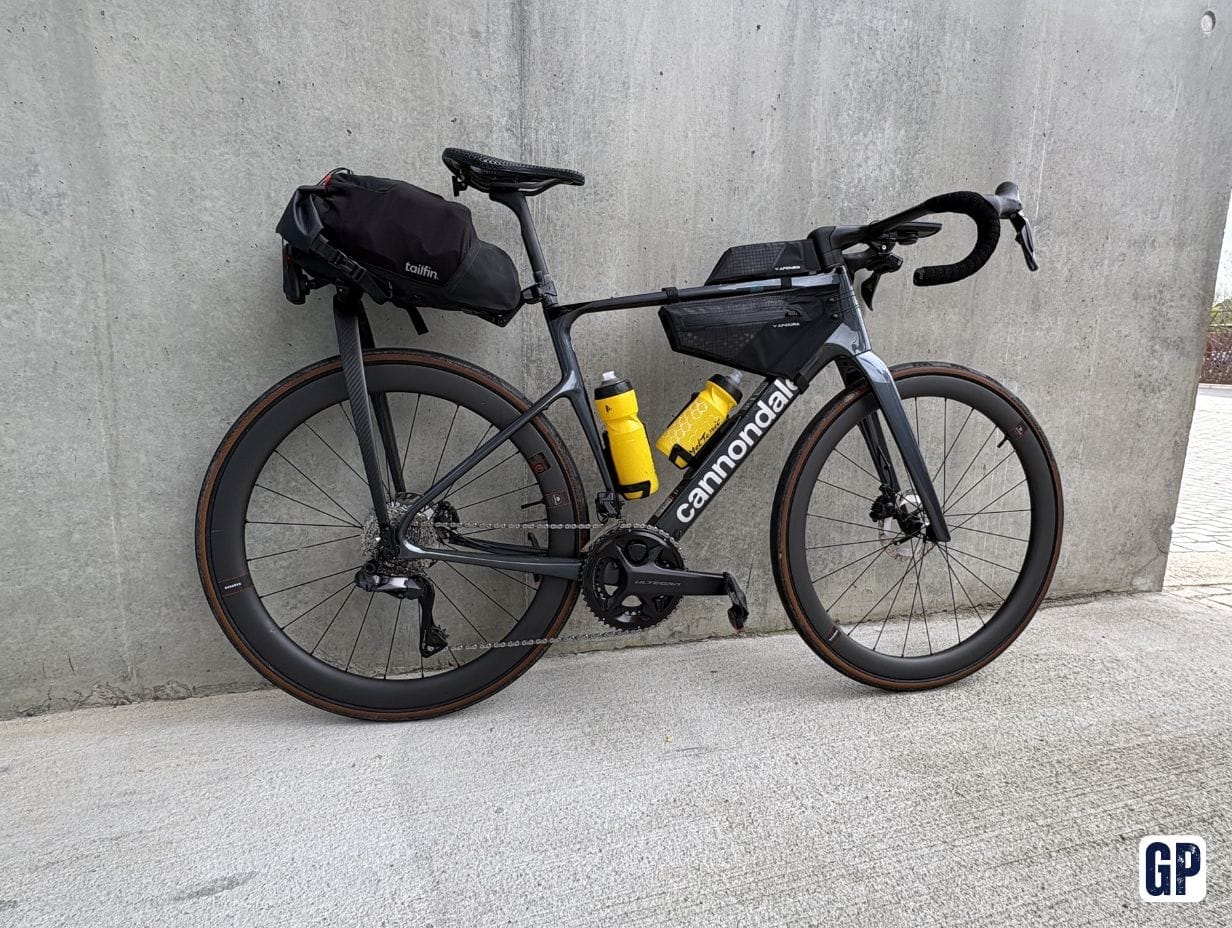

Some products you understand as soon as you fit them to the bike. And then there are those you really need to take outside, load it up unnecessarily, ride for hours, shake a bit, open, close, look, listen.
The Tailfin SpeedPack clearly belongs to the second category.
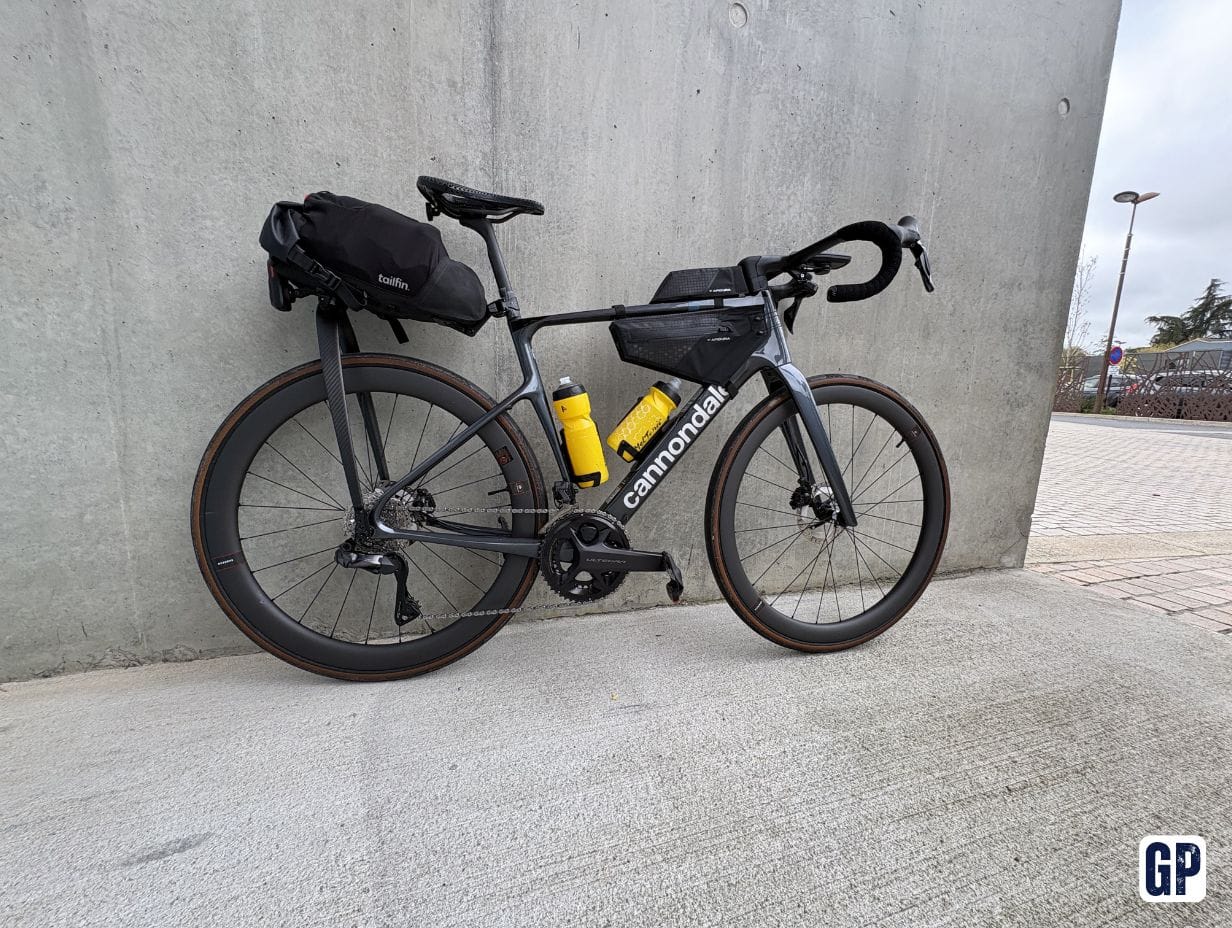
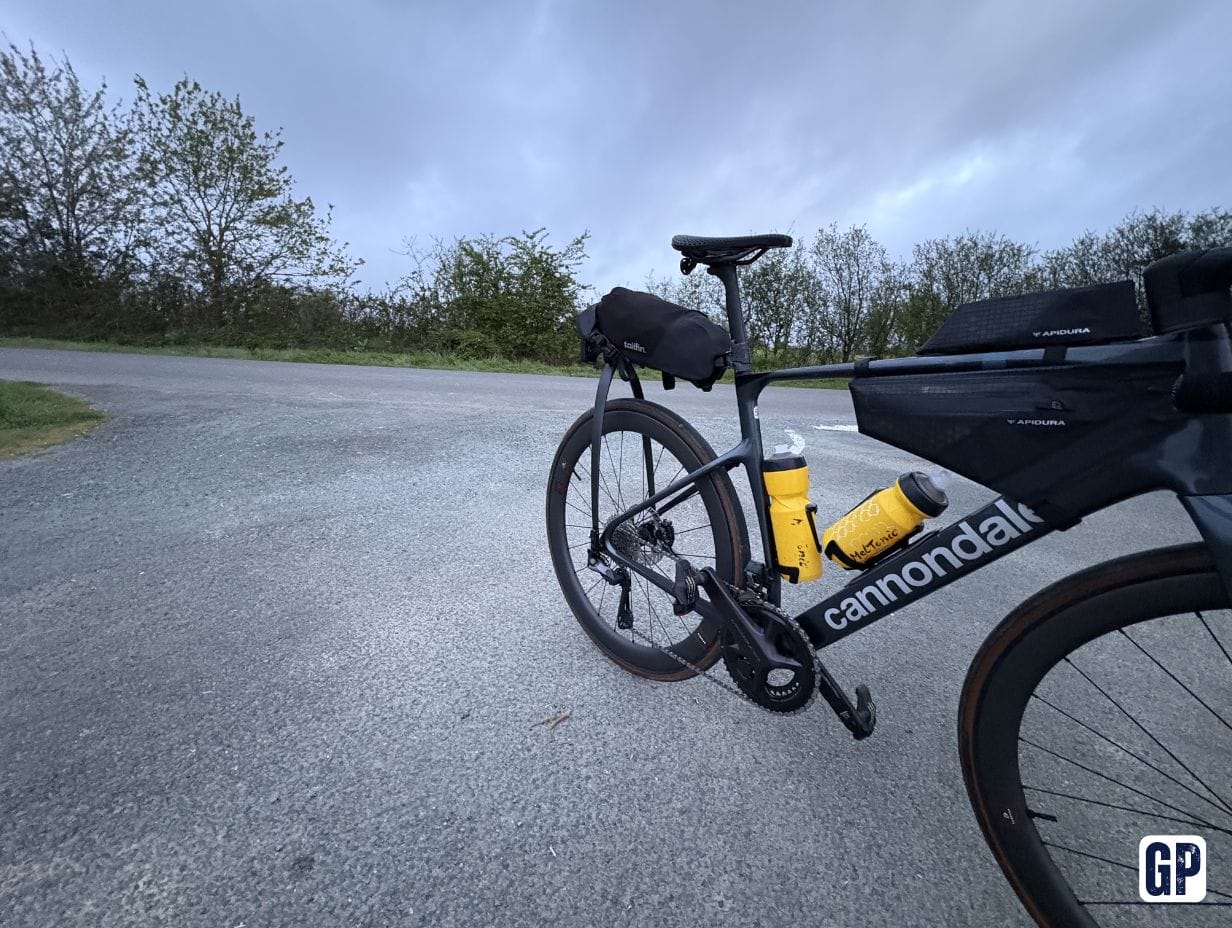
I received it at the start of the year, with the idea of testing it for light bikepacking, ultra-distance or long rides where you want to carry more than a simple jacket without turning your bike into a pack mule. For this first big field test, I fitted it to a Cannondale Synapse, then deliberately overloaded it on a ride of more than 200 km in Vendée.
Strengths:
- Excellent stability
- Very high-end finish
- Light, stiff carbon structure
- A system well-suited to ultra-distance and light bikepacking
Could be better
- Very high price
- Mixed bolt heads that require a comprehensive multitool
Clearly, for a day ride, this kind of product is not essential. I already had a small top-tube bag and a frame bag. But the point was not to rationalise my loadout to the absolute minimum that day. The point was to put the SpeedPack in a real situation, with weight, volume, wind, some tracks, and enough hours in the saddle to understand what it really brings.
A system halfway between a rack and a stabilised bag
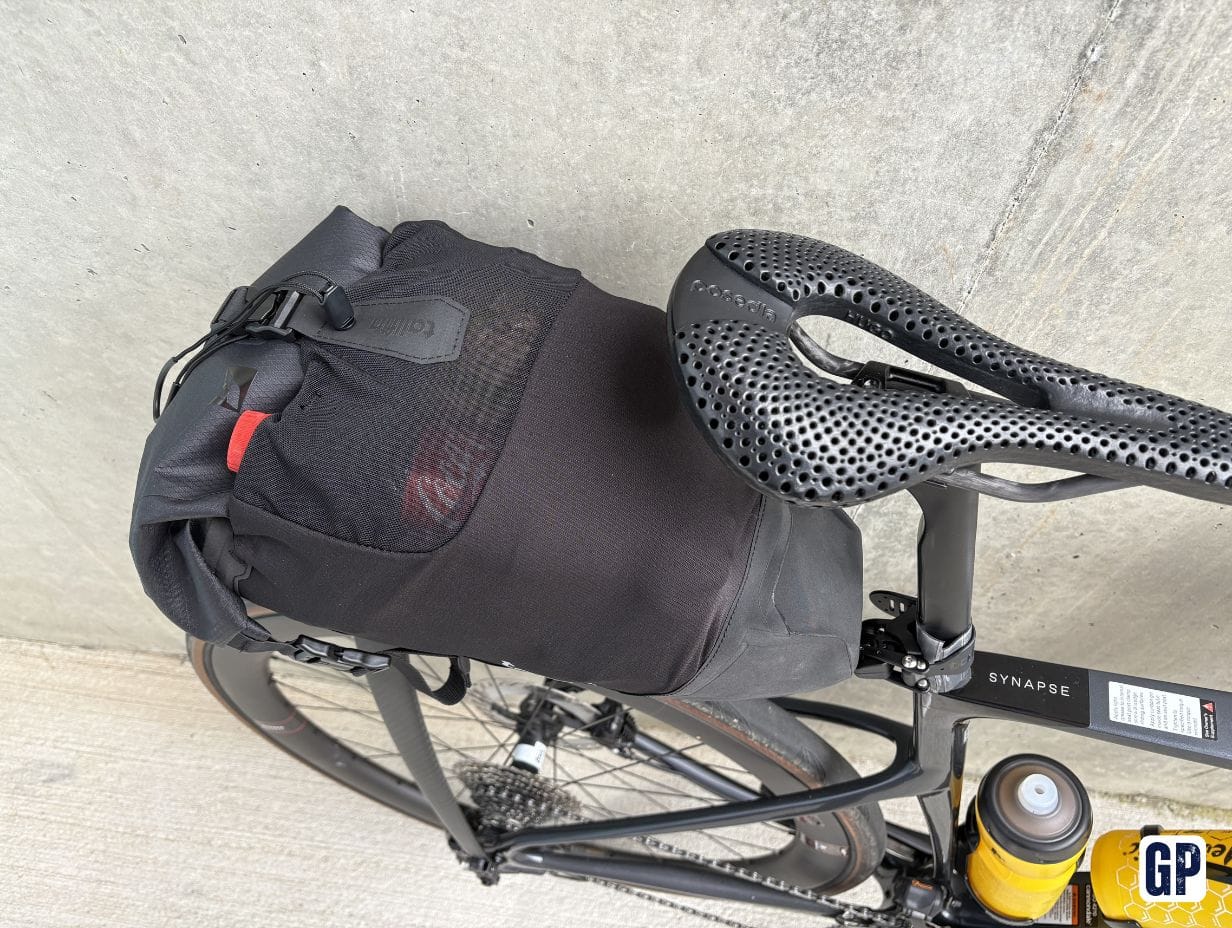
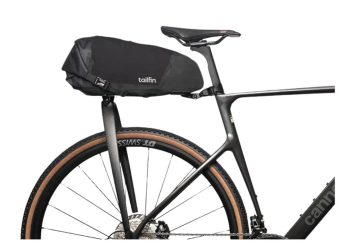
The SpeedPack is a 10-litre rear bag mounted on a Tailfin structure. In the version tested here, it’s the carbon variant, with a claimed weight of 700 g with the Fast Release Dropouts, or 778 g with the pannier mounts.
The bag is 435 mm long, with a rear width of 185 mm. The main volume is 10 L, plus a 3 L mesh pocket on top. This pocket may look anecdotal on the spec sheet, but in use it quickly becomes very relevant: rain jacket, a layer to take off on the move, food, your lunch sandwich… It’s exactly the kind of accessible space you appreciate when you don’t want to open the whole bag at every stop.
The stated maximum load is 8 kg on-road and 4 kg off-road for the upper section. With compatible side panniers, Tailfin states up to 54 L total capacity depending on the setup, with 9 kg per side on-road and 5 kg off-road.
But beyond the numbers, the SpeedPack concept is built on a simple idea: keep the spirit of a saddle bag while removing its main flaw. The sway.
Finish: you quickly see why it’s expensive
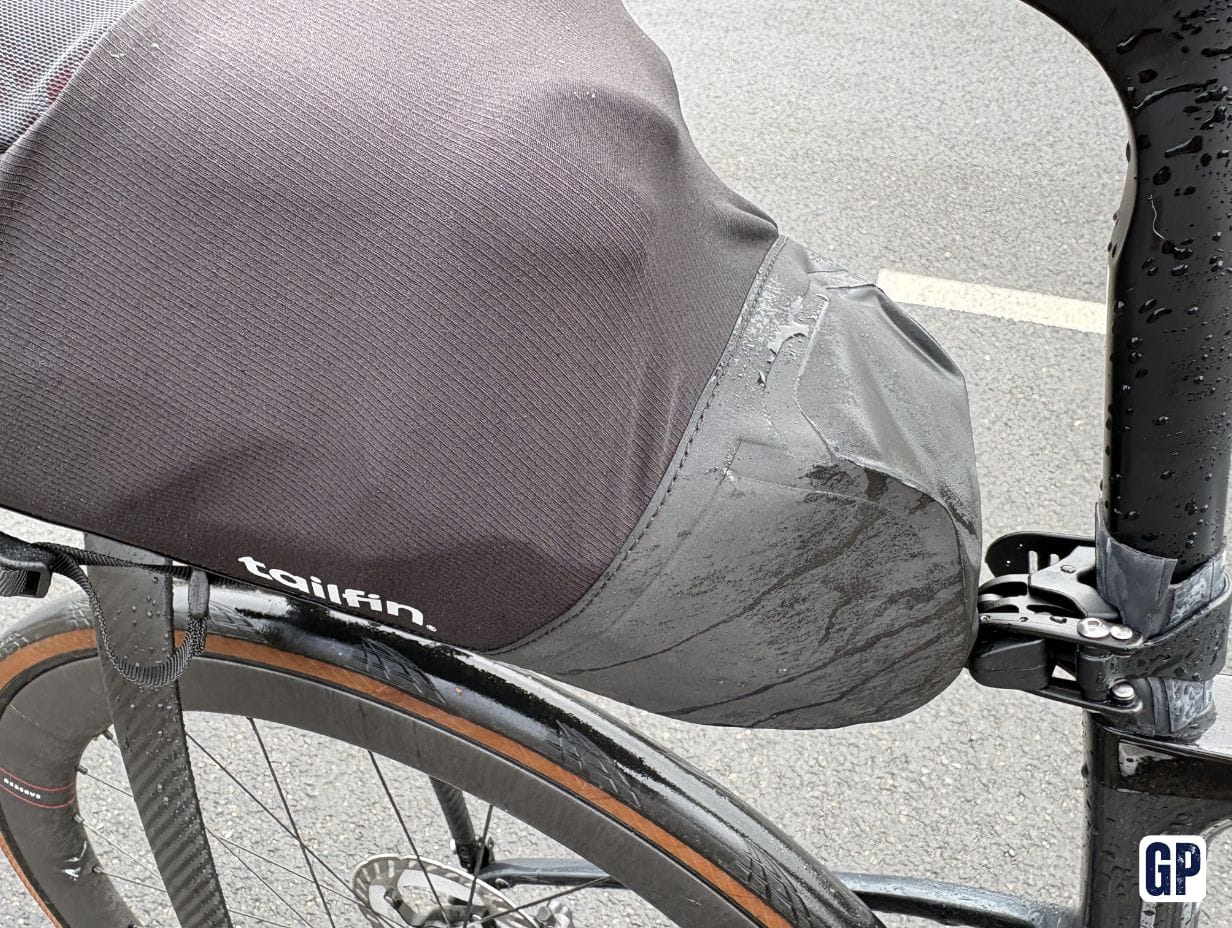
The first impression is pretty clear: the piece is beautiful.
The carbon support immediately gives a sense of a serious product. The bag’s finish is tidy, the assemblies inspire confidence, the details feel built to last. Fortunately, given the price, that’s the minimum. But credit where it’s due. You don’t feel like you’re holding an accessory cobbled together around a marketing concept.
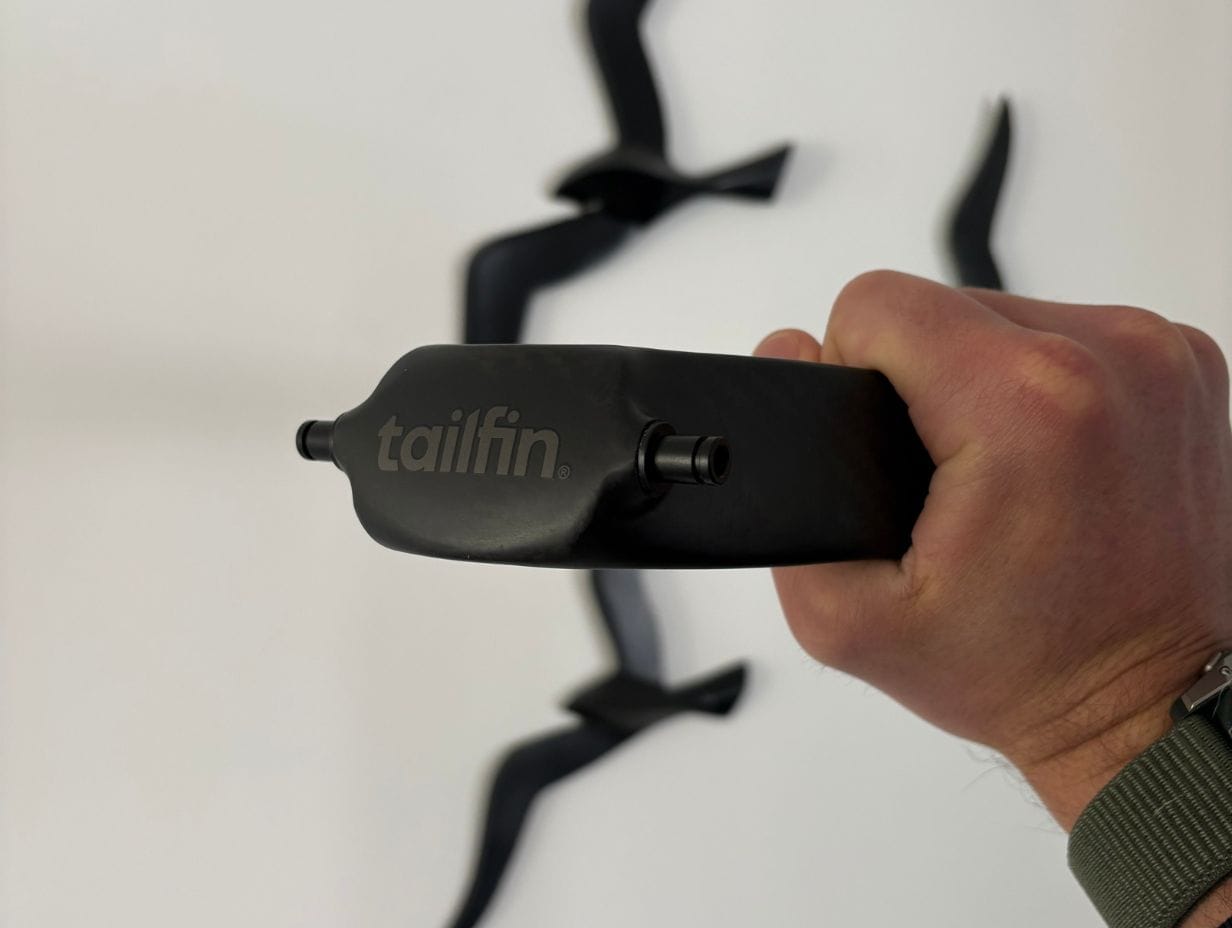
Tailfin has a very premium image in the bikepacking world, and the SpeedPack Carbon does nothing to contradict it. The structure is stiff, the bag is well integrated, the mounting points are numerous, and the whole thing really feels like a system designed as a whole.
We can debate the price, of course. In my configuration, it’s around €470. That’s a huge budget to carry 10 litres. But you also have to compare like with like. Here, you’re not just buying a bag. You’re buying a carbon structure, a mounting interface, a stabilised solution, adapters, a degree of modularity, and all the engineering that goes with it.
Does that make the price painless? No.
Does the product feel cheap? Definitely not.
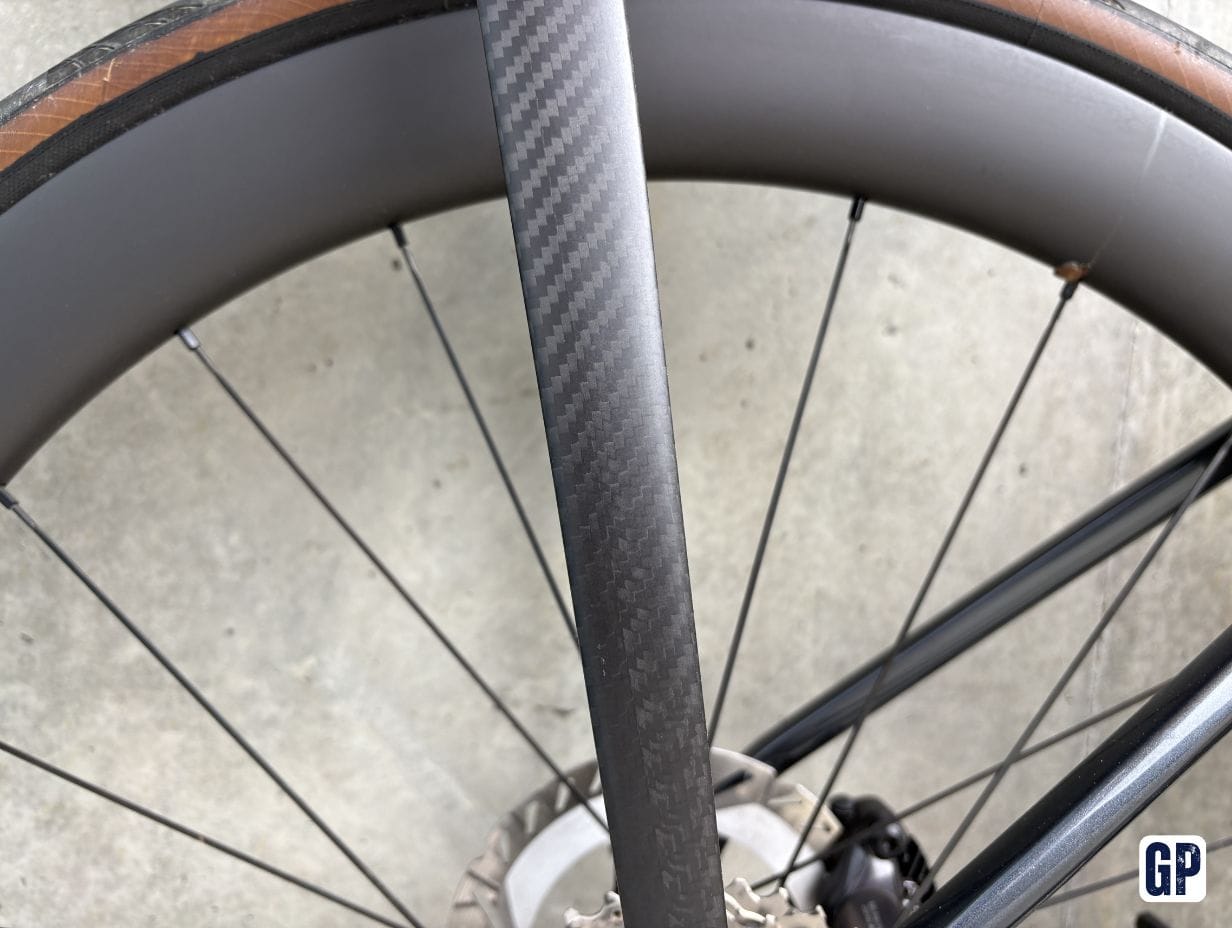
Setup: simple on paper, less straightforward if compatibility isn’t perfectly anticipated
This is probably the most important point to understand before buying a Tailfin: the system is well thought out, but you really need to check what your bike requires.
In my case, the start of the test wasn’t perfectly smooth. The product arrived just as Tailfin seemed to be transitioning some range elements. Result: a few missing or not perfectly adapted parts, instructions that didn’t always match the configuration received, and a UDH adapter needed for the Cannondale Synapse that wasn’t in the pack at the outset.
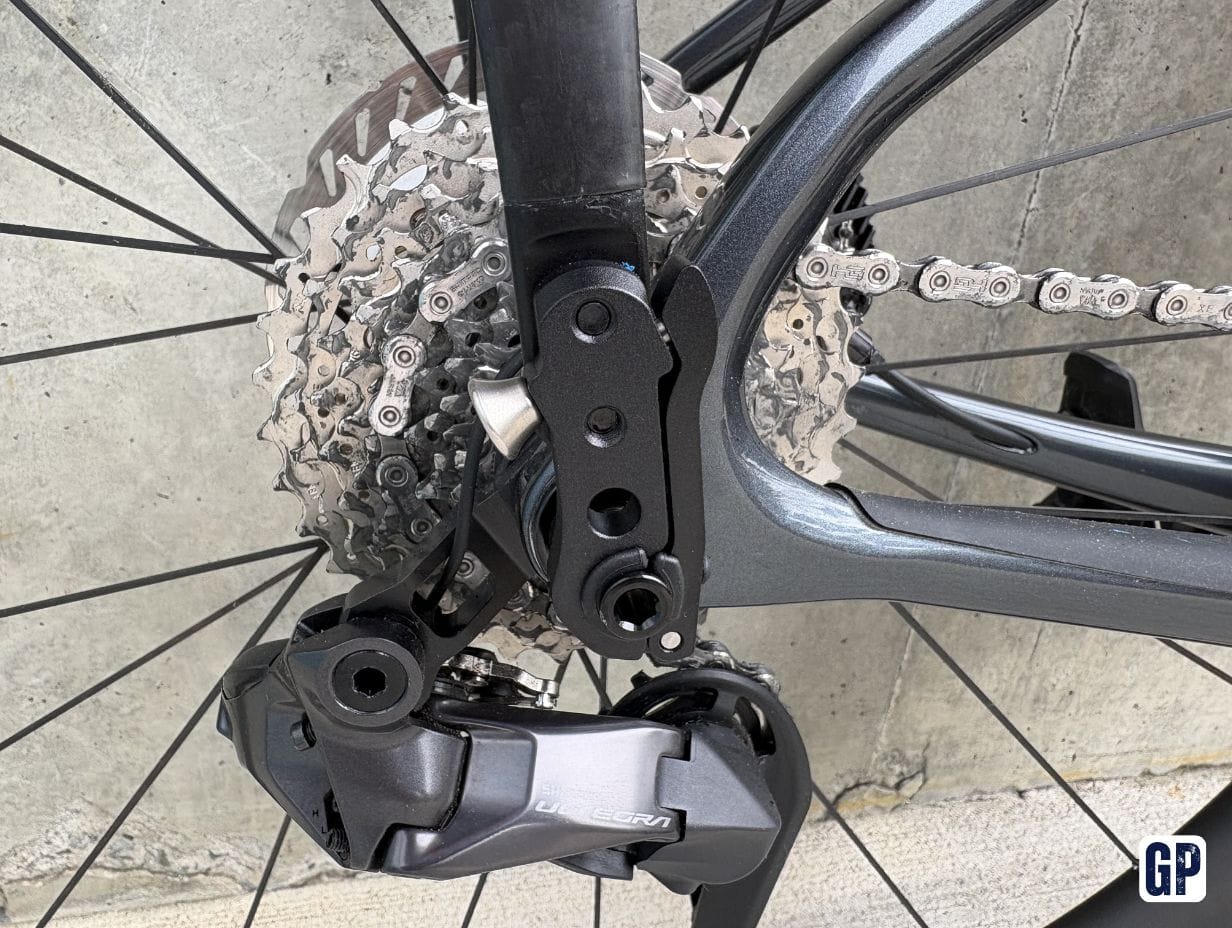
Today, after rechecking the product page and the online manuals, everything seems back in order. The product a customer orders now should be easier to assemble. And once you have the right parts in hand, assembly is perfectly manageable.
Depending on your frame, you can mount the system on the inserts provided for a rack, or use Tailfin’s thru-axle. Note however: not all rear inserts are necessarily designed to support a rack. On some frames, they’re only for mudguards. So you need to check what the manufacturer actually allows.
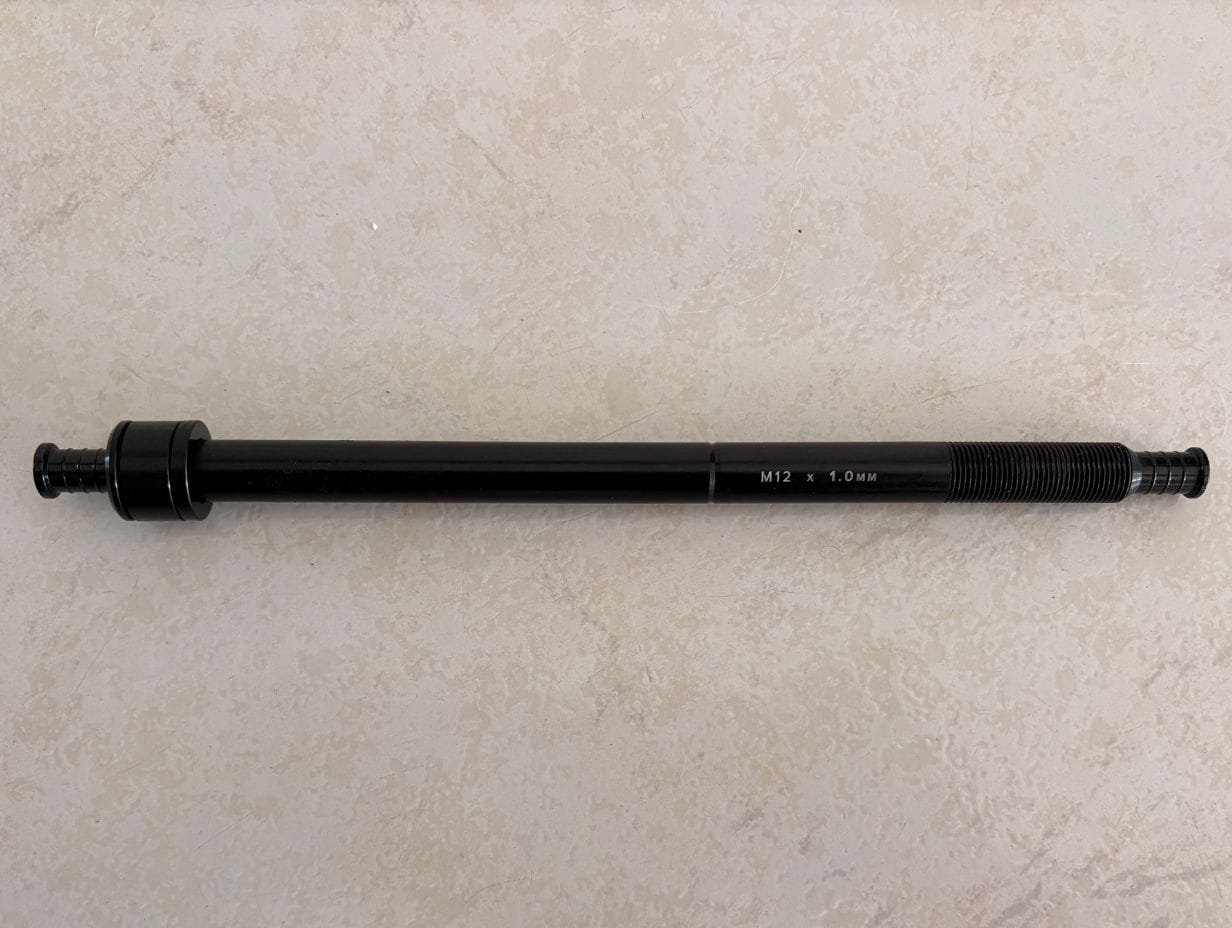
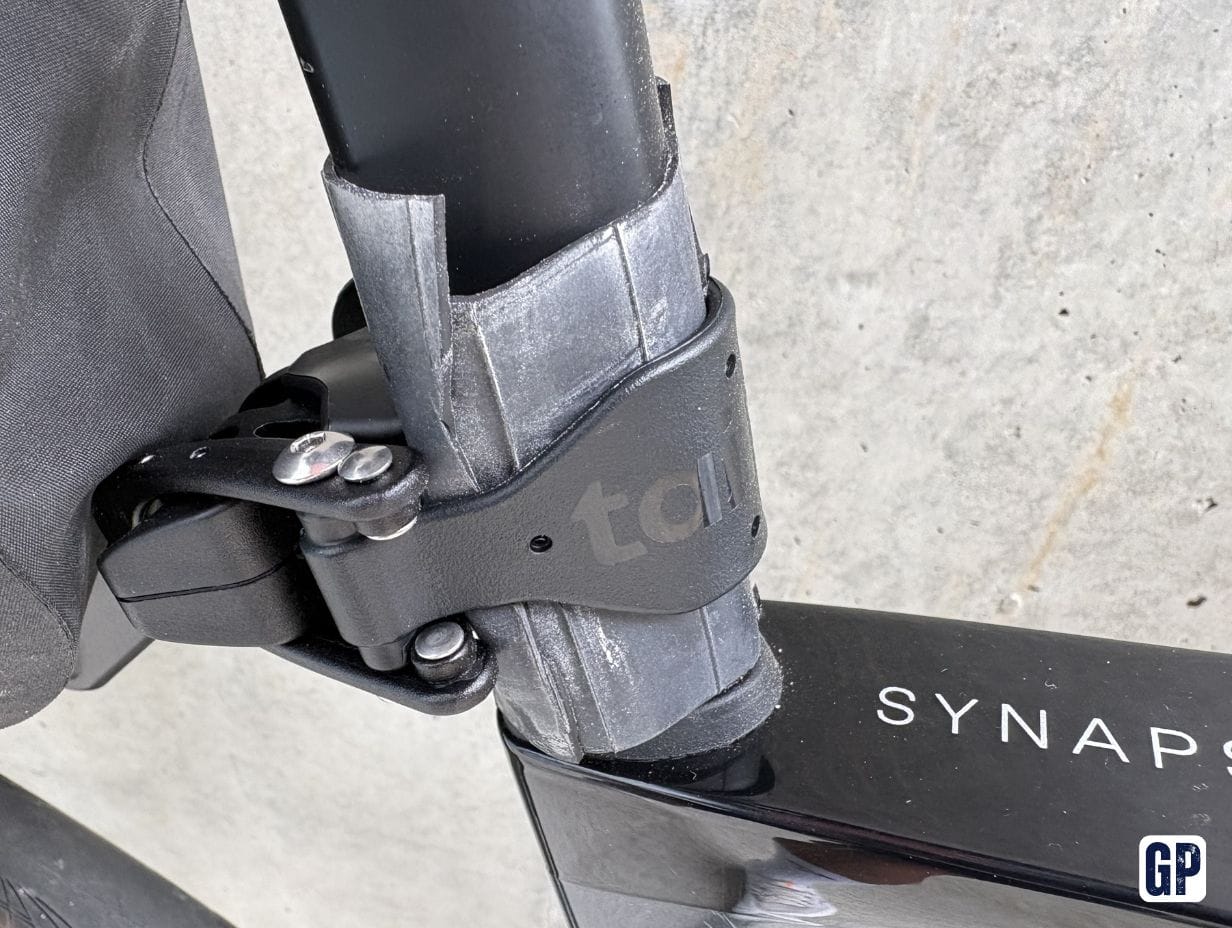
On my Synapse, the existing inserts didn’t necessarily allow me to use the system as I would have liked. So I went with the thru-axle solution. Tailfin offers a universal axle to be configured by length and thread pitch, with a setup that inspires confidence once correctly assembled.
But this isn’t a product to order blindly thinking “it will be fine”. Take ten minutes to check your frame, your hanger, your axle standard, the possible presence of a UDH hanger, and the required adapters.
Truly impressive stability
This is where the SpeedPack scores the most points.
I’m used to classic 10, 12 or 14-litre saddle bags. When they’re good quality, they do the job. Some sway very little. You can sometimes even do without a stabiliser depending on the load and the bag’s shape. But there’s always a small parasitic movement. A slight vagueness at the back. A bag you feel living its own life.
With the Tailfin, it’s different.
Once mounted and loaded, the whole thing barely moves. The bag feels part of the bike. There isn’t that sensation of a mass suspended behind the saddle. Not that pendulum effect you can feel when standing on the pedals, shifting weight or when the surface gets rough.
Even for 100% off-road use, the system stays perfectly in place.
What struck me most is how little the bike’s behaviour changes. Of course, you’re adding weight at the rear. Of course, a loaded bike never behaves exactly like an unladen one. But here, the weight feels better controlled, better integrated, less floaty.
For ultra-distance, fast bikepacking or long rides where you want to keep an efficient bike, that’s a real selling point.
Ease of use compared with a classic saddle bag
A classic saddle bag has two big drawbacks.
The first is stability. We’ve just covered that.
The second is access.
When a bag is well filled, compressed and cinched under the saddle, opening it mid-ride can quickly become a pain. You hesitate to put in anything you might need regularly. You often end up reserving the saddle bag for “evening” items or things you don’t want to touch for a long time.
With the SpeedPack, access stays cleaner and more stable. You’re not manhandling a soft mass deforming in all directions. The top mesh pocket also adds real practicality. For light bikepacking, it’s exactly the sort of detail that saves time and avoids frustration at the roadside.
The 10 L volume isn’t huge. You’ll need to be reasonable. But coupled with a frame bag, a top-tube bag and possibly a small handlebar bag, you start to have a coherent setup for going light over a few days.
For three or four days in minimalist mode, it holds up. For more heavily loaded travel, you’ll need to look at versions compatible with side panniers or move to a more voluminous system.
Neat little details
Tailfin has integrated several interesting elements.
In particular, there are mounting points under the SpeedPack to add carrying capacity, for example a bottle cage or certain accessories. There are also two positions to mount lights, which is far from a detail when you’re out for a long time.
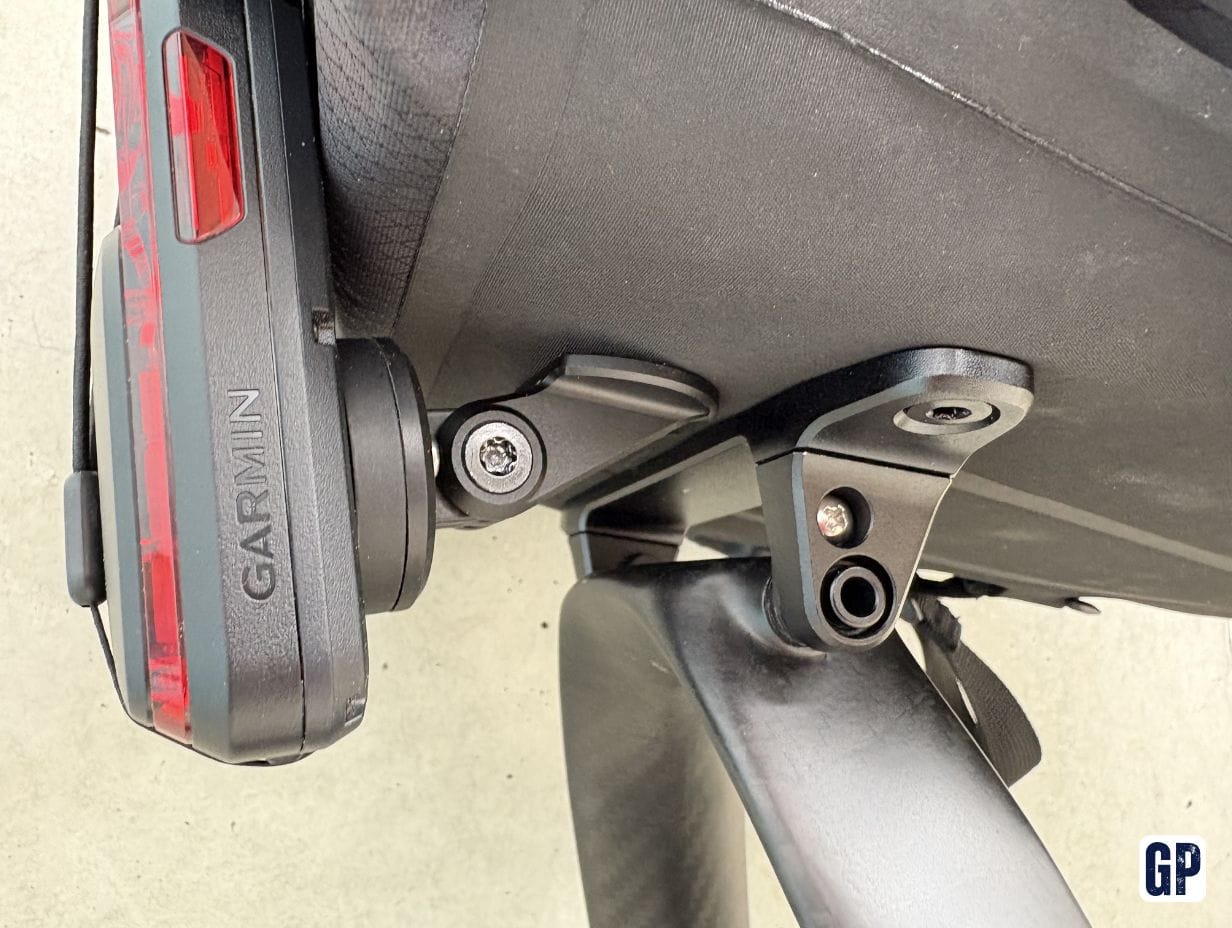
I used this mount to fit a GoPro-type bracket, then a Garmin quarter-turn adapter to place my Varia. It’s the kind of problem you face as soon as you install a large saddle bag: where do you put the radar or rear light?
Here, the Varia finds a tidy place. It sits a bit lower than on a seatpost, but on my rides it detected cars correctly. That’s a very positive point.
The connector system at the seatpost is also well thought out. The SpeedPack comes with several FitLink lengths, allowing you to adjust the bag’s position based on frame size, seatpost extension and available space. On my setup, I used the intermediate length. That lets you position the bag neatly without it butting under the saddle.
This level of adjustment also explains why the product may interest riders on small frames. Classic large saddle bags can be tricky to install when seatpost extension is limited. Here, the system offers more leeway.
Fasteners: not a blocker, but plan ahead
One point I liked less: the diversity of fasteners.
There are several standards, with both Torx and Allen. In itself, nothing abnormal on such a complete system. But for a product designed for bikepacking, ultra-distance or long rides, it means you need to set off with a fairly comprehensive multitool.
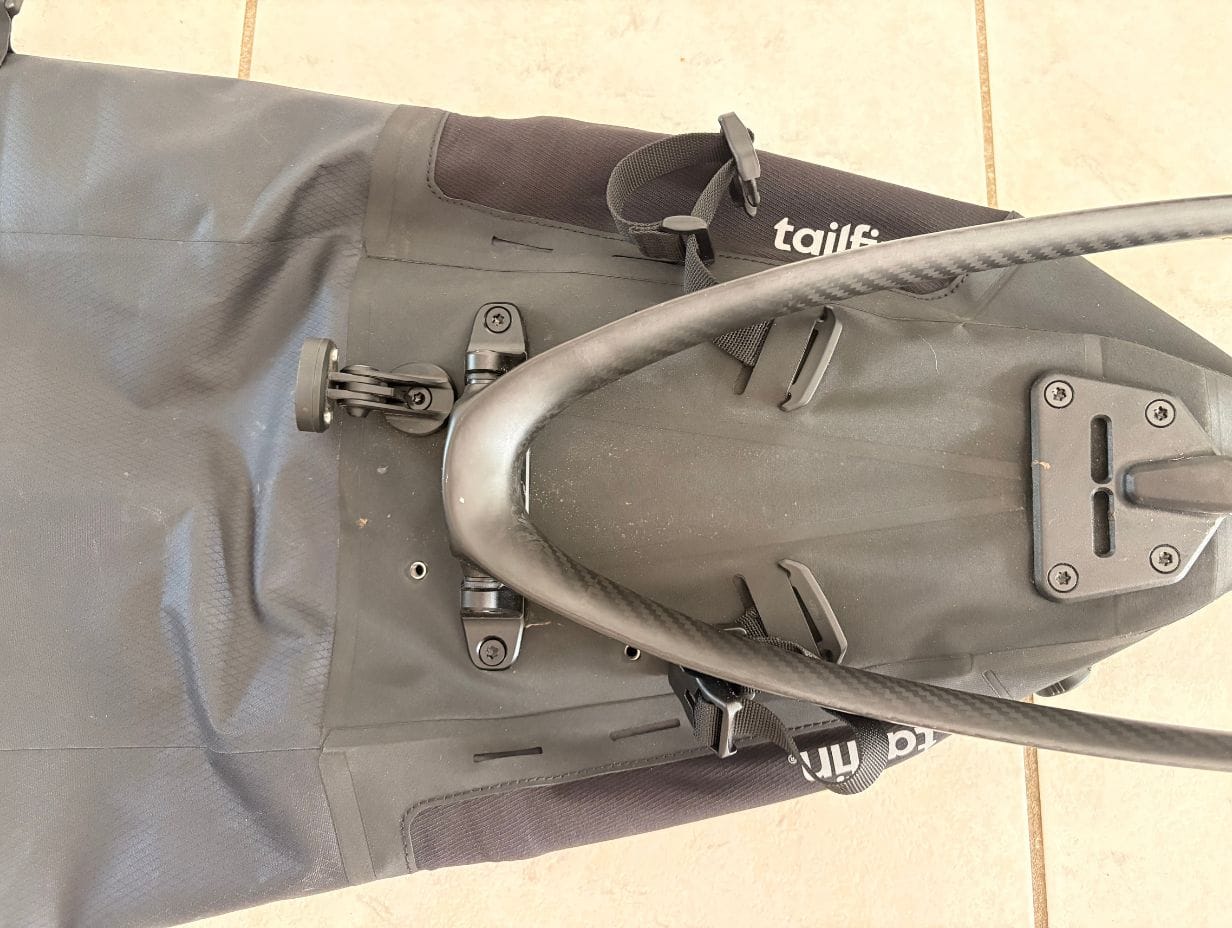
In my case, I realised my tool wouldn’t let me retighten every contact point if needed. It’s a detail, but over long distances, details matter. When you ride far, for a long time, sometimes at night, you want to know you can work on everything you’re carrying.
So yes, once properly assembled, the SpeedPack doesn’t feel like it wants to come loose every two hours. But when I head out for several days with it, I definitely check that my multitool covers all the required bit profiles.
Carbon or aluminium: do you really need to choose the most expensive version?
The carbon version is gorgeous. It’s light, stiff and very clean visually. On an endurance road bike, a fast ultra build or any setup where every gram counts, it makes sense.
But for very committed gravel riding, I’m not sure I’d spontaneously choose carbon.
Not because I doubt the product’s strength. On the contrary, the whole setup inspires confidence. But simply because in gravel I care less about gram-chasing. If the goal is to ride rougher tracks, travel more heavily loaded, or prioritise rationality, the aluminium version seems perfectly coherent to me.
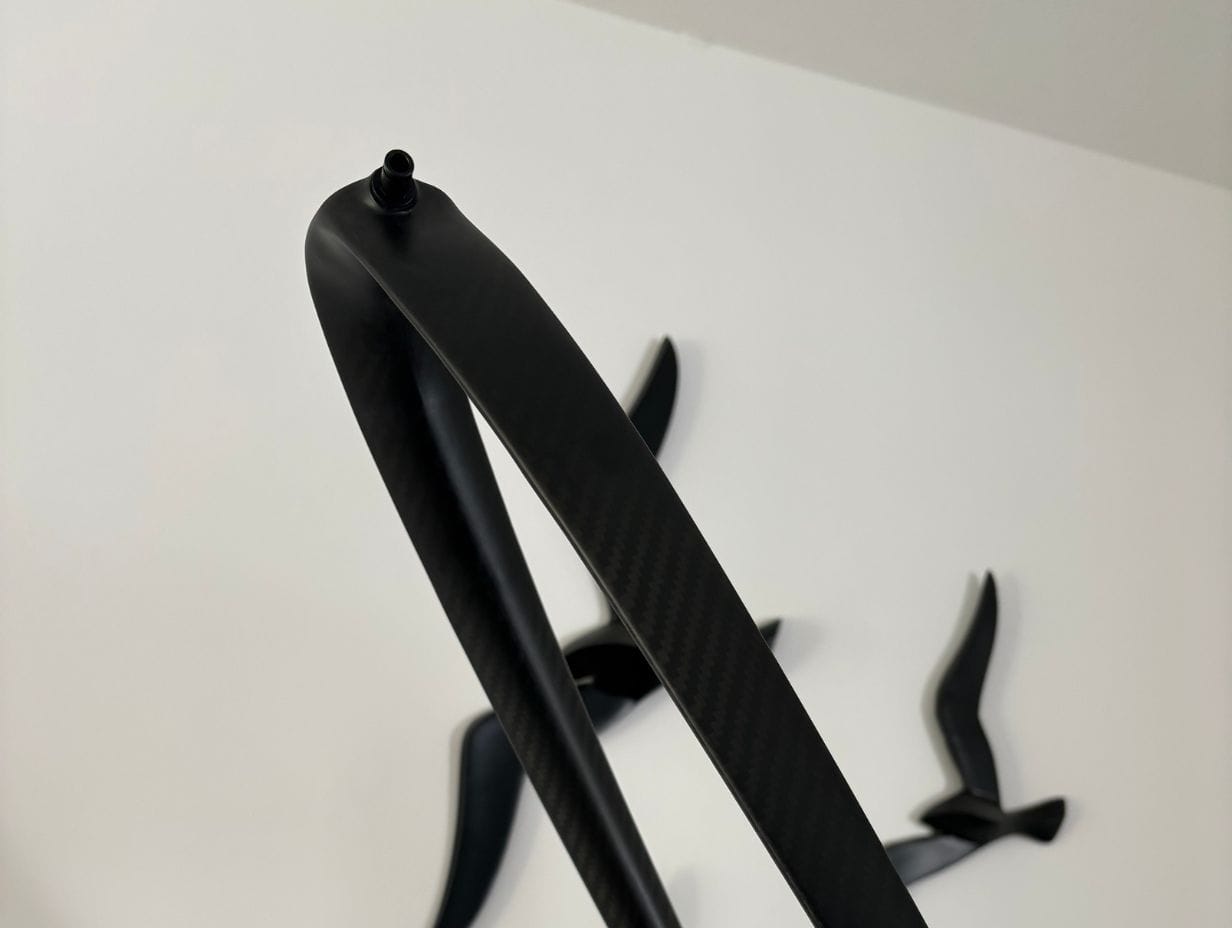
Carbon is the showpiece. The one that’s a pleasure to own. The one that fits perfectly with a fast, light build.
Aluminium is probably the more rational choice for many riders.
And it’s a good thing Tailfin offers that option.
What use case suits the Tailfin SpeedPack?
The SpeedPack isn’t a product for everyone.
If you’re simply looking for a small solution to carry a jacket, a few bars and a tool, it’s overkill. A good saddle bag or a top-tube bag will do the job just fine.
If you’re heading off on a heavily loaded trip, with lots of kit, full bivvy and several days of autonomy, the SpeedPack alone will be too limited. You’ll need to pair it with other bags or choose a more voluminous solution.
On the other hand, for ultra-distance, light bikepacking, long fast rides, brevets, road/gravel raids where you want to keep a lively bike, it becomes very interesting.
Its true sweet spot is that moment when a classic saddle bag starts to show its limits, but you don’t yet want to switch to a full-on touring setup.
It will particularly suit riders who push on, who like a stable bike, who want clean access to their kit and who accept paying a high price for a very accomplished system.
My verdict on Tailfin
The Tailfin SpeedPack Carbon is fairly easy to sum up: it’s expensive, but it really works.
It isn’t a tweaked saddle bag. It’s more a different way of thinking about rear carrying. Stiffer, more stable, cleaner, more reassuring when you’re riding long and want to keep an efficient bike.
It’s not perfect. Assembly demands attention, compatibility needs to be checked carefully, and the price puts it firmly in the very high-end. But once correctly installed, the result is impressive.
For committed, rational gravel use, I’d probably also look at the aluminium version. For a road / ultra / fast bikepacking setup where you want to treat yourself to a beautiful piece, the carbon version makes complete sense.
This SpeedPack won’t make your bike lighter once loaded. But it will make the load far more discreet in the bike’s behaviour. And on a long ride, that’s exactly what you want from this kind of product.