
Training with power, heart rate, or HRV (Heart Rate Variability) is now fairly standard for cyclists who like to understand what they’re doing. Tymewear offers something different: measure ventilation, identify ventilatory thresholds, then use that data to better calibrate training.
On paper, the approach is appealing. In practice, after several months and 125 hours of use, the verdict is more nuanced: the hardware is convincing, the software is improving quickly, but interpreting the data still takes some perspective.

Strengths:
- Comfortable, stable belt
- Genuinely interesting respiratory measurement
- Integration with Garmin
- Regular updates
Could be better
- Ecosystem still a bit demanding
- Real learning curve to make use of the data
A fairly straightforward onboarding, but not to be taken lightly
Onboarding is relatively intuitive.
The app does a good job guiding you through the first steps: installation, account creation, pairing the heart-rate and respiratory sensors, adjusting the belt, then optionally connecting external sensors.
But you need to follow the order.
Tymewear specifically recommends doing the Threshold Test in the app first, then setting up Garmin afterward. This matters, because the initial test underpins all the analysis.

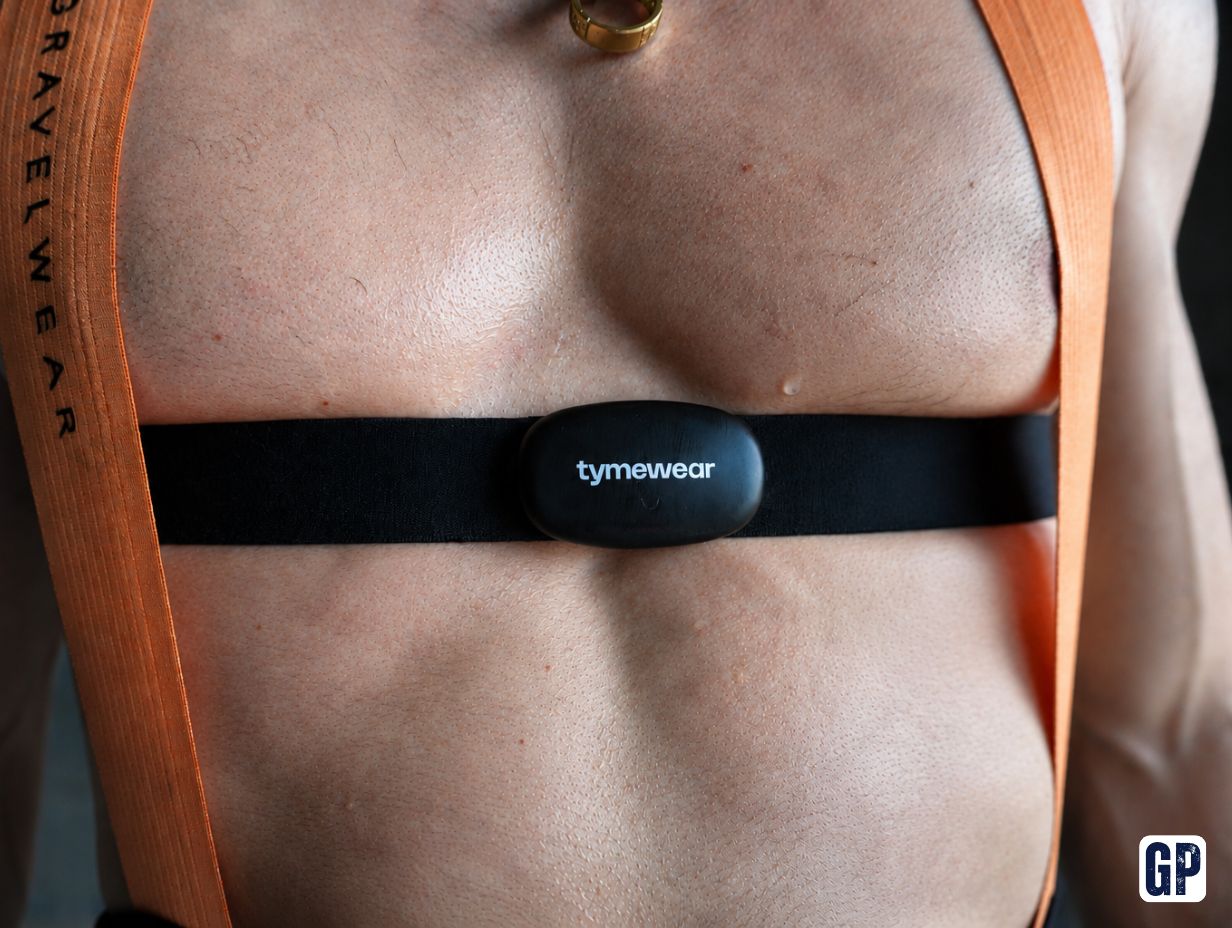
Belt placement also needs a bit of attention. The heart-rate sensor goes on the front. The respiratory sensor sits on your back, below the shoulder blades. On the bike, make sure your bib straps don’t interfere with the sensor’s movement.

A genuinely convincing belt
On the hardware side, Tymewear scores points. The belt is comfortable. It doesn’t slip during efforts. The fastening system is simple but convincing.
It sounds basic, but for this type of product, getting the hardware right is essential. If the belt moves, chafes, or cuts out regularly, the software promise isn’t worth much. Here, it’s broadly a success.

My only gripe concerns the CR2032 batteries. For a product used intensively, cable charging would seem more sensible in the long run.
That said, as I write this, I’m about 125 hours in and haven’t yet needed to change the batteries (52%).

The Threshold Test - a must and a sensitive spot
The true starting point of the Tymewear experience is the Threshold Test.
It’s a progressive test designed to identify ventilatory thresholds. Tymewear recommends doing it in controlled conditions, ideally on an indoor trainer for cycling. The default protocol starts very low, at 70 watts, with a 20-watt increase every three minutes.
On paper, that’s logical. You need enough low-intensity data to correctly detect the first thresholds.
In my case, however, the values from the first test were inconsistent with my actual level outdoors.

I somewhat expected that. I find it harder to push myself on an indoor trainer than in an outdoor race or during a committed effort outside. And inevitably, if the initial test doesn’t fully reflect your real level, the resulting zones can be questionable.
Thankfully, the zones then recalibrate with the data you accumulate.
That brought some order back to the values. But even after several months, some of the data still seemed debatable to me. The most telling case: a surprisingly high time spent in zone 5 on sessions that were otherwise easy in zone 1 or 2 in terms of power.

However, support – very responsive – confirmed to me that within a few weeks, this test will no longer be required to obtain reliable data.
A new data point, not an absolute truth
Before Tymewear, I didn’t train with these values.
I mostly looked at HRV, heart rate, and power. I like data, but I’m not a professional or elite cyclist forced to hit intensities to the letter.
Tymewear therefore made me discover another way to analyze my sessions.
Ventilation adds an interesting lens. Power tells you what you produce. Heart rate shows a cardiovascular response. Breathing gives an additional indication of how the body handles the effort.

It’s relevant, especially if you like to understand the gaps between sensations, power, fatigue, and actual intensity.
But I wouldn’t put this data above the others.
Today, Tymewear seems most interesting to me as an additional layer of analysis. Not as a replacement for power or heart rate.
What this data can really add to training
The value of Tymewear isn’t just adding yet another data field to an already crowded screen.
The real question is: what does breathing help you understand better than power or heart rate alone?
In training, ventilation can help you better identify shifts in physiological state. On an endurance ride, for example, it can show whether you’re truly staying at an easy intensity or gradually sliding into a more costly zone without necessarily realizing it.
It’s particularly interesting for long sessions, where cardiac drift, fatigue, heat, or accumulated stress can alter the body’s response. Two rides at the same power don’t always tell the same physiological story. Breathing can then provide a complementary reading.

In competition, the value is different. You won’t necessarily watch your respiratory data constantly in the middle of an effort. But afterward, it can help explain why a race felt out of control, why an intensity felt untenable, or why certain surges cost more than expected.
For a cyclist preparing long efforts, like a gravel race, gran fondo, or road event, this data can therefore help you better dose certain intensities. It can also keep you from building all your training solely around power, when the body’s internal response sometimes tells a different story.
That’s where Tymewear becomes interesting: not as a tool that simply says “ride harder” or “ride easier”, but as a way to better understand the real cost of an effort.
And on that point, even if the zone interpretation isn’t yet perfect, the logic is sound.
Software that is improving quickly
On the software side, the experience has improved over the months.
Updates have been frequent, and you can feel it. That’s rather reassuring for a still-young product.
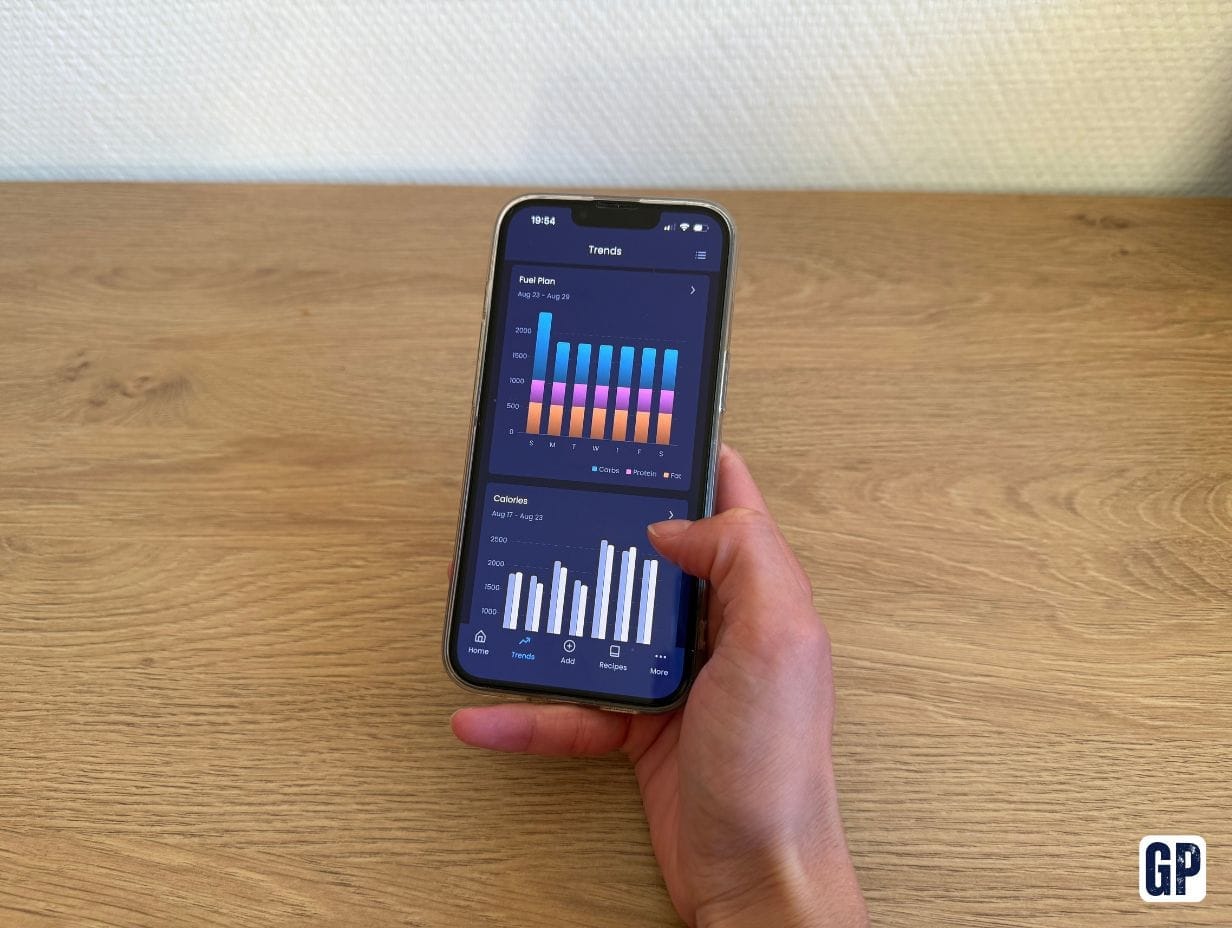
The app lets you record activities and view your thresholds, zones, and respiratory data. For cyclists, Garmin is currently the most compelling integration. Compatible devices can display Tymewear data via Connect IQ, and Garmin activities can be synced with your Tymewear account.

Tymewear currently sells the VitalPro for 299 dollars. The ProTraining subscription is 15 dollars per month or 150 dollars per year, with bundles including one or two years of subscription.
Personally, I don’t find this model illogical.
Hardware plus subscription has become common in connected training. If the subscription funds personalized recommendations, workouts, and software development, that can be justified.
However, the value will depend heavily on your use.
If you only want to analyze your respiratory data, the product already makes sense. If you want to use personalized workouts, you’ll need to look closely at the integration with your GPS and your training habits.

My take on Tymewear
Tymewear VitalPro isn’t a gadget.
The belt is solid, comfortable, and well designed. The ventilation-based approach adds a genuinely useful extra read on effort, especially for cyclists already used to working with power, heart rate, or HRV.
But it’s not a magic solution either.
The first test heavily shapes the experience. The zones can be surprising. And the ecosystem still needs a bit more maturity to become fully seamless day to day.
For a curious, data-loving cyclist who wants to improve and is ready to cross-check information rather than take everything at face value, Tymewear is worth attention.
For someone who simply wants a simple, reliable, and affordable heart-rate belt, this isn’t the most rational product.
Tymewear VitalPro is a promising tool, already useful, but even more interesting if you keep a critical eye on your own data.