
Tailoring your nutrition to your menstrual cycle is not a magic fix. It is mainly a way to understand what’s going on in your body, why some sessions go better than others, and why your energy can swing from one week to the next.
In a natural menstrual cycle – that is, without hormonal contraception – female hormones fluctuate. They influence energy, recovery, hunger, sleep, body temperature, and how the body uses carbohydrates, fat, and protein.
The goal isn’t to control everything. The idea is to use your cycle as a lens to train smarter, eat better, and avoid judging yourself too quickly when a session feels unusually hard.
Female hormones: why they change the game
You probably suspect it, but female sex hormones differ from male hormones. Yes, ladies, we don’t work the same way. So let’s start simple, with a quick primer on how the body works and why it can be useful to adapt your training and your nutrition.
In the natural menstrual cycle, two hormones are predominant: oestrogen and progesterone. They play very different roles.
Oestrogen can increase fat storage, take part in various biosynthetic processes, contribute to rapid but brief bone and muscle growth, stimulate arginine vasopressin – affecting vasoconstriction and water retention – and increase serotonin and dopamine levels, which are linked with calm, wellbeing, and memory.
Oestrogen can also promote deep sleep, reduce sleep-onset latency and the number of night-time awakenings, blunt some effects of cortisol – the stress hormone – and improve insulin sensitivity. Insulin is a natural hormone made by the pancreas that helps regulate blood sugar and provide energy to cells.
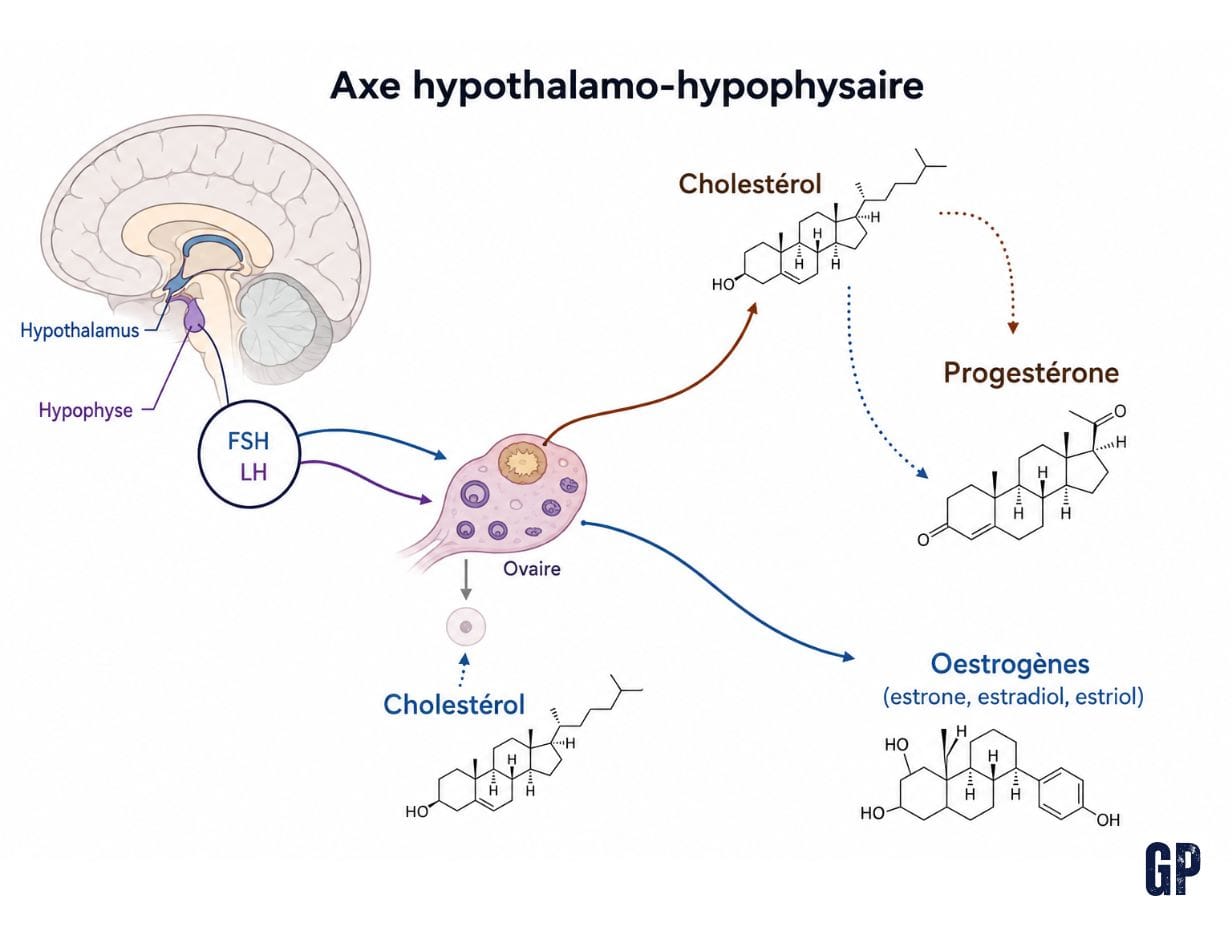
Progesterone is associated with an increase in body temperature, an increase in catabolism – the set of molecular breakdown reactions in the body – and can compete with aldosterone, which is involved in sodium retention.
It can also prevent certain panic-type symptoms and interfere with melatonin production, which can affect sleep.
Understanding the phases of the menstrual cycle
These hormones fluctuate throughout the cycle. To keep things simple, we can split it into several main phases.
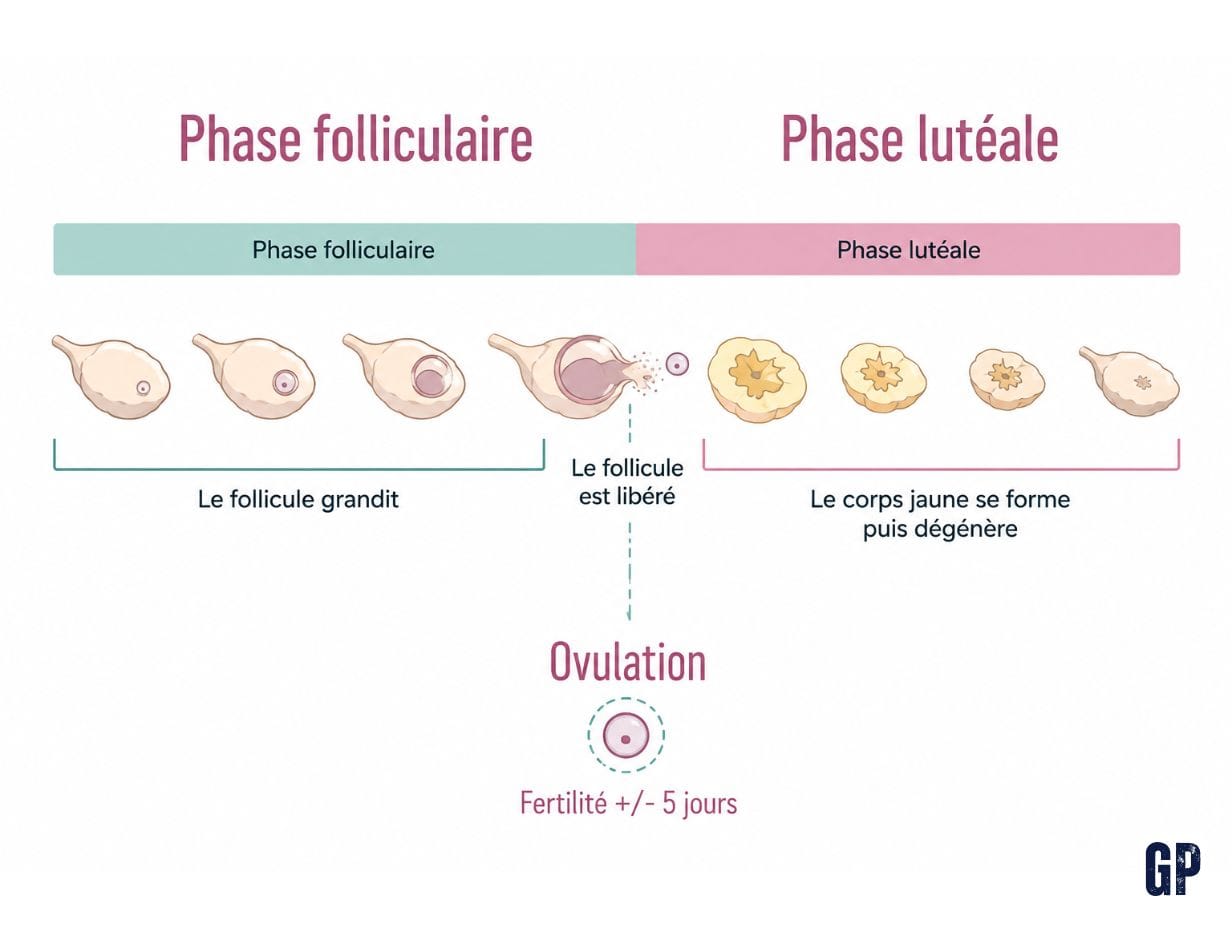
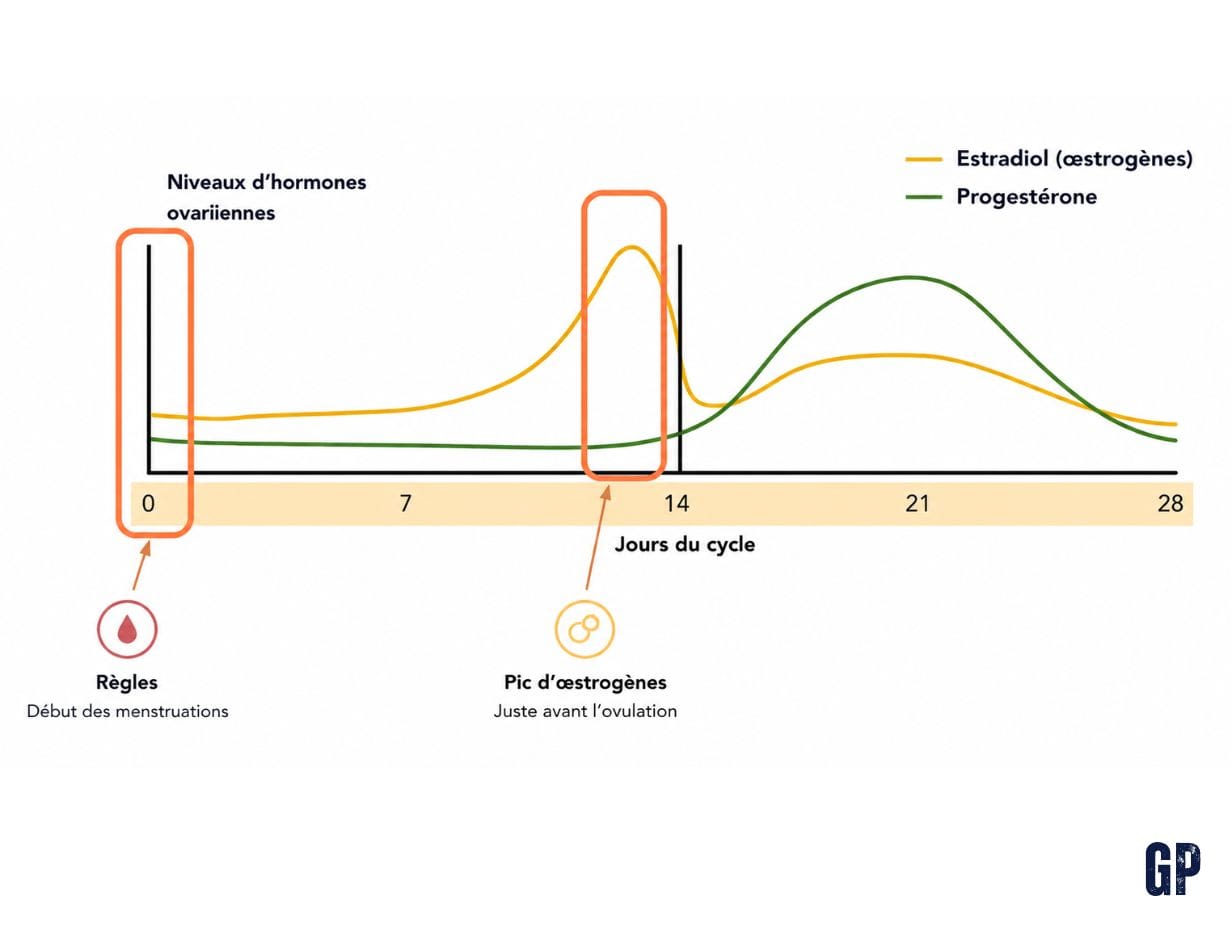
Day 1 of the cycle is the first day of your period. It marks the start of the follicular phase, which runs until ovulation and the fertile window. This is often when you feel at your best, with more energy.
Next comes the luteal phase, which lasts until the next period. This is when some women experience premenstrual syndrome, with pain, lower mood, lower energy, or a general feeling of reduced performance.
It’s neither inevitable nor an excuse. But it’s useful information. A tough session doesn’t always mean the same thing depending on where you are in your cycle.
To lay the foundations of everyday sports nutrition, you can also revisit our guide to the fundamentals of sports nutrition, which complements this cycle-based approach.
Follicular phase: the time when you can often push harder
During the follicular phase, there’s a hormonal shift with a peak in oestrogen around ovulation. Generally speaking, this is a time when you feel fitter – sometimes with that superpower, almost-invincible feeling. Yes, we can say it.
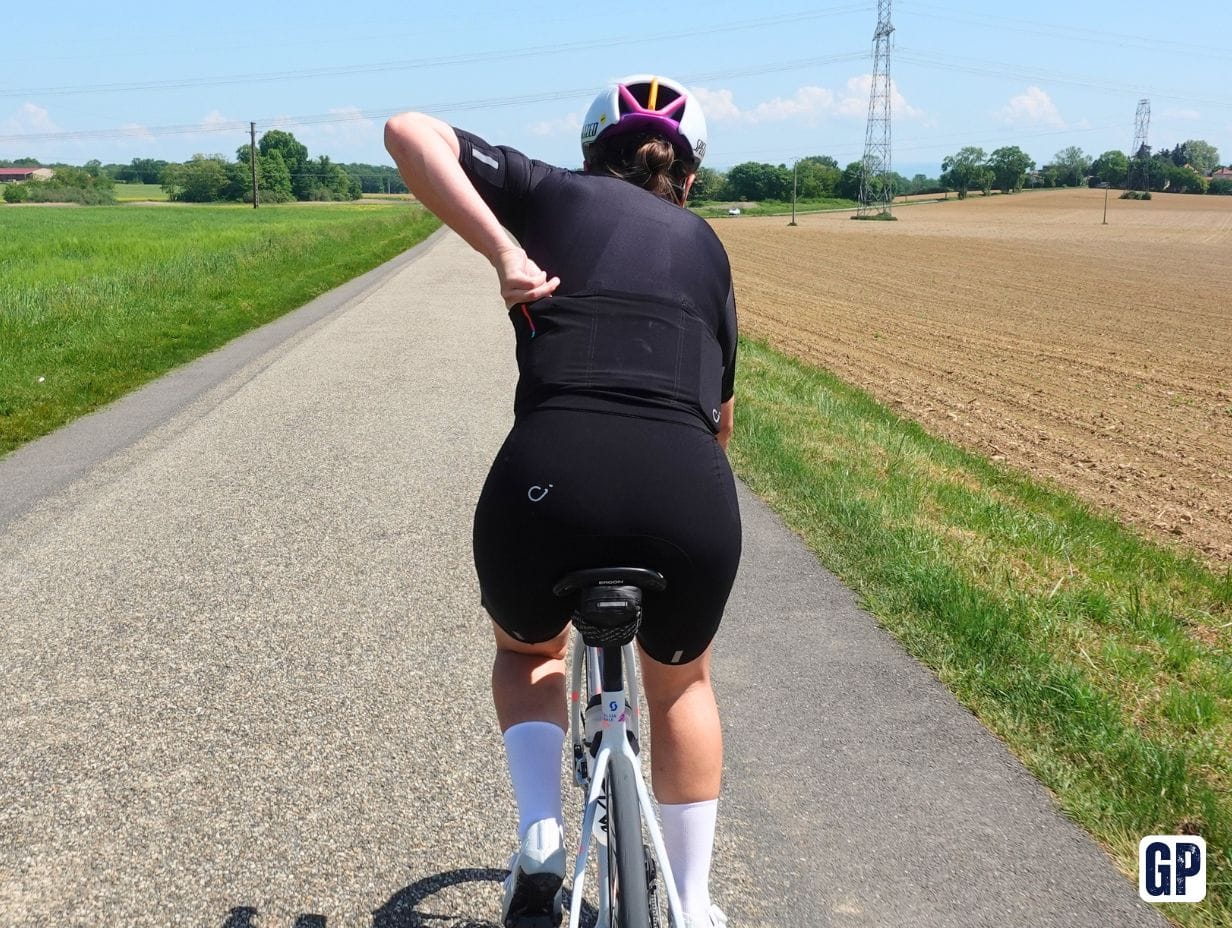
It’s often the right time to plan the most demanding sessions: high-intensity work, VO2max, explosive efforts, or any sessions where you’re aiming to dial up the intensity on the bike.
Alongside riding, this period also lends itself to strength training with heavy loads and a low number of reps, around 4 to 6. It’s often the most fun phase, when the body responds better and motivation is easier to find.
What to eat during the follicular phase?
During this phase, stick with a normal diet: carbohydrates, fat, and protein in amounts that match your hunger and needs.
Before each training session, it’s ideal to eat something 1 to 2 hours beforehand. Avoid fasted training, which can dysregulate hormones, raise cortisol, and disrupt the thyroid. A small intake before you head out is recommended.
Opt for slow-release carbs and lean, easy-to-digest protein, while limiting fibre and fats right before exercise.
After the session, emphasise protein to optimise recovery, support its structural role, and replenish glycogen stores. A daily target around 2 g of protein per kilogram of body weight works well. For example, for a 60 kg woman, that’s about 120 g of protein per day. As a guide, 3 eggs provide about 15 to 20 g of protein.
A snack might combine fruit for fructose, Pain des Fleurs buckwheat crispbreads, almond butter, or a handful of nuts.
In the follicular phase, favour quality proteins – organic or Label Rouge – as well as quality fats: nuts, olive oil, pumpkin seeds, flaxseeds, and fatty fish rich in omega-3. These inputs notably contribute to ovum formation thanks to vitamin B12.
Courgettes, broccoli, and carrots can also help with oestrogen detoxification, especially in cases of excess oestrogen and premenstrual syndrome. For carbs, choose quality sources: basmati rice, buckwheat, spelt, quinoa, or good-quality semi-wholegrain wheat.
If you want to structure your meals more broadly around macronutrients, our article on everyday and training nutrition goes further.
Ovulation: zinc, iodine, and hormonal balance
During ovulation, zinc-rich foods can be helpful. Zinc supports healthy ovulation – not only if you’re trying to conceive, but also to promote a more harmonious cycle.
It can also help limit inflammation, balance androgens – an important point with PCOS – and support implantation and maintenance of a fertilised egg if you are trying to conceive.
Good sources include white meat, poultry, sunflower seeds, sesame seeds, cashews, whole grains, and oats.
Iodine-rich foods can also support the thyroid and help regulate ovulation: seafood, oysters, shellfish, and seaweed. Take care in cases of hyperthyroidism: seek medical advice.
Luteal phase: when energy dips, adjust the fuel
The luteal phase is often the one we dread. You may feel a drop in performance, a lack of motivation, a sense of heaviness, or less desire to train. Ladies, that’s normal – hormones also influence these feelings.
To ride through this period as well as possible, prioritise endurance sessions, long tempo, mobility, and also activities like yoga, Pilates, or long walks. These practices stimulate the parasympathetic nervous system and can help steady moods, which are sometimes put to the test.
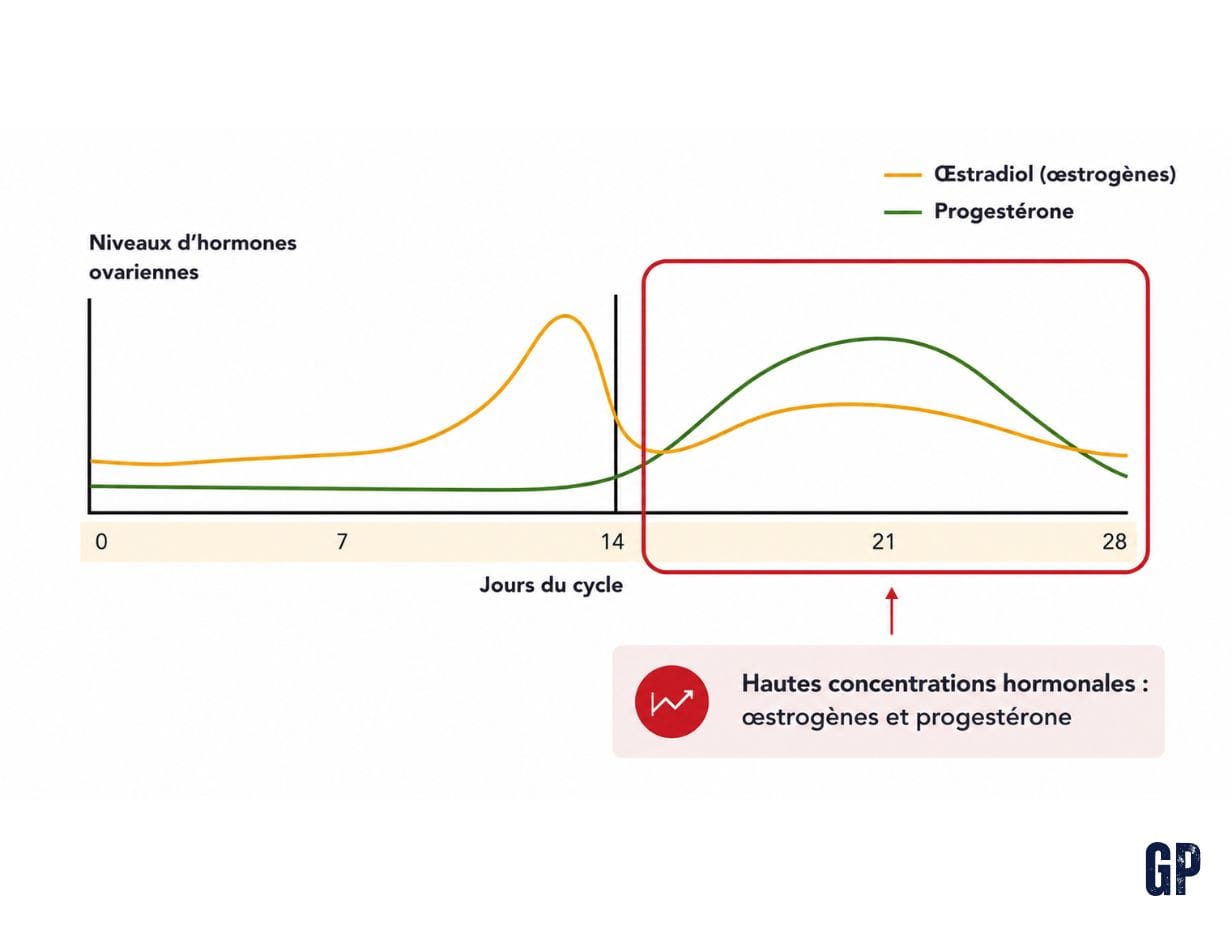
The good news is that during this part of the cycle, you can increase your on-bike fuelling. Protein can go up to 2.3 g per kilogram of body weight, and carbs also take on a bigger role.
What to eat during the luteal phase?
During this phase, the body needs more carbs during exercise and day to day, as well as more protein.
Why? Because in the luteal phase, metabolism can burn between 200 and 300 kcal more than usual. To limit those pre-period cravings – yes, chocolate – it’s better to increase your daily carb portions. That gives you more energy in training and throughout the day.
You can also increase fibre, as gut transit can be disrupted and slowed, sometimes with bloating.
Practically, during the luteal phase, keep up sufficient protein and fats: wild fatty fish, eggs, and nuts and seeds. Increase starches, preferably wholegrain or semi-wholegrain.
Sulphur-rich vegetables – garlic, onion, shallot, chives, leek, cabbage, turnip, radish – and leafy green vegetables such as broccoli can support liver detoxification and oestrogen elimination to help limit premenstrual syndrome.
Think almonds for magnesium, which can help regulate the nervous system, sleep, and cramps.
On long rides or sessions where intensity is still present, your carb fuelling strategy remains important. Our guide to nutrition and hydration for long-distance gravel fits this approach well.
Menstruation: listen to your body before pushing
During menstruation, the best recommendation is often the simplest: listen to yourself.
Some women feel a surge of energy when their period starts. Others want to curl up under a blanket and watch a series. That’s normal. We’re all different, and the body often sends signals it’s better to learn to read than to ignore.
A few dietary tweaks can help.
During menstruation, favour iron-rich foods to offset blood loss: raw cacao, spirulina powder or flakes, good-quality red meat – organic or Label Rouge – beetroot juice, nettle powder.
Keep fruit and vegetables to load up on nutrients, whole grains like oats, buckwheat, or quinoa, as well as organic, free-range eggs, ideally Bleu-Blanc-Cœur label, for their vitamins B12 and B9. These vitamins help manage physical and mental fatigue and support healthy body function.
And of course, drink water. Simple but essential.
Missing periods: a warning sign not to shrug off
Ah, the big topic – here it is.
During the Tour de France, you often hear women in the media explain they haven’t had periods for years, often following weight loss and intensive training.
It’s a very good thing that athletes talk about it. It’s also important they tell younger riders that not having periods isn’t normal.
This isn’t about lecturing anyone. But if you haven’t had your period for several months or years, or if your cycle is starting to become irregular, see a healthcare professional: doctor, gynaecologist, dietitian, or naturopath.
These professionals can help and support you. Not having periods is not trivial, nor without consequences for the body in the short or long term. It can be part of RED-S, with risks such as stress fractures. There may be something to adjust between training and energy intake.
Make your cycle an ally, not a constraint
Throughout this article, we’ve reviewed the different phases of the female cycle and how to optimise training and nutrition.
Of course, that takes commitment. You have to learn your natural cycle, observe your sensations, and understand your fluctuations. That takes time.
So, ladies, be kind to yourself. Listen to yourself. And above all, don’t beat yourself up if a session didn’t go as planned. Also look at where you are in your cycle.
A hard session can feel easier in one phase than another. The cycle is a very good performance tool. Use it as an ally.