
A heart rate strap isn’t the most thrilling bit of kit to test. Yet when you train a lot, it’s the accessory that can end up grating. A coin cell dying at the wrong time, a pod that starts acting up, elastic that gives out too soon, a strap that creeps the moment the ride turns wet.
I’ve been using chest straps for over ten years, with fairly high volume: typically 12 to 20 hours of sport per week, between cycling, running and triathlon. In those conditions, my old straps rarely lasted more than two years without a real weakness. And I’d simply had enough of coin cells.
Strengths:
- Recharging is more convenient than coin cells for intensive use
- Multisport functions that are genuinely useful beyond the bike
- Two strap sizes and good stability when running
Could be better
- Very high price compared with simpler heart rate straps
- Decent strap but not the most comfortable on the market
That’s why the Garmin HRM 600 interested me. Not just because it measures heart rate – all good straps already do that very well – but because it comes with a rechargeable battery, deep Garmin Connect integration and a few multisport functions that go well beyond cycling.
4 seasons, 1 year of testing, 689 hours of use.
A strap designed for athletes who train a lot
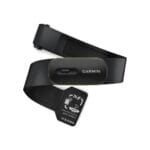
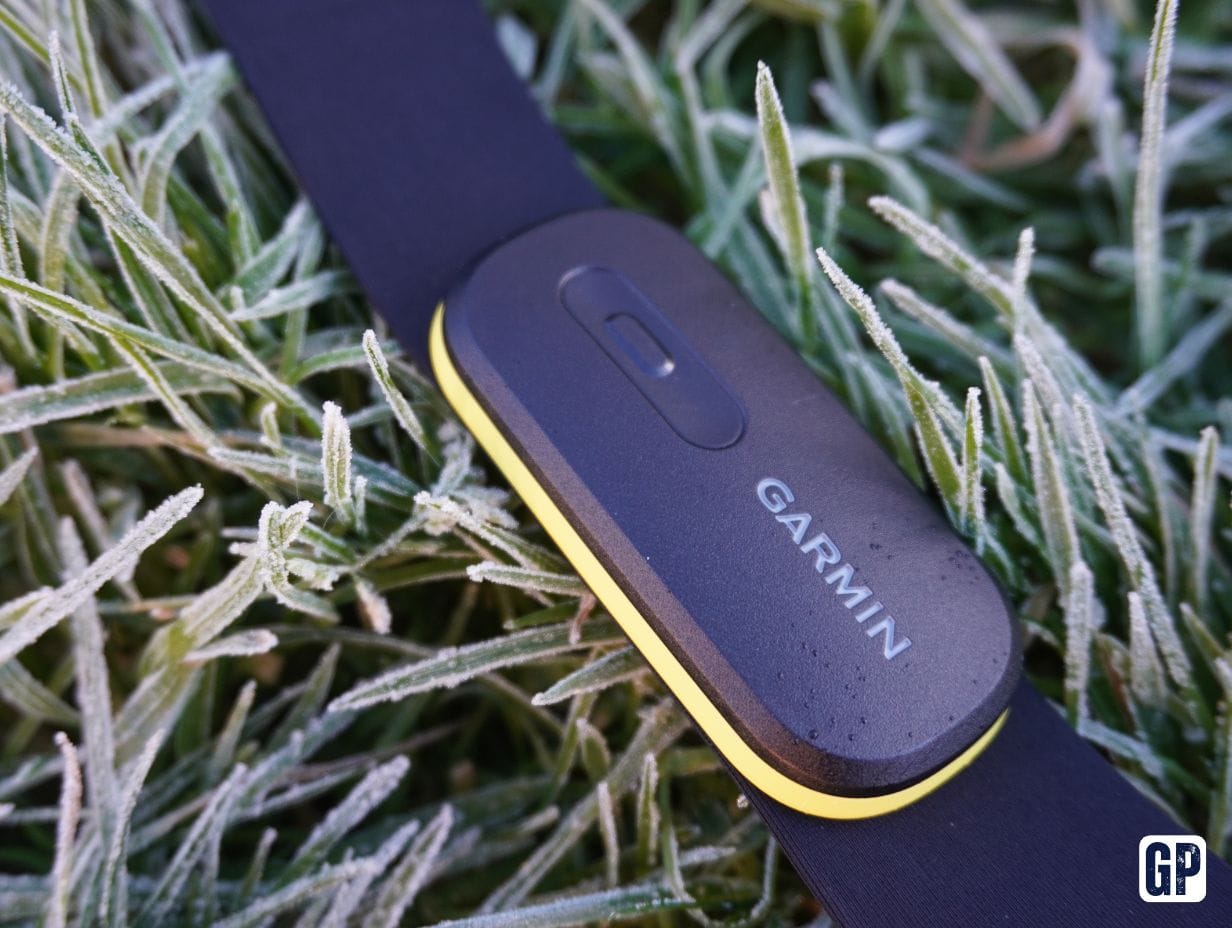
The Garmin HRM 600 is not a basic heart rate strap. It transmits heart rate and HRV in real time, works over ANT and Bluetooth Low Energy, connects to a Garmin watch, an Edge head unit, the Tacx Training app or other compatible apps.
It is also recognised as a device in its own right in Garmin Connect. You can manage it, pair it, monitor its status and use it in the Garmin ecosystem like a proper sports peripheral.
The spec sheet claims up to two months of battery life based on one hour of use per day. In my use, closer to two hours daily on average, I recharge it about once a month. Honestly, that suits me very well. It’s less autonomous than a coin cell strap, obviously, but I much prefer plugging in a cable from time to time to having to open a battery compartment every four to six months.
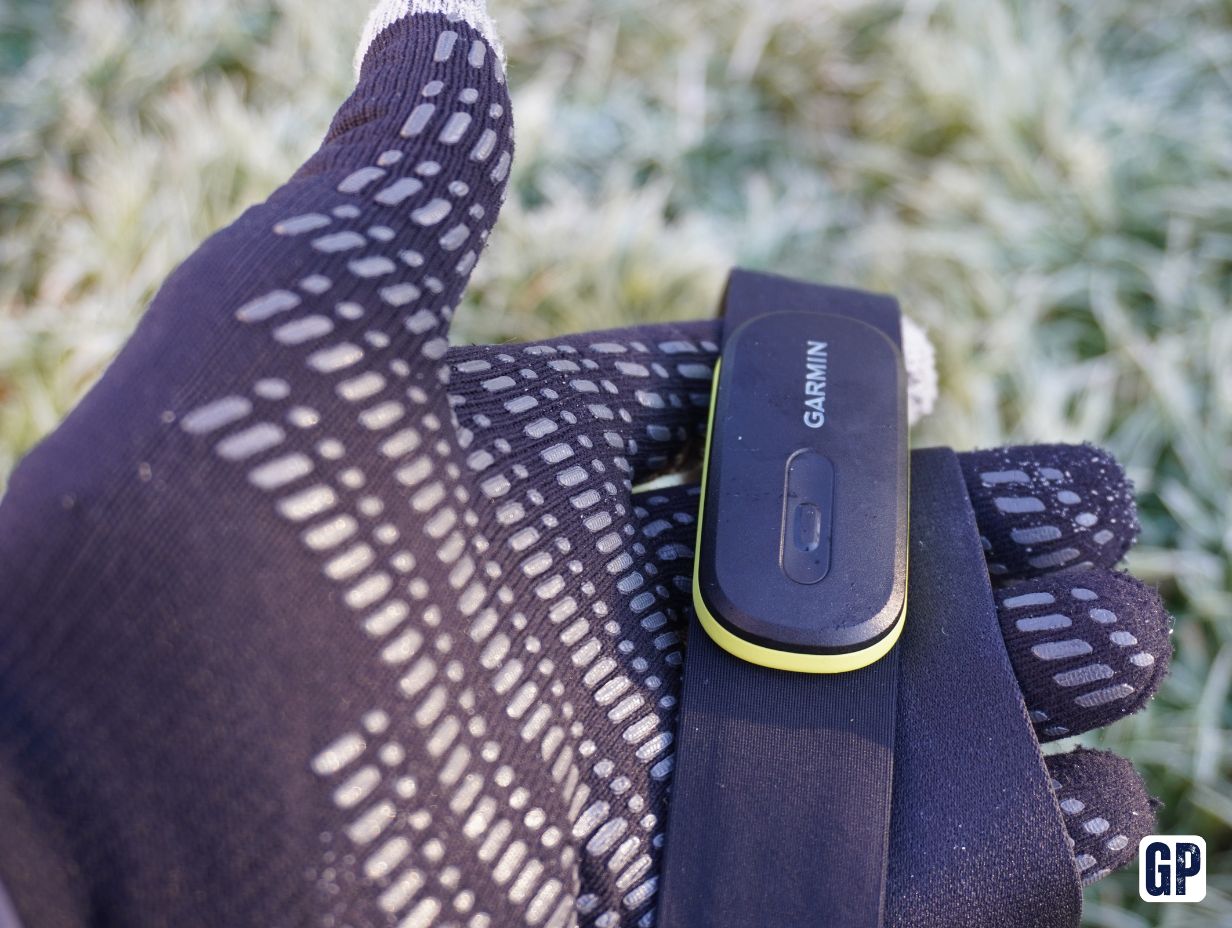
The price puts things into perspective quickly: at around €170 outside promotions, this is one of the most expensive heart rate straps on the market. Garmin has never really played the aggressive pricing card, and this HRM 600 is no exception.
Two sizes, secure fit, decent comfort
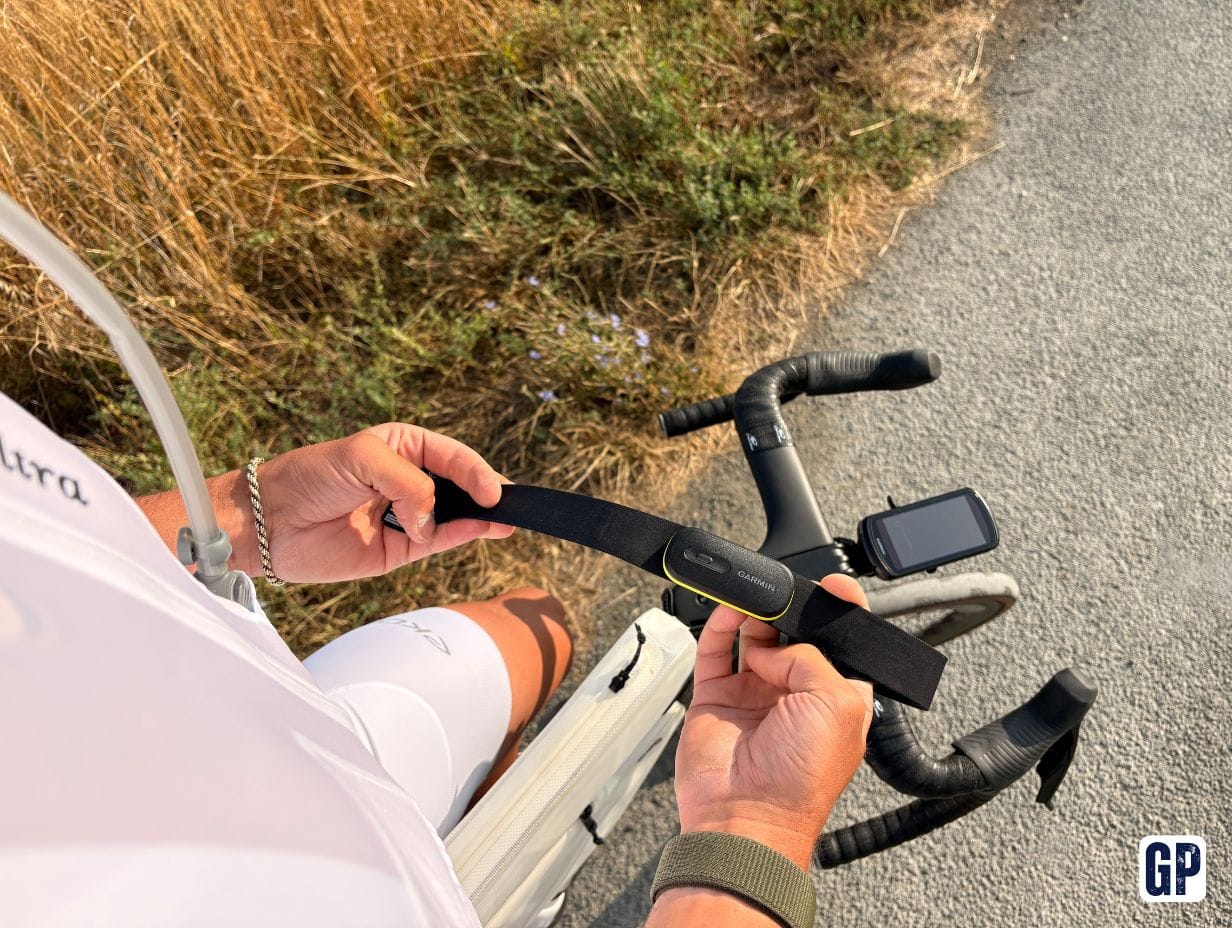
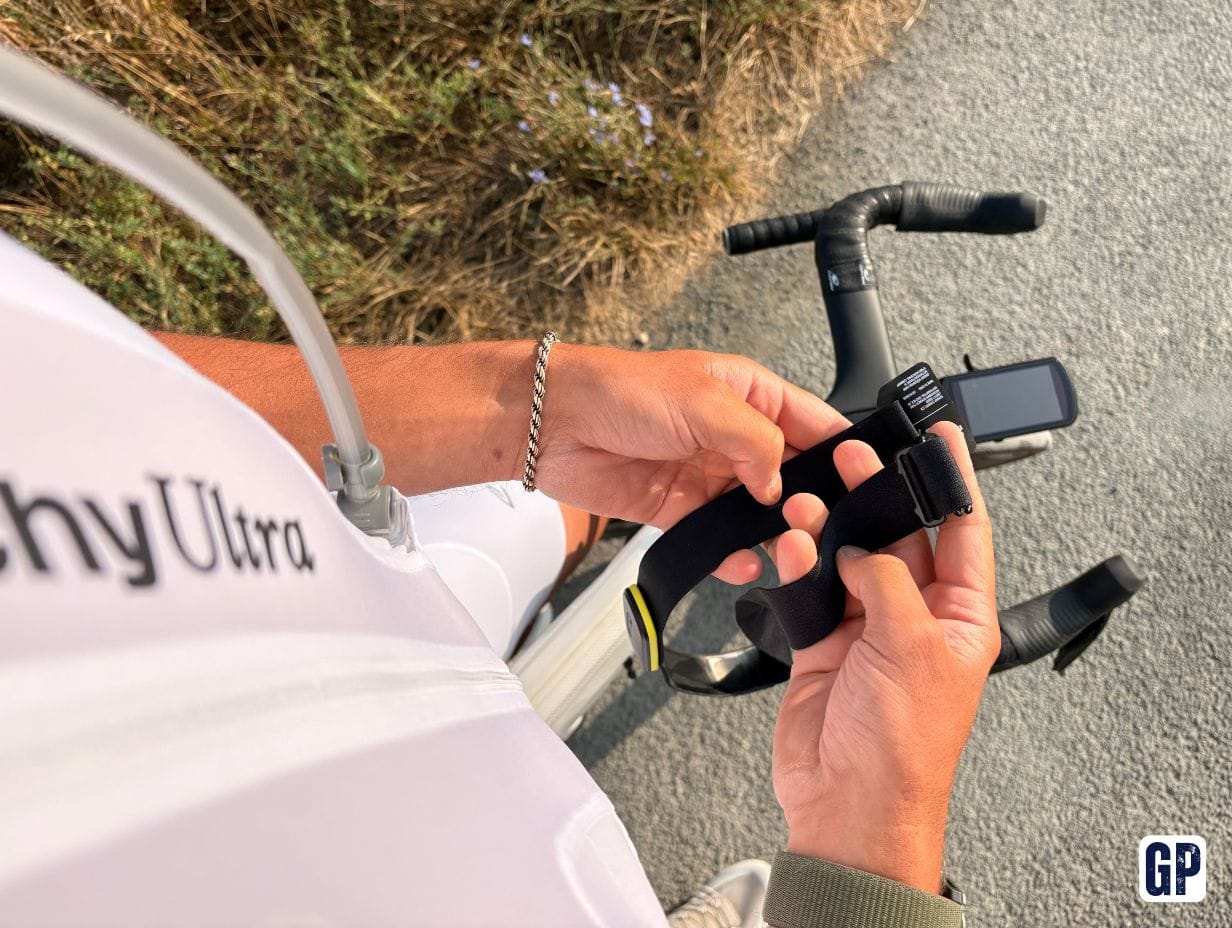
Garmin offers two strap sizes: XS-S and M-XL. I chose the M-XL, rated for a strap length of 72 to 106 cm and a chest circumference of 80 to 119 cm. The complete version with M-XL strap weighs 61 g, the module alone 18 g.
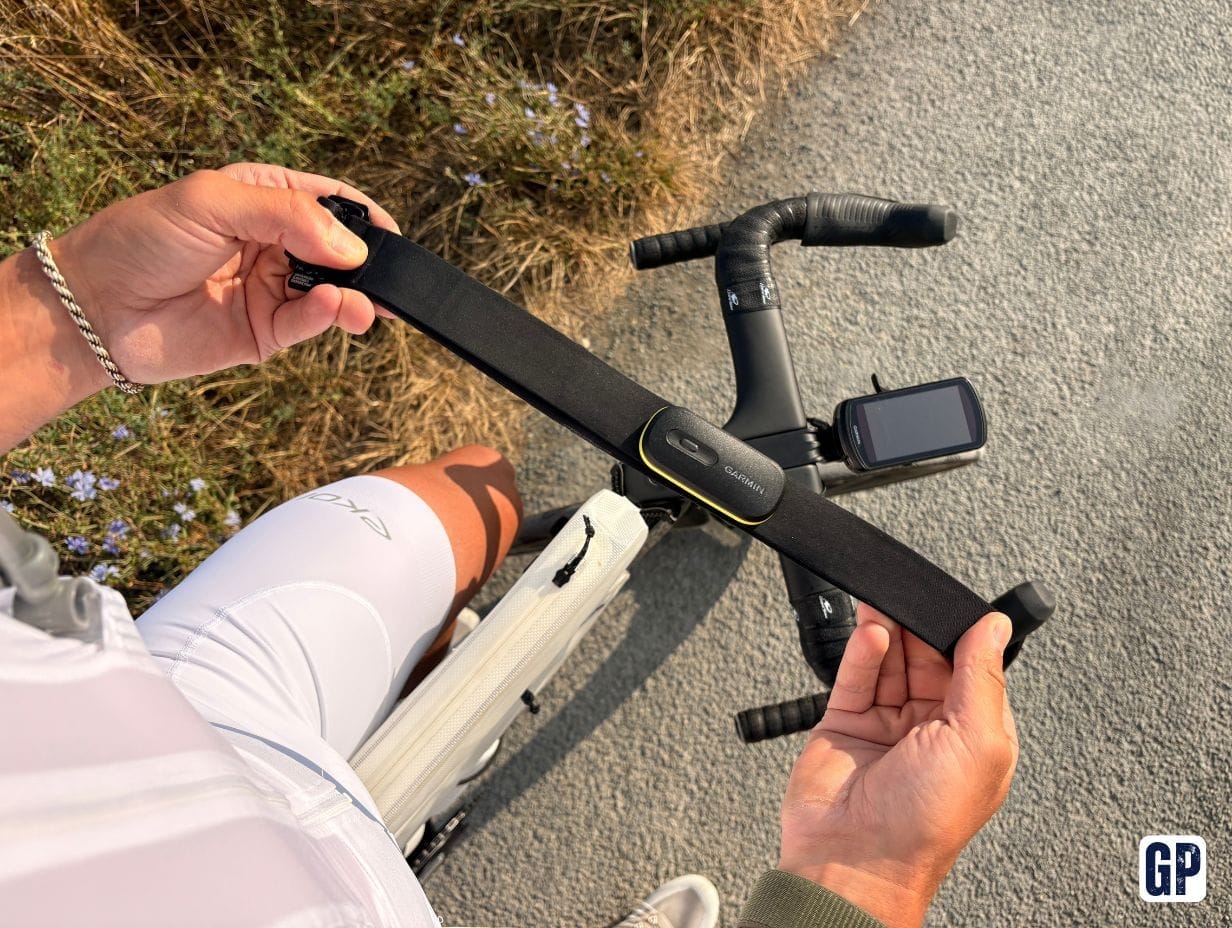
Adjustment is simple, the fit is secure, and the strap doesn’t move once in place. Even when running, with a damp torso, more movement and more sweat than on the bike, I had no stability issues.
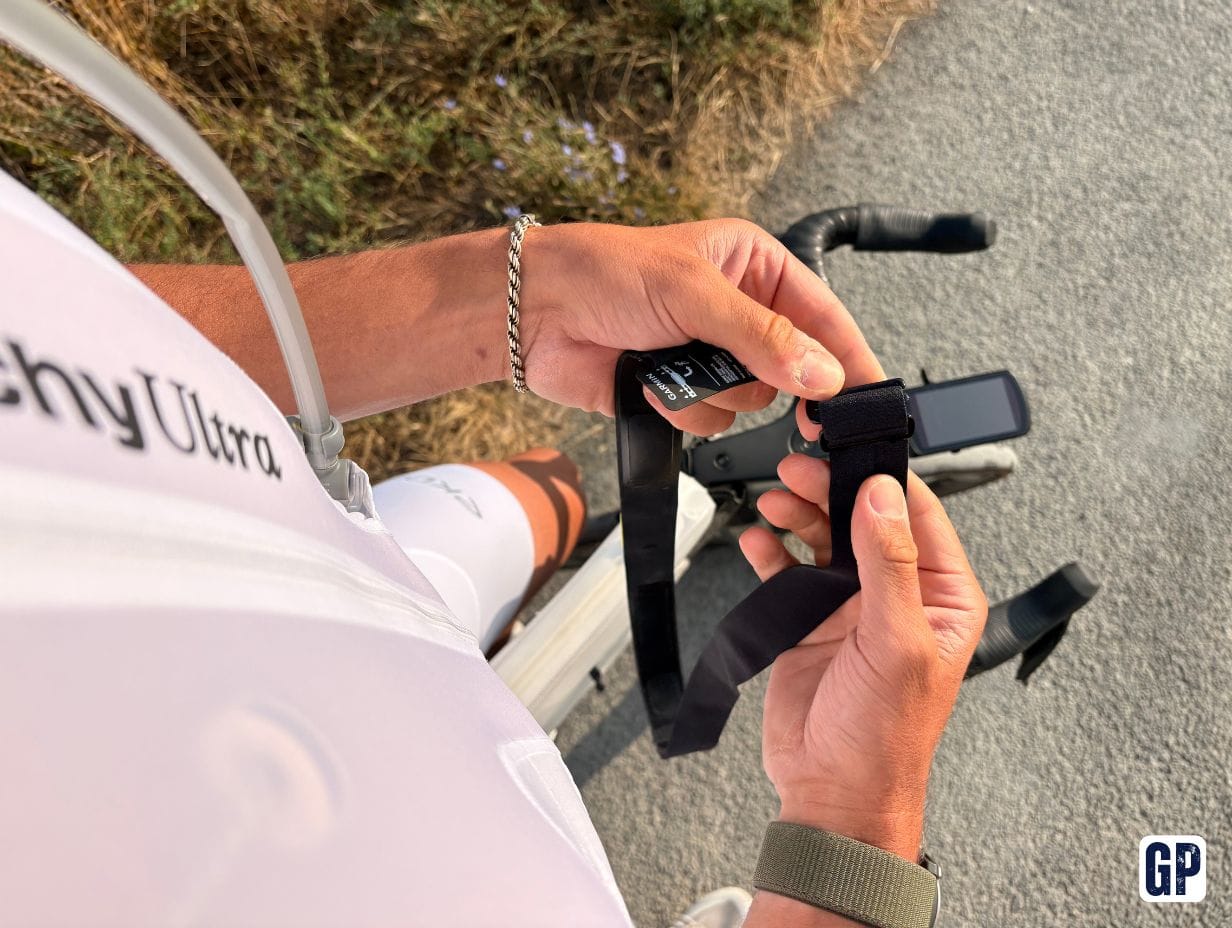
I wouldn’t say Garmin straps are the most comfortable on the market. Some competing straps are a bit easier to forget. But here, the compromise is sound: it stays put, doesn’t slip, and doesn’t cause any particular discomfort on my rides.
The module is removable, the strap is machine-washable, and the whole set is waterproof to 5 ATM, so usable for swimming. These details matter little if you only ride on Sunday mornings, but a lot more when the strap goes from a bike session to a run, then to a swim or an indoor trainer session.
Simple pairing, clean data, zero surprises
Pairing is quick. Once the strap is activated, it is recognised in a few clicks by a Garmin watch or a head unit. I especially appreciated how invisible it felt in use: you put it on, it connects, the data flows.
As for measurement quality, I won’t overplay the suspense. Garmin chest straps are already very reliable, like most good straps today. To track your zones, work on endurance or analyse a hard session, they remain a much more stable reference than an optical wrist sensor.
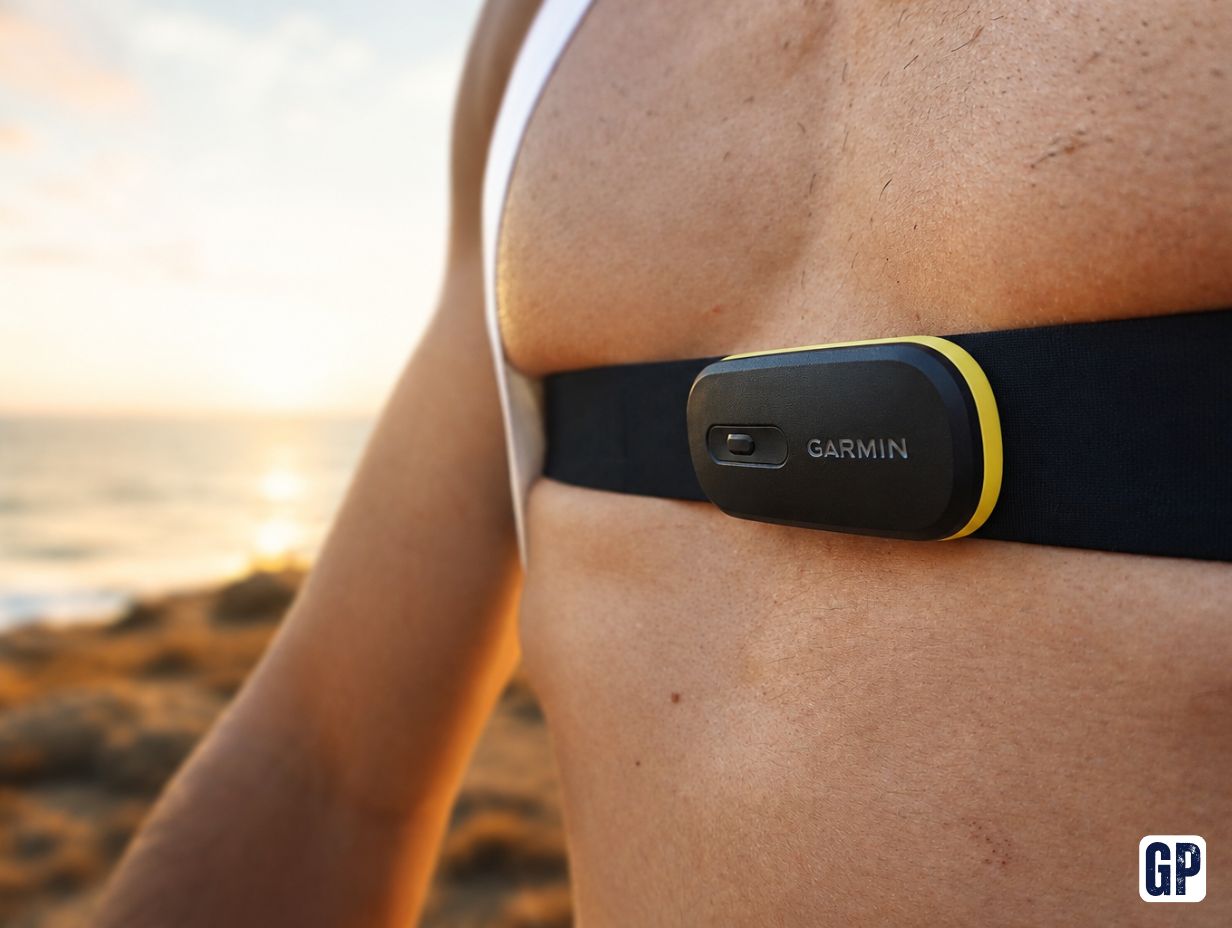
This is particularly useful if you use your zones in tools like Strava to analyse heart rate and power. A precise strap doesn’t make training miraculous, but it avoids building your sessions on shaky data.
The HRM 600 also transmits HRV. Again, the interest will mostly depend on your ecosystem and how you track recovery. In a full Garmin environment, with a watch like Fenix or Forerunner, the data integrates naturally.
Running dynamics make the difference beyond the bike
For a pure cyclist, the HRM 600 mainly measures heart rate. And on that point, a cheaper strap will already do the job very well.
The difference appears as soon as you run. Paired with a compatible watch, the HRM 600 gives access to extended running dynamics: vertical oscillation, ground contact time, balance, treadmill pace and distance, and even loss of speed at ground impact.
These aren’t essential data for everyone. Many runners will progress just fine without checking vertical oscillation after every session. But for triathletes, regular runners or structured training, this information adds an interesting layer. It gives a bit more insight into stride, fatigue and mechanical efficiency.
That’s also why I find the HRM 600 more relevant for a multisport athlete than for a cyclist who simply wants reliable heart rate on their head unit.
Standalone recording, the real understated bonus
The HRM 600 can record activities without a watch. I find this feature more interesting than it looks.
For sports where wearing a watch is awkward, forbidden or simply impractical, like football, basketball, some team sports or martial arts, the strap can record heart rate, calories, steps, distance depending on the activity, then sync the data to Garmin Connect.
It’s not necessarily the kind of feature you use every day if you come from cycling. But in a broad sporting practice, it brings real flexibility. The strap becomes less dependent on the watch and more autonomous within the ecosystem.
Garmin also lists many compatible profiles for recording from the Garmin Connect app: cardio, running, cycling, swimming, basketball, football, rugby, boxing, mixed martial arts and other team sports. It’s clear the product targets athletes who don’t limit themselves to a single discipline.
Recharging really changes day-to-day use
This is what made me switch to this model: no more coin cells to deal with.
Yes, a coin cell can last a long time if you use your strap five hours a week. In that case, the benefit of recharging is less obvious. But with high volume, the logic changes. For me, changing a battery every three to six months ended up being a pain, especially with the risk of poor contact, a seal put back incorrectly or an ageing compartment.
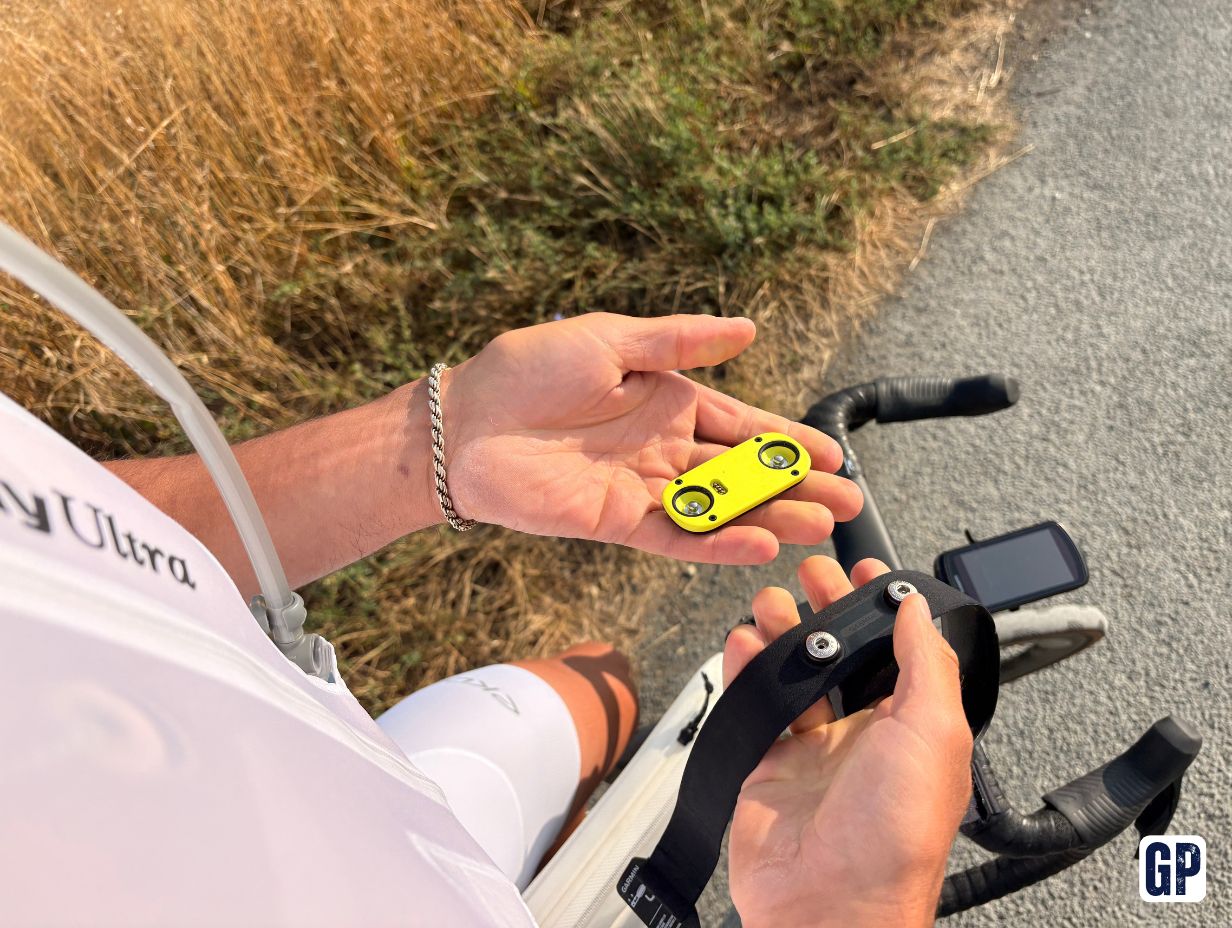
The HRM 600 uses a lithium-ion battery and charges via a Garmin plug charger. It’s not a universal USB-C, which is a pity. But as I already use several Garmin devices, charging fits quite easily into my habits.
I would have preferred a more standard connector. I also understand why Garmin sticks with its system. Day to day, it’s not a blocker, but it’s a limitation to note if you’re trying to reduce the number of proprietary cables in your bag.
Too expensive if you only ride a bike? Probably
This is the real caveat of this review. The Garmin HRM 600 is excellent, but it isn’t automatically the best buy for everyone.
If your practice is limited to cycling, you just want to display reliable heart rate on a head unit and charging doesn’t particularly interest you, there are much cheaper straps that will do almost exactly the same job on the heart rate side.
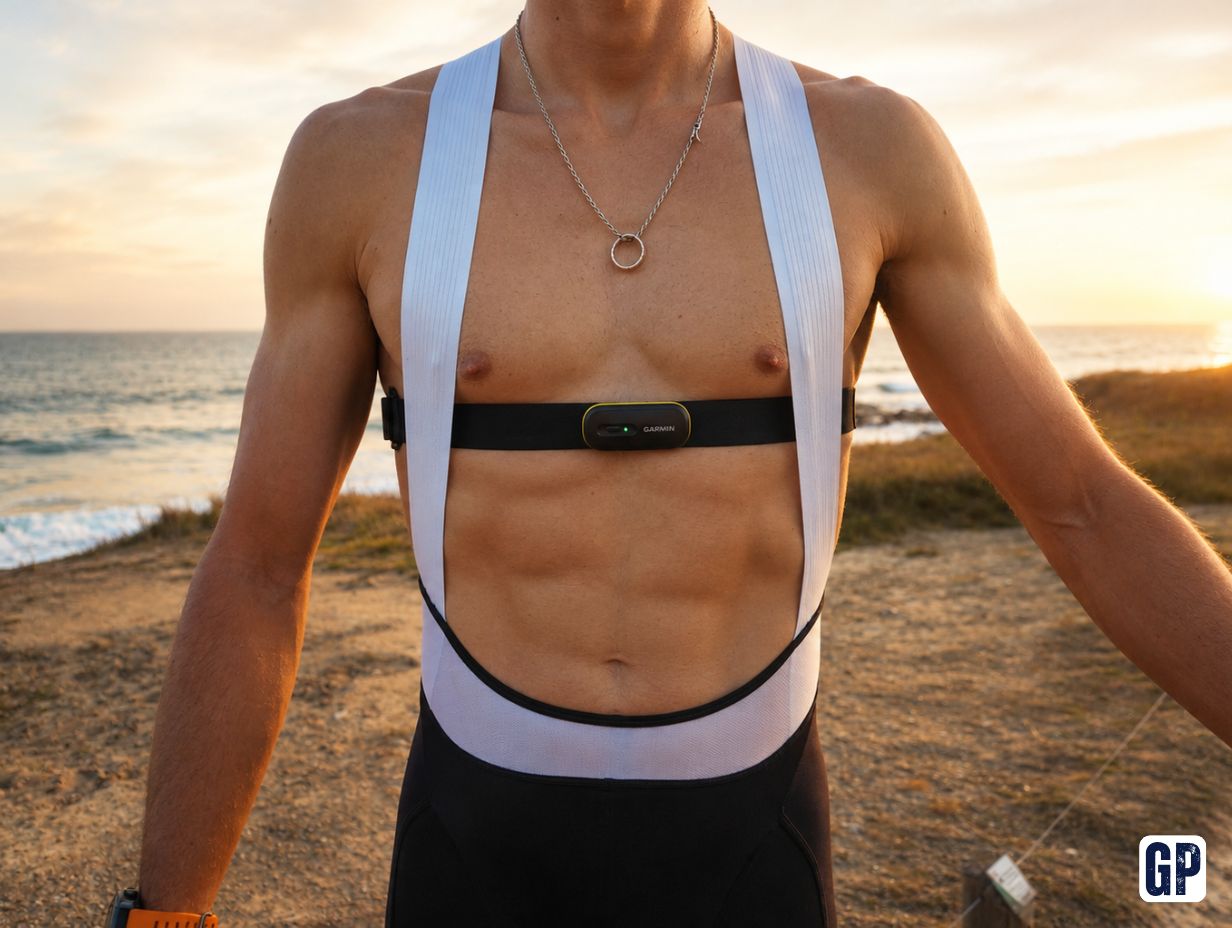
The HRM 600 makes far more sense if you do triathlon, running, swimming, indoor training, team sports or several disciplines in the same week. There, running dynamics, waterproofing, standalone recording, HRV and Garmin Connect integration justify the positioning better.
An excellent strap, but not essential for everyone
After several months of use, the Garmin HRM 600 hasn’t made me want to go back to a coin cell strap. That’s already a good sign.
It stays put, connects easily, provides clean data, recharges without major constraints and adds useful functions as soon as you step off the bike. I wouldn’t recommend it to someone who just wants the cheapest heart rate sensor to ride at the weekend. It would be too expensive for that use.
But for an athlete who strings disciplines together, sweats a lot, wears out straps quickly and wants to stay within Garmin Connect, the proposition is solid. The HRM 600 isn’t the most rational heart rate strap for everyone, it’s mainly the one I would choose for intensive, multisport use.