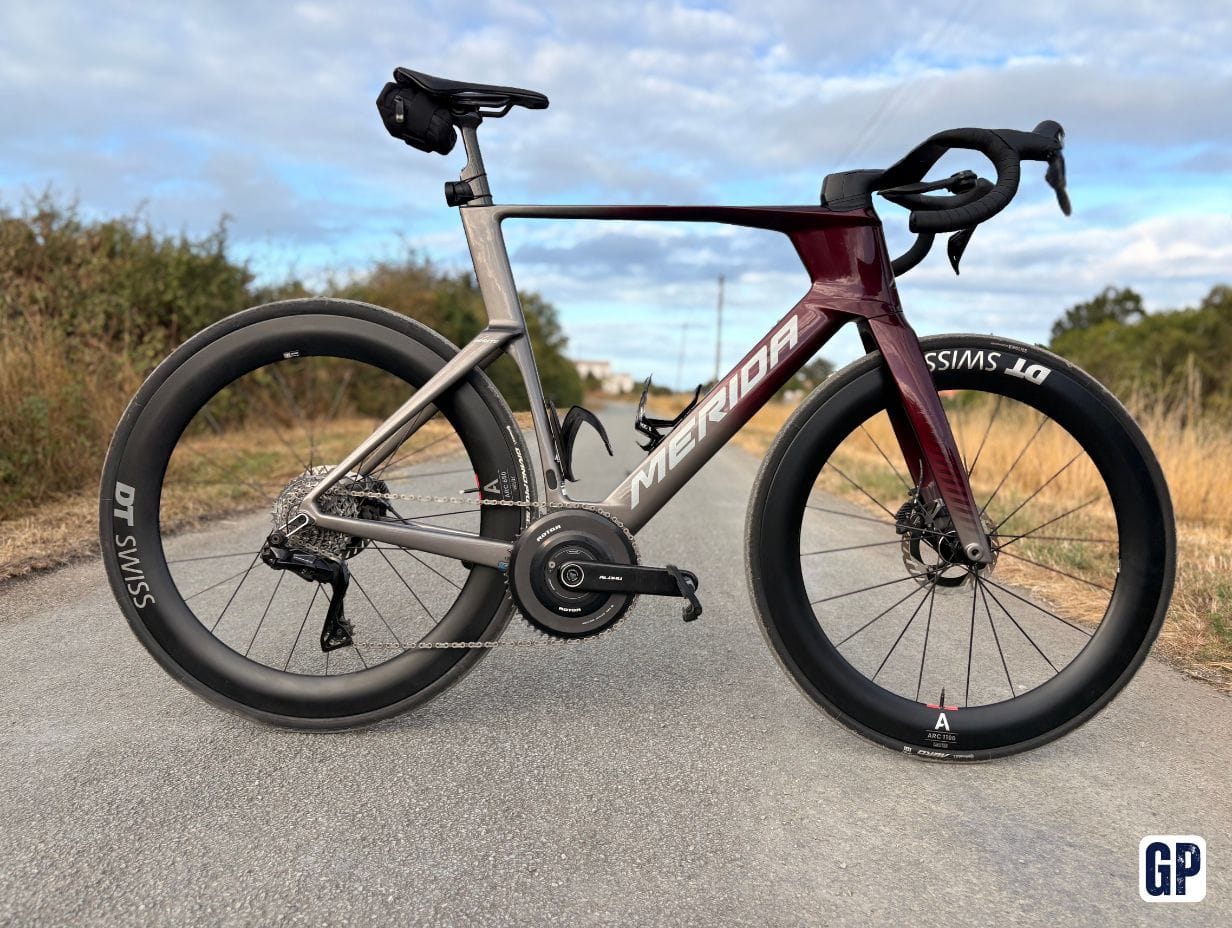
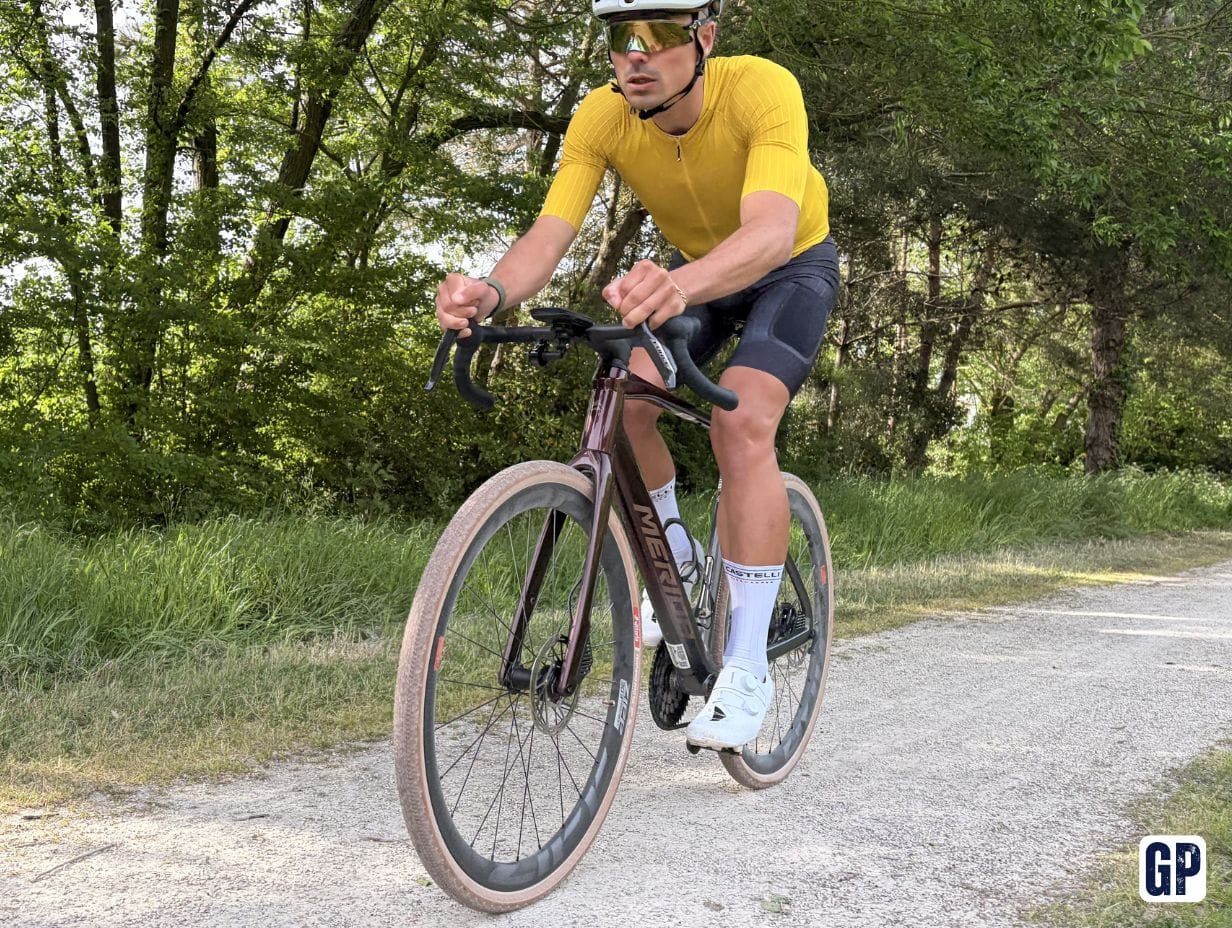

We had been putting serious miles on this new Merida Mission for several weeks, unveiled at the end of 2025. First, because on paper it seemed to answer a very real use case: an everyday, fast, mostly rolling gravel bike with a strong road backbone. Second, because it starts from a premise that runs counter to much of the current market.
At a time when many brands are trying to make gravel an ever broader, more versatile category – sometimes almost indistinguishable from a light MTB or an adventure bike – Merida is making a different choice here. That of a race bike, with restrained tyre clearance, committed geometry, and a philosophy designed for European-style gravel events that are fast and punchy, where many riders come from the road and you are not necessarily pounding rutted tracks for ten hours straight.
This is precisely what makes this Mission interesting. It does not try to please everyone. And it is often with this kind of clear stance that the most convincing bikes are born.
Strengths:
- Spec-for-price value
- Very coherent geometry
- Lively, responsive, and stable frame
- Smart build
Could be better
- Tyre clearance limited to 40 mm
A frame built for speed, without pretence
From the very first pedal strokes, it is clear that the Merida Mission was designed with a very specific idea in mind. Its geometry will feel familiar if you come from the road or racing: a relatively short wheelbase for the category, low stack, and a naturally low front end with only a few spacers by default. On paper and on the ground, it tells the same story: this bike wants to go fast.
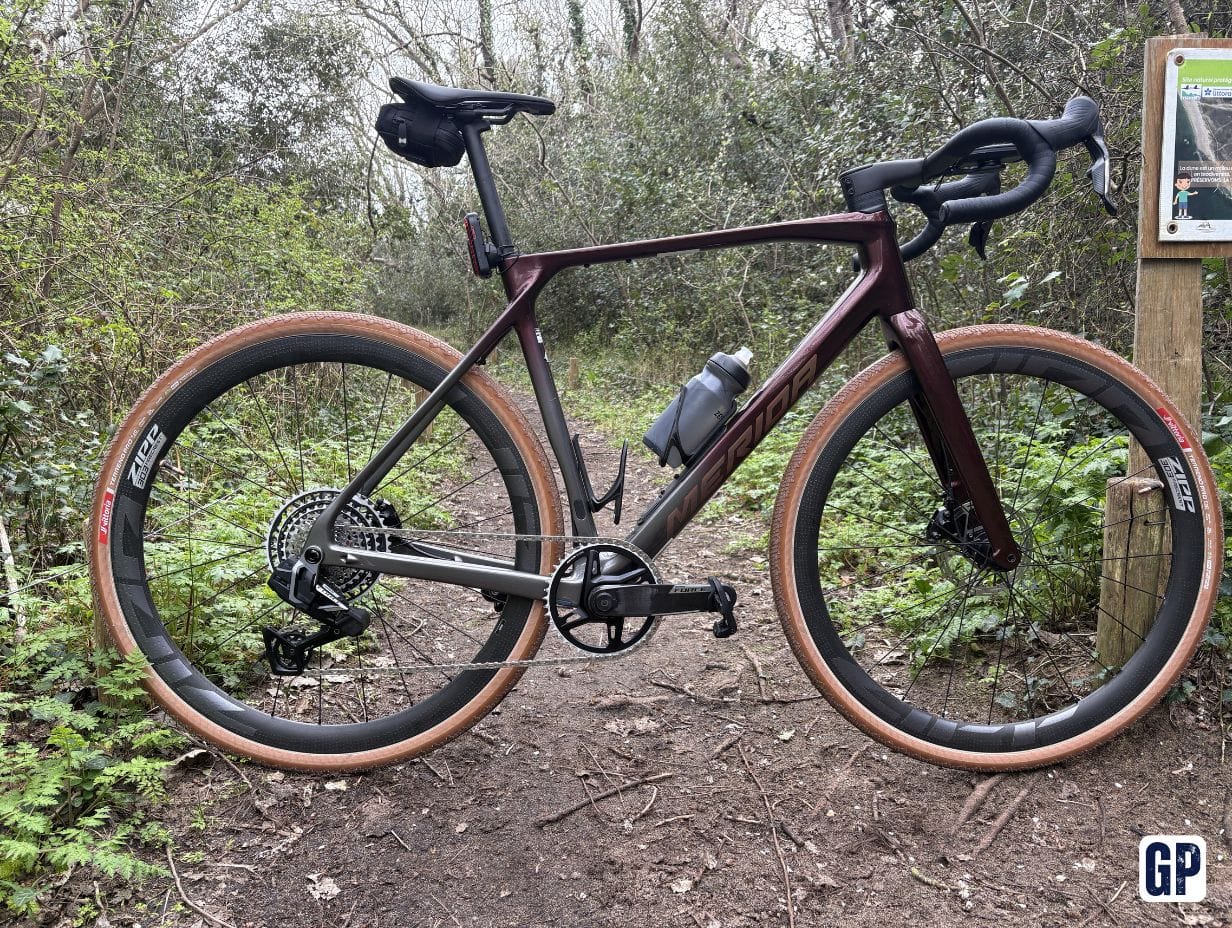
What is interesting is that this orientation does not result in a caricatured or tricky bike. The Mission remains accessible, yet it preserves that immediate precision many riders coming from the road are looking for.
Merida presents it as halfway between its Silex and its Scultura Endurance. In practice, though, it feels mostly like a gravel bike that fully embraces a very strong road DNA, with a hint of cyclocross in the snap of the front end.

The official clearance limited to 40 mm will inevitably spark debate. In today’s market, some will see it as a weakness. In reality, it depends on the terrain you ride. If your gravel riding involves rolling paths, white roads, plenty of paved links, and races like the UCI Gravel World Series, this limit is far from absurd. It actually becomes coherent with the overall project.
Let us not forget either that the gravel world championships have so far been won with widths under 42 mm. That does not prove everything, but it does add perspective to a debate that often becomes caricatural.
Build, components, finish: virtually no missteps
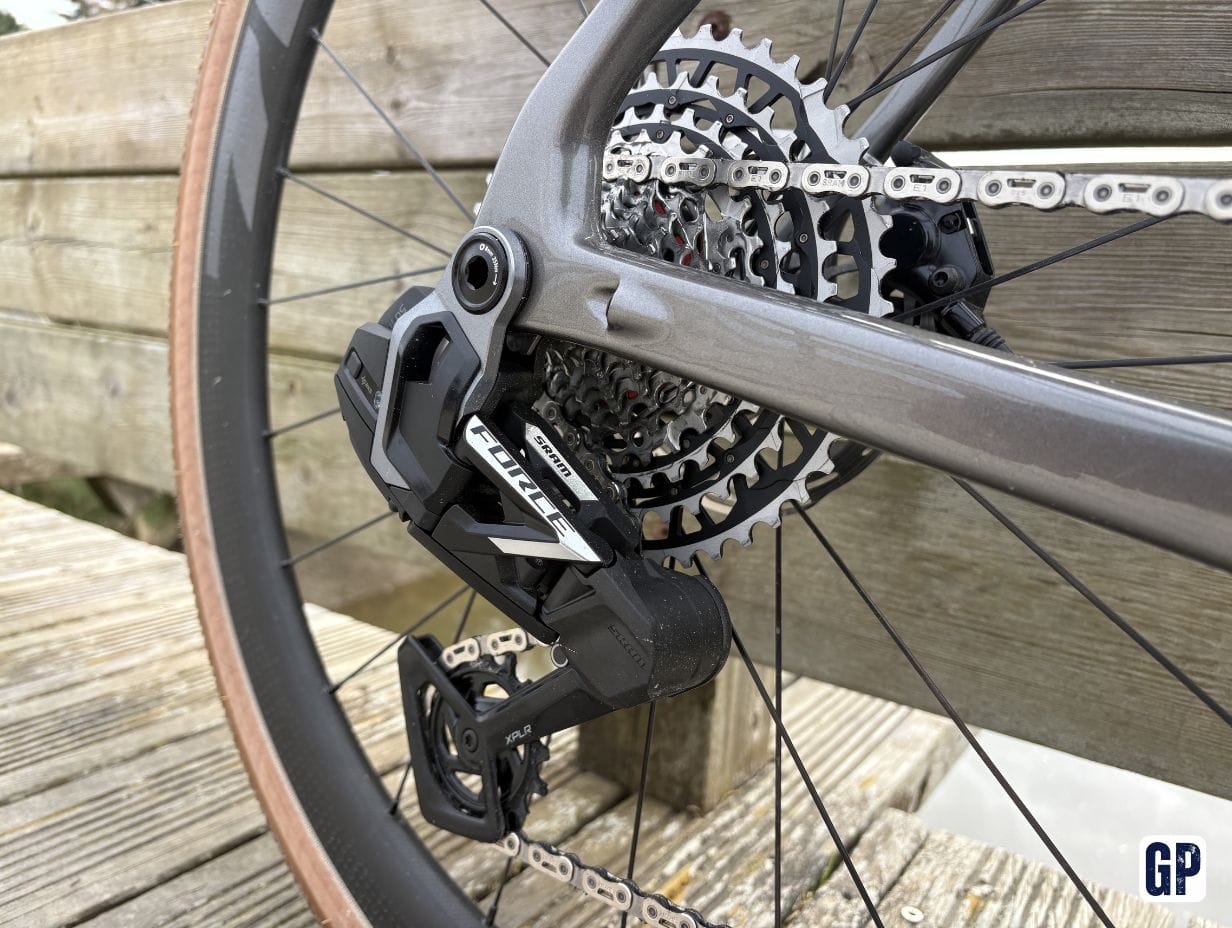
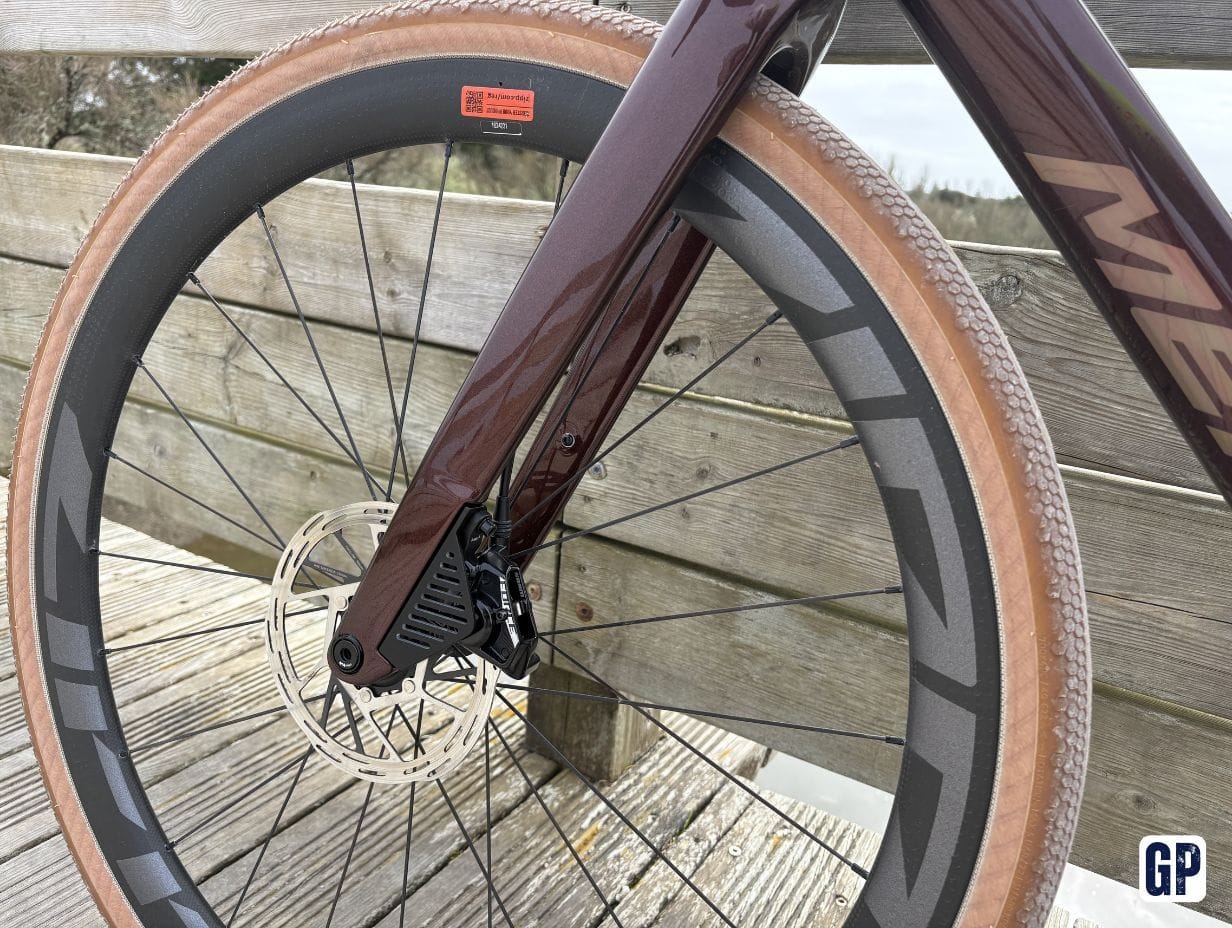
One of the Mission’s very good points is that Merida does not stop at a good frame. The bike is intelligently specced, and that changes a lot. As is often the case, the mid-range version looks the most relevant (Mission 9000). It gets the same frame as the higher models while offering a spec-for-price package that is particularly coherent with the new SRAM Force XPLR AXS 13-speed groupset and Zipp 303 S XPLR wheelset.
Unfortunately, I did not test the bike with those wheels because they arrived damaged during transport. I therefore installed my personal pair of Zipp Firecrest.
An important detail: whichever build you choose, the frame remains identical. In other words, you can step into the range without feeling like you are buying a downgraded chassis. That is a real strength on a bike in this category.
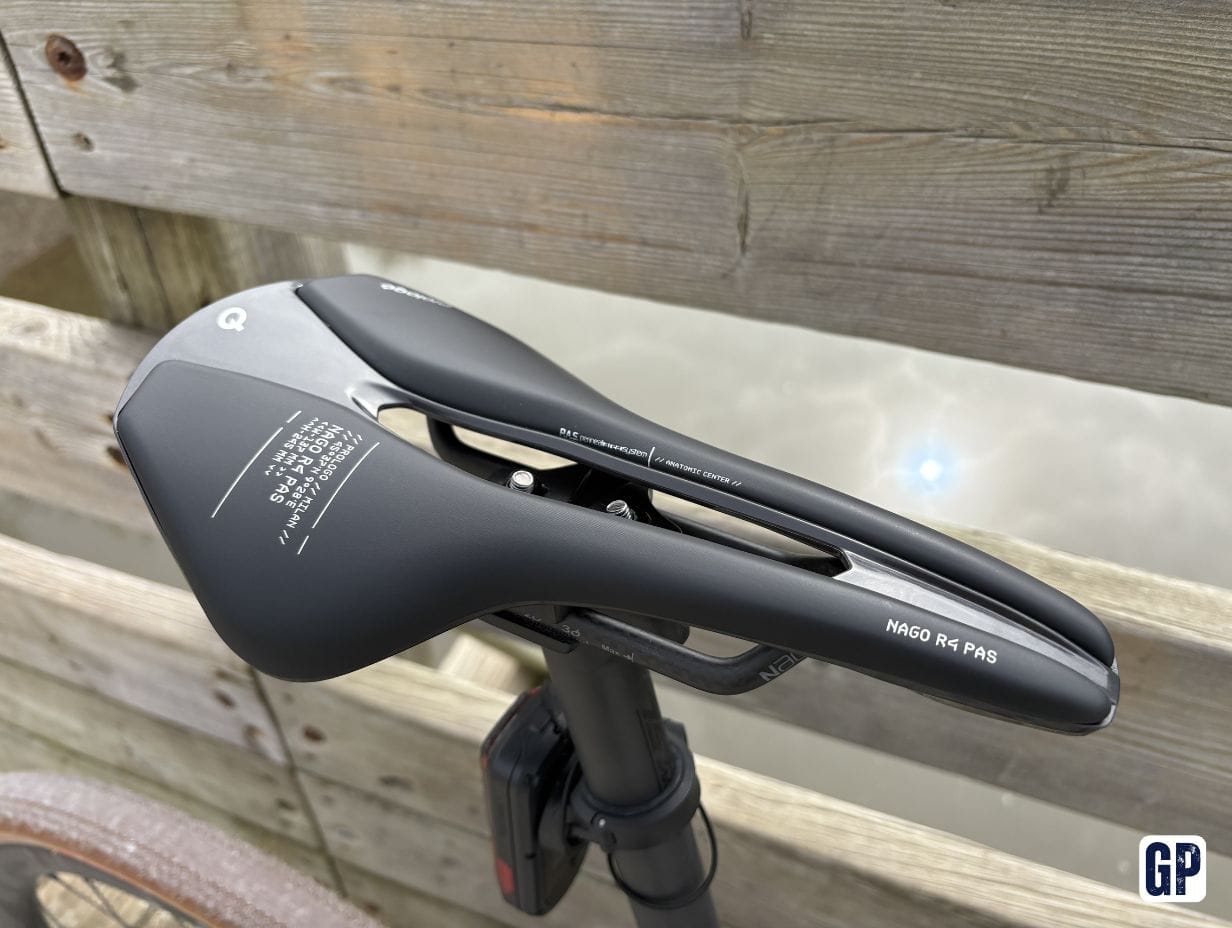
On our test bike, all the finishing kit is carbon: cockpit, seatpost, … plus a genuinely high-end saddle with carbon rails (Prologo Nago R4 PAS).
What really stands out is the rigour of the sizing. The stock 44-tooth chainring matches the brief. The 10-46 cassette offers a range that is relevant enough to go almost anywhere.
Crank lengths are matched to frame sizes (165 – 172.5 mm). The cockpit follows the same logic, with a relatively narrow handlebar width for a gravel bike (38 – 42 cm), perfectly aligned with fast, sporty riding.
Note also the included small crank protectors and the two bottle cages. A very high-quality GPS mount is also provided.
A straightforward build, and truly high-end finishing details
Another particularity of this test: the bike arrived partially assembled. And it is often at that moment that you truly judge how serious a product is. On this point, the Merida Mission honestly surprised me in a good way.
The SRAM drivetrain obviously simplifies part of the assembly, but Merida has also thought through several details that make setup much more pleasant. The cockpit, for example, is perfectly guided thanks to integrated carbon tunnels, which greatly facilitates cable routing and integration. In a few seconds, everything is in place. It may seem anecdotal, but these are often the details that separate a well-designed frame from one that is merely modern.
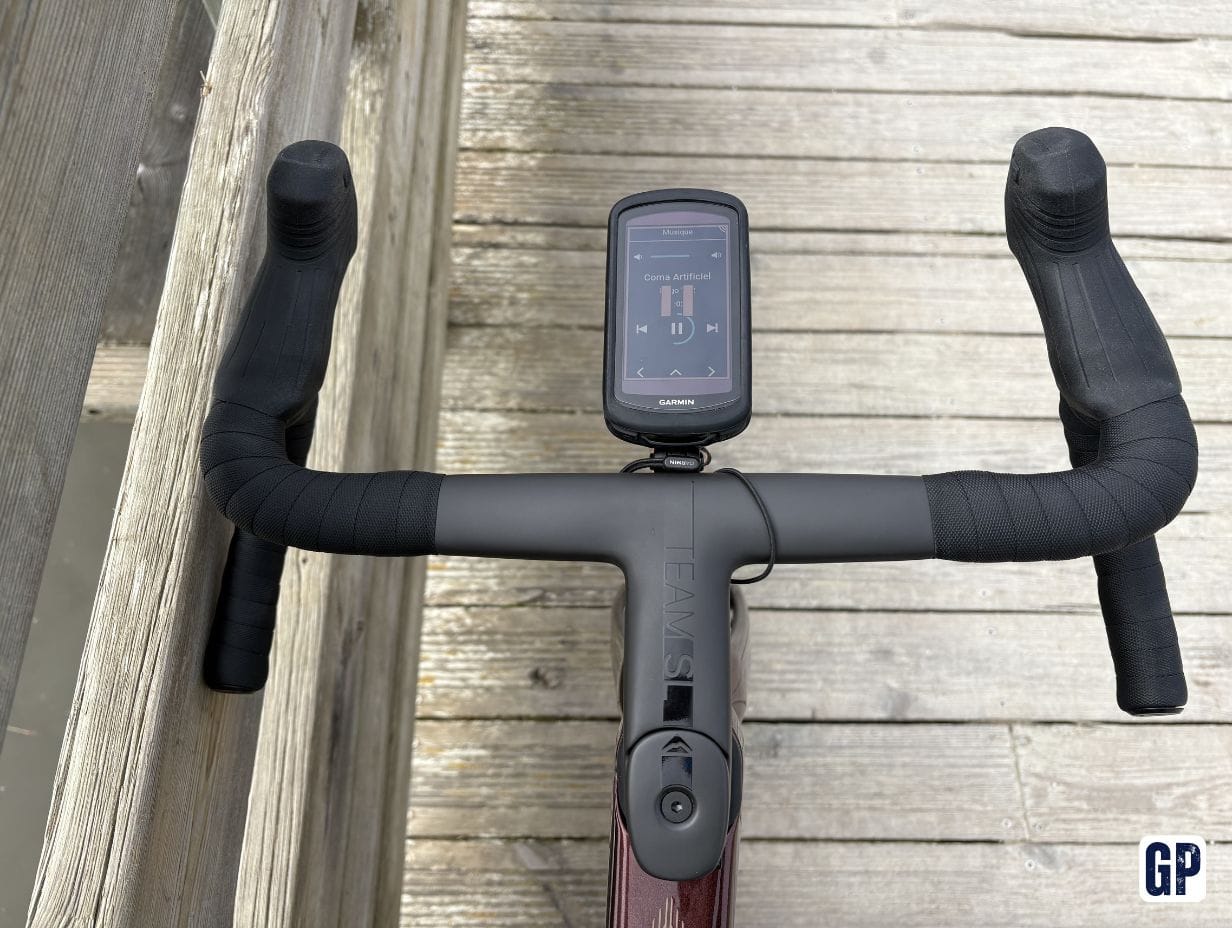
The same impression applies to the seatpost clamp, the headset top cap, and even the quality of the spacers. Taken separately, these are small things. Together, they tell the story of a very well-conceived bike, with a level of finish that puts this Mission near the top of the market.
A modern frame, but not fully capitalised on
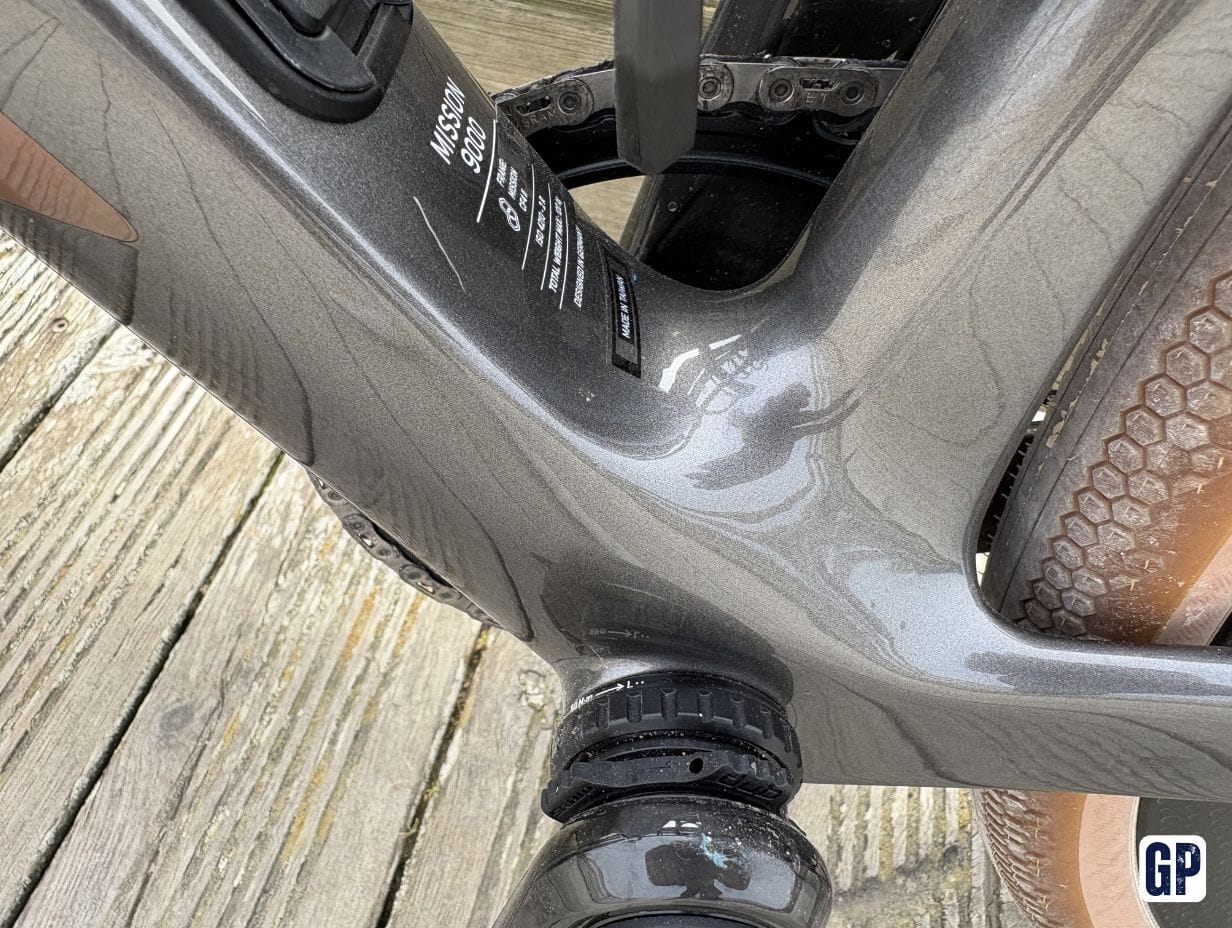
The Mission also ticks several boxes that are expected today: UDH compatibility, internal storage in the down tube, mudguard mounts possible, …
The Fidlock internal storage is a real success. It is spacious enough to carry the essentials, and a pouch is supplied as standard. I even managed to fit two small pouches in there. For a race bike, it is very appreciable: you keep a clean silhouette without multiplying visible accessories.
We also note mounting points on and under the top tube. However, as of today, Merida does not really offer an accessory ecosystem that fully makes sense of these inserts.
Conversely, the absence of mounts under the down tube or on the fork does not seem problematic here. Given the bike’s brief, that remains perfectly logical.
Out on the trail: a true race-bike temperament
Used to rather aggressive positions, I quickly felt at home on the Mission. The position remains sporty, but slightly more upright than on some road bikes I recently tried, like the Ridley Noah Fast or the Van Rysel RCR-F. That is enough to make it a little less radical without losing its DNA.

First impressions are very clear. You immediately feel the stiffness of the bottom bracket and the liveliness of the front end. The bike reacts quickly, accelerates hard, and drops into corners easily. There is something very cyclocross-like in the way it responds to the slightest input, with a more road-like geometry in the rider’s overall position.
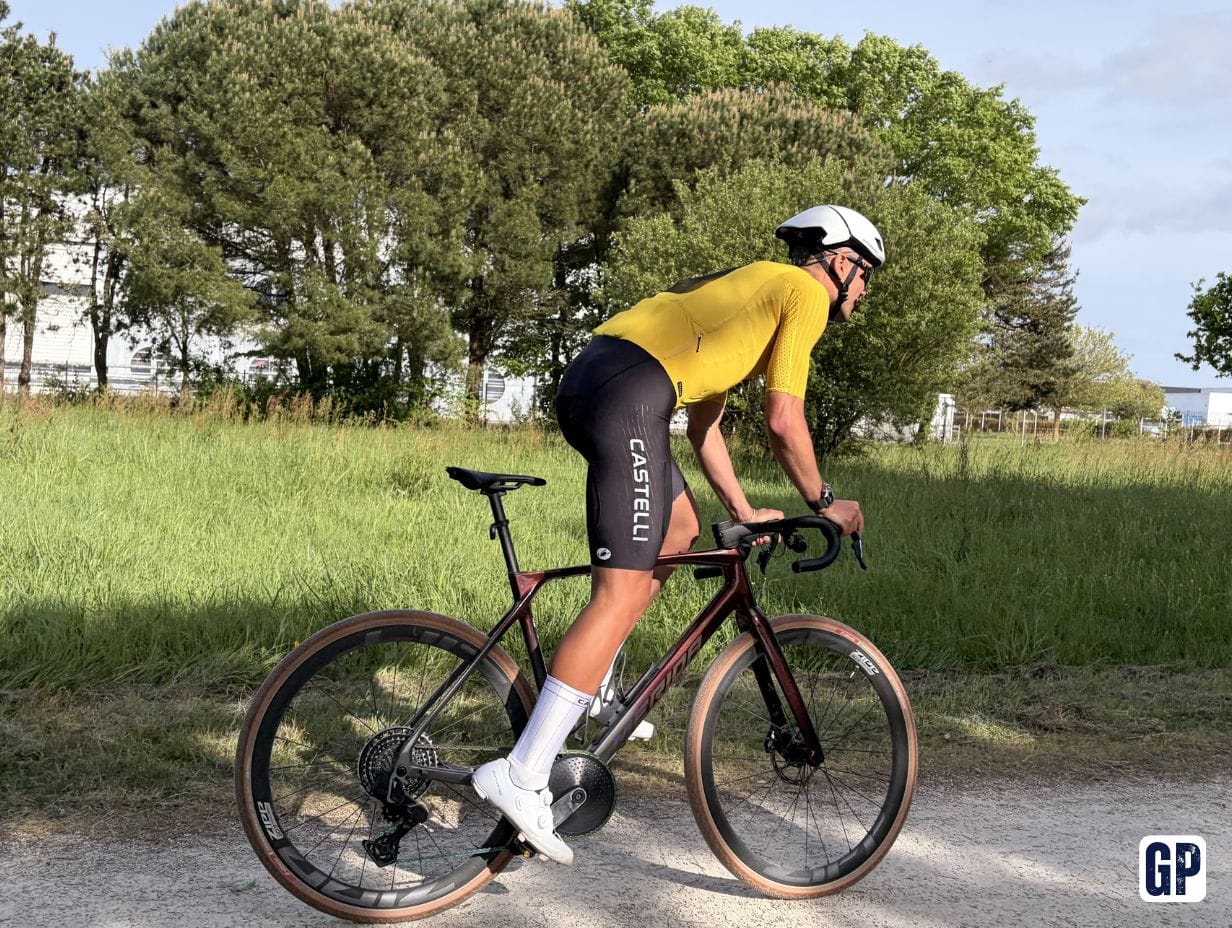
What is appreciable is that this sharpness does not come at the price of excessive harshness. Of course, the Mission does not have the suppleness or filtering of a Propain Terrel, but that is not the goal here.
Within the family of fast, dynamic gravel bikes, it actually does quite well for comfort. It does not beat you up unnecessarily, it does not tire you out excessively, and it remains sufficiently stable as speed builds on gravel sections that can get choppy.
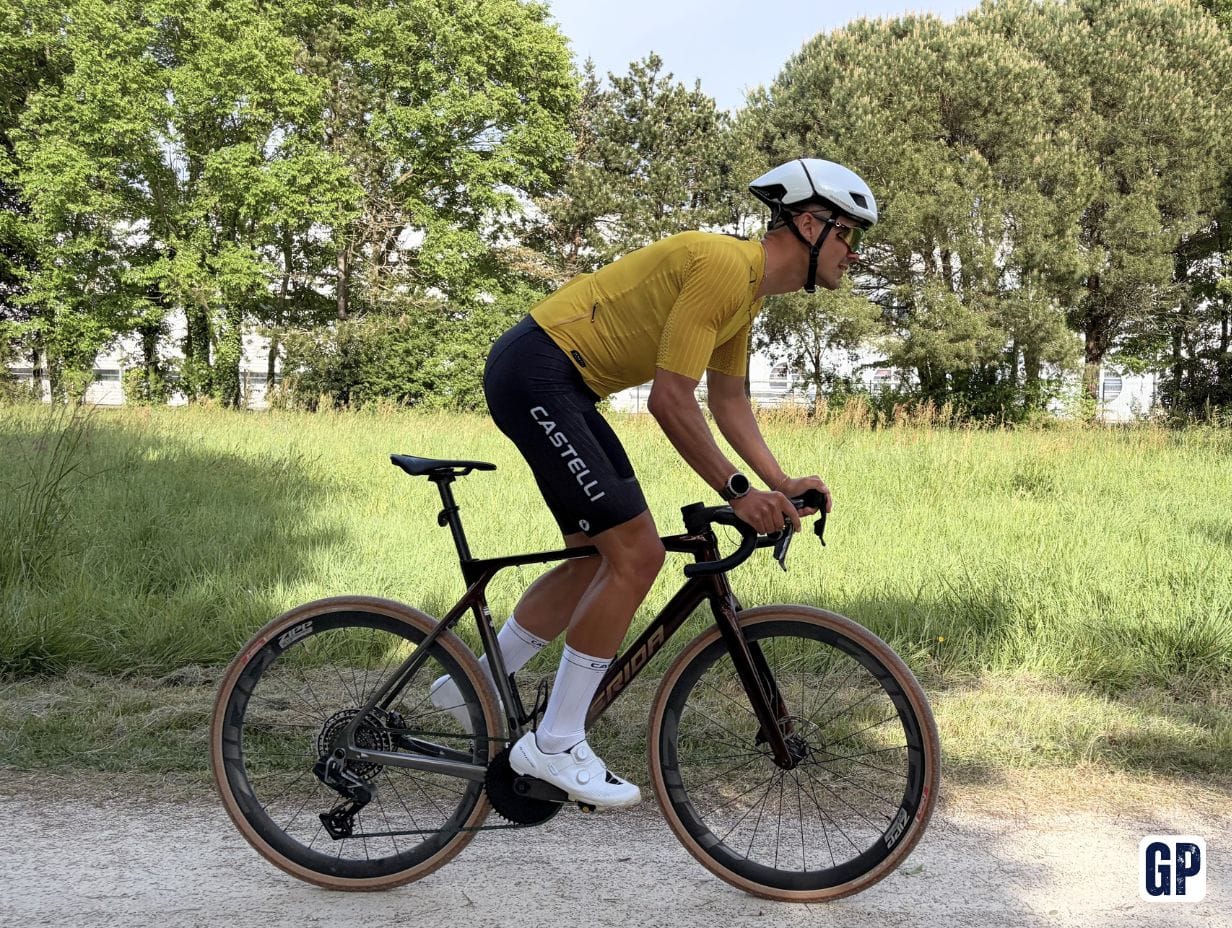
This is probably one of its best points. Many lively bikes quickly become nervous in the wrong sense as soon as the terrain degrades a bit. Here, Merida manages to maintain good overall stability. You get a bike that is playful, responsive, but not unstable.
More playful than impressive - and that is precisely its strength
Once up to speed, the Mission may not be as spectacular as some models like the Rose Backroad FF or the Canyon Grail. Those bikes sometimes deliver a more massive sensation of raw speed or aerodynamic efficiency. In return, the Merida is more playful on twisty courses, with lots of changes in pace, line, and punchy accelerations.
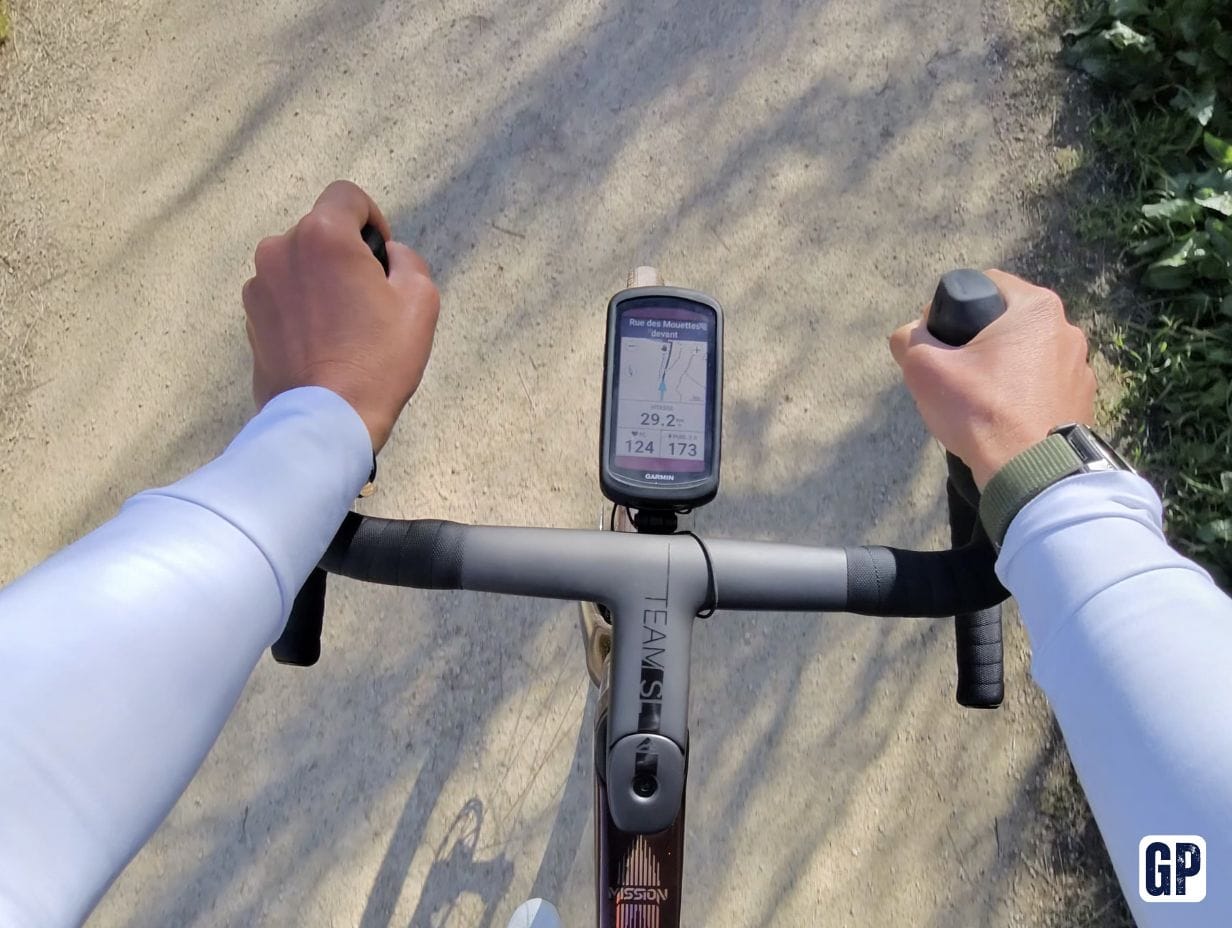
That is important, because not all fast gravel bikes deliver the same pleasure. Some are very efficient, but more inert or more demanding to ride. The Mission makes you want to attack corners, shift up a gear, play with the terrain. There is something instinctive in its dynamics that makes it particularly endearing.
On the road, it impresses. If you are looking for a single bike to ride fast on tarmac and keep heading out on rolling dirt without feeling like you are piloting a mushy compromise, it is probably one of the most serious candidates right now. It is a bit reminiscent, in spirit, of the Stajvelo Rocchetta we tested last year, but with better stability as soon as the gravel becomes slightly rough or unsettling at speed.
SRAM Force 13-speed drivetrain: hard to fault
The new SRAM Force XPLR AXS 13-speed groupset confirms everything we thought about it. Honestly, it has little to envy Red. Having ridden both drivetrains, the differences now seem fairly anecdotal in real use.
Operation is crisp, precise, fast, and perfectly in tune with the bike’s temperament. At this price level, it is hard to expect much better in terms of overall coherence.

In my case, I quickly updated the bike with a 48T Alugear chainring and a SRAM Red chain, but that is more a personal optimisation than a necessity. Straight out of the box, the Mission is already very well sorted.
I forgot to mention it earlier, but a SRAM Quarq power meter is included as standard. In short, for under €5,500, you get an excellent spec-for-price on the market.
A deliberate limitation: this bike will not suit everyone
That is probably the core of this review. The Merida Mission is excellent, provided you buy into what it is. Its limited tyre clearance, sporty geometry, and very performance-oriented focus make it a targeted bike.
If your definition of gravel involves very wide tyres, rough terrain, absolute comfort, travel, or ultra-distance with lots of carrying and gear, there are far more suitable options. The Silex, for example, remains the more logical choice at Merida for that kind of use.

Conversely, if you are coming from the road and looking for a gravel bike that is fast, lively, well equipped, modern, and capable of being excellent both on tarmac and on rolling tracks, the Mission hits the mark. And that is precisely why it seems successful to me. It does not promise everything. It does less, but it does it better.
My take on the Merida Mission
The Merida Mission is one of the most coherent gravel bikes we have ridden recently in the performance register. It does not try to win everyone over, and that is exactly what makes it strong. Fast, lively, well finished, very well equipped, and particularly convincing on rolling terrain, it is aimed first at those who want to rediscover road sensations while keeping true gravel capability.
It is not the universal gravel bike. It is not the most versatile on the market either. But if your riding matches what it offers, it very quickly becomes one of the best possible choices. A bike that owns its mission, for once, without getting sidetracked.