Suunto Wing 2 review: promising bone-conduction headphones, but not flawless yet
Written with ❤️ by
Hugo
of August 31, 2026 and updated
2 months ago
The Suunto Wing 2 lands in a crowded niche: bone-conduction headphones for sport. It is a bit of an outlier in the cycling world because it touches two sensitive topics: listening to audio while riding and staying connected enough to what is happening around you.
I ride with this kind of kit and have used it a lot lately: music, podcasts, calls, wind, on-the-bike controls, battery pushed to the limit. Pretty quickly, the Wing 2 left me with a split impression. Very good at the basics. Much less convincing when it comes to the reliability of the controls and the connection.
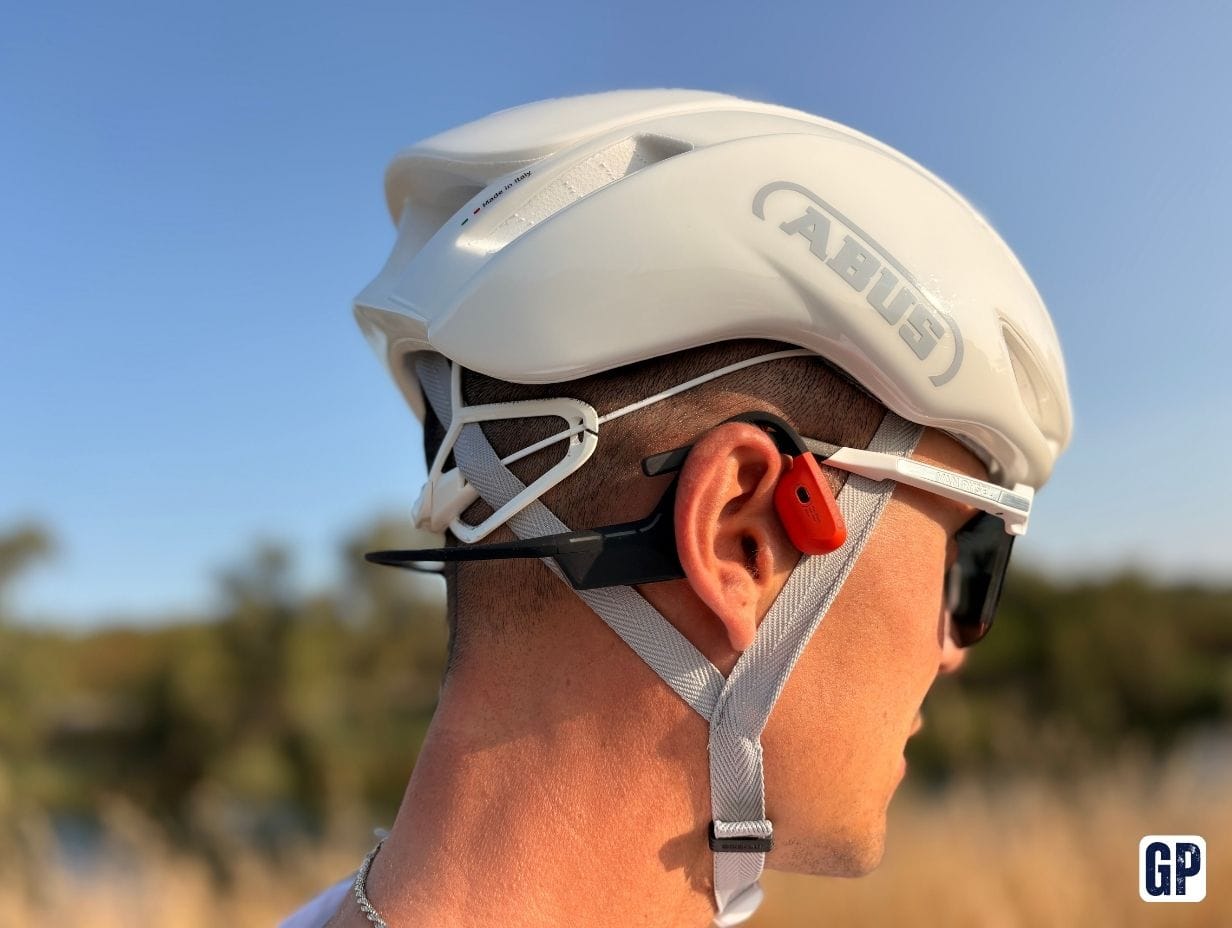
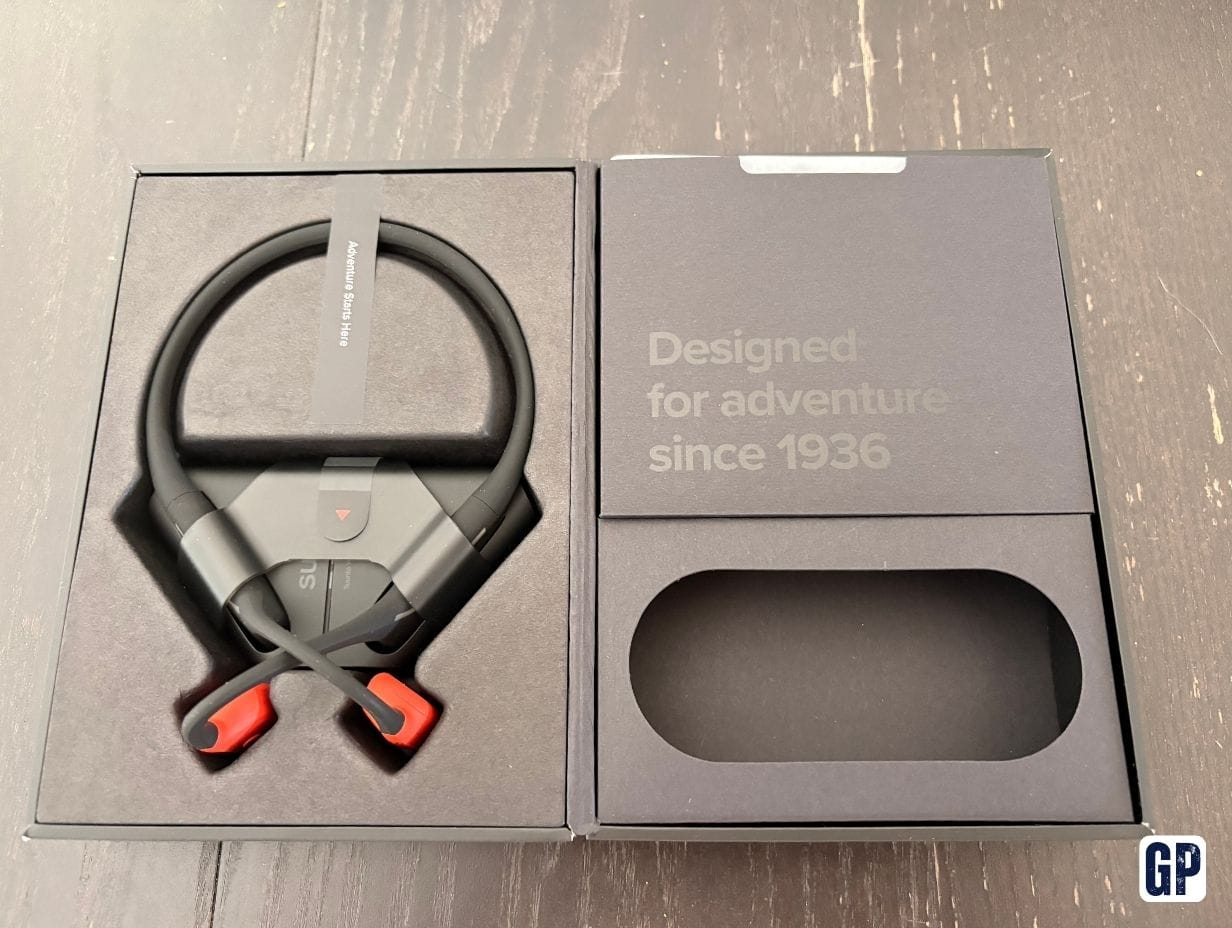
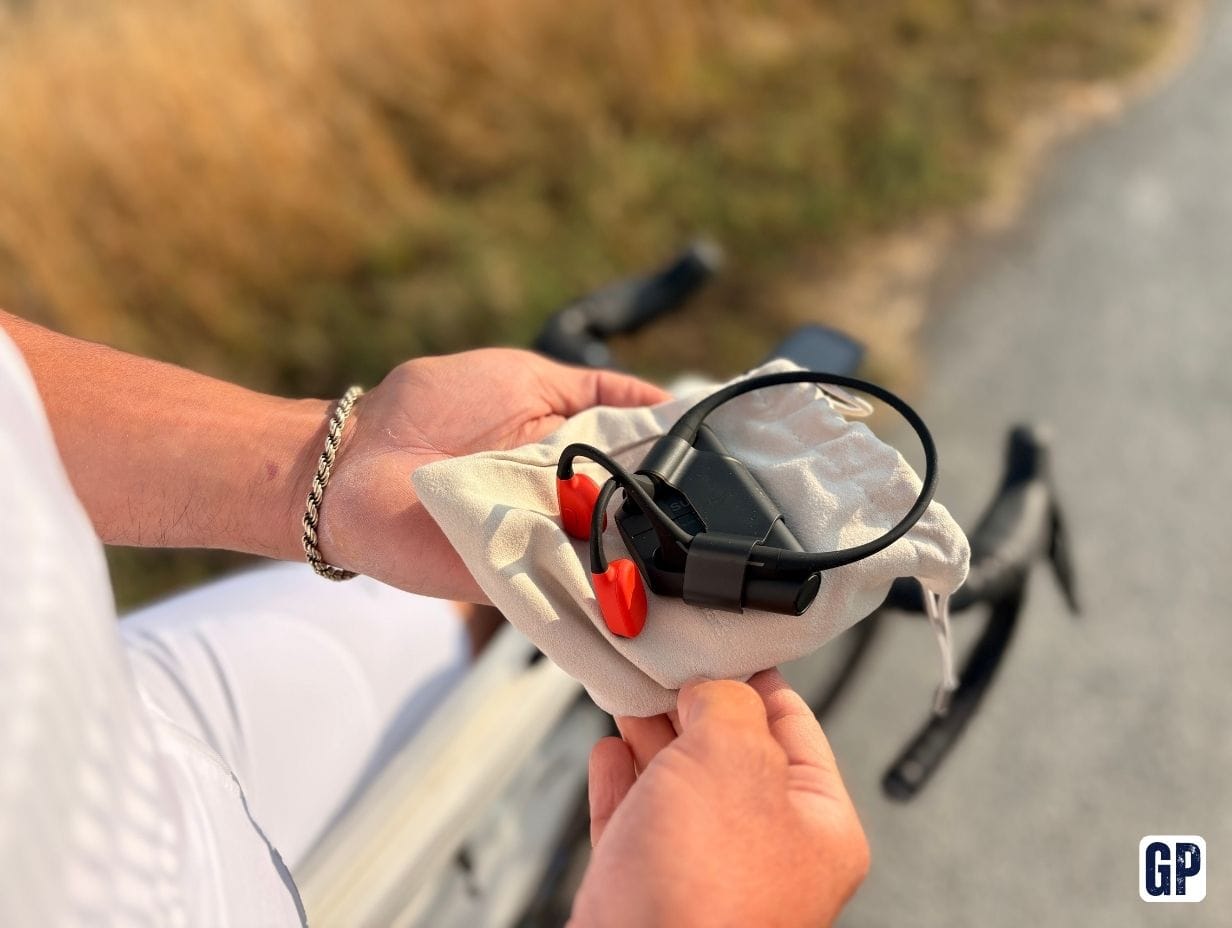
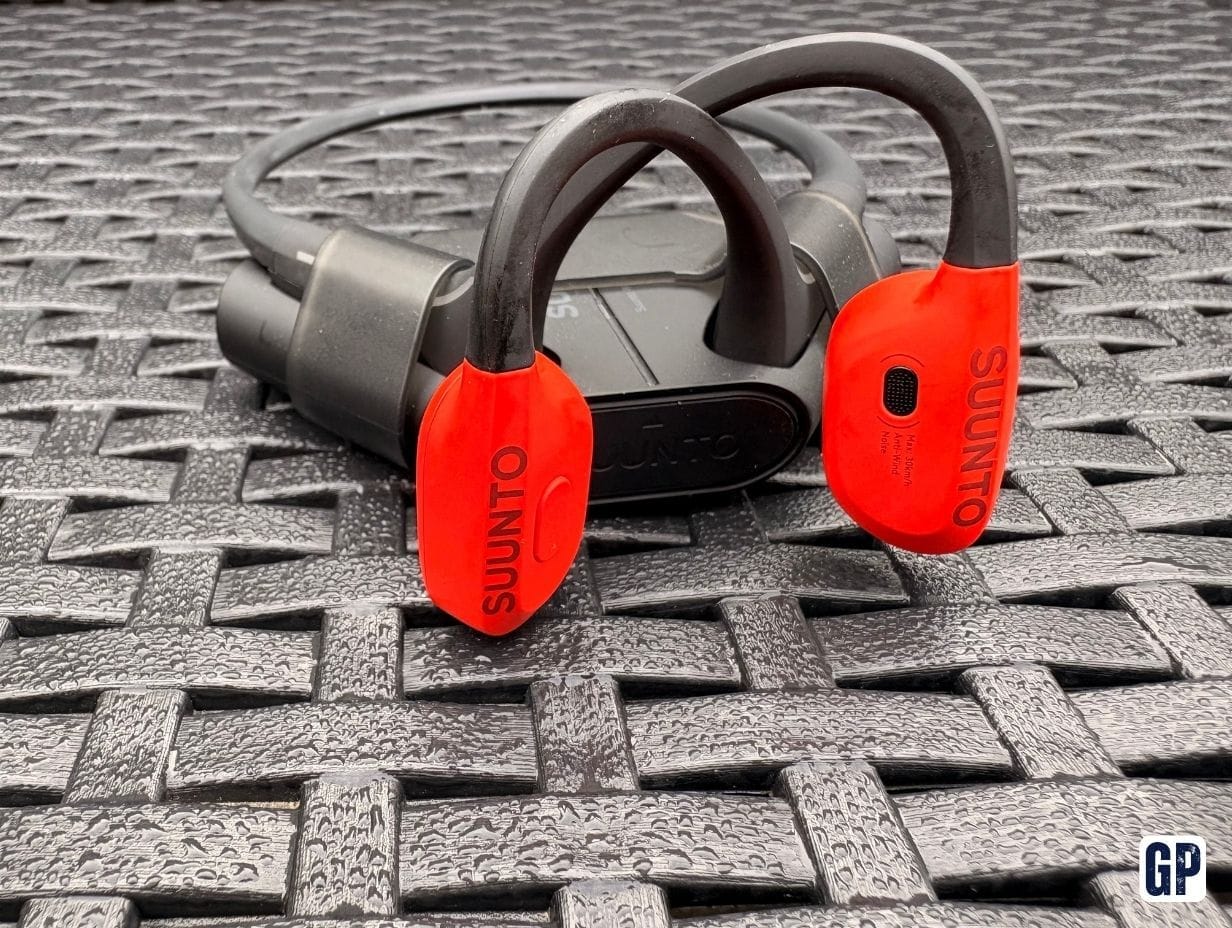
At 35 g, the Suunto Wing 2 soon disappears once in place. The neckband is classic for bone conduction, with a structure claimed to be silicone and titanium alloy. Suunto does not reinvent the wheel here: it is tidy, stable, and above all suited to prolonged sports use.
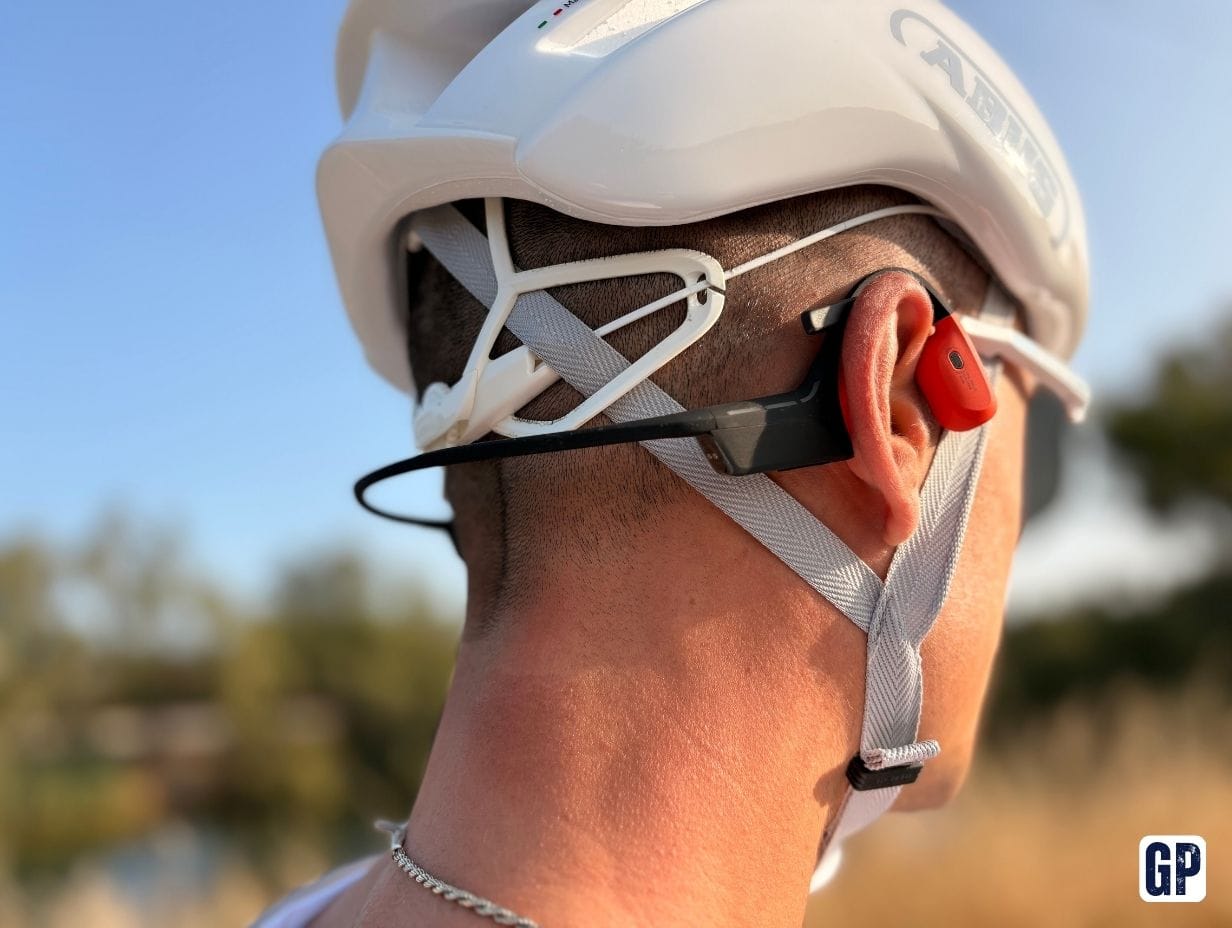
Once fitted, the headset does not move. That matters on the bike, where you juggle a helmet, glasses, position changes and vibrations. I never had that sensation of something floating behind my head or shifting at the slightest movement.
Cleaning is simple too. On a product rated IP66 – therefore resistant to sweat, water and dust – this is exactly what you expect: get home, wipe it quickly, put it away, without feeling like you are handling a fragile accessory.
Bone conduction does its job well: hear without isolating yourself
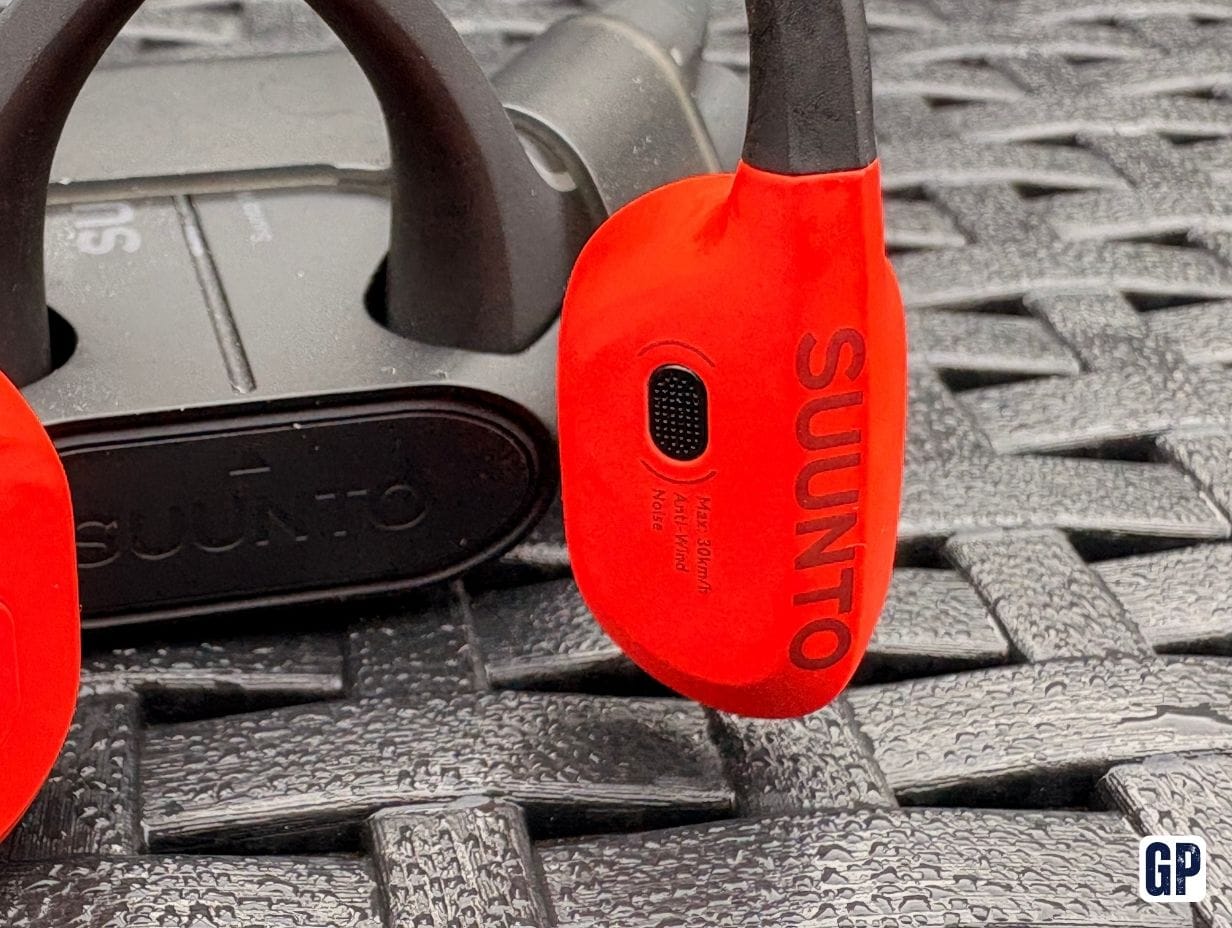
This is the Wing 2’s strongest point. Even with plenty of wind, I kept good awareness of my surroundings. You can hear cars, ambient noise, changes in the environment. On roads and tracks, that is the baseline.
Unlike some models where you have to crank the volume as soon as the wind picks up, I did not need to set the Wing 2 to maximum. On a ride with strong gusts, the sound stayed sufficiently present to follow music or a podcast, without shutting your ears to the outside world.
This is also what makes bone conduction interesting for long rides. We already covered this in the Nank Runner Diver2 Pro review: it is not an audiophile solution, but it is a smart way to add sound on the bike without putting yourself in a bubble.
And what about the law?
Since 2015, the French Highway Code prohibits the driver of any vehicle in traffic – cyclists included – from wearing on the ear any device likely to emit sound. The offence carries a 4th class fine, set at €135.
👉 Bone-conduction or open-ear headphones are not exempt.
In 2017, the Conseil d’État was petitioned by AfterShokz, now Shokz. It confirmed that the ban also applies to a device that leaves the auditory canal free but transmits sound by bone conduction through the skull.
👉 In France, using bone-conduction headphones on a bike must therefore be considered prohibited, even if this type of product lets you hear your surroundings better than traditional audio headphones.
💡 This may seem paradoxical from the point of view of use and safety, but legally the position is fairly clear today.
Effective for podcasts and music, a bit less for calls
On voices, the Wing 2 does very well. I listened to a podcast with several speakers, in conditions where you would usually lose intelligibility quickly. Here, the voices remained clear and audible without having to max out the volume, despite some wind.
Calls are handled properly too. Only one caller told me they could not hear me very well during a particularly windy ride. So it remains a little more variable on that point. Overall, for taking a call on the move or handling a short conversation, the result is clean enough.
For music, I sometimes encountered an occasional slight crackle that takes away from the listening pleasure. It depends on the musical style. It is not unusable by any means. But at €169, you start to expect more controlled reproduction, even accepting the natural limits of bone conduction.
Familiar controls, but not always precise
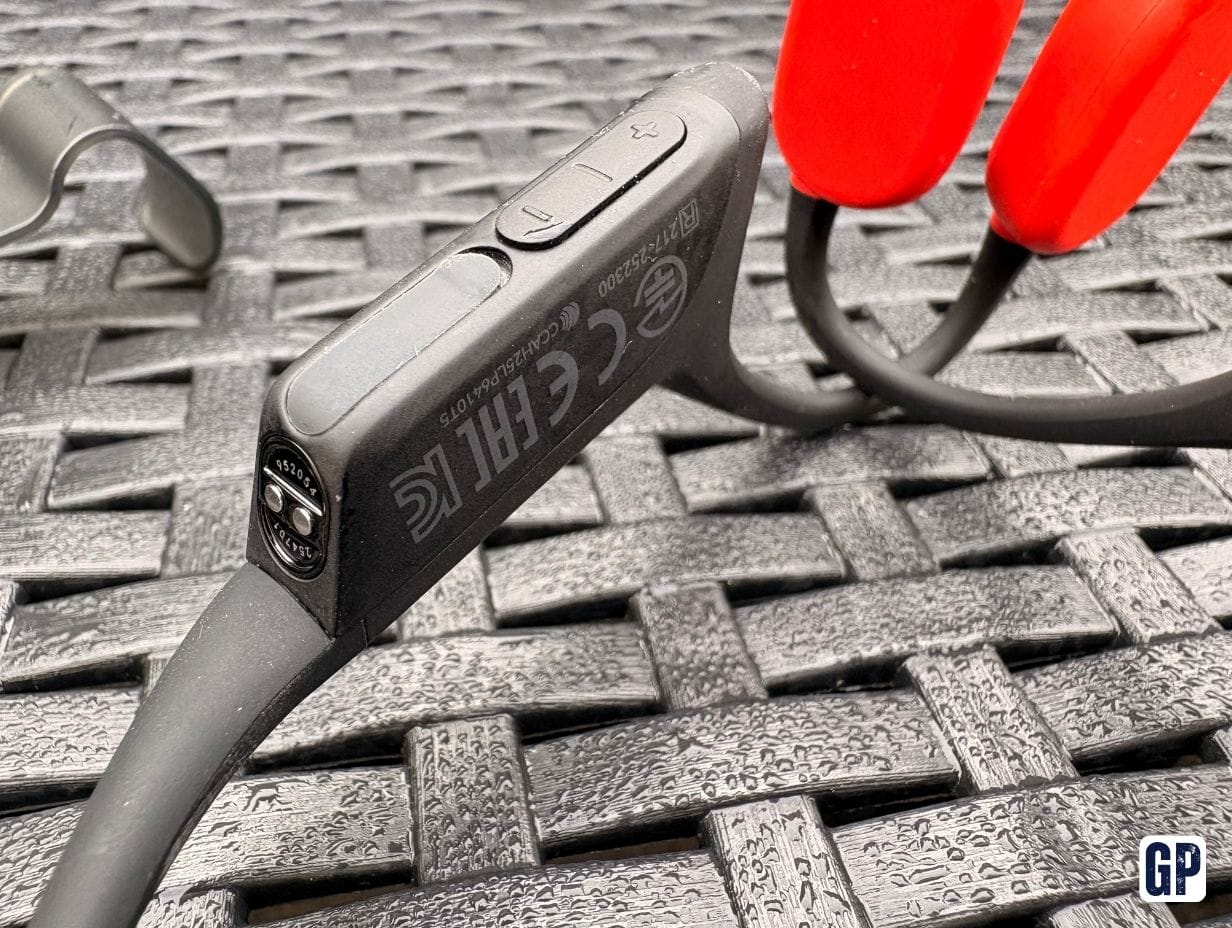
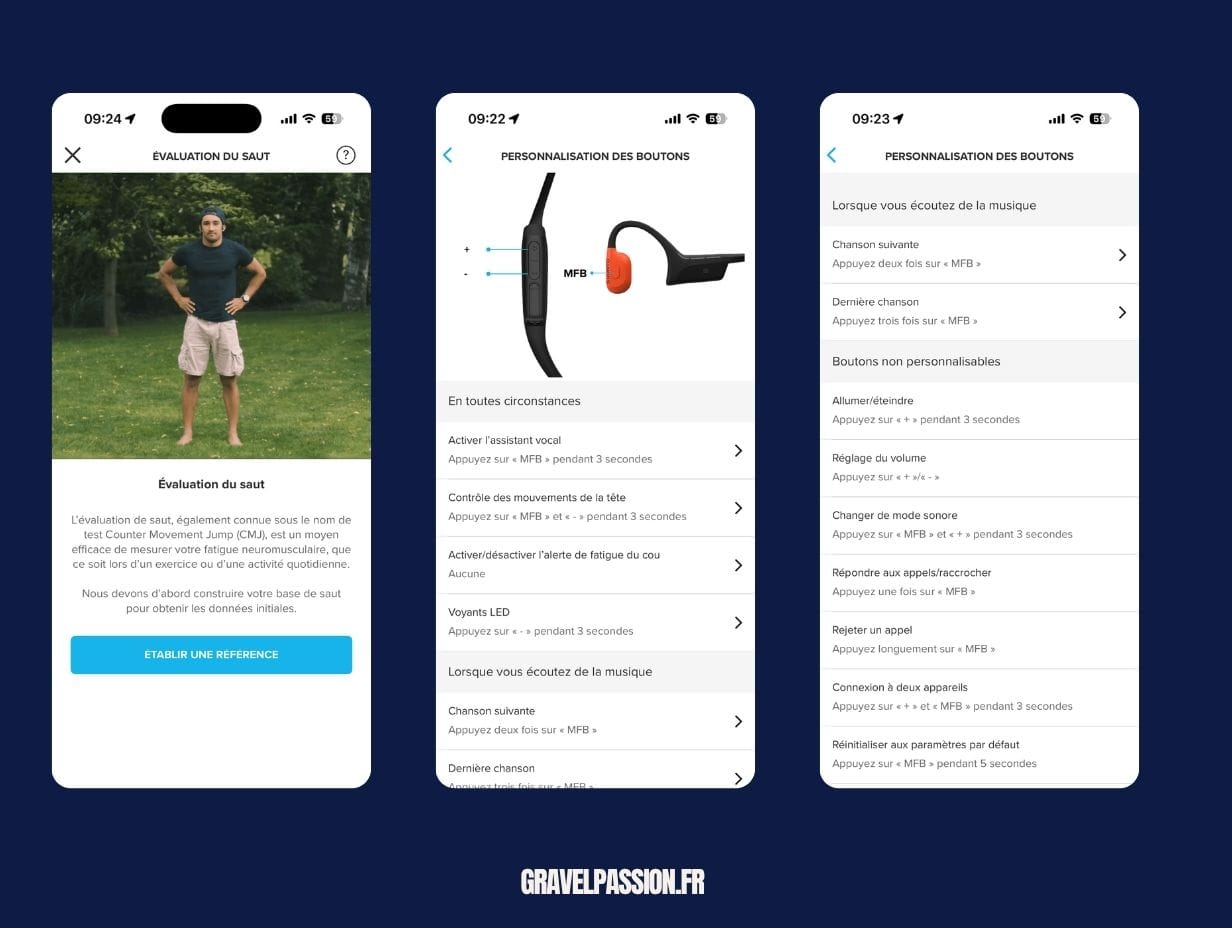
The ergonomics follow a pattern quite close to what you find from Shokz. On the left, a button handles play, pause and track changes. On the right, a longer button controls power, volume, pairing and power-off via a long press.
Pairing is quick, including on first launch. On that front, no complaints: it connects fast, without friction, and the experience starts well.
But the controls sometimes played tricks on me. The left button produces a loud, audible “crack” when pressed. That may be intentional, perhaps down to the button mechanism, but I preferred the discretion of a Shokz on this point. More importantly, I had missed double-clicks: instead of skipping to the next track, the headphones sometimes interpret the action as a pause.
Going back to the previous track did not work correctly in my use. And when a new product already feels approximate on such a simple gesture, it knocks confidence.
Motion control: good idea, very sensitive
Suunto adds head-movement control. In principle, it is appealing: keep your hands on the handlebar and manage certain actions without hunting for a button, especially when riding with gloves or in a zone where you want to stay focused.
In practice, it works, but it requires you to be quite disciplined in your movements. If the option is enabled, avoid turning your head too much or grooving a bit too enthusiastically to your music. Otherwise, commands can trigger or interfere with use.
I also noticed some odd behaviours when I went back to the buttons after using motion control. Nothing dramatic on every ride, but present enough to make me doubt the software maturity of the system.
The real problem: dropouts and disconnects
This carries the most weight in my verdict. I had audio dropouts on several rides, sometimes frequent disconnects. On a sports audio accessory, that is really annoying.
Slightly poorer sound can be acceptable if the product is stable, practical and reassuring. Imperfect controls are something you can eventually adapt to. But repeated dropouts break the experience. Especially when the product targets long rides, training sessions and adventures where you want to forget the gear.
I remain cautious: we will have to see if software updates fix part of the problem. The Wing 2 is compatible with the Suunto app and cloud updates, so there is room for improvement. But as tested, Bluetooth stability with an iPhone 17 is not at the expected level.
Battery: the 10 hours are there, but the low-battery alert still comes too late
Suunto claims up to 12 hours of battery life, with a more precise technical figure of 10 hours of music under certain listening conditions. In my testing, the full 12 hours checked out. That is solid for cycling, training or an active day.
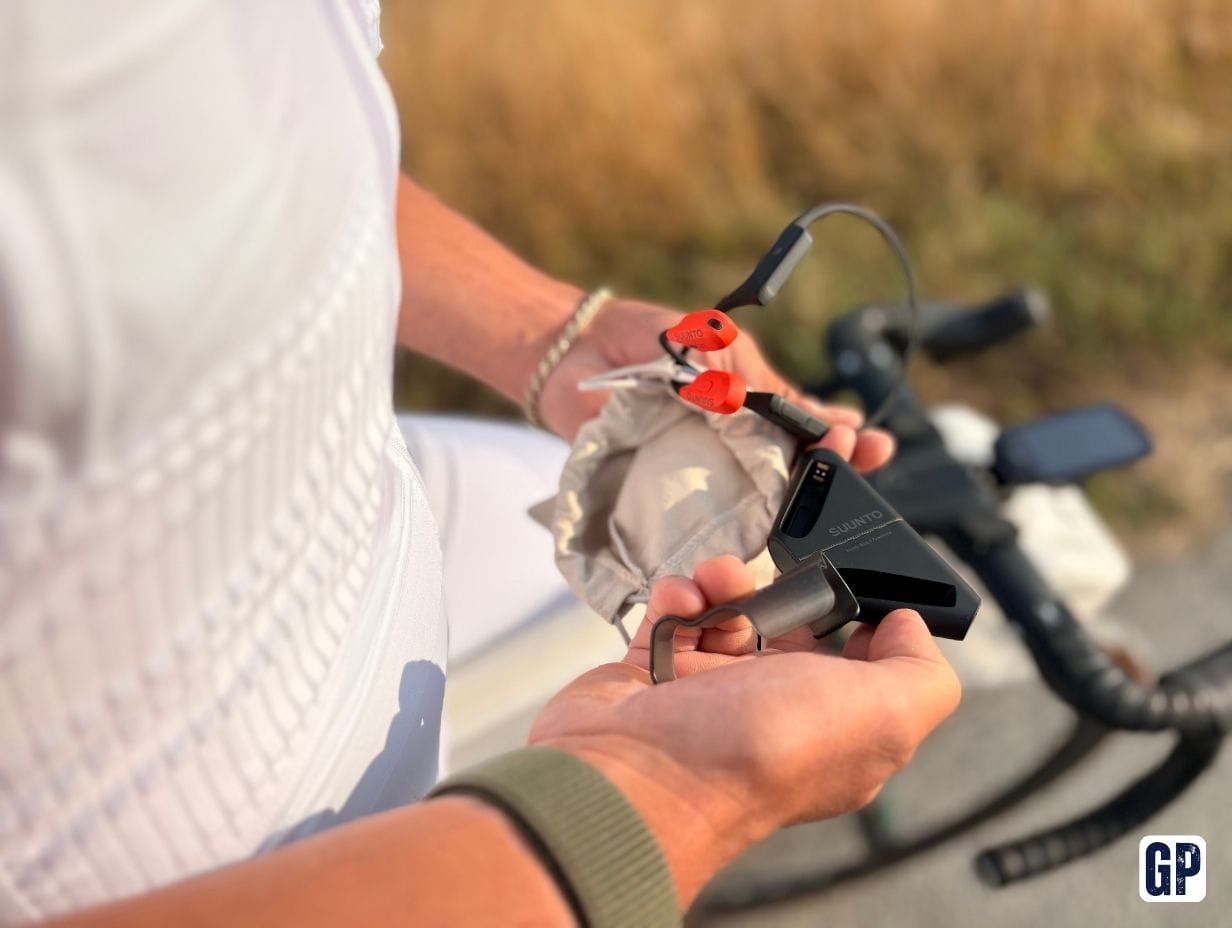
The supplied external battery adds real interest for long uses. Suunto claims up to 30 hours with the external battery, USB-C charging, and a 5-minute quick charge.
But there is a detail that is frankly missed: the low-battery alert. In my use, the headset warns… then turns off about 30 seconds later. In other words, the information arrives too late.
LEDs, Suunto app and connected features: useful but secondary
The Wing 2 also integrates LEDs designed to improve visibility. They can be controlled via the Suunto app, with sport-related modes, notably running and cycling. It is an extra safety layer, although I would not consider it a replacement for proper lighting.
Integration with the Suunto ecosystem is interesting on paper: audio customisation, LED settings, updates, connection to a Suunto watch to receive real-time performance information in your ears. For a user already invested in Suunto, it all makes more sense.
For others, it remains a bonus. The core of the product, on the bike, is simple: listen, stay alert, and handle your controls without losing the thread of the ride.
Compared with Shokz, Suunto has strengths but still needs to refine a few details
The comparison with Shokz is hard to avoid. The user experience of the Wing 2 is very close, right down to the button logic. Suunto adds the external battery, LEDs, the watch/app ecosystem and very decent battery life.
But Shokz retains, to my eyes, an advantage in the finished-product feel: more discreet controls, cleaner sound, a generally smoother experience. The Suunto Wing 2 sometimes feels a little immature.
It is a pity, because the fundamentals are good. Stability on the head, awareness of the environment, real-world battery life and voice listening all work. But the disconnects and approximate controls mar an experience that could have been much more convincing.
I would recommend it mainly to a cyclist already invested in the Suunto ecosystem, or to someone looking for solid, lightweight, durable bone-conduction headphones with an included external battery and good battery life.
It also makes sense for those who mostly listen to podcasts, voice prompts or take short calls. For that use, the Wing 2 is more convincing than for pure music.
On the other hand, if your priority is audio quality, precise controls and a perfectly stable connection, it is better to be more cautious. The Wing 2 is not a write-off. It is even downright interesting at times. But at this price level, the few bugs are no longer minor details.
The Suunto Wing 2 nails the most important thing for riding without isolating yourself. It still lacks the reliability that turns a good sports accessory into a companion you never question.


 And what about the law?