
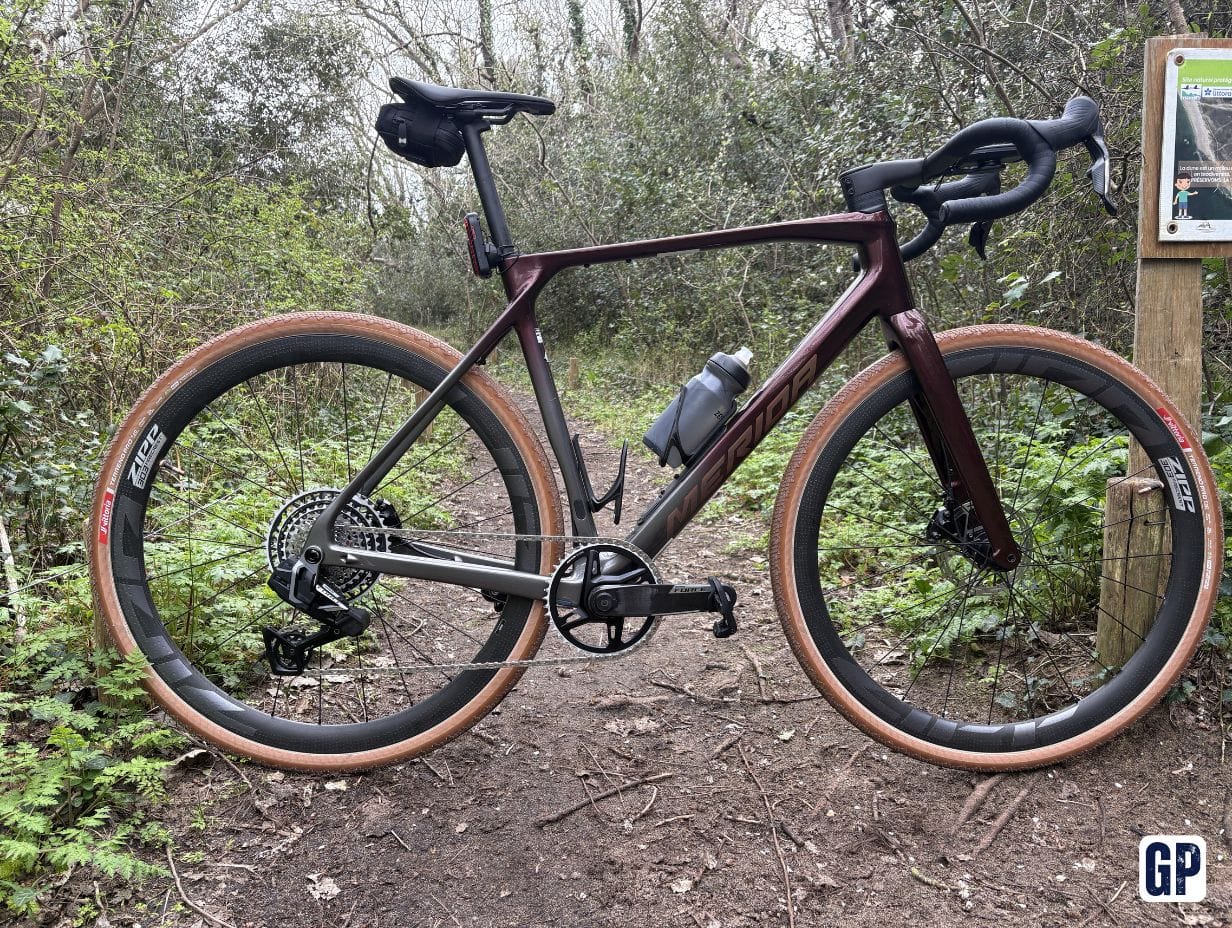
The new generation of SRAM Force AXS arrived in 2025 with a fairly clear promise: bring the mid-range even closer to the level of Red, while improving key points like ergonomics, braking, and the drivetrain.
In this review, I focused on the XPLR version, dedicated to gravel in 1x. And crucially, I was able to run a true back-to-back with the previous 12-speed generation that I still have on hand. That is probably where this new Force is most interesting: not in what it promises, but in what it actually changes out on the trail.
Strengths:
- Clearly improved lever ergonomics
- More powerful braking and more accessible from the hoods
- More consistent 13-speed drivetrain
- Perceived quality very close to Red
Could be better
- Rear derailleur fairly heavy
A derailleur that changes everything - or almost
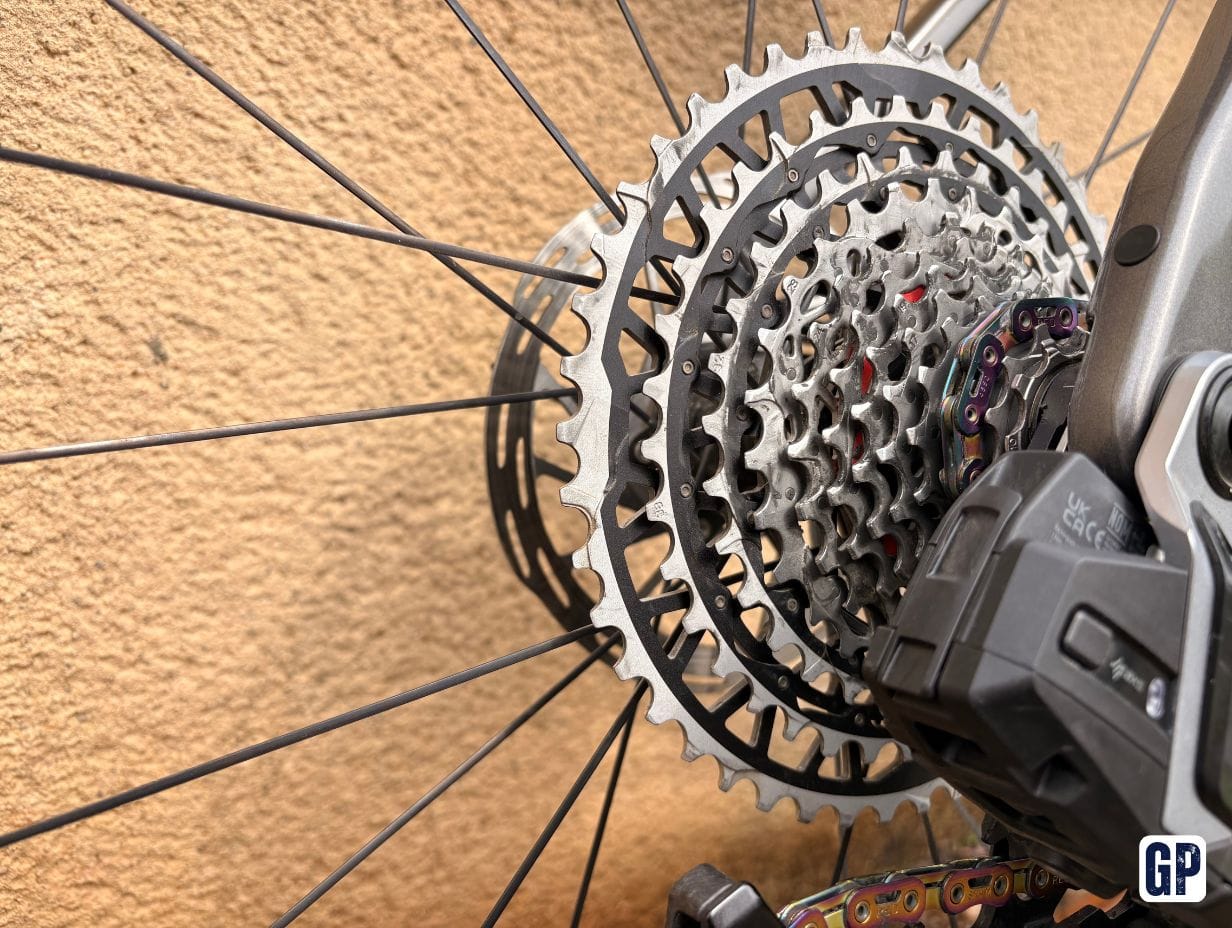
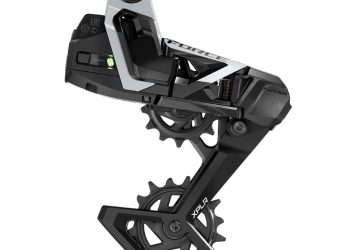
The most visible change, and likely the most structural, is the rear derailleur.
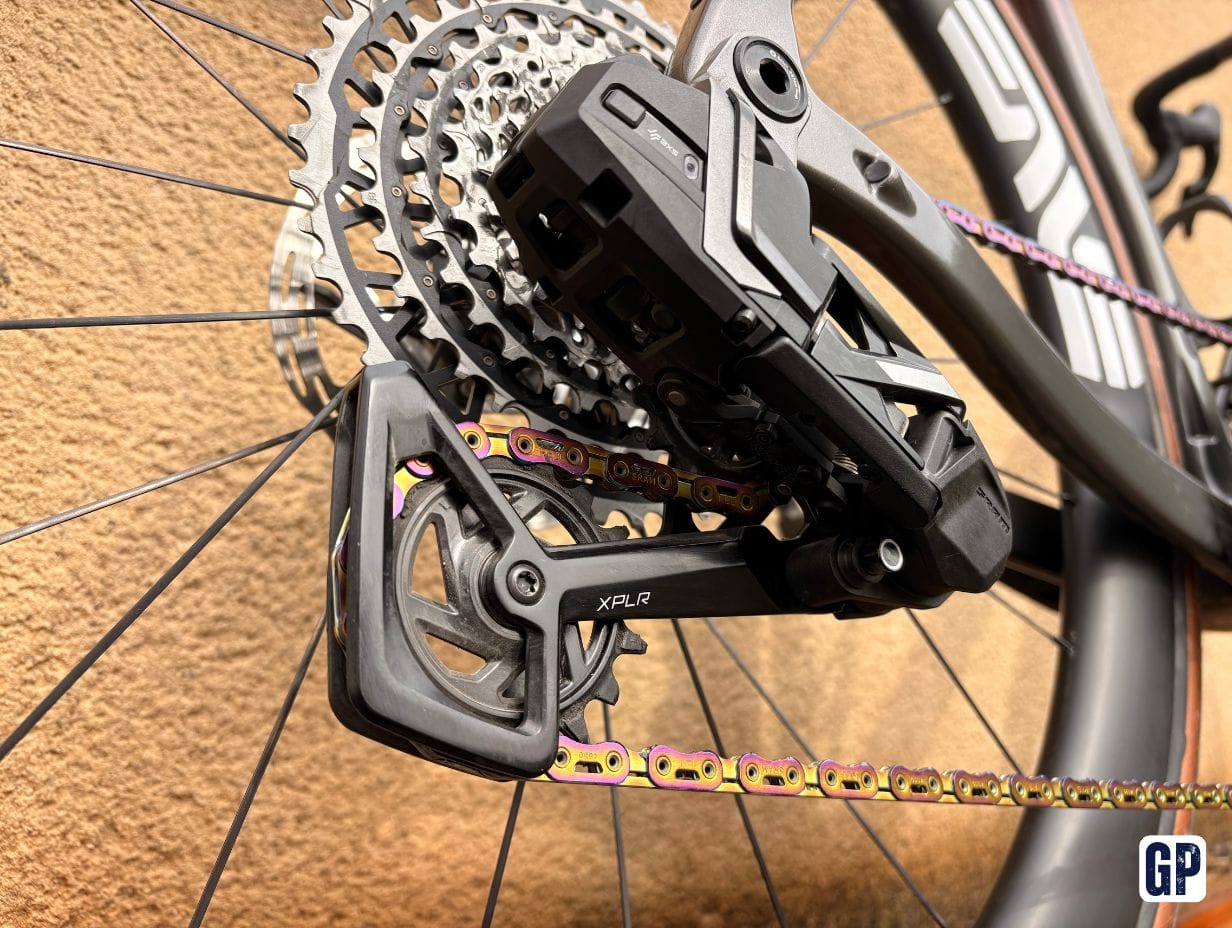
We switch here to a Full Mount design, bolted directly to a UDH-compatible frame. In practice, no more traditional derailleur hanger. On paper, that brings two things: more stiffness and, above all, fewer issues caused by a bent hanger.
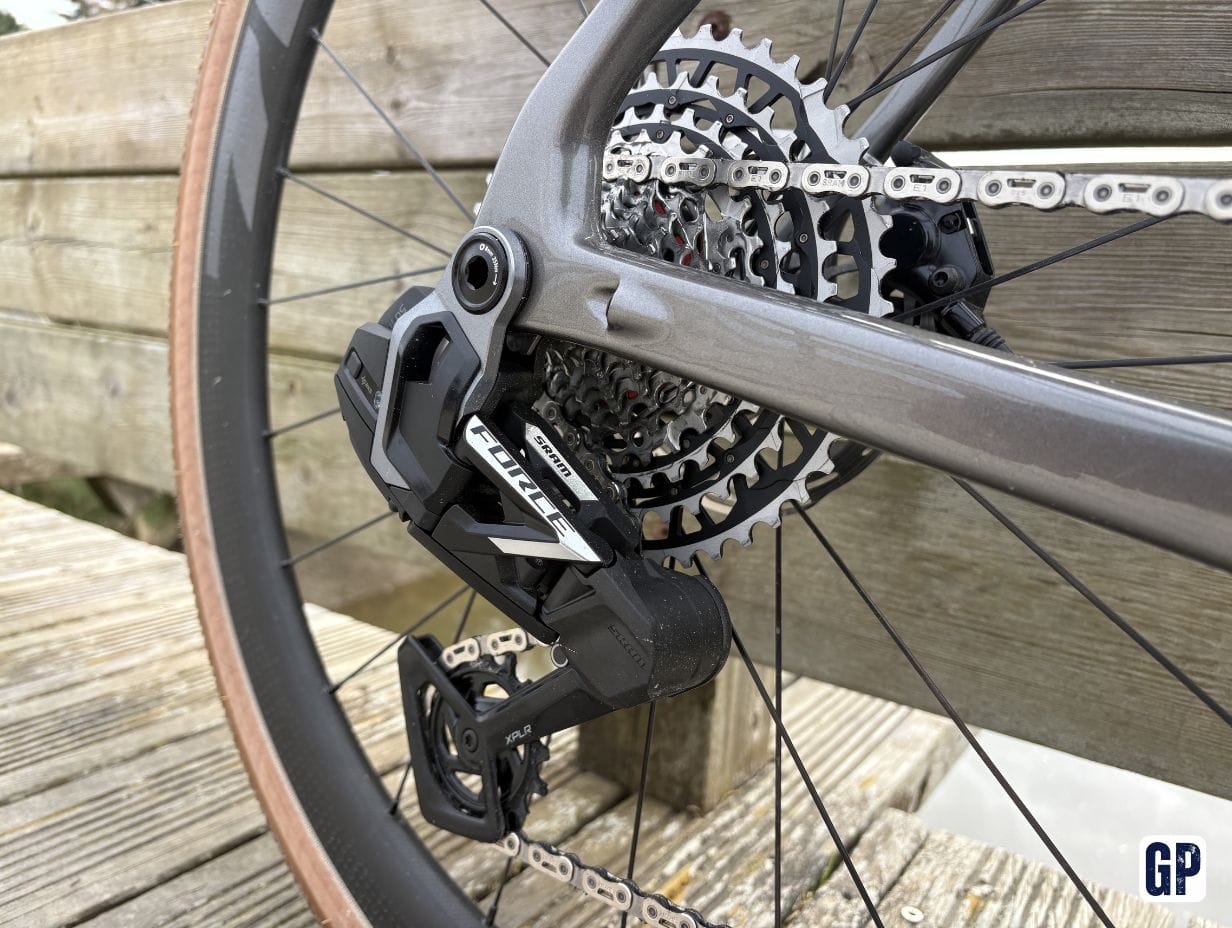
On the other hand, it creates a hard limitation: it is impossible to install this groupset on a non-UDH-compatible frame. That is a real barrier to entry. But SRAM has successfully imposed its standard and now all new gravel bikes offer UDH compatibility.
Visually, the derailleur is bulkier, clearly inspired by what we see on Eagle groups (notably X0). It gives an immediate impression of robustness, reinforced by a construction designed to be modular with replaceable parts. Over the long term, that is a real plus in terms of repairability.

The trade-off is simple: weight. The derailleur alone tips over 400 g, which is high in absolute terms, even if it fits the gravel logic where reliability often takes precedence over gram-counting.
On the drivetrain side, the arrival of the 13-speed 10-46 cassette marks a logical evolution compared to the old 10-44. The gain is subtle on paper, but noticeable in use. Chains remain Flattop.
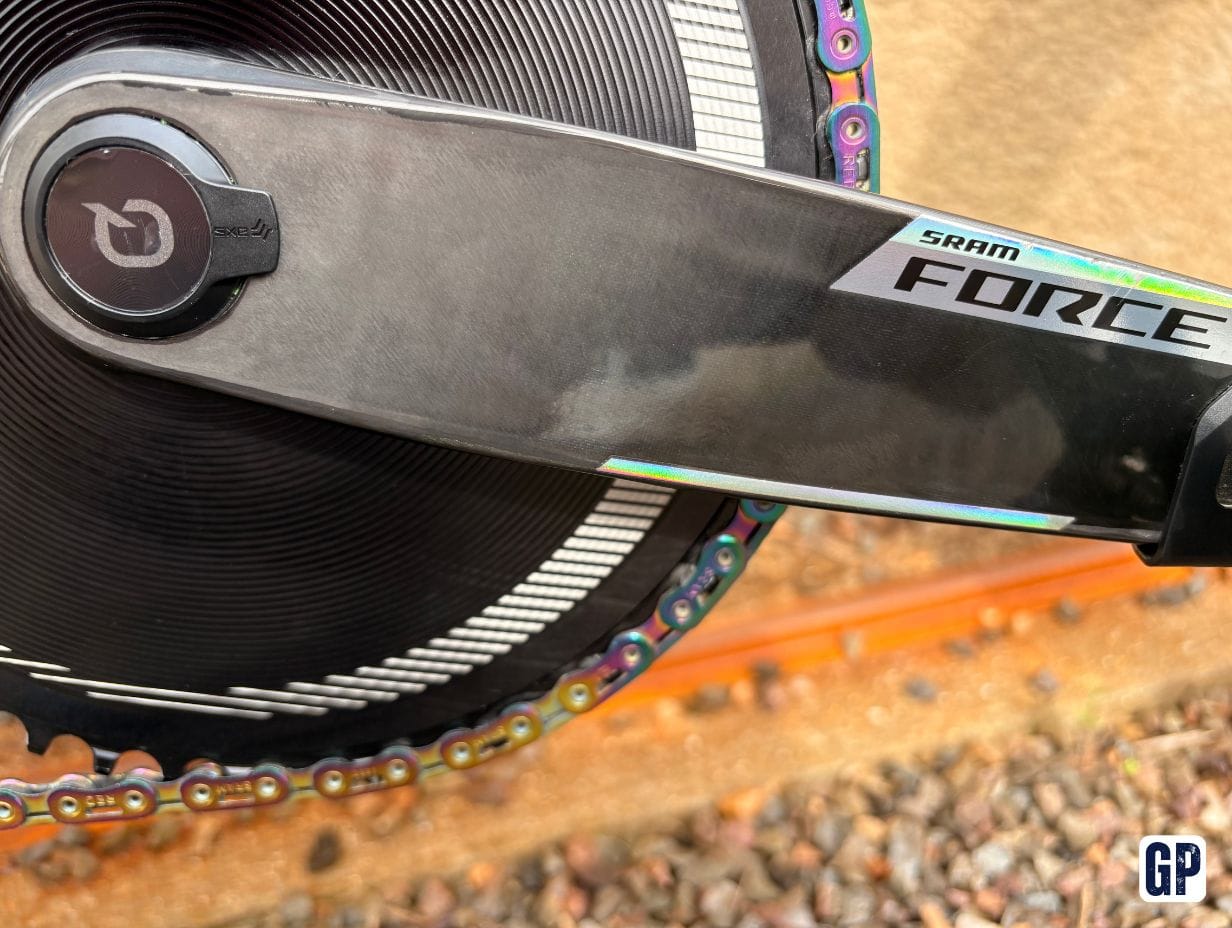
The crankset changes little: still carbon, with a slightly slimmed-down design and a wider crank length range (150 to 175 mm). Nothing revolutionary, but a sensible continuation.
Ergonomics: clearly a step up
This is probably where SRAM has worked the most.
The new levers are very close to those on Red, to the point that the difference is almost imperceptible in the hand. The carbon lever gives a very high-quality feel, and above all real alignment with the flagship group.
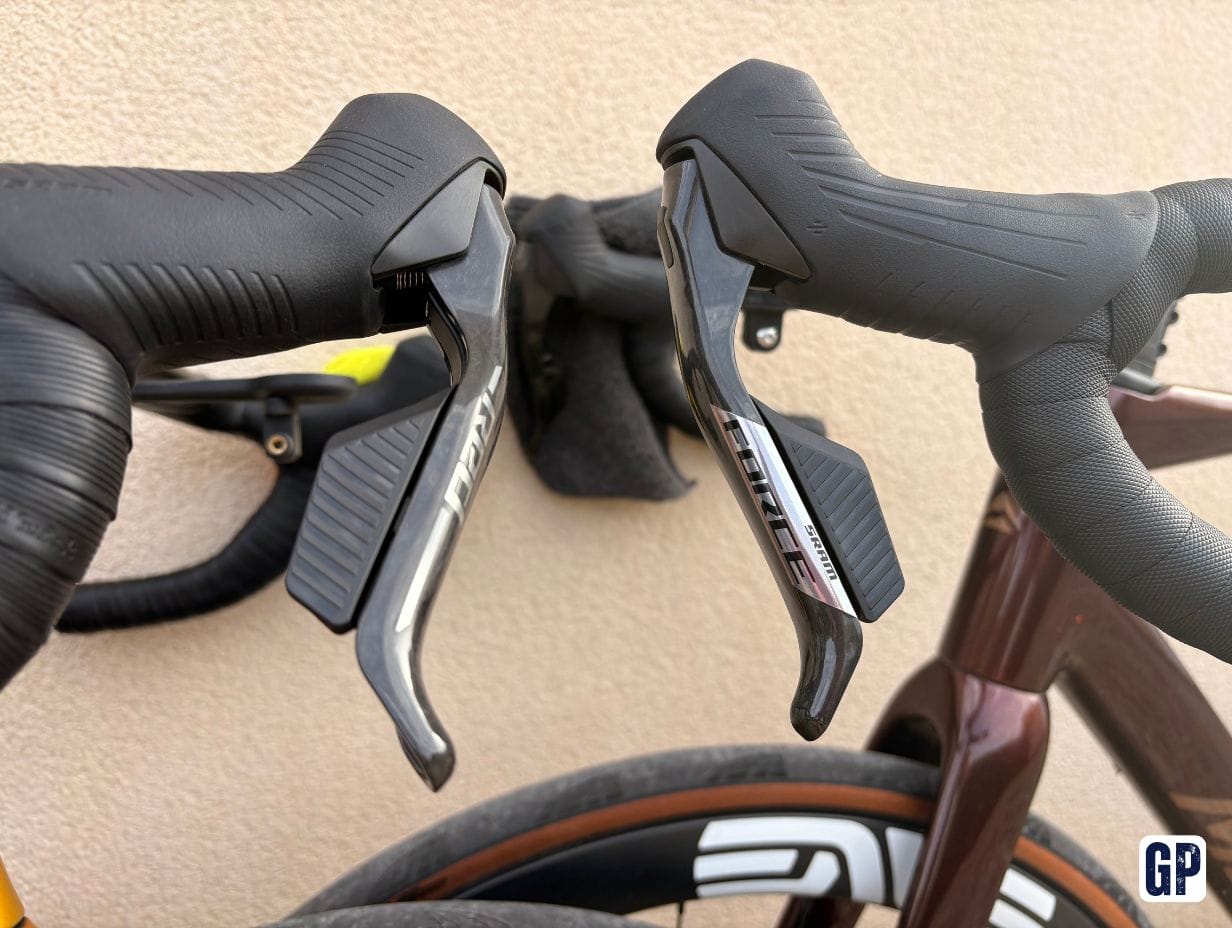
The shape of the hoods also evolves. They are longer, slimmer in places, with obvious work on hand positioning. You can tell it was designed to offer multiple hand positions without creating pressure points.
Reach adjust is simple, quick, well integrated. It is the kind of detail that does not make you dream, but changes your life when you fine-tune your cockpit.
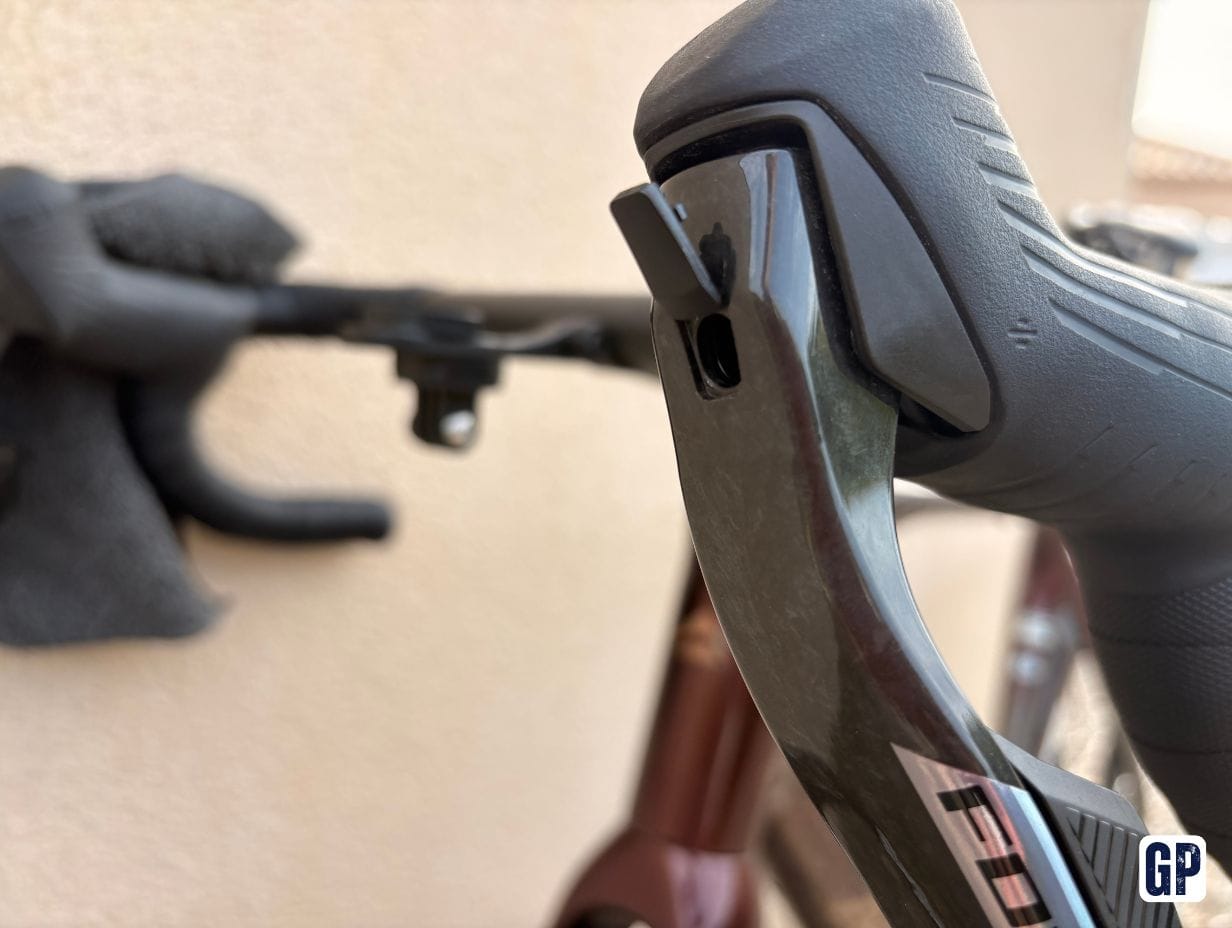
The inner button remains a central element. For me, it has become indispensable. But it is not perfect: it is very sensitive, and I had several unintended shifts, especially out of the saddle or when I am leaning on the upper part of the hoods. It is very personal and depends largely on how you place your hands, but I find the button from Campagnolo less sensitive, for example.
More consistent than spectacular
Out on the trail, the first thing that stands out is that everything just works… simply.
The move to 13 speeds is almost transparent. As when moving from 11 to 12, you do not say “wow”, but rather “ok, the gaps are better spaced.” The steps are more regular, which is particularly useful in gravel with a wide-range cassette.
The 10-46 brings a little more versatility, especially on road-to-gravel transitions. You can maintain a more constant cadence without that feeling of a hole in certain gear ratios.
With a suitable chainring up front, it is even very enjoyable on the road.

The Full Mount derailleur clearly does its job: shifts are crisp, precise, and above all very consistent. Fewer micro-adjustments needed, less drift over time. That is a real gain in peace of mind.
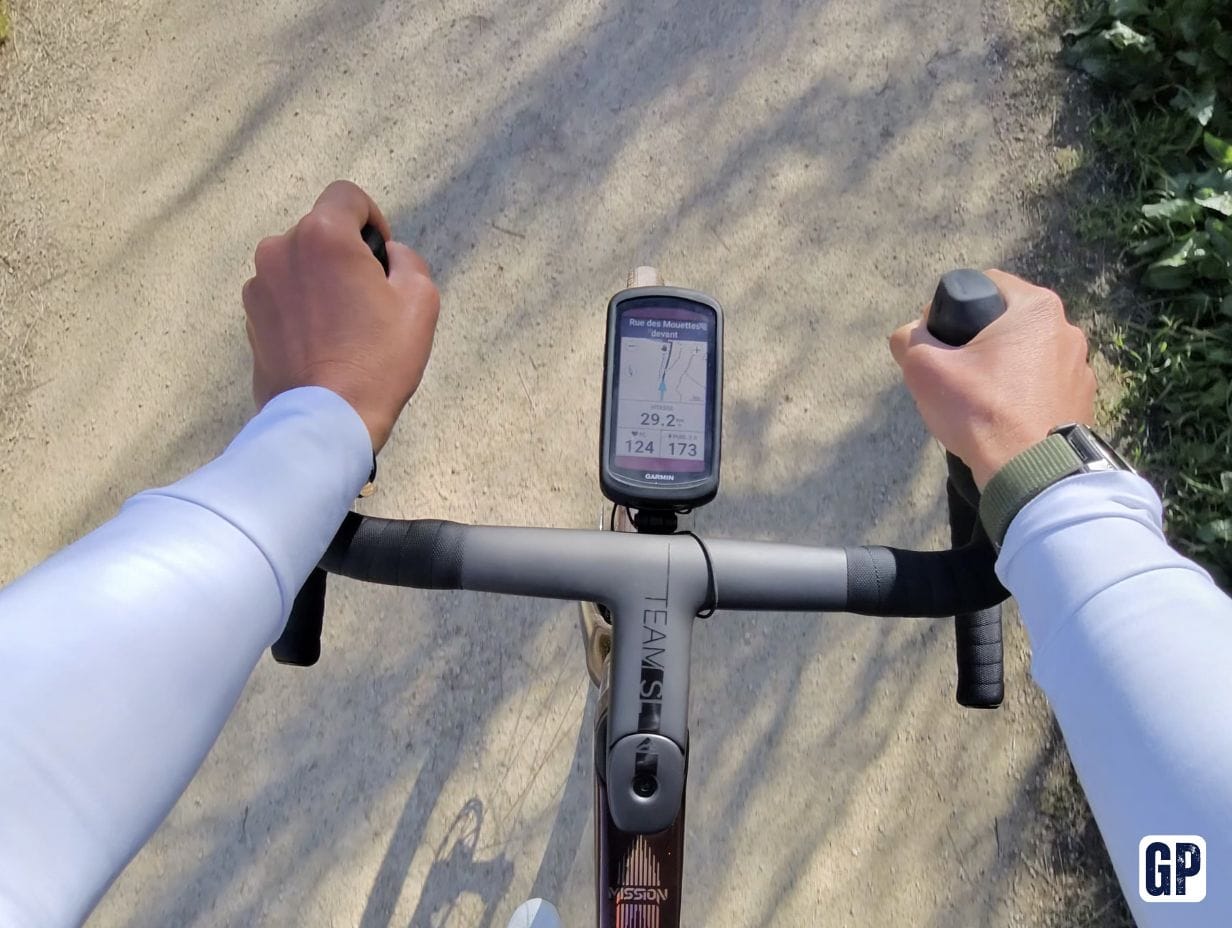
Chain retention is excellent. Even on rough terrain, nothing moves. The system remains very stable, true to what SRAM already offers on its 1x drivetrains. I even skipped the chain guide and I did not experience any chain drops, even in racing.
The interesting point concerns the 10-tooth sprocket. It has been reworked, and you can feel it: less friction than before. But it remains mechanically less efficient than an 11, so use it with discernment.
Finally, braking.
Still very SRAM in feel, with a fairly progressive bite, but clearly more powerful. The gain is obvious. You can really brake from the hoods, which was not always comfortable before. The lever requires less effort, and you feel it especially on long rides or in technical terrain. It is a different feel to Shimano or Campagnolo, but no longer a disadvantage. Bleeds still seem less durable over time, and braking can lose some consistency over the months.
A Force that gets dangerously close to Red
This is probably the most interesting point.
In terms of feel, this Force is very close to Red. Whether on the levers, the braking or even shift quality, the gap has become very small. To be honest, when I swap from my Force-equipped bike to the one with Red, I feel almost no difference, at least in 1x use.
On the market, that positions this groupset as one of the best current compromises in high-end gravel. It is capable enough to satisfy demanding riders, without tipping into Red pricing.
Verdict: the right choice at SRAM
This Force XPLR AXS confirms something we increasingly see: mid-range has become the sweet spot.
You get here almost everything that makes Red great, without paying Red prices. The evolutions are not spectacular, but they all go in the right direction: ergonomics, consistency, ease of use.
It is not a groupset that will revolutionize your riding. On the other hand, it is a groupset that will disappear beneath you, and that is probably what we value most today.
If you are looking for a high-performance, modern and durable gravel drivetrain, without going overboard, it is a reference.