
Professional cycling still carries the image of an “accessible”, almost reasonable sport, especially when compared with Formula 1 or football. That perception is partly justified… But only if you keep your distance from the numbers.
Because as soon as you look closely at the WorldTour’s economics, one reality emerges: putting your logo in the peloton at the highest level is neither trivial nor improvised. It is a structural, heavy investment, and deeply dependent on the strategy you pursue.
🚀 In brief:
In 2026, the average budget of a men’s WorldTour team is around 32 M€ (median 27 M€), with gaps from 15 to 20 M€ up to more than 60 M€ for the wealthiest.
The business model relies almost entirely on sponsorship: nearly 90% of revenue comes from partners, with no shared TV rights or ticketing.
The title sponsor typically funds 60 to 80% of the budget; the bike brand often brings 3 to 5 M€ in cash, plus about 200 bikes (list value close to 2 M€).
A misleading average
In 2026, a men’s WorldTour team operates with an average budget of about 32 million euros, with a median closer to 27 million. These figures give an illusion of stability, but in reality they hide a considerable gap between teams.
On one side, a few dominant organizations (UAE Team Emirates, Visma | Lease a Bike, INEOS Grenadiers, and Red Bull–Bora) have shifted into a different economic dimension. Their budgets now exceed 60 million euros, sometimes by a wide margin.
On the other side, some teams continue to operate with 15 to 20 million, constantly arbitrating between sporting survival, media exposure, and regulatory constraints.
The WorldTour has thus become a profoundly asymmetric league, where sporting performance, media visibility, and financial solidity are increasingly correlated.

A business model without a safety net
Unlike most global professional sports, cycling relies on an almost monolithic model: sponsorship. On average, nearly 90% of a WorldTour team’s revenue comes directly from its partners.
There is no redistribution of TV rights. Teams do not receive ticketing income. Prize money remains marginal on the scale of an annual budget. In other words, without a sponsor, there is no team.
The title sponsor concentrates most of this financial effort. In most organizations, it provides between 60 and 80% of the total budget, almost exclusively in cash, and gives its name to the team. It is the title sponsor that pays for salaries, logistics, travel, staff, performance.

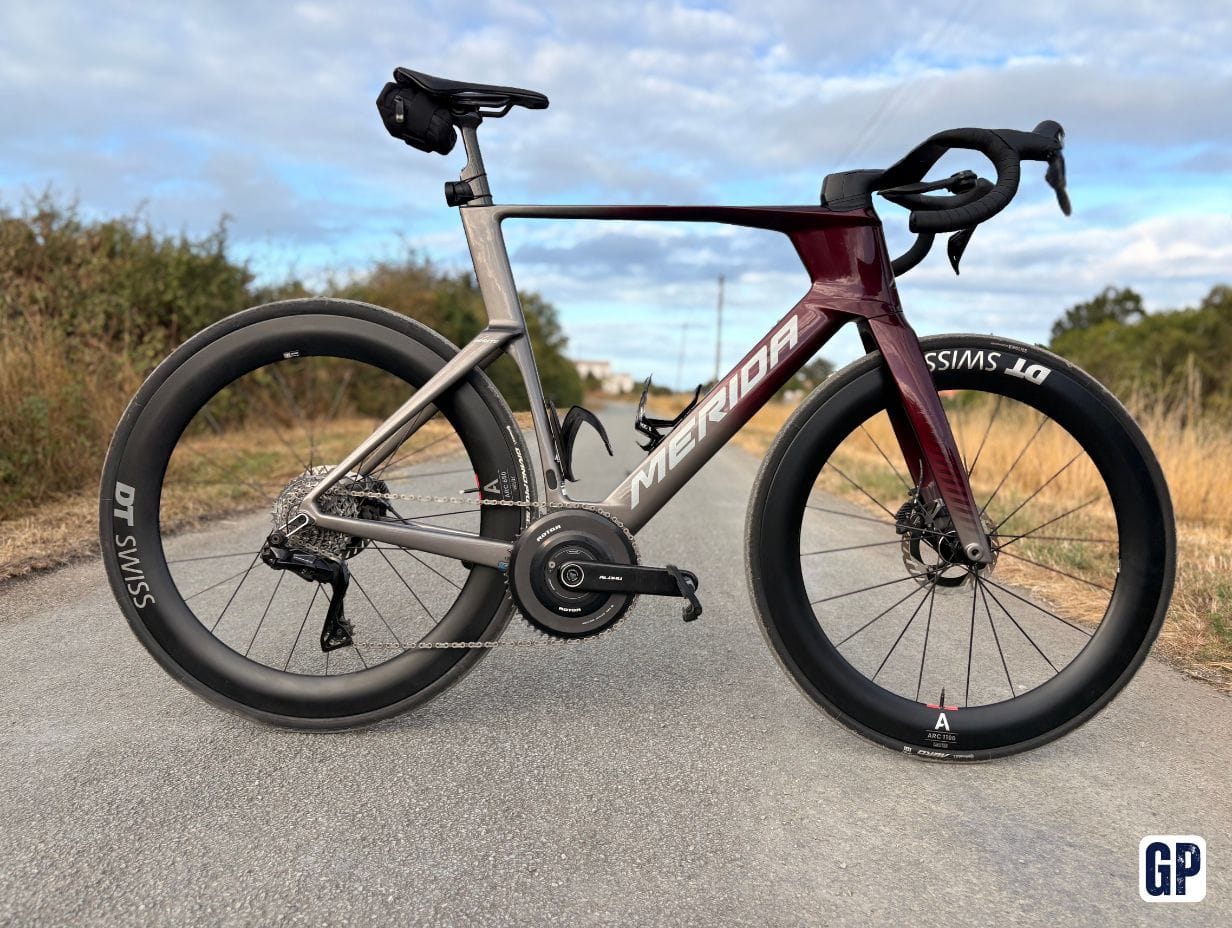
Orbiting around this pillar are the technical partners. The most pivotal remains the bike brand. In a competitive WorldTour team, its contribution generally represents 3 to 5 million euros in cash, to which is added the supply of around two hundred bikes and frames, for a list value close to 2 million euros.
At INEOS, Pinarello injects several million per year; at Quick-Step, Specialized is in the same ballpark.
Other equipment suppliers (apparel, helmets, components, nutrition) play an important role in performance and image, but their financial contribution remains limited. They mostly provide equipment. The cash almost always comes from the main sponsor.
Budget as a strategic compass
This level of investment directly determines the team’s sporting ambition.
At around 18 million euros, an organization can exist in the WorldTour, but not much more.
The goal is then to survive, get to the front on certain stages, notch a few symbolic results, and justify the sponsor’s on-air presence. Visibility is intermittent, performance opportunistic.
At 30 million euros, the project changes in nature. The team can structure its roster, attract credible leaders, regularly aim for podiums, and settle into the UCI top 10.
It is often at this level that the cost-to-visibility ratio becomes most attractive for a brand: frequent exposure, a competitive image, without relying on a single superstar.

Beyond 50 or 60 million euros, you enter a logic of domination. Salaries skyrocket, recruitment becomes aggressive, and scientific and technological resources multiply. The goal is clear: win the Tour de France, and with it, capture a disproportionate share of global visibility. It is a high-stakes bet where dependence on performance is total.
Visibility that is still "cheap"
If brands keep investing heavily in cycling, it is because the equation remains, despite everything, favorable.
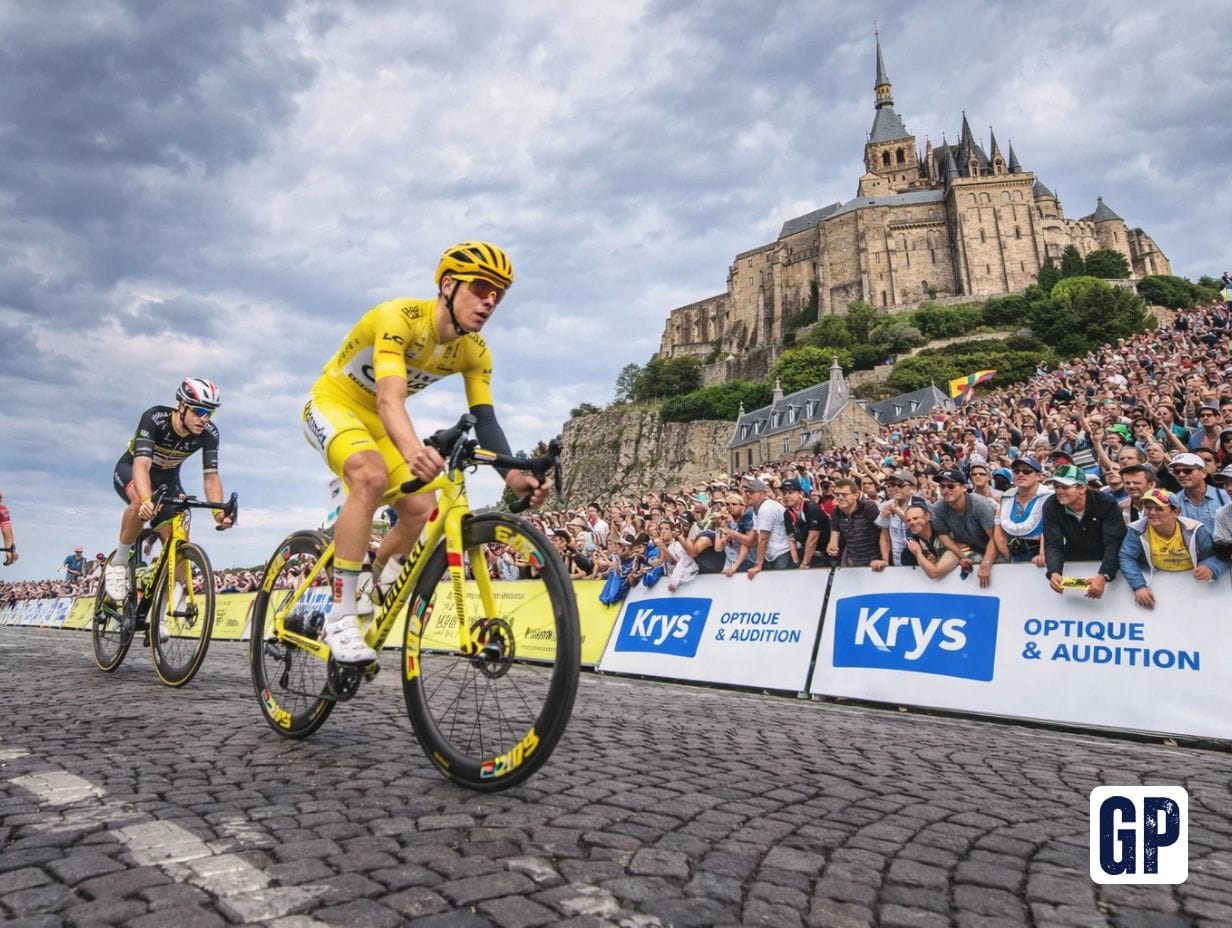
The Tour de France is broadcast in nearly 190 countries, with more than 100 hours of live coverage over three weeks. By itself, it can account for up to 80% of a team’s annual visibility. Even a mid-table outfit can generate the equivalent of 80 to 100 million euros in media impact over a season.

Compared with other global sports, cycling’s cost per contact remains extremely low. As long as a WorldTour team’s budget stays far below that of an F1 outfit or a top European football club, cycling retains a structural advantage for advertisers.
Women's cycling and the lower divisions: a different economic world
The contrast is particularly striking on the women’s WorldTour side. The entire peloton totals around 70 million euros in budget, the equivalent of a single men’s super-team. The median per team barely exceeds 3.5 million euros.
For brands, this opens up a very different field of opportunity: controlled costs, a strong CSR dimension, and rising visibility. The return is not immediate, but the balance between investment, image, and symbolism is today particularly attractive.
Men’s ProTeams occupy an intermediate position. With budgets between 8 and 12 million euros, they offer a more affordable entry point to professional cycling, at the cost of less guaranteed exposure. Invitations to the Grand Tours then become a key strategic lever.

What the WorldTour really reveals
Ultimately, the WorldTour is not just a sporting championship. It is a very particular visibility market, where exposure is measured in kilometers covered, in hours of live coverage, and in presence at the front of the peloton.
You can exist with 10 million euros, perform with 30, and dominate with 60. But in all cases, the model remains the same: without a sponsor, there is no team, no race, no show.
And as long as this mechanism holds, cycling will remain one of the last global sports where you can still buy massive visibility… Without blowing an unreasonable budget.
Reference sources
- UCI / La Gazzetta dello Sport (February 2025) – Estimated budgets of men’s WorldTour teams and average allocation of expenses
- CyclingNews (January 2024) – WorldTour team budgets explained: where the money comes from and where it goes
- Cycling Weekly (March 2024) – How much does it really cost to run a WorldTour cycling team?
- PezCycling News (April 2024) – The economics of professional cycling sponsorship
- Nielsen Sports / EF Education–EasyPost (2024-2025) – Estimates of media impact and advertising equivalent for WorldTour teams
- UCI Women’s WorldTour (2024 report) – Aggregated budgets and economic structure of the women’s WorldTour
- CyclingTips (June 2024) – The financial gap between men’s and women’s professional cycling
- CyclingNews (February 2025) – ProTeam budgets and invitations: how second-division teams survive
- Amaury Sport Organisation (ASO) – International broadcast data and airtime for the Tour de France