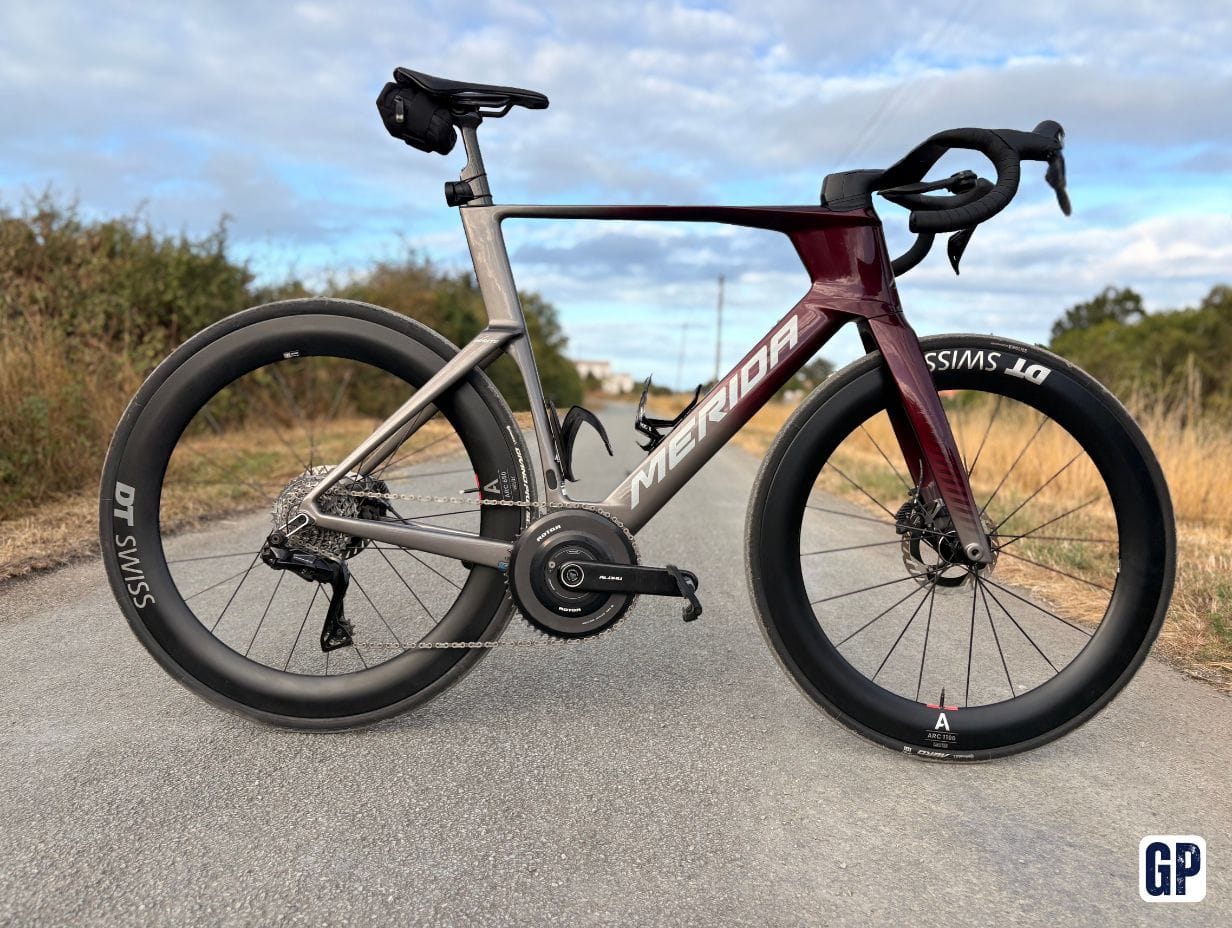

The new Merida Reacto doesn’t try to soften its edges. After several weeks and about 850 km on it, the message is pretty clear: it’s a bike designed first and foremost to go fast, reduce aero drag, hold a line at high speed and absorb hard race efforts.
This choice goes against the current trend. Many brands are moving back towards a single road bike that can do everything: climb, go fast, stay comfortable, go everywhere with wider tyres. Merida keeps a true aero bike in its range here, with a deliberate stance. And as the brand is expected to return to the WorldTour with Soudal-QuickStep, this Reacto V arrives at the right time.
Strengths:
- Outstanding cockpit ergonomics
- A (truly) aero bike
- Impressive stiffness
- Precise handling
Could be better
- Physically demanding on slower rides
- Cockpit finishing cap that feels out of place on a high-end bike
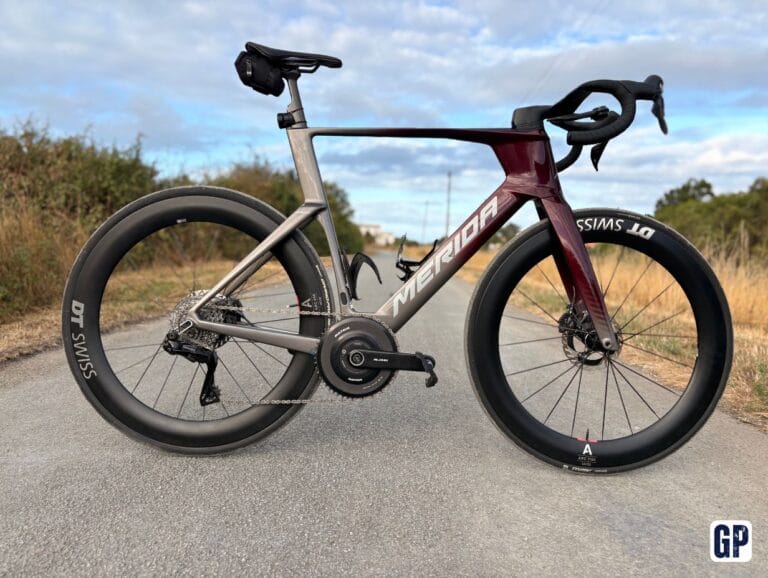
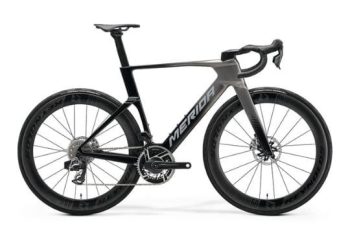
The version tested here is a special one. It’s a Reacto One, fitted with the Classified hub, a DT Swiss ARC 1100 65 mm wheelset, a Shimano Dura-Ace Di2 groupset, a Rotor crankset with a power meter, and above all the carbon seagull-wing cockpit co-developed with Vision.
This build isn’t sold directly in France. In this configuration, we’re talking about a bike around €11,000, even if the comparison with the French range isn’t perfect. Merida adapts its builds by country, sometimes even between France and Belgium. I’d already noted this during the Merida Mission review.
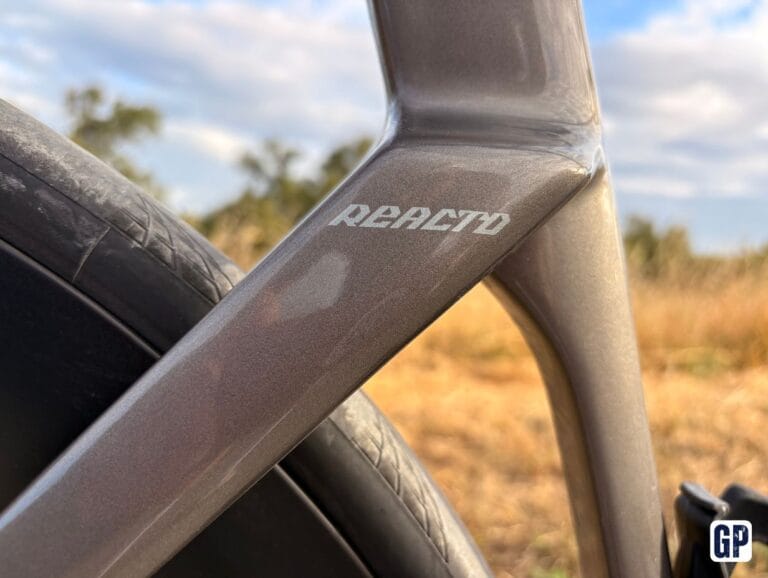
The spec sheet already tells part of the story
Merida claims a Reacto CF5 V frame around 950 g in size M, tyre clearance up to 32 mm, an S-Flex zero-offset seatpost, 160 mm rotors and geometry offered in six sizes, from 2XS to XL.
The Reacto One also touts a headline number: 196 watts according to Tour magazine’s wind-tunnel protocol, at 45 km/h with a pedalling mannequin. That’s under the symbolic 200 W mark, and above all it’s the best figure quoted within the Reacto family.
On the scales, my test bike weighed 7.5 kg. Not a featherweight, especially versus some modern aero bikes, but the number makes sense given the XL size, 65 mm wheelset, the Classified hub and the overall build. With a sub-1 kg frame and very high-end components, it seems realistic to dip slightly under 7 kg with a less extreme configuration.
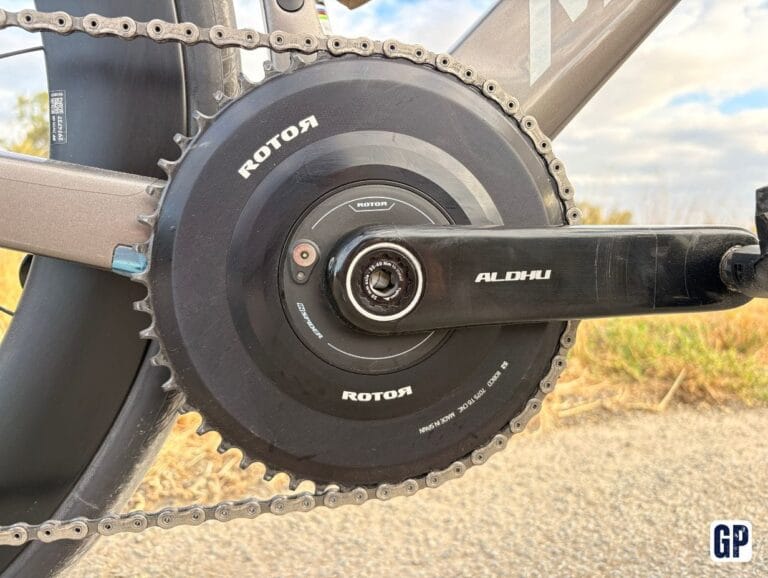
The Classified drivetrain deserves a mention too. The bike runs a 1x, with a Rotor Aldhu Carbon crankset with 52 teeth and an 11-34 cassette, but the Powershift hub recreates a range equivalent to a double chainset. It’s tidy, fast, very consistent with the aero approach and on this bike the integration makes sense.
An XL size that could have skewed everything
There was a shipping error: I received an XL. At 1.85 m, it isn’t the size I’d have chosen instinctively.
On paper, everything was larger than my usual benchmarks: reach almost a centimetre longer, stack about two centimetres higher, longer top tube and stem. Yet once on the bike, I didn’t feel completely out of step with my fit.
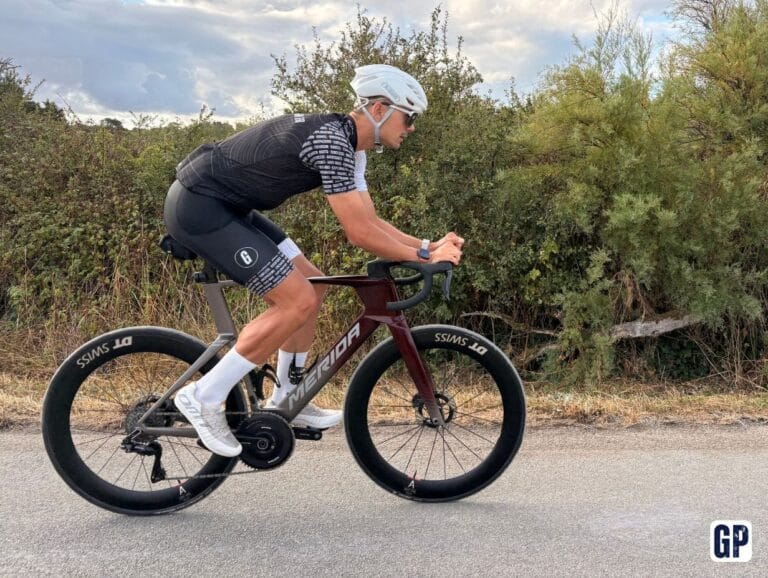
The reason is quite simple. The taller stack, with the spacers uncut, let me keep a forward position linked to the longer top tube, without dropping too low. The zero-offset seatpost also helped me get back to something closer to my usual position.
The seatpost extension, visually, was frankly too low. Let’s not pretend: on such a heavily worked bike, with such sculpted tubes, it breaks the lines a bit. But in motion, that wasn’t what bothered me most.
The cockpit is quoted at 42 cm on the XL. On my bike, I had a very different impression. Either Merida measures in an unusual way, or this version was fitted with a much narrower cockpit. I genuinely felt the cockpit was at the very lower limit I can accept.
Little home test: when you can flip the pages on your GPS without taking your hands off the handlebar, it usually means the cockpit is really narrow. Here, that was the case. 😂
The first ride reminded me what a true race bike is
I’ve ridden many recent aero bikes. I still have a few to try, but the general trend is fairly clear: these bikes remain demanding, yet they’ve become easier than a few years ago. More stable, more compliant, less punishing, less reserved for very strong riders.
The Reacto One surprised me because it returns to something more raw.
First ride in early August, with a solid base already. Not a February restart, not a cold outing after three weeks off. And yet, over two hours, I really suffered on the bike.

The first hour, everything was fine. Discovery, speed, the pleasure of feeling an aero bike naturally gather pace on the flat. The second hour, on slightly more rolling terrain, I was stuck at 200 watts and I rolled home spent.
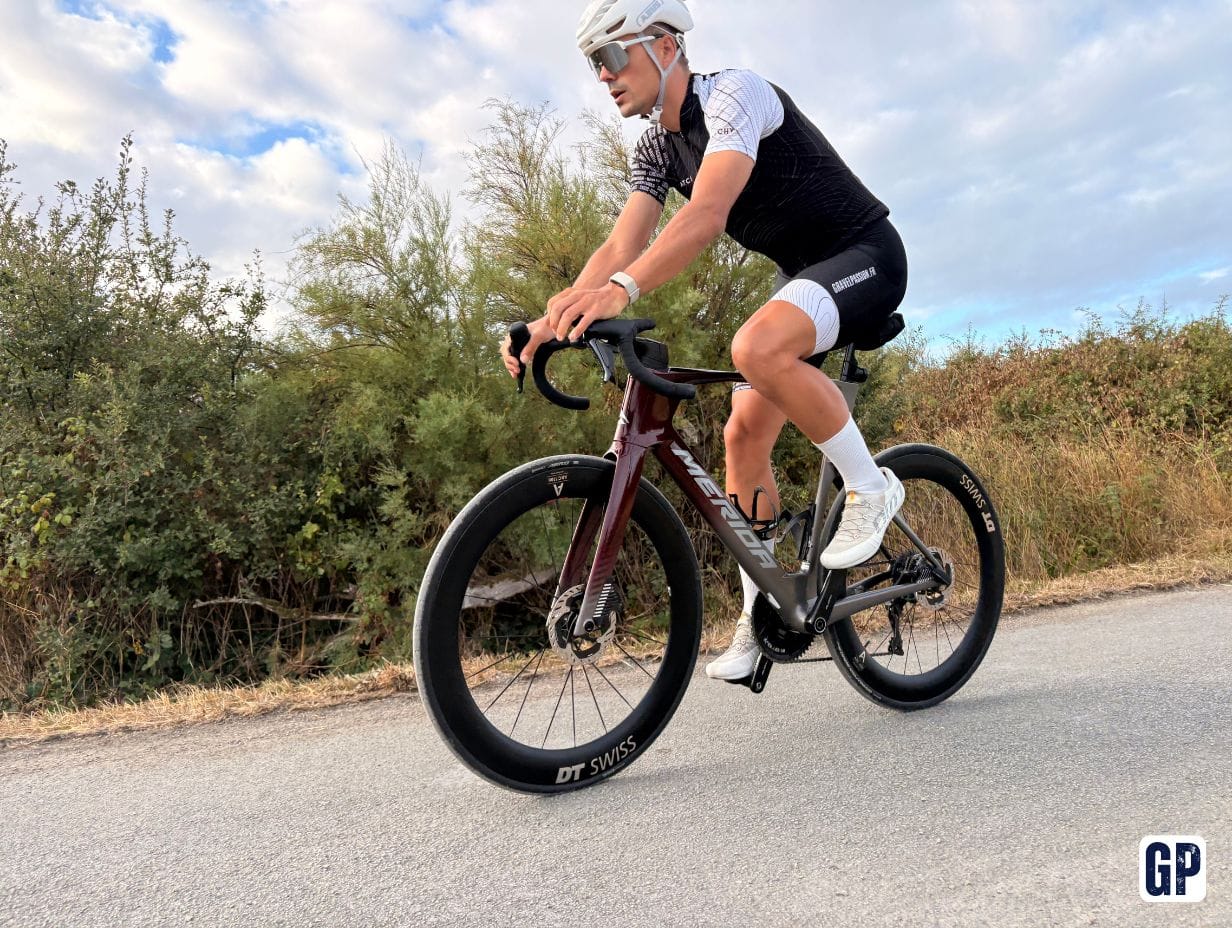
Not tired because I was badly positioned. Tired because the bike kicks back a lot, demands commitment, and doesn’t leave much leeway when the pace drops. It doesn’t smooth things out. It doesn’t carry you. It expects you to put what’s needed into the pedals.
Ride after ride, it improved. I dropped the saddle a bit more, tweaked a few measurements, and felt better set up. But the essence of the bike didn’t change: it’s a very stiff, very direct, very race-oriented machine.
On the flat, it does exactly what you expect of it
When the speed rises, the Reacto One comes into its own. In a group, on intense rides, taking hard pulls on the front and on fast sections, it’s in its element.
Acceleration is sharp. The bike holds speed with great ease. The combo of deep wheels, narrow cockpit and compact position gives a real sense of aero efficiency. It’s not just an impression of stiffness or snap: there’s that ability to stay rolling, not fall apart, and relish sustained efforts.
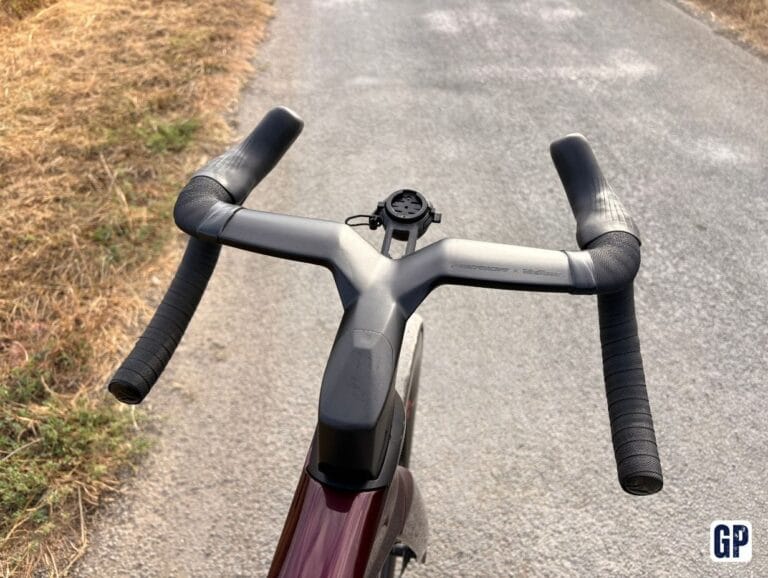
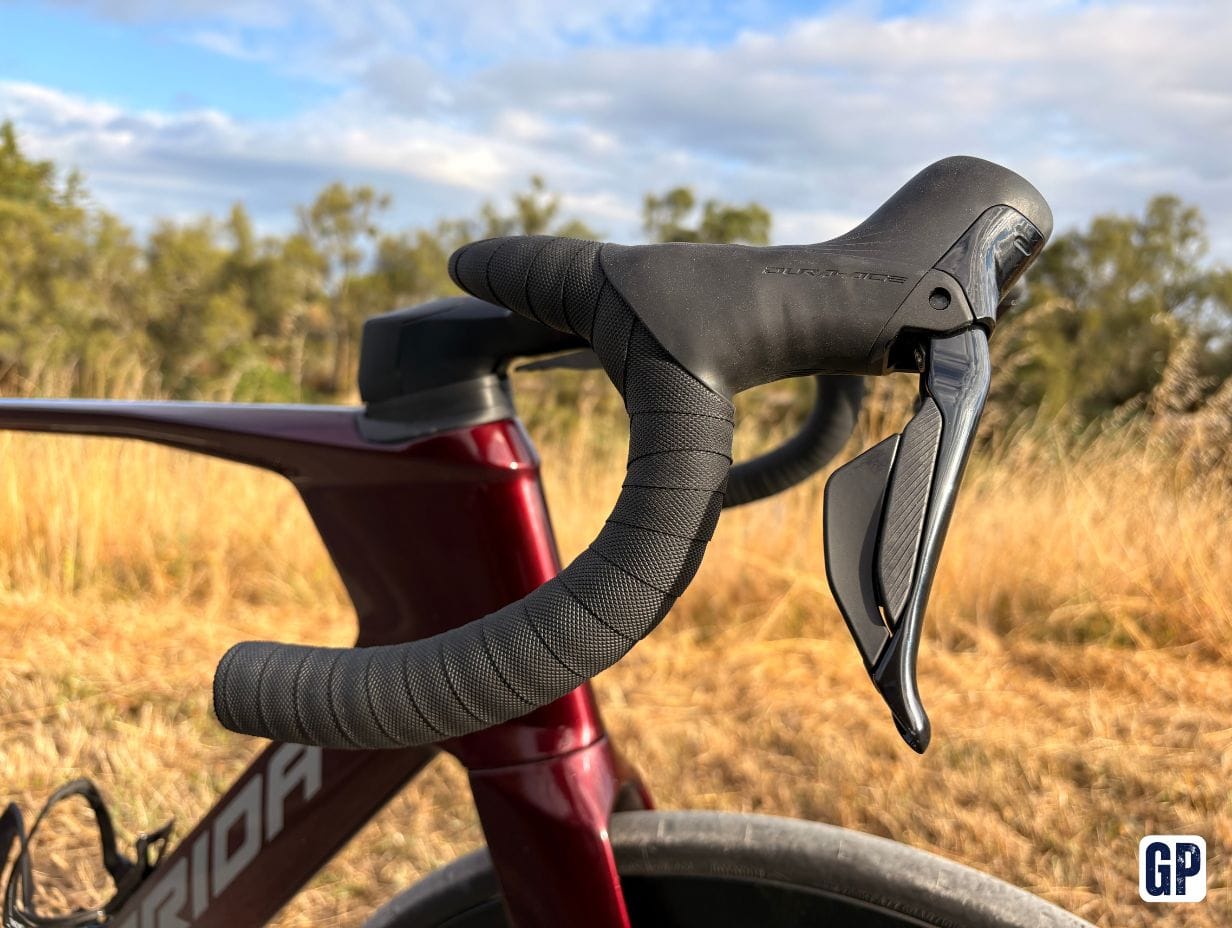
The cockpit plays a huge role. Despite its very limited width, I loved its ergonomics. Hands on the tops, forearms braced, or hands on the hoods in a compact position: everything falls to hand. Climbing, the top of the handlebar, almost blade-thin, even offers a fairly natural hold.
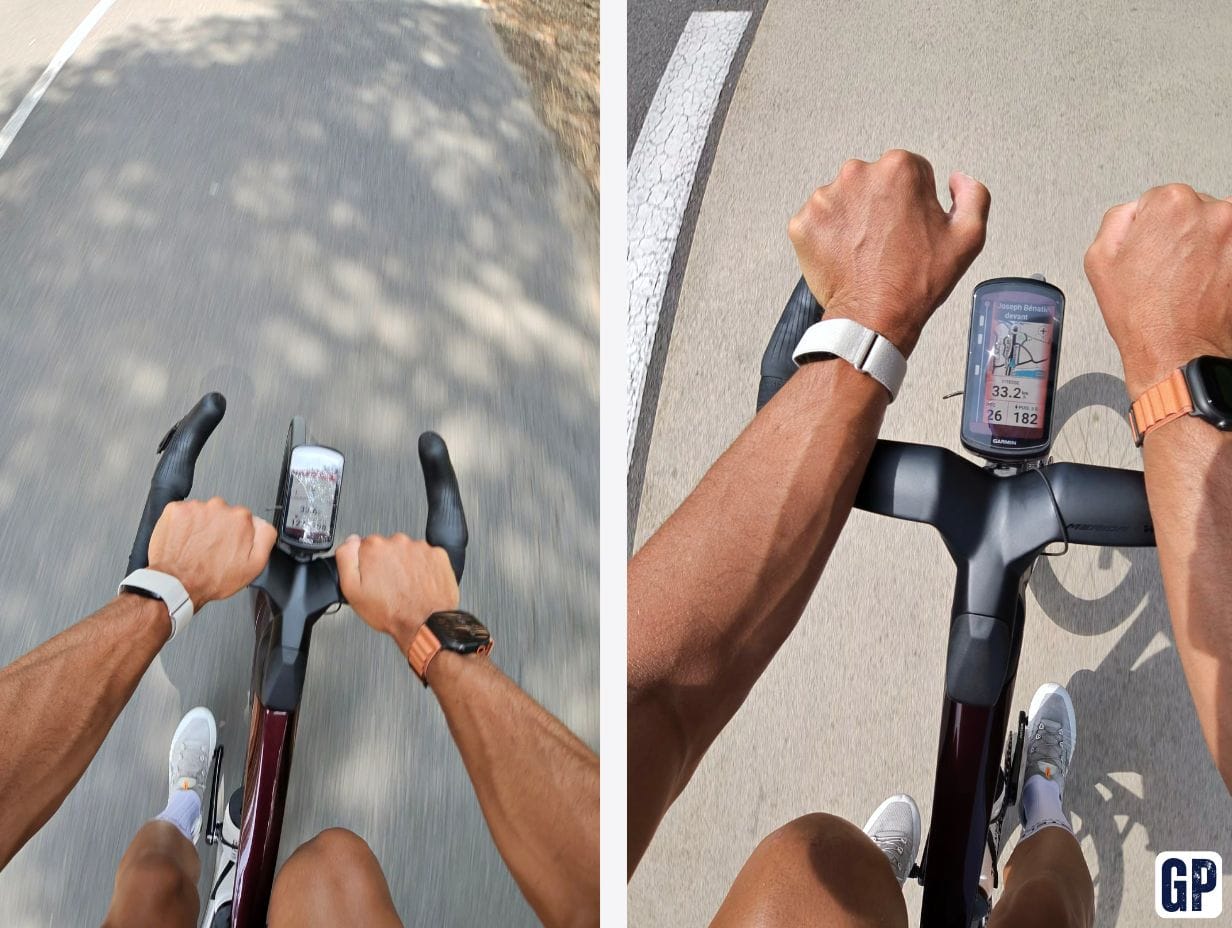
It’s probably one of the bike’s finest pieces. And not just visually. You can tell Merida and Vision worked on it as a complete performance element: position, frontal area, contact points, stiffness.
The flip side is this stiffness never fades into the background. Between the bottom bracket, the carbon cockpit, the DT Swiss ARC 1100 65 mm wheelset and the very taut front end, the bike barely moves laterally. For a sprinter, a powerful racer or a rider who likes very firm bikes, it’s exhilarating. For someone seeking a fast bike that feels lively at low intensity, it will be less relevant.
Easier to handle than its stiffness suggests
Perhaps the most surprising point comes from the handling. With its deep tubes, 65 mm wheels and very marked aero stance, I expected an efficient but somewhat locked-down bike.
That’s not the case.
The Reacto One steers very cleanly. It almost keeps a climber’s bike fluidity in changes of angle, while retaining the stability of an aero bike. On twisty roads, it doesn’t have that truck-like feel that some aero frames could still have a few generations ago.
The front is extremely precise. Very stiff, very communicative – almost too much if you like bikes that feel a bit supple in the hands. The rear felt slightly less rigid than the front, probably partly due to the Classified hub integrated into the DT Swiss rear wheel. To be clear: there’s no lack of stiffness. Simply, against such a locked-down front end, the difference stands out.
That’s also what sets it apart from the Ridley Noah Fast 3.0, another very radical aero bike I rode recently. The Merida seems at least as stiff, perhaps even more so at the front, yet it keeps a notably easy placement.
The annoying detail on such a high-end bike
There’s one thing I can’t ignore: the cockpit finishing cap.
On my rides, it tended to pop off under effort and end up in the middle of the road. I had to go and retrieve it a good ten times before deciding to remove it completely.
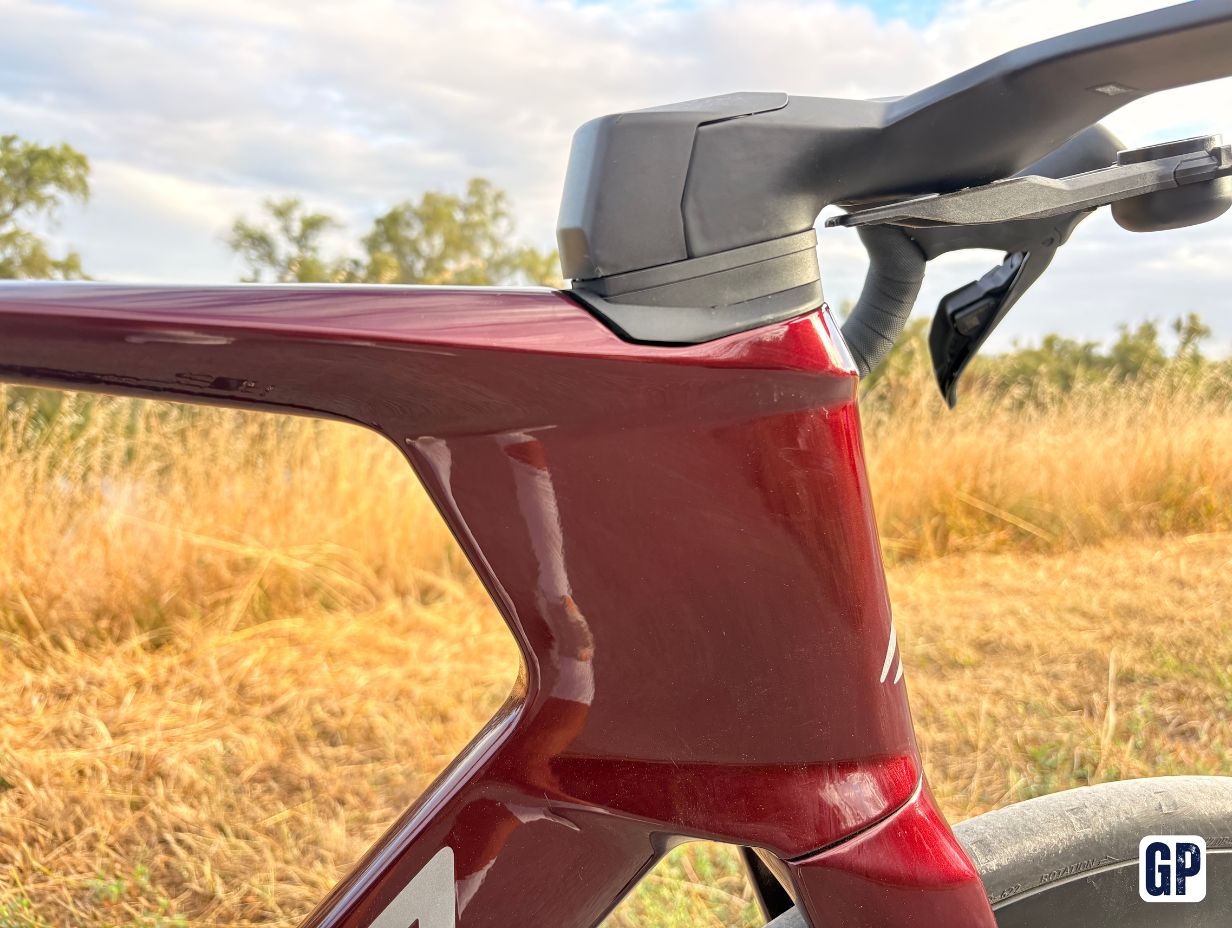
On a bike of this level, that’s hard to accept. Not because this little piece of plastic changes how the bike behaves, of course. But because it says something. When a bike costs several thousand euros, and we talk about deep integration, CFD, wind tunnels, long development and race testing, this kind of detail shouldn’t exist.
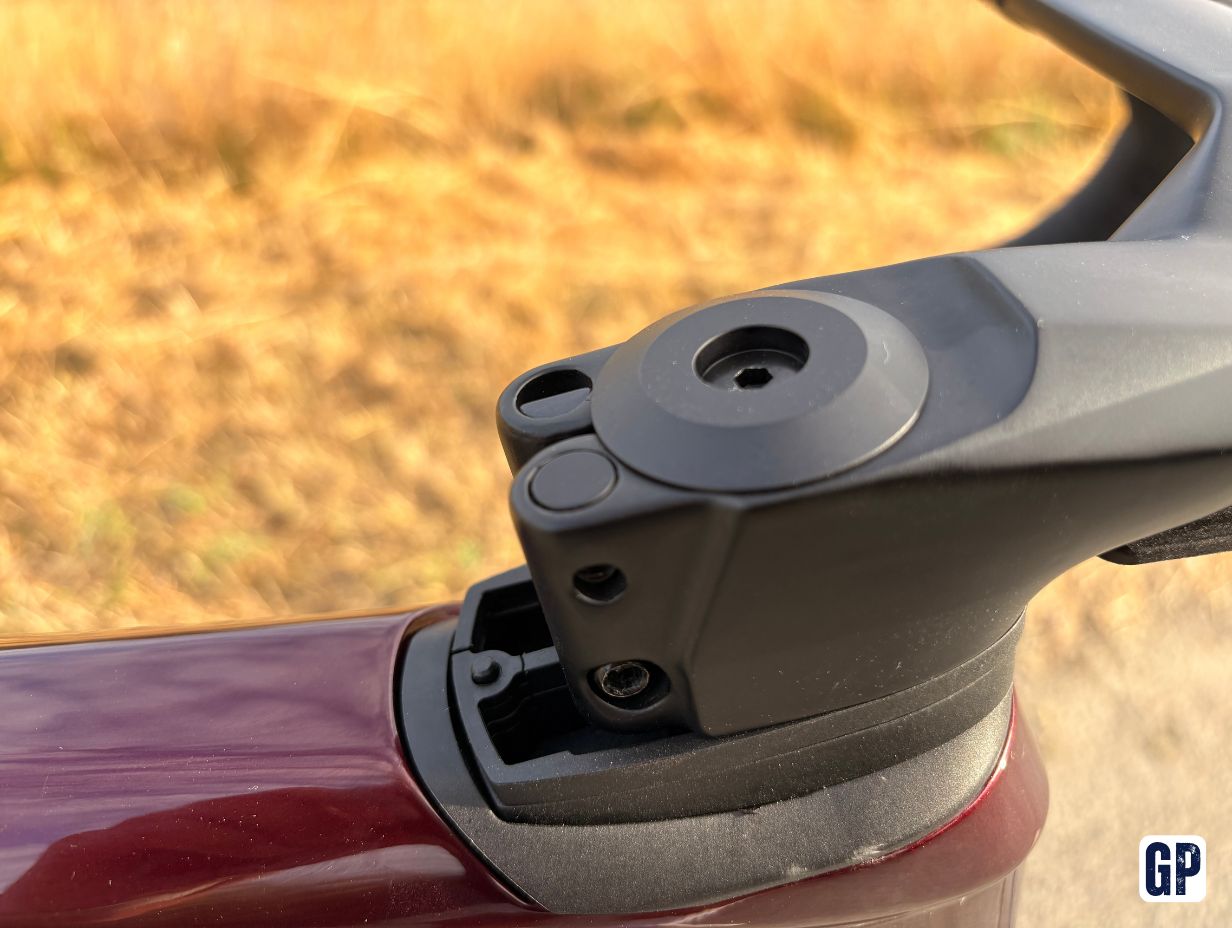
All the more since cheaper brands have sometimes found neater solutions, simply by screwing this type of piece in place. A plastic cap that deforms after a few manipulations and no longer holds properly isn’t normal.
It’s all the more frustrating because Merida generally finishes its bikes very well. The brand often has nothing to envy from the biggest players on the market. Sometimes quite the opposite. Here, this detail stands out for the wrong reasons.
A hard bike, but not really uncomfortable
Two things need separating: difficulty and comfort.
The Reacto One is difficult. It is stiff, demanding, physical. But I didn’t find it truly uncomfortable. It’s not its strong suit, of course, and you shouldn’t expect the plushness of an endurance bike. But for such a radical aero bike, the comfort level remains acceptable.
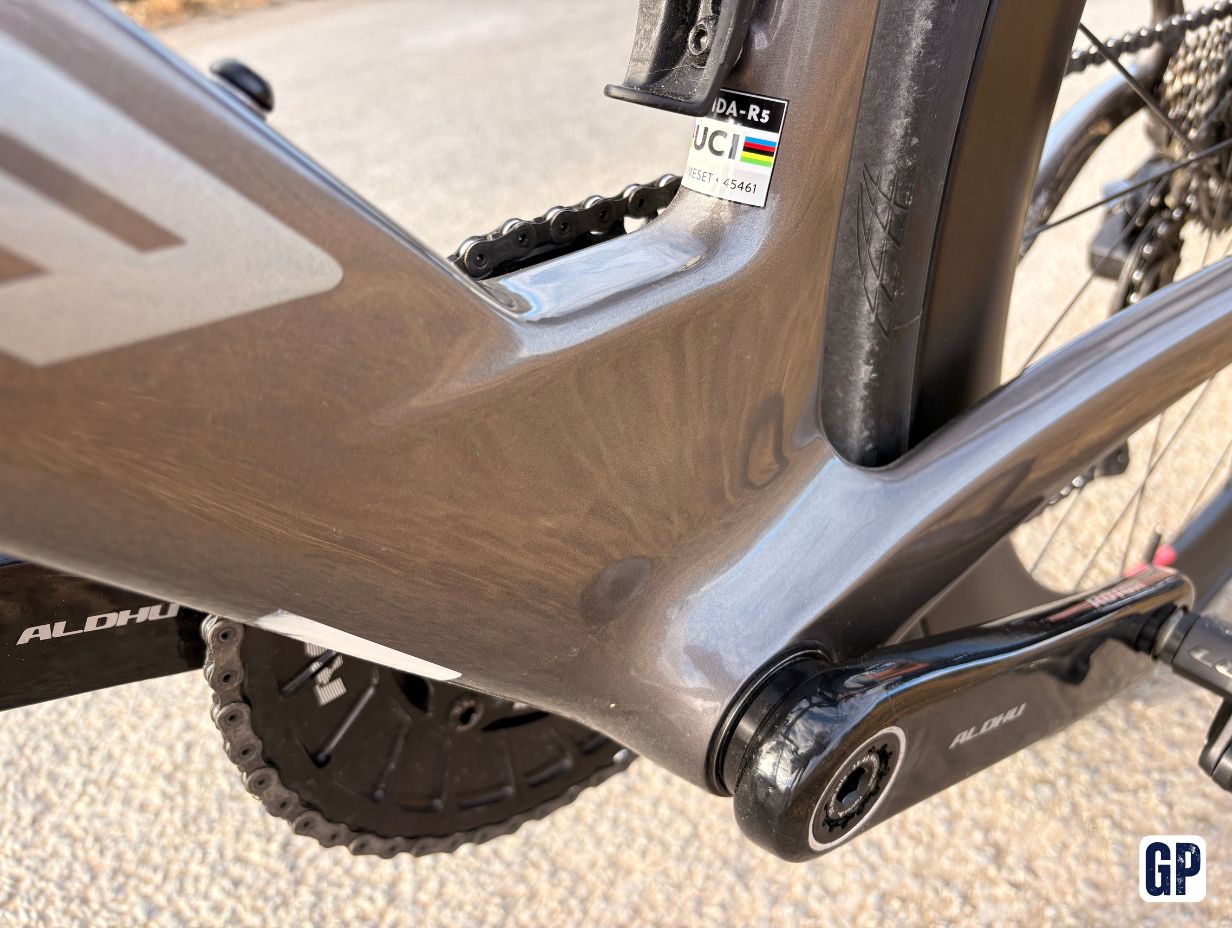
The S-Flex seatpost probably helps retain a minimum of rear-end compliance, even if you’ll notice the small elastomer piece is missing here. Tyre clearance up to 32 mm also leaves real headroom to tailor the tyre setup.
In my case, the bike was set up with a Continental Aero 111 in 29 mm up front and a Continental Grand Prix 5000 S TR in 30 mm at the rear, but with inner tubes. So I was running higher than my usual pressures, especially compared with the tubeless setups I most often use.
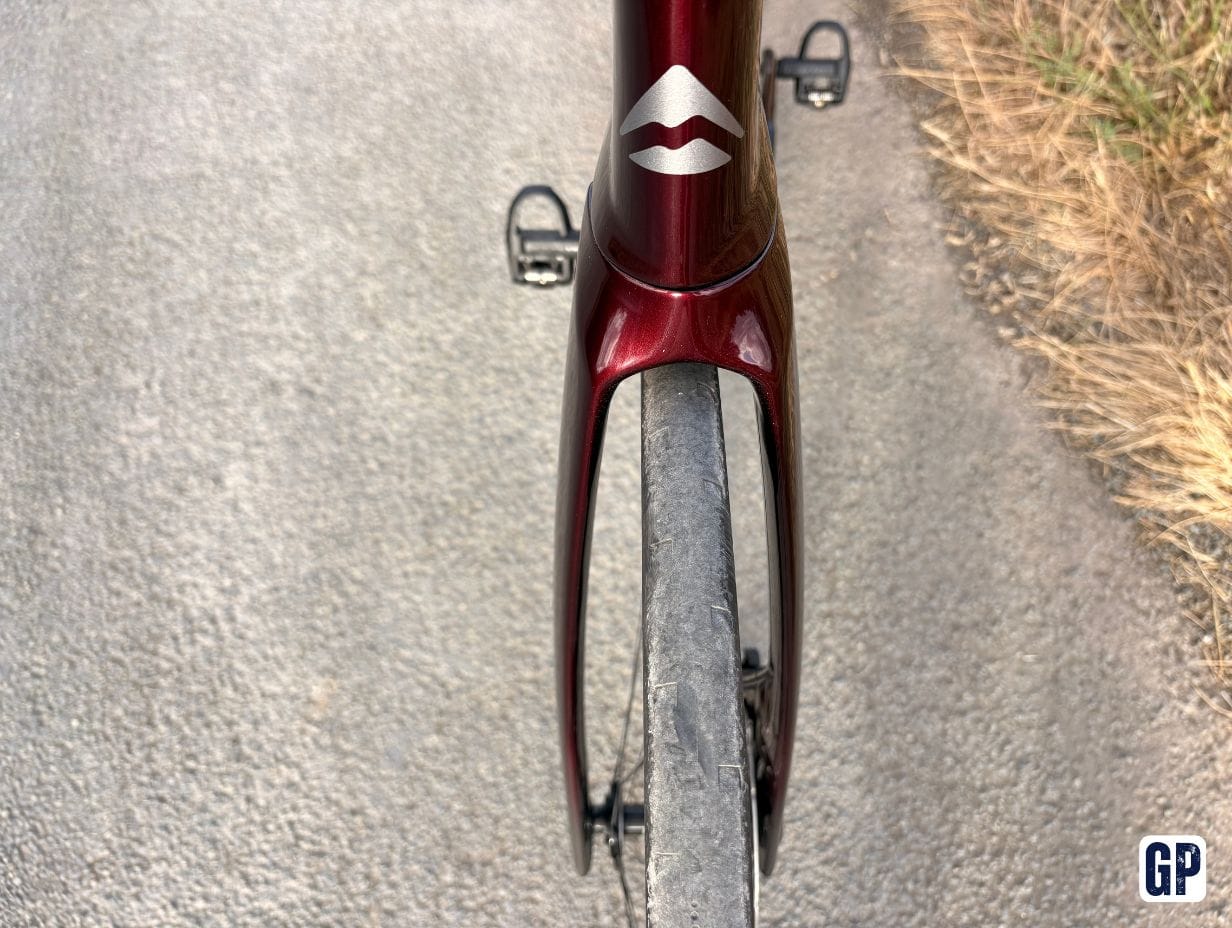
With a proper tubeless setup, the Reacto could gain a touch of forgiveness. It won’t change its character, but it can make long rides feel less harsh.
The right Reacto may not be this one for everyone
The Reacto One tested here is a showcase. CF5 V carbon, deep wheels, radical cockpit, Classified drivetrain, a very speed-focused build: everything pushes in the same direction.
For a professional athlete, or a very strong amateur looking for an unfiltered race bike, this is exactly the kind of machine that makes sense. It responds hard, holds speed very well, handles better than expected and feels like it was designed around one overriding goal: to go fast with as little drag as possible.
For many amateur riders, I’d look more at the lower versions in the range. Not because this Reacto One is a miss. On the contrary. But because a slightly less extreme build, with CF 3 carbon and less radical wheels, could make the bike more lively, more usable, and above all more sensible on price.
Merida remains well positioned on certain Reacto builds. That’s where the bike perhaps becomes most interesting: keep the aero base and geometry, but remove part of the brutality of the ultimate build.

My verdict on the Merida Reacto
This Reacto One is a true race bike. Not a fast bike dressed up as an accessible machine. Not an aero bike softened to please everyone.
It will appeal to powerful riders, racers, fast rouleurs, sprinters, those who like to feel a taut bike beneath them. It will be less obvious for someone who often rides solo at moderate intensity, who wants a comfortable bike to bank hours, or who wants a single truly versatile road bike.
I liked its speed, its cockpit, its precision and that uncompromising-machine feel. I liked less its overall harshness, its physical demands and that frankly annoying finishing detail on the cockpit.
The Reacto One doesn’t try to make performance comfortable. It makes it available – provided you have the legs to go and get it.