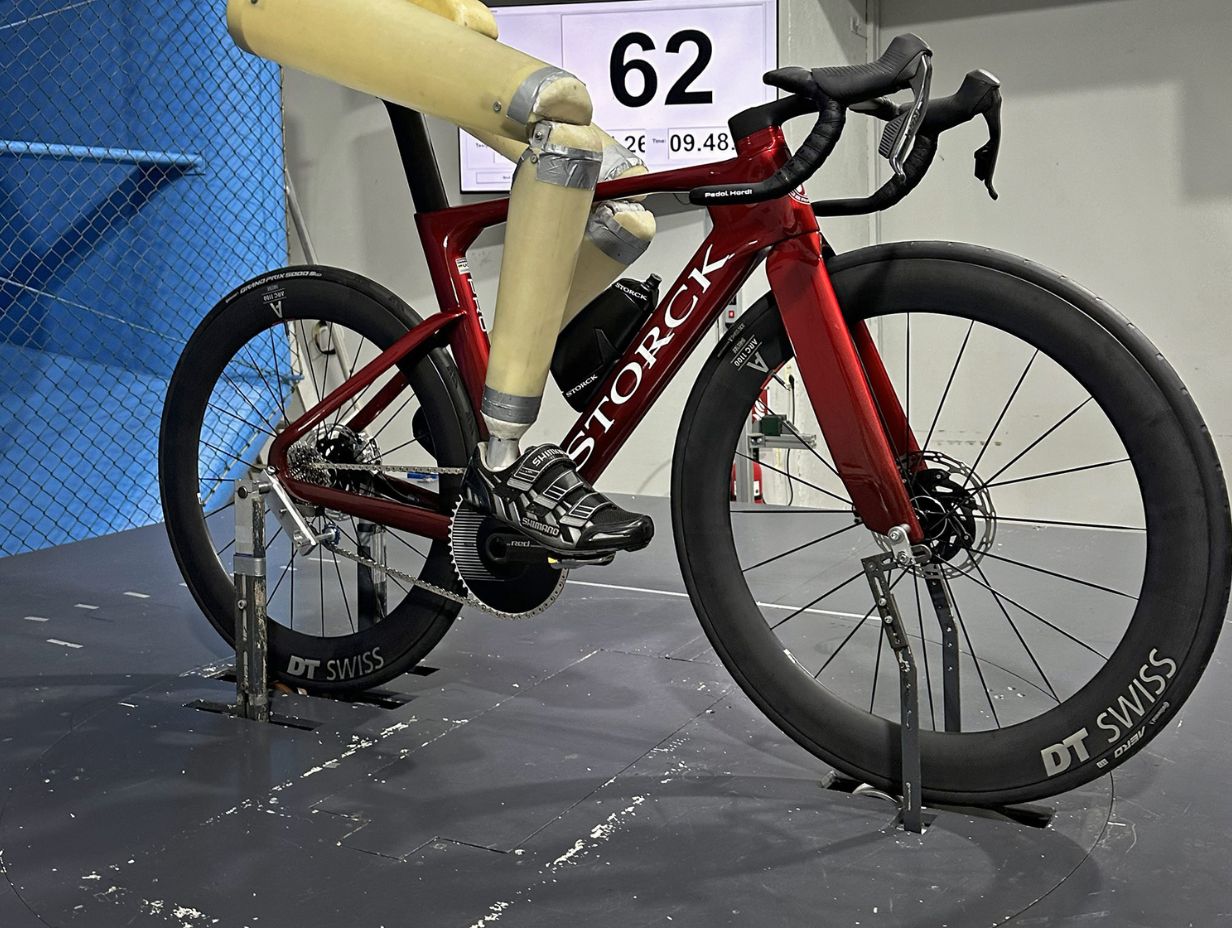
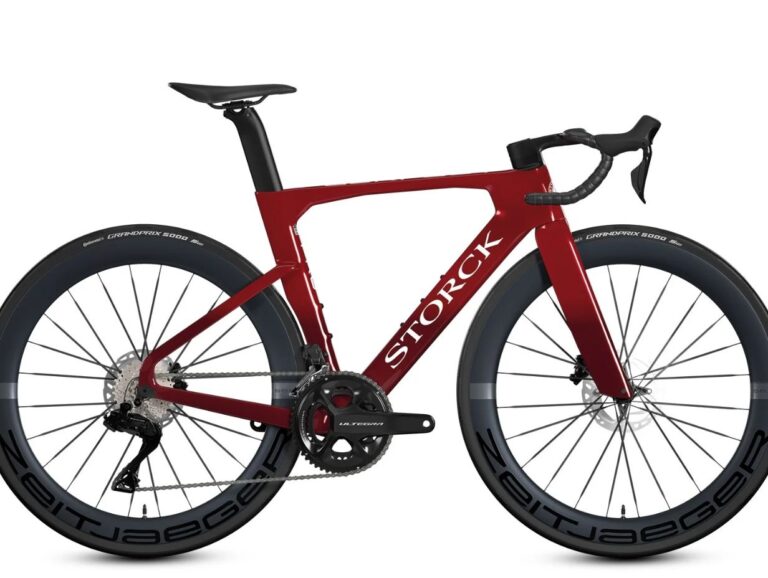
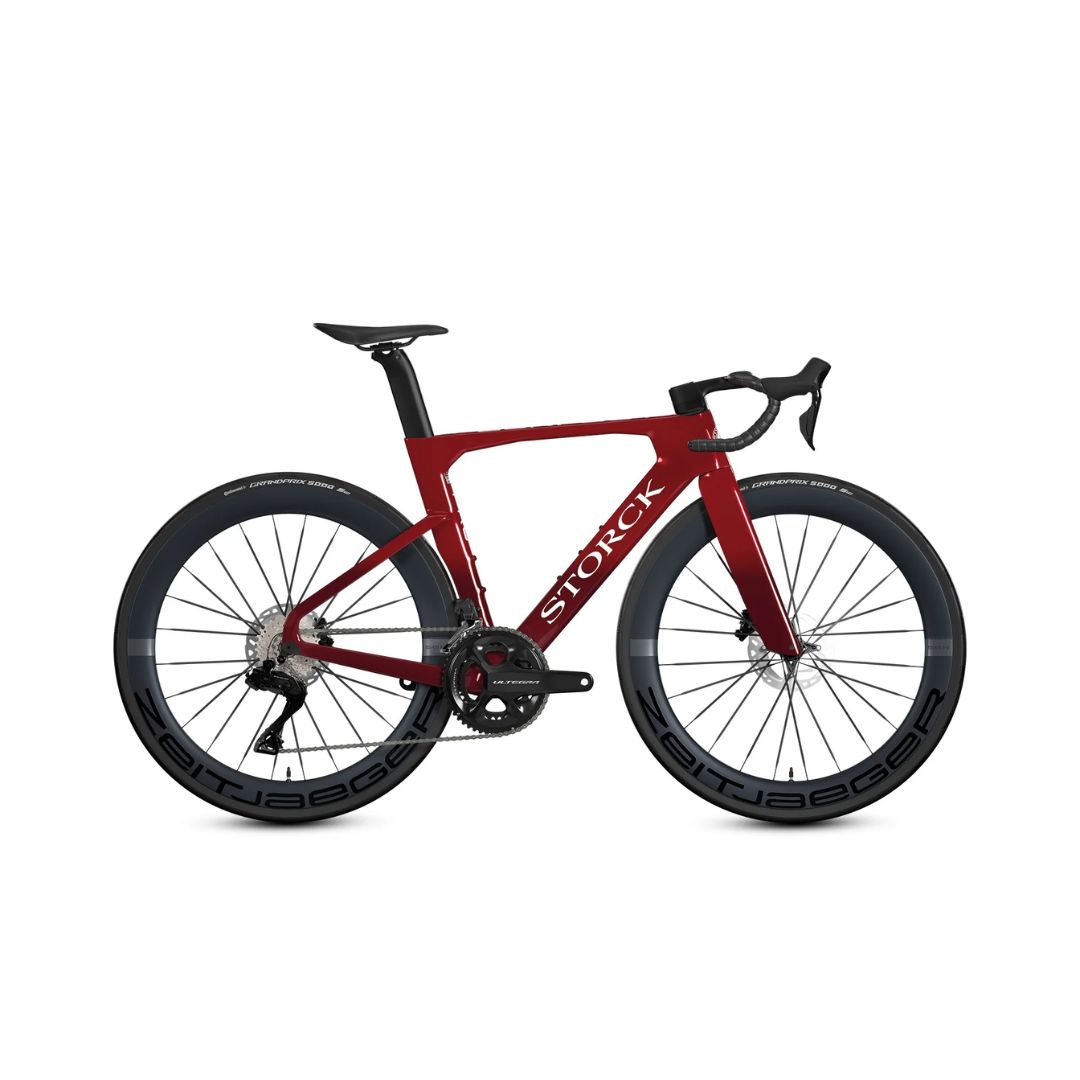
Storck is back in the aero road bike fight. With a new configuration of its Aerfast.5 Pro, the German brand claims 191.5 W in TOUR Magazine’s weighted drag protocol, using an optimised build and an in-house aero bottle.
The number is striking, but it needs context. With a standard round bottle, the bike clocks 195 W in the TOUR protocol. Fit the 500 ml Storck Aero Water Bottle and its dedicated cage, and drag drops to 191.5 W. Storck says this second setup remains UCI-compliant, but it does not meet TOUR’s standard test requirements.
An Aerfast.5 Pro pushed to the limit
The Storck Aerfast.5 does not come out of nowhere. The previous generation had already been measured at 198 W, placing it among the fastest road bikes to go through this wind tunnel protocol. The context is simple: in the aero segment, the symbolic 200 W barrier has become as much a media benchmark as a technical argument.
The new Aerfast.5 Pro configuration is therefore less about offering an everyday all-rounder and more about showing how far a modern aero road platform can go when it is built to shave every last watt of drag.
1x on the road, now at the centre of the aero game
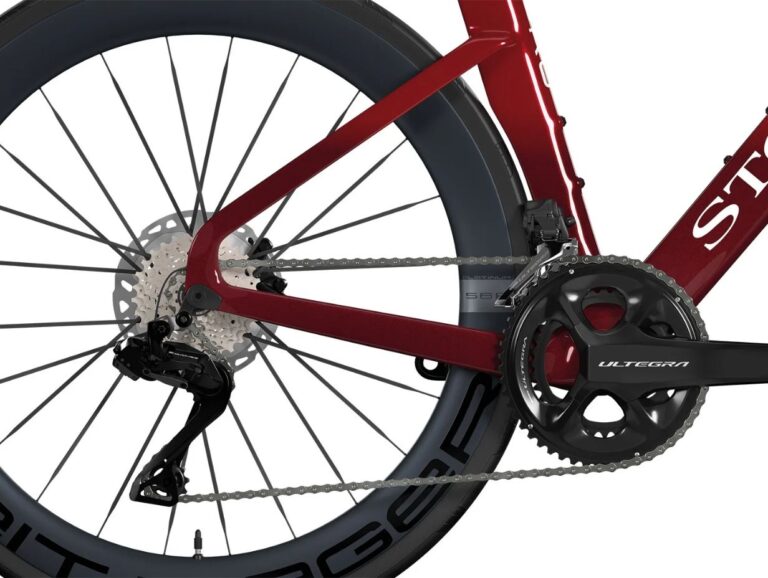
The key to the build is the drivetrain. Storck uses a SRAM Red AXS 1x groupset, with a solid TT-style chainring and a classic 12-speed Red cassette at the rear.
That choice is deliberate. By removing the front derailleur and simplifying the crank area, the bike achieves a cleaner aero profile.
1x on the road is no longer a curiosity. Between 1x builds, Classified-style hub systems and ongoing work on integration, the modern aero bike sometimes strays from the traditional road spec sheet. In this respect, the Aerfast.5 Pro embraces a radical approach.
Wheels, tyres, cockpit: every detail pulls in the same direction
Storck has not just changed the drivetrain. The tested build gets a DT Swiss ARC 1100 65 mm-deep wheelset with 180 aero hubs and ceramic bearings. The tyres follow the same logic: Continental Aero 111 in 25 mm up front and Continental GP 5000 in 26 mm at the rear.
While many road bikes now run 28 to 32 mm tyres, this pairing is deliberately narrower. The aim here is different: optimise aero performance within a specific protocol, with a wheel and tyre combination designed as a system.
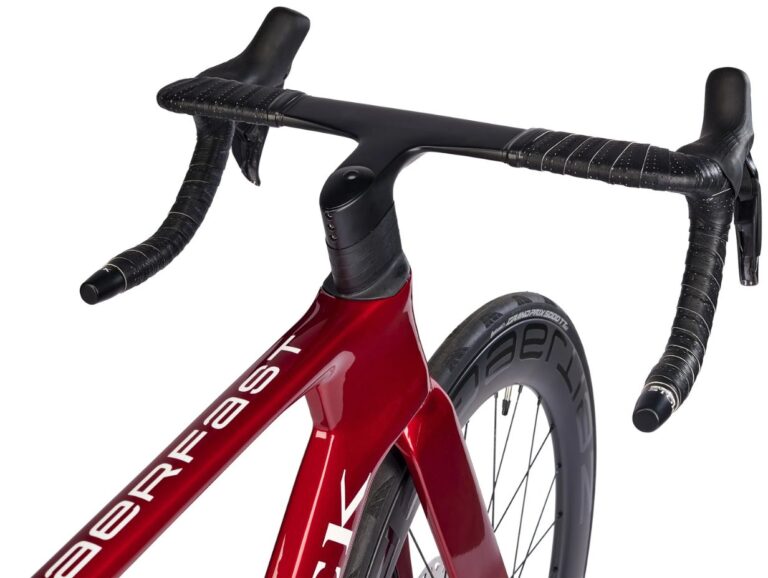
The cockpit goes even further in this direction. Storck uses its integrated Aerfast.5 cockpit, at 120 mm length and 360 mm width, with a flat top section and very little bar tape, applied only in the drops. Again, it is effective in concept, but not necessarily suited to every rider or every kind of riding.
191.5 W with an aero bottle, but not in the standard protocol
The 191.5 W figure is achieved with Storck’s aero bottle and bottle cage. It is the headline result of the announcement, but it needs the right context: this build does not follow TOUR’s usual test standard with a round bottle.
The cleanest like-for-like number therefore remains 195 W with a round bottle. That is already extremely low. Dropping to 191.5 W mainly shows the impact a bottle-and-cage system designed around the frame can have.
Our view
This announcement is not just a numbers battle. Above all, it shows where high-end aero road bikes are heading: towards increasingly optimised builds, sometimes far removed from the bike you would use all year round.
The result of 195 W with a round bottle is probably the figure to keep in mind to compare the Aerfast.5 Pro fairly with other bikes tested under the same protocol. The 191.5 W with an aero bottle gives an idea of the overall potential, but it belongs more to the technical demonstration.
One real question remains for riders: at what point does optimisation become more important than usability? For a racer on fast courses, this pursuit makes sense. For a road rider who wants a high-performing aero bike that can be used everywhere, the build matters almost as much as the frame.





Reviews
There are no reviews yet.