Trek cuts the cord with IsoSpeed
The Domane without IsoSpeed is something of a cultural break at Trek. Since 2012, that decoupler has been part of the bike’s identity: comfort, cobbles, long distances, Paris-Roubaix as the backdrop. The fifth generation changes tack.
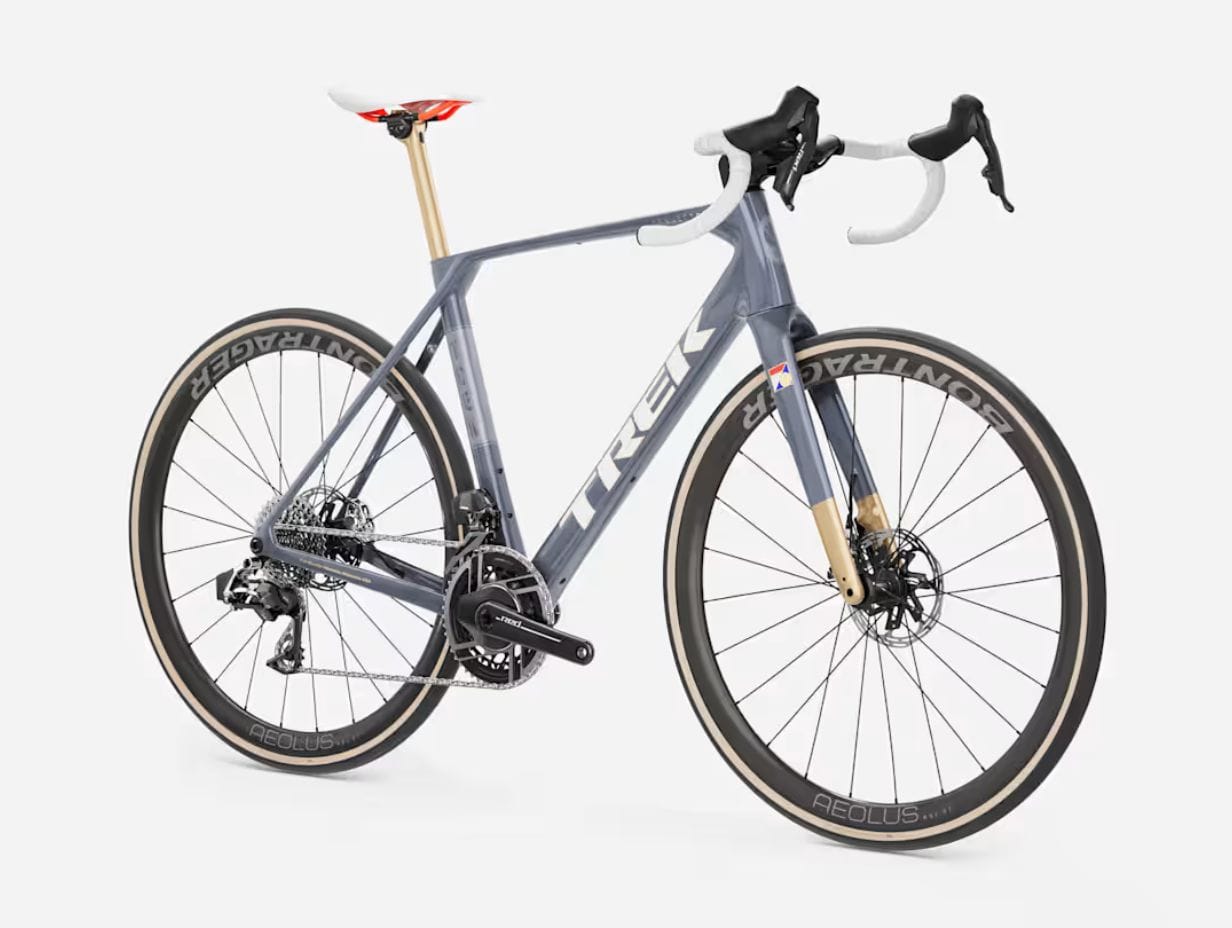
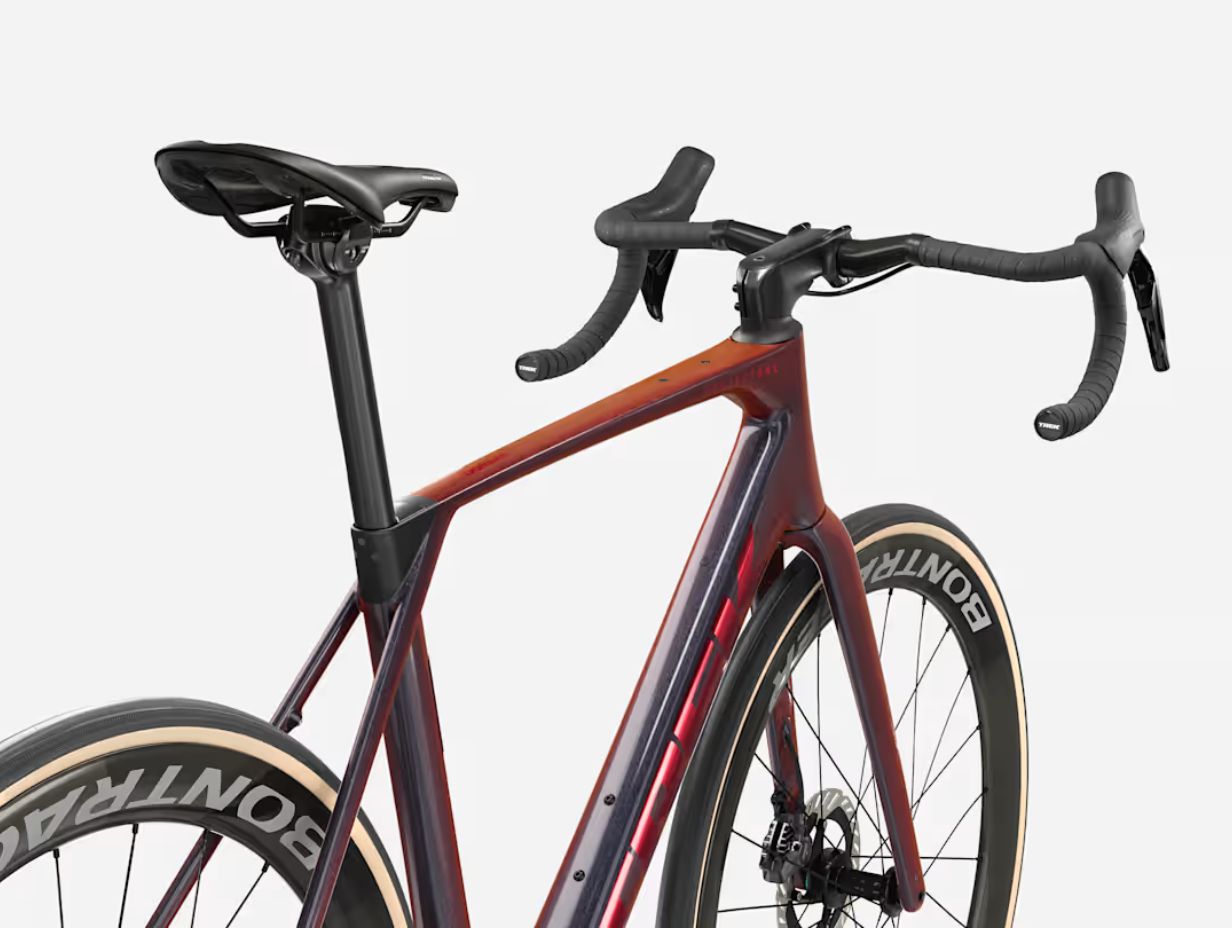
Trek removes IsoSpeed, also removes internal storage, and returns to a simpler architecture. Fewer parts, less weight, less complexity. The message is fairly clear: comfort no longer has to come from a visible mechanical solution.
🚀 In brief:
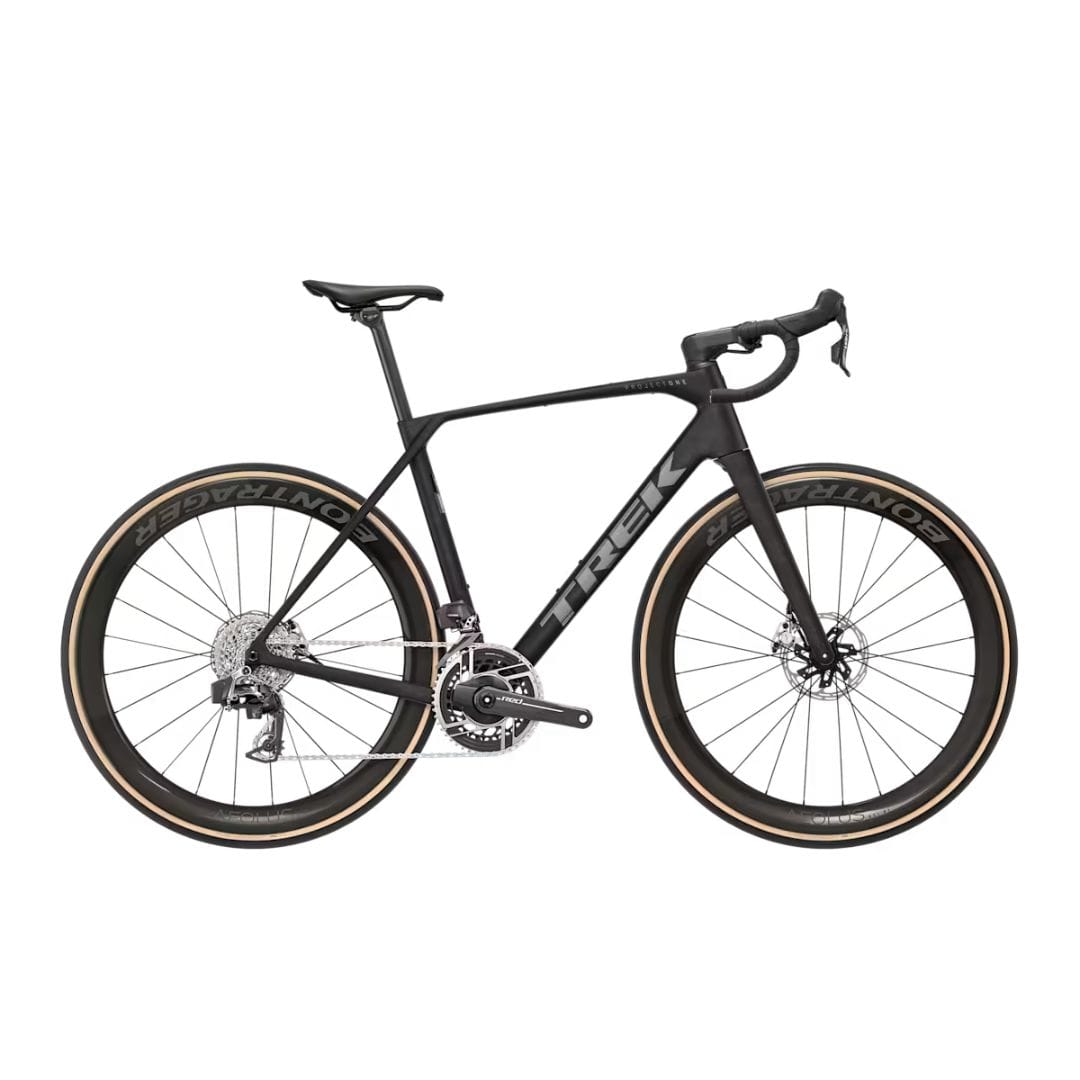
Trek introduces the Domane Gen 5, now without IsoSpeed or internal storage.
The SLR frame/fork sheds 305 g, with up to 950 g saved on the lightest builds.
Comfort relies on the seatpost, frame layup and wide tyres up to 40 mm.
This decision comes after a Gen 4 that never fully convinced. The bike was still very much endurance-focused, but it was heavy, sometimes not very lively, with IsoSpeed-related maintenance that could irritate. Trek needed to regain control.
The Domane Gen 5 does so by making a bold choice: the tyre becomes the central element of comfort.
305 g less on the SLR frame and fork
The easiest figure to remember: the SLR frame + fork set drops 305 g compared with the previous generation. In size ML, Trek claims around 835 g for the SLR frame and 367 g for the fork.
On the lightest builds, the gap can reach 950 g versus the previous generation. For an endurance bike long seen as comfortable but not very lively, that’s anything but trivial.
The range remains structured around two carbon levels: OCLV Series 900 for the Domane SLR, OCLV Series 500 for the Domane SL. The SL frame is quoted at around 1,055 g in size ML, with a fork at 430 g. The difference between the two platforms therefore approaches 285 g for the frame-fork set.
It isn’t just a weight-loss exercise. Trek also reports 6% more pedalling stiffness according to the Tour Magazine protocol, sitting between the old Domane Gen 4 and the Madone Gen 8. Put differently: the Domane remains an endurance bike, but it apologises less when the road tilts up or the pace picks up.
Comfort now comes via the seatpost, frame and tyres
Without IsoSpeed, Trek focuses on three elements: frame layup, a new round 27.2 mm seatpost, and above all wider tyres.
The seatpost has been designed to flex vertically over bumps while retaining lateral support when the rider pushes hard or is out of the saddle. It is not compatible with a dropper post, a point to note for anyone thinking of pushing the Domane too far towards rougher tracks.
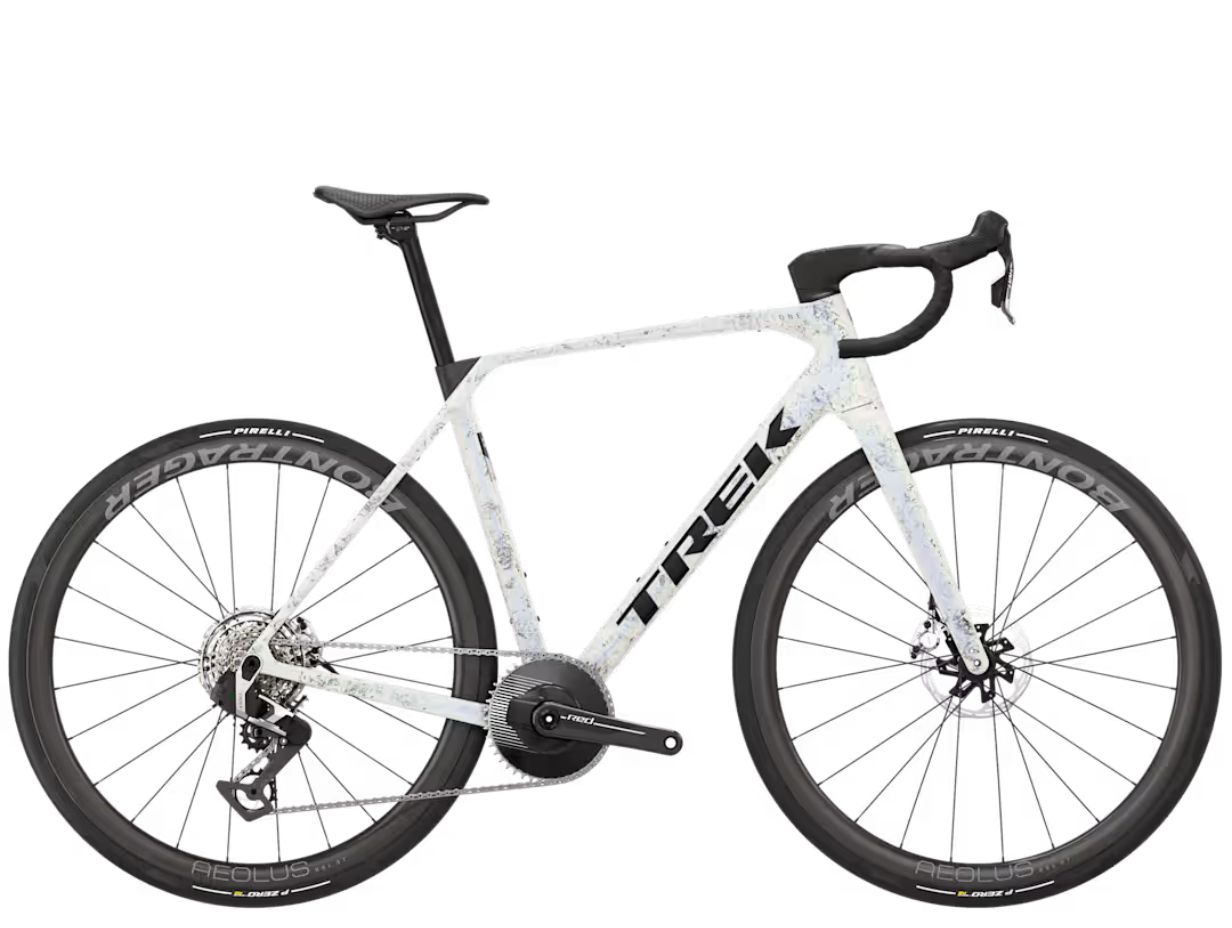
The real shift comes from the tyres. The Domane Gen 5 accepts up to 40 mm without mudguards, and 35 mm with mudguards. Stock fitment moves to 35 mm across the range, except on the Domane SLR 9 AXS 1x, delivered with Pirelli P Zero Race 28 mm to target the lowest weight, claimed at 6.63 kg.
Trek backs up its bet, but read the fine print
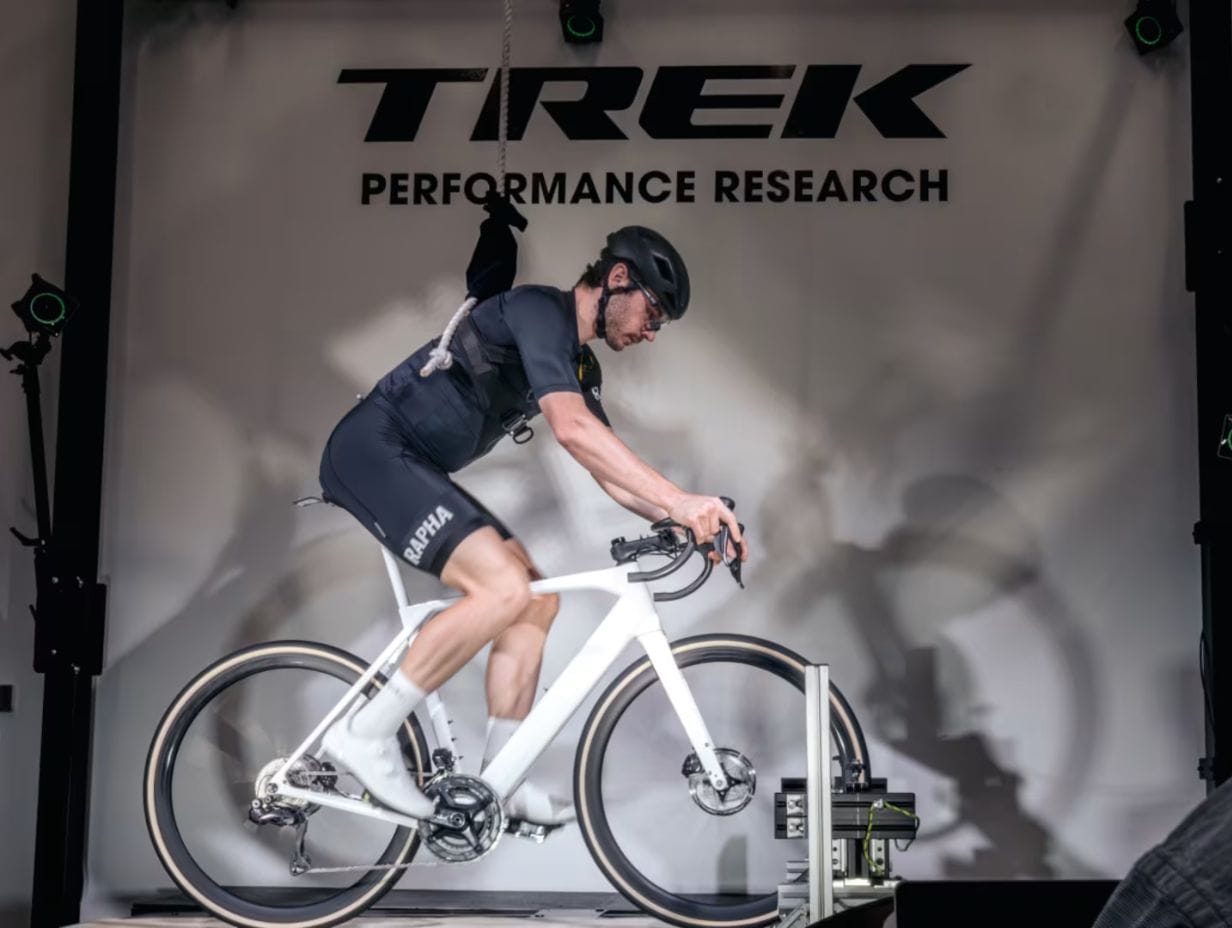
Trek doesn’t just claim that the bike remains comfortable. The brand highlights a fairly advanced lab protocol: force sensors and accelerometers at the saddle and handlebar, a slatted Woodway treadmill, test speeds from 11 to 32 km/h, pressures calculated via the Wolf Tooth tool, and 3D motion capture with twelve infrared cameras.
The reported result: the difference in vibrational power would remain under 5% compared with the IsoSpeed-equipped Domane Gen 4, provided you ride with wide tyres and the recommended pressure.
The nuance matters. The most favourable comparison pits a Domane Gen 5 on 35 mm against a Gen 4 IsoSpeed on 32 mm. With narrower tyres and higher pressure, the old system logically regains some interest. Trek does not really hide it: the new Domane’s comfort is optimised around the wide tyre.
One figure sums up this shift in modern road bikes: according to Trek, a Domane Gen 5 without IsoSpeed on 35 mm transmits less vibration than an older Domane with IsoSpeed on 25 mm.
Trek even reports a favourable balance for the 35 mm tyre: 0.9 W of aerodynamic penalty at 32 km/h but 1.5 W of rolling resistance gain, for a net of about 0.6 W in favour of the wider tyre in its measurements.
An endurance position, but a revised cockpit
The Domane Gen 5 retains the Road Endurance geometry. The position remains more upright than a pure race bike, with six sizes available from XS to XL.
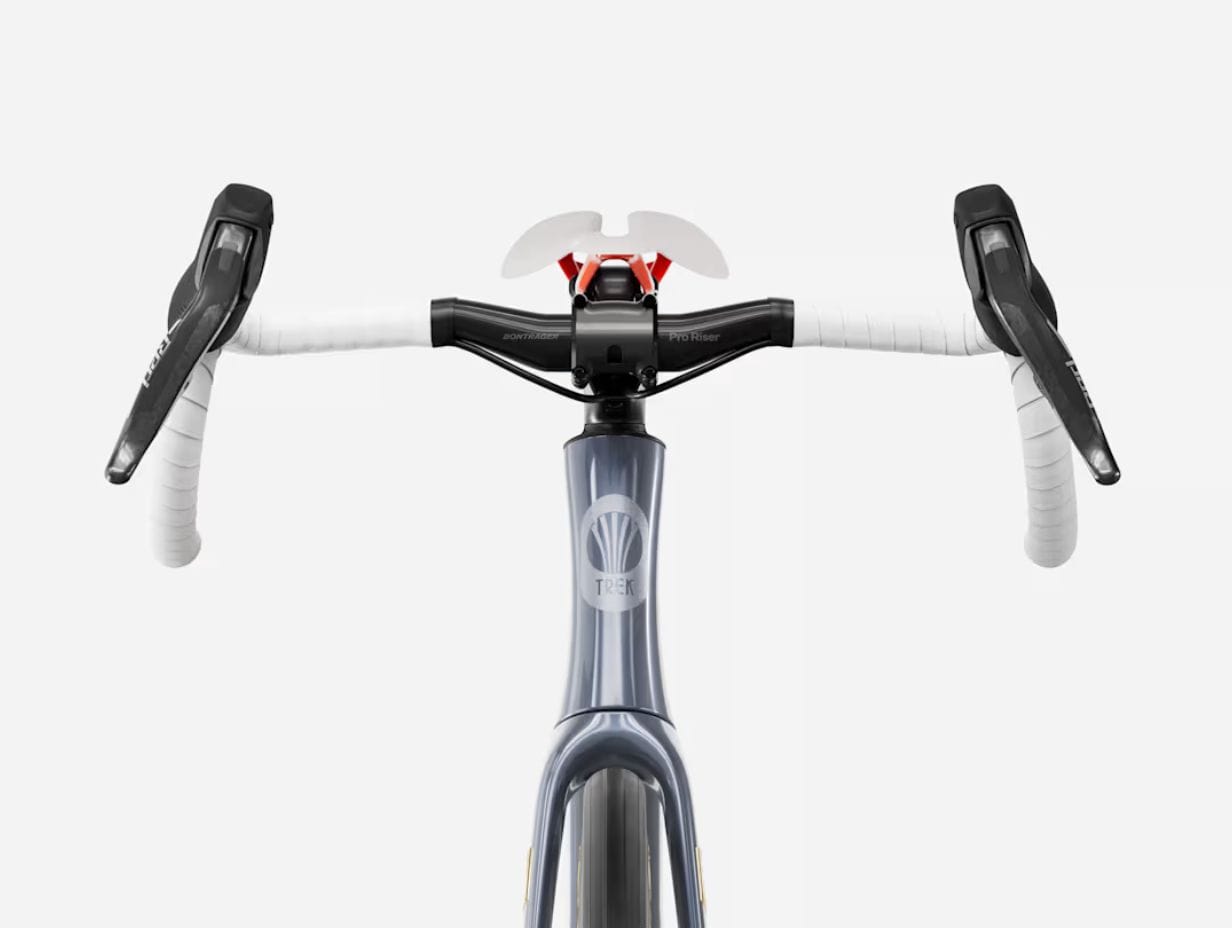
Trek adds a new Bontrager handlebar with 20 mm of rise at the hoods. The idea is simple: offer a more upright position without stacking spacers under the stem. The Pro version also gets IsoZone inserts, and the bar adopts a shape designed to improve hand support on the tops.
Another interesting detail: crank lengths are shortened by size. 160 mm in XS/S, 165 mm in M/ML, 170 mm in L/XL.
Less internal storage, but still useful mounts
Dropping internal storage is more surprising than dropping IsoSpeed. Trek pushed this idea hard in recent years, notably on its gravel and endurance bikes.
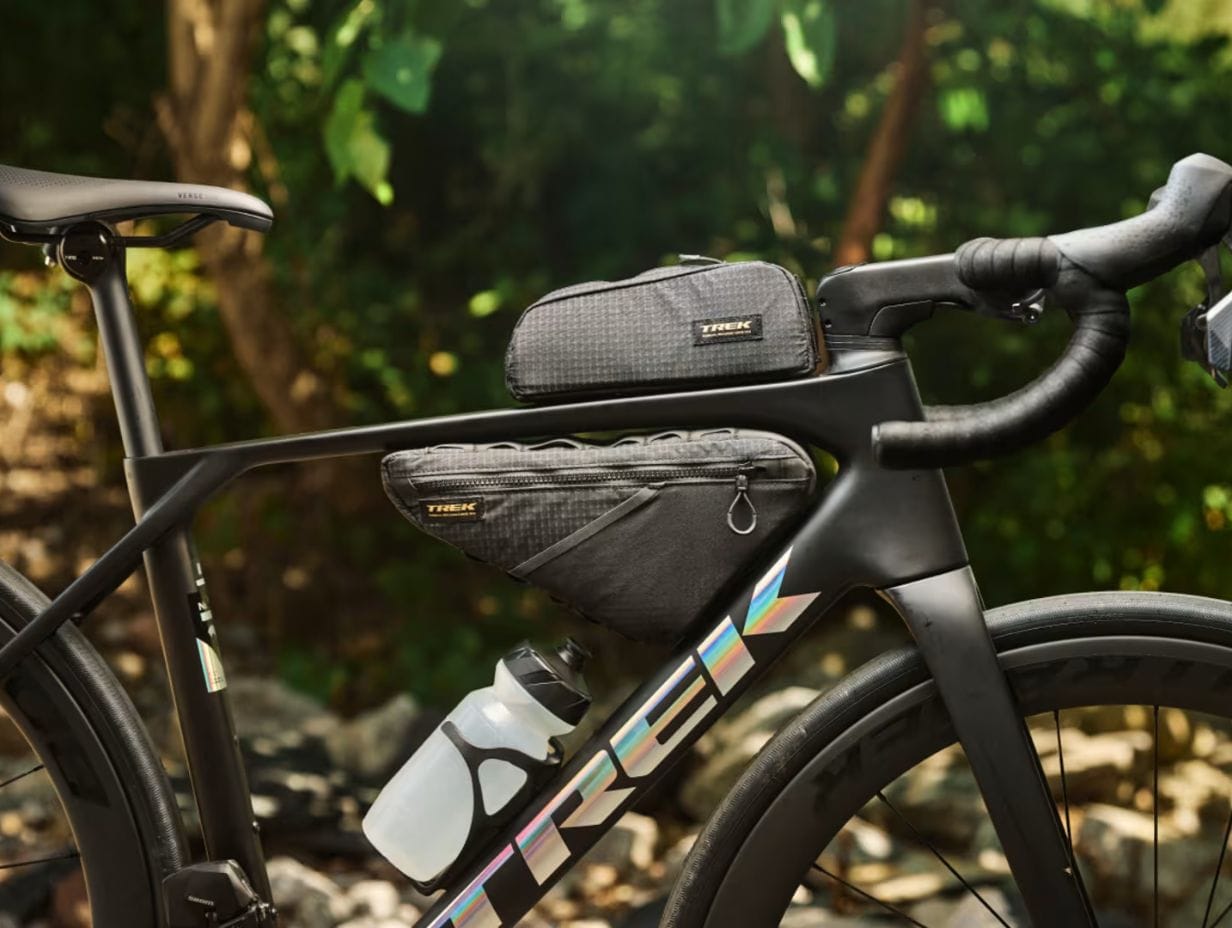
The Domane Gen 5 still keeps a true long-distance logic: mounts for a top tube bag, a triangular frame bag of 1 to 1.6 L depending on size, and front/rear mudguards. It is less integrated, less spectacular, but probably simpler and lighter.
On the standards front, Trek sticks with the familiar: a threaded T47 85.5 mm bottom bracket, UDH universal derailleur hanger, RCS headset, Switch Pro thru-axles. The SLR range is limited to electronic drivetrains, while mechanical builds remain possible on the SL platform.
A range from €2,500 to €12,999
The European range starts with the Domane SL 5 with Shimano 105 2x at €2,500. It then climbs to the SL 6 AXS at €4,000, the SL 7 AXS at €5,000, then the SLR versions from €6,999.
The standard top end tops out at €10,499 for the Domane SLR 9 AXS and SLR 9 AXS 1x. Trek also adds a limited Project One ICON No. 76 at €12,999, limited to 124 units worldwide.
The Domane SLR Gen 5 frameset is listed at €4,899, which is less than the Gen 4 frameset at €5,299.
Our take on this Domane Gen 5
Trek takes a symbolic risk by removing IsoSpeed from the Domane. But this choice is not a mere tidy-up. It matches a broader shift in road cycling: wider tyres, lower pressures, simpler frames, less hidden mechanics.
Above all, the Domane Gen 5 makes more immediate sense. Lighter, simpler, better aligned with what many riders expect today from an endurance bike: ride long, go fast when needed, without limiting yourself to perfect tarmac.
The main caveat concerns setup. The stated comfort depends strongly on wide tyres and the right pressure. Those who want to ride 28 mm at high pressures may find less of IsoSpeed’s historic magic.
But for modern endurance use, with 32 to 35 mm tyres, or even 40 mm on really broken roads or smooth gravel, this version looks much more convincing than the previous generation. The Domane loses its most famous hallmark. It perhaps gains what it lacked: simplicity and zip.




Reviews
There are no reviews yet.