
Before talking about stands, new releases and trends, we have to talk about Girona. Because Sea Otter Europe isn’t experienced like a show dropped at random into a host city. Here, cycling is already everywhere.
As soon as you arrive, it’s obvious: riders in the streets, bikes outside cafés, groups rolling out, specialist shops that feel like places to live. Girona doesn’t just have a reputation as a cycling city. It lives it every day.
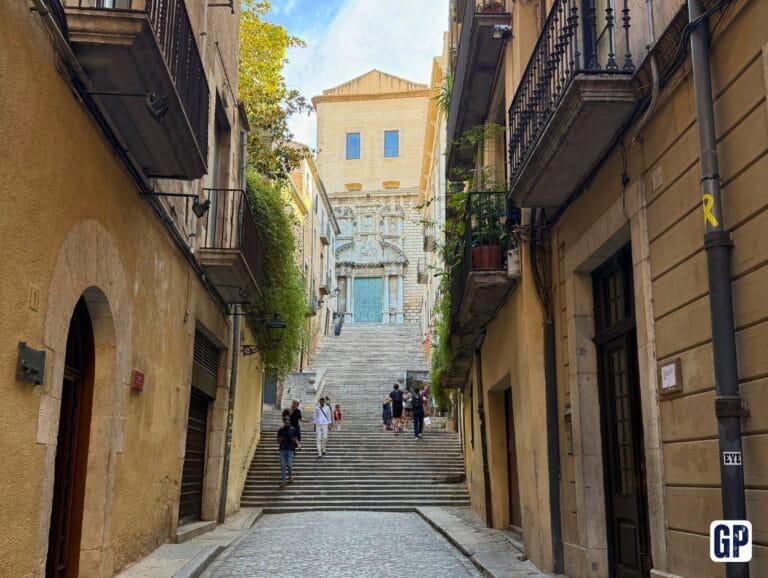
The city is human scale, with a compact old centre, cobbled lanes and a fairly intimate atmosphere. This isn’t a big metropolis where the event disappears into the noise. During Sea Otter Europe, you feel instead that everything converges around cycling.
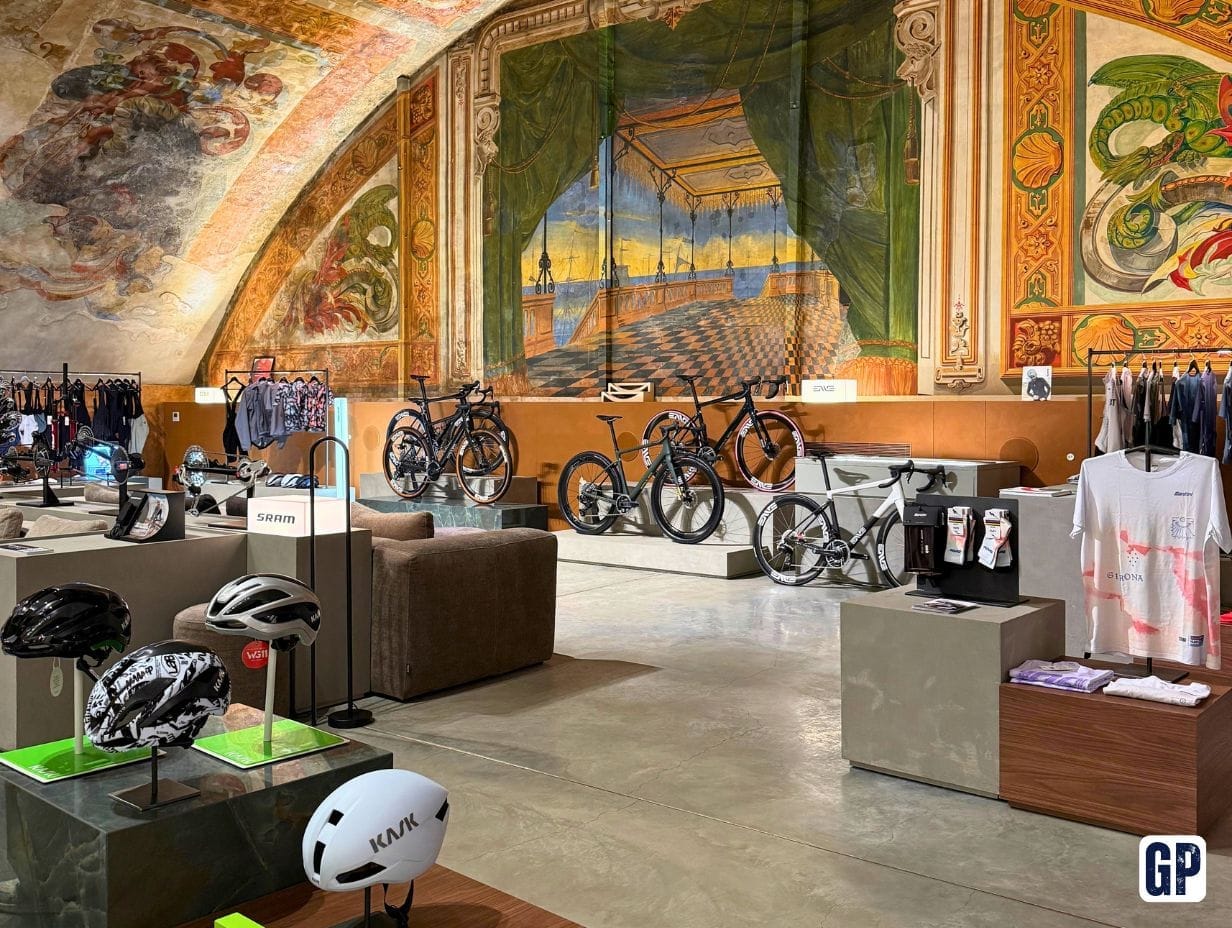
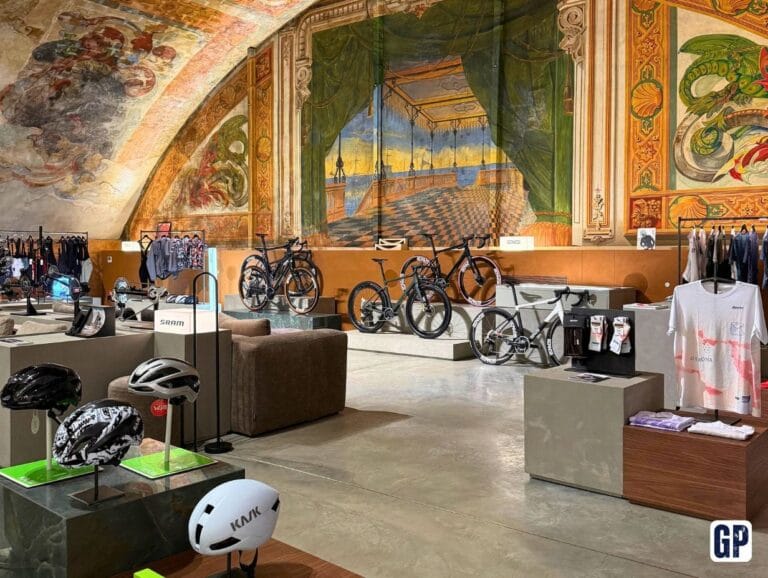
Places like Velodrom set the tone nicely: a big shop, a café, several floors of bikes, a strong brand presence, and that almost disconcerting habit of being able to walk in with your bike, lean it next to you, have a coffee, and roll out again. Cycling culture isn’t decorative. It’s integrated.
A truly accessible cycling destination
Another key point, especially for a French audience: Girona is much more accessible than you might think. From Paris or Lyon, the TGV gets you there without flying, and the journey is comfortable for a long weekend.
Once there, the city’s scale also changes the experience. The show is less than 30 minutes on foot from the centre. No need for complicated logistics, awkward shuttles or long urban crossings. You can stay in town, walk to the expo, come back for a drink, then head out to ride.
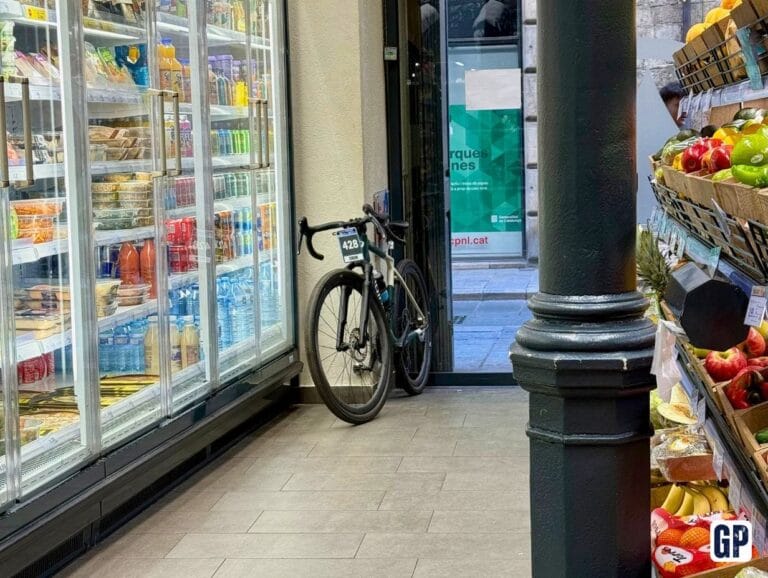
Out on the road, the sense of safety is striking too. Drivers are very respectful here. It isn’t a risk-free paradise, of course, but the vibe is very different from some parts of France where riding demands constant vigilance.
And in terms of terrain, Girona ticks a lot of boxes. Road, fast-rolling gravel, rougher tracks, short climbs, rocky sections – everything is close. Gravel can get demanding without tipping into the very technical. And the coast isn’t far, which easily opens the door to great rides to the sea.
Sea Otter Europe: a show, but not just a show
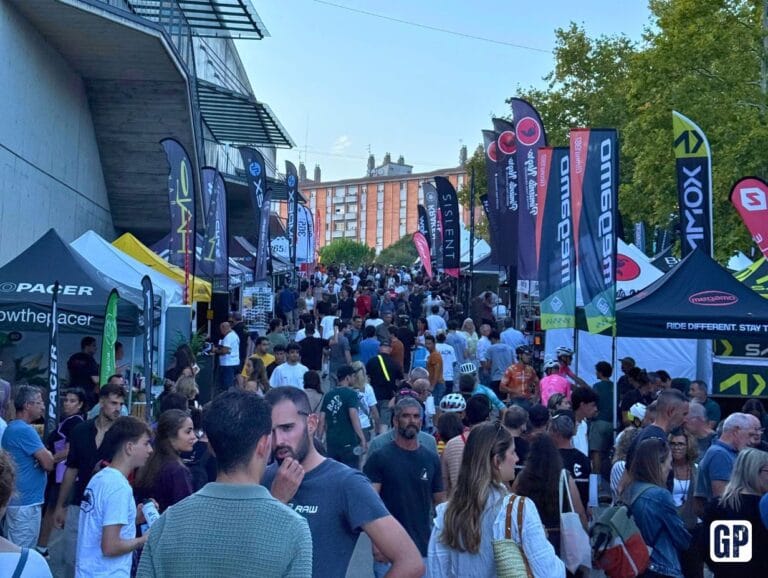
Sea Otter Europe 2026 confirmed its status as a major event on the European cycling calendar. This tenth edition brought together around 500 brands and more than 80,000 visitors over three days. That’s considerable, especially for a show that still feels more compact than some major international fixtures.
The format is interesting because it mixes several audiences. Professionals come to see trends, talk with brands and take the pulse of the market. The public can move around, touch products, spot new releases, watch activities and enjoy the racing.
This blend makes for a lively show. Not just a succession of stands. Not just a B2B showcase. Rather a big cycling weekend where the industry, riders and racers gather in the same place.
There’s also a sporting density that changes the mood. During Sea Otter Europe, you don’t come only to look at bikes under spotlights. There are races, sportives, rides, more accessible formats and others that are much more competitive.
A UCI race open to amateurs
We also lined up for the 226ERS UCI Gravel World Series Sea Otter Europe Girona, a qualifier for the Gravel World Championships, but also open to amateurs, who set off after the elites. This year, 109 km and 980 m of elevation gain were on the menu, with Marianne Vos on the start line in the women’s race.
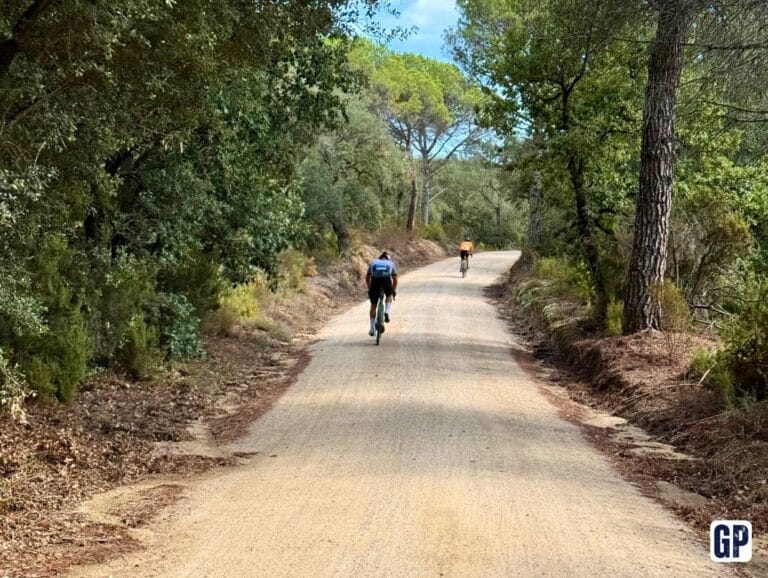
The course started tough, with a long climb in the opening kilometres, before becoming much more rolling. Big, wide tracks in good condition, very few technical sections and no real singletrack: this is clearly not highly technical, committed gravel, but truly fast, enjoyable gravel.
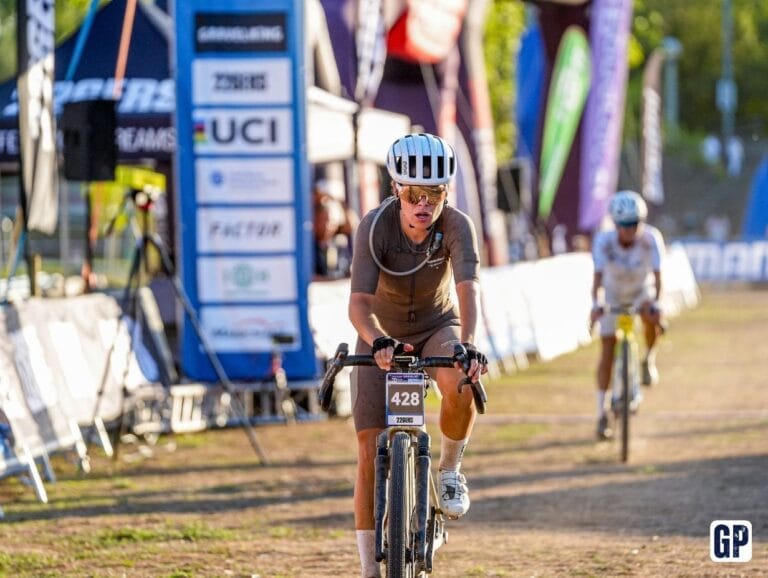
The organisation is particularly well organised, with several feed zones, volunteers at every junction and course marking that makes a wrong turn almost impossible.
The start was in Juià, about 45 minutes by bike from the centre of Girona. In return, the finish was right in the heart of the Sea Otter Europe show, with showers and a free bike-wash area. A technically accessible, well-organised race that ultimately offers a very good way to experience the show differently.
Let’s talk show: 32 inch wheels are no longer a curiosity
The most visible trend at the show was probably this: 32 inch is making its presence felt. Not just as an isolated technical demo, but as a real direction explored by several brands.
Megamo notably presented a big-wheeled bike, Berria was in the same vein, as were Avona and Storm. The overall impression was that the topic is gradually moving out of the experimental realm. 32 inch is still far from an established standard, but it’s now present enough that you can’t dismiss it as a mere show whim.
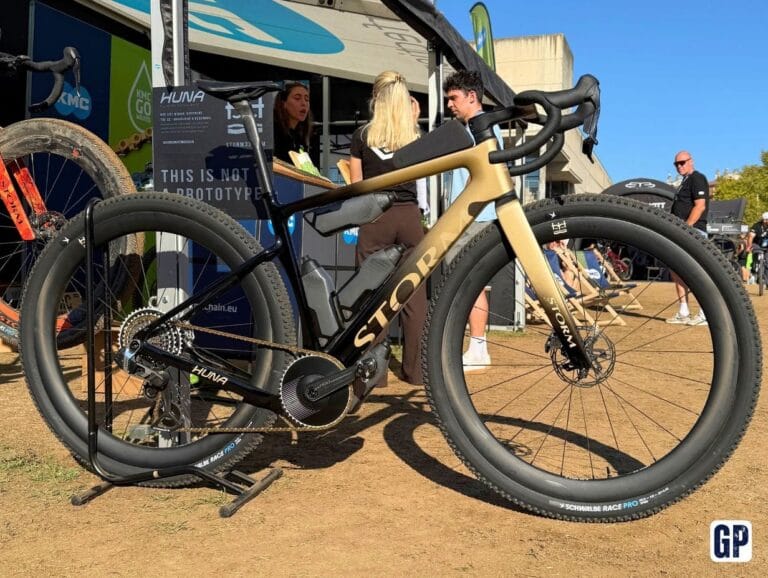
This rise of big wheels says something about today’s market: the search for speed, roll-over capability, stability, but also that desire to stand out in a sector where many bikes end up looking alike.
These bikes will obviously need to be judged somewhere other than behind a barrier or in an aisle. A wheel diameter doesn’t make a good bike on its own. It also raises some very concrete questions: tyre availability, geometry, behaviour for smaller sizes, inertia, compatibility. But in Girona, the signal was clear, and Leon Kaiser notably won the 226ERS UCI Gravel Race on the 32 inch Avona Callis.
Race-oriented gravel clearly dominates
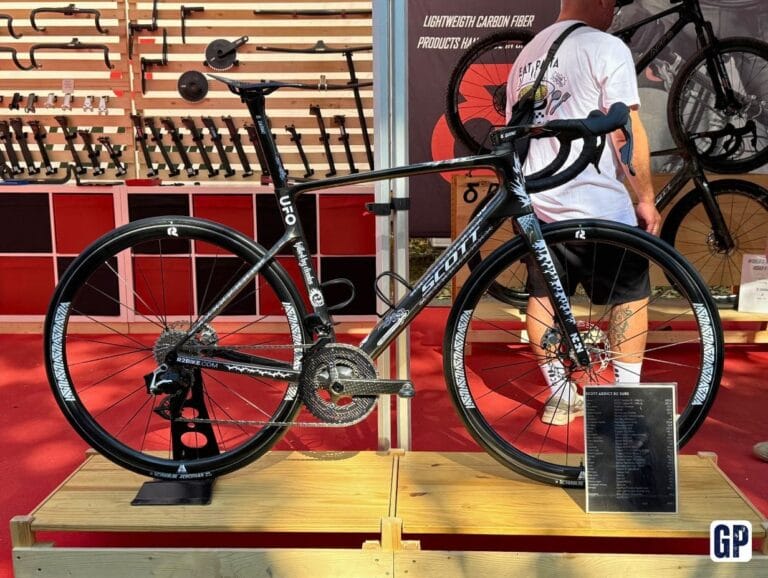
Another strong takeaway: the gravel shown at Sea Otter Europe leaned very clearly towards performance. Sharp frames, fast builds, generous tyre clearance, but little touring vibe. Few racks, few bags, little luggage on show.
This is a trend we’d already observed at ProDays 2026, where race-focused gravel seemed to be taking over both in messaging and in the ranges. In Girona, the impression was even clearer: the gravel on display has become race gravel.
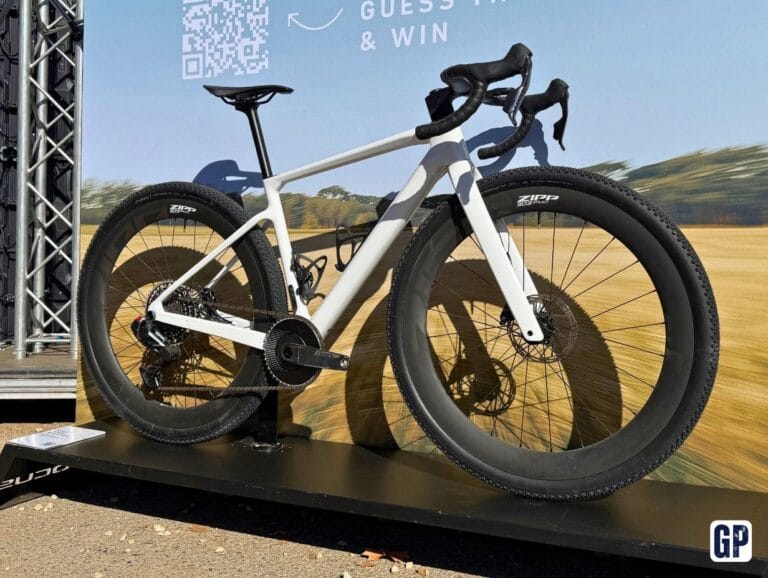
The interesting point is that this direction doesn’t necessarily mean fragile or overly exclusive bikes. Many modern race gravel bikes now embrace big tyre clearances. Performance no longer comes only from narrow tyres and ultra-stiff frames. It factors in real terrain, fast tracks, rough descents, long distances ridden hard.
You can also see this in our selection of the gravel bikes set to shape 2026: more specialised bikes, less vague, with more clearly defined uses. Sea Otter Europe reinforced that impression. The market is no longer necessarily trying to sell a do-it-all gravel bike. It’s segmenting.
Less bikepacking, fewer bags
The flip side of this trend is the visual retreat of bikepacking. It hasn’t disappeared, of course. But it seemed less central, less staged, almost in the background compared with recent years.
Bag-focused stands were fewer or less visible. The complete bikes on display told more of a story about speed, racing, aero, wide tyres and high-performance components than about loaded travel.
That’s not necessarily bad news. Bikepacking is still very strong in real-world riding. Trade shows also reflect the commercial priorities of the moment. And in 2026, in Girona, the industry mainly wanted to talk performance.
New products, but above all signals
Sea Otter Europe is also a place where you spot subtler things. Some brands little known in France gain real visibility there. Others come to test an image, a design, a product direction.
CamelBak, for example, presented a notable evolution of its line-up. The brand, historically linked to the invention of the hydration reservoir in the late 1980s, seems keen to modernise its image and its products. The new Pulse and Mule lines, announced for 2027, go in two fairly clear directions: lightweight hydration on one side, higher-capacity packs on the other.
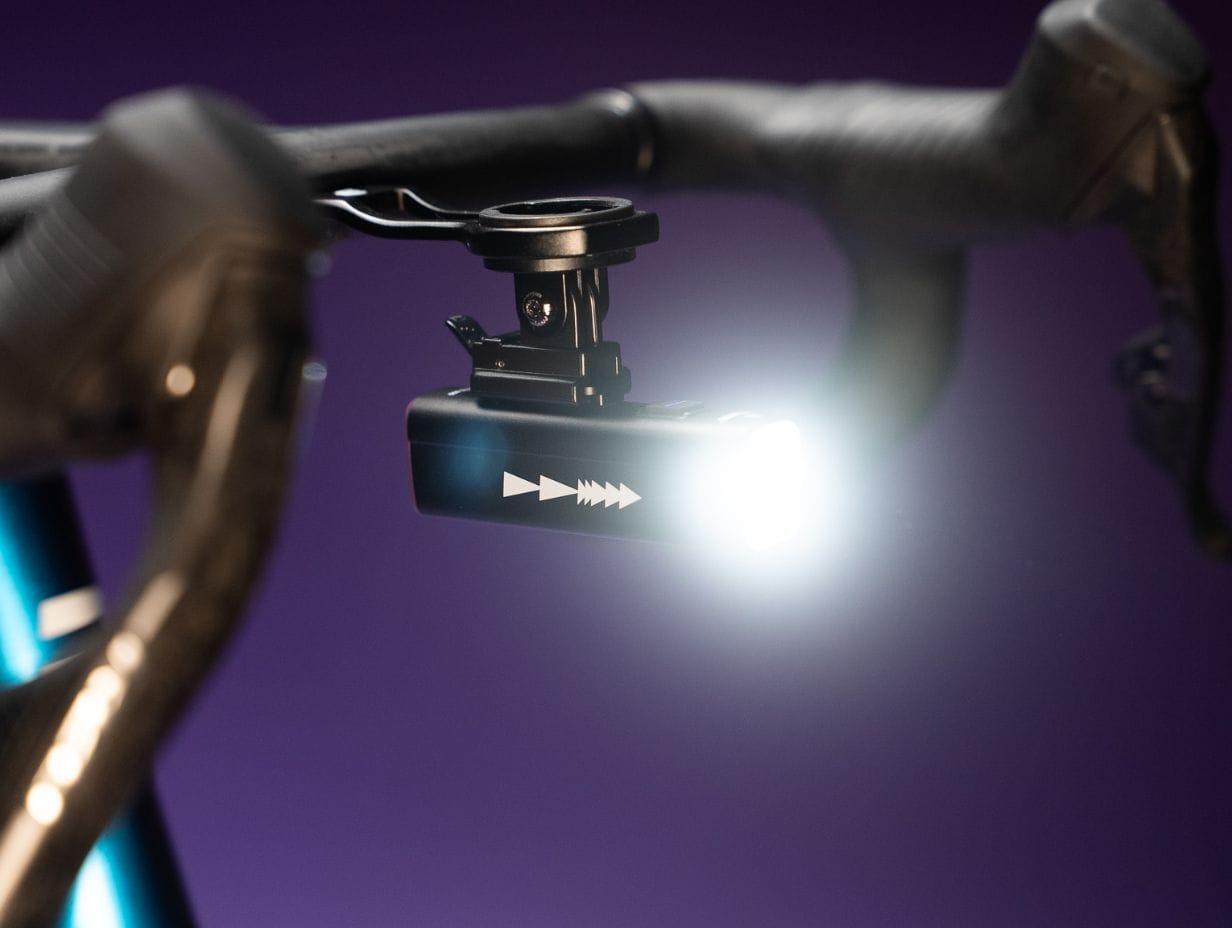
Details like this matter. At a show, it’s not only about looking at frames. Accessories often say a lot about the practices on the rise: more integrated hydration, brighter lights, remote controls, lights that double as power banks, apparel designed for the shoulder seasons.
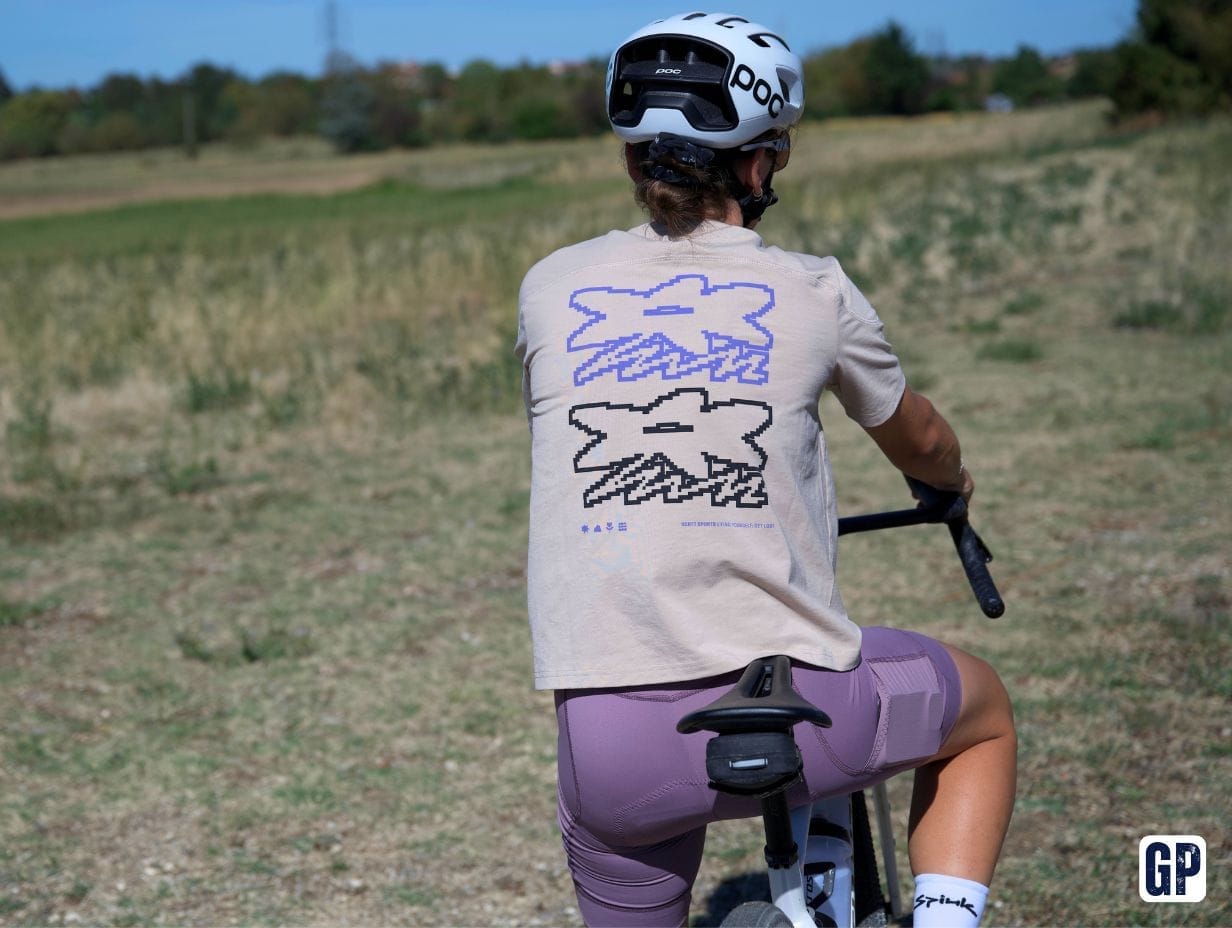
Castelli showed an interesting approach with a TRNSTN range designed for spring and autumn. Not simply warm or cold, but pieces adapted to unstable days, cool starts, milder finishes, and personal preferences for covered or bare legs. It’s less spectacular than a new bike, but very concrete in use.
Details that stick with you
There were also some lovely pieces. A Seka gravel made in collaboration with Velodrom, with truly striking paint. A KTM fitted with Gemini components. The new Canyon Grail, a new Focus gravel, several bikes confirming today’s obsession with fast lines and tyres that can take rough ground.
These bikes didn’t all tell the same story, but they shared the same direction: less vague versatility, more intent. Sometimes towards racing. Sometimes towards aesthetics. Sometimes towards integration.
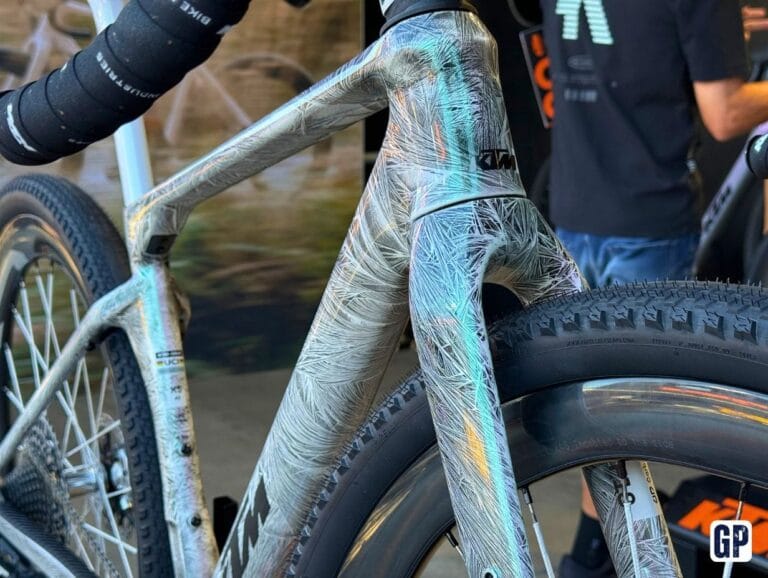
That’s where Sea Otter Europe becomes interesting. The show isn’t just a showcase of new products. It’s a place where you see the industry’s choices converge. When several brands, across several stands, push the same ideas, it’s no longer a coincidence.
Our take on the 2026 edition
Sea Otter Europe 2026 mainly left us with the impression of an event very much at home in its ecosystem. Girona isn’t just a backdrop. The city amplifies the show, and the show amplifies the city.
For enthusiasts, it’s a fairly rare weekend: you can see new products, meet brands, ride, watch races, take part in an event, then return to a city where bikes are part of the normal landscape. This continuity makes the experience much stronger than a show closed in on itself.
As for trends, the message is quite clear. Race-oriented gravel dominates, 32 inch is pushing through, bikepacking steps back a little on the stands. Time will tell whether these signals align durably with real-world use, or mostly reflect the current commercial moment.
One thing is certain: to understand where European cycling is going, Girona is becoming an observatory that’s hard to ignore.