
After two years away from ProDays, being back in Paris felt telling. The trade show for the cycling industry remains a key date on the French calendar, but it no longer has quite the same look.
The most visible change is size: a single hall this year, versus two before. The number of exhibitors has clearly dropped. In a bike market still shaped by post-Covid adjustments, that is not trivial.
But it would be a mistake to reduce this edition to a simple contraction. Fewer booths does not necessarily mean less substance. And on site, conversations were often more direct, clearer, sometimes even more interesting than back when the show was overflowing everywhere.
The comparison with the ProDays 2023 show is quite telling. At the time, the mood was frankly gloomy, with a sector weighed down by inventory, hesitation, and frozen ranges. In 2026, the market is not euphoric again, but it does seem to have found a direction.
And that direction, on the gravel side, comes down to one word: race.
Gravel is clearly tipping toward performance
Adventure, bikepacking, and commuter gravel have obviously not disappeared. But on the booths, the bikes that catch the eye – the ones that best reflect where the market is going – are clearly the fast models.
Tauter frames, more sculpted tubes, generous tire clearances, more integrated cockpits, internal storage, dedicated bags, unapologetic 1x drivetrains: race-focused gravel is no longer a token niche. It is becoming a structuring category.
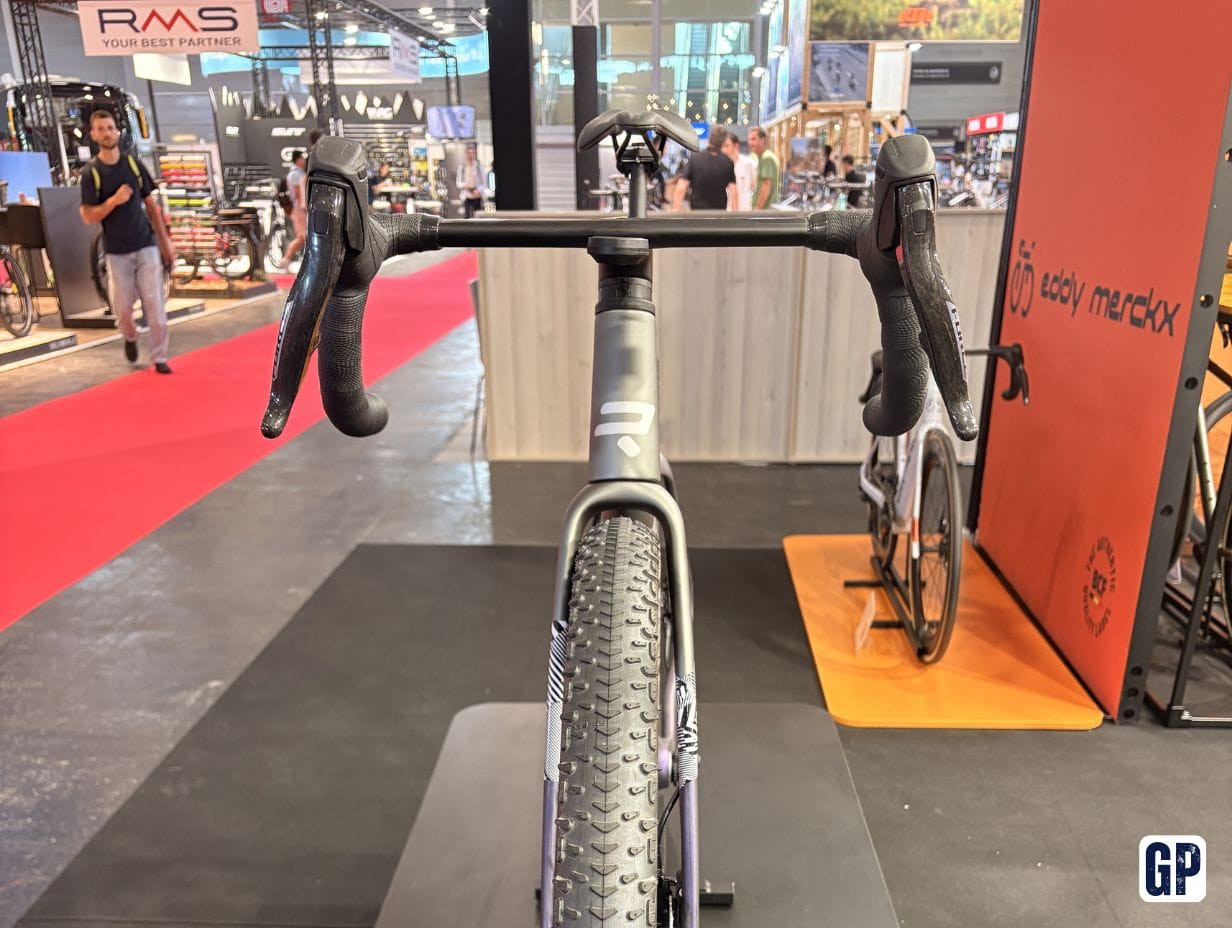
The line may sound harsh, but it sums up what is arriving quite well: a gravel bike that will not clear 50 mm already feels behind. Not necessarily because everyone rides 50 or 55 mm every day, but because that clearance has become a marker of modernity, versatility, and real performance on rough terrain.
That is also what makes this generation interesting. Brands are no longer just trying to make bikes that are stiff, low, aggressive, and fast on smooth dirt. They are adding volume, storage, compatibilities, and sometimes a true logic for ultra or long-distance.
UDH everywhere: SRAM has won a strategic battle
Another very clear finding: UDH is taking over at an impressive pace.
This derailleur hanger standard, pushed by SRAM, is now visible almost everywhere. It is not just a technical detail. It is a sign of an industrial shift.
In gravel, SRAM is no longer the outsider offering an alternative to the traditional double chainring. The American brand has become a central reference, notably for 1x setups, electronic drivetrains, and performance-oriented use.
On the road side, aero and all-rounders are converging
On the road side, the market is still officially split between two big families: all-round bikes and very aerodynamic machines.
But on the booths, that boundary looks more and more aesthetic. Aero bikes have become lighter, easier to live with, less caricatured. And all-rounders are no longer naive in the face of the wind.
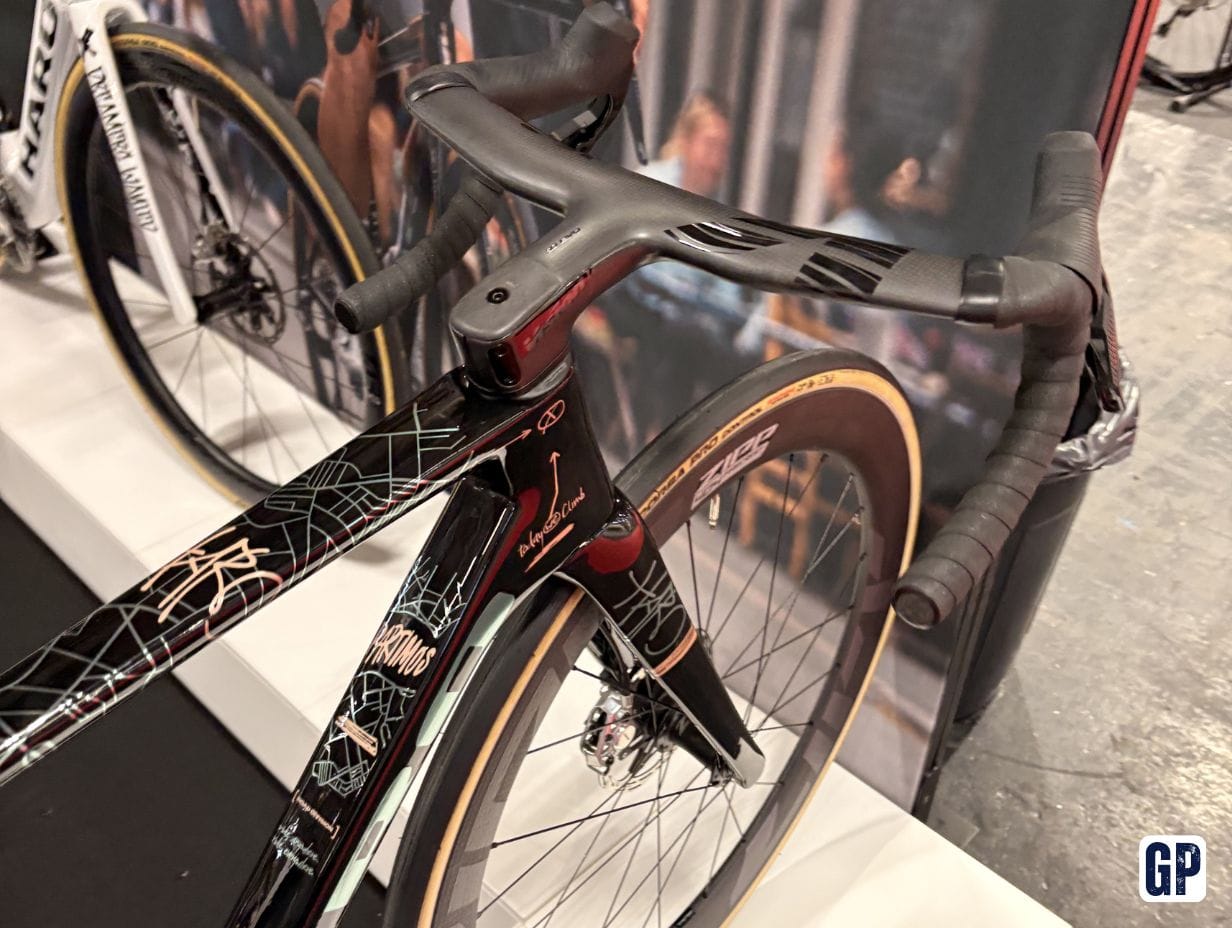
Brands are no longer thinking only in watertight categories. They are seeking platforms that can go fast, for a long time, on less-than-perfect roads, with more comfort and fewer compromises.
In short, the modern road bike is also becoming more pragmatic. And that is probably good news.
Polygon: a serious footprint in France
First noteworthy stop: Polygon.
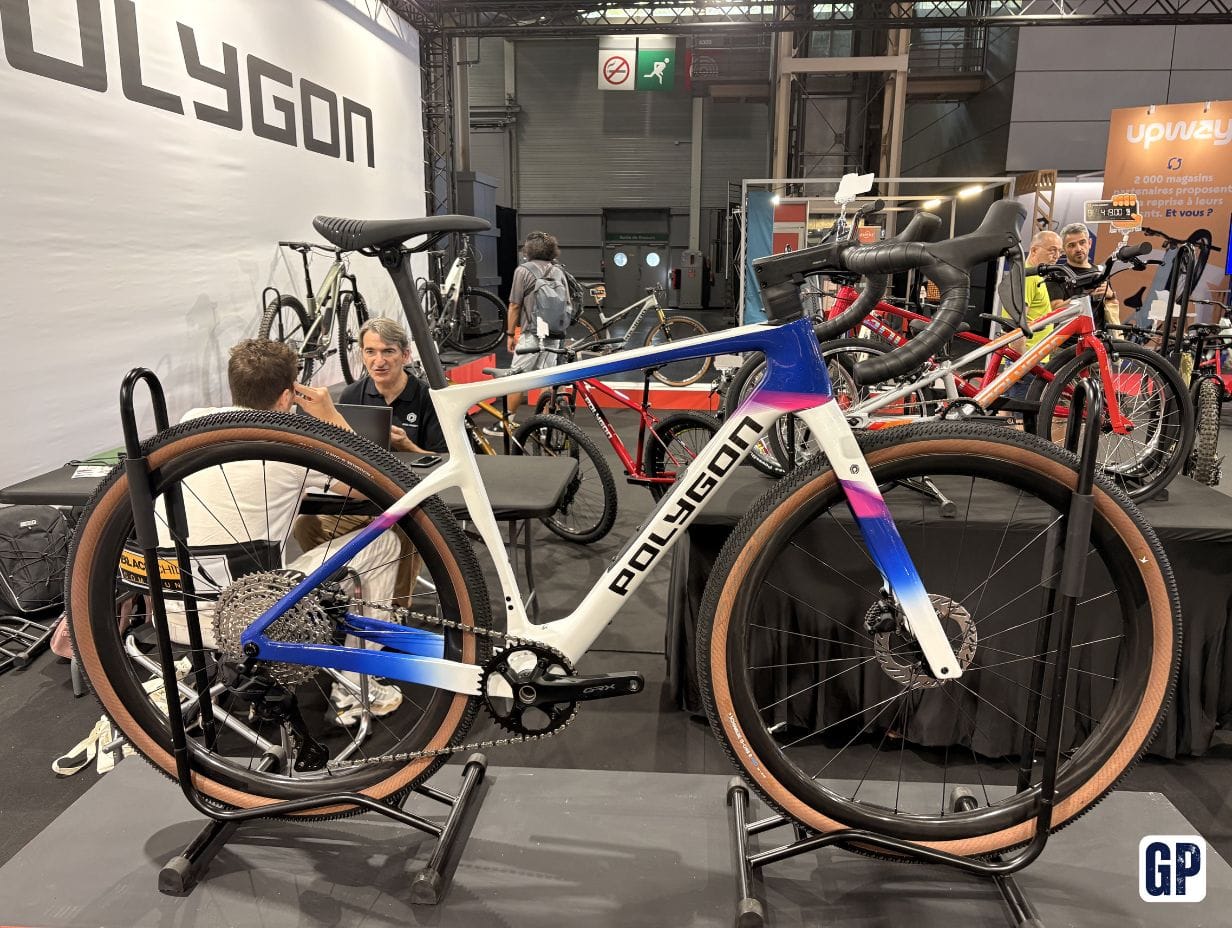
The brand continues to penetrate the French market with a true network strategy. According to information shared at the show, Polygon already has over 200 partner dealers in France. This is no longer an opportunistic presence – it is a structured footprint.
The lineup also remains very well positioned on price, with builds that are often aggressive against the competition. And the future gravel planned for late 2026 follows the market direction: internal storage, big tires, current standards.
Haro: a more coherent 2027 comeback than expected
Haro was also one of the brands to watch at this edition.
The 2027 lineup glimpsed at the show looks much more coherent, with a new road bike and above all a gravel bike that grabs attention. The lines are modern, the frames visually well proportioned, but it is the paintwork that really stands out.
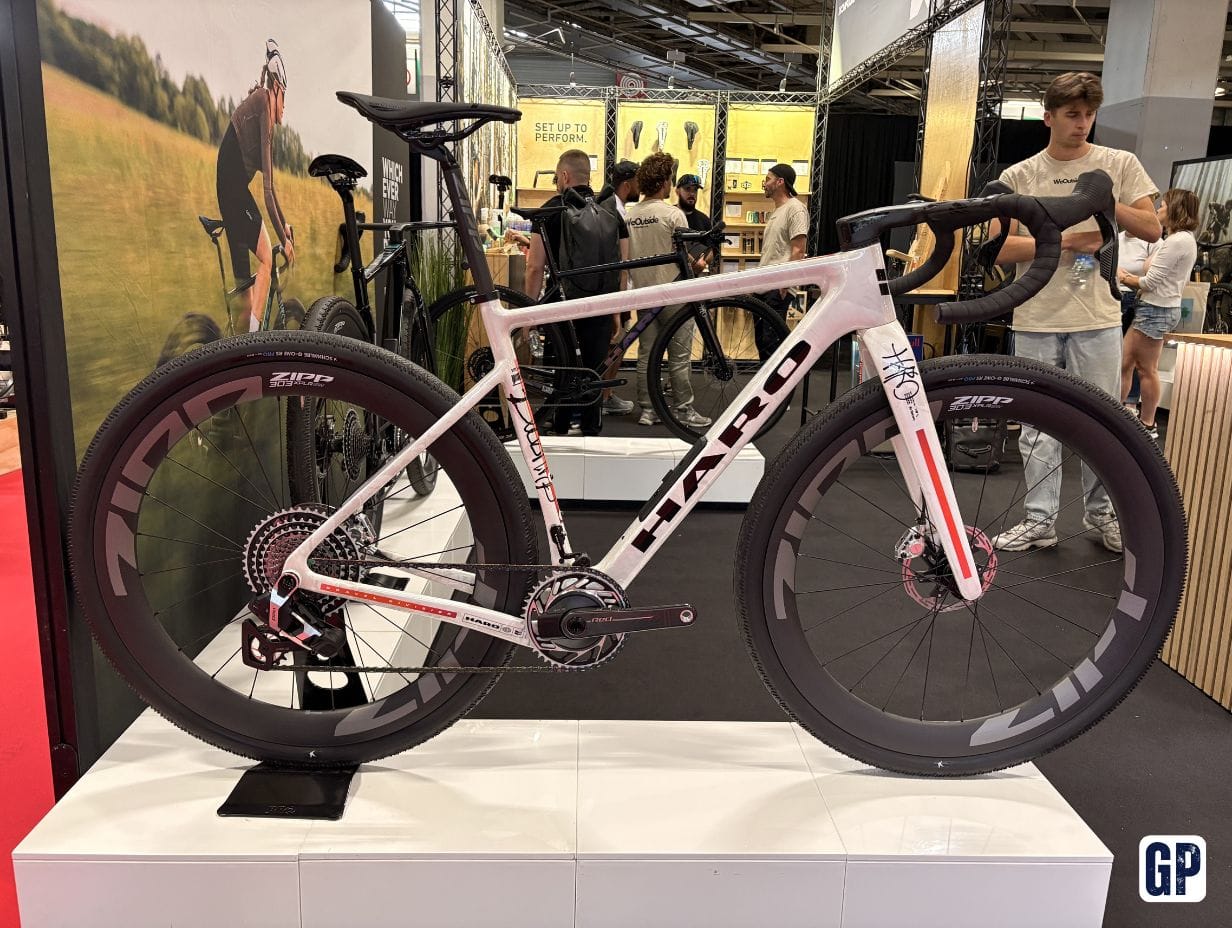
There are a lot of clean-looking bikes today. You less often see bikes with a truly differentiating visual identity. At Haro, several finishing details give the impression of a thoroughly worked frame, not just a generic mold dressed up quickly.
Visually, the brand is coming back with something to say.
Merida Reacto: Classified and a swan-neck cockpit
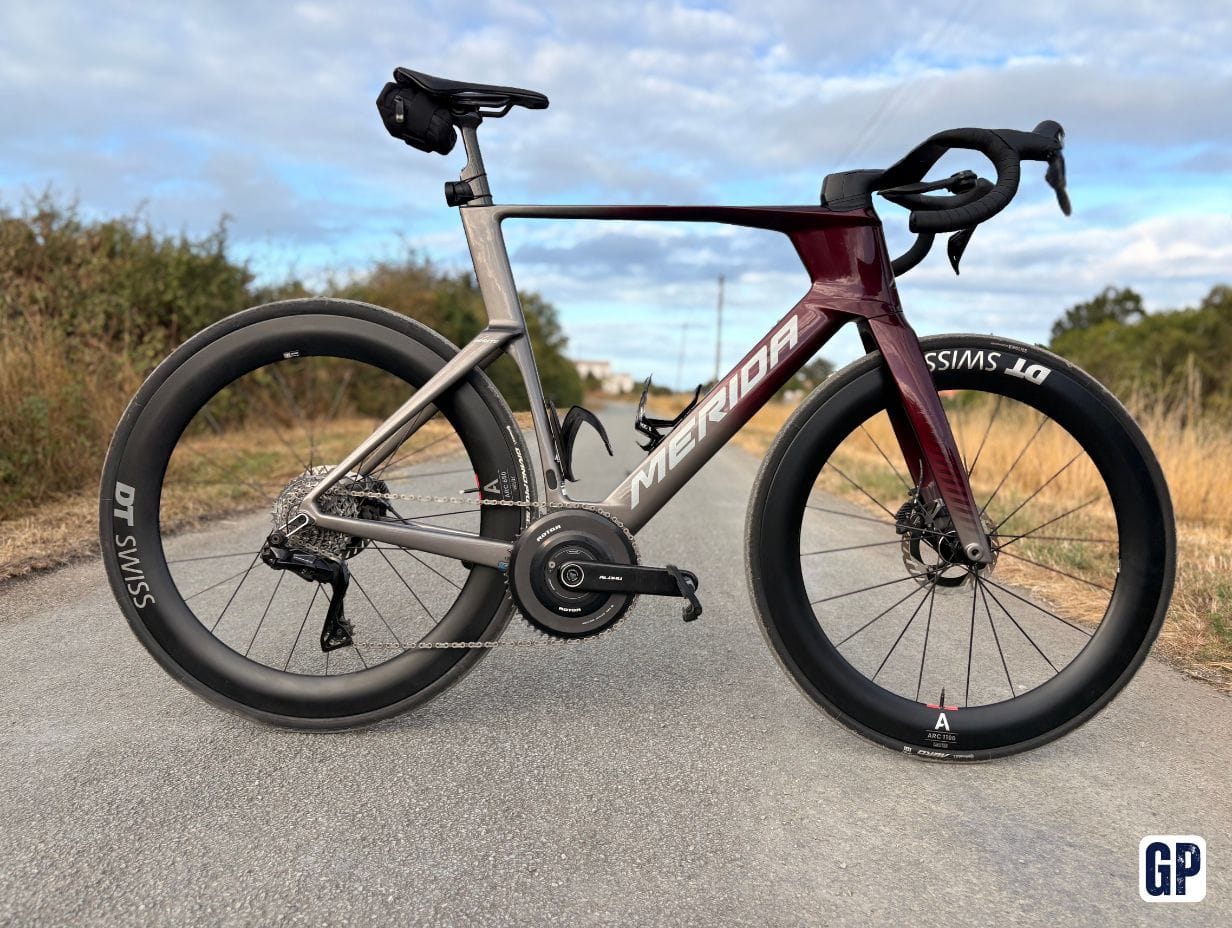
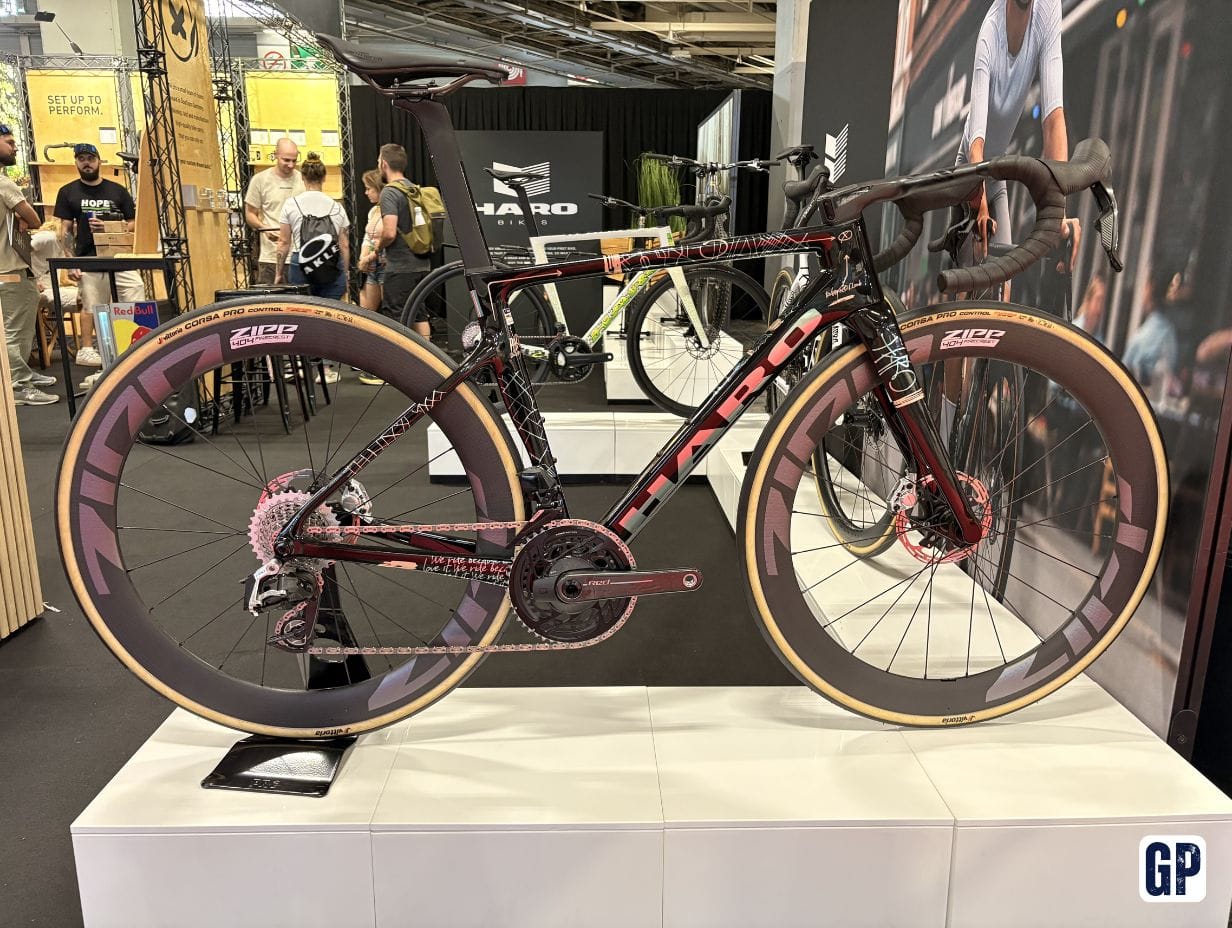
The new Merida Reacto has been out for a few months, but the top-end version clearly deserved a look.
The configuration on display, equipped with a Classified drivetrain and the swan-neck cockpit, has real presence. The bike is sharply sculpted, very expressive, with that sense of a machine built for speed even before you turn a pedal.
What remains interesting at Merida is the positioning. The lower versions generally keep prices in check relative to the level of design and equipment. In a road market where some price tags are getting hard to justify, this approach makes sense.
KTM: aggressive pricing and far more credible bikes than before
KTM had faded a bit from the French road/gravel radar, notably after the end of the B&B Hôtels pro team. Here, the brand returns with a very aggressive pricing stance.
A few examples set the tone: a gravel bike with SRAM Red under 8,000 €, a road bike with Shimano Dura-Ace and carbon wheels under 5,000 €, and an endurance model with a rather serious design, aero-profiled tubes, and internal storage.
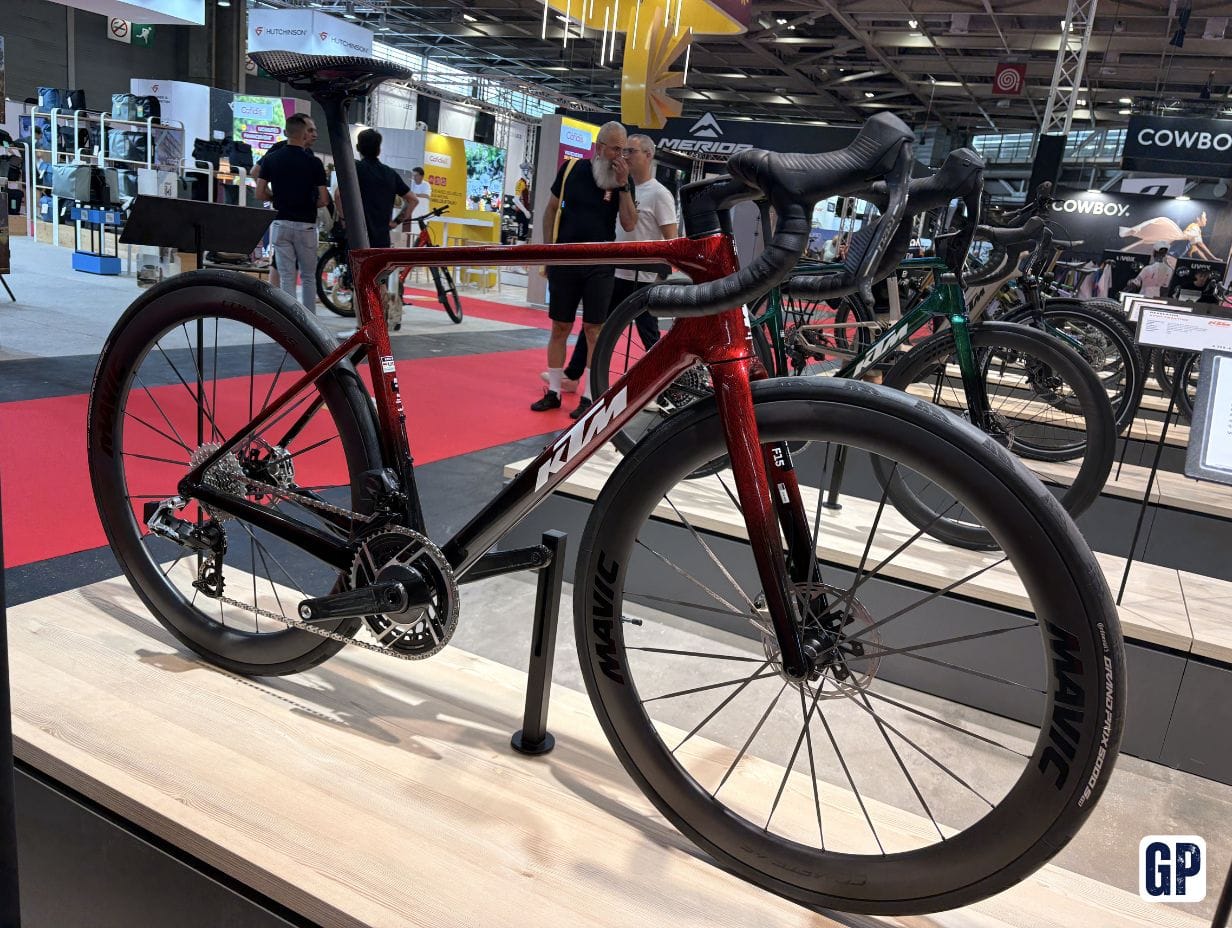
On paper, the prices are frankly aggressive. But more importantly, the bikes do not look like spec-sheet exercises optimized just to flaunt a top-tier group.
The frames are attractive, the builds seem coherent, and the lineup looks better constructed than KTM’s recent road and gravel image might have suggested.
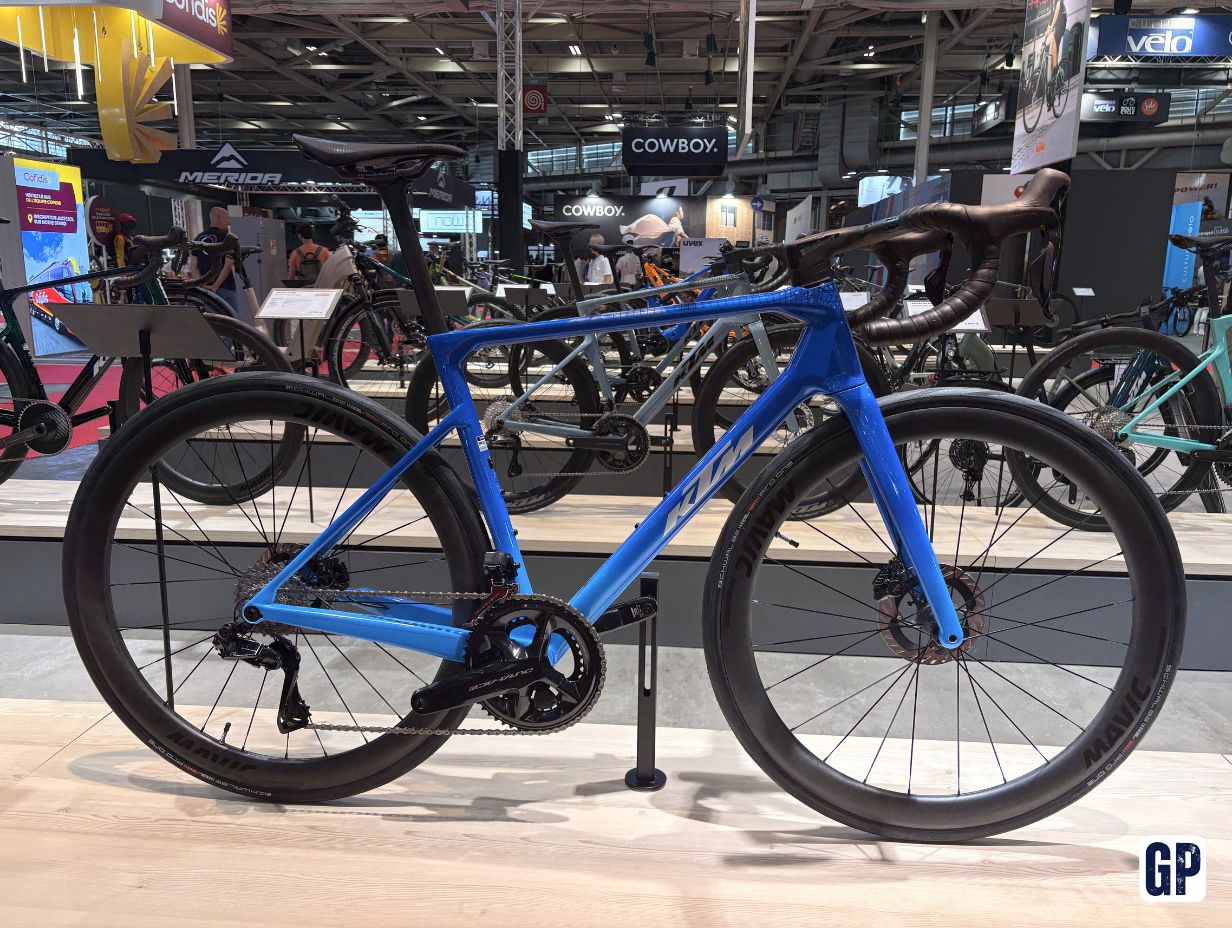
Ridley Kanzo Fast V2: probably one of the bikes to watch in 2027
This was one of the most anticipated models of the visit: the prototype of the upcoming Ridley Kanzo Fast V2, slated for release in September.
The first-generation Kanzo Fast had already made a mark with its very committed take on aerodynamic gravel. This second version seems to embrace the most current codes of the category, with a particularly impressive execution.
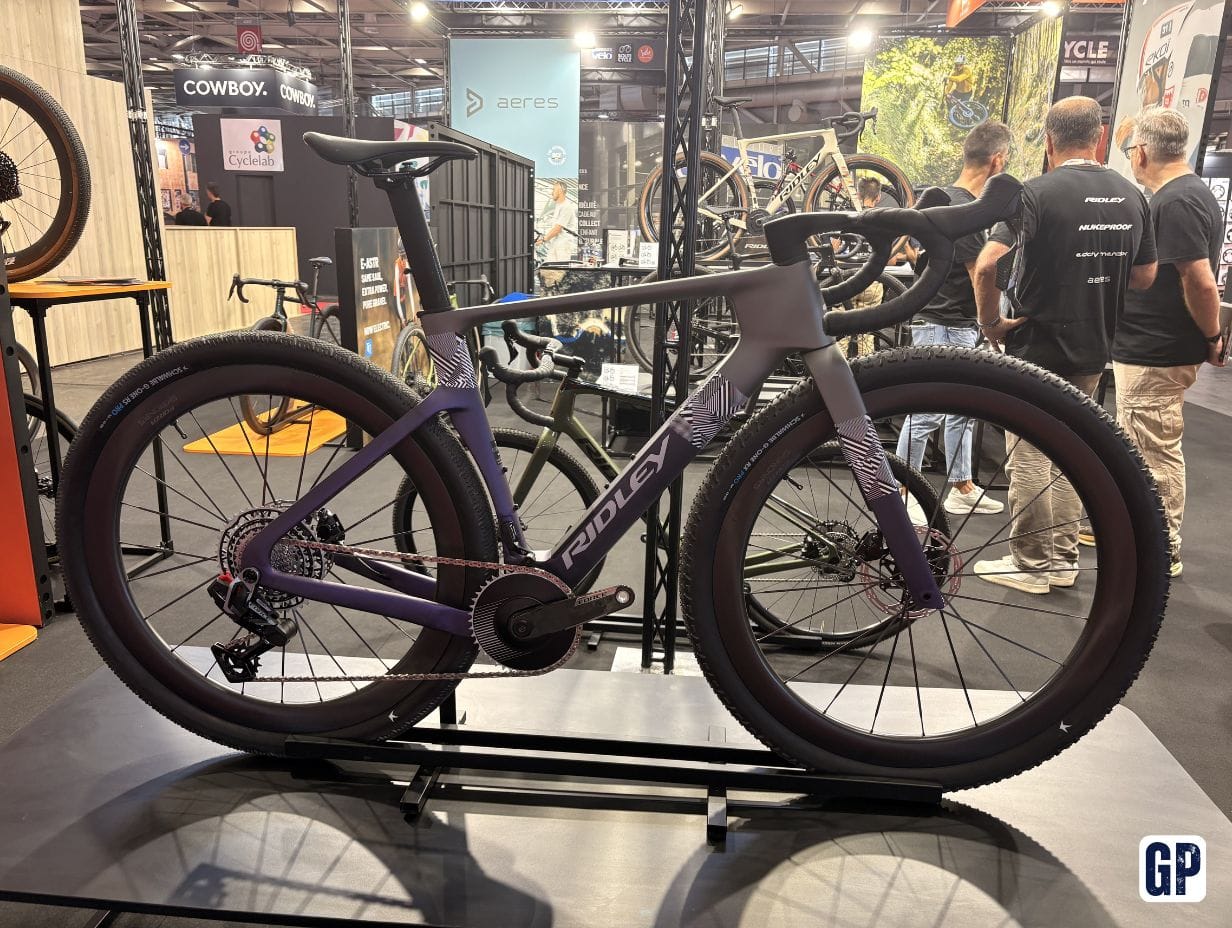
The display bike was set up with Schwalbe tires in 55 mm, and there was still room to spare. That perfectly sums up the evolution of modern race-focused gravel: faster, but also more capable.
The frame clearly borrows aero cues close to those of the Noah Fast on the road side, with highly worked shapes. It also integrates internal storage, now almost indispensable in this segment.
Another important point: the announced prices should remain relatively restrained for Ridley. If this is confirmed at launch, this Kanzo Fast V2 could become one of the very nice surprises of 2027.
Kellys: a low-key presence, but a lineup worth watching
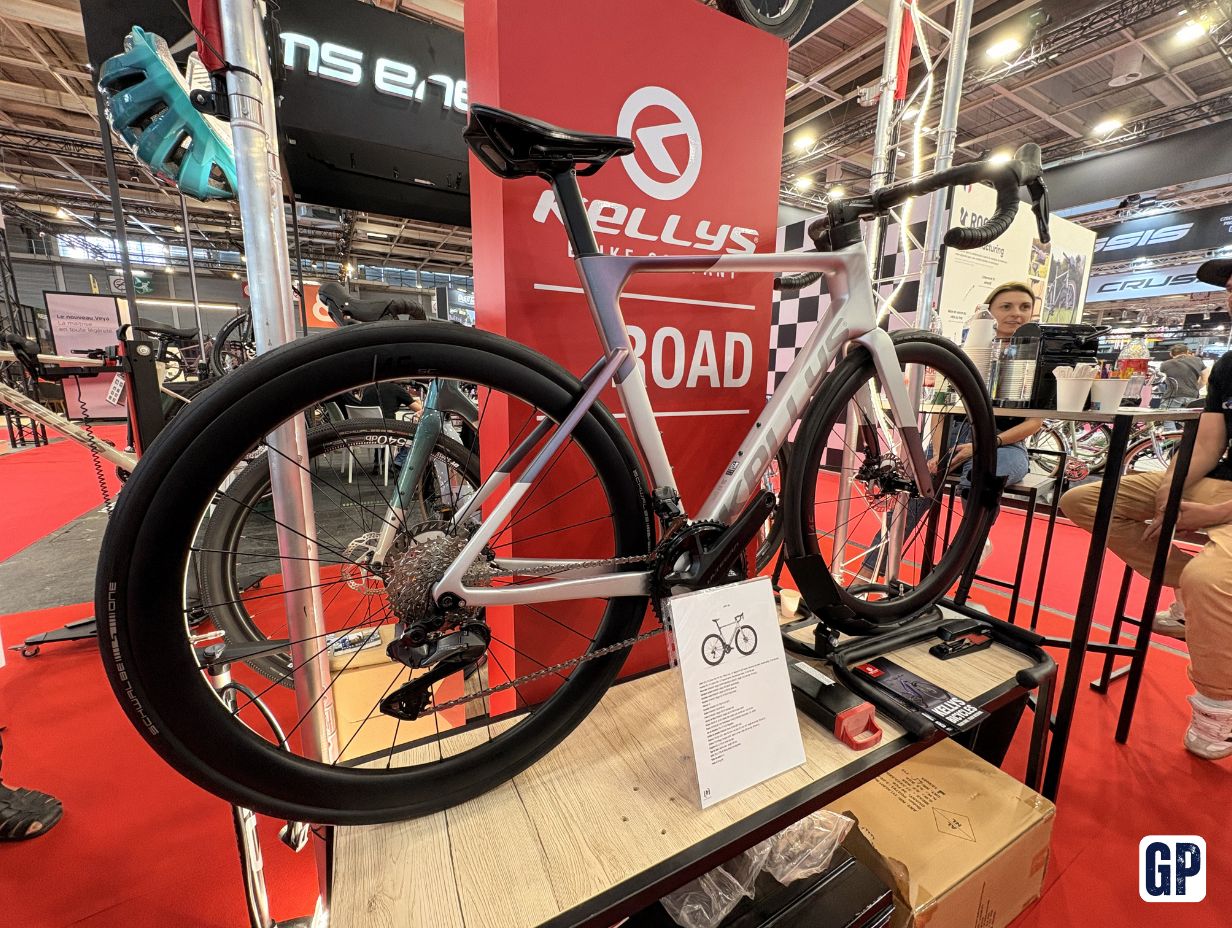
Kellys was there as well, with a lineup less known in France.
The brand notably showed a gravel bike available with or without a motor, as well as a road bike. The interest here mainly lies in the presence of more discreet brands trying to exist in a very dense market.
Campagnolo Zonda: a very well-finished all-road wheel under 1,500 €
On the components side, the new Campagnolo Zonda was among the interesting new products to see in person.
Released the previous week, this wheel is positioned in the endurance all-road segment, with a stated price under 1,500 €, a 50 mm rim, and the emblematic G3 lacing.
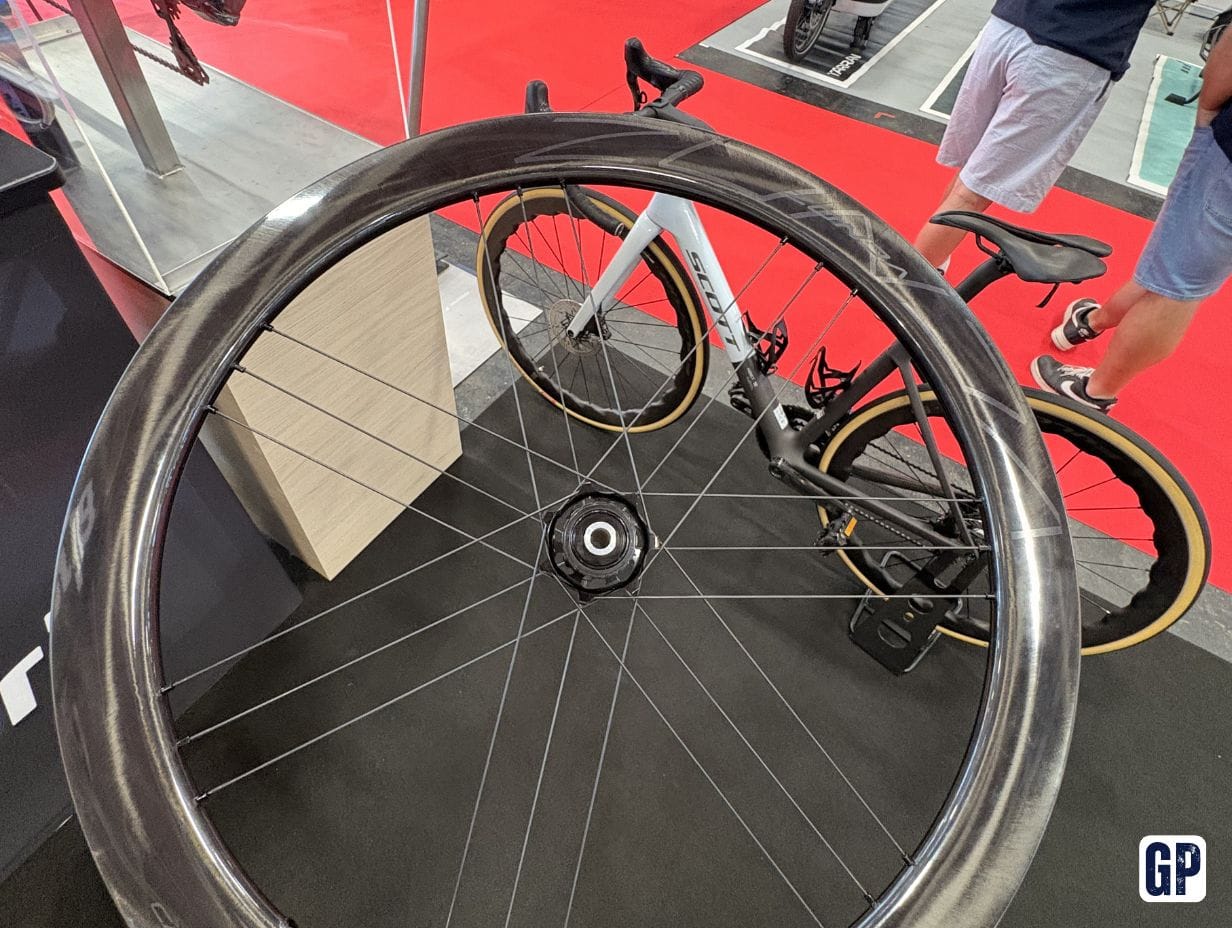
Handling it mainly confirms one point: the finishes are gorgeous for a wheel at this price. Campagnolo retains that ability to give its products a very particular, almost status-like presence, even in a range that is not aiming at absolute ultra-premium.
Of course, we still need to see how it performs on the road, but visually and in perceived quality, the Zonda already checks a lot of boxes.
Look Blade RS: targeted updates and a very successful colorway
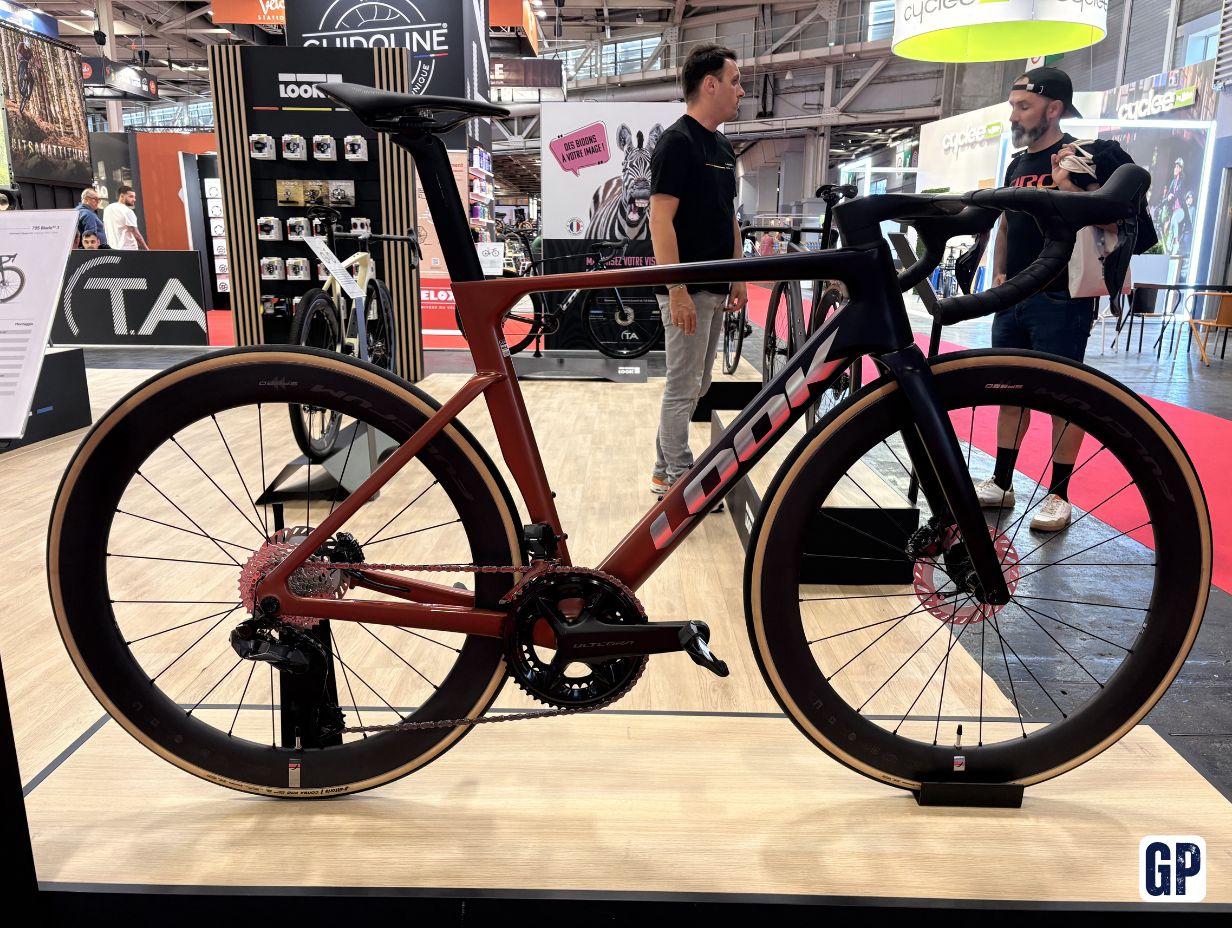
The Look booth offered a chance to see the new Blade RS in real life, also recently unveiled.
No total break with the previous generation, but several notable updates and a particularly successful colorway. Look also keeps its two-piece cockpit, a choice that may seem less spectacular than some fully integrated setups, but that keeps obvious advantages for maintenance, adjustment, and real-world use.
Factor: the exception, the ultra, and the go-anywhere gravel
Factor probably had one of the most impressive booths at the show in terms of very high-end equipment.
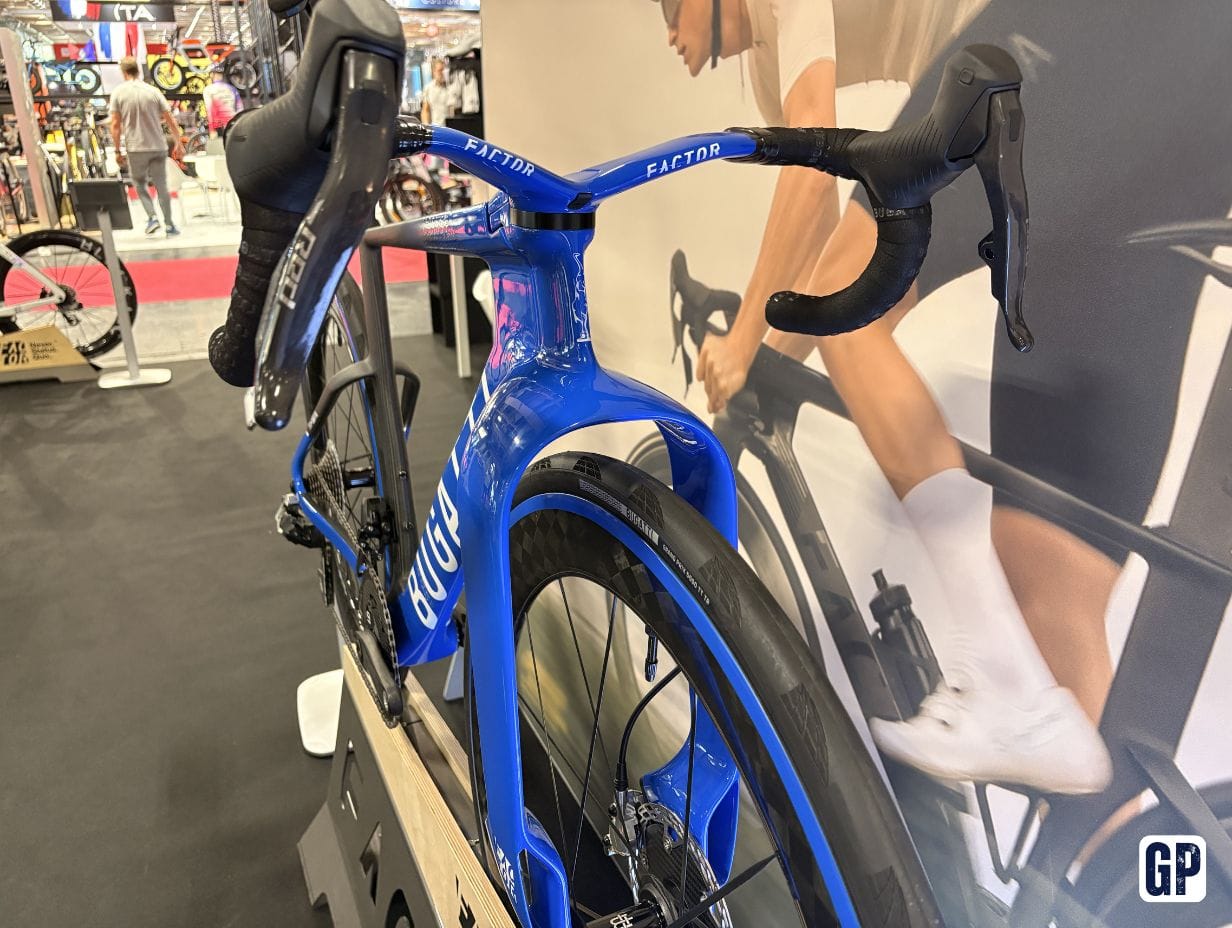
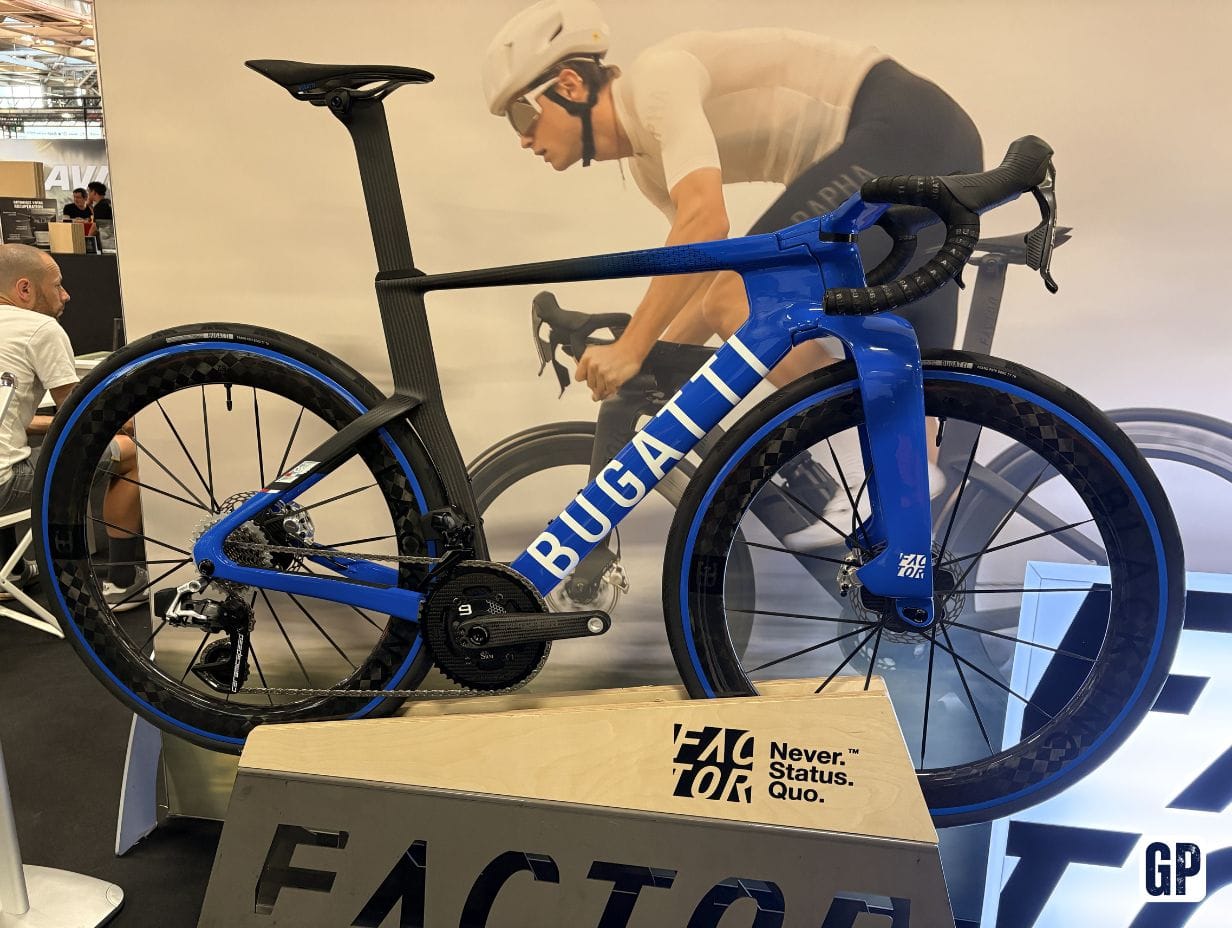
Between the model developed with Bugatti, fitted with an oversized fork, and the already marketed bikes, the brand embraced an exceptional positioning. But the most interesting model in a gravel logic may well be the Factor Sarana.
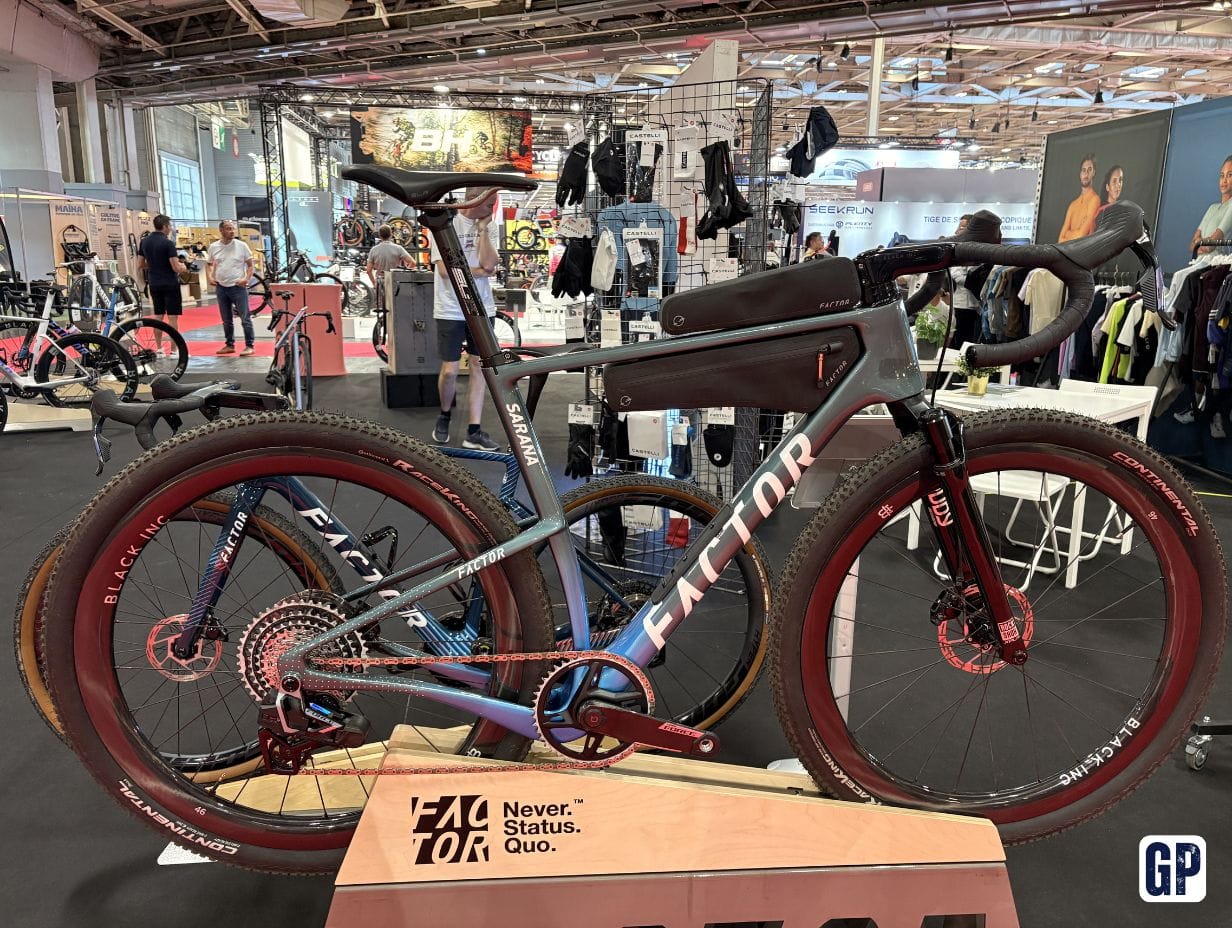
It is the bike used by Victor Bosoni on The Tour Divide, a race he won with this machine. The Sarana holds a fairly unique place on the market: a true go-anywhere bike, able to handle rough terrain without giving up performance on rolling sections.
Internal storage, an integrated frame bag, compatibility with a dropper post or a suspension fork: everything points to a modern gravel bike designed for very demanding use.
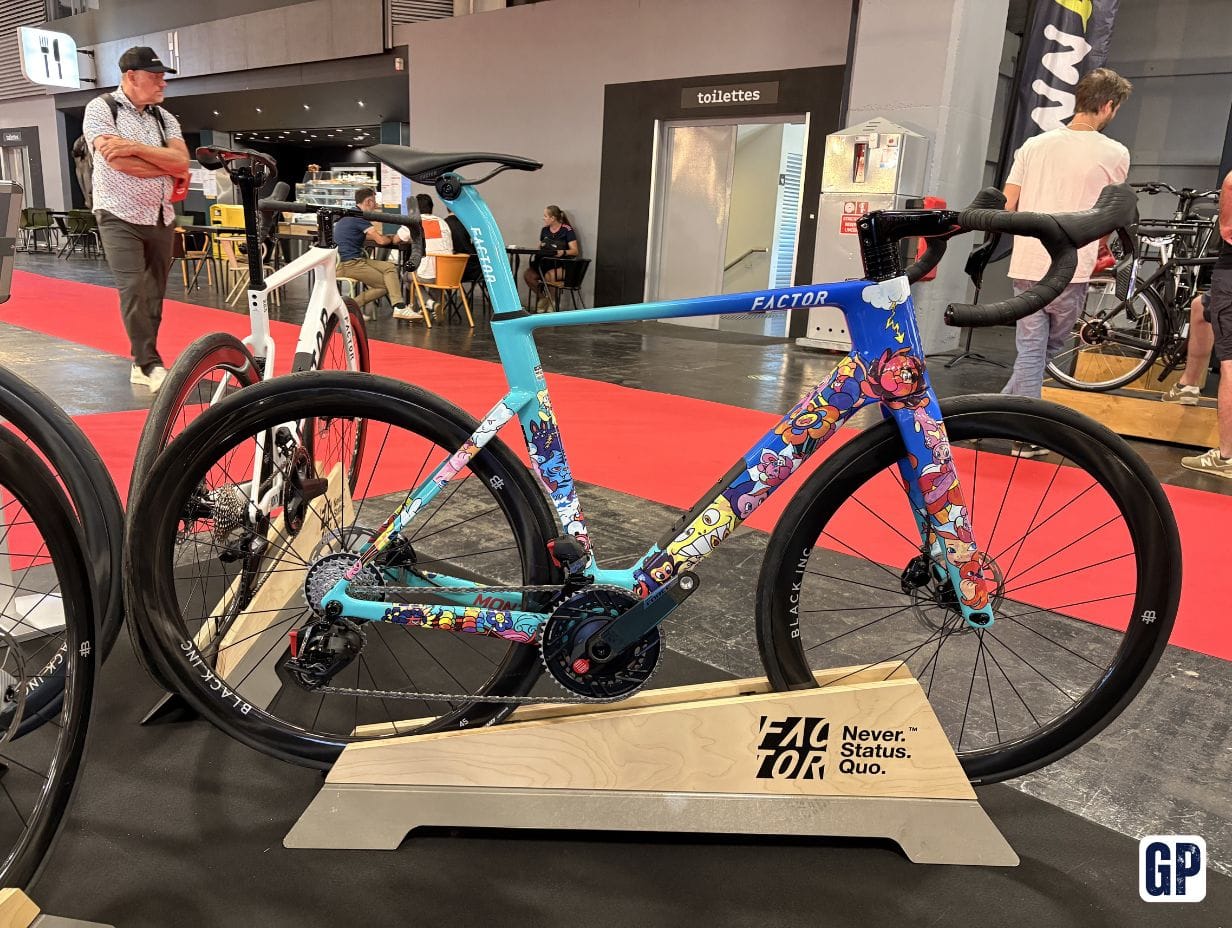
The stop at Factor also offered a chance to rediscover the Monza, the brand’s endurance bike. Its aero work is impressive for this segment, as is the presence of internal storage. In the Factor universe, it almost plays the role of a gateway product, even if the positioning remains premium, of course.
Sunn: a different gravel bike that seems to be finding its audience
At Sunn, attention focused mainly on the gravel bike launched last year, recognizable by its very particular frame.
The bike clearly stands out from what you see everywhere. And it is not just a trade show impression: it is starting to pop up regularly on the roads, notably in western France.
Its pricing remains coherent, the builds are smart, and the design gives it real personality. In a market sometimes saturated with interchangeable frames, that is already an advantage.
SEKA is arriving in France more seriously
This was one of the most interesting attractions of the show, even if the booth was rather tucked away: SEKA will now benefit from a more structured distribution in France.
The brand was already visible at a few dealers, but the arrival of a true distributor could change its exposure. And in front of the gravel model on display, it was hard not to stop.
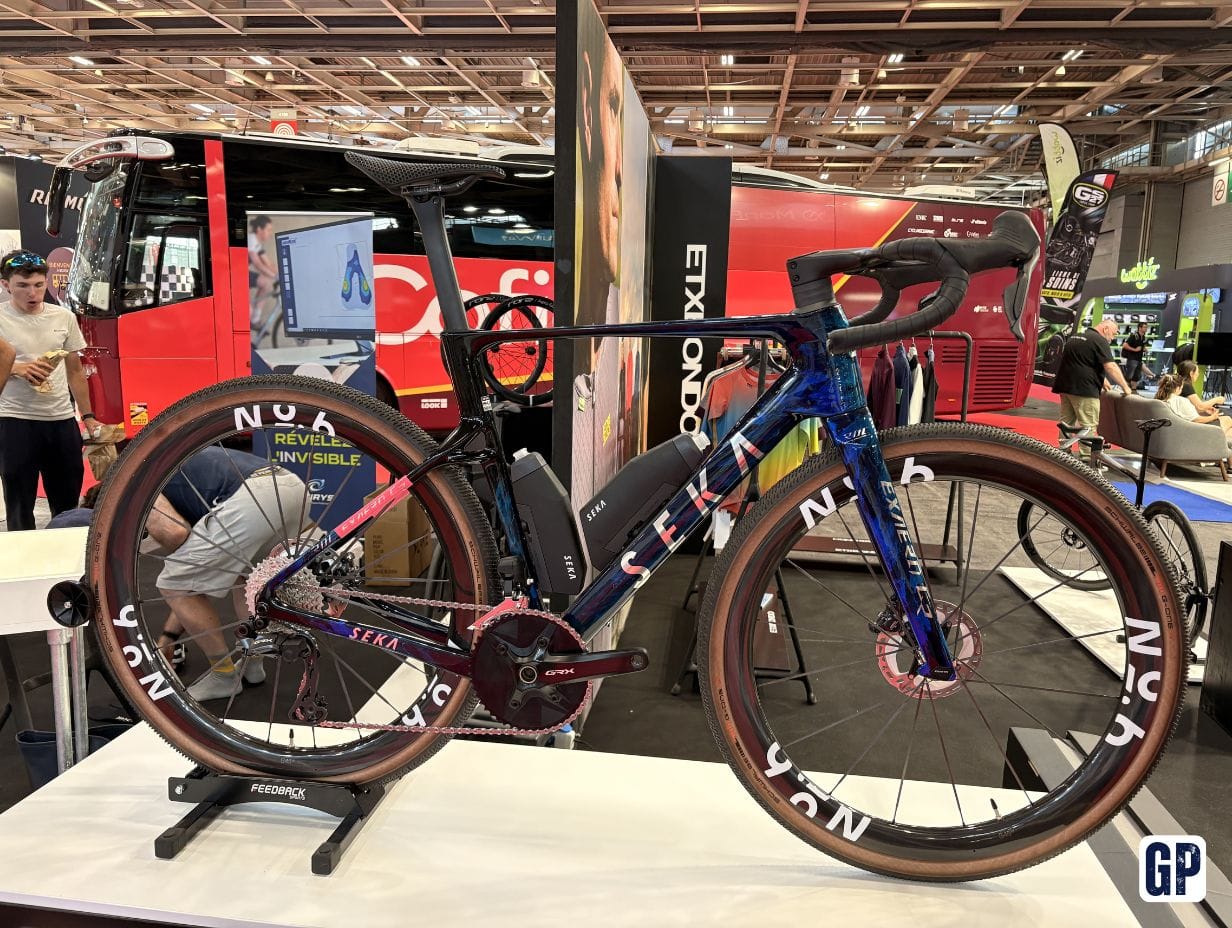
The frame is among the most beautiful on the market right now. The paint, the proportions, the integration – everything exudes a desirable bike. But beyond the looks, the spec also goes in the right direction: big tire clearance, internal storage, 1x or 2x compatible.
It is the kind of bike that can win over an expert clientele, sensitive to design, modern standards, and a certain form of exclusivity.
Argon 18: a race-focused gravel bike that could make waves
Argon 18 is currently rebuilding its presence in France, and the timing looks pretty good.
The brand’s new race-focused gravel has what it takes to draw attention. The frame looks very successful, with very generous tire clearance and a design that seems aligned with the most recent standards in the segment.
At a trade show where you see a lot of bikes that look alike, this model had real presence.
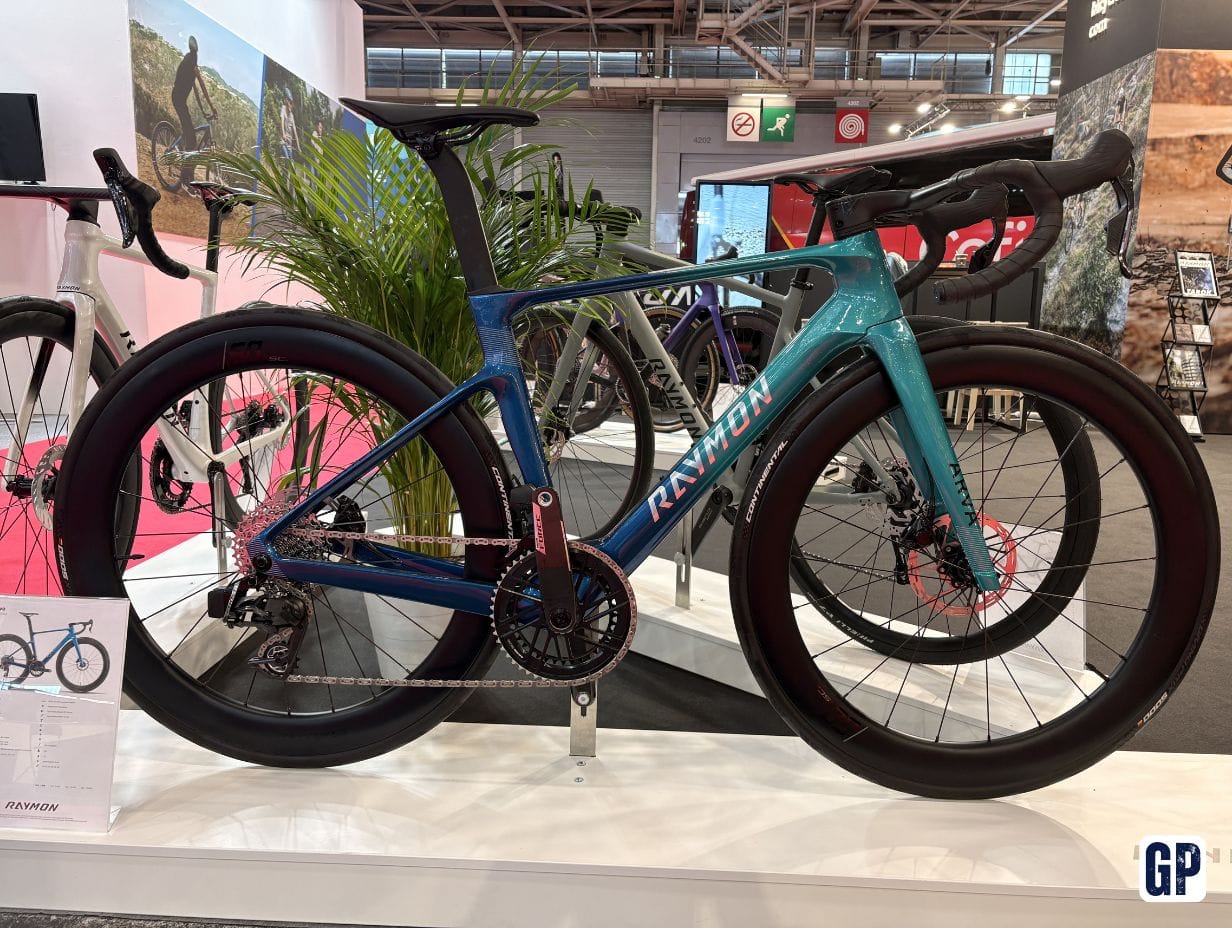
Raymon is also preparing its 2027 gravel bike
The German brand Raymon, which has been growing fast in France in recent months, also presented its future gravel bike expected in 2027.
Raymon is among those players moving quickly, often with well-studied pricing positions. The gravel bike we saw fits that dynamic.
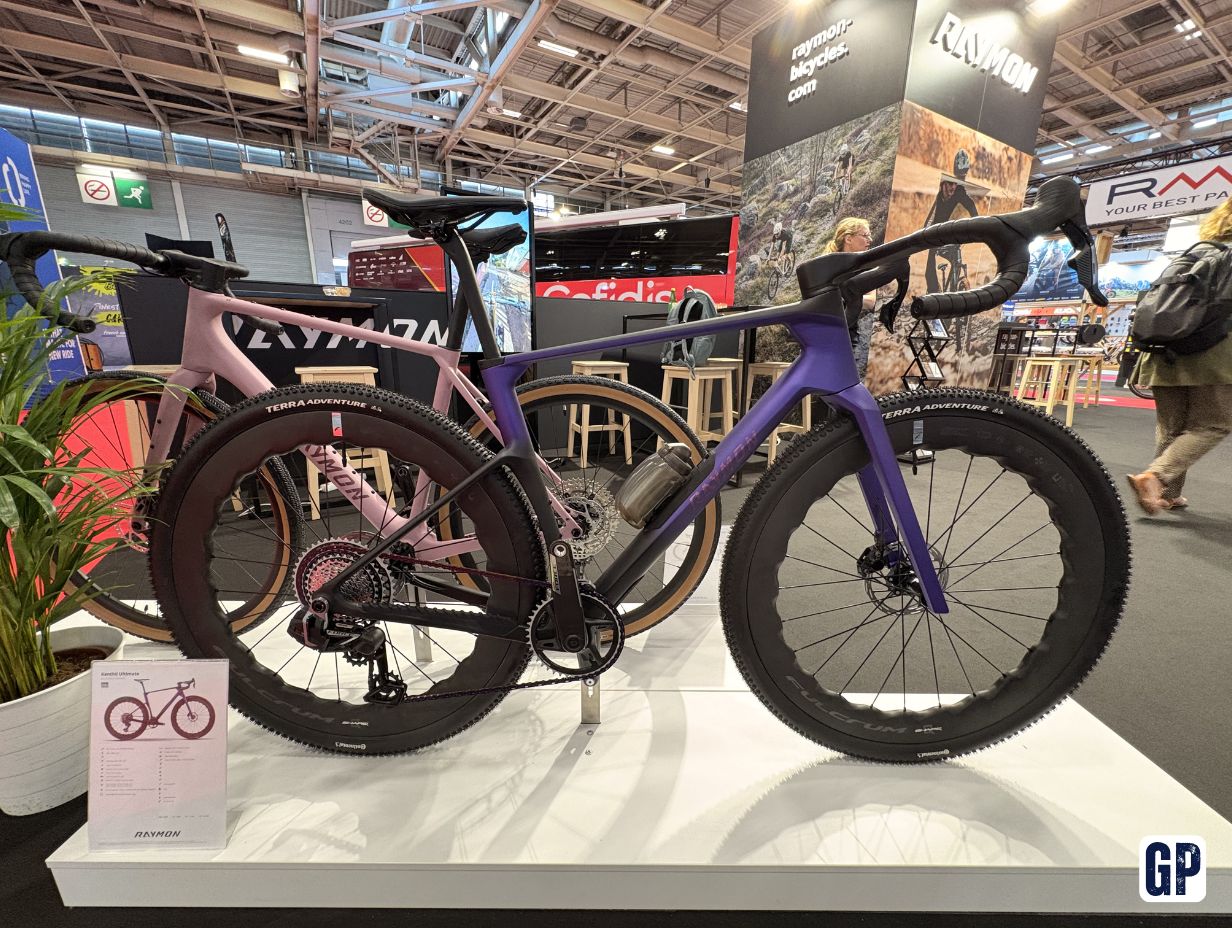
The very fact of seeing the brand invest in this segment confirms one thing: gravel remains a strategic category for brands that want to grow in the French market.
Matchy bets on ultra and on-body carry
There were few apparel brands at this edition, but Matchy deserves a mention.
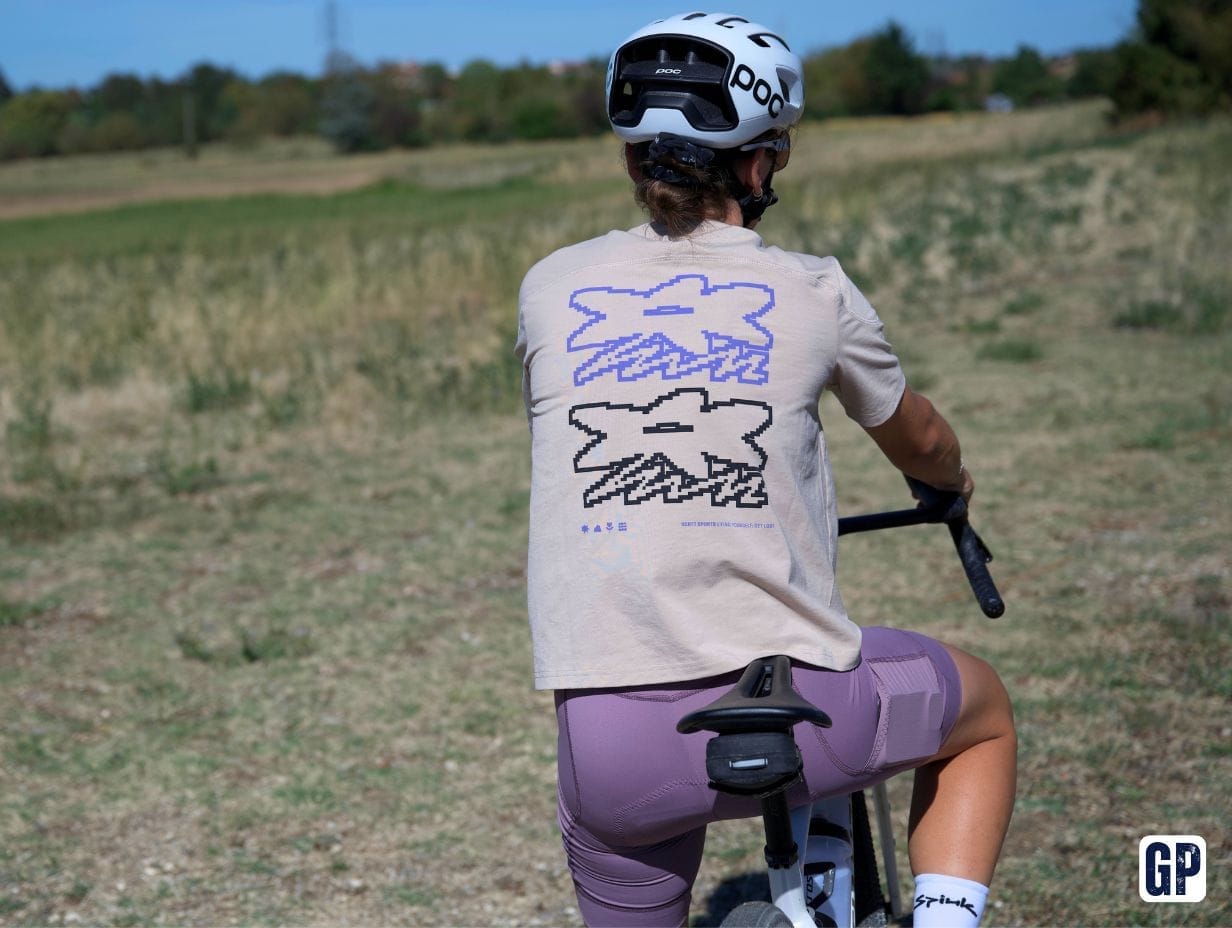
The French brand now offers a complete range dedicated to ultra: skinsuit, jersey, bib shorts. The common thread is clear: carry hydration and nutrition directly on the rider.
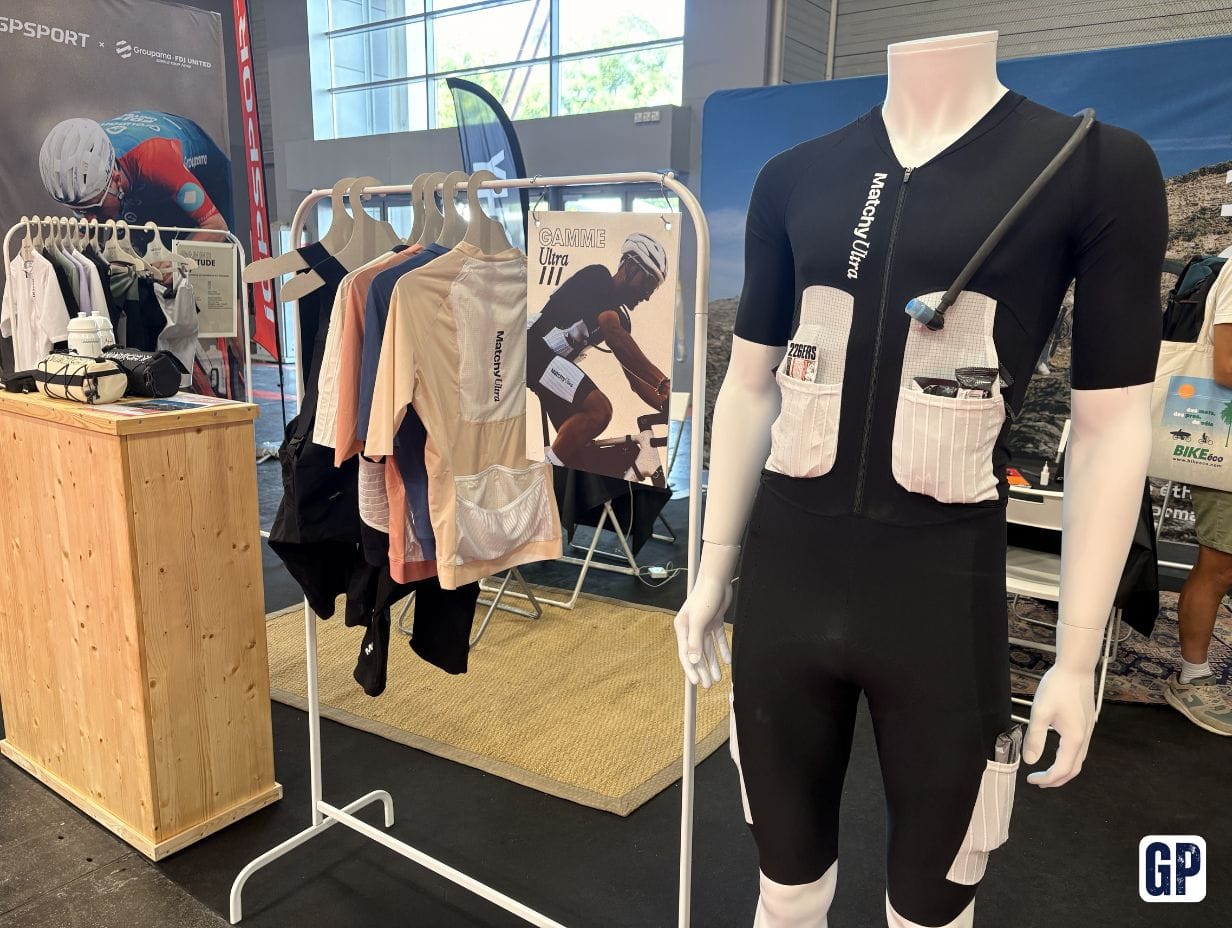
It is a strong trend. In long-distance gravel, equipment is no longer limited to the bike. Apparel is becoming a tool for carrying, managing effort, and autonomy.
This echoes what we already see on modern gravel suits: reinforced pockets, better-distributed volumes, easier access to nutrition, integration of hydration bladders. The garment is almost an extension of the bike.
Bemoov: kids' bikes remain a real underlying theme
Finally, Bemoov was present with its full range of kids’ bikes.
It is not the most spectacular booth for a media outlet focused on gravel and performance, but it is an important topic. A good kids’ bike – light, well-fitted, well proportioned – completely changes the experience for younger riders.
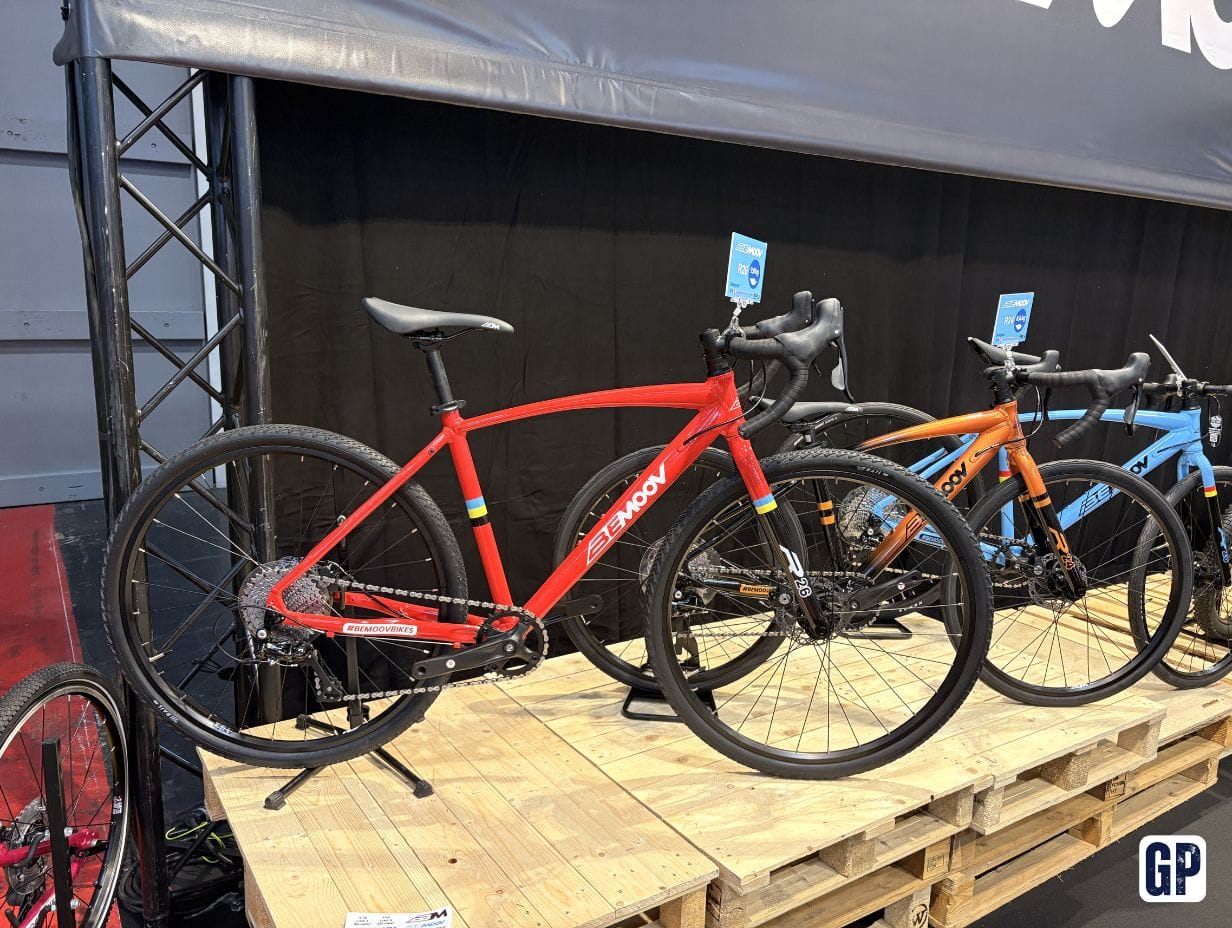
And in an adult market sometimes obsessed with marginal gains, it is always worth remembering that a well-thought-out bike also starts with the smallest sizes.
What this 2026 edition says about the market
This ProDays edition does not project the image of an euphoric market. The show is smaller, more focused, more selective. But it tells a fairly clear story: brands have started moving forward again.
In gravel, the shift toward race is obvious, but not caricatured. Fast bikes are becoming more capable. Big tires, internal storage, UDH, and 1x setups are no longer isolated details – they are standards that are taking root.
On the road, the boundaries between aero, endurance, and all-round keep blurring. Bikes are becoming more complete, more realistic, sometimes less dogmatic.
The show may have lost volume. But this year, it gained clarity. And that is probably what the market needed.