The previous generation of the Canyon Grail had already put the bike back at the sharp end of the gravel race segment. It was fast, well equipped, and unapologetically competition-focused. But it also had a fairly obvious limitation: 42 mm of official clearance, in a market where wide gravel tyres have become more than a passing fad.
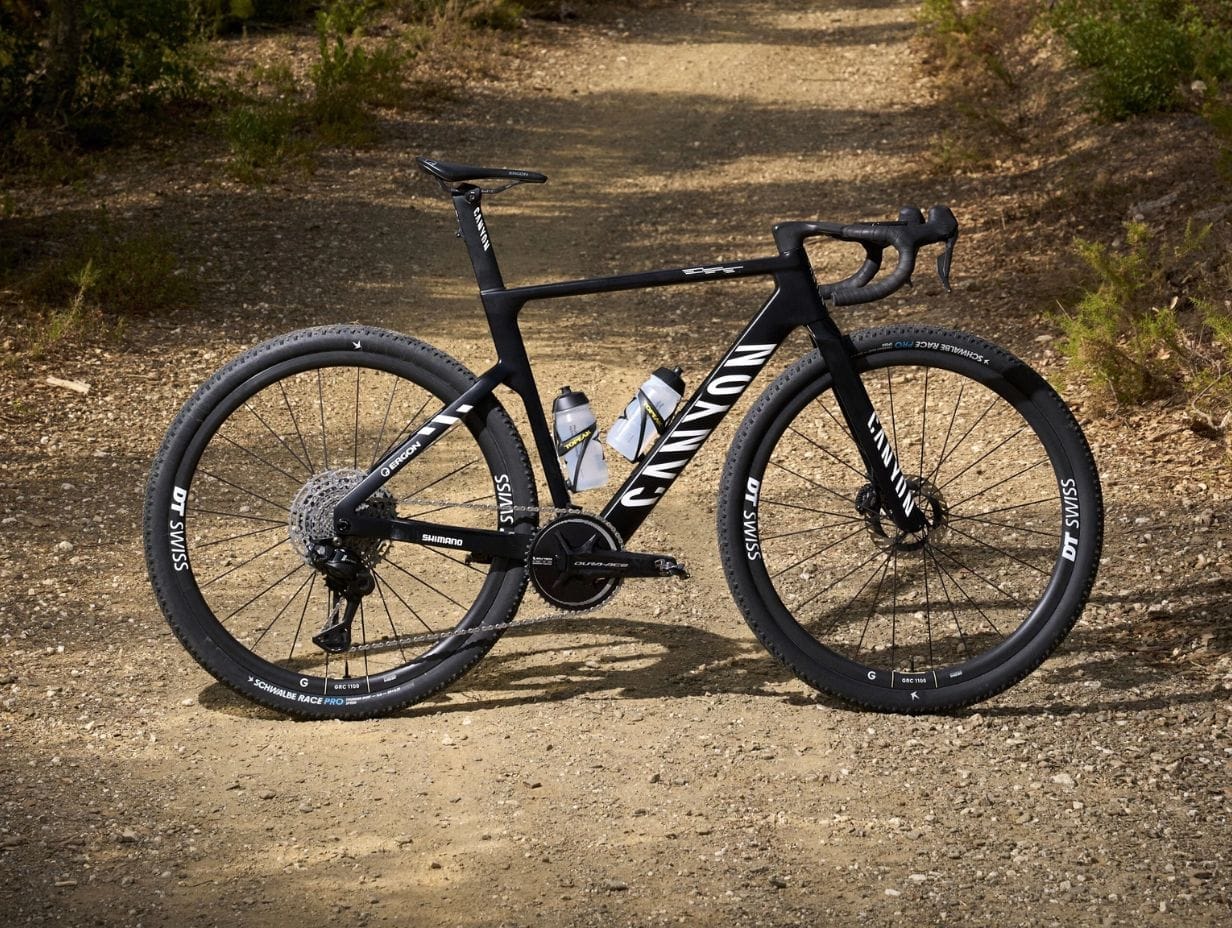
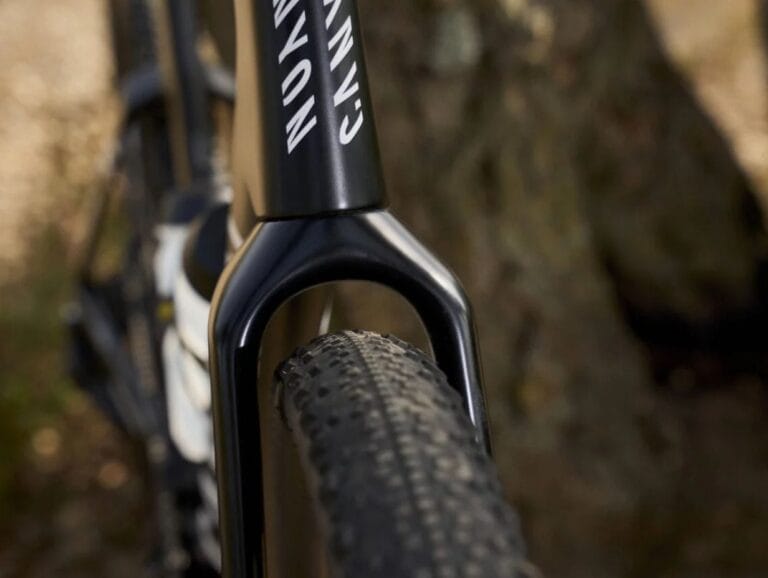
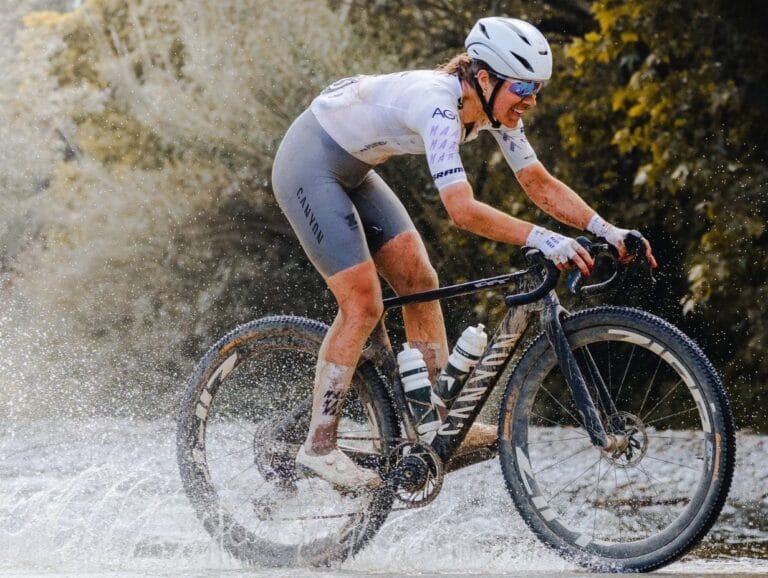
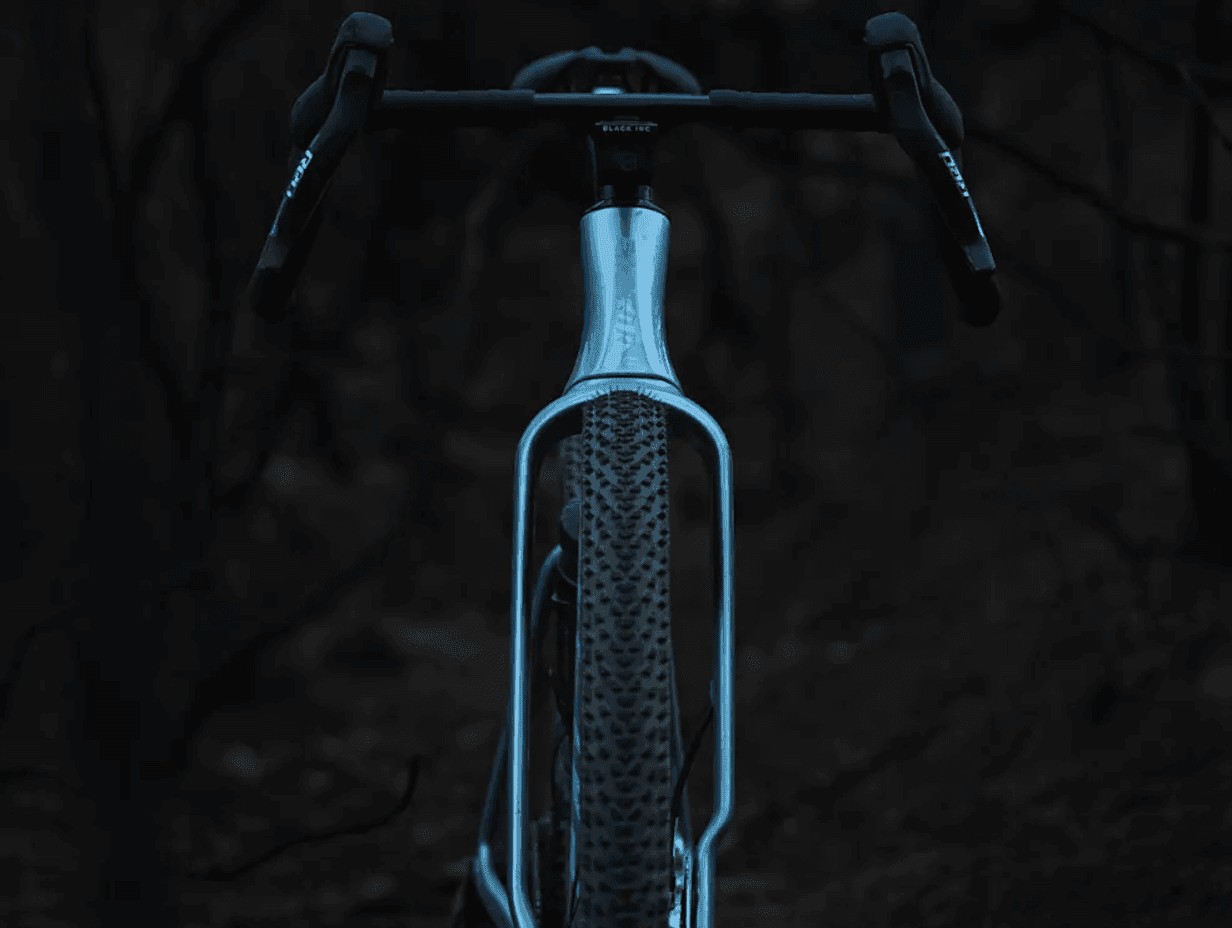
With this third-generation Grail, Canyon clearly puts things right. The new frame now accepts up to 57 mm front and rear, with more than 4 mm of safety margin per the ISO method cited by the brand. It is arguably the most important detail in this launch.
🚀 In brief:
The third-generation Grail now takes tyres up to 57 mm front and rear
The platform drops the double chainring to maximise clearance
Canyon reports aerodynamic gains measured at 35 km/h, with 45 mm tyres
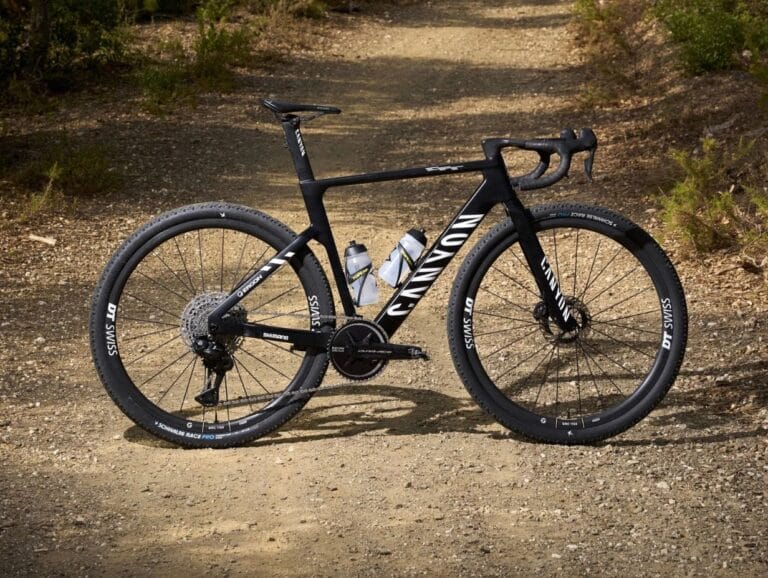
This is not a simple range refresh. Canyon has reworked the frame, geometry, integration, cockpit, accessories and wheels. The Grail remains a race bike, but it shifts to a more up-to-date definition of fast gravel: less limited by tyre width, more stable in the rough, more adaptable for ultra-distance or long events.
57 mm: Canyon truly overhauls the platform
Canyon says development of the new Grail centred on a clear demand: to run 50 mm tyres and up. The brand notably cites discussions with Rosa Klöser, winner of Unbound 2024, who asked for a bike capable of taking 2.1, 2.2, or even 2.25 inches.
To reach this clearance, Canyon had to make a structural choice: the new Grail becomes an exclusively single chainring platform. The double chainring is therefore off the table. That is not trivial, especially for riders who use their gravel bike as a fast mixed road and trail bike with a tighter cassette.
Technically, the choice makes sense. Canyon says that keeping 2x compatibility would have capped rear clearance at 50 mm. Switching to single lets Canyon reach 57 mm, notably thanks to a new solid driveside chainstay, slimmer and designed to free up space.
All Grail models ship at launch with 45 mm tyres. The maximum width is therefore not the stock fitment, but a true margin for evolution depending on terrain, races and the comfort level sought.
More aero, with a gravel-relevant protocol
Canyon also emphasises aerodynamics, with an interesting point: tests are not only communicated at 45 km/h, as on many road bikes, but at 35 km/h, a more credible speed for gravel racing.
According to the figures provided by Canyon, the third-generation Grail shows 109.5 W of drag at 35 km/h on 45 mm tyres, in its protocol with a moving mannequin. In the same internal comparison, Canyon reports 109.9 W for the Cervélo Áspero 5, 110.3 W for the Factor Ostro Gravel and 112.3 W for the Rose Backroad FF.
These are still manufacturer numbers. They indicate a trend, not an absolute truth. But the protocol has the merit of fitting gravel use better than some aero claims too closely modelled on the road.
The most telling point may be elsewhere: Canyon states that the new Grail on 55 mm tyres remains faster than the old Grail on 40 mm tyres, still in its 35 km/h protocol. The old one is given at 115.7 W, the new one on 55 mm at 113.6 W. If that is confirmed in the real world, it is exactly the kind of compromise the modern gravel race scene is looking for today: gain volume without paying too much in speed.
Lower-slung geometry, not entirely new
Canyon is not starting from scratch on geometry. The brand keeps the core idea of the previous generation: a stable bike, with a long wheelbase, predictable steering and weight distribution designed to keep control in fast, loose sections.
The new wheelbase grows by about 10 mm, mainly to absorb the move to 57 mm tyres. On sizes S to L, Canyon retains a 71.5° head angle and 69 mm of trail, figures already associated with fairly stable handling for a race-focused gravel bike.
The real change in position comes from the stack. Canyon says stack drops by 15 mm, with reach remaining long and stems short. In size M, the stem drops to 80 mm on CFR and CF SLX. The message is clear: the Grail becomes more aggressive, more race-oriented, less neutral in position.
That does not mean it will be reserved for pros. But riders who liked the Grail for its versatility will need to look closely at the geometry, especially if they seek a very upright position.
PACE, Control Drops and VCLS: integration improves
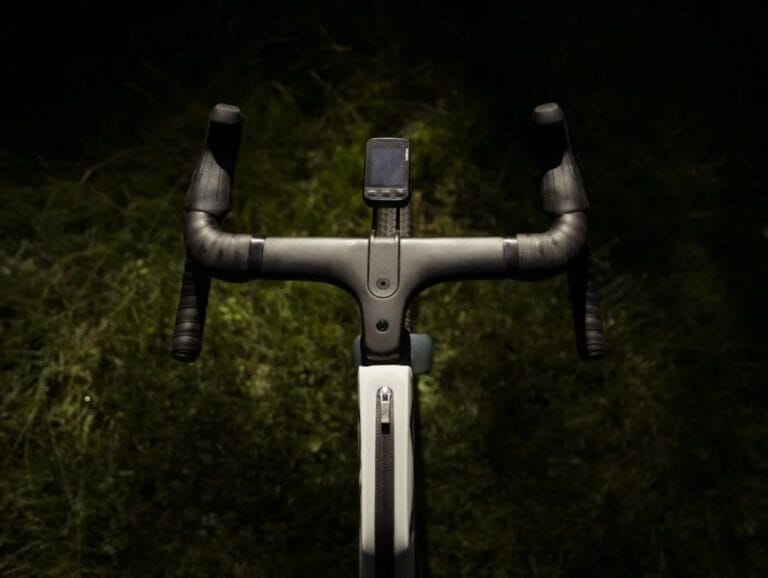
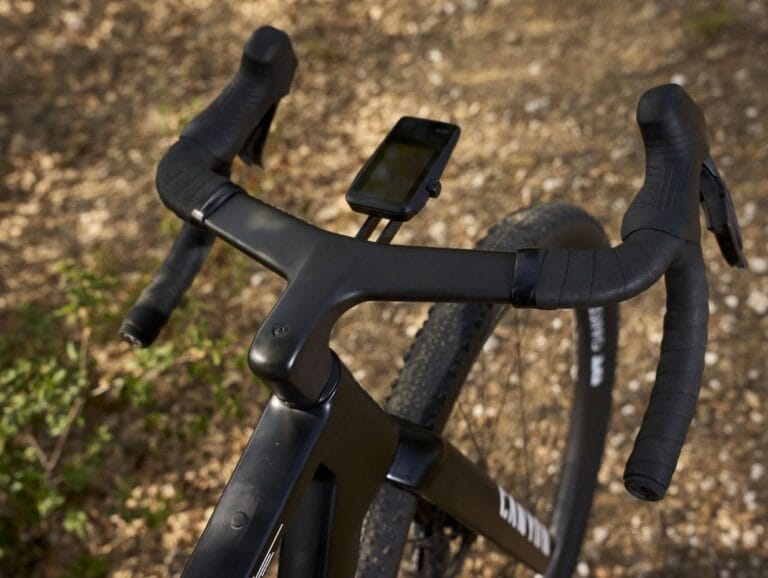
The Grail CFR and CF SLX versions adopt the Canyon CP0048 PACE Bar cockpit, already seen in the brand’s recent integration logic. The main interest is not only aesthetic: the system lets you adjust bar width and height without cutting the steerer, stacking spacers or bleeding brakes.
Canyon announces 50 mm of width adjustment, 20 mm in height and 15 possible configurations with a single TX25 tool. The new Control Drops add a handlebar shape more focused on off-road control, with 17° of flare, 120 mm of drop and three possible widths: 370, 395 and 420 mm.
The CF versions remain simpler, with a CP0039 cockpit. That is important to note, because the whole range does not receive the same level of adjustment.
The Canyon SP0093 VCLS Aero seatpost is present across the range. Canyon claims 25% extra vertical flex compared with a rigid equivalent. This component comes from the Endurace family, a bike on which Canyon has already worked extensively on the balance between performance and comfort. Our test of the Canyon Endurace CF SLX 8 Di2 also helps to understand this very Canyon approach: make the bike fast, but not needlessly harsh.
Adaptability remains strong, with a few restrictions
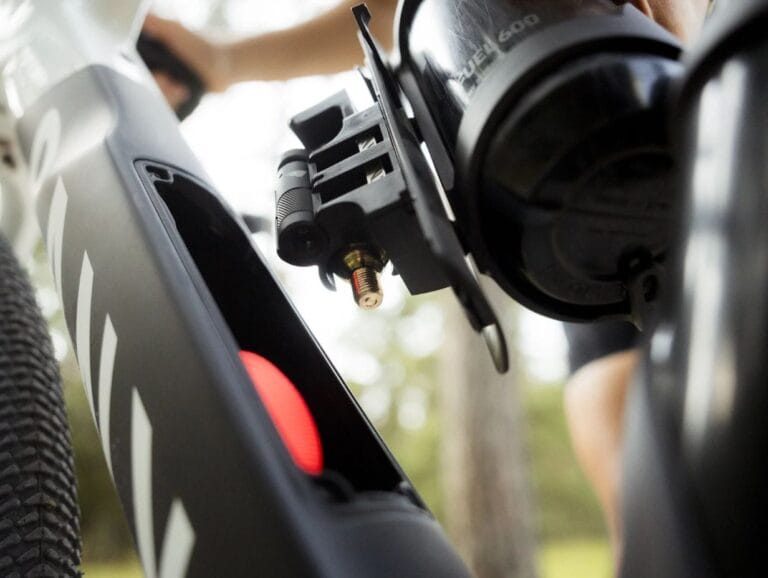
The Grail keeps a true ecosystem logic. All models receive the Gear Groove interface, compatible with computer mounts, lights and Canyon aero extensions. That is a detail that matters for long distances, ultra-style races or events where you want to stabilise your position on rolling sections.
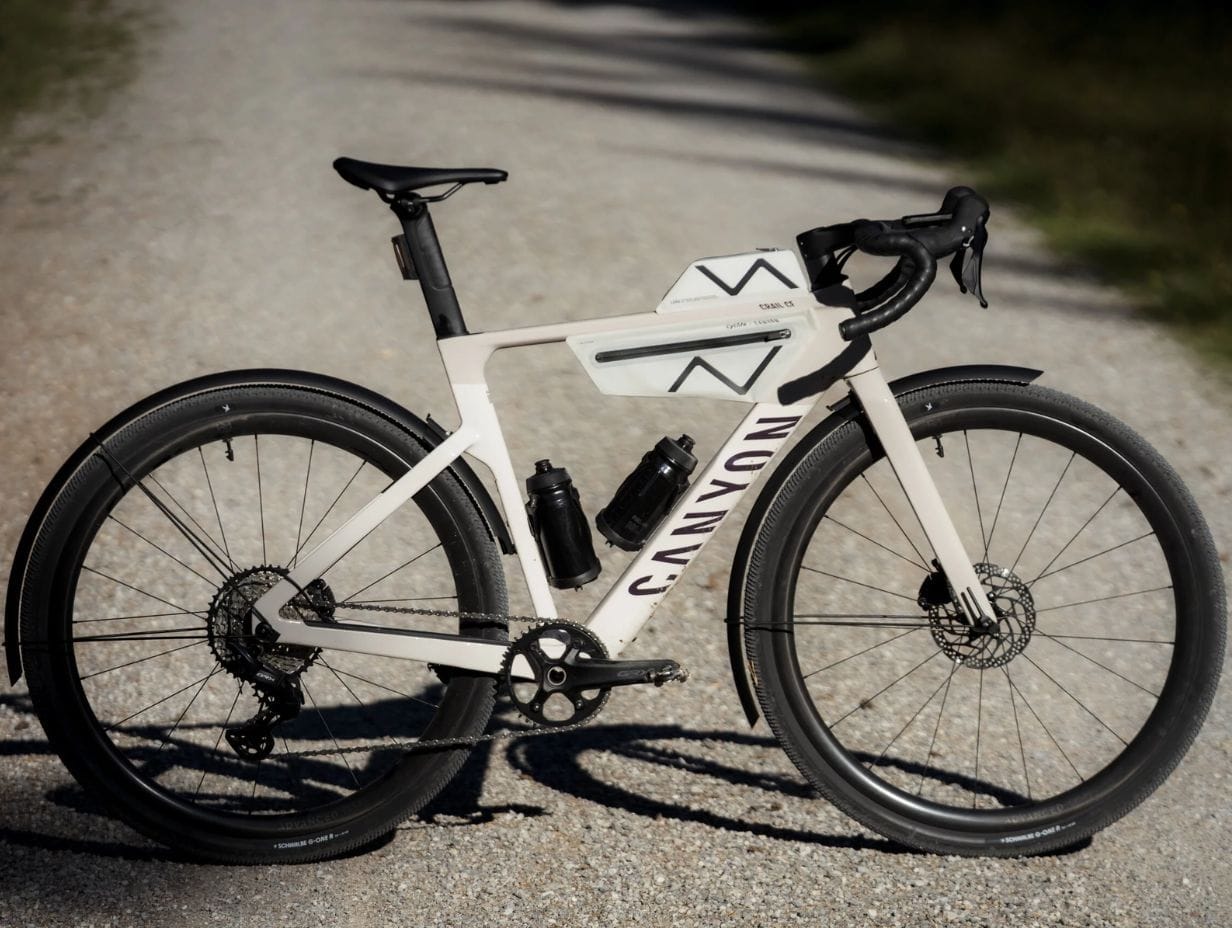
LOAD storage in the down tube carries over, but not on Grail CF models. Same logic for DEFEND Fast Fenders mudguards: they are designed for the Grail CF SLX and CF, but not for the Grail CFR, which is more race-focused.
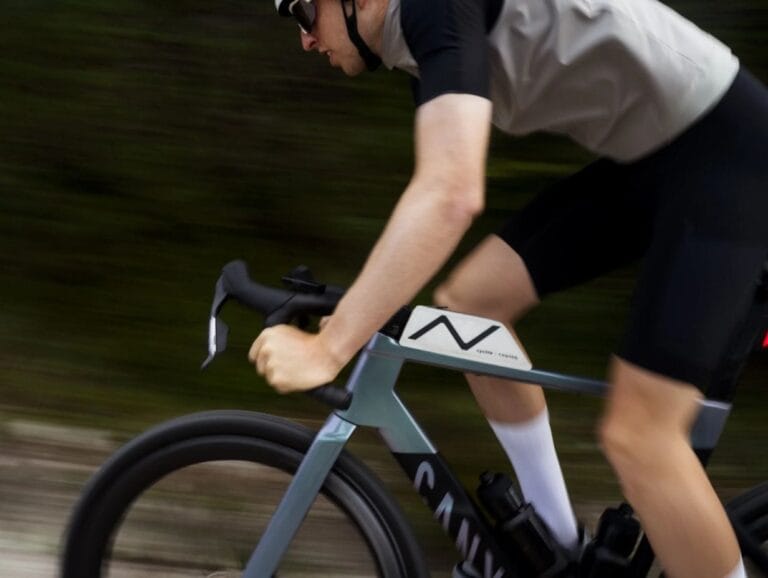
Canyon also partners with Cyclite for bags tailored to the new frame. The Midloader Cyclite x Canyon is quoted at around 100 g depending on size, roughly 200 g less than the previous-generation Midloader. It nestles as close as possible to the front triangle, with a quick press-fit fastening system at the rear.
Canyon says this bag has no discernible aero impact in its protocol. Again, that will need confirmation outside the lab, but the idea is sound: integrate carrying into the bike rather than treat it as a simple bag added afterwards.
The new GR 50 CF wheels complete the range
Canyon also uses this Grail to introduce its GR 50 CF carbon wheels. They feature a 50 mm-deep rim, 27 mm internal width and 38.5 mm external width. The stated weight is 1,675 g for the pair with tubeless rim tape and a Microspline freehub body.
These wheels use DT Swiss 350 hubs and Aerocomp II spokes. Canyon positions them for gravel tyres from 35 to 60 mm, which fits the new orientation of the Grail well.
They equip two models in the range: the Grail CF 7 AXS and the Grail CF SLX 7 Di2. Canyon also announces aftermarket availability at 999 €, with tubeless valves and a spare XD-R body included.
Range, weights and stated prices
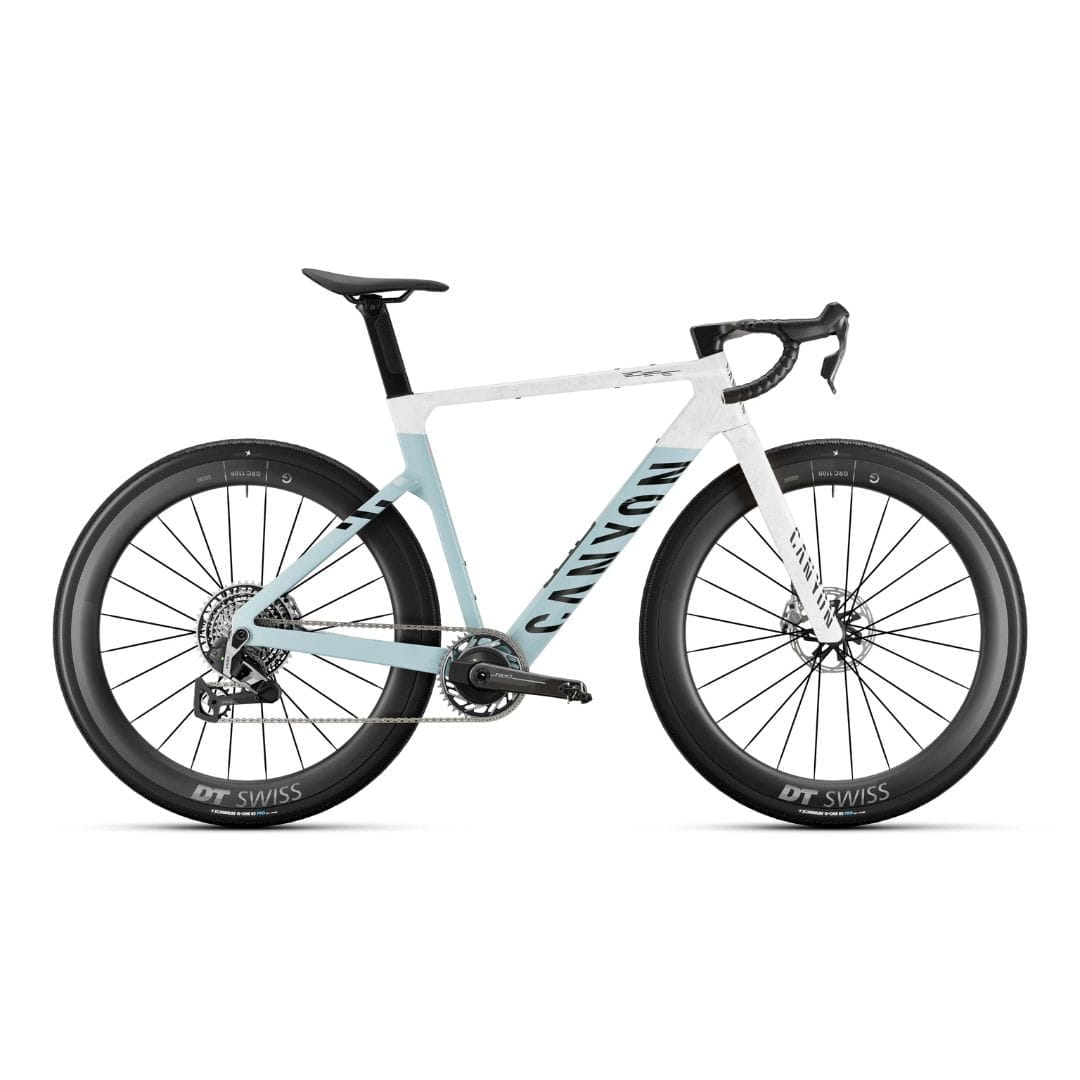
The range is organised around three platforms: Grail CFR, Grail CF SLX and Grail CF. Sizes run from 2XS to 2XL.
The Grail CFR AXS is stated at 7.9 kg with SRAM RED XPLR AXS, a dual-sided Quarq power meter, DT Swiss GRC 1100 wheels and Schwalbe G-One RS Pro 45 mm tyres. Price: 8 000 €.
The Grail CFR Di2 moves to Shimano GRX Di2 RX825 with a 4iiii single-sided sensor, for 8.4 kg and 6 500 € stated.
The Grail CF SLX 8 AXS receives SRAM Force AXS, a single-sided Quarq sensor, DT Swiss GRC 1400 wheels and weighs 8.9 kg. Provisional price: 5 499 €.
The Grail CF SLX 7 Di2 is stated at 9.5 kg with Shimano GRX Di2 RX715 and Canyon GR 50 CF wheels. Provisional price: 4 499 €.
On the CF side, the Grail CF 7 AXS is stated at 9.1 kg with SRAM Rival XPLR AXS E1 and Canyon GR 50 CF wheels, for 3 499 €. The Grail CF 7 mechanical drops to 2 499 €, with Shimano GRX RX610 and Newmen Advanced G.34 wheels.
Our take
The new Grail is not trying to become a soft adventure bike, nor a comfortable, vaguely sporty allroad. It remains a race-focused gravel bike. Simply, Canyon seems to have accepted that modern gravel racing is no longer won only with a stiff frame, narrow tyres and a good aero position.
The big shift is this 57 mm clearance. It puts the Grail back in step with the market, especially for fast but rough races where comfort, traction and composure sometimes matter as much as a few watts in a wind tunnel.
The limitations are already visible: an exclusively single chainring platform, no LOAD storage on CF, and a PF86 bottom bracket that will inevitably spark discussion among some riders.
But the package looks very solid. Canyon has not just opened up tyre clearance: the brand has reworked the bike around this idea. That is exactly what had to be done for the Grail to remain credible in a category that is moving fast.






Reviews
There are no reviews yet.